Meet PeopleCats of TopTropicals. Cat of the Day: Bagheera
Bagheera and Mowgli are Kristi's PeopleCats, originally they came
together and they stick together. As little kittens, they were raised by Moe, the Mama-cat. Although she is not technically their Mom, but...
she is a Mom for everyone!
Bagheera was born with his brother at a gator farm. He was too little to
leave his mom, but he needed out. Bagheera is one of the sweetest boys we
know. When he was a baby he could not sleep without laying on Kristi's face,
both paws stretching across her mouth. Now he's a big brave boy. He rules the
inside PeopleCats, stealing food from his human's plates and asking
forgiveness at night when he lays above your head with his hands on your face. He's a
reminder that we are all still little kittens on the inside...
Bagheera's new nicknames are Mr Biggs, Biggie and Biggy Biggy Biggy!
Smokey and Sunshine Wrap Up the Garden with Frost Cloth Before the
Chill.
Smokey: "Thermometer says 45. Time to wrap the bananas!"
Sunshine: "You wrap the bananas. I’ll guard the mulch… from this
sunny spot."
Smokey: "Teamwork, Sunshine. Teamwork."
🌡️ Cold nights are coming - but your
tropicals do not need to shiver!
Even in sunny Florida and other warm zones, one cold snap
can undo months of growth. Preparation is everything. Tropical plants can
handle a lot, but they dislike surprises. Let’s make sure
your garden stays safe, strong, and happy all winter long.
Tips from Tatiana Anderson, Top Tropicals Plant
Expert
👉 Group and Check Your Plants
You already know which plants are in pots and which are in the ground.
What matters now is prioritizing by cold sensitivity.
Identify the tender tropicals – papaya, banana, plumeria, adenium,
heliconia – and decide which ones get covered first when temperatures
drop.
Keep frost cloths or old sheets near those areas, ready to grab fast. If
your garden is large,
label protection zones or mark plants that always need extra care. The goal
is to have a plan, not a panic, when the cold alert hits.
Once you know your priorities, you can plan the rest of your protection
strategy.
👉 Feed and Mulch
Stop using high-nitrogen fertilizers by late fall. They push soft new growth
that freezes easily.
Add compost around the base of your plants and top with 3 to 4 inches of
mulch. Mulch acts like a blanket: it keeps warmth in, protects the roots,
and keeps soil moisture steady. Just make sure the soil drains well; cold
and soggy soil leads to root rot. In raised beds, check that water flows
away easily.
After you feed and mulch, it is time to look at how your local zone changes
the game.
👉 Zone-by-Zone Tips
Moving Tropical Plants Indoors for Winter Protection
Zone 10: You are lucky! This is mostly a maintenance season.
Watch for root rot after heavy rain, trim lightly if needed, and protect
tender young trees during surprise chills. Keep some frost cloth ready just
in case.
Zone 9: This is the main action zone. Nights can dip into the
30s. Deep-water your trees once before cold nights to insulate the roots.
Apply heavy mulch, and have frost protection ready to go. If you grow
tropical fruit like mango or guava, consider wrapping young trunks in burlap
or foam pipe insulation.
Zone 8: This is where tropical gardening becomes creative. Stick
to cold-hardy tropicals such as loquat, guava, or cold-hardy avocado
varieties. Use portable greenhouses, wrap trunks, and move smaller plants
indoors or to a heated porch when frost threatens.
Now that the garden beds are set, let’s look at your pots and
containers – your most mobile plants.
👉 Container and Patio Plants
Potted plants are the easiest to protect but also the quickest to freeze.
Start reducing watering now so roots do not stay too wet in cooler weather.
Before moving them, check for insects hiding under leaves or in the soil.
Group your pots close to a wall for reflected heat and wind protection.
If you plan to bring them indoors, do it gradually. Move them closer to the
house for a few days before bringing them all the way inside to help them
adjust to lower light and humidity.
When the chill starts, many gardeners rush to move everything inside at once
– but a smooth transition works much better.
👉 Indoor Plants
When bringing plants inside, give them a good rinse to remove dust and bugs,
and flush the soil to wash out salts from summer fertilizing. Keep
them separate from your houseplants for a week to make sure no pests come
along. Expect some leaf drop – it is normal as they adjust to lower
light. Give them bright light near a window, and cut watering by about half
until spring. Avoid misting too much; good airflow matters more than
humidity during winter.
Many tropicals, like hibiscus, brugmansia, and crotons, may look tired for a
while, but they will bounce back quickly once days get longer.
👉 Timing Is Everything
The key is to prepare before the first cold warning. Check your weather app
regularly once nights start dropping into the 50s. Keep covers, mulch, and
supplies ready so you are not running outside at midnight with a flashlight
and a frozen hose. Have your frost cloths labeled by plant group and stored
in an easy spot. A little organization now saves a lot of stress later.
Many tropicals, like hibiscus, brugmansia, and crotons, may look tired for a
while, but they will bounce back quickly once days get longer.
Remember: the goal is to help your plants rest safely. Many gardeners prune
or fertilize too late in the season – we will talk about why that can
be risky next week." — says Tatiana Anderson, Top Tropicals Plant
Expert
Coming next mail-list: The best gadgets for cold protection (lights,
heaters, frost covers) and what NOT to do in winter.
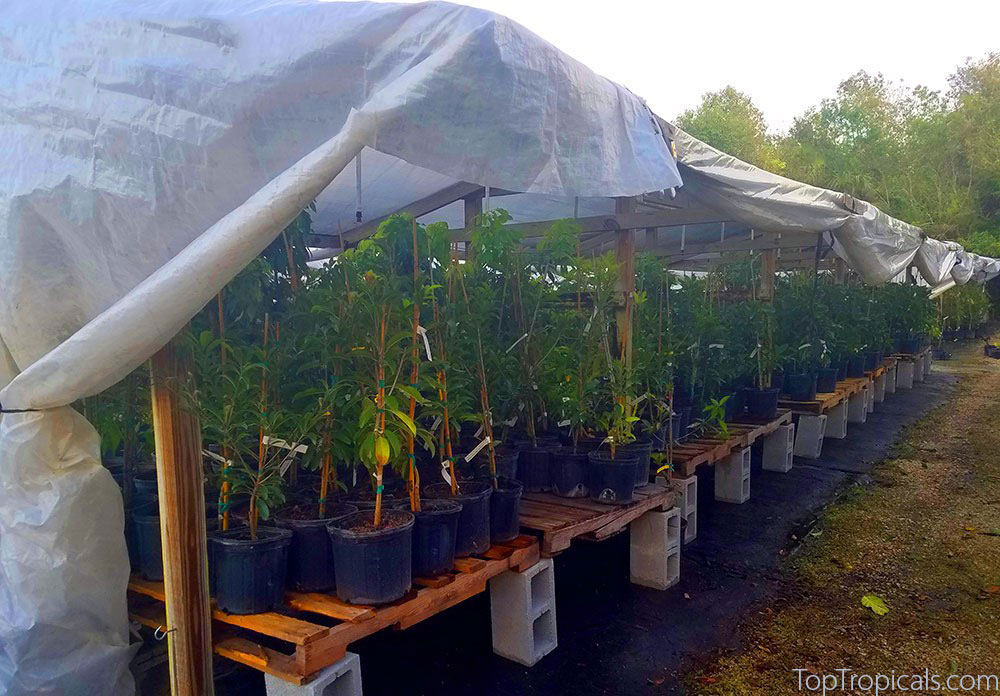
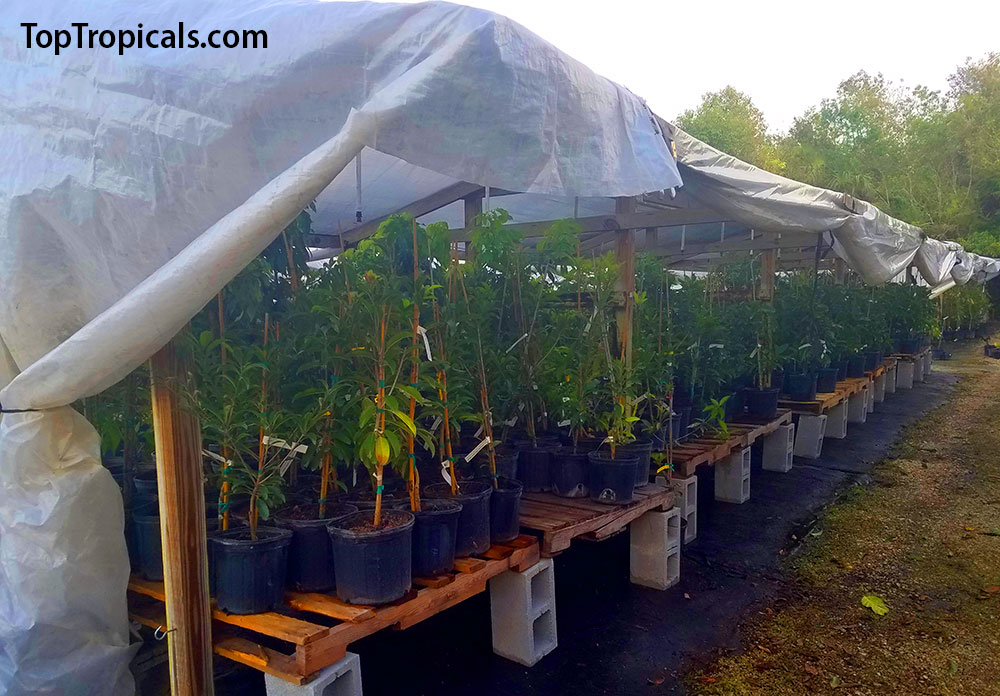
Protecting Tropical Plants with Frost Covers at Top Tropicals
Nursery

Date: 29 Nov 2020
Cold protection of tropical container plants
Q: I am long time customer of yours, I live in San Diego
California and while the summer and Fall temperatures are warm to mild, the winter
temperatures dip to a point where some tropicals die off. We are experimenting
with different variations of way to heat and insulate the pots we have the
tropicals planted in as a way to keep them alive during the colder winter
months. I was wondering if you knew of the ideal soil temperature for these
tropical in order to look their best year round. All of the heaters we have
installed have thermostats and temperature adjustments so we can now keep the soil
anywhere between a range of between 65-75 degrees. Any advise you can provide
would be greatly appreciated.
A: This is a very interesting concept you are working with.
Indeed, keeping pots/roots warm, may help a lot! We've been experimenting with
cold protection for a long time - for the above-ground plant parts. For sure
keeping roots protected (even with a thick layer of mulch) will benefit tropical
plants during winter. In case with container plants, this may help
dramatically.
The guideline is, tropical plants slow down or stop their metabolism at
65F. As long as you can keep soil above that temperature - this should work
great. Of course, the higher the better.
Optimum temperature for growing tropical plants in general - 70-85F.
Above 90F, metabolism stops too, unless it's a heat tolerant, desert
plant.
More information on winter cold protection of tropical plants and
zone pushing:
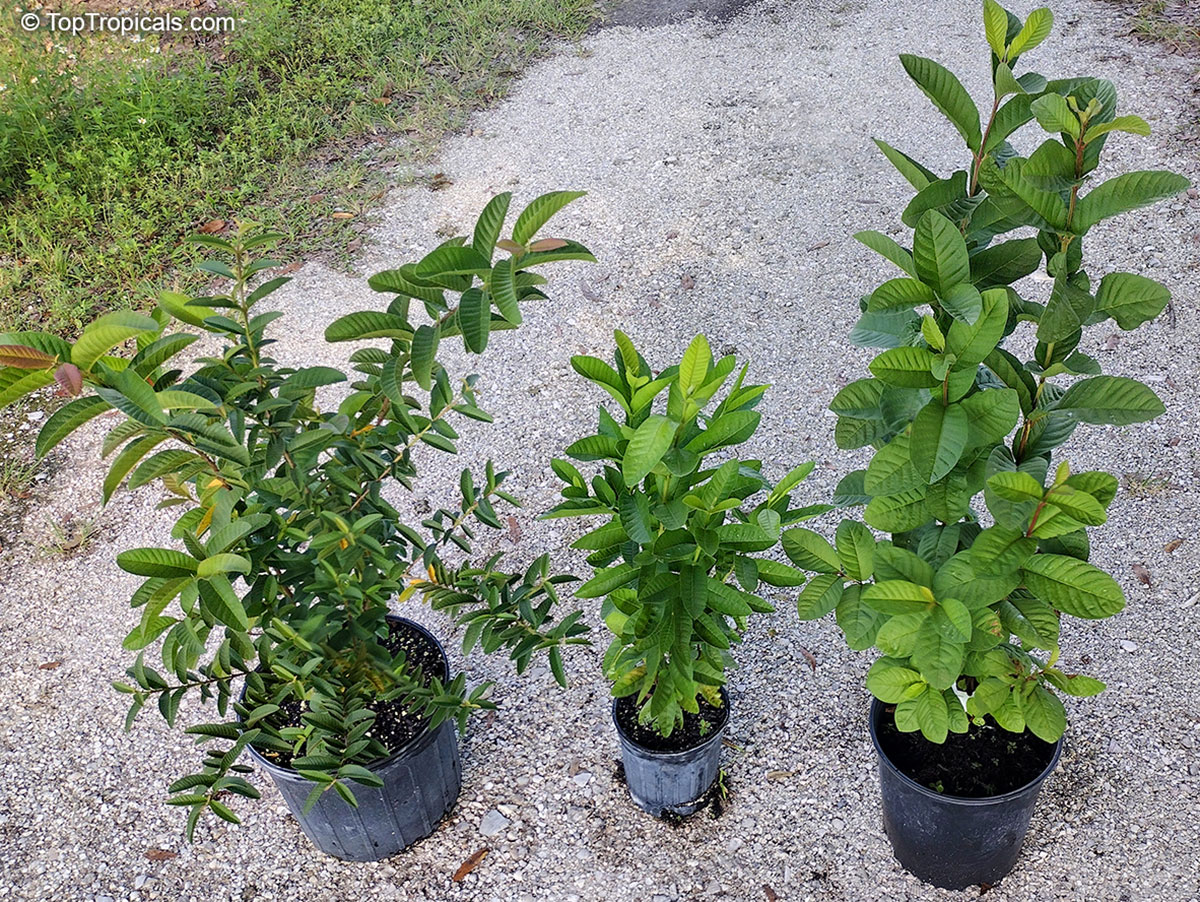
Guavas love full sun — aim for 6–8 hours of direct light.
They’re adaptable to many soils but do best in well-drained, organic-enriched
mixes. Plant them in a spot where you can water
easily; guavas are thirsty trees during fruiting.
Container & Indoor Growing
Don’t have space or live in a cooler climate? Guavas thrive in
large pots. Use well-drained potting mix. LINK TO OUR SOIL Keep them on a
sunny
patio during warm months and bring them indoors when nights dip below
freezing. Compact varieties like Dwarf Hawaiian
Rainbow or Tikal are especially
good for pots.
Winter Care
Mature guavas can handle a light frost (down into the high 20s F), but
young plants need protection. If planted outdoors, cover them with frost
cloth
on cold nights. Container guavas can be wheeled into a garage, greenhouse,
or bright indoor window until the weather warms.
Watering and Fertilizing
Water deeply once or twice a week, more often in hot weather or when
fruit is developing. They don’t like soggy soil, but they won’t
complain about short floods either. Fertilize 3–4 times a year during
the
growing season with a balanced fruit tree fertilizer. Guavas especially love
potassium and phosphorus for strong flowering and heavy crops. We recommend
liquid crop booster Sunshine
C-Cibus and balanced controlled release fertilizer Green
Magic.
Pruning
Prune after fruiting to keep them compact and open up airflow. Remove
crossing or dead branches. In containers, trim back vigorous shoots
regularly
to manage size and encourage more fruiting wood.
Pests and Problems
Guavas are generally tough and pest-resistant. The main thing to watch
for in humid or rainy climates is mealybugs - those cottony white clusters
on
leaves or stems. They're easy to manage with neem oil or a quick spray of
horticultural soap.
Fruit time
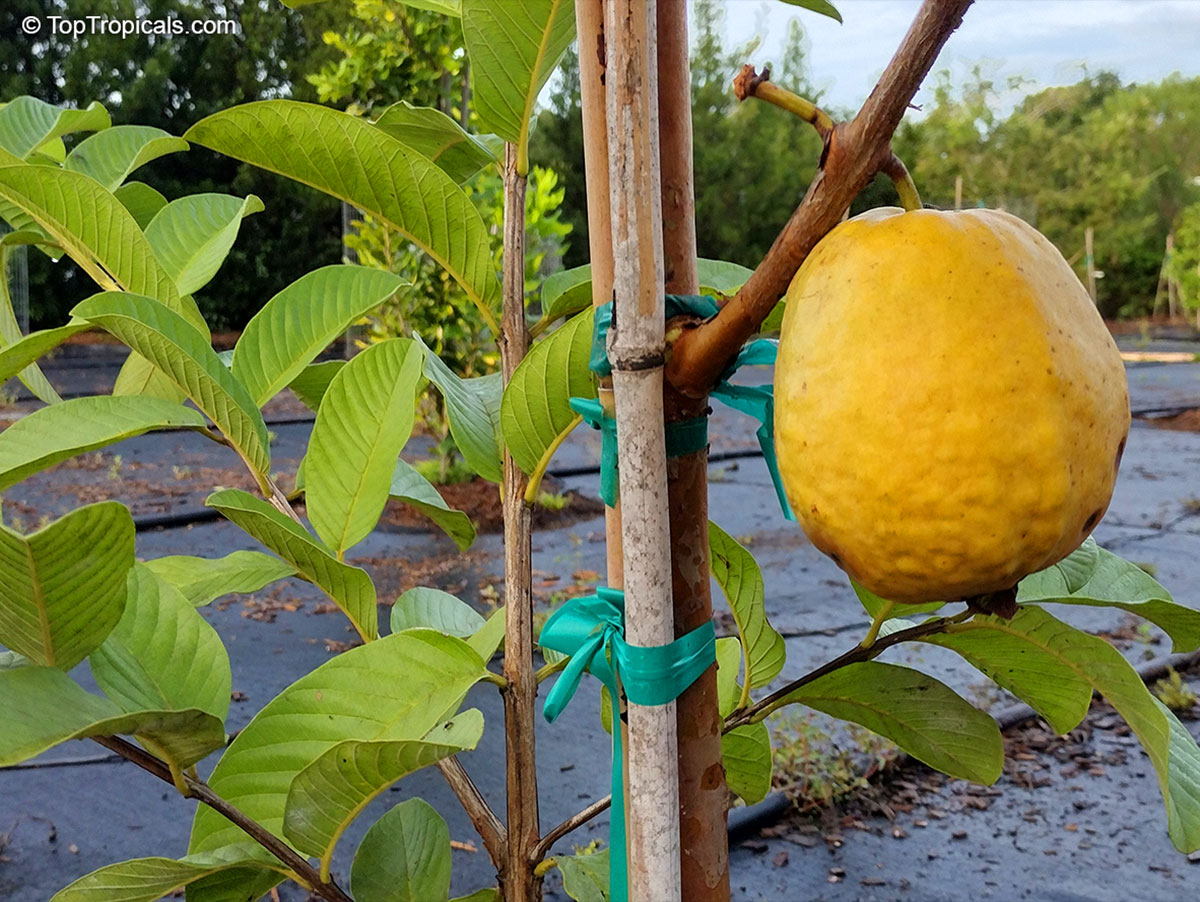
Guavas fruit young - often within a year or two.
Pollination
Guavas are self-pollinating, so you'll get fruit even with a single
tree. Planting more than one tree, however, often boosts harvests and gives
you a
longer fruiting season.
If you've ever wanted instant gratification from a fruit tree, guava is
it.
🍴
Guava Recipes
With all that fruit, the next question is always: "What do I do with
it?" Here are our favorites:
Cas Guava: Make Agua de Cas
Boil halved Cas Guava fruits with sugar, simmer, strain, and bottle.
Dilute with water when serving. The concentrate keeps for months in the
fridge.
Check out the recipe.
Hawaiian Gold: Make Drinks
Perfect for Mojitos or Margaritas. Sweet, tangy juice pairs beautifully
with lime and mint. Learn more
Araca Pera: Guava Wine
Famous in Brazil, where the fruit is turned into a vibrant rosу wine.
Locals say it’s the taste of summer in a glass — and yes, you
can make it at home too. Learn more...
Quick snack: Guava Grilled Cheese
Spread guava paste or fresh mashed fruit with cheese, grill until
golden. Sweet and savory heaven. Learn more...
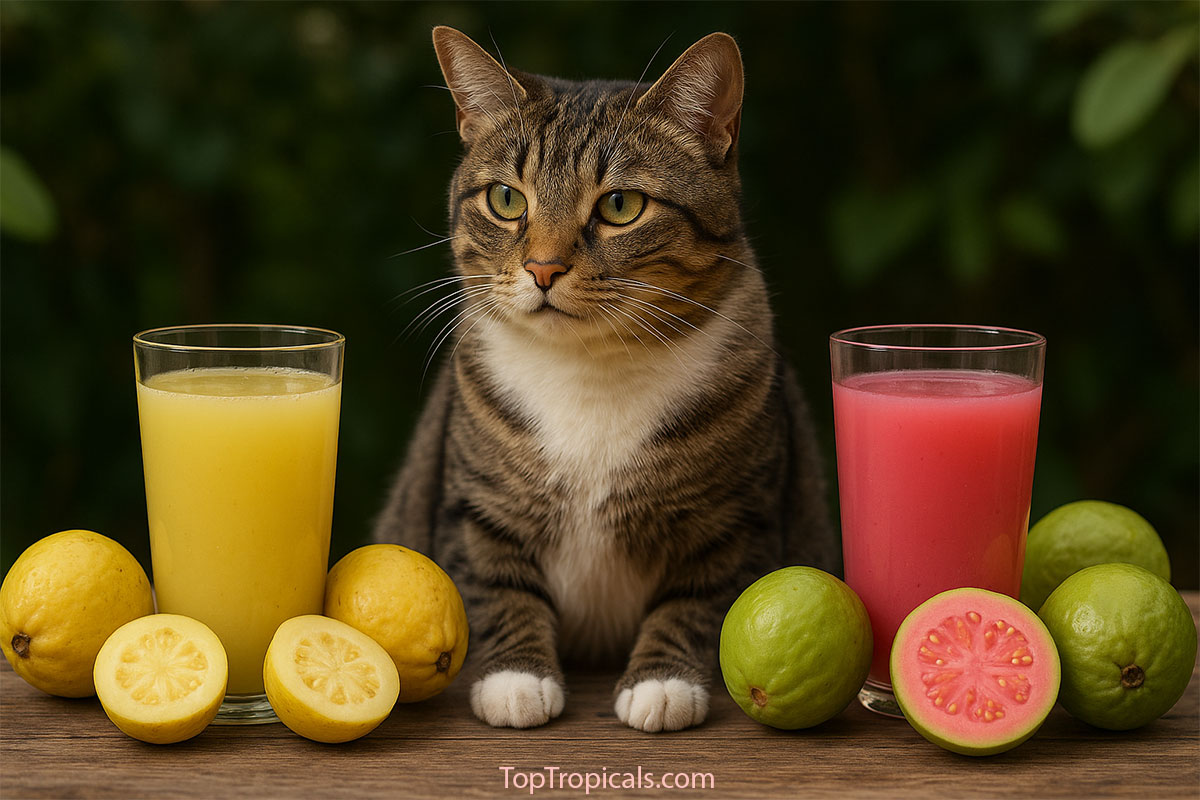
Simple Guava Juice
Blend ripe guavas with water, ice, and a little sugar if you like. Instant
refreshment.
✅Ready to Grow? Whether you want fresh juice, sweet fruit,
or even your own guava wine, we’ve got the best varieties in stock
right now. Your future self, sipping guava juice on a hot summer afternoon,
will
thank you.
PeopleCats of TopTropicals. Cat of the Month: Moishe, the Google Intern with a Sweet Tooth
Just a few months ago we introduced our new Little Purrrson Jim II that we got as a "toy" for intellectual
Google the Cat, to cheer him up after he lost his friend Jim I... Jim II, the fluffy goofball, grew up in no time and in his turn,
requested entertainment, since Google bored him with his technical lectures... So
we got a toy for Jim-the-toy... and he turned out to be - another
mini-Google!
Moishe is very busy young individual, spending his day solving math
equations and discovering laws of physics... Google appreciates the new generation's input. Jim II is simply glued to the little guy. He follows Moishe everywhere, including boring seminars by Google. Jim loves his new little brother with all his heart!
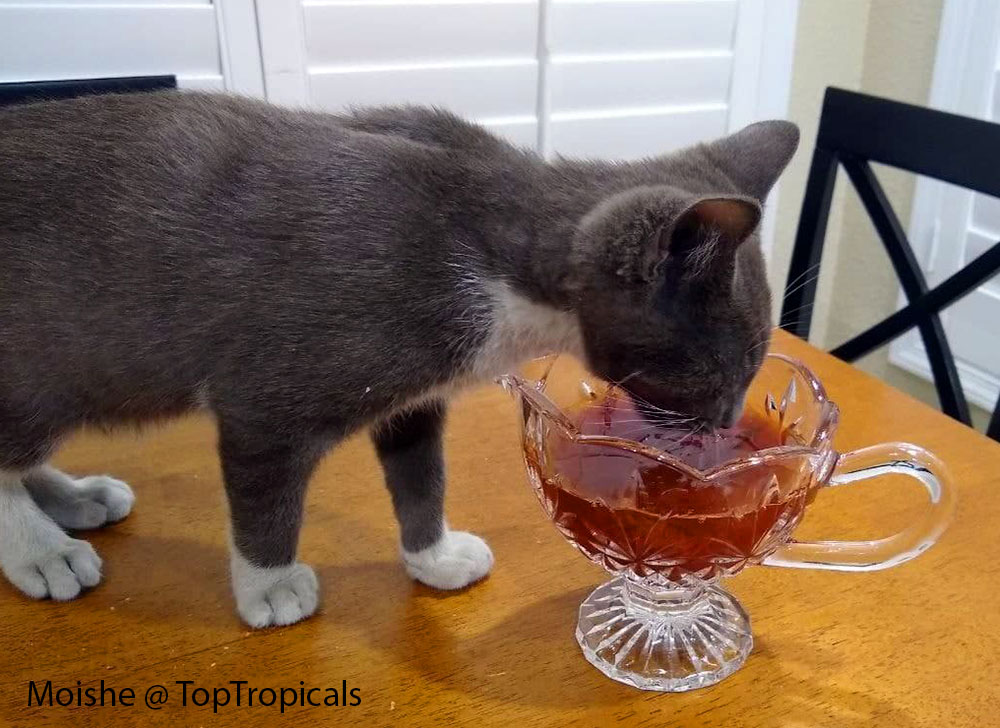
Moishe's favorite things are - gravity experiments, reading scientific manuscripts, and eating JAM for breakfast! No toast required.
TopTropicals PeopleCat Club and Zoo
Thank you for supporting us in helping PeopleCat Community! Make
your kind donation today and receive a surprise gift from us! Every little
bit helps. Thank you and God bless you and your pets!
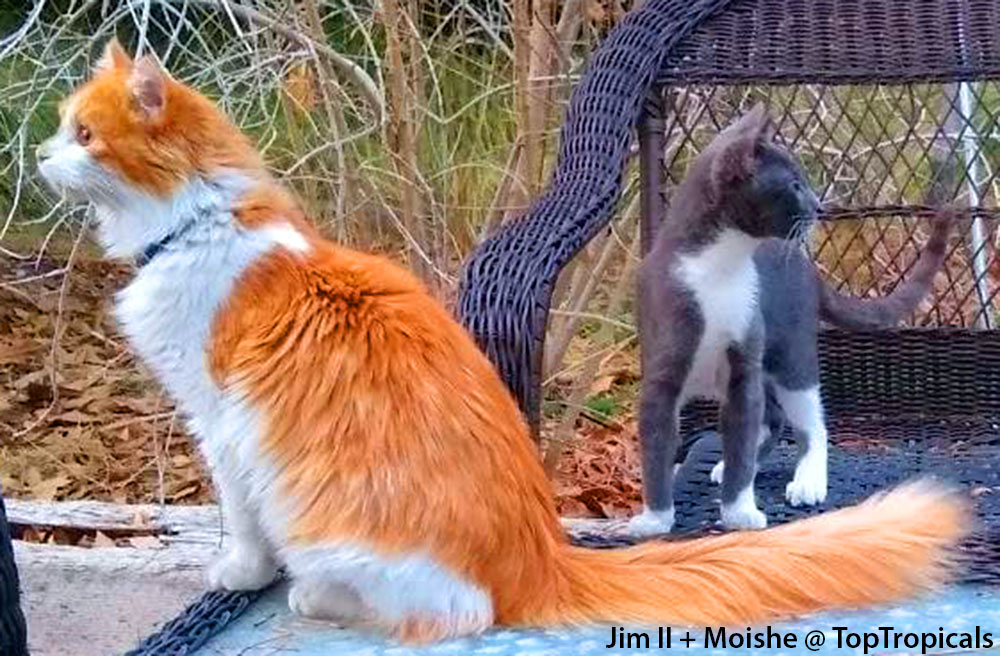
In the photo: Moishe the Scientist and Jim the
Hopeless Romantic