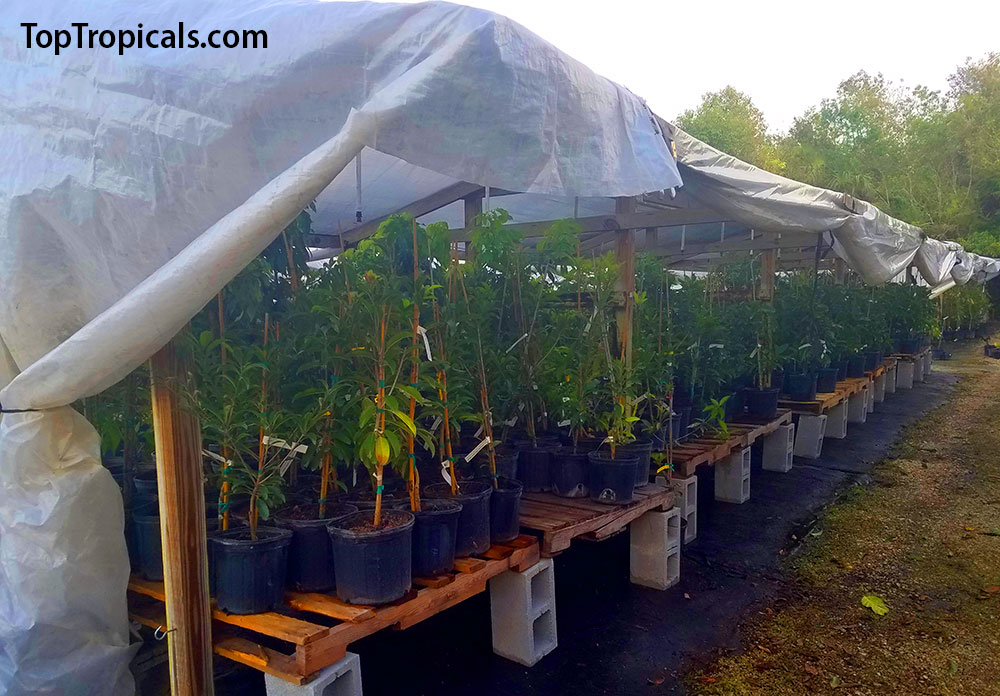
Garden Blog - Top Tropicals

Date: 16 Nov 2019

Meet PeopleCats of TopTropicals. Charlie, the Indoor Hunter
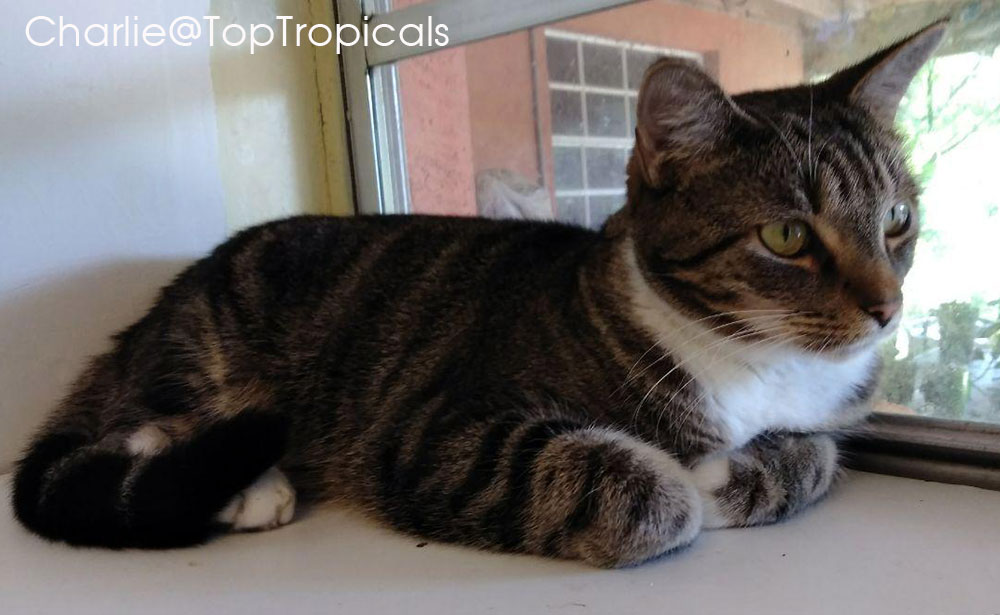
Carlie was a kitty drop off with LadyBug, Rickie, and Purry.
Charlie is Jamie's baby. She has an attitude of a teenager, one minute she loves you and the next - wants nothing to do with you. Carlie stays with the inside PeopleCats, she says it's too big in the outside world for her and she gets scared. Carlie has a fun game (fun to her): she plays around 2:00 am in the morning, she loves to drag random items down the hall (socks, toys, shirts, even blankets) in her mouth MEOOOWWWING as loud as she can. She then sets the items down on her human's bedroom rug and waits for her human to say thank you. We're pretty sure her hunting instinct is off...

Check out and more Cat of the Day stories.

2019, from Top to Bottom: Moe, Charlie, Bagheera, and Snitch. 2016: Charlie

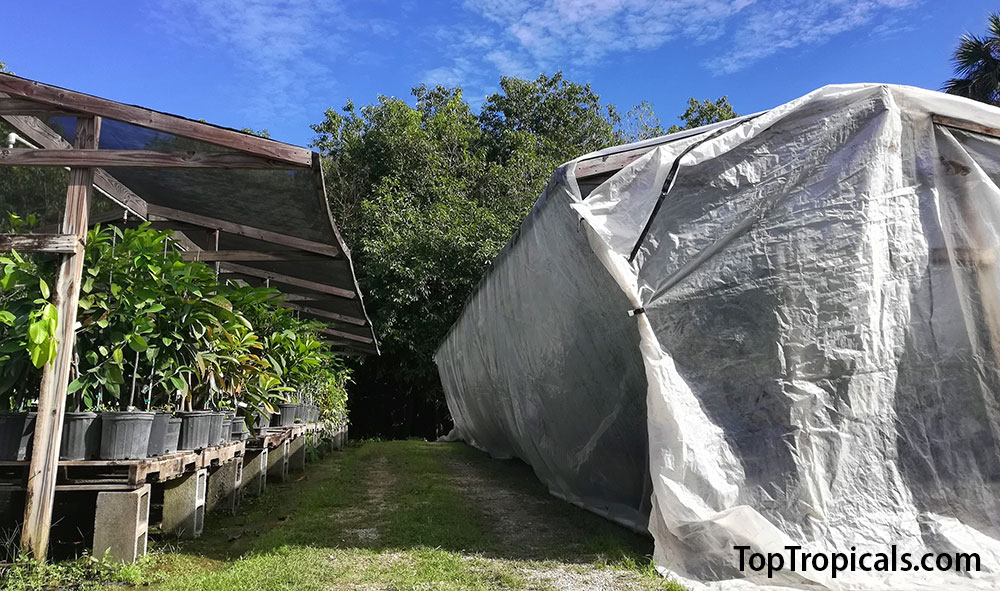
From left to right: Purry, LadyBug, Charlie, and Ricki - 2016

Date: 29 Nov 2020

Cold protection of tropical container plants

Q: I am long time customer of yours, I live in San Diego California and while the summer and Fall temperatures are warm to mild, the winter temperatures dip to a point where some tropicals die off. We are experimenting with different variations of way to heat and insulate the pots we have the tropicals planted in as a way to keep them alive during the colder winter months. I was wondering if you knew of the ideal soil temperature for these tropical in order to look their best year round. All of the heaters we have installed have thermostats and temperature adjustments so we can now keep the soil anywhere between a range of between 65-75 degrees. Any advise you can provide would be greatly appreciated.

A: This is a very interesting concept you are working with. Indeed, keeping pots/roots warm, may help a lot! We've been experimenting with cold protection for a long time - for the above-ground plant parts. For sure keeping roots protected (even with a thick layer of mulch) will benefit tropical plants during winter. In case with container plants, this may help dramatically.
The guideline is, tropical plants slow down or stop their metabolism at 65F. As long as you can keep soil above that temperature - this should work great. Of course, the higher the better.
Optimum temperature for growing tropical plants in general - 70-85F. Above 90F, metabolism stops too, unless it's a heat tolerant, desert plant.

More information on winter cold protection of tropical plants and zone pushing:

Greenhouse in Virginia
Plumeria cold protection
Ghost Cold Protection
Seven rules of cold protection for tropicals
About Cold Protection
Cold protection - winter action for your plant collection
Tropical Treasures articles on zone pushing.

Date: 29 Oct 2024

How can you use Elephant Ears?

🐘 How can you use Elephant Ears?


  • 🟢
    Alocasias and Colocasias, or Elephant Ears, are both remarkable and popular plants that can bring a touch of tropical elegance to any garden.

  • 🟢 Striking Foliage: large, lush foliage. The leaves can be enormous, resembling the shape of elephant ears, hence the common name. The foliage is usually rich green, but there are also varieties with hues of purple, black, or variegated patterns. These vibrant leaves create a dramatic focal point.

  • 🟢 Tropical Aesthetic: large, architectural leaves add a sense of drama and create a stunning backdrop for other plants.

  • 🟢 Versatility: work well in containers, making them suitable for patio gardens. In larger landscapes, colocasias and alocasias can be planted directly in the ground, either as standalone specimens or as part of mixed border plantings. They can also be utilized around water features or in bog gardens since they enjoy moist conditions.

  • 🟢 Low Maintenance: thrive in full to partial shade. Regular watering and occasional fertilization will help them grow vigorously.

  • 🟢 Impressive Size: Some varieties can grow several feet tall, creating a stunning vertical element in the garden.


📸 Colocasia esculenta Jacks Giant: This astonishing elephant ear is well-named, it really does look like something that would grow for the giant! The foliage is absolutely massive, many feet long and wide, with a glossy texture, prominent ribbing, and a rich blue-green cast that lightens to chartreuse around the edges.

📚 Learn more from previous posts:


What to plant by the pond?
Pharaoh Mask with stunning 3D effect
Mojito Elephant Ears
Colocasia vs Alocasia - what is the difference?

🛒 Shop Colocasias

#Shade_Garden

🔴 Join 👉 TopTropicals

Date: 8 Jun 2025

Charming Elephant Ears: Alocasia vs Colocasia

Alocasia and Colocasia

🐘 Charming Elephant Ears: Alocasia vs. Colocasia - which one is better?


Alocasias and Colocasias, or Elephant Ears, are both remarkable and popular plants that can bring a tropical exotic touch to your garden, pond, or pool area. Why are they so popular - and which one should you choose?
  • 🍀 Why gardeners love Elephant Ears


  • ✔️ Tropical appeal: Bold, architectural foliage creates a lush, exotic atmosphere.
  • ✔️ Striking leaves: Huge heart- or arrow-shaped leaves in green, purple, black, or variegated tones.
  • ✔️ Versatile placement: Ideal for containers, garden beds, water features, or borders.
  • ✔️ Low maintenance: Thrive in part shade with moist soil and occasional fertilizer.
  • ✔️ Big impact: Some varieties reach over 6 ft tall, adding strong vertical structure.


🍀 Alocasia vs. Colocasia - what's the difference?

  • 🟢Leaf shape: Alocasia = upright, arrow-shaped; Colocasia = drooping, heart-shaped.
  • 🟢Leaf texture: Alocasia = glossy; Colocasia = more matte.
  • 🟢Stem color: Alocasia = green; Colocasia = often purplish.
  • 🟢Light and soil: Alocasia prefers bright, indirect light and good drainage; Colocasia loves shade and wet soil.
  • 🟢Cold tolerance: Colocasia is generally more cold-hardy and water-tolerant.


📚 Learn more:


🛒 Go big with giant leaves!

#Shade_Garden #Container_Garden

🟢 Join 👉 TopTropicals

Date: 10 Oct 2025

Why this Elephant Ear is breaking the internet: the hottest houseplant of the year

Alocasia macrorrhiza Variegata - Variegated Elephant Ears

Why this Elephant Ear is breaking the internet: the hottest houseplant of the year

  • 🍀 This is Alocasia macrorrhiza Variegata - Variegated Elephant Ears - the tropical showstopper that collectors can’t stop talking about.
  • 🍀 One look at those giant leaves splashed with creamy white and deep green, and you'll see why it's always sold out. Every leaf is different - some half white, some marbled like abstract art. Some leaves can be completely white!
  • 🍀 Unlike most elephant ears, this one stays a bit more compact, which makes it perfect for a big decorative pot on a patio or shady corner. It still has that bold, jungle look but behaves better in containers.
  • 🍀 Give it bright, filtered light, warmth, and humidity. Keep the soil moist but never soggy. The white parts of the leaves can burn easily, so skip harsh direct sun.
  • 🍀 Here's a tip: if you see a solid green shoot, cut it off - it can take over and make the plant lose its variegation. That’s because this plant’s variegation is a chimera, meaning it can shift from leaf to leaf.
  • 🍀 Feed it lightly during the growing season. The white parts can’t make food for the plant, so it relies on the green sections to do all the work. A little boost with Sunshine Robusta or Green Magic controlled release fertilizer help it stay balanced without overloading the roots.
  • 🍀 This plant’s got everything: beauty, rarity, and a bit of mystery. No wonder it’s the one everyone wants to show off!


🛒 Get yours before it’s gone or add to wishlist

📚 Learn more:


#Shade_Garden #Container_Garden

🟢 Join 👉 TopTropicals