Garden Blog - Top Tropicals

Date: 18 Apr 2020

PeopleCats amid COVID-Cat-20
"It's not the size of the cat in the fight, it's the size of the fight in the cat"
- Mark Twain -

While the whole world is suffering the virus attack, cats are no exception. They do not get COVID-19, but they have their own coronavirus - a respiratory condition that may become very dangerous for them. And although cat coronavirus does not affect humans, we can transfer it to other cats through our hands/petting, shared bowls and bedding, etc.
At TopTropicals, we had several cats sick with the flu and it took us a long time and long hospital bills to bring them back to health! Below we are sharing with you a few tips from our own experience that may help you fight and treat cat coronavirus, that we call "Covid-Cat-20".
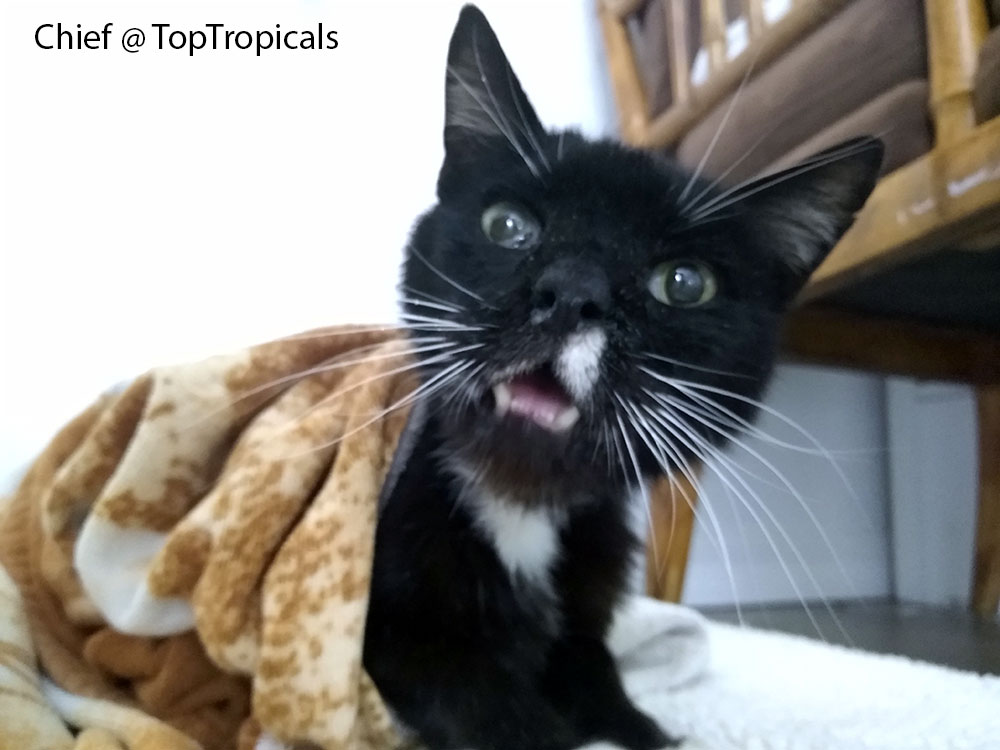
Chief is breathing through his mouth: "Stuffed nose sucks!"

How to treat Cat Coronavirus

When cats get a flu/virus/cold, they suffer congestion, sneeze and cough. Just like us humans. But for cats, stuffed nose is much worse trouble, because they can't smell food = they won't eat it! In tough cases, they won't even drink any water. Due to specifics of cat metabolism, if a cat doesn't eat and/or drink for more than a couple of days, it may become life-threatening. It is not the virus that kills a cat, it is dehydration, lack of nutrition, and possible secondary infections.

- Vet. During Covid-19 lockdown, many animal hospitals are closed, but if you are lucky to find a vet, it is wise to give the cat a long-lasting shot of antibiotic. You can't treat a virus with antibiotic, but it will prevent secondary infections (like pneumonia, etc.)
- Water is absolutely essential! Make sure your Cat drinks water. If he (she) doesn't want to drink on his own, you need to give him water with a syringe. As often as you can. Little by little. Or, ask a vet to put a "water pouch" under cat's skin. This will save the cat from dehydration.
- Food is the main key! Your cat must eat a normal size portion per day in order to fight the illness. Because he can't smell, it's possible he won't eat on his own. Offer him a smelly, soft/wet food of room temperature or slightly warmer: usually tuna works well. Get Salmon Oil and put on top of the food: it is smelly, plus a great vitamin supplement.
- Hand-feeding. If congestion is bad, even a smelly tuna may not help. Mix a spoonful of pate with some water and try to hand-feed this "soup" to the cat either using syringe, or a small spoon. Little by little. Remember, his nose is stuffed and he can't swallow and breath at the same time, so it must be tiny bites. (Wrap the entire cat tightly in a large thick towel to save yourself lots of scratching damage, leaving out just the face. Guaranteed, he won't like the procedure and you will be surprised how strong he is for a sick cat.)
- Supplements. For an extra nutrition support, you may use Critical nutrition food and other protein supplements. Consult your vet and you may want to try the following aids: High Calorie Liquid or Gel (easier to administer), HomeoPet Nose Relief (for de-congestion), Lysine Soft Chews, and Mirataz ointment (to promote appetite).
- Rest. Keep the cat indoors, in a warm place, away from drafts. Cover with a towel to make comfy. Keep lights dimmed. Change bedding, towels, blankets at least daily to keep clean, get rid of germs and drooling accidents.
- Quarantine from other cats, the cat coronavirus is super catchy! Find that spare room. Bleach, soap, alcohol and Hand Sanitizer - are your friends now to maintain germ- and virus-free environment.
- Mild cases. Some cats have mild symptoms (we've noticed that black cats and tuxedo cats are more susceptible regardless of age). In this case, do not panic - just give them time to recover. Lots of rest, privacy, and be sure to monitor water/food intake!
- Tough cases. Most cats look lethargic when sick. At some point, if within 3-4 days you don't see improvement and the coughing continues, you need x-ray to rule out pneumonia.

Stay well and healthy, PeopleCats!
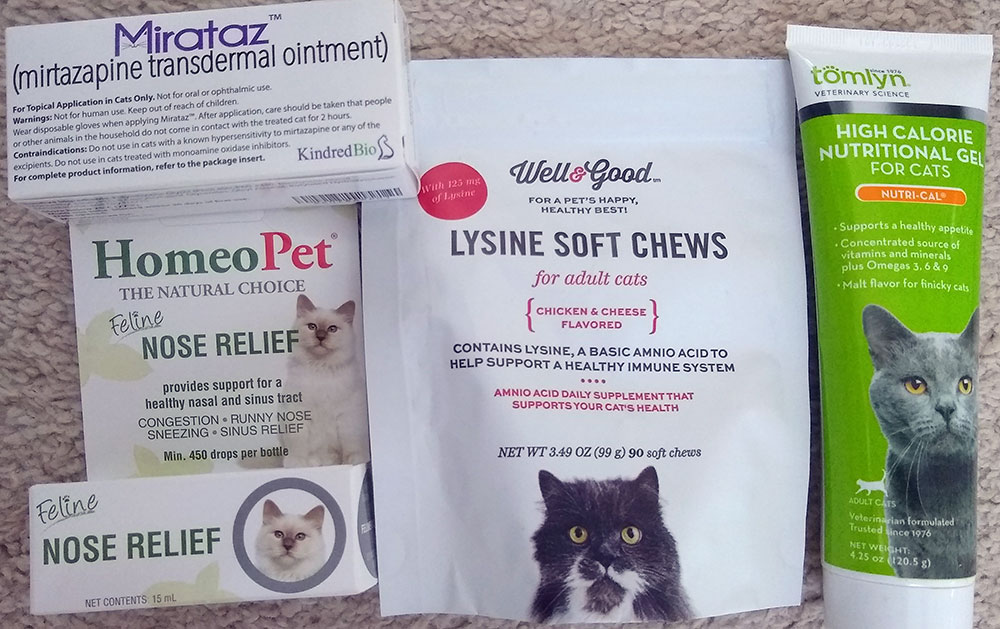
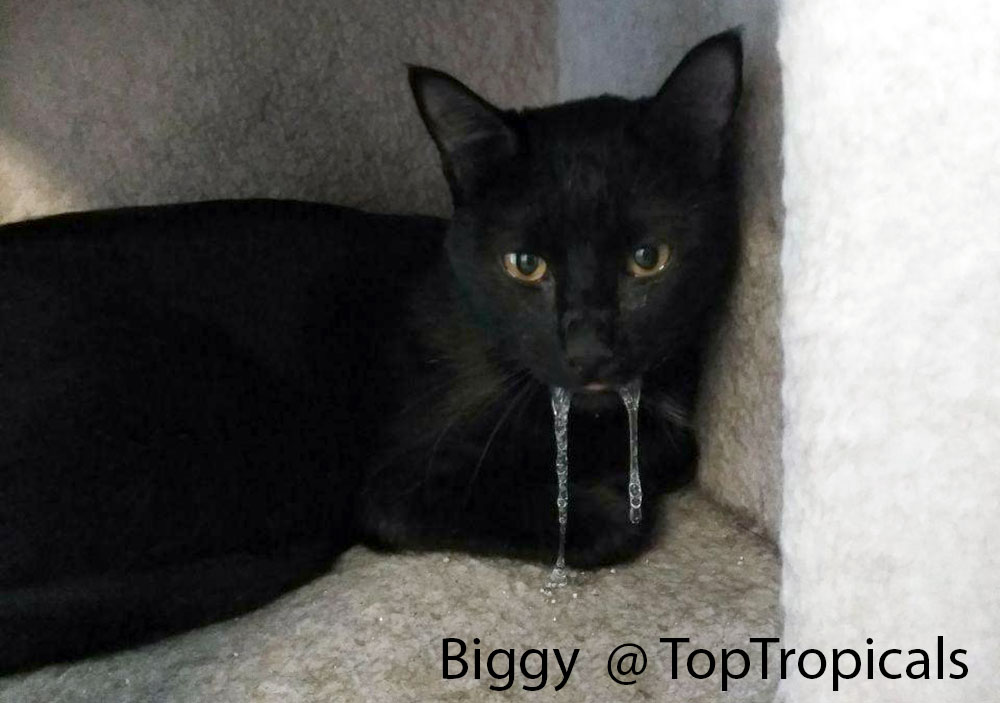
Biggy sneezed... Ooops, sorry for no mask!

TopTropicals PeopleCat Club

Thank you everybody for supporting us in helping PeopleCat Community!
Make your kind donation today and receive a surprise gift from us. Every little bit helps! Thank you and God bless you and your pets!
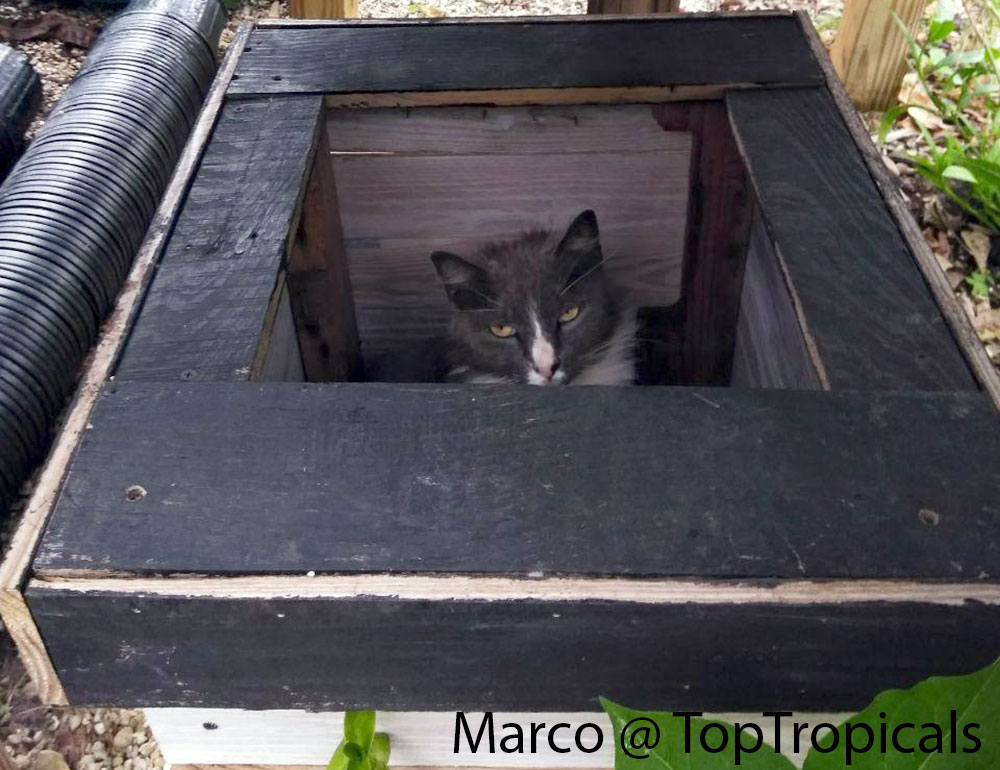
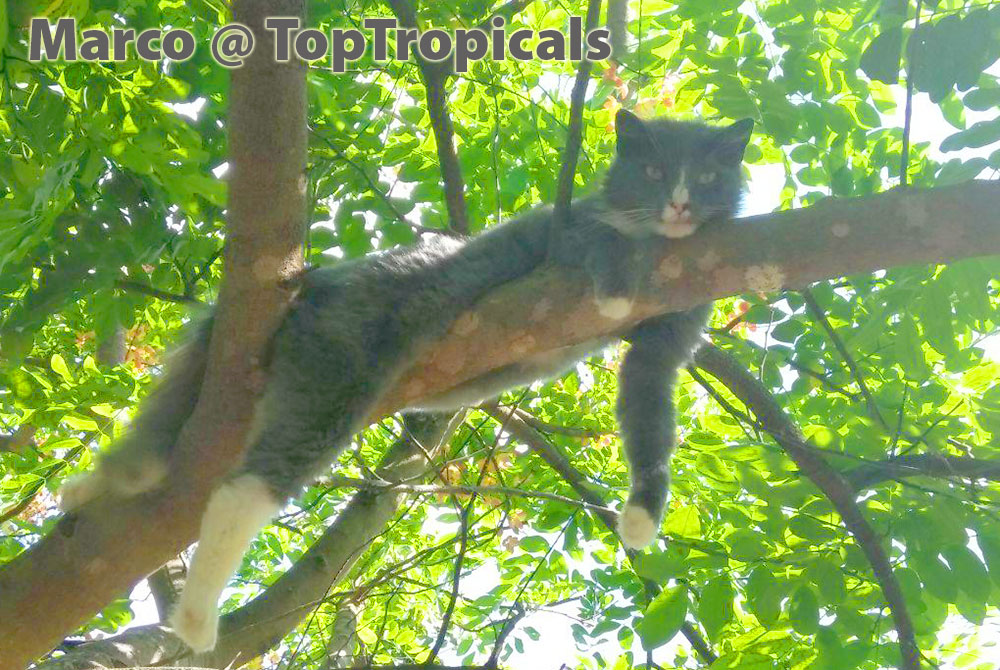
Coughing Marco is practicing Social Distancing

Date: 7 Feb 2020

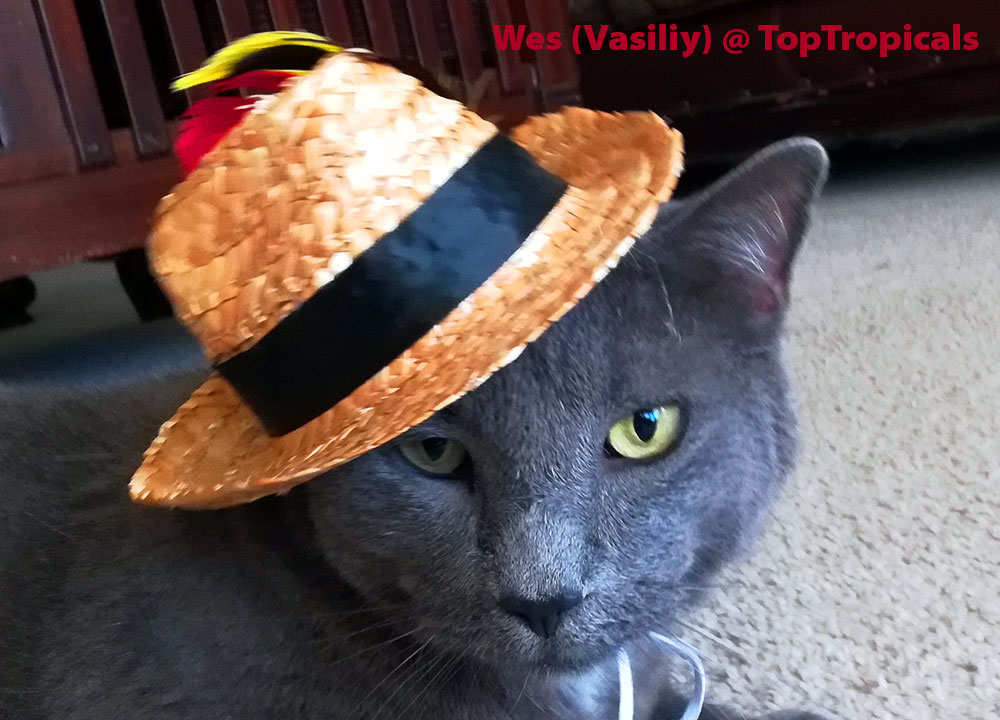
Meet PeopleCats of TopTropicals. Cat of the Day: Vasiliy - the Lover

Wesley (aka Vasiliy) is a real Lover. He is the sweetest Purrrson you can imagine who just loves everybody... except! Except for those who ring the door bell. Wes is afraid of the doorbell and hides in a closet for a few hours every time he hears someone at the door. He runs away from that door knocking off everything on his way to the closet sanctuary. Just in case! In today's world of Amazon deliveries, he gets to spend in a closet quite a bit of time.

Another fear of Wesley is James Coconuts. We don't know why, but for some reason they have an issue. Coconuts once had bitten Wes for being too annoying with his love, and since then they stay on different sides of the couch!

Oh well, who said that lovers have no fears?

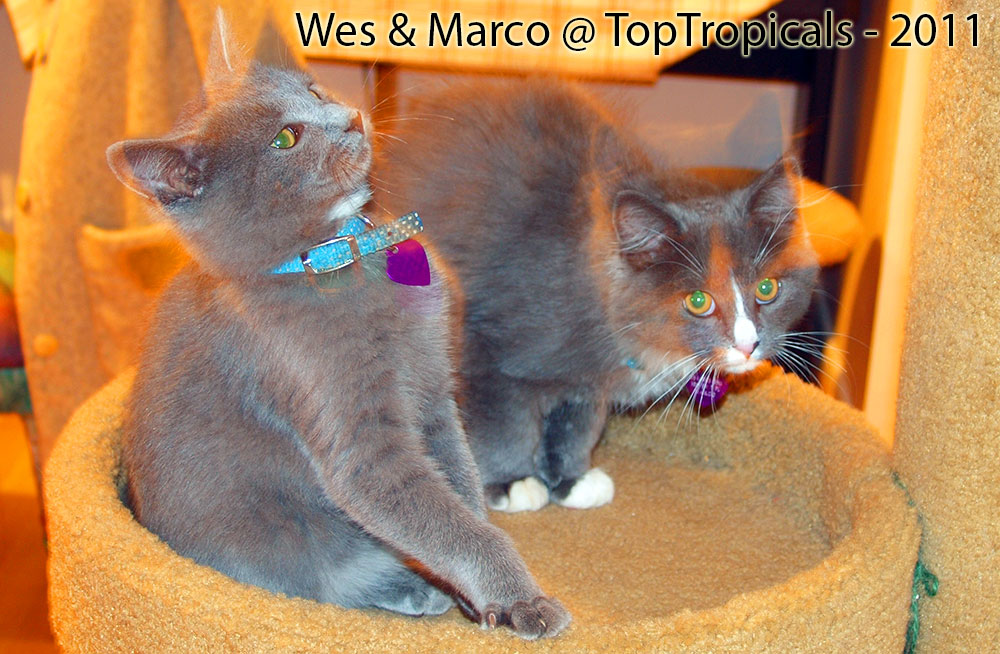
Wesley with his brother Marco when they were little

Date: 11 Jan 2020

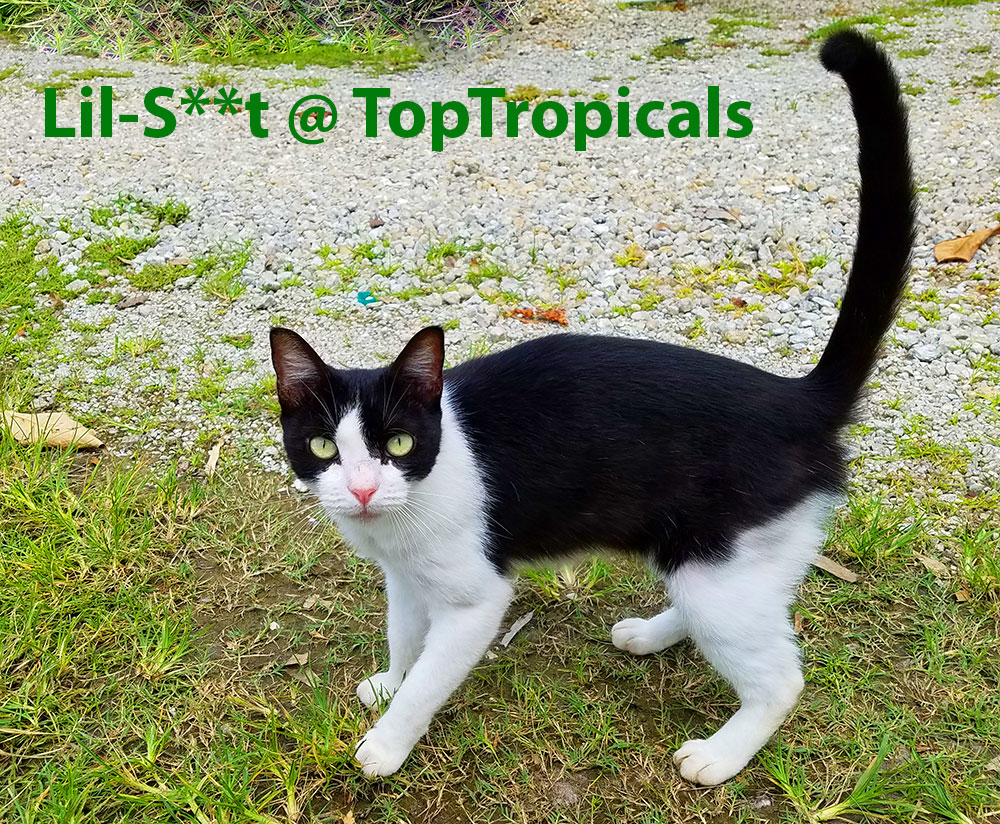
Meet PeopleCats of TopTropicals. Cat of the Day: Tricky Lil S**t still rules the place!

Everyone knows Lil S**t because she is the first Purrrson you see when visiting our Garden Center, along with Marco. They are our official Greeters.
She not only hangs out at the gate, but also runs our Shipping Department along with Chief. Lil S**t has her purrrrsonal extra plates at the gate: she insisted to have them so she can demonstrate to everyone how empty they always are... that means the poor Lil Thing is always hungry, duh. Well if you preferrrr to believe her, you may bring some treats for her... and watch her eating them and bugging the next visitor 5 minutes later...
We don't mind her Lil tricks, because it seems like no matter how much she eats, she sure keeps her Lil figure slim without any diet! Maybe some day she can share her secret with us!

Check out and more Cat of the Day stories.

Lil S**t at the Front Gate claiming her rights for extra food... and complaining to visitors.

Date: 10 Nov 2025

❄️ How to Prepare Your Tropical Garden for Winter

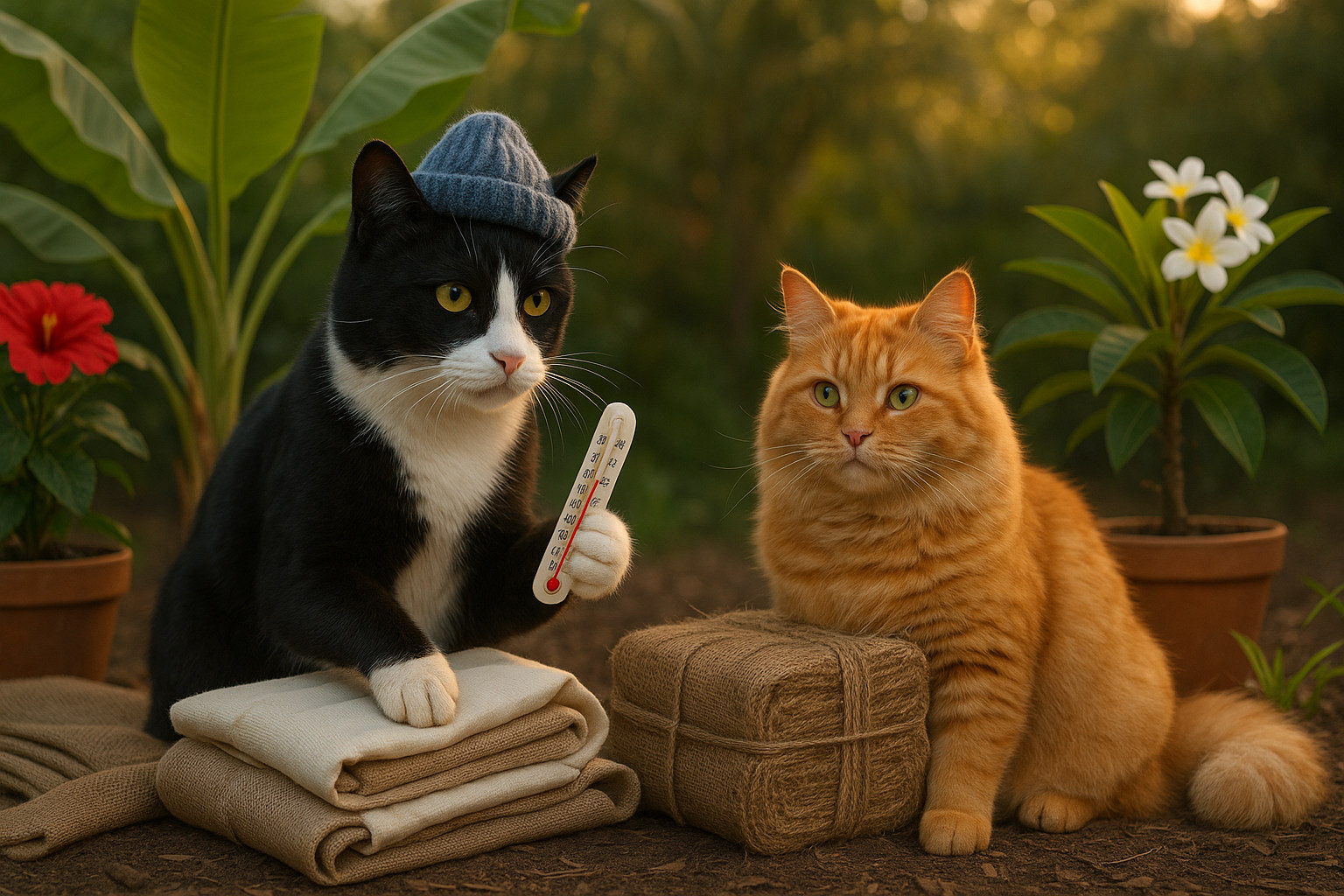
Two  cats  in  a  tropical  garden  at  sunset.  Smokey,  a  black-and-white 


tuxedo  cat  wearing  a  wool  cap,  holds  a  thermometer  while  Sunshine,  a  fluffy 


orange  tabby,  sits  beside  mulch  and  folded  frost  cloths  surrounded  by  banana
 
 
  and  hibiscus  plants.

Smokey and Sunshine Wrap Up the Garden with Frost Cloth Before the Chill.

Smokey: "Thermometer says 45. Time to wrap the bananas!"
Sunshine: "You wrap the bananas. I’ll guard the mulch… from this sunny spot."
Smokey: "Teamwork, Sunshine. Teamwork."

🌡️ Cold nights are coming - but your tropicals do not need to shiver!

Even in sunny Florida and other warm zones, one cold snap can undo months of growth. Preparation is everything. Tropical plants can handle a lot, but they dislike surprises. Let’s make sure your garden stays safe, strong, and happy all winter long.

Tips from Tatiana Anderson, Top Tropicals Plant Expert

👉 Group and Check Your Plants

You already know which plants are in pots and which are in the ground. What matters now is prioritizing by cold sensitivity. Identify the tender tropicals – papaya, banana, plumeria, adenium, heliconia – and decide which ones get covered first when temperatures drop. Keep frost cloths or old sheets near those areas, ready to grab fast. If your garden is large, label protection zones or mark plants that always need extra care. The goal is to have a plan, not a panic, when the cold alert hits.

Once you know your priorities, you can plan the rest of your protection strategy.

👉 Feed and Mulch

Stop using high-nitrogen fertilizers by late fall. They push soft new growth that freezes easily. Add compost around the base of your plants and top with 3 to 4 inches of mulch. Mulch acts like a blanket: it keeps warmth in, protects the roots, and keeps soil moisture steady. Just make sure the soil drains well; cold and soggy soil leads to root rot. In raised beds, check that water flows away easily.

After you feed and mulch, it is time to look at how your local zone changes the game.

👉 Zone-by-Zone Tips

Woman  sitting  between  two  large  potted  tropical  plants  on  a  wooden  deck
 
 
  in  front  of  a  house,  preparing  to  move  them  indoors  for  the  winter.

Moving Tropical Plants Indoors for Winter Protection

  • Zone 10: You are lucky! This is mostly a maintenance season. Watch for root rot after heavy rain, trim lightly if needed, and protect tender young trees during surprise chills. Keep some frost cloth ready just in case.
  • Zone 9: This is the main action zone. Nights can dip into the 30s. Deep-water your trees once before cold nights to insulate the roots. Apply heavy mulch, and have frost protection ready to go. If you grow tropical fruit like mango or guava, consider wrapping young trunks in burlap or foam pipe insulation.
  • Zone 8: This is where tropical gardening becomes creative. Stick to cold-hardy tropicals such as loquat, guava, or cold-hardy avocado varieties. Use portable greenhouses, wrap trunks, and move smaller plants indoors or to a heated porch when frost threatens.

Now that the garden beds are set, let’s look at your pots and containers – your most mobile plants.

👉 Container and Patio Plants

Potted plants are the easiest to protect but also the quickest to freeze. Start reducing watering now so roots do not stay too wet in cooler weather. Before moving them, check for insects hiding under leaves or in the soil. Group your pots close to a wall for reflected heat and wind protection. If you plan to bring them indoors, do it gradually. Move them closer to the house for a few days before bringing them all the way inside to help them adjust to lower light and humidity.

When the chill starts, many gardeners rush to move everything inside at once – but a smooth transition works much better.

👉 Indoor Plants

When bringing plants inside, give them a good rinse to remove dust and bugs, and flush the soil to wash out salts from summer fertilizing. Keep them separate from your houseplants for a week to make sure no pests come along. Expect some leaf drop – it is normal as they adjust to lower light. Give them bright light near a window, and cut watering by about half until spring. Avoid misting too much; good airflow matters more than humidity during winter.

Many tropicals, like hibiscus, brugmansia, and crotons, may look tired for a while, but they will bounce back quickly once days get longer.

👉 Timing Is Everything

The key is to prepare before the first cold warning. Check your weather app regularly once nights start dropping into the 50s. Keep covers, mulch, and supplies ready so you are not running outside at midnight with a flashlight and a frozen hose. Have your frost cloths labeled by plant group and stored in an easy spot. A little organization now saves a lot of stress later.

Many tropicals, like hibiscus, brugmansia, and crotons, may look tired for a while, but they will bounce back quickly once days get longer.

Remember: the goal is to help your plants rest safely. Many gardeners prune or fertilize too late in the season – we will talk about why that can be risky next week." — says Tatiana Anderson, Top Tropicals Plant Expert

Coming next mail-list: The best gadgets for cold protection (lights, heaters, frost covers) and what NOT to do in winter.

📚 Learn more from Top Tropicals Blog:

Cold protection - winter action for your plant collection

What plants are good to order in Winter?

How to take care of house plants in Winter

How to protect tropical plants in Winter

How to take care of a mango tree in winter

How to protect Avocado from cold

Overwintering Adeniums outside of tropics

Rows  of  tropical  plants  in  black  pots  covered  with  frost  cloth  and 


plastic  sheeting  for  winter  protection  at  Top  Tropicals  nursery.

Protecting Tropical Plants with Frost Covers at Top Tropicals Nursery

Date: 20 May 2020

PeopleCats of TopTropicals. Cats of the day: the most unusual and weird.

Biggy and Marco won/shared today's contest of Cat of the Day for being the most DIFFERENT. For eating corn and for sleeping in a tree like a bird!

TopTropicals PeopleCat Club

Thank you for supporting us in helping PeopleCat Community!
Make your kind donation today and receive a surprise gift from us! Every little bit helps. Thank you and God bless you and your pets!