Garden Blog - Top Tropicals

Date: 27 Nov 2019

Meet PeopleCats of TopTropicals. Cindy's Purry - Jackson's Nanny

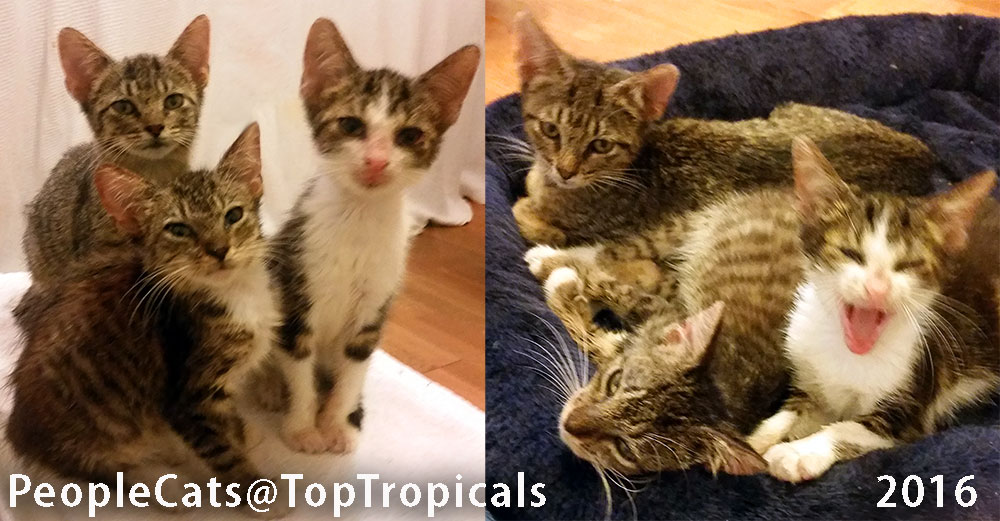
Purry came in the same litter with LadyBug, Ricki, and Charlie.
She now lives in Cindy's house as an indoor cat. She is the most lovable and purring purrrrson.

Purry (or Pursey) has a little ward she faithfully looks after... Her soft purrs put Baby Jackson Michael every time to sleep!

Check out and more Cat of the Day stories.

Purry - 2016

Date: 14 Oct 2019

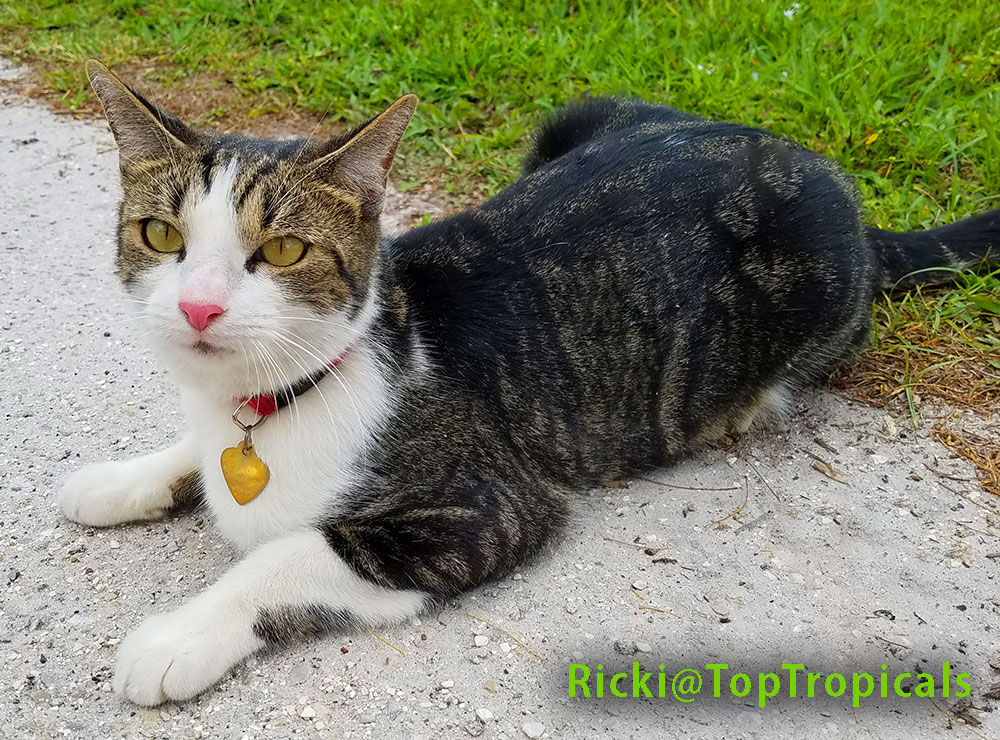
Meet PeopleCats of TopTropicals. Cat of the Day: Ricki

The Smallest Cat

Ricki is a tiny little cat. He is already 3 y.o. but still feels shy because he always has been the smallest one... He arrived to TopTropicals as a little kitten, along with his 3 sisters, Charlie, Purry, and LadyBug, in a box. Ricki was the last kitten in the littler and almost half the size of other kittens! But his ears were the biggest. So he became a very Wise Puuurson who knows how to Listen.

Not only Ricki was the smallest, but he also was pretty sick when we first got him at the age of 4 weeks. He had a bad infection in both eyes and could hardly see anything... His 2 sisters got adopted by employees, but no one wanted to adopt poor Ricki... so he stayed at TopTropicals. Almost 2 weeks of therapy finally helped him to get all better. Now he is one of the cutest Little People!

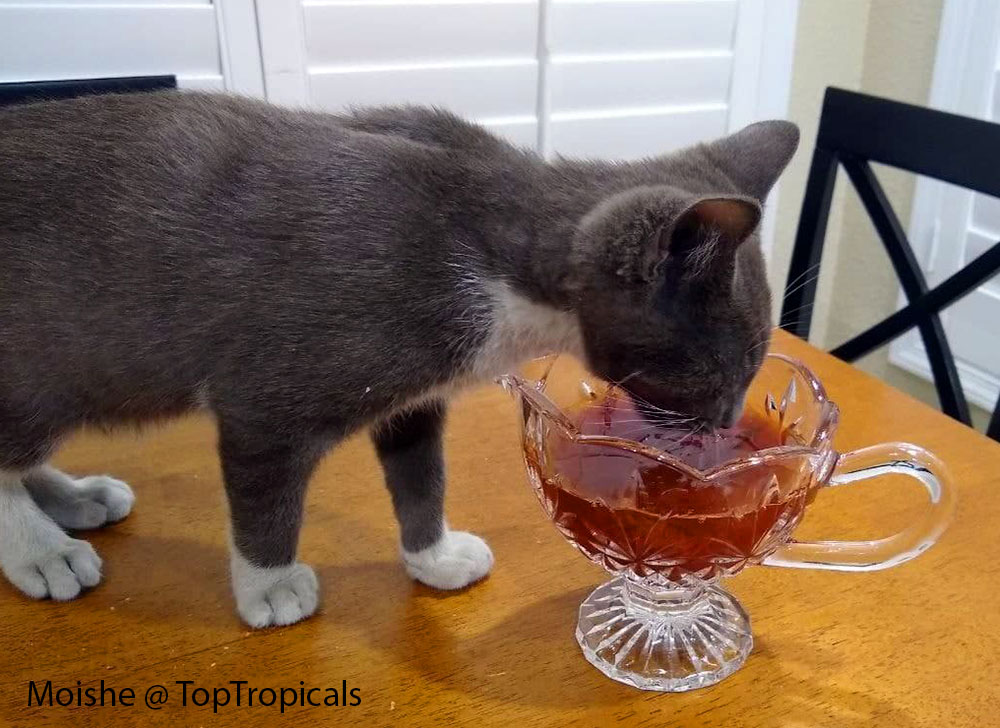
Ricki has his own spot at the corner of a dinner table. He is not interested in stealing any food (unlike Wesley), he just wants to be involved in a dinner conversation...

Ricki likes treats and remains very shy, staying indoors. If you visit our Garden Center, you may bring him a small treat - his favorite "Temptations".

Wesley and Ricki at Dinner conversation

LadyBug, Purry, and Ricki, 2016.

Date: 10 Nov 2025

❄️ How to Prepare Your Tropical Garden for Winter
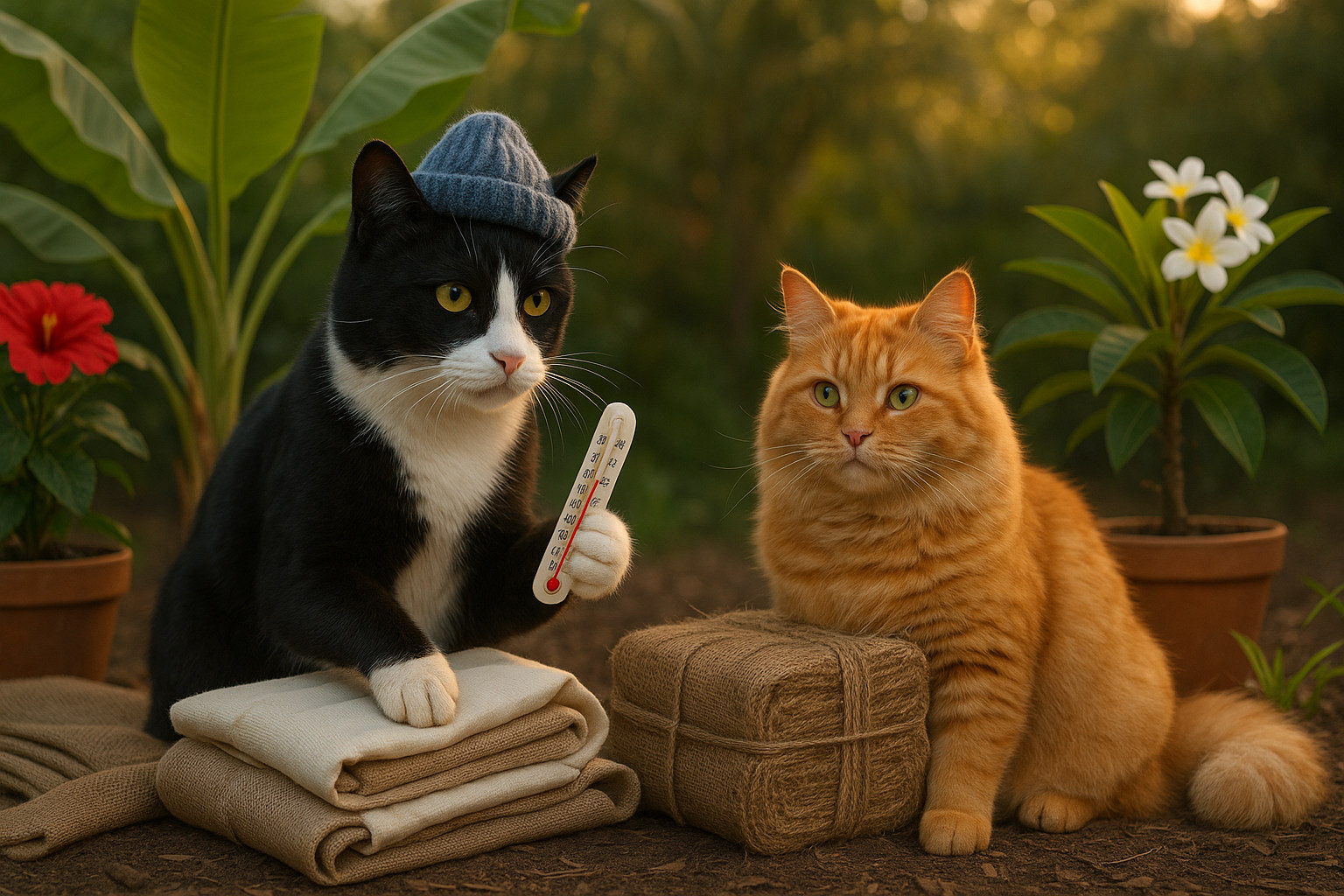
Two  cats  in  a  tropical  garden  at  sunset.  Smokey,  a  black-and-white 


tuxedo  cat  wearing  a  wool  cap,  holds  a  thermometer  while  Sunshine,  a  fluffy 


orange  tabby,  sits  beside  mulch  and  folded  frost  cloths  surrounded  by  banana
 
 
  and  hibiscus  plants.

Smokey and Sunshine Wrap Up the Garden with Frost Cloth Before the Chill.

Smokey: "Thermometer says 45. Time to wrap the bananas!"
Sunshine: "You wrap the bananas. I’ll guard the mulch… from this sunny spot."
Smokey: "Teamwork, Sunshine. Teamwork."

🌡️ Cold nights are coming - but your tropicals do not need to shiver!

Even in sunny Florida and other warm zones, one cold snap can undo months of growth. Preparation is everything. Tropical plants can handle a lot, but they dislike surprises. Let’s make sure your garden stays safe, strong, and happy all winter long.

Tips from Tatiana Anderson, Top Tropicals Plant Expert

👉 Group and Check Your Plants

You already know which plants are in pots and which are in the ground. What matters now is prioritizing by cold sensitivity. Identify the tender tropicals – papaya, banana, plumeria, adenium, heliconia – and decide which ones get covered first when temperatures drop. Keep frost cloths or old sheets near those areas, ready to grab fast. If your garden is large, label protection zones or mark plants that always need extra care. The goal is to have a plan, not a panic, when the cold alert hits.

Once you know your priorities, you can plan the rest of your protection strategy.

👉 Feed and Mulch

Stop using high-nitrogen fertilizers by late fall. They push soft new growth that freezes easily. Add compost around the base of your plants and top with 3 to 4 inches of mulch. Mulch acts like a blanket: it keeps warmth in, protects the roots, and keeps soil moisture steady. Just make sure the soil drains well; cold and soggy soil leads to root rot. In raised beds, check that water flows away easily.

After you feed and mulch, it is time to look at how your local zone changes the game.

👉 Zone-by-Zone Tips
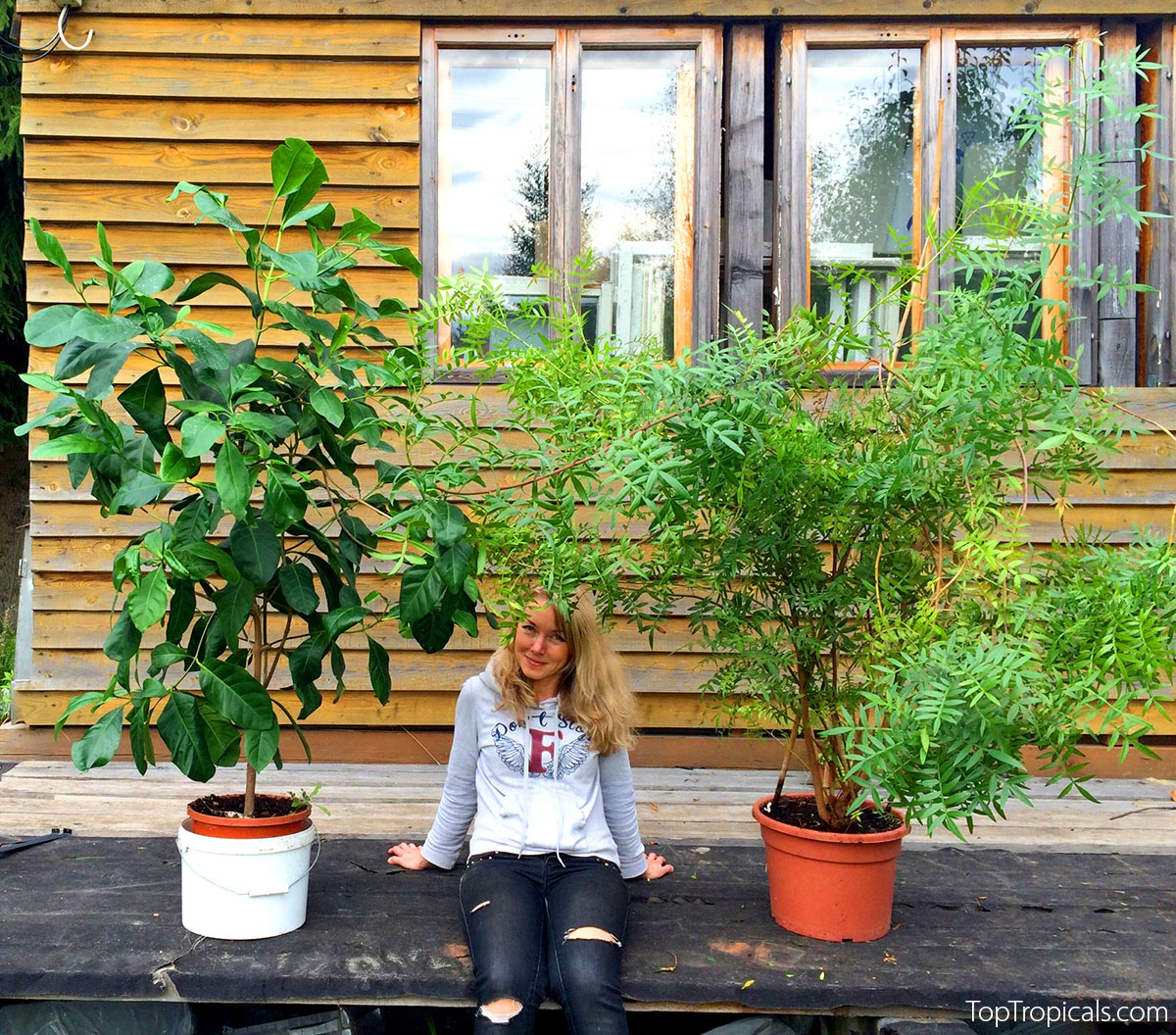
Woman  sitting  between  two  large  potted  tropical  plants  on  a  wooden  deck
 
 
  in  front  of  a  house,  preparing  to  move  them  indoors  for  the  winter.

Moving Tropical Plants Indoors for Winter Protection

  • Zone 10: You are lucky! This is mostly a maintenance season. Watch for root rot after heavy rain, trim lightly if needed, and protect tender young trees during surprise chills. Keep some frost cloth ready just in case.
  • Zone 9: This is the main action zone. Nights can dip into the 30s. Deep-water your trees once before cold nights to insulate the roots. Apply heavy mulch, and have frost protection ready to go. If you grow tropical fruit like mango or guava, consider wrapping young trunks in burlap or foam pipe insulation.
  • Zone 8: This is where tropical gardening becomes creative. Stick to cold-hardy tropicals such as loquat, guava, or cold-hardy avocado varieties. Use portable greenhouses, wrap trunks, and move smaller plants indoors or to a heated porch when frost threatens.

Now that the garden beds are set, let’s look at your pots and containers – your most mobile plants.

👉 Container and Patio Plants

Potted plants are the easiest to protect but also the quickest to freeze. Start reducing watering now so roots do not stay too wet in cooler weather. Before moving them, check for insects hiding under leaves or in the soil. Group your pots close to a wall for reflected heat and wind protection. If you plan to bring them indoors, do it gradually. Move them closer to the house for a few days before bringing them all the way inside to help them adjust to lower light and humidity.

When the chill starts, many gardeners rush to move everything inside at once – but a smooth transition works much better.

👉 Indoor Plants

When bringing plants inside, give them a good rinse to remove dust and bugs, and flush the soil to wash out salts from summer fertilizing. Keep them separate from your houseplants for a week to make sure no pests come along. Expect some leaf drop – it is normal as they adjust to lower light. Give them bright light near a window, and cut watering by about half until spring. Avoid misting too much; good airflow matters more than humidity during winter.

Many tropicals, like hibiscus, brugmansia, and crotons, may look tired for a while, but they will bounce back quickly once days get longer.

👉 Timing Is Everything

The key is to prepare before the first cold warning. Check your weather app regularly once nights start dropping into the 50s. Keep covers, mulch, and supplies ready so you are not running outside at midnight with a flashlight and a frozen hose. Have your frost cloths labeled by plant group and stored in an easy spot. A little organization now saves a lot of stress later.

Many tropicals, like hibiscus, brugmansia, and crotons, may look tired for a while, but they will bounce back quickly once days get longer.

Remember: the goal is to help your plants rest safely. Many gardeners prune or fertilize too late in the season – we will talk about why that can be risky next week." — says Tatiana Anderson, Top Tropicals Plant Expert

Coming next mail-list: The best gadgets for cold protection (lights, heaters, frost covers) and what NOT to do in winter.

📚 Learn more from Top Tropicals Blog:

Cold protection - winter action for your plant collection

What plants are good to order in Winter?

How to take care of house plants in Winter

How to protect tropical plants in Winter

How to take care of a mango tree in winter

How to protect Avocado from cold

Overwintering Adeniums outside of tropics
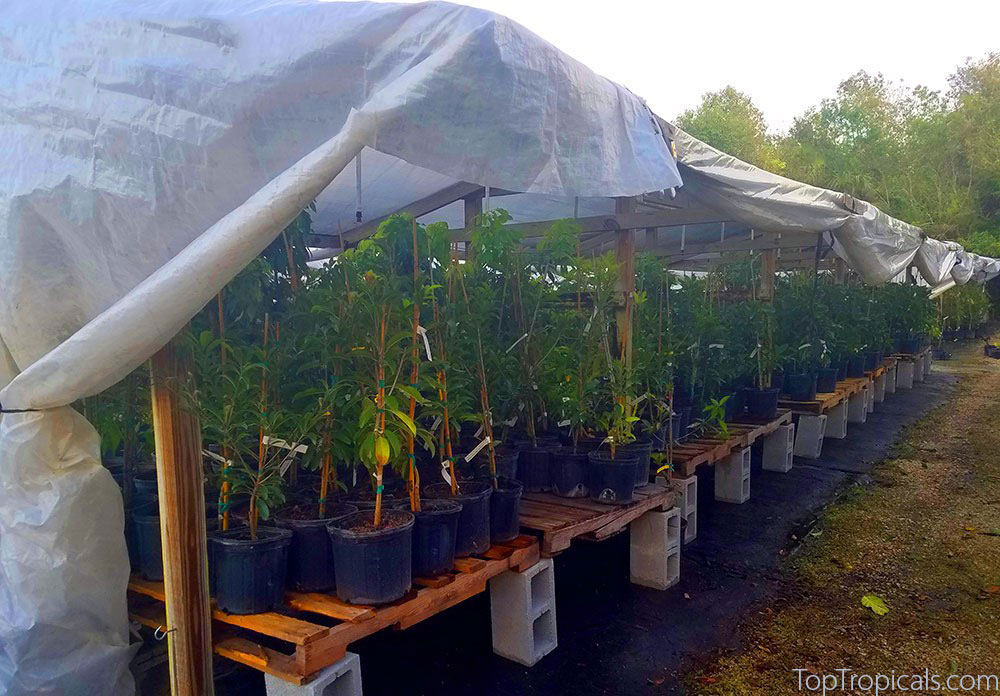
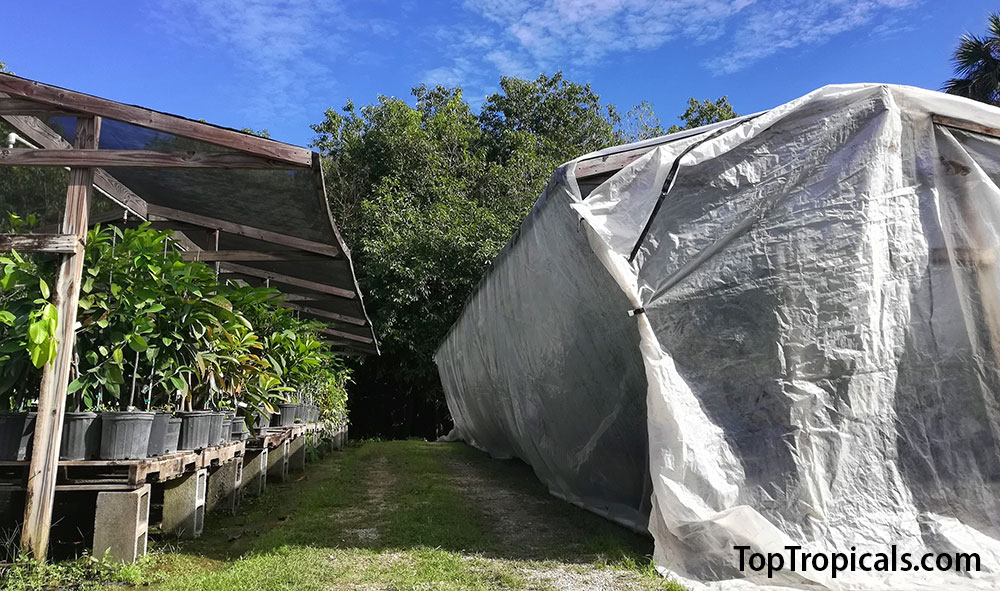
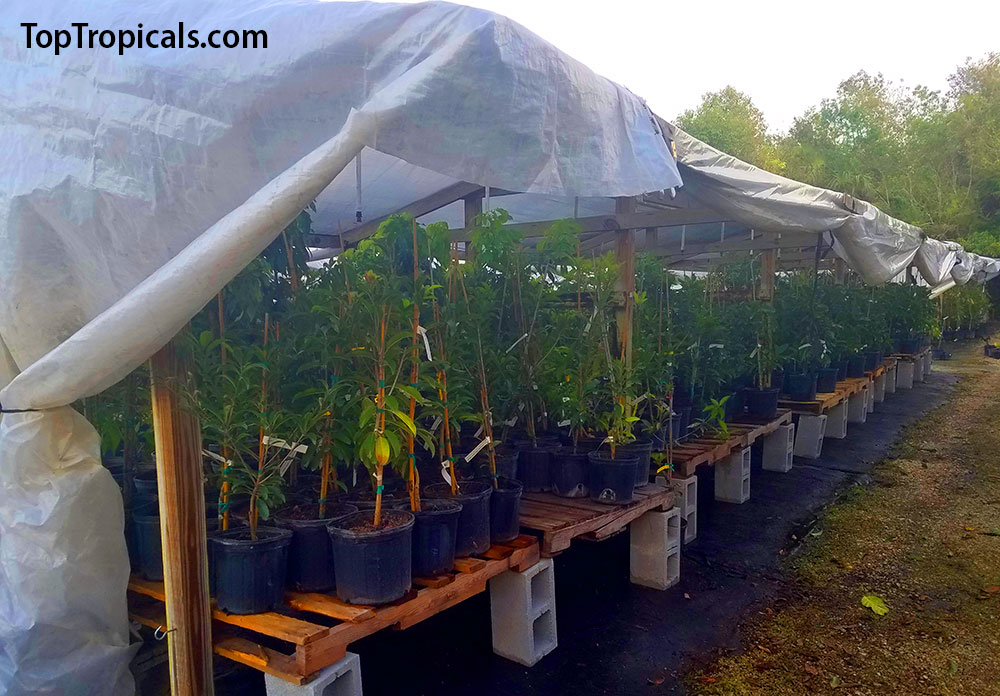
Rows  of  tropical  plants  in  black  pots  covered  with  frost  cloth  and 


plastic  sheeting  for  winter  protection  at  Top  Tropicals  nursery.

Protecting Tropical Plants with Frost Covers at Top Tropicals Nursery

Date: 4 Dec 2021

Sunday Breakfast with Peanut Butter and Blackberry Jam...

It's time for our favorite day and another Easy stroll through Top Tropicals' Garden with savings of 50% and MORE! What a wonderful way to start the day.

Speaking of wonderful, is there any memory as wonderful as a peanut butter and jelly sandwich from back in the day?! PB&J's, a true Classic, easy, savory and delicious and a universal favorite... And for a truly Top Tropicals variation of the Classic sandwich, have we got something special for you...
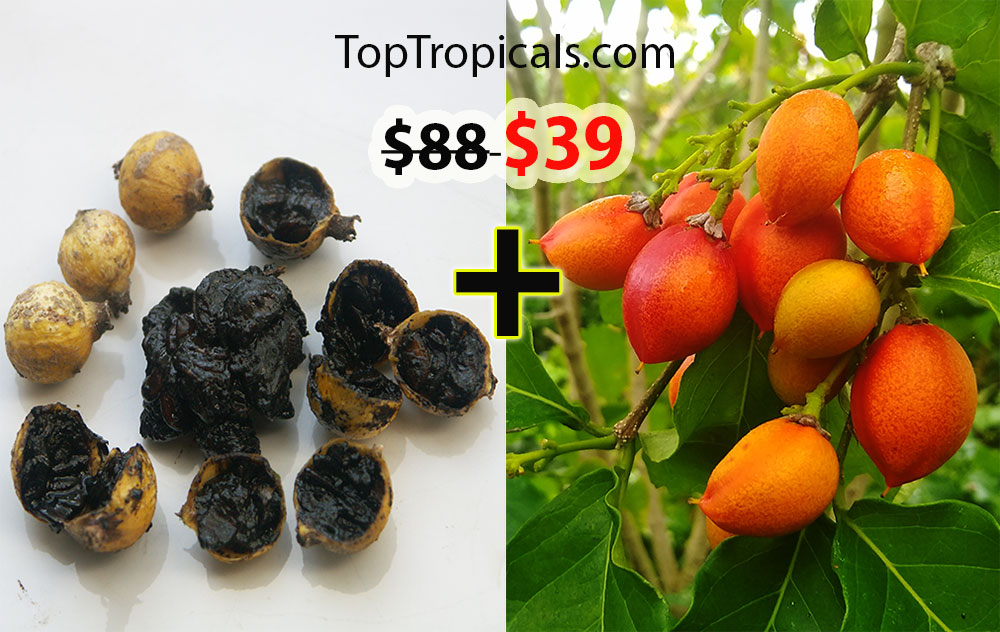
Bunchosia argentea and Randia Formosa. OK, we admit it may not roll off the tongue quite as easily as PB&J, but your tongue and taste buds will be thankful for the delicious flavors of the Peanut Butter Fruit Tree - Bunchosia argentea, and Blackberry Jam Fruit - Randia formosa.

Combine the rich and creamy delicious Peanut Butter with the not too sweet and fresh pulp of the Blackberry Jam Fruit and you have a unique and tasty combination destined to be a classic of its own while making your garden look even more beautiful!

Saving on your favorite plants is Easy.
Easy like Sunday Morning...

For this Easy Sunday we have priced these at incredible savings:
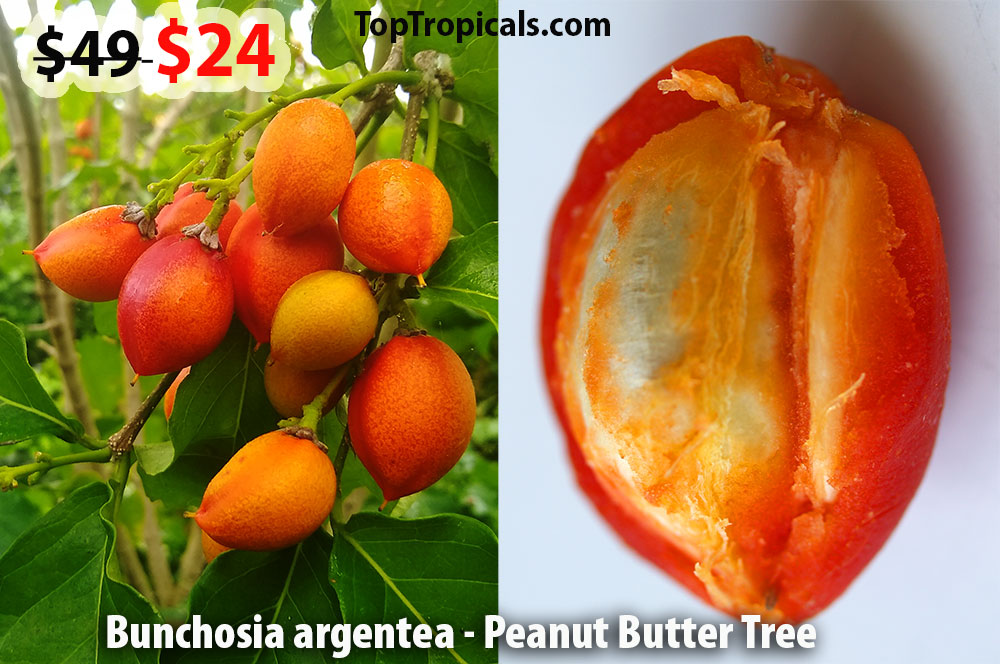
The Peanut Butter Tree, regularly $49, is on Easy Sunday sale for only $24
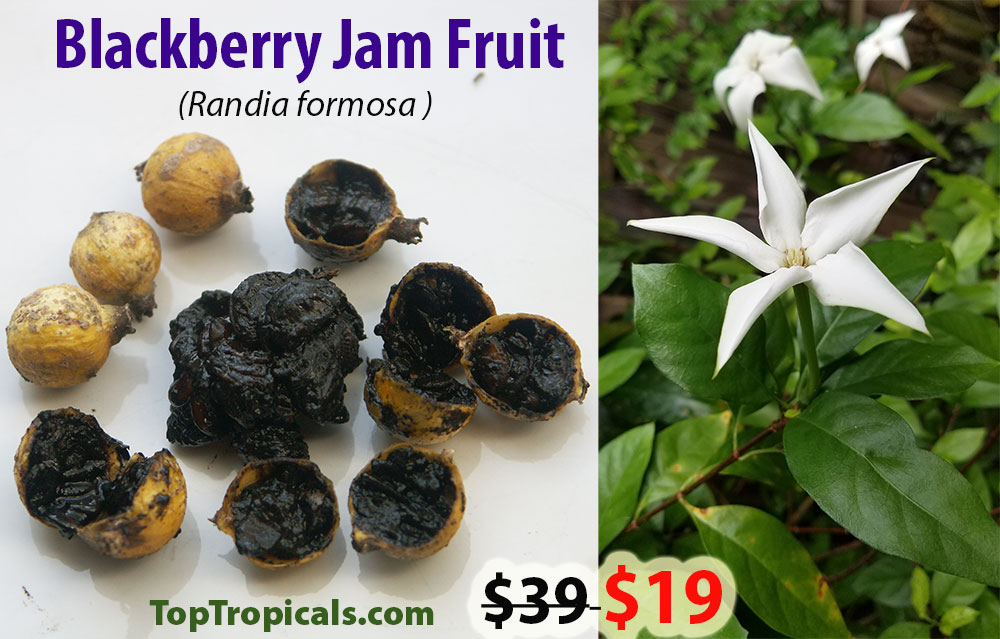
The Blackberry Jam, regularly $39, is on Easy Sunday Sale for only $19

Classic Combination

Combine the two for your own Classic Combination and save even more, instead of full price $88, it's only only $39 for the set!

Blackberry Jam Fruit

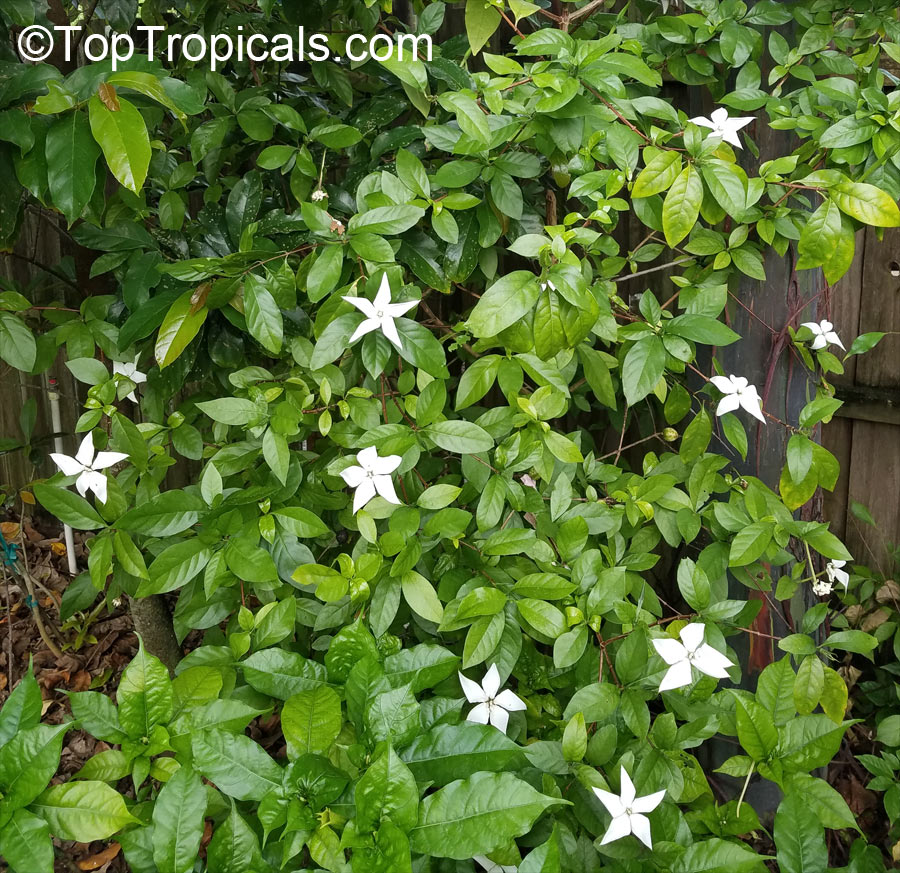
Randia formosa - Blackberry jam fruit, Jasmin de Rosa - fragrant white flowers of this Gardenia relative and edible fruit that tastes like blackberry jam... Kids love the fruit! Many claim that it's even better than preserves. This exotic shrub will fruit in a container within a year and produces as many as 25 to 30 fruits at a time. It is relatively cold hardy, blooms for a few months in the fall and winter, so fruiting and flowering can be enjoyed when many other plants are dormant.

Picture of 2 y.o. plant full of fragrant flowers, ready to set fruit:

Peanut Butter Tree

Bunchosia argentea - Peanut Butter Tree.
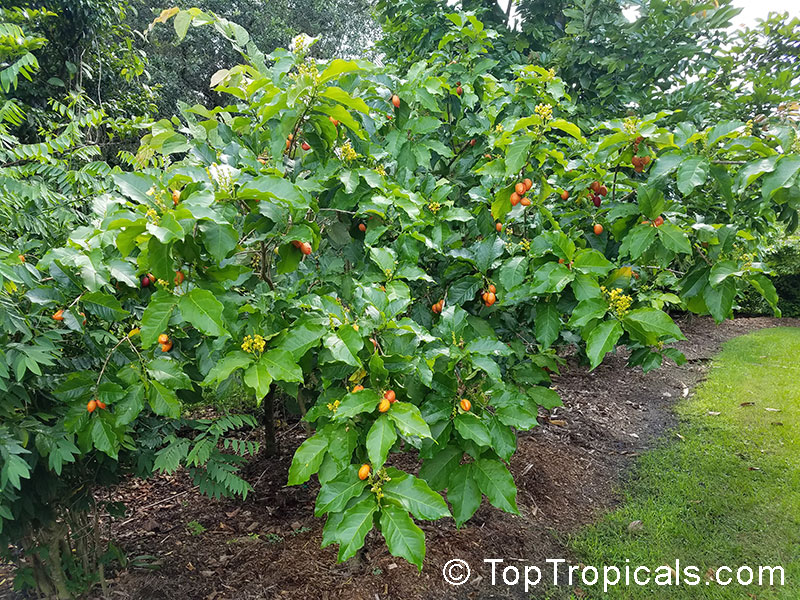
One of the most fascinating exotic fruit, as amazing as Miracle fruit, Peanut Butter Fruit is loved by both kids and adults. Yes, it tastes exactly like peanut butter! Sweet, soft pulp with peanut flavor. The tree is small in size, grows 10-15 ft max, or can be kept as a bush. Starts fruiting within 2-3 years from seed! Keep it in a pot if you have limited space, it can be grown indoors, too. The fruit can be eaten fresh or made into milk shakes. Very rare in cultivation, and relatively cold hardy.

Picture of 2 y.o. tree full of fruit:

Remember, the special prices are good for only 24 hours and expire Monday morning at 7 am EST.
Limited to availability, while supply lasts, hurry up!

Enjoy!

Date: 29 Nov 2020

Cold protection of tropical container plants

Q: I am long time customer of yours, I live in San Diego California and while the summer and Fall temperatures are warm to mild, the winter temperatures dip to a point where some tropicals die off. We are experimenting with different variations of way to heat and insulate the pots we have the tropicals planted in as a way to keep them alive during the colder winter months. I was wondering if you knew of the ideal soil temperature for these tropical in order to look their best year round. All of the heaters we have installed have thermostats and temperature adjustments so we can now keep the soil anywhere between a range of between 65-75 degrees. Any advise you can provide would be greatly appreciated.

A: This is a very interesting concept you are working with. Indeed, keeping pots/roots warm, may help a lot! We've been experimenting with cold protection for a long time - for the above-ground plant parts. For sure keeping roots protected (even with a thick layer of mulch) will benefit tropical plants during winter. In case with container plants, this may help dramatically.
The guideline is, tropical plants slow down or stop their metabolism at 65F. As long as you can keep soil above that temperature - this should work great. Of course, the higher the better.
Optimum temperature for growing tropical plants in general - 70-85F. Above 90F, metabolism stops too, unless it's a heat tolerant, desert plant.

More information on winter cold protection of tropical plants and zone pushing:

Greenhouse in Virginia
Plumeria cold protection
Ghost Cold Protection
Seven rules of cold protection for tropicals
About Cold Protection
Cold protection - winter action for your plant collection
Tropical Treasures articles on zone pushing.