Garden Blog - Top Tropicals

Date: 21 Jun 2026

🍓The Strawberry Moon Rises: A Gardener's Excuse to Go Outside

Sunshine,  an  orange  tabby  cat,  compares  a  strawberry-glazed  donut  to 
 the  Strawberry  Moon  while  Smokey,  a  tuxedo  cat  wearing  glasses,  inspects 
 Strawberry  Tree  and  Strawberry  Guava  plants  at  Top 
 Tropicals.
Sunshine: Look at my strawberry-glazed donut. Same as the Strawberry Moon. I have been waiting for this all month. They say moon gardening is useful. Let's go planting!
Smokey: Science hasn't found much evidence for it.
Sunshine: Then what's the point?
Smokey: If the moon gets people into the garden, that's good enough for me.

On the evening of Monday, June 29, 2026, the full Strawberry Moon will rise low in the southeastern sky. Whether you follow a lunar calendar or not, it's a good excuse to spend a little time outside on a summer evening.

🌛 What Is the Strawberry Moon, Exactly?

Many of the familiar full moon names come from Native American traditions and reflect seasonal events in nature. June's full moon was named for the season when wild strawberries ripen across much of North America, not for any color in the sky. Despite the name, the moon won't glow pink or red. If it looks warm or golden, that's simply because any full moon takes on an amber tint when it hangs low near the horizon, the same atmospheric effect that paints sunsets orange. The "strawberry" is about the harvest, not the hue.

This year, the Strawberry Moon rises on the evening of June 29 and will appear low in the southeastern sky, making it a particularly beautiful moon to watch as dusk settles in.

🌓 Moon Gardening, an Old and Honest Tradition

For generations, gardeners across Europe and beyond timed their planting, pruning, and harvesting to the phases of the moon. Plant root crops during a waning moon, some traditions say, and leafy crops during a waxing one. Prune during certain phases to slow regrowth, harvest herbs at others for better potency. These calendars were passed down through generations of careful observers who paid close attention to their land and their results, and many still follow them today.

Modern science has found little evidence that lunar gravity or moonlight significantly affects plant growth. Yet the tradition persists, and plenty of growers still find real value in the rhythm it brings to the gardening year.

💡What We Know For Sure

Here's the practical truth, and it's the same one Smokey arrived at after thinking it over. Whether or not the moon influences your plants, the act of walking through your garden definitely does. A moon-phase calendar that gets you outside to check on your plants, pull a few weeds, prune back something leggy, top off the mulch, or water a thirsty pot is helping your garden, regardless of what's happening overhead.

The benefit isn't necessarily lunar. It's attention.

A garden rarely thrives because of a single grand effort. It thrives because of dozens of small ones: a little pruning, a little watering, a few weeds pulled before they become many.

Gardens reward the gardeners who show up, and if a full moon is your reminder to show up, that's a perfectly good reason to keep watching the sky.

📅 Beyond the Harvest

Not everything in a garden needs to produce a yield to be worthwhile. Marking the seasons the way our ancestors did, a strawberry moon in June, a harvest moon in fall, a snow moon in February, gives us small, recurring reasons to notice what's changing around us. It's a rhythm, not a requirement.

Think of the Strawberry Moon as a good excuse to take a walk through the garden.

The Strawberry Moon doesn't have to improve anything to be worth celebrating. It only needs to get you outside on a warm June evening, which, honestly, isn't a high bar to clear.

A Strawberry Moon Collection, Just for Fun

Sunshine immediately concluded that any moon named after strawberries deserved a few strawberry-themed plants. We couldn't argue with that logic, so we pulled together a few Top Tropicals favorites that fit the theme.

🍓 Strawberry Tree

Close-up  of  ripe  red  Strawberry  Tree  fruit  (Muntingia  calabura) 
 arranged  on  fresh  green  leaves  with  several  white  five-petaled  flowers  and 
 flower  buds,  displayed  on  a  rustic  wooden 
 surface.

The Strawberry Tree (Muntingia calabura) often carries flowers and fruit at the same time. Sweet red berries, delicate white blossoms, and lush foliage make this fast-growing tropical tree both ornamental and productive throughout much of the year.

Close-up  of  the  rare  yellow-fruited  Strawberry  Tree  (Muntingia 
 calabura)  showing  ripe  golden-yellow  berries  alongside  white  five-petaled 
 flowers  and  green  developing  fruit  among  textured  green 
 leaves.

A rare yellow-fruited form of Muntingia calabura (Strawberry Tree), displaying sweet golden berries, delicate white flowers, and immature green fruit all at the same time. This unusual selection offers the same fast growth and continuous fruiting as the red type, but with attractive yellow fruit that is seldom seen in cultivation.

Strawberry Tree (Muntingia calabura), also known as Jamaican Cherry, grows quickly and produces dainty white flowers resembling strawberry flowers, followed by an abundance of small cotton-candy-sweet berries that birds, wildlife, gardeners and their kids all appreciate.

📚 Learn more from Top Tropicals Garden Blog

🍓 Strawberry Guava

Strawberry Guava (Psidium littorale) brings glossy foliage and sweet, perfumed fruit that tastes something like its namesake crossed with a guava.
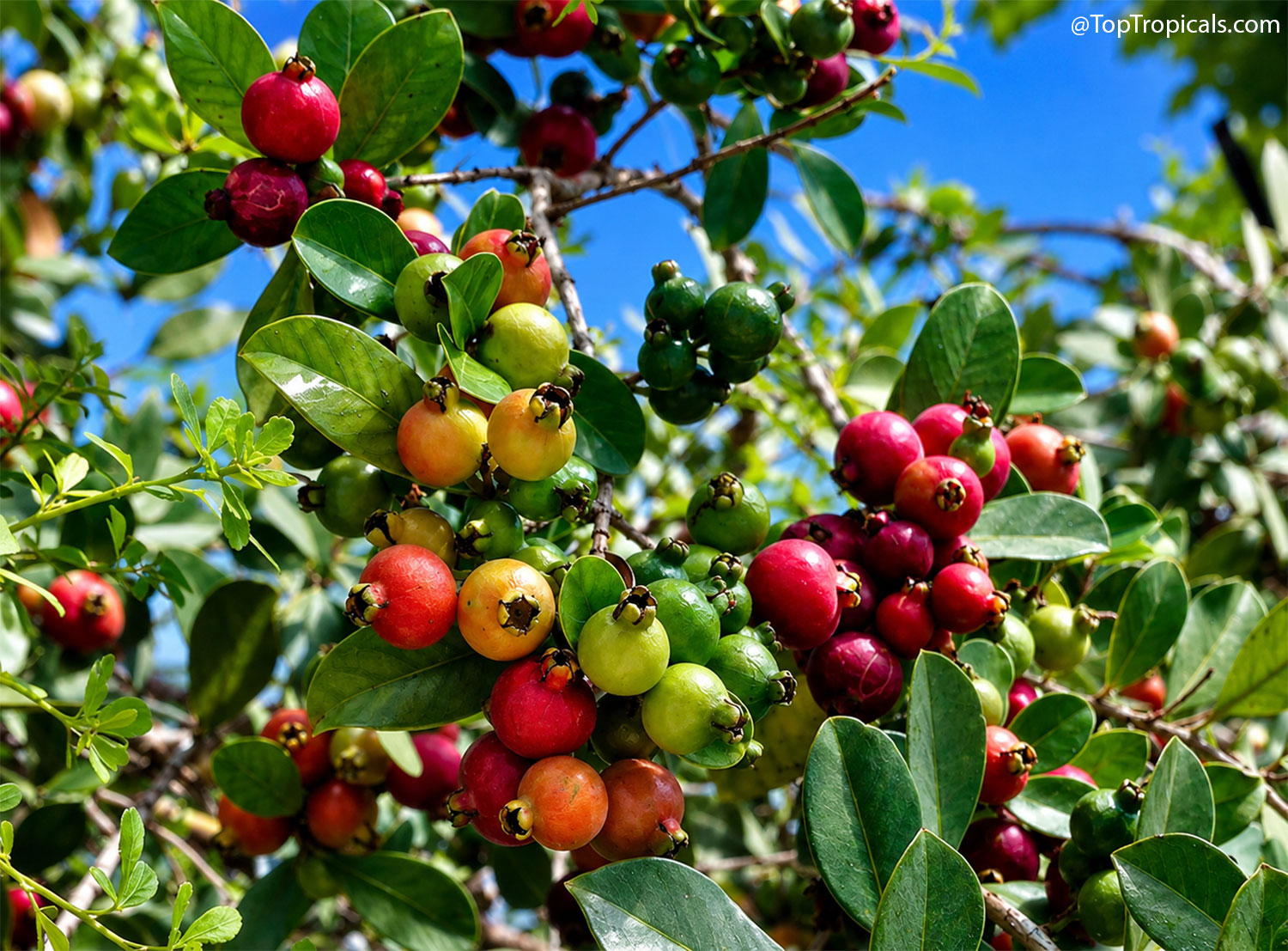
Close-up  of  a  strawberry  guava  branch  loaded  with  fruit  in  different 
 stages  of  ripening,  from  green  and  yellow  to  bright  pink-red.  Glossy 
 evergreen  leaves  surround  the  colorful  clusters  against  a  clear  blue 
 sky.

Strawberry Guava (Psidium littorale, or cattleianum) often carries fruit in multiple stages of ripening at once, creating a colorful display of green, golden, and ruby-red berries. The sweet, aromatic fruit is prized for fresh eating and attracts birds and wildlife to the garden.

🍓 Strawberry Dragon Fruit

Dragon Fruit Vietnamese Jaina Strawberry White (Hylocereus undatus ) produces bright pink fruit with refreshing white flesh and a flavor often described as a blend of strawberry, melon, and kiwi. Its enormous night-blooming flowers are every bit as impressive as the fruit, turning this vigorous climbing cactus into a spectacular summer showpiece.

Plate  of  Vietnamese  Jaina  Strawberry  White  dragon  fruit  showing  several
    whole  pink-skinned  fruits  alongside  sliced  fruit  revealing  bright  white 
 flesh  speckled  with  tiny  black 
 seeds.

Vietnamese Jaina Strawberry White Dragon Fruit is prized for its refreshing white flesh and mild sweet flavor with hints of strawberry, melon, and kiwi. The vivid pink skin and striking black-speckled interior make it as beautiful on the table as it is delicious to eat.

🍓 Strawberry Ginger

Coral Ginger Borneo Strawberry Pink (Riedelia coralina) is one of the rarest gingers in cultivation, producing unusual strawberry-pink flower spikes that seem almost too exotic to be real. The edible blooms have a pleasant spicy fragrance and flavor, making this New Guinea treasure as interesting to taste as it is to admire.

Whether you came for the moon or the plants, we hope you discovered something interesting. They just happen to share a name with the moon overhead this June, and that felt like reason enough to give them a little spotlight.

Close-up  of  Riedelia  coralina  (Coral  Ginger)  showing  an  unusual 
 strawberry-pink  flower  spike  emerging  among  large  glossy  tropical  leaves, 
 with  the  curved  tubular  flowers  standing  out  against  a  lush  green  jungle 
 background.

Riedelia coralina, known as Coral Ginger or Borneo Strawberry Pink, produces one of the most unusual flower displays in the ginger family. Its striking strawberry-pink blooms rise above lush foliage, creating a tropical focal point rarely seen outside specialized collections.

🍓🌱 How to Grow Them

If you live in a frost-free climate (USDA Zones 10+), simply plant these strawberry gems in the ground and enjoy. Strawberry Guava can tolerate occasional frosts down to about 28F once established.

Not so lucky? Many gardeners successfully grow Strawberry Guava, Strawberry Dragon Fruit, and Strawberry Tree in containers, moving them indoors or to a protected location during winter. You don't need a tropical climate to enjoy tropical fruit.

🏡 See You Outside

Whether you believe in moon gardening or not, June 29 is a good night to step outside, find an open view of the southeastern sky, and watch the Strawberry Moon rise. Bring a cup of tea, walk the garden beds while there's still light, pull a few weeds, and let the evening settle in around you.

And that may be the real lesson of the Strawberry Moon.

Sunshine: The Strawberry Moon is out. Time for gardening.
Smokey: What does the moon calendar recommend?
Sunshine: I have no idea. I left it on the kitchen table. Both hands are full.
Smokey: Of course they are. Coffee and donuts. Let's start with the weeds.


👉Start your Strawberry Moon Collection

Date: 10 Apr 2025

Do good

Do good

🔍 Do good


"While you are young, strong, and full of energy, never tire of doing good! Happiness does not exist, nor should it. If life has meaning and purpose, that meaning and purpose are not in our happiness but in something more rational and greater. Do good!" - Anton Chekhov

🐈 PeopleCats.Garden 
#PeopleCats #Quotes

🔴 Join 👉 TopTropicals

Date: 2 Feb 2020

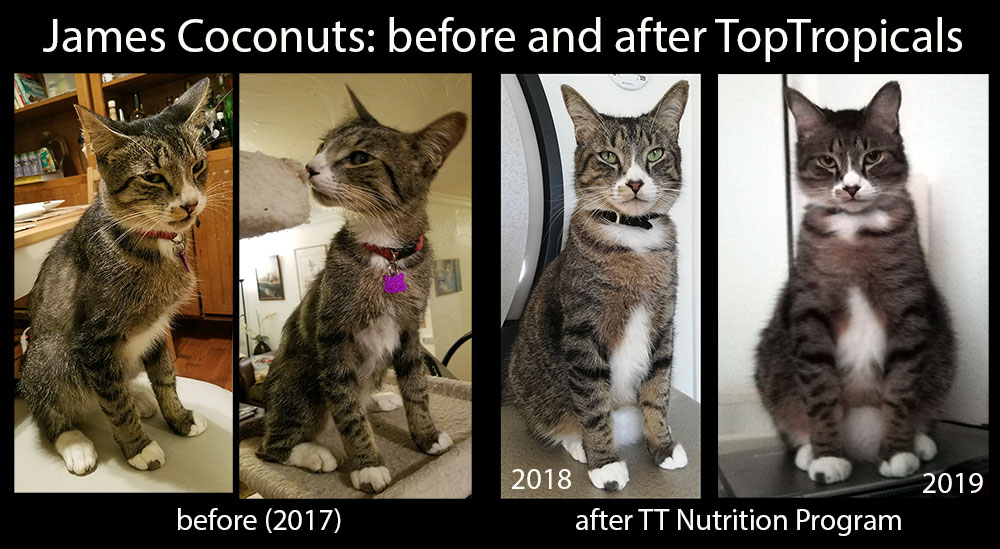
Meet PeopleCats of TopTropicals. Cat of the Day: James Coconuts progress report

Many people asking about James Coconuts who used to be in charge of our Office and Customer Service team. What is he doing now? Did he get a promotion? We addressed this question to Coconuts and here is what he's got to say:

"Hi folks, I am doing just fine. Yes, I got a promotion and currently working in Sunshine Boosters Lab together with Mr Booster (I just call him Mr B). We are developing a revolutionary Sunshine Plant Nutrition Program. It is important that your plants have good food! I can tell from my own experience. When these nice people at TopTropicals picked me up from the street couple years ago, I was nothing but bone and skin... not even much fur. And look at me now! I am still working on my work out, and my resolution for 2020 is to become even more fluffy, just like that chick in the calendar! I think everyone should eat good... and do good... Like someone said:

"Go into the world and do well. But more importantly, go into the world and do good!"(Minor Myers Jr).

Check out and more Cat of the Day stories.

Date: 29 Dec 2019

Meet People of TopTropicals. Duck of the Day: Dobi says Good-Bye!

Our Duck Dobi finally decided to join her whistling duck community and said good bye to us...

Everyone who visited Top Tropicals Garden Center met Dobi - the all-time greeter! She has been raised by Kristi from a little fluffy duckling and ruled TopTropicals Cat Community and Plant Nursery for almost 2 years! Now that she finally feels strong and confident, she said she feels good about getting her Duck Freedom. She promised to come back in Spring, like all ducks do - they come to their Home Pond where they have been raised.

Bon Voyage Dobi, enjoy your duck friends, and we will be waiting for you!

Check out and more Cat of the Day stories.

Date: 30 May 2019

Triple Sec Mango

TopTropicals.com

By Onika Amell, tropical plant specialist

Q: I live in Mesa, Arizona. I am considering purchasing two of you Triple Sec Mango trees. Can you please give me some information on this variety and how to grow it successfully here in hot and arid Arizona, if at all?

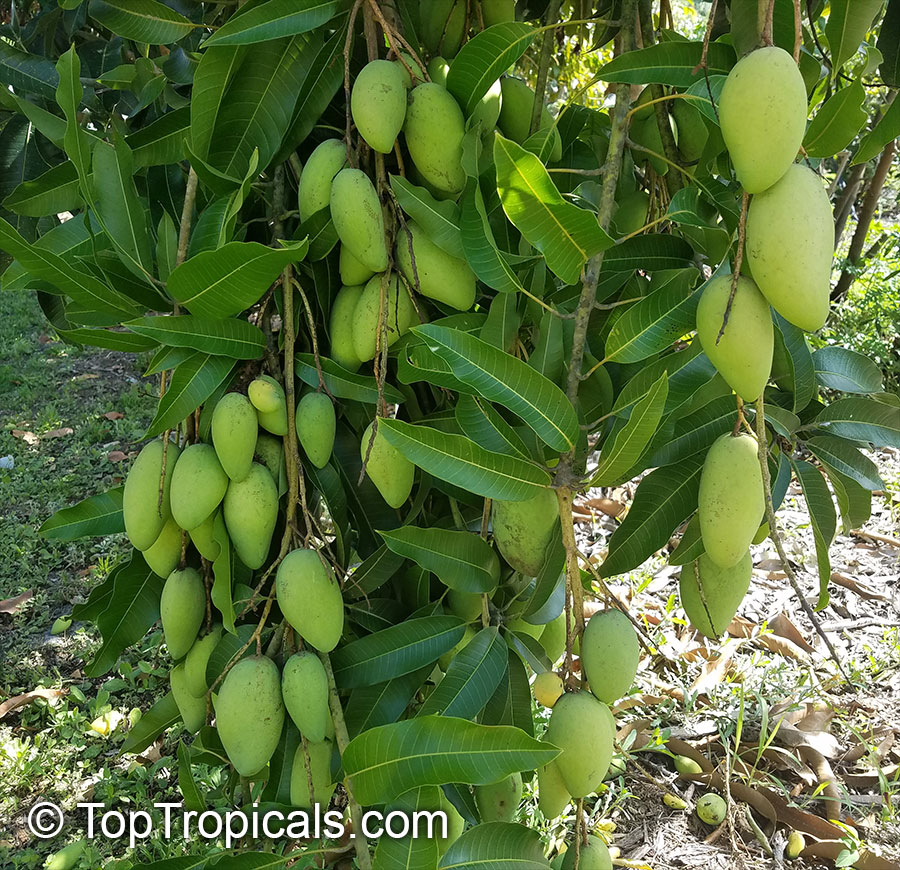
A: Triple Sec Mango is a new name for the superior variety Seacrest. The aroma of this fruit resembles Triple Sec - an orange liqueur. It's a juicy, mid-season variety that has good disease resistance.
Mango has pretty good heat and drought tolerance. It loves sun, but there are a lot of factors to consider when growing Mango in your area.
Check your soil. Soil quality is always first and foremost: when you live in an area of Arizona with hardpan (extremely compacted desert soil) or caliche (layers of soil cemented by calcium carbonate) you will have to learn how to deal with such soil types. Amend the soil as needed.
The best time to plant is spring or fall to give your Mango a chance to get established before the really intense Summer heat starts. Alternatively, protect the tree with a shade cloth. Tender, new growth will not stand a chance unprotected, especially newly planted and/or young trees.
Mangoes are tropical and sensitive to frost and freeze damage. Young trees especially will also need winter protection when temperatures go near or below freezing. Always plant trees in a location where they will be protected from cold wind. Consider staking your newly planted Mango trees for the first year. It's never a bad idea to even stake during periods of high winds.
Make sure your planting site has very good drainage. Always use a good quality mulch around your tree as it helps to trap moisture, keeping the ground and the roots beneath it cool. Keep mulch a couple of inches from the trunk of the tree. Avoid a location that gets full day sun. Morning sun, afternoon shade is ideal. Give regular watering until the tree is established. Once established, water only when the soil feels dry.
Fertilizer with a Mango-Food. A foliar spray of micronutrient solution is always recommended during the active growing period. Use plant stimulants and microelements to improve cold hardiness and vigor.

See more info on growing mango in hot climate and container grown mangoes in Arizona.