Garden Blog - Top Tropicals
Date: 21 Sep 2026
The Secret Tree Behind Chanel No 5 - and How to Grow Your Own Ylang Ylang Tree
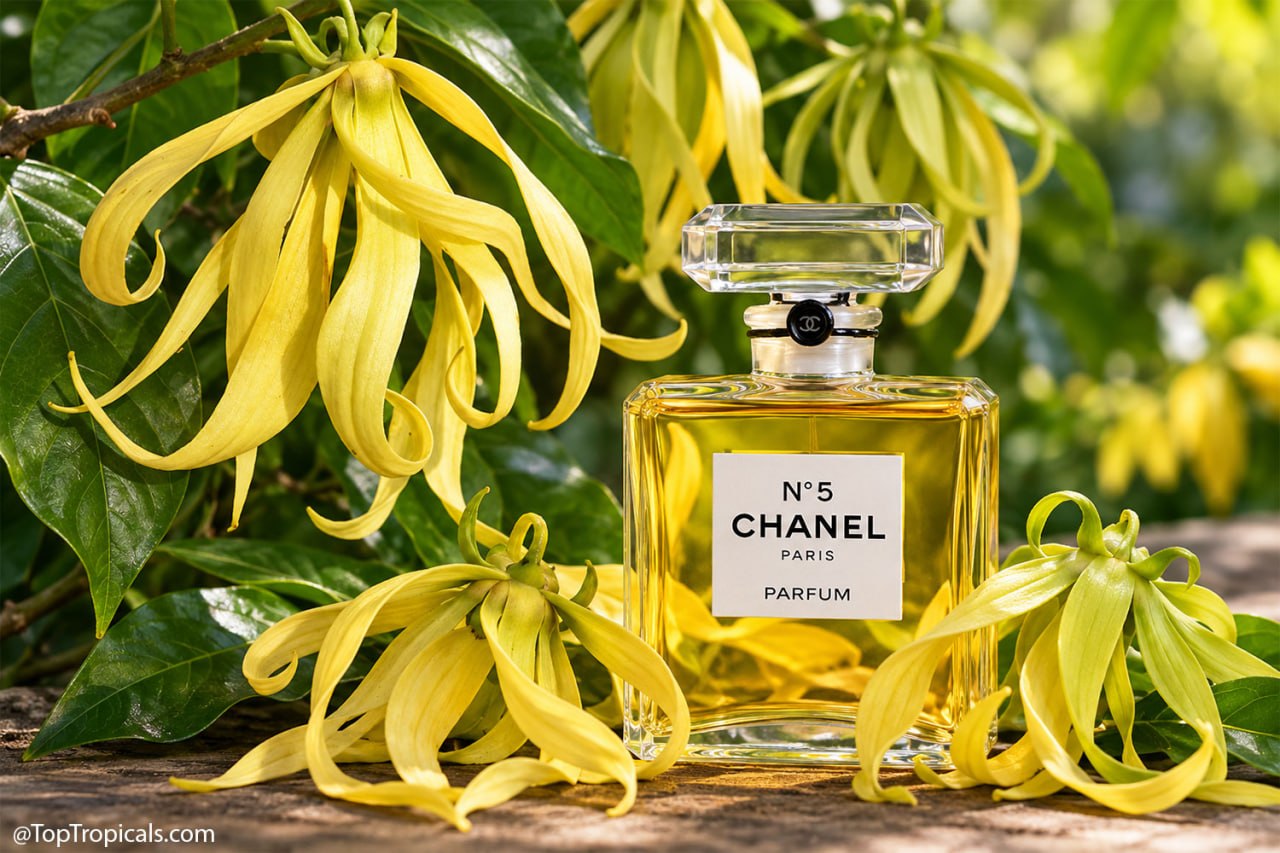
⭐️ The Secret Tree Behind Chanel No 5 - and How to Grow Your Own Ylang Ylang Tree
It doesn’t look like a million-dollar flower.
The petals are long, narrow, and twisted, dangling from branches like muted yellow-green ribbons. In a garden, you could easily walk past without giving them a second glance. Then, the wind shifts - and you smell it. This is Cananga odorata - Ylang-Ylang. While jasmine and rose get most of the glory, Ylang-Ylang is the secret engine behind Chanel No. 5, providing the iconic perfume with its lush, velvet-like warmth.
The best part? You don't need a high-end department store to experience it. You can grow the tree right in your own yard.
✨ What Does the Flower Actually Smell Like?
On its own, a fresh Ylang-Ylang blossom doesn't smell like a finished bottle of perfume. It has its own distinct personality: intensely sweet, creamy, fruity, and laced with a warm, spiced floral undertone.
The Secret to Peak Fragrance: Young blossoms start green and scentless. Wait until they turn a deep, rich yellow - that is when the essential oils peak.
Natural Air Freshener: On a warm summer evening, a single blooming tree can perfume an entire yard.
The Car Trick: Pick a ripe yellow flower and place it on your car’s dashboard. As the sun warms the petals, it releases a rich, natural fragrance that outperforms any store-bought air freshener for days.
✨ The Custard Apple Connection
Botanically, Ylang-Ylang harbors a surprising secret: it belongs to the Annonaceae family.
That makes this perfume legend a direct relative of popular tropical fruits like sugar apple, cherimoya, atemoya, and soursop. While you won't get sweet fruit from a Ylang-Ylang tree, examining the broad leaves and flower structure makes the family resemblance clear.
✨ Can You Really Grow It in Your Backyard?
Yes - if you can provide frost-free conditions. Established trees can tolerate light frost but young plants can get cold damaged.
Cananga odorata is a vigorous, fast-growing tropical tree that loves warmth, sun, moisture and good drainage. It can eventually become a substantial tree, although pruning can keep it more manageable.
There is also a compact form, Cananga fruticosa, Dwarf Ylang-Ylang. It stays much smaller and can flower surprisingly young, making it attractive for containers.
Ylang-Ylang Tree (Cananga odorata)
Height: 30+ feet (can be pruned)
Best For: In-ground planting (USDA Zones 10–11)
Fragrance: Maximum potency with heavy oil production
Time to Bloom: 2–3 years from seed
Dwarf Ylang-Ylang (Cananga fruticosa)
Height: 6-8 feet
Best For: Patio containers and small spaces
Fragrance: Mild to moderate scent
Time to Bloom: Blooms immediately
Pro Tip: If extreme fragrance is your main goal, plant the full-sized tree. If you live in a cooler climate or have limited space, opt for the dwarf variety, which can easily be brought indoors over the winter.
✨ Your Personal Outdoor Perfumery
Commercial perfumers use steam distillation to extract Ylang-Ylang oil, but home gardeners don't need fancy equipment to enjoy it.
Simply float freshly picked blooms in a decorative bowl of water, tuck a mature flower into a warm window corner, or let the breeze carry the scent straight off the branch into your home.
People grow citrus for fruit and coffee plants for beans - Ylang-Ylang is the tree you grow purely for luxury.
🛒 Grow This Legendary Fragrance
📚 Learn more:


✦ Cananga odorata in Plant Encyclopedia
✦ The secret tree behind Chanel No 5 perfume
✦ Flowering season of Dwarf Chanel No 5
✦ How to grow your own Chanel #5
✦ What is the best perfume tree for container culture
✦ The Ylang-Ylang: Queen of the Perfume World: the Bearer of an Ideal Fragrance
✦ Perfume in a pot: exotic Dwarf Chanel No 5 Tree
🎥
Perfume in a pot: exotic Dwarf Chanel No 5 Tree
The secret tree behind Chanel No 5 perfume
📖 The Ylang-Ylang - Queen of the Perfume World - book - PDF file download
#Perfume_Plants #Trees #Discover #How_to
🟢 Join 👉 TopTropicals