Garden Blog - Top Tropicals
Date: 19 Aug 2026
🍇🍑 Two tropical fruits. Two familiar flavors. One very unusual garden snack.
By Tatiana Anderson, Plant Expert, Top Tropicals
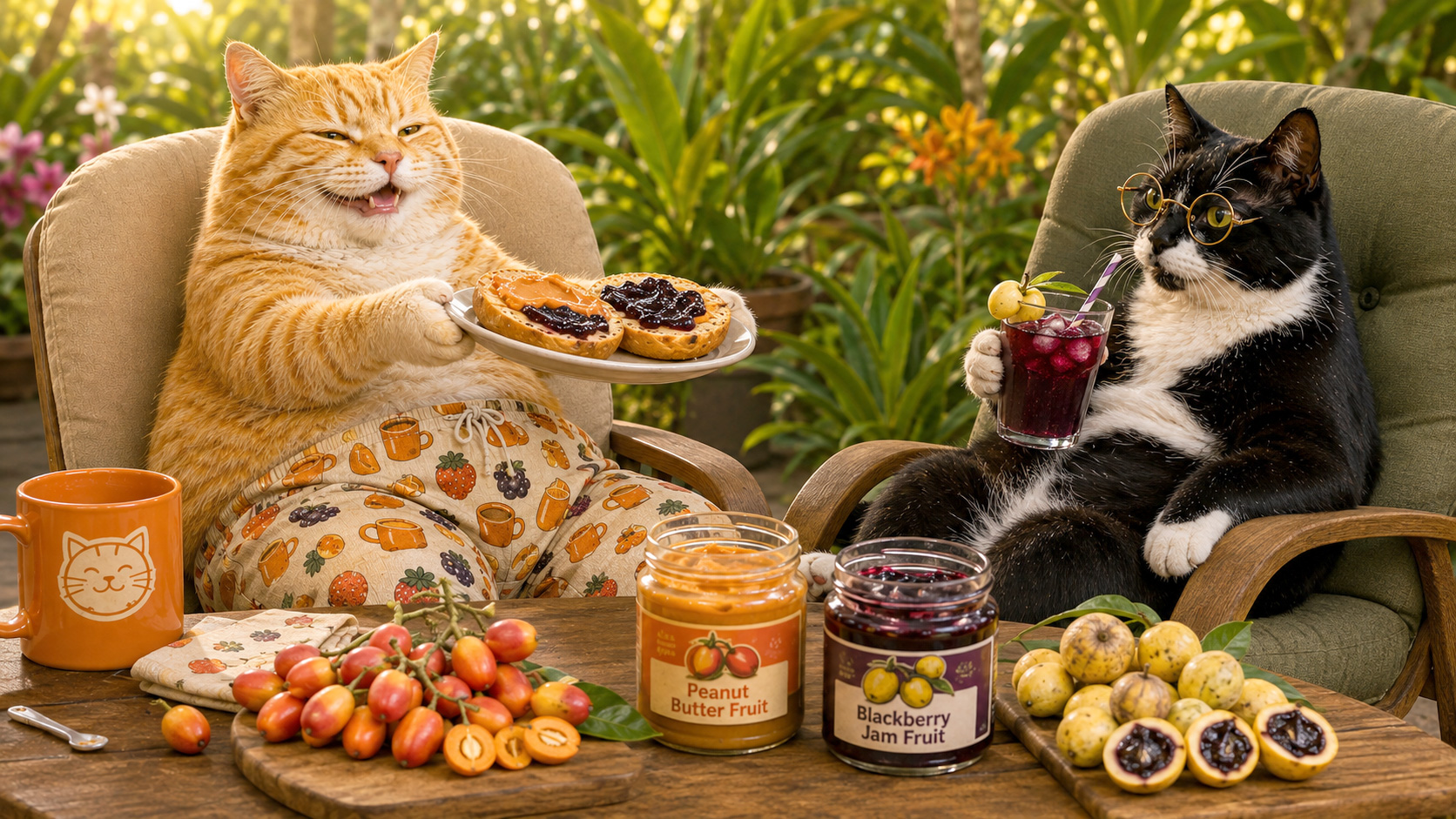
Sunshine: And I solved the final problem.
Smokey: Which was?
Sunshine: They needed a donut.

Peanut butter and blackberry jam. You know the pair. Here is the surprise: both flavors can be picked off tropical plants. One makes a dense, sticky pulp that tastes like peanut butter. The other makes dark, gooey pulp that tastes like blackberry preserves. Grow both and you have a natural tropical PB&J. Bunchosia argentea - peanut butter fruit and Randia formosa - Blackberry Jam Fruit
🍑 The Peanut Butter Side
Bunchosia argentea
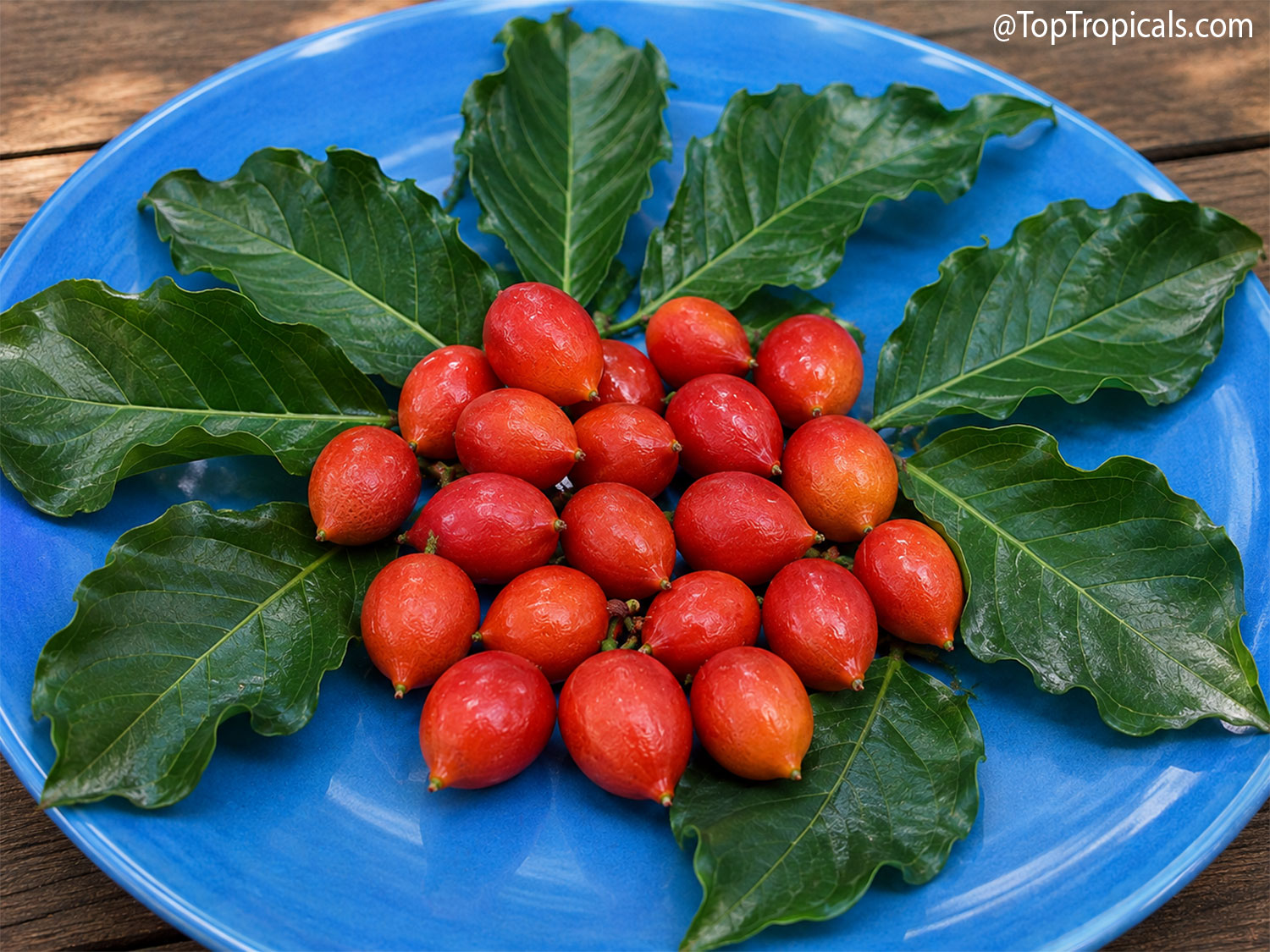
Small fruits grow in clusters and ripen from green through orange to a deep red-orange, so even a small plant can produce a useful harvest. The ripe pulp is dense, creamy, and only slightly juicy, more paste than berry. That sweet, nutty flavor and thick texture are what earn the peanut butter comparison, and it carries far fewer calories by weight than ordinary peanut butter. It also contains beta-carotene, a precursor of vitamin A important for normal vision. Eat it fresh, or blend it into a smoothie with milk and honey.
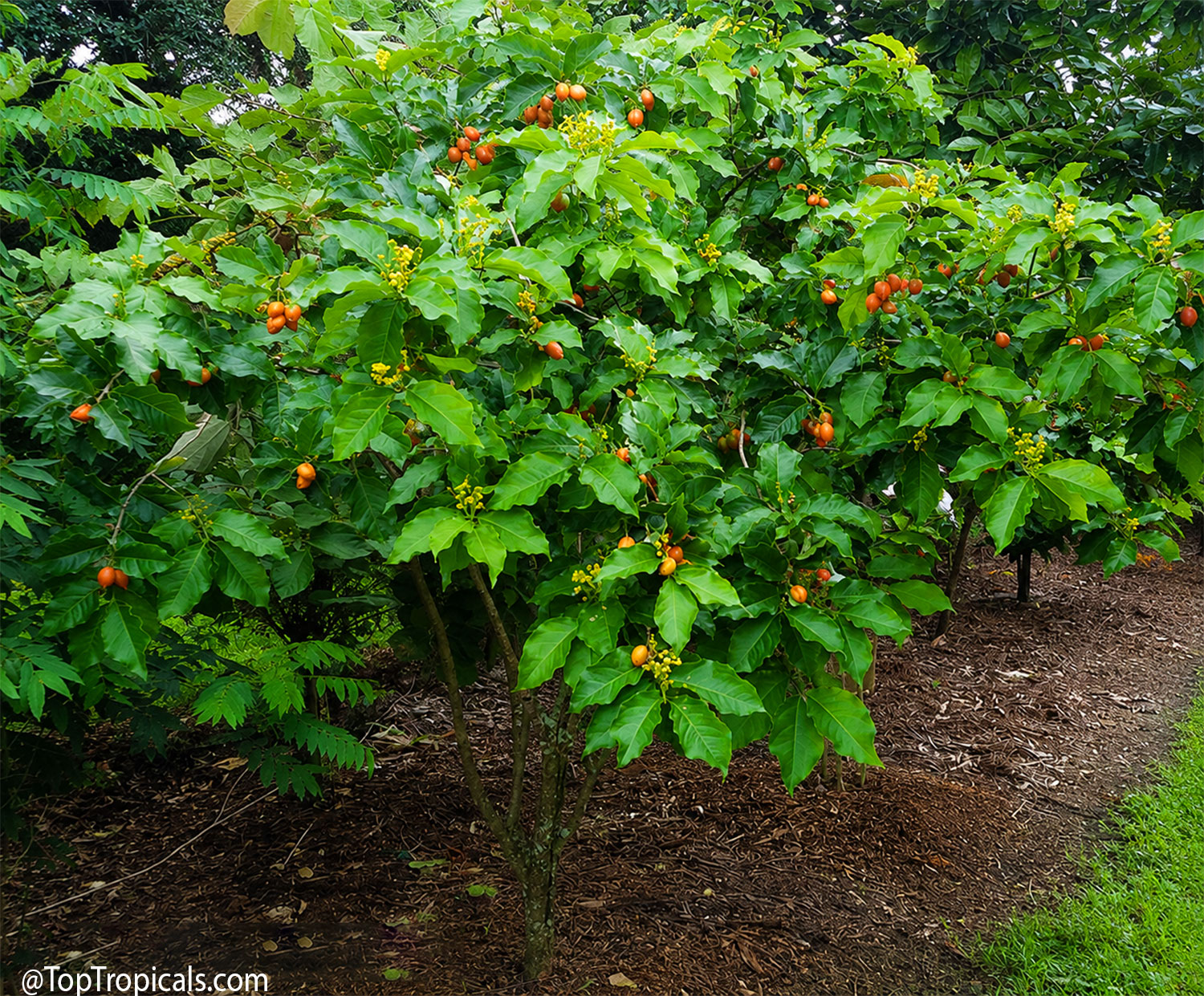
Now the questions a gardener actually asks. It grows as a compact shrub or small tree, usually kept around 8 to 15 ft, though left alone it becomes a real small tree, so prune if you want it bushy. It takes full sun, grows in the ground or a container, and is roughly a Zone 10 plant, with mature plants tolerating a brief dip to around 28 F and young ones needing frost protection. Give it well-drained soil with plenty of organic matter and steady water while it establishes, without letting the roots sit wet, and remember that pots dry out faster than open ground. It fruits fast for a tropical: seedlings in roughly 2 to 3 years, while established nursery plants can fruit sooner. Yellow flowers add ornamental value before the red fruit even shows.
✍️ More About Peanut Butter Tree
🎥 Peanut Butter Fruit Tree Videos
🍇 The Blackberry Jam Side
Randia formosa
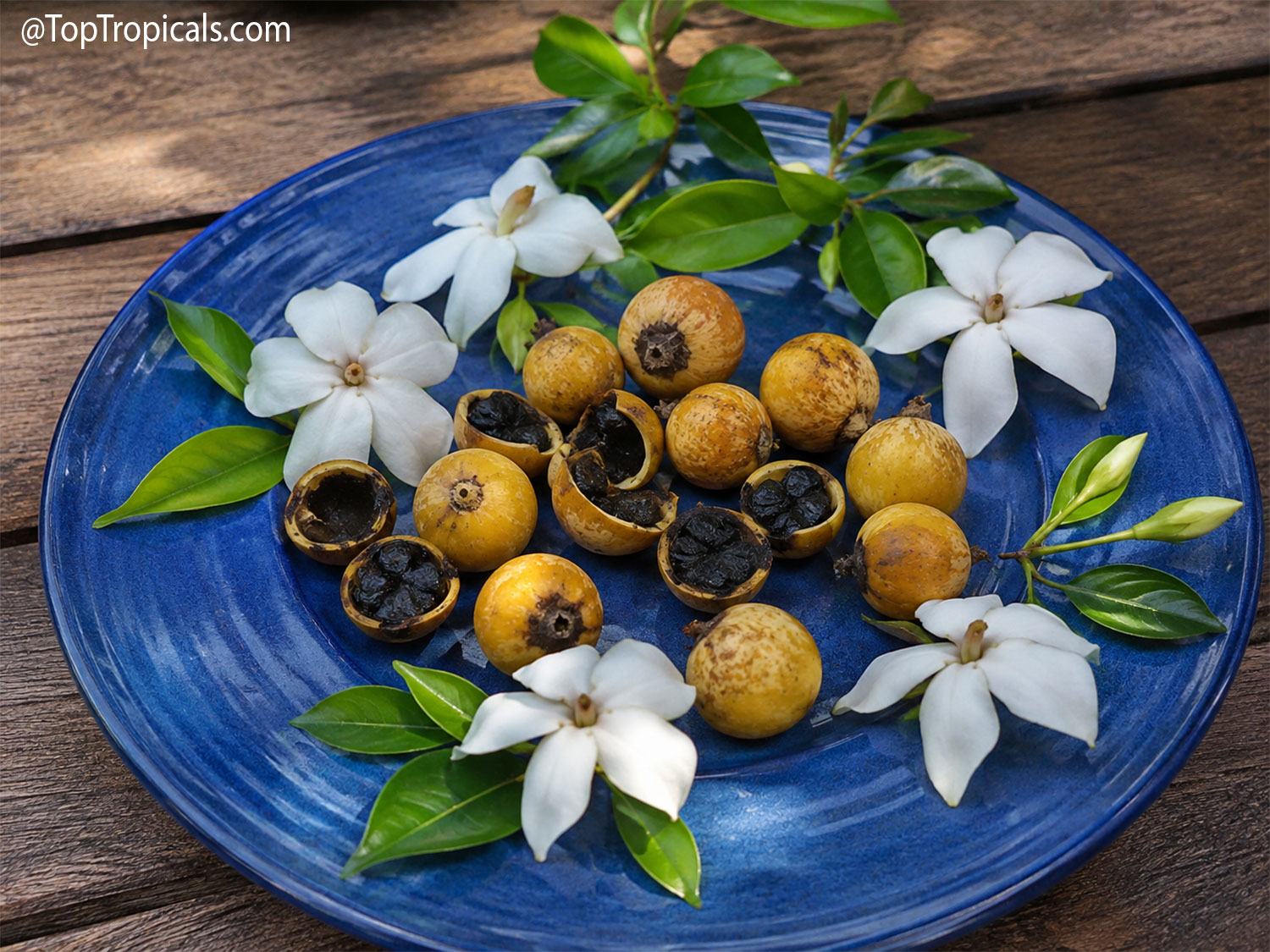
Small and olive-shaped, the fruit ripens from green to yellow or golden. Unlike Peanut Butter Fruit, it does not soften on the outside; the shell stays firm. The color is the ripeness cue. Crack it open to reveal the soft black pulp inside, dark purple to nearly black and gooey, with a flavor remarkably close to blackberry preserves. No cooking, no added sugar. Scoop it straight from the shell or fold it into a dessert.
Here is why it matters in a warm climate. Conventional blackberries generally prefer temperate or subtropical conditions, and many varieties require winter chill that truly tropical gardens cannot provide. Randia formosa gives you that blackberry-jam flavor on a plant that actually thrives in tropical and warm subtropical gardens.
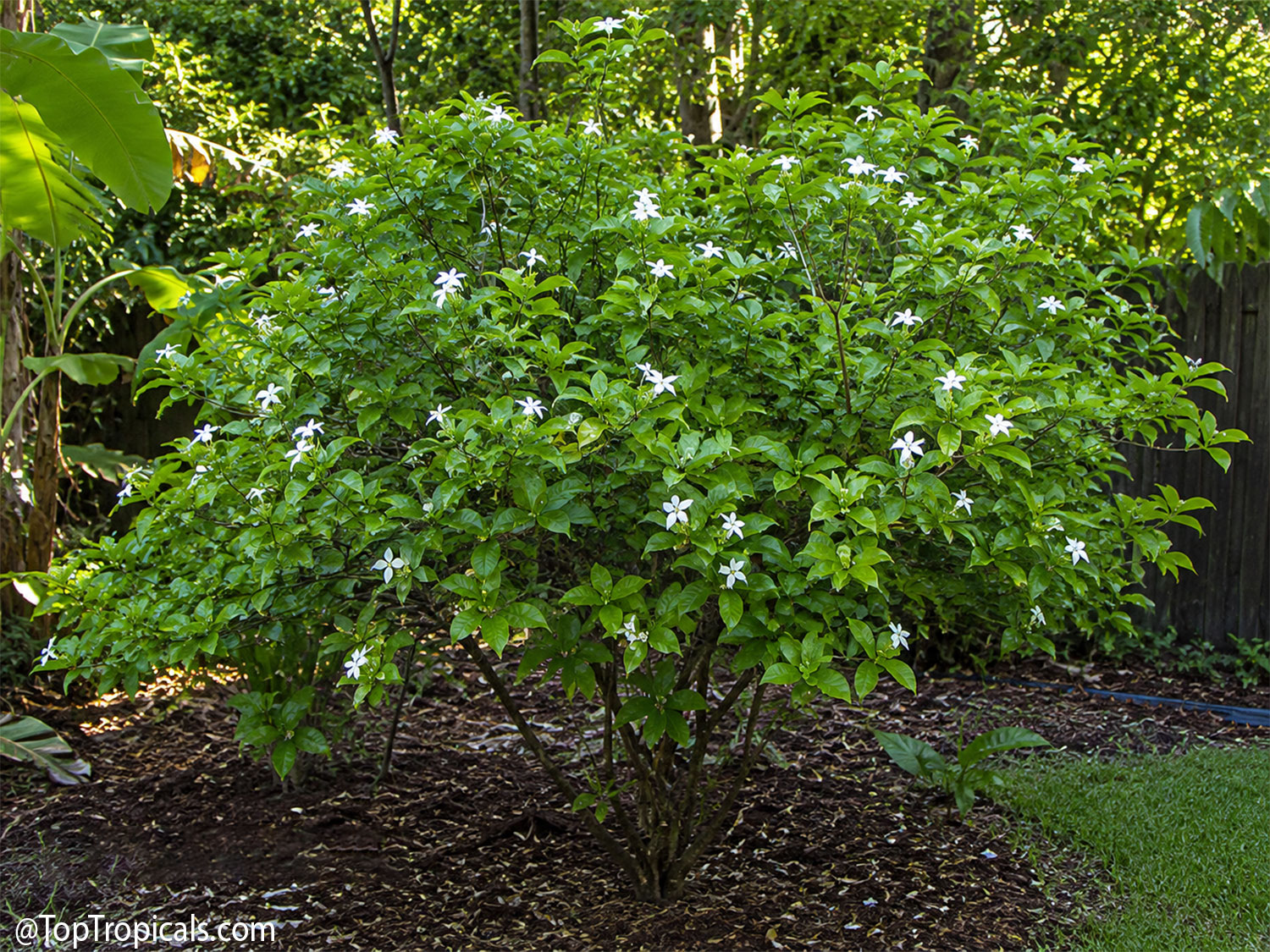
It stays compact, usually 4 to 5 ft in the landscape and smaller in a pot, and can flower and fruit while still small, carrying a good number of fruits at once despite its size. Unlike most fruit plants, it takes sun or shade, and filtered light often keeps the foliage its best green, which makes it handy for patios and gardens without full sun. Give it acidic, well-drained soil, since cool wet feet cause trouble, and ease off watering in cool spells. It is generally grown in roughly Zones 9 to 11, with mature specimens tolerating brief dips into the upper 20s F, though young plants still need frost protection. The large white star-shaped flowers look and smell like gardenias, which fits, since Randia shares a family with both Gardenia and coffee. They are fragrant and open at night, drawing moth pollinators.
✍️ More About Blackberry Jam Tree
💞 Why These Two Belong Together
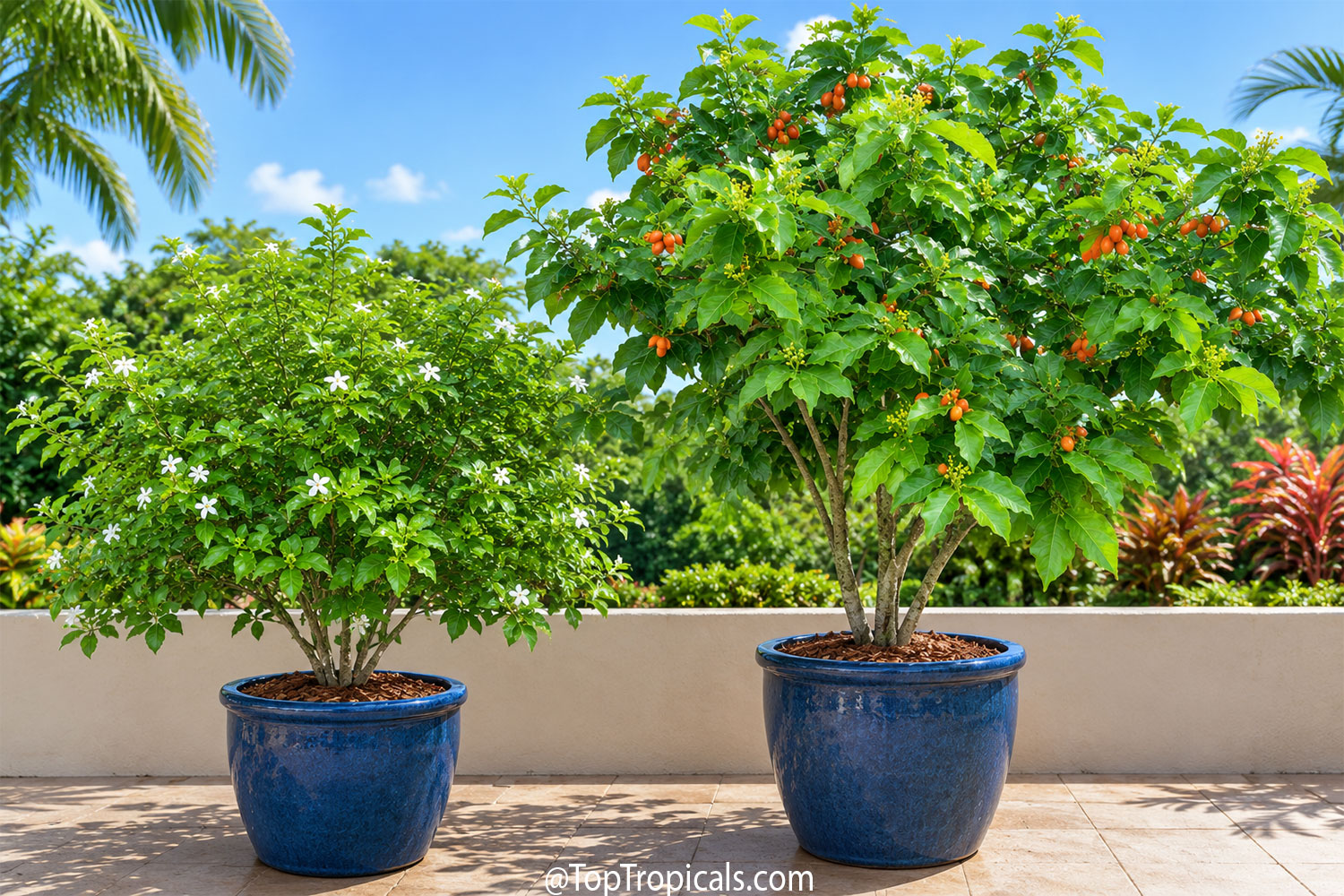
Neither is merely a novelty. Both solve the same practical garden problems: limited space, long waits for fruit, and the wish for plants that look good between harvests. And together, they happen to recreate one of the world's most familiar flavor combinations.
Eat Peanut Butter Fruit fresh or blend it into a smoothie. Scoop Blackberry Jam Fruit straight from the shell or use it in desserts. And, naturally, someone eventually had to combine them.