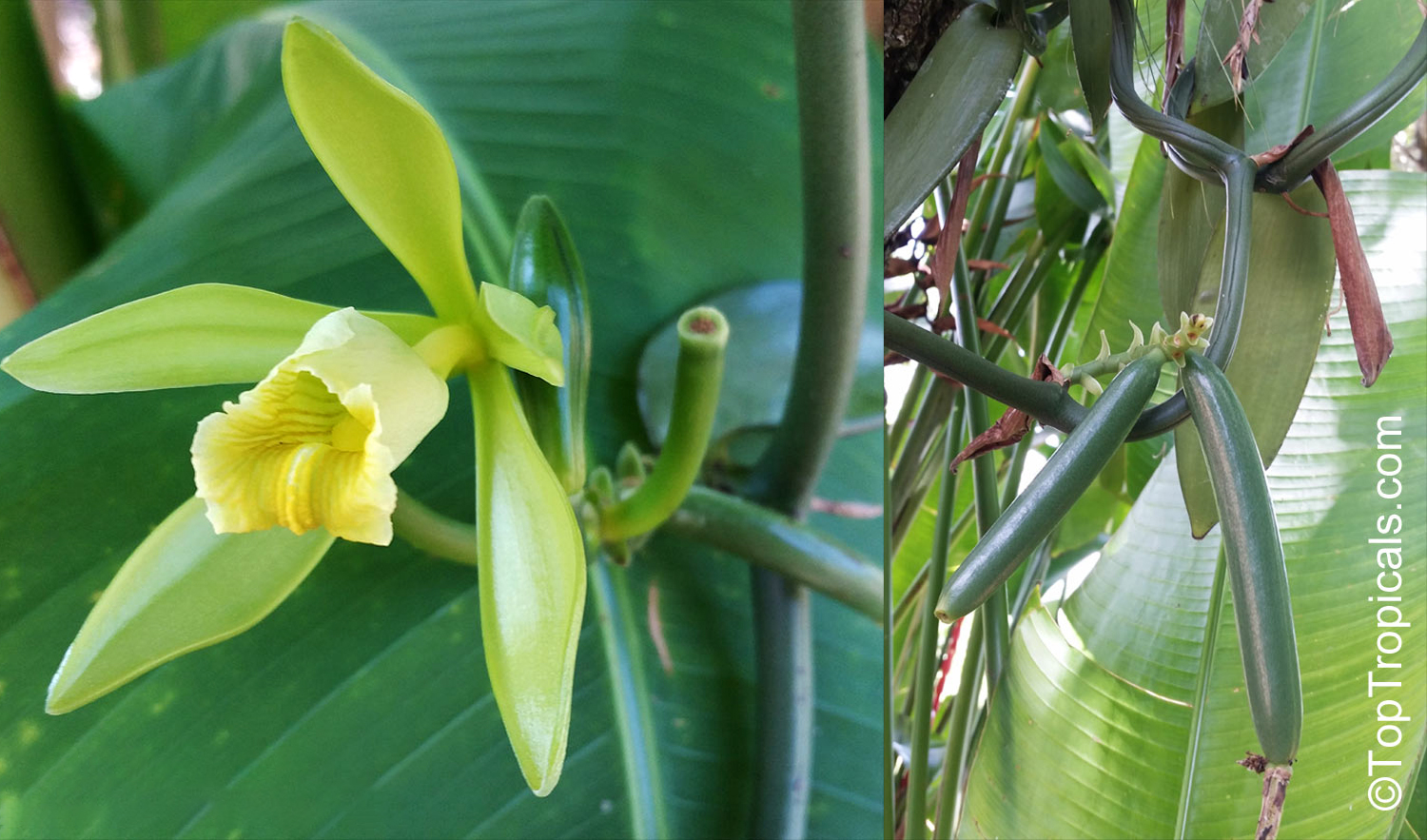
Vanilla planifolia Vine, Flower, and Cured Vanilla
Beans
How to Grow Vanilla: quick how-to
Vanilla is not complicated, but it does have preferences. Start with a
pot and regular, well-draining mix. It does not need anything exotic. Give
it:
Bright, indirect light
Warm temperatures
Good humidity
Air movement
Most importantly, give it something solid to climb. A wooden trellis, a log,
or a burlap-covered board works well. The surface should be porous so the
aerial roots can grip.
As it grows, guide the vine gently. You can prune it to control size.
Vanilla is slow to mature. That is normal.
The Bloom Secret
Vanilla does not bloom just because it looks healthy. It blooms when it
feels secure.
This is a climbing orchid. It must attach firmly to a solid, porous
support such as a wood log, trellis, or burlap-covered board. When the
aerial
roots grip and the plant reaches maturity, flowering becomes possible.
Once the flowers appear, they usually need to be hand pollinated to
produce pods. Each flower stays open for only a short time, so timing
matters.
How to pollinate vanilla: In this video, we show you
exactly how to pollinate vanilla step by step
❓Vanilla care: quick FAQ
Does Vanilla planifolia really produce vanilla
beans?
Yes. Vanilla planifolia is the commercial source of vanilla. After
flowering, it can form long green pods (vanilla beans). The aroma develops
later during curing.
What is the secret to getting vanilla to bloom?
Let it climb. Vanilla is a climbing orchid and usually will not bloom until
its aerial roots attach firmly to a solid, porous support like a wood log,
trellis, or burlap-covered board.
Do I need to pollinate vanilla flowers?
Yes. In most home growing conditions, vanilla flowers must be hand
pollinated to produce pods. Each flower is open for only a short time, so
timing matters.
Can I grow vanilla indoors?
Yes, if you can provide bright, indirect light, warmth, humidity, and a
support to climb. A sunny room with filtered light and a trellis or log can
work well.
What should I use for support?
Use a sturdy trellis, a wood log, or a burlap-covered board. The key is a
porous surface that aerial roots can grip. Avoid chemically treated wood.
Check out this unusual way to
grow Vanilla Orchid over a wall.
What potting mix should I use?
Start in a pot with a regular, well-draining potting mix such as Sunshine
Abundance. As the plant matures, it relies more on its support and
aerial roots than the soil.
What fertilizer should I use?
Sunshine
Boosters Orchidasm is formulated specifically for orchids and will work
perfecty for Vanilla orchid as well.
How big will it get?
As big as you let it. Train it and prune it. Vanilla grows according to the
structure and space you provide.
How long until it flowers?
Typically a few years. Vanilla is a long-term project, but it is very
rewarding once established.
For Collectors and Enthusiasts:
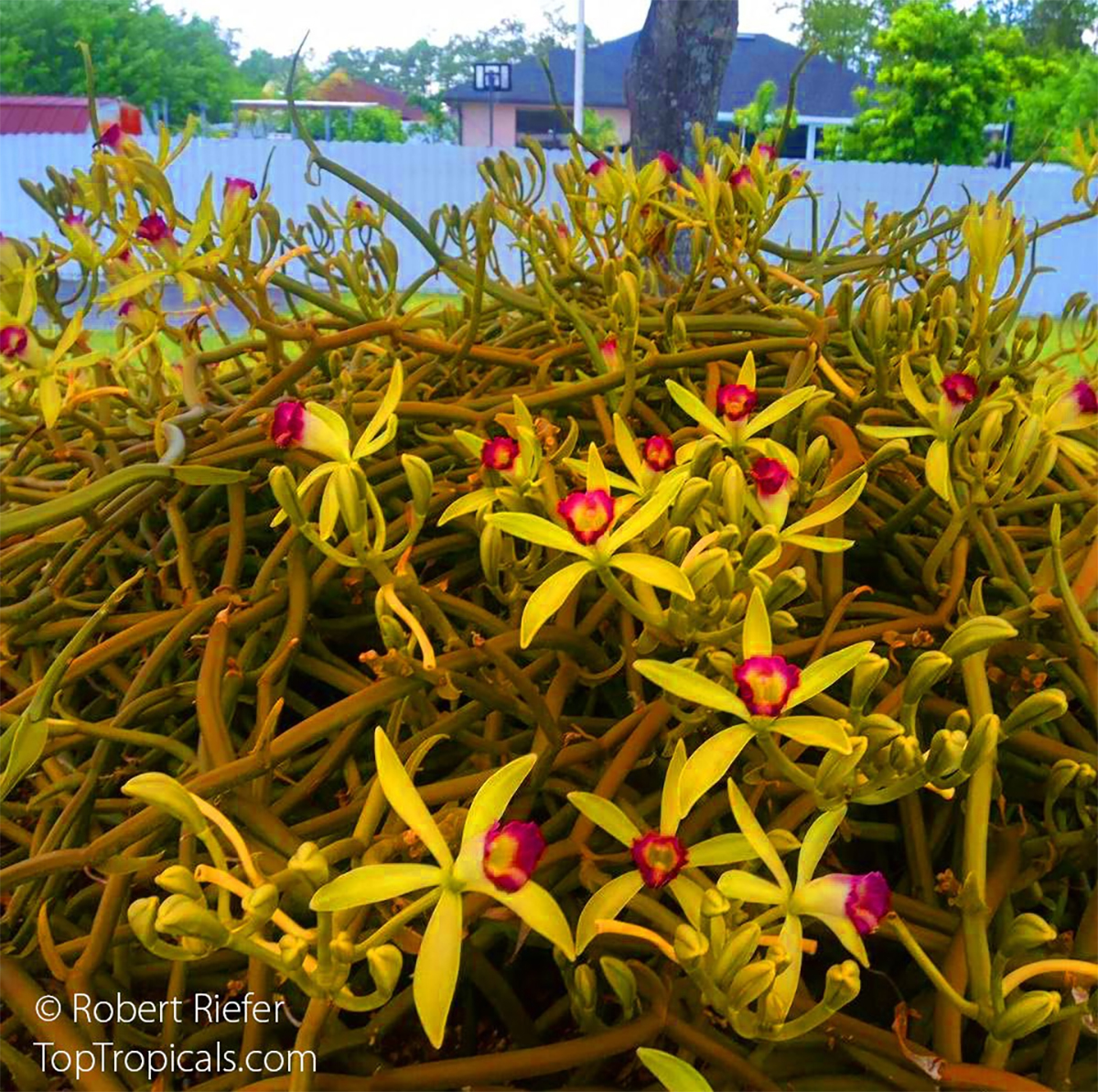
Vanilla dilloniana in Bloom - Rare Florida Native
Orchid
We also offer Vanilla dilloniana, a rare
Florida native species with distinctive flowers.
One remarkable specimen of this species, grown by our friend Robert
Riefer, became so vigorous over many years that it outgrew a 100 gallon
container and was eventually moved into a 250 gallon pool on wheels.
The plants we offer are propagated from that very specimen:
🎥 Video: Vanilla dillioniana - The Biggest Vanilla Orchid in
100 Gal Pot
That kind of growth reflects deliberate cultivation and ideal conditions
- not something that happens unintentionally.
Vanilla grows according to the space and structure you provide.
For gardeners focused on producing real vanilla beans for the kitchen,
Vanilla planifolia remains the right place to
start.
✍️ More About
Vanilla Orchids from Blog
🎁 Shop Vanilla
Orchids
Date: 14 Feb 2026
🍧Vanilla does not
come from a bottle
Sunshine: What are you doing? Smokey: Growing vanilla for your creamer. It needs support to
climb. Sunshine: I can provide moral support and donuts. Count on me, my
friend.
🍨 The orchid behind the worlds favorite
flavor
Vanilla does not come from a bottle. It comes from a climbing orchid.
Vanilla planifolia is the plant that produces real vanilla beans -
and yes, you can grow it at home.
It starts simply. A potted orchid with glossy leaves. Then it begins to
reach. Vanilla is a climber. It wants something solid to attach to. This is
where most people go wrong. They keep it in a pot and wait.
Vanilla needs support - a log, a trellis, a wooden board. Once its aerial
roots attach firmly and the plant matures, flowering becomes possible.
It is not instant. You need patience. The pods form green and only develop
their aroma after curing. That slow process is part of what makes vanilla so
valuable. For gardeners who enjoy growing something meaningful - something
edible
and beautiful - vanilla is worth it. Vanilla is not a novelty plant.
It is a long conversation with your garden.
Vanilla planifolia Flower and Developing Vanilla
Pods
Date: 13 Feb 2026
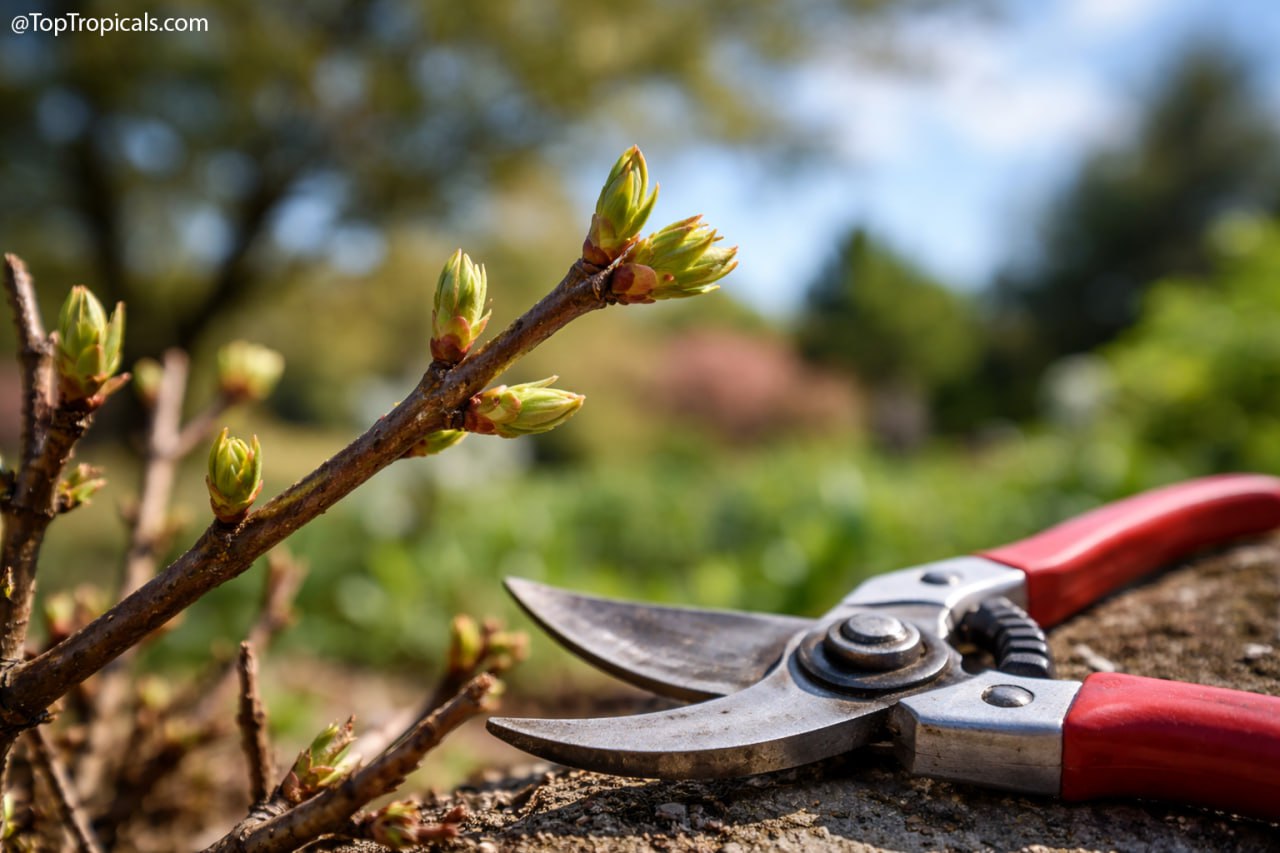
To trim or not to trim? When and how to trim damaged plants after winter
✂️ To trim or not to trim? When and how to trim damaged plants after winter
Florida just went through a record freeze (Feb 2026). Now gardens look rough - brown leaves, blackened tips, mushy stems. The big question: do you cut now or wait? Here is the simple rule.
✂️ When is the right time to trim?
Do not rush. Wait until the danger of more freezes has passed and you start seeing new growth. In most of Florida, that means late winter to early spring. Why wait? Dead foliage actually protects living tissue underneath. If you cut too early and another cold snap hits, you can cause more damage. If a plant is completely collapsed and clearly mushy, you can remove that material. But for woody shrubs and trees - patience pays.
✂️ How far should you trim?
Trim back to healthy, green wood. Start by removing:
· Black, mushy, or obviously rotted stems
· Broken branches
· Completely dried leaves
Then cut slowly and test as you go. Do not cut everything to the ground unless you are sure it is dead. Many tropicals look terrible after freeze but recover beautifully in warm weather. Te rule of thumb is: once minimum temperatures stay above 65F for over a week, the active growth starts.
✂️ How to tell if a branch is dead or alive
Use the scratch test. Lightly scrape the bark with your fingernail.
· Green underneath - it is alive
· Brown and dry - likely dead
Move down the branch toward the base. Often only the top portion is dead. Also check flexibility. Live branches bend slightly. Dead ones snap.
✂️ Important - do not give up too soon
This is where many gardeners make a mistake. After a few weeks - sometimes even months - plants can push new growth through what looks like a dead branch. Buds may appear higher than expected, not just from the roots.
✂️ You may see growth:
· Along the stem
· From lower nodes
· From the trunk
· From the base
Some plants look gone - then suddenly leaf out again.
✂️ Final thought
After a hard freeze, the best tools are patience and a careful eye. Wait for warmth. Trim slowly. Check for green. And give your plants time to surprise you. Tropical gardens are tougher than they look.
👩❤️💋 Last-minute Valentine idea: let them choose!
If timing, weather, or plant selection feels uncertain, a Gift Card keeps things easy. Your Valentine can choose the perfect plant when the time is right - especially helpful for gardeners up north or when you want the gift to unfold later.
👩❤️💋 Valentine’s Day Gift Card Bonus
To make Valentine’s Day a little sweeter, we are adding 15% extra value to every gift card for a limited time. Just include a Valentine greeting in the gift card message field.
💵 For example, a $100 gift card becomes $115 to spend.
Offer valid through 02/15/2026. The bonus value is not valid with other promotions or discounts. Gift cards cannot be used to purchase other gift cards. Bonus value is added at the time of purchase.