Garden Blog - Top Tropicals

Date: 6 Dec 2025

🌿 Bring the Jungle Inside: Winter Survival Guide Part 1: Lighting ❄️

Smokey the taxedo cat adjusts an indoor grow light while Sunshine the 
ginger tabby sits holding a hygrometer he does not 
understand.

Smokey: "Winter lighting must be precise. I need this light exactly at 14 inches."
Sunshine: "Sure. I am holding this… little number thing."
Smokey: "It reads humidity. Your main job is to look cute."

🌞 LIGHT, TEMPERATURE, PLACEMENT

Winter indoors is a different kind of battlefield. Dark rooms. Dry air. Cold windows. Random drafts. Weak light. Sad plants. We've been talking about keeping your tropicals alive outdoors previously. But some of you have no choice this time of year. You have to bring the jungle inside.

If that is you, then this is your plant survival guide.
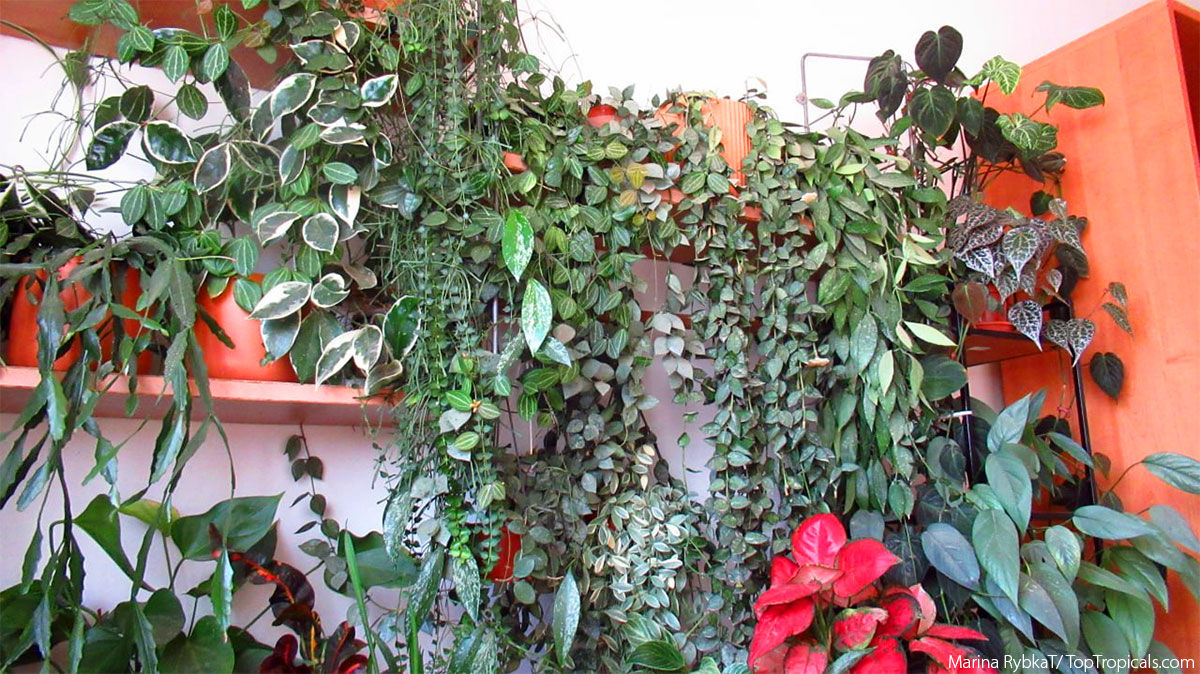
Indoor wall of tropical houseplants, including cascading vines, variegated foliage, and mixed aroids arranged on shelves.

☀️ LIGHT: THE WINTER LIFELINE

Light advice here comes straight from our in-house expert, Michael Dubinovsky, a high-tech lighting engineer with over 30 years of hands-on experience. If he says brightness beats hours, trust him.

Here is the truth: Indoor light in winter is 10 to 50 times weaker than outdoors. Short days. Low-angle sun. Windows filtering half the useful light. It all adds up.

Tropicals need 10 to 12 hours of real brightness. Winter sun cannot do that on its own. Not even in a big window. So we help them.

Use bright LED shop lights or utility lights. 5000K to 6500K CCT. High lumen output. Skip decorative bulbs. Skip purple grow fancy toy lights. If you want a single plant light, even a clamp lamp is fine if you screw in a bright daylight LED bulb.

Panels work best for plant clusters. Bars for shelves. Bulbs for single plants. And grouping plants under one bright panel always beats spreading them out.

Distance matters: keep LEDs about 12 to 18 inches above the leaves. Too close: leaf burn. Too far: stretching, weak stems.

Leaves reaching up? Light is too high or too weak. Leaves curling down? Light is too close.

If you want a reality check, download any smartphone lux meter app. Most indoor corners are 50 to 200 lux without supplemental light. Tropicals want much more

And a quick tip about windows: winter sun comes in sideways. A spot that looks bright at noon can go dull by 2 PM. Don't count of window light
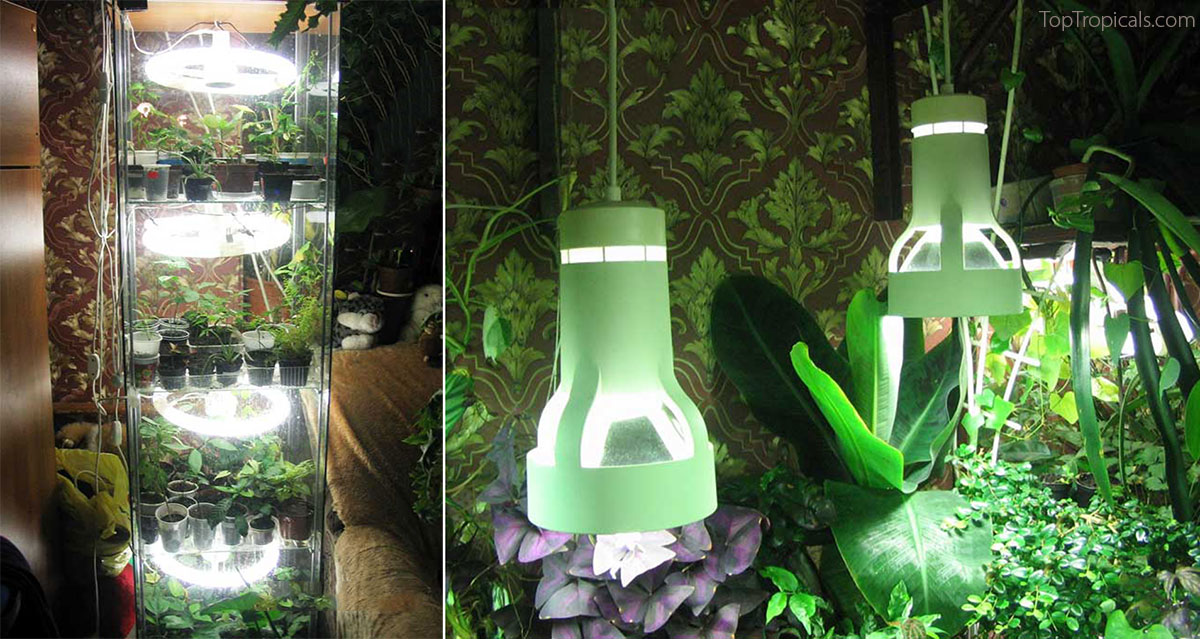
Indoor grow setup with bright LED lights illuminating shelves of tropical plants.

Bright light or long hours

People try to fix weak light by running it for 16 or 18 hours. That does not work. Plants care more about light intensity. A few hours of strong light beats all-day dim light. If the light is weak, adding more hours will not change anything except your electric bill.

Simple rule: Short duration but bright is always better than long duration but weak. - by Michael, Top Tropicals lighting expert

No need for fancy horticultural panels

You do not need purple grow lights. You do not need special horticultural fixtures. You do not need expensive panels unless you want real winter growth.

For winter plant holding till spring, the inexpensive solution works great:

  • Bright LED daylight bulbs (5000K to 6500K) from hardware store
  • High lumen output
  • Inexpensive clamp lamps
  • Aim directly at the plant from 12 to 18 inches

This setup keeps tropicals happy until spring without buying anything fancy. Save the money for soil, pots, or your next plant.

Indoor plant lighting safety note:

  • Use timers. Keep cords dry. Do not overload outlets.
  • Do not hang lights over humidifiers.
  • And do not put fixtures on piles of books to raise them. People do this.
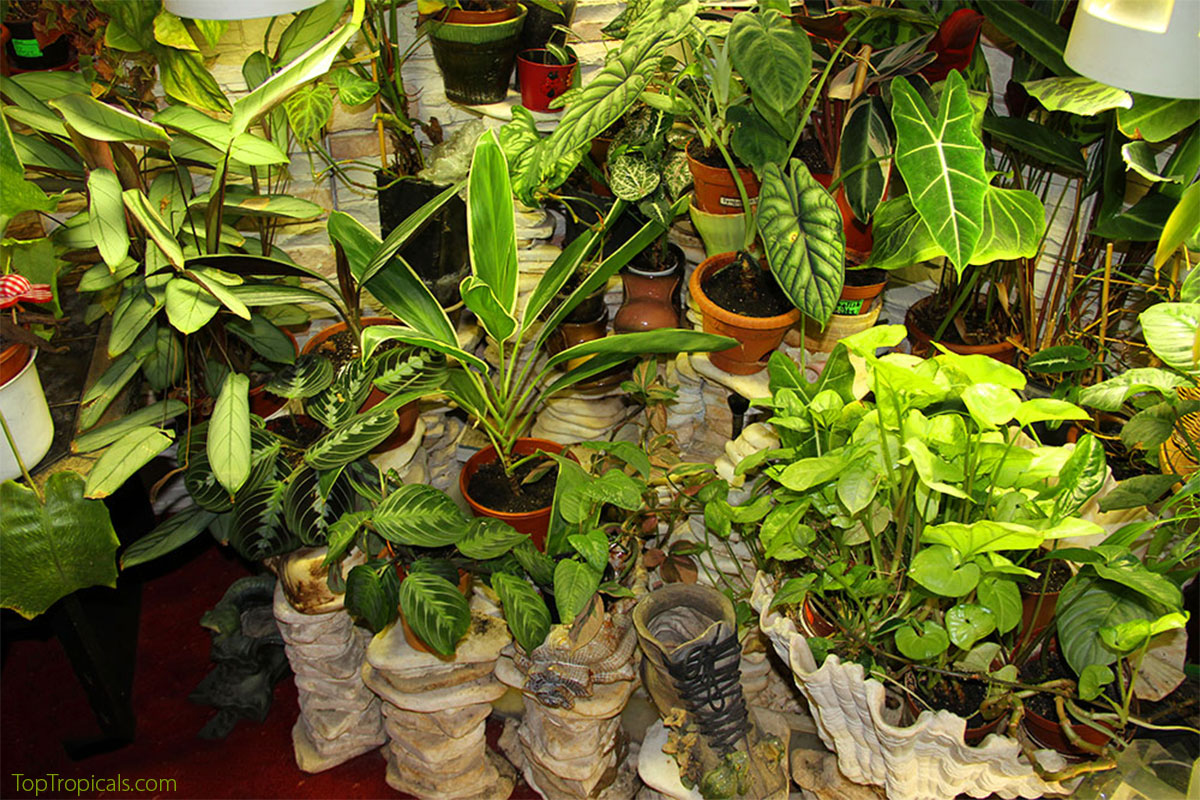
Indoor plants


✔️ WINTER INDOOR FAQ: TEMPERATURE AND PLACEMENT

Q: I am in Home Depot. Which light do I buy?
A: LED shop light, daylight color (5000K to 6500K), high lumens. Skip fancy plant bulbs.

Q: Can I use clamp lamps or floor lamps for plants?
A: Yes. Clamp lamps with a bright daylight LED bulb work great for winter holding.

Q: Do I need special horticultural grow lights?
A: No. A bright LED daylight bulb works fine for winter. Save the fancy lights for real growth projects.

Q: How far should the light be from the plant?
A: About 12 to 18 inches above the leaves. Too close burns. Too far stretches.

Q: Can I run weak lights for 18 hours to compensate?
A: No. Weak light plus long hours still equals a weak plant. Brightness matters more than hours.

Q: How do I know if a spot is bright enough?
A: Use a free phone lux app. Most indoor corners are much too dim for tropicals.

Q: I have a huge window. Why do I still need LEDs?
A: Indoor winter light is weak, short, and filtered by glass. Plants want intensity, not just a big window.

Q: My window faces north. Now what?
A: North windows are decorative only. Use supplemental lighting or move the plant.

📚 Learn more:
Date: 5 Dec 2025

What Timo hides in the bathroom

What Timo hides in the bathroom

🐈📸 Cat Timo is a big fan of tropical plants. He guards them in the bathroom with a big skylight - lots of light and Green Magic - that's the key to his green thumb secret!
TopTropicals PeopleCats.Garden

#PeopleCats

🟢 Join 👉 TopTropicals

Date: 5 Dec 2025

What Avocado is better - Mexican or Guatemalan?

What Avocado is better - Mexican or Guatemalan? What Avocado is better - Mexican or Guatemalan? What Avocado is better - Mexican or Guatemalan?
🌎 What Avocado is better - Mexican or Guatemalan?

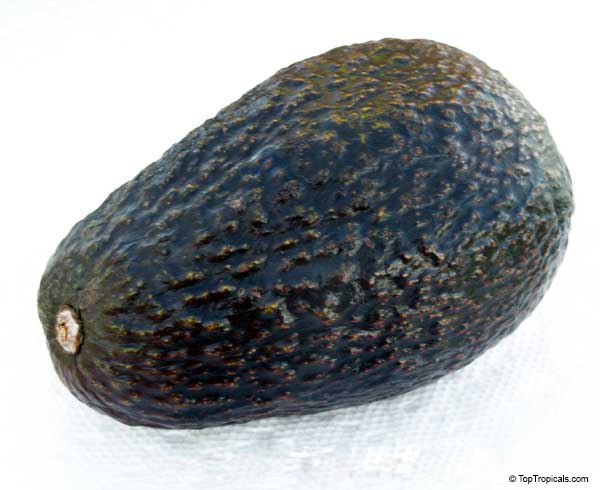
Avocados come from three main regions, and each group has its own special look, taste, and growing habits. The three types are Mexican, Guatemalan, and West Indian. Many of today’s popular varieties are hybrids, mixing traits from these types.

  • Mexican type:

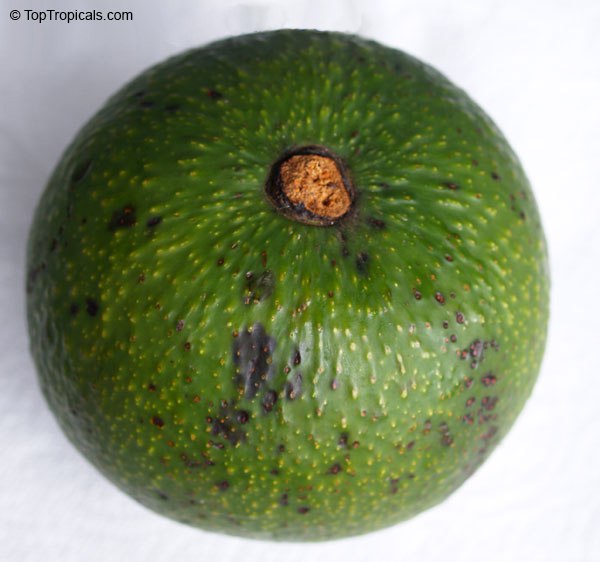
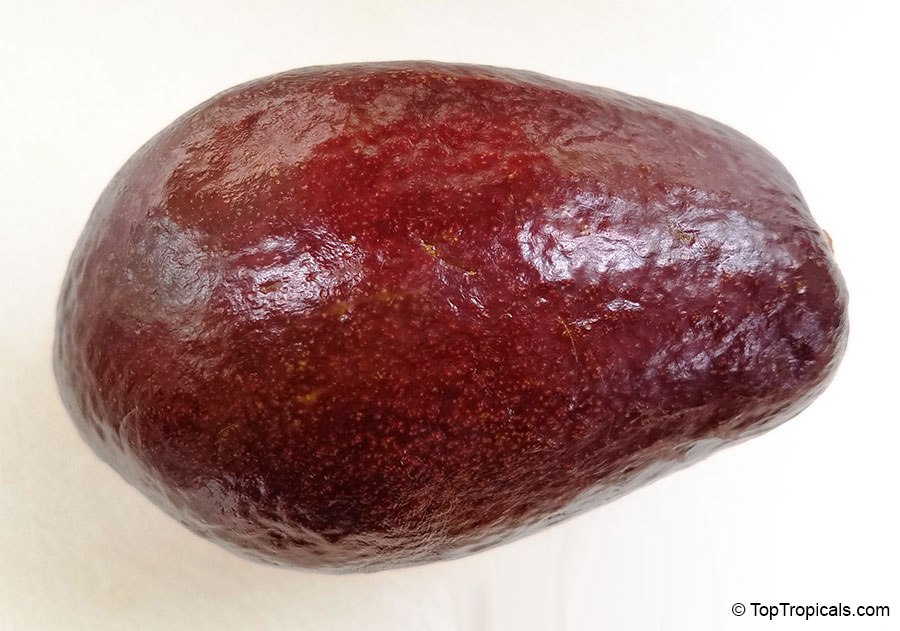
  • These avocados are small, with thin skin and rich flavor. The skin often turns dark green or black when ripe. The flesh is very buttery, with high oil content (up to 30%), and the leaves smell like anise. Mexican types are also the most cold-hardy, so they do well in cooler areas.
    Popular Mexican avocado varieties: Anise, Bacon, Brazos Belle (Wilma), Brogdon (Brogden), Fantastic, Florida Hass (Haas), Lila (Opal), Mexicola, Mexicola Grande, Ulala (Oh La La, Super Hass).
    Hybrids Mexican x Guatemalan: Winter Mexican, Buck, Wurtz (True Dwarf), Maria Black, Fuerte, Hall, Ettinger, Thomson Red.

  • Guatemalan type:

  • These are medium to large avocados with thicker, sometimes bumpy skin. They have a creamy texture and rich flavor with plenty of healthy fats. The fruit is usually pear-shaped and ripens in winter or spring. Guatemalan types are commonly grown in both Florida and California.
    Popular Guatemalan avocado varieties: Black Prince, Booth 8, Joey, Nishikawa, Reed, Tonnage, Yamagata
    Hybrids Mexican x Guatemalan: Winter Mexican, Buck, Wurtz (True Dwarf), Maria Black, Fuerte, Hall, Ettinger, Thomson Red
    Hybrids of West Iundian and Guatemalan: Beta, Catalina, Choquette, Day, Hardee Red, Kampong (Sushi), Loretta, Lula, Marcus Pumpkin, Miguel, Monroe, Oro Negro.

  • West Indian type:

These avocados are the biggest, with smooth, shiny green skin and a lighter, more watery taste. They have less oil but lots of pulp, perfect for salads and guacamole. The fruit can weigh up to 2 pounds! They grow best in tropical climates like Florida, the Caribbean, and the Bahamas, but not in California.
West Indian avocado varieties: Bernecker, Donnie (Doni), Hialeah Red, Pollock, Poncho (Pancho), Red Russell, Russell, Simmonds, Waldin.
Florida originated varieties: Catalina, Hardee Red.
Hybrids of West Iundian and Guatemalan: Beta, Catalina, Choquette, Day, Hardee Red, Kampong (Sushi), Loretta, Lula, Marcus Pumpkin, Miguel, Monroe, Oro Negro.

✍️ In short:
  • ✦ Mexican - small, rich, cold-hardy
  • ✦ Guatemalan - medium, creamy, thick skin
  • ✦ West Indian - large, smooth, tropical


✔️ Check out
Avocado Variety Guide interactive chart. Sort them by flower type A or B, tree habit, fruit shape and quality, cold hardiness, origin, season and more!

🛒 Explore Avocado varieties

📖 Our Book: Avocado Variety Guide, Snack or Guacamole?

📚Learn more:

#Food_Forest #Avocado #How_to

🟢 Join 👉 TopTropicals

Date: 4 Dec 2025

Meet PeopleCats of TopTropicals

Meet PeopleCats of TopTropicals
🐈 Meet PeopleCats of TopTropicals

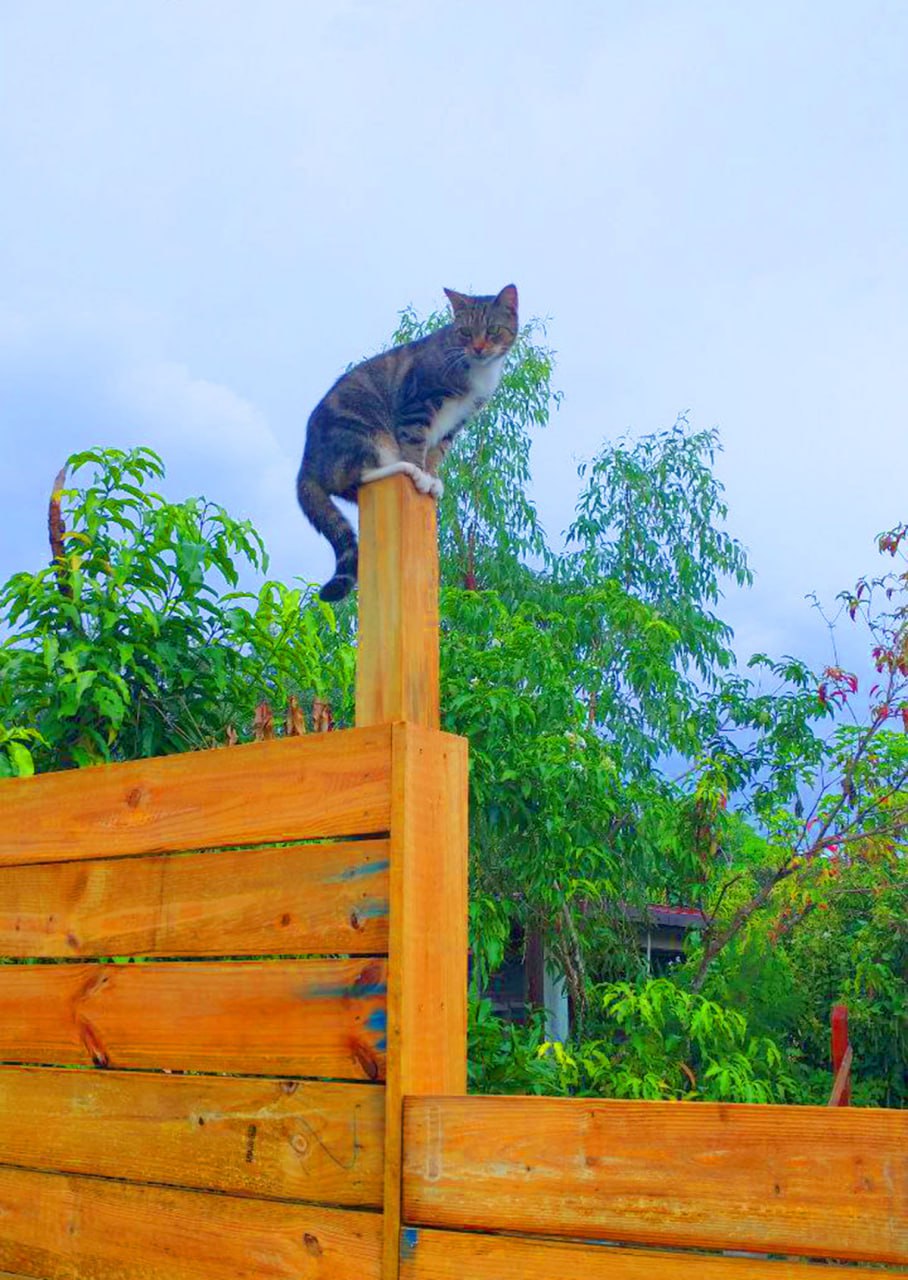
🐈📸 Cat Charlie - she climbs fence poles, supervises the garden center, and wins hearts from above at TopTropicals PeopleCats.Garden

#PeopleCats

🟢 Join 👉 TopTropicals

Date: 4 Dec 2025

SOS!

Magnolia champaca, the Joy Perfume Tree

🆘 SOS! Why is my Champaka Tree dropping leaves?
  • ✔️ Magnolia champaca, the Joy Perfume Tree, can look a little rough in Winter through early Spring. The leaves may yellow, drop, and make the whole tree look tired. Many gardeners think something went wrong, but this is completely normal. Champaka is semi-deciduous, which means it sheds leaves for a short period during cooler months, even in warm climates.
  • ✔️ This is also the time when the tree sets its seeds for spring. As long as you keep your regular watering routine and don’t overreact with extra fertilizer or pruning, the tree rebounds in Spring. Within a few weeks it pushes fresh new foliage and starts blooming again, filling the air with that unmistakable sweet fragrance.
  • ✔️ Champaka isn’t declining - it’s just taking a winter nap!


🛒 We always have them for you: Joy Perfume Champaka trees

📚
Learn more:

📱

#Perfume_Plants #Container_Garden #Trees

🟢 Join 👉 TopTropicals