Date: 17 Sep 2020

Healthy Plant Food: Q&A from Mr Booster
How to make pineapples fruit?

Q: I have purchased a Sugar Loaf Pineapple from you a few months ago, it is growing well and producing little babies around the main plant! I am so excited to have my own Pineapple plantation! How soon will they fruit and is there anything I can do to make them fruit faster? Can I give extra fertilizer just like I do for other garden plants?
A: It takes a year or two until a pineapple plant gains enough
energy to be ready to fruit. However the total time depends on growing
conditions and availability of all necessary nutrients.
Pineapples, like all other plants from Bromeliaceae family require very
delicate fertilizer; traditional fertilizers, if overdosed, can harm Bromeliads
and even kill them. At the same time, Pineapples require extra Magnesium for
good production, and not every fertilizer has it, or contains it in
well-accessible compounds / proper proportions.
Sunshine Ananas Booster is a scientifically formulated, mild fertilizer,
designed especially for tender Bromeliads, containing Magnesium just in perfect
concentration. Its amino-acid based ingredients are natural and work perfectly
for edibles and organic gardens. Just follow the label instructions and speed
up the fruit production 3-4 times!

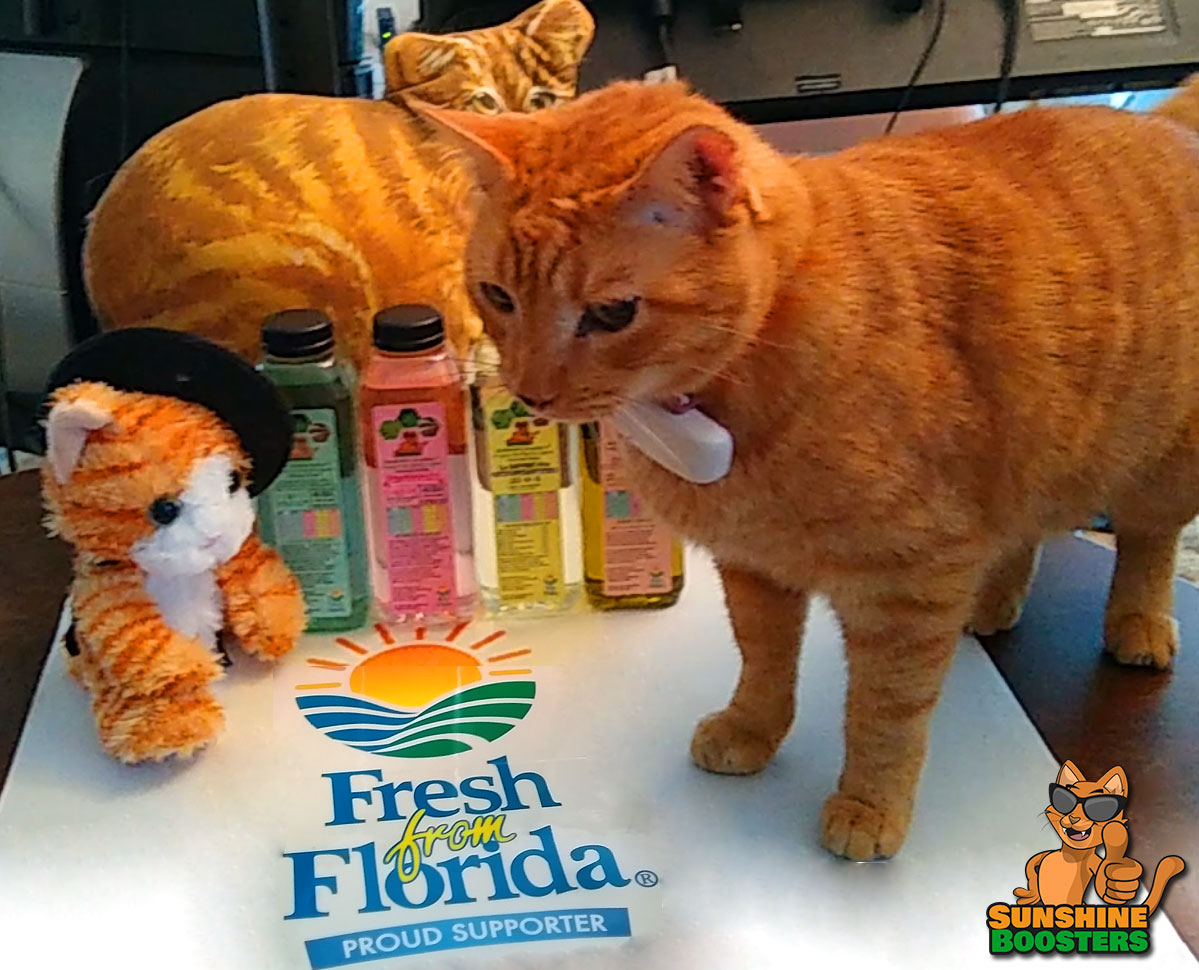
In the photo: Mr B checking his Sunshine Boosters
Date: 17 Sep 2020
TopTropicals from Bird's Eye
Watch new video: Top Tropicals Garden Retreat Events
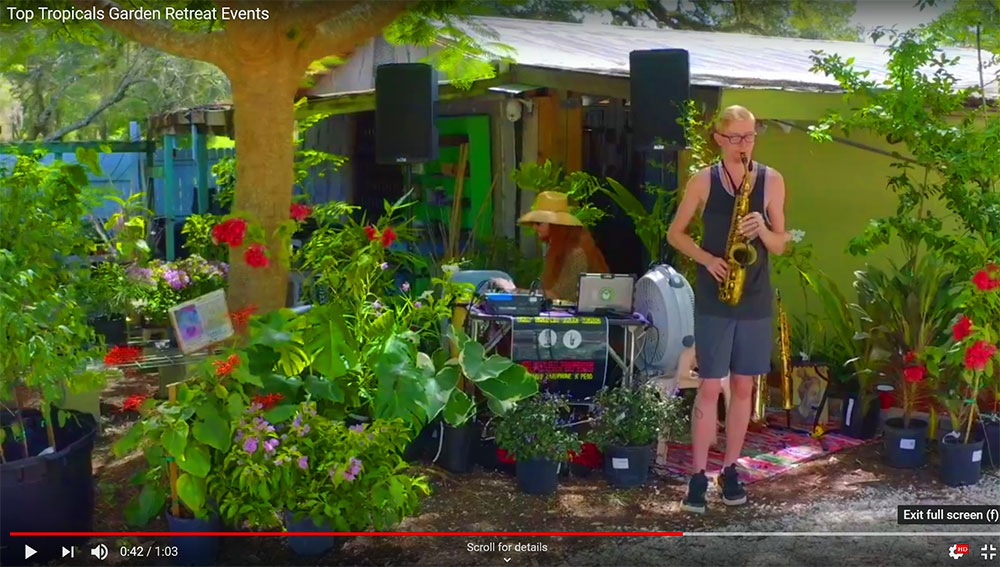
Join us every 1st Saturday of the month for an Open Air Market
showcasing luscious tropicals, rare exotics, fruiting trees, fragrant perennials and
much more!
San Carlos Park Music will be playing their hearts out and creating amazing
music from 12:00 - 3:00 p.m. beneath our lovely Royal Poinciana!
More events will be posted soon to our Facebook Event page. Keep up with our updates!
Stay updated with TopTropicals Videos by subscribing to our channel at YouTube.com/TopTropicals and get our latest video news of what is fruiting and blooming!

Date: 11 Sep 2020
PeopleCats of TopTropicals. Story of Raja: Love at First Sight and Survivor Spirit
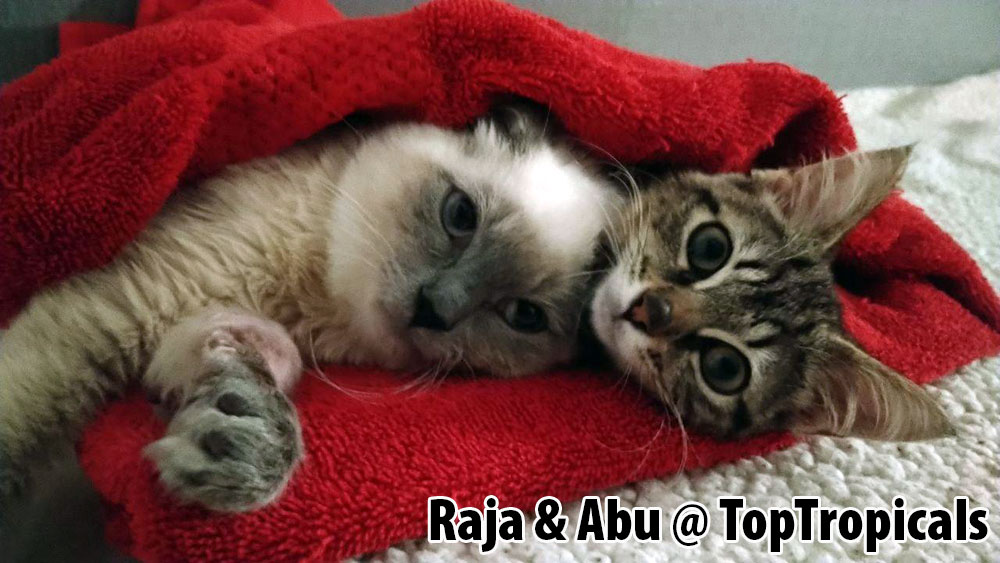
The story below about Little Raja is heart breaking and yet teaches us many lessons of life. Since the first columns about Raja and her brother Abu were published in our Blog, we have been getting many letters from gardeners-slash-cat-lovers asking questions about those heroic kitties... what have they been through and what happened after?.. So we asked Kristi to tell us the whole story in full. Here it is, the Raja's lessons of Life... Part 1...
CONTINUE READING >>
TopTropicals PeopleCat Club and Zoo
Thank you for supporting us in helping PeopleCat Community!
Make
your kind donation today and receive a surprise gift from us! Every little
bit helps. Thank you and God bless you and your pets!

Date: 11 Sep 2020
The best Loquat varieties with big, sweet fruit
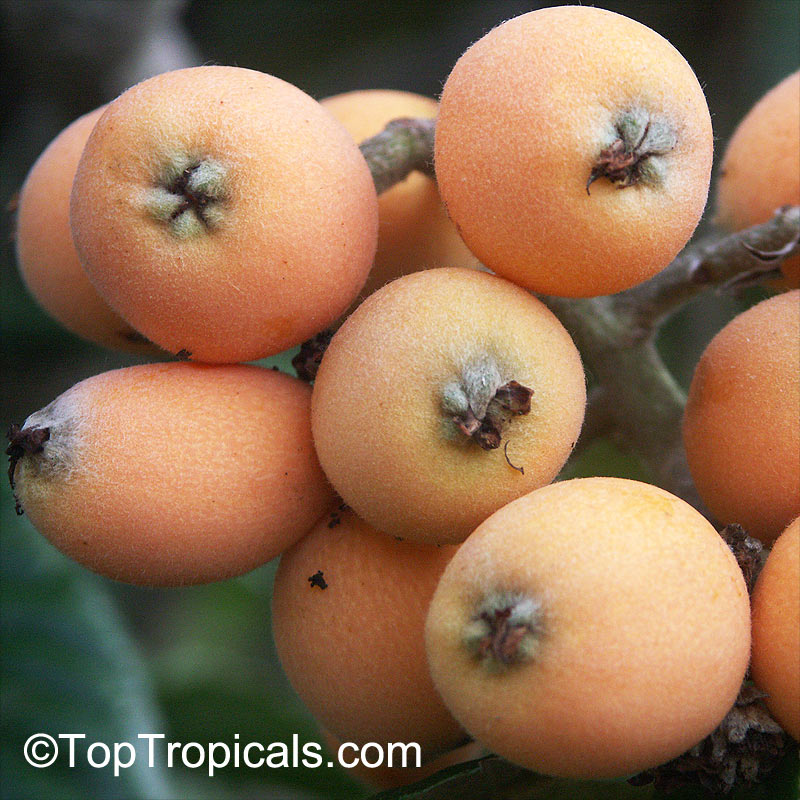
Q: I'm interested in loquat and read through the varieties you offer but wanted your recommendation. I'm looking for a variety that is big, sweet (not tart) with 1 seed. Of the varieties you offer... Which variety would you recommend?
A: From our experience, the most popular Loquat variety is Christmas.
It is an early ripening type hence the name Christmas. Fruits are very large
for a loquat, they are bright yellow with a tangy apricot flavor.
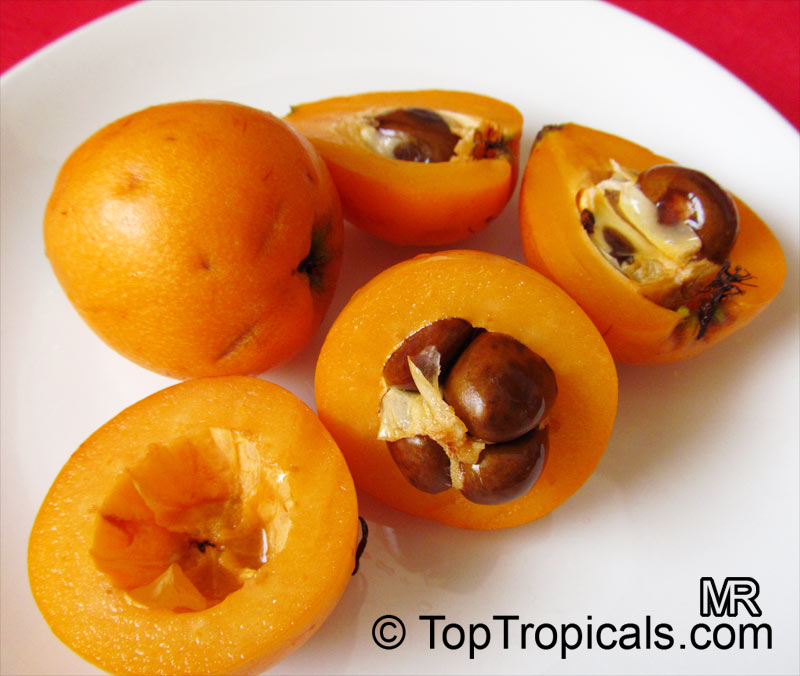
Another good variety we recommend is Yehuda - it has a large fruit and very small seed
Also, variety Oliver for many years has been considered the best loquat for South
Florida. The fruiting season is March to May. It has medium to large fruit. The
fruit is very sweet with only one-two seeds.
Loquats are very cold hardy tropical fruit trees, easy to grow, drought
tolerant, fast growing. Fruit is great for eating fresh or making jam.
Check them out while they are on sale!
Date: 4 Sep 2020
Healthy Plant Food: Q&A from Mr Booster
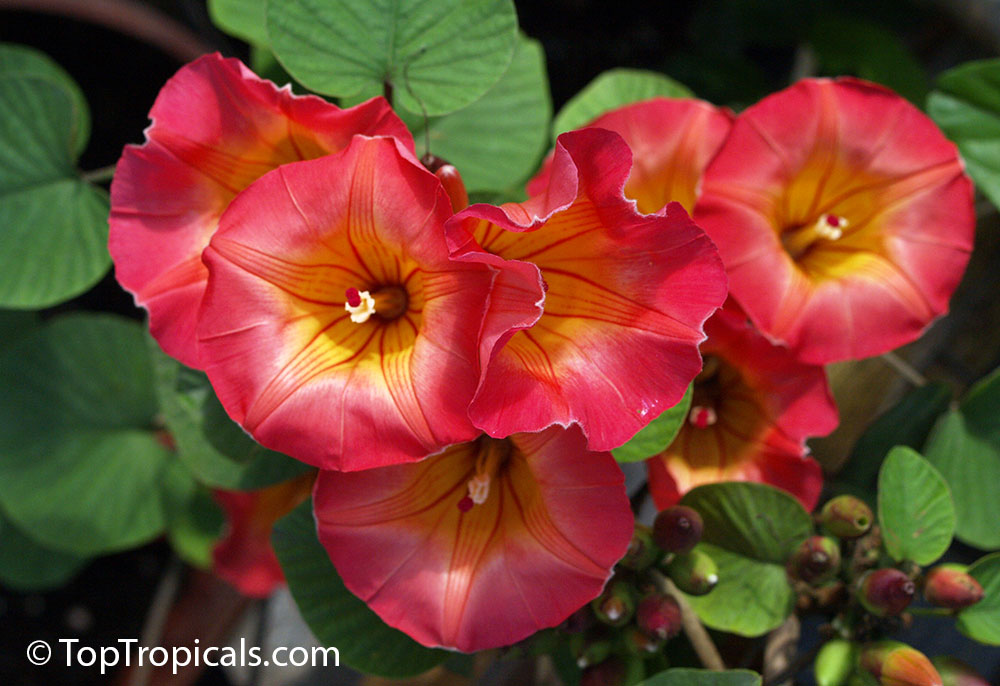
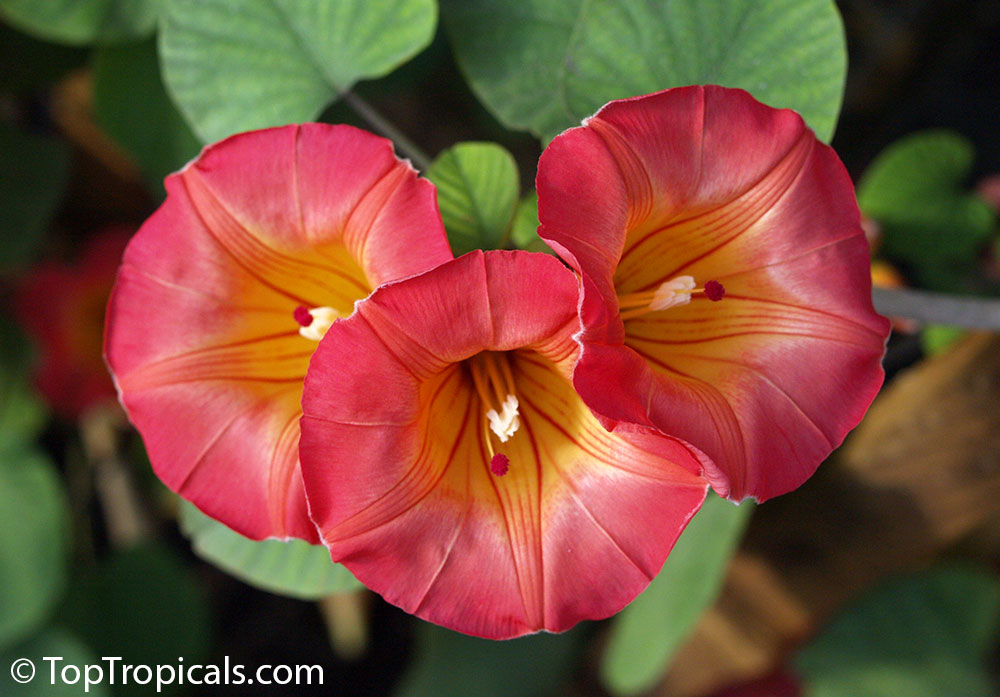
Encouraging blooms on the Hawaiian Sunset Bell Vine
Q: Please can you advise how to encourage the Stictocardia beraviensis the Hawaiian Sunset Bell vine blooms? Mine is all beautiful leaves and full sun in Miami.
A: Providing full sun, Stictocardia blooms profusely. In your area, it
should be happy and thriving. However, keep in mind that these flowers can be seasonal (meaning, not ever-blooming). The good
news it, Hawaiian Sunset Bell usually blooms several times a year on and off. In our garden, we have a large plant growing in
the ground and covering a whole fence; we see flowers 3 times a year:
- Early Spring
- Summer (sporadically)
- Late Fall to early Winter
Make sure to provide proper fertilizer to encourage blooms. It is especially important if you grow this plant in container (where nutrients are very limited). We suggest the following fertilizer for your Stictocardia:
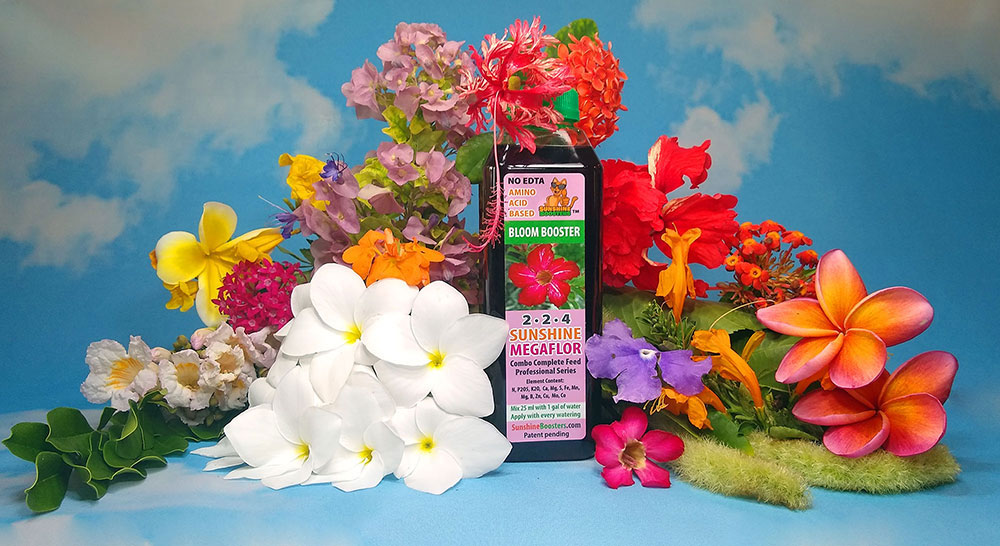
SUNSHINE Megaflor - Bloom Nutrition Booster