Garden Blog - Top Tropicals

Date: 24 Mar 2024

Bauhinias: trees with Orchid Flowers
and Butterfly Wings...
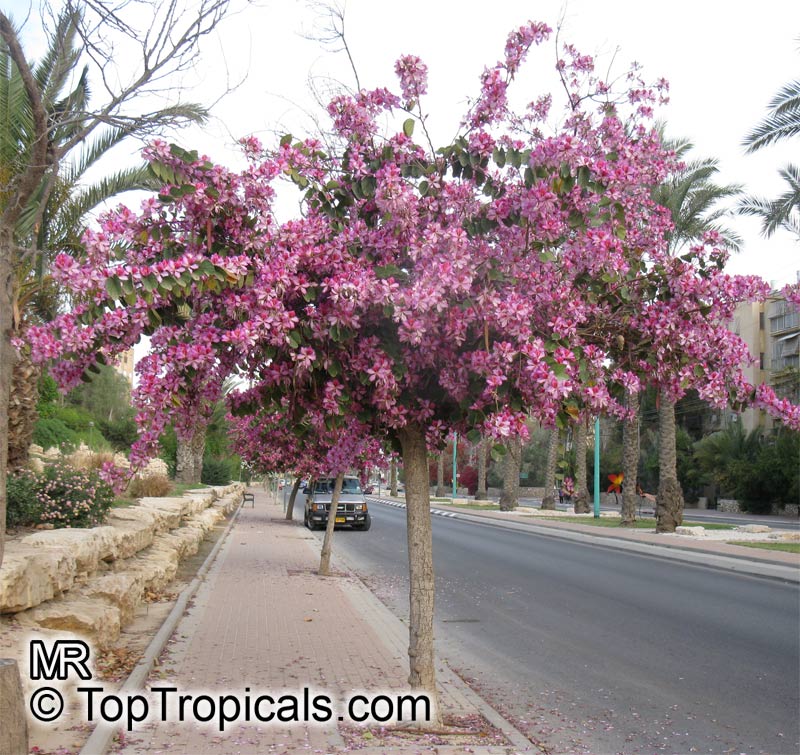
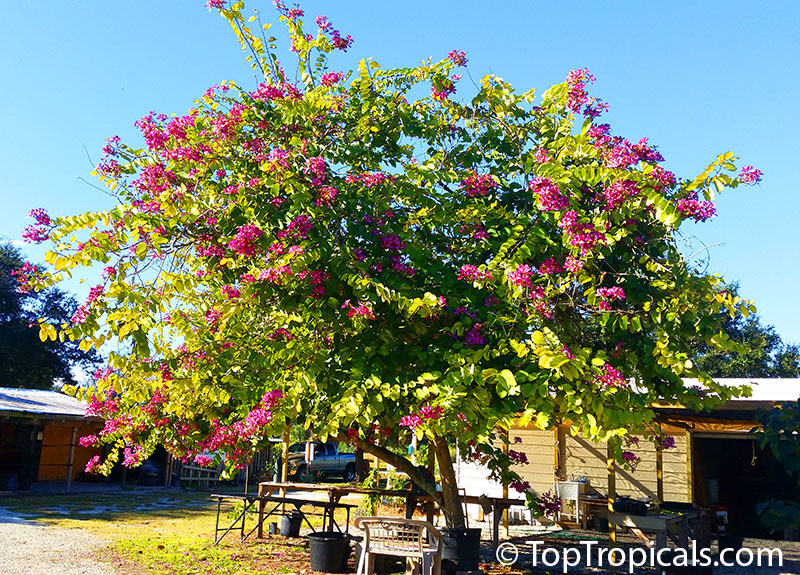
Bauhinia variegata - Purple Orchid Tree

Photo above: Bauhinia variegata - Purple Orchid Tree, one of the most spectacular varieties.

Q: We just moved to Florida and I see these beautiful trees with large purple flowers. I was told these are Orchid trees, do you have them?

A: Bauhinias, commonly known as Orchid trees, are renowned for their captivating flowers and unique foliage. These trees typically grow to a moderate height of 15-25 feet with a spread of 10-15 feet, showcasing a rounded to vase-like shape. Thriving in hardiness zones 9-11, they exhibit resilience to heat and can withstand mild frost. There are over 300 species of Bauhinia, which are distributed in tropical and subtropical areas. These species vary in characteristics such as size, foliage, and flower color, contributing to the diversity and appeal of this genus. You can find them as trees, shrubs, and even vines.

Bauhinias are evergreen (in tropics) to semi-deciduous (in cooler climates), offering year-round beauty with intermittent blooming cycles. The peak bloom time varies depending on the species and location, often occurring in late winter to early spring, bedecking the tree with striking orchid-like flowers in hues ranging from white and pink to purple and red. The flowers boast delicate petals with intricate patterns, resembling the elegance of true orchids.

One of the distinguishing features of Bauhinia leaves is their unique bi-lobed or bilobed structure, which gives them a distinct appearance. The leaves are deeply divided, typically into two lobes or halves, hence the common name "Butterfly tree" due to their resemblance to butterfly wings. This characteristic is often used as an identifying trait for Bauhinia species. The bilobed leaves add to the visual appeal of the tree, contributing to its ornamental value in addition to its beautiful flowers.
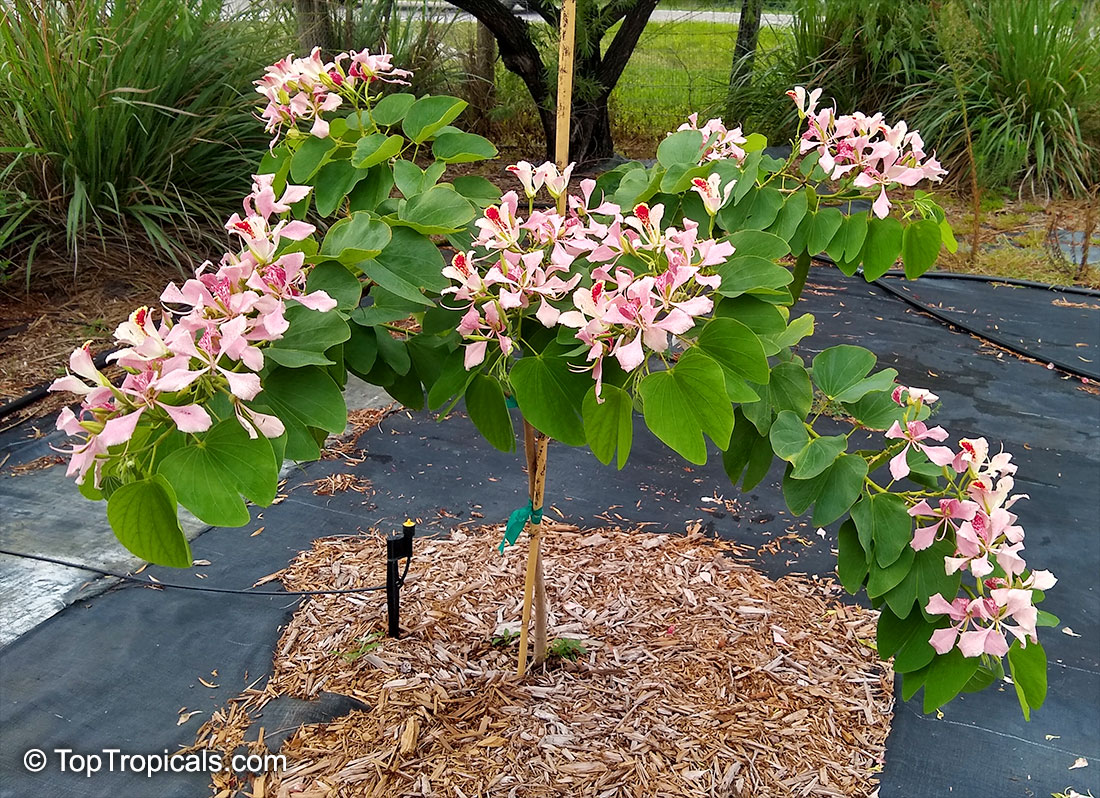
Bauhinia monandra - Napoleons plume

Photo above: Bauhinia monandra - Napoleons Plume, starts flowering in small size. This one is very beautiful but the most cold sensitive and should be grown in pots in areas with winter freeze. It will happily bloom in container!

Low-maintenance by nature, Bauhinias require minimal upkeep. Annual feeding with a balanced fertilizer enhances growth and flowering. Pruning is generally optional but can be done in late winter or spring, after flowering, to maintain shape or remove dead or damaged branches. These trees thrive in full sun, preferring well-drained soil. With their enchanting blooms and easy care requirements, Bauhinia orchid trees are a delightful addition to any landscape, and a colorful specimen for tropical winter gardens.

In addition, Orchid trees grow fast and provide excellent shade. They can make a shady spot in your garden in no time, giving relief from the hot sun. This is really valuable, especially in places where it gets very hot. So, not only are Orchid trees pretty to look at with their lovely flowers, but they're also great for keeping you cool!

Read more about Bauninias:
Bauihnias: Orchid trees with Butterfly flowers... and leaves
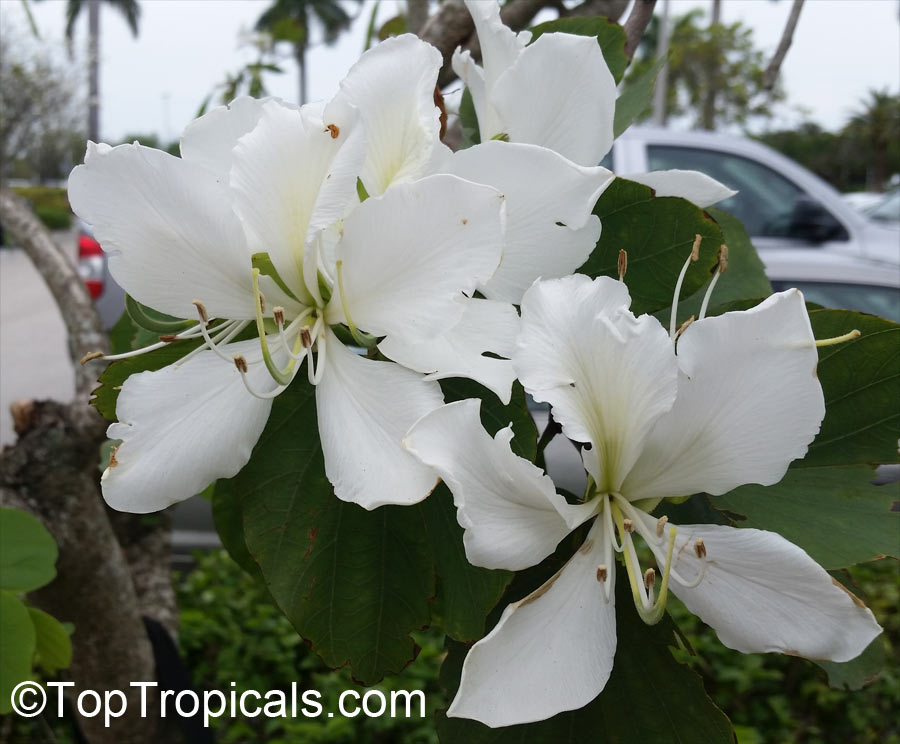
Bauhinia x alba (candida) - White orchid tree

Photo above: Bauhinia x alba (candida) - White orchid tree, the most cold hardy variety that can take light freeze once established.
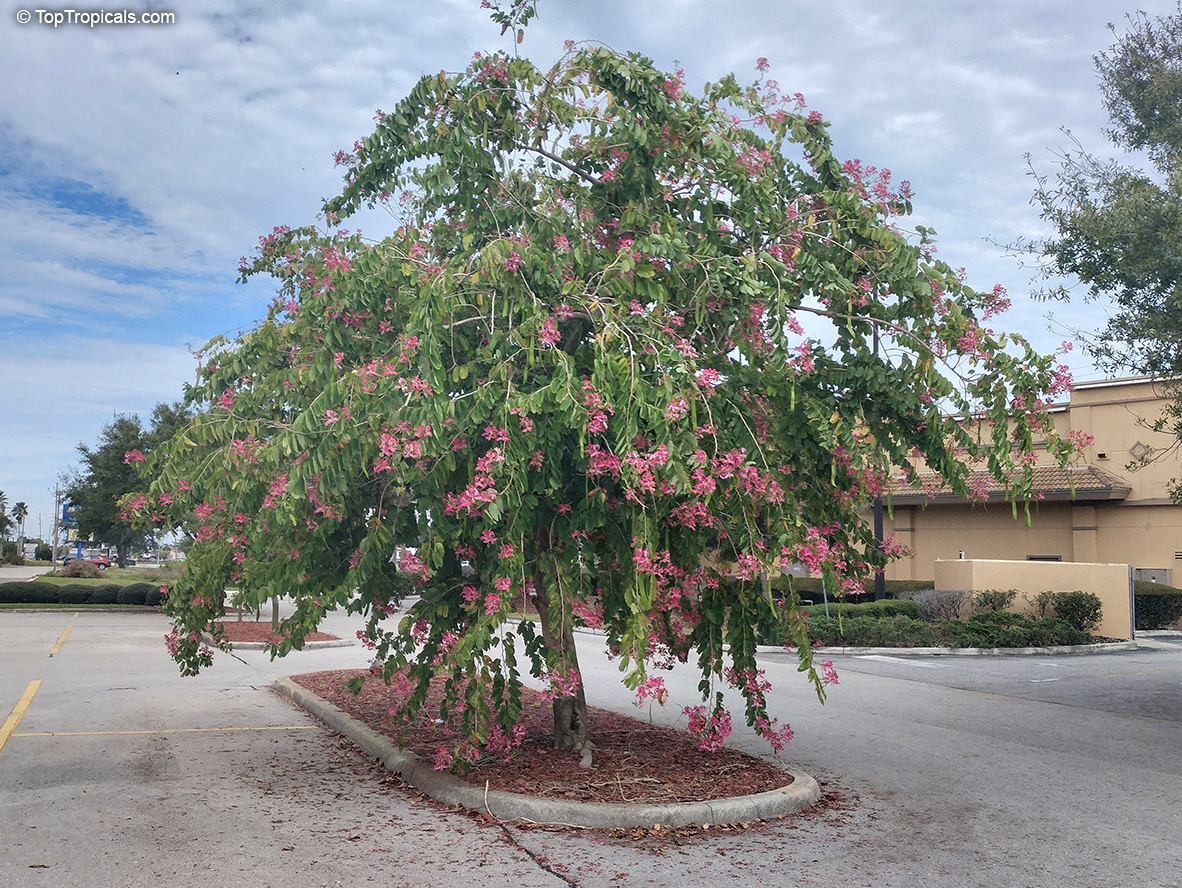
Bauhinia purpurea - Purple Orchid Tree

Photo above: Bauhinia purpurea - Purple Orchid Tree, one of the most popular and easy trees in Southern landscapes.
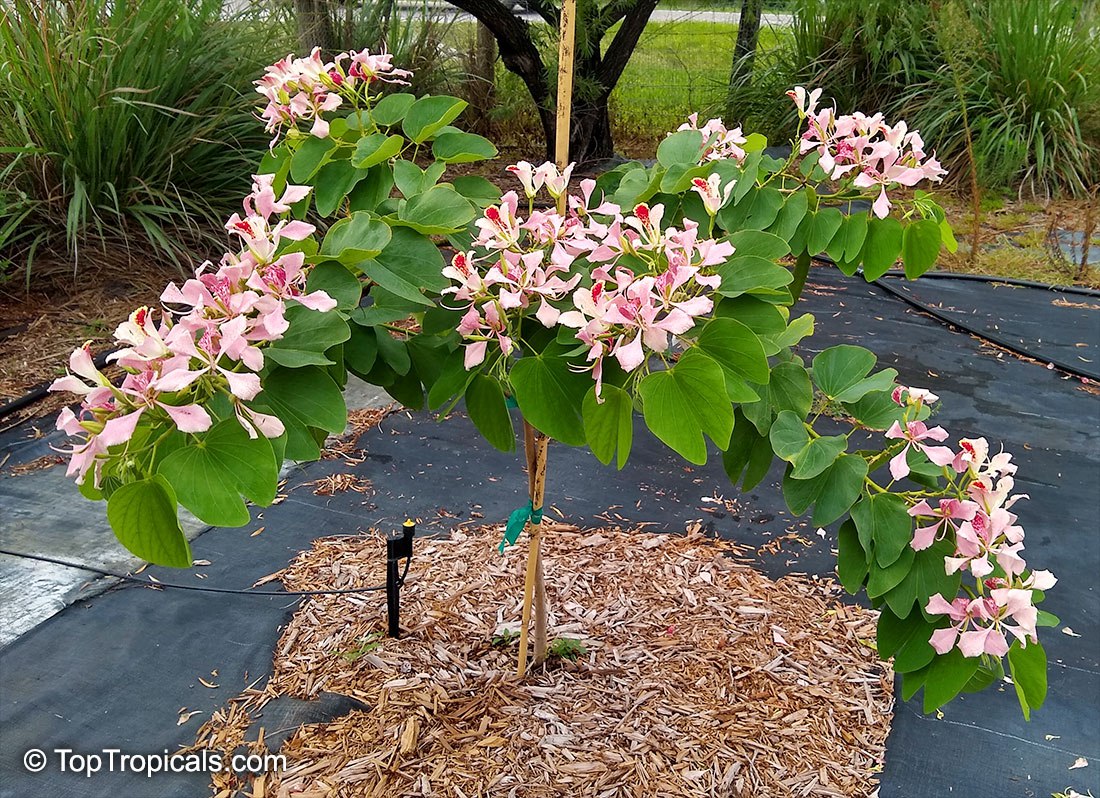
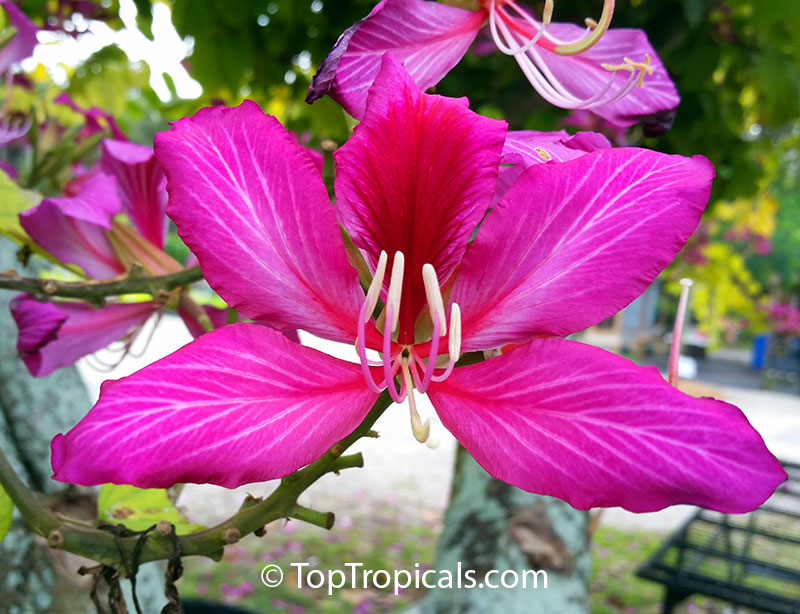
Date: 19 Apr 2024

Why Bauhinias are called Orchid Trees: orchid flowers with butterfly wings

Bauhinia monandra - Nepoleons Plume

Bauhinia monandra - Nepoleons Plume

Why Bauhinias are called Orchid Trees: orchid flowers with butterfly wings...

Bauhinia trees have striking orchid-like flowers in hues ranging from white and pink to purple and red. The flowers boast delicate petals with intricate patterns, resembling the elegance of true orchids.

The leaves are deeply divided, typically into two lobes or halves, hence another common name "Butterfly tree" due to their resemblance to butterfly wings.

Need a fast growing, easy to care tree with beautiful blooms? Orchid trees offer quick shade solution and guarantee a spectacular winter flower show.

📚 Learn more about Orchid trees

🛒 Shop Orchid Trees

#Butterfly_Plants

🏵 TopTropicals

Date: 26 Jan 2022

New Video:
The Hong Kong Orchid Tree

Bauhinia blakeana

"...Edging the golf course of the club was a glorious sweep of glowing purple. Even before I was near enough to identify the trees, the rich, heady perfume which filled the air told me they were Bauhinias. The sight left me breathless and it was then I realized how difficult was the attempt I was making to describe in mere words the trees I know better how to paint..." (D. Cowen, "Flowering trees and shrubs of India")

Bauhinia blakeana - Hong Kong Orchid Tree, is the most beautiful of all orchid trees, and the most wanted one. It has the largest flowers, brightly colored. Winter bloomer. These trees start flowering in very small size, when only 2-3 ft tall!
Certainly seeing flowering Bauhinia blakeana is one of the best things a plant collector will love about winter. It truly is the most beautiful orchid tree!

Read more: Bauhinias: Orchid trees with Butterfly flowers
Spectacular Hong Kong Orchid Tree - Eye Candy and "Clever Leaf"

WATCH NEW VIDEO >>

Stay updated with TopTropicals Videos by subscribing to our channel at YouTube.com/TopTropicals and get our latest video news of what is fruiting and blooming!

Date: 10 Nov 2022

Fertilizing indoor plants in Winter

Sunshine boosters for indoor palnts

What is the best fertilizer for indoor plants?
Can I fertilize house plants in Winter?

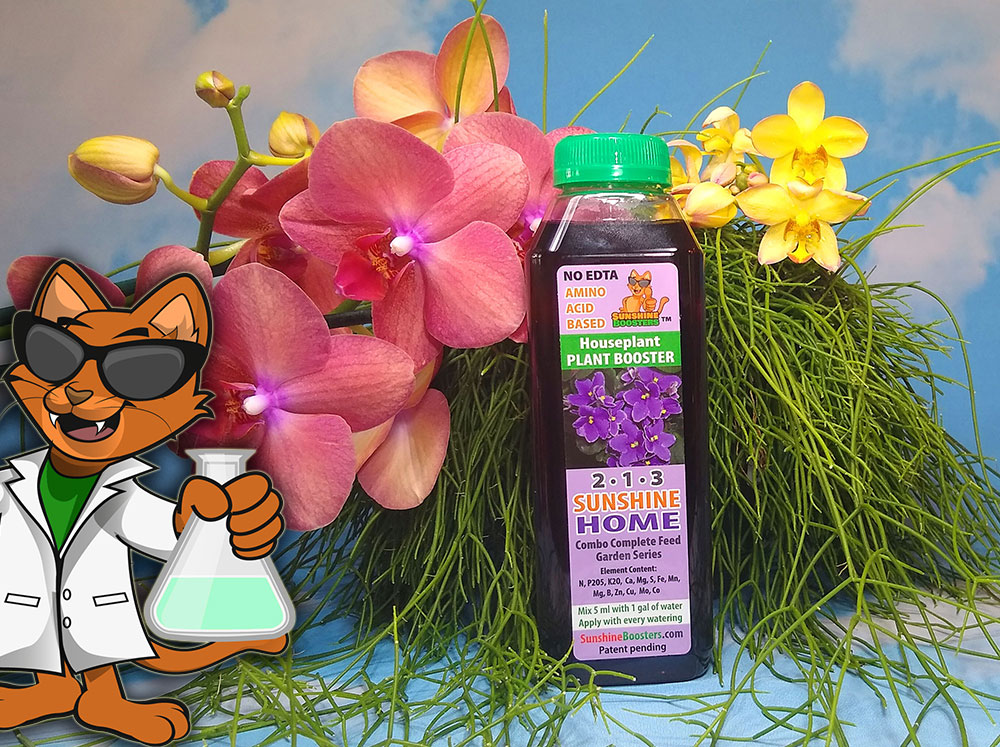
The best fertilizer for indoor plants is liquid fertilizer Sunshine Boosters (TM). It is amino-acid based, natural, and is safe to use with every watering and year around. Unlike dry fertilizers that are not recommended to use during Winter, Sunshine Boosters formula is mild and scientifically balanced. Your houseplants will consume exactly as much nutrients as they need even during cooler months of less active growth. Sunshine boosters will not burn roots and won't create nutrient lockup (excessive salts that often caused by dry fertilizers). Sunshine Boosters is a perfect food for all kinds of plants, and different boosters available for different plant types (flowering, fruiting, even for orchids). Check out Sunshine Boosters selection.

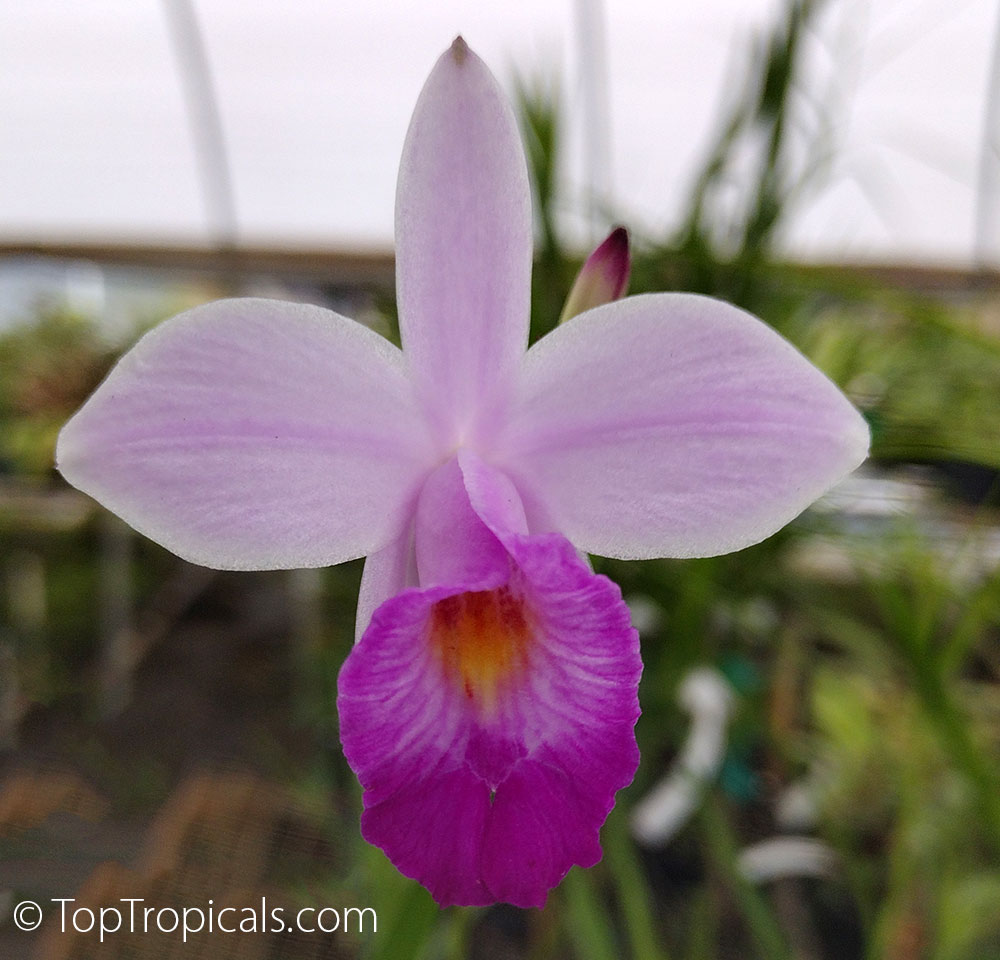
Arundina graminifolia - Bamboo Orchid, Bird Ground Orchid

Grow Purple! In the photo: Arundina graminifolia - Bamboo Orchid, Bird Ground Orchid - Winter flowering orchid that grows in regular soil. These plants are in bloom right now, picture taken this week!

Date: 13 Mar 2016

Growing Vanilla Orchid

Q: I want to buy Vanilla orchid and I wonder if I can grow it in my bathroom by the skylight.

A: Growing Vanilla orchid is no different than other orchids. It is very simple. All that the plant needs is a good light, good air humidity, and good porous support.

Light. Grow Vanilla orchid in a very bright light, but protected from direct hot sun.

Air humidity.The higher the air humidity, the better your plant will grow. Many people grow orchids in a bathroom where these plants can enjoy occasional "humidity treats" after showers.

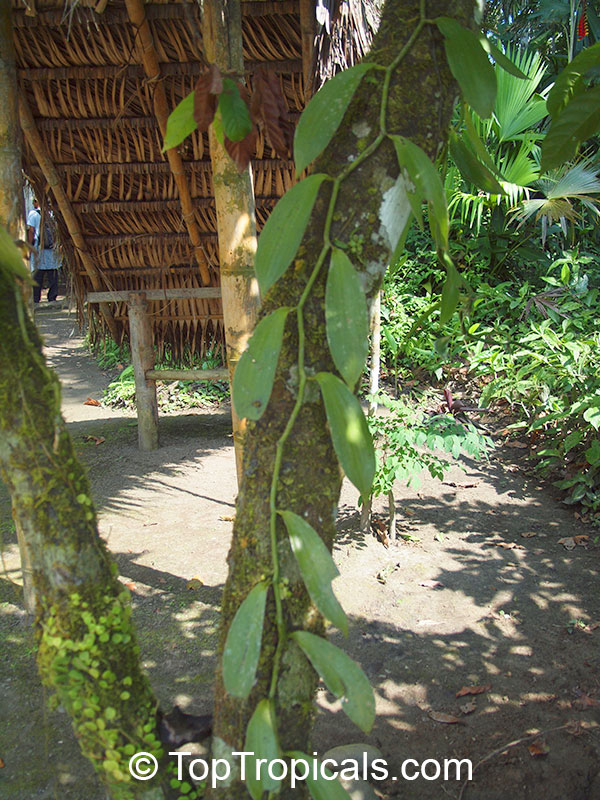
Growing media. Vanilla orchid cuttings are rooted very often in a regular potting mix with high content of pine bark and/or Perlite, Coconut Husk Chips. Once the little plant is well-rooted and starts developing, it will need a special porous surface to climb on and to attach to with developing aerial roots. A log covered with porous bark is used often. Another option is a piece of wood wrapped with a burlap fabric. In the Nature, this plant climbs up high onto trees and attaches to the bark with aerial roots - at this point, it doesn't need those terrestrial roots any more which may even die off. Climbing a porous support is absolutely necessary for your vanilla for setting buds, flowering and producing vanilla beans. If you are lucky to live in frost-free climate, plant you vanilla by a tree that will provide a shady canopy and a great natural climbing surface (bark). You may see the flowers as soon as within 1-2 seasons!