Garden Blog - Top Tropicals

Date: 17 Nov 2023

Privacy Hedges with Benefits

Flowering  hedge

What's the numero uno question we get bombarded with at Top Tropicals Nursery? Well, it's a real head-scratcher:

Q: "...Can you recommend me a flowering privacy hedge to spice up my yard's life? My current hedge is just a green wall and I'm tired of the monthly trim routine. I need something lively, fast-growing, and unusual if possible. No plain old ixora, please!.."

A: After over two decades of being the go-to advice-givers, we thought, "Why not spill the floral beans and share our tropical wisdom?" But where to begin? The jungle of flowering ornamentals is vast, and picking the perfect shrub is like finding the missing piece of a gardening puzzle. So, in our new column "Hedges with Benefits" we're dishing on those not-so-average shrubs that'll not only prettify your patch but also bring some serious practicality. Today's lineup is -

Top Ten Winners:
Fast growing flowering shrubs

Below is the top selection of spectacular flowering shrubs that can create a nice hedge or a natural screen within just a couple of seasons.
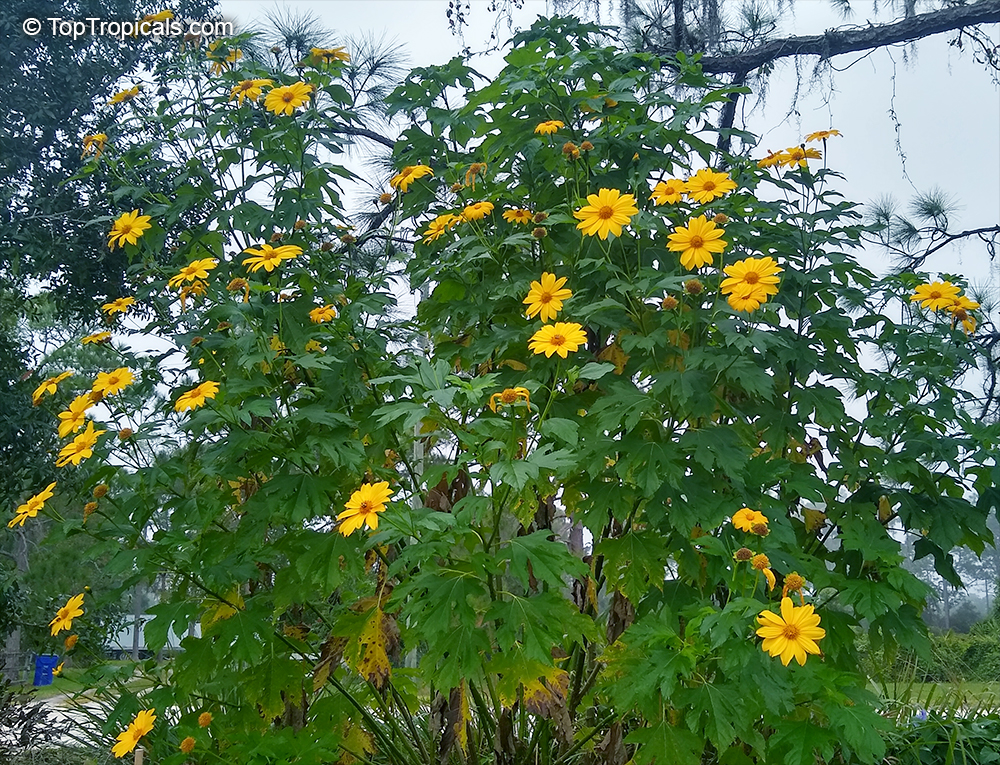
Flowering  hedge  Tithonia  diversifolia  -  Sunflower  tree

Tithonia diversifolia - Sunflower tree.
Grows super fast to a very tall dense hedge, and starts flowering right away. Full sun, very easy, not fussy about soil or water. Winter bloomer.
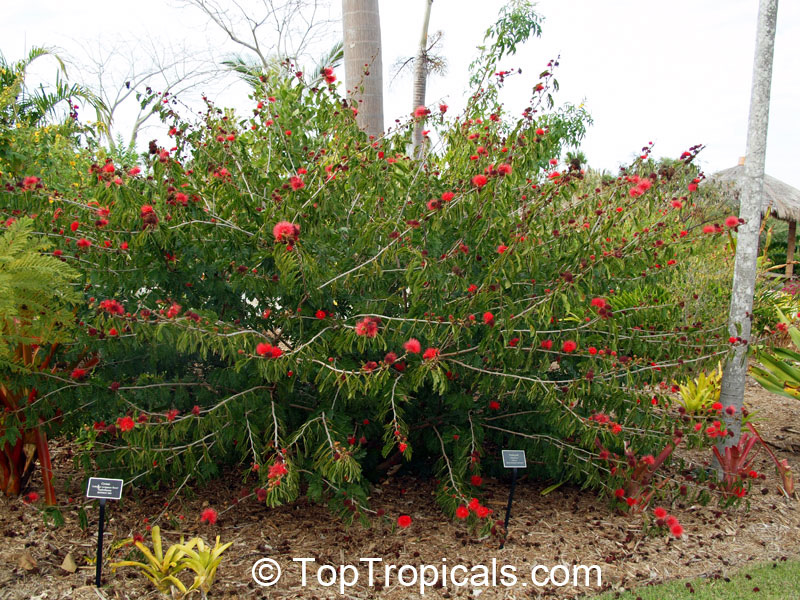
Flowering  hedge  Calliandra  surinamensis  -  Powderpuff

Calliandra surinamensis - Powderpuff.
Pretty pink powderpuffs almost year around! Easy to prune.
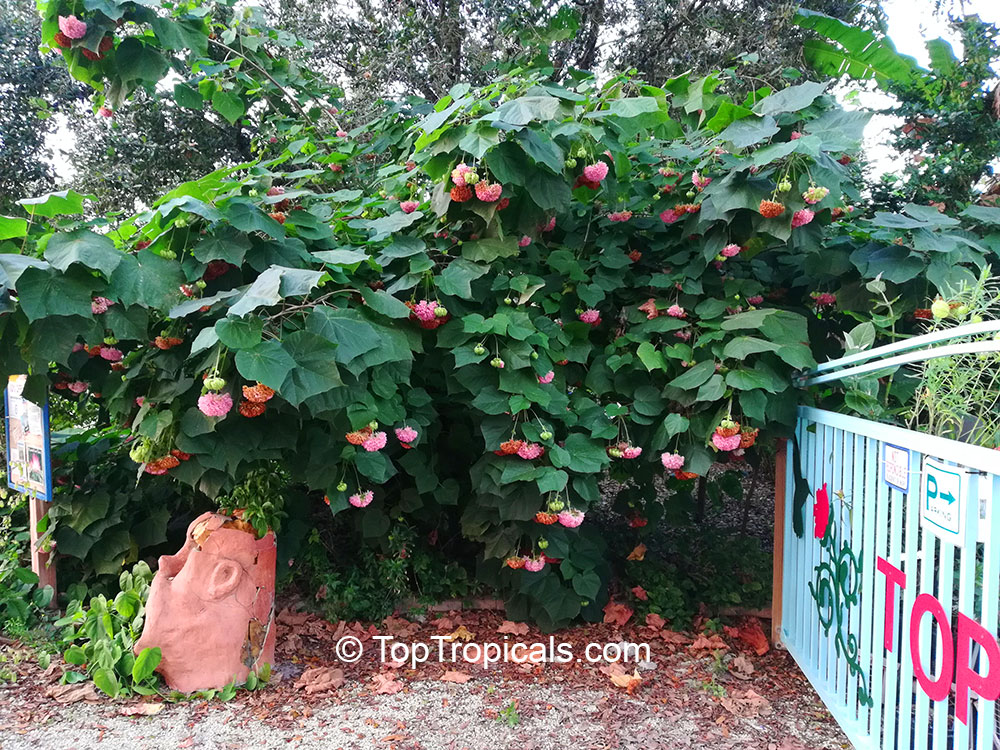
Flowering  hedge  Dombeya  x  wallichii  -  Tropical  Hydrangea

Dombeya x wallichii - Tropical Hydrangea.
You can see this beautiful bush right at Top Tropicals gate. Winter bloomer, large lush leaves and huge, pink hydrangea-like blooms. Very large and fast growing, likes water, tolerates shade.
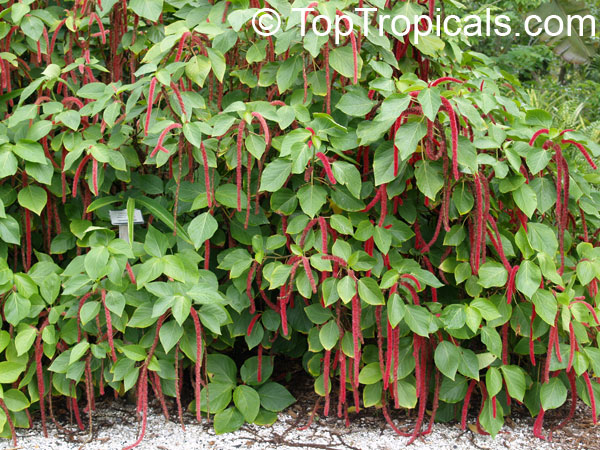
Flowering  hedge  Acalypha  hispida  -  Cat  tail,  Chenille  plant

Acalypha hispida - Cat tail, Chenille plant.
All time favorite, everblooming with red cat tails! Full sun. Easy to control.
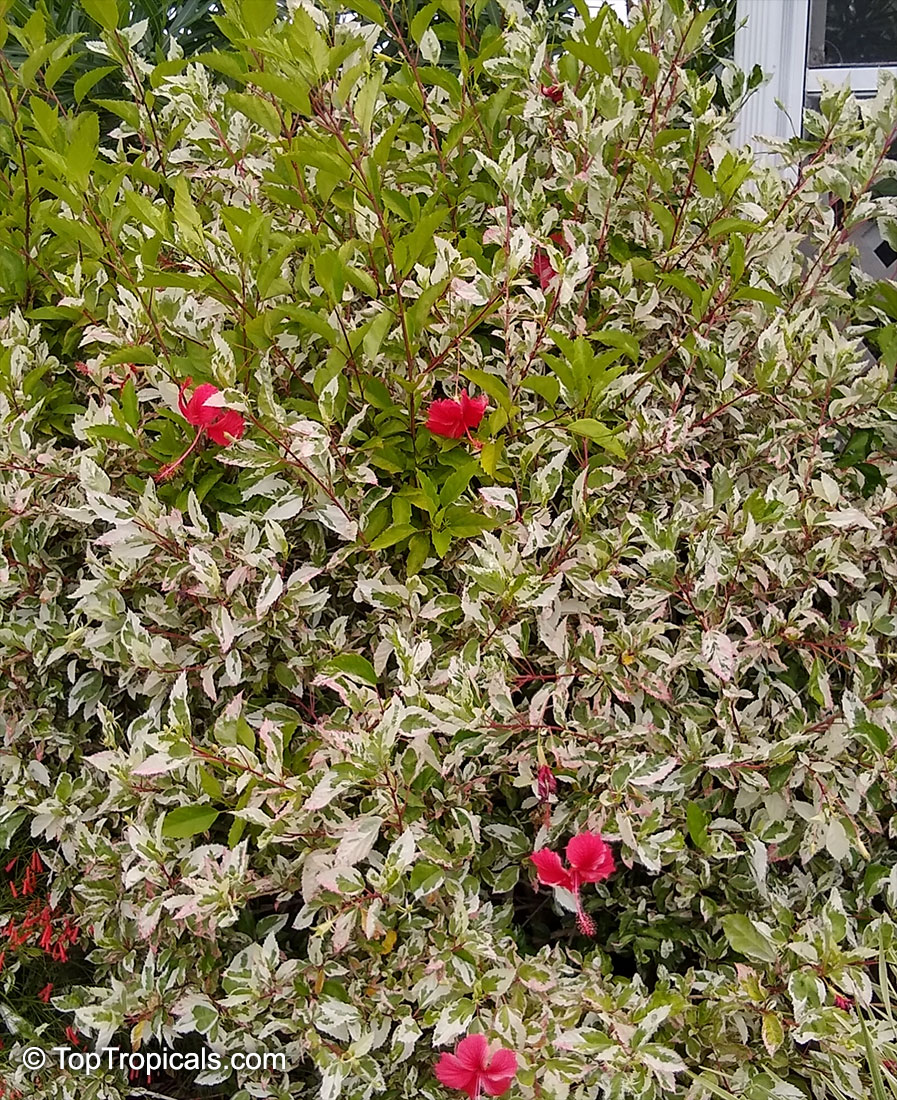
Flowering  hedge  Hibiscus  variegated  Snow  Queen

Hibiscus variegated Snow Queen.
Popular landscape bush with unusual look, red flowers over snow white variegation, very showy! Responds well to pruning. Full sun.
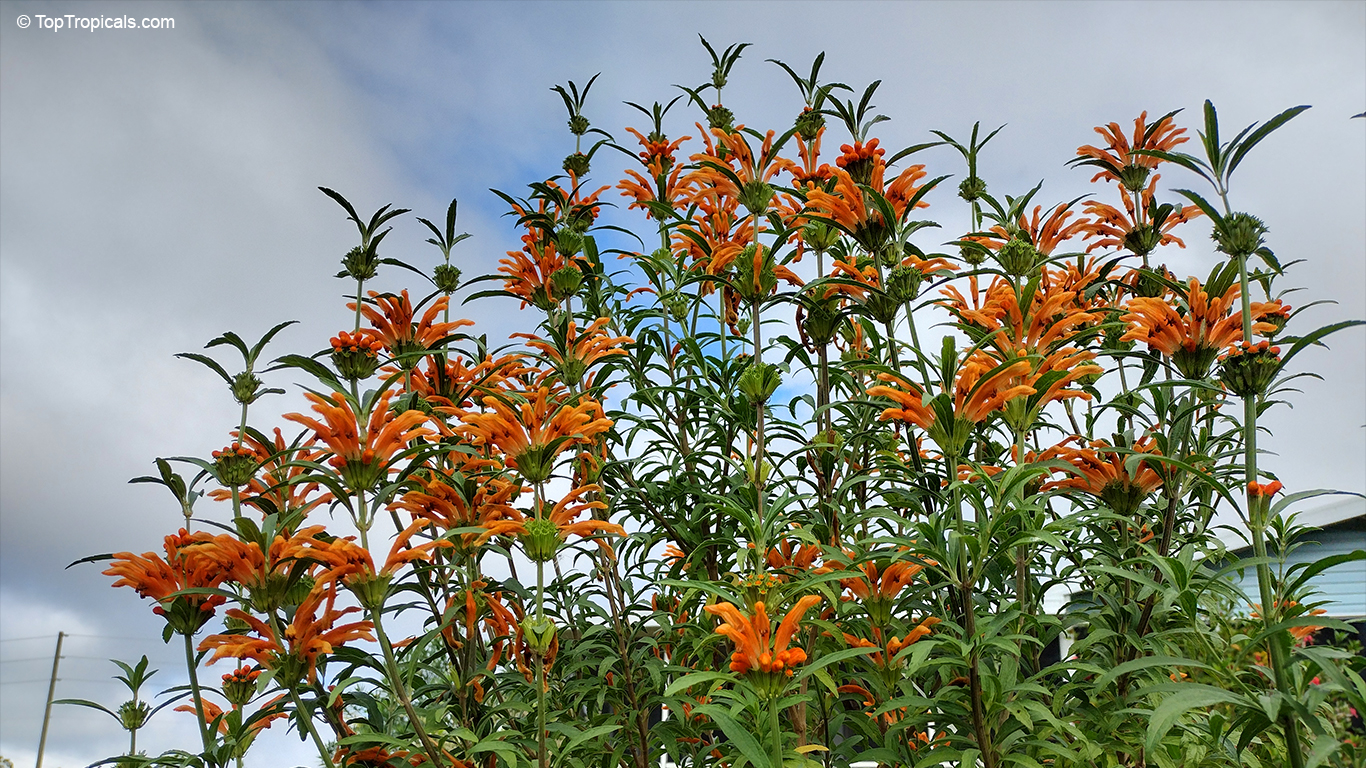
Flowering  hedge  Leonotis  leonurus  -  Lions  Ears

Leonotis leonurus - Lions Ears.
Winter bloomer, great for low hedges. Covered with bright orange curious flowers, medium sized, easy to control at 3-4 ft. Full sun.
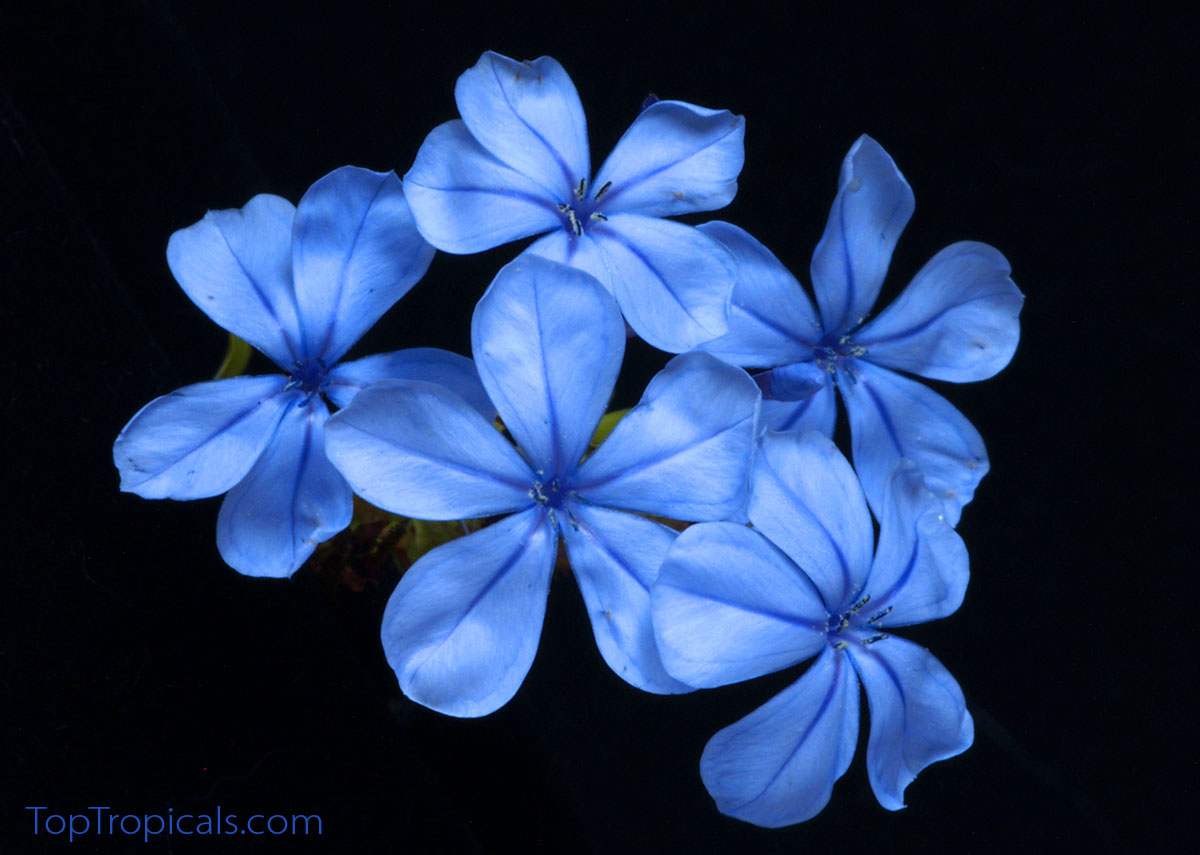
Flowering  hedge  Plumbago  auriculata  Imperial  Blue

Plumbago auriculata Imperial Blue
One of the most popular Southern hedge plants, everblooming with bright blue flowers, tolerant to drought, heat, and poor soils. Can be maintained short or tall (2-6 ft).
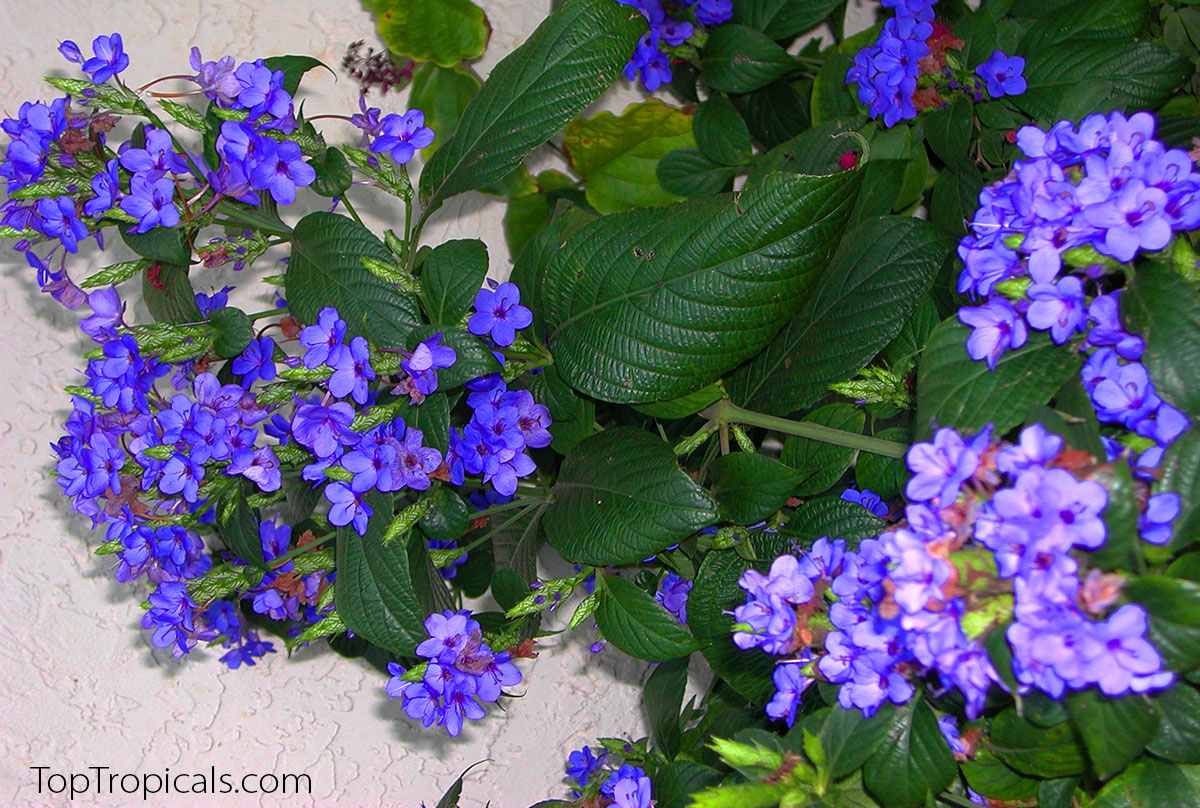
Flowering  hedge  Eranthemum  pulchellum  -  Blue  Sage,  Lead  Flower

Eranthemum pulchellum - Blue Sage, Lead Flower.
Great for shady spots, winter bloomer with dark green leaves and unusual sky-blue flowers. Can be trimmed if needed. Nice and dense.
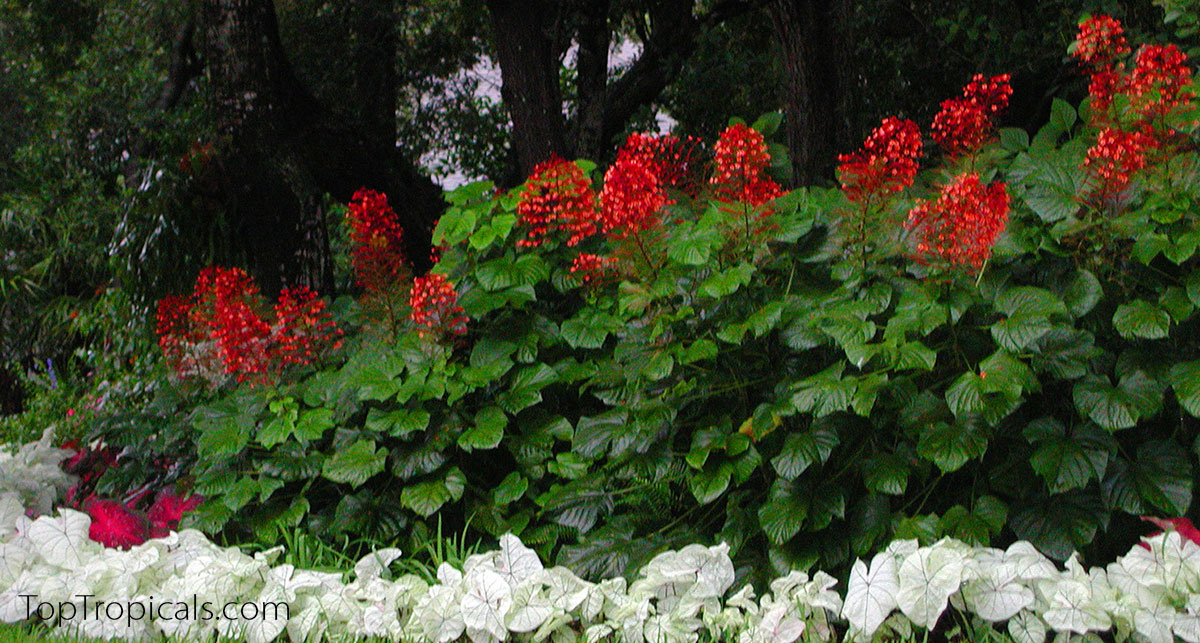
Flowering  hedge  Clerodendrum  paniculatum  -  Pagoda  Flower

Clerodendrum paniculatum - Pagoda Flower. Happy in the sun or shade, easy plant. Loves water.
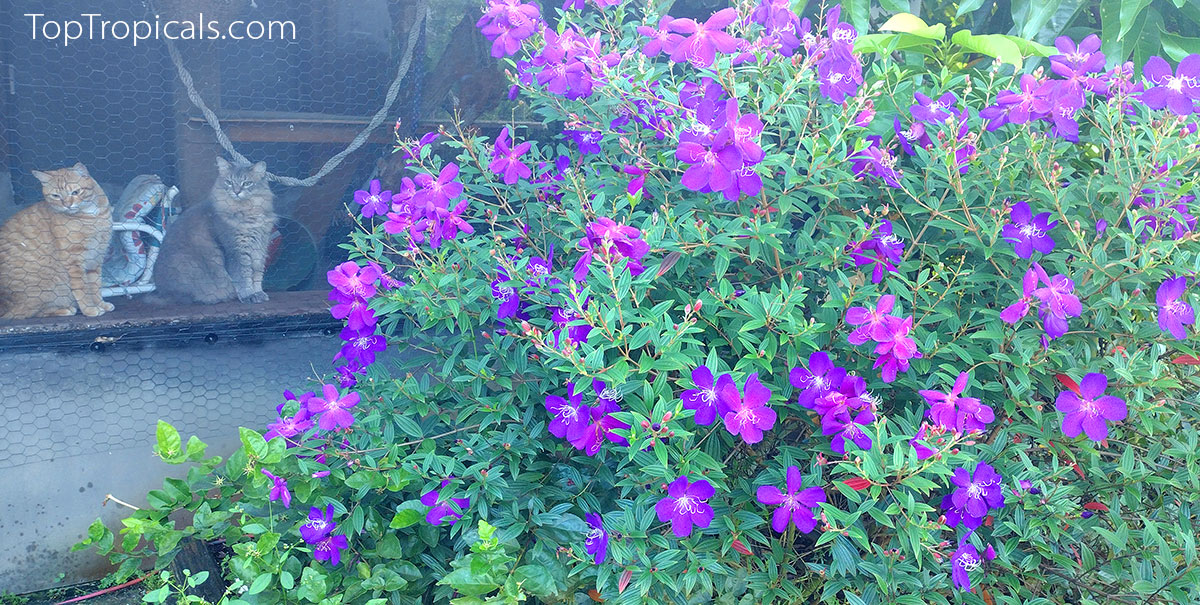
Flowering  hedge  Tibouchina  lepidota  -  Ecuador  Princess,  Jules 


Dwarf

Tibouchina lepidota - Ecuador Princess, Jules Dwarf.
Sun or shade, blooms on and off throughout the year. Beautiful Purple Princess!
Date: 18 Apr 2023

Five benefits of growing your own Pineapple

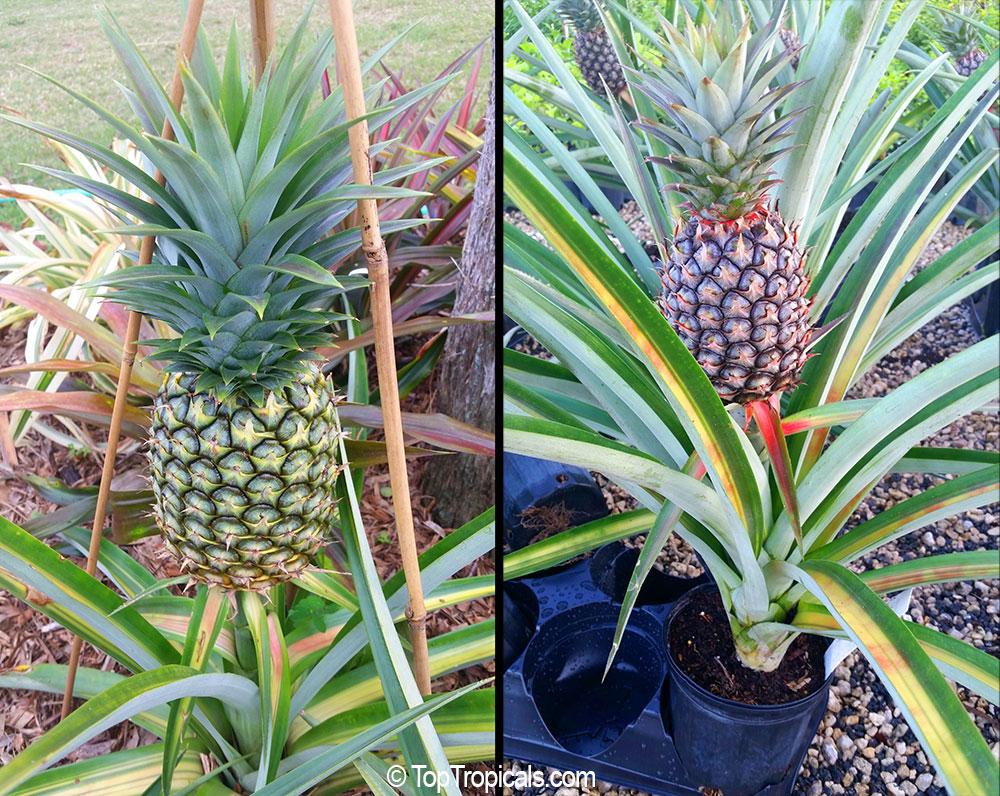
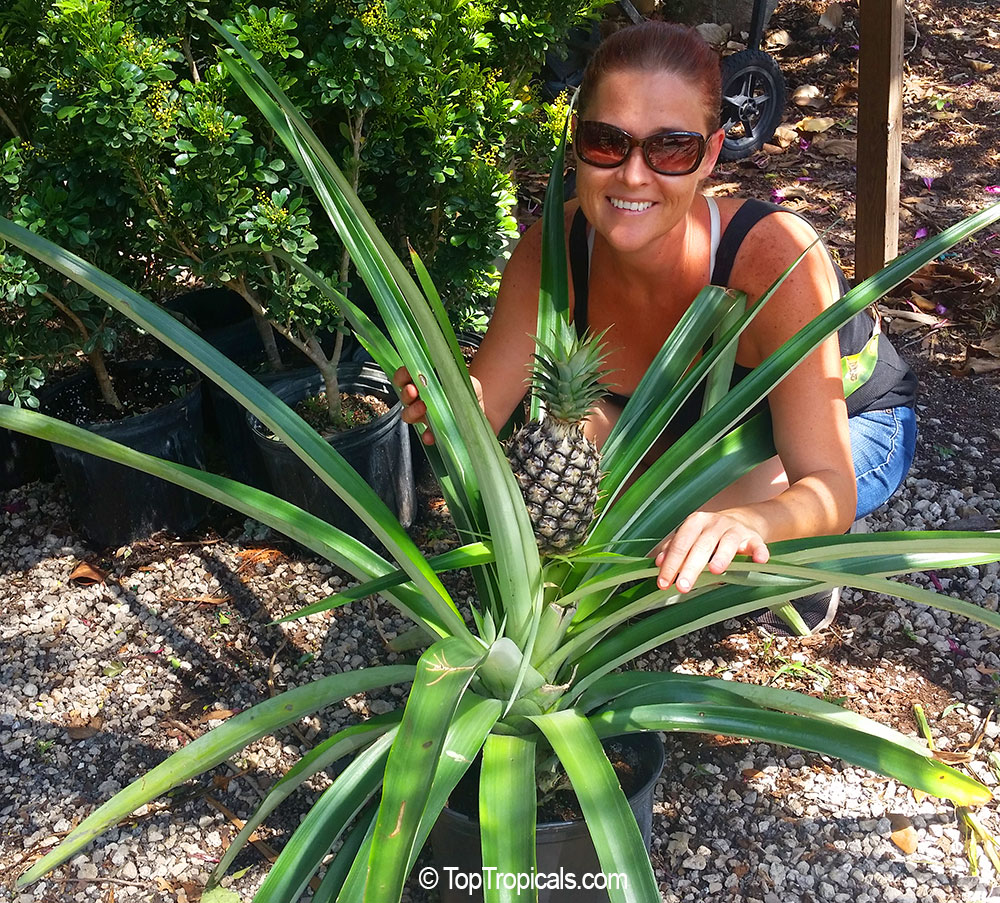
Pineapple  plant  with  a  fruit  and  a  beautiful  girl  Kristi

Q: Can I grow my own pineapple fruit?

A: Growing a Pineapple plant - Ananas comosus - is a fun and rewarding experience that offers both visual and practical benefits:

1. Fresh, homegrown fruit: One of the main benefits of growing a pineapple plant is that you can enjoy the fruits of your labor by harvesting fresh, delicious pineapples right from your own backyard.

2. Aesthetic appeal: Pineapple plants are visually appealing with their long, spiky green leaves and bright, vibrant fruits. They can add a tropical, exotic touch to any garden or indoor space.

3. Low maintenance: Pineapple plants are relatively easy to grow and require minimal maintenance. They can tolerate a variety of soil and light conditions and don't require frequent watering or fertilization.

4. Health benefits: Pineapple fruit is rich in vitamins, minerals, and antioxidants that can provide a range of health benefits, including improved digestion, boosted immunity, and reduced inflammation. It is recommended to eat a slice of a pineapple after every meal to keep healthy digestive system.

5. Collectable varieties: The pineapple plant can be easily propagated by cutting off the top of a pineapple fruit. However, for those seeking excellent quality, it is recommended to choose superior hybrids from professional growers. Become the proud owner of "The King of Fruits" collection! It takes up minimal space and provides fresh fruit throughout the year.

Read more about Pineapple: The most luscious Hospitality Fruit - Pineapple.

Remember to add Sunshine Ananas fertilizer to your purchase for a long lasting Pineapple crop season.

Pineapple  fruit  growing  on  plants

Date: 25 Jun 2019

True love of Night Blooming Jasmine

By Onika Amell, tropical plant specialist

Q: I live in New Cumberland, West Virginia. I love the smell of Night-Blooming jasmine. Is it possible to grow it in the northern panhandle of West Virginia? Do I have to plant it every year or do I keep it in a pot and take it inside during the winter months?

A: Technically, Night Blooming Jasmine is not a true jasmine (those plants belong to Oleaceae, or Olive family). Night Blooming Jasmine belongs to the Solanaceae family, also known as the Nightshade or "Potato" family of plants. Yes, this sweet fragrant flower called Jasmine for its perfume is related to potatoes and tomatoes!
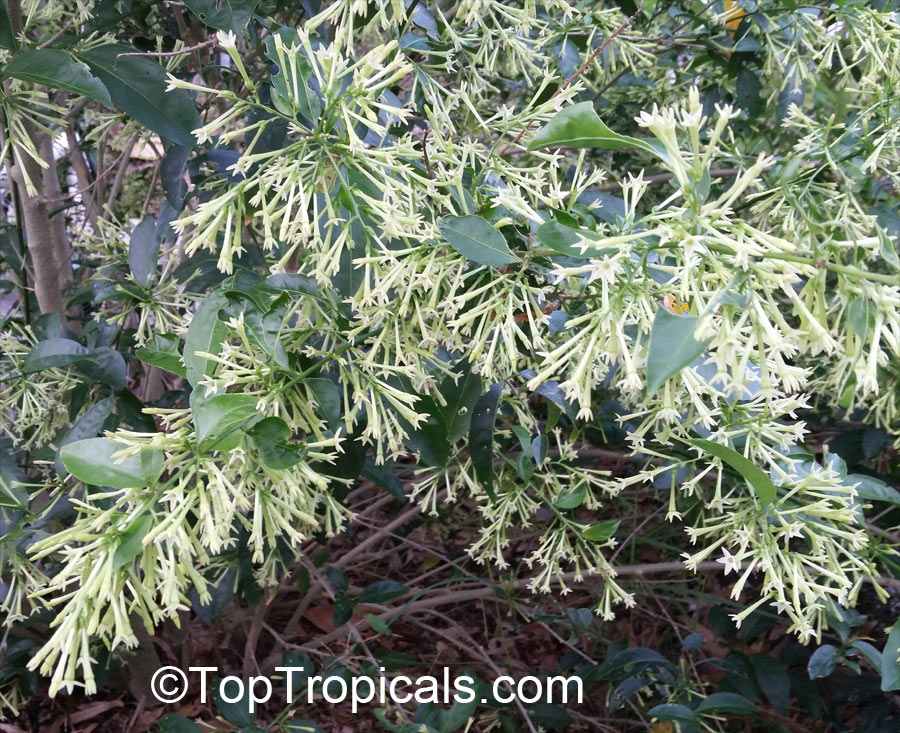
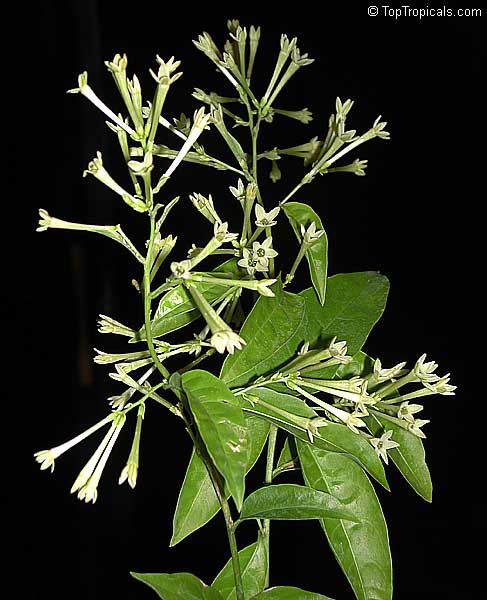
Night Blooming Jasmine - Cestrum nocturnum - is loved by many gardeners for its beautiful fragrance at night. It is one of the most fragrant tropical evergreen shrubs available. Cascading clusters of tiny, tubular pale yellow to white flowers open at night and release a heavenly fragrance throughout the garden, especially on warm summer evenings. The fragrance is much lighter during the day. Night Blooming Jasmine is grown year-round in zones 9-11. It is at its happiest in a sunny to a partially sunny spot in your garden in well-drained soil but can be grown in cooler climates as a container or greenhouse plant.
You would absolutely be able to enjoy this plant during the warm months in West Virginia, but it will most certainly not survive outside during the winter. You will have to bring it inside. Take it outside again only once you are confident there is no more possibility of frost. When grown indoors, be sure to give it the sunniest, South facing window in your home. When grown in a container, you will need to re-pot it every two to three years so it doesn't become root-bound.
For those who are lucky to live in frost-free areas, in ideal growing conditions outside, it can easily reach 8 feet with a spread of 5 feet. It has a lovely informal look that can soften a more manicured garden. Add organic matter to the planting hole when you plant to enrich the soil around the root ball. Water well in the summer, but allow them to dry out a bit between watering in the winter. Plant this Jasmine near pools, porches, doors, windows, and walkways where its lovely fragrance can be enjoyed. The shrub is also an excellent plant for privacy hedges and screens. When grown as a hedge, plant 3 feet apart.
Trim lightly after a bloom cycle to shape and then do a hard pruning in fall or spring to control the size of this plant. Fertilize 3 times a year - in spring, summer, and autumn - with a good quality granular fertilizer.

Recommended fertilizers:

Pink N Good Daily Plant Food - Flower Booster
Tropical Allure - Smart-Release Booster

Interesting facts:

Night-blooming jasmine is an excellent mosquito repellent. The powerful scent of the flowers attracts moths and bats that feed on mosquitoes and other small insects.
The flowers of the Night Blooming jasmine are widely used in India and other countries of South Asia for perfumery, medicinal applications and in religious ceremonies.

Limited time special offer:
Instant $5 off Night Blooming Jasmine

Date: 25 Jun 2020

Plant of the Month: Golden Dewdrop - Duranta erecta

Stevie's Pick: what's in bloom?

Our exotic plant grower Steven Gowdy is featuring the most interesting plants he discovers and recommends today while working in TopTropicals greenhouses.

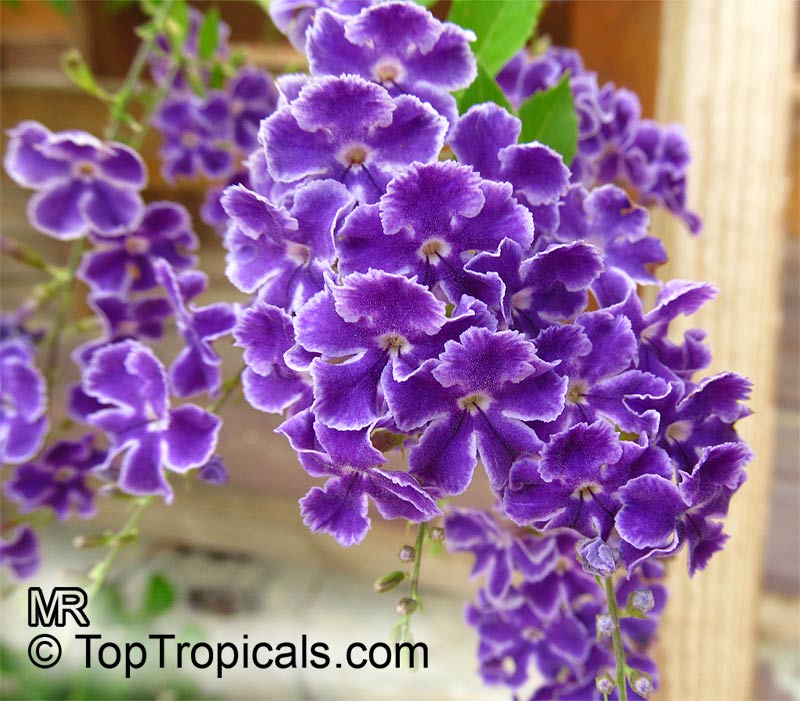
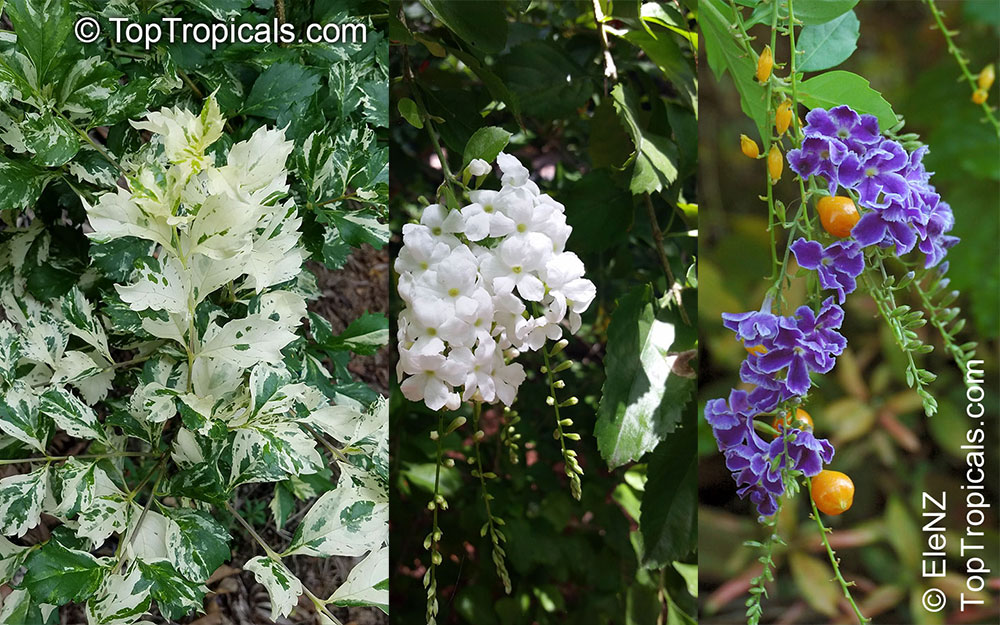
Duranta - Golden Dewdrop - is simply stunning with cascading flowers in abundance. Either it has lavender, blue, or solid white flowers, it is a sight to behold. The popular name Golden Dewdrop is inspired by the clusters of bright orange-yellow berries that follow the flowers, in such quantities that they often cause the slender branches to droop gracefully.
Duranta erecta blooms off and on all year and can be pruned to size as a bush or a standard tree. If let go, it can grow up to 20 feet tall and wide.
Durantas are excellent butterfly and hummingbird attractors. They will complement your tropical garden or a stand alone in your Southern landscape. Great for providing a color contrast in the landscape, they are especially well-suited as a bright-colored background or screening.
White Golden Dewdrop has pure white flowers that appear in loose clusters, and both berries and blossoms are often seen on a plant. This evergreen fast growing shrub spreads and arches to 10 feet tall and wide and is great for live hedges and covering fences and corners.
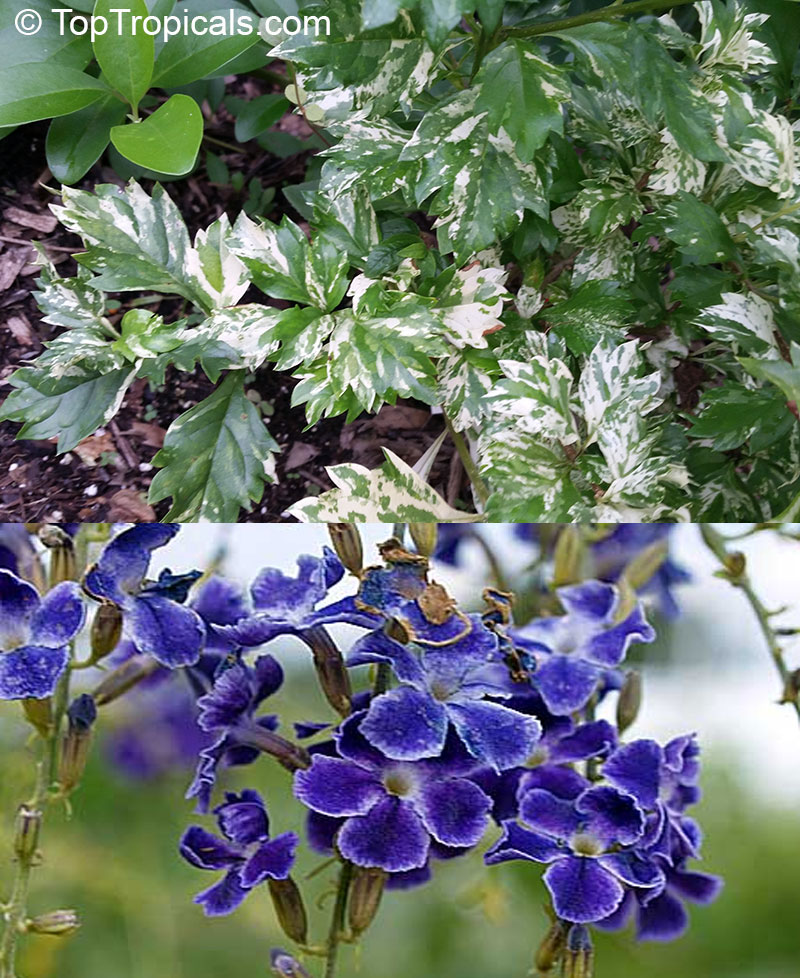
Variegated variety, also called Variegated Sky Flower, is grown for its summer flowers, and very showy leaves that are dark green with bright white variegation and creamy-yellow margins around the one inch long serrated leaves.. In the summer, cascading clusters of blue tubular flowers appear followed by wonderfully contrasting orange-yellow berries.
In mild climates, Durantas can be in flower nearly year round with flowers and fruit appearing at the same time. It does best in full sun with frequent deep watering and is pretty hardy, to about 20-25F. It is a good choice for espaliers, as a small tree or large bush; all forms benefit from frequent selective pruning. Prune back in late-winter to encourage a more compact shape and strong flush of fresh spring foliage. Requires moderate watering in a well-drained soil.

Date: 28 Dec 2018

FEATURED BUTTERFLY PLANT:

TopTropicals.com

Duranta variegata - Variegated Sky Flower

Variegated Sky Flower is grown for its summer flowers and ornamental fruit. This evergreen fast-growing shrub spreads and arches to 10 feet tall and wide and is great for live hedges and covering fences and corners. In the summer, cascading clusters of blue tubular flowers appear followed by wonderfully contrasting orange-yellow berries. This variegated form has creamy-yellow margins around the one inch long serrated leaves. In mild climates, this plant can be in flower nearly year round with flowers and fruit appearing at the same time. It does best in full sun with frequent deep watering and is hardy to about 20-25F. A good choice for espaliers, as a small tree or large bush; all forms benefit from frequent selective pruning. Flowers are very attractive to butterflies. Great for providing a color contrast in the landscape, and is especially well-suited as a bright-colored background or screening. Prune back in late winter to encourage a more compact shape and strong flush of fresh spring foliage. Requires moderate watering in a well-drained soil.

Check out this plant...