Garden Blog - Top Tropicals

Date: 19 Jul 2022

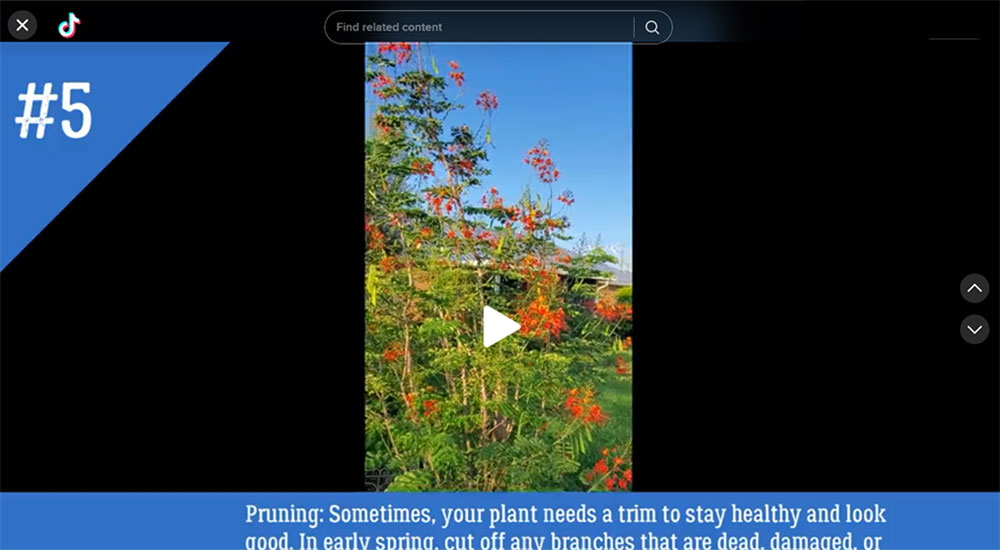
New video: Royal Poinciana
The most beautiful tropical shade tree

"The Royal Poinciana is one of the most spectacular flowering trees in the USA, and probably among the top 10 on this planet. In full bloom, it is like a regal elephant caparisoned in red and yellow brilliance." (Larry M. Schokman, The Kampong, National Tropical Botanic Garden)
One of the most conspicuous flowering trees seen in the tropics, Royal poinciana (Delonix regia) has bright fiery red/orange blossoms cover its mimosa type leaves which close up and go to sleep for the night. This large tree, which naturally assumes a spreading umbrella shape, is now found in gardens, parks, and planted along streets throughout the tropics. In late spring, as the new leaves appear, the tree is covered with masses of five-petalled red flowers resembling orchid flowers. Blooming is followed by long, flattened, leathery dark brown or black seed pods. Delonix requires full sun and adequate space to take its characteristic form....
Read Article about this tree.
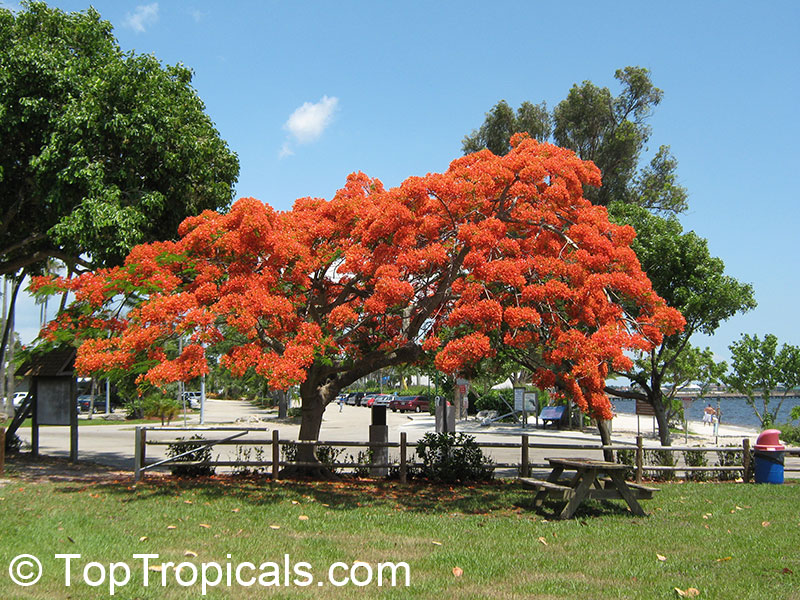
Royal Poinciana tree

Subscribe to our Channel:

Stay updated with TopTropicals Videos by subscribing to our channel at YouTube.com/TopTropicals and get our latest video news of what is fruiting and blooming!
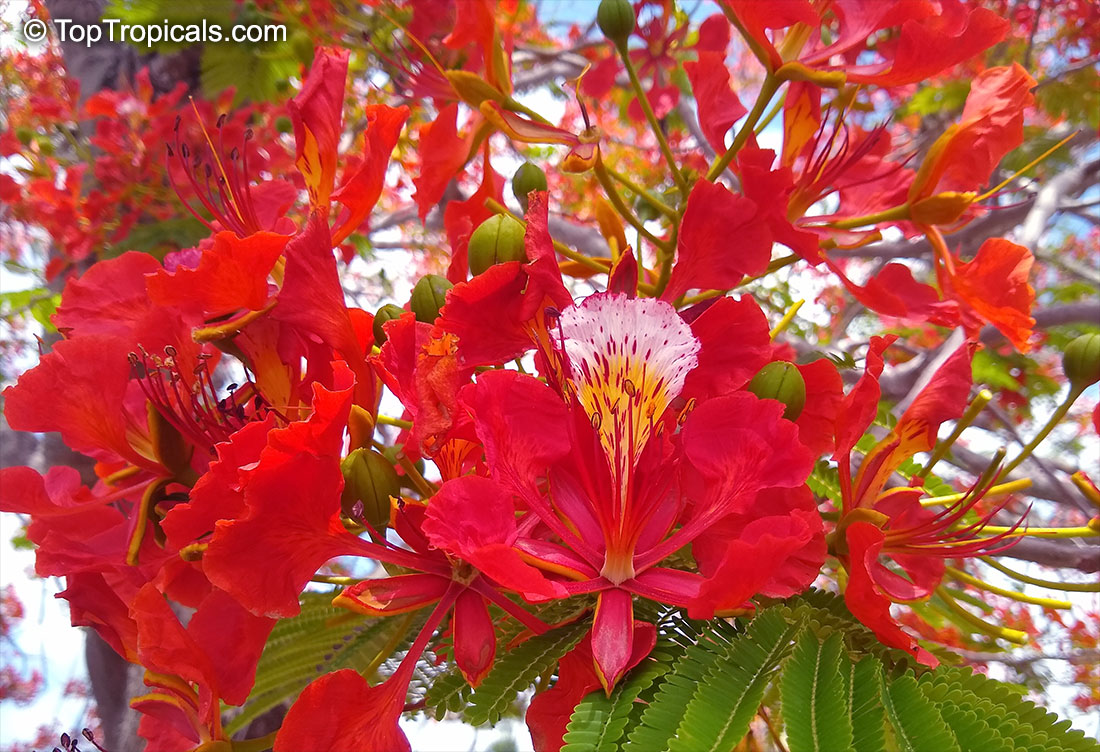
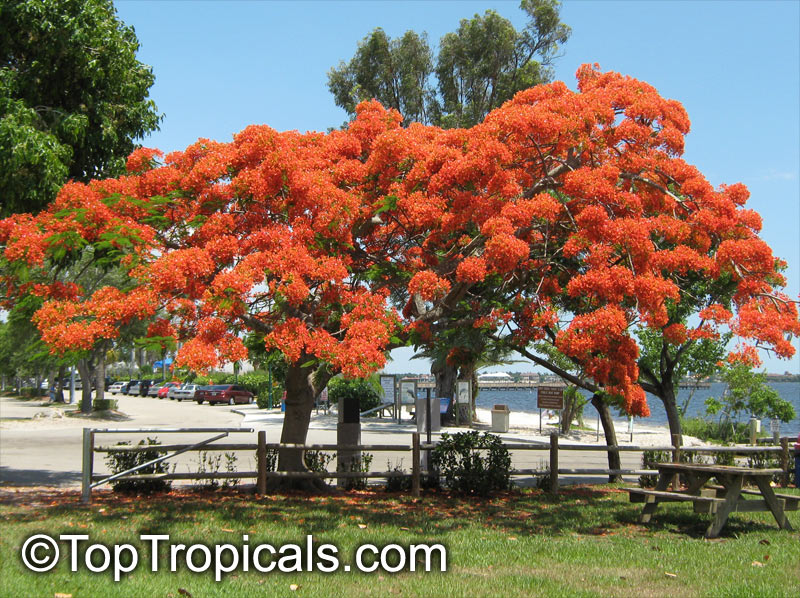
Royal Poinciana tree flowers

Date: 30 Jun 2020

Plants like to snack!
How to feed Poinciana tree

(and other tropical flowering trees)

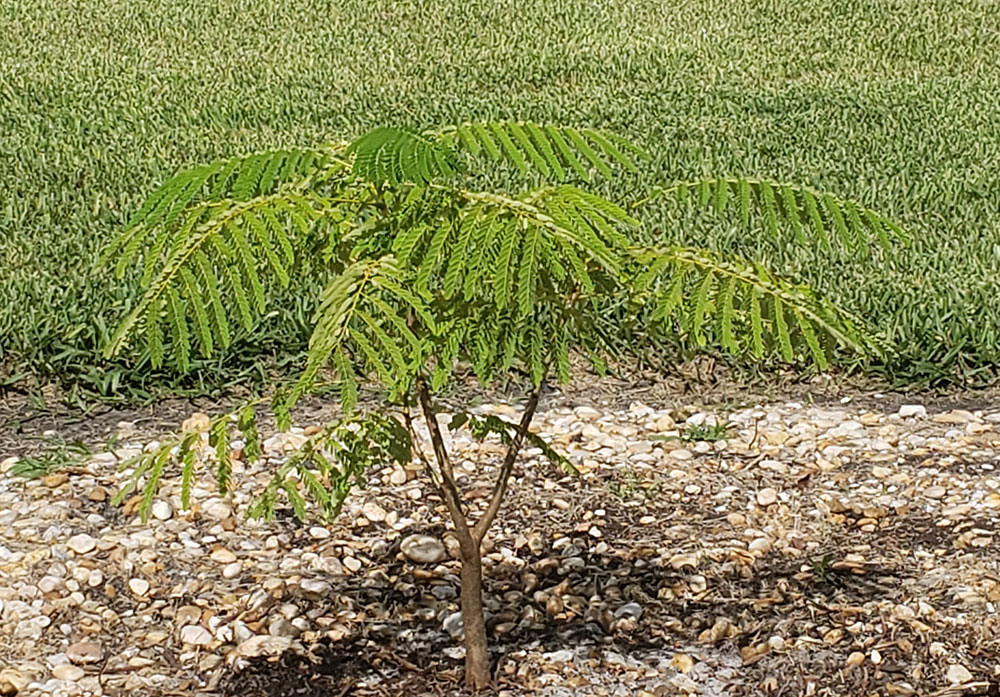
Q: We purchased a Royal Poinciana tree from TopTropicals not too long ago and we gradually gave it more sun until finally we were able to plant it in direct sunlight where it's been for a week or so. Rain has been sporadic lately so I'm giving it a little bit of water every day. It seems to be doing fine. I do have a question about whether the leaves are as green as they should be? I read online that I should fertilize it with gardenia / ixoria fertilizer in March, June, and October. I looked on homedepot.com but didn't really find anything that goes by that name. Would fertilizer help? Can you suggest a fertilizer?

A: Your Poinciana tree looks pretty healthy and happy, congratulations with a great job!
Traditional (old-school) fertilizer recommendations usually suggest feeding a plant 2-3 times a year with a slow-release fertilizer. And although a plant will benefit from any fertilizer application (extra food is always good), however, for the best results, faster growth, sooner and more profuse blooming, your should use complete plant nutrition products - liquid fertilizers (see why liquid fertilizers are better than dry).
Here is an example. Some people eat a big heavy meal once a day which we all know, is not very healthy. Other people eat balanced food more frequently but in smaller portions - this is always the best way to go.
From this point, plants prefer SNACKING - frequent feeding, but with less concentrated, mild and balanced nutrients.
For your beautiful Poinciana tree (and other flowering plants), we suggest the following nutrition program:

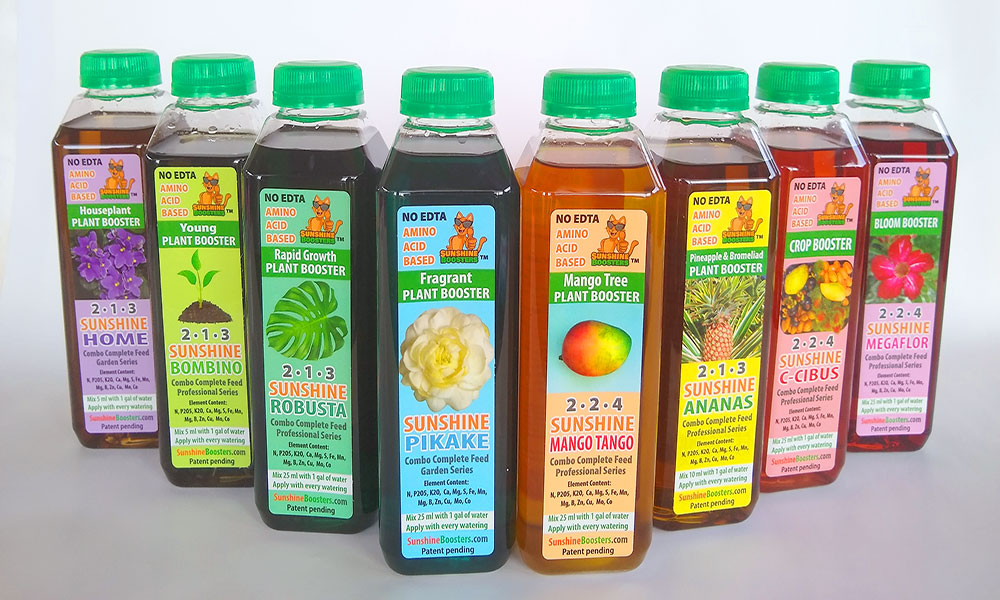
1) SUNSHINE Megaflor - Bloom Nutrition Booster - you may use this fertilizer as frequent as with every watering, it won't burn the roots, and will provide a complete nutrition for all plant needs throughout the year. You can continue fertilizing with Megaflor even during winter time. Sunshine Megaflor will help you to keep the plant healthy, vigorous, and resistant to stress and diseases. It turns leaves green and makes the plant strong so it will start flowering sooner for you.

2) Tropical Allure - Smart-Release Booster. Apply it once a month during hot season only (in Florida - from March to November).

Date: 24 Jun 2016

Coastal plants. Suggestions for coastal regions


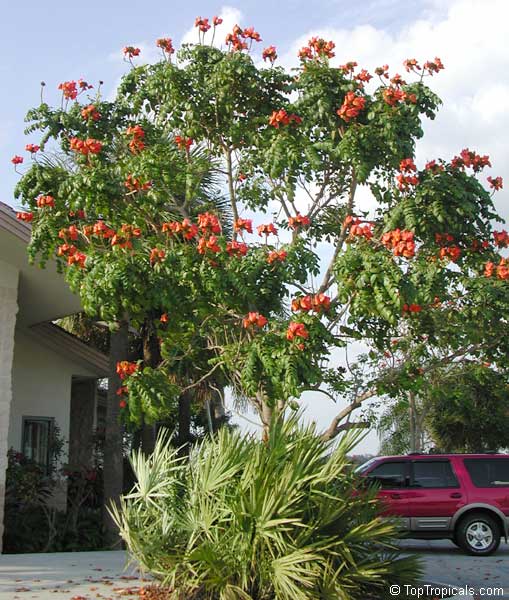
Spathodea campanulata - African Tulip Tree

Q: I'm looking for a plant to replace a Torrey pine that was sadly cut down. The pine made the soil very acidic and it's already silty, sandy, and salty from being near a coastal marsh. I was thinking of a Kei Apple. However, there are only seeds available on the website and I'd prefer a sapling to get things started faster. Are there other trees you'd suggest for that environment?

A: Here are some fast growing salt tolerant trees that we can suggest, just to name a few: Bucida buceras - Florida Black Olive Tree, Callistemon citrinus - Weeping red Bottlebrush, Capparis cynophallophora - Jamaica Caper, Cassia fistula - Golden Shower Tree, Coccoloba uvifera - Sea Grape, Cordias, Delonix regia - Royal poinciana, Flamboyant, Elaeocarpus grandiflorus - Fairy Petticoats, Ficus lyrata - Fiddle-Leaf Ficus, Ficus religiosa - Bo-Tree, Peepal, Sacred Ficus, Mahoe, Peltophorum pterocarpum - Yellow Poinciana, Plumeria, Spathodea campanulata - African Tulip Tree (shown on right). See full list of salt tolerant plants.

15% on all mango trees! This weekend only. Offer is valid through Sunday, June 26. See all mango varieties available.

Date: 5 Jan 2022

Five Favorite Winter Bloomers

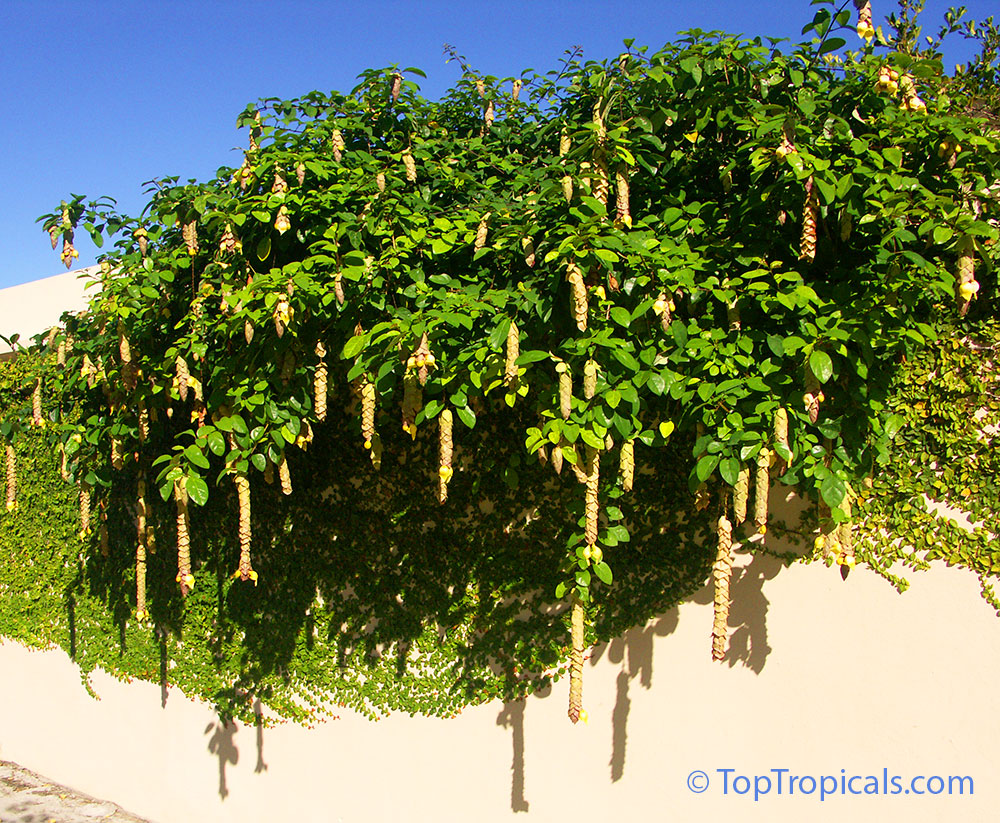
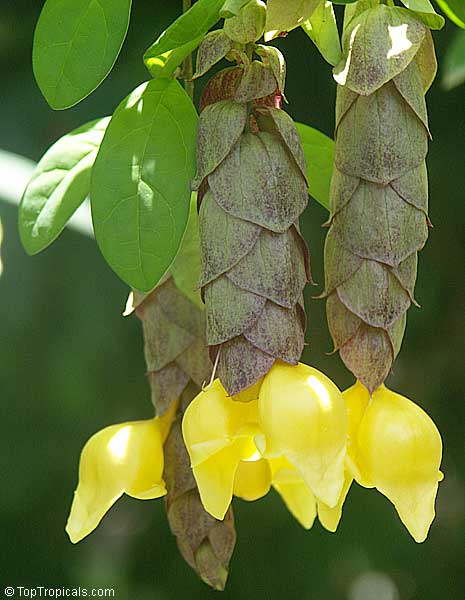
#5. Parrots Beak

Gmelina philippensis - Parrots Beak. An extraordinary fountain-like shrub with pendant branches, large long leaves and exotic flowers comprised of yellow blossoms which emerge at the end of a tube-like structure of overlapping bracts. The flower resembles parrot's beak!

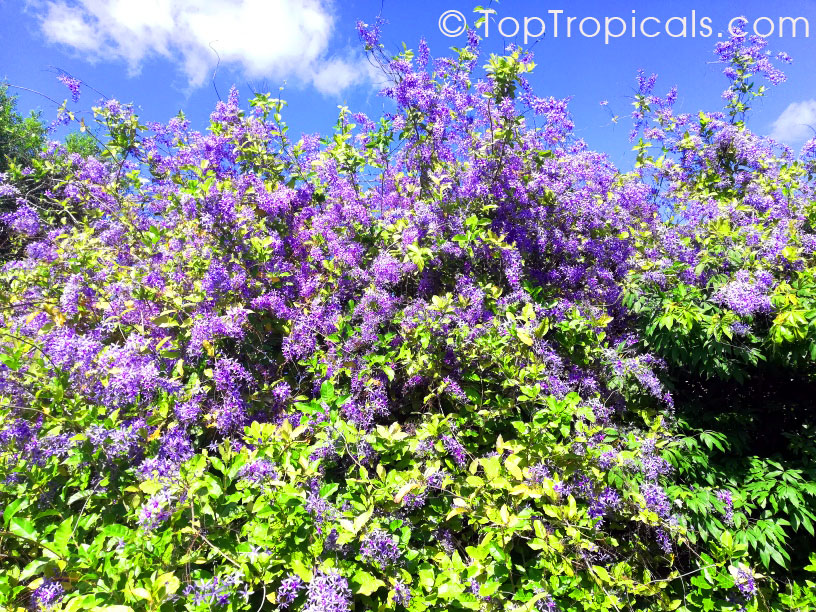
#4. Royal Queens Wreath

Petrea - Royal Queens Wreath, Tropical Wisteria. Spectacular tall clusters of purple flowers similar to those of Wisteria come in racemes reaching over 1 foot long!

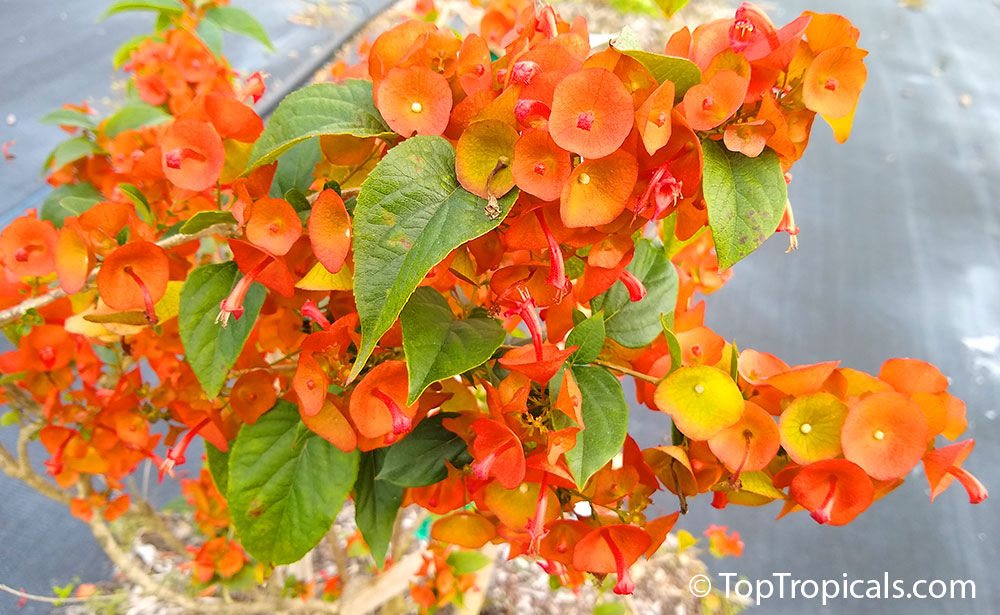
#3. Chinese Hat

Holmskioldia sanguinea - Bronze Chinese hat. Rare variety with orange-bronze flowers. Unique flowers are the main interest: each is a narrow tube backed by a broad, circular calyx, just like an oriental hat!

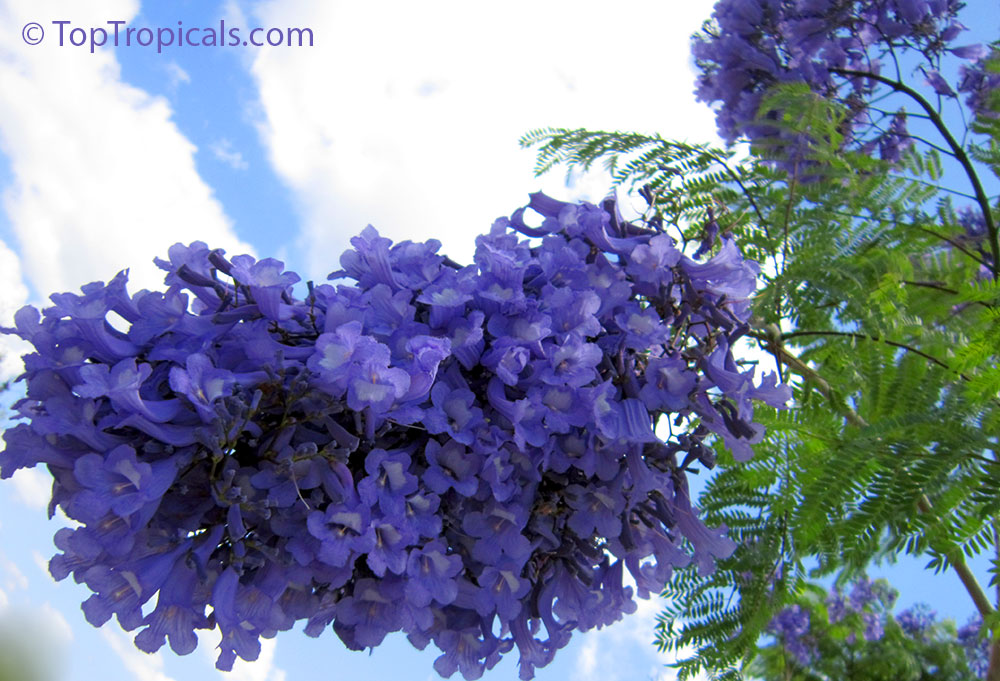
#2. Jacaranda

Jacaranda - all-time favorite winter flowering tree. Hypnotizing bluish-purple, trumpet-like flowers create the magical image of the tree...

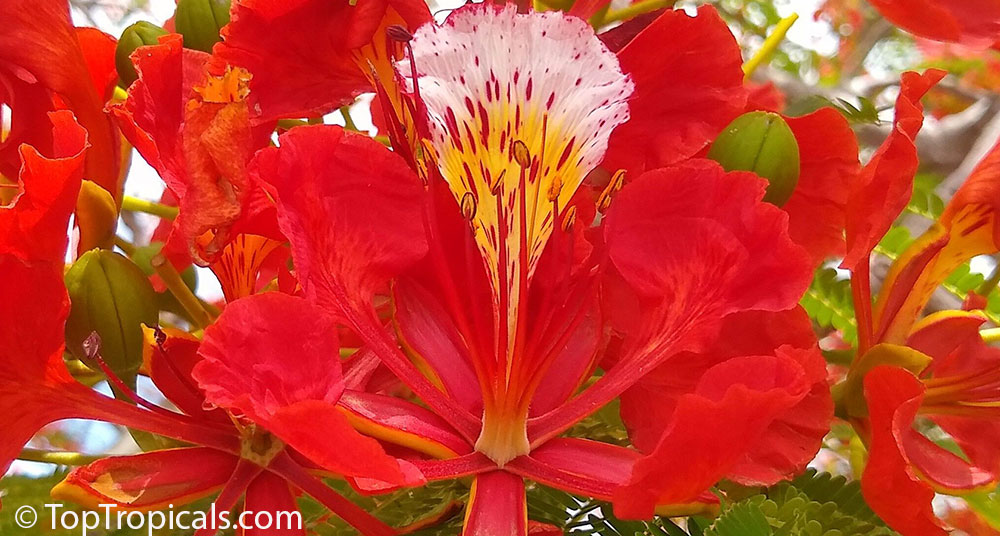
#1. Royal Poinciana

Delonix regia - Royal Poinciana, Flamboyant. one of the most popular tropical trees covered with bright red orchid-like flowers from late winter through early summer. A must for any tropical garden, this tree however requires space since it spreads its branches 30-40 ft wide or more.