Date: 20 Apr 2019
More about Mulberries
Customer comment on our Mulberry column in the previous newsletter:
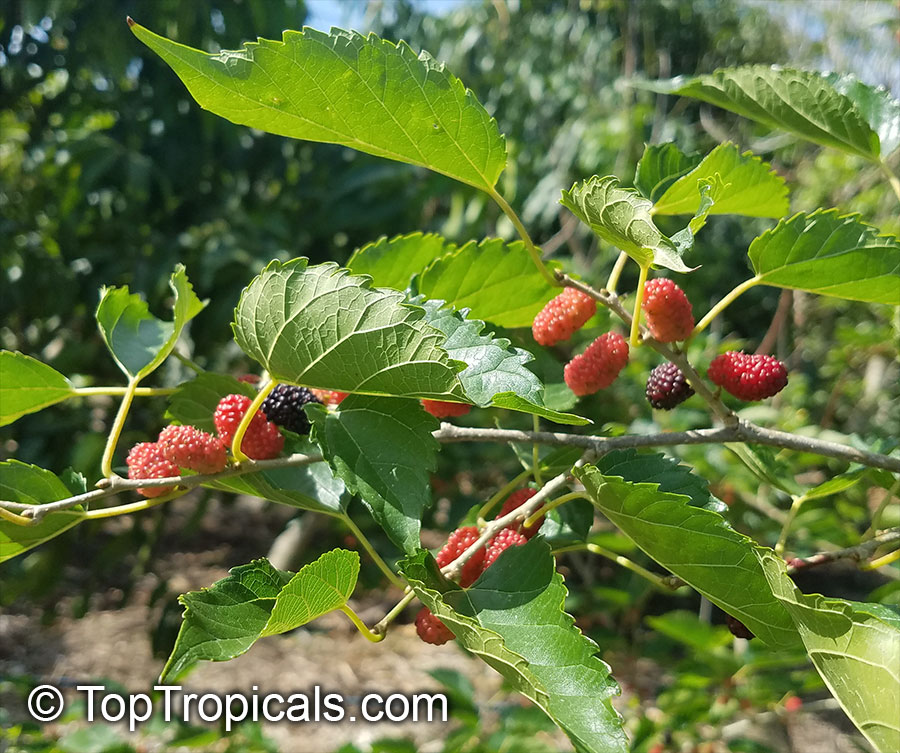
...I planted a Himalayan mulberry, Morus macroura, about six years ago.
For several maddening years, it shot only very long, un-branching tentacles
out there, and it resisted my efforts to force some branching by pruning. It
would send another long, reaching shoot from the tip of the pruned branch,
with NO laterals. Several times, it did this. Finally, two years ago, it broke
buds that looked like they meant it all along those long branches, and in one
season, it fluffed out. The next season it elaborated on this, acting much
more like a proper tree. The fruit is fabulous, three or more inches long, very
sweet, with a rich berry flavor that's more raspberry than mulberry. I
guess it just needed more time. My understanding is that mulberries don't
really like to be pruned, but it needed to happen in this case, along a driveway,
so I reigned it in, and now it's a treasure. Be patient.
Cheers, your admirer, C
Check out our Mulberry trees.

Date: 17 Apr 2019
Secrets of Happy Bougainvilleas
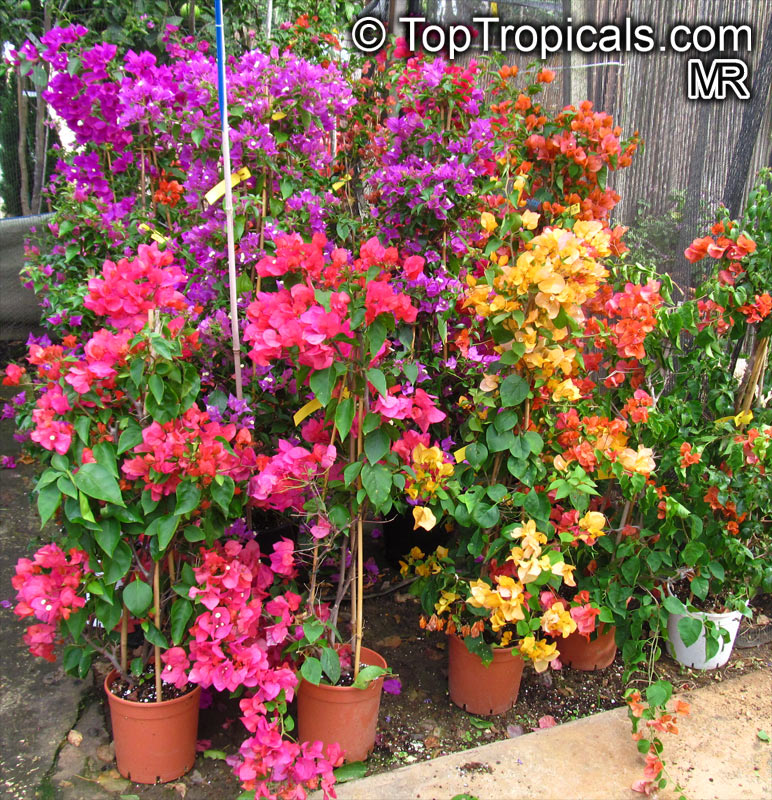
Q: When I visited Hawaii I saw their everblooming bougainvilles, flowering non-stop! How come our bougainvilles in Florida are not flowering as much? Is there any special secret to make them bloom?
A: Bougainvilleas prefer drier climate and especially drier summers. Florida summers are rainy and humid. The steaming greenhouse conditions are favorable for most tropical plants (except desert plants like most cacti). Bougainvilleas also grow vigorously in Florida heat and frequent rains, but most cultivars prefer dryer conditions for profuse flowering. These are a few tips that can help you grow happy Bougainvilleas and enjoy their showy flowers even in humid climates:
- In Florida, Bougainvilleas bloom mostly in Winter. If you are a
snowbird, this plant is definitely for you!
- Choose sunny, dry, and elevated location for Bougainvilleas, never a
low spot and never a shade spot. Give it as many hours of sun as possible.
- Use only well-draining soil. Usually, sandy soils work well when
mixed with some compost. If your soil is too heavy, add soil conditioners like
perlite, bark, sand.
- Take advantage of cultivars that are well adapted to humid climates:
Dwarf
Everblooming Pixie, Thornless B. arborea.
- Remember Bougainvilleas are the easiest and the most rewarding potted
plants.
- Use bloom boosters along with well-balanced slow release plant food.
We recommend these: Pink-N-Good flower booster and smart-release granulated Tropical Allure.
- Do not overwater and keep the plant on a dry side.
Date: 17 Apr 2019
Mulberries - biggest, sweetest, and compact...
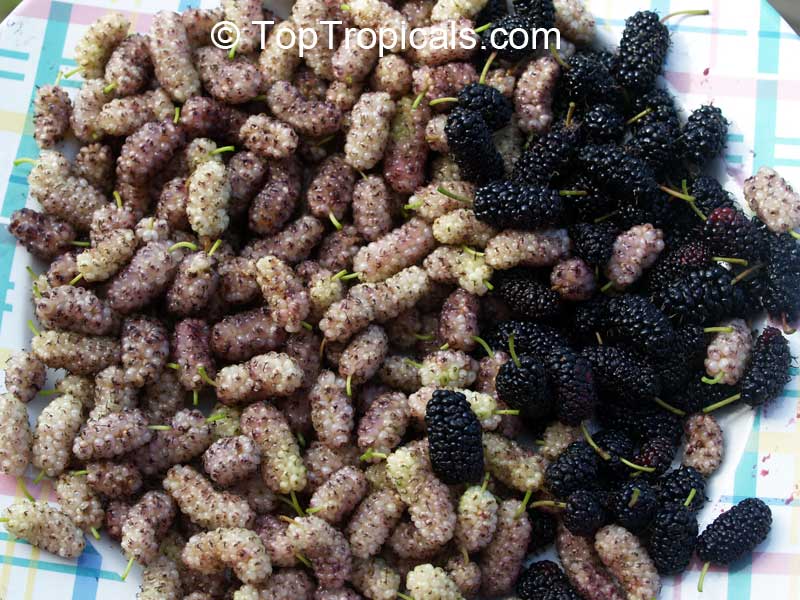
Q: What is the difference between Pakistani and Australian Mulberry plants? Would one be better suited for South Florida backyard? Can one be maintained/pruned to be a tall shrub vs a large tree? Which one has the sweetest fruit? Thank you for the previous plants we've purchased from you. They're all doing great.!
A: These two varieties are very similar indeed.
Both fruit are very large. Var. Pakistani fruit is a little longer than var. Australia and the tree is a more vigorous grower, but they both are
very sweet, even before the fruit fully ripen. Both trees are a good choice and
start fruiting at a young age.
We've had Australia in the ground in our garden for 4 years by now and
for some reason, it has been very slow growing which is normally not the case
with Mulberries. Maybe it is not fully happy with FL humid conditions.
There are two Mulberry varieties that can be maintained as bushes: Issai
and Dwarf
Everbearing. However, even vigorous Mulberry trees respond well to
pruning and can be kept compact for easy harvesting. Just make sure to prune before
the flowering season starts; here in S Florida Mulberries start flowering in
March, and fruit start ripening during April-May.
Check out our Mulberry trees.
Date: 12 Apr 2019
The Great Green Wall - one plant at a time
The Great Green Wall is an African-led movement with an epic ambition to
grow a 7775km (4831 miles) natural wonder of the world across the entire
width of Africa.
A decade in and roughly 15% underway, the initiative is already
bringing life back to Africa's degraded landscapes at an unprecedented scale,
providing food security, jobs and a reason to stay for the millions who live
along its path.
The Wall promises to be a compelling solution to the many urgent threats
not only facing the African Continent, but the global community as a whole -
notably climate change, drought, famine, conflict, and migration.
Once complete, the Great Green Wall will be the largest living structure on
the planet, 3 times the size of the Great Barrier Reef... Continue reading...
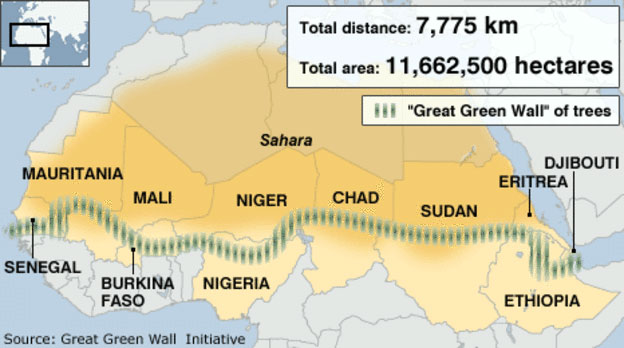
You don't have to live in Sahara to make the difference. To keep our Planet green - start planting now!
Date: 12 Apr 2019
Dwarf Red Ginger - more than just a pretty face
Q: I've just recently moved to Florida from North Carolina. I don't know much about tropical plants. Can you perhaps suggest an easy and pretty flowering plant for a beginner which I can plant around my garden pond for a tropical feeling?
A: For adding that tropical look to your garden, few plants beat
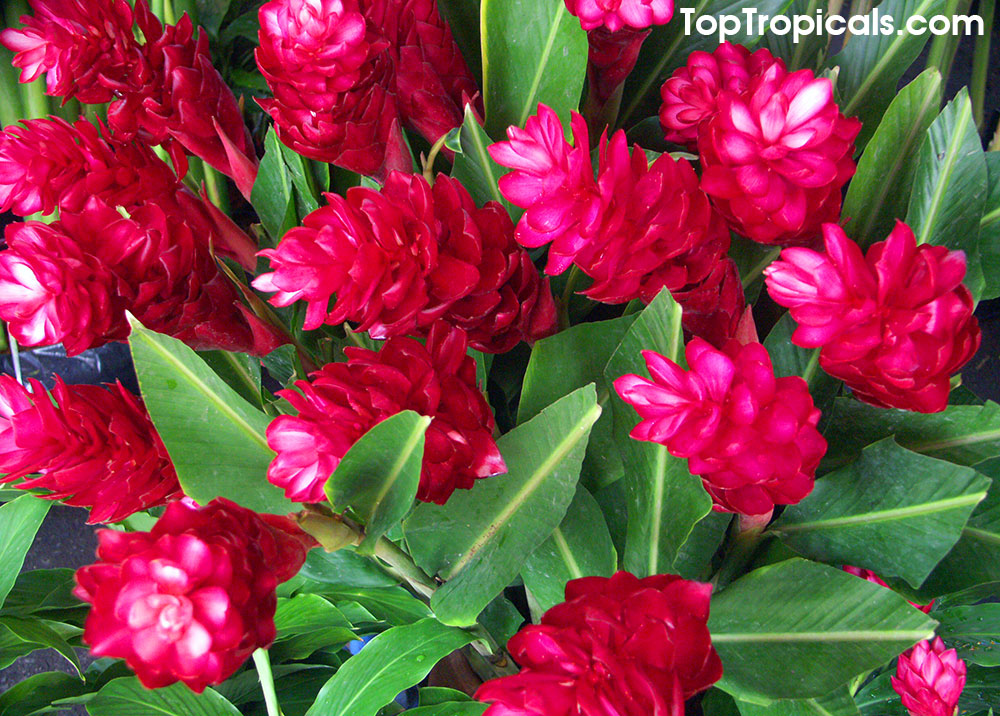
beautiful ginger! Alpinia purpurata, the Dwarf Red Cone Ginger with its bright red floral
spikes and lush, lance-shaped foliage is no exception. This striking
perennial will add a tropical effect to your garden that will definitely take your
breath away.
The Dwarf Red Cone grows between 3 and 4 feet tall and blooms 8-9
months of the year! The blooms will hold on the plant for up to 3 weeks! It makes
a very attractive and distinctive backdrop for other plants.
Red Cone Ginger likes partial shade and moist, humid conditions, but
will tolerate full sun. It is fast growing, easy to grow and resistant to
disease, heat, and insects. The plant is a wonderful accent in a garden and works
well as a focal point specimen, show-stopping when planted around garden
ponds or near entryways. This ginger also works very well in containers and
planters. Either in mass plantings or smaller groups, all gingers add tropical flair which never disappoints.
In addition, the beautiful flower spikes make for great, long-lasting
cut flowers and is an interesting addition to bouquets.
An added bonus? Dwarf Red Ginger is super easy to propagate. If stems
are cut at the base and placed in water, they will generally root within a few
weeks. Eventually, you can make a whole flowering hedge just from one
plant!
Who does not like a plant that is non-fussy and not only beautiful but easy to grow? Dwarf Red Ginger is more than just a pretty face!

To keep this plant happy and blooming, give it some food: Broad Leaf Plus - Ginger-Heliconia-Banana Booster