Garden Blog - Top Tropicals

Date: 9 Jul 2019

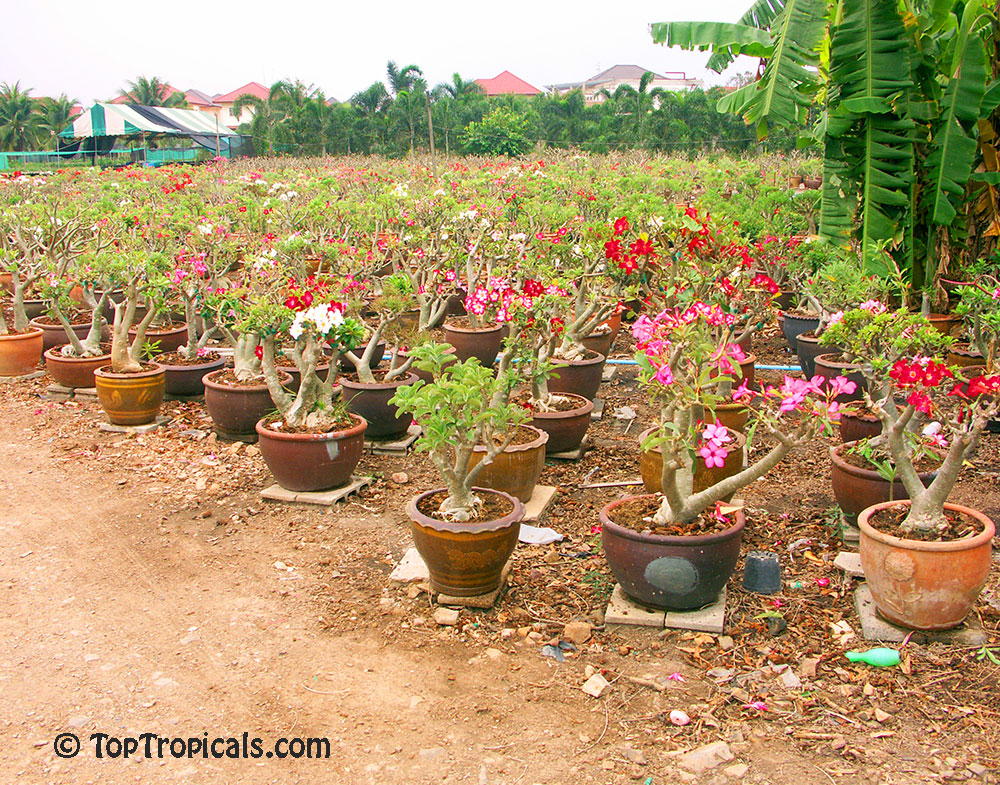
Growing desert roses
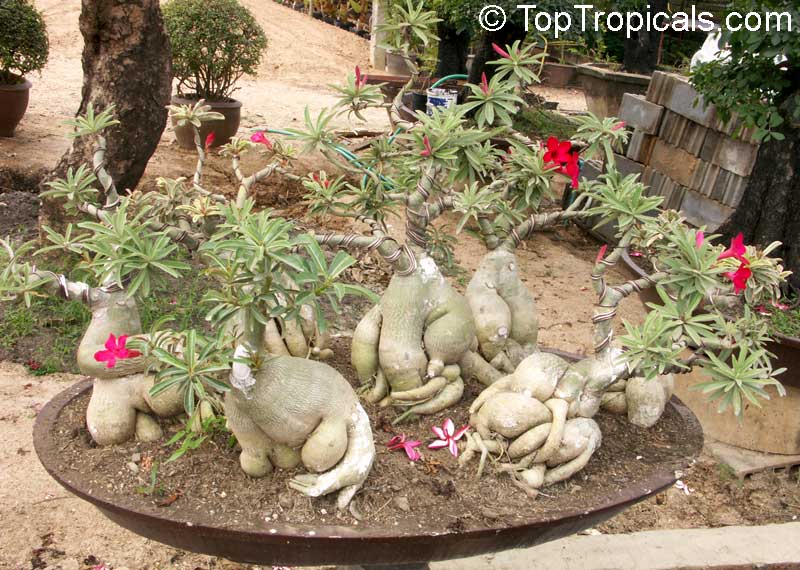
Q: I purchased a Desert Rose and planted it in Adenium mix. I keep it in full sun with once a week watering assuming this is a desert plant that likes lots of sun. Some leaves turned yellow and now I am not sure should I move it into shade or need to water more? Or maybe fertilize with something?

A: Desert Rose - Adenium, unlike cacti and other succulents, prefers filtered light. It can grow in full sun but leaves look healthier in light shade. Watering must be very moderate, however don't let soil harden like a rock: water again right after the soil gets dry. We suggest to use special Adenium Mix. Cactus mix may work well, as well as regular potting mix, in which case it is recommended to add a bit of limestone (we simply put sea shells on top of the pot - it looks very pretty!) - because adeniums prefer slightly alkaline soil (while most of tropical plants like acidic soils). If leaves turn yellow, this may be a sign of underwatering. Use water soluable fertilizer with high phosphate as foliage spray, and only on healthy plants, according to label dosage. It helps both caudex growth and flowering. Make sure to avoid fertilizer contact with a caudex.

RECOMMENDED SUPPLIES:
Adenium Plant Food - Flower and Caudex Booster
SUNSHINE-BC - Caudex booster
Adenium Soilless Mix

Read more about growing Adeniums:
What you need for successful growing Adeniums
Growing Exotic Adeniums
Date: 10 Oct 2020

Trimming and treating Adeniums in winter

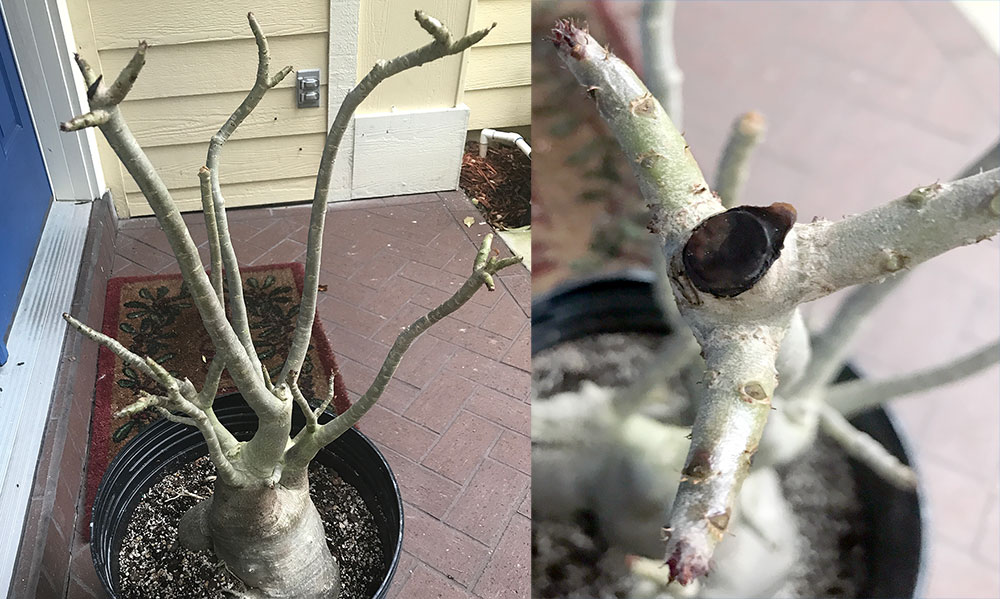
Q: My desert rose below dropped leaves after I replanted it in a bigger pot. I noticed that one of the branches that had been pruned is black at the tip. Please let me know if the section of the branch that turned black needs to be cut. I also wasn't sure how often to water it since the leaves have all dropped. None of the other dessert roses have dropped their leaves but they are all younger plants. Any advice would be much appreciated.

A: Your plant looks healthy and vigorous overall. Dropping leaves after repotting, or shipping, especially at this time of the year, is normal in Adeniums. They are deciduous and stay leafless from Fall to Spring. Some individual specimens can go into dormancy sooner than others - all depends on conditions: temperature, light, exposure, etc. and individual plant's "clock".
The black spot on the cut branch may be a sign of a fungus as a result of excess water. You may carefully clean/rub it with a paper tower dipped in Hydrogen Peroxide (pharmacy grade). Then rinse with fresh water.
Keep the plant warm and in a dry spot. Once leaves are dropped, it doesn't need much water. Once a week watering is enough.

Date: 24 Jun 2018

TopTropicals

What you need for successful growing Adeniums

1) Adenium plants - from TopTropicals Endless selection of Adeniums. We have double flower, red, purple, yellow and even black flowers!
2) A small pot with excellent drainage is a must. Position the plant in a pot, size of root system.
3) Adenium soil mix. TopTropicals Adenium Soilless Mix. Use only well-drained soil.
4) Lots of light. Adeniums need lots of light for heavy flowering. However from our own experience, in super hot climates, they look healthier in filtered bright light. After initial planting, once the plant is established and starts growing new leaves (may take a few weeks), gradually move it into brighter light.
5) Little water. Adeniums like a neutral to hard water. Acidic water tends to sour the soil too fast and may cause root rot. Water plants preferably in the early morning, and allow them to drink up throughout the day. Watering can be done daily to every few days. Do not water again until soil dries on surface. Never allow your plants to sit in a saucer of water, but don't let them to dry out too often - this causes adeniums to go into early dormancy. Adeniums do not like both over-watering or drying-out.
6) Fertilizer. To make your plant develop a large swollen base/trunk, you'll need a good quality fertilizer. Use slow-release granulated fertilizer for overall plant health, and liquid water soluble fertilizer for swelling up trunks that is also used to increase flowering. It shouldn't be too high in nitrogen, the middle number should be the highest (similar to 10-50-10). Never apply fertilizer directly on roots and do not liquid feed when a plant is thirsty: always water first slightly to avoid root burn and leaf drop. Do not wet leaves.
7) SuperFood micro-elements. Besides macro-nutrients provided by fertilizer, Adenium needs micro-elements for balanced development of root system and especially caudex: Sunshine-SuperFood.
8) SUNSHINE-BC. Spray leaves with SUNSHINE-BC once a month to encourage young growth, profuse flowering and large caudex.
9) Growing caudex. There is a secret how to create a large swollen caudex: raise the plant a bit every time you re-pot it, so that the upper part of roots will be a little exposed. The plant will form more roots that will go down.

See full list of Adeniums - plants and seeds.

Date: 29 Nov 2020

Cold protection of tropical container plants

Q: I am long time customer of yours, I live in San Diego California and while the summer and Fall temperatures are warm to mild, the winter temperatures dip to a point where some tropicals die off. We are experimenting with different variations of way to heat and insulate the pots we have the tropicals planted in as a way to keep them alive during the colder winter months. I was wondering if you knew of the ideal soil temperature for these tropical in order to look their best year round. All of the heaters we have installed have thermostats and temperature adjustments so we can now keep the soil anywhere between a range of between 65-75 degrees. Any advise you can provide would be greatly appreciated.

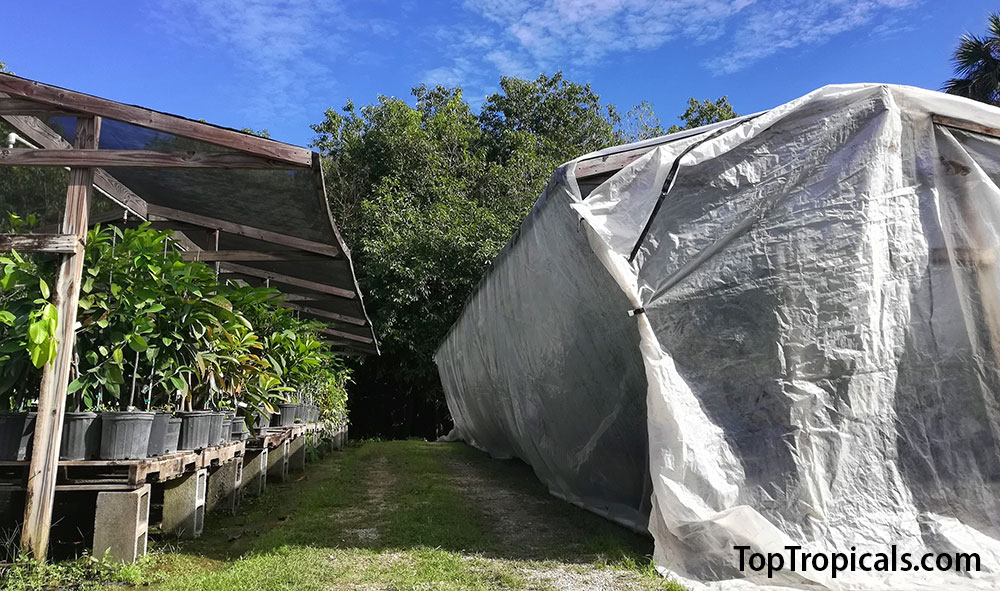
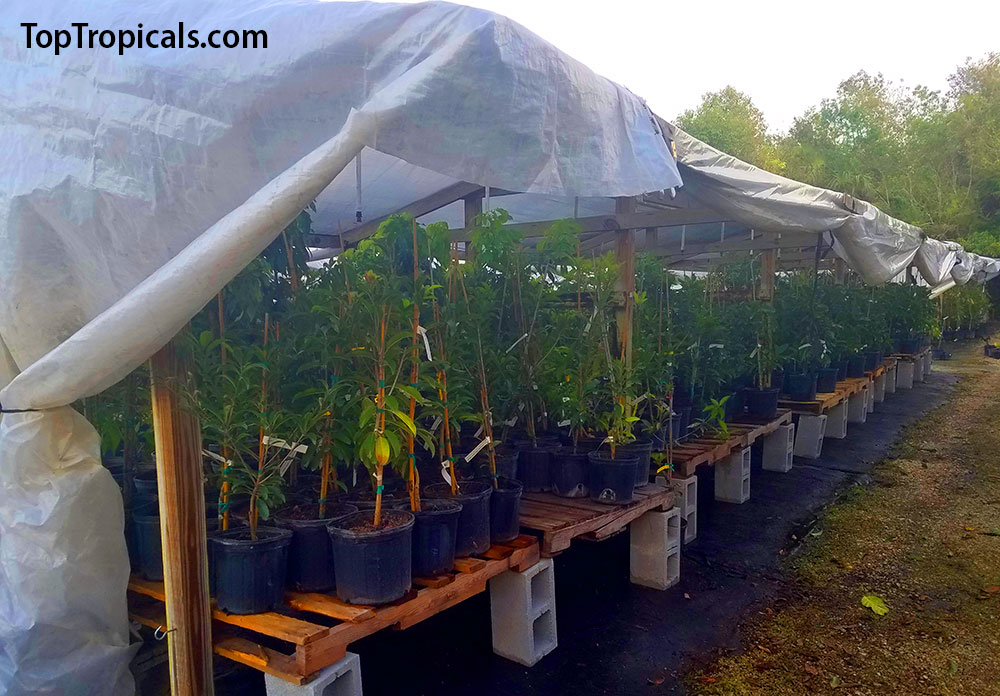
A: This is a very interesting concept you are working with. Indeed, keeping pots/roots warm, may help a lot! We've been experimenting with cold protection for a long time - for the above-ground plant parts. For sure keeping roots protected (even with a thick layer of mulch) will benefit tropical plants during winter. In case with container plants, this may help dramatically.
The guideline is, tropical plants slow down or stop their metabolism at 65F. As long as you can keep soil above that temperature - this should work great. Of course, the higher the better.
Optimum temperature for growing tropical plants in general - 70-85F. Above 90F, metabolism stops too, unless it's a heat tolerant, desert plant.

More information on winter cold protection of tropical plants and zone pushing:

Greenhouse in Virginia
Plumeria cold protection
Ghost Cold Protection
Seven rules of cold protection for tropicals
About Cold Protection
Cold protection - winter action for your plant collection
Tropical Treasures articles on zone pushing.

Date: 3 Dec 2019

Ghost Cold Protection

Q: Has anyone ever tried using heat packs under frost blankets to protect tropical plants from frost?

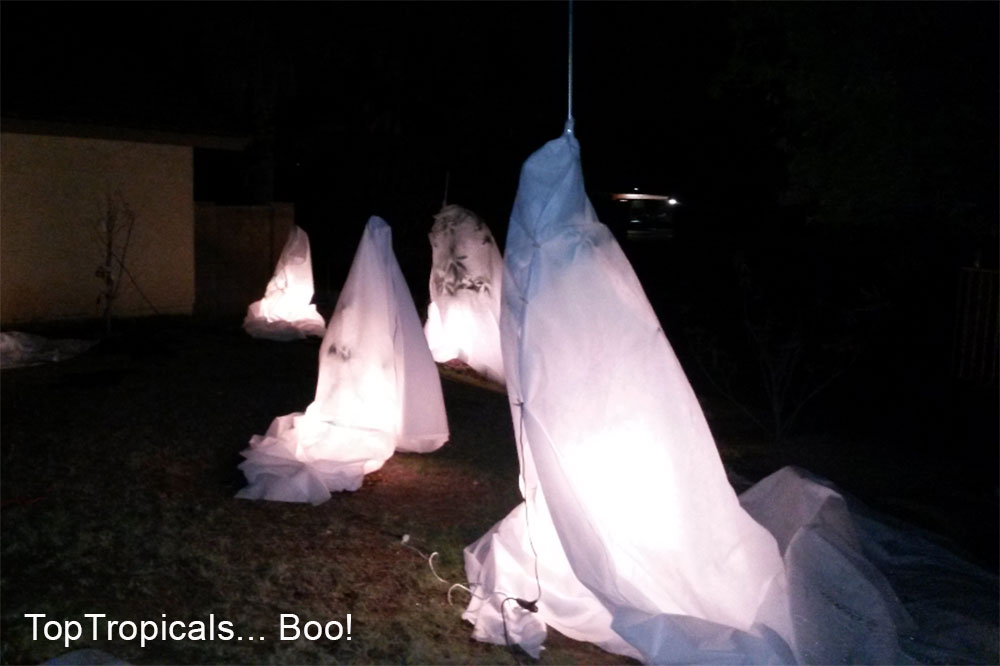
A: The reality is, the heat packs used for shipping do not have enough heat capacity to create efficient warming effect. From our own experience, the best way is to use small 25W incandescent bulbs which produce lots of heat (considering observing all safety precautions and fire safety). Some gardeners use Christmas lights. See picture of our plants in the ground during a cold night. We called them Ghost Cold Protection! ;)

See more columns on cold protection:
Seven rules of cold protection for tropicals
About Cold Protection
Cold protection - winter action for your plant collection
Tropical Treasures articles