Garden Blog - Top Tropicals

Date: 30 May 2019

Selecting the right jasmine
TopTropicals.com

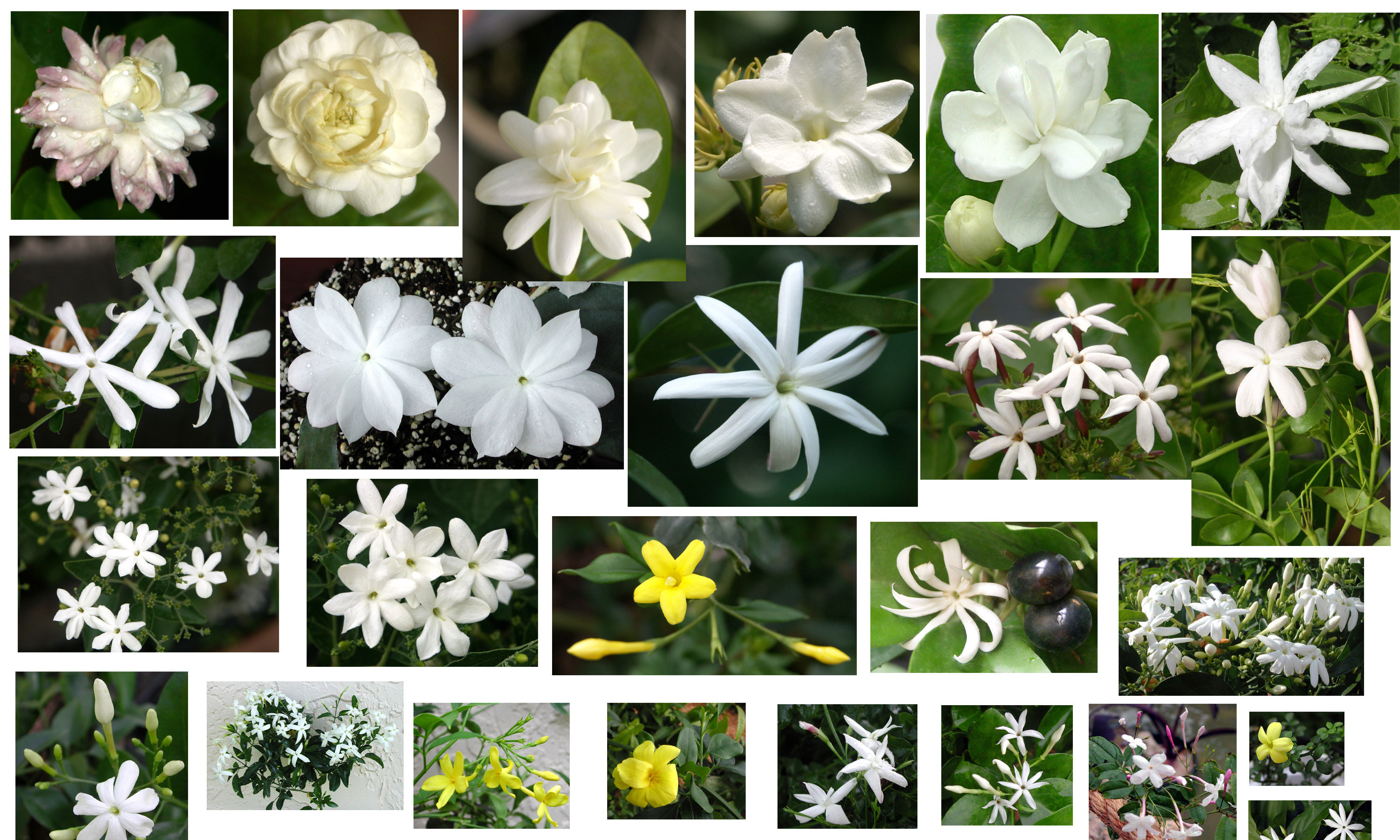
Q: Would you please help me select the right jasmine? I want to find a jasmine that smells like lily of the valley or honeysuckle or roses, not the one that smells like gardenia. I'm in Missouri, zone 6, so I want a jasmine for my deck for the summer, so I want it to bloom this season.

A: There are 3 major types of tropical flower fragrances - Sweet, Fresh, and Fruity (including Lemony). Below are the most interesting fragrant tropical flowers, excluding Gardenias (which are sweet type). These are all same-year bloomers, so you can enjoy the fragrance this year assuming proper care and bloom booster feeding.

* - The fastest growers that can be treated as annuals. Others can be grown in a pot and brought inside for winter, and be enjoyed every year.

Sweet

* Aloysia virgata - Almond Bush
* Cestrum diurnum - White Chocolate Jasmine, Day Blooming Jasmine
* Cestrum nocturnum - Night blooming jasmine
* Heliotropium peruviana - Turnsole, Cherry Pie
Portlandia Cubanola domingensis - Cubanola (Warm white Chocolate)
Portlandia grandiflora - Glorious Flower of Cuba (Warm white Chocolate)

Fresh

Beaumontia grandiflora - Easter Lily Vine
* Brugmansia Jean Pasco - Yellow Angels Trumpet
* Brugmansia Variegated Orange Angel Trumpet
* Brunfelsia americana - Lady of the night
* Brunfelsia lactea - Lady of the night
* Brunfelsia nitida - Lady of the night
Crinum Queen Emma - Spider lily
* Eucharis grandiflora - Amazon Lily
* Hedychium coronarium - Butterfly Ginger
Hiptage benghalensis - Helicopter Flower
Hoya odorata - Fragrant Hoya
Ixora hybrid Sea Green
Ixora odorata - Fragrant Ixora
* Jasminum azoricum - River Jasmine
* Jasminum Molle - Indian Jui
Jasminum nitidum - Star Jasmine
* Jasminum officinale Flore Pleno - French Perfume Jasmine
* Jasminum polyanthum - Pink Winter Jasmine
* Jasminum sambac Belle of India
* Jasminum sambac Grand Duke
* Jasminum sambac Maid of Orleans
* Polianthes tuberosa - Tuberose
*Sclerochiton harveyanus - Blue Lips, Mazabuka (Lavender-violet-like)

Fruity

Aglaia odorata - Chinese Perfume Plant (Lemony)
Artabotrys siamensis - Climbing Ylang-Ylang (Lemony)
Cananga fruticosa - Dwarf Ylang-Ylang
Carissa grandiflora - Natal Plum
Cerbera x manghas hybrid - Enchanted Incense
* Jasminum dichotomum - Rose Bud Jasmine
* Lonicera japonica - Japanese Honeysuckle
Magnolia figo - Banana Magnolia (Banana-like)
Magnolia x Alba grafted (Bubble-gum-like)
* Mirabilis jalapa - Four oclock plant
Oxyceros horridus, Randia siamensis
* Quisqualis - Rangoon Creeper
* Radermachera Kunming - Dwarf Tree Jasmine
* Stephanotis floribunda - Bridal Bouquet
Strophanthus gratus - Climbing Oleander
Telosoma cordata - Pakalana vine (Lemony)

Fertilizers for profuse flowering:

Pink N Good Daily Plant Food - Flower Booster
Tropical Allure - Smart-Release Booster
SUNSHINE-Superfood micro-elements

Date: 10 Jun 2021

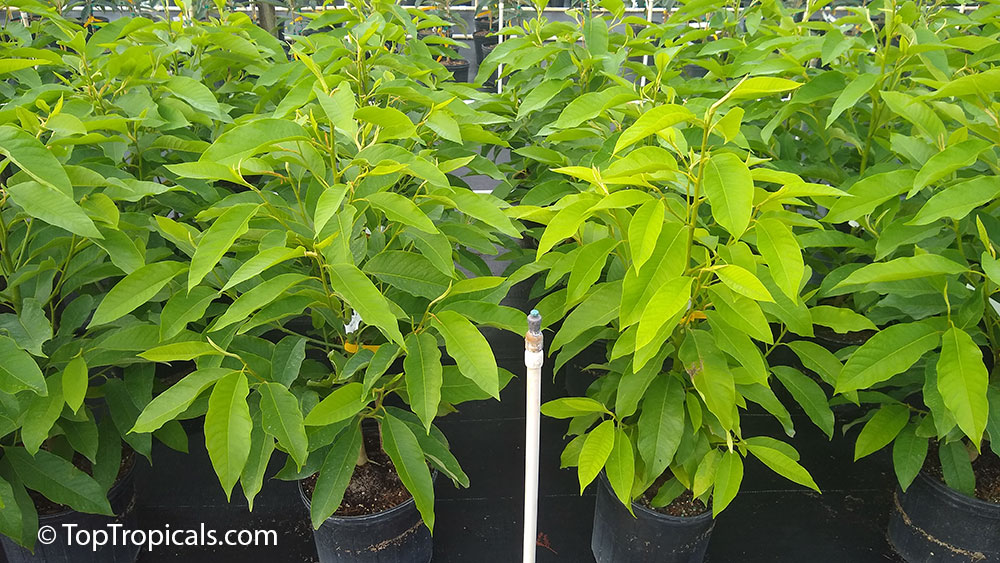
Growing Champaka in Virginia

Q: I purchased a Magnolia champaca 1 gallon a few years ago. It is still growing as I bring it into my greenhouse in the winter. I live in VA. This spring I planted it in the ground hoping it might bloom which it did not. Will it survive our fairly mild winters with several freezing days with some special attention? What would you do?

A: Magnolia champaca is a tropical tree and won't survive winter in VA. It can not take hard freeze. Your only option is, to keep it in a pot and bring inside. If the temperature inside your greenhouse is too low, this may affect the plant's ability to flower. For example, if it stays 35-40F for a whole month - although it is not a hard freeze and the plant may survive, but the duration of the cold period is more critical than the low temperature itself. Champaka can survive a few hours even at upper 20's, but not many days with cool temperatures. The temperature in winter should be maintained at least above 55F during day time (the higher the better) and at least above 45F at night.
If the tree has grown too big, you may trim it. If the root ball is too large, roots can be trimmed too (similar way like they do with bonsai) before repotting. However, trimming must be done either during warm season and active growth, or in Spring, when the tree starts waking up and promotes new growth.
To encourage flowering, start fertilizing your Champaka with a liquid bloom booster - SUNSHINE Pikake - Fragrant Flower Booster. It can be used year round including winter months, and it is safe to apply with every watering. This way you will provide to the tree enough energy for the next flowering season, so flowers can be expected in late Spring - Summer.

Read more about greenhouse growing: Greenhouse in Virginia.

Date: 28 Sep 2019

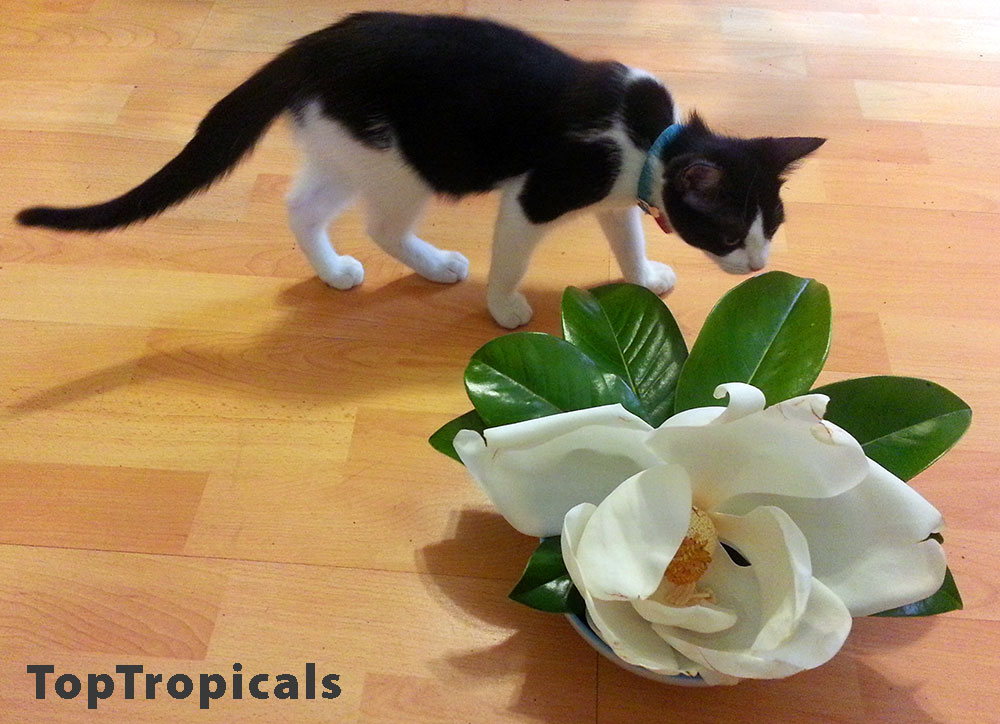
Meet PeopleCats of TopTropicals. Cat of the Day: Lil-S*

You know how it is, cats are like potato chips, they can't be just one. And they come to you, they adopt you. They always pick the right people. Every one of them has a story of their appearance.
Lil-S* came from a car engine. One cold winter morning of 2013 when we were about to start a car... lil "meow" squeaked as a warning... Thank God the engine wasn't started. She was hiding from cold under the hood right on the engine, probably still catching some warmth from it... She was 4" size kitten that fit in a palm of your hand... And she always has been a handful! That's why we named her Little Sh*t.

Lil-S* likes to hang out with Marco in front of TopTropicals gate, greeting the customers.

Date: 4 Feb 2017

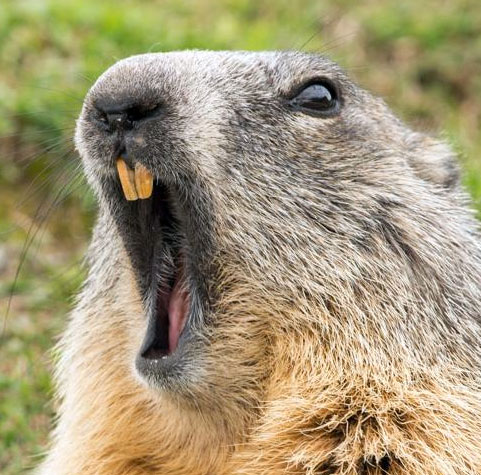
Groundhog Day Feb 2

On Groundhog Day Feb 2: Groundhog Punxsutawney Phil saw his shadow on Thursday morning, predicting six more weeks of winter during Groundhog Day festivities at Gobbler's Knob, a small hill just outside Phil's hometown.
According to folklore, if it is cloudy when a groundhog emerges from its burrow on this day, then the spring season will come soon; if it is sunny, the groundhog will supposedly see its shadow and retreat back into its den, and winter weather will persist for six more weeks.
Phil promised long winter, however, we should not cry in despair but starting to get ready for Spring!

Spring Check List:
- Make sure min temperatures are above 45F before you start bringing potted plants outside.
- When active new growth appears from buds, after-winter pruning can be done.
- You may start weekly fertilizing as soon as night temperatures raise above 55F.
- Start planting in the ground as soon as there are no more chances of frost, until then keep newly arrived plants in pots so they get better established.
- Low chill cold hardy fruit trees including Peaches, Nectarines, Plums, Apples, Mulberry, Loquats go in the ground first, so you can enjoy their blooms and early fruit set. Plant Pomegranates, blueberries and cranberries, raspberries and blackberries, grapes.
- Water as needed, still keeping on dry side until afternoons get hot and plants start using more water.
- Start seeds indoors. The sooner the better, to give seedlings more time to establish before planting out in the ground.

Overwintering Magnolia (Michelia)

Michelia alba Question: I have a question about Michelia alba. My Michelia alba leaves turning yellow and losing leaves. When I brought it inside for the winter, after the leaves falling off new one grow back not all of them grow back and now the new the branches start to die. I water once a week.

A: Whenever moving a plant in or out of the home it is always best to do it gradually. Moving a plant all in one day will cause stress to the plant due to environmental changes such as, new humidity levels, new light levels and new watering requirements. Michelias usually loose their leaves once in the spring and once before winter but grow them back right away. Now that your plant is inside with less humidity, light and leaves, you only need to water once the soil as almost dried out. You will need to stick your finger in the soil to see if it is still wet as the top layer dries before the under layer. If the branches are starting to die at the tips this usually means too much water. Move the plant to a bright light window, decrease water and you may want to also use a humidifier.

Date: 27 Aug 2016

Plant Horoscope. Virgo Zodiac lucky plants: Jacaranda and Assai palm

Virgo - 8/23-9/22. Virgo is an EARTH sign ruled by the planet Mercury, which also rules Gemini.

Virgo is traditionally the Goddess of the Grain, and is associated with autumn. Her plants often have finely divided leaves or stems, subtle odors, or small, brightly-colored flowers. The most beneficial plants for Virgo are high in potassium and help to calm the nerves.

In its rulership of Virgo, Mercury governs the abdomen and the lower intestinal tract and the entire digestive process. Herbs associated with Virgo assist in digestion (as do Cancer herbs) and help to reduce flatulence. The relaxing, calming scents help Virgo release stress and worries.

Virgo Zodiac lucky plants: Amorphophallus, Anethum graveolens (Dill), Barringtonia, Bolusanthus, Dioscorea, Grewia asiatica (Falsa), Hibiscus sabdariffa (Karkade), Iboza riparia, Lagerstroemia speciosa (Queens Crape Myrtle), Laurus nobilis (Bay Leaf), Lippia, Melissa, Catnip, Mint, Arugula, Piper betle, Piper sarmentosum, Psychotria, Syzygium aromaticum (Clove), Banisteriopsis, Papaya, Mesua ferrea (Ironwood), Momordica, Euterpe oleracea (Assai Palm), Jacaranda,  Magnolia officinalis, Pimenta dioica (Allspice), Osteospermum, Petrea, Plumbago, Clitoria, Eranthemum, Litchi, Cashew, Pecan, Nut trees, Cherries, Lavender, Myrtles, Sansiveria, Aloe vera, Blackberry, Honey suckle, Satureja, Vitex, Mulberry, Elaeocarpus, Clausena lansium (Wampi), Feronia elephantum (Bel Fruit).

For other signs information, see full Plant Horoscope.