Garden Blog - Top Tropicals

Date: 6 Nov 2020

Tropical Plant Art Contest:
we counted all the votes!
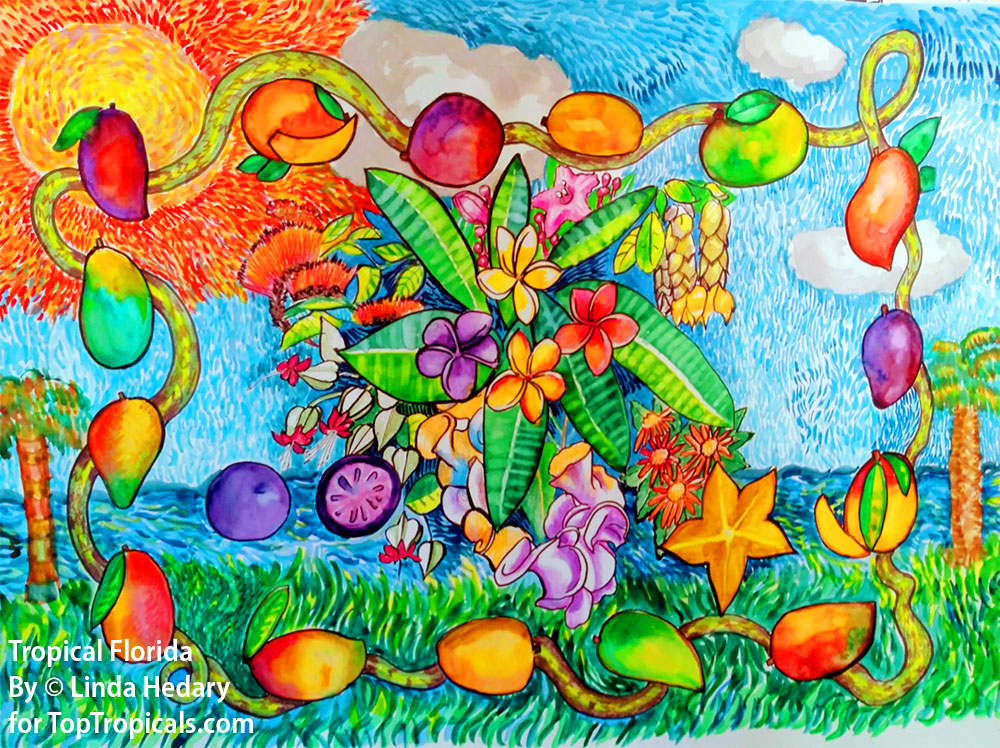
Painting above: 3rd place: "Tropical Florida" by Linda Hedary

"WOW! So many great works! Our followers certainly have a GREAT collective talent! Makes me so proud!" - a quote from TopTropicals Art Jury member, artist Mark Hooten.

Now that the whole country in in competition mode, gardeners are no exception! Every painting is a work of art and it was hard for the Jury to make the decision. We counted in all the votes that came in by the deadline ;)
Finally, we are happy to announce the winners of the Plant Art Contest!. Visit our 2020 Tropical Plant Art Contest Page on our website and see all participant entries, winners and their prizes!

See all Winners! >>

All winners will be contacted by us via email or Facebook within a few days for their prizes. If you haven't heard from us by 11/9/20, please contact us with the subject "Tropical Plant Art Contest" and your shipping information. You may also simply reply to this email, just make sure to set the proper subject.
A few entries came late, pass deadline/voting, keep up with the great artwork and don't miss the next contest submission!

Thank you to all the amazing plant lovers who shared your artwork and talents with us. So much creativity and beauty for everyone to enjoy! Happy painting, and stay updated - new contest will be coming soon!

Painting above: "Hibiscus Wish" by Santhoshi Kavali

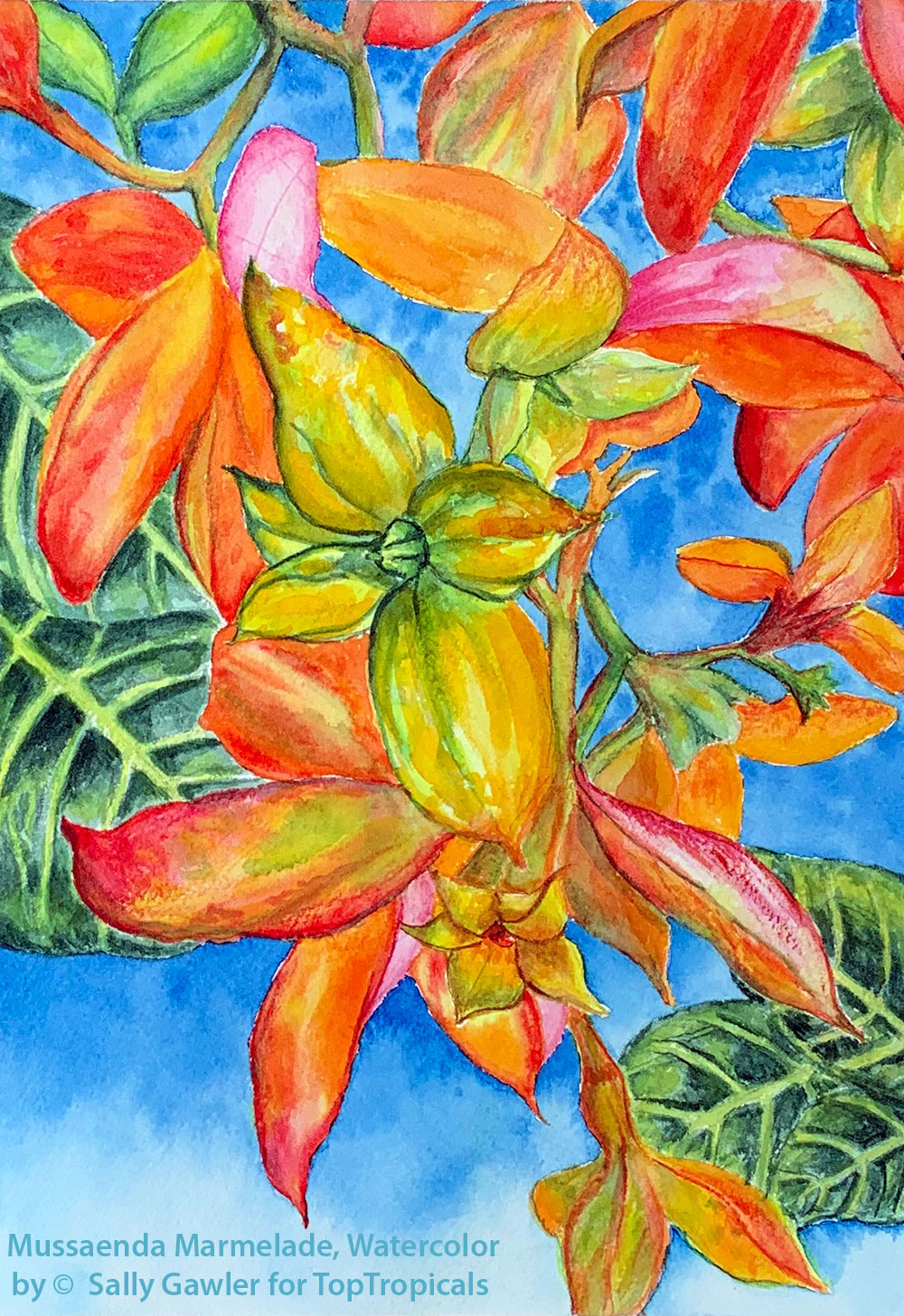
Painting above: "Mussaenda Marmelade" - Watercolor by Sally Gawler (Audience Appreciation Prize)
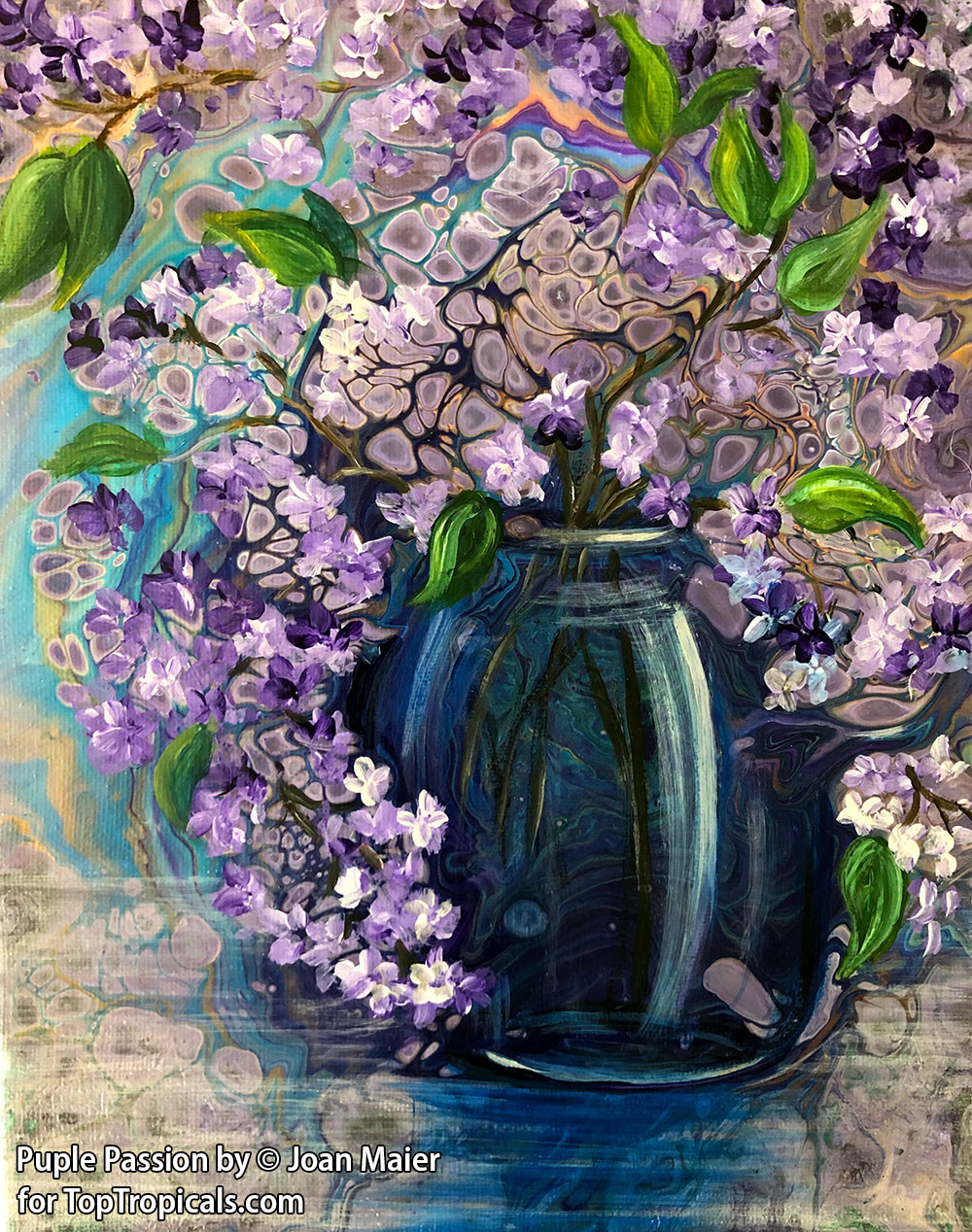
Painting above: "Purple Passion" by Joan Maier. Joan's painting "Butterfly" is the 1st place winner (see Contest page)
Date: 24 Jun 2018

Cold hardy tropical fruit trees for Luisiana

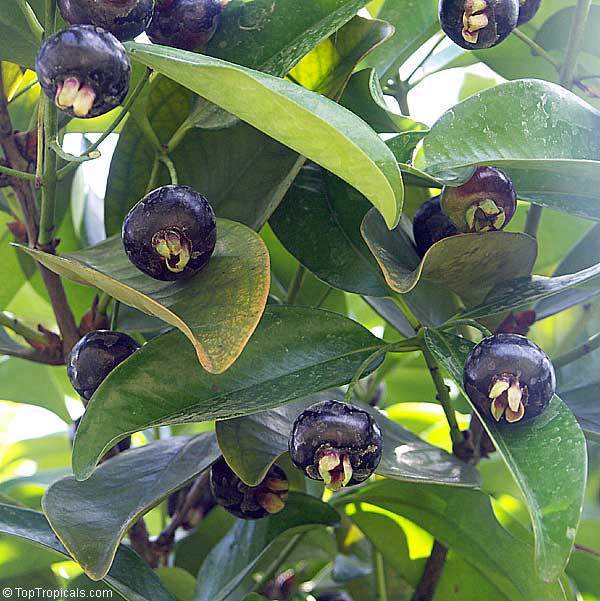
Q: I've just moved to Louisiana and have been wondering whether it would make sense to plant some tropical fruit trees in our garden. Average lows in New Orleans are 41 deg F in January and February, although we did hit 25 once with the Arctic vortex. I'm interested in litchi, longan, rambutans, and persimmons. Do you have varieties that can tolerate Louisiana's temperature range? I'd love mangosteen but I don't suppose they will survive. Do you have any suggestions on tropical fruit trees that I could try?

A: Average temperatures are for statistics only; it is actual temperatures that may hurt your cold sensitive plant. This is what you should keep in mind when starting your tropical fruit collection:
1) Ultra-tropical plants like Rambutan can not survive winters below 45-50F. However, they can be successfully grown in containers in a greenhouse or moved indoors into a sun room during cold periods.
2) Tropical plants like Litchi and Longan may take some light frost once established. Still, for areas with freeze our advice is - keep them in pots and move inside in case of cold.
3) There is a number of subtropical fruit trees that are hardy enough to take some freeze. Persimmon, Feijoa, Fig, Cattley Guava, Jujube, Kiwi, some Eugenias and others. Please refer to our Tropical Fruit Sensitivity Chart.
4) Remember that plant's ability to survive winter depends on several factors, not only temperature itself. Important factors are: wind protection (chill wind kills rather than low temperature itself), exposure, how close the tree is planted to the house, plant maturity and its overall strength and health. If a plant had received good nutrients during summer, has well established root system, planted in enclosed area protected from winds and has plenty of bright sunlight - it has better chances to survive than a weak plant in warmer conditions.
5) Use SUNSHINE plant boosters for improving cold tolerance of your tropical plant. It only takes a few drops, and only costs $5!

Date: 29 Nov 2020

Cold protection of tropical container plants

Q: I am long time customer of yours, I live in San Diego California and while the summer and Fall temperatures are warm to mild, the winter temperatures dip to a point where some tropicals die off. We are experimenting with different variations of way to heat and insulate the pots we have the tropicals planted in as a way to keep them alive during the colder winter months. I was wondering if you knew of the ideal soil temperature for these tropical in order to look their best year round. All of the heaters we have installed have thermostats and temperature adjustments so we can now keep the soil anywhere between a range of between 65-75 degrees. Any advise you can provide would be greatly appreciated.

A: This is a very interesting concept you are working with. Indeed, keeping pots/roots warm, may help a lot! We've been experimenting with cold protection for a long time - for the above-ground plant parts. For sure keeping roots protected (even with a thick layer of mulch) will benefit tropical plants during winter. In case with container plants, this may help dramatically.
The guideline is, tropical plants slow down or stop their metabolism at 65F. As long as you can keep soil above that temperature - this should work great. Of course, the higher the better.
Optimum temperature for growing tropical plants in general - 70-85F. Above 90F, metabolism stops too, unless it's a heat tolerant, desert plant.

More information on winter cold protection of tropical plants and zone pushing:

Greenhouse in Virginia
Plumeria cold protection
Ghost Cold Protection
Seven rules of cold protection for tropicals
About Cold Protection
Cold protection - winter action for your plant collection
Tropical Treasures articles on zone pushing.

Date: 6 Jan 2017

6 easiest fruit trees and 5 spices to grow in containers indoors

Q: This is why I want to move so that I can grow absolutely anything I want from your catalogue. Prefered Puerto Rico. Right now I live in New York and there is absolutely nothing I can grow there.

A: Of course living in Puerto Rico brings more opportunities to grow tropical species. However, you can create your unique tropical paradise even living in New York. We have many customers from up North who successfully grow tropical species (and get them to flower and fruit) in greenhouses, and even indoors.
Here are a few suggestions of tropical fruit trees that adapt well for container/indoor culture - for both beginners and advanced gardeners.

Top 6 fruit trees great for indoors / container culture / beginners
1. Mango (Mangifera indica). Select from one of smaller mango varieties
2. Sugar Apple (Annona squamosa)
3. Guanabana, Soursop (Annona muricata)
4. Miracle Fruit (Synsepalum dulcificum)
5. June Plum (Spondias cytherea)
6. Guava (Psidium guajava)

5 top spice plants (the spice will be with you right away, you don't have to wait for it to grow)
1. Allspice (Pimenta dioica)
2. Cinnamomon or Campor tree
3. Bay Leaf (Laurus nobilis)
4. Mint Tree (Satureja vimenea)
5. Vanilla orchid (Vanilla planifolia)

See a brief article of growing tropicals outside of tropics.

Don't forget to get some SUNSHINE boosters for your plant collection - for both successful indoor culture and cold protection!

See also our magazine Tropical Treasures) - Pushing the Limits of Tropical Gardening, with list of issues.

Date: 10 Oct 2016

Cold protection - winter action for your plant collection

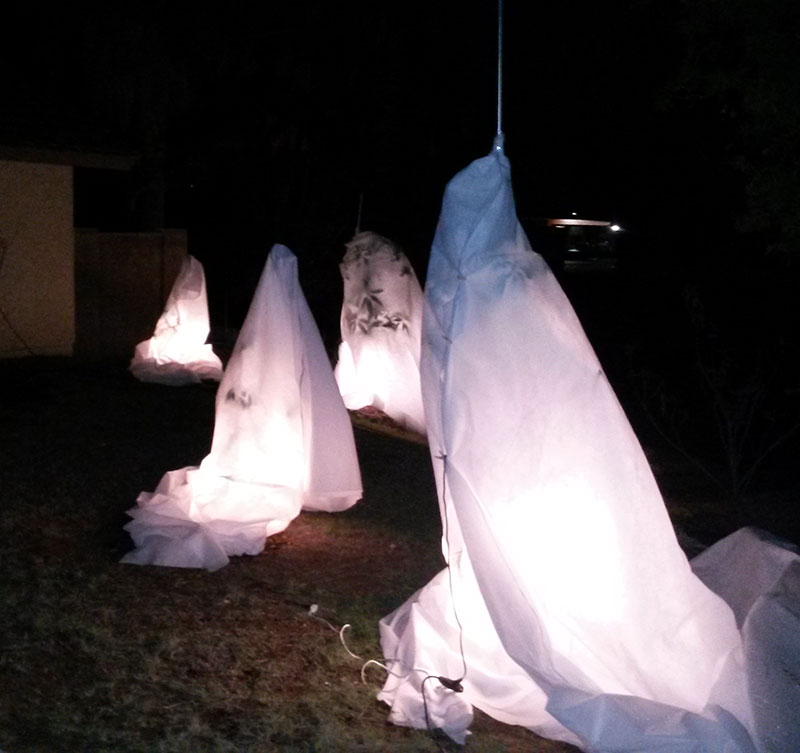
A note from our customer: Last winter was very cold here in Arizona, lower 30's. I used white synthetic sheets (called frost cloth, it is very light and yet effective) to cover my fruit trees, and kept simple light garlands on for the whole night. Sending you couple photos so you can share with others. It worked pretty well for my plants and no cold damage!

With winter approaching, it is time to take some actions to protect your rare plants from cold stress and damage.
If you live in a mild climate, you still need to get ready for the cold nights. When expecting a cold night, individual plants and trees can be wrapped with sheets, or blankets, to protect them from the wind chill. Christmas lights is a good idea for an additional warm up.

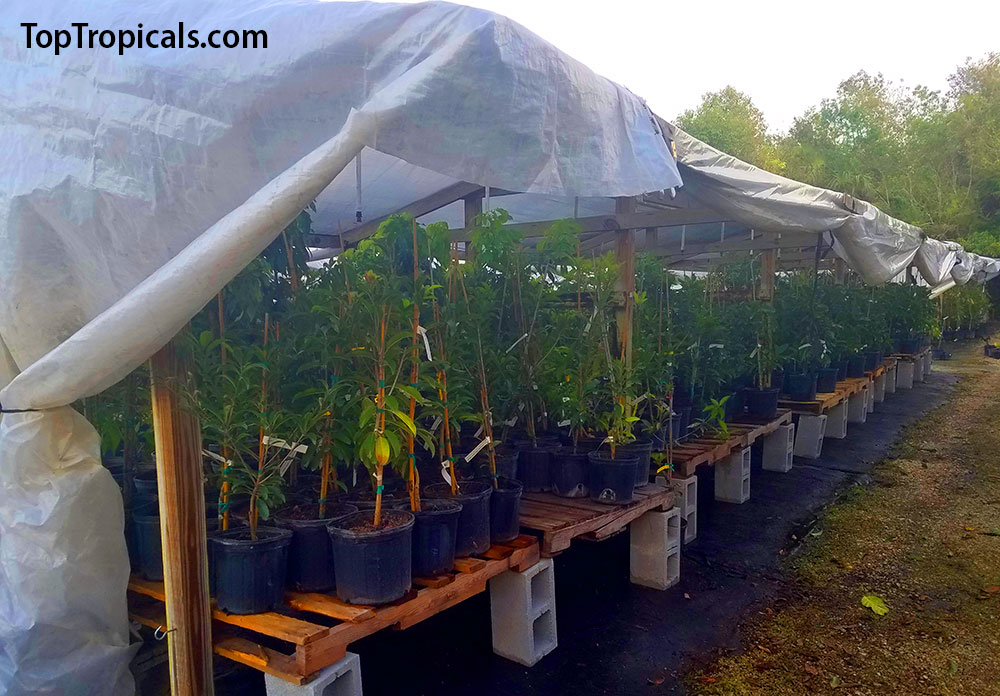
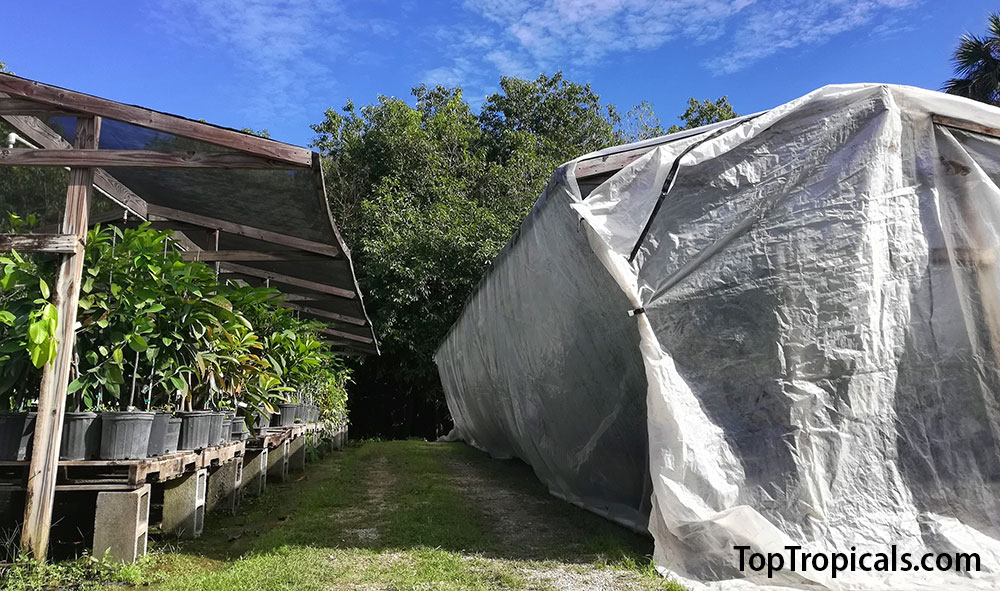
For large collections of tropical plants, temporary winter greenhouse doesn't have to be expensive. An easy-assembly mobile carport from a hardware store covered with a plastic or fabric will cost you $100-200. It can fit a hundred plants or more!

If you live in area with a hard freeze, Southern exposure windowsill will work for most of the compact tropicals providing proper care. Larger collections may also move into your garage for a few cold nights, or for longer periods if the garage has a bright light source.

Factors affecting tropical plant winter survival:

1. Duration of cold period. Tropical plants can't stand long periods of cold. A few days of even upper 30's may kill a tropical plant. A few hours of frost may cause leaf drop but the plant will recover.
2. Minimum temperature - of course, the warmer the better. But see 1) - if cold is not for too long, it may be OK.
3. Wind-chill can be more dangerous than low temperatures.
4. Exposure. Southern slopes get warm during daytime and stay warm longer.
5. Protection with a house, fence, larger trees - where a "pocket" of warm air forms and stays - is beneficial.
6. Humidity. A lake or a river nearby (especially ocean) will mild the micro-climate.
7. Individual species hardiness. Don't try to grow Orchid Tree outdoors in New York.
8. Plant maturity and health. A well-established plant with developed root system has more chances to survive cold. If a plant had a good change to develop during warm season (bright light, enough water, fertilizer), it will be more cold hardy. Healthy plant can withstand lower temperature, so proper nutrition is important, including micro-element applications. Large specimens, even ultra-tropical, may survive cooler winter than they normally do in their natural habitat. The Nature provided plants with better hardiness level than it is normally used. To boost plant immune system and improve cold tolerance even more, use SUNSHINE plant boosters. SUNSHINE-T - thermo-protection booster, is specially formulated for winter protection of tropical plants. To improve cold hardiness, spray 1-2 days prior to cold with 5 ml/1 gal solution and continue applications with 2.5 ml/1 gal solution every 10-15 days throughout winter period.
9. Gradual temperature decrease is less dangerous than a sudden drop since it gives a plant a chance to adjust. One sudden freeze in December with prior warm fall may create more damage than a gradual temperature adjustment. If it starts to get cold early in the Fall, plants slow down their metabolism, and the new tender growth won't get hurt later in winter, since the plants are "expecting" the cold.
10. Do not fertilize plants during cool months. Not only because they don't need much food beyond growing season, but also because fertilizer (especially Nitrogen) encourages rapid tender growth that will be damaged by cold and this will stress the whole plant.

Stay warm!