Date: 2 Jul 2016
Cancer Zodiac lucky plants

Cancer - 6/21-7/22. Cancer is a WATER sign and is ruled by the Moon. Cancer's plants generally have soft or Moon-shaped leaves, contain a lot of moisture, or are found near water. Oftentimes they have white, pale blue or pale yellow flowers. Cancer rules the stomach, diaphragm, and liver, so plants that aid digestion or affect the subconscious are associated with the sign of the Crab. Maternal Cancer also governs the breasts, the womb, and the ovaries. It rules all fluid secretions, including menstrual blood, fluids in the eye, and tears. The moon is often associated with conditions involving irregular periodicity: irregular menstruation and related moods, epilepsy, insomnia, hysteria. Lunar herbs tend to have white or yellow flowers and soft, juicy leaves. They often live in or near water. As they are so nurturing and warm, Cancer loves the homey smell of cinnamon. This sweet spice is good for gently heating things up; it also promotes movement and flow in life. Its familiar scent is soothing and calming for those who need a little retreat every now and again.
Cancer Zodiac lucky plants: Lilies, Eucomis, Magnolia, Nicotiana, Brugmansia, Dombeya, White flowers, Water lilies, Lotus, Maidenhair fern, Monstera, Cinnamon, Sage, Aloe, Lemon Balm, Bay leaf, Palasa - Butea monosperma, Acai, Mahogany, Mango, Banana, Apple, Pear, Geranium - Pelargonium, White roses, Solandra Chalice Vine, Butter Cup, Acalypha, Cornutia, Ruda, Oregano, Camphor plant, Grapes, Brunfelsia, Alocasia, Colocasia, Canna, Cyperus, Iris, Equisetum, Mangroves.
For other signs information, see full Plant Horoscope
Date: 24 Jun 2016
Coastal plants. Suggestions for coastal regions
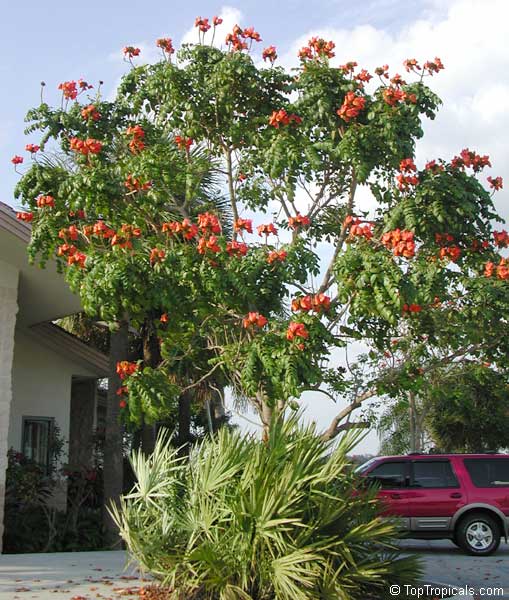
Q: I'm looking for a plant to replace a Torrey pine that was sadly cut down. The pine made the soil very acidic and it's already silty, sandy, and salty from being near a coastal marsh. I was thinking of a Kei Apple. However, there are only seeds available on the website and I'd prefer a sapling to get things started faster. Are there other trees you'd suggest for that environment?
A: Here are some fast growing salt tolerant trees that we can suggest, just to name a few: Bucida buceras - Florida Black Olive Tree, Callistemon citrinus - Weeping red Bottlebrush, Capparis cynophallophora - Jamaica Caper, Cassia fistula - Golden Shower Tree, Coccoloba uvifera - Sea Grape, Cordias, Delonix regia - Royal poinciana, Flamboyant, Elaeocarpus grandiflorus - Fairy Petticoats, Ficus lyrata - Fiddle-Leaf Ficus, Ficus religiosa - Bo-Tree, Peepal, Sacred Ficus, Mahoe, Peltophorum pterocarpum - Yellow Poinciana, Plumeria, Spathodea campanulata - African Tulip Tree (shown on right). See full list of salt tolerant plants.
15% on all mango trees! This weekend only. Offer is valid through Sunday, June 26. See all mango varieties
Date: 18 Jun 2016
New Top Tropicals Video
Top Tropicals Video - Pesticide 101 Safe and Easy. Top Tropicals Plant Clinic with Robert Riefer (Certified Crop Adviser, ISA Certified Arborist). Many people are afraid of using harsh chemicals. We will discuss some pests you may find in your garden and what you can do about them, including using easy and safe household remedies.
Check out this video: Pesticide 101 Safe and Easy.
Stay updated with TopTropicals Videos by subscribing to our channel at YouTube.com/TopTropicals
Date: 8 Jun 2016
How to get Clerodendrum to bloom?
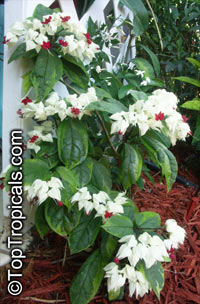
Q: My Clerodendrum thomsoniae is not blooming. Actually it is not doing much of anything except putting out weak growth and small leaves. I purchased this plant May 26. 2015. Over the winter it was in a heated sunroom, at night 60 degrees, where it received some direct sun from the skylights. I reduced the water to prevent excessive leggy growth. I don't see how this plant can take full sun or even part sun. Temps here in Raleigh NC are 80-85 degrees and 65-70 at night, at the moment. I figured I would gradually expose it to more direct sun after being in a sunroom but the leaves burn. I had this plant in San Jose many years ago where it did quite well, blooming with no special treatment. So thought I'd give it a try again. Any advice?
A: Clerodendrums are all time favorites, appreciated by both gardeners and house plant collectors, for their showy, fragrant flowers and very easy culture. When growing Bleeding Heart (Clerodendrum thomsoniae), a few things should be taken in consideration:
1) Temperature.Like most clerodendrums
Date: 4 Jun 2016
Desert rose winter care
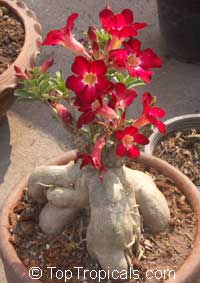
Q: I purchased several packets of desert rose seeds last year. I now have 45 very healthy seedlings some of them in bud. Almost all of my seeds grew but I lost most of them when I rook them in during winter. I did not water them for a month , kept them in their pots and set them by the window. they either dried up and died or rotted and died. I noticed when you send me grafted specimens that you bareroot them. Is this a better way to keep them inside in winter, bareroot? I hate to lose these plants come winter time. Pls advise me. I live in Houston, Tx. where we get temps below 40 degrees and sometime a day or more of freezing temps.
A: Thank you for your question. Rot is pretty common problem with Desert Roses. We monitor our Adeniums closely and have a special set up of watering environment and schedule, in dedicated greenhouses just for them. Nevertheless - every now and then we see a rotten caudex and can't help it to say "oops! over-watered!" These plants are very sensitive to environment changes, especially when it comes to a combination of water and temperature. These are a few tips that should help you to reduce risk of plant loss to a minimum:
1) Use only well drained mix with much higher content of perlite than you would use for most tropical plants. For adeniums, we use mix with 30-40% of perlite in it, while regular mix has 10-15%.
2) Adeniums like alkaline soil, unlike most of tropical plants (hard to say what else likes alkaline... Ficus for sure!). This means, regular mix with high content of peat moss may cause root rot. To increase alkalinity, you may add dolomite. Here in Florida where we have natural supply of shell rock handy, it is easy to add some shell to a potting mix (shell sand, rather than quartz sand). We always add a few large shells on top of a pots with a big specimen. Besides increasing soil pH (making it more alkaline), shells look very decorative.
3) Water very carefully during cooler months. When it is hot (85-100F), excessive water usually won't harm adeniums: it will be partially used by a plant, and partially will evaporate. Especially be careful with water when temperatures drop below 65F - then tropical plants simply stop growing process and go dormant. Once adeniums start losing leaves, this is a sign to reduce watering to once a week to once a month, and in very small quantity (couple tablespoons per pot).
4) We do not bareroot adeniums for winter storage. They are not bulbs. Barerooting of this plant is recommended only during shipping. Adeniums can stay without soil for up to a week without hardly any stress, sometimes even longer.
5) We keep our big collection specimens on a roofed porch during winter, where level of light is very low. Last winter we haven't lost a single plant due to low light. They take shade pretty well considering minimum or no water. However bright light is always better - it creates healthier environment for a plant. We all know about space limitations for our large collections, especially in winter. So if you can afford a bright spot for adenium during winter - the plant will be lucky!