Garden Blog - Top Tropicals

Date: 3 Mar 2020

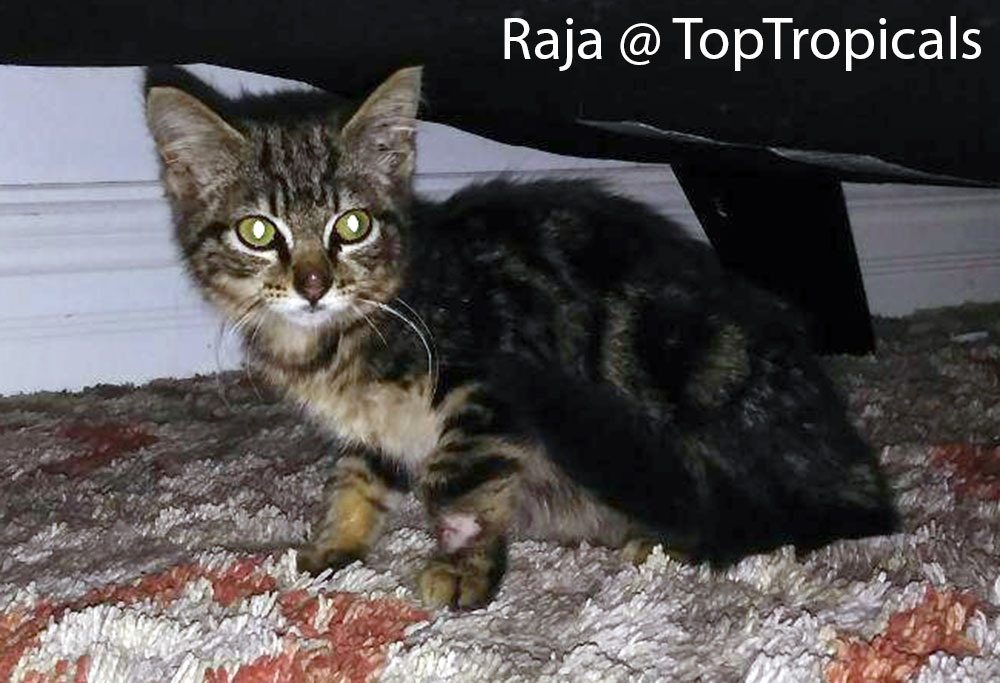
Meet PeopleCats of TopTropicals. Cat of the Day: Poor Little Raja
In our last newsletter we told you about little Abu, a Baby-Purrrson that Kristi rescued from the woods where he had been surviving along with other feral cats: his little sister and his Mom who was badly injured in a car accident. We received messages from our customers asking if we were able to rescue the other two cats...
For the past few days Kristi, Jamie and Onika have been trying to capture them... The feral cats didn't want to come to humans, they were hiding away. The ladies were able to trap Abu with a tuna can... then tried and tried again with the other two with no luck... Even tried to call Animal control asking for help catching the animals so we could give them medical help. We were told that they don't trap cats! ("unless it's a cat-hating neighbor going against a crazy cat lady" - Crazy Cat Lady's comment). The girls continued their efforts again and again, with treats, traps and different capture plans... day after day.
Unfortunately, the sick mother-cat did not survive and we found her yesterday with her little baby crying over her cold body.
Kristi was able to grab the tiny kitten who was even smaller than her brother Abu. She named her Raja - a friend of Abu. Raja said that her poor mother's words were: "Go to that lady, my baby, she looks kind. It's my time to go now, and you will be in good hands..."
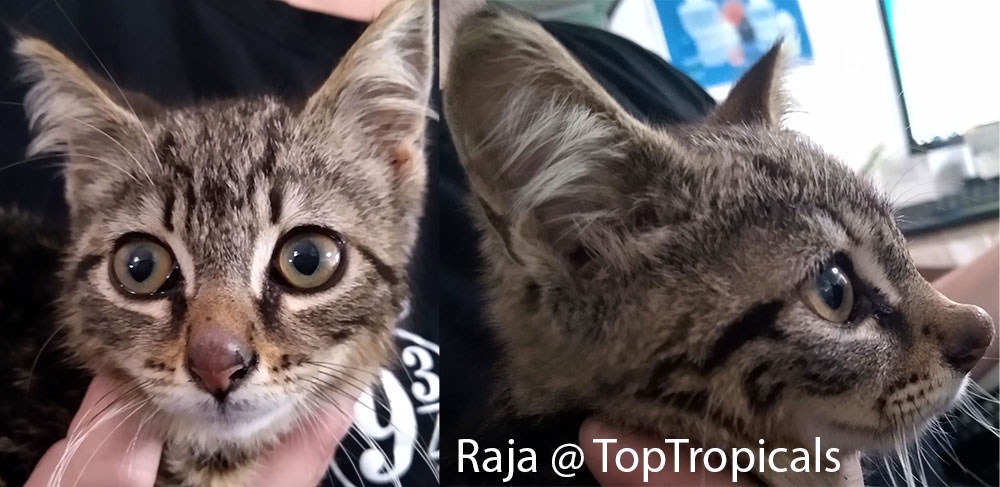
The little Raja was in very poor shape herself, with eyes full of tears. She was covered by fleas, and looked like passing out from anemia. Her paw was injured and infected, and her little nose... first we just thought she was pig-nosed! But her nose is also swollen. Kristi rushed her to the vet where Raja got treatments and meds. She got much better the same day and finally stopped crying. Raja finally recognized her brother Abu and cuddled with him.
Now Raja is on her way to recovery and will be sending her updates soon!

Thank you everybody for supporting us in helping PeopleCats. Every dollar you spend on TopTropicals plants is split between plant growers and PeopleCats who help us become better people.

Check out the Video: and more Cat of the Day stories.
Date: 24 Jun 2018

TopTropicals

URBAN TROPICAL GARDENING:
10 secrets of successful Container Mango growing on a balcony.

Q: I live in Miami in apartment on a second floor, and I have a balcony with SE exposure. I wonder if I can grow a mango tree in a pot? Will it fruit for me? I recently moved to South Florida and I don't know much about tropical plants; but I tasted real fiberless mangos from someone's garden - it was so delicious and different from those in the grocery store. I wonder if I can have a fruiting tree on my balcony? And if yes, how do I plant and take care of it?

A: Yes, you can! Here is what you need to do:
1) Temperature. You are lucky to live in Tropics, keep it on a balcony year round.
2) Light. Position the pot in a spot with the most sun exposure. Mango trees can take filtered light too, but the less sun, the less fruit you will get.
3) Soil and Container. Use only well drained potting mix. Step up the purchased plant into next size container (3 gal into 7 gal, 7 gal into 15 gal). When transplanting, make sure to keep growth point (where roots meet the trunk) just at the top of the soil. Covering base of the trunk with soil may kill the plant.
4) Water. Water daily during hot season, but only if top of soil gets dry. If it still moist, skip that day. Mangoes (unlike Avocados!) prefer to stay on a dry side.
5) Fertilizer. Use balanced fertilizer once a month, 1 tsp per 1 gal of soil. Do not fertilize during fruiting - this may cause fruit cracks.
6) Microelements. Apply SUNSHINE-Superfood once a month. This will help your mango healthy, vigorous, and resistant to diseases. Use SUNSHINE-Honey to make your fruit sweeter.
7) Insect control. Watch for scales and mealybugs, clean with solution of soapy water + vegetable oil (may need to repeat 2-3 times with 10 days interval), or with systemic insecticide like imidacloprid only as needed (if non-harsh treatment didn't help). Most Flea shampoo for dogs contain that chemical, you may try that shampoo solution.
8) Trimming. Once potted, do not remove leaves that are discolored or have spots until new growth appears. Dark dots on mango leaves, especially in humid climate like Florida, may be signs of fungus. Treat with fungicide according to label, and remove only badly damaged leaves. Trim crown as needed after flowering and fruiting (by Fall). Train into a small tree, and you may remove some lower branches eventually.
9) Flower and fruit. Mangoes are winter bloomers with bunches of tiny flowers coming in thousands. Many of them set fruit (if pollinating insects present). Keep in mind that young trees can only bare a few fruit. Normally a tree will drop excessive fruit and keep only a few that it can manage. To save the young tree some energy, remove fruit if too many and leave only 2-3 for the first year. It will pay you next year with more abundant crop.
10) Variety. Last but not least: Choose the right variety for container culture! Pick from "condo" dwarf varieties such as Icecream, Nam Doc Mai, Carrie, Cogshall, Julie, Fairchild, Pickering, Graham, Mallika, and a few others - check out Mango Chart pdf and full list of our Mango varieties.