Garden Blog - Top Tropicals

Date: 24 Aug 2019

How to keep iguanas away?
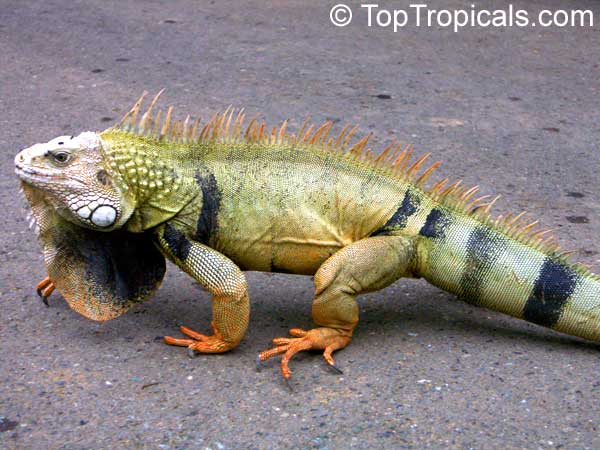
Q: Really enjoy all the plants that I have got from you, but having a hard time keeping iguanas eating everything! We are not on the water, any solution to keep them out?

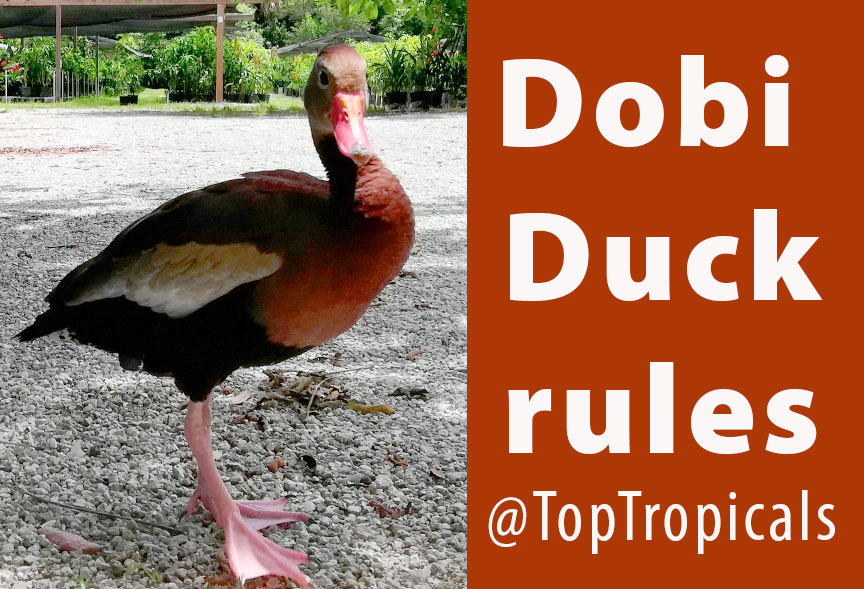
A: Iguanas may become quite a problem in the garden. Our first suggestion would be - get a Duck as we have (Duck Dobi), she is so dominant and keeps any wild animals away from the property, including gators... and cats! They are scared of her! Dobi thinks she owns the place.

Here are a few other ways to control iguana problem in your backyard:

1. Rid your lawn of dropped fruits. Iguanas love fruit. And they love low-hanging fruit or fruit that's easy to get to. If you have fruit trees, take the time to pick up your yard and dispose of any dropped fruit.
2. Keep a lid on a garbage can. Put your garbage cans in a place they can't get to, or put a cinder block on your can lid.
3. Do not leave pet food out. If you're putting a bowl of dog food or a plate of cat food out for your pets, you're inviting iguanas into your yard.
4. Fill iguana holes. Iguanas like to dig. Wherever you see a hole, fill it. Stuff rocks into the hole first, then fill it with dirt and top it with sod. The iguana may return to dig again, but he won't dig through large rocks.
5 Do NOT feed the iguanas. Don't be friendly with them, so they won't come back.
6. Wire netting around plants. You can use wire netting or screens to prevent iguanas from entering plants and shrubs.
7. Spray them with a hose. When you see an iguana in the yard, spray them with the hose. They also hate loud noises. Constant harassment can keep them from returning.
8. Keep your yard clean. Excessive overgrowth or yard storage are great places for iguanas to hide.
9. Do not leave food out, unattended. Iguanas are mainly herbivores but that doesn't mean they won't smell something good and want to eat it. They will TRY anything.

Hopefully these tips help keep your iguana problems to a minimum.
Date: 19 Aug 2019

Colorful Yesterday-Today-Tomorrow

Q: I have a large oak in front of the house and nothing grows under it, even grass. Can you recommend me a compact, colorful flowering shrub that will tolerate shade location and still will bloom for me? I love fragrant flowers, that would be nice... Also, I am a snowbird staying in Florida mostly from Fall to Spring so I miss the flowering season! Any winter bloomers? Or am I asking for too much?

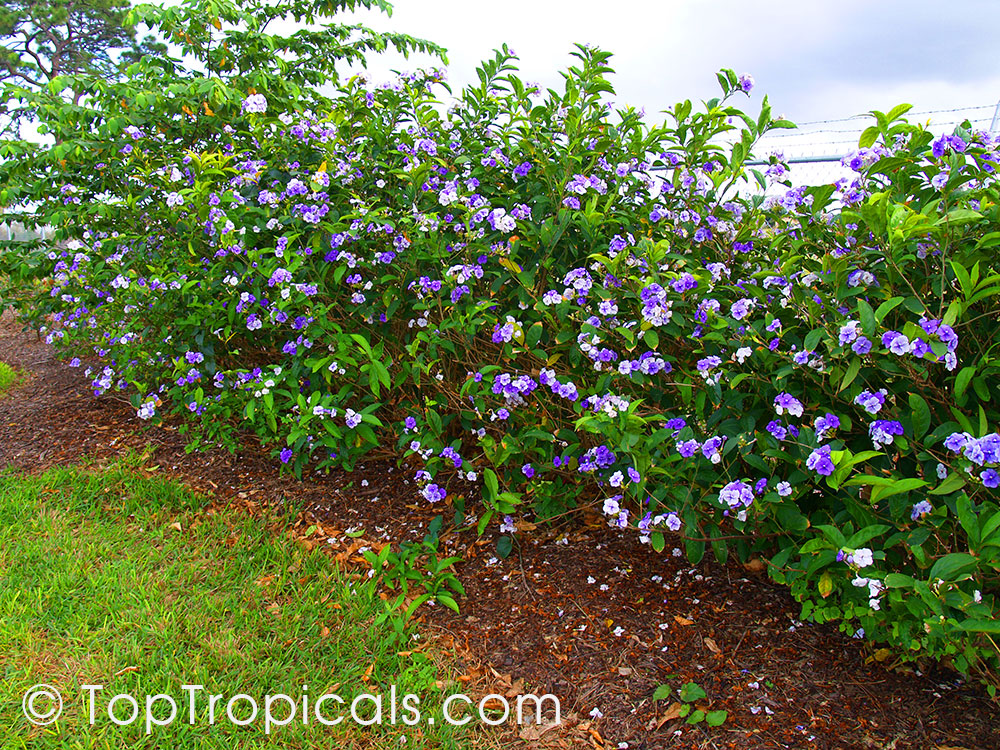
A: There is a plant for every location and every need! Here is a perfect plant for you, Brunfelsia grandiflora - Yesterday-Today-Tomorrow. It is a winter bloomer and it enjoys filtered light. In fact, in full sun Brunfellsia leaves sometimes turn yellowish, so a shade location will be perfect for it, leaves will be healthy and dark green.
It is a beautiful specimen plant. The unusual popular name of this medium-sized shrub becomes clear to anyone who observes it over the course of two or three days. Its tubular fragrant flowers change from purple to lavender and then to white over a three day period (First they open as rich lavender-blue; then they change to pale lavender and finally to almost white before they fall). Then all three colors can be seen on the same plant. It grows to about 3-6 ft and does best in filtered sunlight. Blooms fall to winter.

Check out all Brunfelsias from our store - they all are shade lover and free-flowering!

And here is a list of all winter flowering plants for you... and a Winter-Flowering Guide for Snow Birds (PDF file) that includes many late-season trees, shrubs and fruiting plants.

Date: 19 Aug 2019

When is the time to repot?

Q: According to your instructions, I understand that plants need to be placed in bigger pots. But my question is, say I plant each plant in 18in x 18 in x 18 inch square pots, how many weeks, months or years can the soil be good for these plants? When will it be time to change soil? Any specific soil recommendations?

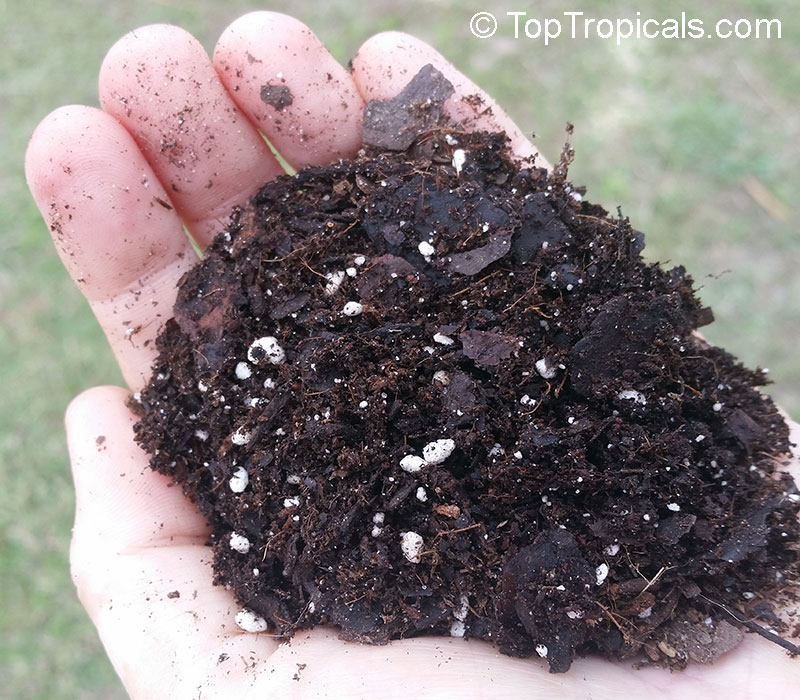
A: Repotting is required usually once a year. It depends on the plant and growth rate of course. The best way to check if a plant needs stepping up is to check its root system. Carefully turn the pot upside down and pull the pot off the roots (make sure to support the plant from the bottom). If a root system is very dense, it is time to repot. It is an easy check with smaller plants; if a plant is large and hard to turn "upside-down", check drainage holes: if roots start growing through the holes, it is definitely time to step up. Make sure to use pot size only a few inches bigger in diameter than the existing one: just enough for the root system plus 2-3 inches extra space; do not use oversized pots to avoid root rot. Use only new quality potting soil and make sure it has perfect drainage characteristics. We recommend Professional Soilless Mix that contains soil conditioners such as aged pine bark and perlite, and contains a large percentage of coconut fiber that plants love the best. Coconut fiber is a perfect growing mix and considered a hydroponics media, you will never have problems with root rot.

Date: 13 Aug 2019

What are the most rare fruit trees?

Q: What is the rarest and unusual plant that you have? I want something special for my tropical fruit tree collection. I already have everything I could possibly get...

A: Are you sure you have everything? Check out our rare plant section, and look at these couple plants we just received... these won't last long, we have only a few!

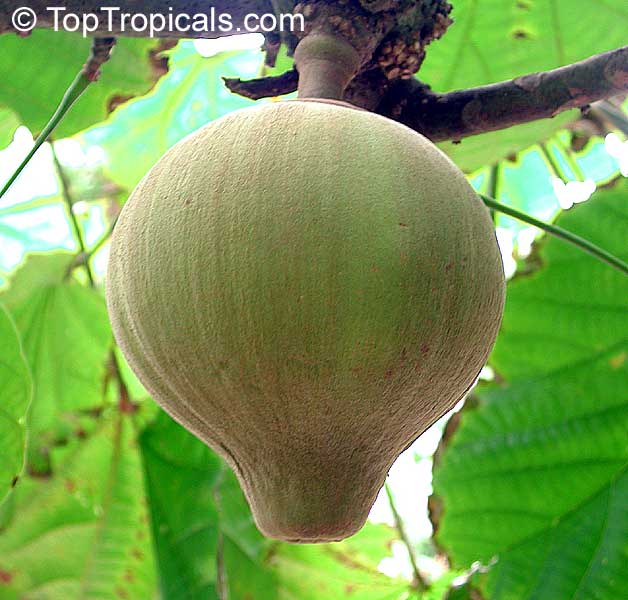
Quararibea cordata - Zapote Chupachupa, South American Sapote (with express shipping)

Chupa-chupa, Zapote, South American Sapote... One of the most amazing and showy tropical fruit trees with huge heart-shaped leaves, heart-shaped fruit, and fast-growing habit. The fruit has a bizarre shape like a large breast with a nipple, and the pulp is very tasty. For best performance, the tree needs full sun, rich soil, plenty of moisture and fertilizer.

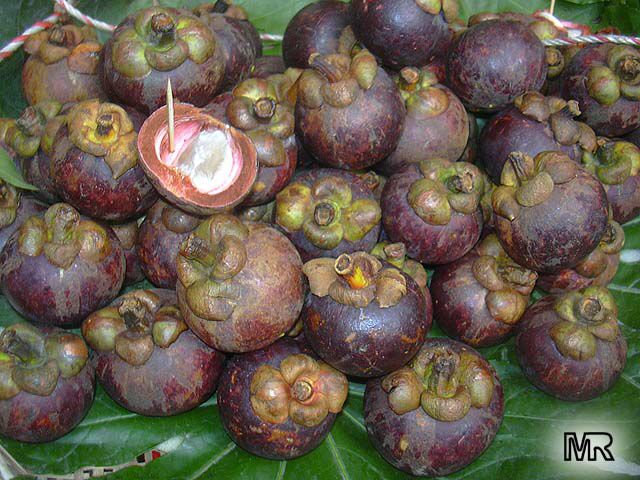
Garcinia mangostana - Mangosteen

Mangosteen... This delicious fruit has a thick, dark-red skin, inside which are creamy-white segments with a sweet, slightly tart flavor. Purported by many who have had the luxury of tasting it as being the best tasting fruit in the world.

Date: 13 Aug 2019

Caring of Soursop in container

Q: I have ordered dozens of trees from you and have a question about Soursop. I have a Soursop in a container and ants and aphids are under new leaves. Do Soursop like little water? I water almost everyday living in southern Los Angeles it's been around 76-80F. I spray the aphids and ants off with a mist setting on my hose. They come back every day. They're only on new leaves...

A: First of all, you don't have to remove the ants iа they don't bother you. Ants are good insects, they do not harm plants; most likely they are attracted by a sweet sap - aphid by-product. Ants clean up a plant, and they may even take care of some bad insects.
It is not difficult to get rid of aphids. Use a safe treatment: in a small spray bottle, mix 1 cup of warm water, 1 teaspoon of dish soap and 2 tablespoons of any cooking oil (if you have Neem oil or Horticultural oil - even better, but prepare, they are pretty stinky). Spray the leaves with this solution to a dripping point. Repeat in a few days if needed. This simple remedy will take care of the aphids.
Daily water may be ok for the plant during hot weather, as long as the soil is not constantly moist. Let the surface of the soil get a little dry between waterings.

Recommended fertilizers for fruit trees:

Fruit Festival Plant Food - Super Crop Booster
Mango-Food - Smart Release Fruit Tree Booster
SUNSHINE-Honey - for sweeter fruit
SUNSHINE SuperFood - microelement supplement