Garden Blog - Top Tropicals

Date: 24 May 2019

Synergy of SUNSHINE, biostimulants, and macro-micro
TopTropicals.com

Q: I've heard that plants grow better and bigger with SUNSHINE boosters and when using Myco-Mix instead of regular soil mix. Do they work like fertilizers? If I use a Myco-mix, do I still need a fertilizer?

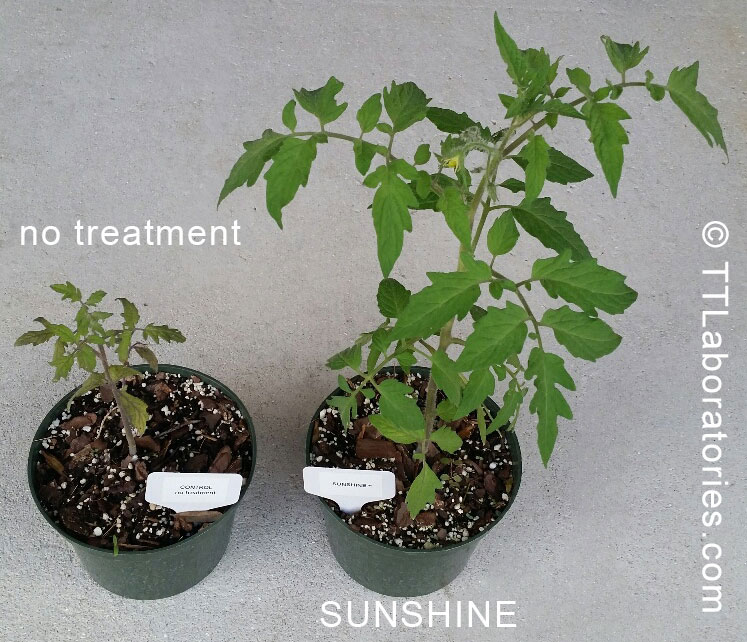
A: SUNSHINE boosters are not fertilizers, they are natural plant hormones, or biostimulants, as well as Myco-Mix which is a naturally occurring compound or microbes. Biostimulants are becoming increasingly attractive to folks interested in sustainable agriculture, and very popular for plant growth or pest resistance. A plant biostimulant is not a fertilizer because it provides no nutritional value to the plants. But, it can promote greater nutrient and water use efficiency, increase resistance to pests and diseases, reduce abiotic stresses, and in turn, lead to plant growth and health.

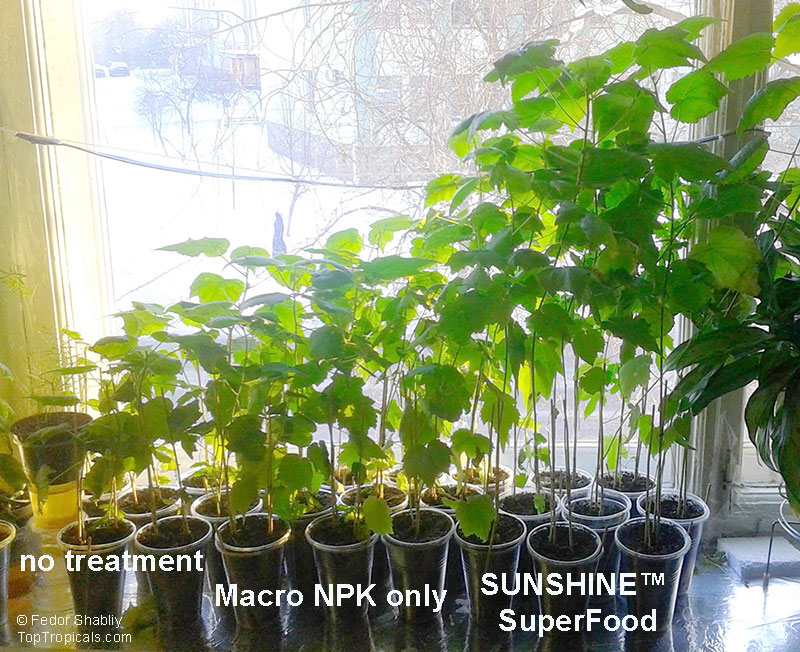
To answer your question, you can not replace regular fertilizers (NPK) and micro-elements with plant boosters and stimulants. However, fertilizers and microelements will work more efficiently when used in combination with biostimulants. Together they create a synergy, so plants use the most of fertilizer's potential, and will grow a lot better, faster, and healthier.

4 components for the best growing results

1. SUNSHINE boosters. They are a must during the juvenile stage of plant development - seedlings and cuttings. They are especially important for recovery of weak or stressed plants (boosting their immune system).
2. SuperFood microelements
3. NPK fertilizers. Select from water-soluble and smart-release types and make sure do not exceed the recommended concentration. Lower dose and more frequent use is always better for a plant.
4. Specialized soilless mixes: Myco-Mix (with biostimulant Mycorrhiza) for exclusive growing projects and special/unique plants, Professional potting mix for potted plants, and Propagation mix for seeds and cuttings.

TopTropicals.com

Date: 21 Jun 2019

The Flower of Gold

By Onika Amell, tropical plant specialist

Q: I am concentrating on adding more fragrance to my garden. I've had great success growing gardenias and I have many different varieties, but their flowers are all white, and I would like to add some colors to my garden too. Are there any gardenias available in different colors? I live in Waipio Acres, Hawaii.

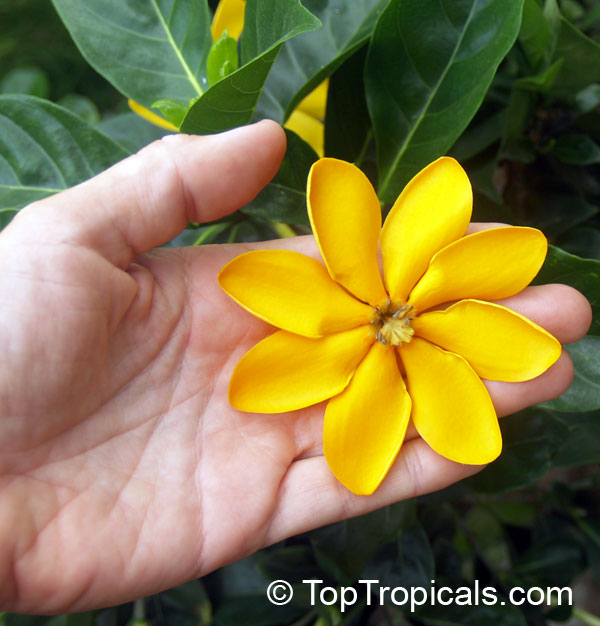
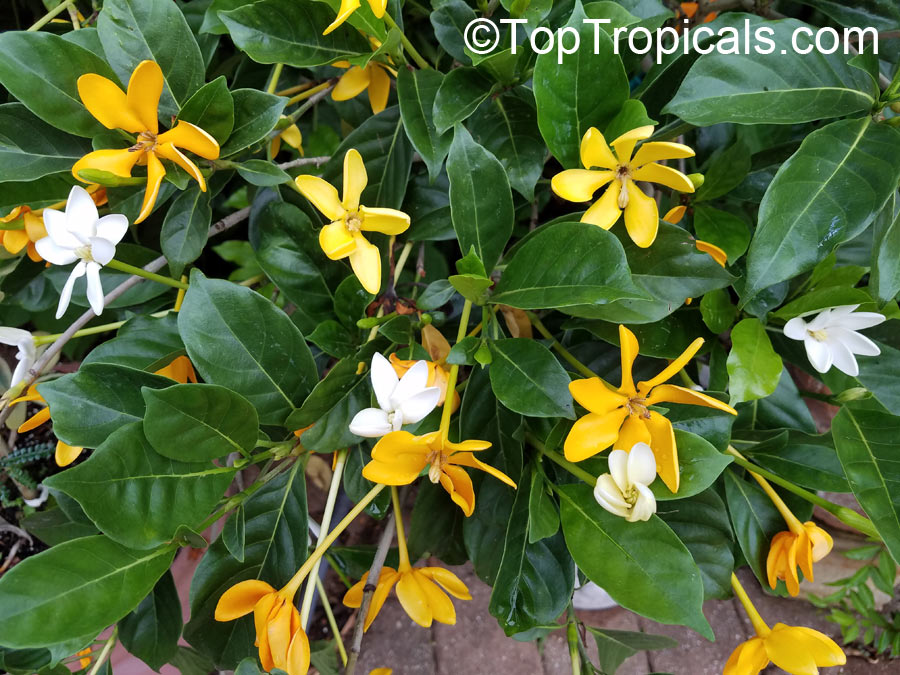
A: Meet the very rare and highly fragrant, tropical Gardenia tubifera Kula or Golden gardenia. Kula flowers change color as they mature, which is a unique feature! Kula flowers start out as cream, then change to yellow and finally to a beautiful gold. In addition to the spectacular flowers, this gardenia also has beautiful, leathery, deep green foliage.
This is a slow-growing and compact plant. Like all the other members in the Gardenia family, the Golden gardenia will do best in an acidic, well-drained, and fertile soil. It will appreciate a good deal of direct sunlight but will be very happy if provided with midday and afternoon shade. As with with gardenias, the more sunlight the more flowers.
It will eventually grow into a rounded shrub if left unpruned, but also can be trained into a small tree, maintainable to a height of under 7-8 feet. Blooms will appear from spring onward. Prune after flowering, this will encourage more flowers in a few months.
Gardeners living in colder areas, do not fret. Gardenias make perfect container plants and can be grown indoors in colder climates. Just be sure to provide high light when bringing them indoors.
The fragrance and changing colors of a Gardenia Kula is unforgettable. They are most fragrant near sunset and during early evening hours. Plant them near walks and patios where their lovely fragrance can be enjoyed.
This rare tropical Gardenia is sure to be a conversation piece in any garden. Great collector's plant!

Recommended fertilizers:
Pink N Good Daily Plant Food - Flower Booster
Tropical Allure - Smart-Release Booster

Limited time special offer:
Instant $5 OFF Golden Gardenia!

Date: 8 Jun 2019

Chosing a good avocado tree

TopTropicals.com

Q: I'm in coastal Broward County. I'm putting together an order on your web site, and one thing that I would like is an avocado tree. I'd like to have something as close to true "Hass" as possible. Which cultivar does well here in SE Florida, and is most like Hass in texture, creaminess, and flavor? I'm not a big fan of the yellow watery Florida avocados.

A: Mexican type of Avocado have dark skin and buttery texture, while Florida green fruit types (West Indian type, with smooth skin), have lots of delicious melting pulp, so it is a matter of preference.
In coastal Broward county you can grow a wide range of varieties since your climate is very mild, so you don't have select cold-hardy varieties like Winter Mexican, Brazos Belle or Joey, etc. Yet there are many interesting varieties that rare and much more exclusive than Hass, with the same, or even better, quality buttery fruit.

One of the most popular varieties - Brogdon, with red-purple colored pear-shaped fruit, very thin skin, and yellow buttery flesh. It is also very cold hardy.

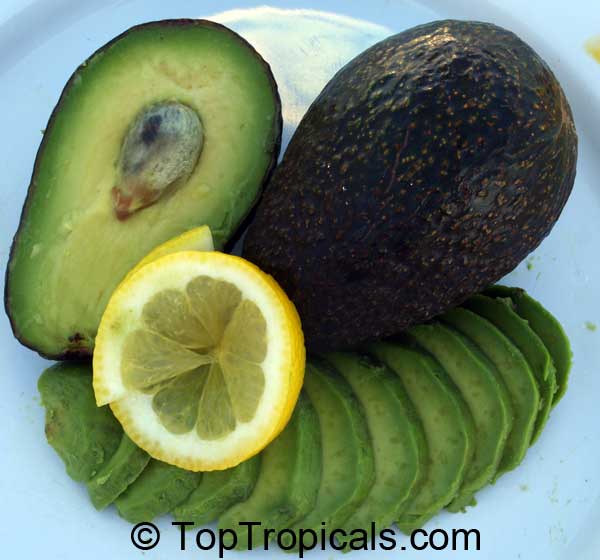
Very interesting exotic avocado is Kampong - Sushi Avocado - see photo above. The flavor of this fruit very nice, oily, creamy, nutty, reminds of almonds. At the same time, it has solid consistency and if you cut a square it remains a shape of the square. It is the best Sushi Avocado! It tastes great as an appetizer when cut in squares with some shrimp cocktail sauce.

Three collectible varieties:
Anise - leaves that smell like Anise, very rare, the fruit is of excellent quality, creamy and buttery.
Bacon - a large Mexican variety with dark-skinned medium-sized fruits, and a rich creamy flavor. It has exceptional fruit that ripen in late fall and into spring, they are easy to peel and have a light, subtle flavor. Another outstanding feature of the Bacon avocado tree is its angelic sweeping branches which helps keep the tree shorter and easier to pick its fruit.
Nishikawa is a very hot seller! Oval fruit somewhat resembles Hass, but larger, and has very high oil content.

See all Avocado trees from our store


Recommended fertilizers:
Fruit Festival Plant Food - Super Crop Booster
Mango-Food - Smart Release Fruit Tree Booster

Date: 4 Jun 2019

Pretty in Pink... and Purple Prince for her!

TopTropicals.com

By Onika Amell, tropical plant specialist

Q: I have a bare spot in my front garden, behind a low wall, in part-sun. I'm hoping to find an evergreen, flowering ground cover that will cover it quickly. Any ideas on finding something with the ability to eventually also cascade over that wall? I live on Marco Island, Florida.

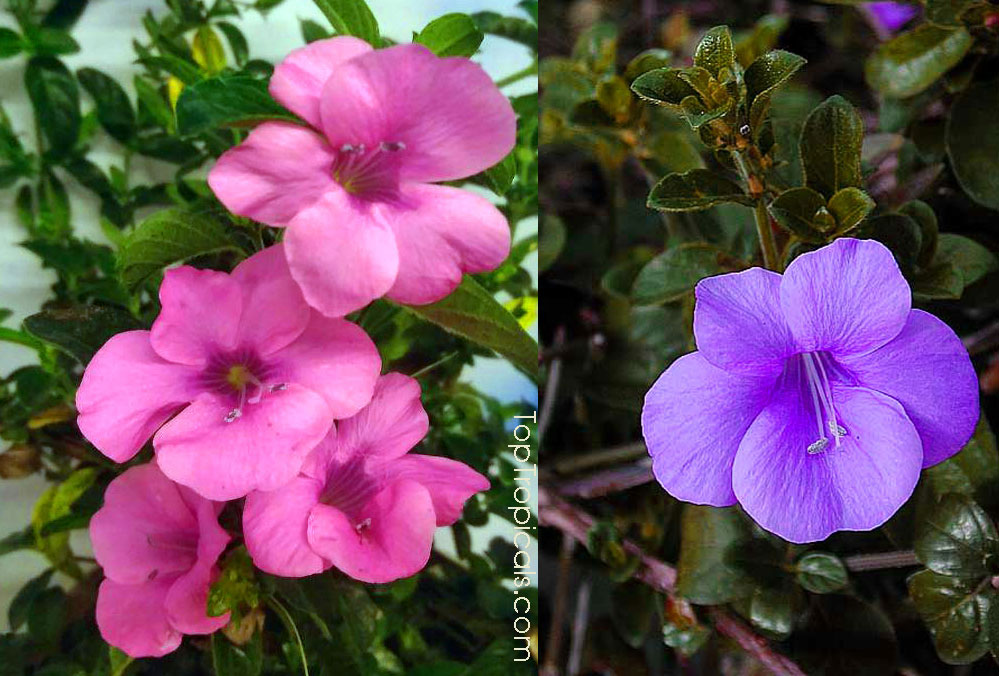
A: Barleria Repens - Small Bush Violet, is a tough, fast-growing evergreen that blooms from late spring to autumn. Of the many Barleria we see in the tropics, Pretty in Pink is one of the most striking! The name tells the whole story: pretty and pink. A lot of gardeners enjoy using them as a ground cover. They will quickly cover a large area - their stems root readily as the plant crawls along. They are easily propagated by lifting the rooted runners or using cuttings. They also reseed easily. Flowers are followed by seed pots that explode open when dry, dispersing 4 seeds at a time! But perhaps best liked by many gardeners, is their habit to cascade. It will be well suited for covering the bare area in your garden and spilling over that wall beautifully.
When used as a ground cover, remember to pinch out young shoots to encourage bushiness and prune the plant back hard after flowering to keep it neat.
Barleria repens will also adapt to different situations in a garden if you need them to. Although they usually form a rounded to spreading bushy shrub, 2 ft high by 3 ft wide, they will climb when you give them support. They are often allowed to lean into nearby trees and shrubs.
Hardy to 28F, Barleria repens is pest-free and fairly frost-tolerant. They love sun and part shade, as well as well-drained soil and plenty of organic material. Avoid planting it in deep shade as it will get leggy and reluctant to flower.
They will thrive when fed with a slow release fertilizer at intervals of 6-8 weeks, throughout the growing season.

There is another cultivar of this exact variety that has blue-purple flowers, it is called Purple Prince! It couples perfectly with Pretty in Pink! :)

See all Barlerias from our store


Recommended fertilizers:
Pink N Good Daily Plant Food Flower Booster
Tropical Allure Smart-Release Booster

Date: 14 May 2019

How to get gingers to bloom

TopTropicals.com

Q: I have several gingers in my yard, including Red Torch, Lobster Claw, and Red Bamboo Ginger, they grow beautifully but only produce large dark green leaves and no flowers. Is there anything I can do to make them bloom? Do they need any special fertilizer?

A: Gingers are easy to grow tropical plants with so many benefits, giving us unique spice, and showy flowers (including long-lasting cut flowers!) - where other plants fail, especially in deep shade. They are not fussy about soils and even water once established. To keep your gingers happy, follow these simple steps:

1. Bright light is essential for flowering, but planting gingers in semi-shade or filtered light will keep them stress-free from burning summer rays.
2. Water gingers regularly until they established and start producing new leaves and stems. Once they start clumping, you may reduce watering to a minimum 9once a week or so), or rely on your sprinkler system.
3. Once the plant is established, start using fertilizer to induce flowering and healthy growth.
- We recommend granulated "smart release" fertilizer for all tropical plants. For gingers, the best formula is Tropical Allure. It provides all macro- and microelements essential for the healthy growth of the plant.
- Apply balanced water-soluble plant food for Gingers, Heliconias and Bananas - Broad Leaf Plus - once a month.
- Additionally, you may also add to the menu flower booster Pink N Good Daly Plant Food - this fertilizer is used in very low concentration and can be used with every watering.
4. Remove old dry and yellowing leaves with sharp cutters to avoid pest problems and keep good air circulation around these clumping plants.
5. Keep soil covered with 1" mulch to protect from weeds and maintain the optimal amount of moisture for the rhizomes.

Check out our specialized fertilizers for different plants - for all your gardening needs!

TopTropicals.com