Garden Blog - Top Tropicals

Date: 24 Jun 2018

TopTropicals

URBAN TROPICAL GARDENING:
10 secrets of successful Container Mango growing on a balcony.

Q: I live in Miami in apartment on a second floor, and I have a balcony with SE exposure. I wonder if I can grow a mango tree in a pot? Will it fruit for me? I recently moved to South Florida and I don't know much about tropical plants; but I tasted real fiberless mangos from someone's garden - it was so delicious and different from those in the grocery store. I wonder if I can have a fruiting tree on my balcony? And if yes, how do I plant and take care of it?

A: Yes, you can! Here is what you need to do:
1) Temperature. You are lucky to live in Tropics, keep it on a balcony year round.
2) Light. Position the pot in a spot with the most sun exposure. Mango trees can take filtered light too, but the less sun, the less fruit you will get.
3) Soil and Container. Use only well drained potting mix. Step up the purchased plant into next size container (3 gal into 7 gal, 7 gal into 15 gal). When transplanting, make sure to keep growth point (where roots meet the trunk) just at the top of the soil. Covering base of the trunk with soil may kill the plant.
4) Water. Water daily during hot season, but only if top of soil gets dry. If it still moist, skip that day. Mangoes (unlike Avocados!) prefer to stay on a dry side.
5) Fertilizer. Use balanced fertilizer once a month, 1 tsp per 1 gal of soil. Do not fertilize during fruiting - this may cause fruit cracks.
6) Microelements. Apply SUNSHINE-Superfood once a month. This will help your mango healthy, vigorous, and resistant to diseases. Use SUNSHINE-Honey to make your fruit sweeter.
7) Insect control. Watch for scales and mealybugs, clean with solution of soapy water + vegetable oil (may need to repeat 2-3 times with 10 days interval), or with systemic insecticide like imidacloprid only as needed (if non-harsh treatment didn't help). Most Flea shampoo for dogs contain that chemical, you may try that shampoo solution.
8) Trimming. Once potted, do not remove leaves that are discolored or have spots until new growth appears. Dark dots on mango leaves, especially in humid climate like Florida, may be signs of fungus. Treat with fungicide according to label, and remove only badly damaged leaves. Trim crown as needed after flowering and fruiting (by Fall). Train into a small tree, and you may remove some lower branches eventually.
9) Flower and fruit. Mangoes are winter bloomers with bunches of tiny flowers coming in thousands. Many of them set fruit (if pollinating insects present). Keep in mind that young trees can only bare a few fruit. Normally a tree will drop excessive fruit and keep only a few that it can manage. To save the young tree some energy, remove fruit if too many and leave only 2-3 for the first year. It will pay you next year with more abundant crop.
10) Variety. Last but not least: Choose the right variety for container culture! Pick from "condo" dwarf varieties such as Icecream, Nam Doc Mai, Carrie, Cogshall, Julie, Fairchild, Pickering, Graham, Mallika, and a few others - check out Mango Chart pdf and full list of our Mango varieties.
Date: 8 Apr 2019

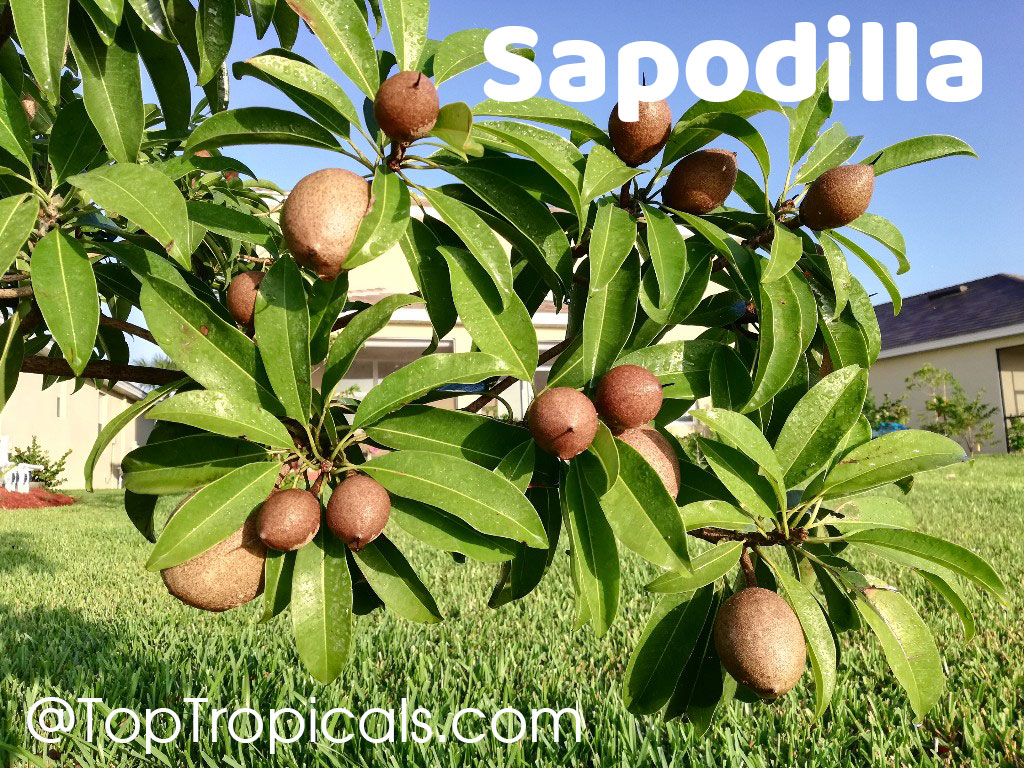
Growing sapodilla in container and indoors

TopTropicals.com

Q: I live in northwestern Washington state. I was wondering if I can grow a Sapodilla tree indoors in a container? Are they self-fertile, and which variety do you think would do best in a large container?

A: A: All Sapodillas are self-fertile. They can be successfully grown in pots due to their slow growth rate and compact nature. The most important requirement for successful growing and fruiting is a bright light, other than that it is a very undemanding plant and is not fussy about watering. The best variety for potting culture is Silas Woods which is a dwarf kind. This variety is the most profuse producer, flowering and fruiting nearly year round providing bright light and warmth. Although the fruit are smaller than other varieties and average 3-4" size.
Sapodillas require regular fertilizer applications for good production. We recommend Fruit Festival slow release fertilizer for the best results.

Date: 5 Apr 2016

Jungle on Windowsill 101

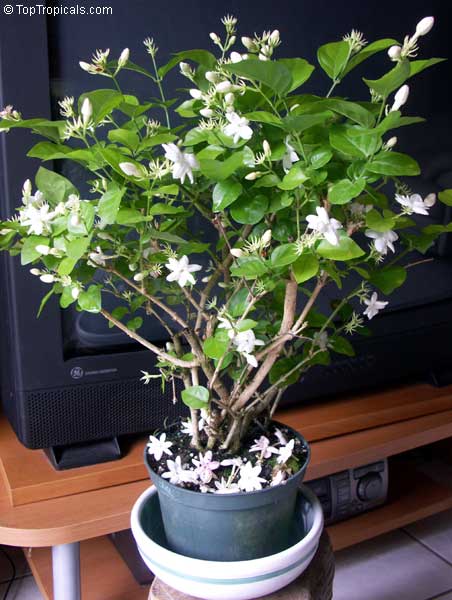
Q: I got a Jasmine Sambac and a Tahitian gardenia as presents, they are very cute plants with flowers and flower buds. I would like to be able to keep them alive and hopefully happy for a long time, but I don't know much about growing tropical plants, and I am not sure if my thumb is green enough to make everything right. What do they need? How much sun? How much water? What kind of soil? Sorry for all these (maybe silly) questions, but I want to keep them alive, please help! I live in Wisconsin and we had some snow again last week.

A: Growing tropicals is not a hard work, it is a lot of fun! These plants are actually a good starters for a beginner who wants to try growing tropical plants, no matter if you live in a mild frost-free climate, or up North where you can have these beauties as houseplants. Below are a few simple steps for you:

1. Read. Follow planting instructions included with your plants. Check plant names on the tags and learn more about them from our online catalog.

2. Soil. Plant in quality potting mix - it must be porous and well-drained, never use heavy soils (top soil or garden soil are no-no), in a pot exactly the size of the root system. You can step up your plants in the next size container once you notice vigorous new growth. Next size means: 4" pot can go into 6" pot, 6" pot into 10" pot, etc. Too big of a pot may create rotting environment, root system must fill the entire container to use all the moisture from the soil. Container must have good hole(s) for excess water to drain through. Put the pot in a saucer and get rid of excess water every time after watering.

3. Light. Most tropical plants require lots of light in order to produce flowers. If you ever visited Florida, remember the bright sun? - these are ideal light conditions for tropicals. Up North, provide as much light as possible: a bright spot on a windowsill of Southern or Western exposure would work the best. If the sun gets too hot in summer afternoon, you may shade the window a little bit with a sheet of white paper to avoid leaf burn.

4. Water. Keep soil slightly moist but not soggy. The best way is to wait until the top of the soil feels dry to touch - this is time to water again. Jasmines prefer to stay on a dry side; gardenias do not like soil to dry out - keep them slightly moist as long as soil is very porous and well-drained. The main reason of most problems with potted indoor plants is over watering. With experience, you will feel the right balance of moisture in the soil: the brighter the light, the more water is consumed by a plant; the less light, the less frequent you should water.

5. Trimming. In low light conditions, plants tend to become leggy. Trim branches as they become too long: the more you trim, the busier the plant gets. New growth promotes more profuse blooming in many species.

6. Fertilizing. Fertilize indoor plants with slow-release granulated fertilizer from march to November.

7. Insects. Check for insects at least once a month, especially underneath the leaf. If notice any problems (deformed leaves, residue, holes, or tiny insects) - clean the leaves/stems with a solution of warm water (1 cup), vegetable oil (2 table spoons), and a few drops of a dish soap.

8. Fresh air and air humidity. As soon as air temperature gets above 65F, bring your tropicals outside in the sun and fresh air: porch, balcony, outside in the yard. Air circulation is essential for your plant health. Bright light and high air humidity will promote vigorous growth, and lots of flowers for you to enjoy!

For more information on growing Tropical Plants 101, see Problem solving with potted plants - how can we help them?.

Date: 21 Jun 2019

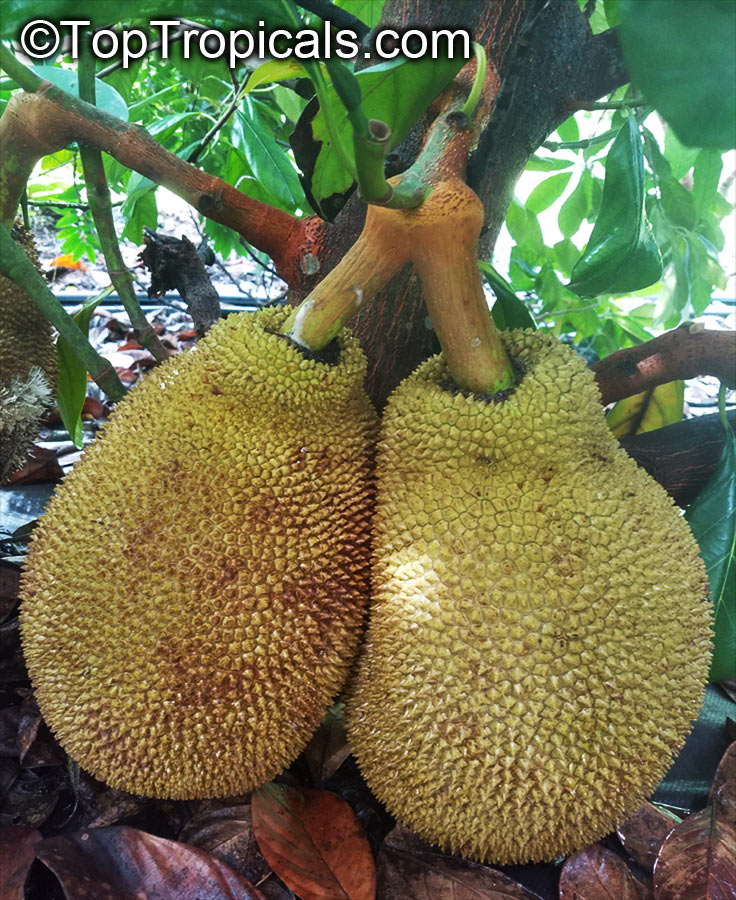
Growing Jackfruit in a pot

Q: I have a young jackfruit tree, and I wanted to know, is a 25 pot enough for an adult tree?

A: 25 to 50 gal should be eventually a good size pot for growing a Jackfruit tree. Keep in mind the following:
1. Start with a smaller container, only slightly bigger than the root system. Do not plant directly into a large container, this may create a risk for root rot.
2. Step up the tree in a bigger container every year as it grows bigger. With every repotting, trim both branches and roots to compact the plant and to encourage branching out.
3. Jackfruit trees should be kept pruned under 6-7 ft in pots and 10-12 ft in the ground. This makes healthy fruit production more efficient and keeps fruit at the base of the tree.

Date: 23 Nov 2018

Featured Plant. Dillenia philippinensis - Katmon, Philippines Elephant Apple

TopTropicals.com

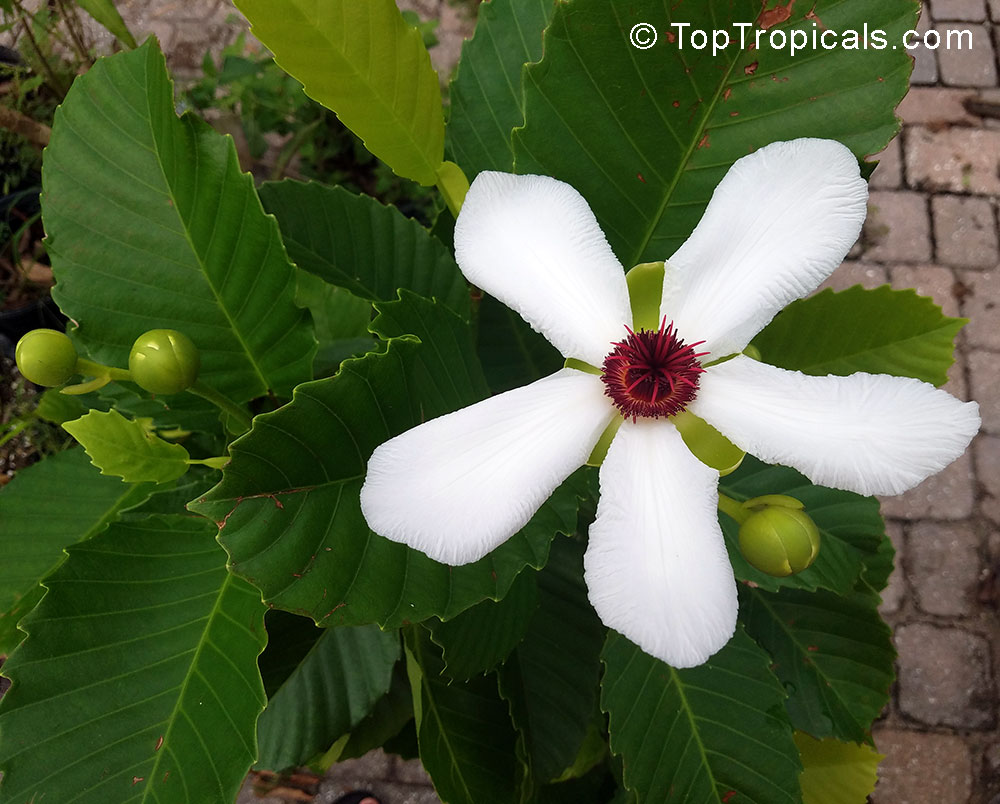
Dillenia philippinensis - Katmon, Philippines Elephant Apple

Philippines Elephant Apple has spectacular blooms and amazing large leaves that are toothed and unusually shaped. This super-tropical looking beauty is a favorite tree among Filipino garden enthusiasts. It is endemic to the Philippines. The tree is buttress-forming, evergreen, and shade tolerant, it is a great container and house plant. The leaves are large, 1-2 ft long, leathery, shining, and coarsely toothed at the margins. Its flowers are white, large, showy, and also very large, up to 1 ft wide, with showy reddish pistils and stamens. The edible fruits are rounded, 2-3" in diameter, with medicinal value. Flowers last only one day, but the plant stays in bloom all summer through fall, with multiple flowers and buds that keep opening every day. The plant is perfect for container and indoor culture, with showy tropical leaves, beautiful flowers, shade tolerance, and compact growth.

Check out this plant...