Garden Blog - Top Tropicals

Date: 24 May 2019

Synergy of SUNSHINE, biostimulants, and macro-micro
TopTropicals.com

Q: I've heard that plants grow better and bigger with SUNSHINE boosters and when using Myco-Mix instead of regular soil mix. Do they work like fertilizers? If I use a Myco-mix, do I still need a fertilizer?

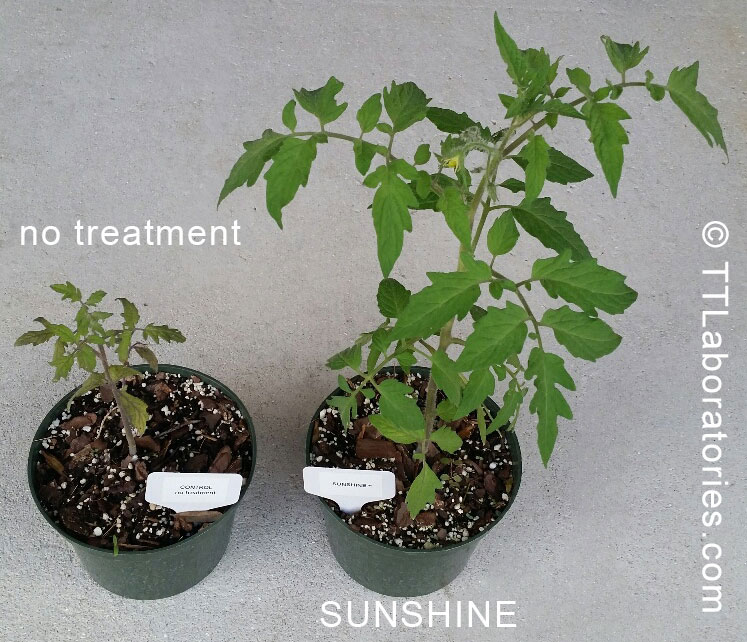
A: SUNSHINE boosters are not fertilizers, they are natural plant hormones, or biostimulants, as well as Myco-Mix which is a naturally occurring compound or microbes. Biostimulants are becoming increasingly attractive to folks interested in sustainable agriculture, and very popular for plant growth or pest resistance. A plant biostimulant is not a fertilizer because it provides no nutritional value to the plants. But, it can promote greater nutrient and water use efficiency, increase resistance to pests and diseases, reduce abiotic stresses, and in turn, lead to plant growth and health.

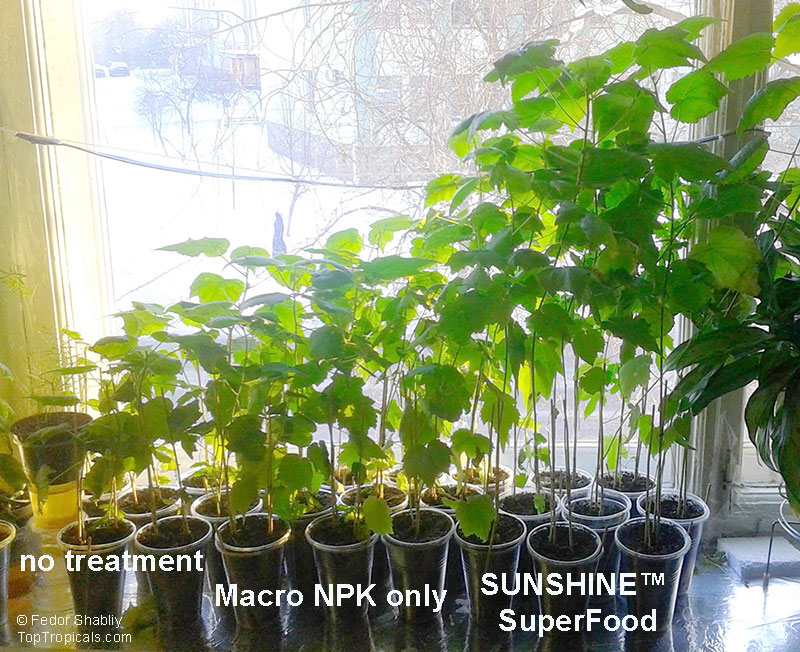
To answer your question, you can not replace regular fertilizers (NPK) and micro-elements with plant boosters and stimulants. However, fertilizers and microelements will work more efficiently when used in combination with biostimulants. Together they create a synergy, so plants use the most of fertilizer's potential, and will grow a lot better, faster, and healthier.

4 components for the best growing results

1. SUNSHINE boosters. They are a must during the juvenile stage of plant development - seedlings and cuttings. They are especially important for recovery of weak or stressed plants (boosting their immune system).
2. SuperFood microelements
3. NPK fertilizers. Select from water-soluble and smart-release types and make sure do not exceed the recommended concentration. Lower dose and more frequent use is always better for a plant.
4. Specialized soilless mixes: Myco-Mix (with biostimulant Mycorrhiza) for exclusive growing projects and special/unique plants, Professional potting mix for potted plants, and Propagation mix for seeds and cuttings.

TopTropicals.com

Date: 21 May 2019

Colors of Cannas

TopTropicals.com

By Onika Amell, tropical flower specialist

Q: I'm a beginner gardener and looking for something easy to grow that will add a lot of color to my garden fast.

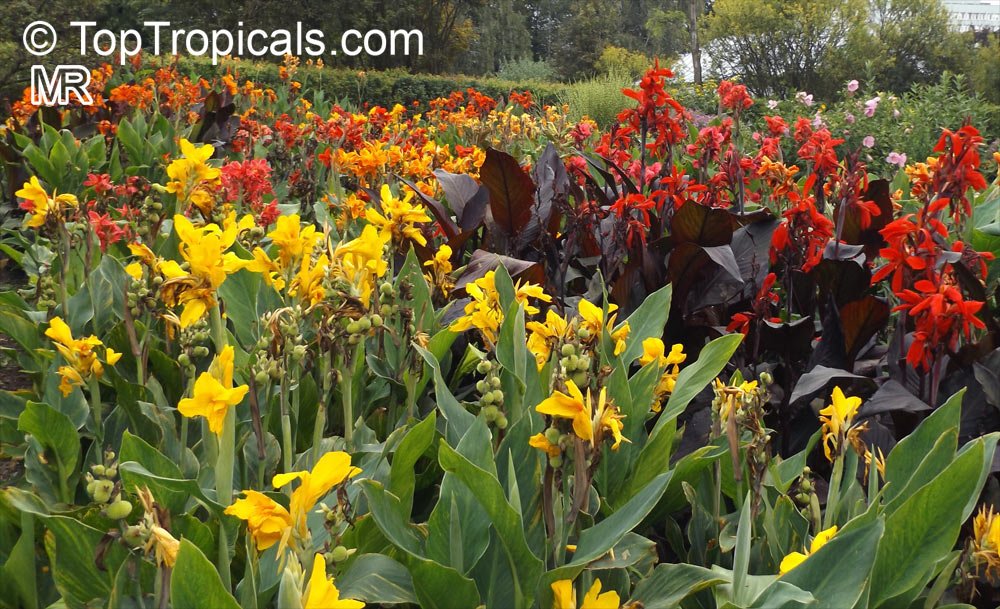
A: Try growing Canna lilies. They are a favorite of many gardeners as they are so easy to grow and always provide a reliable, beautiful show of flowers. In fact, Cannas are one of those plants that are spectacular even if they never bloomed. The leaves are tropical-looking, banana-like and huge! They range in a wide variety of shades and colors, always accentuating the large showy flowers on top.
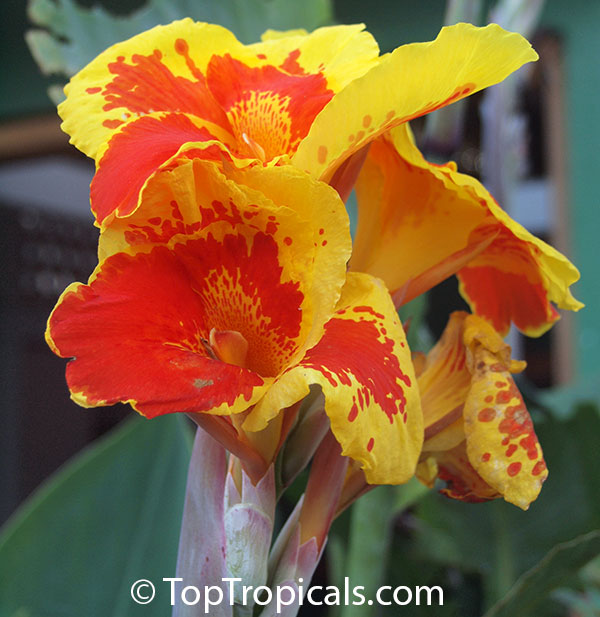
One of our favorite cannas right now is Canna Cleopatra - very striking and most unique. Large yellow flowers speckled with red spots, or red flowers and even flowers with a little bit of both. Foliage is exotic and very beautiful, often dark green, dark chocolate or a combination of both. This is a canna that will definitely illuminate your garden!

Caring for Cannas

Cannas like a lot of water, full sun and high heat. They are also heavy feeders and prefer soils that are well drained, organically rich and moist. The leaves will quickly tell you when the plant is hungry. Feed your cannas weekly with a water-soluble 20-20-20 fertilizer Broad Leaf Plus, and they will quickly respond with beautiful, lush growth. Deadhead often to encourage continued flowering. Cannas are winter hardy in US hardiness zones 7 and warmer. If you live in colder areas, the rhizomes need to be lifted in the fall, and stored indoors in a dark, warm spot until spring arrives. Be sure to divide clumps every three or four years. Give them lots of room as they grow into large plants, forming spreading colonies up to 7 feet high and 4 feet wide. Show them off in mass plantings, in large containers or in mixed flower borders. Lure in hummingbirds with these beauties!

TopTropicals.com

Date: 21 May 2019

Perfecting a Mango Tree

TopTropicals.com

Q: I recently purchased a Mangifera indica - Coconut Cream Mango from you and would like to know if it is possible to keep this in a large pot rather than putting it in the ground. If so, I have a few questions:
1. How large would you expect this variety to get?
2. What are the ideal growing conditions? Full sun, partial sun, etc...?
3. What is the ideal soil?
4. Any specific watering directions for ideal growth?

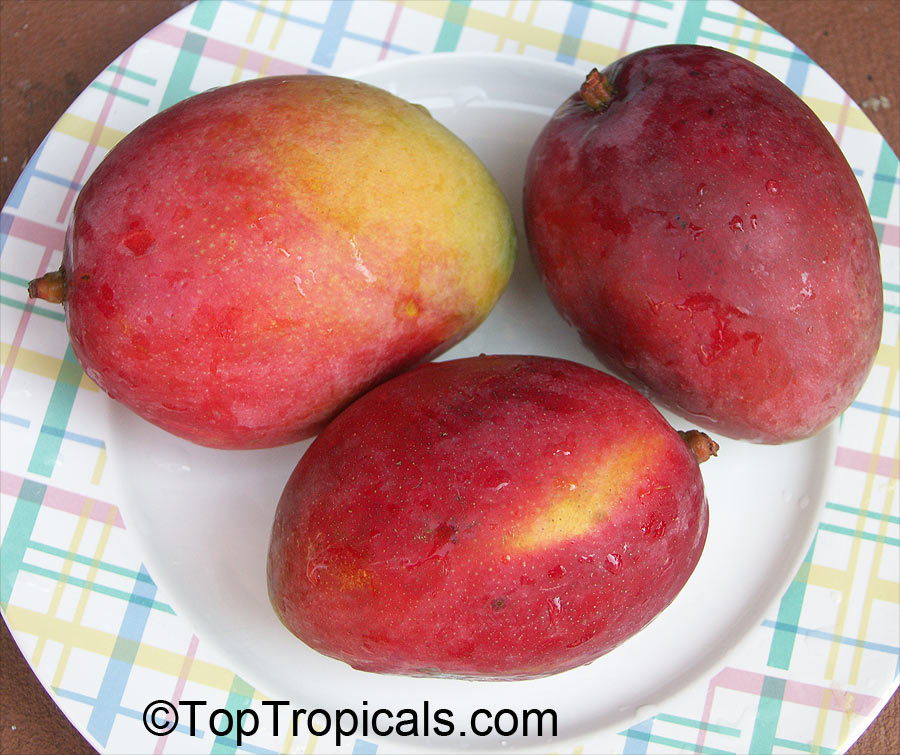
A: Coconut Cream mango tree has a moderate growth. We've planted one in our garden 4 years ago and it is still under 10 ft tall. This variety should be well suitable for container culture.
1. Keep the branches trimmed after fruiting is over. Mango trees can be grown in 15 to 25 gal containers and can be trimmed under 7-8 ft high.
2. All mango trees need full sun, the more sun the better.
3. Mango needs very well draining soil, ideally with lots of bark and perlite. We recommend our professional soilless mix or a similar formula.
4. Mango trees hate wet feet, and prefer to stay on a dry side: make sure soil in a pot doesn't stay wet; allow it to dry a little between the waterings.
Remember to apply Mango Food fertilizer during warm season for vigorous growth and heavy crop!

Date: 17 May 2019

Persimmons - seedlings or grafted?

TopTropicals.com

Q: Do all persimmons take roughly 6 years to fruit if grown from seed?

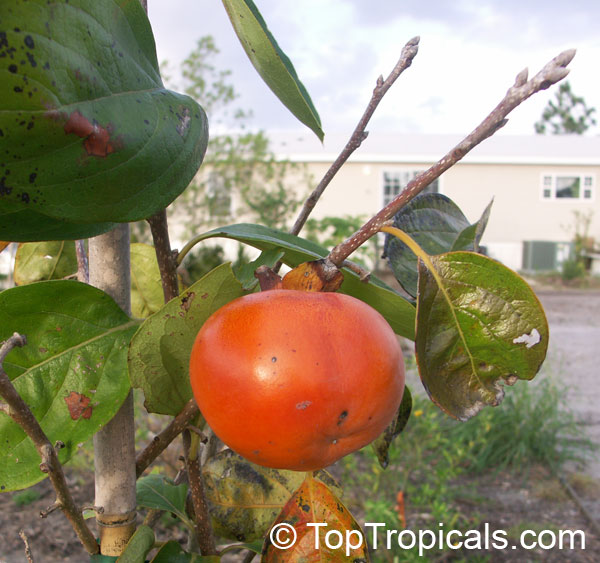
A: Persimmons, like most of the cultivated fruit trees, are recommended to be grafted to ensure a certain variety, although they may also come true to seed. And unfortunately, you are right - it will take a few years (depending on growing conditions) until the seedling will start fruiting. So your best bet to get a quality fruit right away is to obtain a grafted plant. You may check out persimmons (tropical and subtropical) that we carry in stock. If you are interested in any of the varieties that are currently sold out, just add your email to wishlist by clicking on link Notify me when available and you will be notified as soon as we have it back in stock.

Date: 17 May 2019

Grafted Guanabana - what is the trick?

TopTropicals.com

Q:Should I buy grafted Guanabana or a seedling? It is a big price difference. I have heard that Annonas fruit within 3 years from seed, why do I need a grafted tree?

A: Annona muricata - Guanabana, or Soursop - is known as the best tasting Annona fruit. Many fruit lovers and gardeners want to have this tree in their plant collection, and the first question they always ask is: "How soon will it fruit? I can't wait to enjoy its deliciousness!"
Most Annonas start flowering and fruiting at a young age, 3-4 years from seed. Annona muricata seedling takes longer. You may read more information on how to grow Guanabanas from seed, even in a pot, even indoors - in Tropical Treasures Magazine issue # 7. Although it may take up to 15 years to see the fruit...
Now we have a solution to get this fruit sooner - a grafted tree! It will fruit within a year after planting. The secret of grafting Guanabana was almost lost (it's a tricky one to graft) and grafted plants were nearly impossible to find. Now we have them! Quantities are limited.
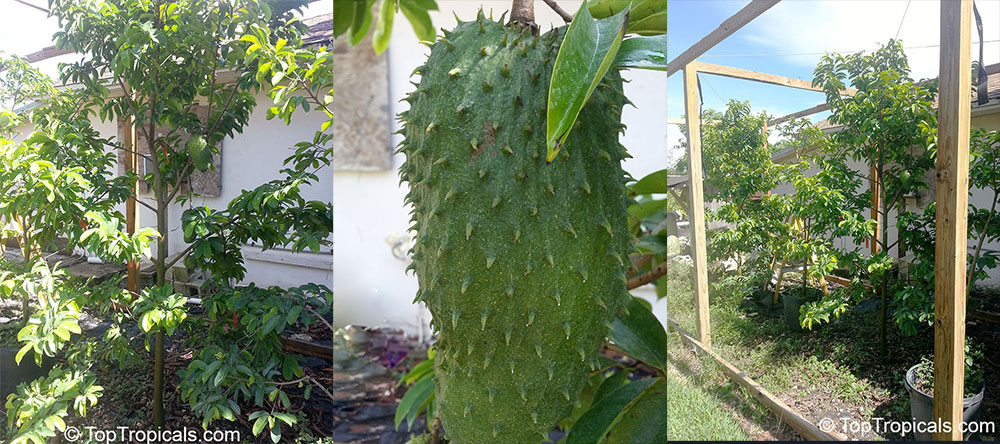
Keep in mind that Guanabana is very cold sensitive and won't tolerate even light freeze. However it is still relatively easy to grow even in subtropical areas: the tree is small, and if tree grown in ground, a simple cold protection structure can be built around it using basic wood or pipes (metal or PVC) and covered with plastic for a few weeks of cold weather. Grafted Guanabana is also a perfect choice for container culture (hand-pollinating maybe required).

Photo: This grafted tree was planted less than a year ago, and was covered in winter with cold protection for about 8 weeks. Within a year, it has 4 large fruit on it!