Garden Blog - Top Tropicals

Date: 20 Oct 2018

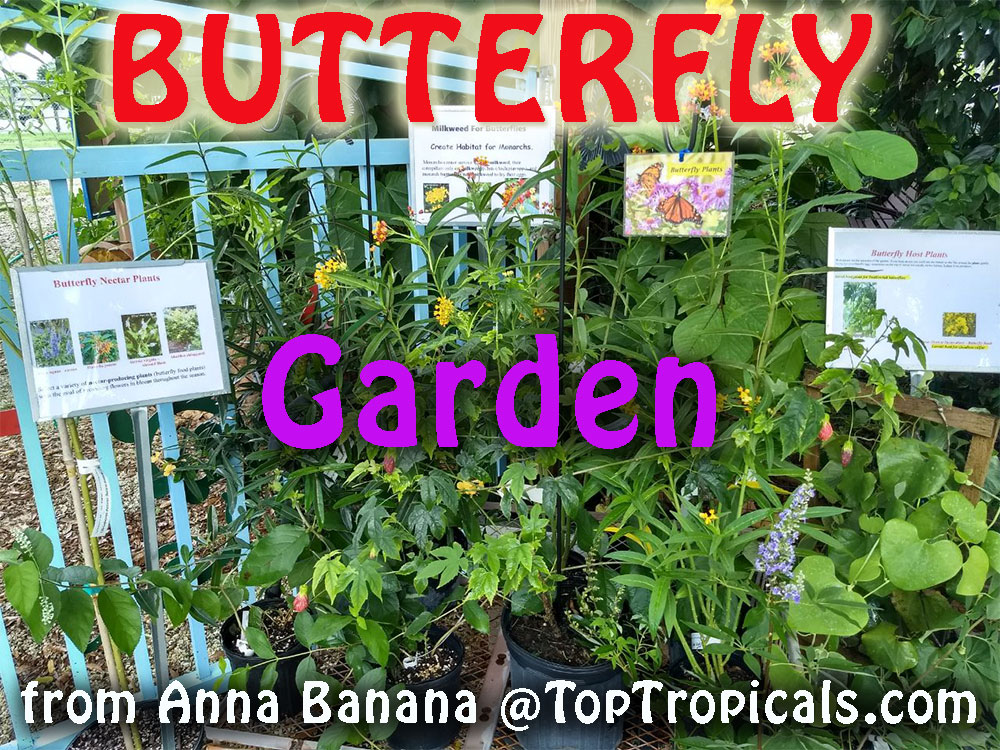
Butterfly Garden from Anna Banana
TopTropicals.com

Butterfly facts

1. There are approximately 20,000 different species of butterflies, the largest of which is the Queen Alexandra Birdwing with a wingspan of 11 inches.
2. Female butterflies can lay over 1000 eggs during their short lifetime.
3. Butterflies lay their eggs on host plants which usually hatch within a few days, then turning into caterpillars. The caterpillar will then eat until it sheds it's skin several times, called instars, finally emerging from the chrysalis as a beautiful butterfly.
4. Butterflies are born to breed, their goal being to mate and begin the cycle again. Most live only a few days except the Monarch which can live up to six months.
5. Monarch butterflies migrate to Mexico every fall and remain there until spring when they make the return migration.
6. Due to the continuing destruction of the rain forests, where the largest population of butterflies are found, their numbers are dwindling. We encourage you to plant a butterfly garden!!

Remember:

- A sunny, less windy location is best, however, Zebras love to float in the shade of bushes and trees.
- The more host and nectar plants you have, the more butterflies will be attracted to your garden.
- Butterflies "puddle". They like a wet sandy area where they congregate and sip minerals and nutrients from the wet sand and water.
- Rocks to rest and enjoy their beautiful garden, and don't forget a bench or hammock for yourself.

FREE butterfly garden guide from Anna Banana

For our local Florida customers, it is a perfect time now to start a garden with plants for butterflies that will appear first thing in Spring. Establish these plants now for the Spring blooms that will attract the Beauty into your garden!
Stop by our Garden Center to check out our Butterfly Plants display, or simply call Anna Banana for a free consultation on Butterfly Garden at 239-771-8081.

Hurry up while butterfly plants are on 4-day sale!

TopTropicals.com

Date: 28 Jul 2016

Musings of a butterfly gardener about the milkweed bug

By Kevin Piotrowicz, FL. This spring I was excited! My milkweed was blooming and going to seed. I have 3 healthy clumps of it, each one with seed pods. I counted the seed pods at one time... 22... I had 22 seed pods on 3 plants! Could it be possible? Could I finally have reached the point that I had a sustainable amount of milkweed growing that  would not be decimated by monarch caterpillars?

I was telling my friends, "My milkweed is growing great! I may be able to support a population of monarchs!" There were even a couple of them flying around the yard, landing on the milkweed, and frolicking amount the wax myrtle.

With great joy I watched 3 monarch caterpillars munch on my milkweed. The small plant colony even survived as the caterpillars pupated. Not only survived, it expanded! More shoots came out from the bases of the plants! More flowers! More seed pods! All was right with my garden. The zebra longwings and gulf fritillaries had new friends to play with... But what's this??? ... Continue reading...

Click here to see for full list of butterfly attractors currently available for sale, with 15% OFF! See also Complete Alphabetical list of plants that attract butterflies and hummingbirds (very long list).

Date: 25 Sep 2016

Libra Zodiac lucky plants

Libra - 9/23-10/22. Libra is an AIR sign, and is ruled by the planet Venus. Because Venus is the planet of beauty and love, Libra's plants often have light, lovely flowers and gorgeous scents.
Libra has been related to the endocrine system, the kidneys, and the bladder. Venus (which also rules Taurus) is responsible for the harmony between the various body systems, as well as the abdomen, kidneys and urinary tract, and thyroid. Libra's plants help to bring balance to these areas of the body. Libra's romantic nature appreciates a spice that cultivates love and sensuality. Cardamom is a spice known for its gently warming nature, so add a sprinkle when you want to heat things up slowly.

Libra Zodiac lucky plants: Jasmine, Gardenia, Euclinia, Pua Keni Keni, Randia, Beaumontia, Faradaya, Butterfly Ginger, Kopsia, Hydrangea, Montanoa, Aglaia, Dwarf Ylang-Ylang, Desmos, Clematis, Almond Bush, Brunfelsia, Four oclock plant, Juniper, Moonflower, Carissa, White Chocolate Jasmine, Night blooming jasmine, Fiddlewood, Honeysuckle, Orchid, Clerodendrums, Millingtonia, Parijat, Fried Egg Tree, Oxyceros, Phaleria, Tuberose, Cubanola, Portlandia, Rothmannia, Allamanda, Nasturtium, Rose, Camellia, Ephedra, Fuchsia, Ylang-Ylang, Magnolia, Stemmadenia, White Plumeria, Appleblossom, Needle Flower Tree, Tree Jasmine, Guaiacum, Epiphyllum, Amazon Lily, India Hawthorn, Stephanotis, Talauma, Pakalana vine, Wrightia, White flowers, Cypress, Lucky Bamboo, Dracaena, Bakul, Apple, Pear, Fig, Raspberry, Olive, Pomegranate, Apricot, Peach, Plum, Loquat, Grape, Blackberry, Mango, Cherries, Chrysobalanus icaco, Berries, Neem tree, Asparagus, Spices, Mint, Catnip, Bergamot, Thyme, Cardamom.

For other signs information, see full Plant Horoscope.

15% OFF ON ALL FRAGRANT PLANTS! 3 day sale.

Date: 20 Oct 2018

Featured Plant. Bilimbi, Cucumber tree, Tree Sorrel

TopTropicals.com

Bilimbi, Cucumber tree, Tree Sorrel

Ethnic names are: Kamias, Belimbing Asam, Belimbing Buloh, Bimbiri. This rare exotic fruit is very popular in Thailand, Malaya and Singapore. In India, where it is usually found in gardens, the bilimbi has gone wild in the warmest regions of the country. Outside native habitat, Bilimbi is hard to find plant, very few growers produce them, although it is not so hard in cultivation.
The bilimbi is closely allied to the carambola but quite different in appearance, manner of fruiting, flavor and uses. The only strictly English names are "cucumber tree" and "tree sorrel". "Bilimbi" is the common name in India and has become widely used. Many people are more familiar with the close ralative - Averrhoa carambola - Star Fruit, which foliage looks very similar to bilimbi. The bilimbi leaves and taste of fruit are quite similar to those of the Phyllanthus acidus - Otaheite Gooseberry), although these plants are not related. Continue reading...

Check out this plant...

Date: 18 Jan 2017

10 plants that can make you happy.
3D garden ideas.

3D garden ideas.
Q:
Can you make my yard bigger and prevent it from freezing?

A: Yes, we can make your backyard bigger by adding a 3rd dimension - trees as a upper level, shrubs as a second level, vines in between, low growing perennials below them. Add ground covers and potted plants as separate specimens in between in-ground planted trees and shrubs. One more separate dimension is orchids and other epiphytes that happily grow on the trees. This multi-level structure will allow you not only collect so many plants, but also maintain them in a natural environment, similar to how they grow in a wild.

As far as preventing from freezing - it depends. You can use greenhouse, cover plants, create microclimate under large canopies, etc. Some tropical plants are tolerant to light frost, once established. If it gets below freezing in your area for more than a few hours, and especially if you have numerous nights with frost throughout winter, we recommend to keep plants in pots (BTW, this way you save space and can collect even more!). Pots can be moved to protected area during cold nights. The more established the tree, the more chances to survive colder temperatures. You may also use propane heaters during cold nights.
We also use plant booster SUNSHINE boosters to increase plants cold tolerance.
Cold protection is a lengthy subject. Here is some more information on cold protection. Also, we recommend to check out our magazine Tropical Treasures (about pushing the limits of tropical gardening) for a detailed article on cold protection.
These are specific articles on Zone-Pushing in different issue #s regarding dealing with cold. See downloadable issues:
(#1) Growing Tropicals in Nontropical Climate, Three Freezing Nights in Southwest Florida
(#2) Temperature drops - an alert or a rehearsal?
(#5) Dealing with cold snaps, Cold hardy beauties
(#7) When winter is around the corner, Growing exotic Cordyline in colder climate
(#8) When the weather outside is frightful
(#9) Winter champions
(#11) Ready-for-winter checklist for in-ground plants
(#13) Winter checklist
(#18) Dealing with cold damaged plants
You may also order hard copies.
If temperatures drop below freezing in your area, remember to add Heat Pack to your order!


10 plants that will make you happy.

Everyone wants to be happy. Did you know that growing plants is not only fun but can also make you happy? In our new series we will introduce to you 10 plants for your tropical collection that will make you happy.
Visit our Facebook, YouTube Channel and stay happy!

Check out this video: 10 plants that will make you happy. Plant # 1 - Rose Apple.

Stay updated with TopTropicals Videos by subscribing to our channel at YouTube.com/TopTropicals and get our latest video news of what's fruiting and blooming!