Garden Blog - Top Tropicals

Date: 7 Oct 2018

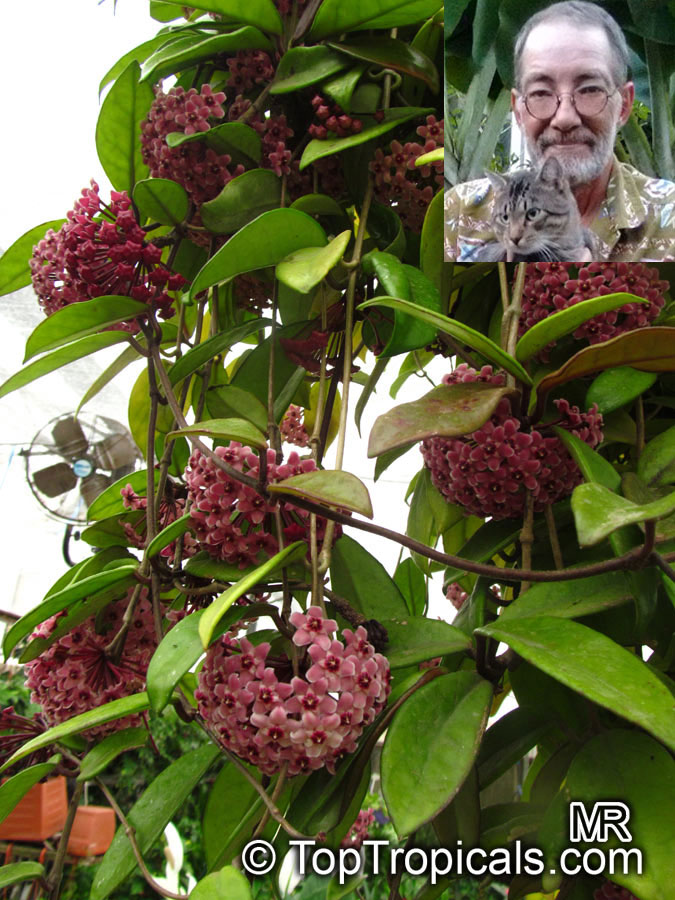
Multi-flowering Hoyas:
from Mark, the Garden Whiz
TopTropicals.com

Q: A few months ago, i was given a Hoya vine. At the time, I was told to not cut-off the flowers but was never told why. However now that it IS flowering, they are so wonderful I would like to. Is there really a reason to not clip them off?

A: Actually, that was very good advise. Unlike most plants we encounter, hoyas develop perennial flower spikes. This means that each spike flowers more than just once! In other words, after the flowers on such a spike have gotten old and fall off, the knobby ended spike remains. Then, after a period of time, that same spike will develop another ring of flower buds. Depending on what kind of hoya it is, these perennial flower spikes may continue to periodically make more flowers for several years! And while the plant will continue to make more of these perennial spikes its whole life, the flowering display becomes better all the time as more and more spikes grow. (By the way, these are technically called "flowering spurs"). So every time a spur might be cut for ornamental purposes, it'll be one less place the vine can flower from in future years.

See our selection of Hoyas...

Date: 1 Oct 2018

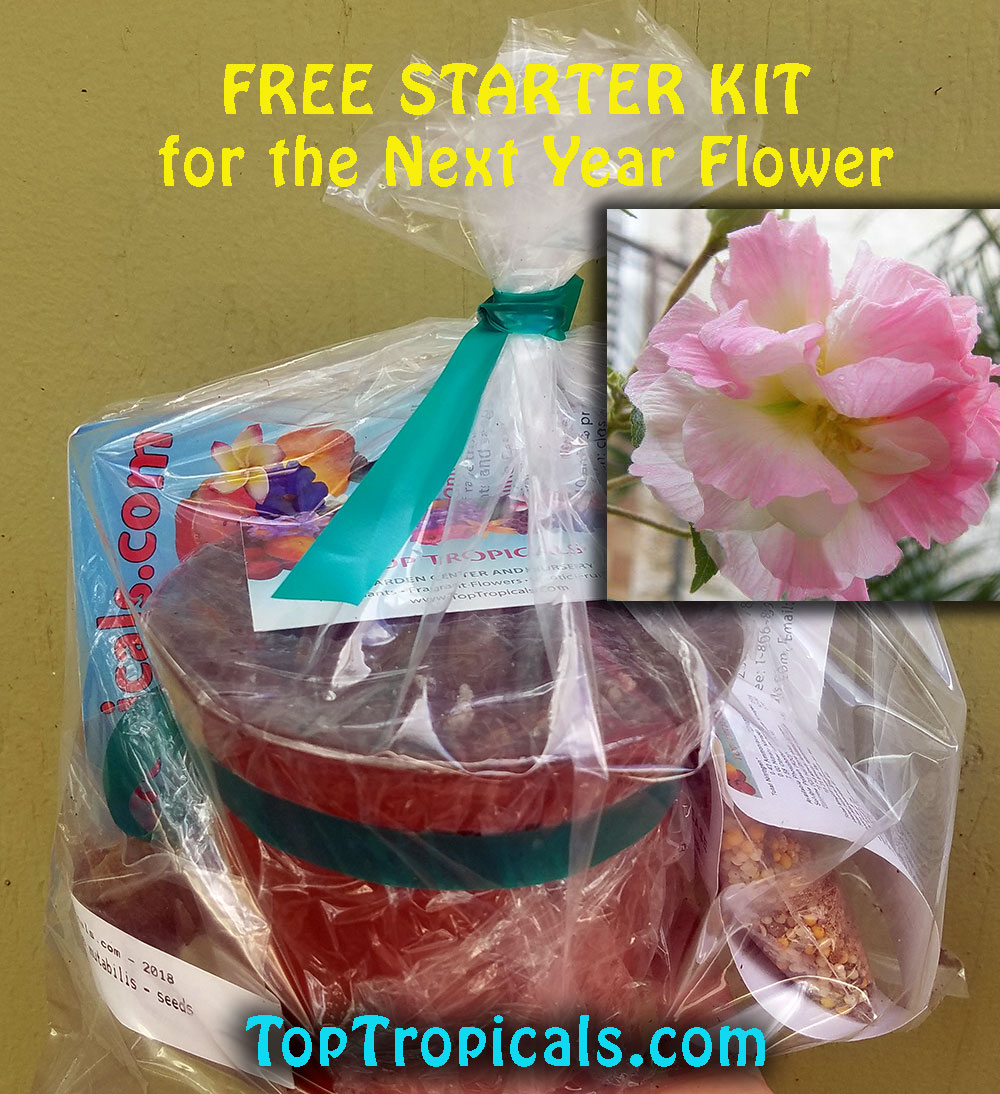
FREE STARTER KIT

TopTropicals.com

FREE STARTER KIT with a FREE Happy Mile Card

Sign up for Happy Miles Card and/or attend Harvest Fest and get a FREE STARTER KIT for the Next Year Flower that includes:
- Sunshine S
- fertilizer
- Literature on Sunshine, seed germination, fertilizer and Soil
- A pot with professional seed growing mix
- Seeds of Cotton Candy Hibiscus - a seed pod with lots of seeds inside. Sign up for FREE Happy Miles card and get the kit RIGHT NOW! Hurry up while supply lasts!

Check it out...

Date: 1 Oct 2018

Information on new exotic fruit variety:
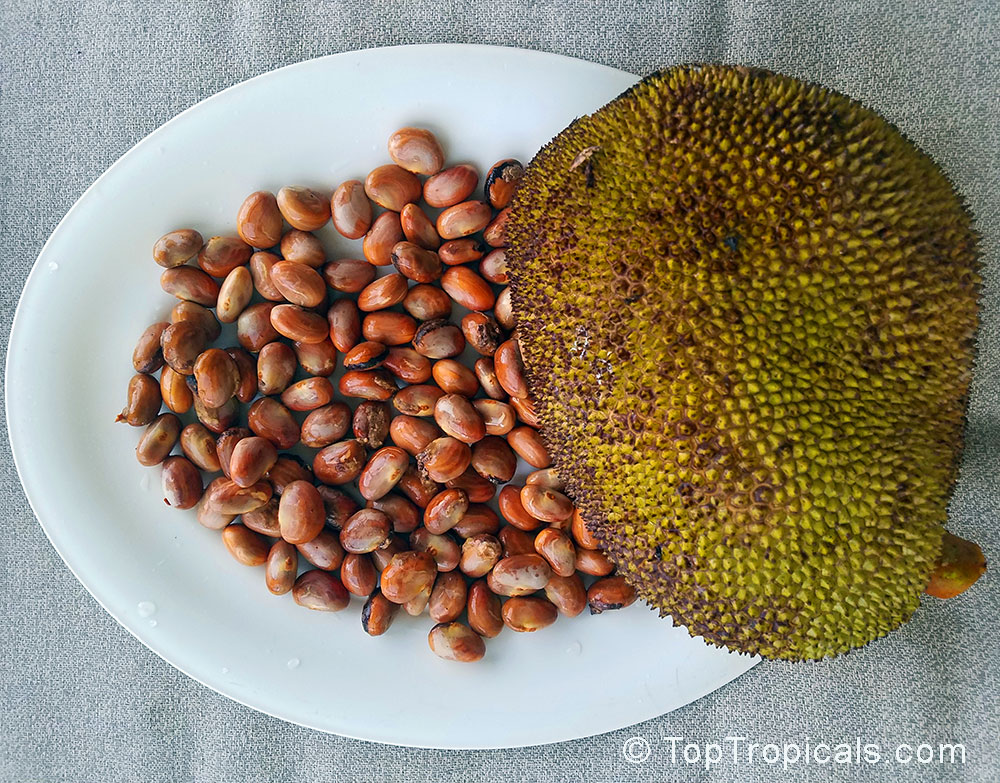
Artocarpus x integer (Jackfruit x Chempedak), Cheena cv. TopTropicals

TopTropicals.com

FRESH SEEDS! Grow exotic Chempedak from seeds and you will have the trees for only $1 each!

Check out a short video of the opened fruit.

Cheena is a natural hybrid between jackfruit and chempedak. Comes true from seed. This highly recommended variety has grown in TopTropicals garden from a seedling of Cheena (Jackfruit x Chempedak) that fruited within 3 years from planting. The fruit (20-25" size) is probably the best we ever tasted! It is super sweet, crunchy and has a rich, pleasant, excellent flavor. It has very little latex which makes it easy to handle when cutting up. The tree produces at the very base of the trunk, so you can prune it as short as you want. Our tree survived light frosts as well as 48 hours of 3ft flooding, with no damage!
The tree has an open, low and spreading growth habit and can be maintained at a height and spread of 8 ft with annual pruning. It is very easy to grow and is not as cold hardy as we thought for a Jackfruit x Chempedak types of plants. The only two recommendations are - good fertilу soil with a high content of compost and regular watering.
Cheena is a consistent producer. The fruit is up to 5 lbs, long, narrow and uniform in size and shape. The skin is green, with blunt spines that yellow and open slightly upon maturity.

Check out Chempedak Cheena seeds - FRESH - FRESH - FRESH
Check out Chempedak Cheena plants - special offer $30 OFF!

Date: 25 Sep 2018

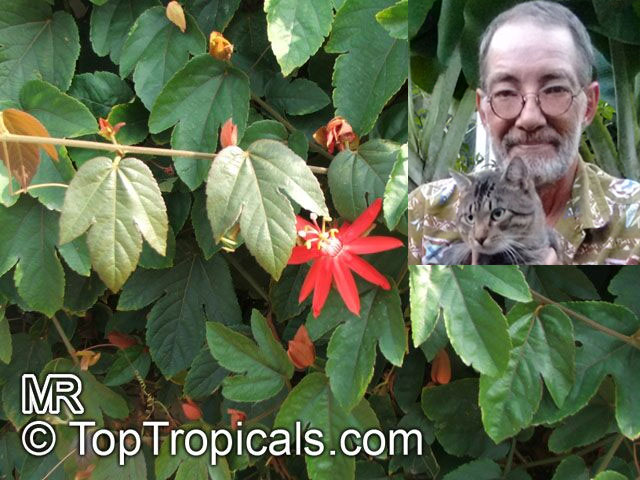
How to get Passion Vine to flower?
From Mark Hooten, the Garden Whiz

TopTropicals.com

Q: Several months ago, I purchased a passionflower vine, a red one with lots of flowers. I ended up putting it in a much larger pot with a large trellis, using a popularly advertised bagged potting soil recommended at a big box store. I have given it a blue colored water-soluble fertilizer every couple of weeks as recommended. However, while the vine seems very happy, growing faster than i can keep winding it around the trellis, it has not flowered all summer. I there something I am doing wrong?

A: Passionvines as a group (and there are some 500 different kinds!) are sort-of unusual among popularly grown ornamentals because they have "nitrogen issues". This is because, even though unrelated, they are much like most legumes, as they maintain a symbiotic relationship with certain beneficial soil bacteria which allows them to gather atmospheric nitrogen and store it in their roots. When they have an overabundance of nitrogen, they simply stop flowering and produce rampant leafy growth while never flowering. They only flower well after a period of healthy vine growth, because the plant had finally used up all of its stored nitrogen.
Since you had both used a bagged potting soil which likely already contained fertilizer with nitrogen added, as well as bi-monthly doses of a liquid fertilizer which also contains nitrogen, it has been receiving so much nitrogen it only knows to grow more vineage until the nitrogen is used up. If and when that happens, it will again begin to flower. This rule applies of course not only to flowering but also to fruiting varieties of Passiflora: the more flowers, the more fruit you get!
So the answer is - for the time being, just stop giving it supplemental fertilizer and it will start flowering for you sooner than later!

See all passion vines from TopTropicals.

Date: 19 Sep 2018

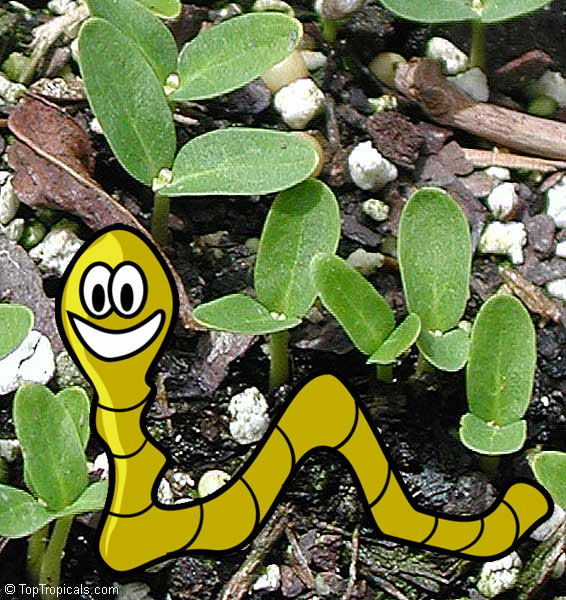
A Sacred Earthworm: benefit or damage?

by Mark Hooten

TopTropicals.com

Q: We have lots of earthworms in our soil. I've heard they are beneficial for the plants, it it true? Or should I try (and how) to get rid of them at least for container plants?

A: From my earliest childhood, I remember learning that "earthworms" are wonderful, beneficial creatures for our gardens. I had heard that they improved the soil by both aerating it via the tiny tunnels they dig from burrowing activities, AND leaving their droppings which act as fertilizer. However, both my personal experiences and studies have shown otherwise. The truth is that the vast majority of earthworms we encounter in our daily horticultural practices are not even native to North America. In fact, they were introduced from Europe, beginning with the colonial period, mostly accidentally in things like the ballasts of ships, and from soil from around the roots of plants being imported. However, once they arrived here, they began to irreparably alter the natural eco-systems of our forests... Continue reading...