Garden Blog - Top Tropicals

Date: 20 Aug 2018

6 things NOT to do in Summer planting
TopTropicals

Q: What a hot summer we have... everything I plant in the ground seem to be unhappy and doesn't seem to grow. I water a lot but it seems not enough? leaves stay droopy or get burned. Are there any secrets for summer planting?

A: End of Summer is still a good time for planting in the South, because there are a few more warm months until winter and your plants need enough time to establish before cold season. However because of high temperatures, a few things should be avoid to reduce stress on the plant:

1. Do not plant mail-ordered plant directly from a box into the ground. Keep it in a pot for a week or two and gradually move the pot from shade into permanent location in full sun.

2. Do not expose to full time direct sun even if potted plant was adjusted to sun. Cover newly planted tree with a shade cloth or simply a bed sheet for a few days. Use bamboo stakes to support the cloth. Even tough, sun-loving plants may get a leaf burn if not established.

3. Do not put mulch too close to the stem/trunk. Keep it 1-1.5 inches away from the plant for air circulation.

4. Do not keep wet. Combination of extreme heat and wet is not good for roots (as well as cold and wet). If you notice that soil dries too quickly - water more frequently but lightly, without creating soggy hot swamp.

5. Do not overfertilize. A handful of slow-release fertilizer is good at time of planting, however do not try to push your plant to grow and do not apply more chemicals or manure until you see a new growth.

6. Do not get discouraged and give the plant some time to establish. In most cases, a new growth starts with roots which you can't see. Sometimes it takes a few months until you see the upper part of the tree suddenly starts growing rapidly.

Date: 15 Aug 2018

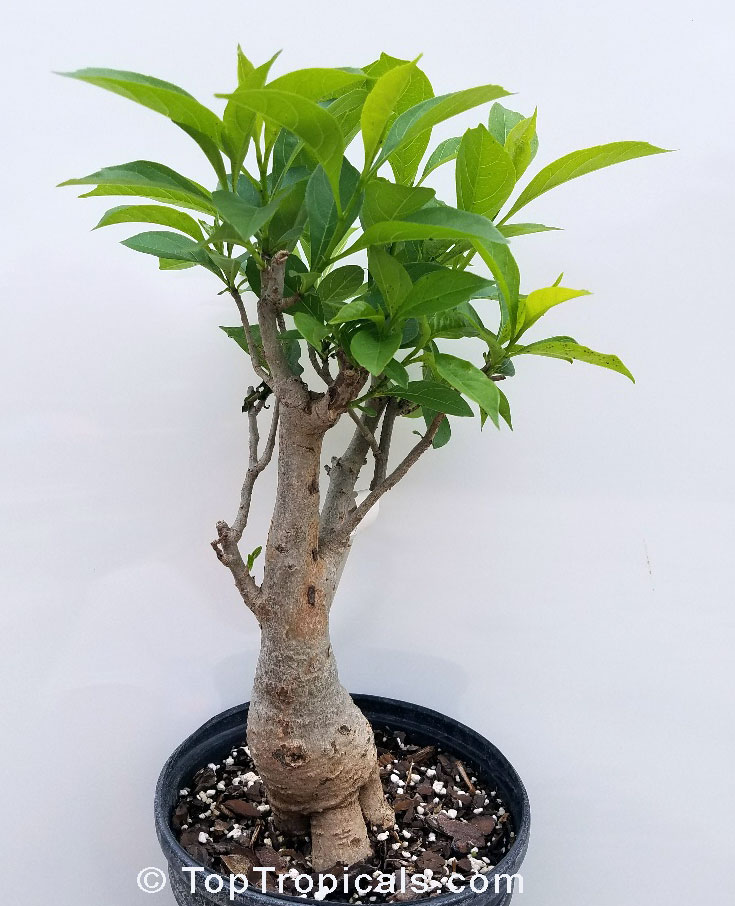
Care for a Baobab Bonsai

TopTropicals

Q: How to grow Baobab bonsai properly? How long does it take to shape a nice little bonsai tree?

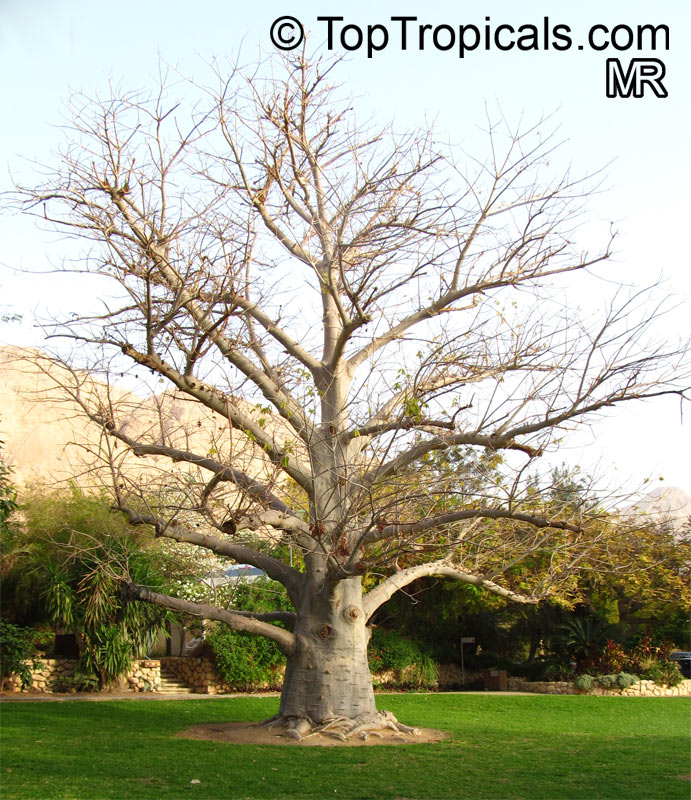
A: Baobab, or Adansonia digitata, is a unique addition to a bonsai collection. Native to Africa, it has an unusual structure and appearance. Some legends say that the tree was cast down from the heavens and landed upside down, where it began to grow. This story is no doubt a result of its appearance in the winter, when the upper branches of the tree look more like roots than treetops. The Baobab has some specific needs, but if you pay careful attention to its requirements, this tree is not difficult to grow and makes an excellent bonsai specimen.
1. Keep Baobab warm, it is sensitive to freeze.
2. Place Baobab in a bright, sunny window. Baobabs need at least six hours of full sunlight per day, so a window with a western or southern exposure is best. If your house doesn't get enough light, supplement natural light with artificial grow lights. See article Indoor lighting for tropical plants.
3. Water Baobab regularly during the growing season whenever the soil is dry. Never water the tree when it is dormant (dropped leaves).
4. Feed Baobab a good-quality fertilizer about once a month. Apply micro-element solution SUPERFOOD once a month, as well as SUNSHINE-BC plant booster for Bonsai and Caudex plants.
5. Prune the branches of your Baobab bonsai as often as they need it to give the tree the shape you desire, pruning or pinching off branches that are growing at odd angles or are too long. Trim early in the spring before new growth appears.
6. Repot the baobab bonsai every year in Spring. Remove it from pot and trim the roots back by one-third of their length, completely removing any that are damaged or dead. Place it in a container that is twice the size of the root ball and fill the pot with a well-drained soil like Adenium Mix.

It is believed that it takes forever to form a nice shaped tree, up to a few years. However if you provide warmth and bright light, branches grow very quickly, and an experienced bonsai hobbyist can make a unique specimen within 2-3 years. And then, the tree will stay with you for 5000 years - it can be passed from generation to generation!

Check out this plant... with FREE shipping to all states!
Se also Baobab Bonsai Kit and save more!

Date: 11 Aug 2018

From Anna Banana: Shipping and planting during hot weather

TopTropicals

Q: I received email notification that my order was delayed due to hot weather. Why? And do I need to do anything special if I plant when it is hot?

A: When plants are shipped via FedEx Ground, it is hot in the truck! According to our FedEx area manager information, if outside temperature is 100 degrees, inside the truck it can be 130! We don't want to put your plants through that much stress. We monitor the weather at destination, and as soon as it cools down a little bit, your order will be shipped.

Planting during hot weather:
1. For a mail-ordered plant follow planting instructions and never plant it from the box directly into the ground. Keep it in a pot the size of a root ball until the plant recovers from shipping stress, re-grows root system and adjusts from several days of darkness to a bright light. Move the pot gradually into brighter light, eventually into a spot of its permanent home. Do not over water the pot. Once you see new growth - the plant is ready to be transplanted into the ground.
2. Use only quality soil, containing lots of organic matter (compost, peat moss); soil conditioner is beneficial (pine bark). Plant it on a little hill, so growing point is elevated 1-1.5" above the rest of the surface.
3. Put a good layer of mulch around the plant, at least 1-2" thick, and not too close to the trunk as it may cause stem rot on contact.
4. Water daily with a garden hose until the plant shows active growth - then watering may be reduced every other day or less, or you may rely on sprinklers and/or rains.
5. If the sun is too hot, use shade cloth (or simply a white bed sheet) to cover the plant for the first few days (use bamboo sticks for support). It will help the plant to establish without heat stress. If leaves start dropping - this may be a sign of excessive light and heat. Shading is the way to reduce it.
6. Use SUNSHINE booster to help plants overcome heat stress, and shipping stress. It really works!

Remember that a plant has a very slow nature, unlike creatures from animal world. Give it some time and never rush it into new conditions. Go slowly and patiently - this is the only way to get a reward of a fruit crop or a beautiful flower.

Date: 3 Aug 2018

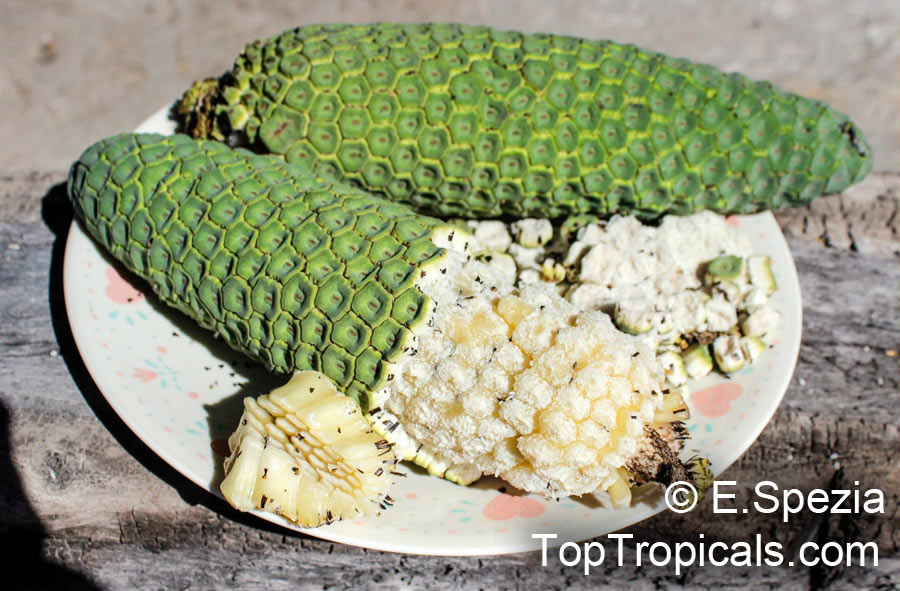
Featured Plant. Monstera deliciosa - Swiss cheese plant

TopTropicals

Monstera deliciosa - Swiss cheese plant

Swiss cheese plant is a jungle climbing relative of the philodendron from Mexico and Guatemala. It is seen in gardens in tropical and subtropical areas, growing well in partial sun or shade. The plant begins bearing fruit after three years. The large deep green, cone-like fruit is actually an unripened flower spike, covered with hexagonal scales that dry out and separate as the fruit ripens from the base upwards, revealing the white pulp. It takes a little longer than a year to mature to an edible stage. The fruit tastes kind of like a cross between a sugar apple and a pineapple. Very perfuming smell and taste! It's so amazing, can't figure the consistency, but totally a pineapple sugar apple cross... But wash the black specks off before eating - they will sting your tongue.

Check out this plant...

Date: 29 Jul 2018

Fragrant garden

TopTropicals

Q: I love fragrant plants and I want to make a fragrant garden. Your website offers amazing selection. A friend of mine told me I should be careful with planting fragrant plants next to each other, and that mix of fragrances may create a funny combination. Are there any flowers that don't go together?

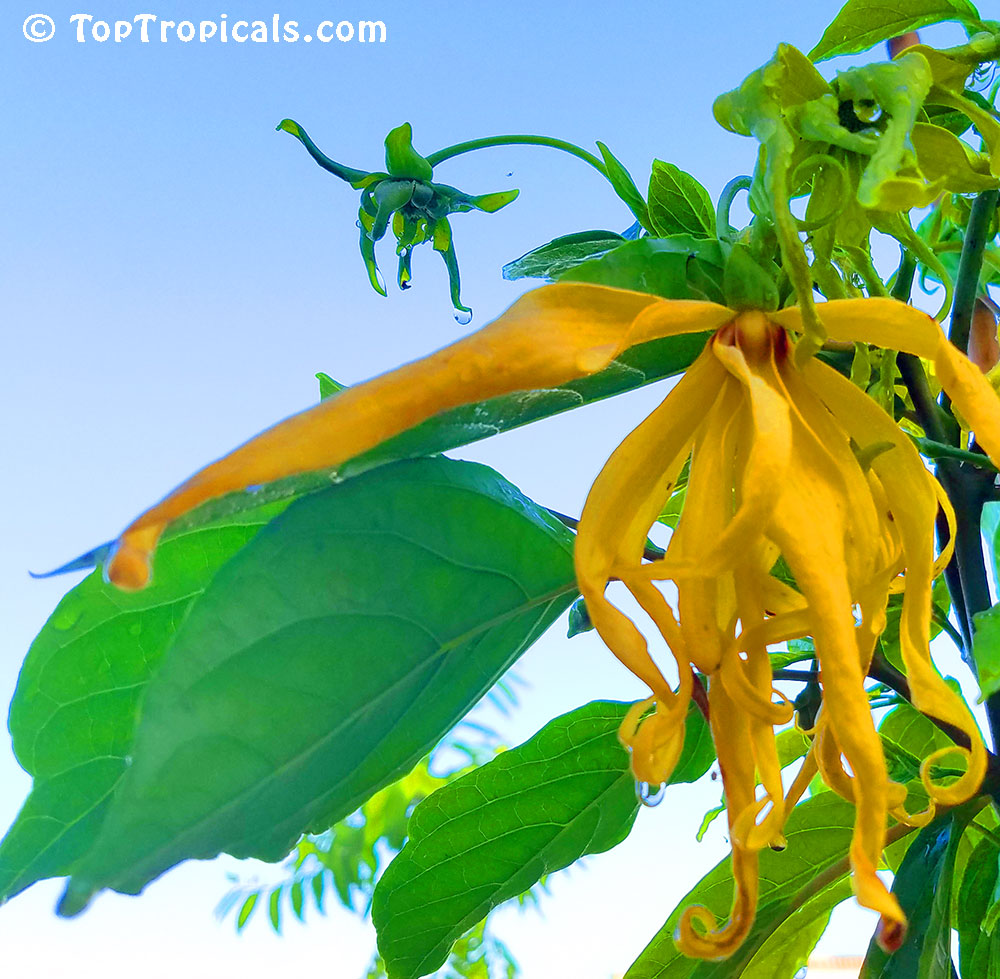
A: Flower scents, unlike perfumes, are pure natural and not as intoxicating to create funny combinations. Although some of them can be strong and even overwhelming. Example - Night Blooming Jasmine, Cestrum nocturnum, which fragrance at night is super-sweet; however most people like it. Reality is, even Night Blooming Jasmine planted next to Gardenia won't create a bad mixture, although one scent may somewhat take over another. In any case, with wind blowing in your garden, you will never be disappointed with fragrant garden. Some plants, like Ylang Ylang - Cananga odorata, or Magnolia champaca, create very fine fragrance that can be smelled yards away, other flowers you will need to stick your nose into.

Check out plants for fragrant garden