Garden Blog - Top Tropicals

Date: 27 Jun 2018

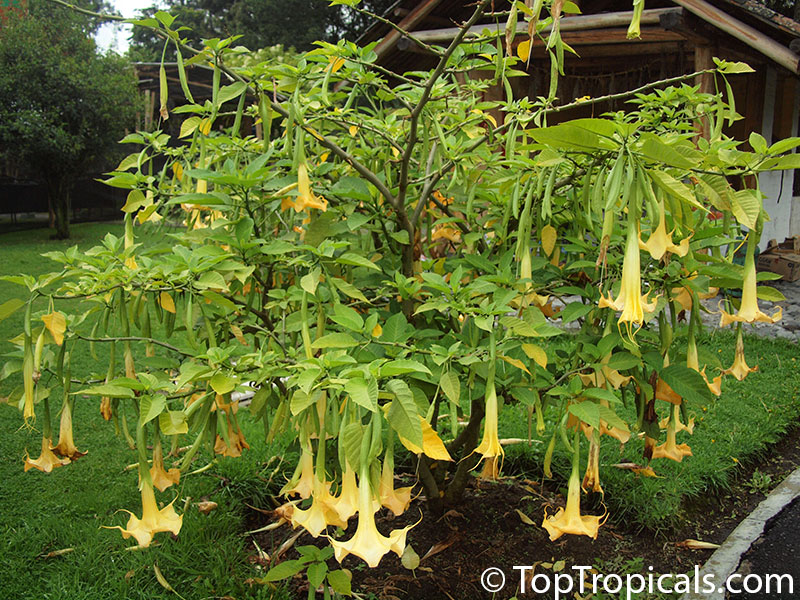
TROPICAL GARDENING: How to grow Brugmansia (Angel Trumpet) in the ground outside.
TopTropicals

Q: I recently moved from New Jersey to Florida and I brought with me my Brugmansia that I used to have as a house plant. Can I plant it in the ground now?

A: Angel Trumpet - Brugmansia - is a very popular container plant valued for its large, stunning fragrant flowers. Originated from South America, it will be happy to grow in tropical to subtropical climate outdoors. These are a few useful tips to get the most out of this beautiful plant:
1) Light. Plant it in full sun - the more sun, the more flowers you get, although Brugmansias tolerate shade. If the plant was previously grown in container indoors, to avoid leaf burn, keep it protected with a shade cloth or simply white sheet for a while and gradually open to adjust to full sun.
2) Soil and fertilizer. Use fertile soil with lots of organic matter (add compost to existing soil). It must be very well drained, Angel Trumpet won't tolerate waterlogged conditions. Plant it on a little "hill" elevated 3-4" above the surrounding area. Brugmansias are very heavy feeders. Once the plant is established, fertilize on regular basis with Slow Release Fertilizer - a handful once a month.
3) Water. Water daily until established. Once the root system is well developed, the plant is drought tolerant and won't require too much care. But at the beginning, watch the leaves - the lush foliage droops quickly if the plant is thirsty.
4) Plan space. Brugmansia is a short tree, but it needs a lot of room to spread branches with its heavy hanging flowers. Think 12" wide and maybe almost as much tall.
5) Support. Being widespread plant, Brugmansia can be blown with strong winds. Stake with strong support until established.
6) Propagation. Brugmansia is one of the few plants that propagates with semi-woody cuttings; soft green cuttings usually have little success. Other than that, it is pretty easy!

Check out our Brugmansia collection and... collect them all!
Date: 24 Jun 2018

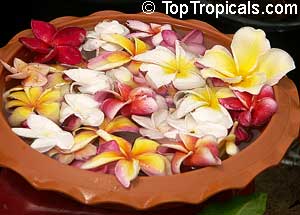
Fabulous Frangipani - Plumeria

New article! By Jane Jordan, a horticulturist who studied and worked at the RHS botanical gardens in Cannington, England. She now lives in Sarasota, Florida. Alongside her passion for horticulture, she is also a novelist.
"...The name Frangipani is derived from a 16th century Italian Marquess, who invented a plumeria scented perfume. While in Hawaii they are known as Lei trees. Lei means garland or wreath, and Lei flower garlands are famously given as a symbol of affection. Hawaii has become synonymous with this beautiful flower, although Frangipani, is native to warm tropical areas of the Mexico, Central America, India and the Caribbean, accordingly, this plant is well suited to the Floridian climate and hardy to USDA planting zones 9-11..."
Read

Date: 24 Jun 2018

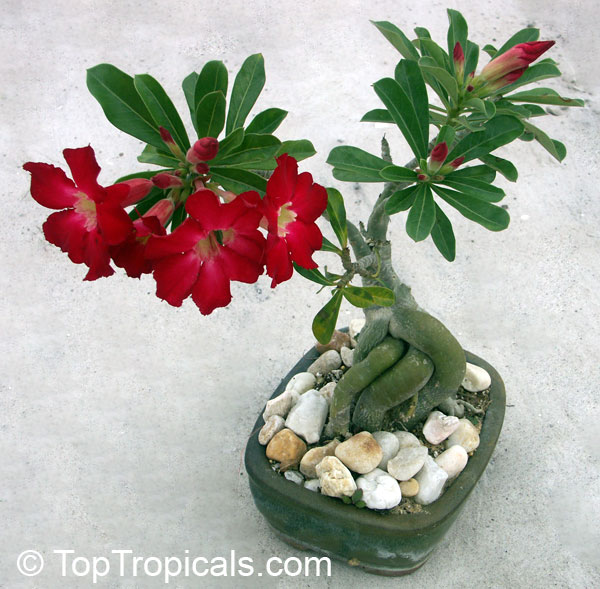
Adenium: a Rose by any Other Name

New article by Jane Jordan.
"...The famous quote is often used to imply that the names of things do not affect what they really are, in the case of The Desert Rose (Adenium obesum) it is not a rose at all, rather a succulent that thrives in hot, dry and sunny conditions. These spectacular plants have no relation to the rose family, they are a species of flowering plant from the dogbane family, Apocynaceae. The naming of this plant is partly correct as they originate in sub-Saharan Africa and the Arabian Peninsula, where they can grow into large trees with huge swollen trunks..."
Continue reading...

Date: 24 Jun 2018

Tip of the Month: dealing with heat waves

Q: I live in California and this summer has been super hot, with temperature above 100 degrees. This heat wave is killing my plants! Please help!

A: If you live in Southwest, then you are familiar with heat waves, when temperature raises above 110F and up to 120F, while humidity is below 10%. Scorching heat can damage and kill unprotected young plants. Especially if they're recently planted.

Most tropical plants came from humid tropics and they don't easily tolerate high temperatures and low humidity. You can tell such plants immediately. Desert plants have small, waxy succulent leaves, which are capable to reduce evaporation. (See list of plants tolerant to hot and dry conditions). Tropical plants have large soft leaves and need high humidity.

These steps will help to protect them... Continue reading...

Date: 24 Jun 2018

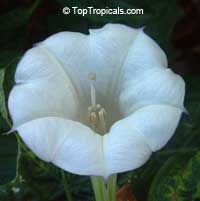
The Enchanting Datura

New article by Jane Jordan
"...Commonly known as the Devils trumpet, Datura has long been associated with witchcraft and voodoo rituals. Ideally suited for moon or night gardens, the blooms are fragrant and particularly so at night..." Continue reading...

5 important tips for successful growing Datura and Brugmansia;
1. Full sun
2. Use fertile soil that must be vewry well-drained. Plant in elevation
3. Ample water encourages fast growth, but never allow wet feet!
4. Fertilize heavily during hot season
5. Propagate Brugmansia with semi-woody cuttings, Datura - with seeds that have a long shelf live

Buy Datura and Brugmansia from our store