Garden Blog - Top Tropicals

Date: 24 Jun 2018

TopTropicals

When does the Spring begin?

Q: Many refer to Astronomical Spring on March 20, as the first "official" day of spring. But some will argue that spring begins a few weeks before, on March 1st. When does the Spring begin?

A: Most people consider the first day of spring to be the Spring Equinox, which will start this year at 12:15 p.m. EDT, March 20th. This is because, astronomically speaking, the sun is directly overhead of the Equator as the Earths tilt begins to point the northern hemisphere towards the sun.
As the earth rotates around the Sun, the Sun will be situated directly overhead at mid-day at different times of the year. The Vernal (Spring) Equinox is the day the Sun is again highest in the sky at noon over the equator as the apex progresses north. The day the Sun is straight up at noon over the Tropic of Cancer and Capricorn (23.5 degrees N and S latitude) are the summer and winter solstices, respectively. Many refer to Astronomical Spring on March 20, as the first "official" day of spring. Most meteorologists say that spring begins a few weeks before, on March 1st, because they observe seasons over different time periods. Meteorological spring began March 1, summer begins June 1, fall begins on September 1 and winter begins on December 1.
Date: 24 Jun 2018

TopTropicals

Varieties of Guava

Q: We were just in Australia where guava juice was available in the markets. Pretty sure I can grow different varieties of Guava's here, as I have 3 already, but wondering if it would be psidium guajava or littorale as the best bet for making the pink juice we enjoyed. Thanks so much, your plants are so healthy when they arrive!

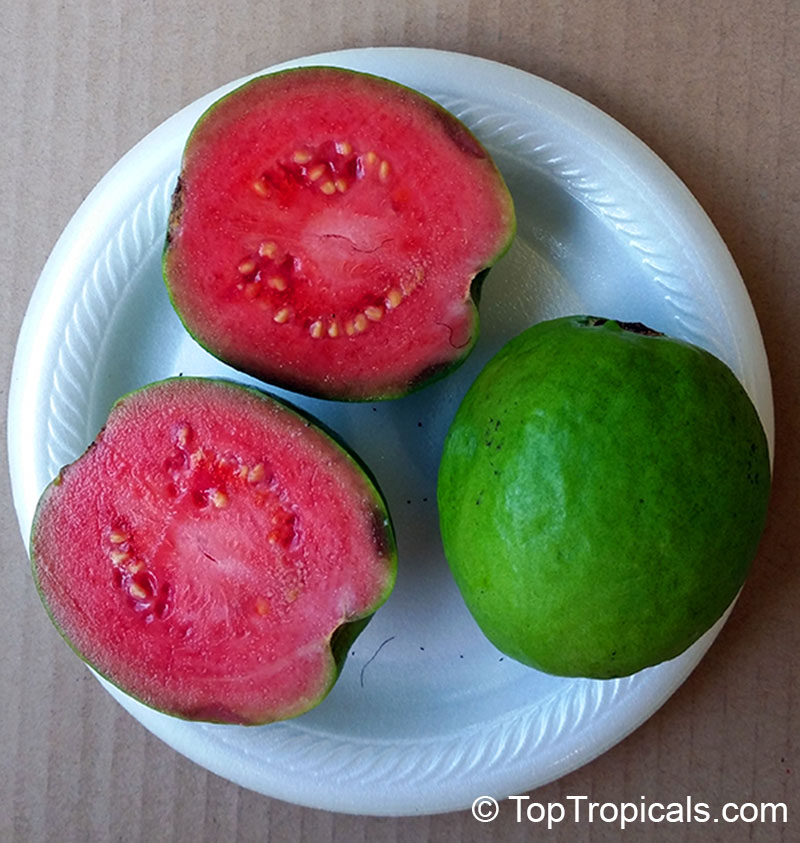
A: Both species are used for commercial juice making. We grow lots of Psidium littorale - Cattley Guava, Strawberry Guava - and we make delicious juice. Psidium guajava - Tropical Guava, Guajava - is less juicy, fruit is somewhat dry, but it still has a great flavor; you may need to add water to blended pulp. And sugar - add it to both kinds of fruit!

Check out our Guavas!

Date: 24 Jun 2018

TopTropicals

Cleanest fruit?

"Dirty" fruit: According to the Environmental Working Group research, Strawberries are top the list of the 12 "dirtiest" fruits and vegetables grown commercially. Spinach is the second, followed by (in order of contamination) nectarines, apples, grapes, peaches, cherries, pears, tomatoes, celery, potatoes and sweet bell peppers. Each of these foods tested positive for pesticide residues and contained higher concentrations of pesticides than other produce. This causes of course chronic health implications. Children are of special concern as younger bodies have greater susceptibility to pesticides than adult bodies, the report emphasizes. Pesticides may induce chronic health complications in children, including neuro- and behavioral problems, birth defects, allergies, asthma, and even cancer...

"Clean 15": Avocados lead 2018's clean fruits and veggies list, that also includes: mangoes, papayas, pineapples, kiwi, sweet corn, cabbage, onions, frozen sweet peas, asparagus, eggplant, honeydew melon, cantaloupe, cauliflower and broccoli.
Obviously, home grown fruit and vegetables are even better. Such fruit as Custard Apples, Sapodilla, Sapote, Jackfruit, Dragon Fruit, Passion Fruit and other rare varieties of tropical fruit, are even better for you because they are not grown commercially, and the choice from your own organic garden is the healthiest for yourself and your family!
Plant them today and get your cleanest fruit tomorrow!

Check out all tropical fruit trees and all tropical spice plants.

Date: 24 Jun 2018

TopTropicals

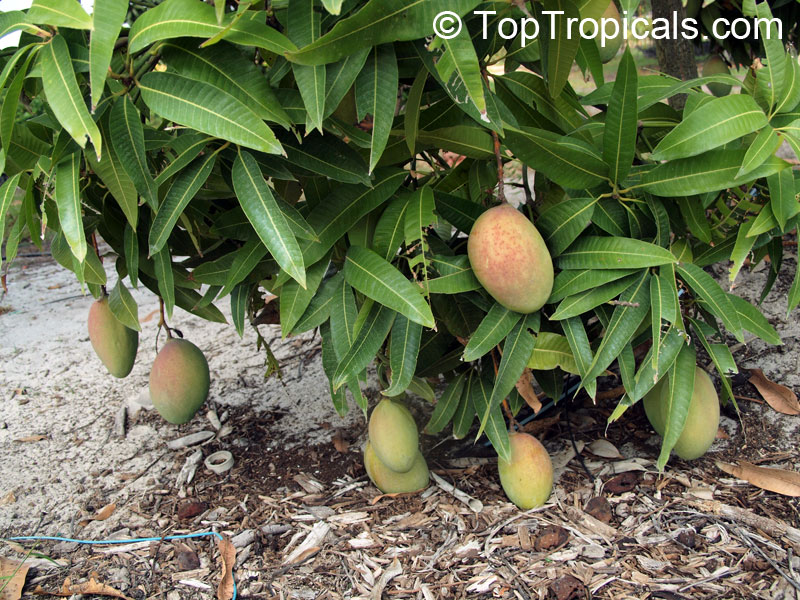
Mango Fralan - a new exciting discovery

Q: I am looking for a special mango called Fralan. It is the most popular mango in Vietnam where I am from. Do you have this variety?

A: Fralan is a relatively new variety of Mango, originated from Thailand, with green skin. In Thai, "Fralan" means "Thunder" - as the fruit cracks when peeled. It also has another meaning "Foreigner" as people from the West seem to speak too loud for Thai ears. This mango has no turpentine aftertaste unlike some other varieties. Its flavor is superior. The flat seed is similar to Nam Doc Mai, it has no seed coat which is a good advantage, leaves more room for flesh and makes it easier to eat.
Fralan can be eaten:
a) when green - it is crunchy, sweet, producing cracking sounds (=Thunder)
b) when yellow (fully ready) - very soft, no fiber whatsoever
The tree is early-middle harvesting season depending on climate and has a DWARF habit! Which make is excellent choice for potting culture. See full list of Mango varieties from our store.

Date: 24 Jun 2018

TopTropicals

Multi-grafted "fruit cocktail" trees

Q: We love your website and products. Do you have mango trees with different types grafted on one? We live in Hawaii and have space for an interesting mango.

A: Here is the truth about multi-grafted mangos. It is the same issue as with multi-grafted citrus (so-called "fruit cocktail trees"). In most cases, multi-grafted fruit trees look beautiful and healthy for the first couple years if that long. What happens next - the most vigorous variety will take over others and eventually all other grafts will die off or those branches stay retarded without sufficient production. There is a solution though, if you have limited space and still want to have several varieties to enjoy. Plant 2-3-4 desired varieties into 1 hole! Of course production of each tree will reduce due to the crowded situation, but overall crop will be as much as from one big tree. And you will have all kinds of tastes to enjoy! Very often trunks of such trees grow in together, but because of having separate root systems, all trees will remain equally strong and vigorous.

Check out our Mango varieties.