Garden Blog - Top Tropicals
Date: 19 Aug 2026
🍇🍑 Two tropical fruits. Two familiar flavors. One very unusual garden snack.
By Tatiana Anderson, Plant Expert, Top Tropicals
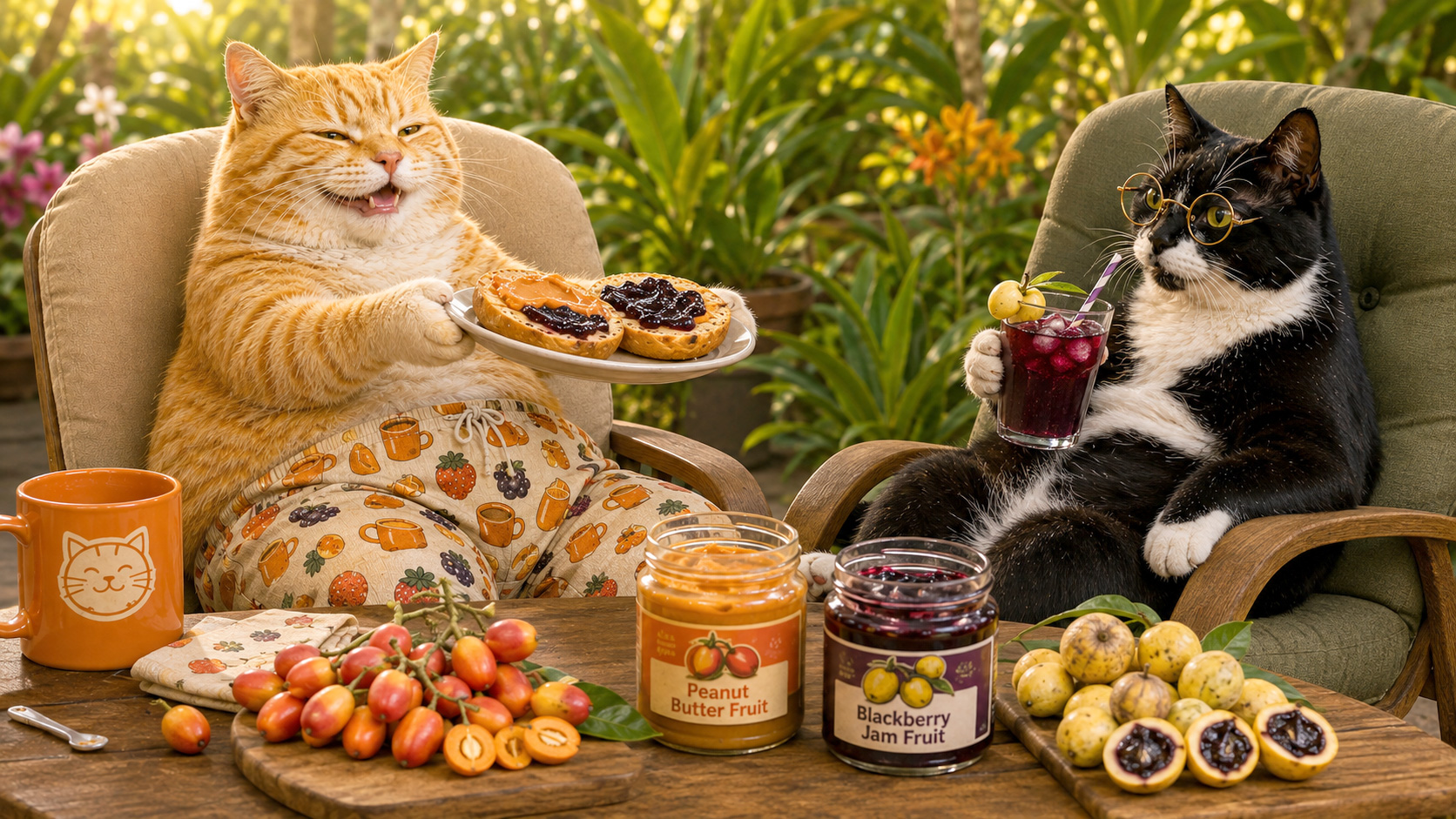
Sunshine: And I solved the final problem.
Smokey: Which was?
Sunshine: They needed a donut.

Peanut butter and blackberry jam. You know the pair. Here is the surprise: both flavors can be picked off tropical plants. One makes a dense, sticky pulp that tastes like peanut butter. The other makes dark, gooey pulp that tastes like blackberry preserves. Grow both and you have a natural tropical PB&J. Bunchosia argentea - peanut butter fruit and Randia formosa - Blackberry Jam Fruit
🍑 The Peanut Butter Side
Bunchosia argentea
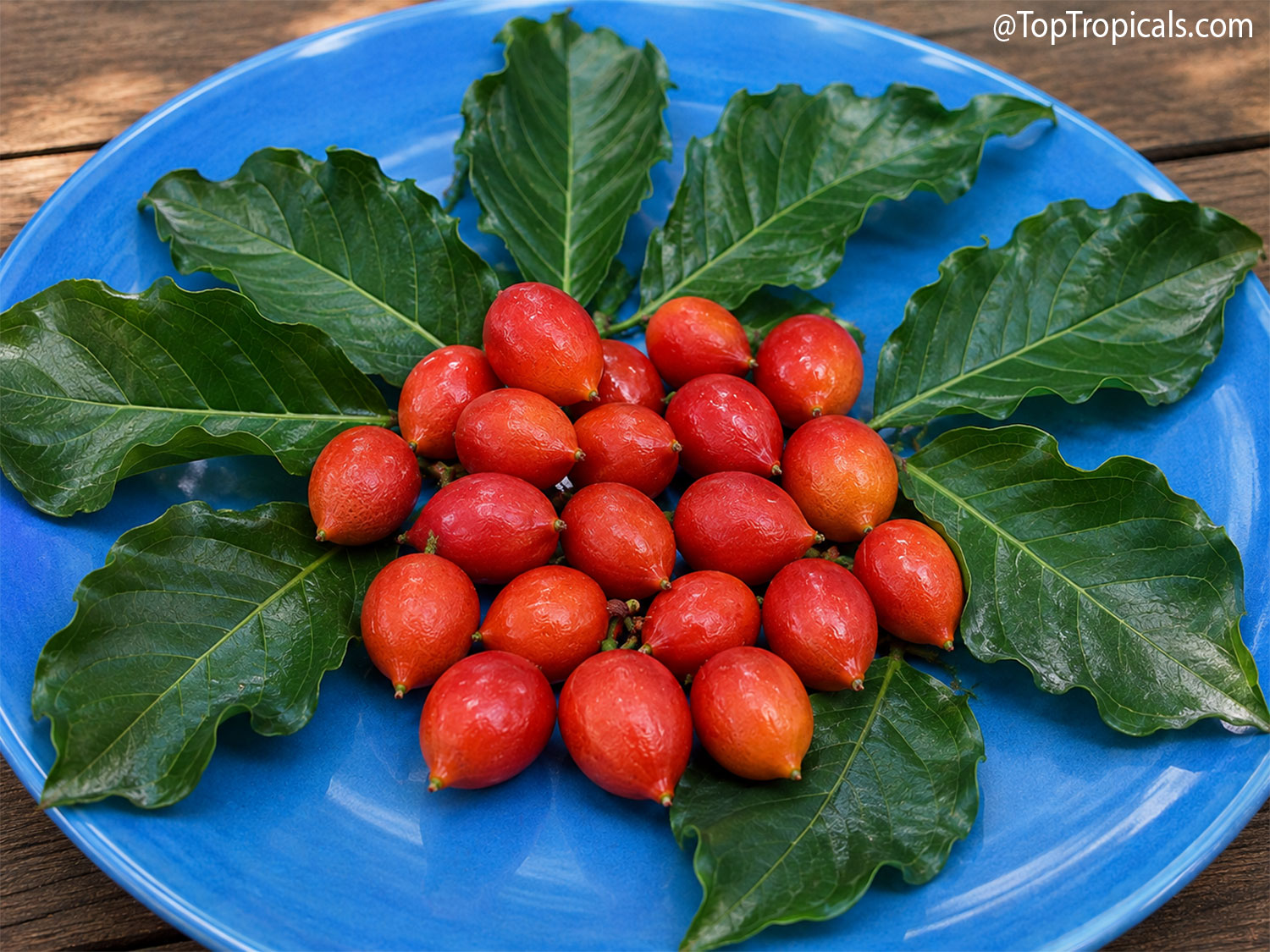
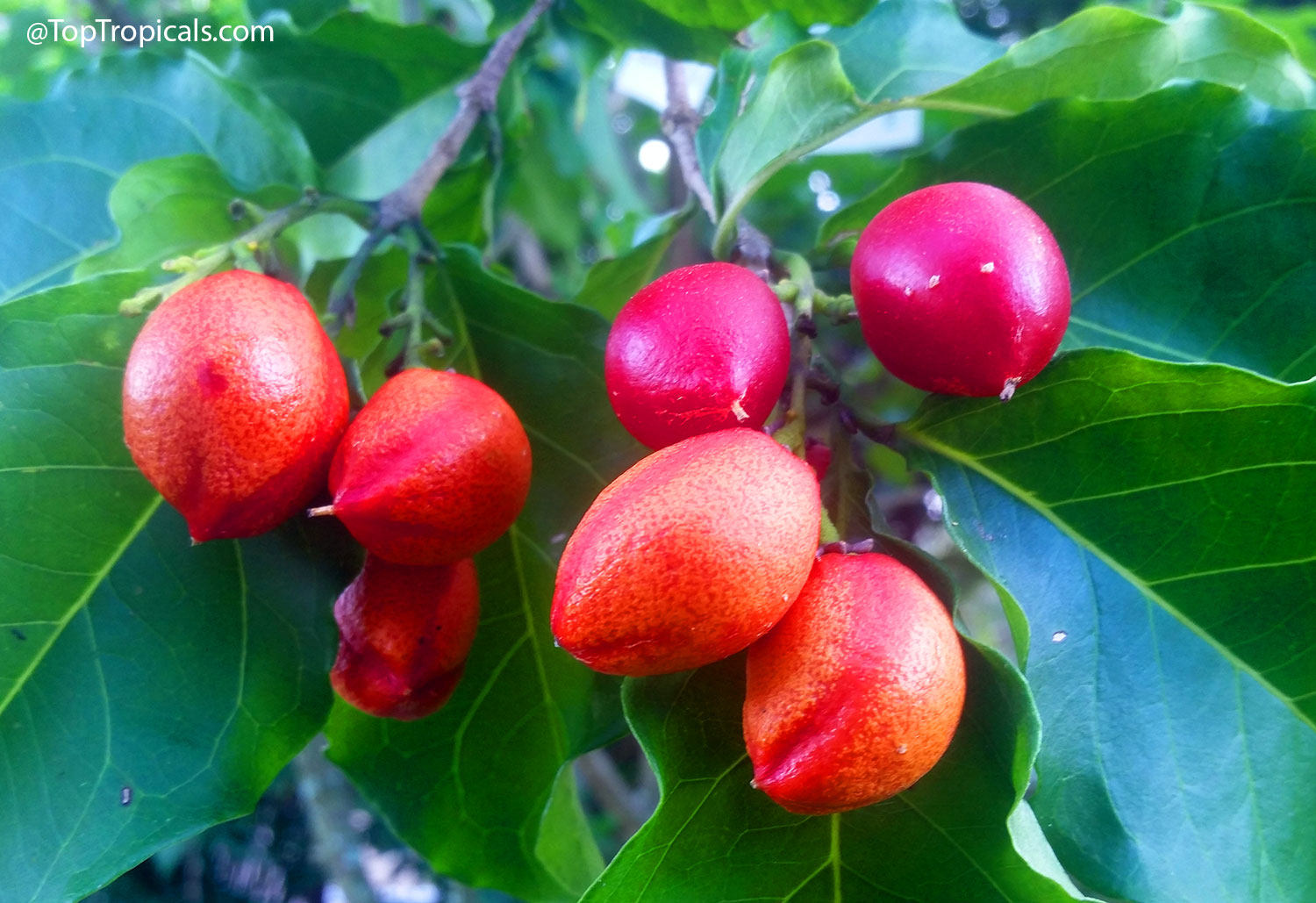
Small fruits grow in clusters and ripen from green through orange to a deep red-orange, so even a small plant can produce a useful harvest. The ripe pulp is dense, creamy, and only slightly juicy, more paste than berry. That sweet, nutty flavor and thick texture are what earn the peanut butter comparison, and it carries far fewer calories by weight than ordinary peanut butter. It also contains beta-carotene, a precursor of vitamin A important for normal vision. Eat it fresh, or blend it into a smoothie with milk and honey.
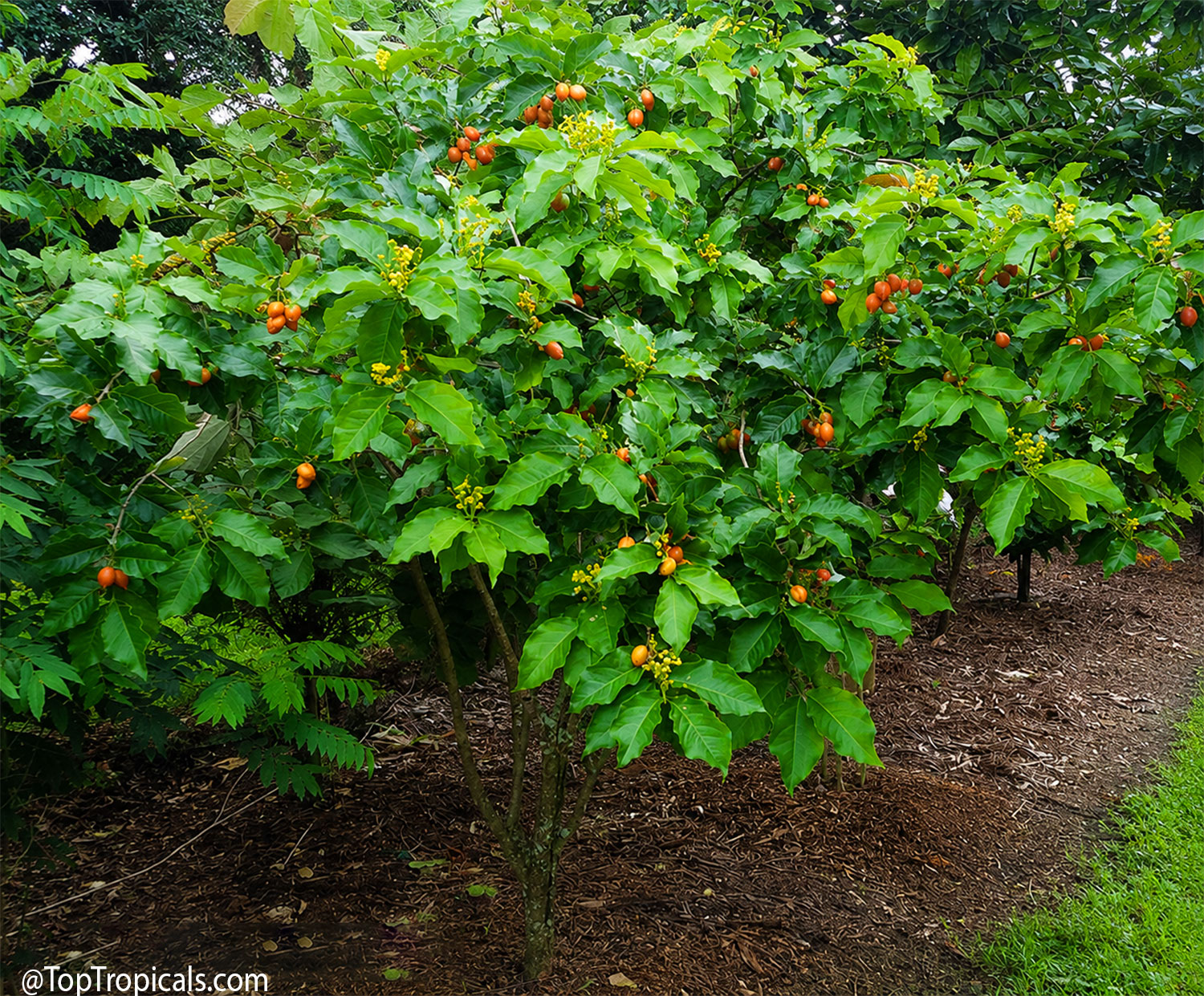
Now the questions a gardener actually asks. It grows as a compact shrub or small tree, usually kept around 8 to 15 ft, though left alone it becomes a real small tree, so prune if you want it bushy. It takes full sun, grows in the ground or a container, and is roughly a Zone 10 plant, with mature plants tolerating a brief dip to around 28 F and young ones needing frost protection. Give it well-drained soil with plenty of organic matter and steady water while it establishes, without letting the roots sit wet, and remember that pots dry out faster than open ground. It fruits fast for a tropical: seedlings in roughly 2 to 3 years, while established nursery plants can fruit sooner. Yellow flowers add ornamental value before the red fruit even shows.
✍️ More About Peanut Butter Tree
🎥 Peanut Butter Fruit Tree Videos
🍇 The Blackberry Jam Side
Randia formosa
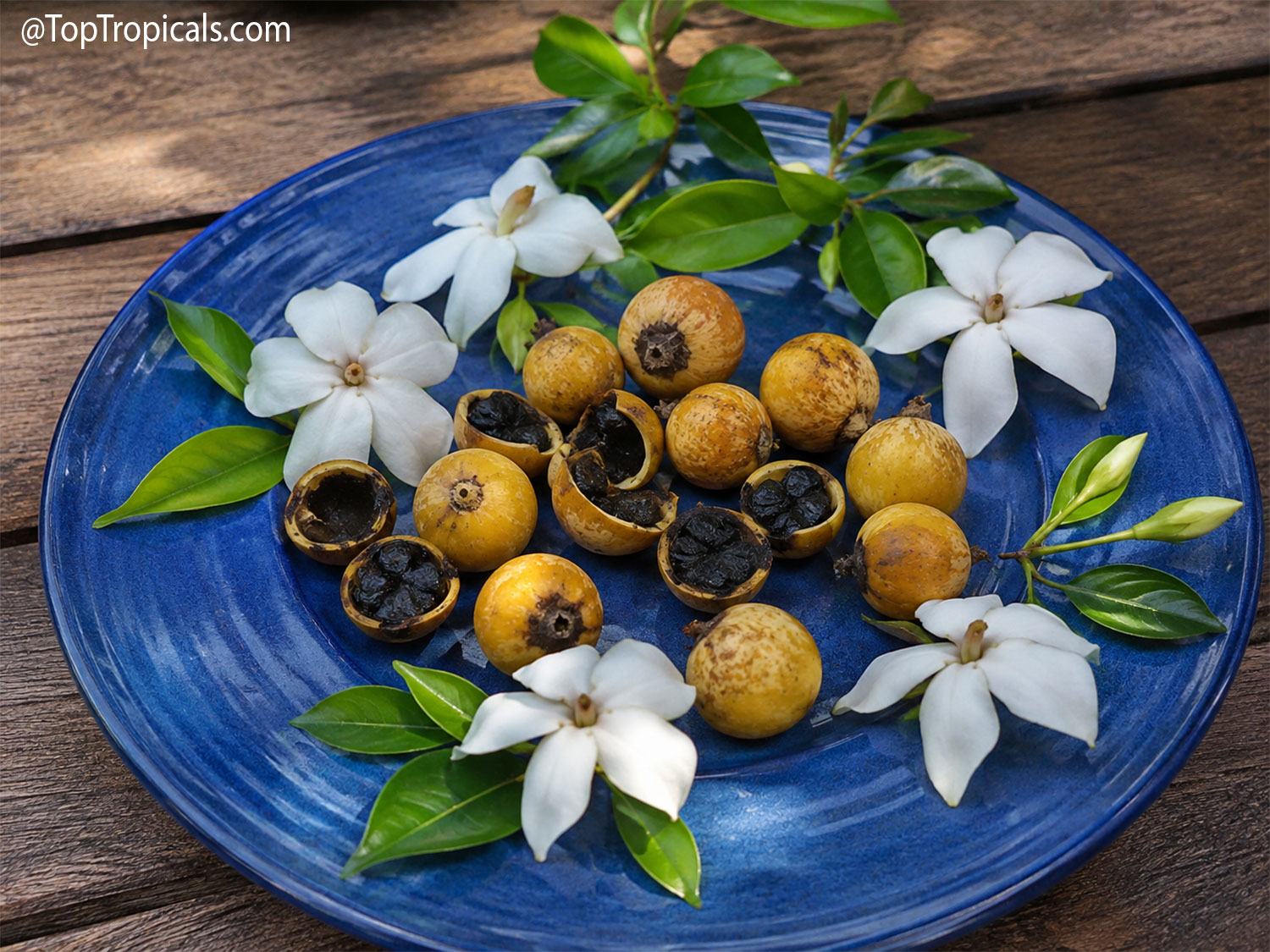
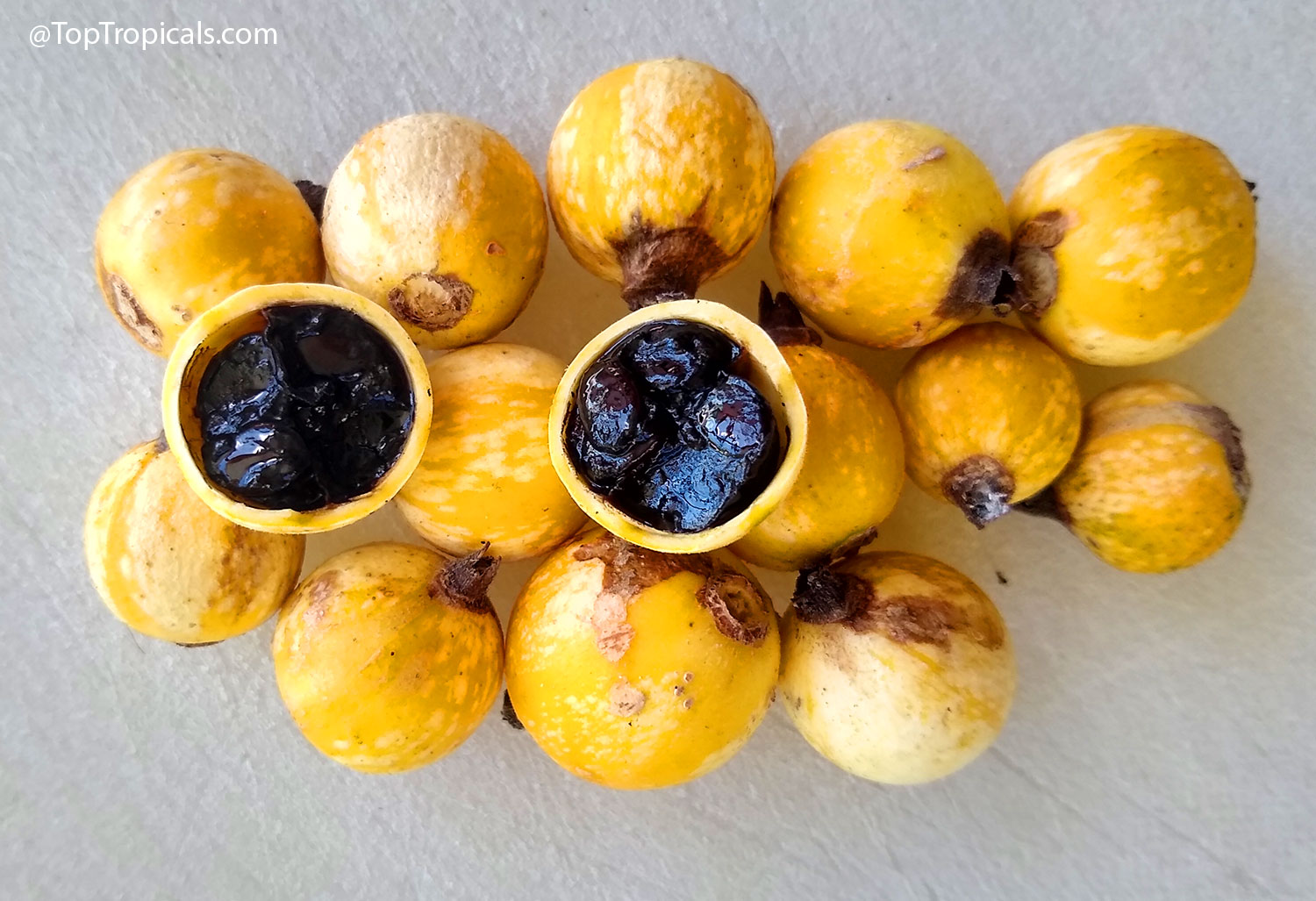
Small and olive-shaped, the fruit ripens from green to yellow or golden. Unlike Peanut Butter Fruit, it does not soften on the outside; the shell stays firm. The color is the ripeness cue. Crack it open to reveal the soft black pulp inside, dark purple to nearly black and gooey, with a flavor remarkably close to blackberry preserves. No cooking, no added sugar. Scoop it straight from the shell or fold it into a dessert.
Here is why it matters in a warm climate. Conventional blackberries generally prefer temperate or subtropical conditions, and many varieties require winter chill that truly tropical gardens cannot provide. Randia formosa gives you that blackberry-jam flavor on a plant that actually thrives in tropical and warm subtropical gardens.
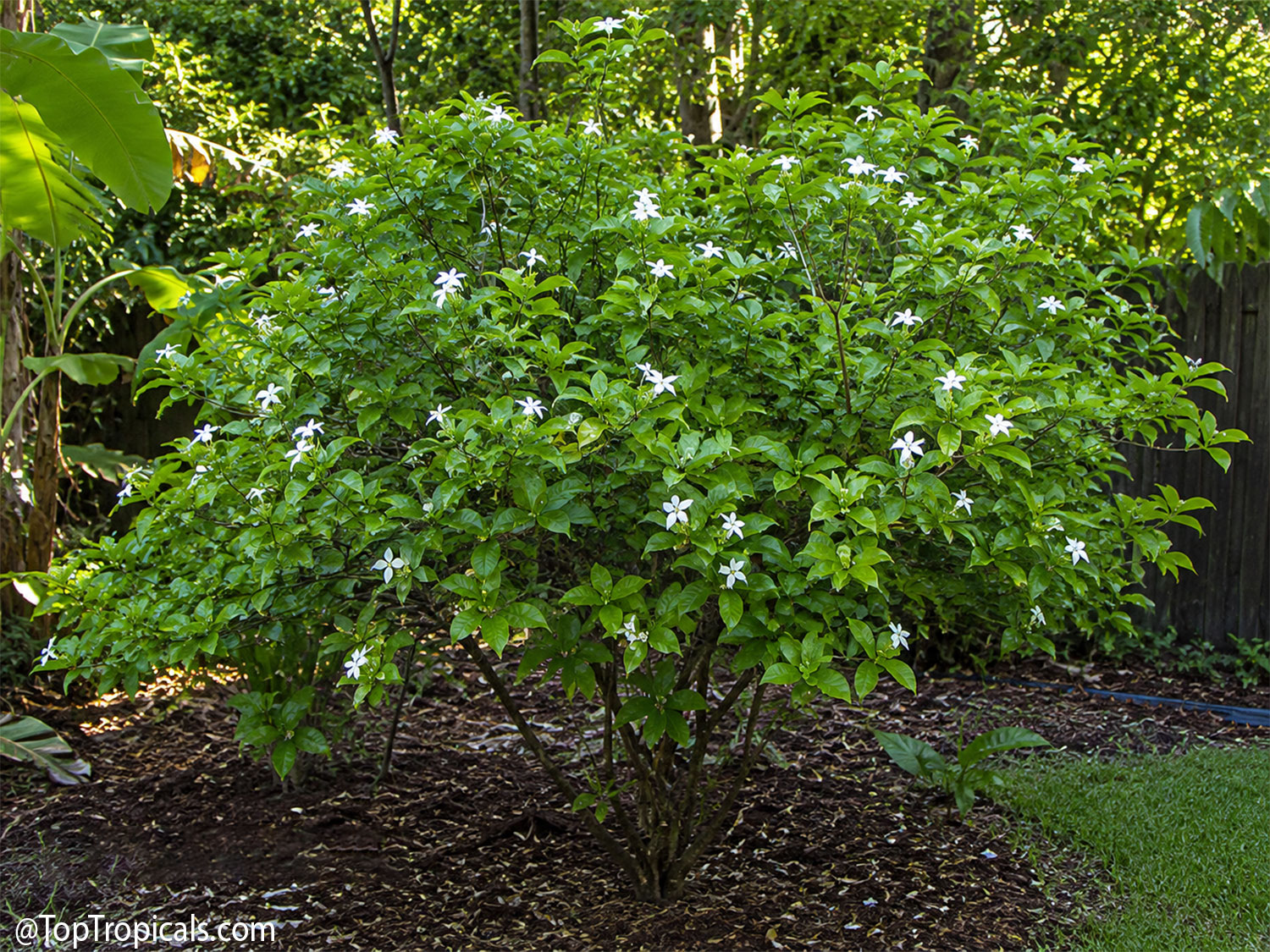
It stays compact, usually 4 to 5 ft in the landscape and smaller in a pot, and can flower and fruit while still small, carrying a good number of fruits at once despite its size. Unlike most fruit plants, it takes sun or shade, and filtered light often keeps the foliage its best green, which makes it handy for patios and gardens without full sun. Give it acidic, well-drained soil, since cool wet feet cause trouble, and ease off watering in cool spells. It is generally grown in roughly Zones 9 to 11, with mature specimens tolerating brief dips into the upper 20s F, though young plants still need frost protection. The large white star-shaped flowers look and smell like gardenias, which fits, since Randia shares a family with both Gardenia and coffee. They are fragrant and open at night, drawing moth pollinators.
✍️ More About Blackberry Jam Tree
💞 Why These Two Belong Together
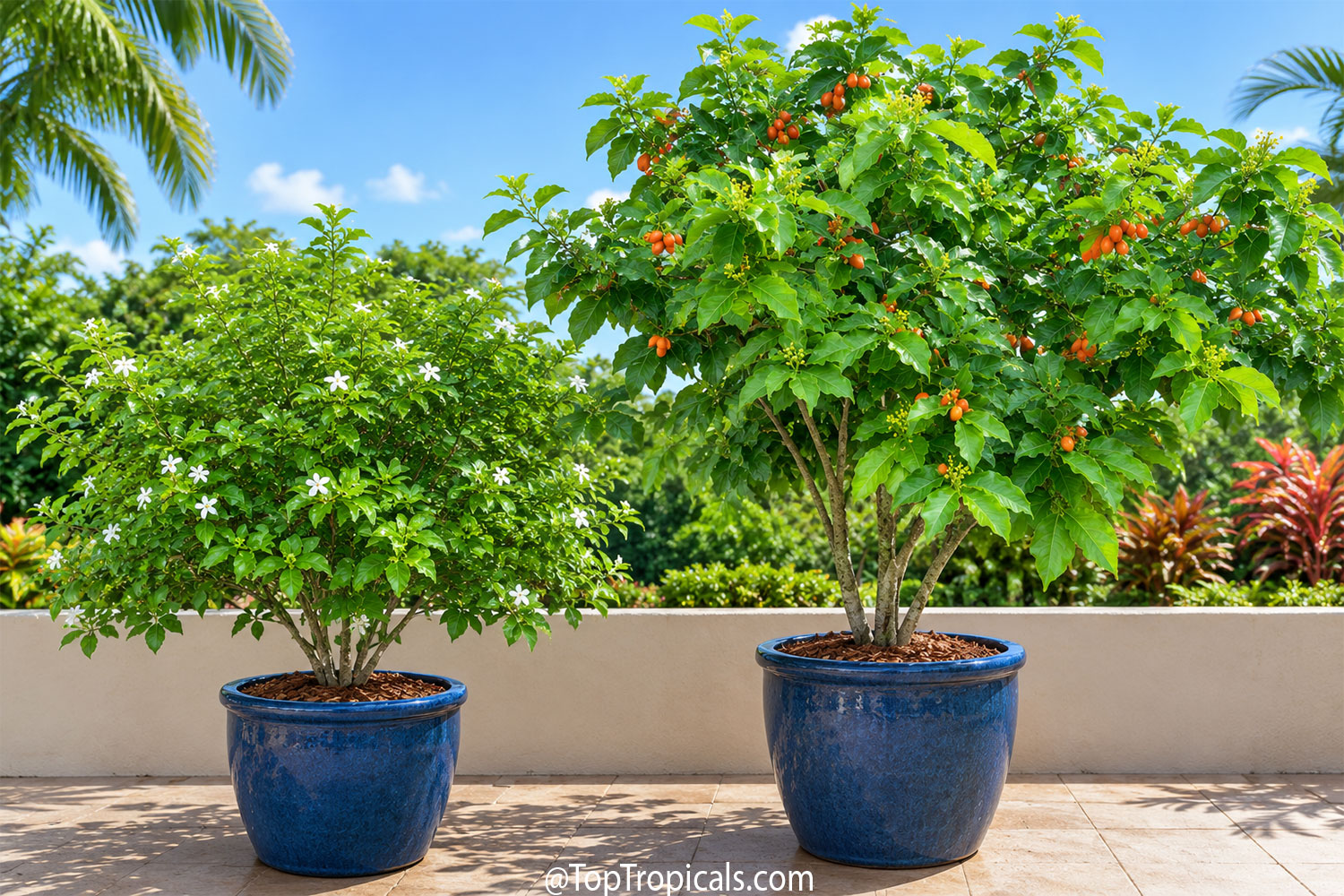
Neither is merely a novelty. Both solve the same practical garden problems: limited space, long waits for fruit, and the wish for plants that look good between harvests. And together, they happen to recreate one of the world's most familiar flavor combinations.
Eat Peanut Butter Fruit fresh or blend it into a smoothie. Scoop Blackberry Jam Fruit straight from the shell or use it in desserts. And, naturally, someone eventually had to combine them.
🛒 Shopping links:
Date: 7 Aug 2025
Blackberry Jam Fruit - the sweetest surprise
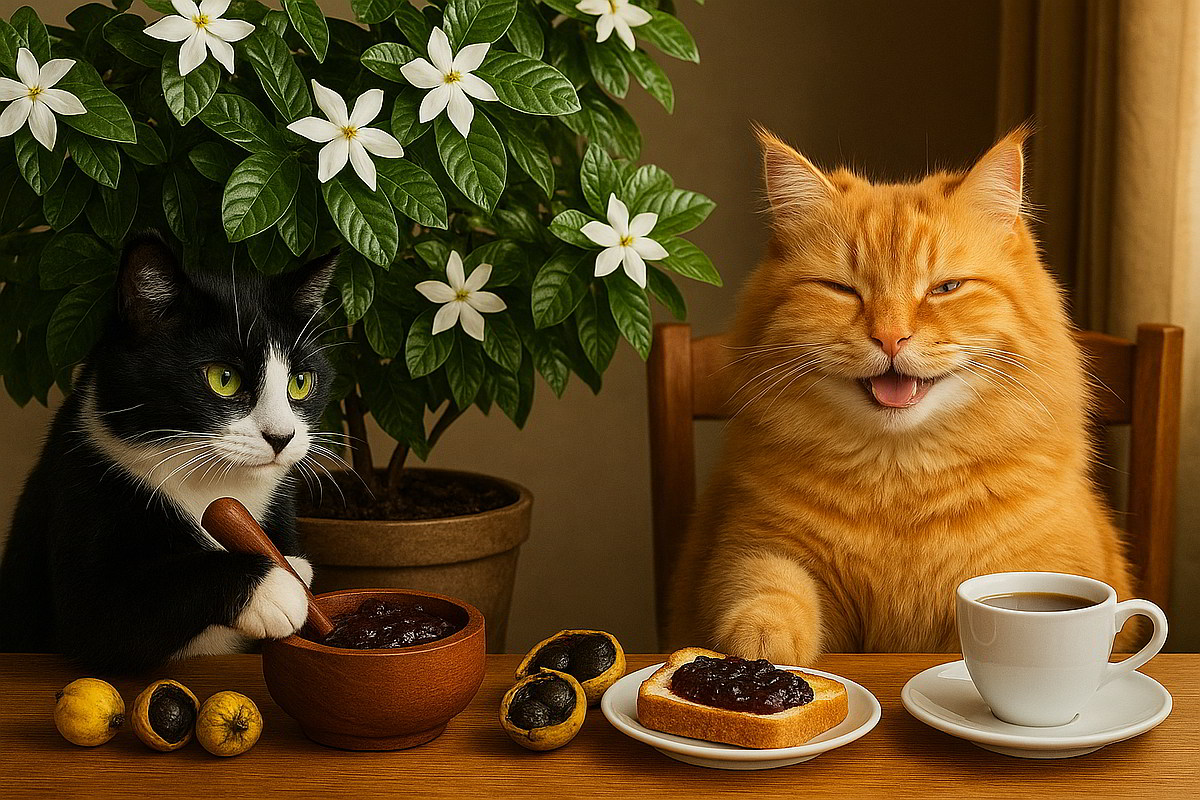
Tea and Jam with the PeopleCats – A Tropical Afternoon Beneath the Randia
Meet the cats behind the jam! The tuxedo cat is none other than Google-the-cat - our beloved elder and one of the original cat-fathers of Top Tropicals PeopleCats.garden. At 18 years old, he’s still sharp, curious, and very much in charge. The orange fluffball? He represents the universal image of cat joy - and we’ve got a few real-life orange sunshine residents just like him.
Why do you include cats in a plant newsletter?
Because they’re part of the garden. Our rescued PeopleCats live among the plants, nap under the mango trees, inspect new arrivals, and occasionally steal a sunspot meant for seedlings. They’re not mascots — they’re part of our team. Sharing their presence is like showing a part of the soul of our space.🐈
Are the cat images real or AI-generated?
All our cats are real! We take lots of pictures and videos. And a few images are AI-generated illustrations inspired by our real PeopleCats.garden residents. While not literal photographs, they are creative interpretations that capture the spirit of our tropical home and its furry citizens.🐾
Are the stories about the cats true?
Mostly! The jam-making, tea-drinking, and greenhouse meetings are creative interpretations - but inspired by real personalities. We use AI scenes to bring their spirit to life. Real cats. Real plants. Imagined adventures.🐱
Date: 7 Aug 2025
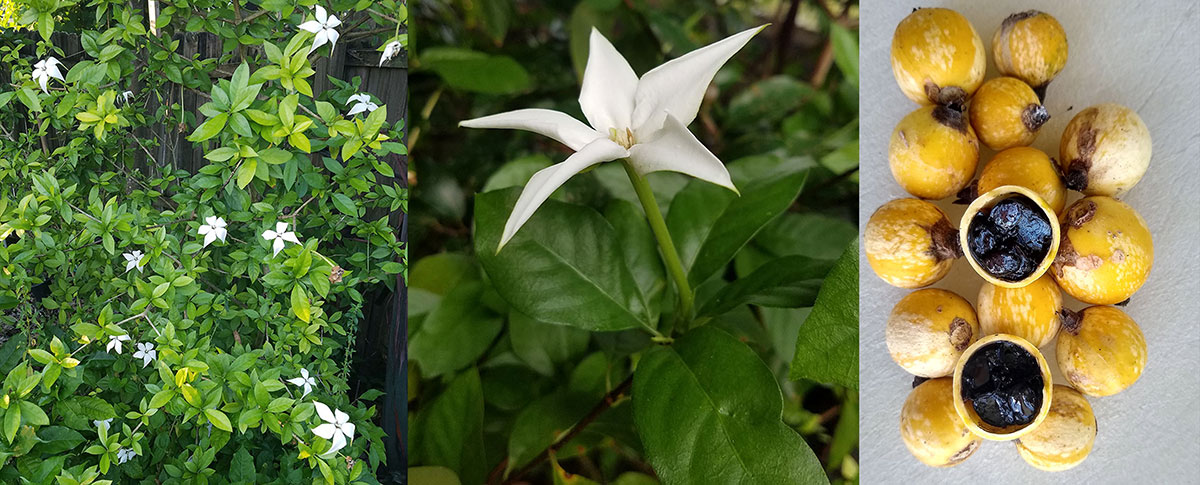
Randia formosa - Blackberry Jam Fruit Tree with Flowers and Ripe Fruit
You know how some plants just surprise you?
That's Randia formosa - the Blackberry Jam Fruit Tree. At first, it just looks like a cute little gardenia-type shrub. Glossy leaves, sweet white flowers. Nice enough. But then the fruit shows up… and you crack one open and go, “Wait - this tastes like jam?!”
And not just any jam - like real, fresh blackberry jam. No sugar, no cooking. Just soft black pulp inside this golden little fruit. It's weirdly satisfying. One of those things you make everyone taste just to see their face.
What's even cooler is how easy it is. This thing starts blooming and fruiting when it's barely 2 feet tall. You can grow it in a pot on your porch, or even inside if it gets enough light. And while most of your other plants take the winter off, this one keeps going - flowers, fruit, the whole show.
If you've got a spot with filtered light and a little curiosity, it's absolutely worth a try. Honestly, it's just… fun.
This rare South American evergreen shrub checks all the boxes: fragrant, compact, easy, and edible.
✅ Grows in pots ✅ Indoors ✅ Small yards
Randia formosa – Blackberry Jam Fruit Tree – FAQ
What is Randia formosa?
Randia formosa, also known as Blackberry Jam Fruit or Jasmin de Rosa, is a compact tropical shrub that produces fragrant white flowers and small yellow fruits filled with soft, black pulp that tastes remarkably like blackberry jam. It belongs to the Rubiaceae family, the same as Gardenia and Coffea.
Why gardeners love Randia
- Delicious jam-flavored fruit – no sugar needed.
- Compact grower – perfect for patios and indoor spaces.
- Fast results – blooms and fruits within 1–1.5 years.
- Big yield in a small pot – 25–30 fruits at once!
- Fall–Winter performer – keeps going when others stop.
- Kid favorite – fun to grow, fun to eat.
What does the fruit taste like?
The pulp inside the fruit tastes just like fresh blackberry jam - sweet, tangy, and rich. It is edible fresh, without any processing or sweeteners, and is loved by both kids and adults.
How big does the plant get?
In the ground, Randia formosa typically reaches 4 to 5 feet tall. In containers, it usually stays smaller, around 3 to 4 feet, making it perfect for small gardens, patios, or indoor growing.
How soon will it fruit?
Very quickly! This is one of the fastest fruiting tropicals. Plants begin to flower and produce fruit within two years from seed. Еstablished plants in 3 gallon containers may begin fruiting at just 2 feet tall.
Does it need full sun?
No. It actually prefers filtered light or partial shade, especially in hot climates. Leaves tend to look healthier and greener when grown in dappled light.
Can I grow Randia formosa indoors?
Yes! Its compact size and shade tolerance make it an excellent choice for bright indoor spaces. Just be sure to provide good air circulation, high humidity if possible, and avoid cold drafts.
How cold-hardy is it?
Mature plants can tolerate temperatures down to about 26F for short period of time, but young plants are more sensitive and should be protected from frost. It is best grown outdoors in USDA zones 9b and up or kept as a container plant that can be brought indoors in winter.
What kind of soil does it need?
Randia formosa requires acidic, well-draining soil. Avoid alkaline soils, which may cause leaf chlorosis (yellowing with green veins).
How often should I water it?
Keep soil evenly moist but not soggy. It is sensitive to overwatering, especially in cooler weather. During winter, reduce watering. Underwatering may cause sudden leaf drop - but the plant usually recovers quickly once watered again.
What fertilizer does it need?
Yes. Use a slow-release fertilizer formulated for acid-loving plants. Regular applications of micronutrients (especially iron and magnesium) help prevent chlorosis. Foliar sprays can also be helpful. Apply Sunshine C-Cibus Booster or Green Magic controlled release fertilizer to keep your plant happy: Blackberry Jam Fruit is a heavy feeder!
When does it flower and fruit?
This plant can bloom and fruit for several months, often from summer through winter. It is known to bloom off-season, making it a fun and productive plant when others are dormant.
Are the flowers fragrant?
Yes, the white star-shaped tubular flowers have a light, sweet fragrance, similar to gardenias but less intense. The flowers open at night.
Is it self-pollinating?
Yes. A single plant can set fruit on its own, although insect activity can improve fruit set.
Are there any common problems?
The most common issue is chlorosis, which shows up as yellowing leaves with green veins - usually due to overwatering, poor drainage, or alkaline soil. It's fixable with acidification and micronutrients. The plant may also drop leaves suddenly if underwatered but tends to bounce back.
Is this plant related to Gardenia?
Yes. It is in the same plant family (Rubiaceae) as Gardenia and Coffee. That's why the flowers look similar and why it tolerates similar care needs.
Can it be used for bonsai or miniature tree styling?
Yes, due to its slow growth and branching habit, Randia formosa can be shaped into a miniature tree form and is quite attractive when trained.
Is it drought-tolerant?
Once established, it shows moderate drought tolerance. However, young plants need regular watering and are more vulnerable to drying out.
Date: 2 Apr 2026
Skip the Egg Hunt - Start a Plant Hunt 🐰

Smokey: Finally. You’re thinking.
Read more about Smokey & Sunshine


Groundhog said long winter… and it sure felt like it. But now it is finally over, and balconies and patios are waking up again.
Easter is here, and with it comes that fresh start feeling - time to open the doors, bring plants back out, and start growing.
We made it through the cold. For northern gardeners, that is every year; for borderline zones, it is a reminder that freezes happen. That is exactly why growing in pots makes sense - you stay flexible.
Container growing is not just about pots - it is about choosing the right plants. The best options stay manageable, produce well, and handle being moved.
Let's look at what works. Start with plants that naturally stay compact and adapt well to containers. These are the ones that won’t outgrow your space and will reward you quickly. These are proven performers in containers - compact, productive, and easy to manage:
- Dwarf Condo Mango for your patio
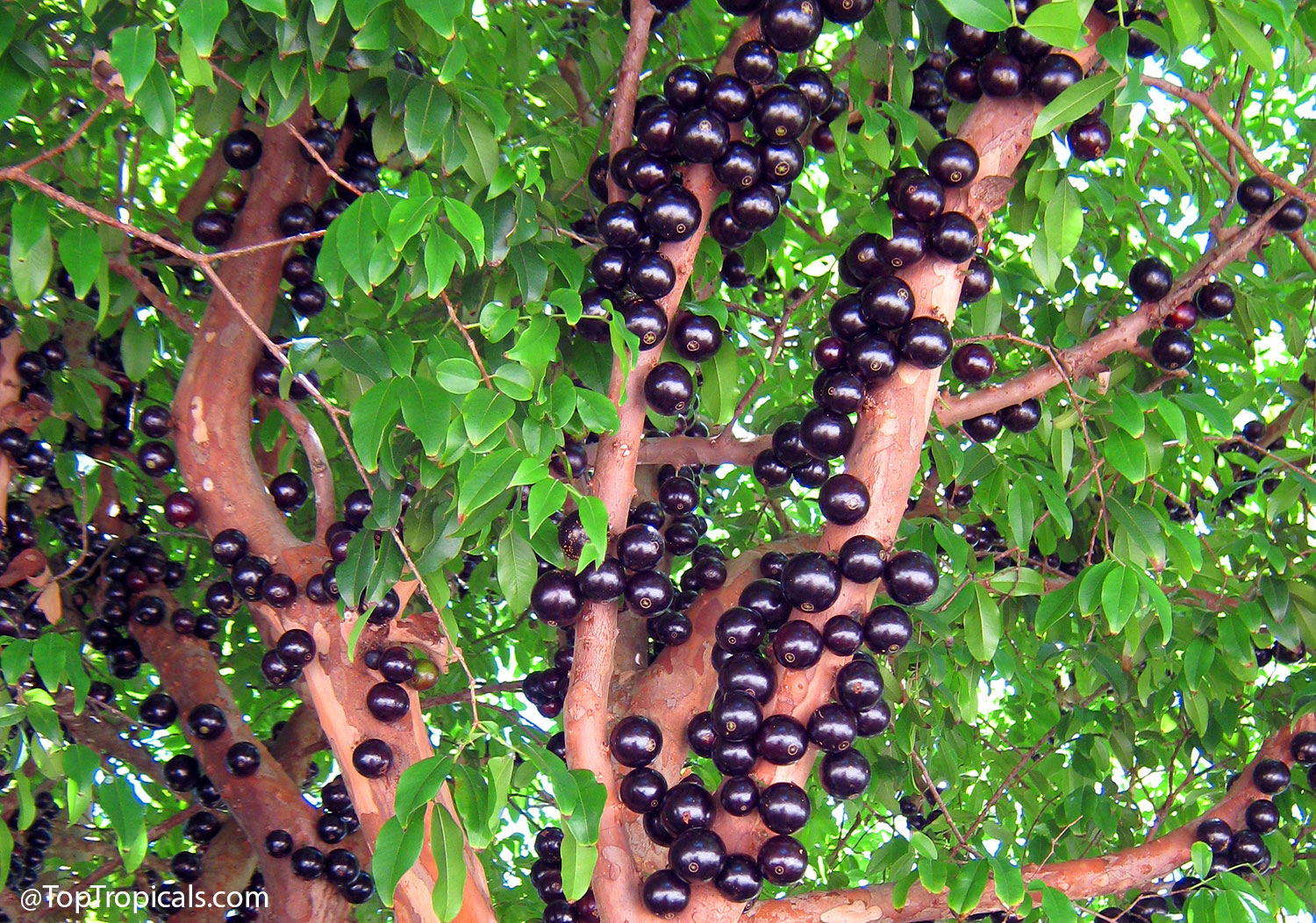
- Jaboticaba - source of Brazilian wine "Vinho Tinto de Jabuticaba"
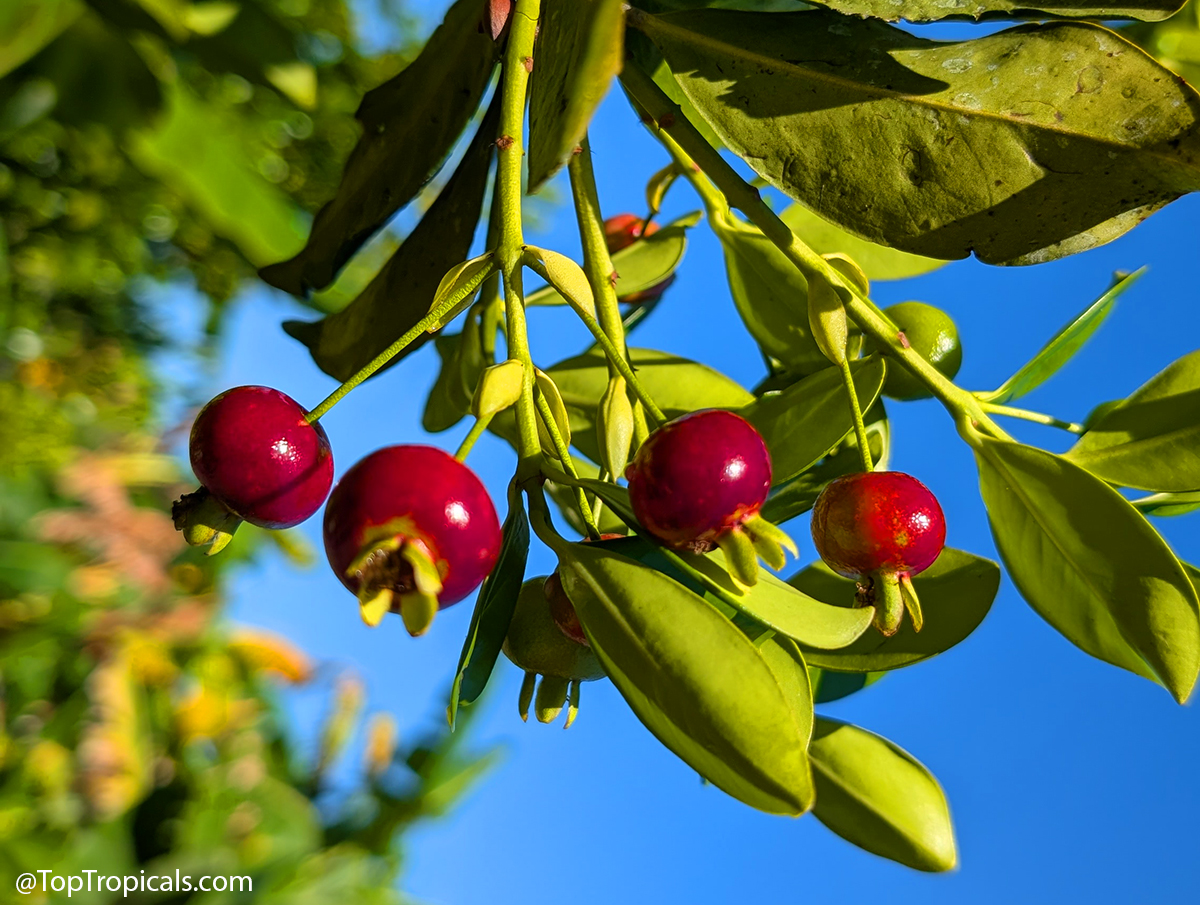
- Tropical cherries - fast-fruting Eugenias
- Blackberry Jam Fruit and Peanut Butter Fruit - fun for kids and adults
- Fig Trees - compact and hardy


Simple rule: if it stays compact and handles pruning, it works in a container.
Skip the egg hunt this year - go on a plant hunt instead. Start with one or two plants this Easter - not ten. Get them established, learn how they grow, and then expand.
Container basics (keep it simple):
- Pot size: start with 3–7 gallon, upgrade as plant grows
- Soil: fast-draining mix (never heavy garden soil)
- Water: soak well, then let top inch dry
- Feeding: consistent light feeding works better than heavy doses
- Sun: most tropicals want full sun (6+ hours)
🐣 Browse our Easter Container Collection

Date: 12 May 2025
Here is how Blackberry Jam comes from Gardenia
Randia formosa - Jasmin de Rosa, Blackberry Jam
Here is how Blackberry Jam comes from Gardenia
Did you know that Blackberry Jam Fruit Tree blooms like Gardenia?
Randia formosa, or Jasmin de Rosa is a unique small evergreen tree or bush that offers both beautiful, fragrant flowers and delicious fruit.
The fruit, with its rich, sweet flavor, tastes just like fresh blackberry jam, making it a delightful treat right off the tree.
Its white flowers, which resemble those of gardenias, fill the air with a pleasant fragrance.
Native to tropical regions, this plant is the perfect choice if you're looking for something unique and useful in your garden. Its fruit can be enjoyed fresh or used to create delicious jams and desserts, making it a great addition to both ornamental and edible landscapes.
📚 Learn more from previous posts:
💋Top 10 fast-fruiting trees: Blackberry Jam Fruit (Randia formosa)
💋The best small fruit trees that will produce right away
💋Truth about Blackberry Jam: it comes from Gardenia
💋Top 10 fast-fruiting trees
🛒 Elevate your garden with fragrance and flavor of Blackberry Jam Fruit
#Food_Forest #Fun_Facts #Perfume_Plants
🔴 Join 👉 TopTropicals