Date: 27 Jan 2026
🌸 Why adenium?
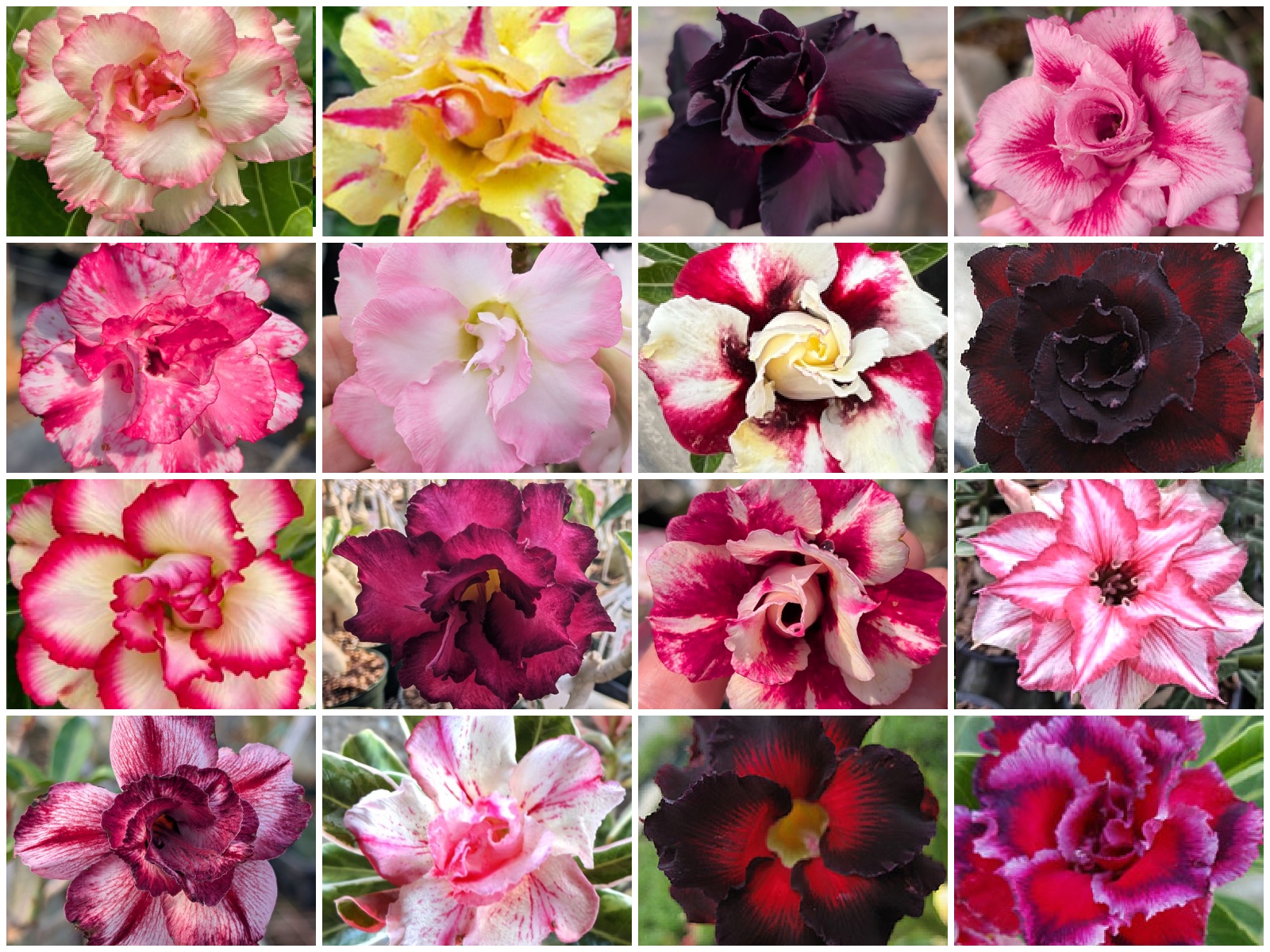
- Easy to grow in containers
- Thrive in sun or shade, indoors or out
- Tolerant of low humidity
- Very low water needs
- Forgiving plants that tolerate missed watering
- Long-lived plants that improve with age
- Compact size, ideal for patios, balconies, and windows
- Form unique, sculptural caudex shapes
- Decorative even when not in bloom
- Produce stunning, long-lasting flowers
- Often blooming in a few months
🌸 Adenium Care Basics
Adeniums have many spectacular hybrids, and their basic culture is closer to orchids than to typical houseplants. The key is a small pot, excellent drainage, bright light, and careful watering.
Pot and Soil
- Use a small pot sized to the root system.
- Excellent drainage is required.
- Use a very well-drained mix. We recommend specially formulated for Adeniums Desert Rose Soilless Mix
Light and Blooming
- Give lots of light for heavy flowering.
- In warm conditions and longer days, most hybrids and species begin blooming in spring.
- In warmer climates they can keep blooming through fall and winter.
Watering (Most Important)
- Adeniums dislike both extremes: over-watering and drying out too often.
- Use neutral to hard water when possible.
- Acidic water can sour the mix quickly and may cause root rot.
- Water in the early morning so the plant can drink through the day.
- Watering frequency can range from daily to every few days, depending on heat, light, and how fast the mix dries.
- Never let the pot sit in a saucer of water.
- Do not let the plant dry out too often, or it may go into early dormancy.
- Do not wet the leaves.
Fertilizer (Caudex + Flowers)
- To build a large swollen base/trunk (caudex), use a good quality fertilizer.
- A fertilizer that helps trunk swelling also supports flowering. The best choice for this is Sunshine Megaflor.
- Avoid fertilizers that are too high in nitrogen; choose a formula where the middle number is the highest.
- Never apply fertilizer directly on roots.
- Do not liquid feed a thirsty plant.
- Always water lightly first, then feed, to avoid root burn and leaf drop.
The Caudex "Secret" (Shaping the Base)
- At each repotting, lift the plant slightly so the upper roots are a little exposed.
- This encourages new roots to grow downward and helps create a thicker, more interesting caudex shape.
Multi-Grafted Plants (Important Note)
- Adenium hybrids can be multi-grafted with several colors/varieties on the same plant.
- The swollen base forms only when the rootstock plant is grown from seed.
✍️ Adenium FAQ
How much light do Adeniums need?
Adeniums need lots of light for heavy flowering. Most hybrids and species start blooming when conditions are warm and days get longer, and in warmer climates they can keep blooming through fall and winter.
What is the best pot size for Adeniums?
Use a small pot sized to the root system, with excellent drainage. A small pot with excellent drainage is a must.
What kind of soil mix should I use?
Use only a well-drained mix. Adeniums do best in very well-drained soil. A small pot plus excellent drainage is the foundation of success.
How often should I water Adeniums?
Adeniums do not like both over-watering and drying-out too often. Water preferably in the early morning and do not water again until the mix dries on the surface. Watering can range from daily to every few days depending on heat, light, and how fast the mix dries.
Can Adeniums sit in a saucer of water?
No. Never allow your Adenium to sit in a saucer of water.
Should I wet the leaves when watering?
No. Do not wet the leaves.
What kind of water do Adeniums prefer?
Adeniums prefer neutral to hard water. Acidic water tends to sour the soil too fast and may cause root rot.
How do I create a large, swollen caudex?
At each repotting, lift the plant slightly so the upper parts of the roots are a little exposed. This encourages the plant to form more roots that grow downward and helps create a thicker, more interesting caudex.
What fertilizer should I use for caudex growth and blooms?
Use a good quality fertilizer to support both trunk swelling and flowering. Avoid formulas that are too high in nitrogen; the middle number should be the highest. Never apply fertilizer directly on roots, and do not liquid feed when the plant is thirsty. Water lightly first, then feed, to avoid root burn and leaf drop.
Can an Adenium have multiple flower colors on one plant?
Yes. Adenium hybrids can be multi-grafted with several colors or varieties on the same plant. Note that the swollen base forms only when the rootstock plant is grown from seed.
✍️ Learn About Adeniums 🎥 Watch Adenium Videos 🛒 Shop AdeniumsDate: 16 Mar 2026
🌱 💪 Green Magic + SUNSHINE Boosters: A Complete System for Strong Plant Growth
By Tatiana Anderson, Horticulture Expert at Top Tropicals with Smokey & Sunshine help
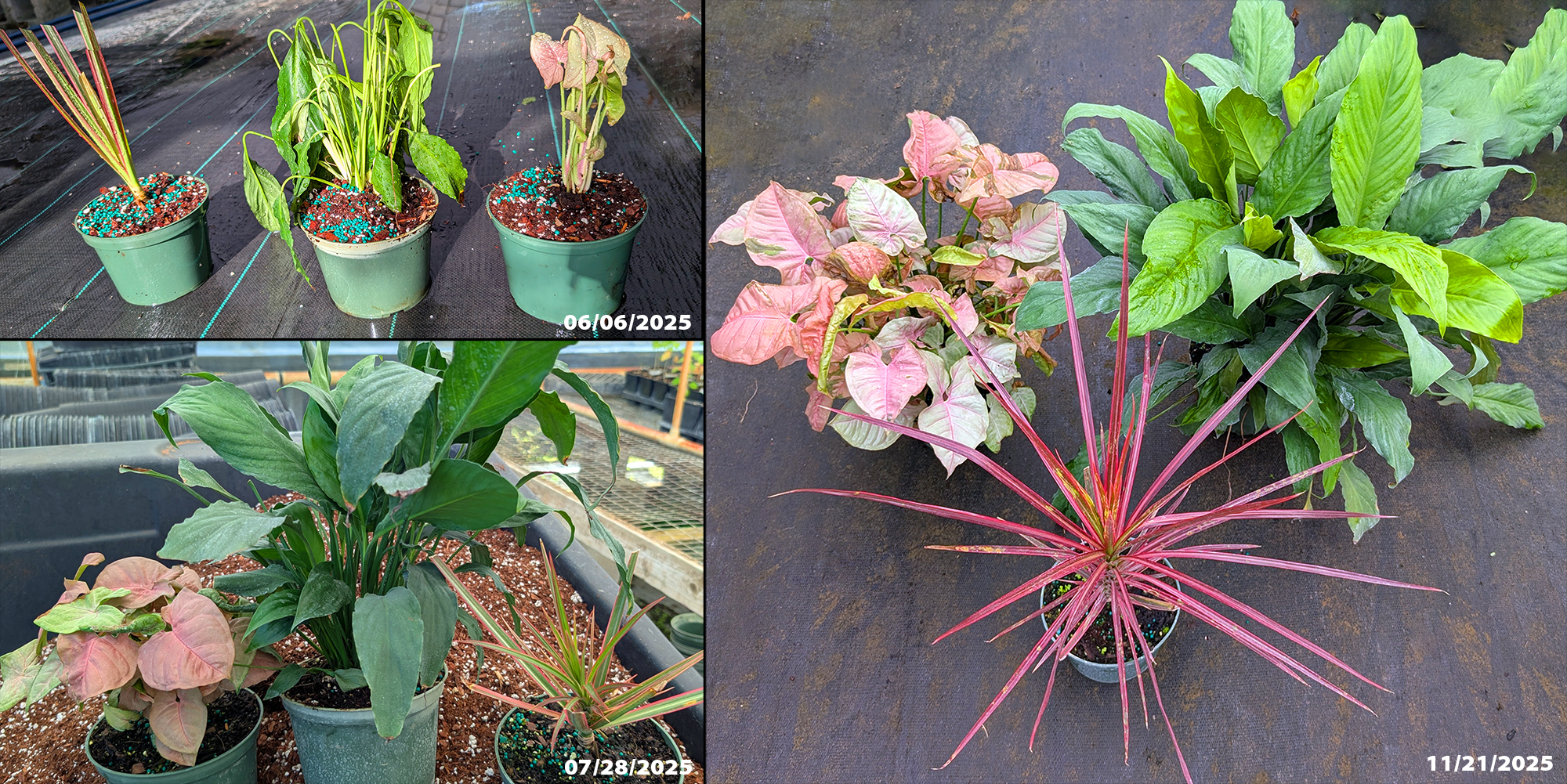
☀️🌱 Sunshine Boosters: Complete Plant Nutrition
Sunshine Boosters provide complete plant nutrition, including Calcium and micronutrients that plants need for strong growth. Because nutrients are delivered in liquid form, plants can absorb them quickly and respond almost immediately.
The Practical Problem
Liquid feeding works well, but it requires frequent application. In real gardens, many growers simply do not have time to add liquid fertilizer with every watering.
Green Magic: The Foundation
Green Magic solves this problem by providing steady background nutrition through controlled-release fertilizer. It feeds plants gradually, so they continue receiving nutrients even between liquid feedings.
Why This Combination Works
Together, this system provides both complete nutrition and steady feeding. Sunshine Boosters supply fast nutrients and Calcium, while Green Magic maintains a stable nutrient supply between feedings.
✍️ How to Feed Your Plants
📅 Step 1 – Start of the Growing Season
- Apply Green Magic around the root zone every 6 months.
In ground:- Small Shrubs (1–3 feet): Use approximately 1/4 to 1/2 cup per plant
- Established Trees: Use 1/2 lb to 1 lb of product per 1 inch of trunk diameter.
- Small In-Ground Ornamentals: A common "spoon" rate is roughly 1 teaspoon per gallon of estimated root volume (or per sq. ft. of surface area).
- Spread evenly around the dripline. Avoid piling the granules against the base or trunk of the plant. For best results, lightly rake the granules into the top 1–2 inches of soil.
- Apply 1 tea spoon per 1 gal of soil (mix in with soil) every 6 months during active growth period, or with every re-potting.
- Water normally after application.
- Adjustment for Temperature. Because Green Magic is
temperature-controlled, adjust your rate if your local climate is extreme:
- Cooler Climates (<60°F average): Increase the rate by 20% to ensure enough nutrients are released.
- Hot Climates (> 80°F average): Decrease the rate by 20% to prevent over-releasing as the heat speeds up the process.
☀️🌿 Step 2 – Active Growing Season
- Apply Sunshine Boosters during the growing season.
- Regular feeding (maintenance): Mix with tap water according to the ratio on the label. For SUNSHINE Robusta use 25 ml (5 tsp)per gallon of water and spray leaves every 5-7 days during active growth.
- Correction feeding ("medicine" dose): if plants show visible nutrient deficiencies, combine SUNSHINE Robusta with SUNSHINE Superfood and spray every 5–7 days until new growth appears healthy. All SUNSHINE Boosters products are compatible and can be mixed with water in the same sprayer.
- Best time to spray: early morning or evening when temperatures are cooler and leaves can absorb nutrients efficiently.
- Important: spray both the top and underside of leaves for maximum absorption.
📊 Seasonal feeding schedule with Green Magic and Sunshine Boosters.
| Season | Product | Method | Goal |
|---|---|---|---|
| Spring (March) | Green Magic | Soil Surface | 6-month steady nutrient base. |
| Growing Season | Sunshine Boosters | Foliar (Every 5-7 days) | Calcium & Bio-available growth power. |
| Late Summer | Green Magic | Soil Surface | Replenish foundation for Fall. |
| Winter | Sunshine Epi | Foliar/Drench | Cold tolerance and shipping recovery. |
Quick Dose Reference
- Green Magic: 1 teaspoon per 1 gallon of soil volume.
- Sunshine Boosters: 25 ml (5 tsp) per 1 gallon of water.
- Pro Tip: Always spray in the early morning or late evening to prevent leaf scorch and ensure maximum absorption through the stomata.
❓Frequently Asked Questions: Plant Nutrition & Fertilizer
General Fertilizer Concepts
Why is the"Spring Fertilizer Rush"a problem?
Most gardeners apply a large amount of traditional fertilizer once in
March. This creates a"roller coaster"effect where plants get a sudden
spike of
nutrients followed by weeks of starvation. This leads to inconsistent growth
and potential"fertilizer burn."
What is"fertilizer burn"?
Traditional fertilizers are made of soluble salts. When too many salts
accumulate around the roots, they actually pull water out of the plant
tissues
(osmosis), dehydrating the plant and damaging sensitive root tips and leaf
edges.
Is there a difference between"Slow-Release"and
"Controlled-Release"?
Yes.
- Slow-Release: Relies on natural factors like moisture and soil microbes to break down. It is often unpredictable.
- Controlled-Release: Uses engineered polymer membranes (like Polyon) to release nutrients at a specific, predictable rate based primarily on temperature.
Green Magic & Temperature
How does temperature affect my fertilizer?
Most fertilizers are lab-tested at 75°F. In hot climates
(90°F+), the nutrients release much faster. A"6-month"fertilizer
might only last 3
months in the summer heat.
How should I adjust Green Magic for my local weather?
- Cooler Climates (<60°F): Increase the application rate by 20%.
- Hot Climates (> 80°F): Decrease the application rate by 20% to prevent over-releasing.
The Calcium Gap
Why doesn't Green Magic contain Calcium?
Calcium salts are highly soluble and can destabilize the polymer coating
used in controlled-release granules. Therefore, most high-quality granules
leave Calcium out. You can provide Calcium by using SUNSHINE Boosters
Why is Calcium so important for new growth?
Calcium is the"bone"of the plant, building strong cell walls. Unlike
other nutrients, it is immobile—the plant cannot move it from old
leaves
to new ones. If you don't provide a constant supply, new leaves and fruit
will
emerge distorted or weak.
Advanced Science & Troubleshooting
What makes Sunshine Boosters"Bioavailable"?
Unlike most liquid fertilizers that use EDTA chelators, Sunshine Boosters
are amino-acid based. They use organic acids and glycine to escort minerals
into the plant, allowing it to incorporate nutrients into its proteins
almost
immediately.
Will these fertilizers affect the taste of my fruit?
No. Sunshine Boosters are made from pharmaceutical-grade components and
contain no urea or harmful salts, ensuring your harvest (like Mangoes or
Avocados) has a pure, natural flavor without a chemical aftertaste.
✨ Green Magic - 15% Off This Week
Build the foundation for the entire growing season with a steady, long-lasting nutrient base.
No coupon needed. The discount is automatically applied at checkout.
Smokey: Not quite. Green Magic is the steady base diet. Sunshine Boosters are the weekly power drink during active growth.
Sunshine: Ah. Like my regular meals and donuts on top.
Smokey: Exactly. Plants eat slowly from Green Magic, and once a week they get a fresh boost.
Sunshine: Sprinkle once, then boosters every week. The plant grows, I drink coffee, and nobody forgets anything important.
Smokey: Except where you left the donuts.
Sunshine: Smokey... nobody forgets donuts. Ever
Date: 7 Oct 2025
⭐ The Winter Stars: 8 Flowering Trees That Steal the Show
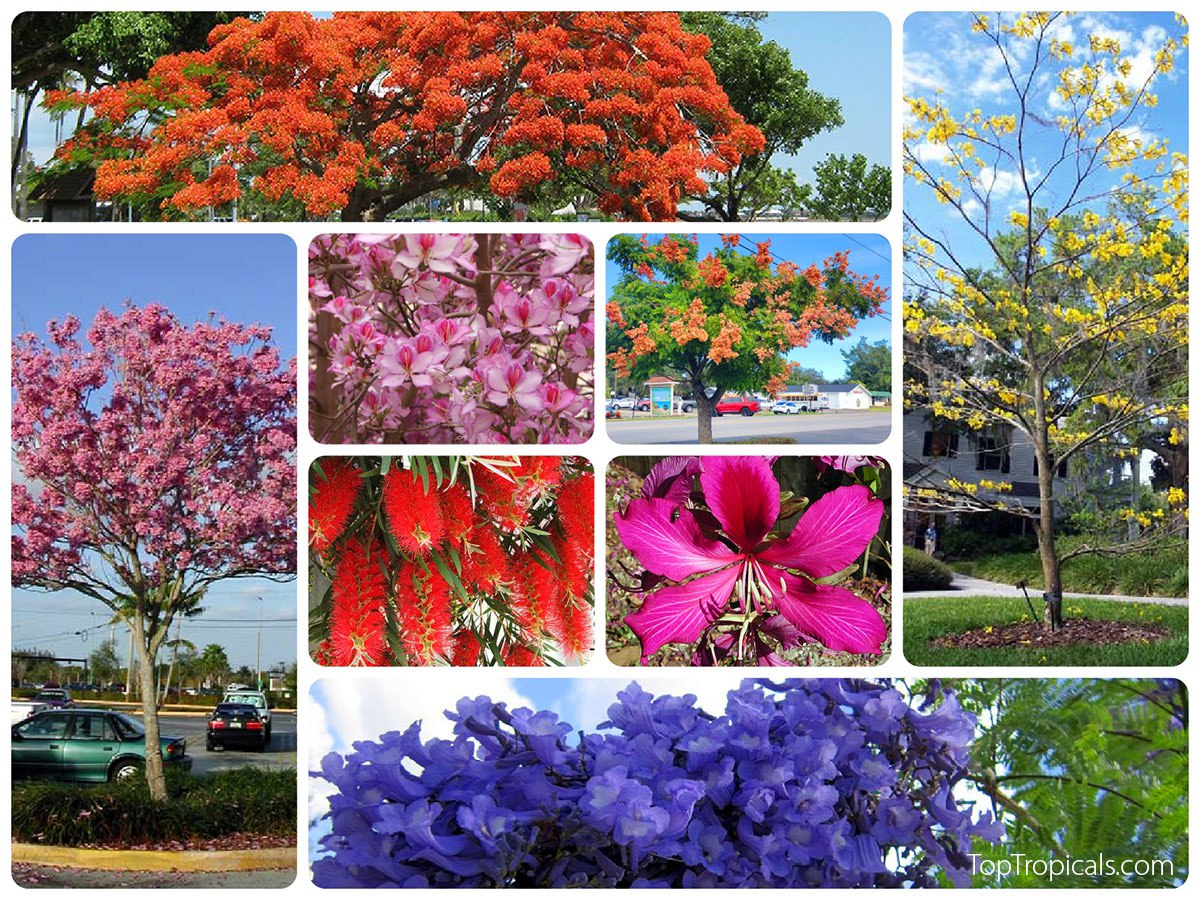
8 Best Flowering Trees That Bloom in Winter: Royal Poinciana with red-orange canopy, Dwarf Pink Tabebuia, Dwarf Golden Tabebuia, Pink Butterfly Orchid Tree, Golden Rain Tree, Weeping Red Bottlebrush, Hong Kong Orchid Tree, and Jacaranda with purple flowers.
Royal Poinciana (Delonix regia)
The diva of tropical trees. Huge red-orange flowers blanket the branches
from late winter through summer. If you’ve ever seen one in full
bloom, you know — it stops traffic.
Best in large yards or open spaces, but young ones do great in big pots for
a few years.
🛒 Shop
Tatiana: “If you want a tree that makes
people
say ‘wow,’ this is it.”
Tabebuia chrysotricha – Dwarf Golden Tabebuia
Small tree, big drama. It turns solid gold just before new leaves appear. Blooms while completely bare — a stunning contrast of yellow on brown wood. Perfect for patios, courtyards, and containers. Handles cool nights down to the mid-20s F. Bright, cheerful, and forgiving — the kind of tree that always looks like it’s celebrating. 🛒 Shop
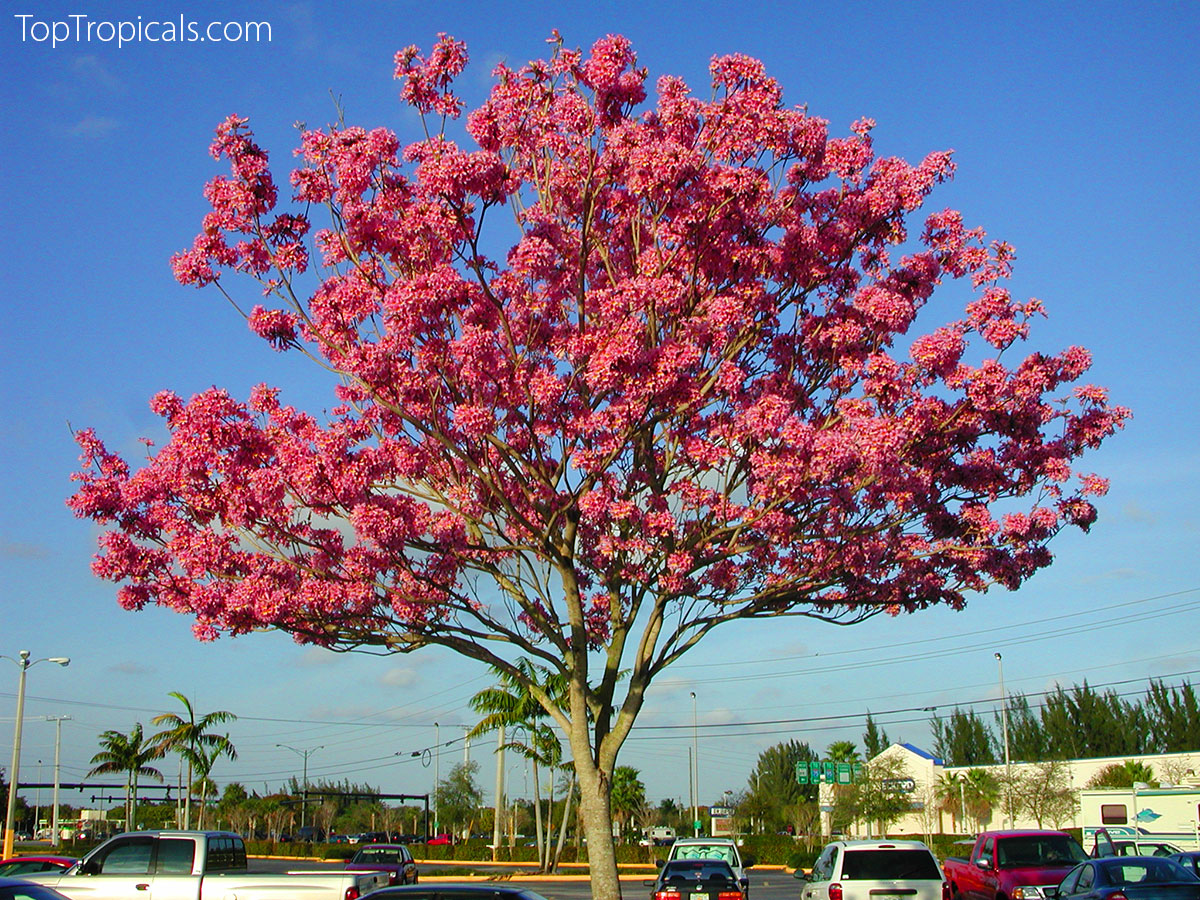
Tabebuia impetiginosa – Dwarf Pink Tabebuia (Pau D’Arco)
The Florida “cherry blossom.” Pink-lavender flowers smother the branches each winter, often before any leaves return. Thrives in sandy soil, tolerates drought, and grows beautifully in large planters or pots indoors near a sunny window. Ideal for seasonal residents or anyone who wants color when everything else is asleep. 🛒 Shop
Jacaranda mimosifolia
If color had music, this would be jazz. Soft, fern-like leaves and cascades of violet-blue trumpet flowers — airy, elegant, unforgettable. Outdoors, it makes a graceful shade tree; in containers, it stays compact with regular pruning. Jacarandas reward patience — they bloom bigger each year. 🛒 Shop
Koelreuteria paniculata – Golden Rain Tree
A favorite for its surprises — golden blooms in summer, pink paper lantern pods in fall, and bronze leaves before rest. Fast-growing, tough, and easy. Loves full sun and moderate water. Great for open lawns or patio tubs. The kind of tree that gives you something new to look at every month. 🛒 Shop
Callistemon citrinus – Bottlebrush Tree
The hummingbird magnet.
Bright red, brush-shaped flowers bloom several times a year —
sometimes even in cool weather.
The dwarf form, ‘Little John,’ stays about 4 feet tall, perfect
for pots or small borders.
Trim lightly after flowering to keep it compact and colorful. 🛒
Shop
Tatiana: “If you’ve never grown a
tropical tree before — start here. It’s the friendliest
one.”
Bauhinia variegata – Pink Butterfly Tree
Graceful, fragrant, and forgiving. Its pink-lavender orchid-like flowers open from late winter through spring, filling the garden with color and pollinators. It’s fast-growing, drought-tolerant, and excellent for both ground and pots. Even the buds are edible — a fun bonus for adventurous gardeners. 🛒 Shop
Bauhinia blakeana – Hong Kong Orchid Tree
The queen of them all.
Huge magenta-purple blooms that last for months, from fall through spring.
Fragrant, clean (no messy seed pods), and perfect for patios or large
decorative containers.
Give it sun, a little water, and it will reward you with bloom after bloom.
🛒 Shop
Tatiana: “It’s the one tree that never lets winter
win.”
A note on grafted Hong Kong Orchid Trees: Most Hong Kong Orchid Trees are grafted, and that’s actually a big advantage. Because they don’t grow from seed, grafted plants mature faster and begin blooming while still small — sometimes within the first year. That makes them perfect for patio pots or small gardens where space is limited.
Bringing the Tropics Home
Whether your garden faces the Gulf or your window faces the snow, these trees let you live in color year-round. Plant them outdoors in warm zones or grow them in pots indoors — they adapt, they bloom, they brighten every corner.
Gardening isn’t about waiting for spring — it’s about finding joy in every season. And when a tree blooms in January, that joy feels twice as sweet.
🛒 Shop Winter Flowering Plants
✍️ Winter Bloomer Q&A
Q: Can these trees really bloom indoors?
Yes! Smaller species like Bottlebrush ‘Little John,’ Dwarf Tabebuias, and many Bauhinias bloom beautifully in pots with bright light or grow lamps.
Q: Do they lose their leaves in winter?
Some, like Tabebuias and Jacarandas, drop leaves right before blooming — it’s normal and part of their charm. Others, like Bottlebrush, stay evergreen.
Q: What fertilizer works best?
We use Sunshine Boosters — gentle, balanced, and perfect for tropicals. Feed every 2–3 weeks during active growth.
Q: How do I know when to water?
Touch the soil! If it’s dry an inch or two down, water deeply. Overwatering is the main mistake with tropicals.
Q: Can they handle frost?
A quick dip into the upper 20s F is fine for most mature trees. Cover young ones or move containers under shelter if colder.
Q: Which are best for beginners?
Start with Bottlebrush ‘Little John’ or Golden Tabebuia — compact, colorful, and nearly foolproof.
Q: When will they bloom?
Usually within few years if they get enough sun and warmth. Grafted plants blooms much sooner
Q: Which of these trees are best for pot growing?
For patios, balconies, or indoor sunrooms, choose the compact or grafted types:
- Tabebuia chrysotricha, Dwarf Golden Tabebuia, bright and easy.
- Tabebuia impetiginosa, Dwarf Pink Tabebuia, hardy and long-blooming.
- Callistemon ‘Little John’ – stays neat and flowers all year.
- Grafted Bauhinia blakeana – blooms while young, perfect for pots.
🎥 Watch videos of Dwarf trees in bloom:
Date: 15 Jan 2026
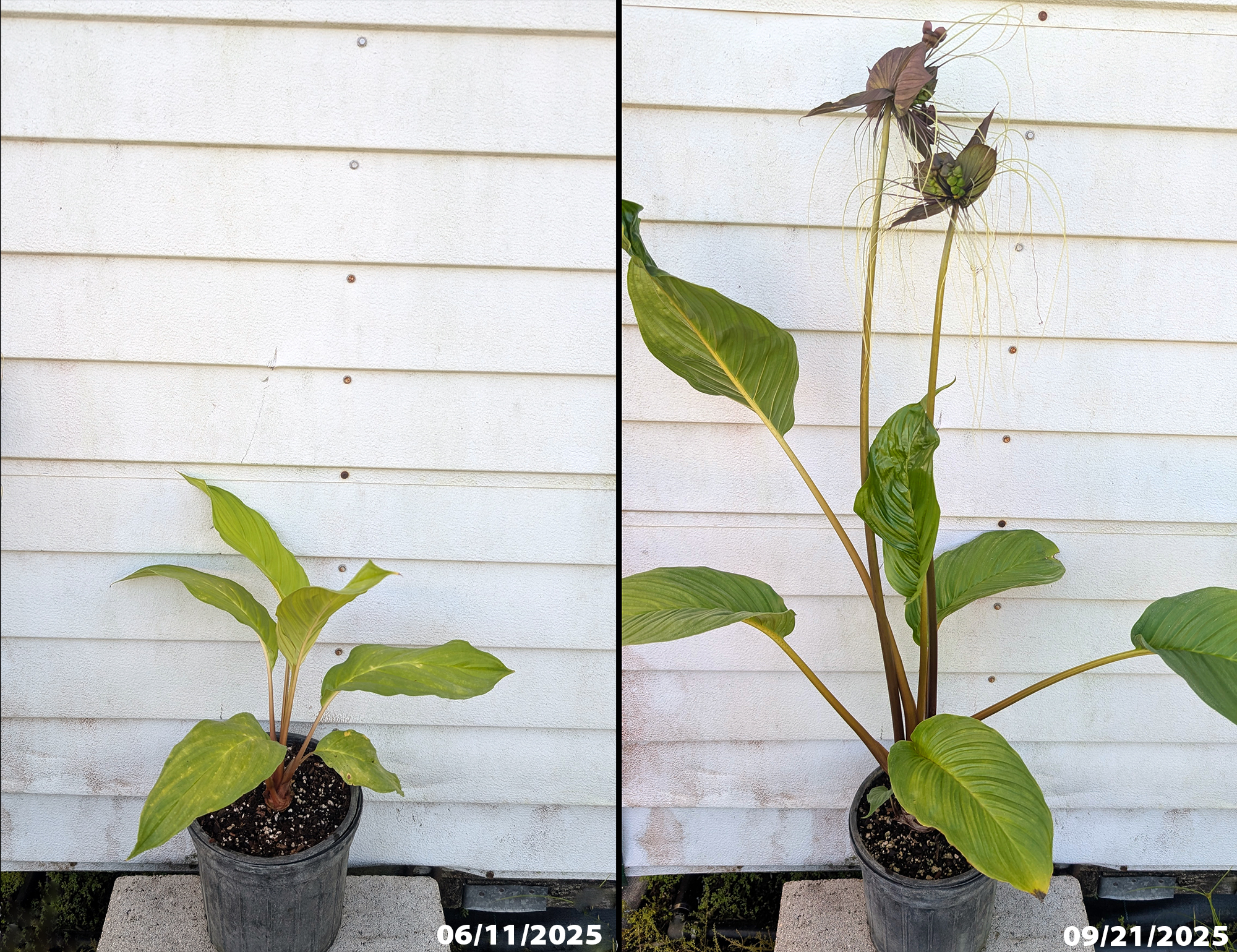
When the Black Bat Lily decides to bloom
Every so often a plant blooms and the whole greenhouse seems to slow down.
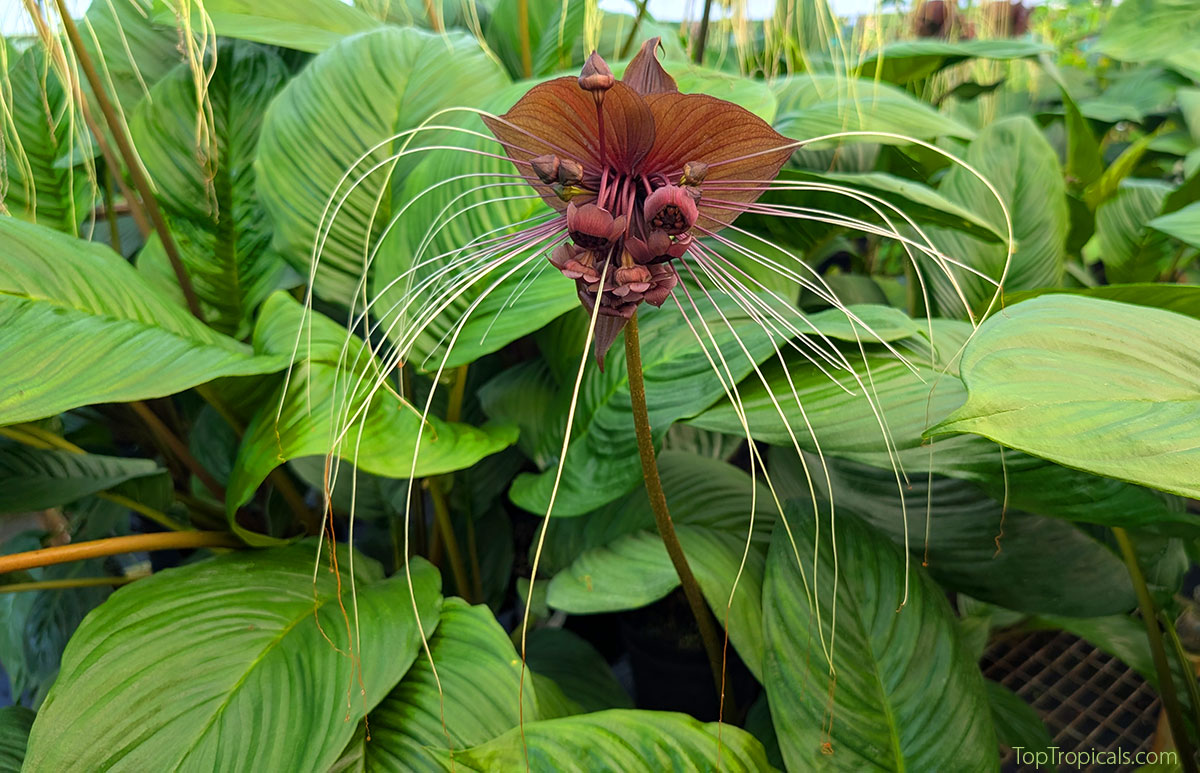
That is what happened this week with the Black Bat Lily, Tacca chantrieri. We have grown Taccas for years, but when the black ones open properly, it still feels special. The flowers are dark and quiet, almost unreal up close. They do not shout for attention. They make you lean in.
Right now, we have a lot of them blooming at the same time. If you have never seen one in person, photos only get you part of the way there. The wings are darker than you expect, and the whiskers seem to go on forever. People walk into the greenhouse, stop, stare, and usually ask the same question: "Is that real?" - Yes. It is.
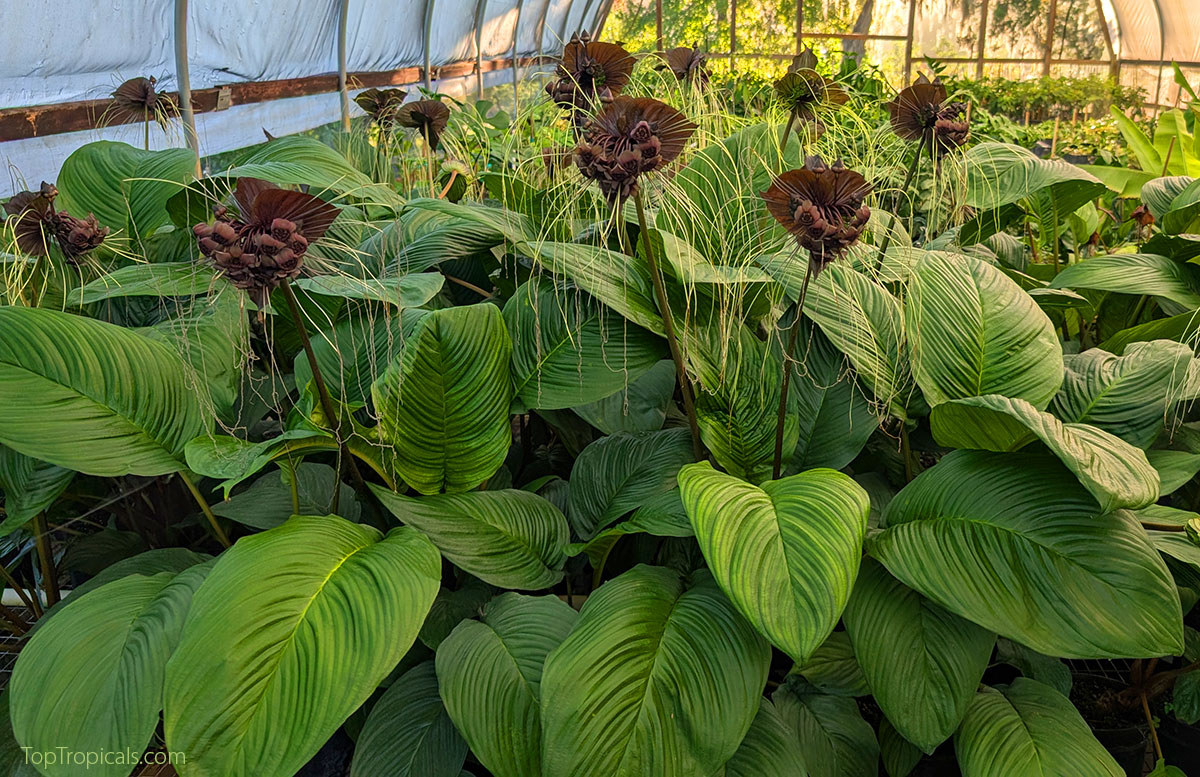
A quick honest note, because this matters. The blooms themselves are delicate and may not travel well. That is just the nature of this plant. The plants, however, are strong, well established. With the right conditions, they bloom again. This is not a one-time trick.
Black Tacca is not a beginner houseplant, but it is also not impossible. It likes filtered light, steady warmth, and humidity. It does especially well in a greenhouse or a bright indoor spot where you already keep plants that enjoy moisture. It is the kind of plant you keep close, not one you forget in the corner.
We are offering them now simply because they are ready and looking their best. If you have been waiting for one, this is a good moment.
You can see the Black Bat Lily here: https://toptropicals.com/store/item/2345.htm
Just wanted to share something we are enjoying in the greenhouse right now. Some plants come and go. Some stay with you.
Tacca (Bat Lily) FAQ
What is Tacca?
Tacca, also known as Bat Lily or Devil Flower, is a tropical plant grown for its unusual bat-shaped flowers with long whisker-like filaments. The most popular species is Tacca chantrieri, the Black Bat Lily.
Is Tacca hard to grow?
Tacca is not a beginner plant, but it is not impossible. It does best with warmth, humidity, and filtered light. Gardeners who already grow orchids, calatheas, or other humidity-loving plants usually do well with Tacca.
Does Tacca need a greenhouse?
A greenhouse is ideal, but not required. Tacca can be grown indoors in a bright spot with indirect light and good humidity, such as near a humidifier or in a bright bathroom with a window or skylight.
Will my Tacca arrive in bloom?
Plants may be blooming in the greenhouse, but flowers are often removed before shipping because they are delicate and do not travel well. The plants are well established and capable of blooming again with proper care.
How often does Tacca bloom?
Tacca does not bloom constantly. It may take time to establish before flowering, but once settled, it can bloom seasonally and may produce multiple flowers in warm, humid conditions.
Does Tacca grow from a bulb?
Tacca grows from a rhizome, not a bulb. The rhizome stores energy and allows the plant to regrow and bloom again.
Why does Tacca have long whiskers?
The long filaments are thought to help attract pollinators such as flies by mimicking the look of decaying organic matter. While unusual, this is part of the plant's natural pollination strategy.
✍️ More about growing Tacca🛒 Get your own Tacca plant
🎥Watch our videos about Tacca
Date: 27 Jan 2026
🌸 Adenium, Coffee, and Donuts

Sunshine: So it is a team plant. Everyone blooms, nobody agrees.
Smokey: Yet it grows just fine.
Sunshine: That is the secret. Coffee and donuts.
🌸Featured Adeniums
Recommended by our Horticulturist, Tatiana Anderson

Deep magenta flowers with a velvety look and a darker, almost black edge. A bold, elegant adenium that stands out immediately.

Bright yellow and mauve swirls across layered petals create a warm, cheerful bloom that lives up to its name.
 Clean white petals brushed with playful pink streaks. A reliable bloomer
with soft ruffled flowers.
Clean white petals brushed with playful pink streaks. A reliable bloomer
with soft ruffled flowers.
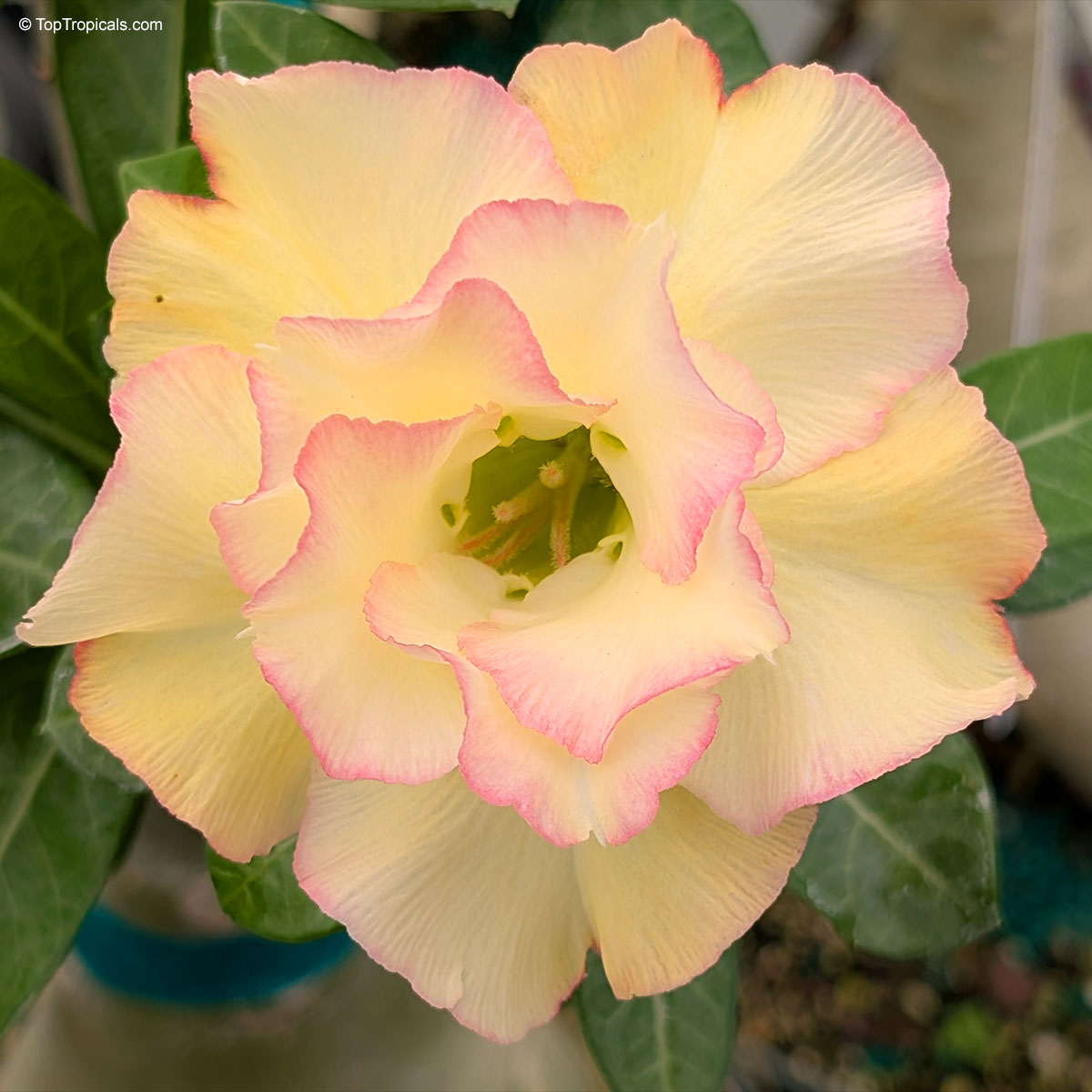
Known for its three-color effect, shifting from yellow to pink to nearly white on the same plant.
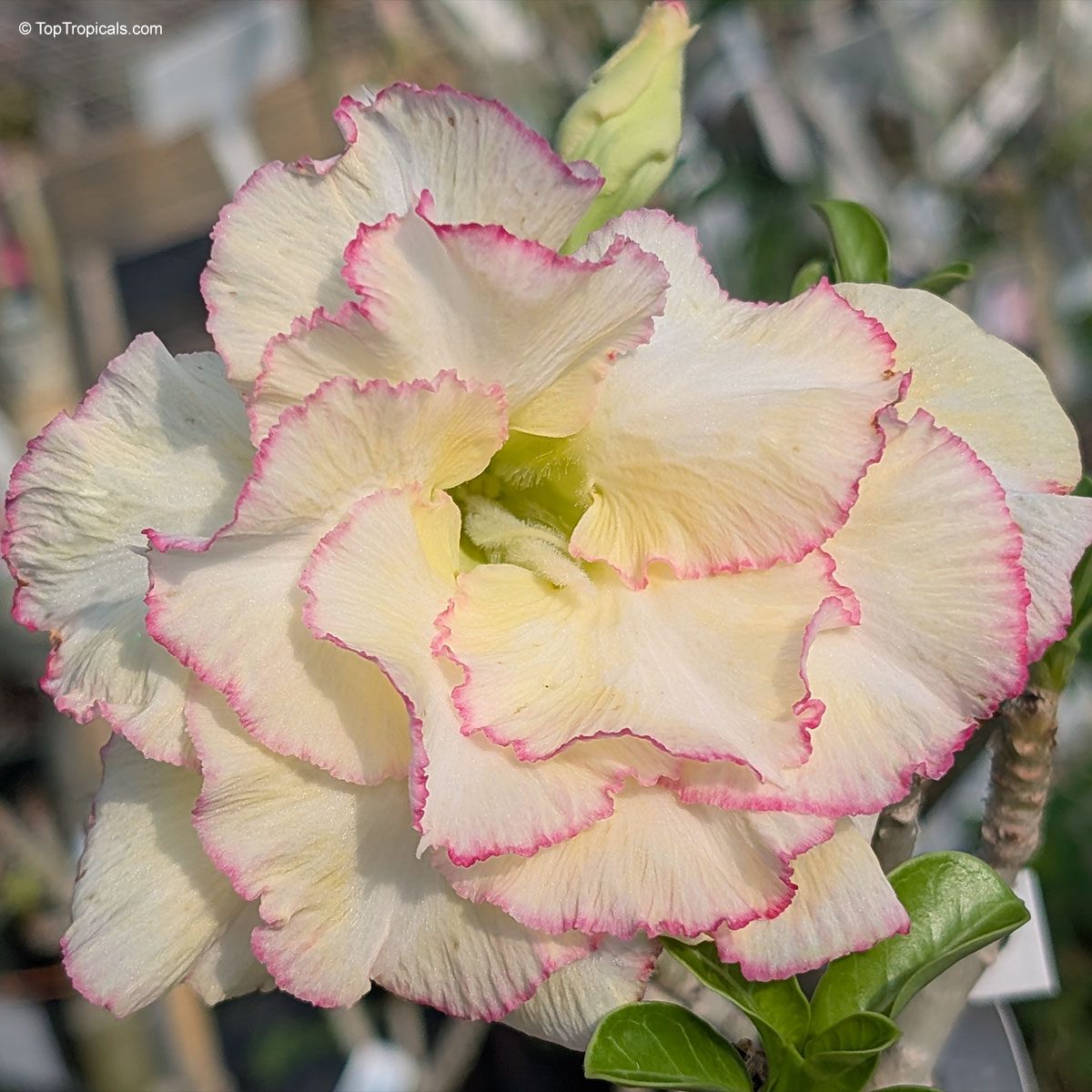
Cheerful yellow petals dipped in cherry red with bold ruffled layers. Bright, playful, and impossible to miss.
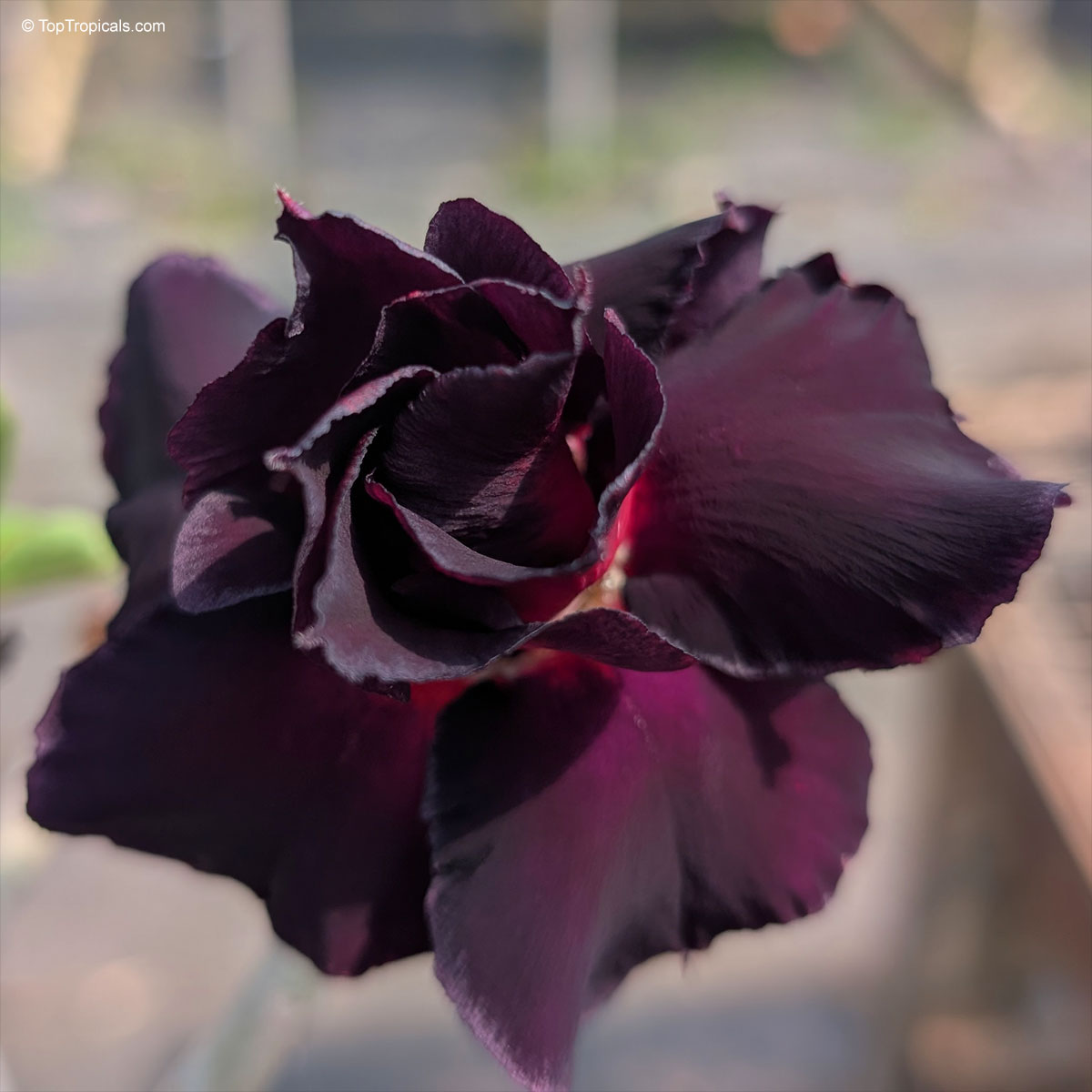
Nearly black petals with a glowing red center. Dark, dramatic, and different.
Date: 6 Feb 2026
💕How would you like to give a Valentine plant gift?
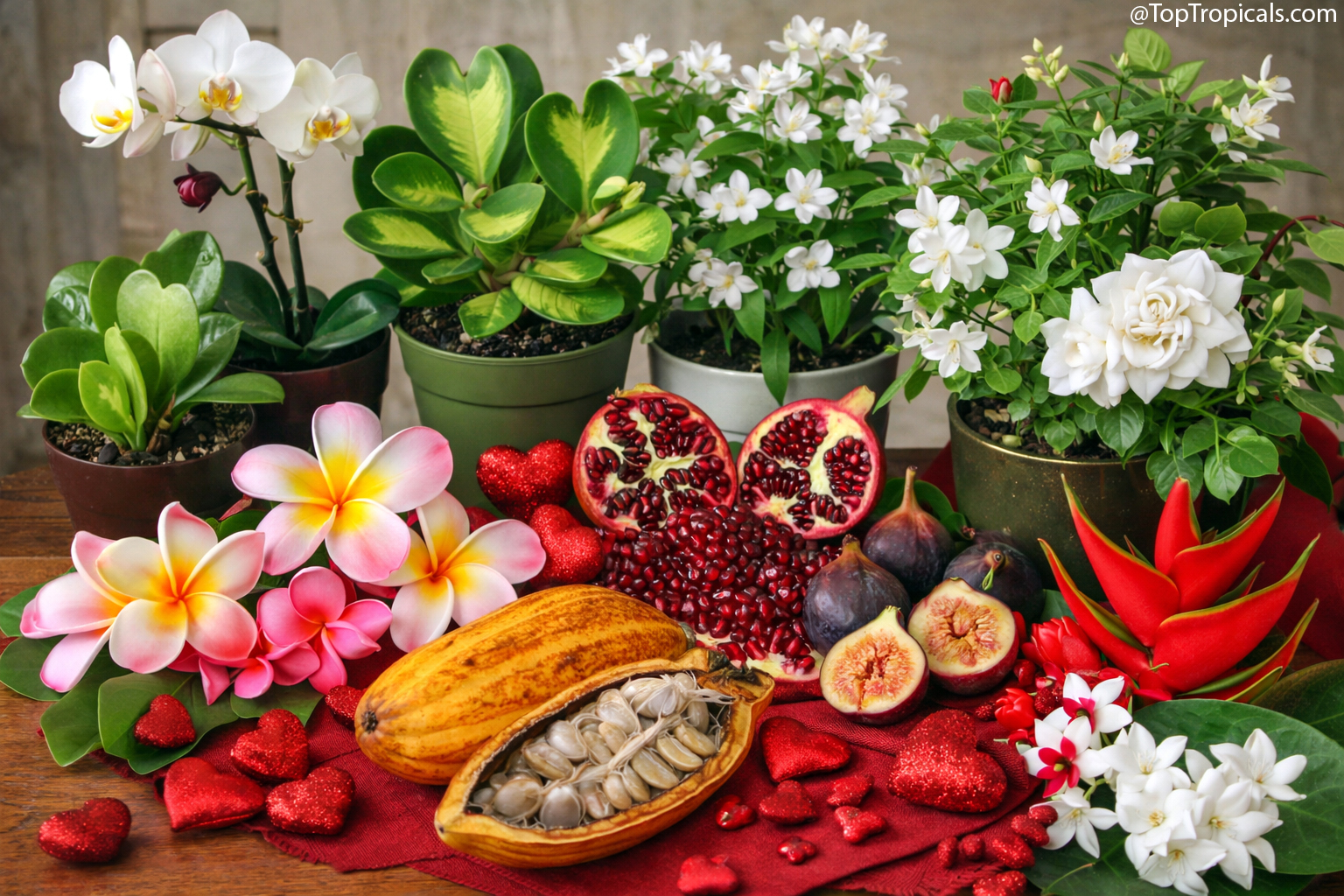
Choose the plant
If you already know what feels right, choose the plant now. Sweetheart Hoya is a favorite for a reason, and there are other Valentine plants to explore if you want options.
A good choice when you feel confident, love plants, or are gifting something meant to live indoors.
Let your Valentine choose
If timing, weather, or choice feels uncertain, a Gift Card keeps the moment simple. Your Valentine can choose the perfect plant when the time is right.
Especially helpful for gardeners up north, or when you want the gift to unfold later.
About shipping and timing
We ship live plants with care and pay close attention to weather along the way. If conditions are not right, we may hold a shipment briefly to keep plants safe.
If timing or weather makes you hesitate, a Gift Card is an easy way to give a Valentine gift now and choose the plant later, when conditions are perfect.
More Valentines Gift Plants
- Valentines plants from around the world that symbolize love, connection, and appreciation. 👉Learn
- Top nine plants of love, desire, and the senses: aphrodisiacs and sensory connections. 👉Learn
- Four popular plants of friendship, appreciation, and shared connection. 👉Learn
- Eight favorite plants of romance, affection, and emotional connection. 👉Learn
Date: 14 Feb 2026
🍭 From Vine to Bean: A Practical Guide

How to Grow Vanilla: quick how-to
Vanilla is not complicated, but it does have preferences. Start with a pot and regular, well-draining mix. It does not need anything exotic. Give it:
- Bright, indirect light
- Warm temperatures
- Good humidity
- Air movement
Most importantly, give it something solid to climb. A wooden trellis, a log, or a burlap-covered board works well. The surface should be porous so the aerial roots can grip.
As it grows, guide the vine gently. You can prune it to control size. Vanilla is slow to mature. That is normal.
The Bloom Secret
Vanilla does not bloom just because it looks healthy. It blooms when it feels secure.
This is a climbing orchid. It must attach firmly to a solid, porous support such as a wood log, trellis, or burlap-covered board. When the aerial roots grip and the plant reaches maturity, flowering becomes possible.
Once the flowers appear, they usually need to be hand pollinated to produce pods. Each flower stays open for only a short time, so timing matters.
How to pollinate vanilla: In this video, we show you exactly how to pollinate vanilla step by step
❓Vanilla care: quick FAQ
- Does Vanilla planifolia really produce vanilla
beans?
Yes. Vanilla planifolia is the commercial source of vanilla. After flowering, it can form long green pods (vanilla beans). The aroma develops later during curing. - What is the secret to getting vanilla to bloom?
Let it climb. Vanilla is a climbing orchid and usually will not bloom until its aerial roots attach firmly to a solid, porous support like a wood log, trellis, or burlap-covered board. - Do I need to pollinate vanilla flowers?
Yes. In most home growing conditions, vanilla flowers must be hand pollinated to produce pods. Each flower is open for only a short time, so timing matters. - Can I grow vanilla indoors?
Yes, if you can provide bright, indirect light, warmth, humidity, and a support to climb. A sunny room with filtered light and a trellis or log can work well. - What should I use for support?
Use a sturdy trellis, a wood log, or a burlap-covered board. The key is a porous surface that aerial roots can grip. Avoid chemically treated wood. Check out this very unusual way to grow Vanilla Orchid over a wall. - What potting mix should I use for Vanilla plant?
Start in a pot with a regular, well-draining potting mix such as Sunshine Abundance. As the plant matures, it relies more on its support and aerial roots than the soil. - What fertilizer should I use?
Sunshine Boosters Orchidasm is formulated specifically for orchids and will work perfecty for Vanilla orchid as well. - How big will it get?
As big as you let it. Train it and prune it. Vanilla grows according to the structure and space you provide. - How long until it flowers?
Typically a few years. Vanilla is a long-term project, but it is very rewarding once established.
For Collectors and Enthusiasts:
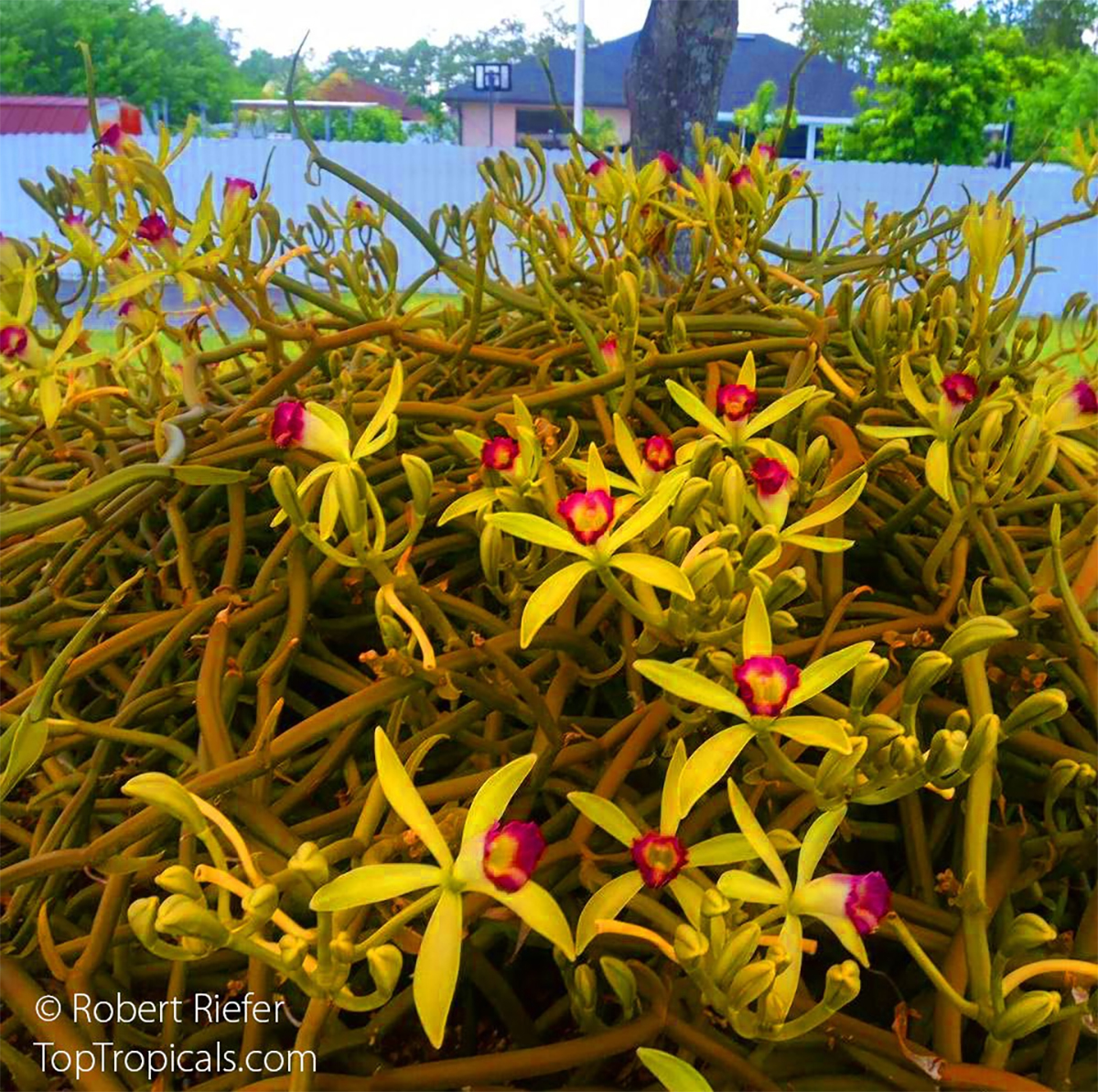
We also offer Vanilla dilloniana, a rare Florida native species with distinctive flowers.
One remarkable specimen of this species, grown by our friend Robert Riefer, became so vigorous over many years that it outgrew a 100 gallon container and was eventually moved into a 250 gallon pool on wheels.
The plants we offer are propagated from that very specimen:
That kind of growth reflects deliberate cultivation and ideal conditions - not something that happens unintentionally.
Vanilla grows according to the space and structure you provide.
For gardeners focused on producing real vanilla beans for the kitchen, Vanilla planifolia remains the right place to start.
Date: 18 Feb 2026
🔥 Blazing into the 2026 with hot jasmines

Smokey: It's jasmine, Tiger. A shrub. Not Wembley. Calm down.
💮 2026 Year of the Horse - and the Plant I Trust Most
By Tatiana Anderson, Horticulture Expert at Top Tropicals
Every new year carries its own energy.
2026 is the Year of the Horse - a year of movement, fire, momentum, and bold decisions. It is not a quiet year. It pushes us forward.
When fellow gardeners ask me what to grow in a year like this, my answer
is simple:
Grow something that balances strength with grace.
For me, that plant is Jasmine Sambac.
In many cultures, Sambac represents devotion, purity, and deep affection. In the Philippines it is the national flower - Sampaguita - woven into garlands for weddings and sacred ceremonies. In Hawaii, it becomes leis - a symbol of welcome and connection - Pikake. In India, it perfumes temples and homes.
This is not just a fragrant shrub.
It is a plant tied to love, loyalty, and continuity.
The Horse runs forward.
Jasmine anchors the heart.
In a fiery year like 2026, I believe we need both.
And that is why I always return to Jasminum sambac.
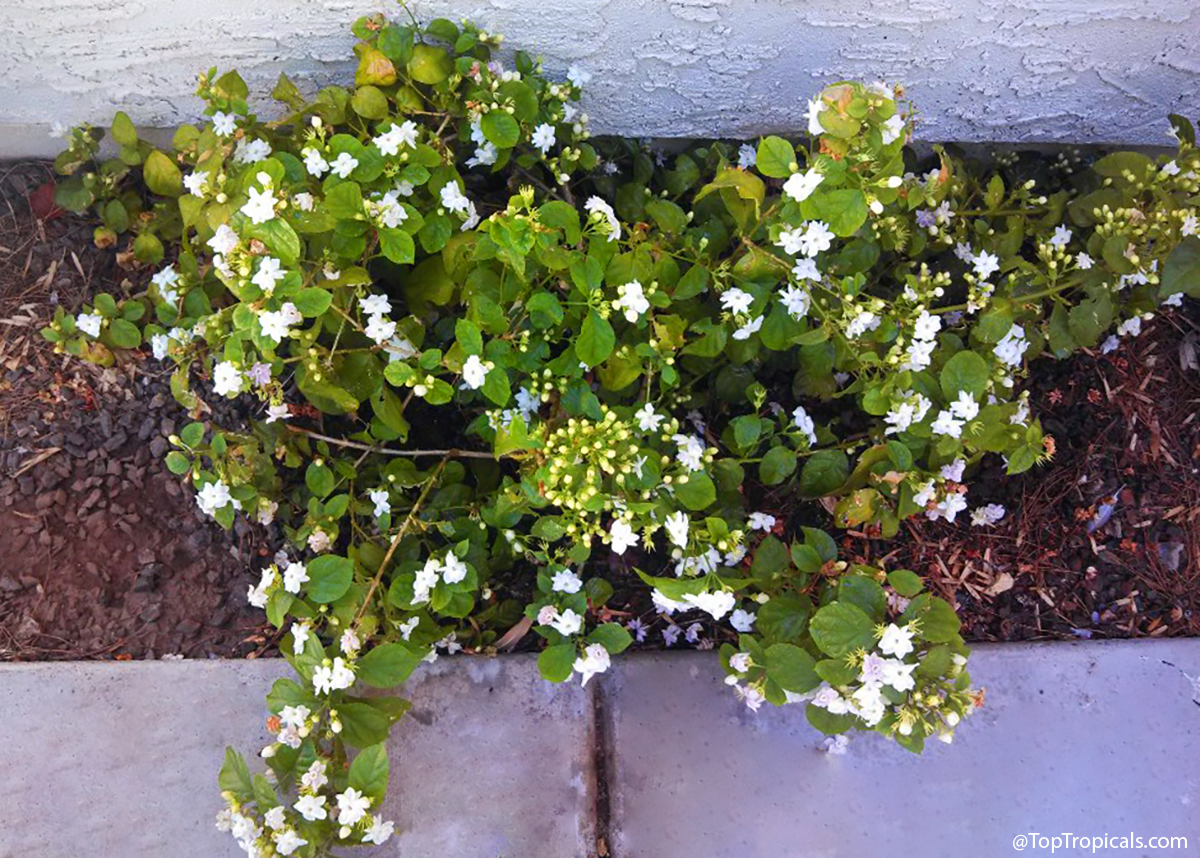
✅ Why Jasmine Sambac?
Over the years I have grown thousands of plants, but very few have the staying power of Jasmine Sambac.
It is not just fragrant. It is intensely, unmistakably fragrant. One open flower can perfume an entire patio. In the evening, the scent becomes deeper and richer.
But what makes Sambac truly special is its adaptability.
It can grow as a compact patio shrub, a flowering hedge, or a climbing vine. It performs beautifully in containers. It tolerates both full sun and partial shade. The more light you give it, the more flowers it rewards you with.
And unlike many tropicals, Sambac does not bloom just once. With proper care, it flowers in cycles throughout the warm season.
For gardeners, that combination is rare: beauty, perfume, flexibility, and repeat bloom.
That is why it has remained one of the most wanted fragrant plants in cultivation.
Date: 23 Feb 2026
 Macadamia Tree Care
By Tatiana Anderson, Horticulture Expert at Top Tropicals with Smokey & Sunshine help
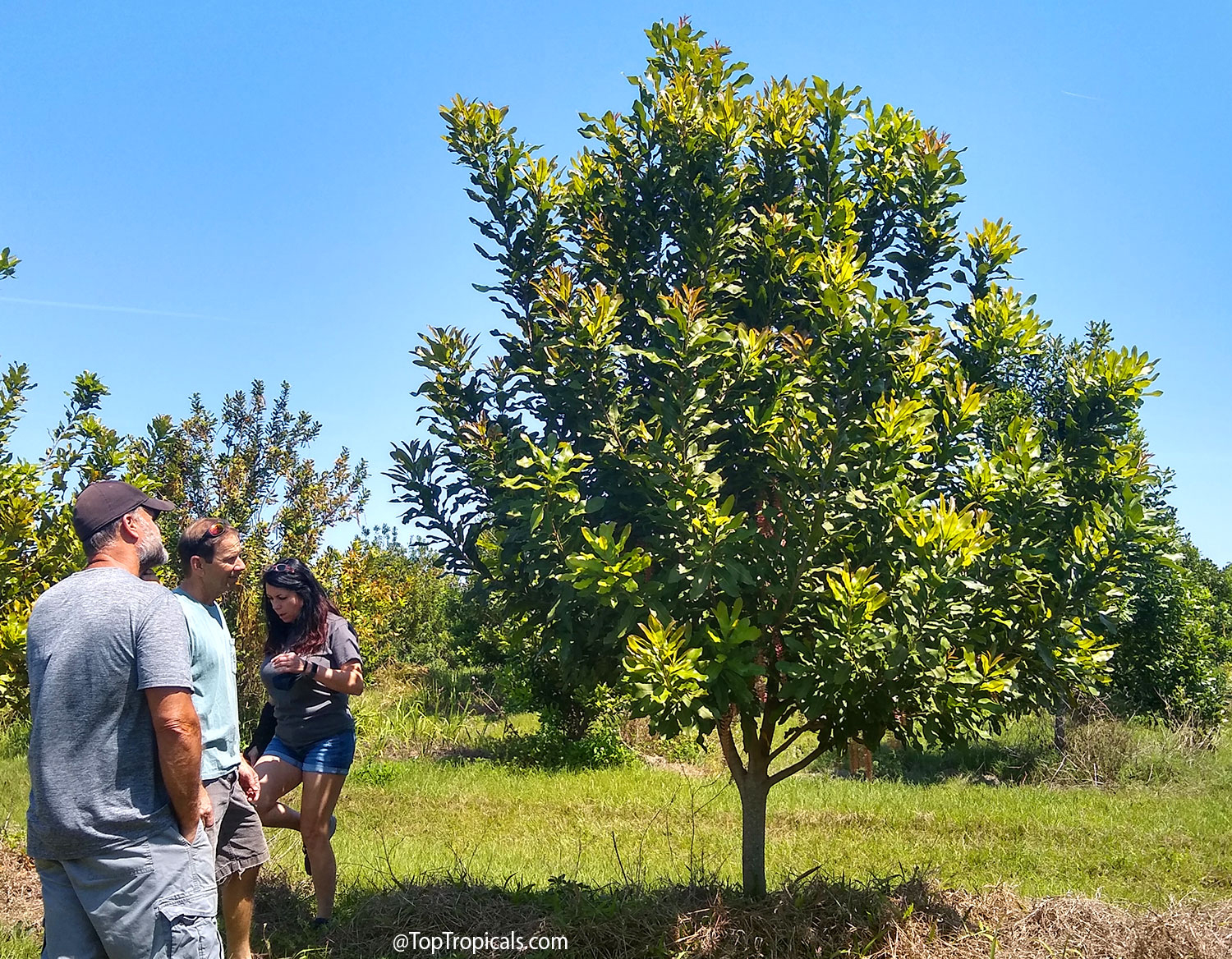
🌳 Growing Macadamia Tree
Macadamia is not a fragile tree, but it does have preferences. If you respect them from the beginning, the tree rewards you for decades.
- Start with the site. Drainage is everything. Macadamia will tolerate cool weather better if planted in a well-drained area. Avoid low spots where water sits after rain. If your soil is dense or clay-like, build a mound or improve drainage before planting.
- Choose full sun whenever possible for the best nut production.
- Planting location matters. A south or southeast exposure near a wall can create a warmer microclimate that buffers cold nights. Freeze plus wind is more damaging than temperature alone. Macadamia handles cold better when protected from winter wind.
- Dig a hole about twice as wide as the container, but no deeper than the root ball. Set the tree level with the surrounding soil. Do not bury the trunk.
- Water regularly during the first three months while the tree establishes roots.
- Fertilize lightly. Macadamia does not respond well to over-fertilizing. Macadamias prefer mild liquid fertilizers, SUNSHINE Boosters Robusta is ideal for it. You may also use controlled release Green Magic every 6 months, it is especially formulated for hot climate. To keep leaves healthy deep green without yellowing, micro elements must be applied on regular basis, we recommend to always have handy Sunshine Superfood micro nutrients complex.
- Young trees should be protected if temperatures drop below freezing. Once established, they become far more resilient.
- Harvest timing: Nuts mature 6-7 months after flowering. Husk splits naturally when ready. Fallen nuts should be collected quickly.
- Flower and Nut Drop: Many gardeners panic when they see flowers or small nuts drop, but Macadamia naturally sheds excess fruit. It does not mean failure; the tree simply keeps what it can afford to feed.
- Macadamia is relatively low-maintenance, but watch for squirrels and rats. They love the rich nuts as much as humans do, so be sure to collect fallen nuts quickly.
- Root Sensitivity: Macadamia roots dislike disturbance. Transplant carefully. Avoid root damage.
- Macadamia is not a fast-return crop. It begins producing a few years and increases gradually. But once mature, it becomes a steady, reliable part of your garden.
Learn more: Macadamia - Hard Sweet Nut and Hardy Tree
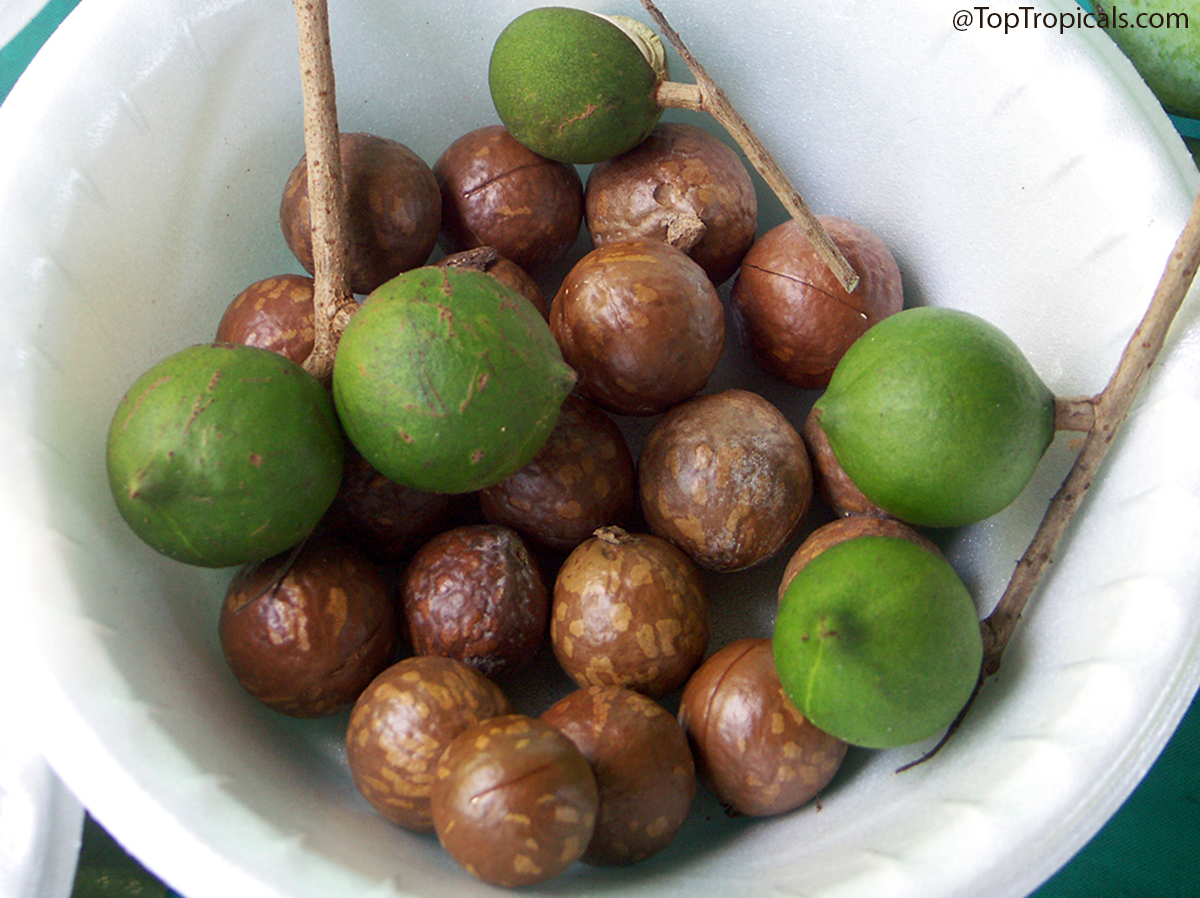
🌱 Growing Macadamia in a Pot
- Container size: Start large. A 15-25 gallon pot is ideal for long-term growth.
- Drainage: Critical. Use a container with multiple drainage holes.
- Soil mix: Use a high-quality, well-draining container mix. Avoid heavy garden soil. Top Tropicals Abundance soil-less mix is specially formulated for pot growing
- Light: Full sun is best. Strong light improves flowering and nut production.
- Watering: Water deeply, then allow the top layer to dry slightly before watering again. Avoid constant saturation.
- Feed lightly and consistenly. SUNSHINE Boosters Robusta liquid fertilizer is safe to use with with every watering. During hot season you may add controlled release Green Magic every 6 months. It is essential to apply micro elements on Macadamias: Sunshine Superfood micro nutrients complex.
- Cold protection: If temperatures drop below freezing, move the container to a protected area such as a garage or greenhouse.
- Pruning: Prune lightly to control size and maintain airflow within the canopy.
- Expectations: Container trees may produce fewer nuts than in-ground trees, but they offer mobility and climate control.
- Smokey says: Container trees offer mobility and climate control so you never have to worry about a freeze!
✍️ More About Macadamia from Garden Blog
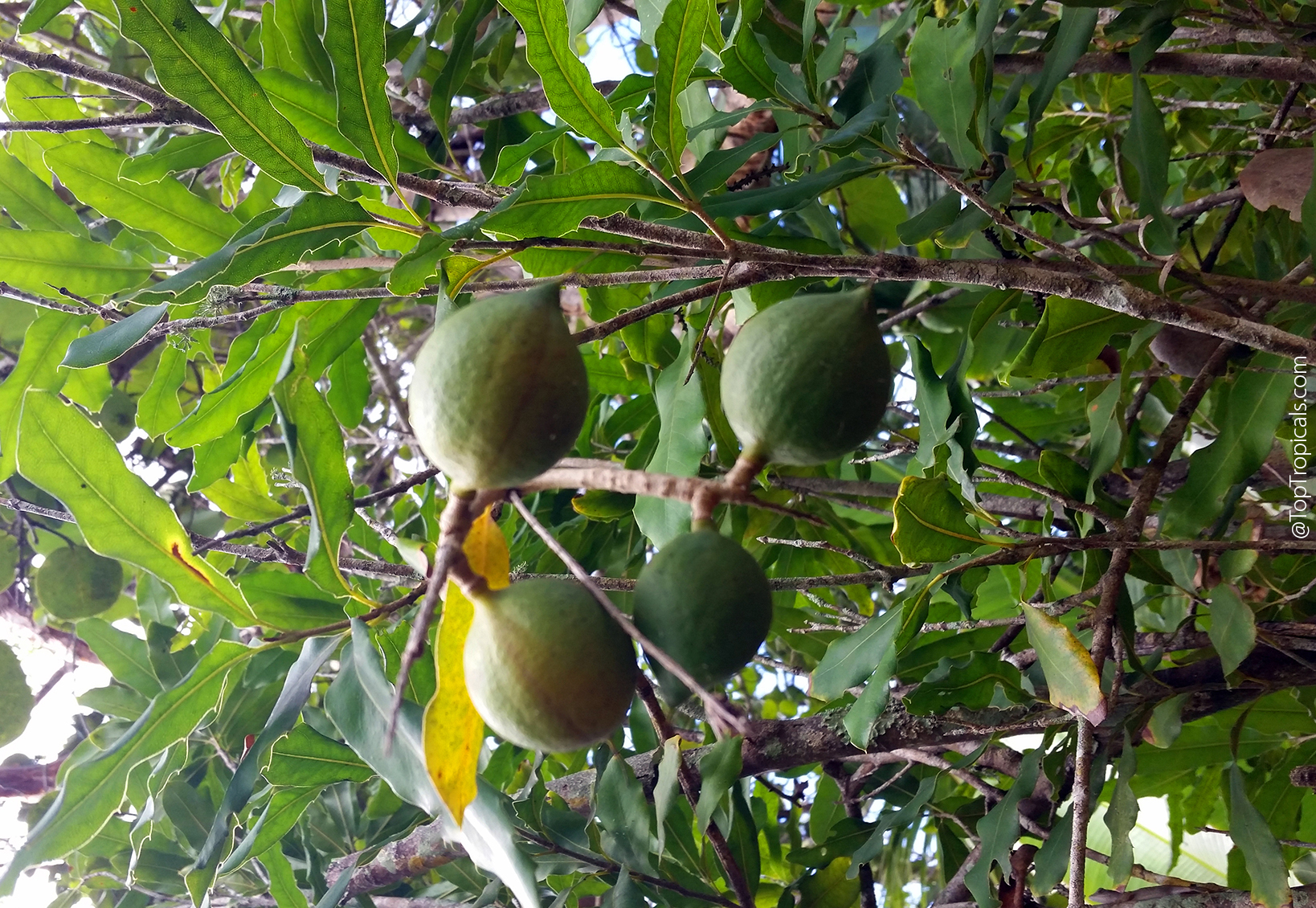
🚫 Common Mistakes When Growing Macadamia
-
Planting in poorly drained soil:
The most common mistake. Macadamia will decline quickly in heavy, waterlogged ground. If drainage is questionable, plant on a mound. -
Overwatering young trees:
Newly planted trees need consistent moisture, not constant saturation. Wet roots lead to root problems. -
Over-fertilizing:
Too much fertilizer causes weak growth and nutrient imbalance. Feed lightly and avoid heavy nitrogen applications. -
Planting too deep:
The top of the root ball should sit level with or slightly above the surrounding soil. Do not bury the trunk. -
Ignoring micronutrients:
Macadamia is very prone to iron, zinc, and copper deficiencies. Yellowing leaves may signal a micronutrient issue. Applly Sunshine Superfood on regular basis. -
Expecting instant production:
Macadamia takes time. Early years build structure. Patience is part of success. -
Skipping cold protection for young trees:
Established trees are tougher, but young plants should be protected below freezing.
❓Frequently Asked Questions (FAQ)
- Is Macadamia toxic to pets? While the nuts are a superfood for humans, they are toxic to dogs. If you have a dog that tends to forage in the garden, ensure you harvest fallen nuts promptly or fence the base of the tree during the drop season.
- Which varieties are best for the "Survivor" garden? Look for Macadamia integrifolia (smooth-shell) or hybrids like 'Beaumont' (M. tetraphylla x M. integrifolia). Hybrids often show slightly better cold tolerance and more consistent "home garden" production.
- How tall will my tree get? In the ground, an unpruned Macadamia can reach 20–30 feet. However, they respond very well to "heading back" (pruning the top) to keep them at a manageable 12–15 feet for easy harvesting.
- Do I need two trees for cross-pollination? Macadamias are self-fertile, meaning one tree will produce nuts. However, planting two varieties near each other often results in a significantly heavier "nut set" due to cross-pollination.
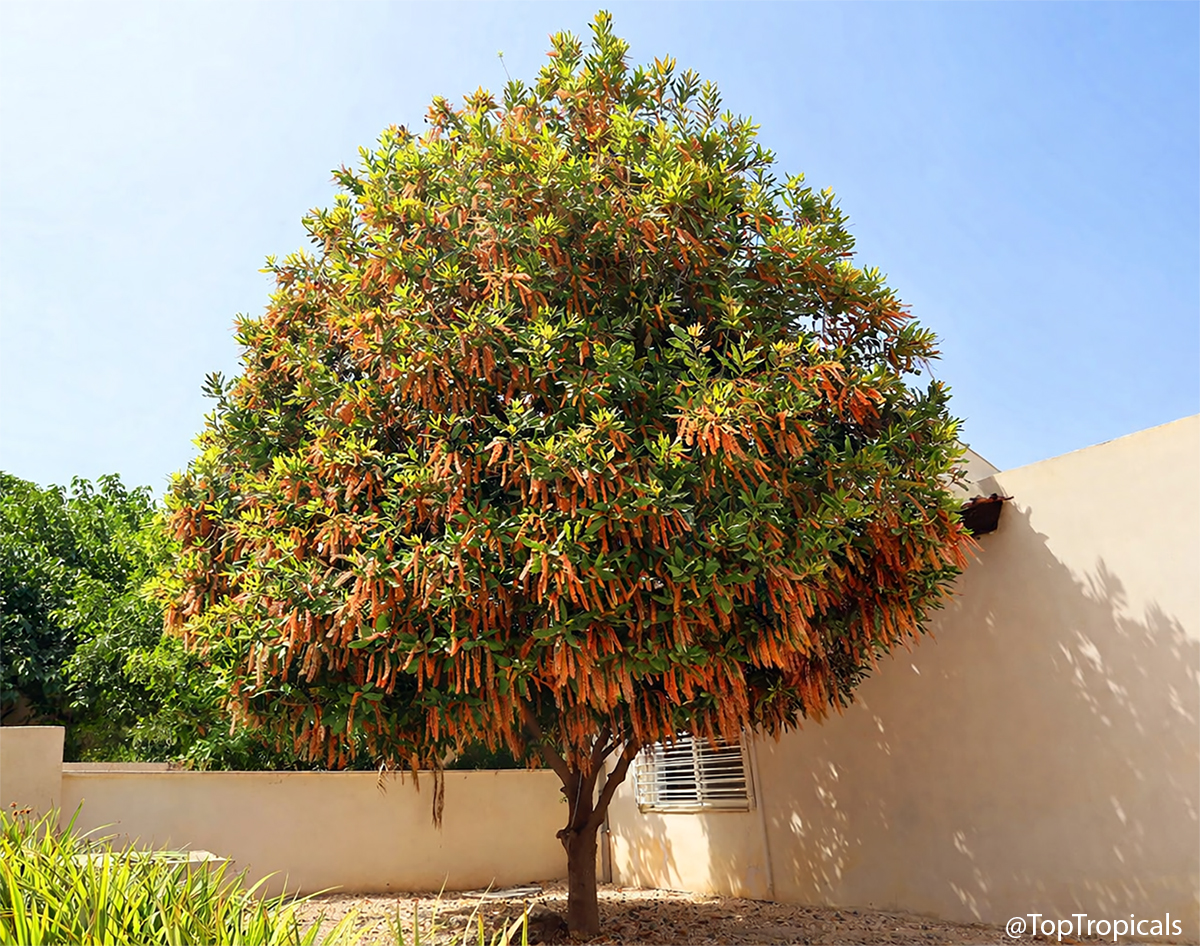
- Why are the leaves on my Macadamia prickly? Don't panic—this is normal! Some species, particularly M. tetraphylla, have serrated, holly-like leaves. This actually makes them a great "defensive" hedge against intruders or deer.
- When exactly should I harvest? The tree tells you when it's ready. Don't shake the tree; wait for the nuts to fall naturally. In Florida, this usually happens between August and November. If the green outer husk hasn't split yet, let them sit in a shaded, dry spot until they do.
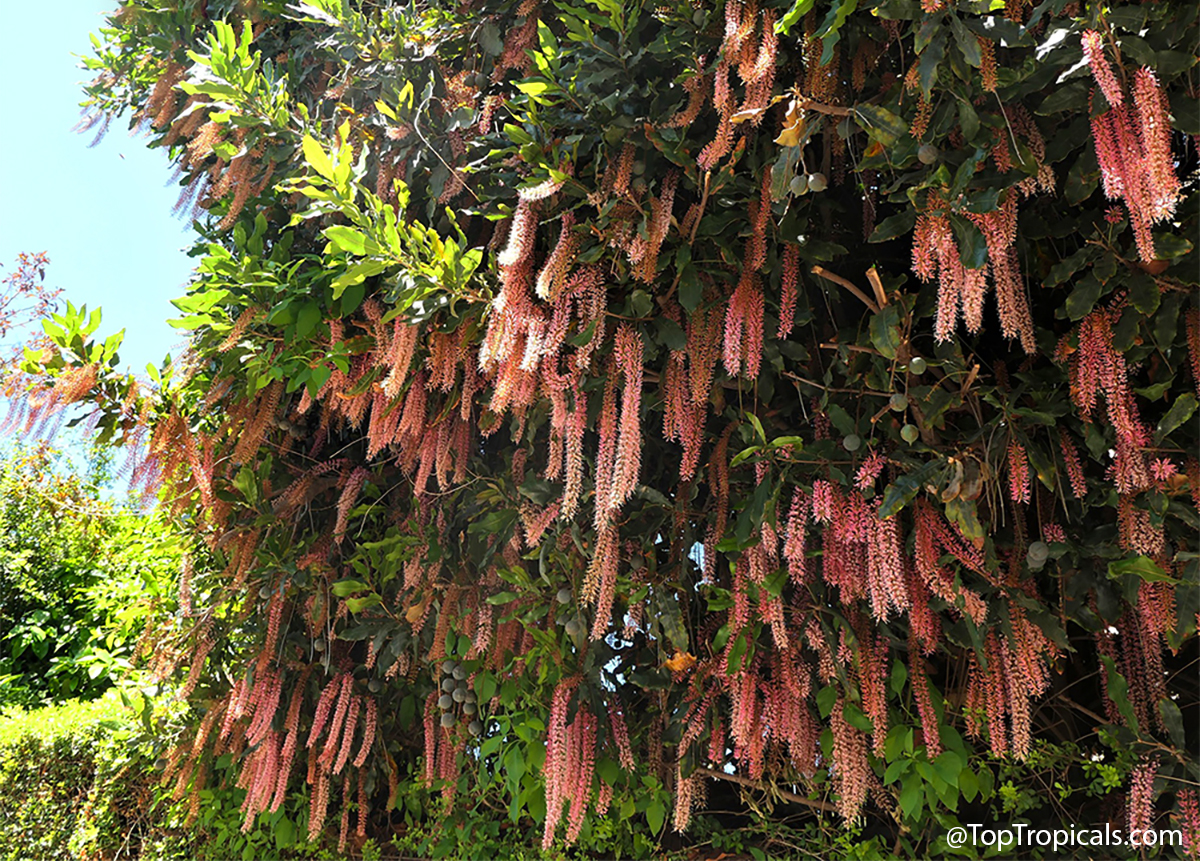
- My tree has "clusters" of flowers but no nuts. What happened? Macadamias produce long racemes (flower spikes) with hundreds of tiny blooms. It is normal for 90% of these to fall off. The tree only keeps what it can afford to "feed." Boost your success by using a combination of Sunshine C-Cibus liquid fertilizer and SUNSHINE Superfood micro element supplement during the flowering stage to help the tree retain more fruit.
- Can I grow them from a nut I bought at the store? Unlikely. Commercial nuts are usually roasted or dried at high heat, killing the embryo. Even if a raw nut sprouts, it may take 10–12 years to fruit and the quality is a gamble. Buying a grafted tree saves you a decade of waiting.
We don’t just sell plants; we test them. The data from this February freeze proves that with the right selection and proper drainage, 'tropical' doesn’t have to mean 'fragile.' Don’t wait for the next cold front to find out what in your garden is vulnerable. It is time to replace those empty spots with proven survivors that offer both beauty and a premium harvest. If it can stand up to 25F in our fields, it’s ready for your backyard.
Coming in Part 2...
Smokey is already crunching the numbers on our next survivor, and Sunshine found another tree that stayed perfectly green in the wind. Stay tuned to see which fruit tree made the cut!
Date: 7 Mar 2026
SUNSHINE Boosters: The Professional Advantage
By Tatiana Anderson, Horticulture Expert at Top Tropicals with Smokey & Sunshine help

Here is why SUNSHINE Boosters are the smart choice for your garden this spring:
- Amino Acid Stability: Unlike traditional fertilizers that use synthetic EDTA chelators, our formulas are amino-acid based. This means 100% of the nutrients are bioavailable and consumed by the plant, leaving zero toxic residues or salt build-up in your soil.
- Safe for Every Watering: Because our concentrations are scientifically balanced and mild, they are safe for daily use. This eliminates the "feast or famine" cycle of dry fertilizers and prevents accidental root burn.
- Pure Taste for Edibles: Our delicate formulas do not contain excess salts, urea, or ammonium salts that can ruin the flavor of your harvest. Your fruit and vegetables will retain their pure, natural taste.
- Pollinator Friendly: Our boosters are designed to be safe for honeybees and other beneficial insects, making them the responsible choice for an organic-style garden.
🌿For Potted Plants: Breaking the "Foodless" Cycle
Container-grown plants are trapped in soilless mixes (peat, bark, perlite) that are structurally great but naturally nutrient-deficient.
- Total Nutrition: Since pots lack the natural "buffet" of the ground, SUNSHINE Boosters™ provide every essential mineral the plant cannot find on its own.
- No Salt Build-up: Our amino-acid based formulas are consumed entirely by the plant, leaving zero toxic residue or root-burning salts behind.
- Daily Safety: Our mild concentrations eliminate the "feast or famine" cycle of dry fertilizers, making them safe for use with every single watering.
For In-Ground Plants: Unlocking the Soil
Even in the ground, plants often struggle to absorb what they need because soil compounds can "lock up" nutrients.
- Enhanced Solubility: SUNSHINE Boosters create a slightly acidic environment that helps dissolve stubborn salts in the soil, making them accessible to roots again.
- Precision Delivery: We provide mobile elements like Nitrogen precisely when the plant needs to push new spring growth.
🌿The Foliar Advantage: Direct-to-Leaf Delivery
Did you know a plant leaf can absorb nutrients even more efficiently than the roots? Foliar feeding is your "emergency button" for instant results.
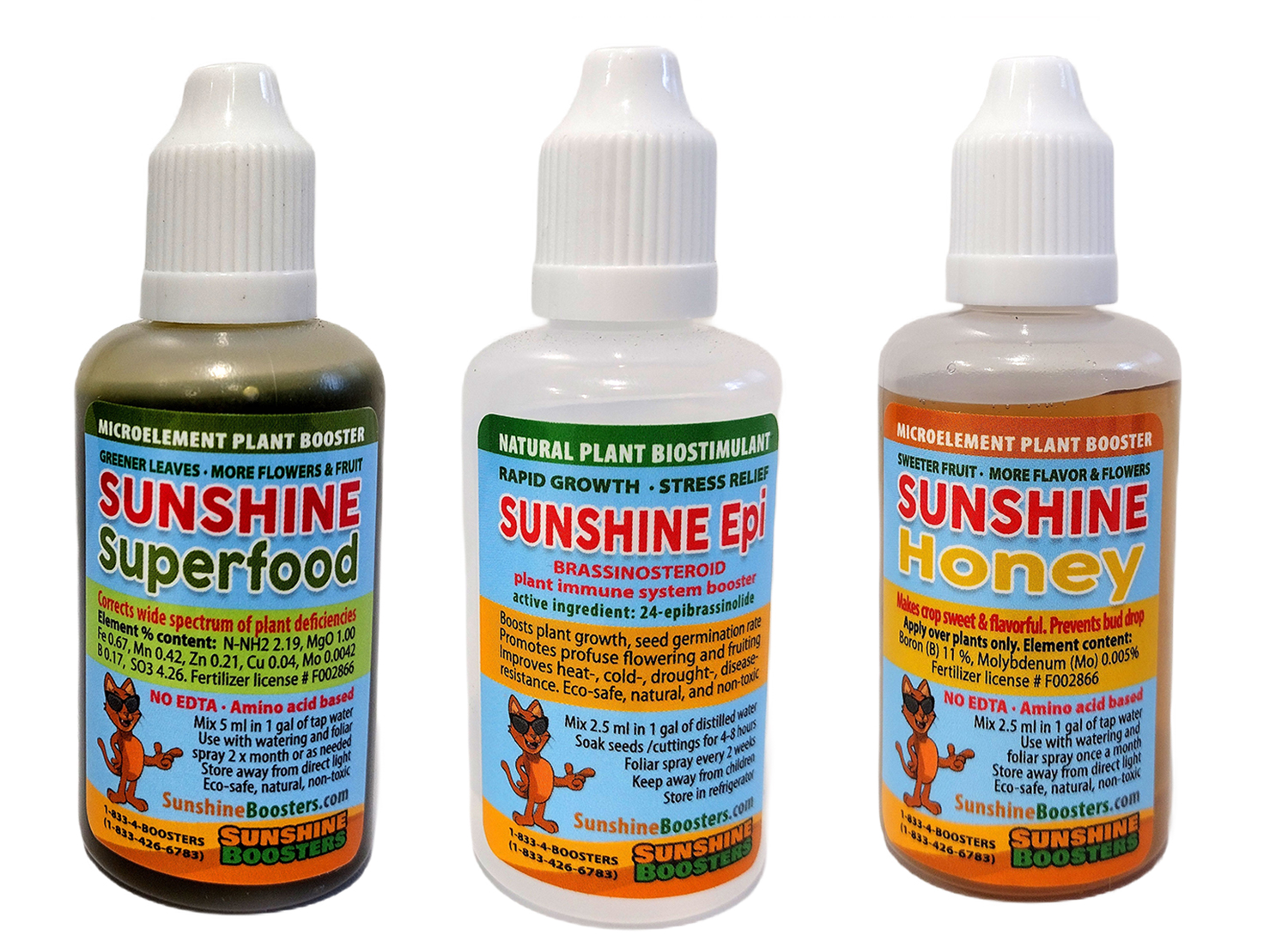
- Quick Fix: Foliar applications with Sunshine Superfood are the fastest way to correct yellowing leaves or visible deficiencies.
- Metabolism Boost: Sprays like SUNSHINE-Epi act as a bio-regulator, helping plants recover from the stress of spring temperature swings.
- Better Fruit: SUNSHINE Honey is applied to leaves to naturally move sugars to the fruit, increasing sweetness and flavor.
🌿The Calcium Problem: Solved
As your plants wake up this Spring, they need structural strength. Think of Calcium as the "cement" that holds plant cells together. Without it, new spring growth is doomed to fail.
Signs Your Plant is Starving for Calcium:
- Deformed Leaves: New growth looks twisted, hooked, or curled.
- Blackened Tips: The very edges of young leaves turn white, then quickly blacken and die.
The Industry Secret: The "Missing" Mineral
Most fertilizers, both dry and liquid, completely skip Calcium. Why? Because it’s a chemical nightmare to keep stable in a concentrated solution. Most manufacturers rely on your irrigation water to deliver Calcium, but tap water is inconsistent and often fails to provide what a hungry, growing plant needs.
The SUNSHINE Boosters: Stable Calcium in Every Bottle
We have successfully stabilized Calcium directly into every single Sunshine Booster formula. Whether you are using Bombino, Robusta, or Megaflor, you are delivering a precise, stable dose of Calcium with every watering. No lockout, no sediment, and no relying on the "luck" of your tap water. Just strong, healthy cell walls and perfect spring growth.
🌿SUNSHINE-Epi: The Year-Round Bio-Regulator
Whether it’s the transition of spring, the extreme heat of summer, or the dry air of indoor wintering, SUNSHINE-Epi is your plant’s primary defense. This natural Brassinosteroid acts as a powerful immune booster, helping plants navigate stress wherever it comes from.
- Universal Stress Shield: Protects against temperature swings (both heat and cold), drought, and transplant shock.
- Vigorous Development: Dramatically improves root growth and speeds up the metabolism of young seedlings and cuttings.
- Eco-Safe: 100% non-toxic to humans, pets, and pollinators.
Note: While Epi is highly effective, it is a performance booster, not a substitute for proper care. It works best when paired with the right light, water, and a consistent feeding program. It won't bring a dead plant back to life, but it will help a struggling one find its footing.
Sunshine: Agreed. My charm covers the delivery cost.
No coupon code required: The free shipping is automatically applied at checkout.
Complete Nutrition: Stock up on Robusta, Superfood, and Epi for the Spring growth push.
❓Frequently Asked Questions: SUNSHINE Boosters™
-
What water should I use for foliar spraying?
Tap water works perfectly for most. However, if your water is very "hard" (leaving white mineral spots on leaves), switch to distilled water for a cleaner finish and better absorption. -
How long does a diluted solution last?
For maximum potency and to avoid nutrient degradation, try to use your diluted mixture within a few hours of preparation. Keep away from direct sun. Fresh is always best! -
Can I use SUNSHINE Boosters as a daily foliar spray?
Yes! You can mist your plants daily to maintain high vigor, but you must reduce the dosage (use half the recommended strength) to avoid over-feeding. -
Can I mix boosters with pesticides or fungicides?
It is best to apply them separately. Mixing fertilizers with chemical pesticides in one tank can trigger reactions that "lock out" nutrients or reduce the efficacy of the treatment. -
Will the liquid stain my patio or hands?
No. Unlike traditional fertilizers with heavy blue or pink dyes, our solutions are clear or very light-colored. If you spill it, simply rinse with water—no stains, no mess. -
Can I mix different SUNSHINE Boosters together in one sprayer?
Yes. All SUNSHINE Boosters are chemically compatible. You can combine a "growth" booster like Robusta with a "micro-element" complex like Superfood in the same water to save time. -
Are these products safe to use around my pets?
Absolutely. Our formulas are 100% non-toxic and amino-acid based. Just ask Smokey and Sunshine—they are perfectly safe for households with curious cats, dogs, and children. -
Can I use these boosters on indoor plants?
Yes. They are ideal for indoor use because they don't produce a "fertilizer smell" and won't cause salt crusting on your decorative pots or furniture. -
Is it safe to use on fruit and vegetables I plan to eat?
Yes. Because our formulas contain no urea, nitrates, or harsh salts, they don't leave a "chemical" aftertaste. They actually help improve the natural sugars and flavor profile of your harvest. -
What is the best temperature for foliar spraying?
Apply when temperatures are below 85°F. Early morning or late evening is best; this allows the leaves to remain wet longer, giving the plant more time to absorb the nutrients.
Smokey: Simple. Spray Sunshine Robusta every five days during active growth.
Sunshine: Five days? Smokey, I barely remember where I left my coffee mug five minutes ago.
Smokey: That is exactly why we use Green Magic.
Sunshine: Fertilizer for forgetful gardeners?
Smokey: Controlled release. Sprinkle once and it feeds the plant for six months.
Sunshine: Six months? I can have a very good nap in that time.
Smokey: Exactly. The plant keeps eating slowly while you keep napping.
Sunshine: Perfect. Remember, I will bring the coffee. You bring the donuts.
Smokey: And next week we will show you exactly how Green Magic works and why plants love it. Stay tuned.