Small plant 2-5 ft - Plant Encyclopedia Results
| Number of plants found: 2038 | Next | 
|
Go to page: | 1 | 2 | 3 | 4 | 5 | Last |
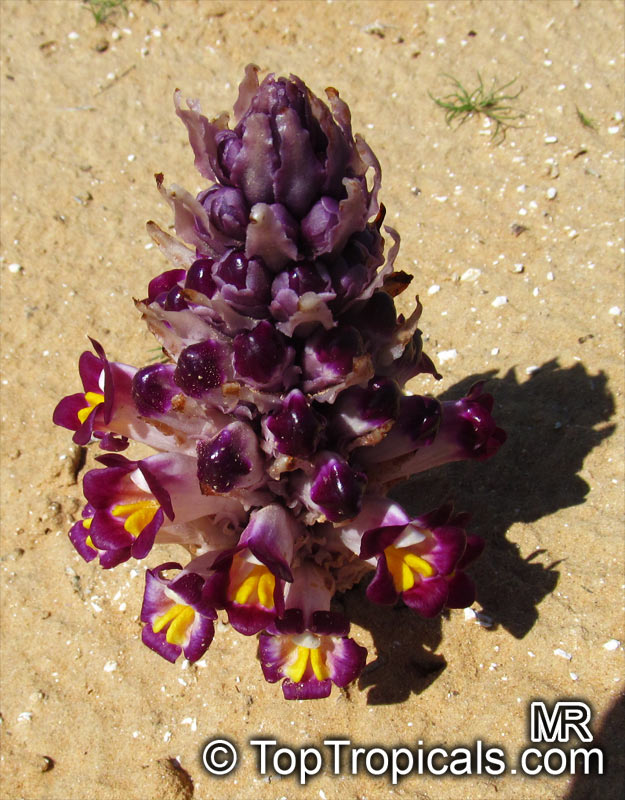
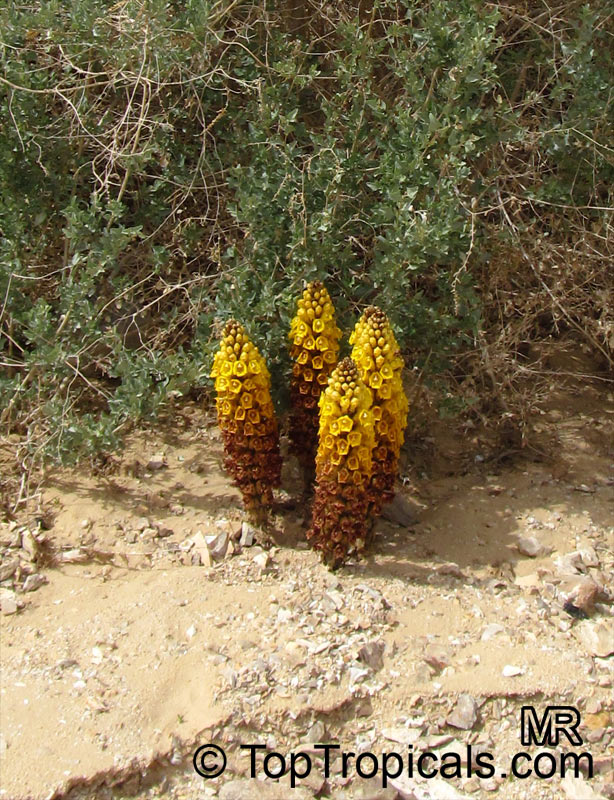
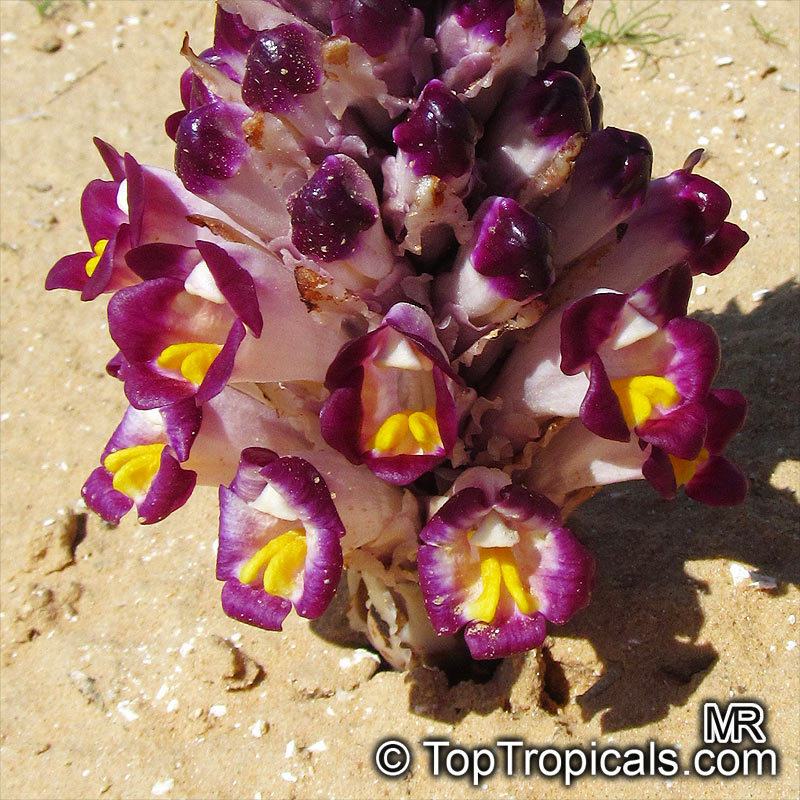
Botanical name: Cistanche sp.
Common name: Cistanche
Family: Orobanchaceae
Origin: Asia
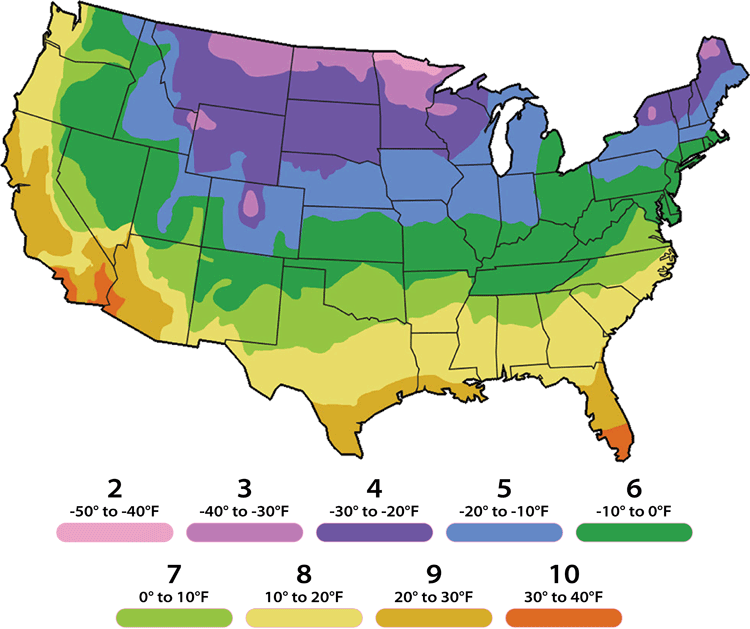
USDA Zone: 9-10


Cistanche is a worldwide genus of holoparasitic desert plants. They lack chlorophyll and obtain nutrients and water from the host plants whose roots they parasitize.
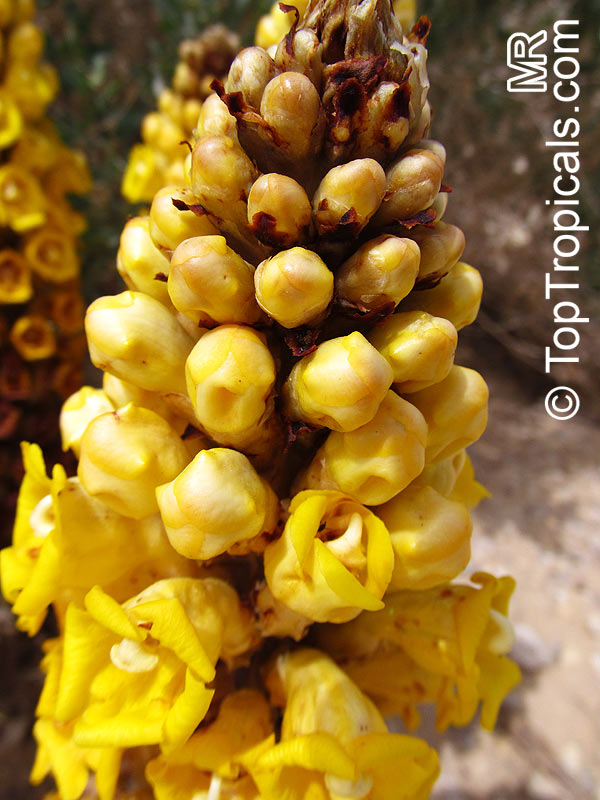
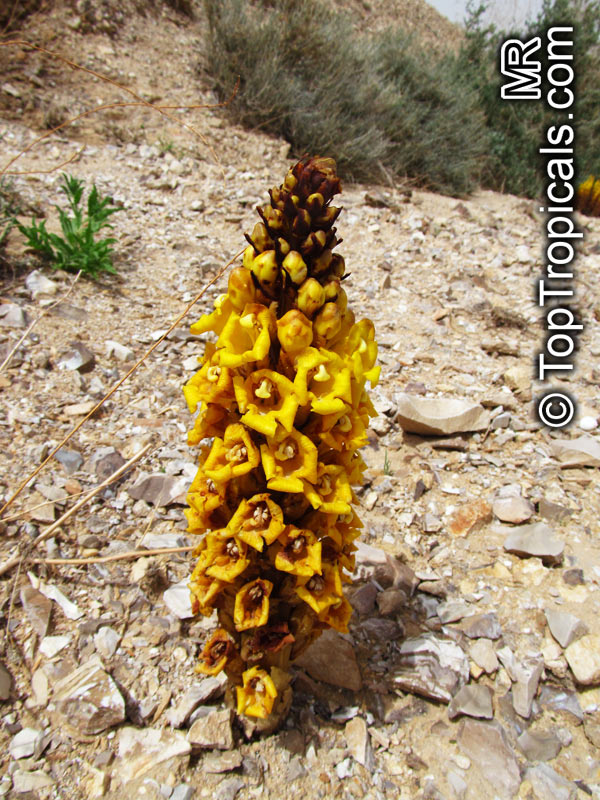
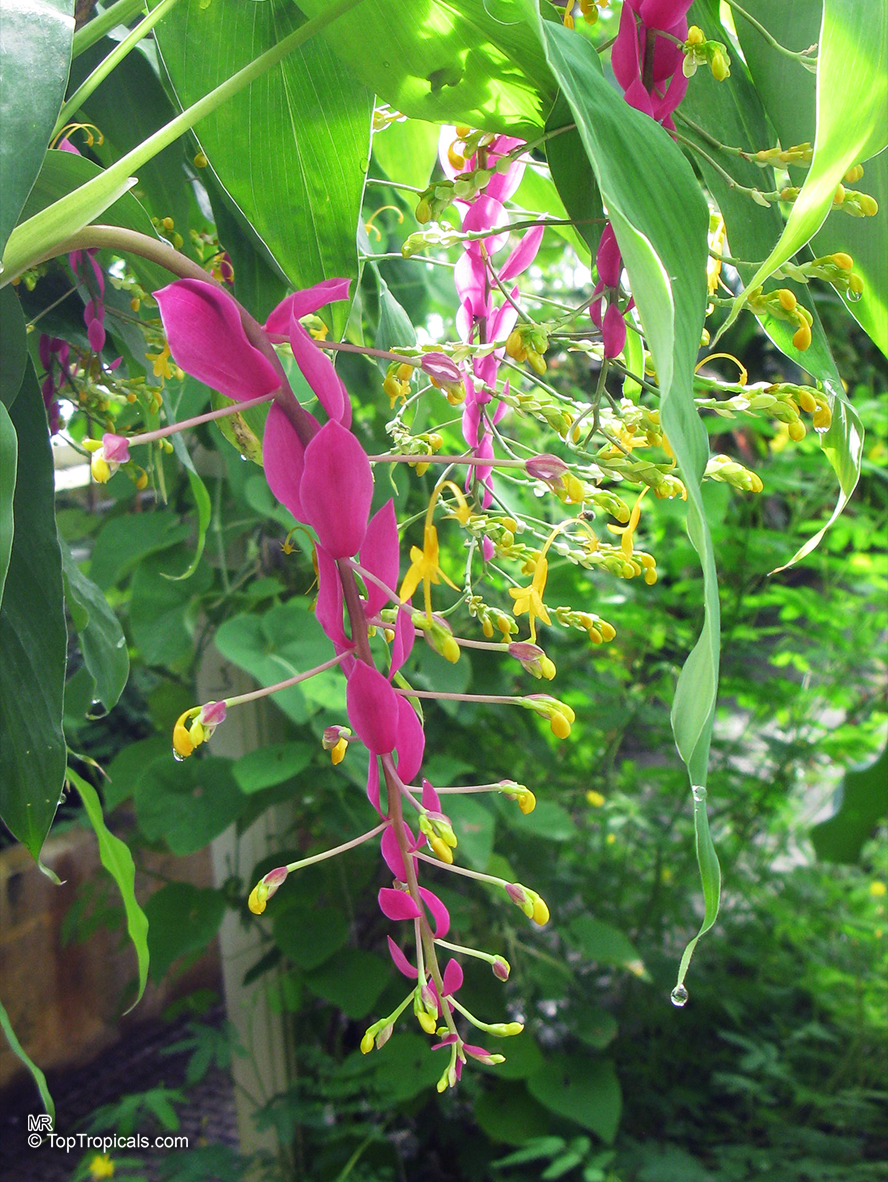
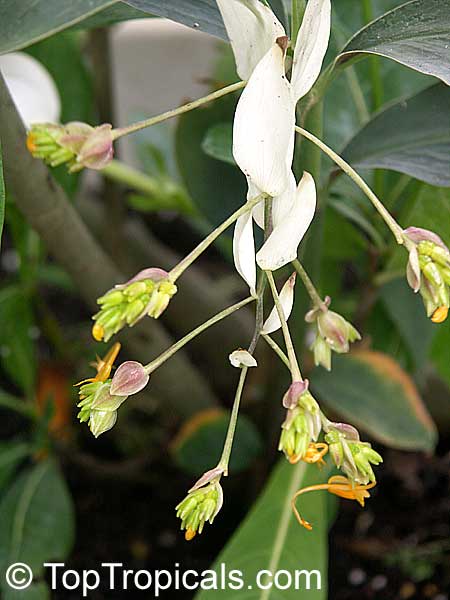
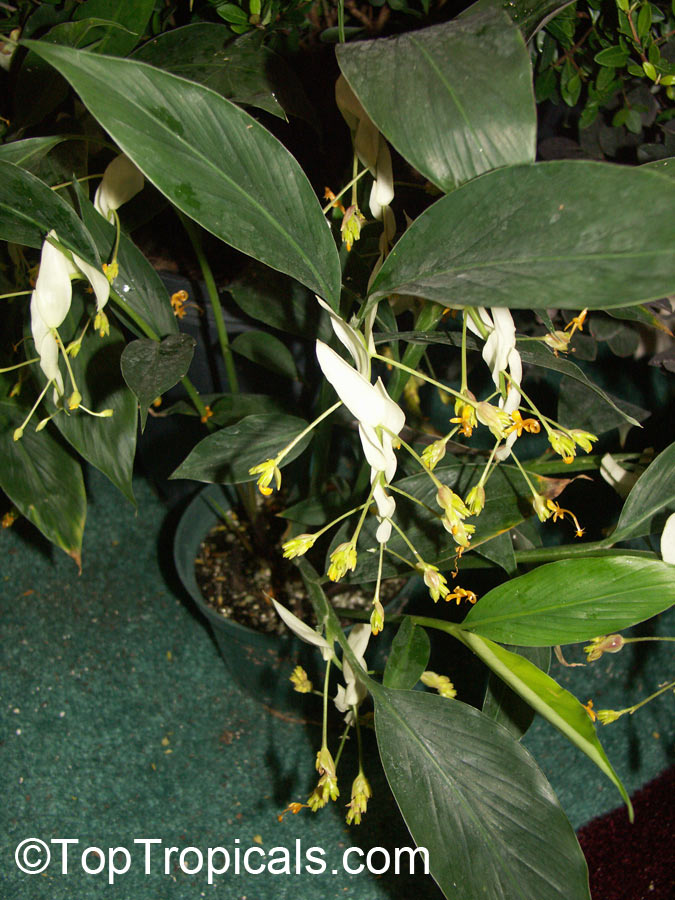
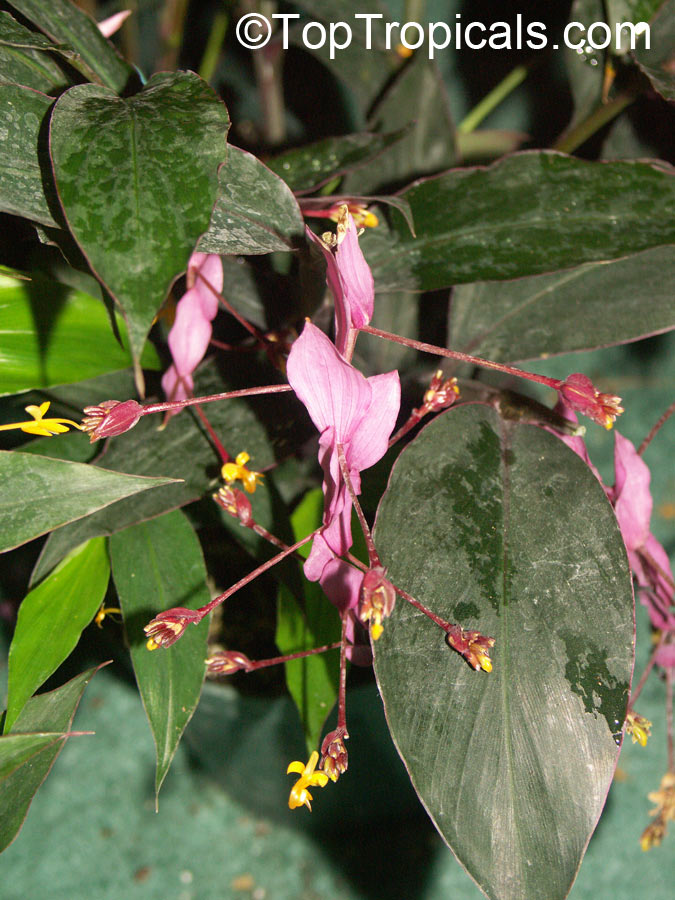
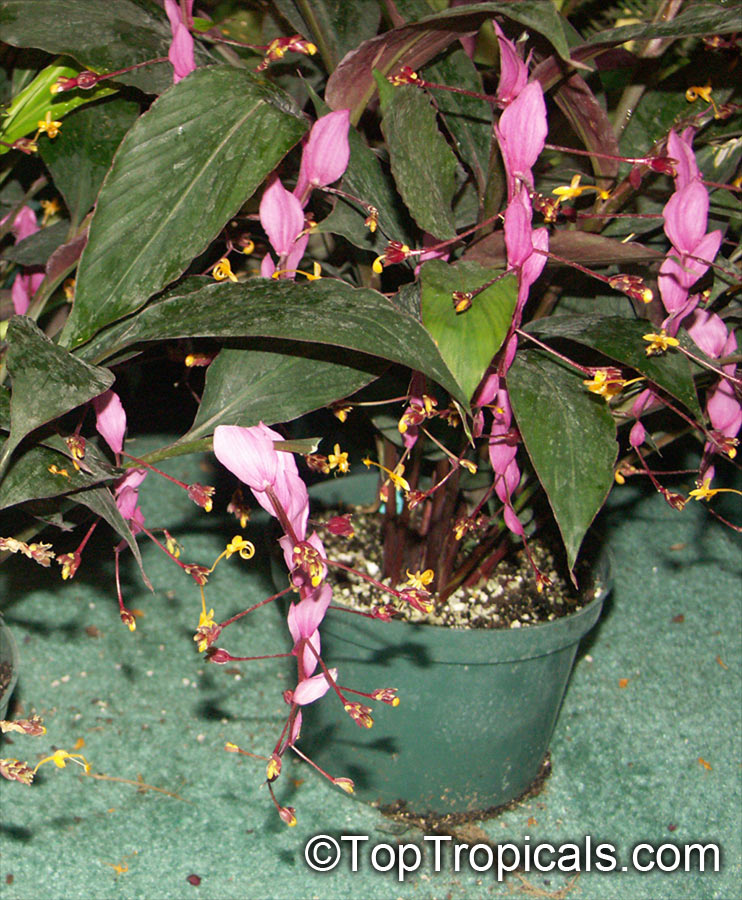
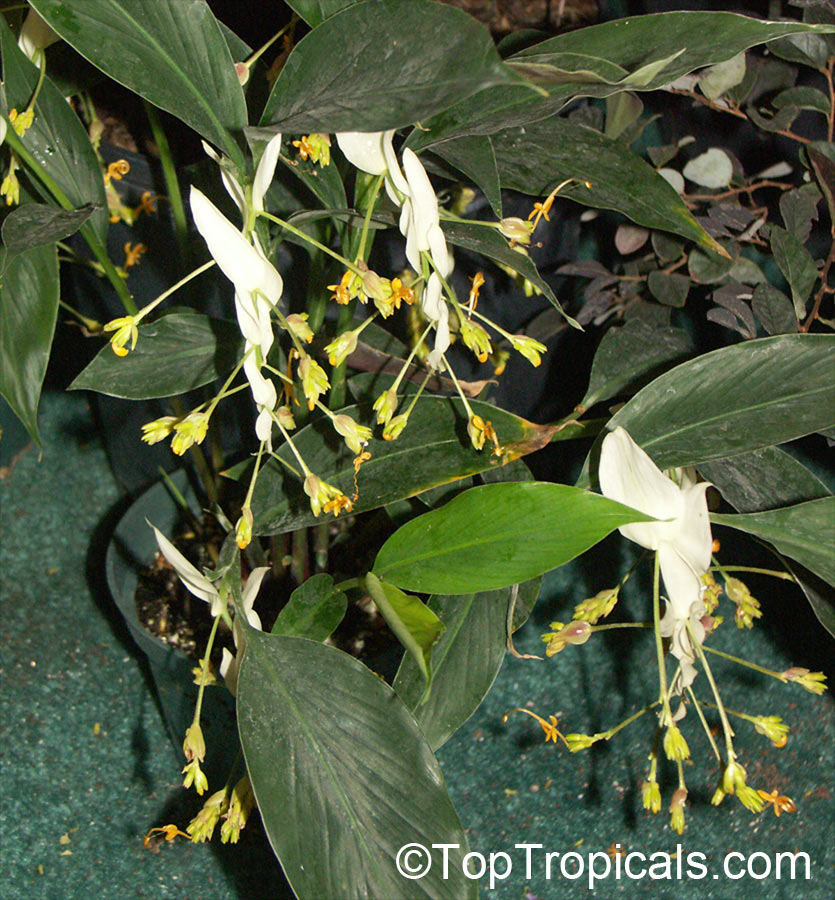
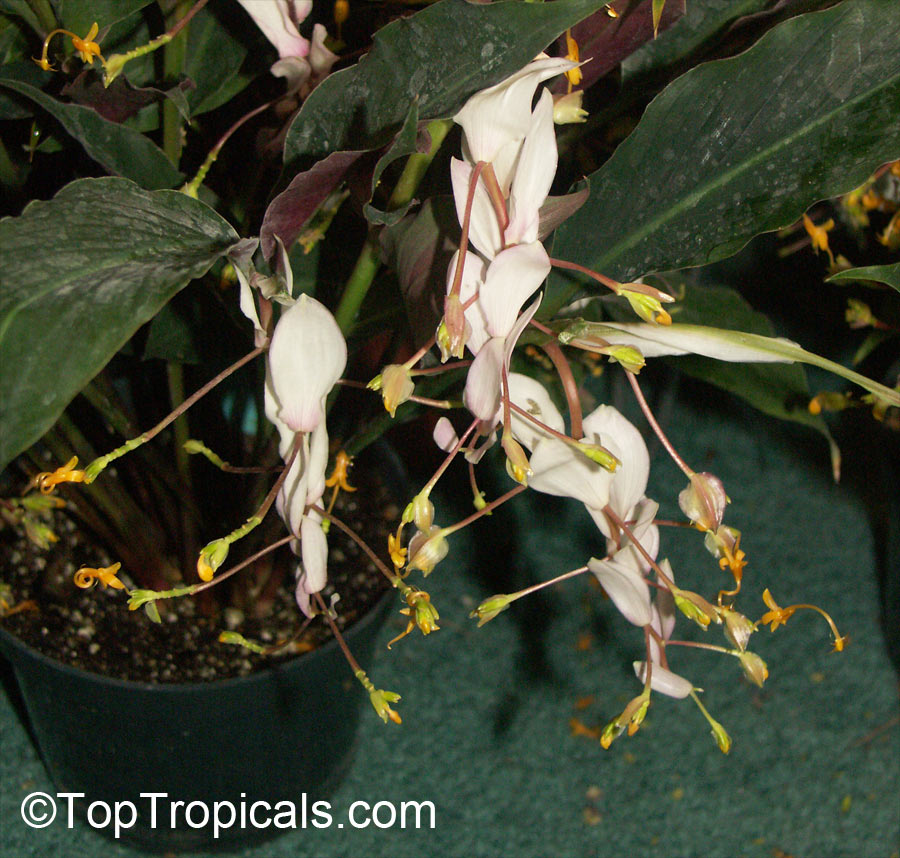
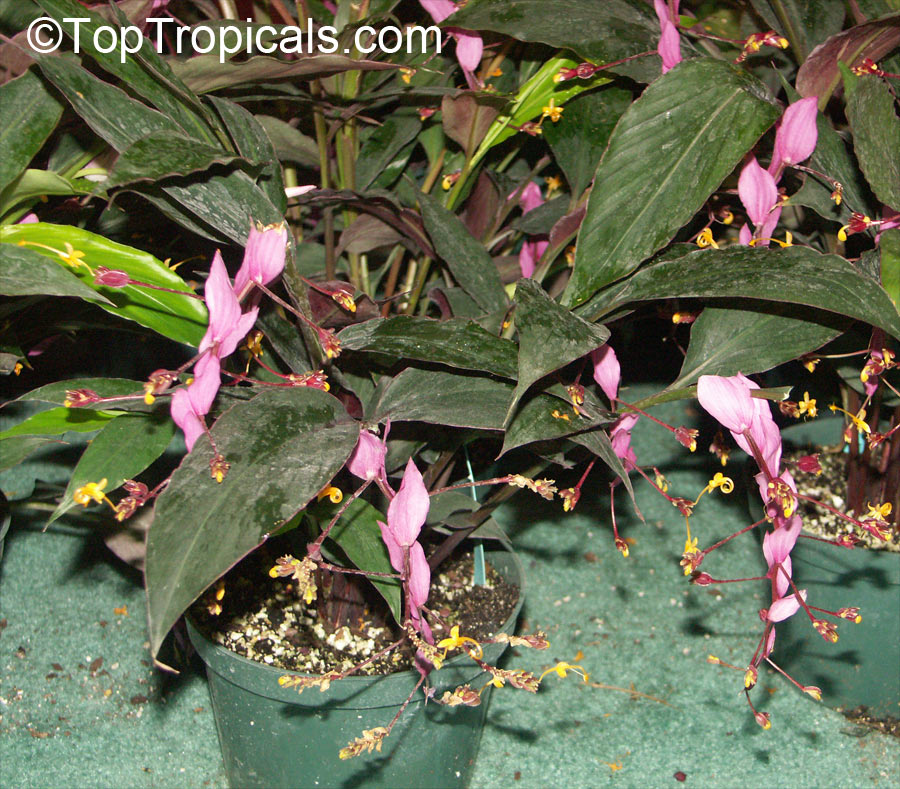
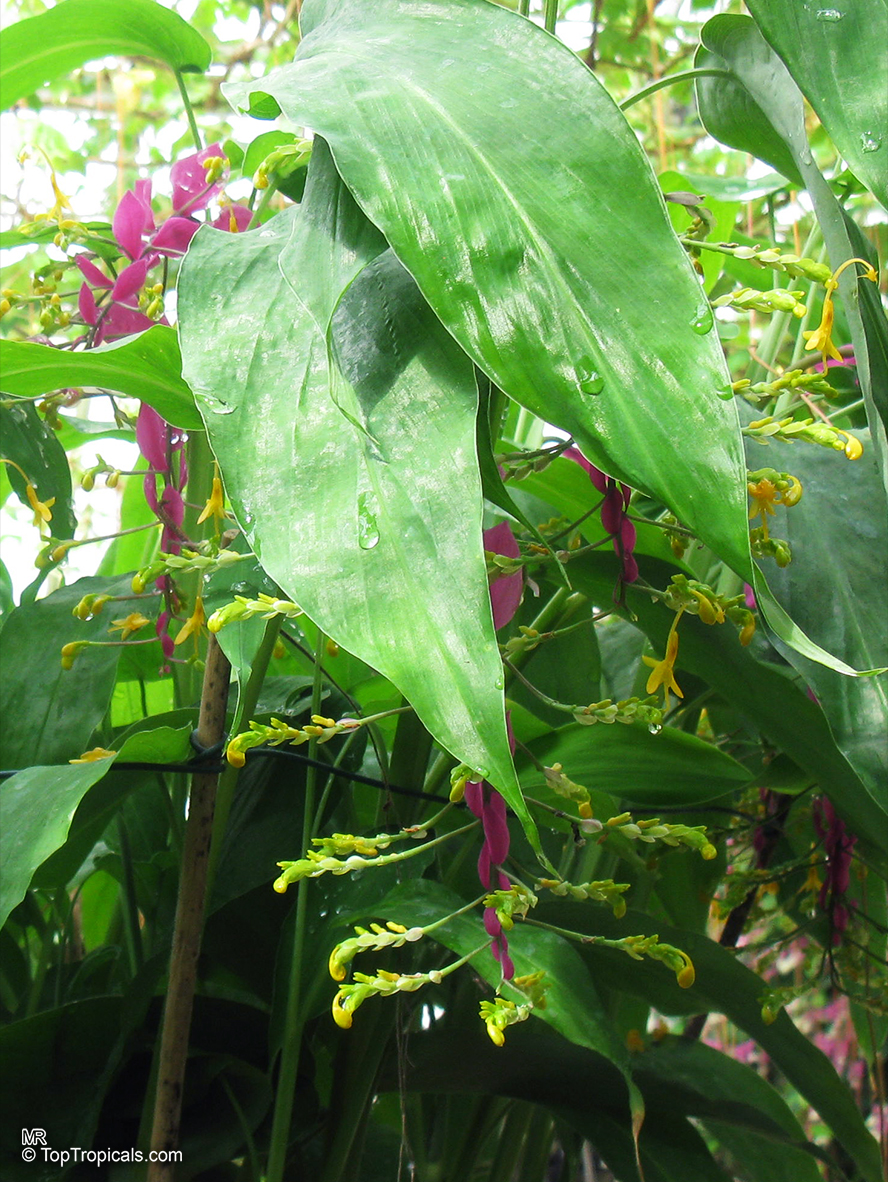
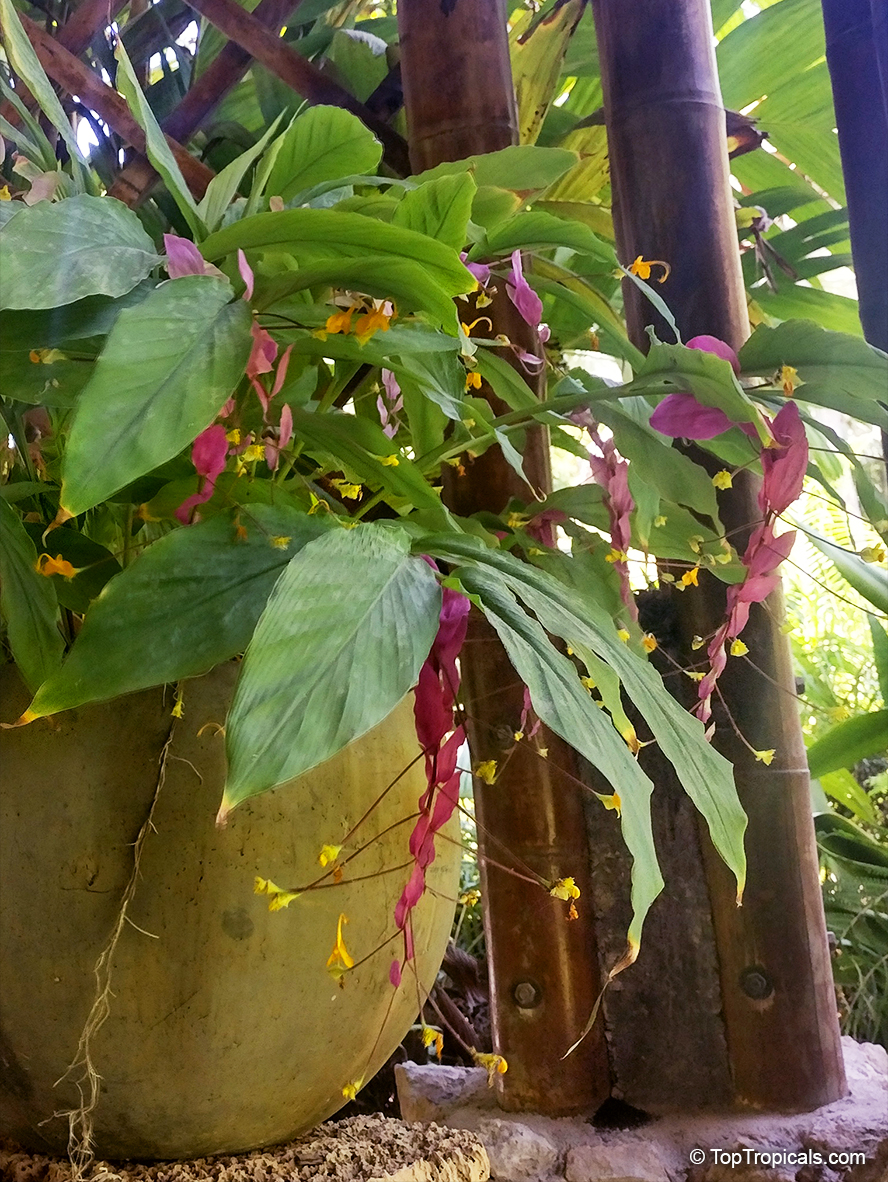
Botanical name: Globba winitii
Common names: Dancing Girl, Dancing Ladies Ginger
Family: Zingiberaceae
Origin: Thailand
USDA Zone: 10-11


The plants slowly increase to form open clumps of greenery, but the real attraction is the unusual flowers. The inflorescence hangs down from the stem and is comprised of showy bracts in purple or white with tiny yellow flowers. The common name "dancing ladies" is derived from the way the flowers seem to dance in the air suspended from the bracts. The flowers will appear sporadically from July until dormancy in the fall.
Plant Globba winitii in fertile, organic, well-drained soil. They will go dormant in winter, so be sure to mark their spots, as they are among the last of the plants to reappear in spring. In colder climates, the rhizomes may be lifted in winter and stored in a cool garage or basement in slightly damp peat. These plants are virtually pest free and very easy to grow if given suitable conditions.
Provide full shade. Will tolerate a little sun if kept moist. Needs regular moisture in well drained soil during the growing season.
Hardiness: USDA Zones 8 - 11.
Propagation: Dancing ladies ginger is propagated by division of clumps during growing season or by cutting pieces of dormant rhizome.
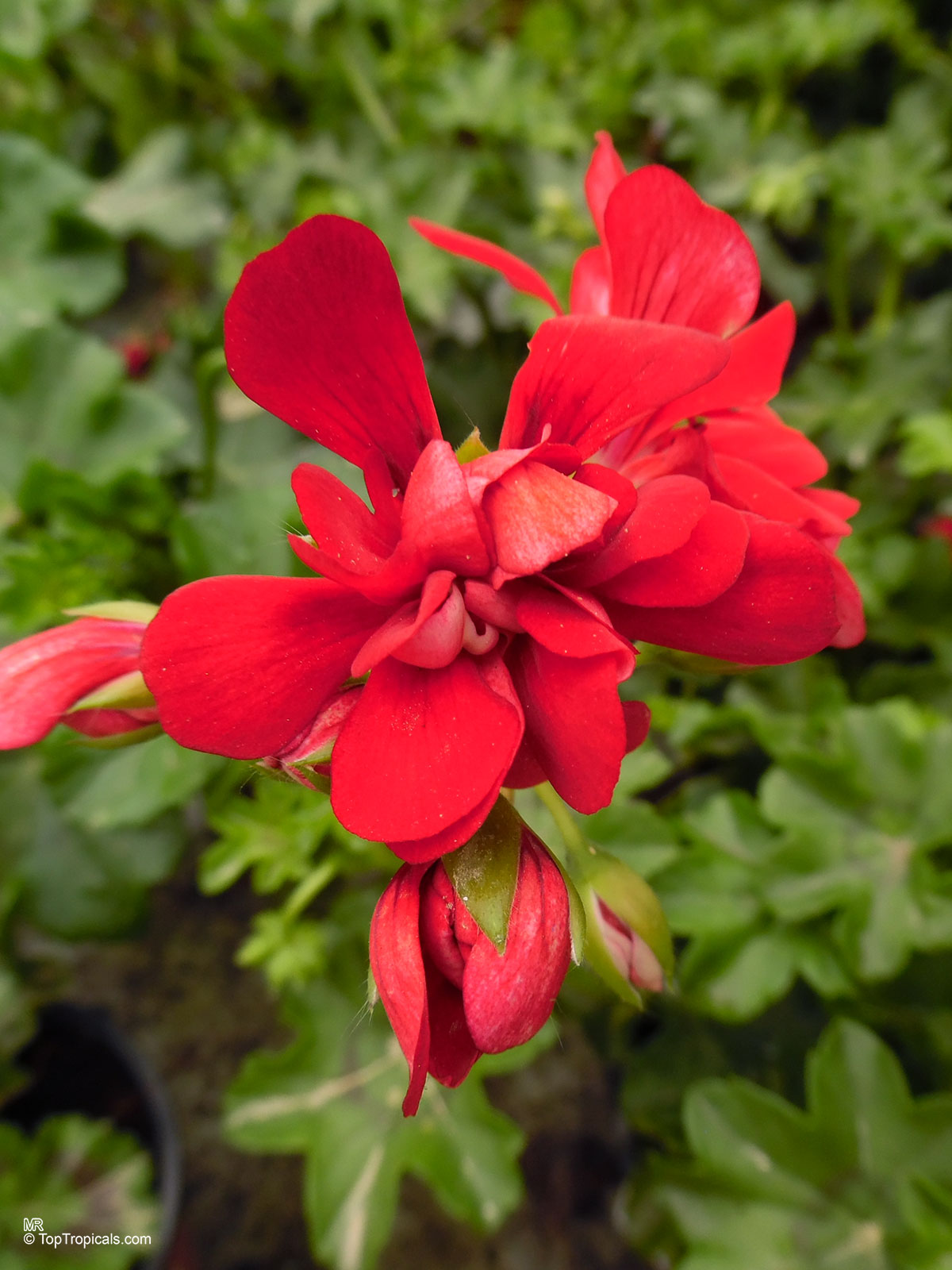
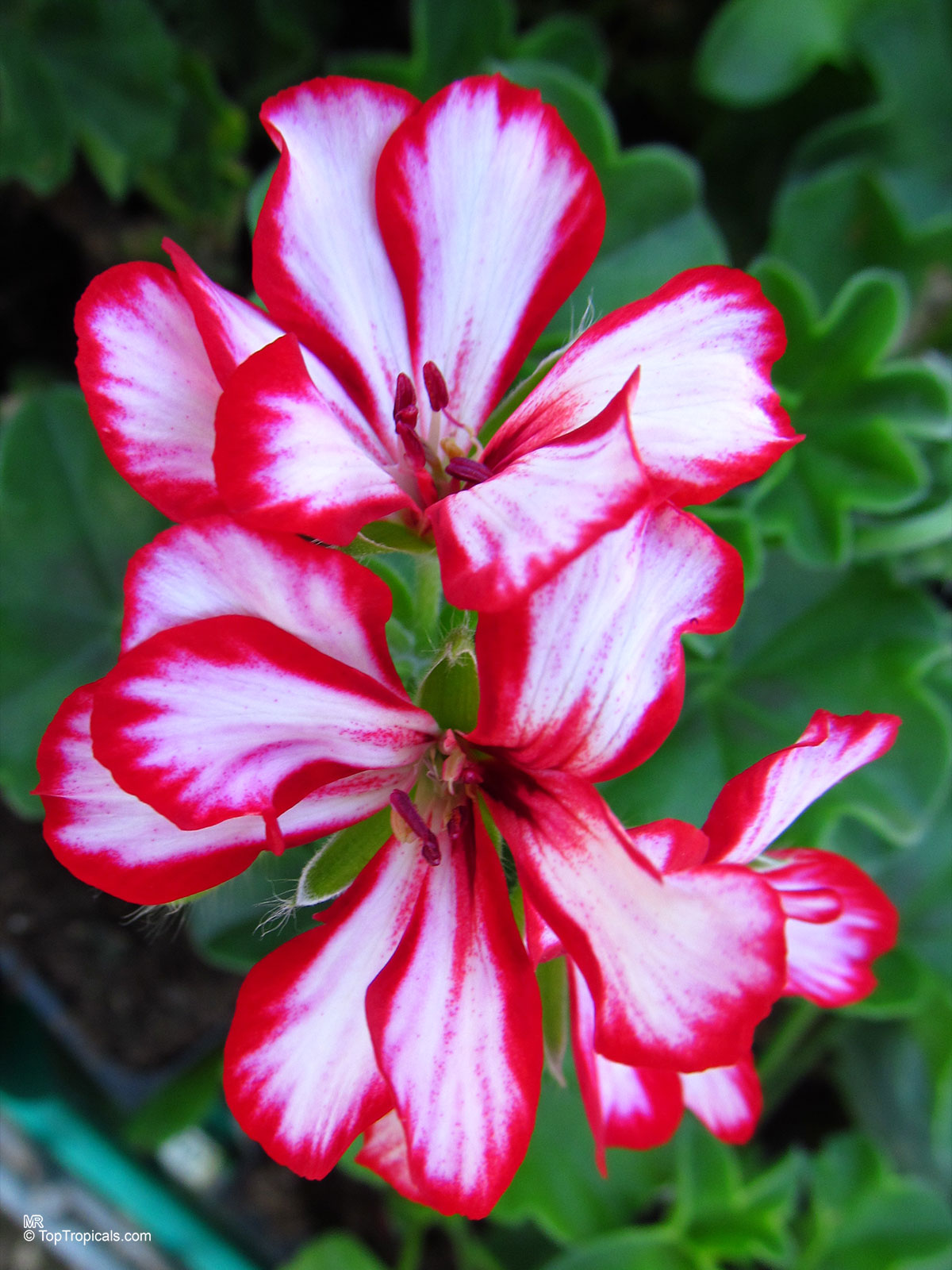
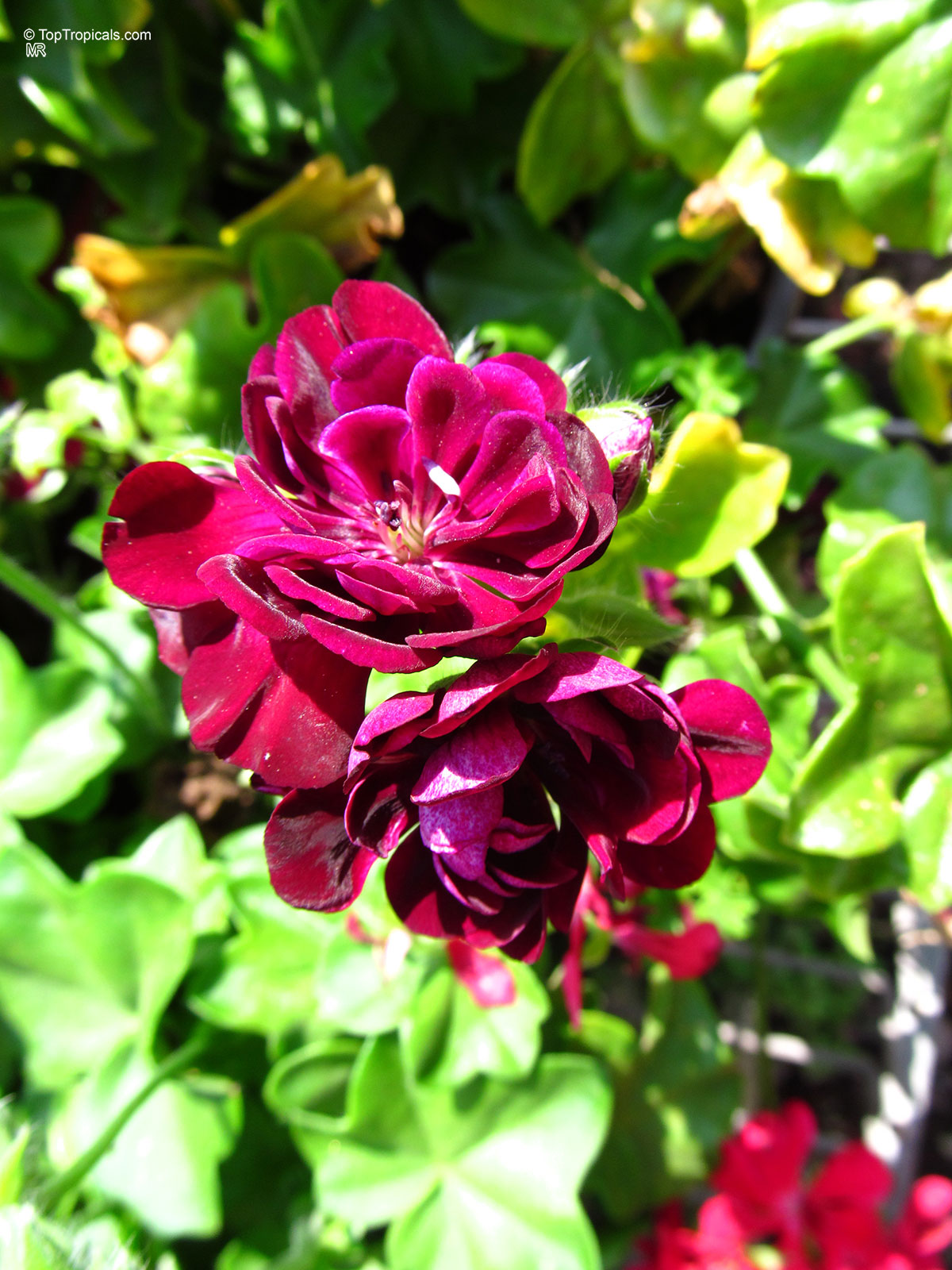
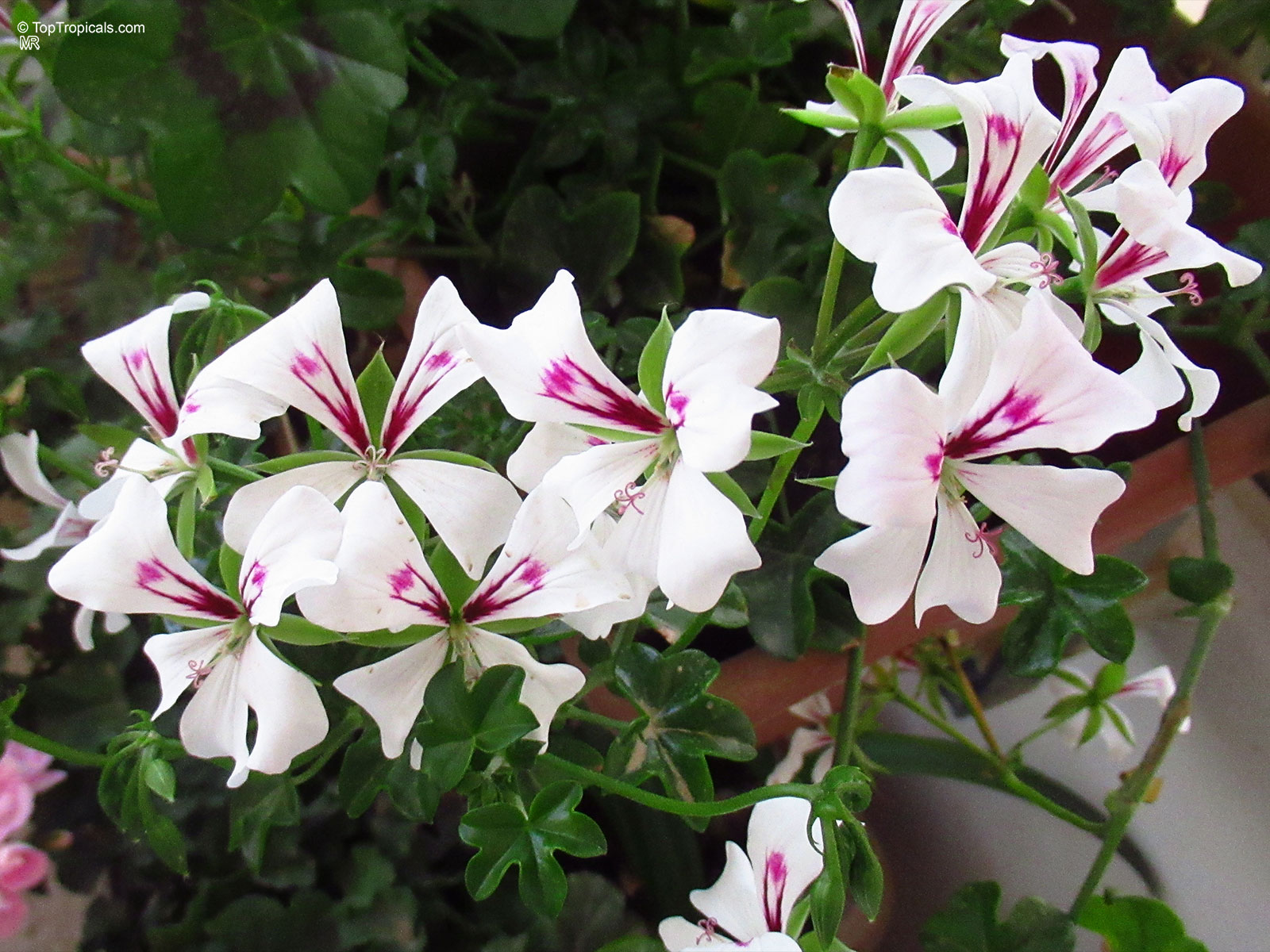
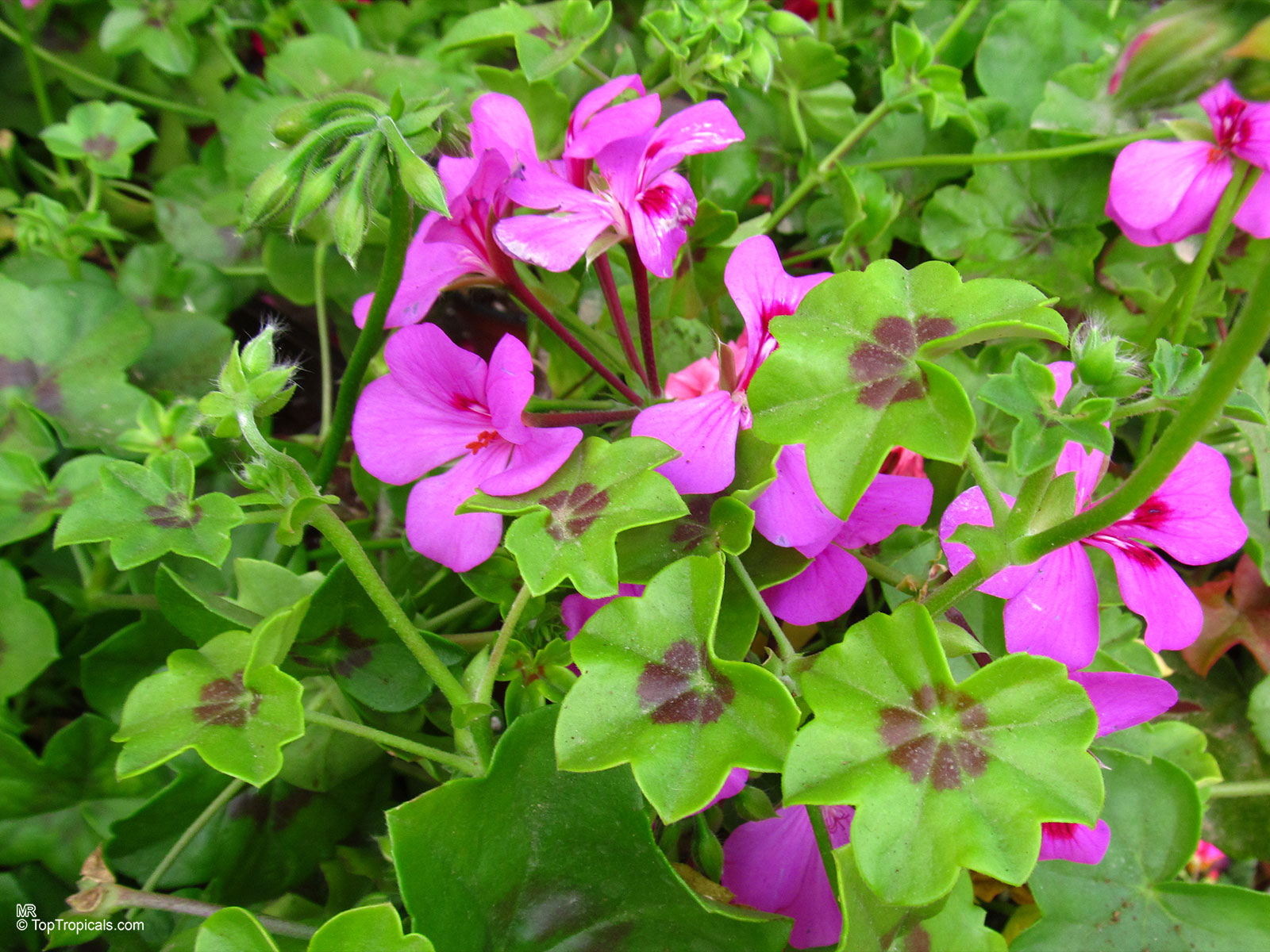
Botanical name: Pelargonium peltatum
Common names: Ivy-leaved Pelargonium, Cascading Geranium
Family: Geraniaceae
Origin: South Africa
USDA Zone: 9-11

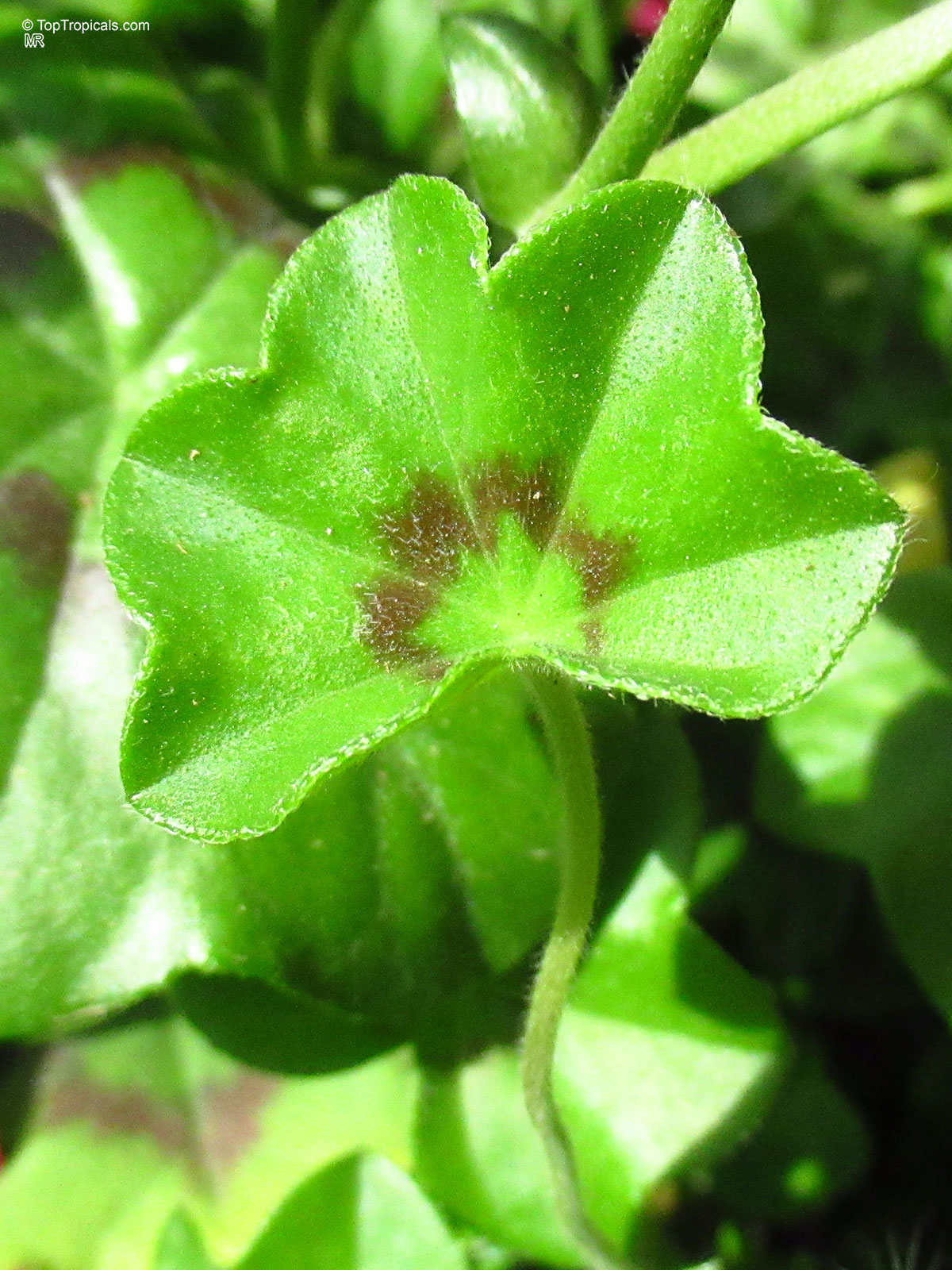
Pelargonium peltatum, commonly known as Ivy-leaved Geranium, is a trailing, evergreen perennial native to coastal regions of southern Africa, valued for its smooth, glossy leaves and long, cascading stems. It typically grows 1 to 2 feet tall with stems that can spread or trail 2 to 3 feet, making it suitable for hanging baskets and container displays. The rounded, slightly lobed leaves resemble ivy and provide a dense backdrop for clusters of simple or semi-double flowers in shades of pink, red, white, or lavender.
This species prefers full sun to light shade and well-drained soil, with moderate watering and good air circulation to prevent disease. It grows at a moderate to fast pace and blooms over a long season in warm conditions. Suitable for USDA zones 10 to 11, it is frost-sensitive and should be protected below about 32 F. It performs best in containers or raised settings where trailing stems can develop freely and is widely used in ornamental plantings.
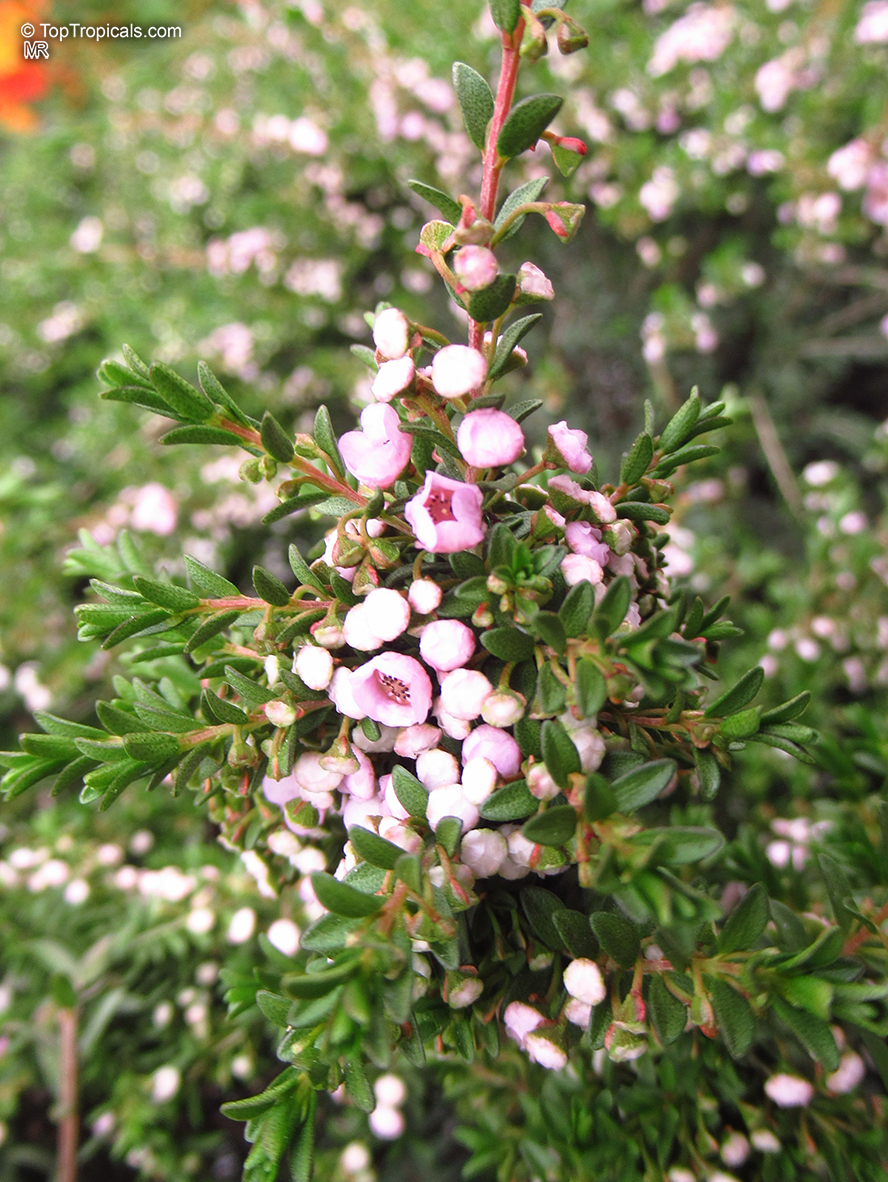
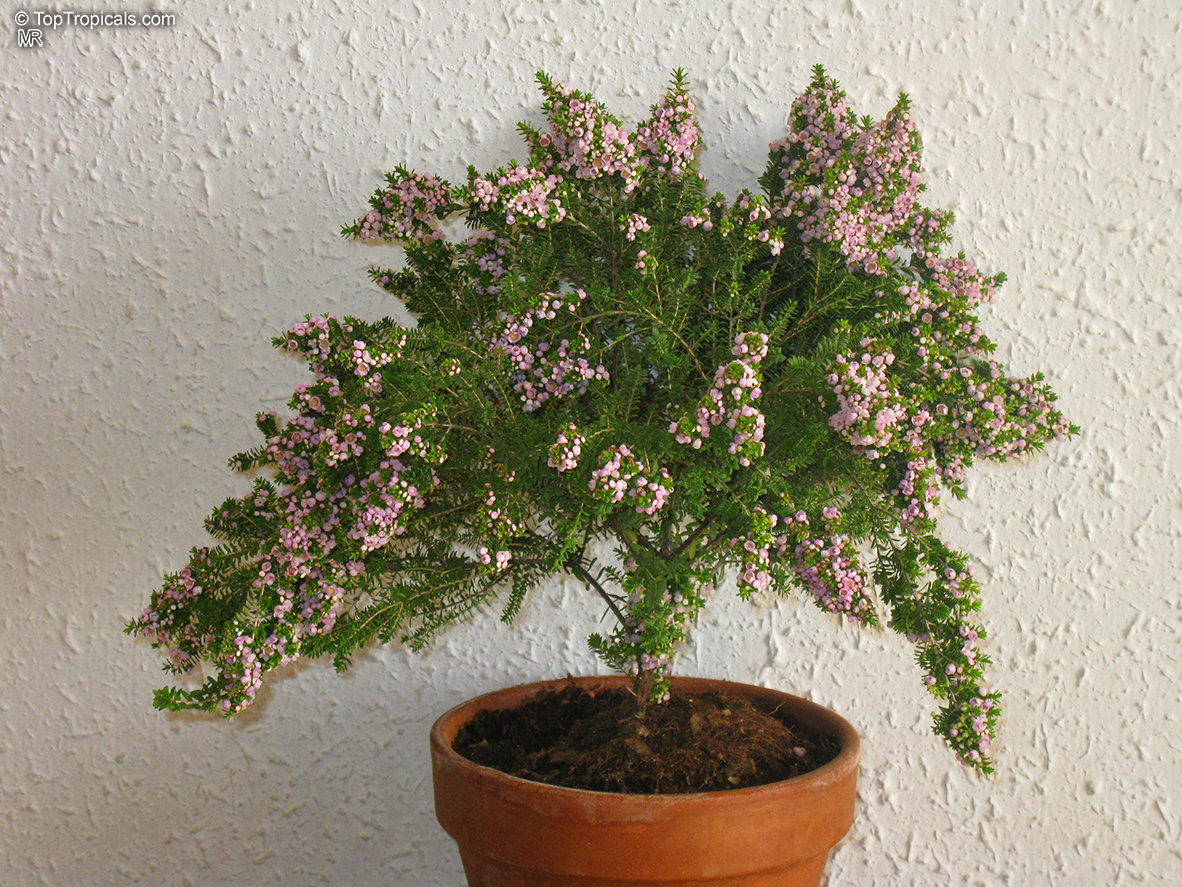
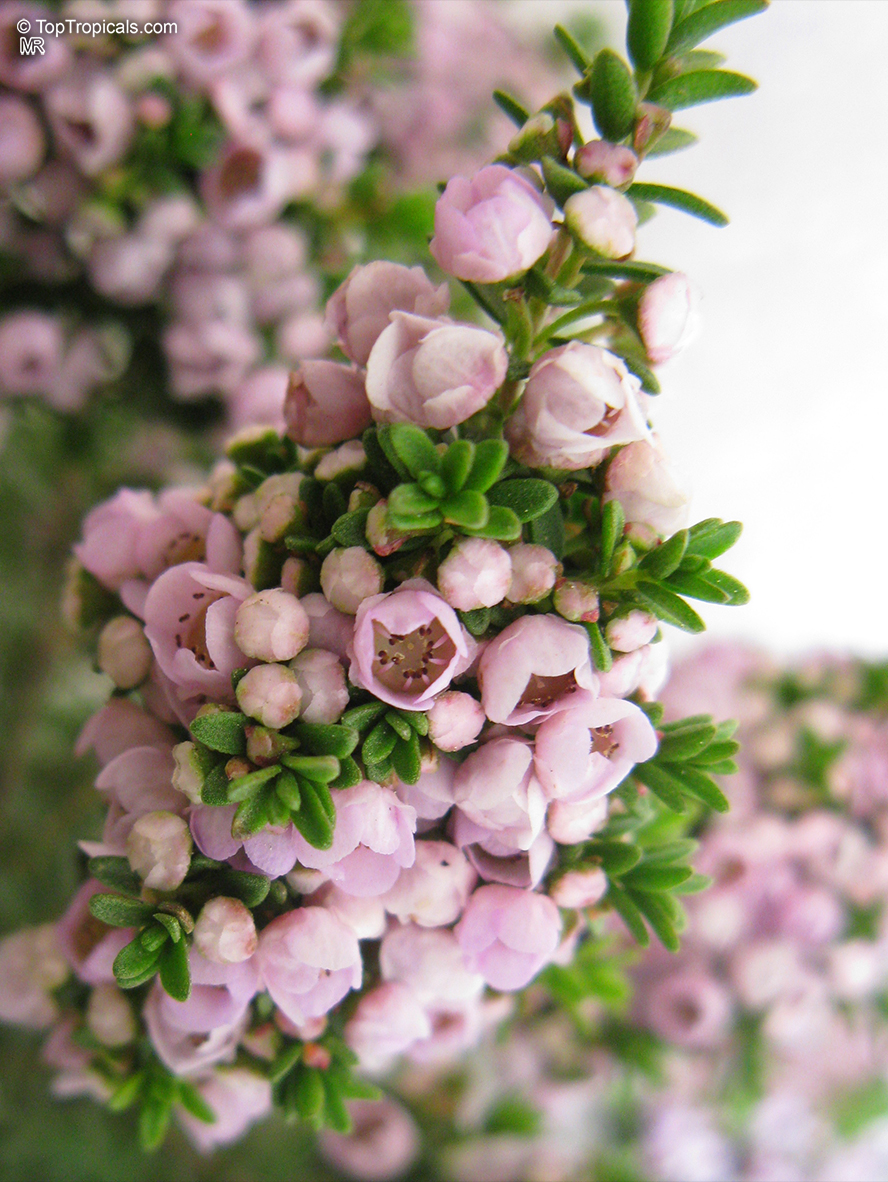
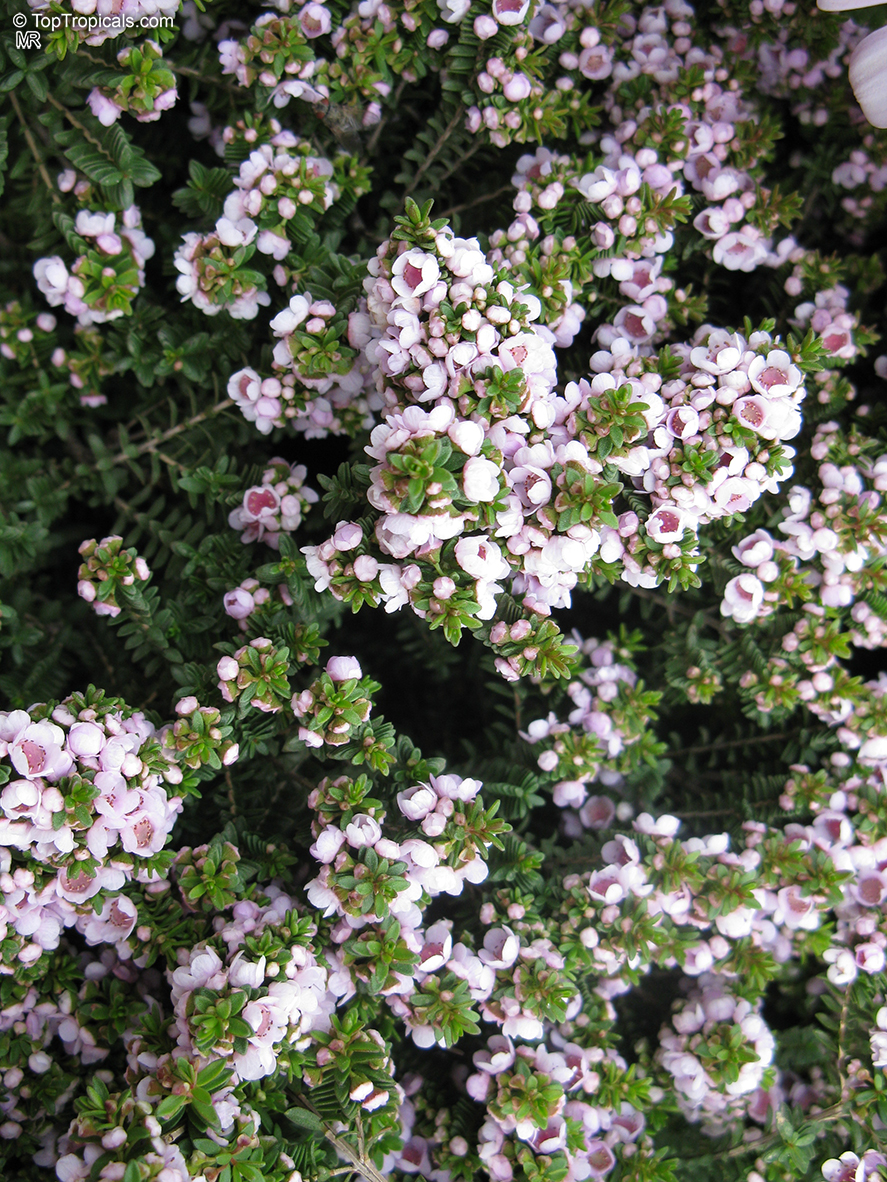
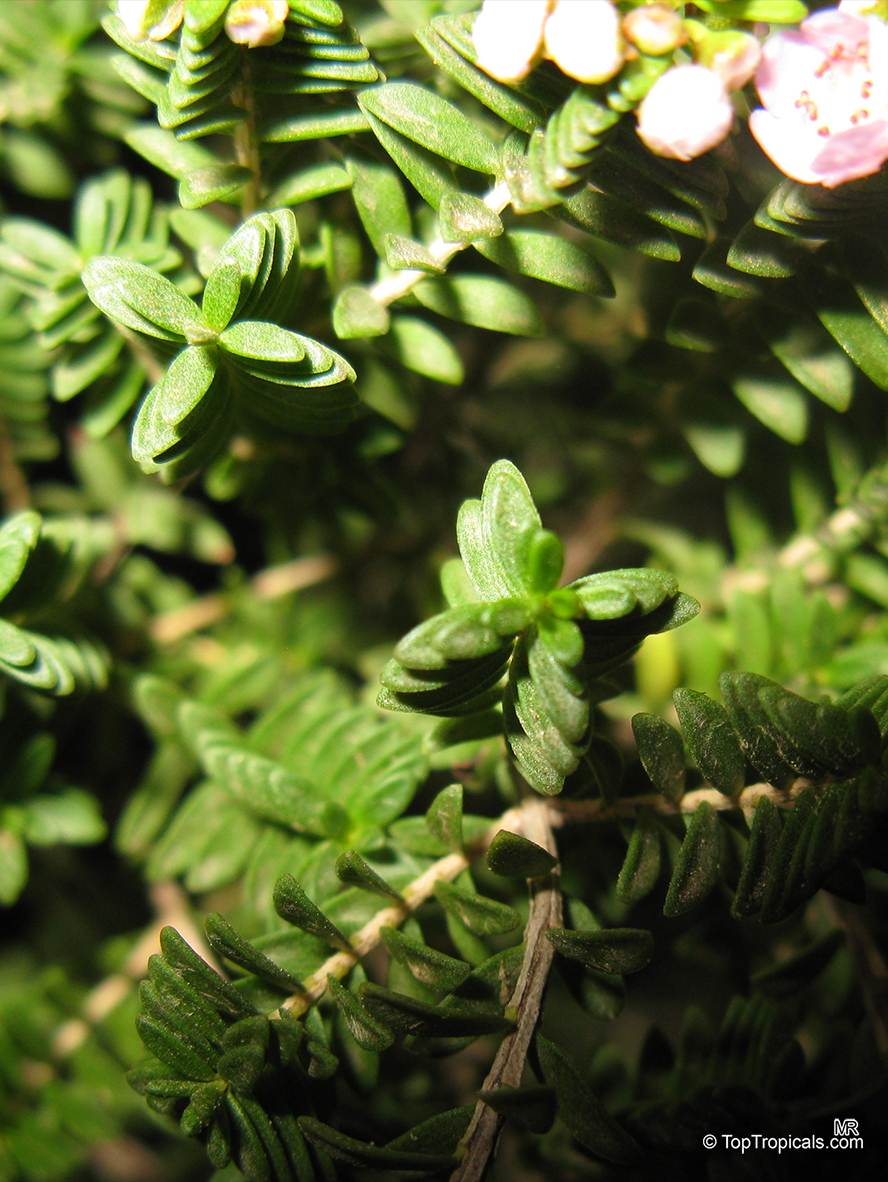
Botanical name: Thryptomene saxicola
Common name: Rock Thryptomene
Family: Myrtaceae
Origin: Australia
USDA Zone: 6-9


Leaves are 5-10 mm long and obovate with a characteristic Myrtaceae smell when crushed.
It is a hardy plant in well drained soils in a sunny or lightly shaded location and it is tolerant of moderate frosts.
Flowers have a light unpleasant smell.
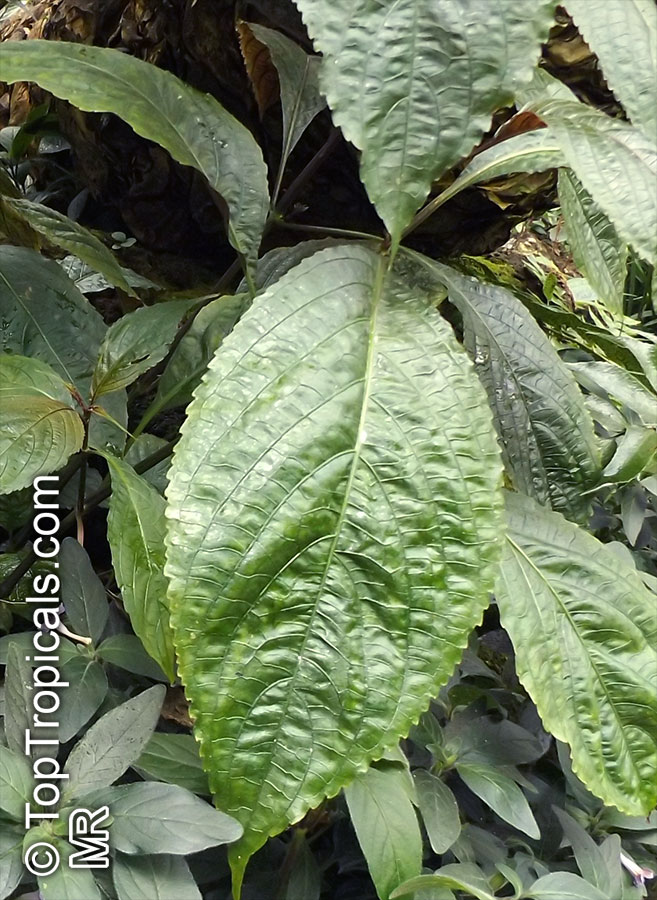
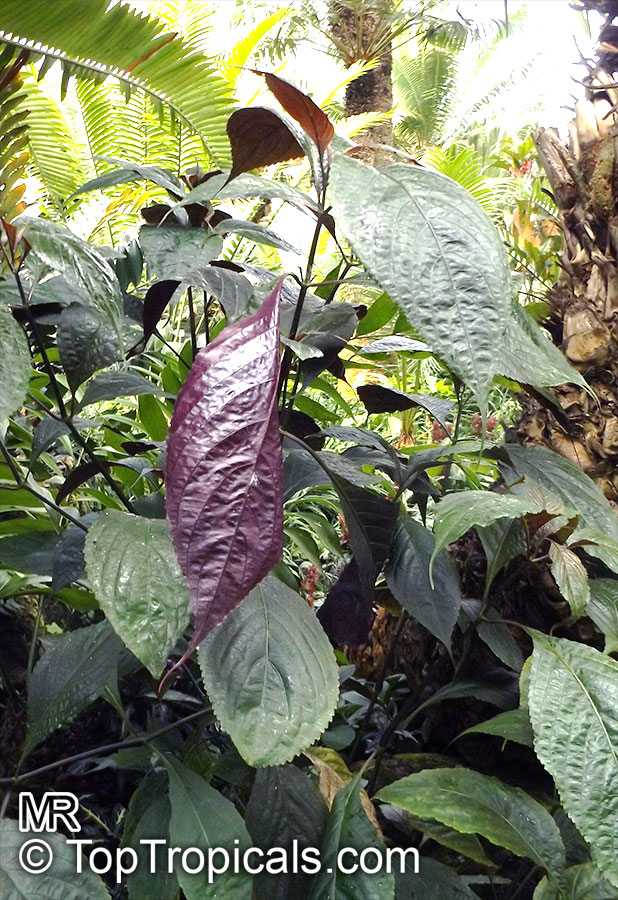
Botanical names: Strobilanthes hamiltoniana, Diflugossa colorata, Strobilanthes colorata
Common names: Chinese Rain Bells, Temple Bells
Family: Acanthaceae
Origin: Indochina
USDA Zone: 9-11

It is a small shrub, often reaching a maximum height of 2-5 ft. It is native to the humid tropical forests of Indochina and grown in the USDA hardiness zone of 9-11.
This delightful little shrub boasts beautiful, bright green leaves that are accented by the striking and brightly colored pink, bell-shaped flowers that bloom during early summer and sporadically throughout the growing season. Not only is Strobilanthes hamiltoniana an aesthetically pleasing plant, but it is also considered an ethnomedical plant that has been used as a remedy for a variety of ailments.
Strobilanthes hamiltoniana prefers a semi-shade environment and regular to moderate water, making it an ideal addition to a shady garden. The plant thrives in warm and humid climates, however it can be grown in colder regions in a container. When grown in pot, this plant prefers moist soil, but should be protected from extreme temperatures and always be kept out of what little sunlight remains in order to avoid sunburn.
This lovely plant is easy to maintain and can do very well with minimal care. In order to propagate Strobilanthes hamiltoniana, it's best to use stem cuttings and place them in rich, well-draining potting soil. To ensure that this plant flourishes, it must be watered regularly, but avoid over-watering to prevent root rot and ensure healthy growth.
Strobilanthes hamiltoniana is a delightfully easy to grow plant that will reward the devoted gardener with a display of colorful pink flowers during the summer months. For best results, plant this remarkable plant in a semi-shade environment with consistent and moderate water and your garden will be graced with this incredible beauty.
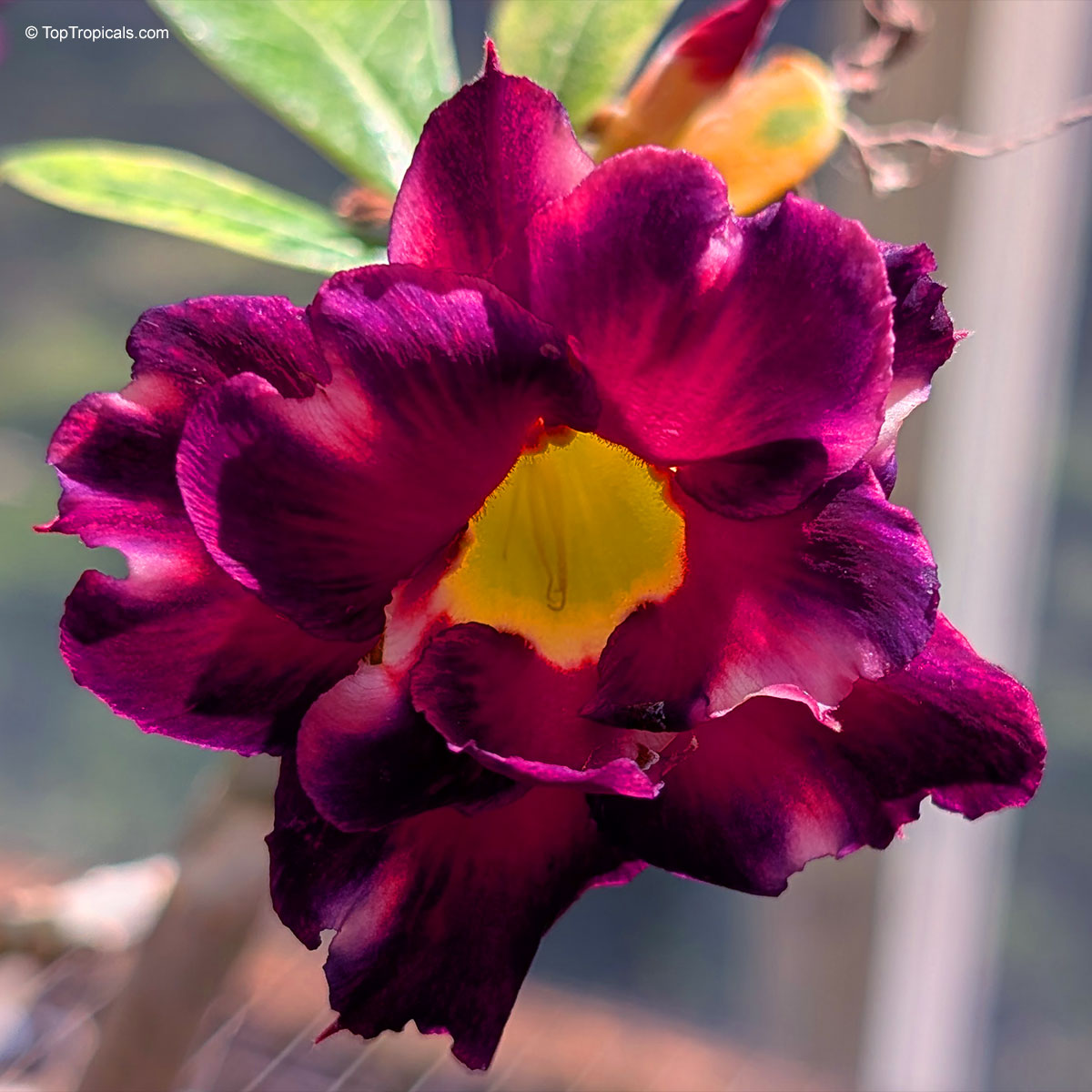
Botanical name: Adenium sp.
Common name: 'Black Border' Desert Rose
Cultivar: Black Border
Family: Apocynaceae
USDA Zone: 10-11
Cold tolerance: 35°F


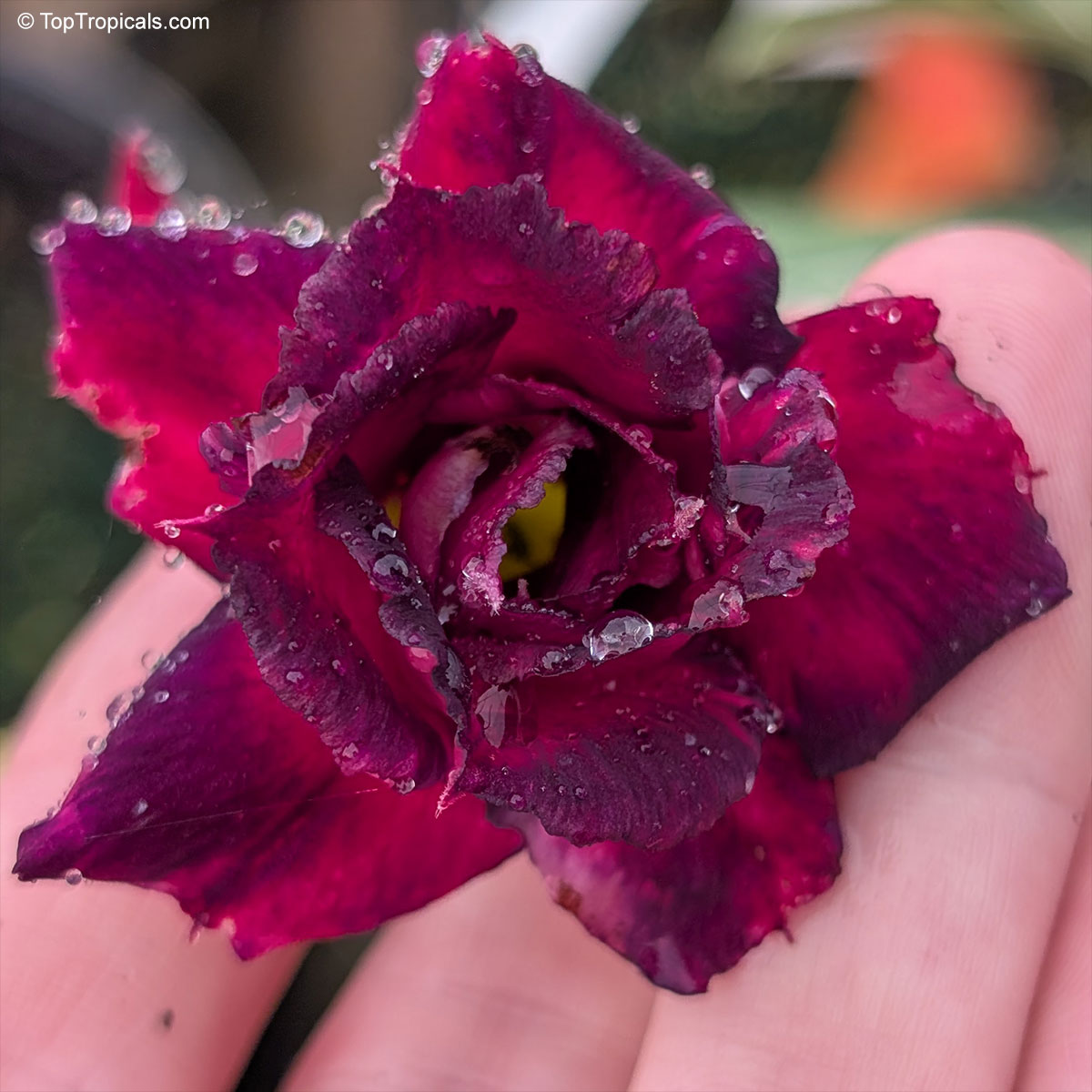
Adenium (Desert Rose) 'Black Border' - striking double flowers with deep red petals, bright coral centers, and an almost black edge. As the bloom matures, the red darkens to near-black, and a vivid yellow throat becomes visible, adding dramatic contrast.
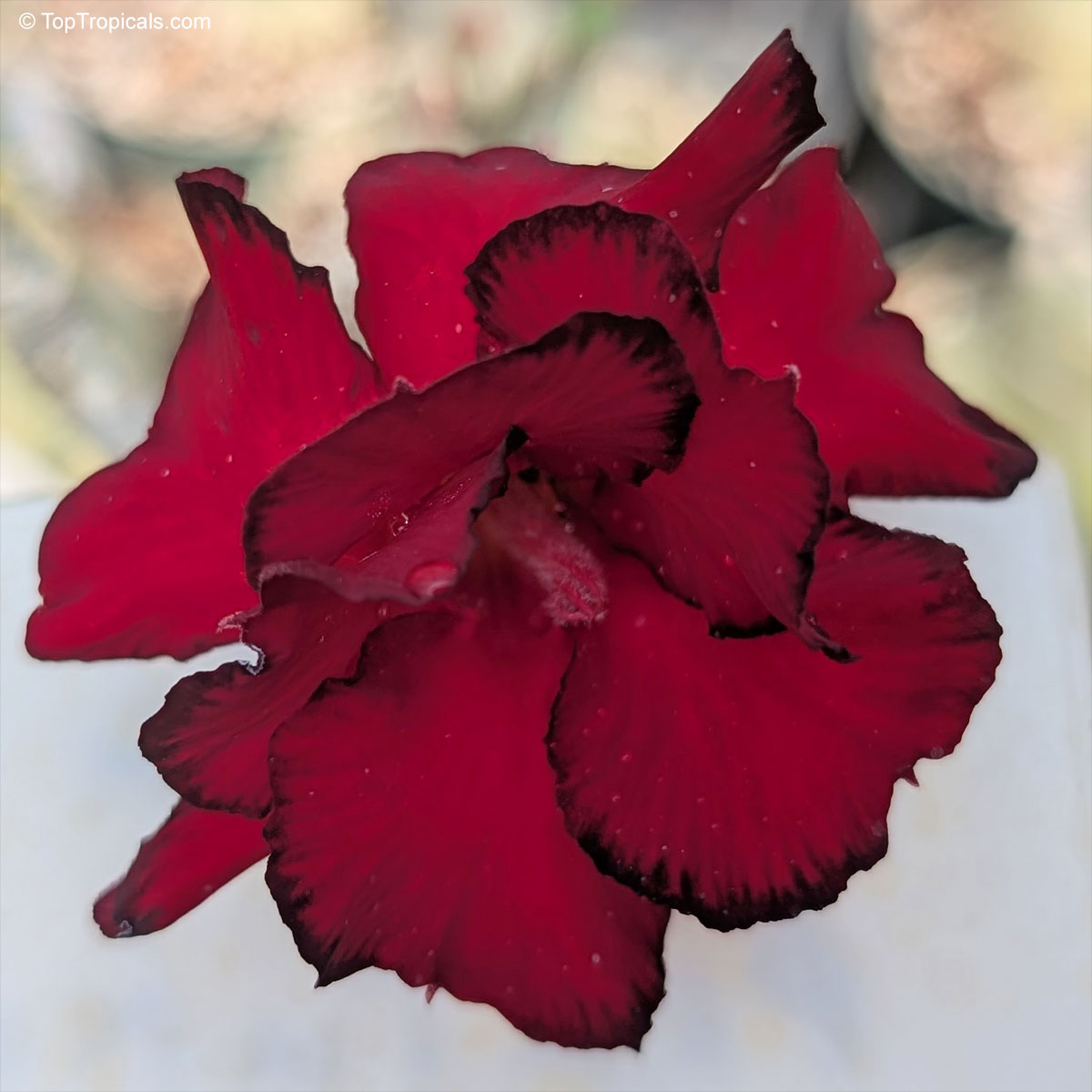
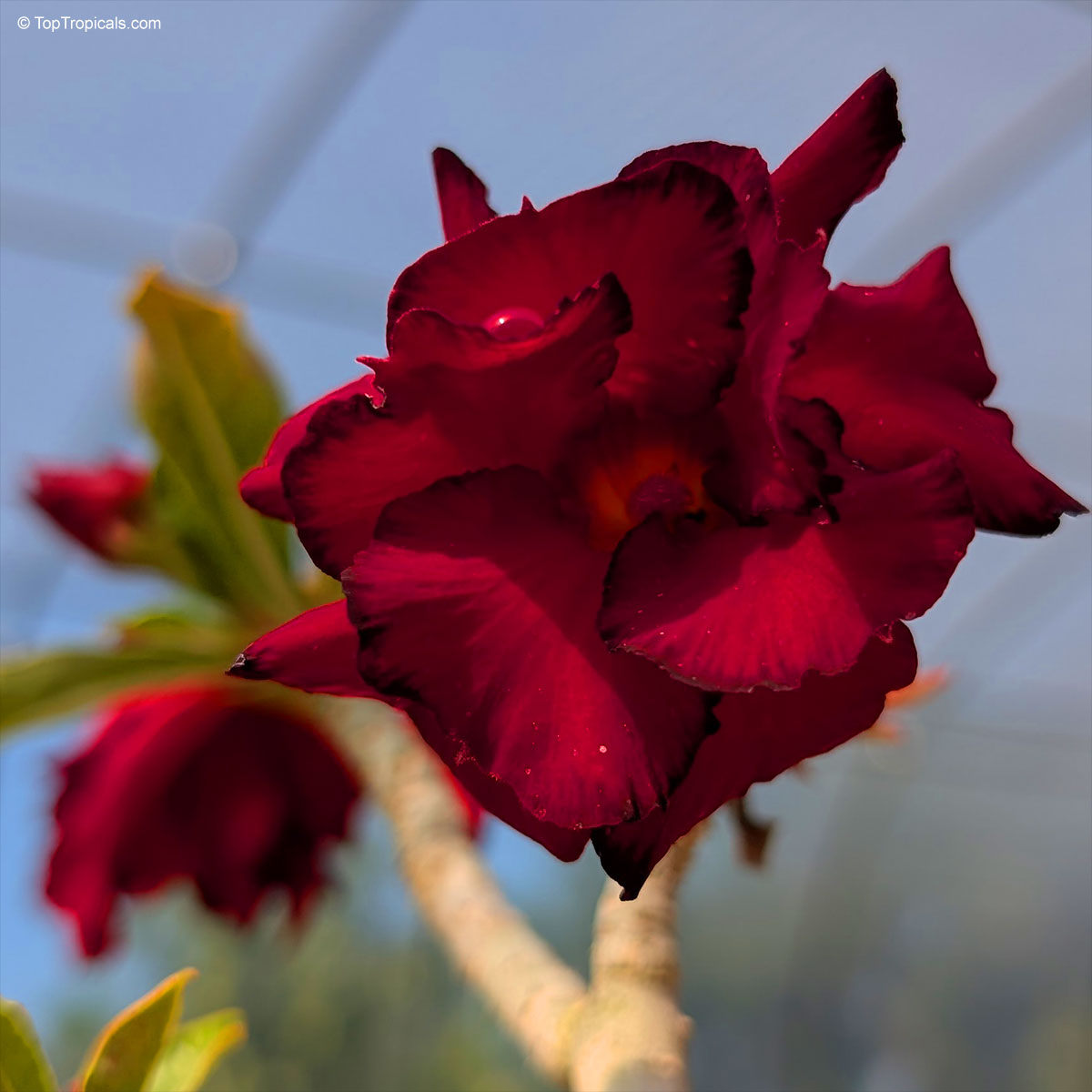
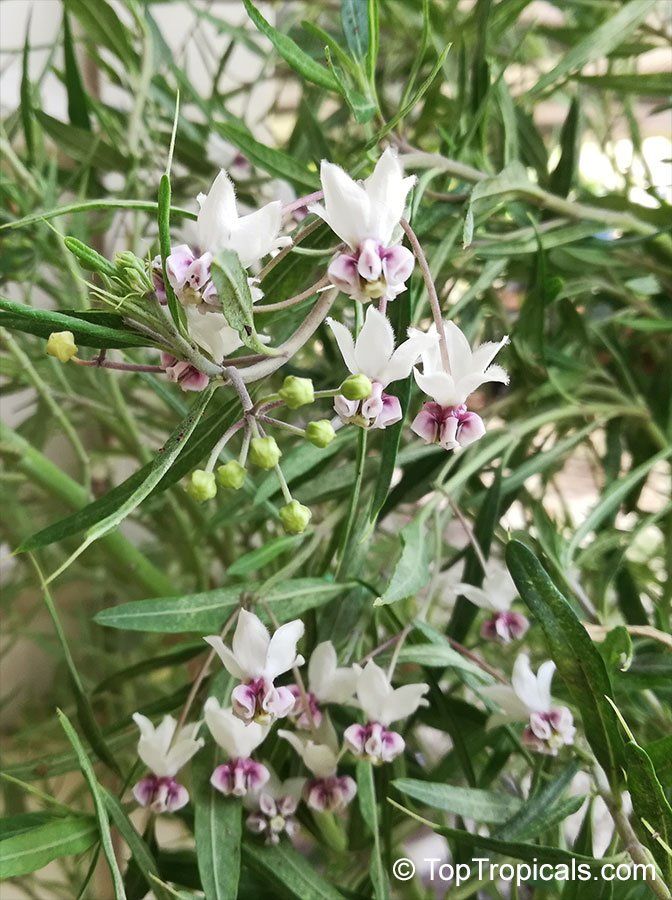
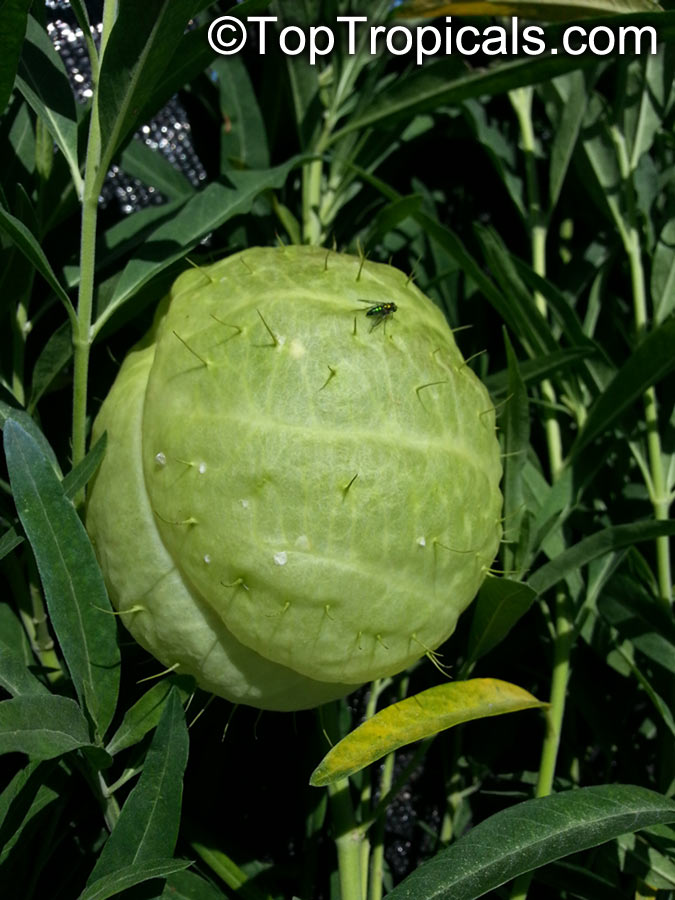
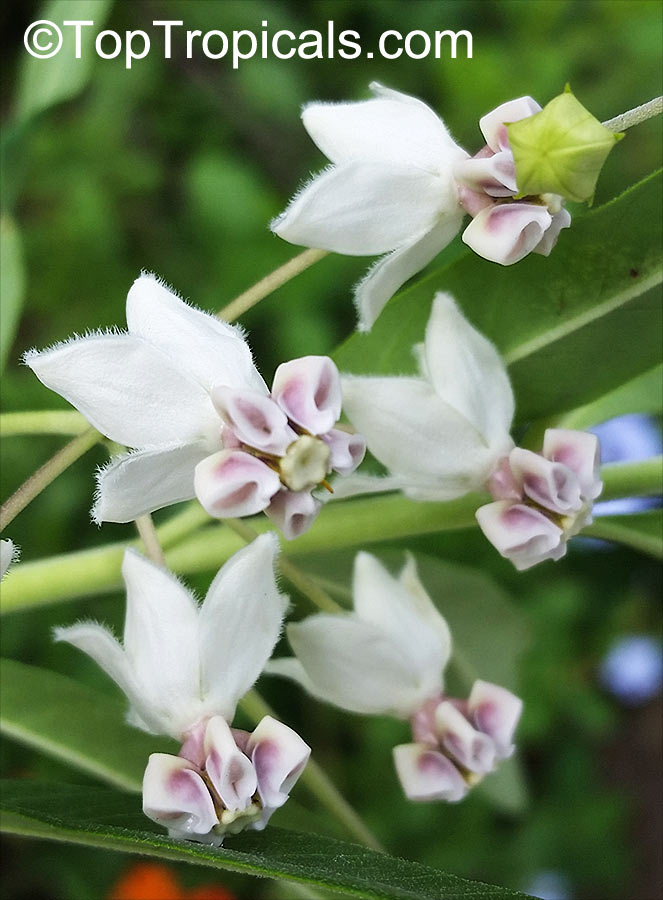
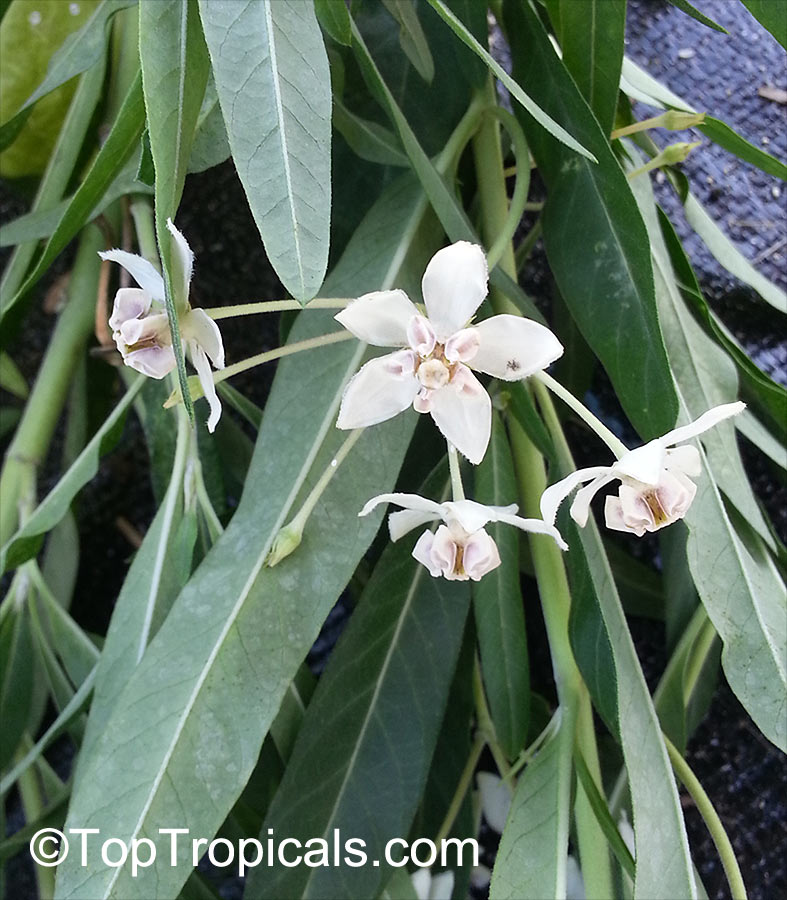
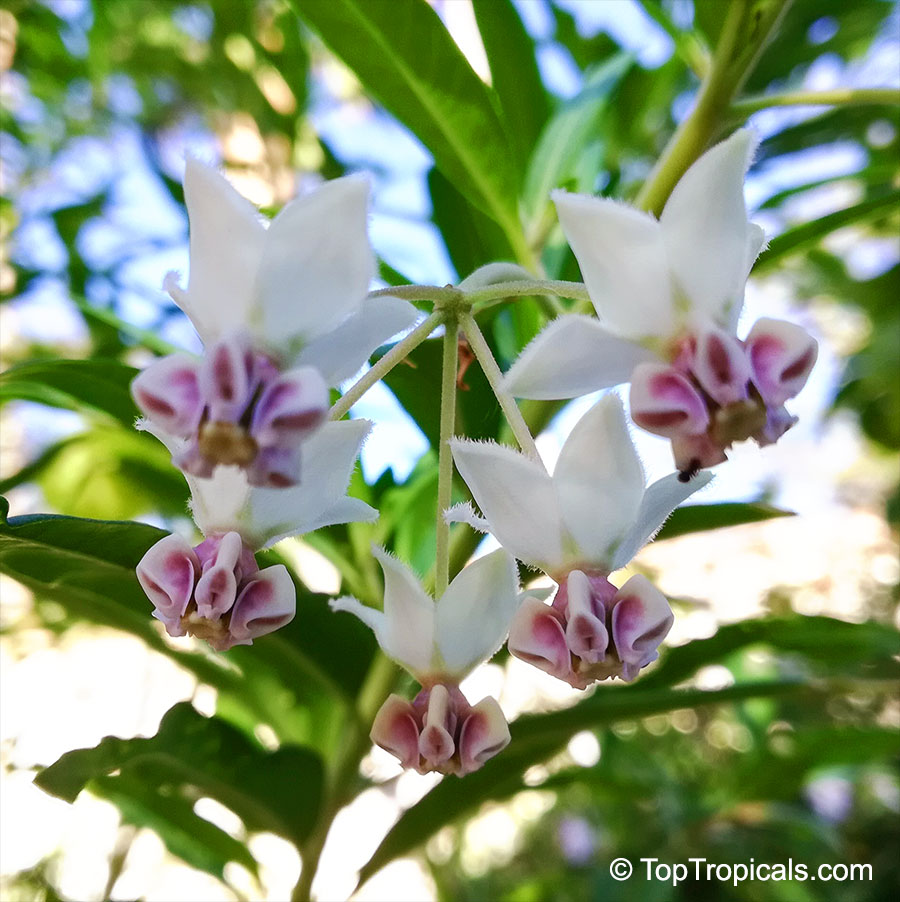
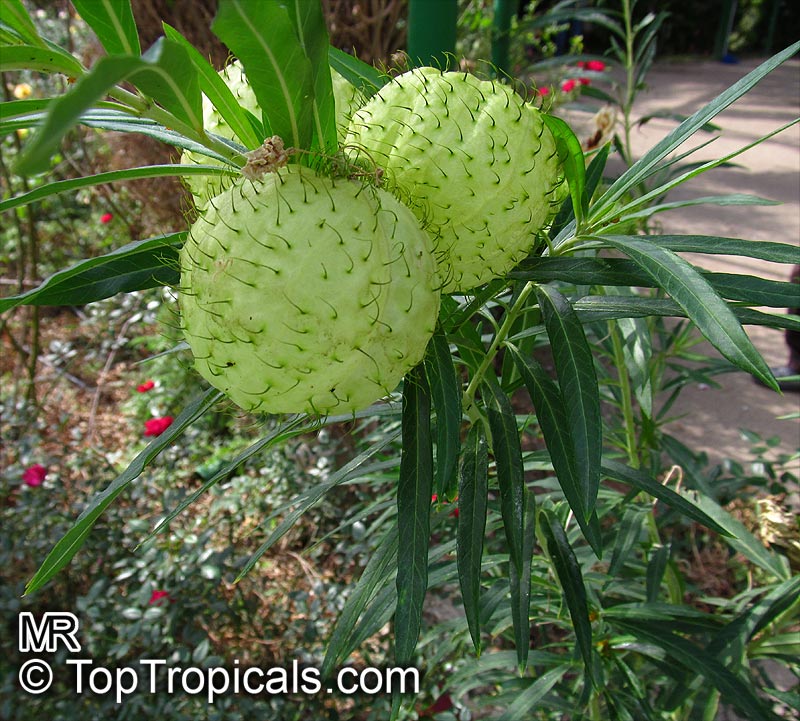
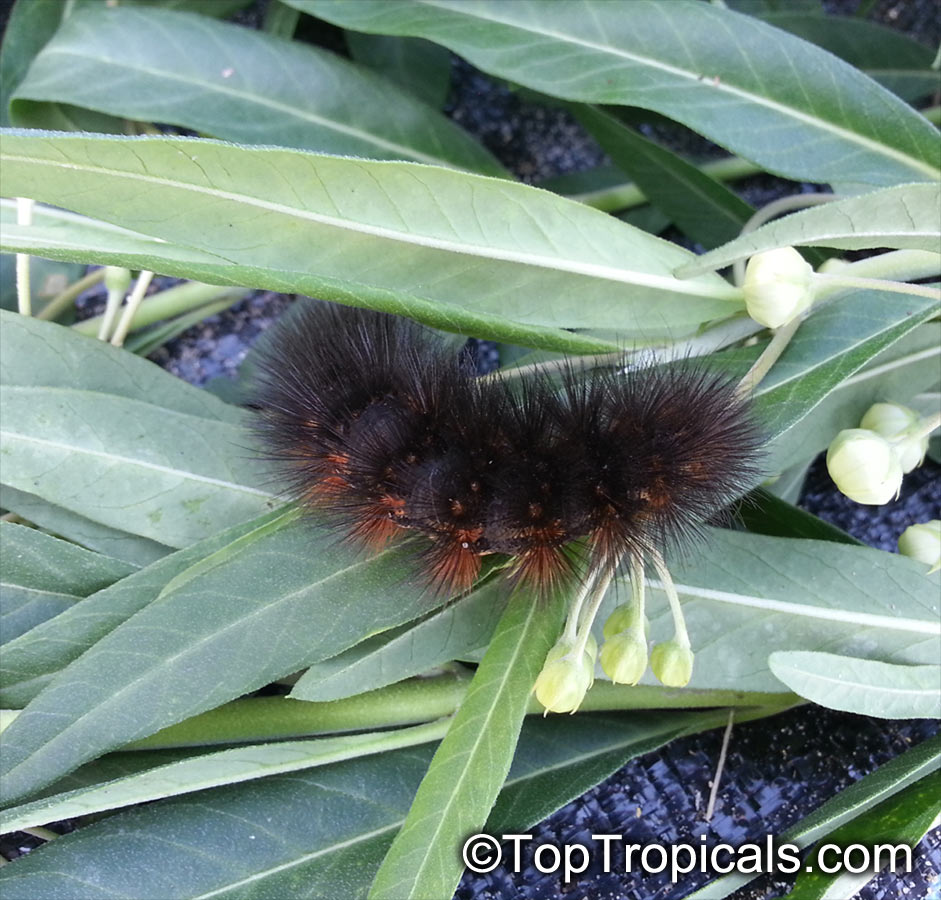
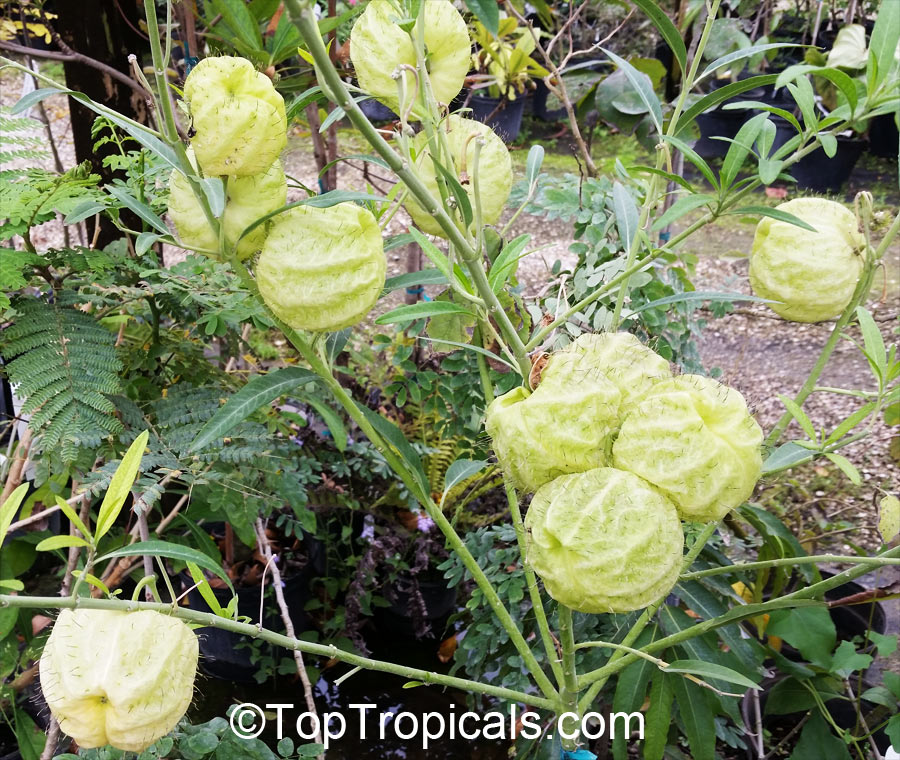
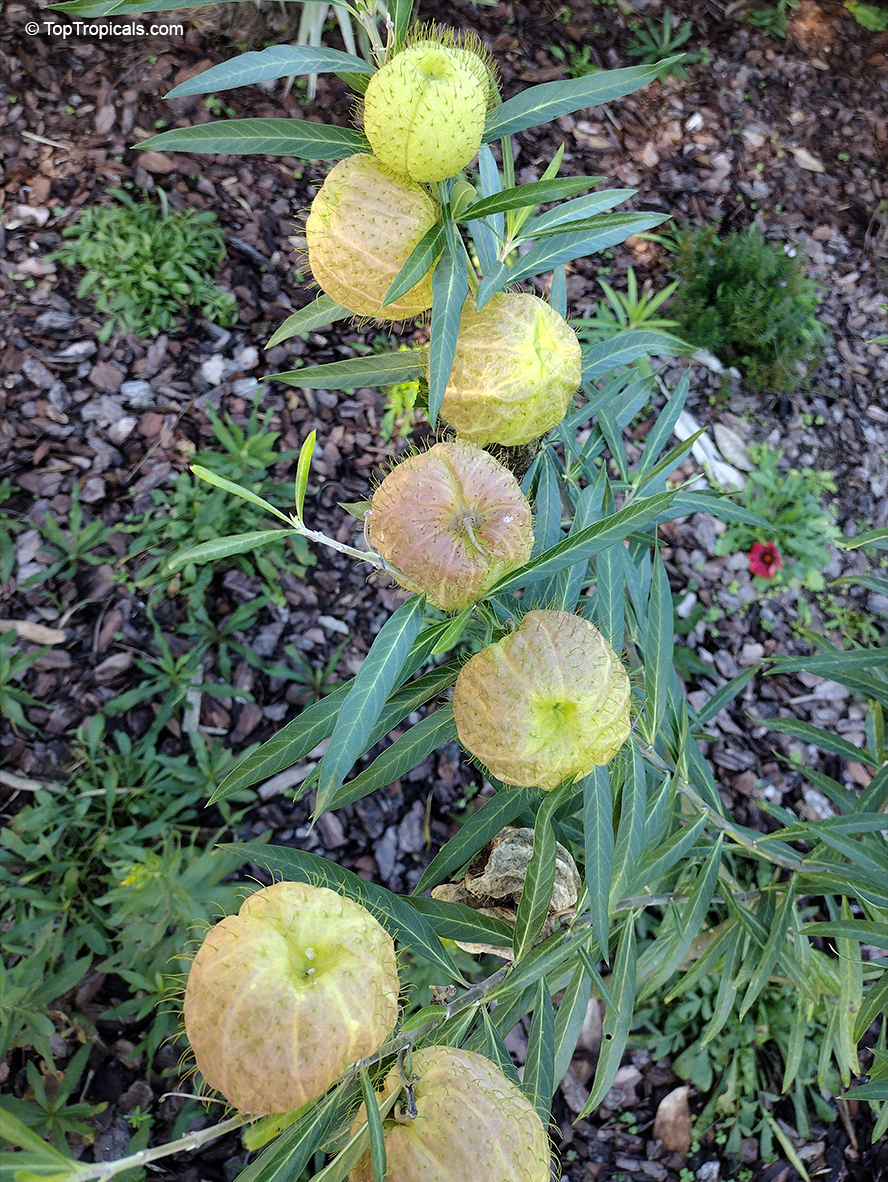
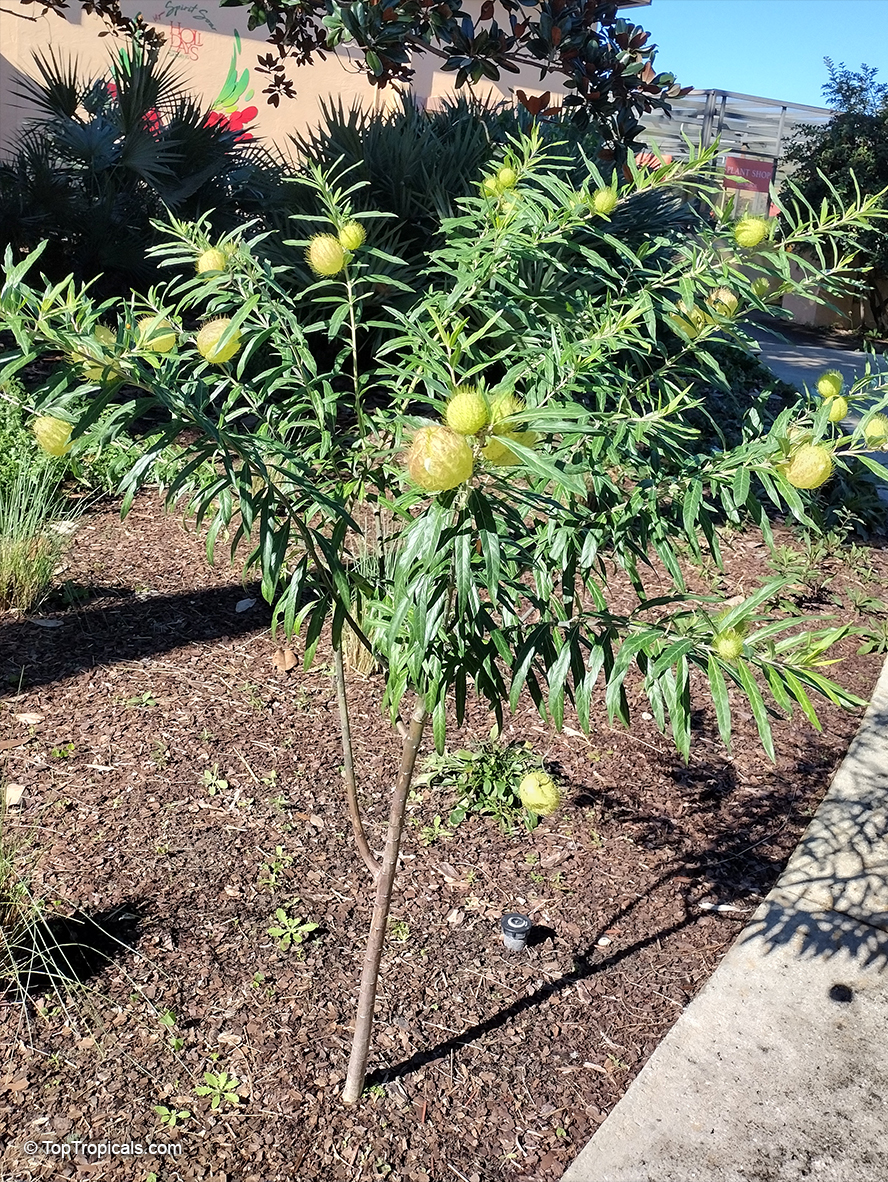
Botanical names: Gomphocarpus physocarpus, Asclepias physocarpa
Common names: Baloonplant, Cotton Bush, Swan Plant, Balloon Plant, Family Jewels Milkweed Tree
Family: Apocynaceae (Formerly:Asclepiadaceae)
Subfamily: Asclepiadoideae
Origin: Jamaica and South America
USDA Zone: 8-10


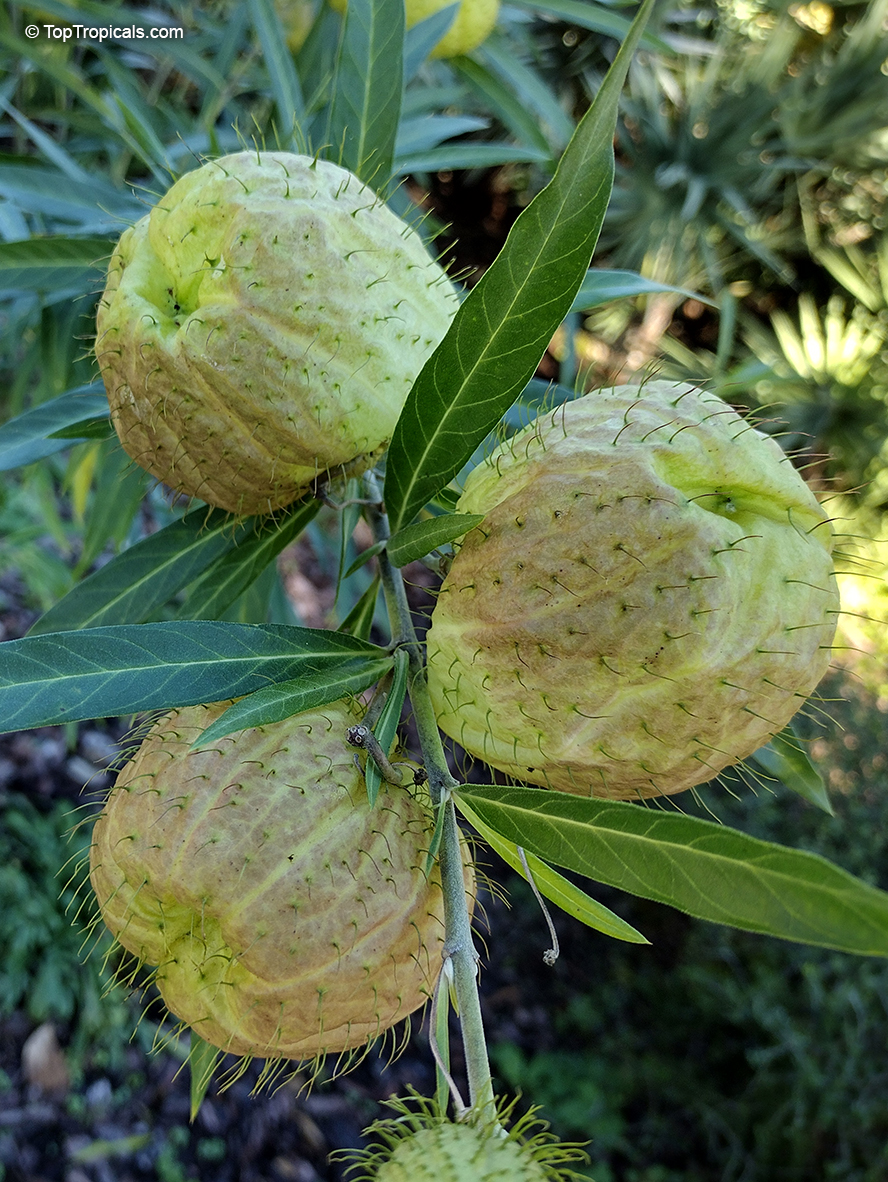
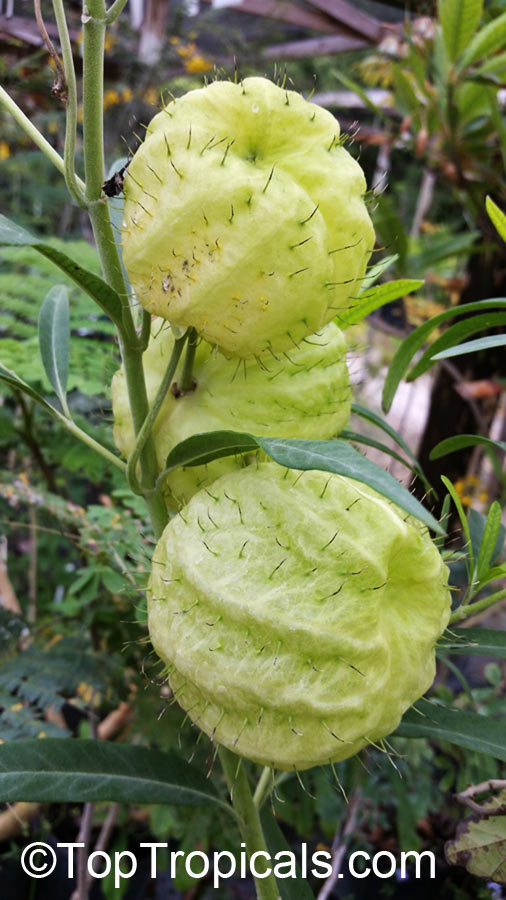
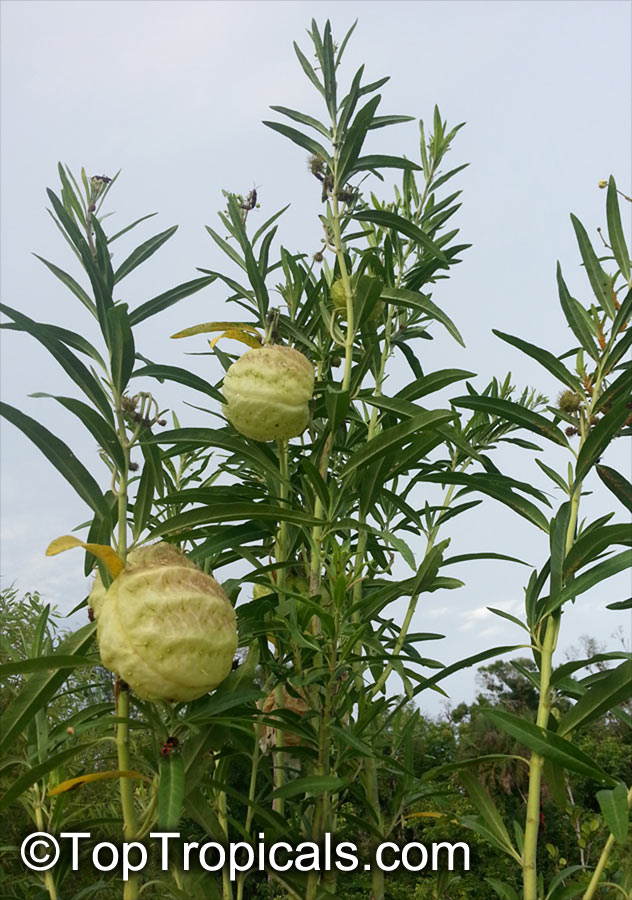
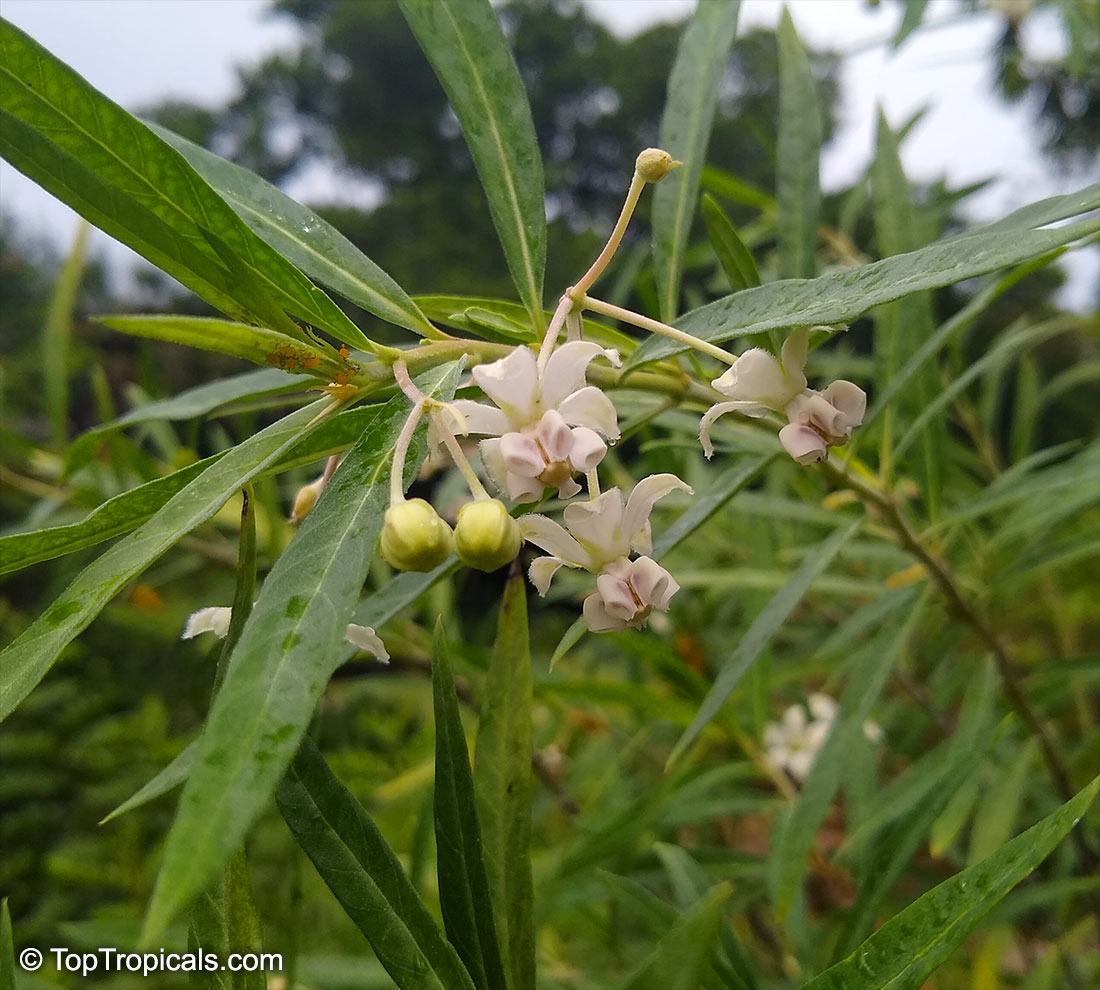
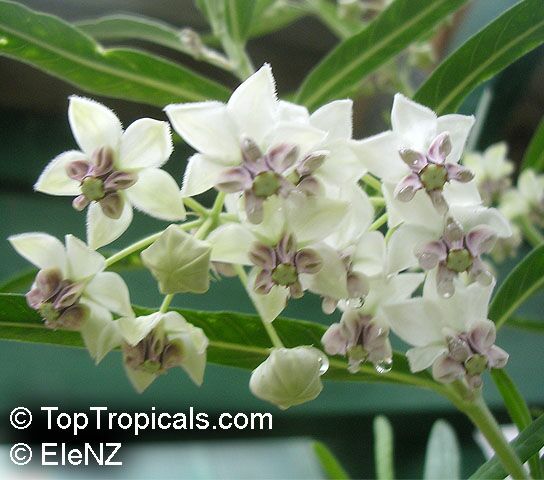
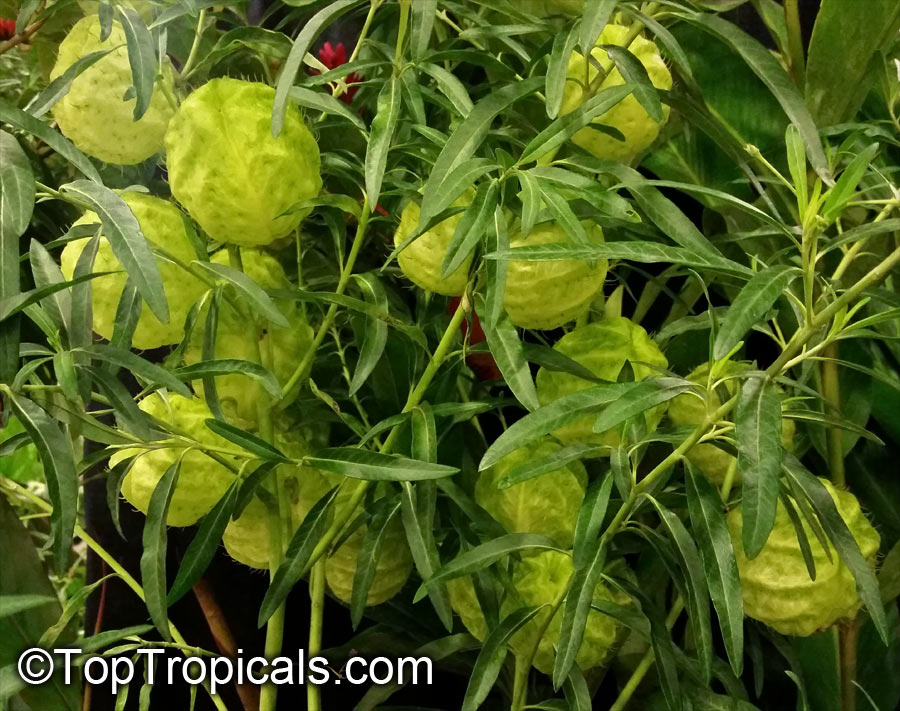
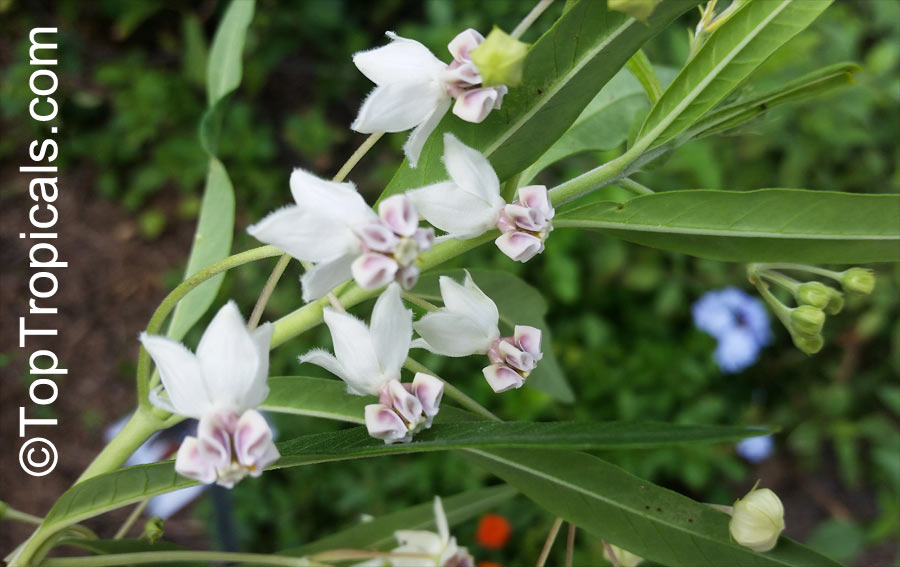
The name Balloonplant is an allusion to the swelling bladder-like pods which are full of seeds. During the summer, umbels of creamy or greenish-white flowers are produced; these are followed by interesting globular seed pods which are inflated and covered with soft bristles. The flowers are small, with white hoods and about 1/2 inch across. The capsule is a pale green, and in shape an inflated sphere. It is covered with rough hairs. It reaches three inches in diameter. This plant grows to 6 feet tall with a spread of about 2 feet. It has lance-shaped, medium green, hairy leaves. Flowers are a nectar source for many butterflies and leaves are a food source for monarch butterfly larvae (caterpillars). It is also popular in traditional medicine to cure various ailments.



Botanical name: Anacamptis pyramidalis
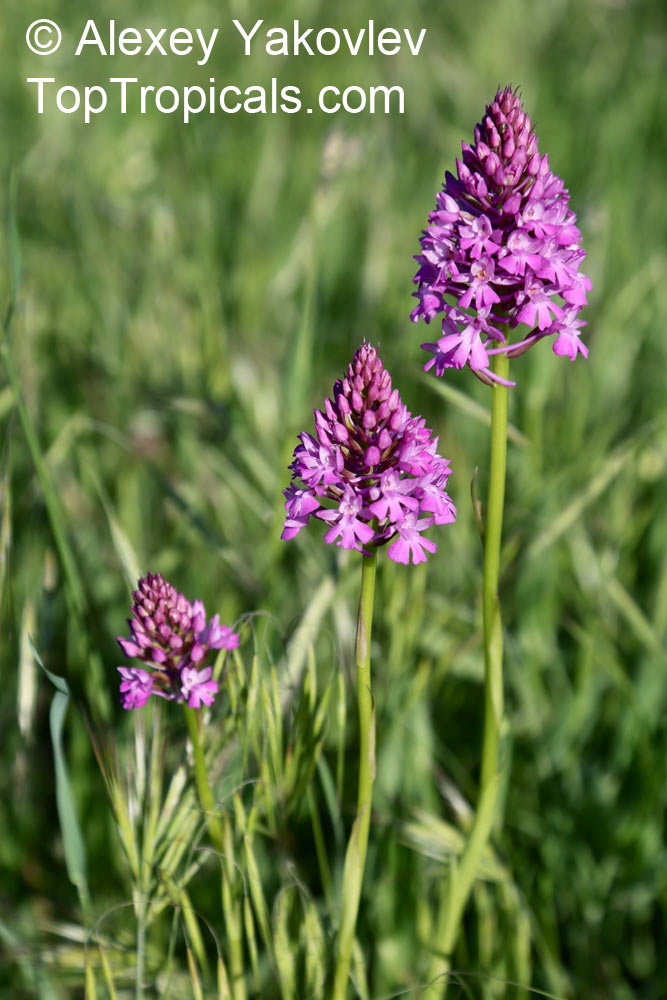
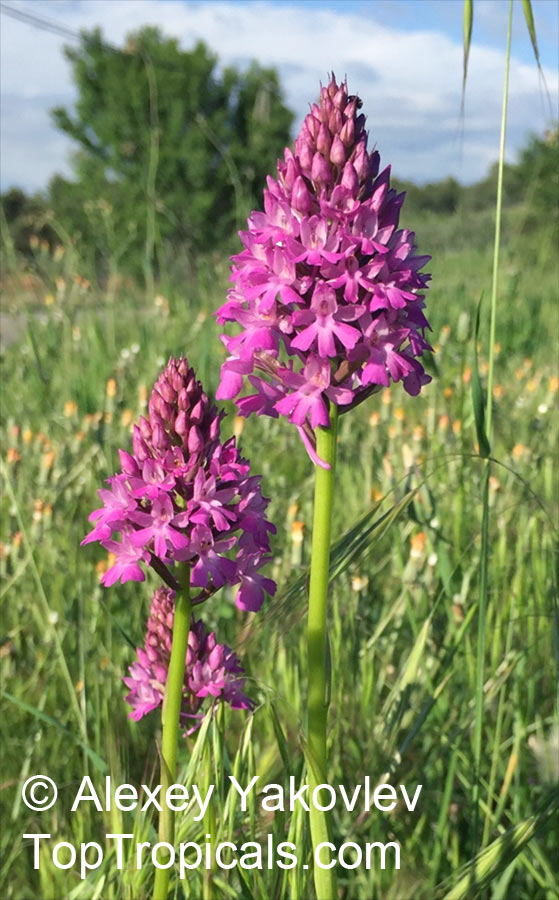
Common name: Pyramidal Orchid
Family: Orchidaceae
Origin: Mediterranean region
USDA Zone: 5-9

It is a good orchid to put into a meadow or wildflower lawn and usually thrives. Flowering takes place in late June through July. It also grows happily in a cold greenhouse, preferably in a plunged terracotta pot.
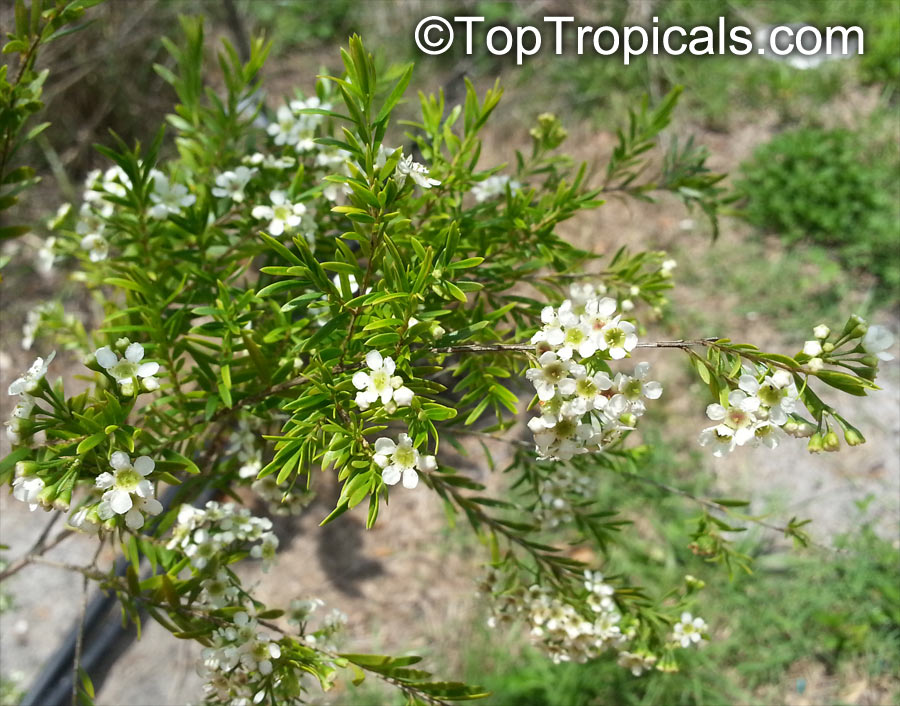
Botanical names: Sannantha similis, Babingtonia similis
Common names: Babingtonia, Tall Baeckea
Family: Myrtaceae
Origin: Australia
USDA Zone: 9-10
A large shrub, Sannantha similis (Babingtonia) can grow up to 5 to 10 feet tall and up to 2 to 5 feet wide. It can cope with a wide range of climates and is hardy in USDA Zones 9-11. This semi-shade loving shrub needs moderate water and the best condition for its proper growth is in moist, well-drained and sunny situations. The fine foliage of Sannantha similis displays bright green coloration with white and off-white flowers in summer time.
When growing Sannantha similis in colder areas in a pot, it is best to choose a medium sized pot with drainage holes at the bottom to ensure proper drainage. Soil should be a mixture of potting soil, compost or all-purpose soil, sand, and perlite. Place the pot in an area that receives partial shade, and make sure to water the plant deeply at least once a week. It is also essential to protect it from winter frost. Give it an extra layer of mulch like straw or bark and bring it inside into a cool environment.
Sannantha similis is a wonderful addition to any garden, and it will definitely enhance its visual appeal with its small leaves and vibrant flowers. Its low maintenance needs and hardiness makes it a great choice for any gardener looking for a beautiful, hardy, easy to care for shrub.

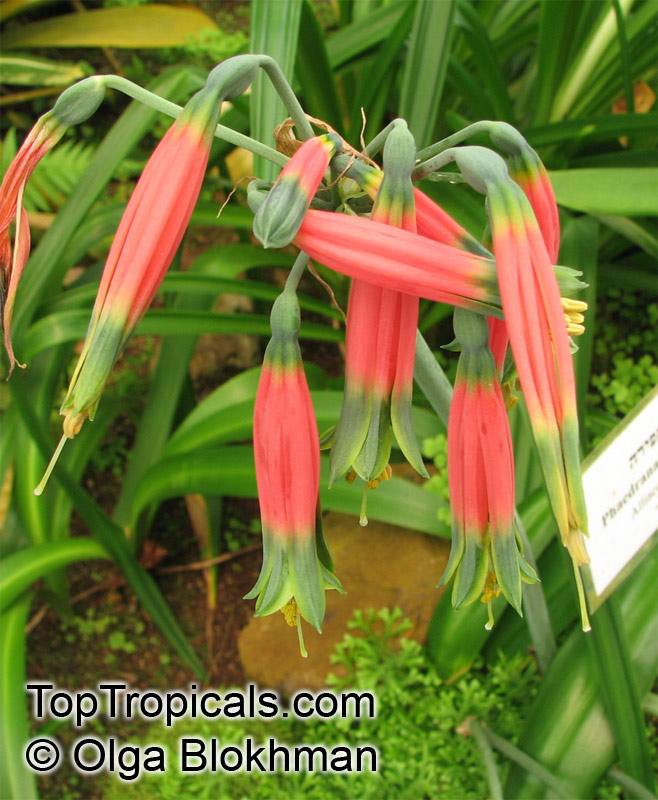
Botanical name: Phaedranassa cinerea
Common name: Phaedranassa
Family: Amaryllidaceae
Origin: South America
USDA Zone: 9-10
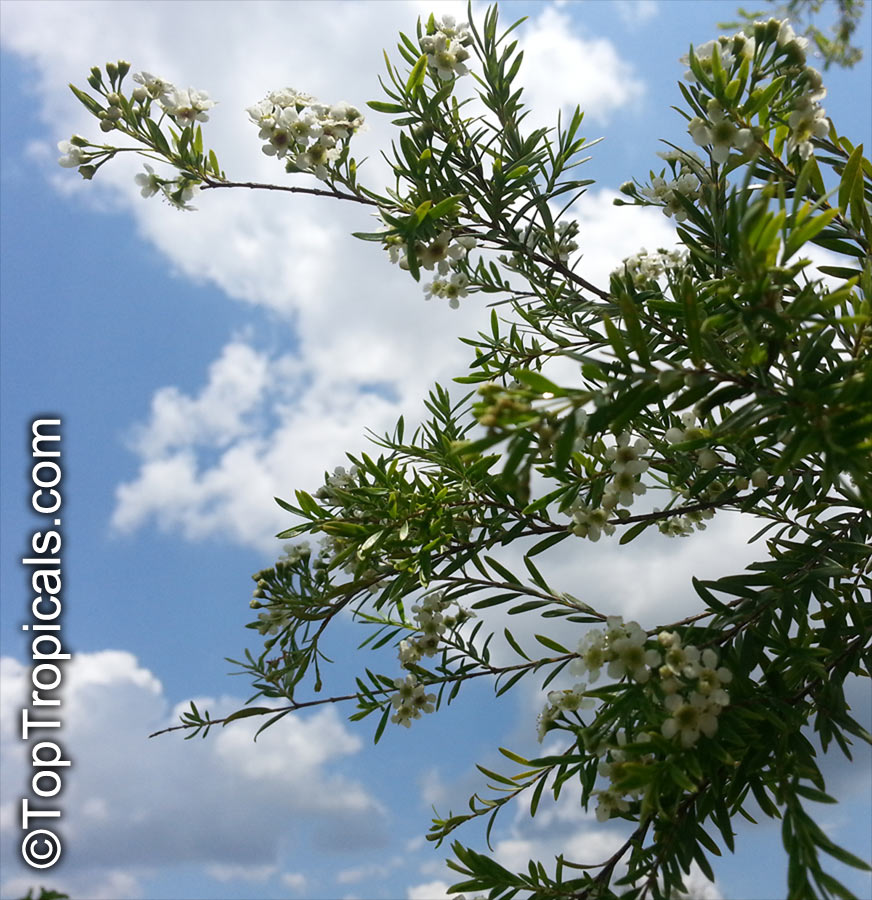
It is a small shrub typically growing 2-5 ft in height and width. This species is renowned for its striking and unusual flower color. Its flowers can range from red to crimson, to vinous and are quite captivating. Phaedranassa cinerea is adapted to thrive in full sun, and prefers moderate amounts of water. It is easy to cultivate in USDA Zone 9-11 and its low-maintenance requirements make it a great choice for gardeners.
Though Phaedranassa cinerea can be grown in the ground in USDA Zones 9-11, this plant can also be grown in pots as well. Gardeners in colder regions can enjoy this captivating species in their yards as long as they provide it with the best care. When grown in pots, it is important to choose a pot that is large enough to provide adequate space for bulking of the rhizome. In addition to providing the plant with full sun exposure, the soil should be kept lightly moist. Do not overwater, as this will cause the tubers to rot. When temperatures drop in the winter, it is important to bring the pot inside or to a sheltered area to protect the rhizome from frost.
The Phaedranassa cinerea is a beguiling native of South America that is not only resistant to drought, but is also low-maintenance and unequivocally beautiful. Its bright red and vinous flowers are hard to miss and will add a bright pop of color to any garden. While this species may require a bit of extra care in colder climates, its easy cultivation requirements make it a great choice for beginner and expert gardeners alike.
| Next | |
Use link to repeat this search:
https://toptropicals.com/cgi-bin/garden_catalog/cat.cgi?search_op=and&keyword_op=and&language=e&number=10&no_change_lang=1
&v1=sss&user=tt&sale=1&first=0