Pink flowers - Plant Encyclopedia Results

Number of plants found: 1141     Next    Go to page:  1  2  3  4  5  Last  

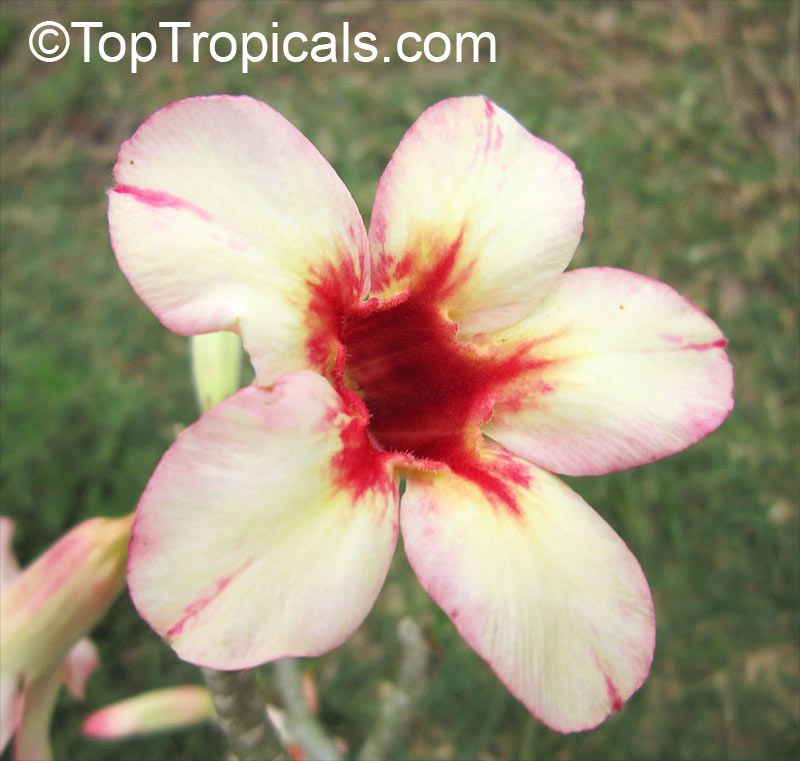
Adenium sp. , 'Star of Yellow Dream' Desert Rose

Botanical name: Adenium sp.

Common name: 'Star of Yellow Dream' Desert Rose

Cultivar: Star Of Yellow Dream

Family: Apocynaceae

Origin: Arabia and East Africa

USDA Plant Hardiness MapPlant with caudexPlant used for bonsaiSmall plant 2-5 ftSemi-shadeFull sunModerate waterYellow, orange flowersPink flowers

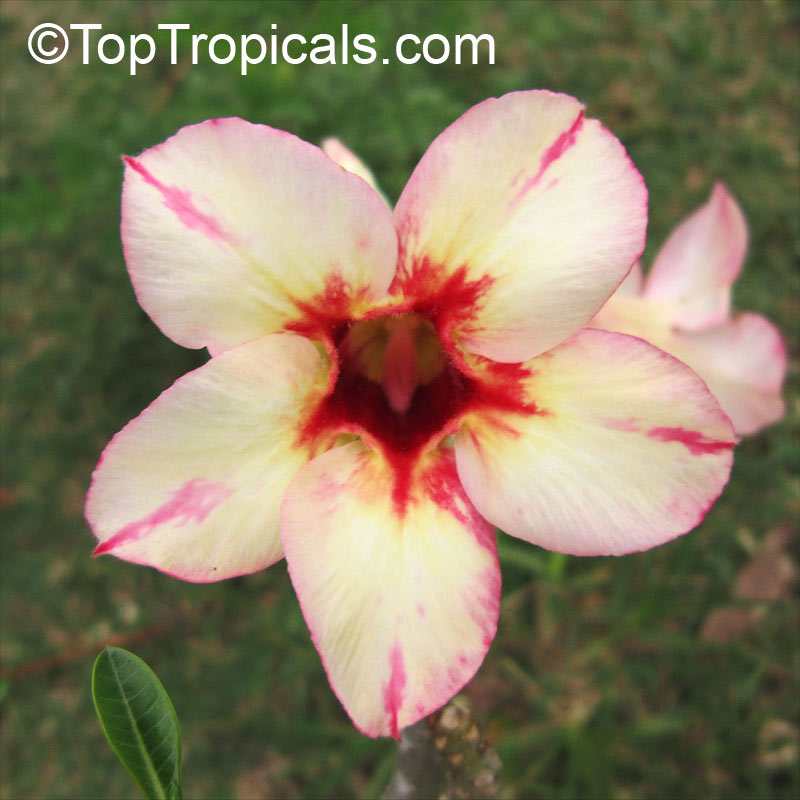
These adenium hybrids are quite unnique as they have unusual color for Adenium - yellow. Original species of Adenium were limited by pink, white, and red colors and shades. Just a few years ago, yellow hybrids were selected in Thailand and at first were considered a myth. Now we have them, and every year more and more yellow hybrids appear on the market.

Adeniums have many spectacular hybrids. The basic culture is very similar to orchids. A small pot with excellent drainage is a must. Adeniums do not like both over-watering or drying-out. There is a little secret of how to create a weird shape of the base: lift the plant a bit every time you re-pot the plant, so that the upper part of roots will be a little exposed. The plant will form more roots that will go down. To make your plant develop a large swollen base/trunk, you'll need a good quality fertilizer. Fetilizer requirement for swelling up trunks is also used to increase flowering. It shouldnt be too hight in nitrogen, the middle number should be the highest. Never apply fertilizer directly on roots and do not liquid feed when a plant is thirsty: always water first slightly to avoid root burn and leaf drop. Do not wet leaves. Adeniums need lots of light for heavy flowering. Most hybrids and species start blooming in the spring when the conditions are warm and days get longer, and continue blooming through the fall and winter in warmer climates. Adeniums like a neutral to hard water. Acidic water tends to sour the soil too fast and may cause root rot. Water plants preferably in the early morning, and allow them to drink up throughout the day. Watering can be done daily to every few days. Never allow your plants to sit in a saucer of water, but don't let them to dry out too often - this causes adeniums to go into early dormancy.
Adenium 'Star of Yellow Dream' is an old and stable cultivar known for its soft yellow blooms delicately brushed with pink, making it a long-admired classic among multicolored adeniums.


Link to this plant:
https://toptropicals.com/catalog/uid/adenium_yellow_star_yellow_dream.htm

Bouvardia ternifolia, Scarlet Bourvardia, Trumpetilla, Firecracker Bush, Hummingbird Flower

Botanical name: Bouvardia ternifolia

Common names: Scarlet Bourvardia, Trumpetilla, Firecracker Bush, Hummingbird Flower

Family: Rubiaceae

Origin: Arizona, New Mexico and Mexico, down to Central America

USDA Plant Hardiness MapSmall plant 2-5 ftSemi-shadeFull sunRegular waterRed, crimson, vinous flowersPink flowersPlant attracts butterflies, hummingbirdsFragrant plantSubtropical plant. Mature plant cold hardy at least to 30s F for a short time

In cooler climates, Bouvardia ternifolia (Scarlet Bourvardia) should be grown in pots and brought indoors before the cold weather arrives. Plant in well-draining, lightly acidic soil and place it in an area that gets a minimum of 4-6 hours of direct sunlight a day. Water regularly while the plant is actively growing and reduce watering in the winter or when the plant is dormant. When growing in a pot, it is best to repot every 2 to 3 years, as the growth rate of this small shrub is quite fast. In USDA Zones 9-11, the mature plant can manage temperatures as low as 30°F for a short time, but it is advised to give it extra protection with mulch or frost blankets if the cold weather will last longer than usual.

Whether you are looking to add some color to an outdoor patio, a terrace, or a balcony, Bouvardia ternifolia

will be an excellent choice. The bright, red, crimson and vinous flowers of this small shrub are extremely fragrant and will attract butterflies and hummingbirds during the day. Keep in mind that it will need regular water, plenty of sunlight and some protection from the frost during the cold season, and you will be able to enjoy its beauty for many years to come.


Link to this plant:
https://toptropicals.com/catalog/uid/bouvardia_ternifolia.htm

Canavalia sp., Magic Bean, Kaattuthambattan, Beach Bean, Seaside Bean, Jackbean

Botanical name: Canavalia sp.

Common names: Magic Bean, Kaattuthambattan, Beach Bean, Seaside Bean, Jackbean

Family: Fabaceae

Subfamily: Faboideae

Origin: Africa, India

USDA Plant Hardiness MapVine or creeper plantSemi-shadeFull sunModerate waterPink flowersEdible plantPlant attracts butterflies, hummingbirdsEthnomedical plant.
Plants marked as ethnomedical and/or described as medicinal, are not offered as medicine but rather as ornamentals or plant collectibles.
Ethnomedical statements / products have not been evaluated by the FDA and are not intended to diagnose, treat, cure, or prevent any disease. We urge all customers to consult a physician before using any supplements, herbals or medicines advertised here or elsewhere.Fragrant plantSubtropical plant. Mature plant cold hardy at least to 30s F for a short timeSeaside, salt tolerant plant

Canavalia virosa is a fast growing vigorous vine with tri-lobed leaves and pinkish sweetly fragrant flowers. The beans have aphrodisiac and psychedelic qualities. In ancient Africa these beans were used in magic and rituals, they have been found in the prehistoric graves. Seeds of Canavalia virosa, known locally as Kaattuthambattan in the Tamil language, consumed as a staple food by Malayali tribals, in Eastern Ghats of India, and are rich of proteins, amino acids, and minerals.

Related species:

The genus Canavalia includes the tropical high climbing jackbeans. Canavalia gladiata and Canavalia ensiformis seeds - is a novelty gadget 'Magic Message Bean', fast-growing seedling with the message engraved on the cotyledon. Canavalia rosea - Beach Bean is a mostly herbaceous vine that trails along beach dunes and coastal strand. It should be an excellent ground cover for dry sandy areas. The young pods and seeds are edible and used for food in northern Australia. Mature seeds must be boiled or roasted to render them edible. Canavalia gladiata - a twining nearly erect annual. Very similar to Canavalia ensiformis. Not edible. Sometimes grown as an ornamental with very attractive pink/purple papilionaceous flowers. Drought-tolerant; suitable for xeriscaping.


Link to this plant:
https://toptropicals.com/catalog/uid/canavalia_sp.htm

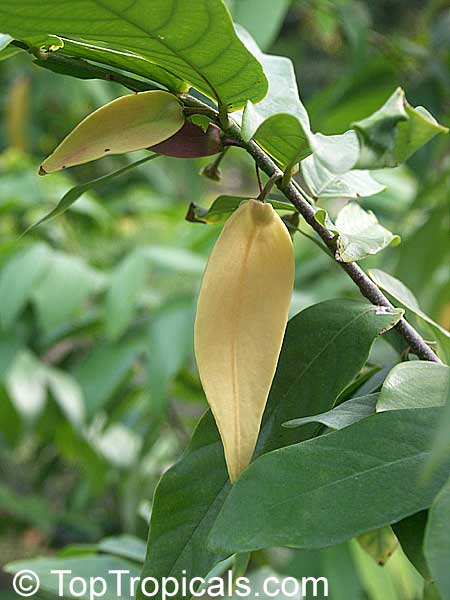
Newbouldia laevis, African Border Tree, Akoko Tree, Newboldia

Botanical name: Newbouldia laevis

Common names: African Border Tree, Akoko Tree, Newboldia

Family: Bignoniaceae

Origin: Africa

USDA Plant Hardiness MapSmall tree 10-20 ftSemi-shadeFull sunModerate waterBlue, lavender, purple flowersPink flowersEthnomedical plant.
Plants marked as ethnomedical and/or described as medicinal, are not offered as medicine but rather as ornamentals or plant collectibles.
Ethnomedical statements / products have not been evaluated by the FDA and are not intended to diagnose, treat, cure, or prevent any disease. We urge all customers to consult a physician before using any supplements, herbals or medicines advertised here or elsewhere.

Newbouldia laevis (African Border Tree, Akoko Tree, Newboldia) trees are small, growing up to 10-20 ft and can tolerate full sun or semi-shade. They do best when planted in areas where they will receive moderate water. These small trees provide an abundance of bright pink flowers that are sometimes blue, lavender, and purple.

In Africa, Newbouldia laevis is a popular ethnomedical plant and has been used for centuries to treat malaria, rabies, and snakebite. The tree is valued for its medicinal properties and is also revered for its religious significance.

Newbouldia laevis is relatively cold hardy and can withstand short periods of temperatures in the 30s F. In USDA Zone 9-11, this tree can be grown with care. The best way to grow it in colder regions is in a pot. When grown in a pot, you need to make sure that the roots are still in soil that is kept moist and cool. In cold climates, you should bring your potted Newbouldia laevis indoors during winter months, especially if temperatures are expected to dip below freezing.

Taking care of this plant is relatively simple and requires minimal effort. Be sure to water it regularly, but not excessively, and ensure that the soil is well-draining. You should also prune your tree occasionally to prevent it from growing too large and out of control. To keep your tree healthy, fertilize periodically and mist the leaves to keep them from drying out.

Newbouldia laevis is a beautiful tree to add to any garden. With the correct care, this small tree will provide you with years of lush green foliage and beautiful, bright flowers. Whether grown in the ground or in a pot, it is sure to be a beautiful addition to your landscape.


Link to this plant:
https://toptropicals.com/catalog/uid/newbouldia_laevis.htm

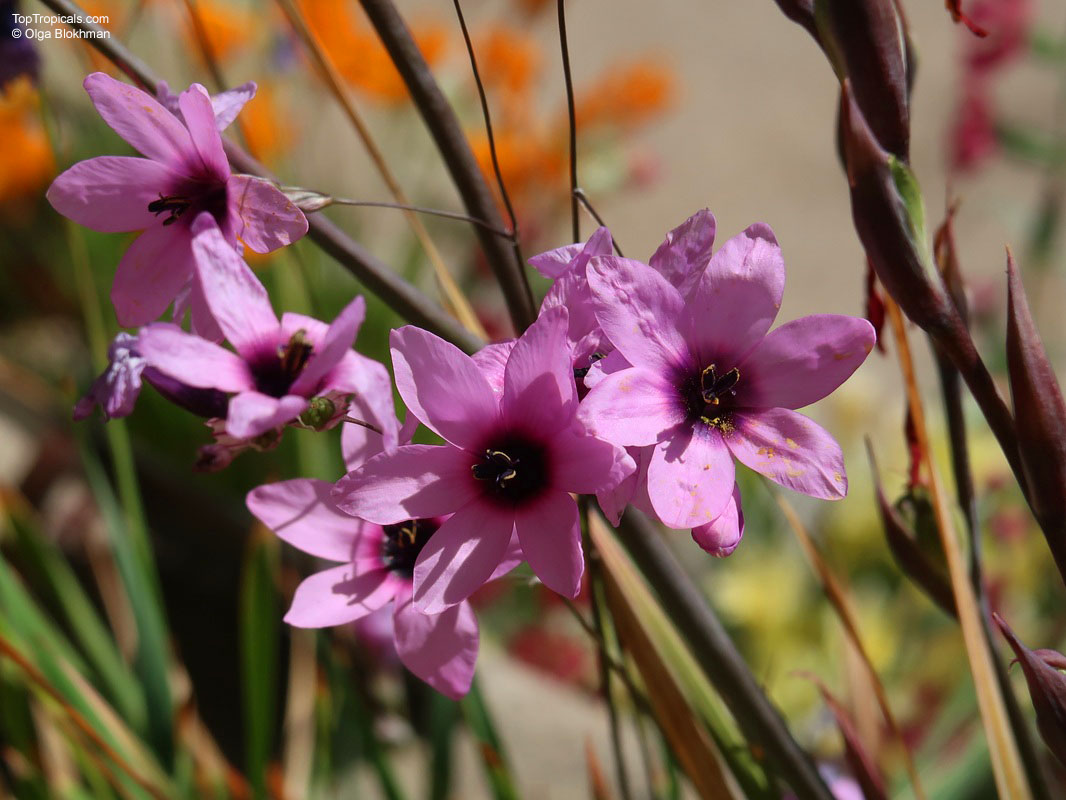
Alstroemeria sp., Peruvian Lily

Botanical name: Alstroemeria sp.

Common name: Peruvian Lily

Family: Alstroemeriaceae

Origin: South America

USDA Plant Hardiness MapSmall plant 2-5 ftSemi-shadeShadeFull sunModerate waterYellow, orange flowersRed, crimson, vinous flowersBlue, lavender, purple flowersWhite, off-white flowersPink flowersPlant attracts butterflies, hummingbirdsSubtropical plant. Mature plant cold hardy at least to 30s F for a short time

Once established, Peruvian Lilies require occasional water, and occasional fertilizing.

Grown in hardiness zones 7-11, Alstroemeria sp. (Peruvian Lily) is a small shrub, with a size ranging from 2 to 5 ft that is native to South America. It is an ideal plant for making a statement in your garden with its abundant profusion of colorful flowers. It has the potential to bring a mix of striking colors to your space with its range of pink, white and off-white, blue, lavender, purple and red to crimson and vinous, and yellow to orange flowers. It can also be used to attract butterflies and hummingbirds to your space.

When it comes to growing and caring for your Peruvian Lily, it prefers full sun in areas with cool summers, however in Florida and other hot summer regions, plant in semi-shade or full-shade to protect the plant from the scorching heat. As for water and fertilizing requirements, it is suitable for moderate water and occasional fertilizing once it is established.

If you're in a more temperate climate where it gets cold, and you want to take the plant indoors during Winter, potting it up is a great option. Just make sure to avoid over-watering, group plants together and use a light, well-draining mix for your pot. When caring for Peruvian Lily in the colder months, choose a spot that doesn't receive direct sun light, as this can cause them to become more susceptible to cold damage. For maximum cold protection, you should ensure that your pot is placed in a sheltered and frost-free location, with a temperature hardy enough to warrant a mature plant in the colder winter months.


Link to this plant:
https://toptropicals.com/catalog/uid/alstroemeria_sp.htm

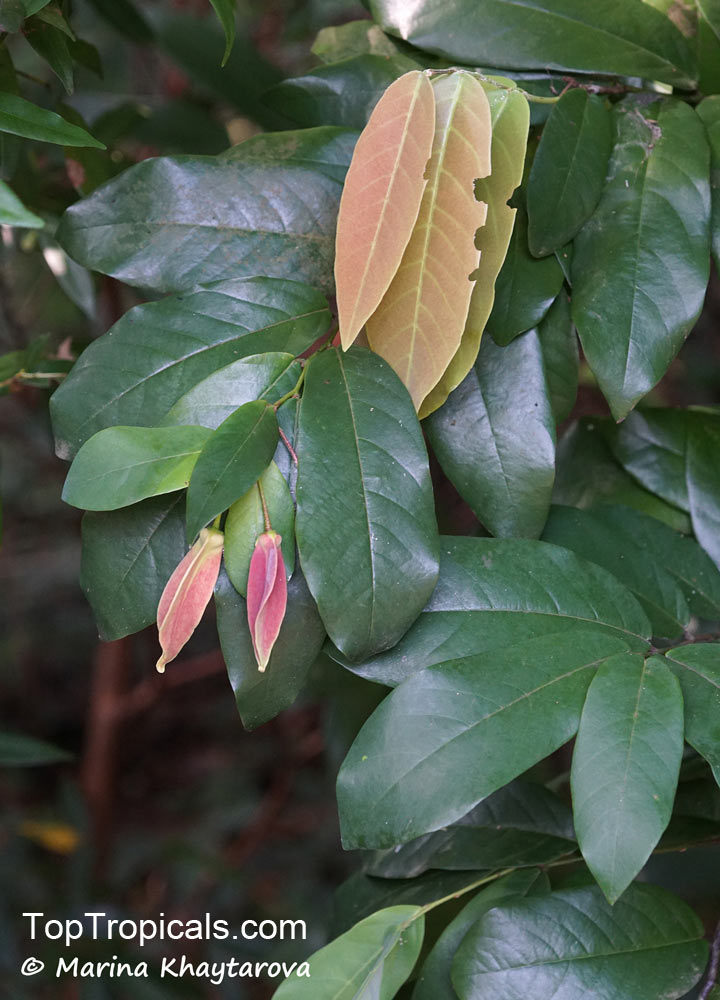
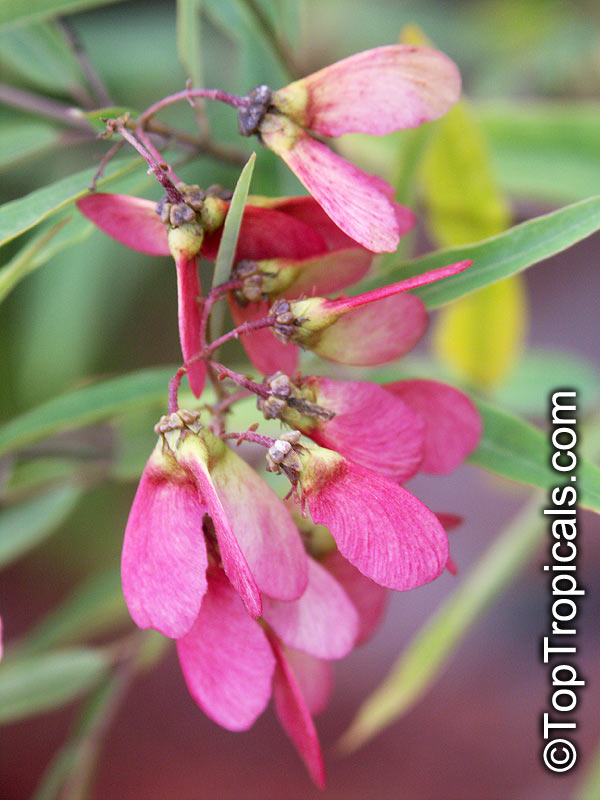
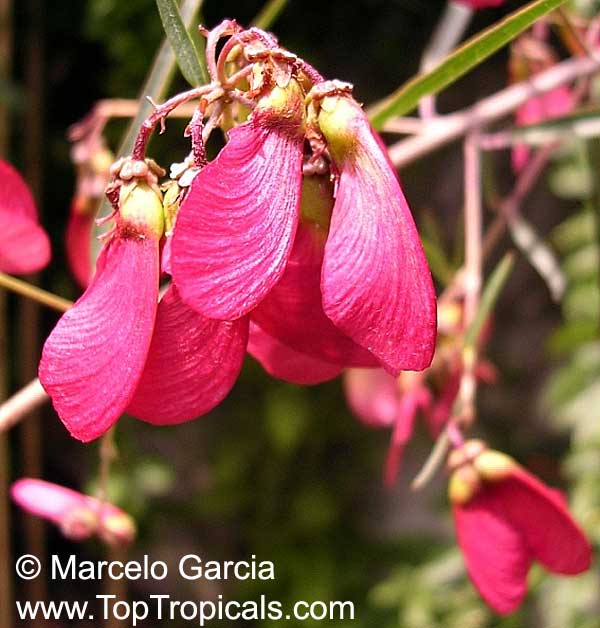
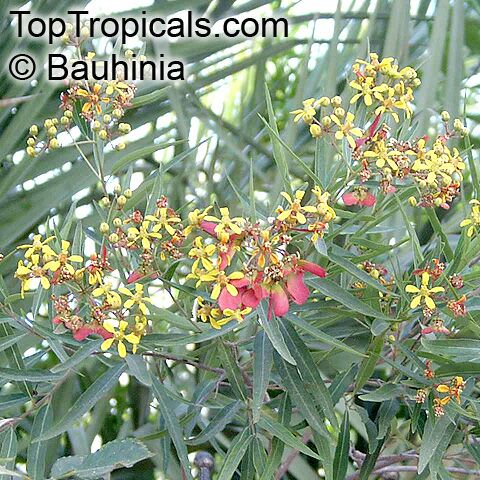
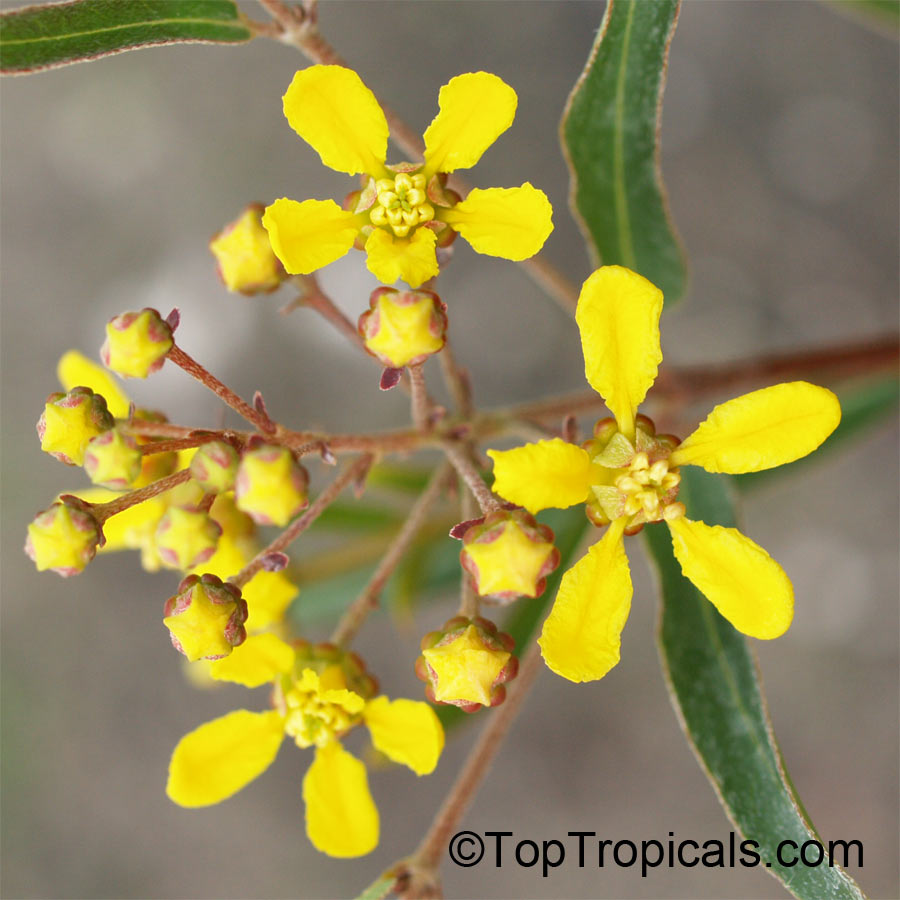
Ruprechtia salicifolia, Viraro

Botanical name: Ruprechtia salicifolia

Common name: Viraro

Family: Polygonaceae

Origin: Brazil, Uruguay

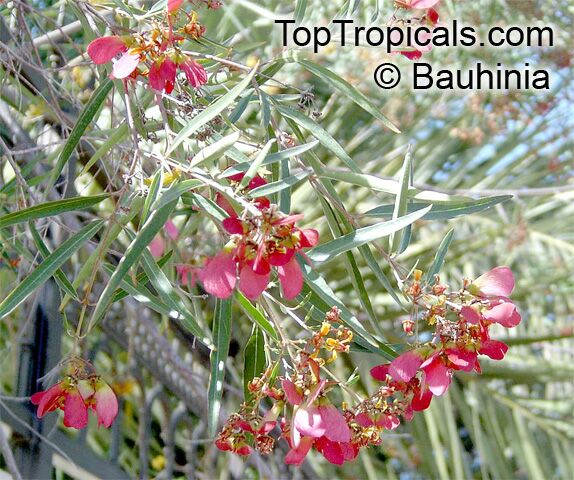
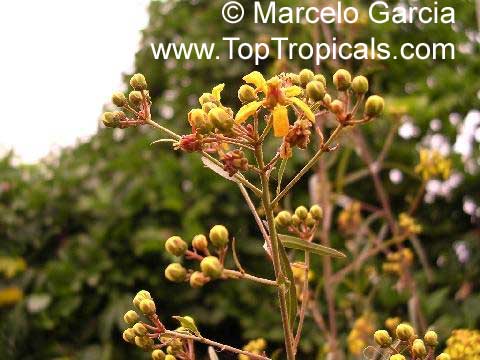
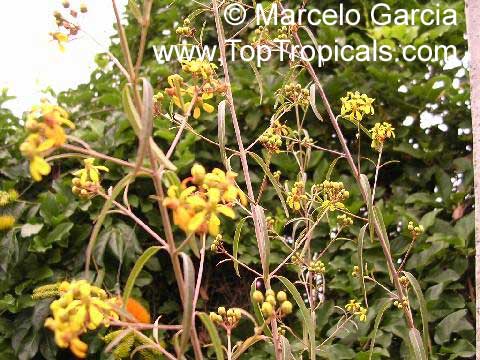
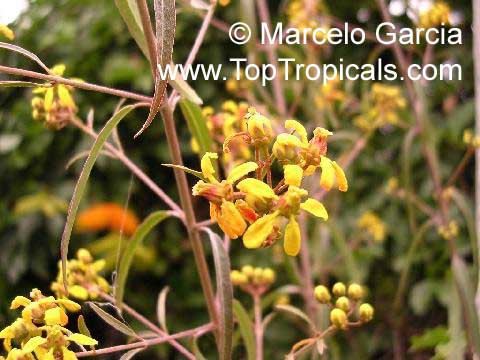
USDA Plant Hardiness MapSmall tree 10-20 ftFull sunRegular waterPink flowers

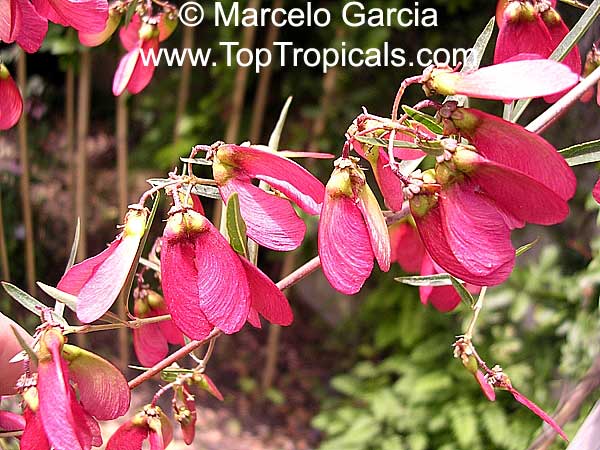
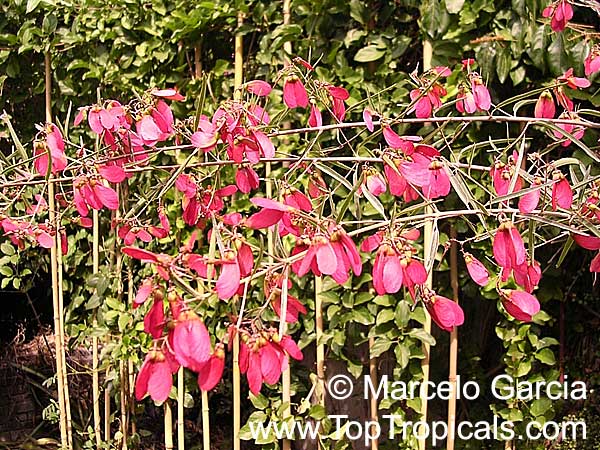
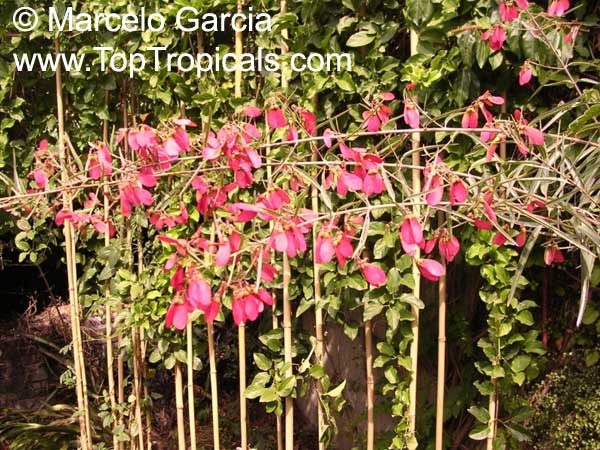
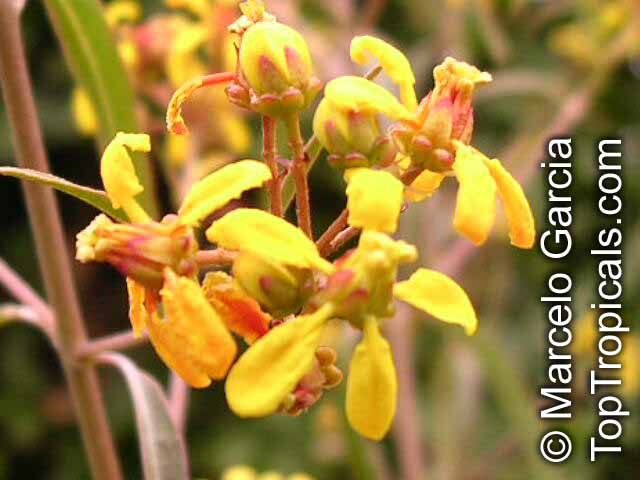
Ruprechtia salicifolia, Viraro


Link to this plant:
https://toptropicals.com/catalog/uid/ruprechtia_salicifolia.htm

Bixa orellana, Lipstick tree, Annatto, Achiote
Bixa orellana

Botanical name: Bixa orellana

Common names: Lipstick tree, Annatto, Achiote

Family: Bixaceae

Origin: Tropical South America

USDA Plant Hardiness MapLarge shrub 5-10 ft tallSmall tree 10-20 ftFull sunModerate waterWhite, off-white flowersPink flowersSpice or herb plant

Bixa orellana, the enchanting Lipstick Tree, brings a splash of South American magic to any garden with its bold, heart-shaped leaves and charming pink blooms. But the real showstopper? Its vibrant seed pods brimming with annatto - a natural pigment famed for painting dishes with rich golden hues and spicing up kitchens worldwide. Annatto isn't just a culinary delight; it's a beauty secret too, adding natural, radiant color to lipsticks and cosmetics. Beyond its practical uses, Bixa makes a striking hedge or screen, adding both beauty and function. This tree is your garden's ticket to tropical flair and everyday usefulness!

Bixa orellana is a bushy shrub or small tree native to South America. It features large leaves and charming pink flowers, but its most notable feature is its seeds. These seeds contain a natural pigment called annatto, ranging from yellow to deep orange-red, which is widely used in cosmetics, particularly lipstick, for its vibrant colors. In culinary arts, annatto serves as a popular spice in Latin American, Caribbean, and Filipino cuisines, adding a mild, slightly peppery flavor and a rich yellow-orange color to dishes like rice and stews. Beyond its culinary and cosmetic uses, annatto seeds are also valued for their medicinal properties, offering antioxidants and anti-inflammatory benefits. The dried seed pods of the Bixa plant are also used in flower arrangements, adding a unique visual element. When used as a hedge or screen, Bixa should be pruned often to encourage bush growth at the bottom of the trunk.


Link to this plant:
https://toptropicals.com/catalog/uid/bixa_orellana.htm

Bixa orellana - seeds

Lipstick tree, Annato. This erect shrub with large, glossy green, prominently veined leaves that can become a small tree several feet tall. It is grown as a garden ornamental less for its pale pink flowers, which last only one day, than for its highly decorative two-valved seed pods, covered with soft, deep red hairs.
Ordering seeds info

RECOMMENDED SUPPLIES:
Seed Germination Mix #3, professional grade
SUNSHINE-Epi - Seeds and cuttings booster
SUNSHINE Bombino - Young Plant Booster
Per pack: 6 seeds
5 Packs in stock
$8.95


Kalanchoe sp., Kalanchoe

Botanical name: Kalanchoe sp.

Common name: Kalanchoe

Family: Crassulaceae

USDA Plant Hardiness MapLarge shrub 5-10 ft tallSmall plant 2-5 ftFull sunModerate waterYellow, orange flowersRed, crimson, vinous flowersOrnamental foliageUnusual colorWhite, off-white flowersPink flowersEthnomedical plant.
Plants marked as ethnomedical and/or described as medicinal, are not offered as medicine but rather as ornamentals or plant collectibles.
Ethnomedical statements / products have not been evaluated by the FDA and are not intended to diagnose, treat, cure, or prevent any disease. We urge all customers to consult a physician before using any supplements, herbals or medicines advertised here or elsewhere.

Members of Kalanchoe genus are characterized by opening their flowers by growing new cells on the inner surface of the petals to force them outwards, and on the outside of the petals to close them.

Bryophyllum is a plant genus of the Crassulaceae family that has sometimes been included within the genus Kalanchoe. The group is notable for vegetatively growing small plantlets on the fringes of the leaves; these eventually drop off and root.


Link to this plant:
https://toptropicals.com/catalog/uid/kalanchoe_sp.htm

Eschscholzia californica, California Poppy, Golden Poppy

Botanical name: Eschscholzia californica

Common names: California Poppy, Golden Poppy

Family: Papaveraceae

Origin: California

USDA Plant Hardiness MapSmall plant 2-5 ftFull sunDry conditionsModerate waterYellow, orange flowersWhite, off-white flowersPink flowersSpice or herb plantEthnomedical plant.
Plants marked as ethnomedical and/or described as medicinal, are not offered as medicine but rather as ornamentals or plant collectibles.
Ethnomedical statements / products have not been evaluated by the FDA and are not intended to diagnose, treat, cure, or prevent any disease. We urge all customers to consult a physician before using any supplements, herbals or medicines advertised here or elsewhere.


Link to this plant:
https://toptropicals.com/catalog/uid/eschscholzia_californica.htm

Oroxylum indicum, Shyonaka, Broken Bones Plant, Indian Trumpet Flower, Tree of Damocles, Midnight Horror

Botanical name: Oroxylum indicum

Common names: Shyonaka, Broken Bones Plant, Indian Trumpet Flower, Tree of Damocles, Midnight Horror

Family: Bignoniaceae

Origin: India and Southern China

USDA Plant Hardiness MapSmall tree 10-20 ftSemi-shadeFull sunModerate waterRegular waterPink flowersEdible plantPlant attracts butterflies, hummingbirdsEthnomedical plant.
Plants marked as ethnomedical and/or described as medicinal, are not offered as medicine but rather as ornamentals or plant collectibles.
Ethnomedical statements / products have not been evaluated by the FDA and are not intended to diagnose, treat, cure, or prevent any disease. We urge all customers to consult a physician before using any supplements, herbals or medicines advertised here or elsewhere.Subtropical plant. Mature plant cold hardy at least to 30s F for a short time

The Oroxylum indicum, or Shyonaka, is a small tree typically reaching 10-20 feet in height. It is native to India and Southern China and is grown in USDA Zones 9-11. This tree enjoys full sunlight to semi-shade and regular, moderate water. In the spring, the Shyonaka tree produces scented pink flowers which are attractive to butterflies and hummingbirds. The flowers have an ethnomedical purpose, too, with practitioners occasionally recommending the use of their powdered form in the treatment of rheumatism, pulmonary complaints and gout.

The Shyonaka tree also bears edible, podded fruits that are considered a delicacy by those in India and southern China. The maturation of Oroxylum indicum fruits takes 7 to 8 months and the tree can produce up to 15-25 fruits per season. The texture of the fruits is pear-like, with a sweet and sour taste and a mild pine-like flavor. The fruits are thought to be nutritive and cooling, and in Indian Ayurvedic medicine they are sometimes recommended for use in the treatment of sore throats. The seed oil is also used.

When cultivating the Oroxylum indicum in the home, it should be grown in a well-draining soil with 65%-75% of shaded areas during sunlight hours. If planting in a container indoors, the plant can handle colder temperatures. The tree should be watered regularly, as long as the soil is not saturated. In cold regions, a pot-grown Oroxylum indicum should be brought indoors for any freezing temperature forecasted.


Link to this plant:
https://toptropicals.com/catalog/uid/oroxylum_indicum.htm
 
Next


Use link to repeat this search:
https://toptropicals.com/cgi-bin/garden_catalog/cat.cgi?search_op=and&keyword_op=and&language=e&number=10&no_change_lang=1
&v1=pnk&user=tt&sale=1&first=0