Ornamental foliage - Plant Encyclopedia Results
| Number of plants found: 928 | Next | 
|
Go to page: | 1 | 2 | 3 | 4 | 5 | Last |
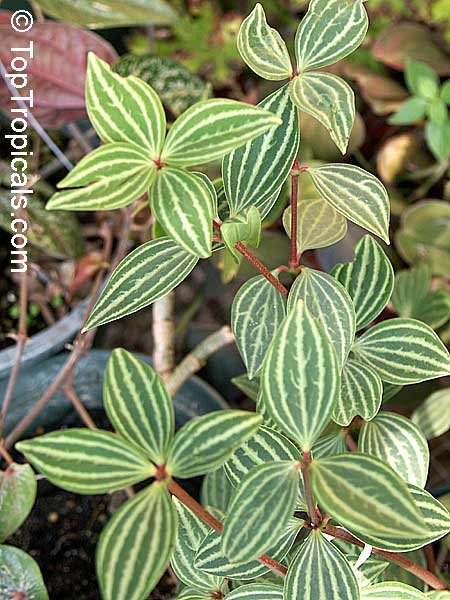
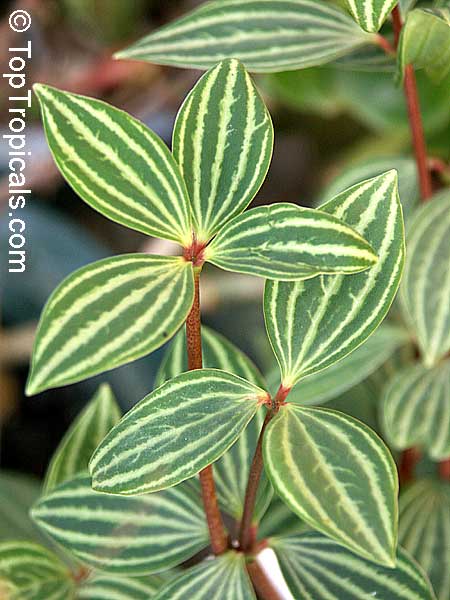
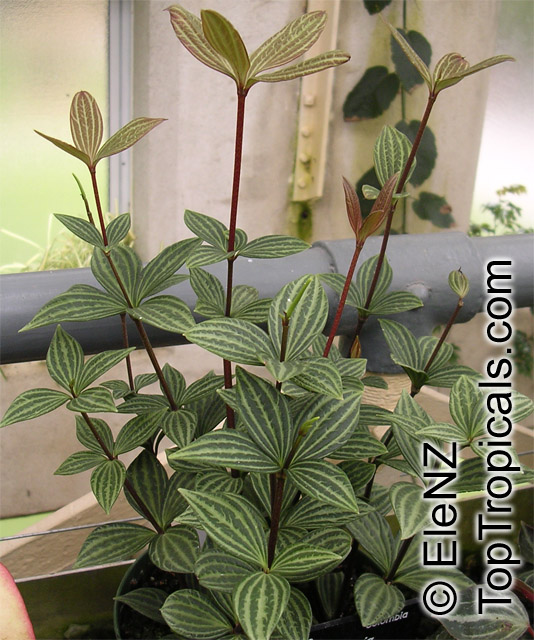
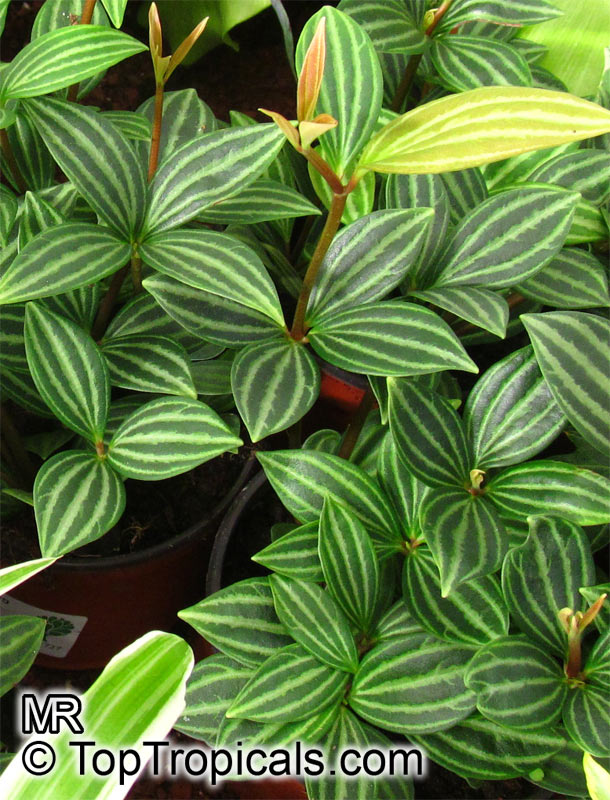
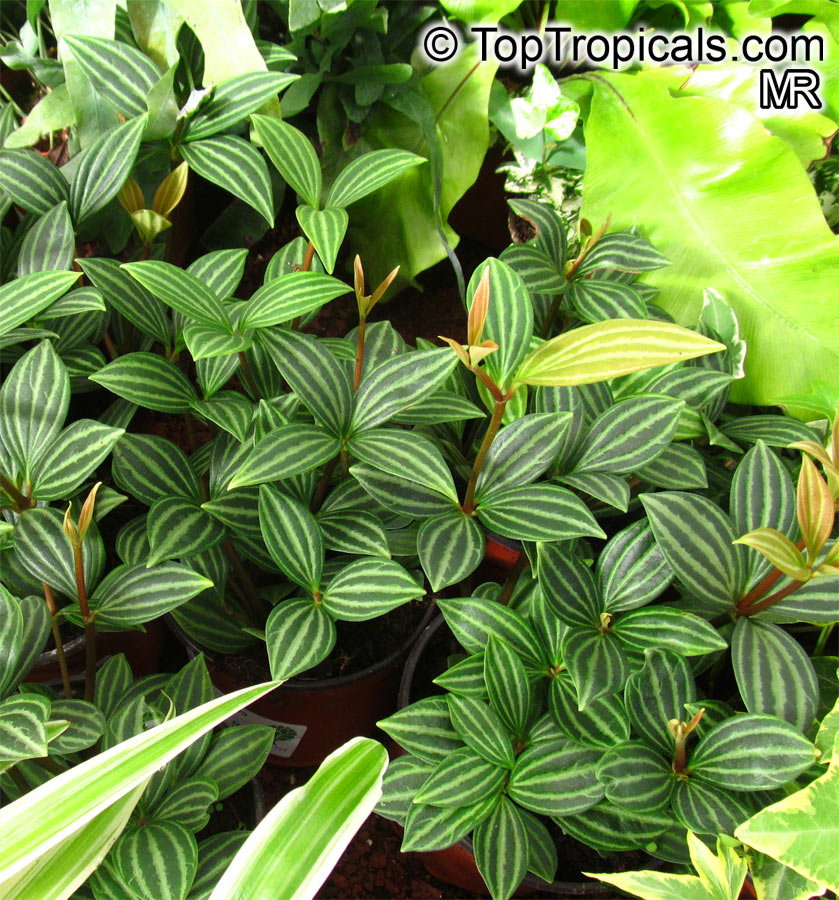
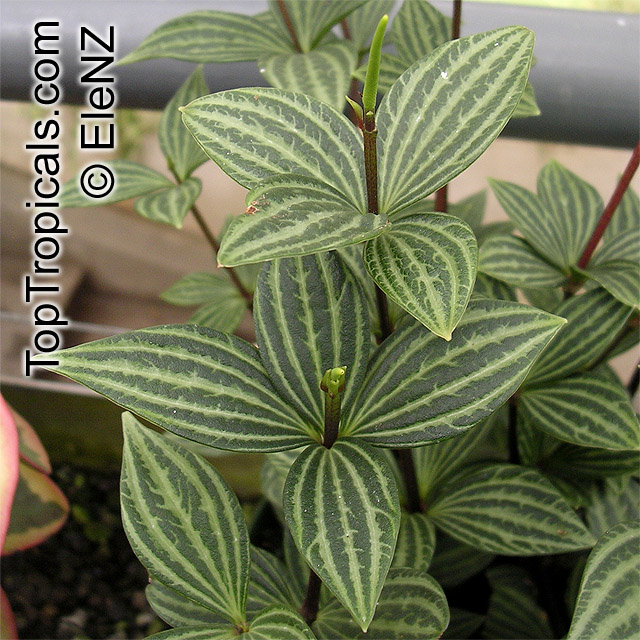
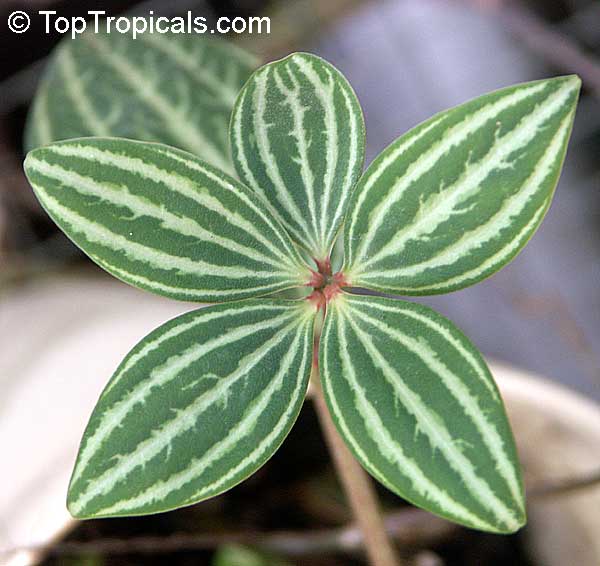
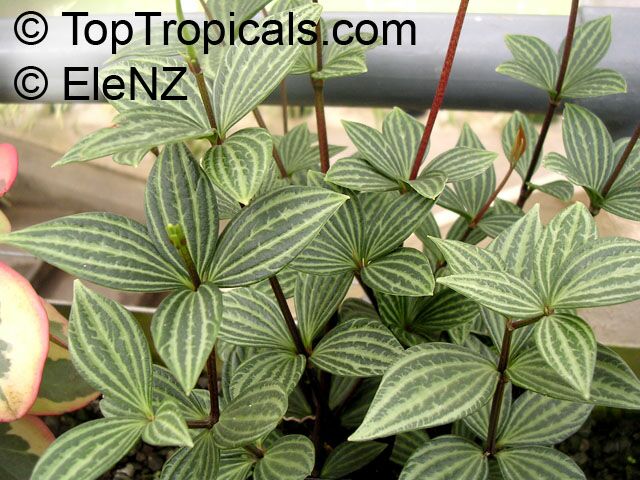
Botanical name: Peperomia puteolata
Common name: Parallel Peperomia
Family: Piperaceae
Origin: South America
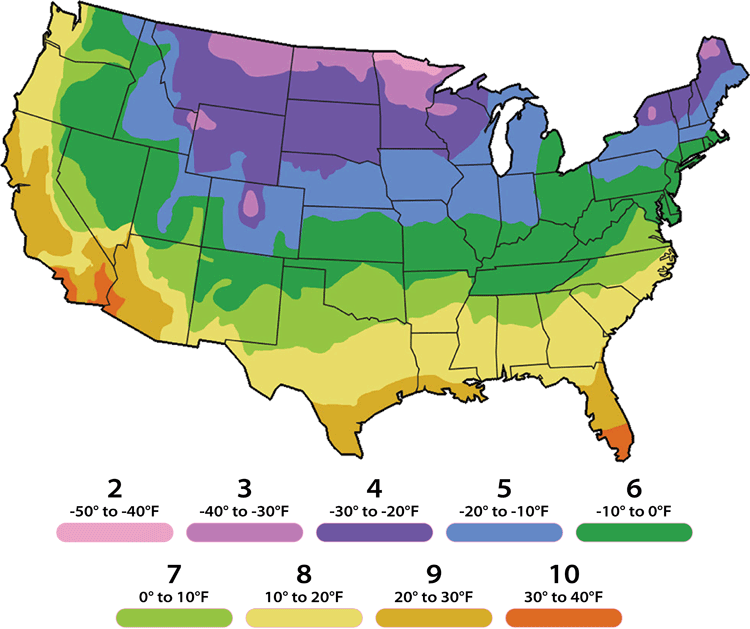
USDA Zone: 9-10


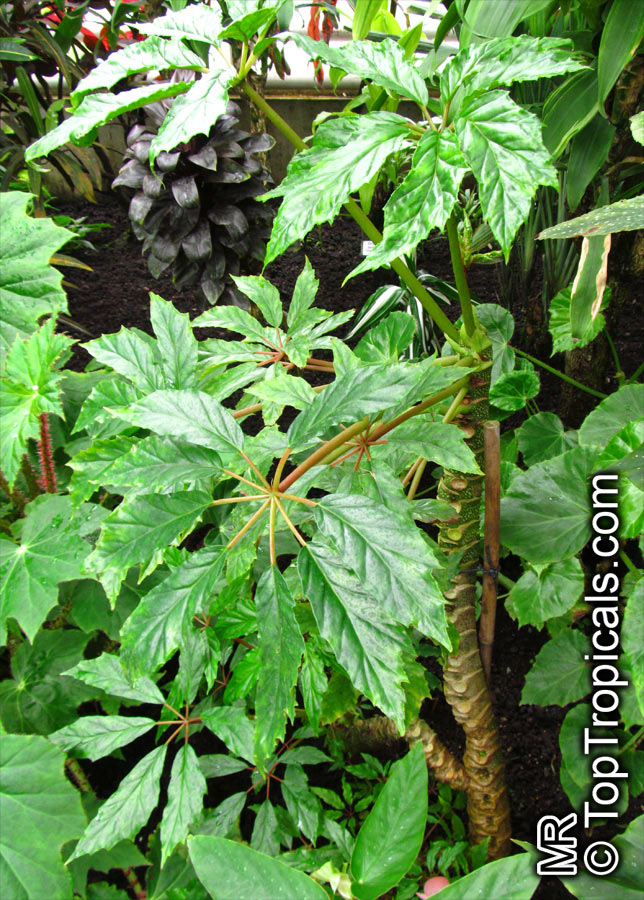
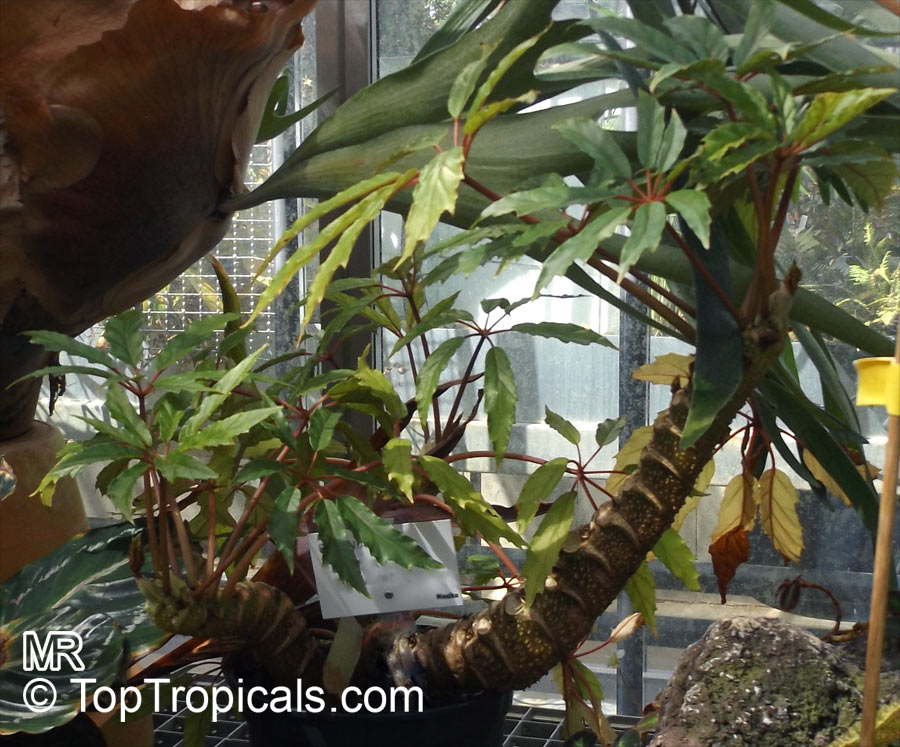
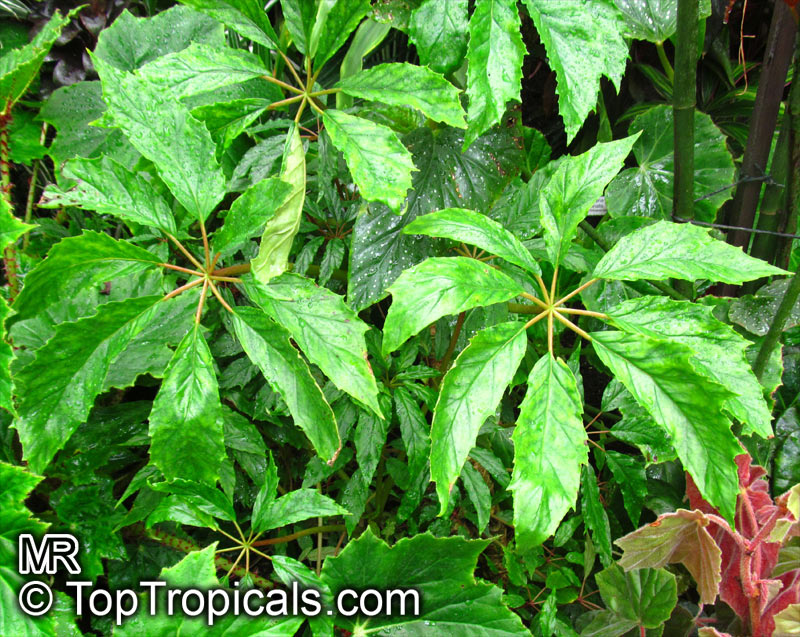
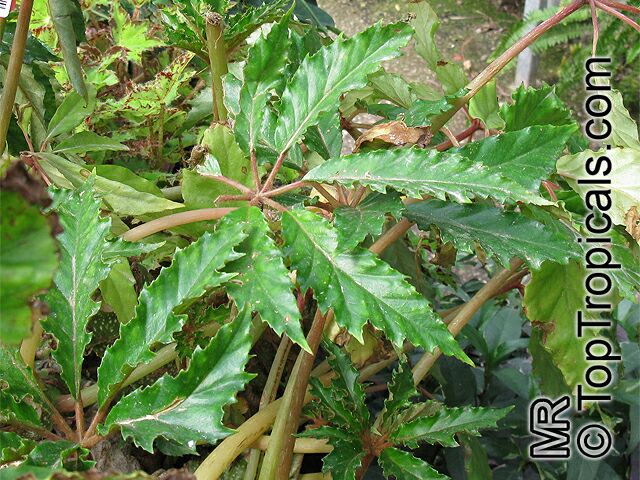
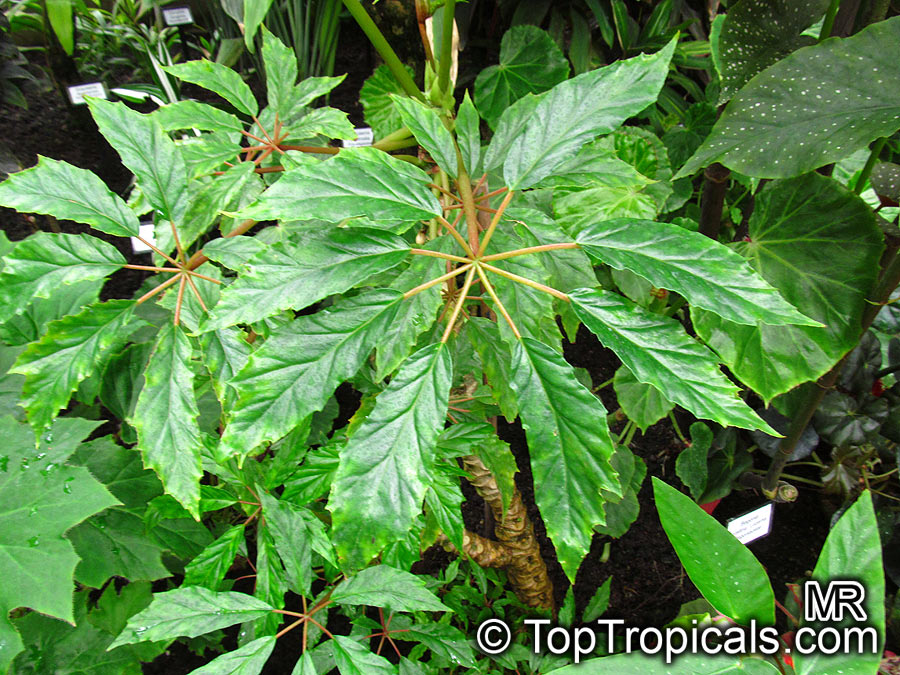
Botanical name: Begonia carolineifolia
Common name: Palm-leaf Begonia
Family: Begoniaceae
USDA Zone: 9-10


It is a large shrub that can reach 5-10 feet tall, or you can keep it as a small shrub at 2-5 feet. This Begonia thrives in semi-shade, and should be given regular water to keep the foliage in full and glossy form.
This tropical plant has bright pink flowers that reach up to 6 inches wide and bloom in the summer months. The foliage is ornamental and grows to be around 4 inches wide. It is a great choice for both gardeners and flower enthusiasts alike.
Begonia carolineifolia can be grown in USDA Zone 9-11 and is an excellent container plant. During summer months, the container should be kept in a shaded area and watered regularly. During winter months, the container should be kept in a heated space, and waterings should be slightly less frequent. This Begonia is an easy-going houseplant, and will need minimal pruning and occasional fertilizing.
Overall, Begonia carolineifolia is an easy-care and beautiful houseplant that is an excellent choice for any gardener or flower lover. With its bright pink flowers and ornamental foliage, this Begonia is sure to add beauty and a touch of the tropics to any home.
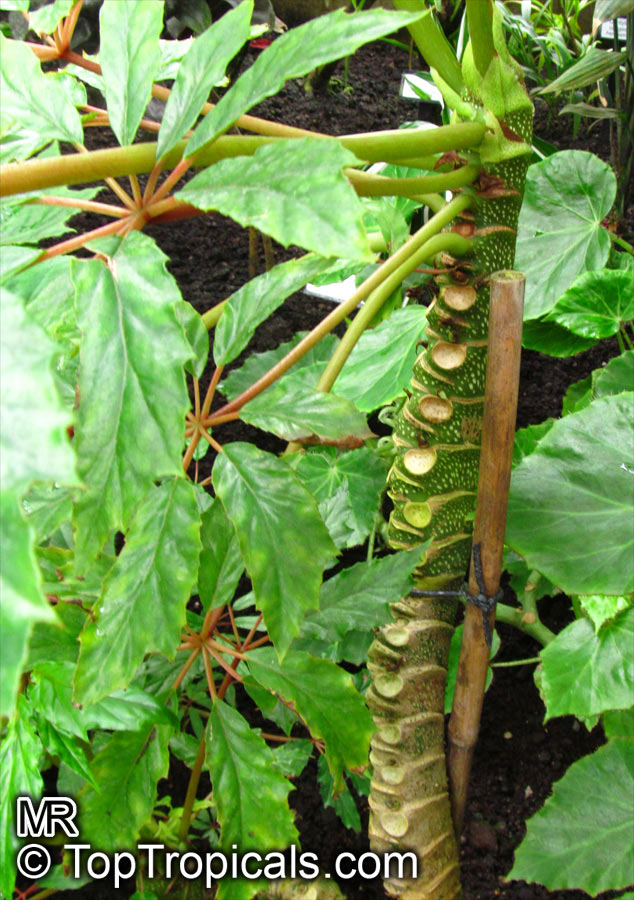
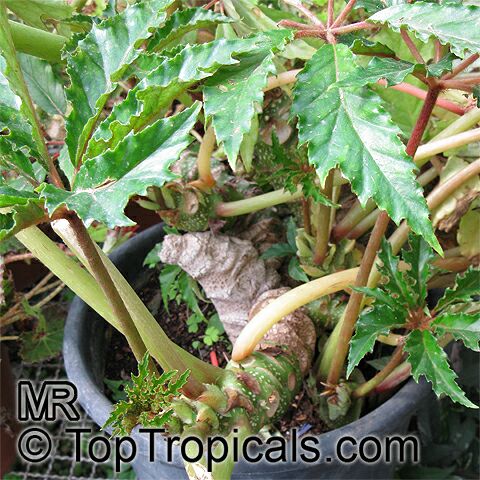
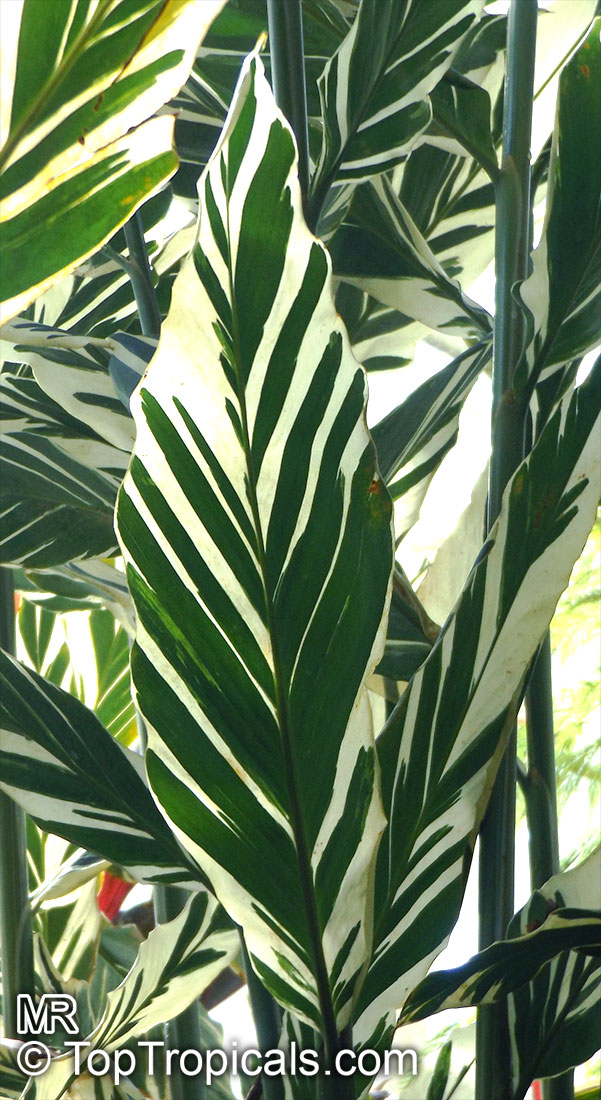
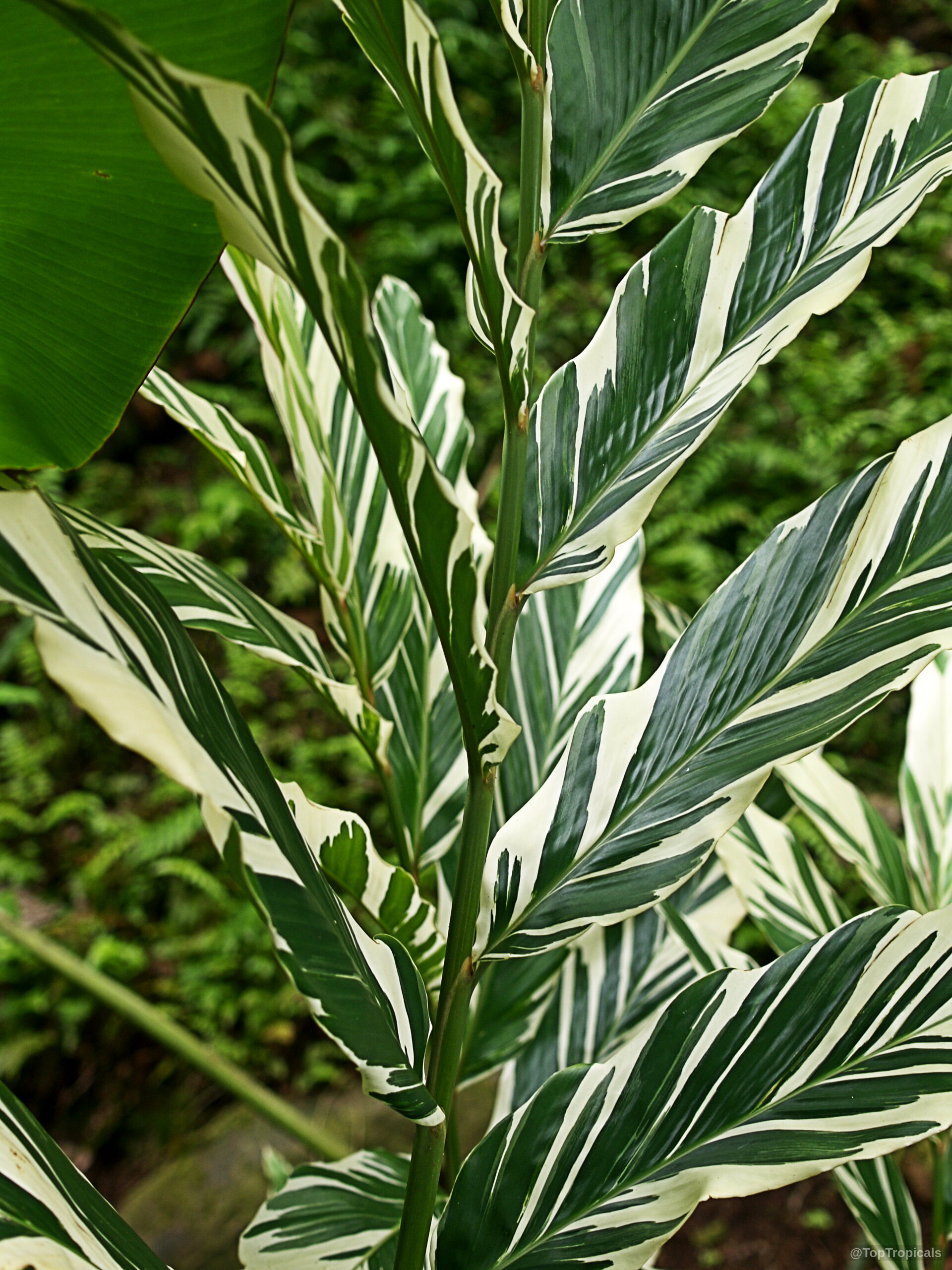
Botanical names: Alpinia vittata, Alpinia albolineata, Alpinia sanderae, Alpinia tricolor
Common names: Striped Narrow Leaf Ginger, Variegated Ginger
Family: Zingiberaceae
Origin: New Guinea
USDA Zone: 10-12

This small plant can grow to a height of 2-5 ft and likes semi-shade. It grows beautiful, fragrant pink flowers that bloom during spring and summer months. The ornamental foliage adds a splash of color to any garden.
Alpinia vittata is a gorgeous plant native to New Guinea. It is a fast grower that requires regular water, but can thrive in both sunny or semi-shaded positions. It will reach a maximum height of 2 to 5 feet, making it an excellent ornamental garden choice. The foliage of this plant has striping of white and cream, which adds to its beauty. The most distinctive feature of this plant is its fragrant pink flowers that bloom in spring and summer months.
Caring for Alpinia vittata is relatively easy. The plant should be kept in well-draining soil, and you should water it regularly without overwatering. Make sure to fertilize the plant once a month during the growth season. In cold regions, it should be grown in a pot with adequate drainage to protect it from frost damage.
This stunning plant is best suited for USDA Zone 10-12. If you're looking for a unique addition to your garden, Alpinia vittata is an excellent choice due to its low maintenance requirements and fabulous looks. With its fragrant flowers and bold foliage, this lovely plant will add a touch of beauty to any outdoor space.
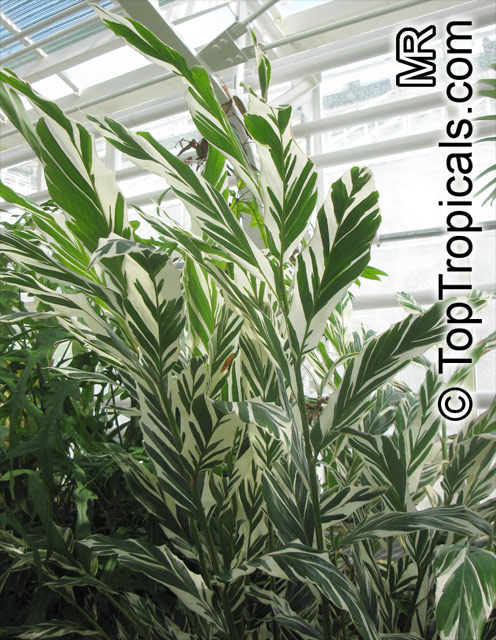
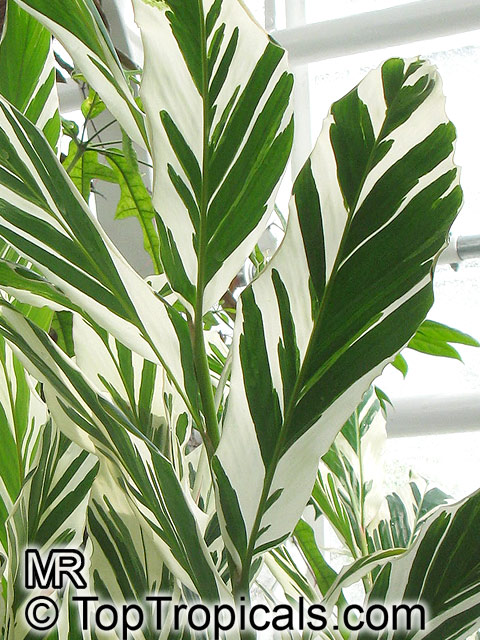
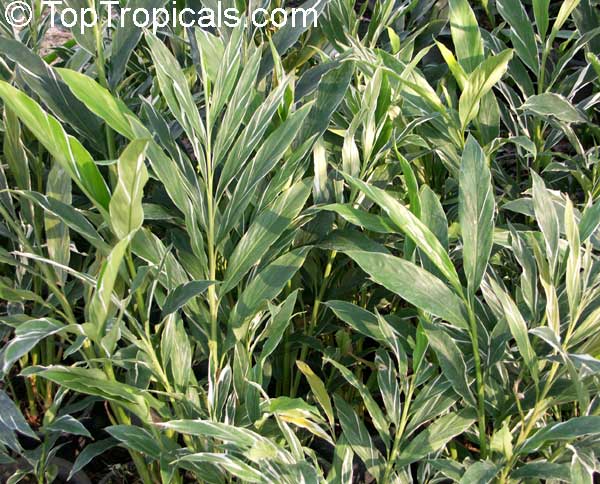
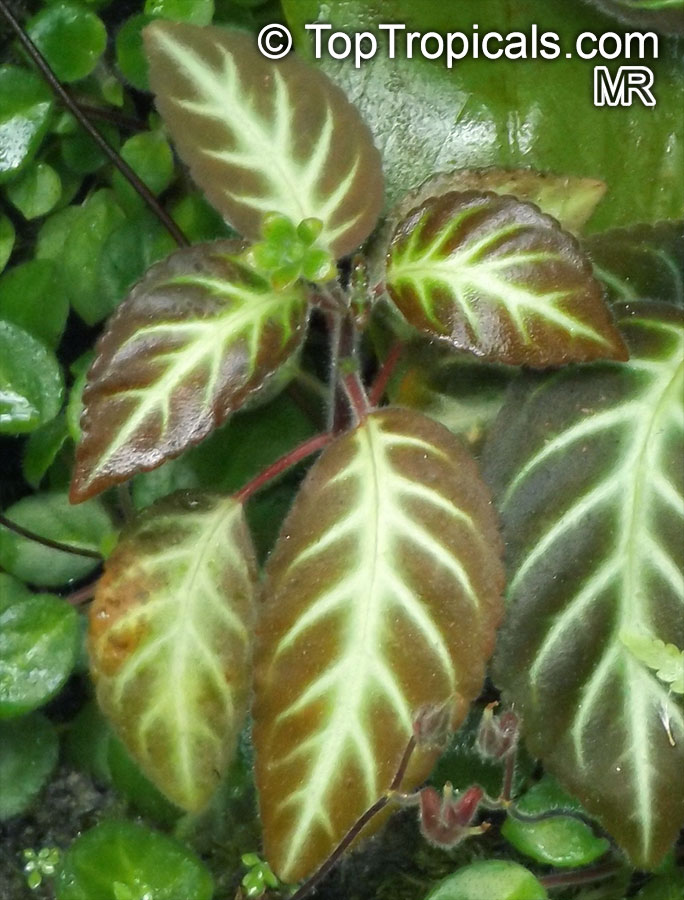
Botanical names: Gloxinella lindeniana, Gloxinia lindeniana, Kohleria lindeniana
Common name: Gloxinella
Family: Gesneriaceae
Origin: South America
USDA Zone: 9-10


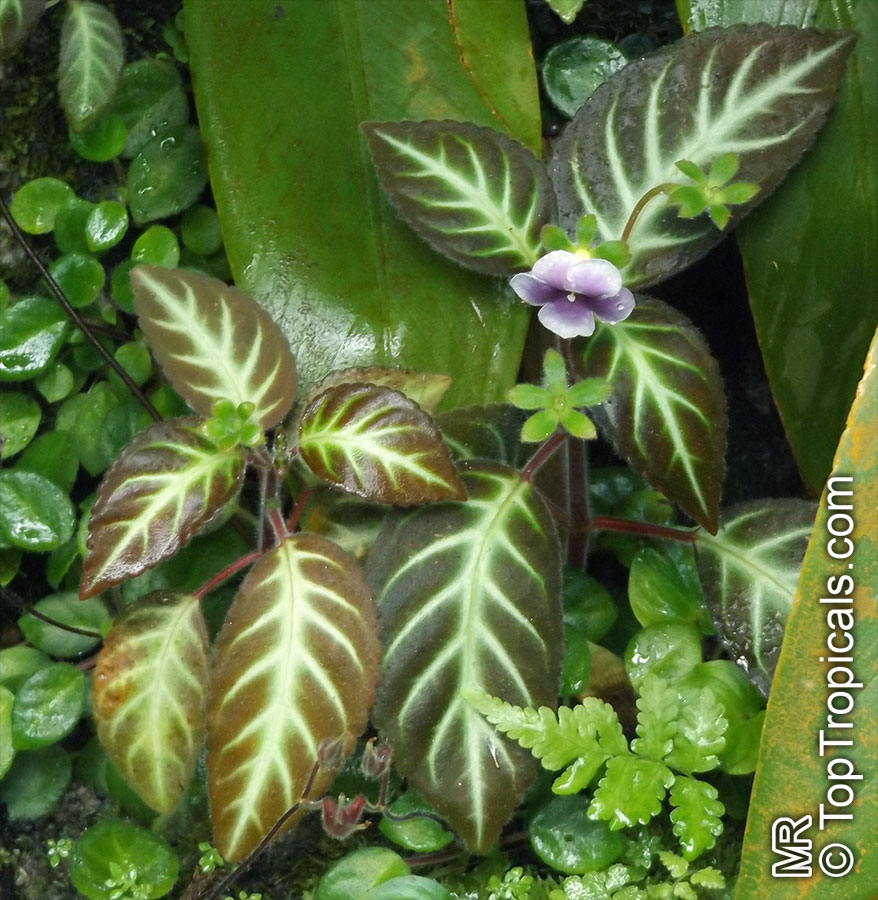
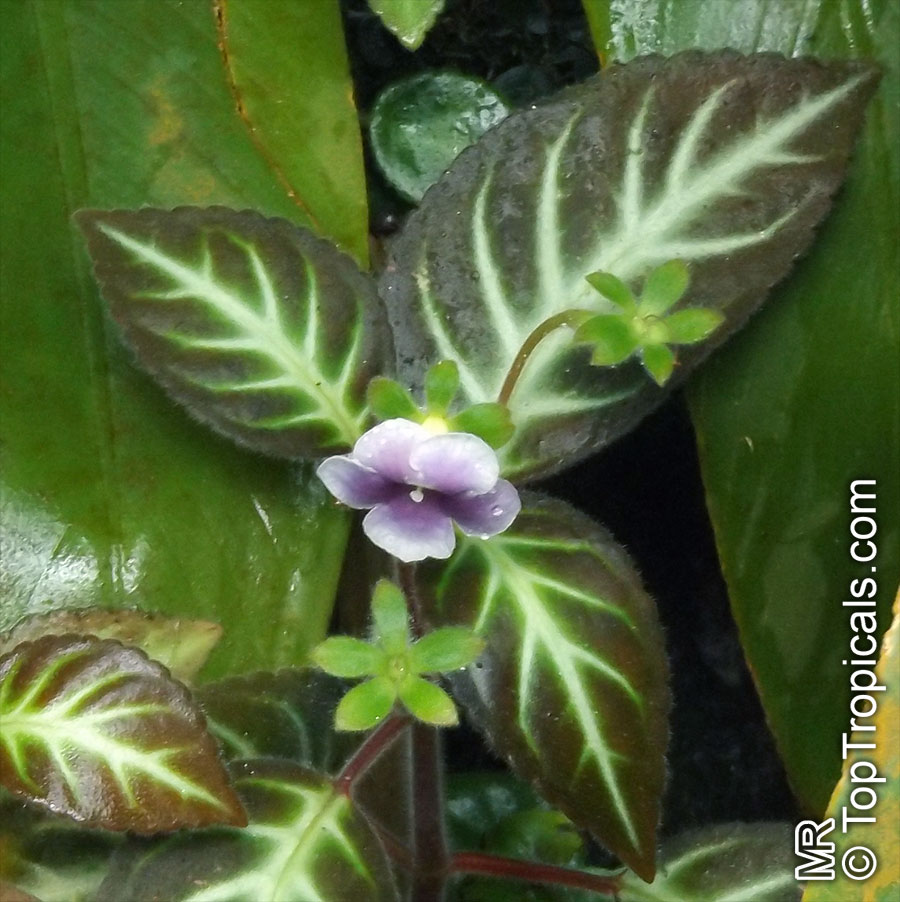
It is an attractive plant, with nicely variegated leaves and beautiful lavender flowers. The leaf surface is a dark green with white veins and the underside is a bright red.
Although it is a compact plant, as it grows it sends out stringy rhizomes that produce a new shoot so a pot can soon be filled to overflowing.
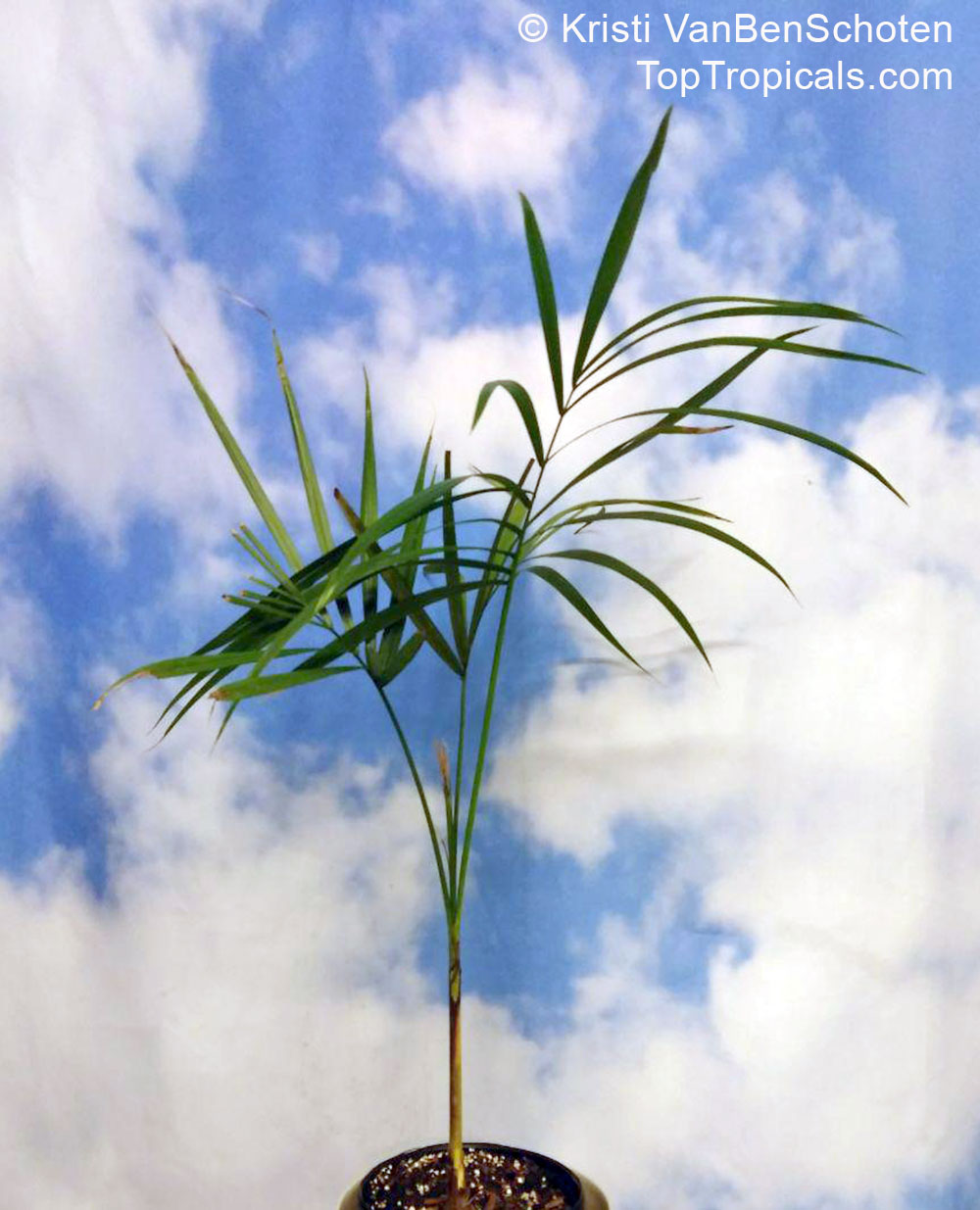
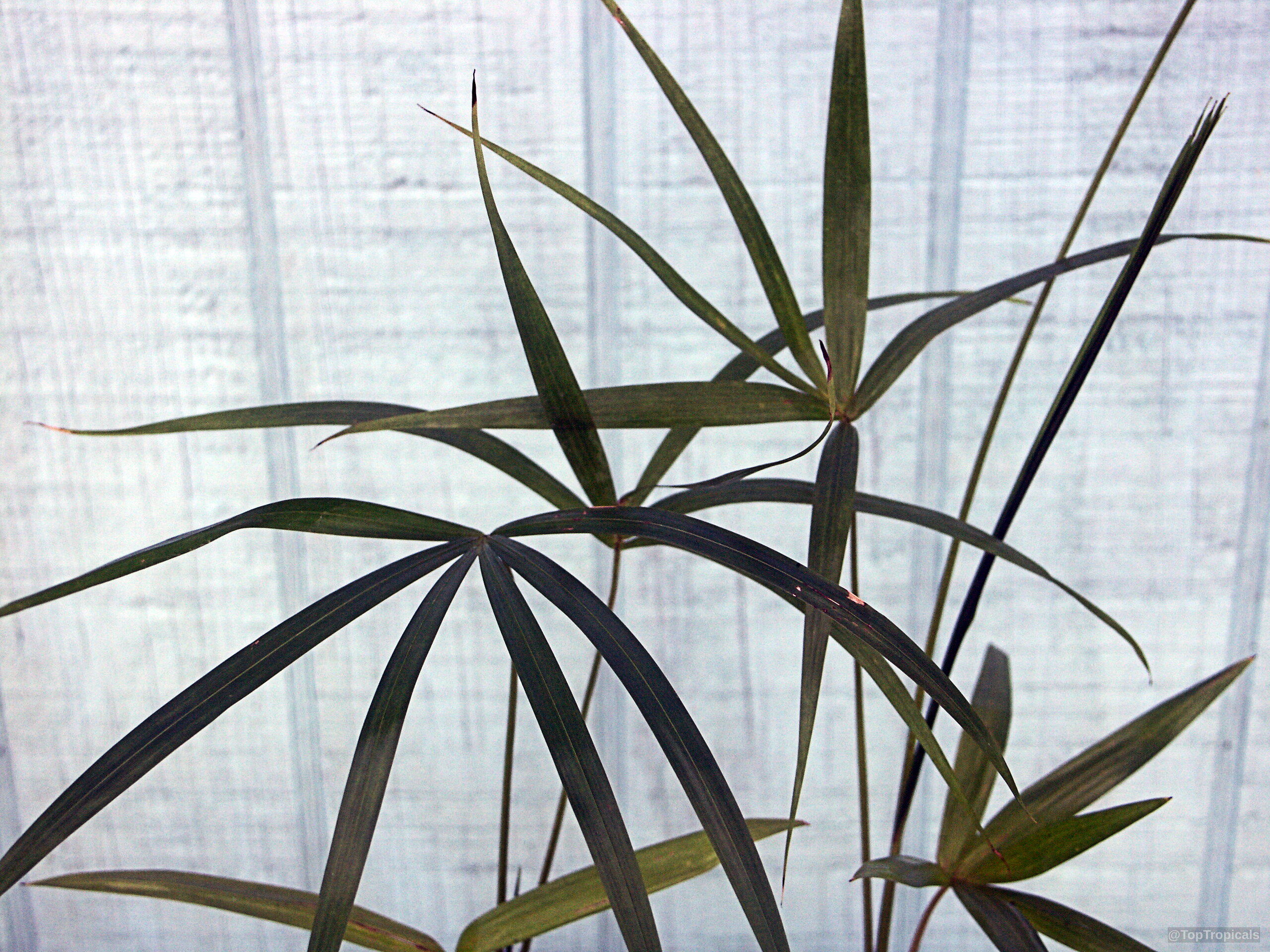
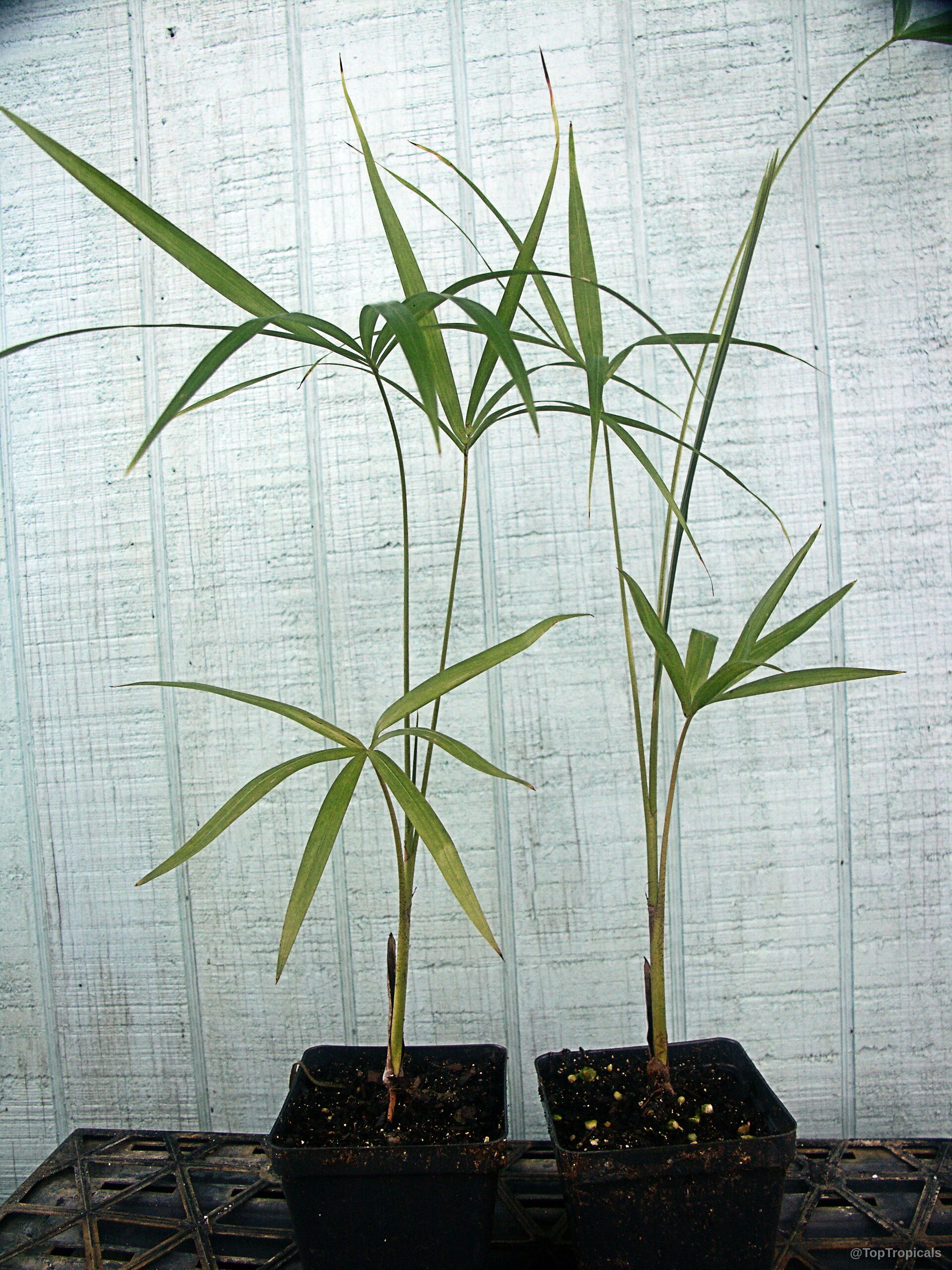
Botanical names: Euterpe precatoria, Euterpe mollissima, Euterpe jatapuensis, Euterpe stenophylla, Euterpe langloisii, Euterpe petiolata, Euterpe subruminata, Euterpe confertiflora
Common names: Huassai, Chonta, Asai, Assai, Acai, Mountain Cabbage Palm
Family: Arecaceae / Palmae
Origin: Central America, Bolivia, Panama
USDA Zone: 9-10


This single-stemmed palm grows well from seeds. Delicate roots can make transplanting seedlings difficult. Haussa grows quickly in both upland and seasonally flooded fields. The light, very small canopy makes it compatible for interplanting with almost any crop.
Grows in wild in Central America to Bolivia, up to 6000 ft elevation. In Ecuador it occurs on both sides of the Andes, on terra firme, or east of the Andes also on poorly drained soil.
Euterpe precatoria is harvested for edible palm heart (the apex), and the trunk is used for many construction purposes. A liquid from the roots is used to treat malaria. The fruit is used for the production of Açaí wine.
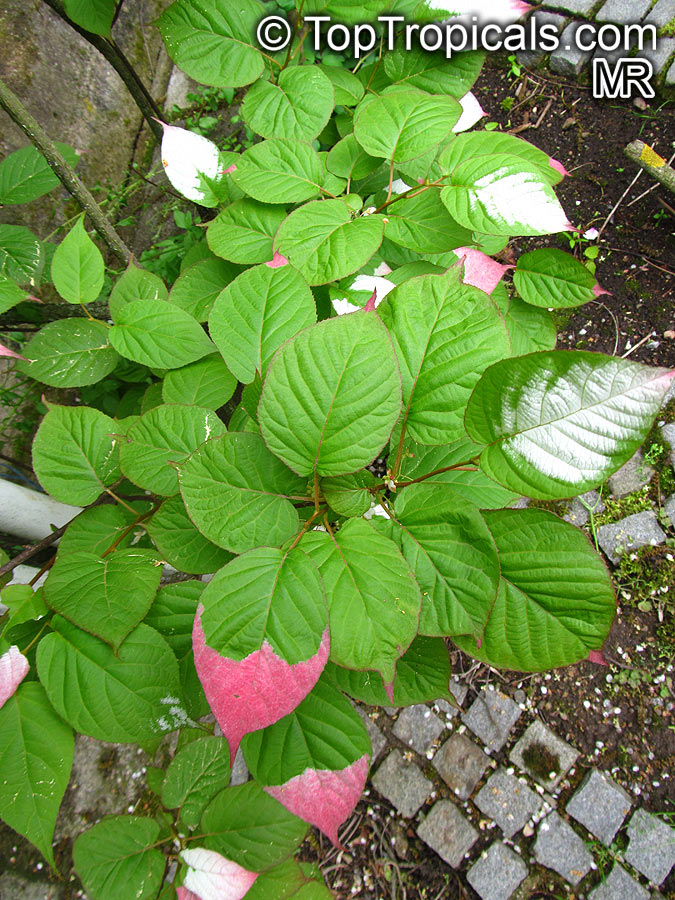
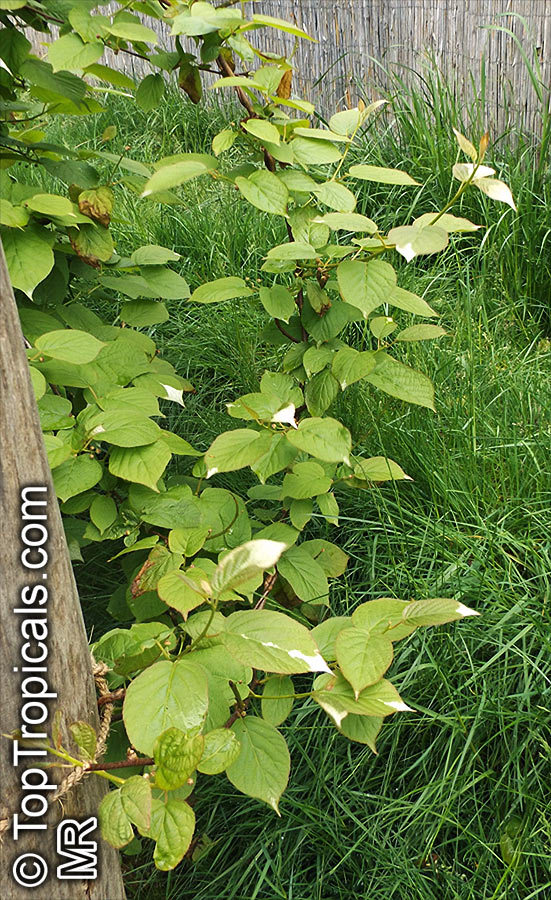
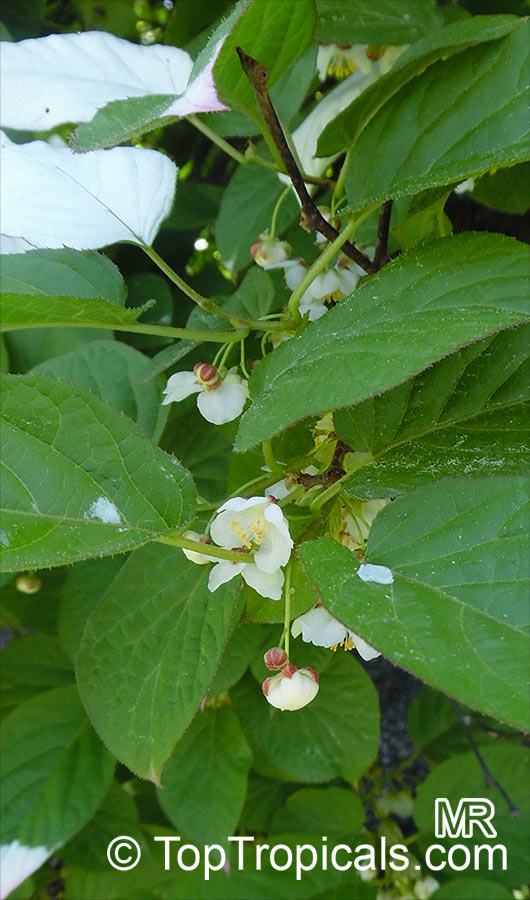
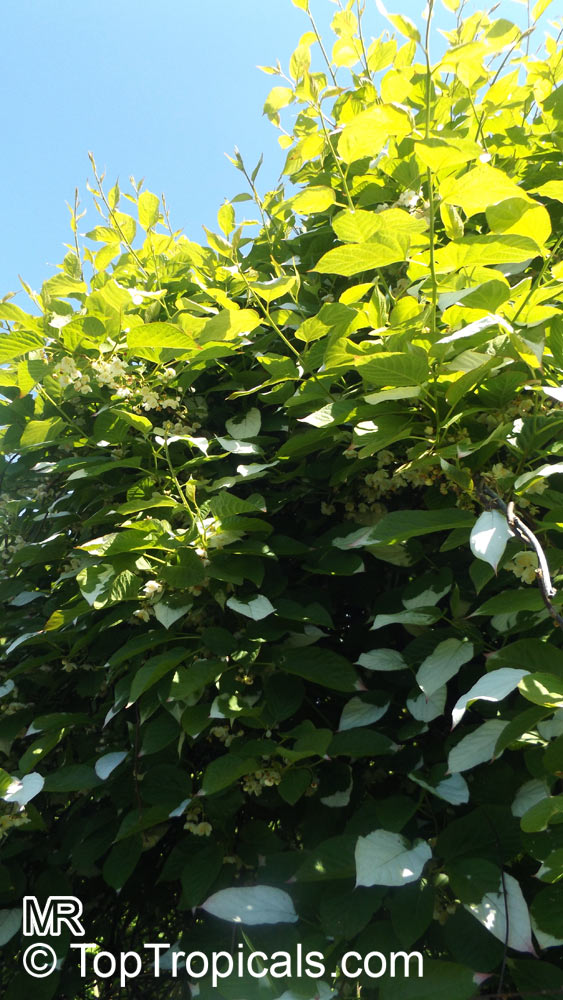
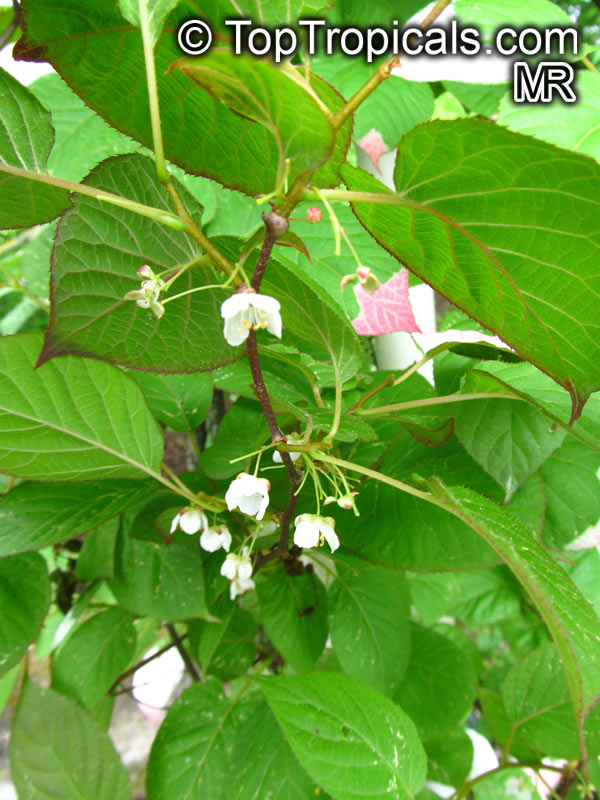
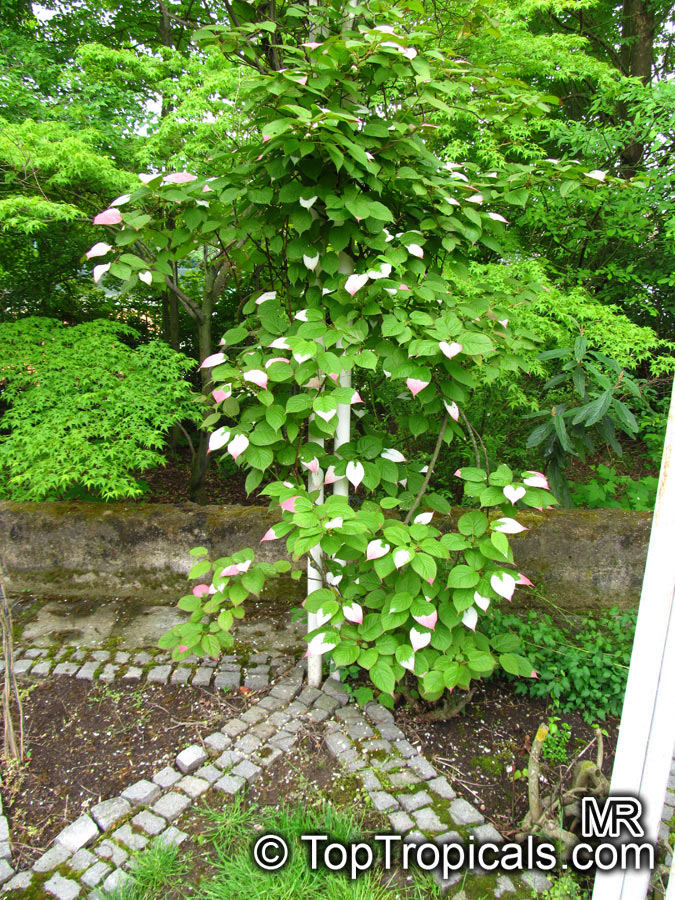
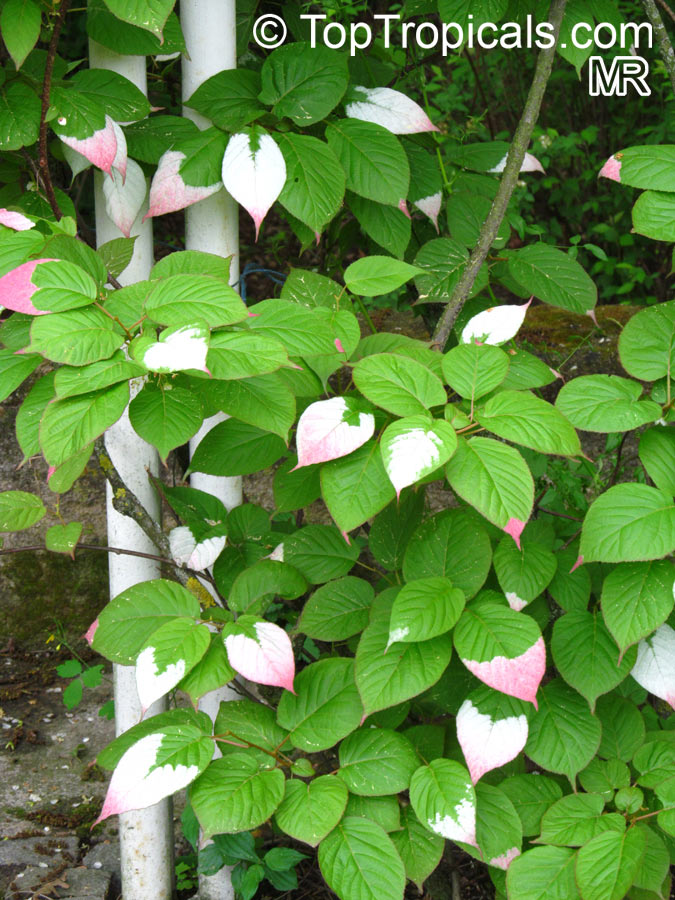
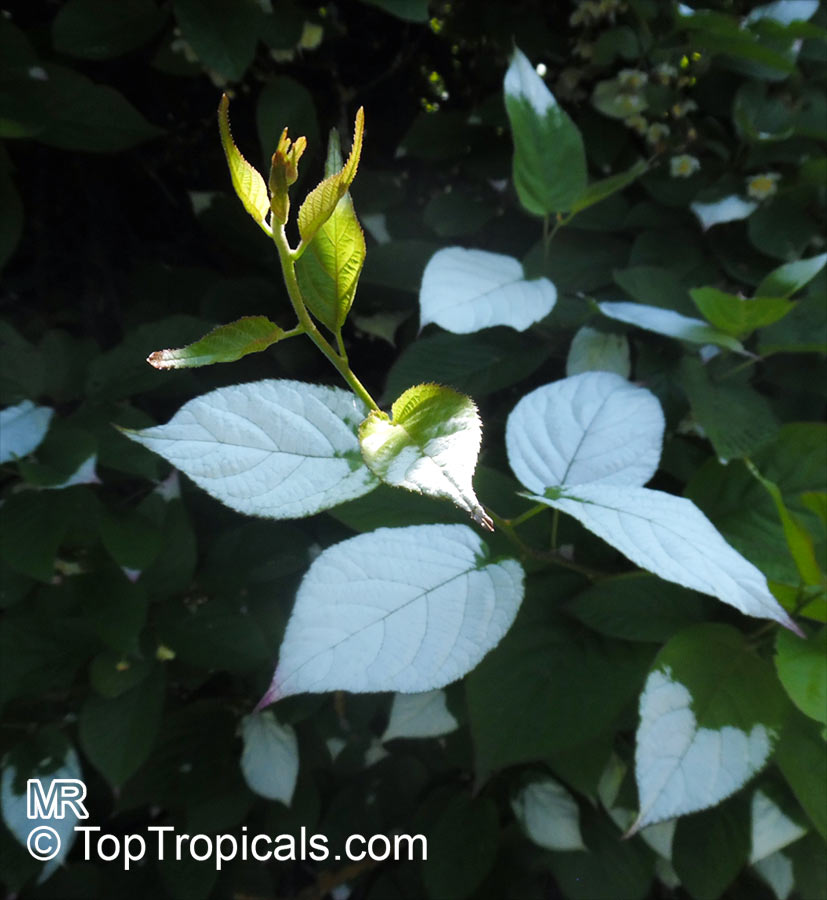
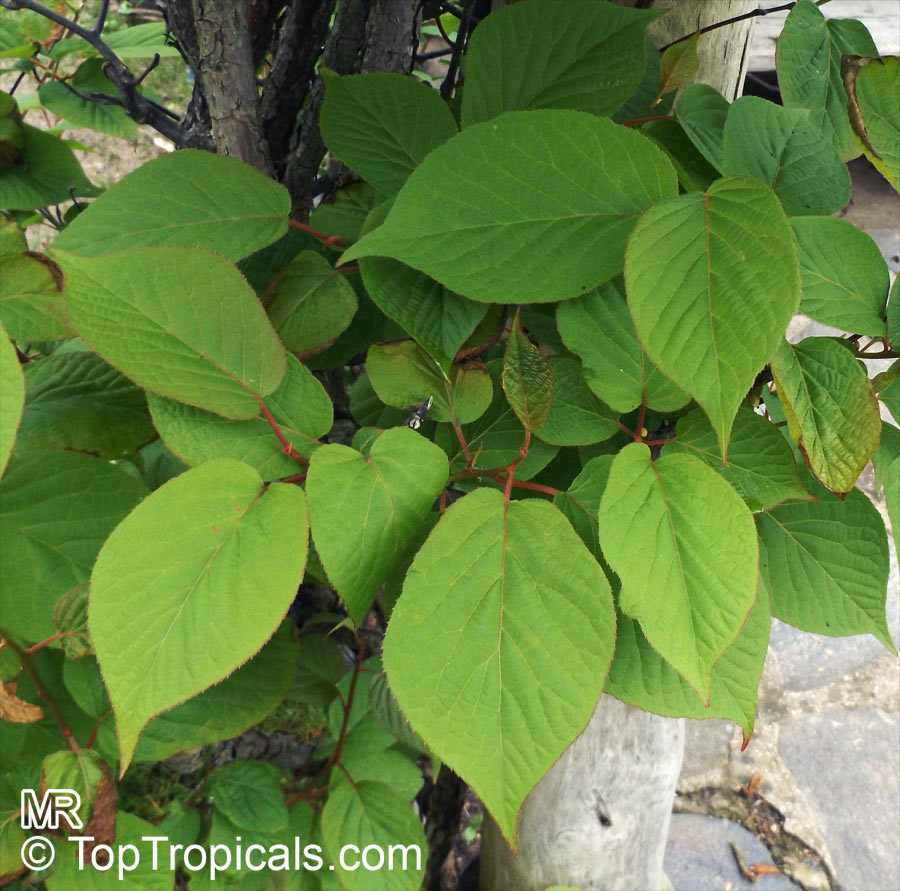
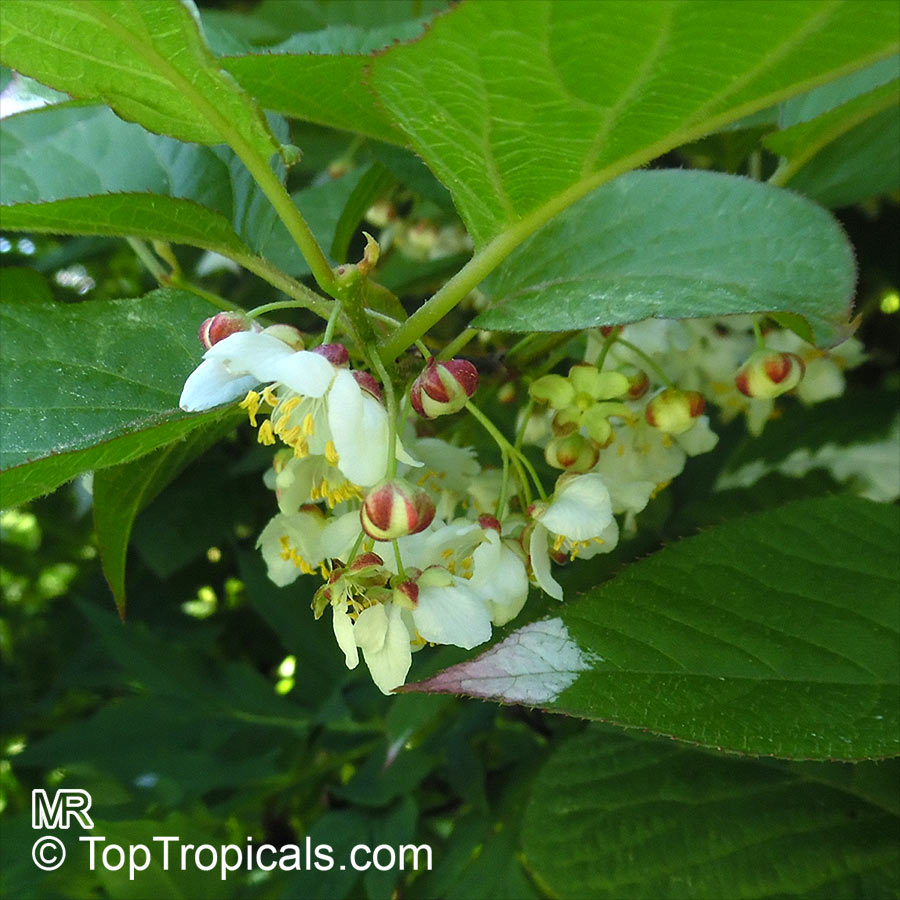
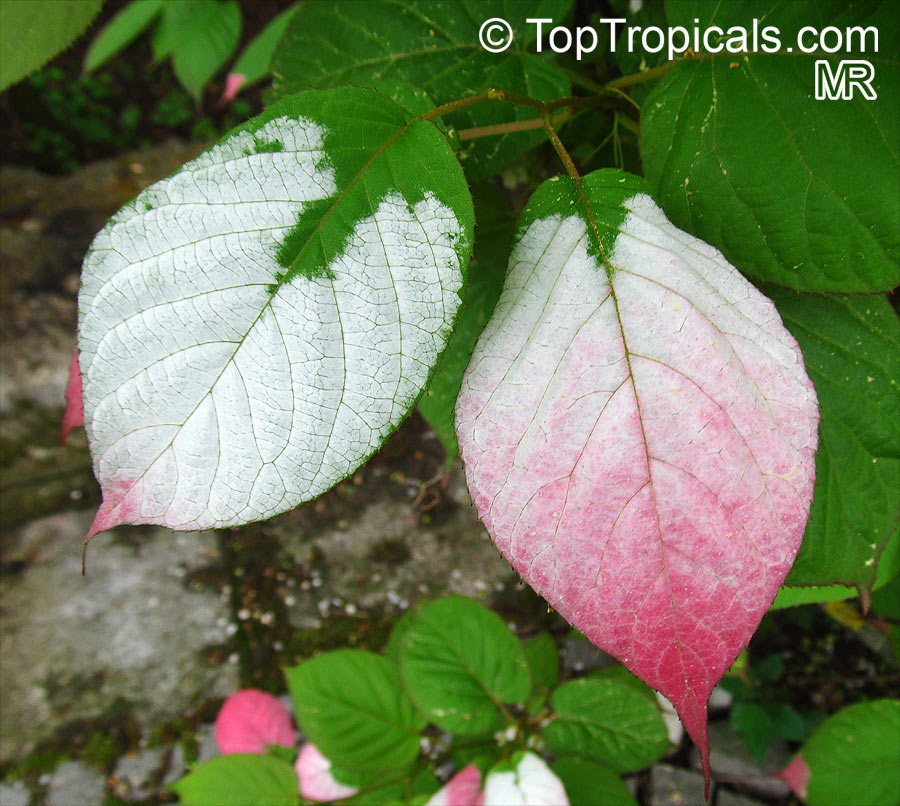
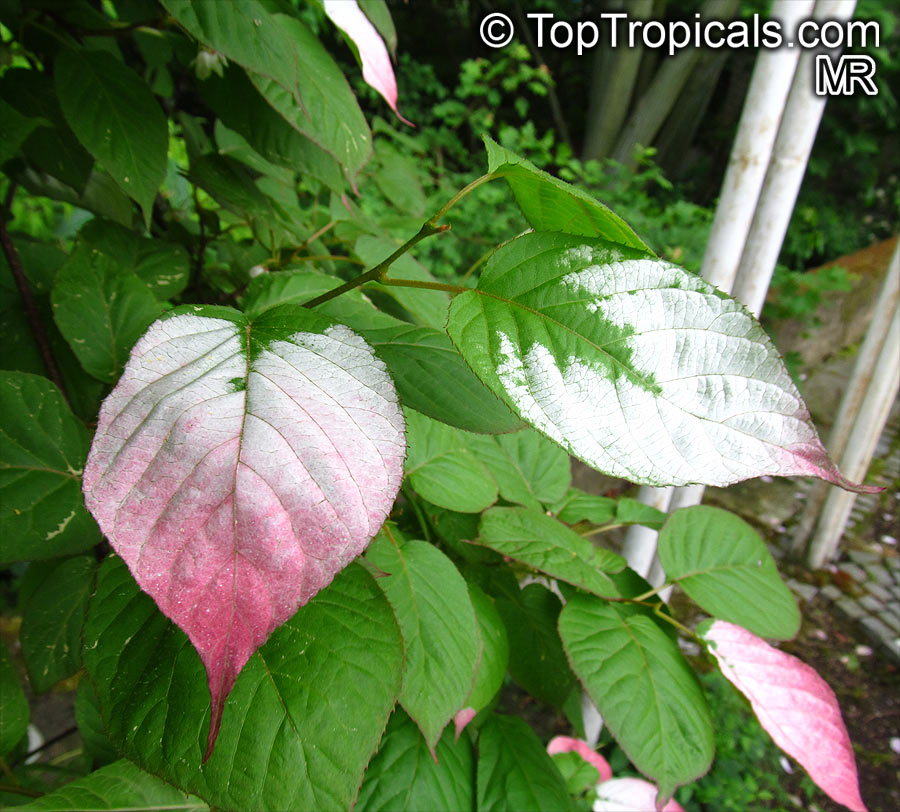
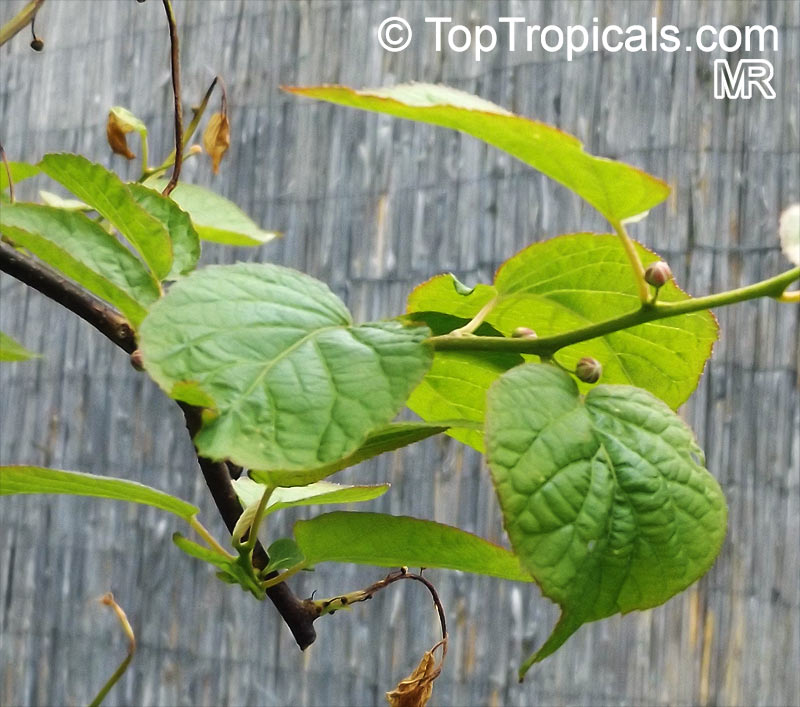
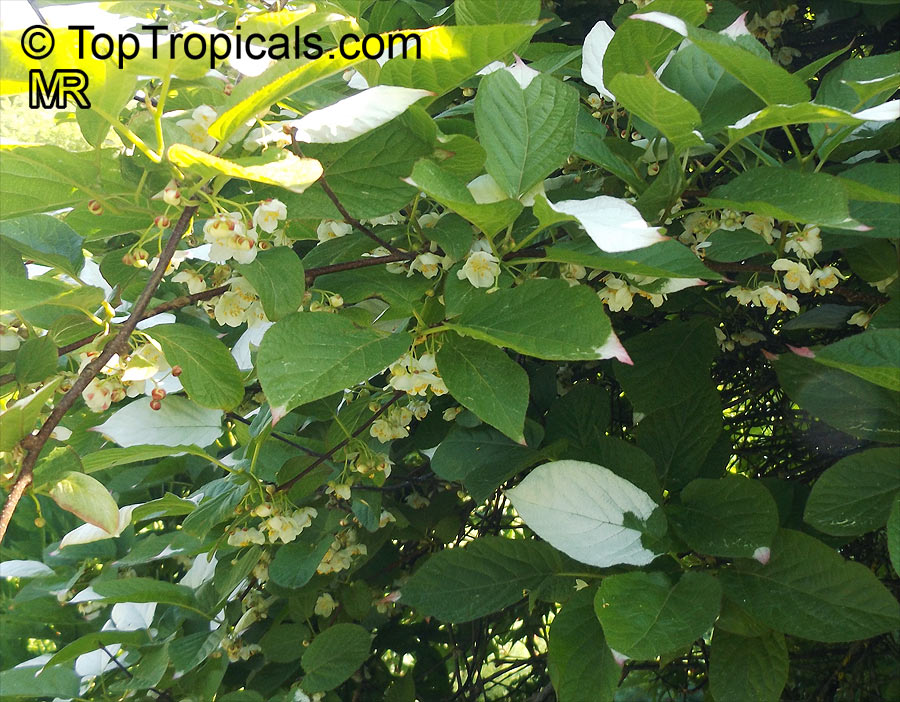
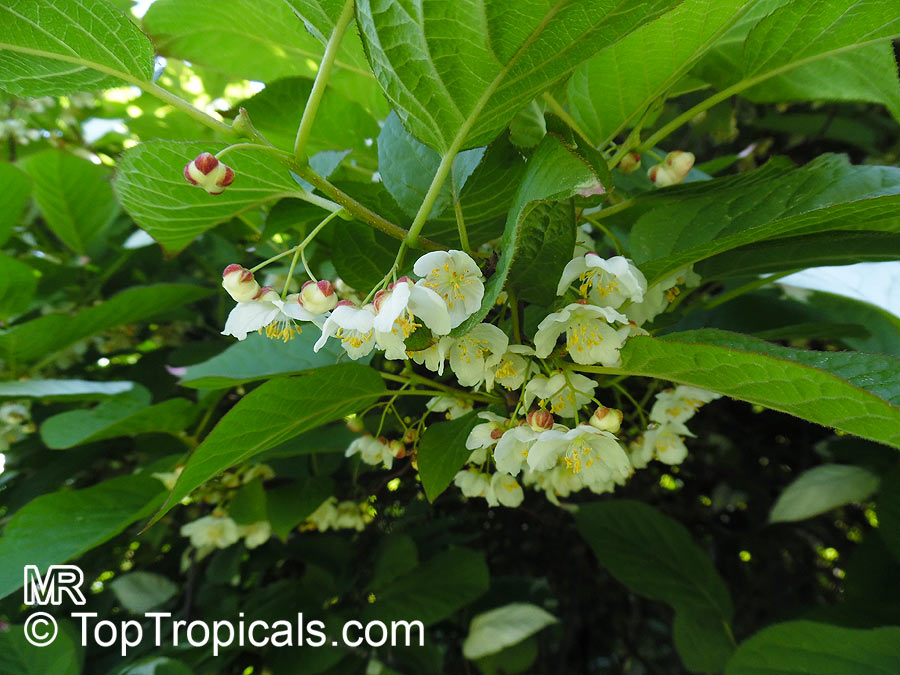
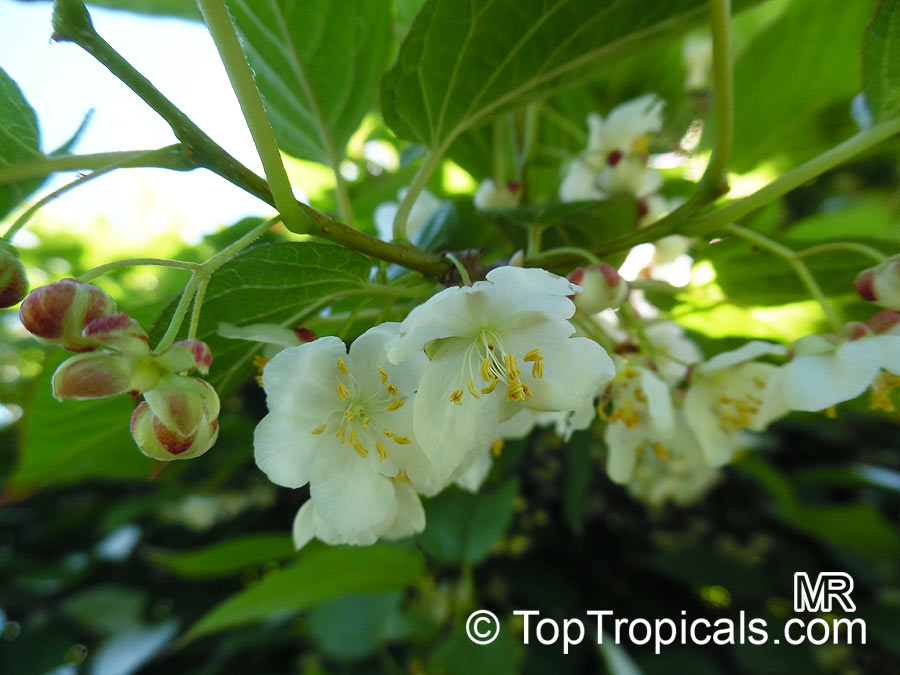
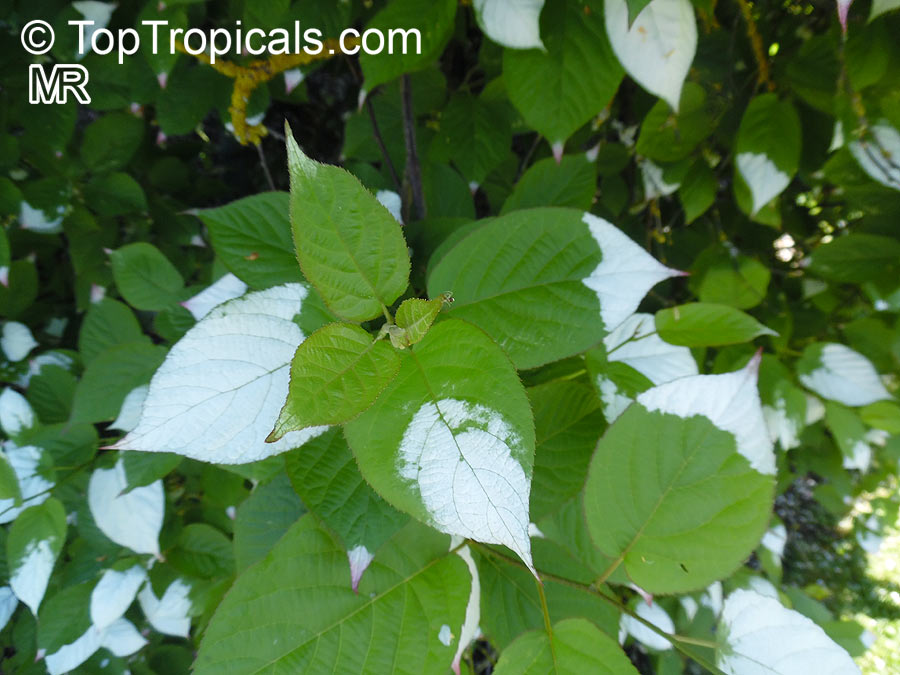
Botanical name: Actinidia kolomikta
Common name: Kiwi
Family: Actinidiaceae
Origin: East Asia
USDA Zone: 4-9


Actinidia kolomikta is a vine or creeper from the Actinidiaceae family, originating from East Asia. It has decorative foliage, with leaves turning red, pink and white in the fall. The leaves are green and creamy white and can be up to 4 inches long. It is a deciduous plant, which means it loses its leaves in the winter.
Actinidia kolomikta prefers semi-shade and regular water, but can tolerate moderate water. It is a fast growing plant, reaching up to 30 ft. It requires support to grow and climb, however it will not produce fruit without both a male and female plant. It is grown in USDA Zone 4-9.
The fruit of the Actinidia kolomikta is sweet and grape-sized, with a yellow or light orange skin. The green, juicy flesh has a light, sour flavor. It can be eaten fresh or cooked, and is a good source of Vitamin C, Vitamin A, and dietary fibers. The fruit can also be used to make jams and jellies. A mature plant can produce up to 100 fruits per season, depending on the care and conditions.
Actinidia kolomikta is an edible, ornamental plant that is easy to care for and can provide a good harvest of sweet, juicy fruit.
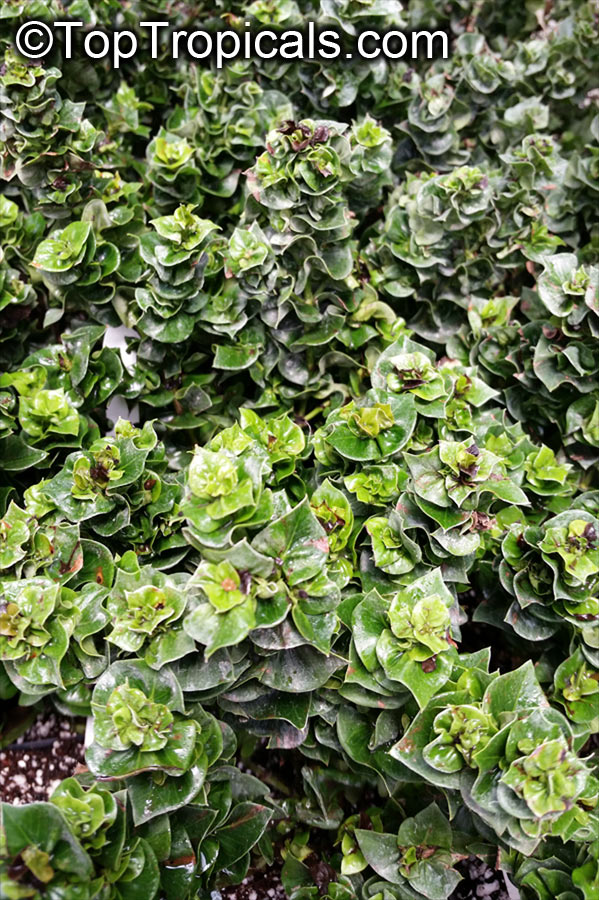
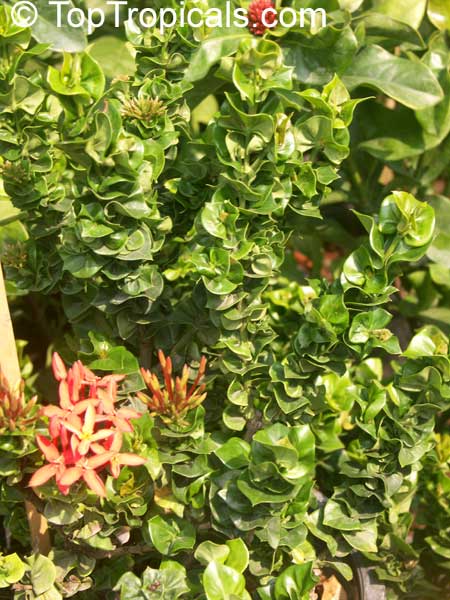
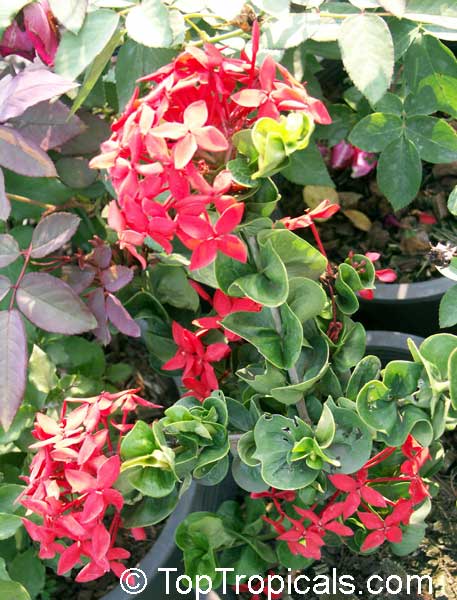
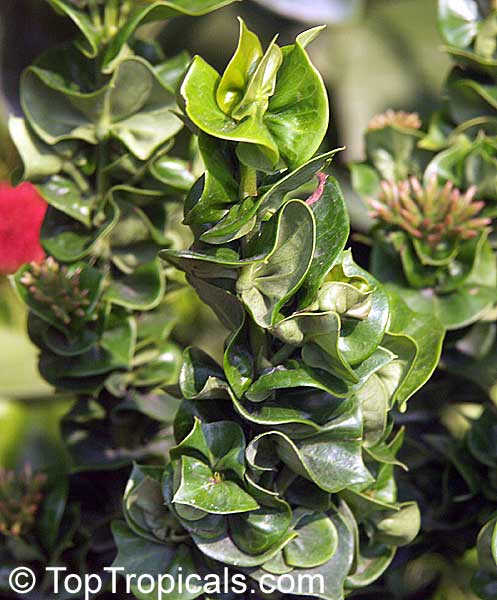
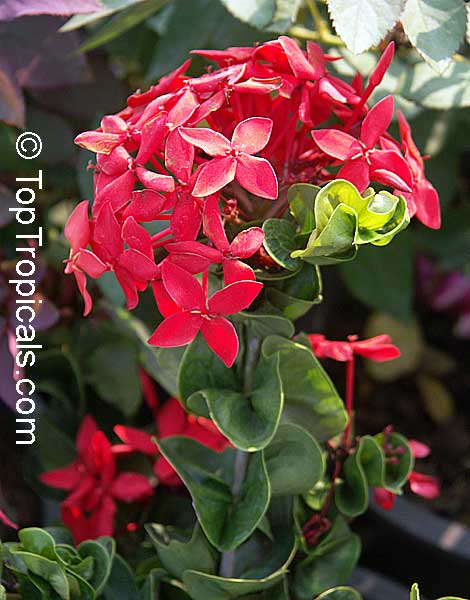
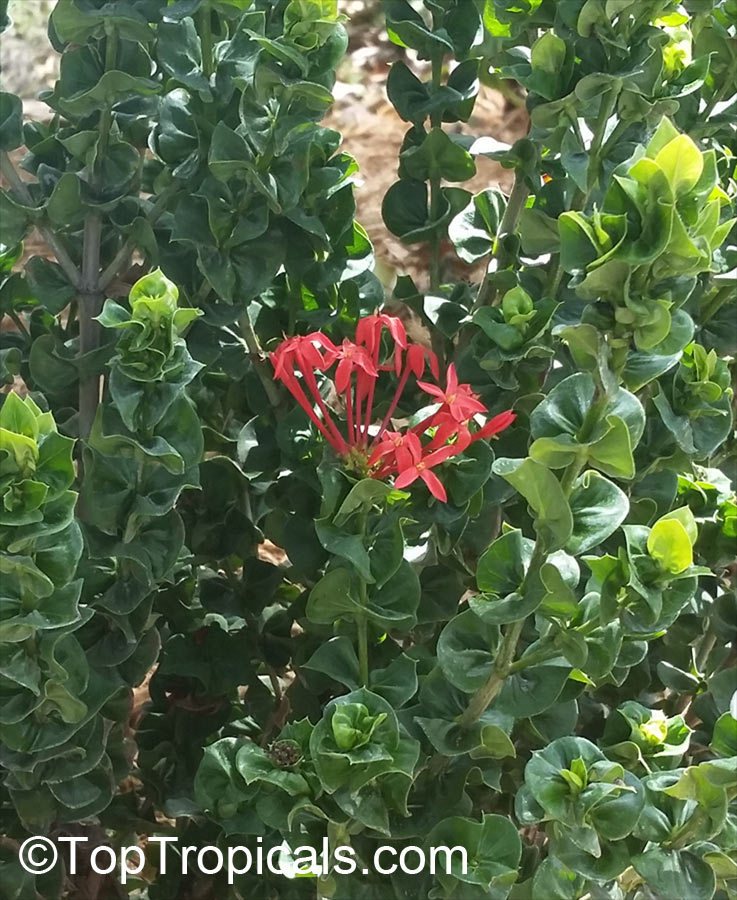
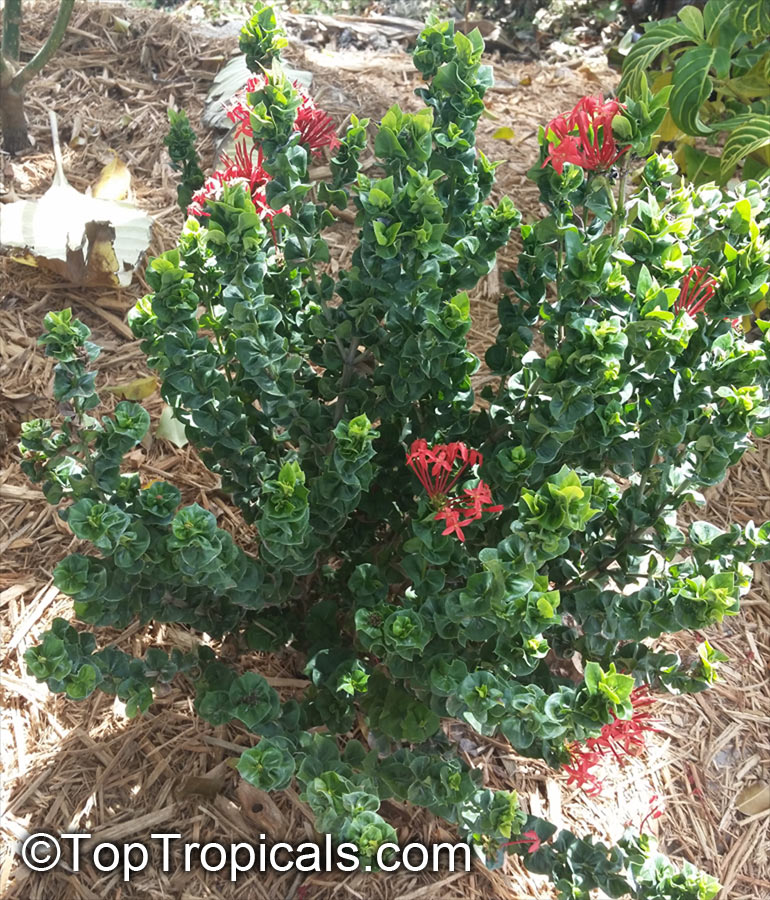
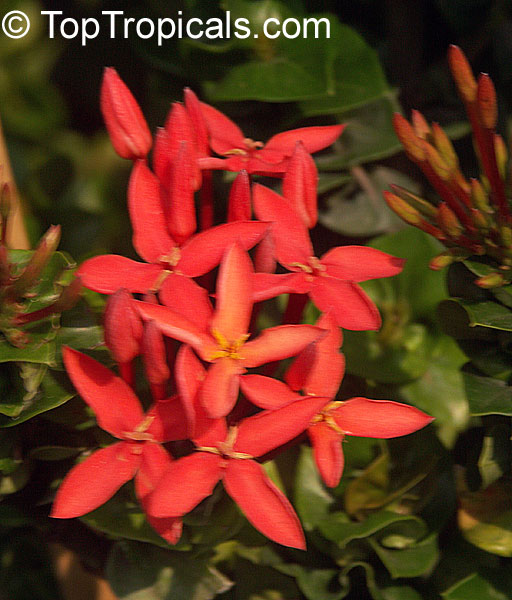
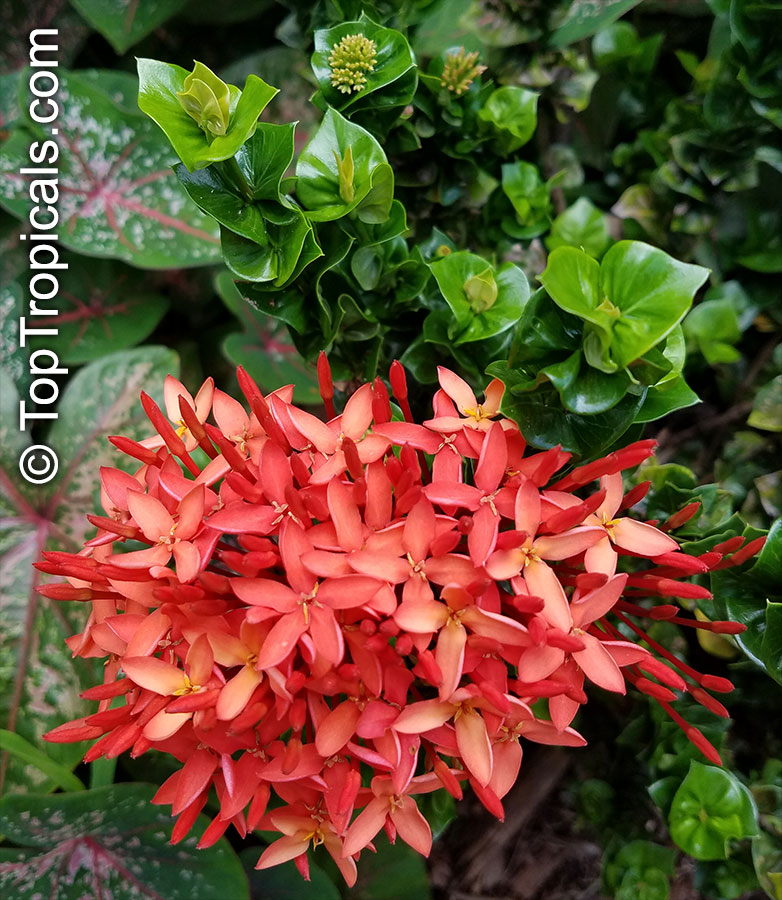
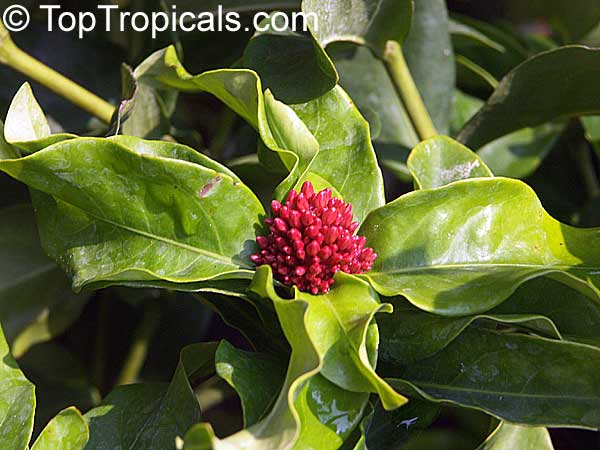
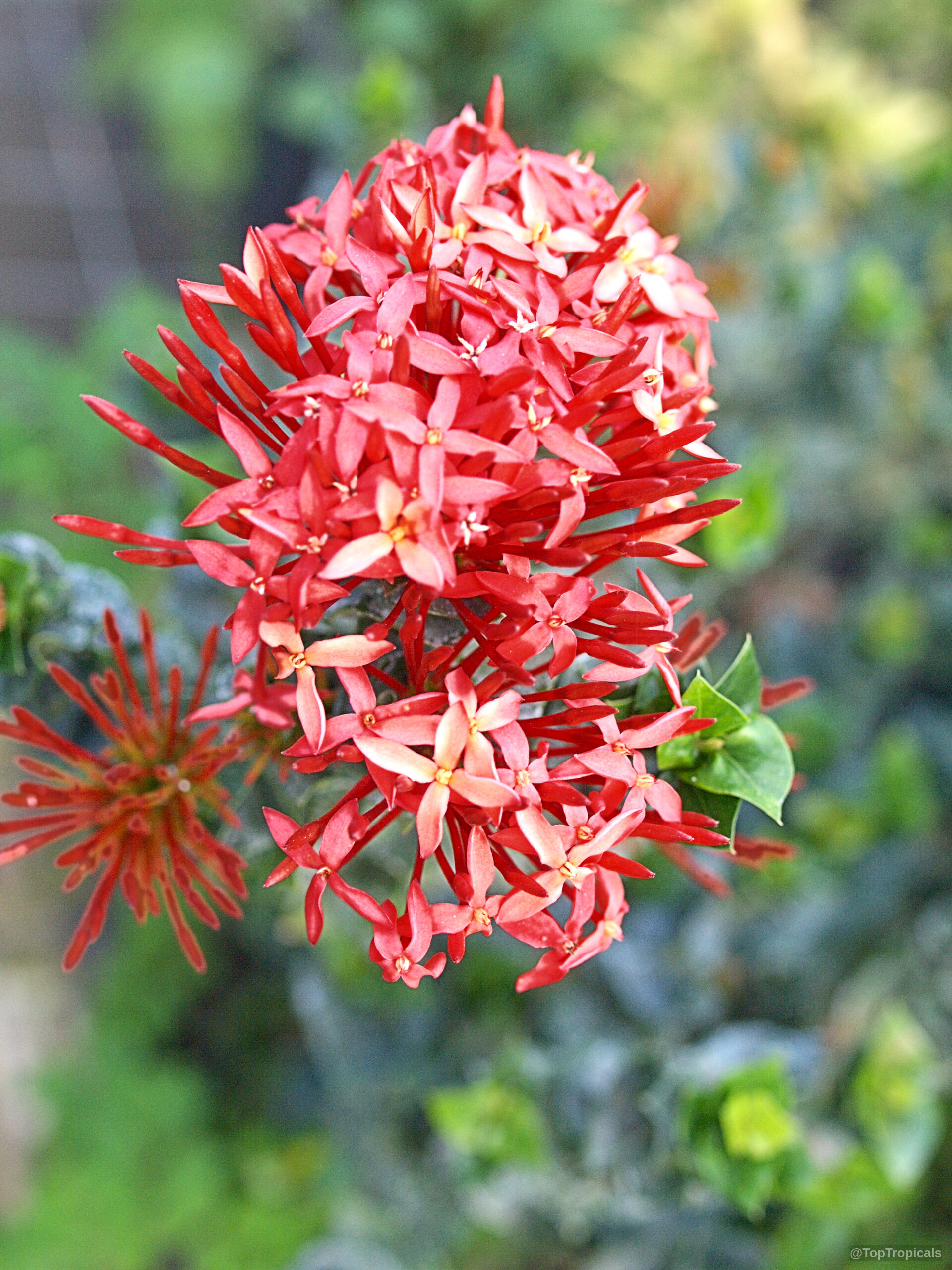
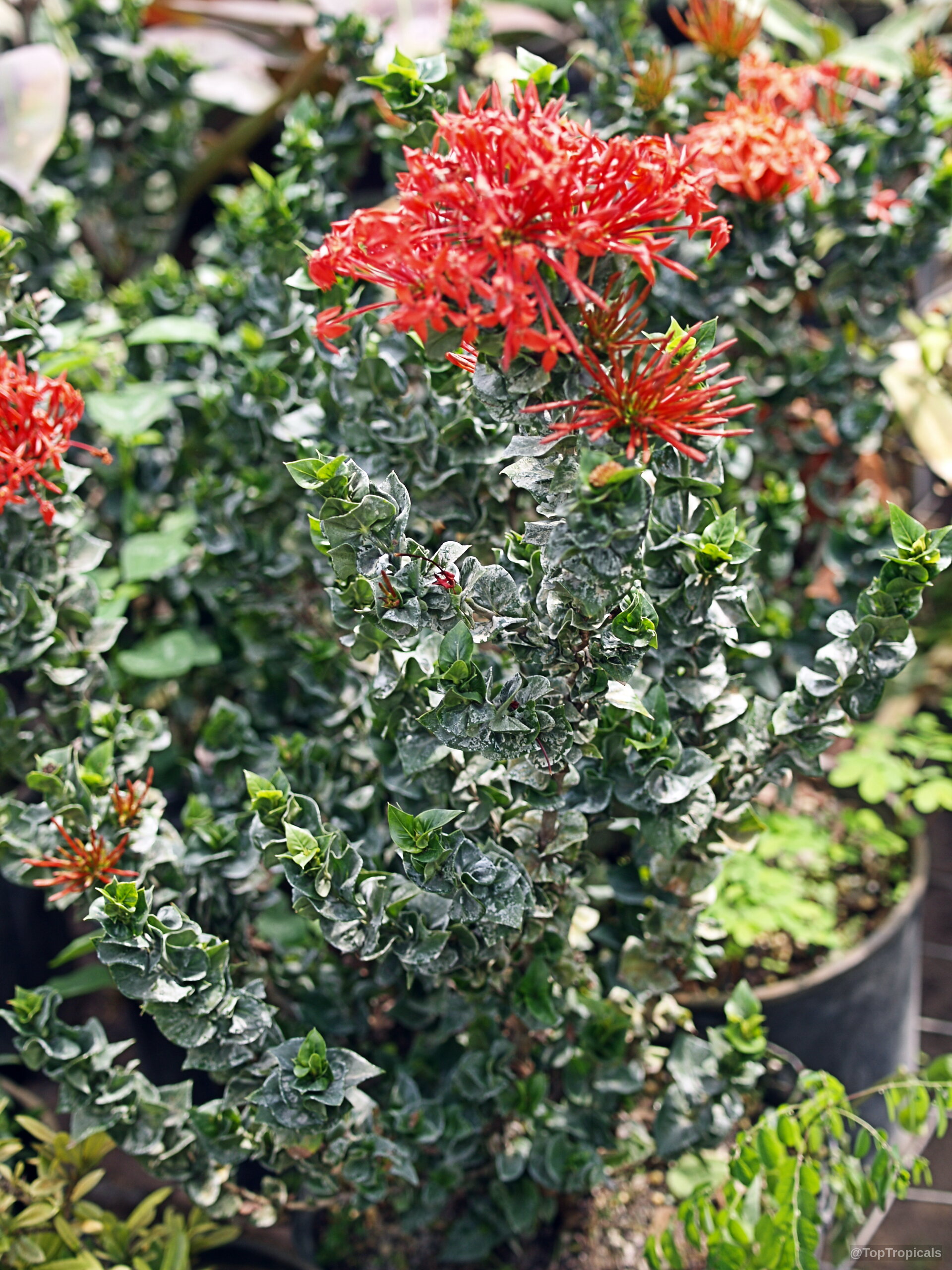
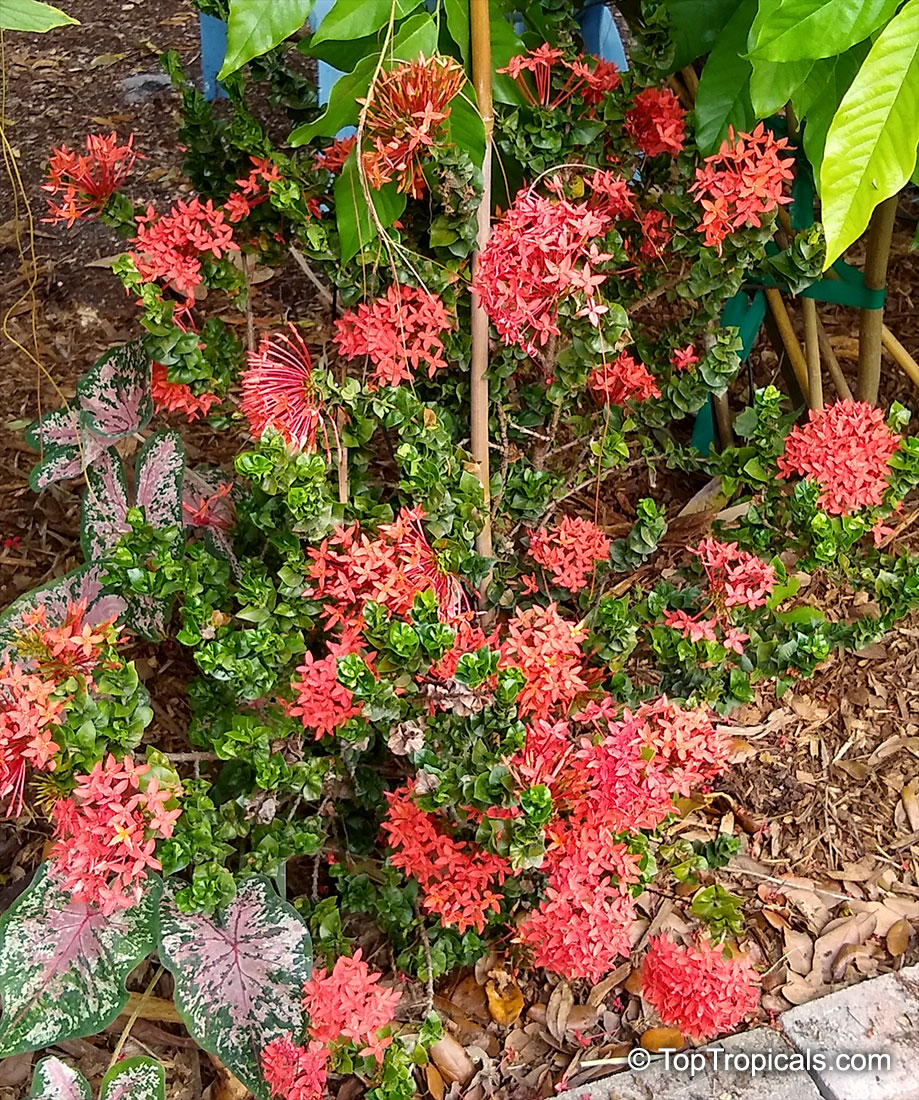
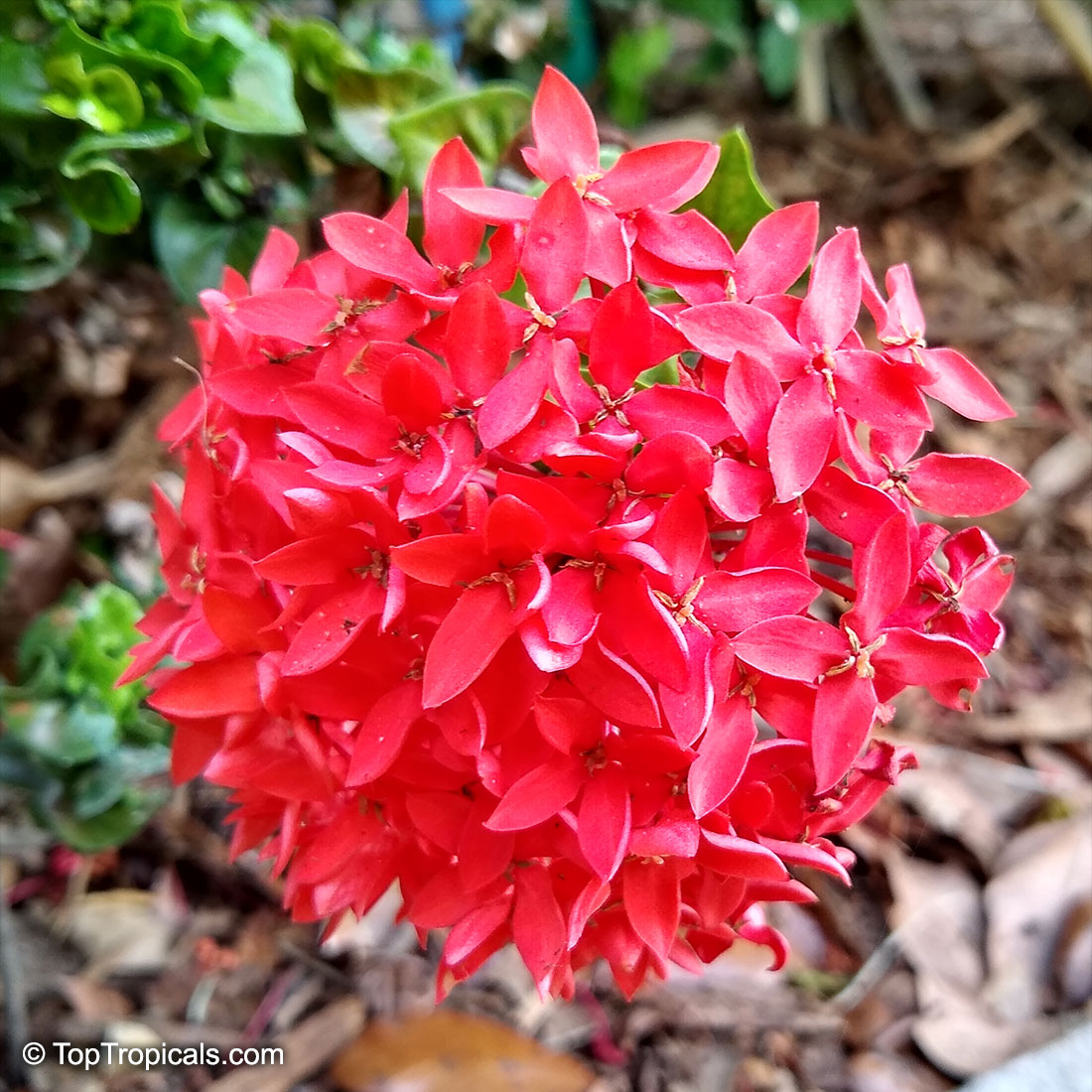
Botanical name: Ixora sp.
Common name: Ixora Hindu Rope
Cultivar: Hindu Rope
Family: Rubiaceae
Origin: Thailand
USDA Zone: 9-11


New hybrid with twisted waxy leaves, small to medium shrub. Slow growing, dwarf habit, can be used for bonsai.
Learn more about ixora plants: Ixora - the Star of Southern Landscapes.
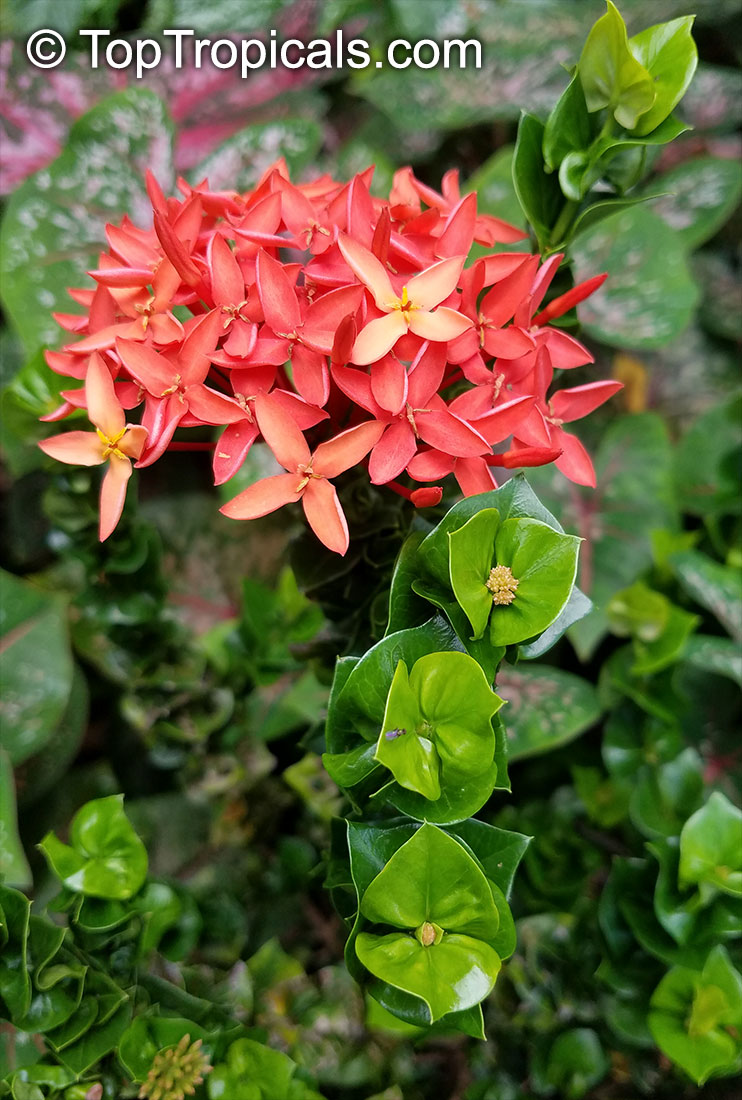
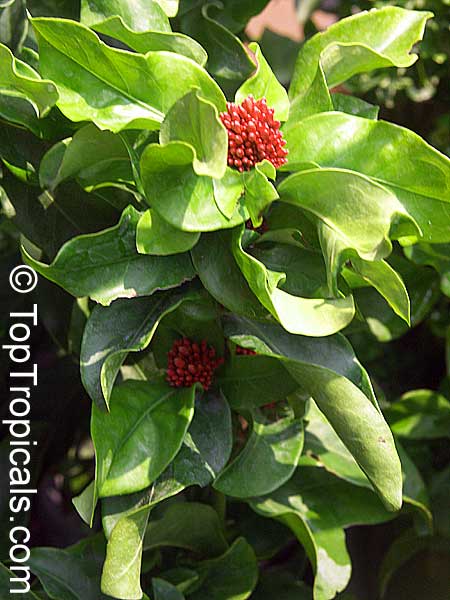
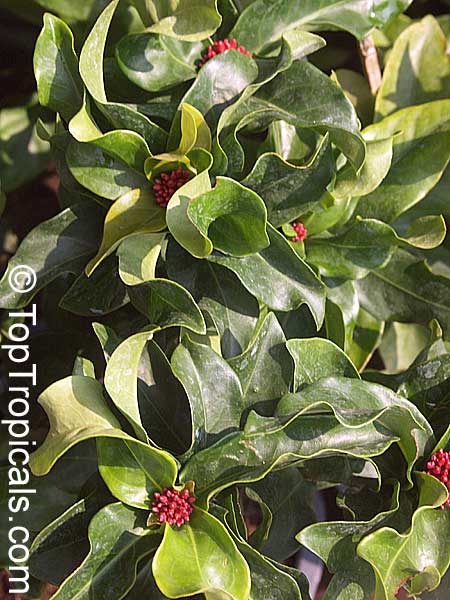
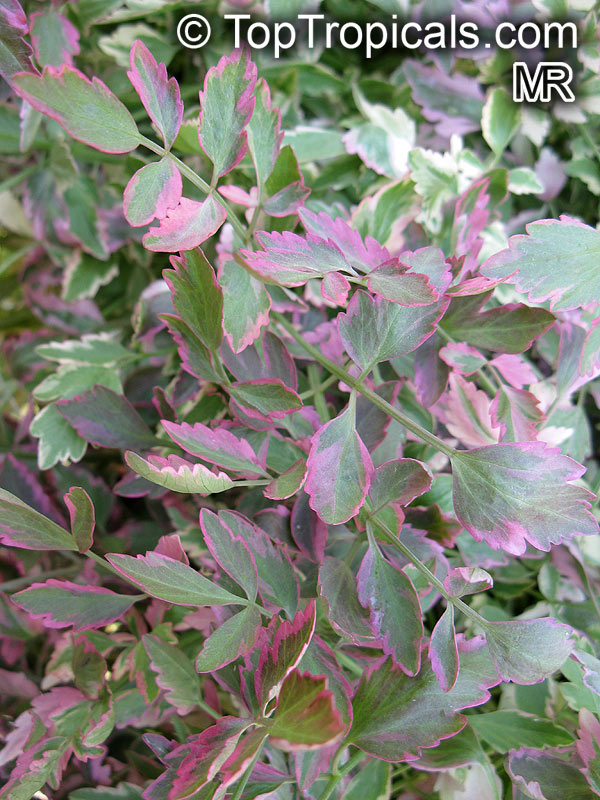
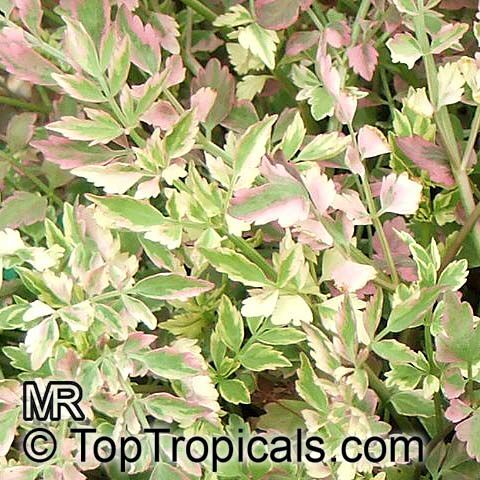
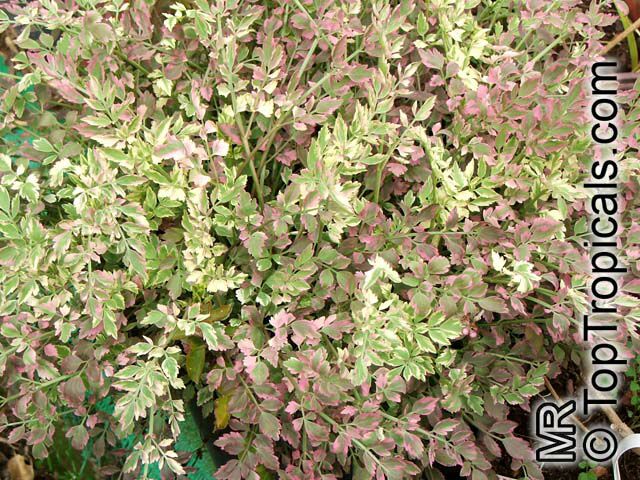
Botanical name: Oenanthe javanica
Common names: Water Celery, Water Parsley, Water Dropwort
Family: Apiaceae / Umbelliferae
Origin: Eastern Asia
USDA Zone: 9-10


The flavor is reminiscent of carrots or parsley. A major vegetable in many parts of the Orient, the leaves are a rich source of vitamins and minerals.
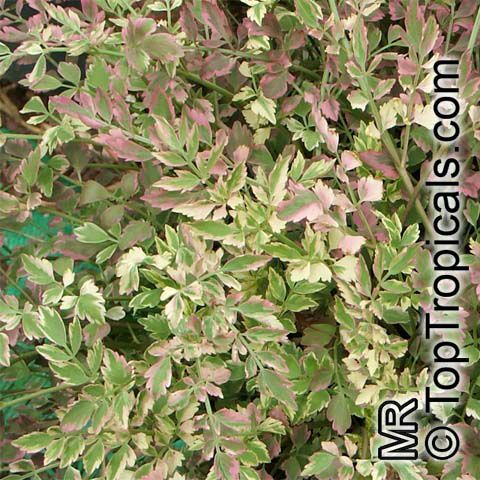
Oenanthe javanica Flamingo - a variegated form with leaves splashed and zoned pale pink, cream and white, it has been especially recommended as a good ground cover plant for wet situations.
Although no specific mention of toxicity has been seen for this species, it belongs to a genus that contains a number of very poisonous plants and so some caution is advised.
Botanical name: Caladium steudnerifolium
Common name: Caladium
Family: Araceae
Origin: South America
USDA Zone: 9-11
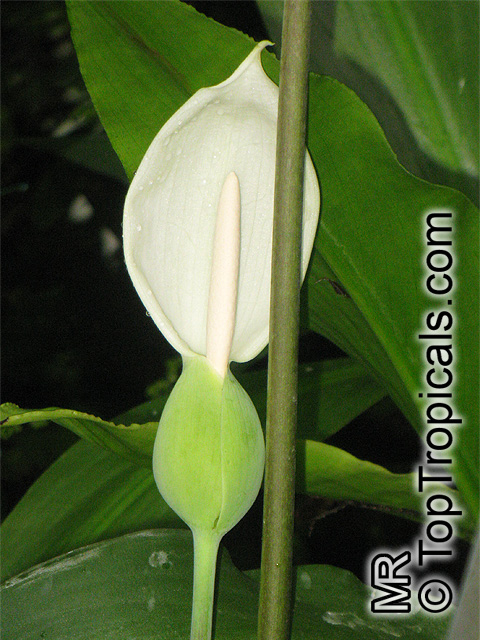
The plant stands at a height of 2 to 5 feet and prefers semi-shade and regular water. Caladium produces white or off-white flowers and its ornamental foliage makes it a beautiful addition to any garden. The flooding tolerant nature of this plant also makes it a great choice for areas with plentiful rainfall.
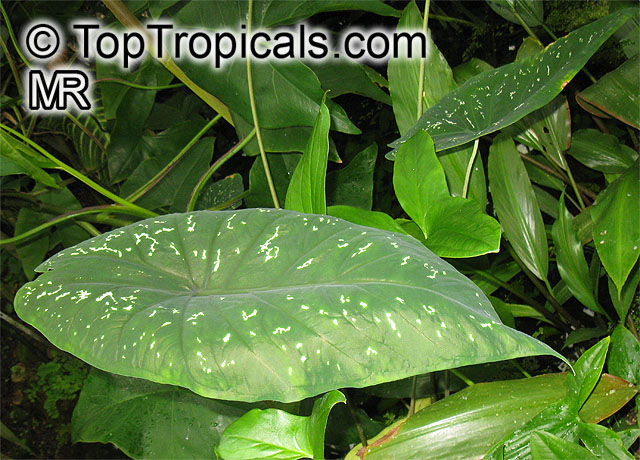
Native to South America and grown in USDA Zone 9-11, Caladium steudnerifolium (Caladium) is a popular option for adding color and texture to any garden. Its large, heart-shaped and bright green leaves can be found with spots of yellow, red, or pink. Standing between two and five feet, these plants prefer semi-shaded areas and regular watering. The ornamental foliage of Caladium produces white and off-white flowers and its flooding tolerant nature makes it a great choice for areas with plentiful rainfall.
When grown in a pot, Caladium steudnerifolium requires a bit more attention. This small plant needs to be monitored more closely, as it needs to be watered and fertilized more often than if it was planted in the ground. In cold regions, the pot also needs to be moved indoors and placed in a much cooler area in order to protect the roots and stems from freezing temperatures. It is also important to remember to hold off on fertilizing this plant during the winter months as it tends to go into a state of dormancy.
By being mindful of appropriate water and fertilizer levels, as well as this plant's tendencies for flooding tolerance and dormancy, you can expect to enjoy the beauty of Caladium steudnerifolium for many years to come.
Botanical names: Erythrina variegata, Erythrina indica
Common names: Coral Tree, Sunshine Tree
Family: Fabaceae
Subfamily: Faboideae
Origin: Brazil
USDA Zone: 10-11

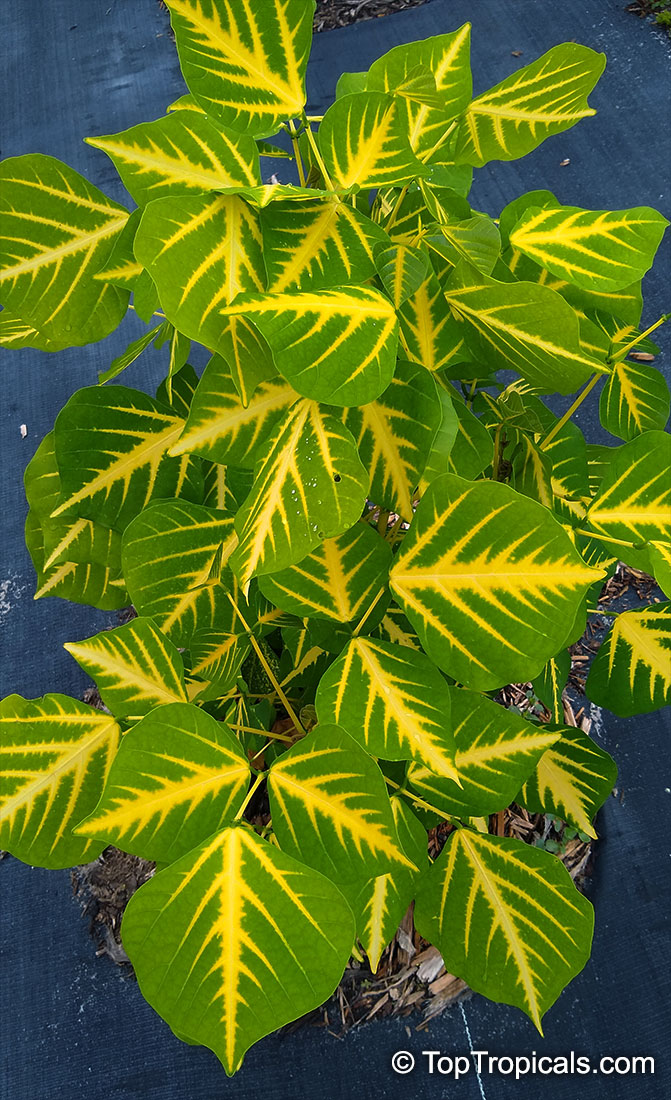
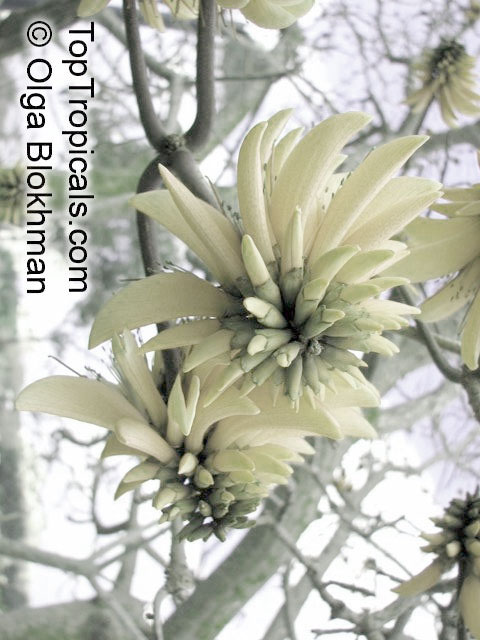
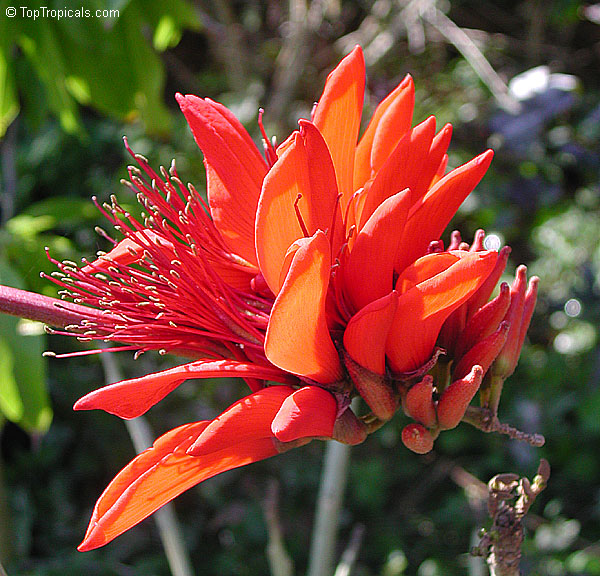
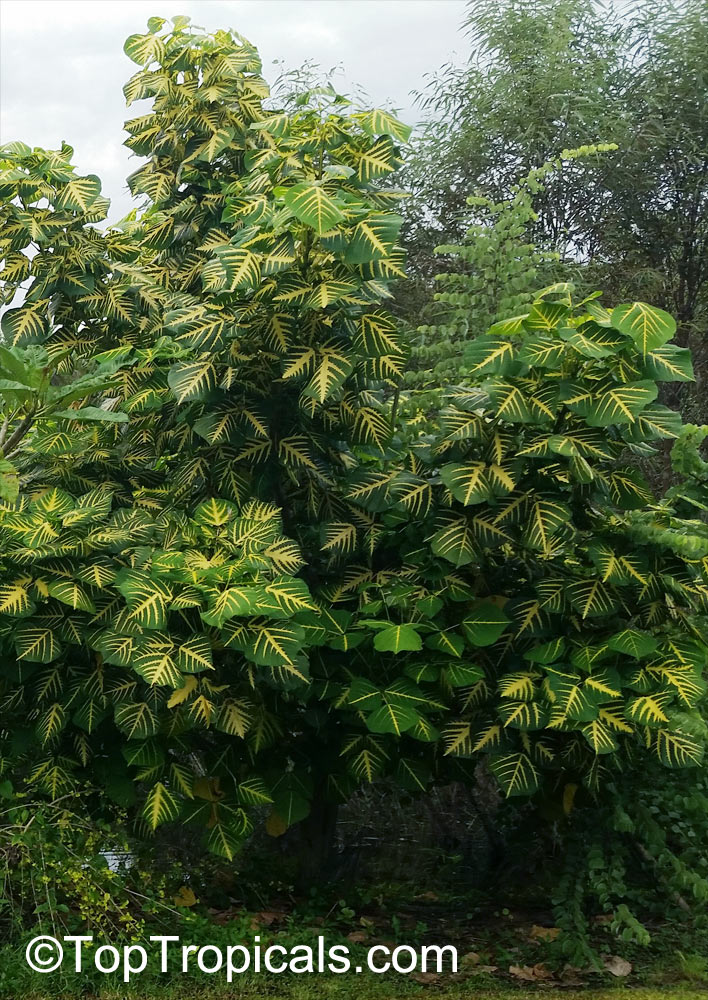
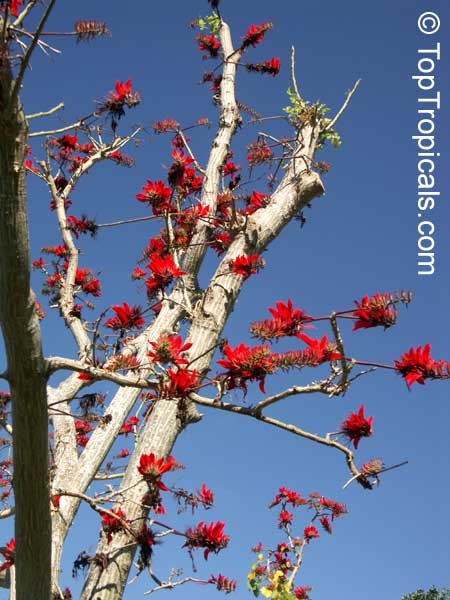
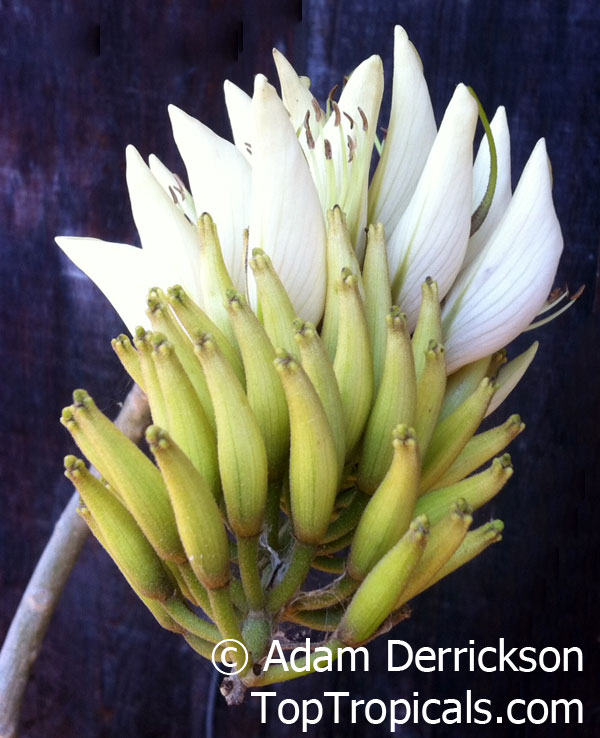
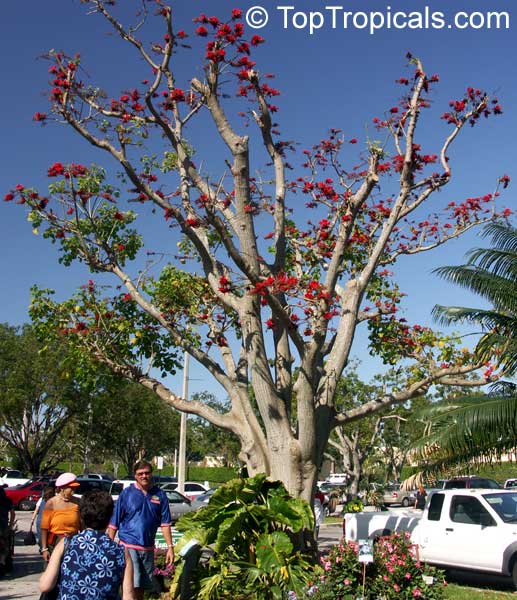
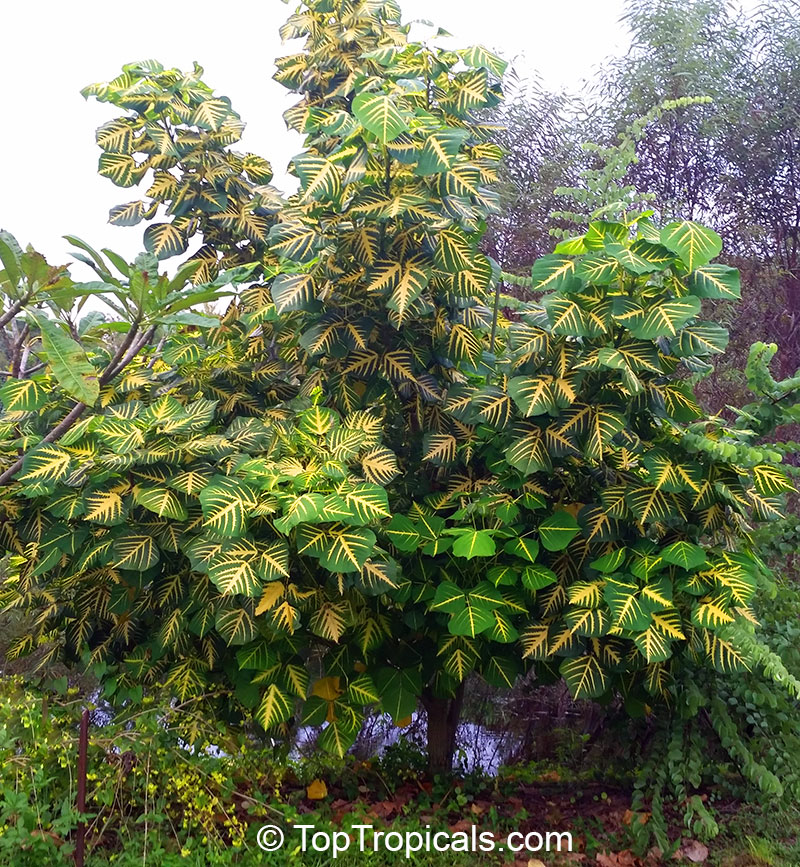
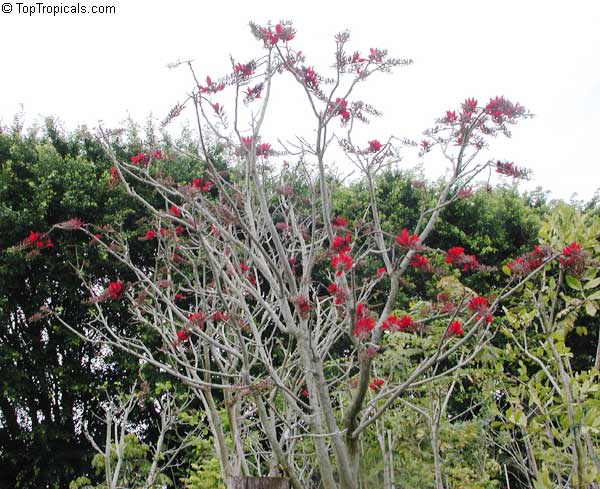
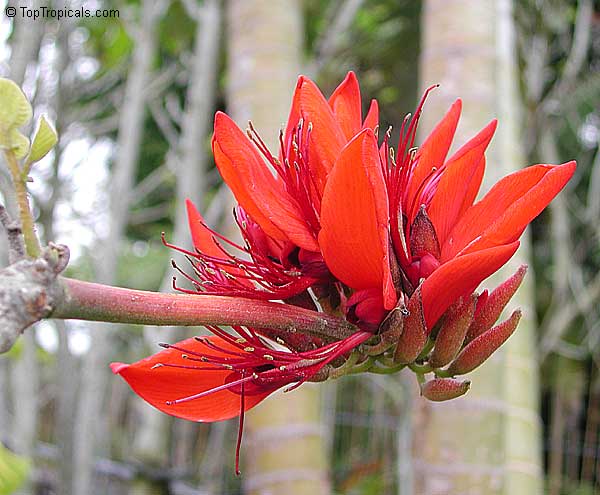
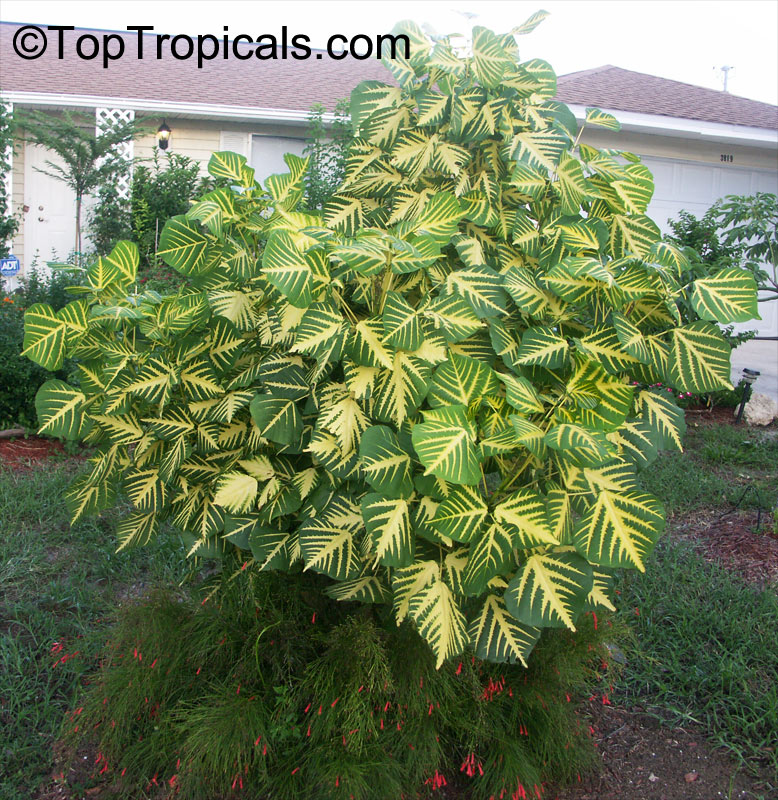
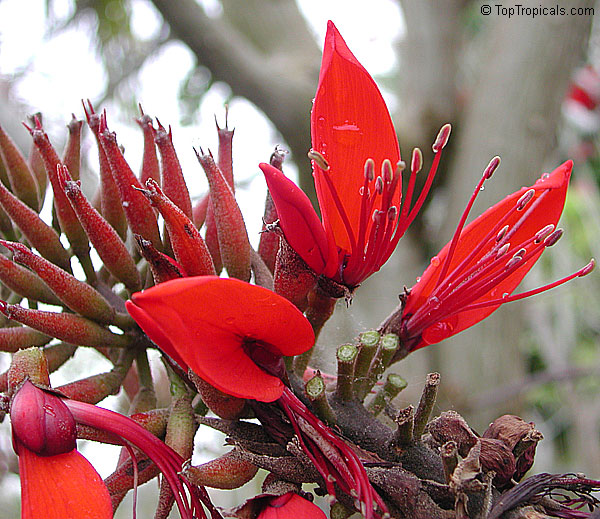
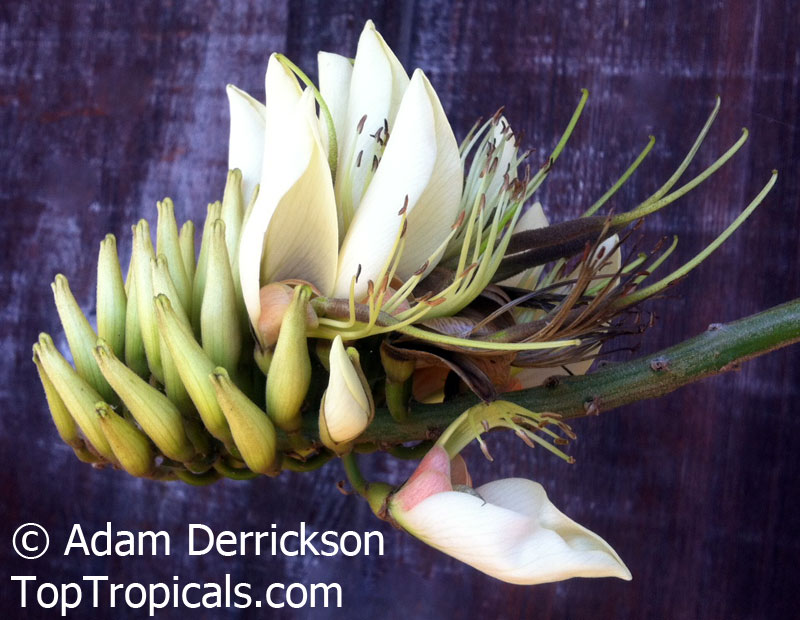
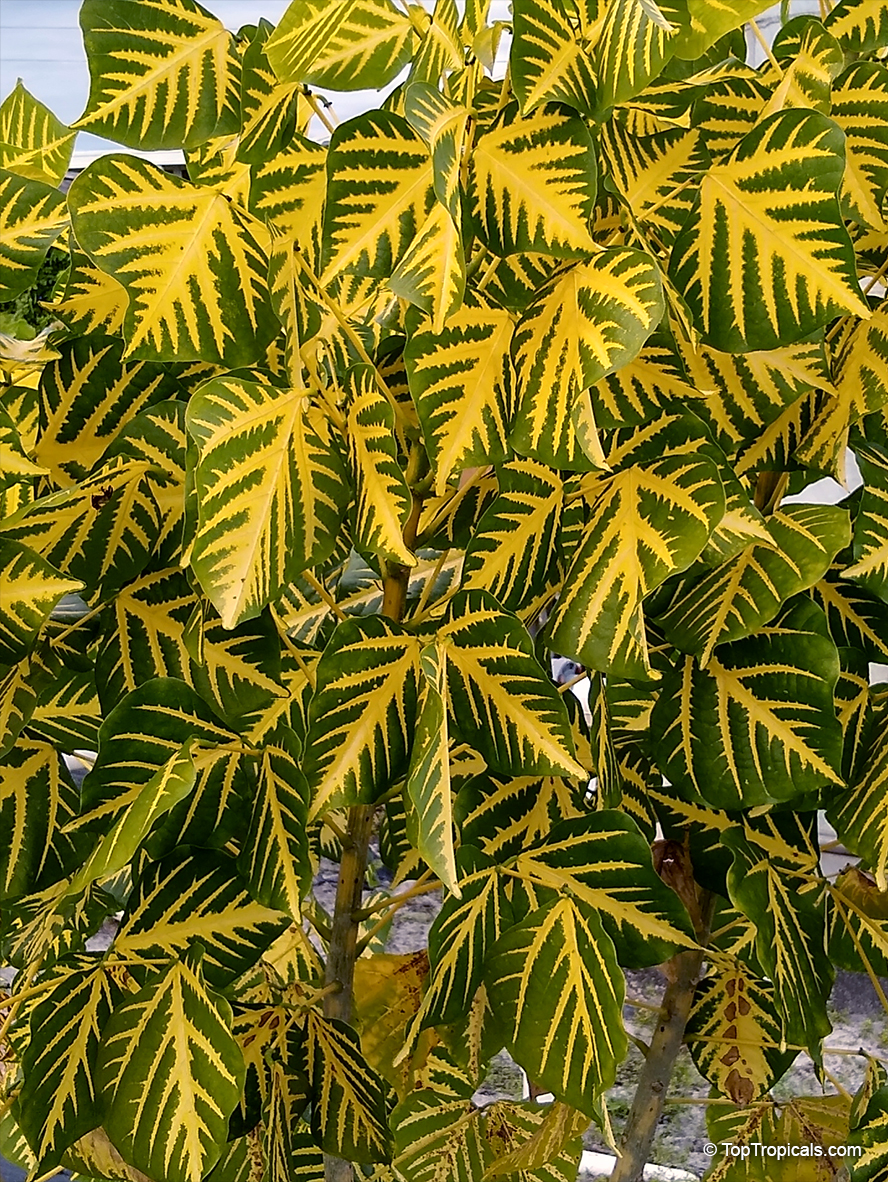
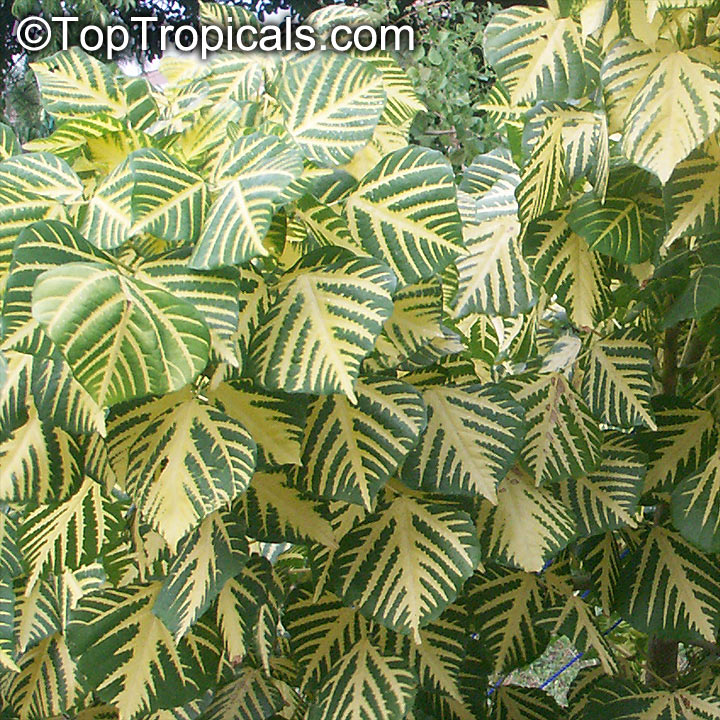
Erythrina is a genus containing some 100 trees and shrubs, most with spiny trunks and branches and a number that produce strikingly beautiful flowers. It has large three-parted leaves that may be solid green or boldly patterned with bright yellow; in regions with a pronounced dry season, these fall once a year and are followed by beautiful scarlet blossoms. There is also a less common white-flowering variety. It likes full sun and well-drained soil and bloom best after a period of drought. Quite large cuttings root easily. Season: Winter.
E. indica picta, one of the most commonly seen, desired especially for its unusual variagated leaves.
| Next | |
Use link to repeat this search:
https://toptropicals.com/cgi-bin/garden_catalog/cat.cgi?search_op=and&keyword_op=and&language=e&number=10&no_change_lang=1
&v1=dec&user=tt&sale=1&first=0