Dwarf, fruit, tree - Plant Encyclopedia Results
| Number of plants found: 34 | Next | 
|
Go to page: | 1 | 2 | 3 | 4 |
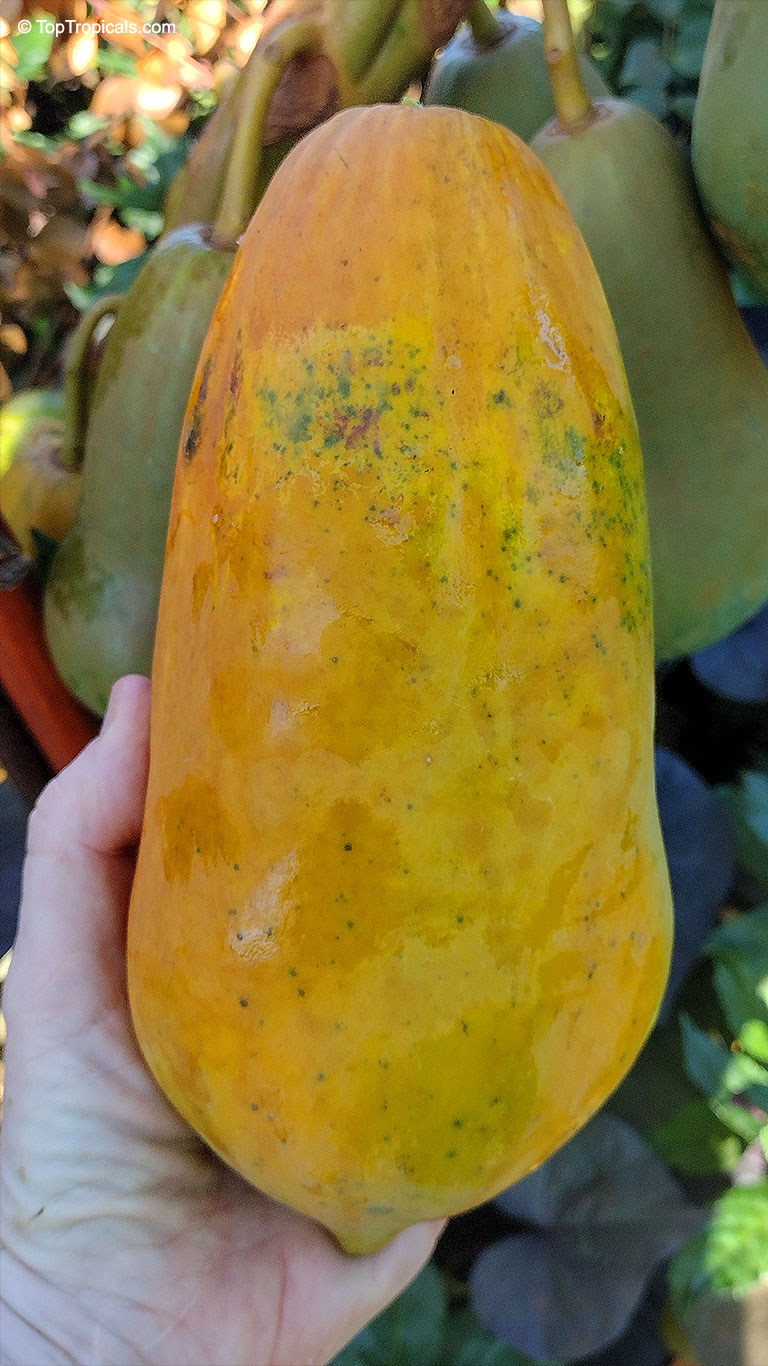
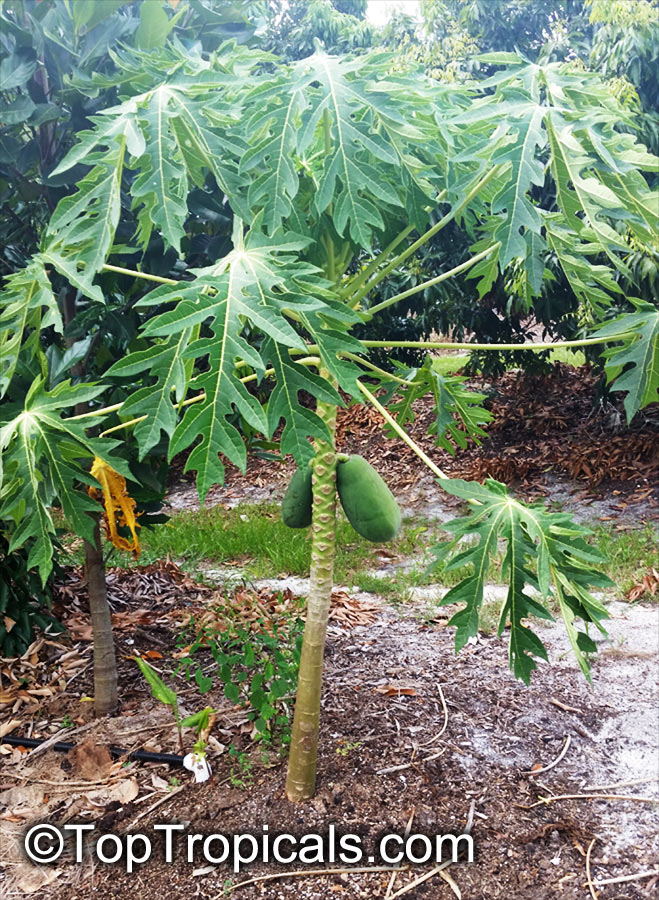
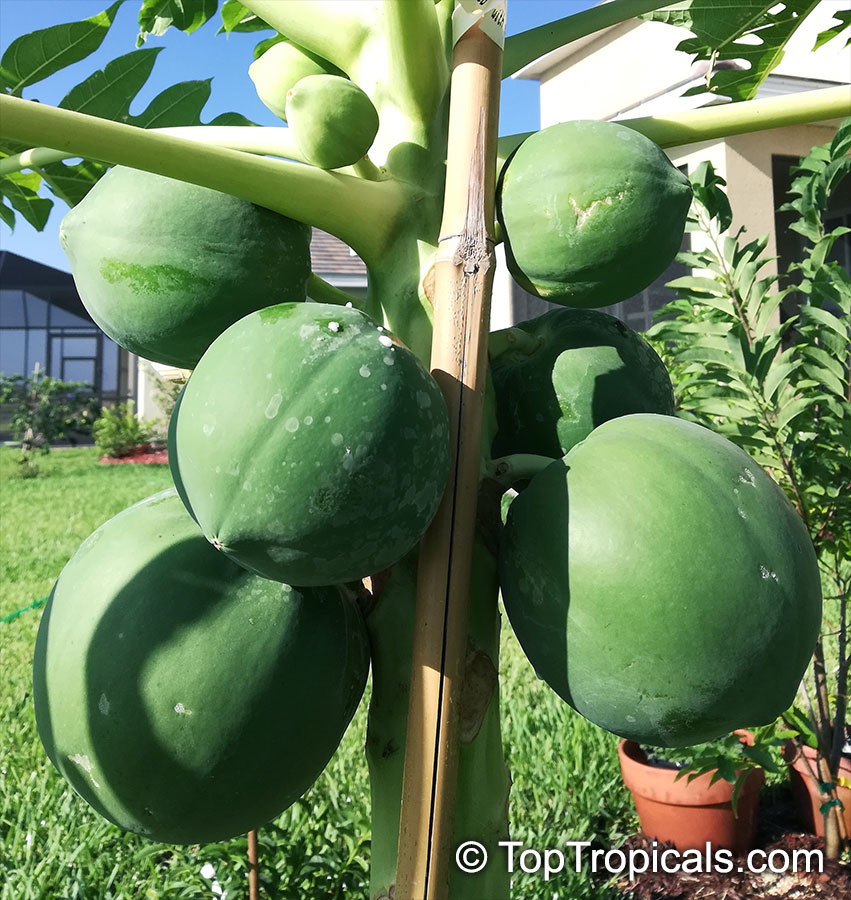
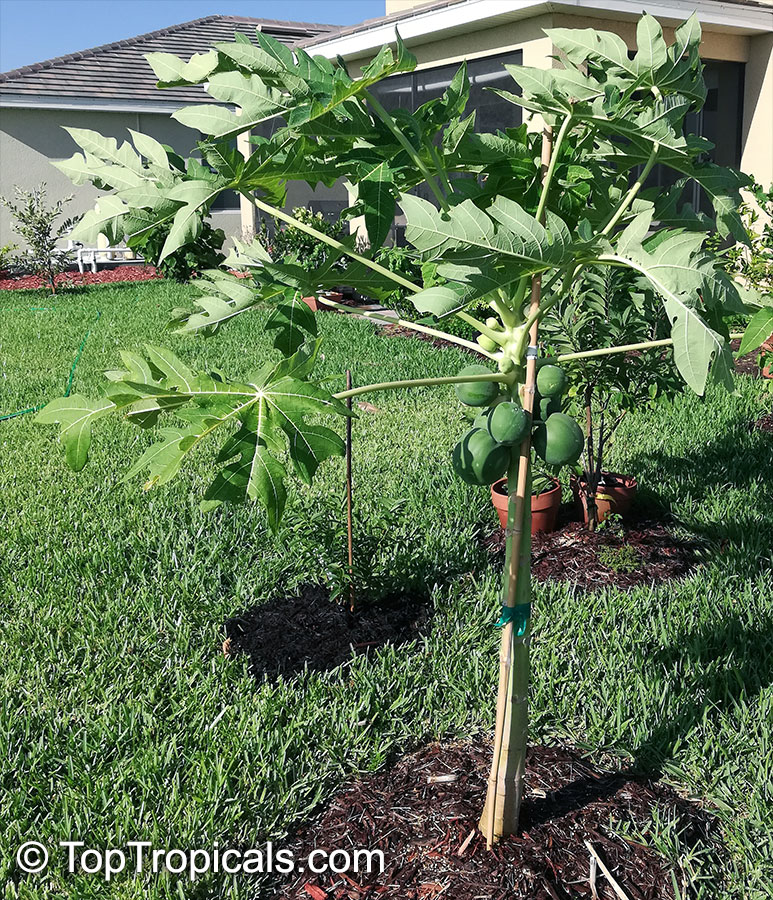
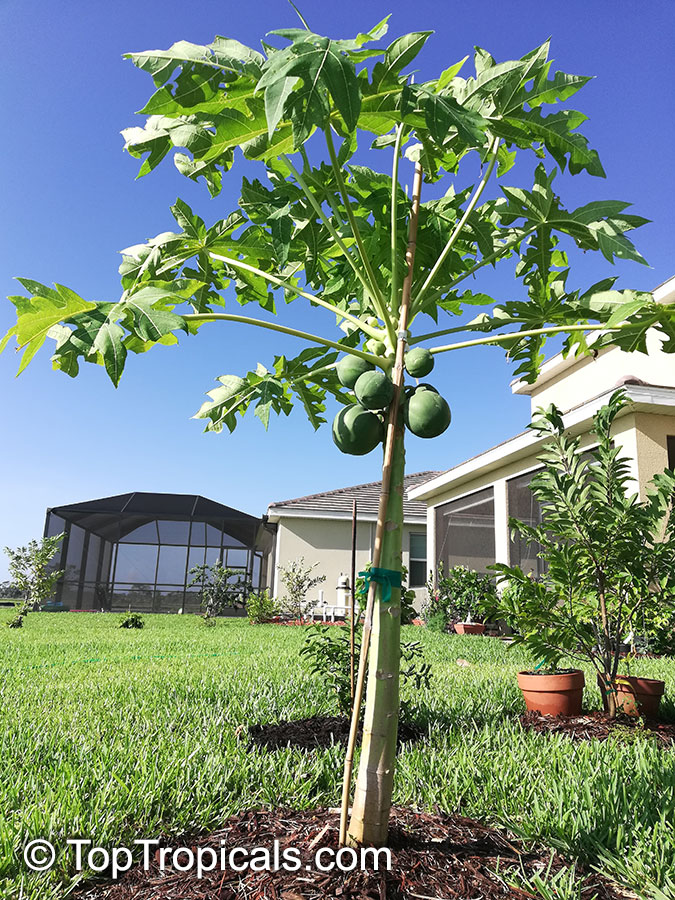
Botanical name: Carica papaya
Common name: Dwarf Papaya
Cultivar: Dwarf
Family: Caricaceae
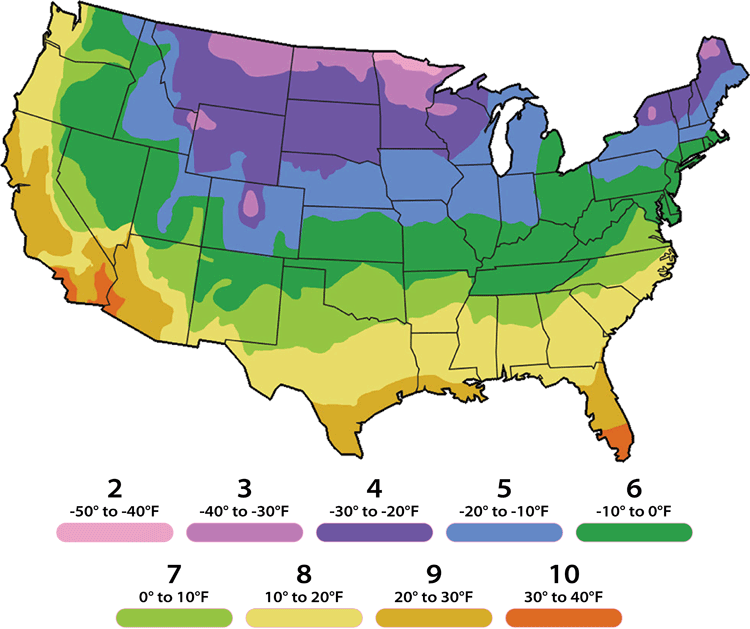


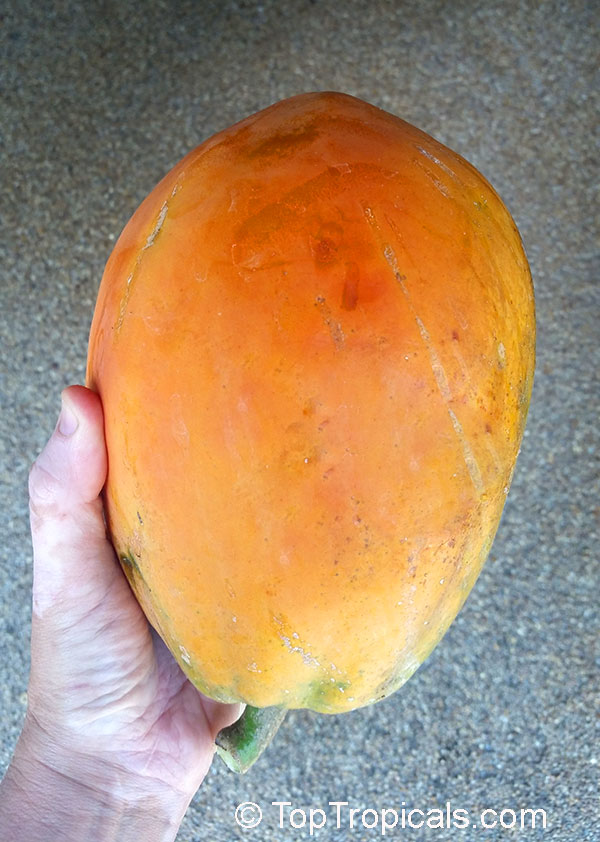
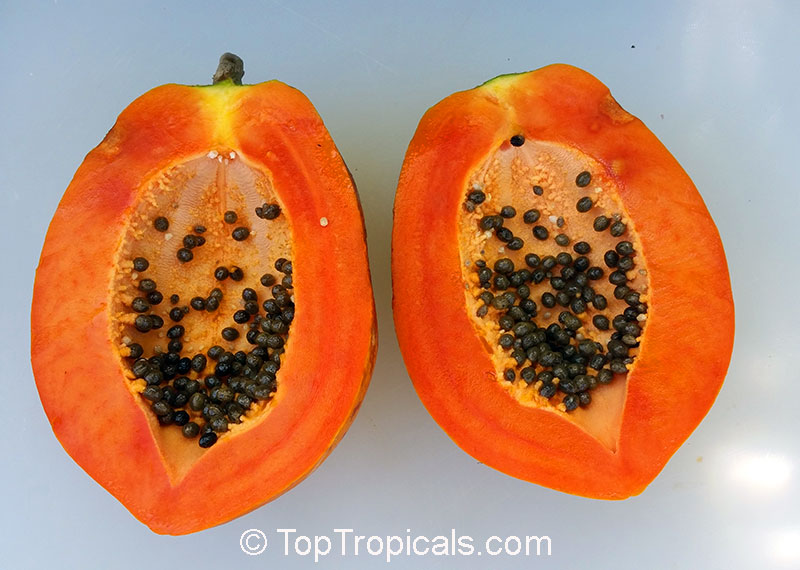
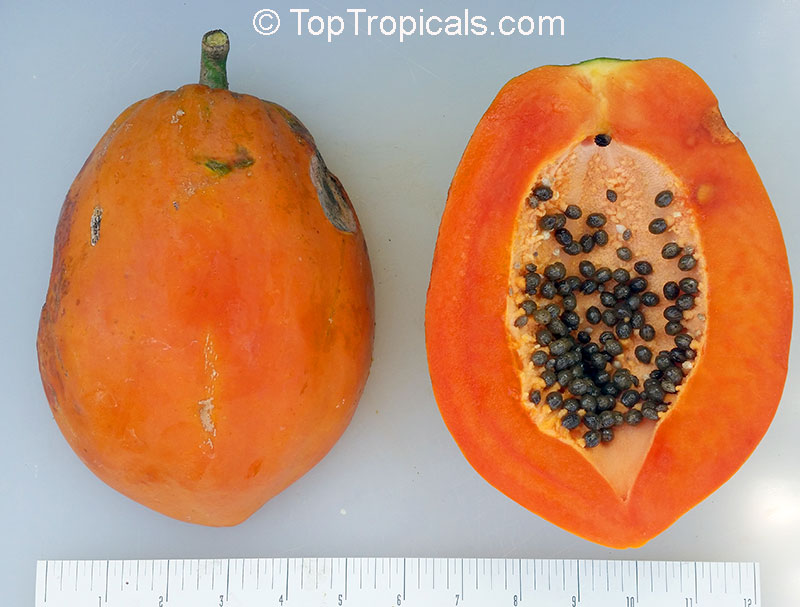
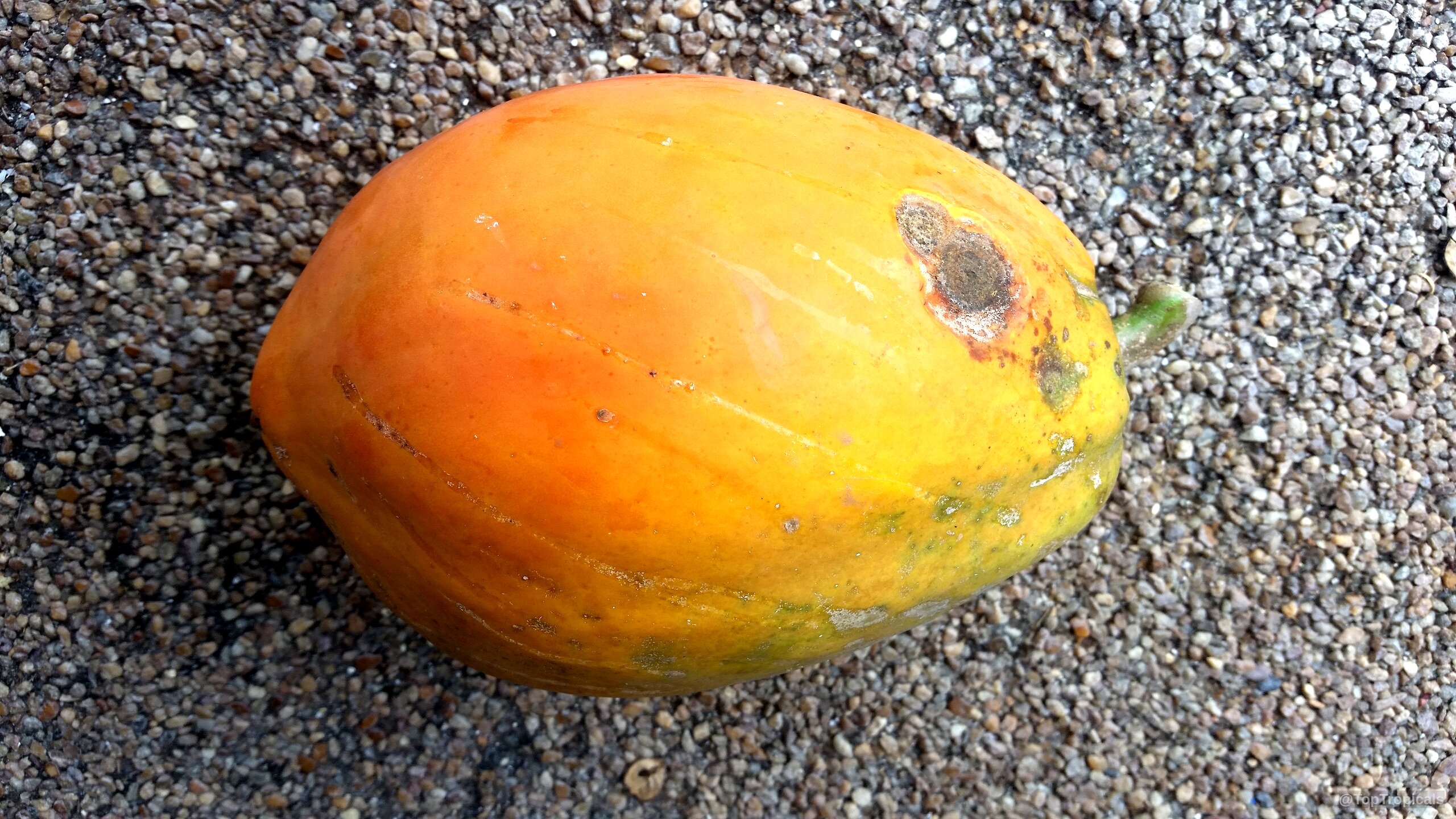
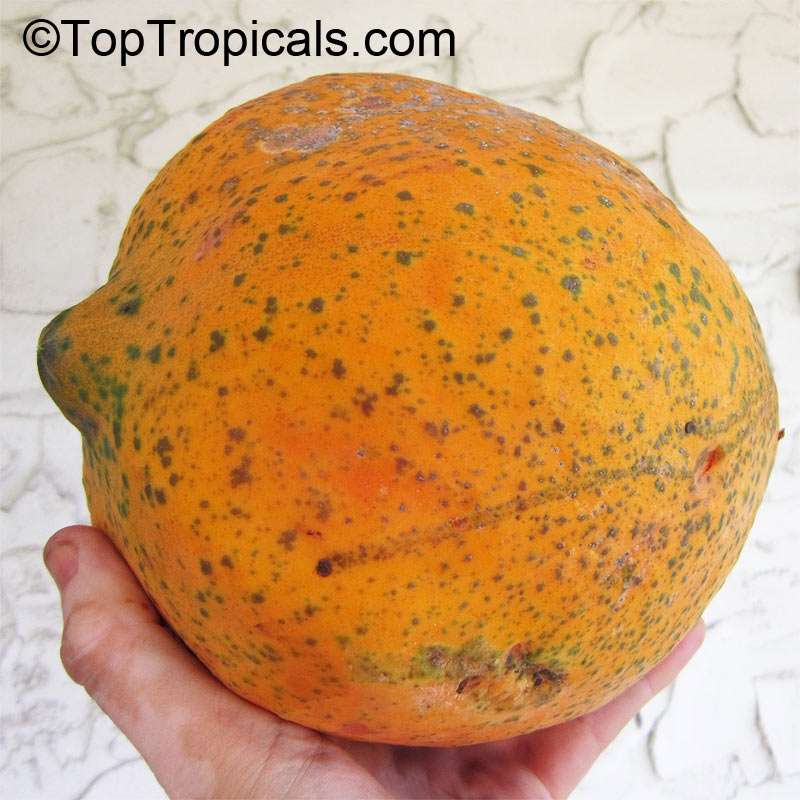
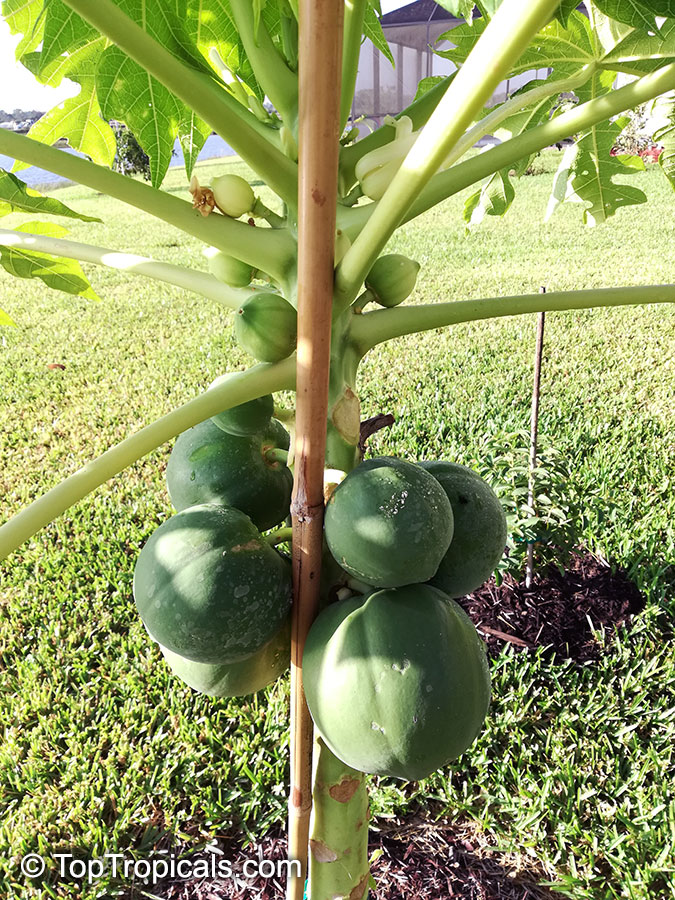
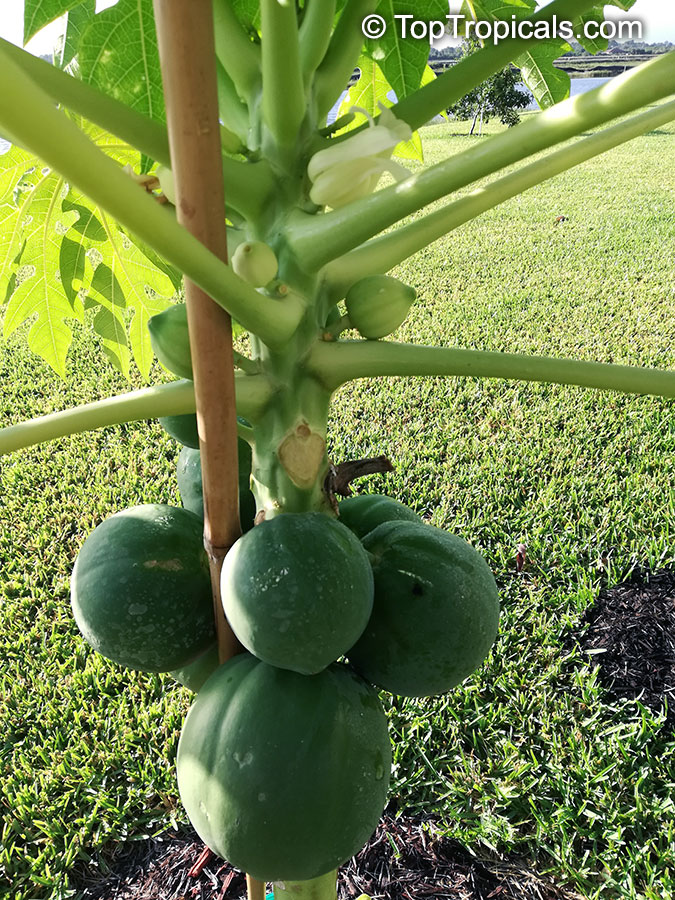
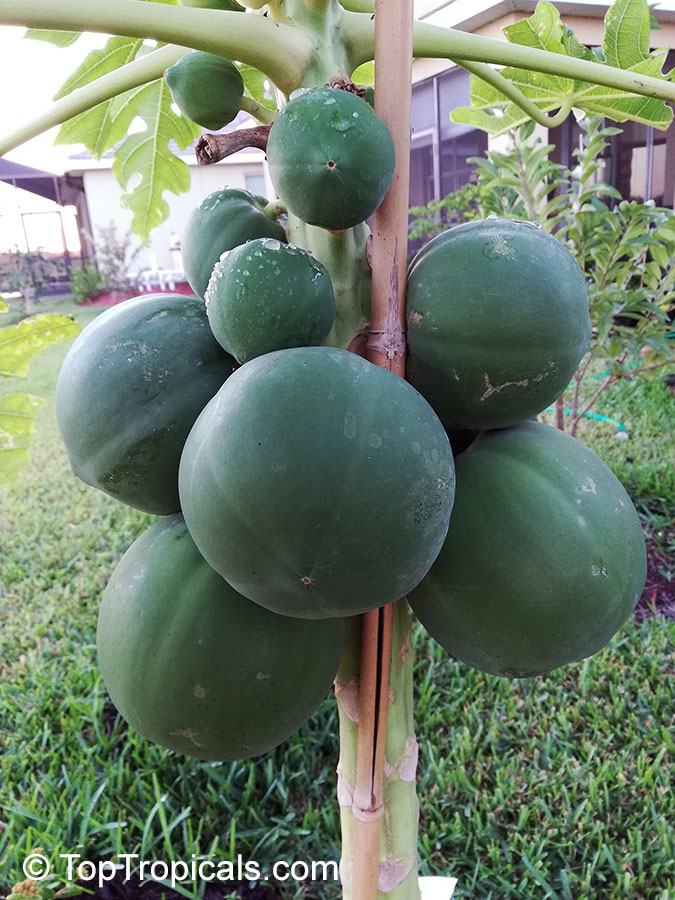
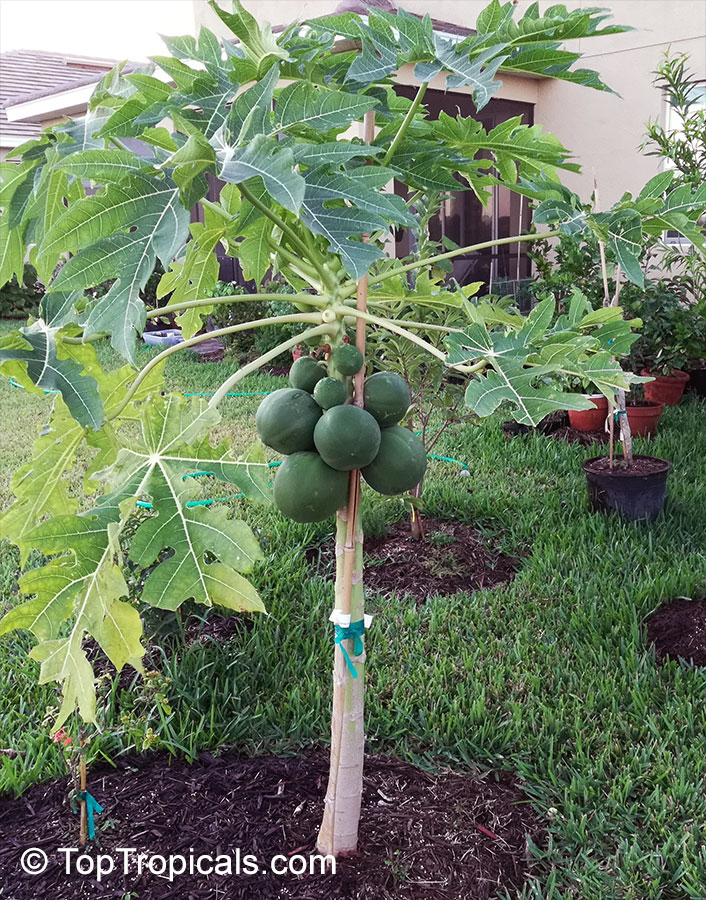
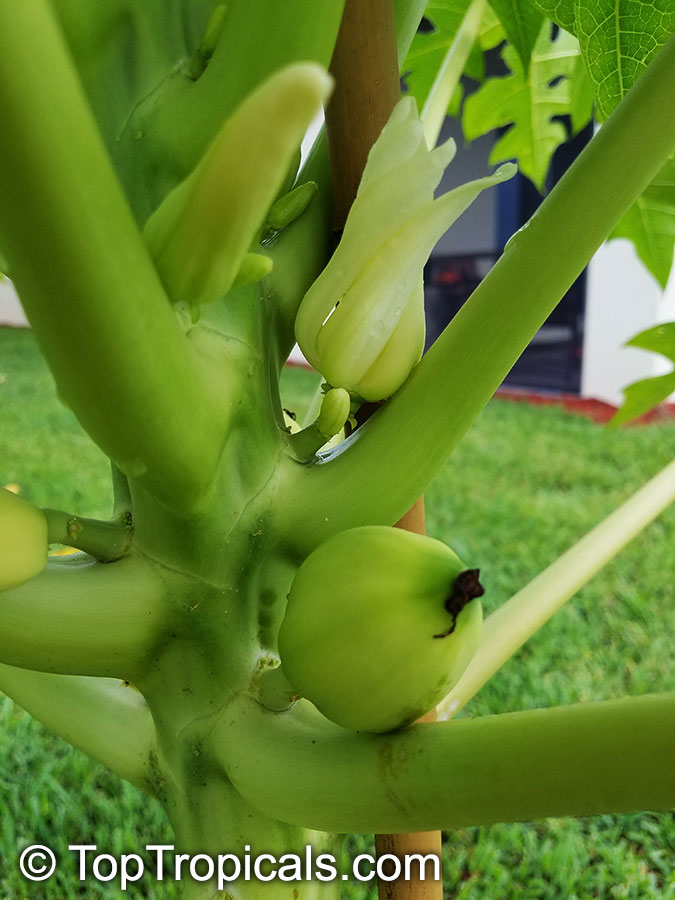
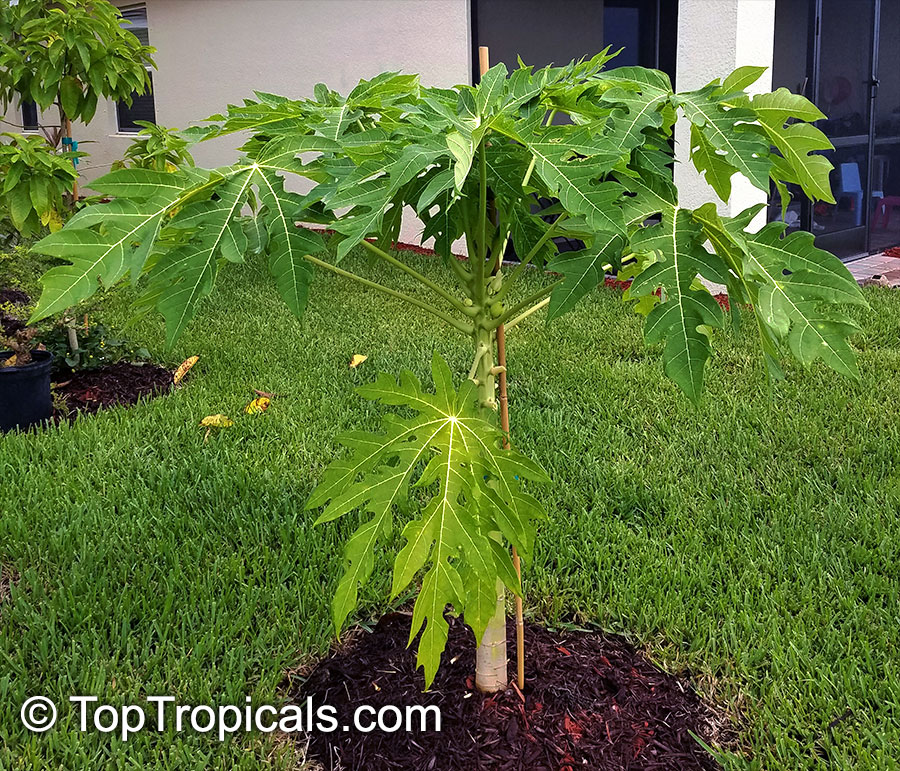
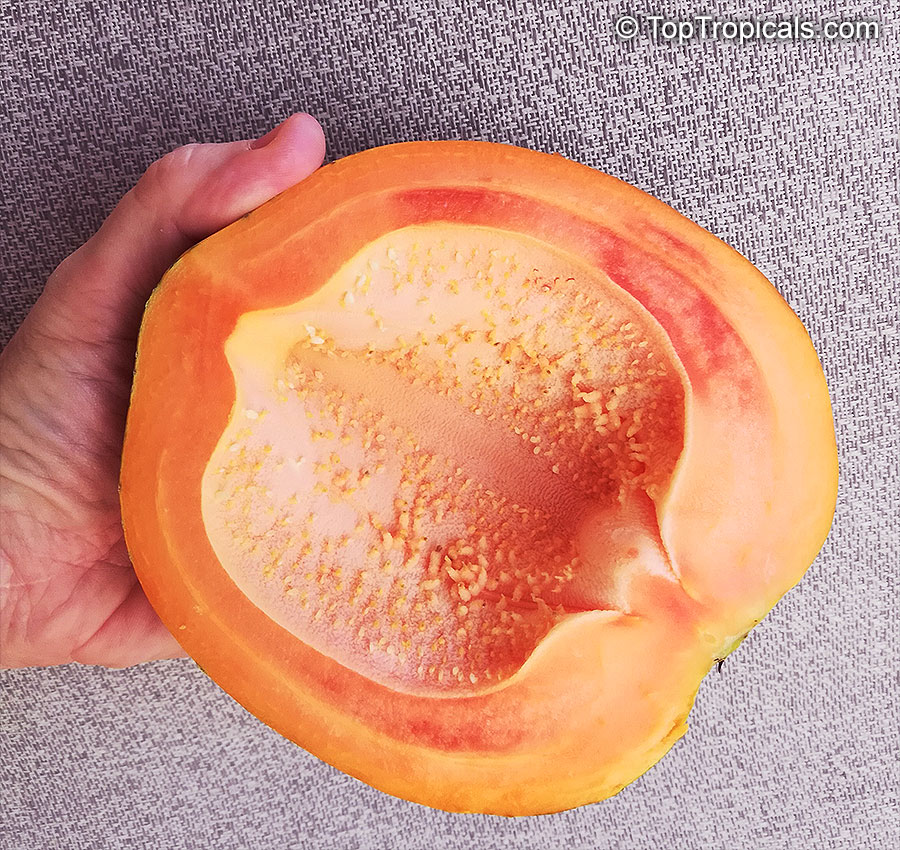
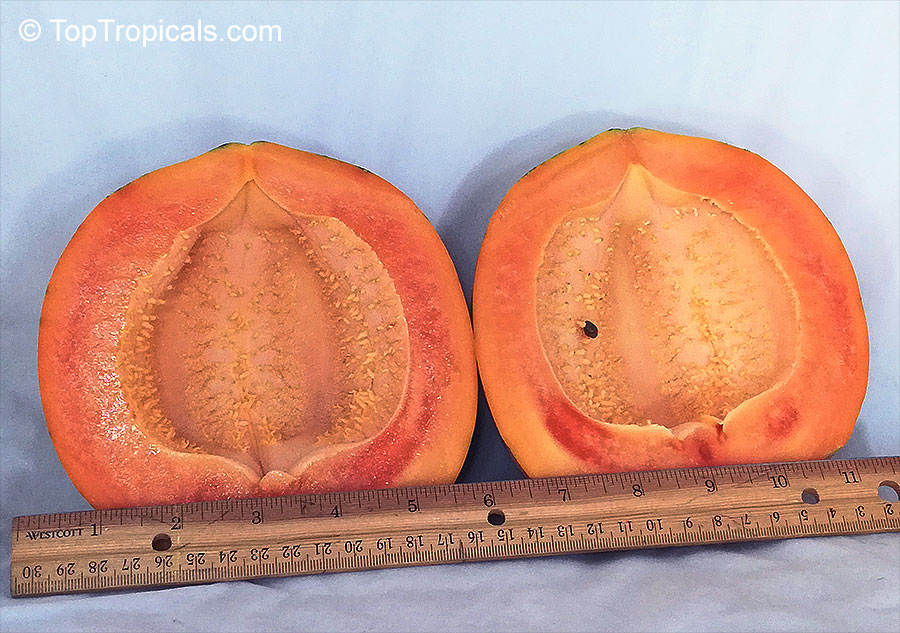
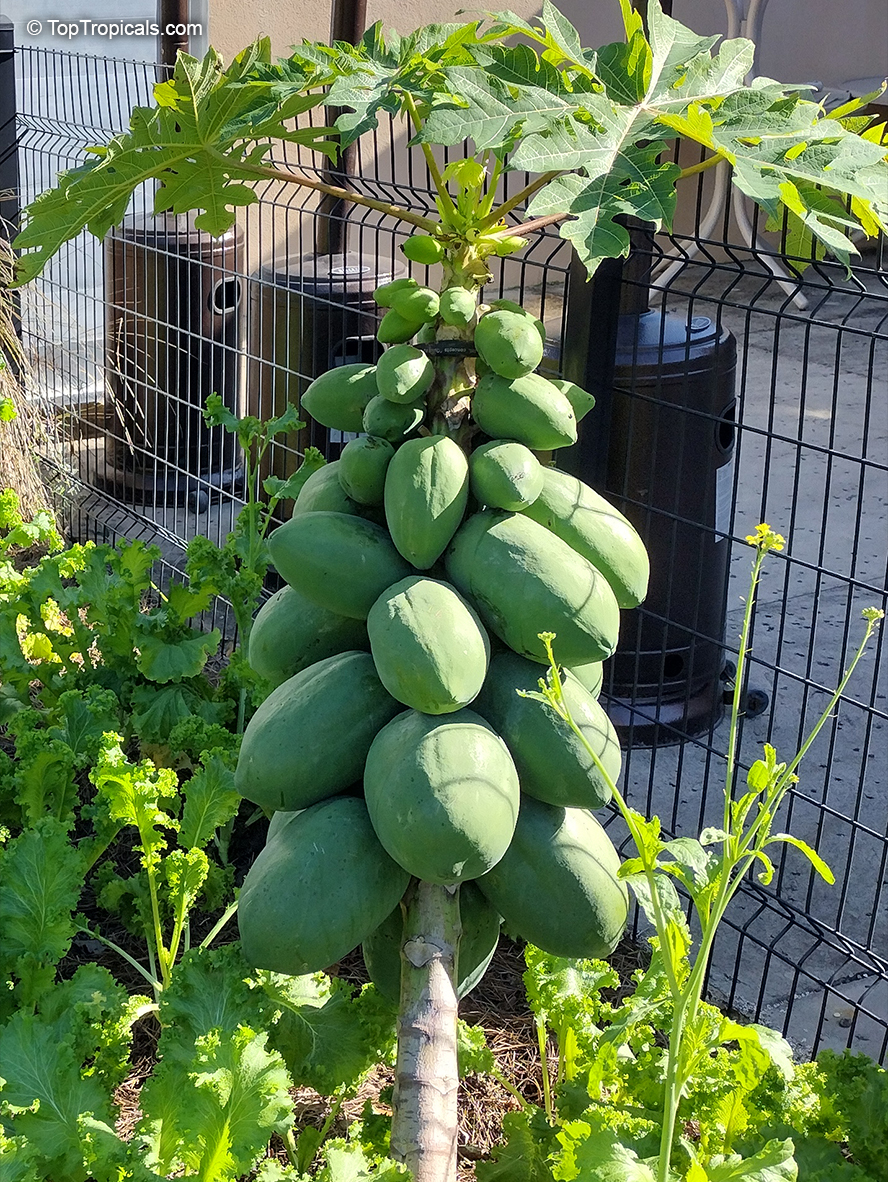
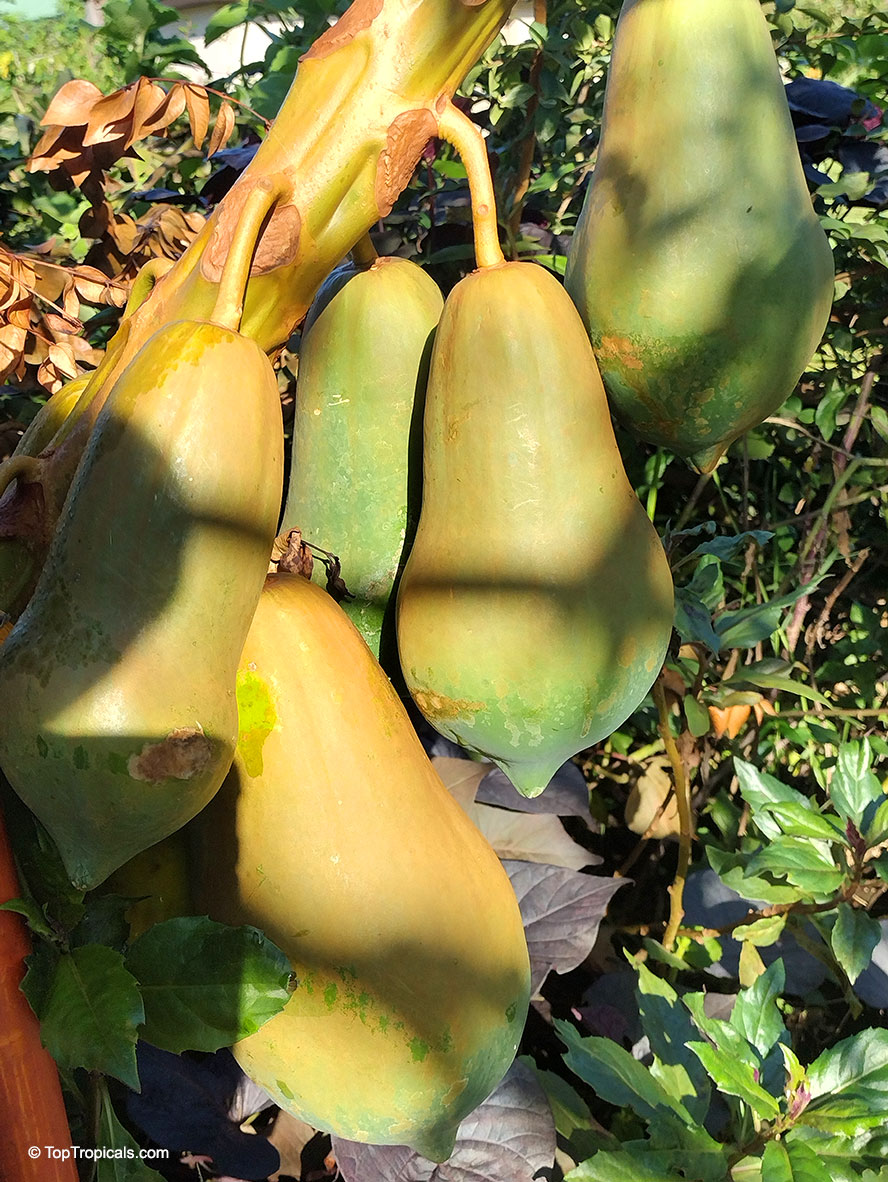
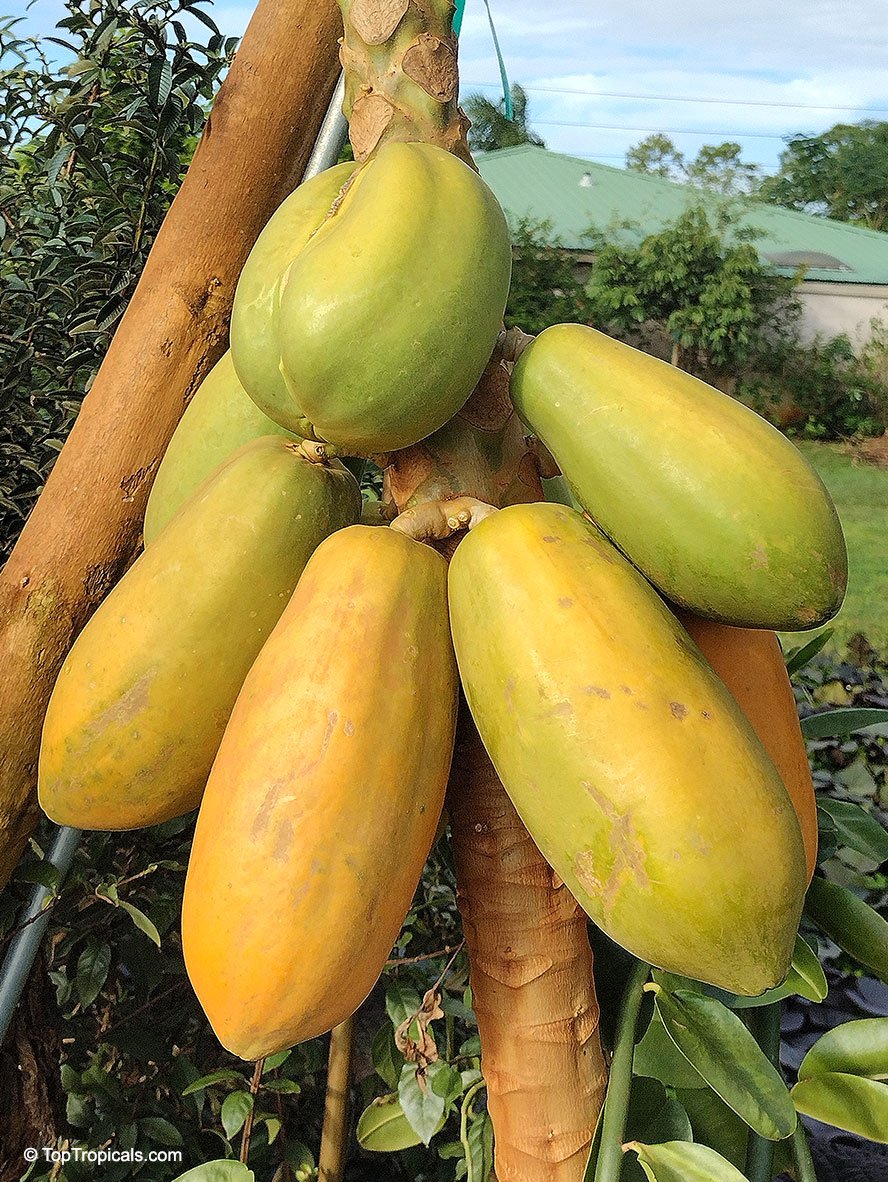
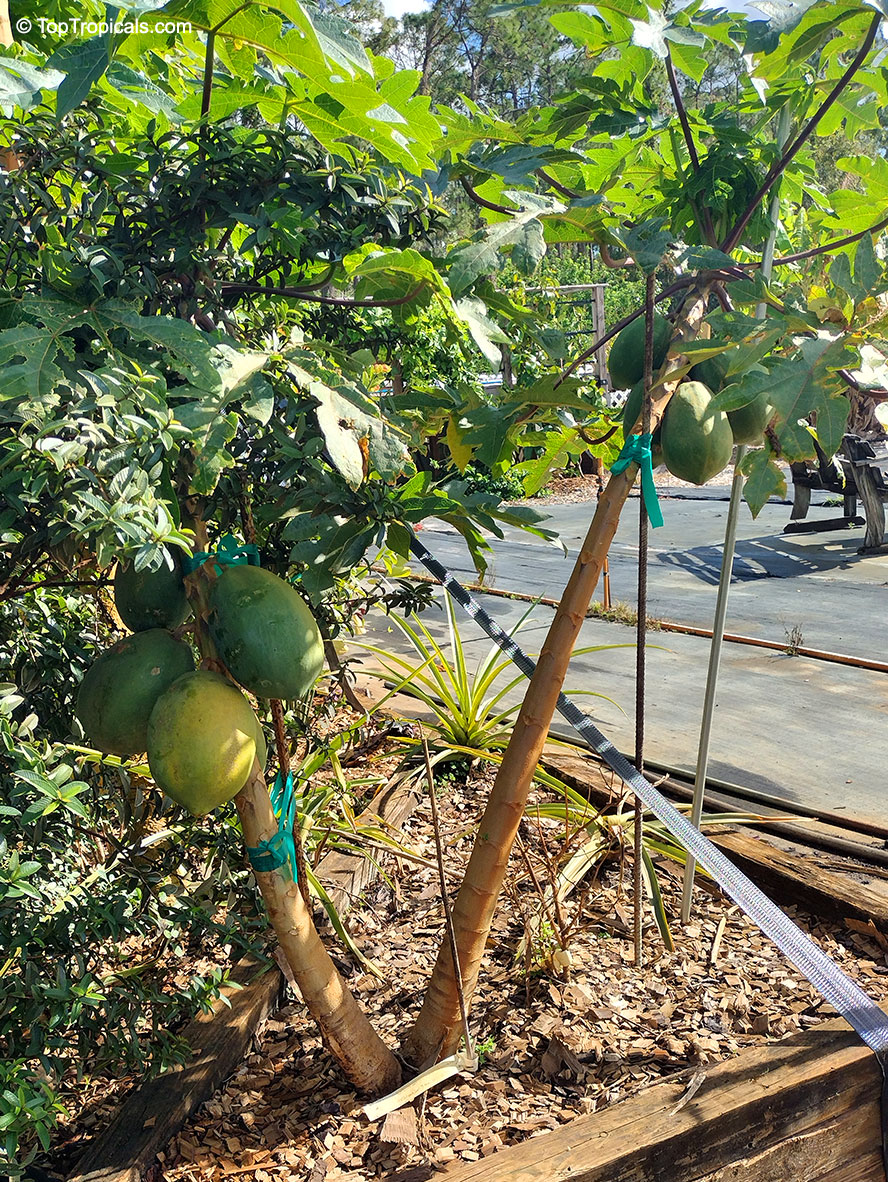
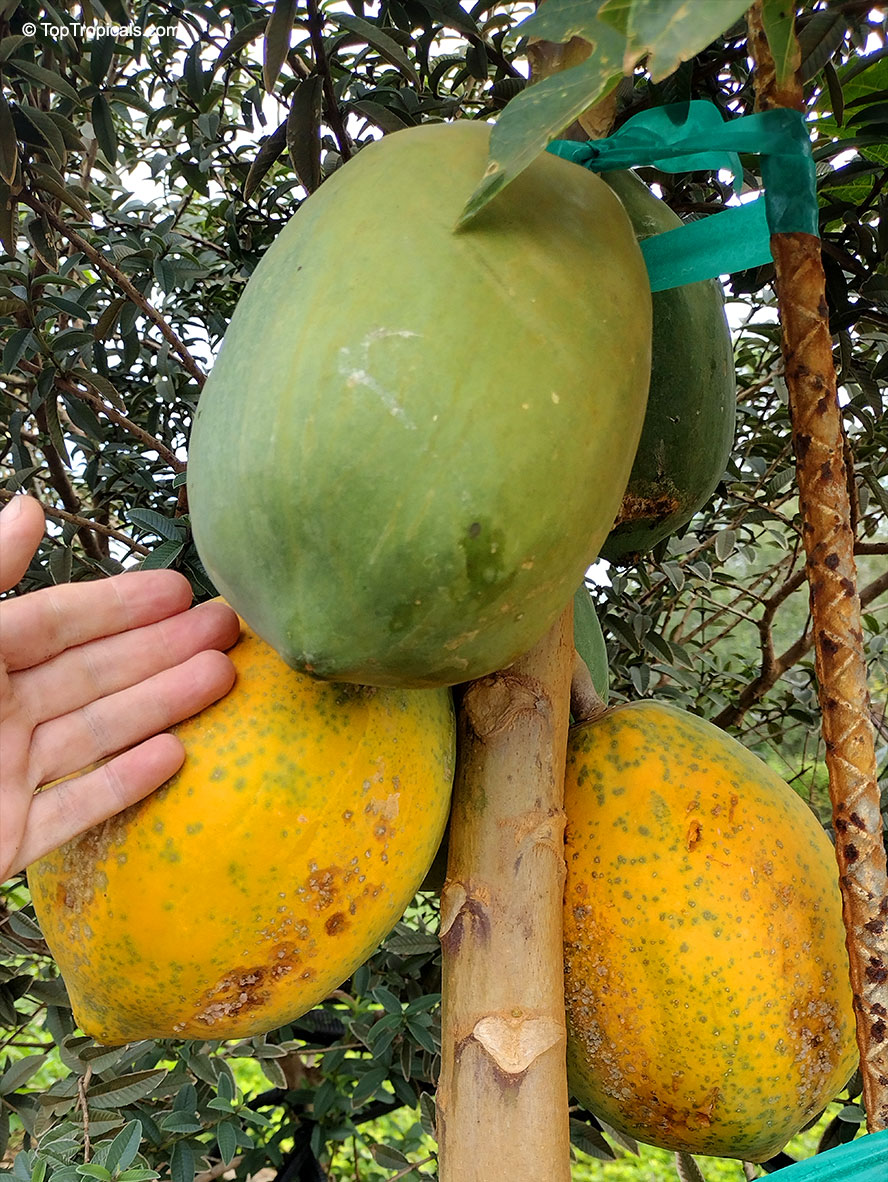
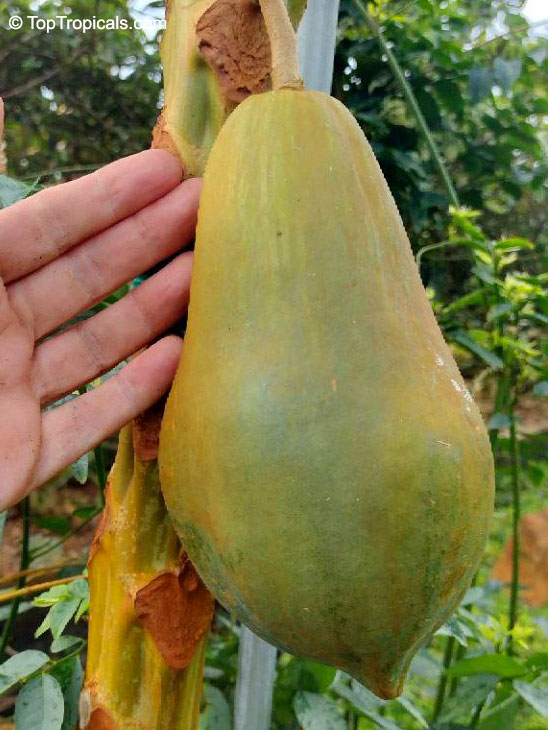
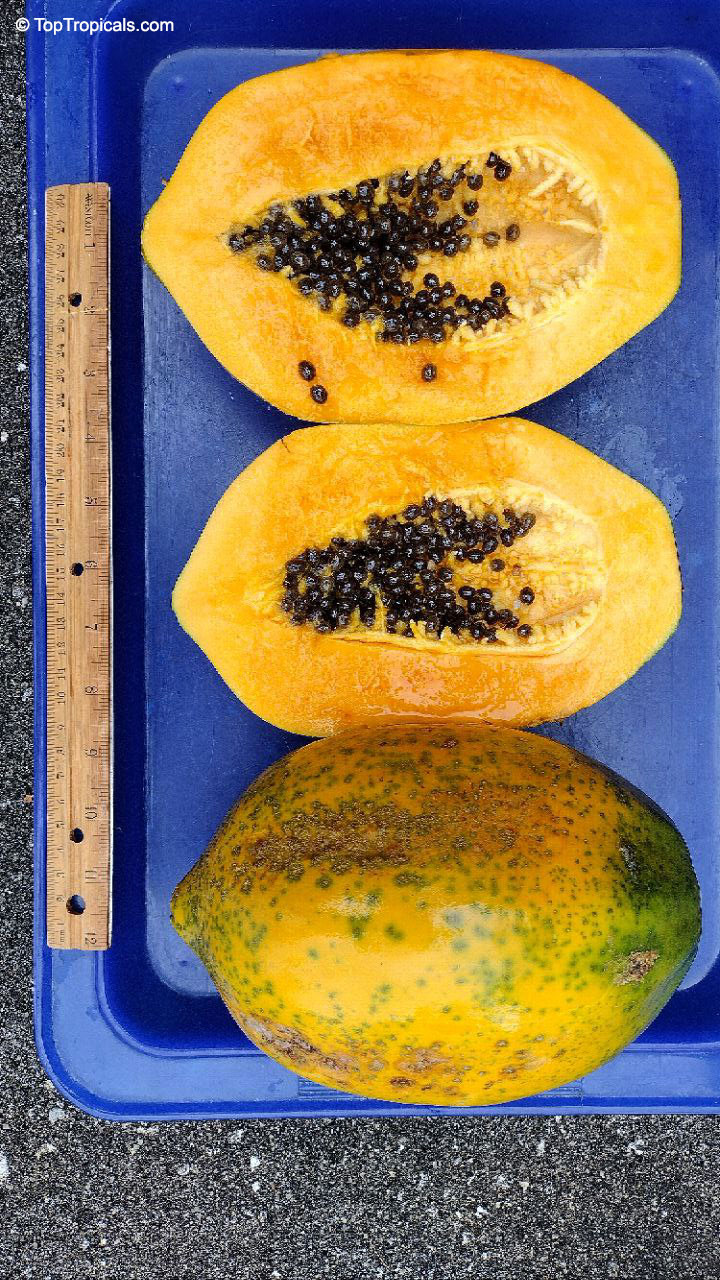
Carica papaya is a fast growing herbaceous plant with thick, hollow trunk. Leaves lobed to 2' across. Flowers/fruit appear in nodes directly from trunk. Size varies from 1/2 to 20 pounds. Flesh is yellow to orange-red, melon-like.
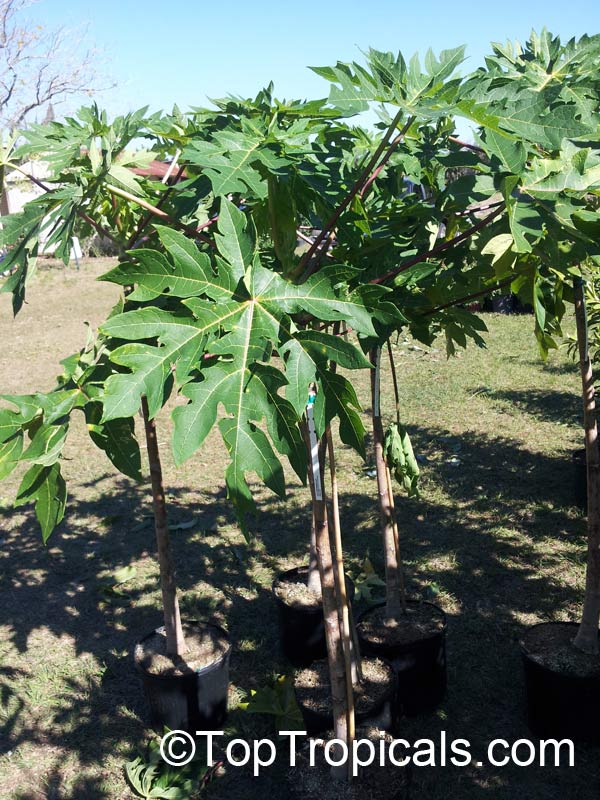
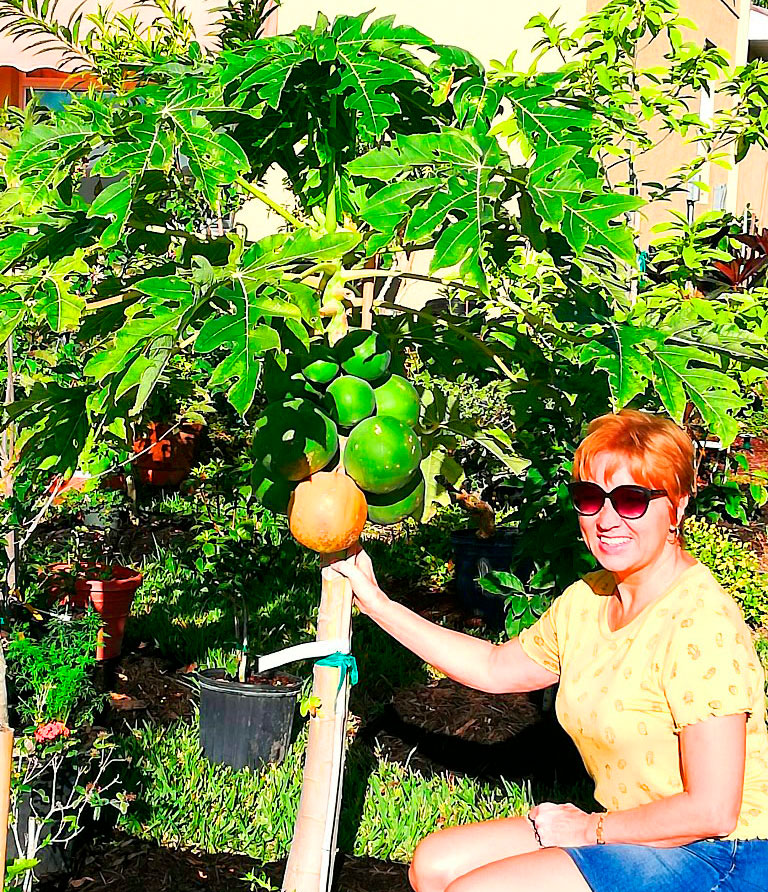
Dwarf papayas are fruit-bearing trees that grow to heights of less than 10 feet. In fact, many varieties stop at between 3 and 5 feet.
They grow smaller, making them ideal for small gardens, pots, or containers.
Fruits are closer to the ground, so you can pick them without climbing or special tools.
Dwarf papayas often produce fruit faster than taller varieties. Despite their size, they produce a lot of fruit.
Perfect for urban areas or where space is limited.
Easier to care for and manage compared to larger trees.
Learn more: How to grow a Papaya Tree: Practical Guide
Shipped at customers risk, no replacements or refunds. Leaf drop possible. We guarantee healthy plant to be shipped and the best packaging. Express shipping optional.
Recommended Fertilizer: SUNSHINE C-Cibus - Crop Nutrition Booster
SUNSHINE-Honey - sugar booster
Shipped at customers risk, no replacements or refunds. Leaf drop possible. We guarantee healthy plant to be shipped and the best packaging. Express shipping optional.
Recommended Fertilizer: SUNSHINE C-Cibus - Crop Nutrition Booster
SUNSHINE-Honey - sugar booster
Shipped at customers risk, no replacements or refunds. Leaf drop possible. We guarantee healthy plant to be shipped and the best packaging. Express shipping optional.
Recommended Fertilizer: SUNSHINE C-Cibus - Crop Nutrition Booster
SUNSHINE-Honey - sugar booster
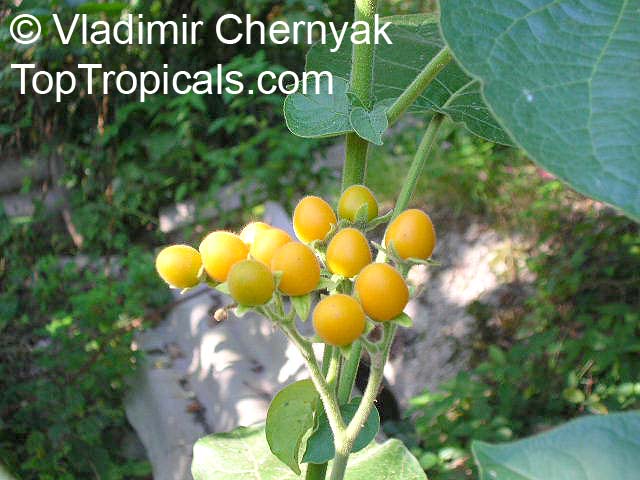
Botanical name: Cyphomandra abutiloides
Common name: Dwarf Tamarillo Tree
Family: Solanaceae
Origin: South America


Cyphomandra abutiloides, also known as the Dwarf Tamarillo Tree is a small plant only reaching about 2-5 ft in height. It produces pink flowers. These flowers are quite attractive.
The fruit of Dwarf Tamarillo is edible, and very healthy for consumption. It is ripe when it turns a deep red. It contains an assortment of vitamins and minerals and is said to boost the immune system. The fruit has a tart flavor and a texture much like a tomato. It can be peeled and eaten raw, or added to recipes like sauce, jam and ice cream.
The Dwarf Tamarillo Tree is native to South America and is an excellent choice for gardens in USDA Zone 9-11. When growing it in colder regions, it is best to plant it in a pot that can be moved indoors during harsh winters. It should be fertilized every few months with a balanced fertilizer to ensure it receives all the nutrients it needs. It is also important to prune it regularly to ensure it does not become too large.
This amazing small tree is easy to care for and produces edible fruit that is packed with healthy benefits. It is sure to be the perfect addition to any garden.
The unripe fruit is slightly toxic and parts of plant are toxic as well.
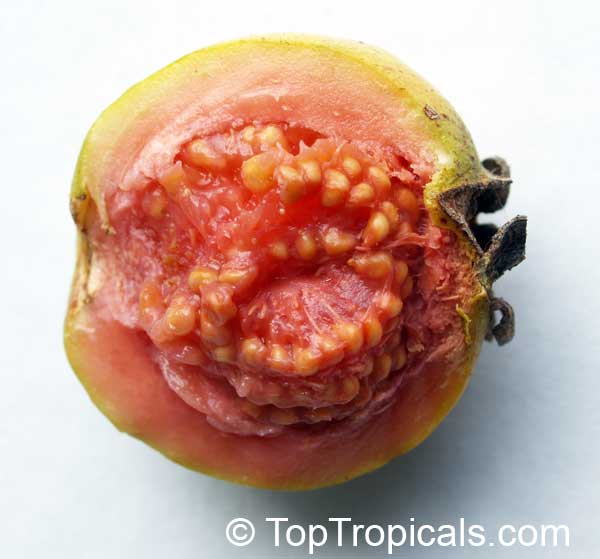
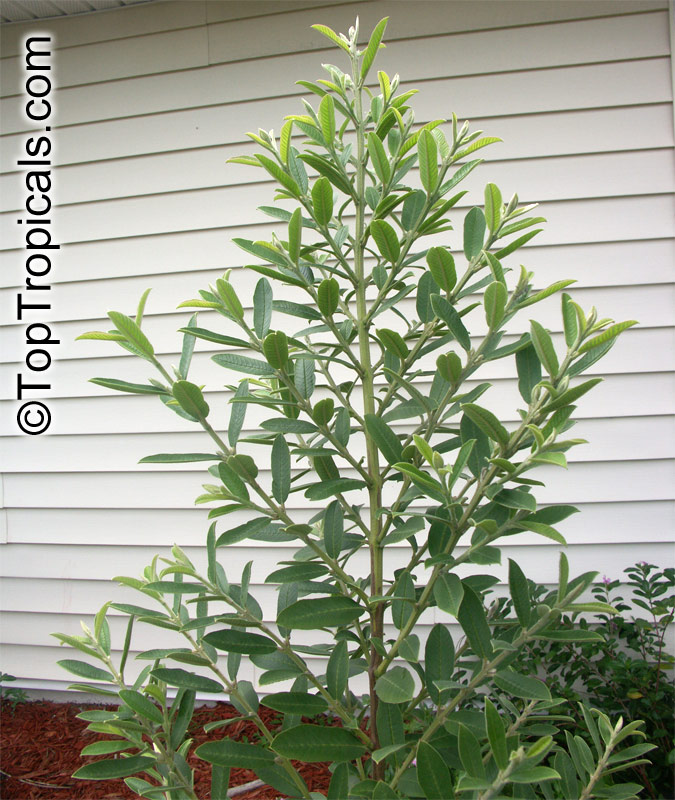
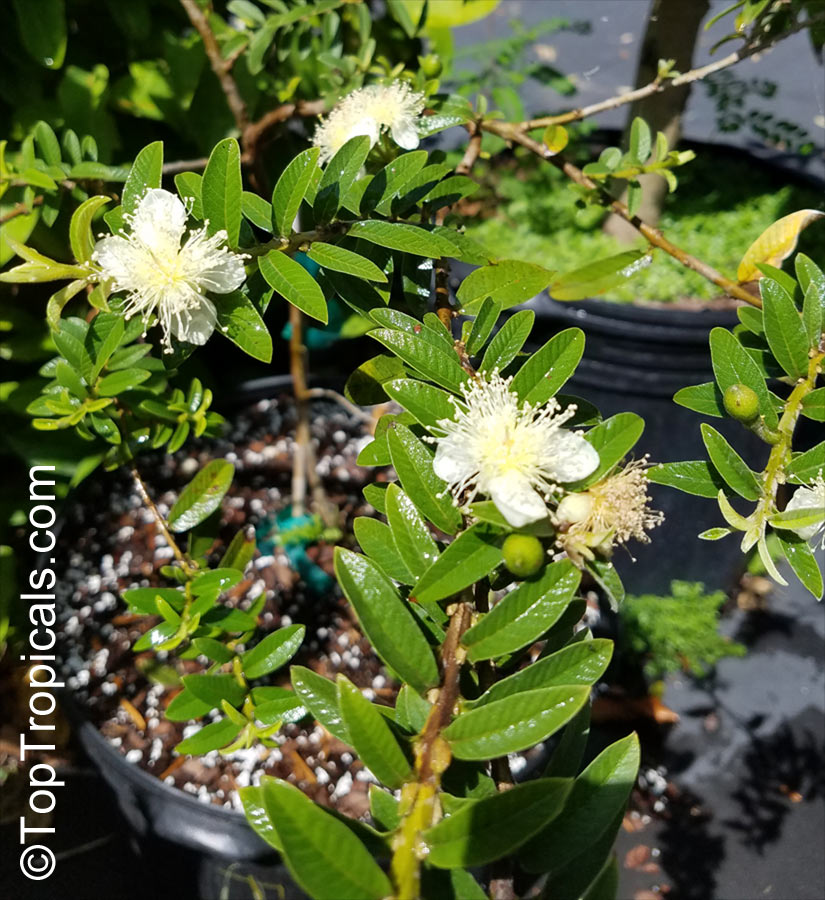
Botanical name: Psidium guajava
Common name: Dwarf Guava
Cultivar: Nana
Family: Myrtaceae
Origin: Tropical America

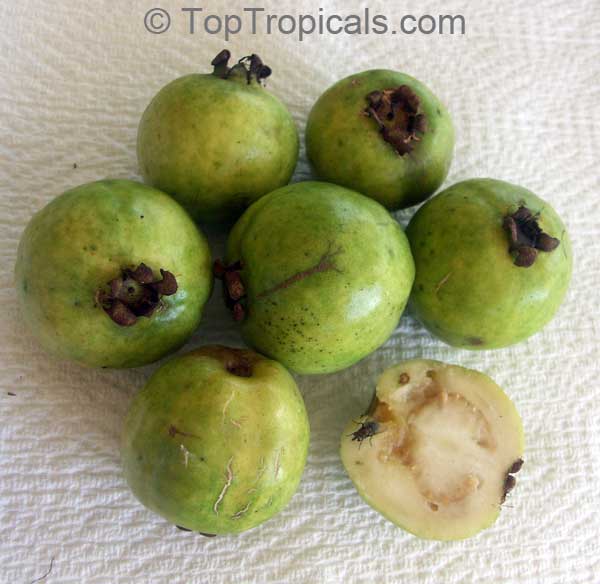
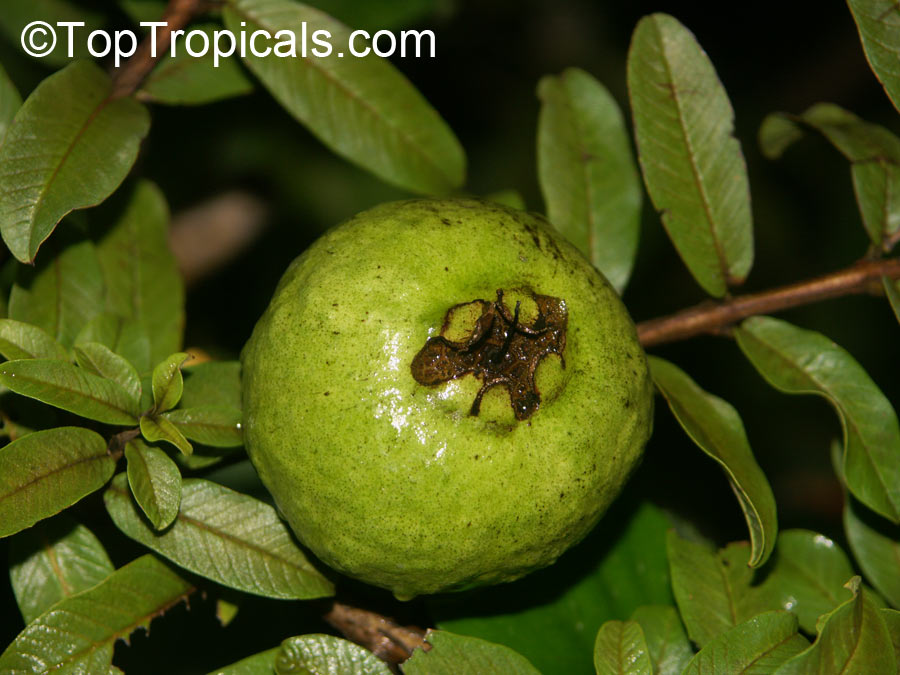
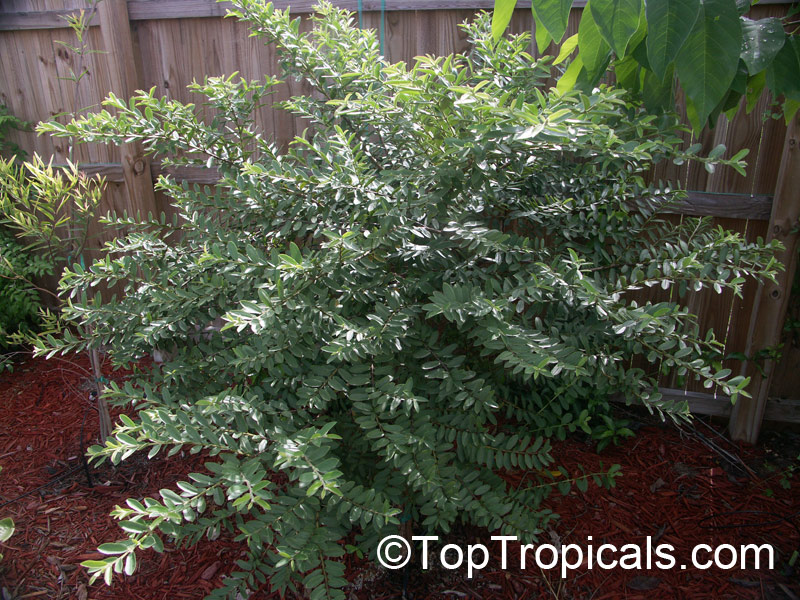
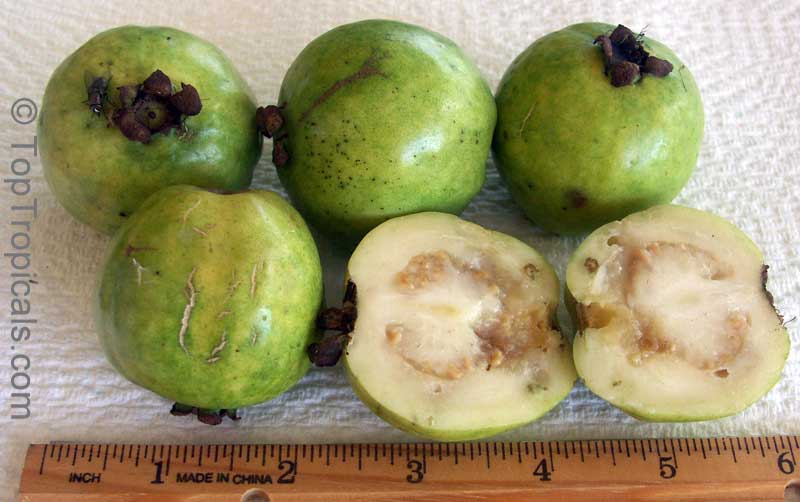
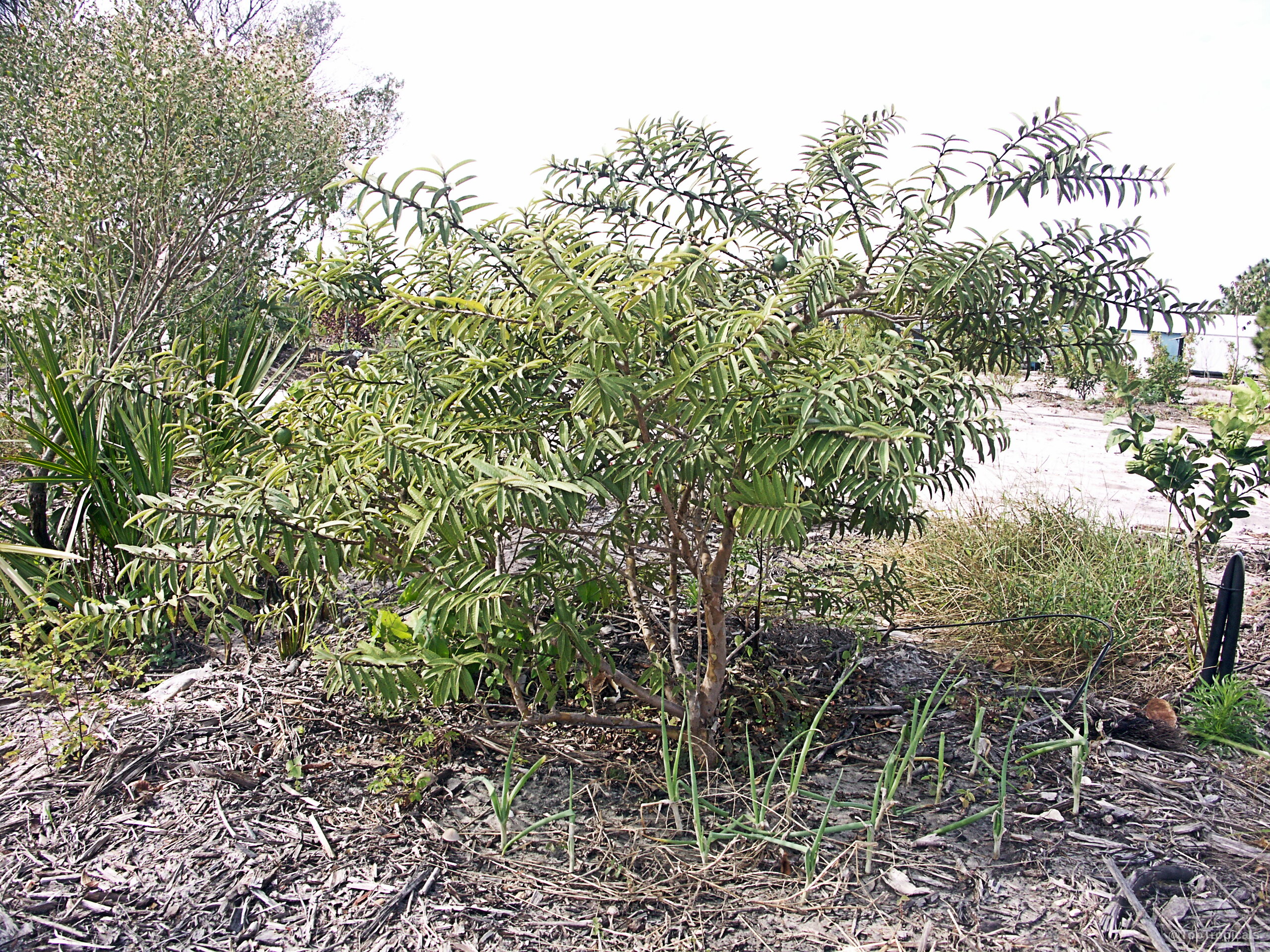
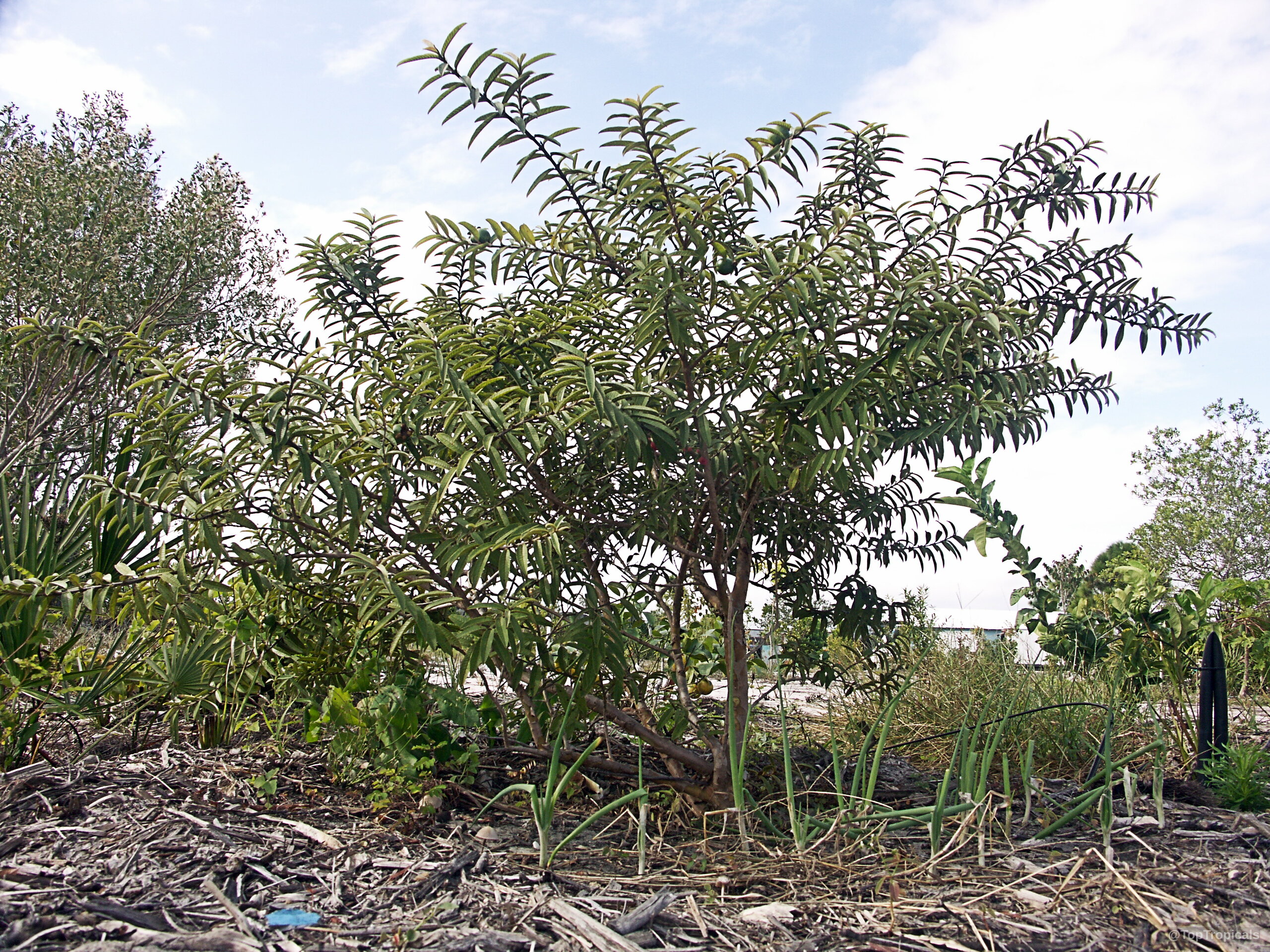
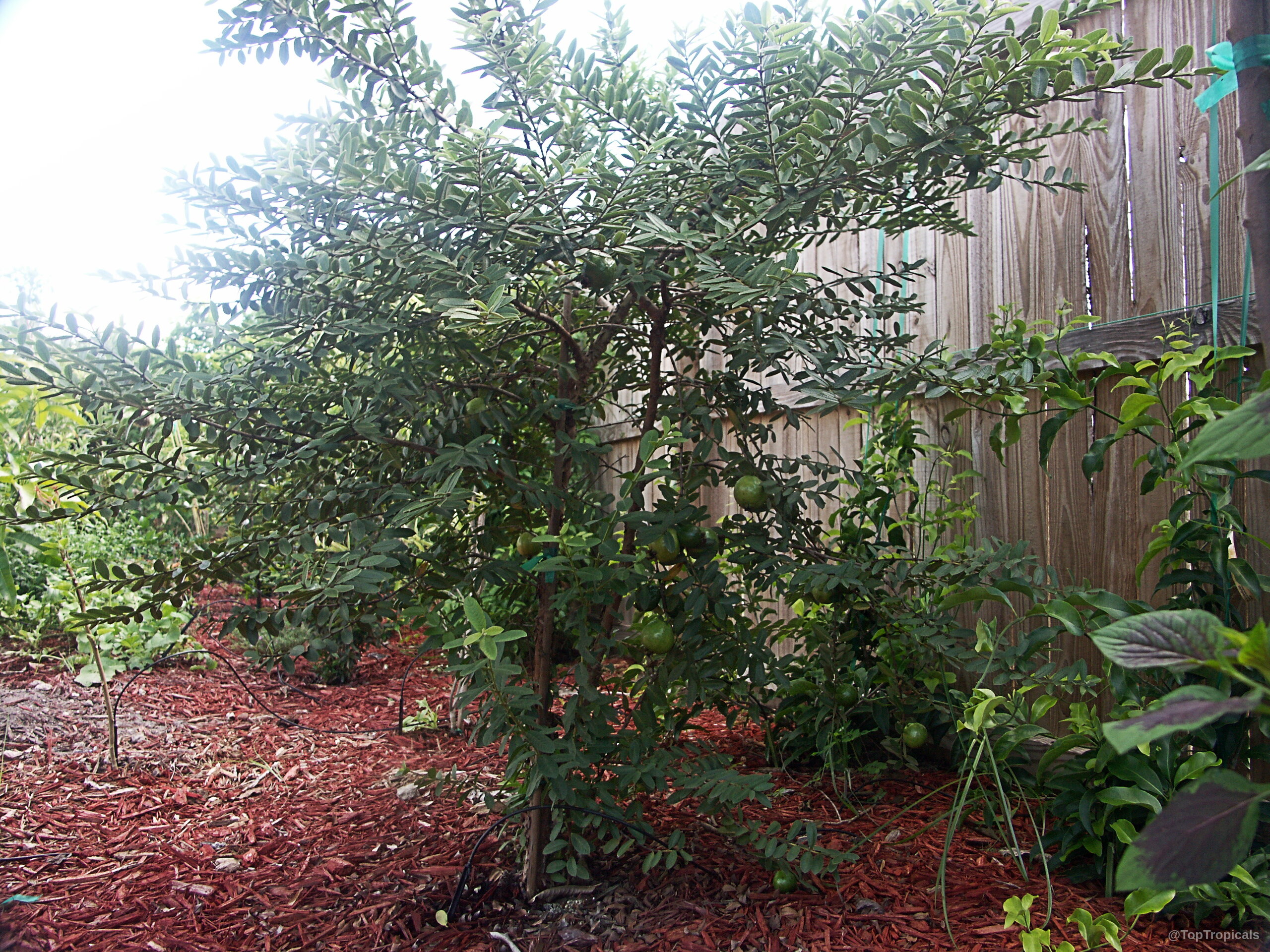
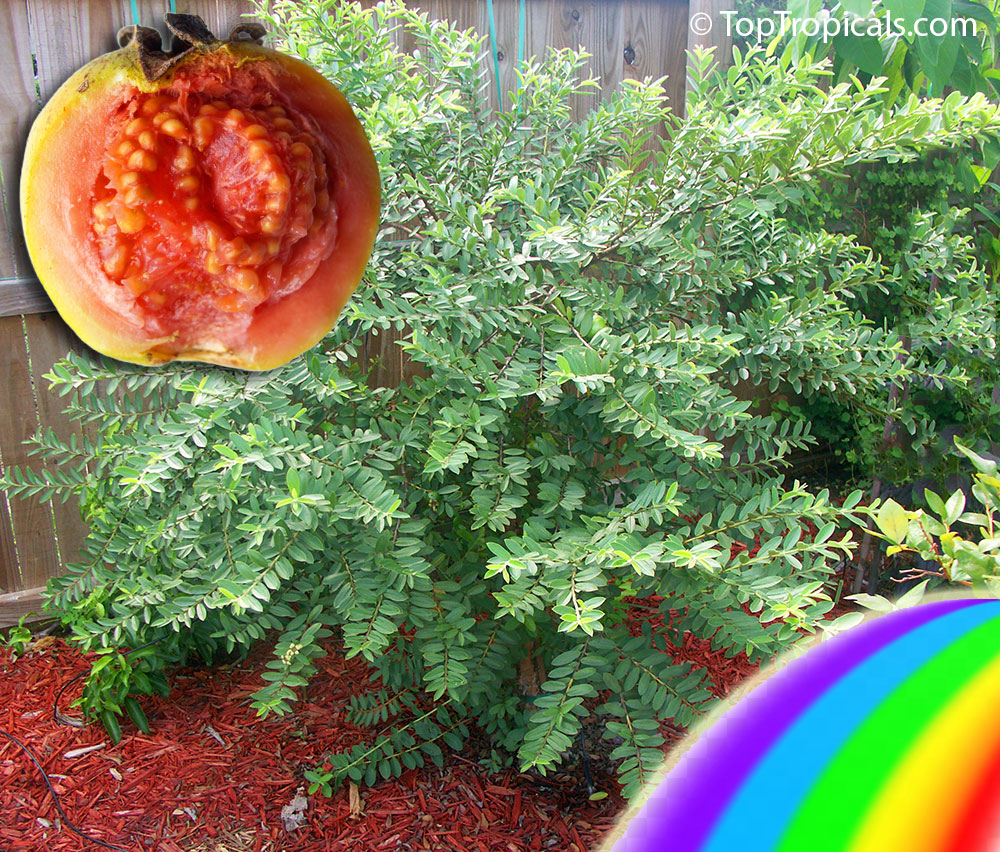
This is a very small, dwarf version of the beloved Guava. The tree grows only up to 5-6 ft tall with a short trunk and branching habit. Leaves are narrow and 2 inch long. This plant has many advantages for those who have limited space. It can be grown in a pot and fruits heavily. Blooms mostly from fall through spring, although the tree can bear fruit almost year around. The fruit is round, and almost a full size, 2 inch size, surprisingly for the dwarf habit of the plant. The leaves can be either smaller or regular size, in both cases the tree has a dwarf habit.




Recommended Fertilizer: SUNSHINE C-Cibus - Crop Nutrition Booster
SUNSHINE-Honey - sugar booster
Ordering seeds info
RECOMMENDED SUPPLIES:
Seed Germination Mix #3, professional grade
SUNSHINE-Epi - Seeds and cuttings booster
SUNSHINE Bombino - Young Plant Booster
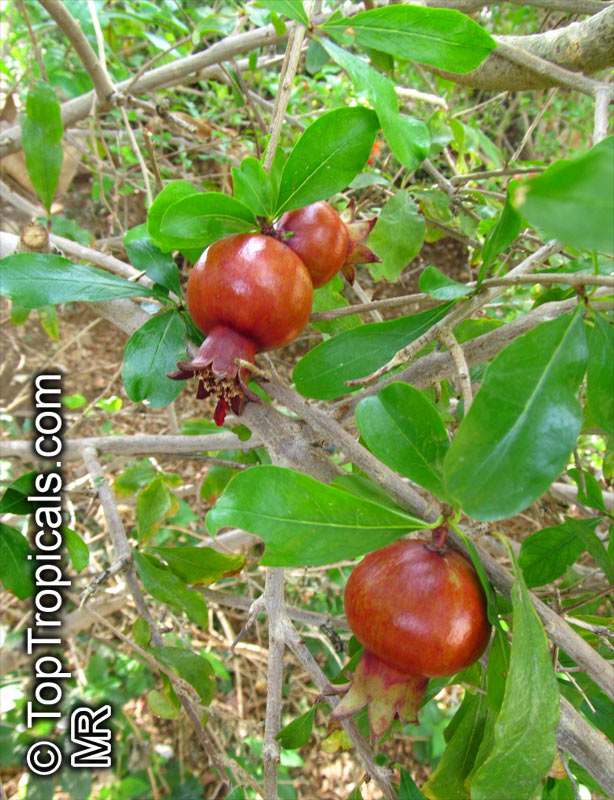
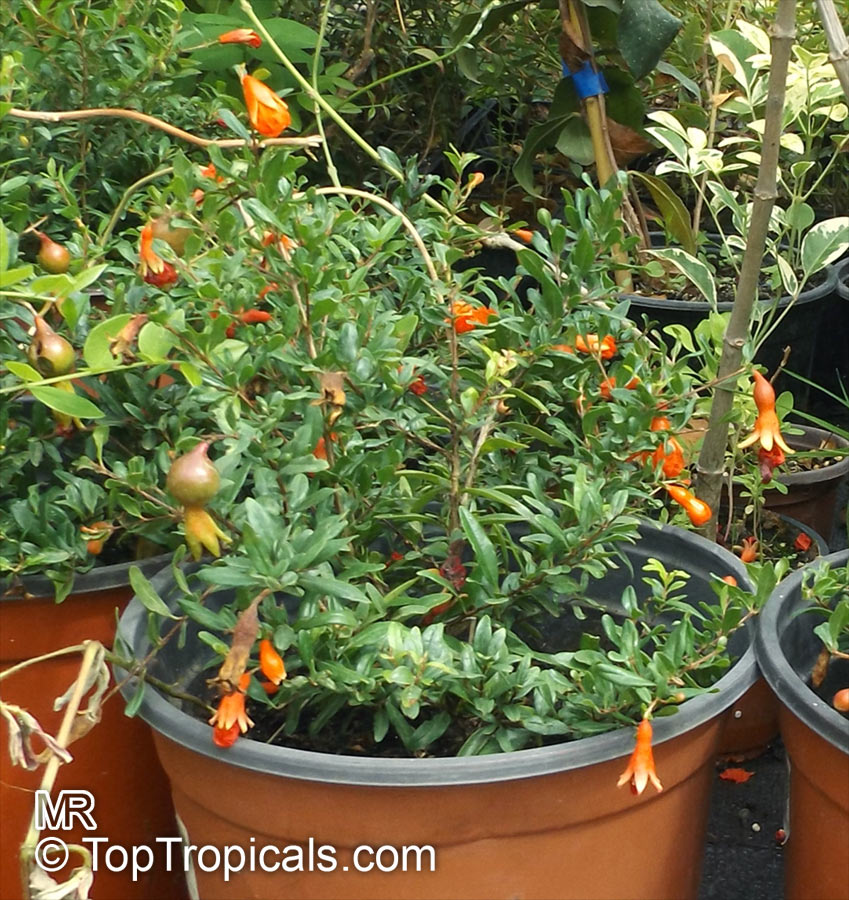
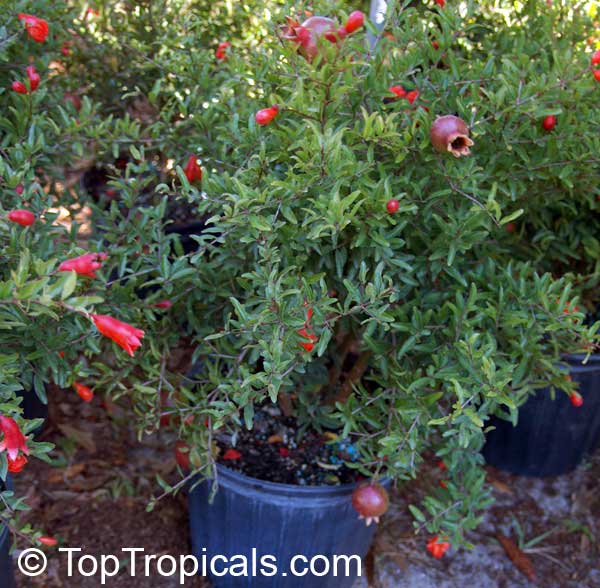
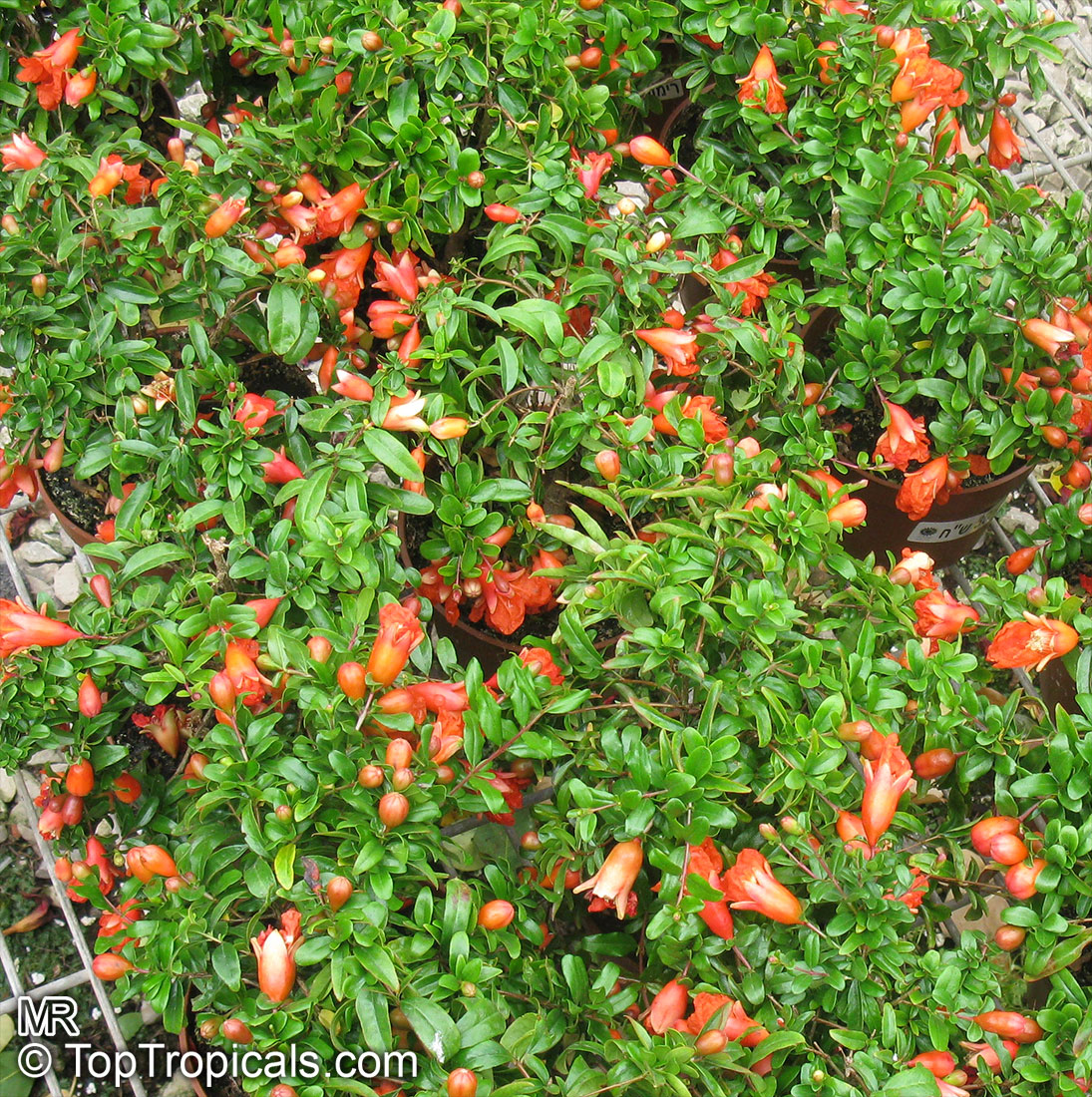
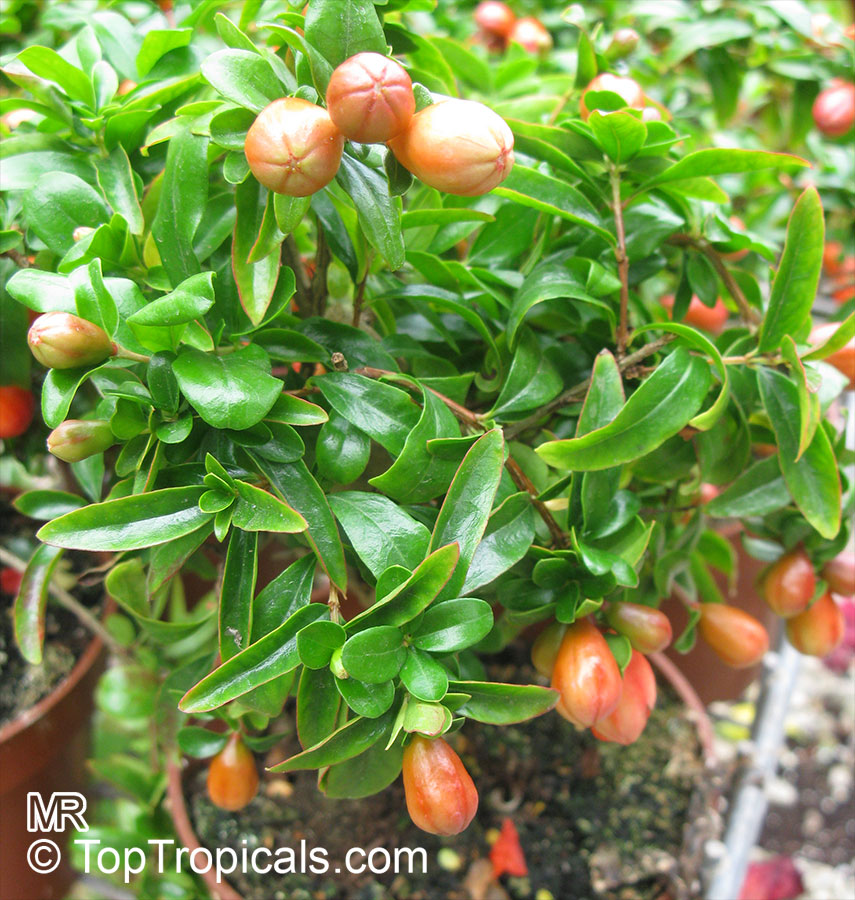
Botanical name: Punica granatum
Common name: Dwarf Pomegranate
Cultivar: Nana
Family: Lythraceae (Formerly:Punicaceae)
Subfamily: Punicoideae
Origin: South Asia


Every aspect of this form is dwarf compared to the basic pomegranate - from its overall size to its finer leaves and smaller flowers and fruits. Due to this - it is a plant especially recommended for miniature bonsai and small styles. Apart from the pomegranate's stunning seasonal orange flowers, it presents so many other notable characteristics. It has a marvelous naturally-twisting style trunk, that very easily adopts a gnarled, ancient appearance - something widely sought in bonsai. Pomegranates can be very easily propagated - so group plantings can be quickly created from quite thick branches taken from a parent plant. If you shade the tree and keep it slightly dry before mid-season, the tree is encouraged to set flowering shoots. Place the pomegranate in a position of good light - but where it is sheltered from frost and not exposed to drying winds. Don't plant the pot in a dish or shallow container. It likes water and flowers well when it is slightly root-bound, so choose a pot that is a bit deeper than usual. This plant does not like hard freeze and is not very hardy. Also be careful when wiring as the branches of the pomegranate are very brittle and break easily. Prefers acidic, well-drained soil.
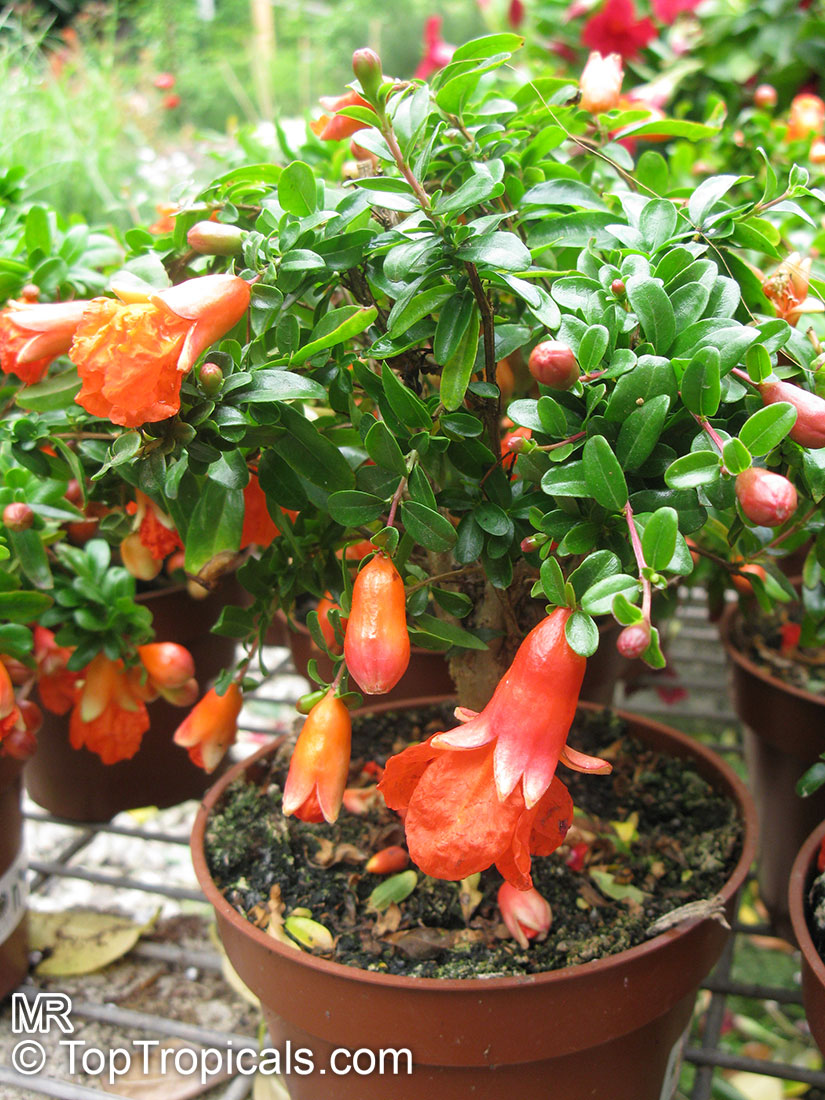
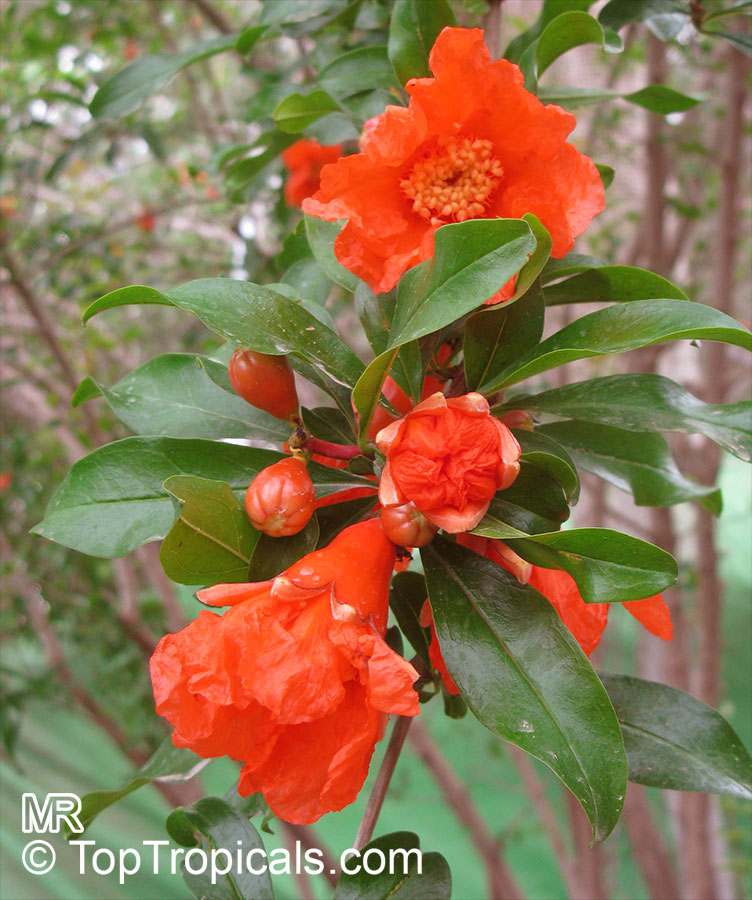
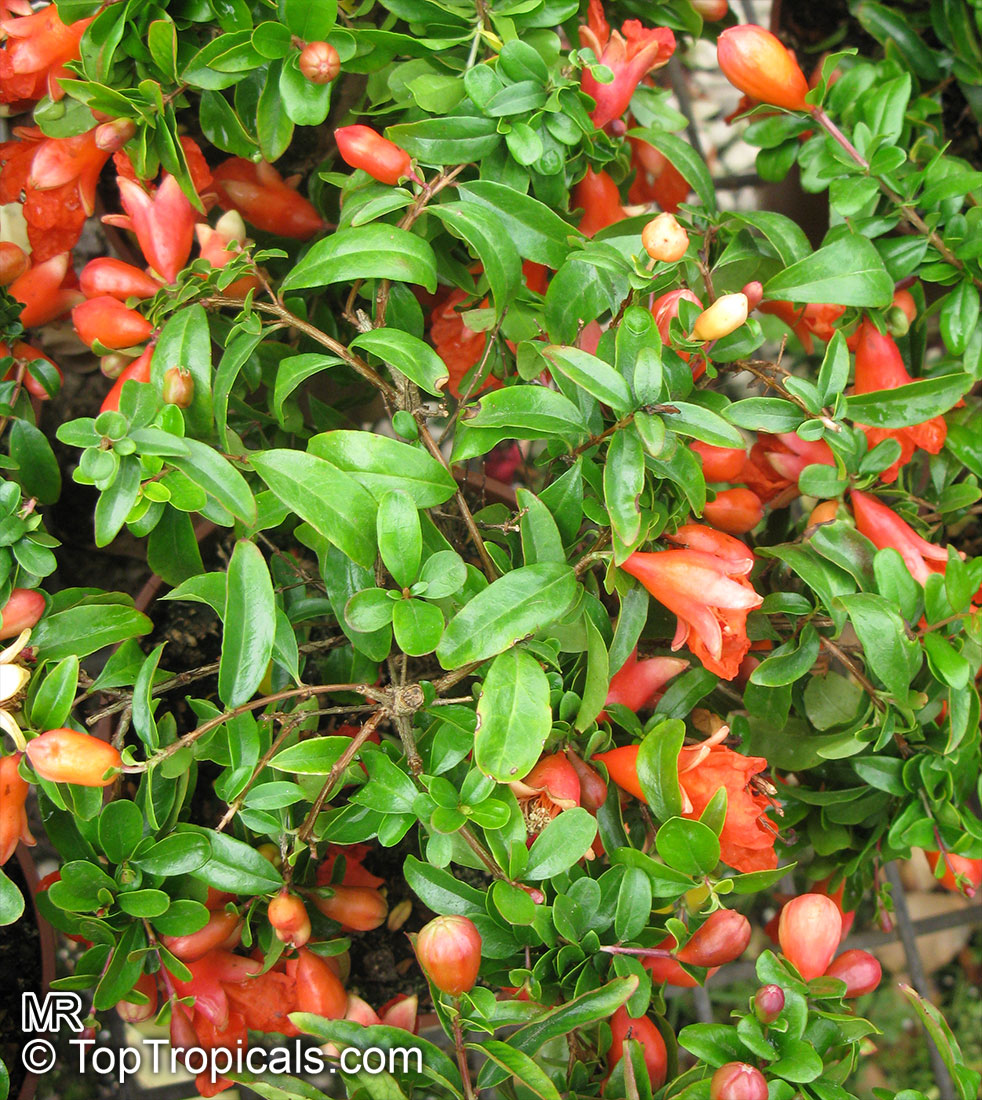
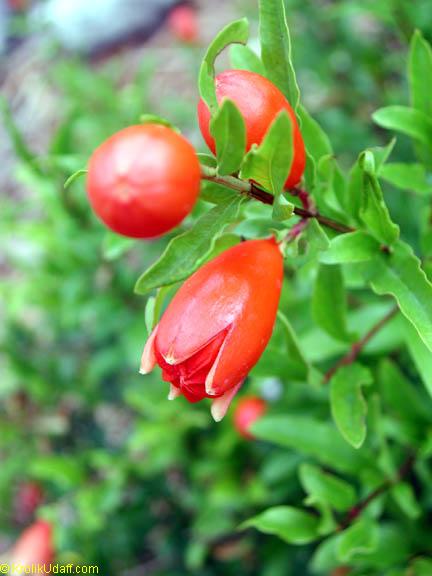
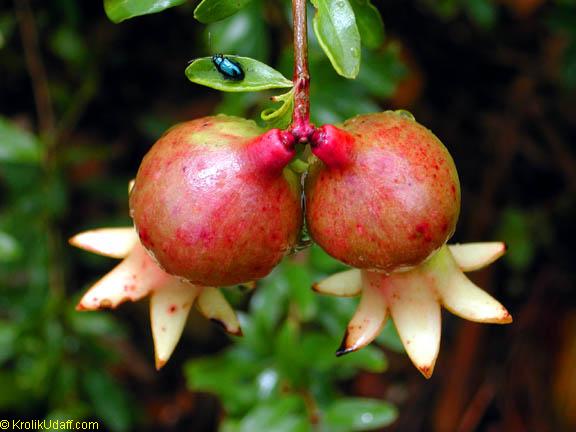
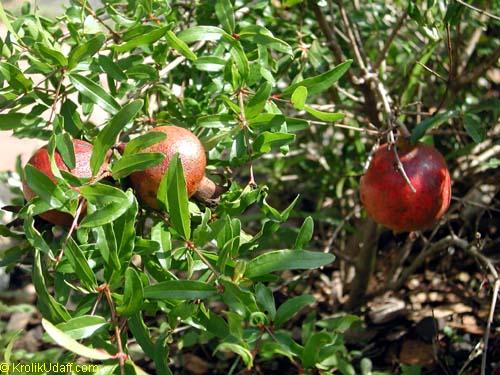
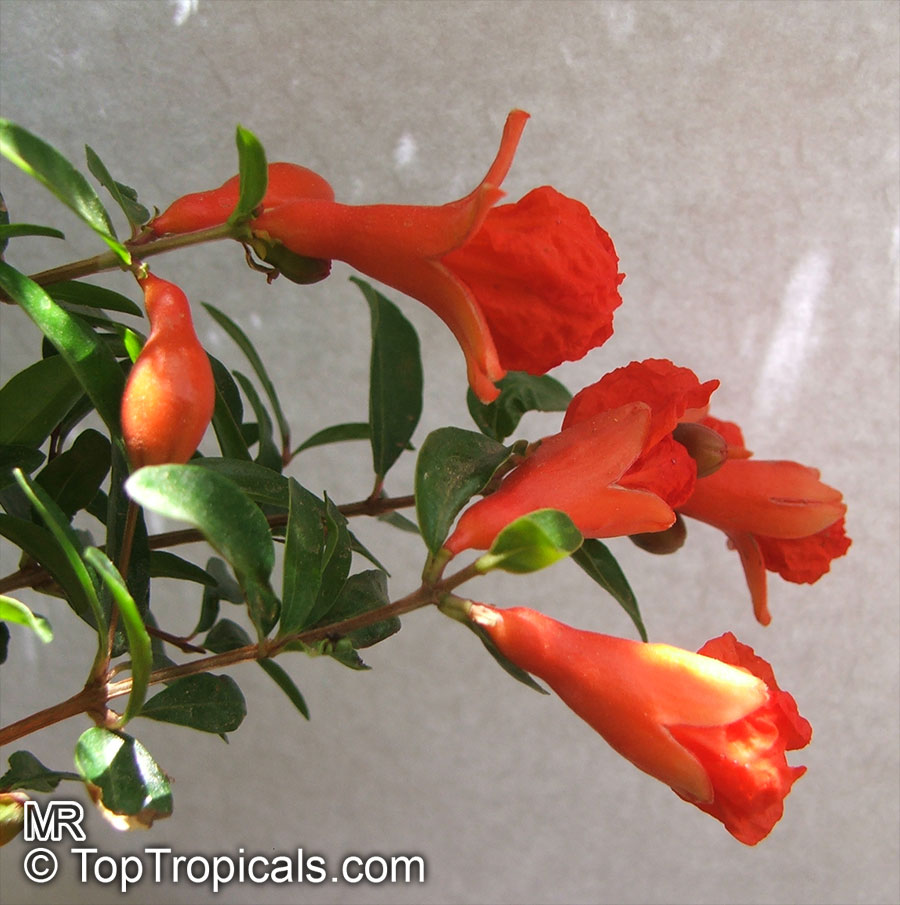
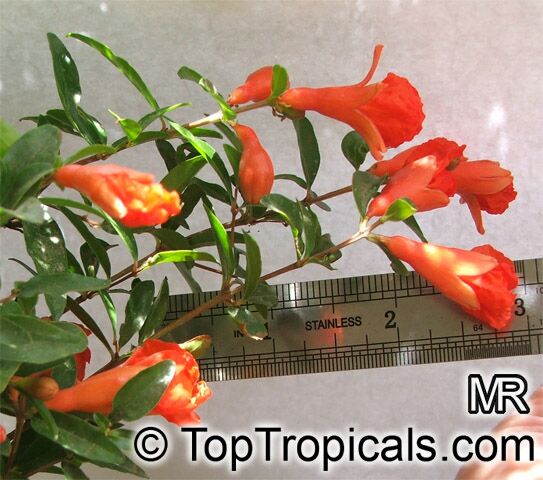

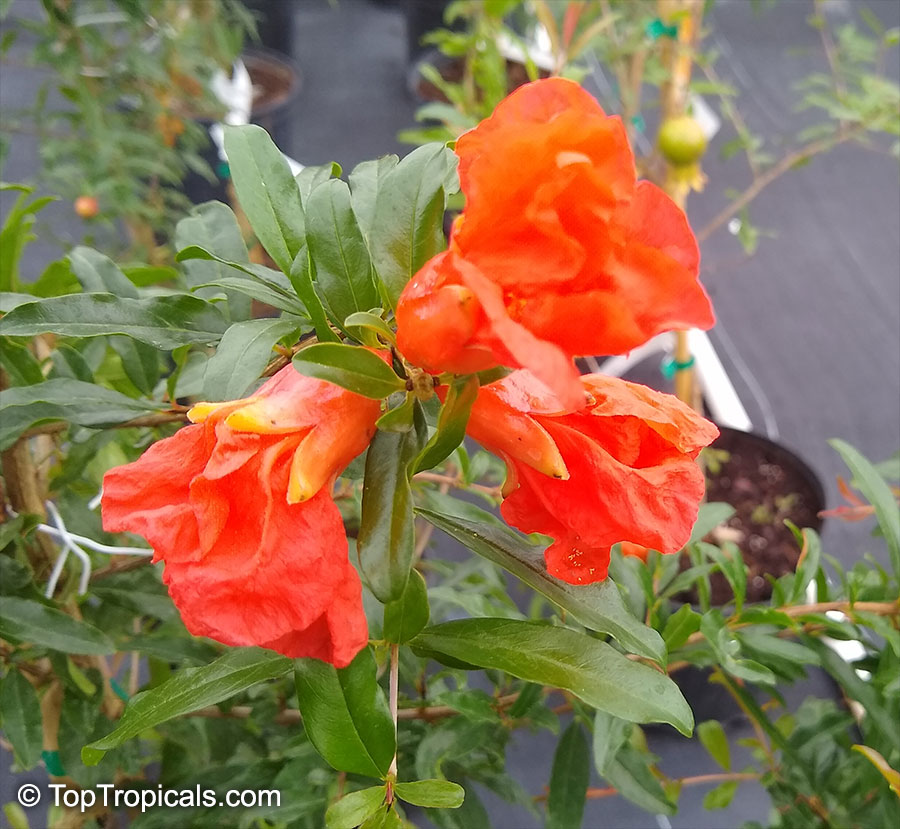

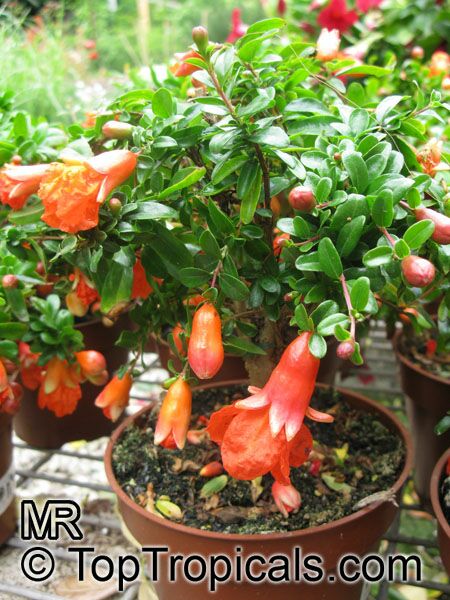
See Article about Pomegranate.
Recommended Fertilizer: SUNSHINE C-Cibus - Crop Nutrition Booster
SUNSHINE-Honey - sugar booster
 SUNSHINE C-Cibus (NPK 2-2-4) - Crop Booster for every watering.
  SUNSHINE C-Cibus (NPK 2-2-4) - Crop Booster for every watering.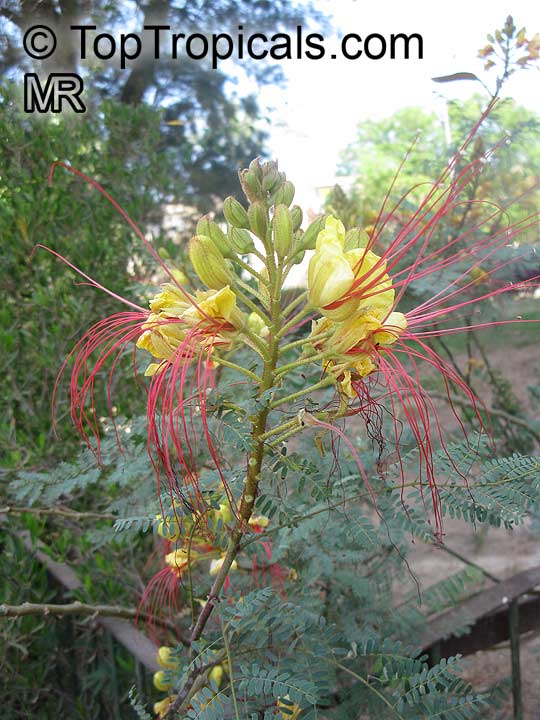
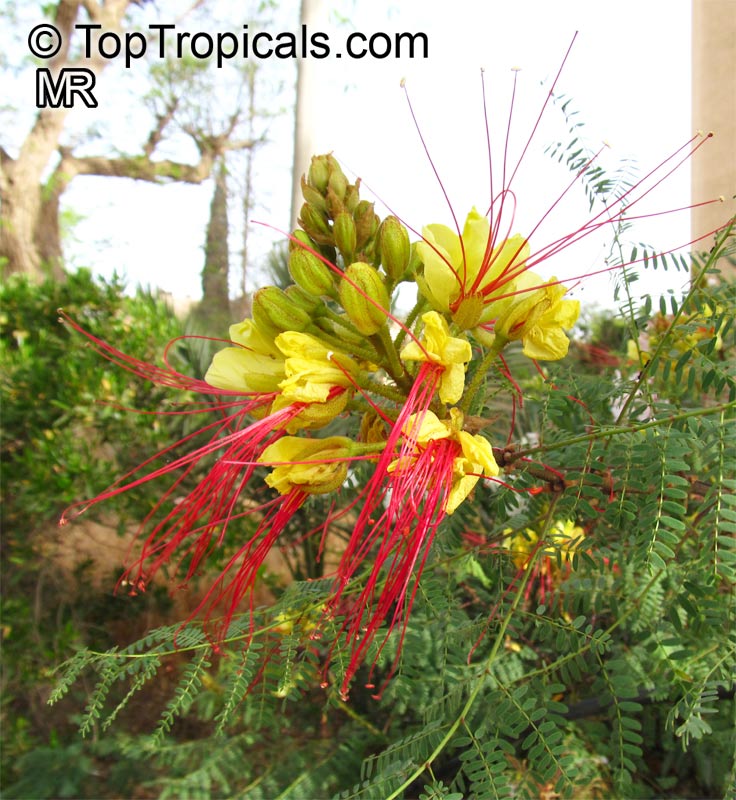
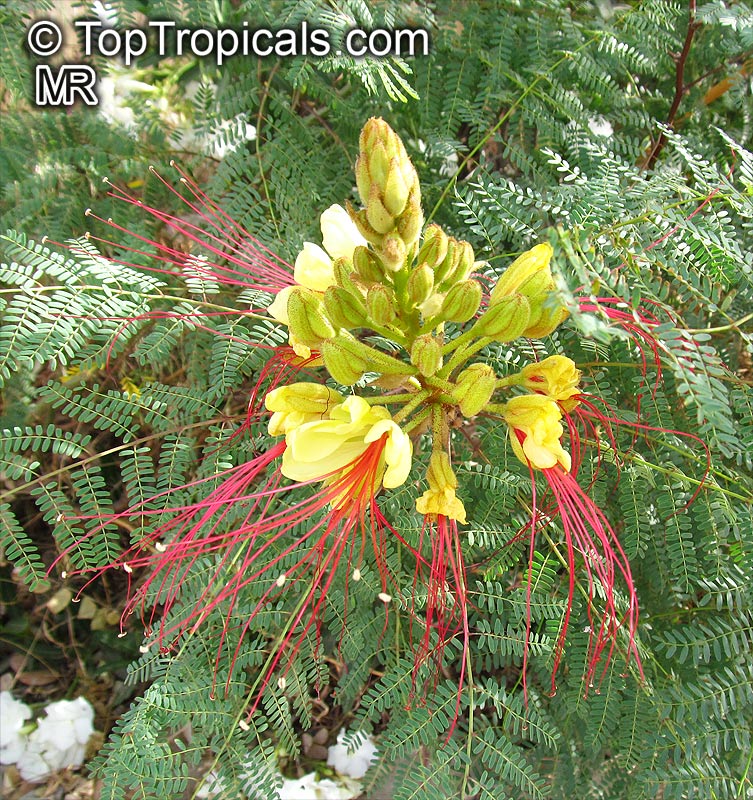
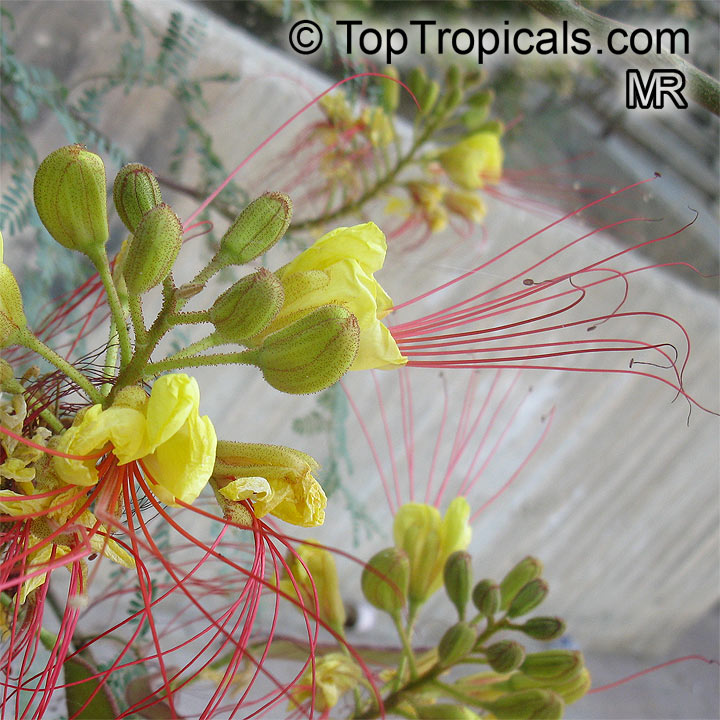
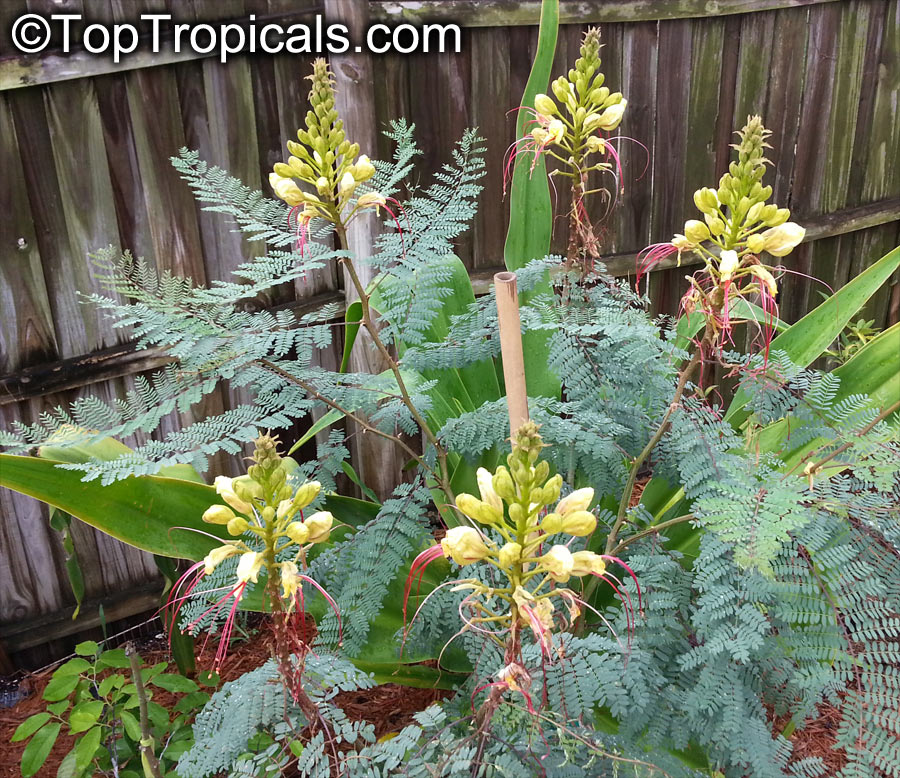
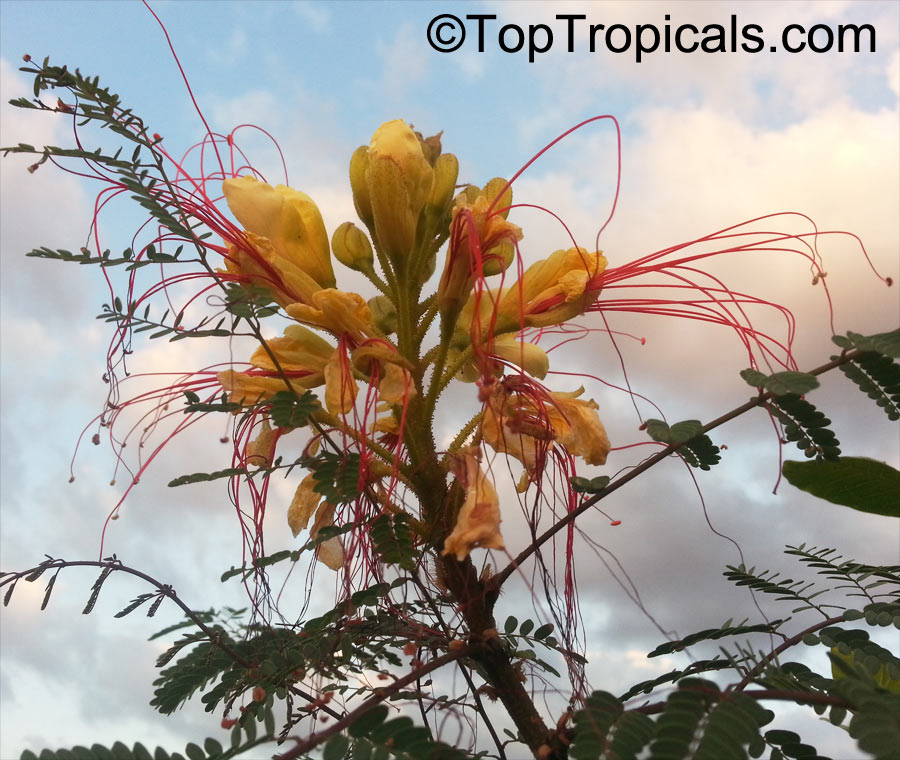
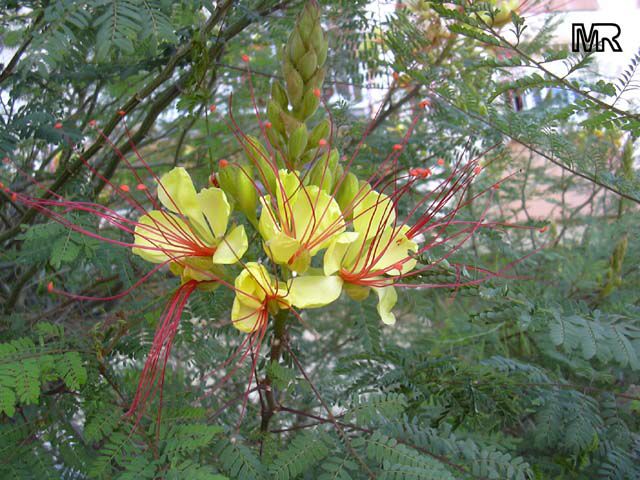
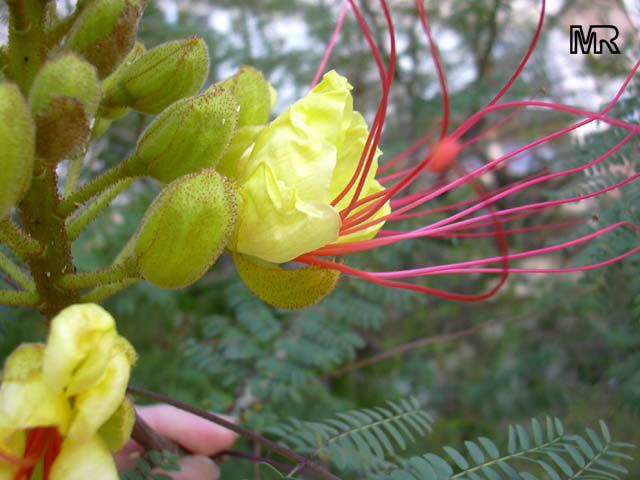
Botanical names: Erythrostemon gilliesii, Caesalpinia gilliesii, Poinciana gilliesii
Common names: Yellow Bird of Paradise, Yellow dwarf poinciana, Bird of Paradise Bush, Desert Bird of Paradise
Family: Fabaceae
Subfamily: Caesalpinioideae
Origin: Argentina


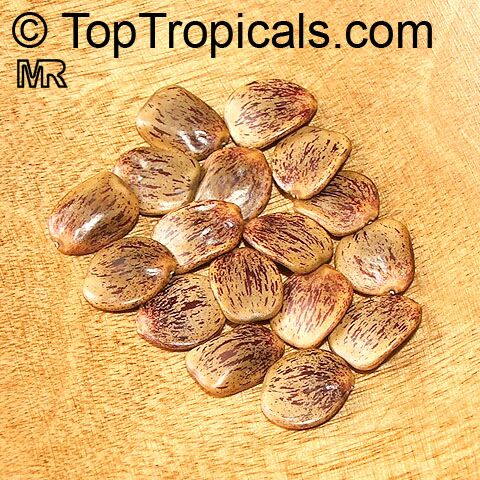
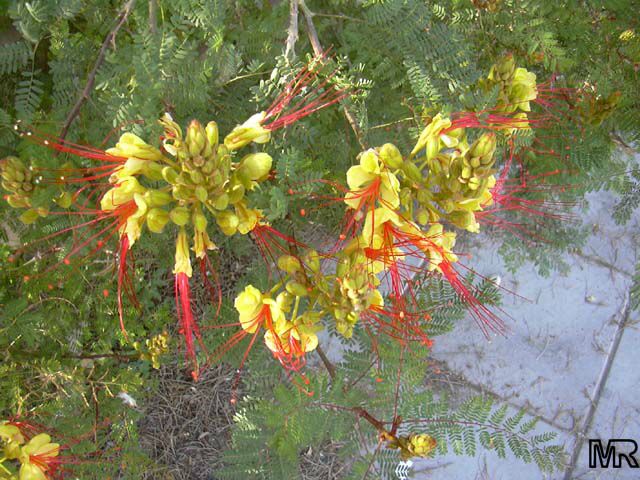
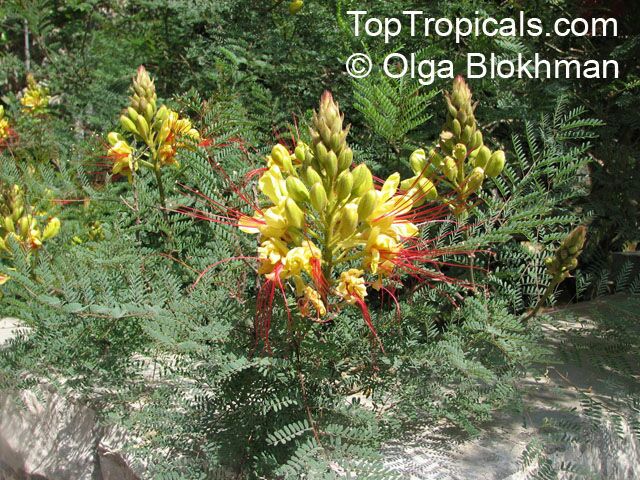
Open, irregular-branched plant with fine bipinnate foliage and showy yellow flowers with long red stamens through most of the warm season. Seeds are toxic. Very xeric, need low water, full sun, well drained soil. Can be trained to small tree. Deciduous, may be evergreen in warmer areas. Size: 5-10ft, spread 4-6ft; rapid growth. Leaves: bipinnate, 3-5in long, finely cut ferny appearance. Flowers: on branch terminals, informal racine of solid yellow flowers with long red stamens; bloom mainly in spring and early summer, then sporadically. Fruit: tan fuzzy pod, dehiscent, curled, persistent on branches unless removed.
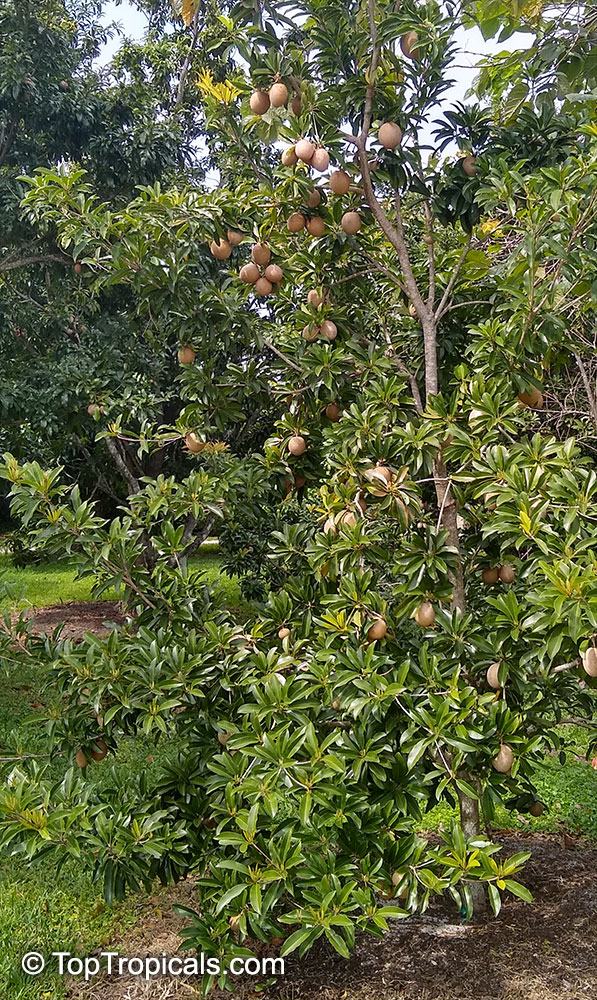
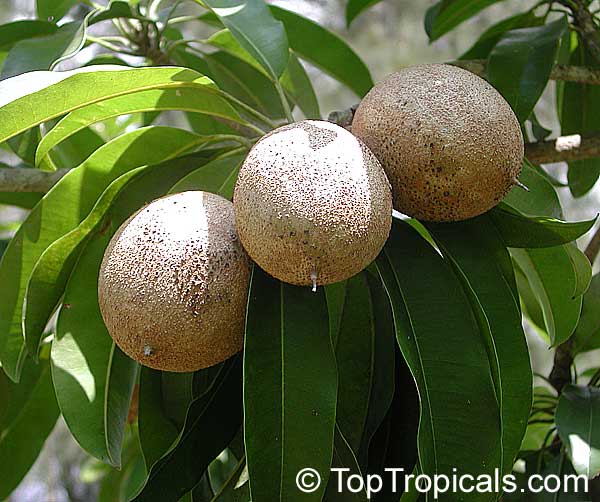
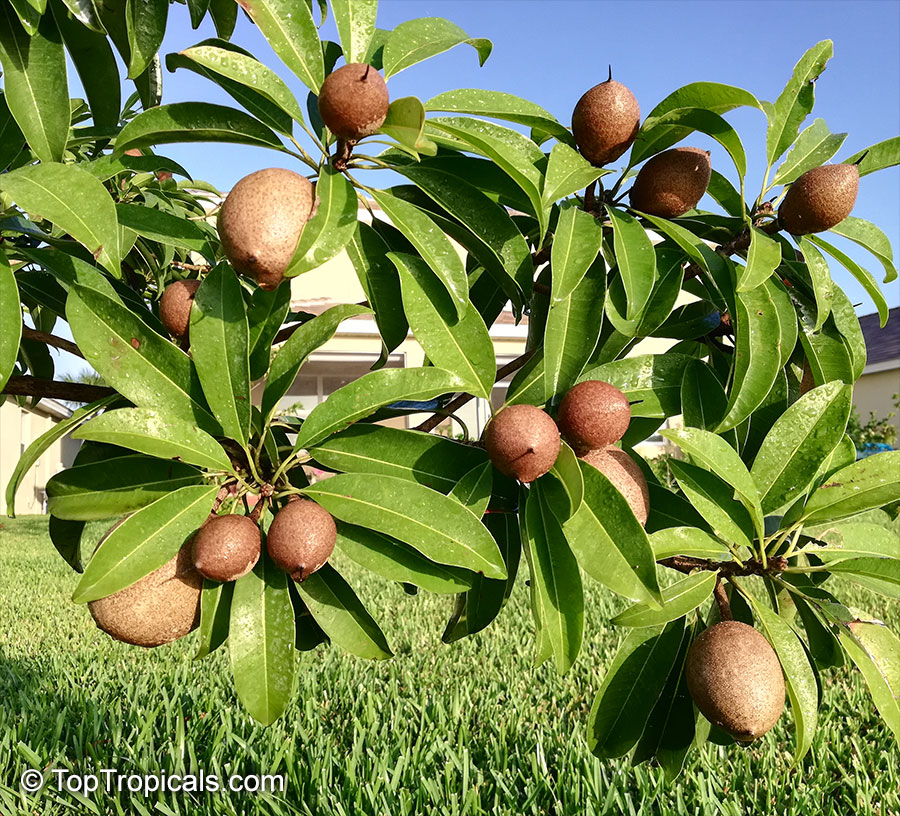
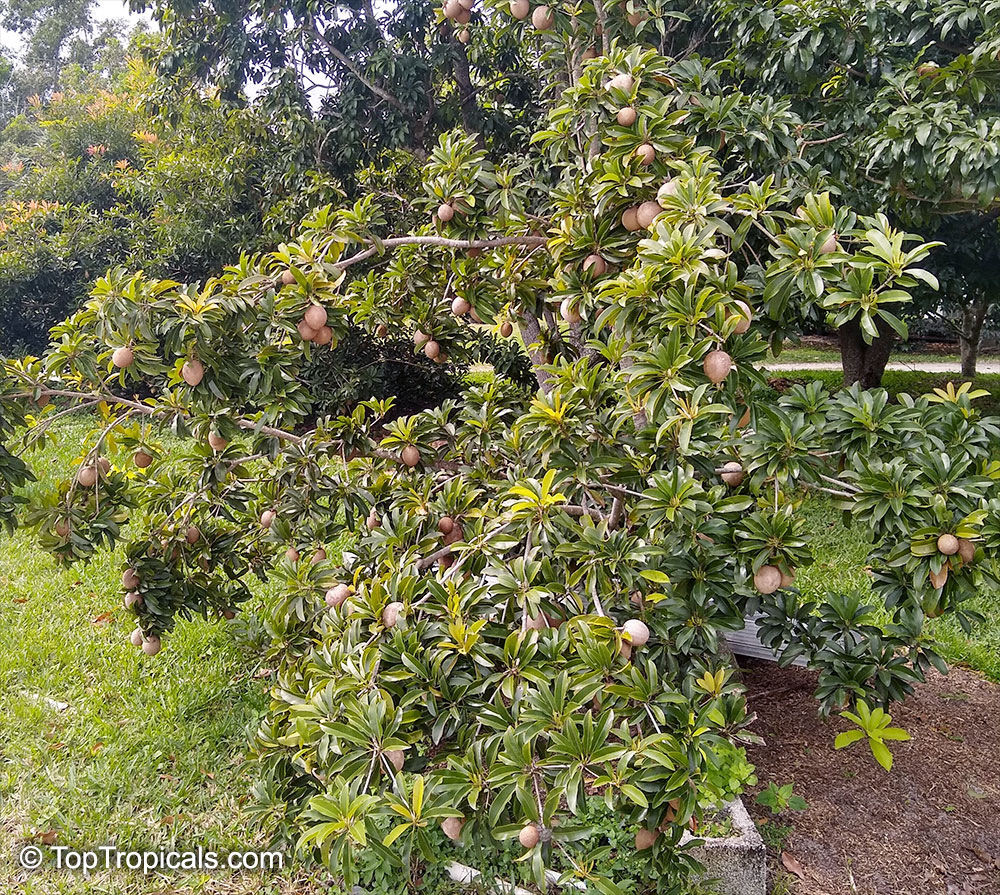
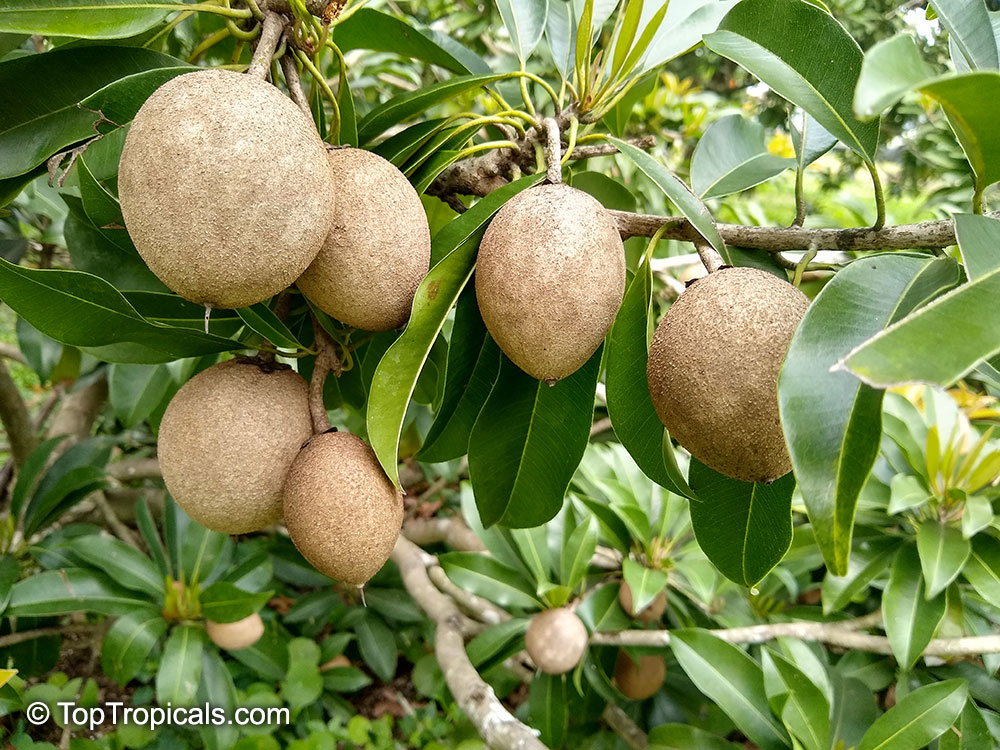
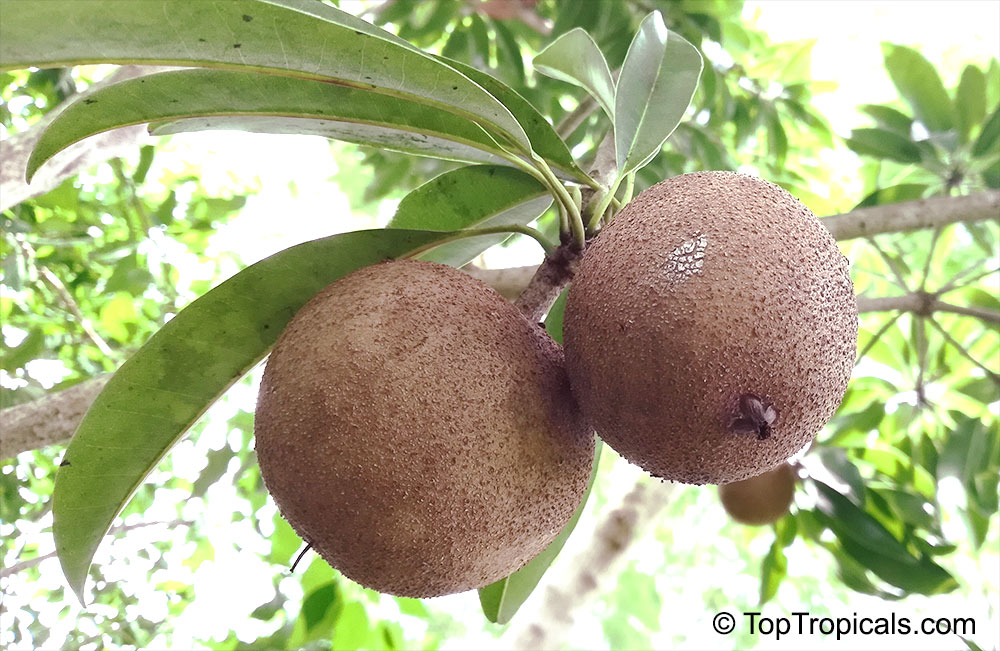
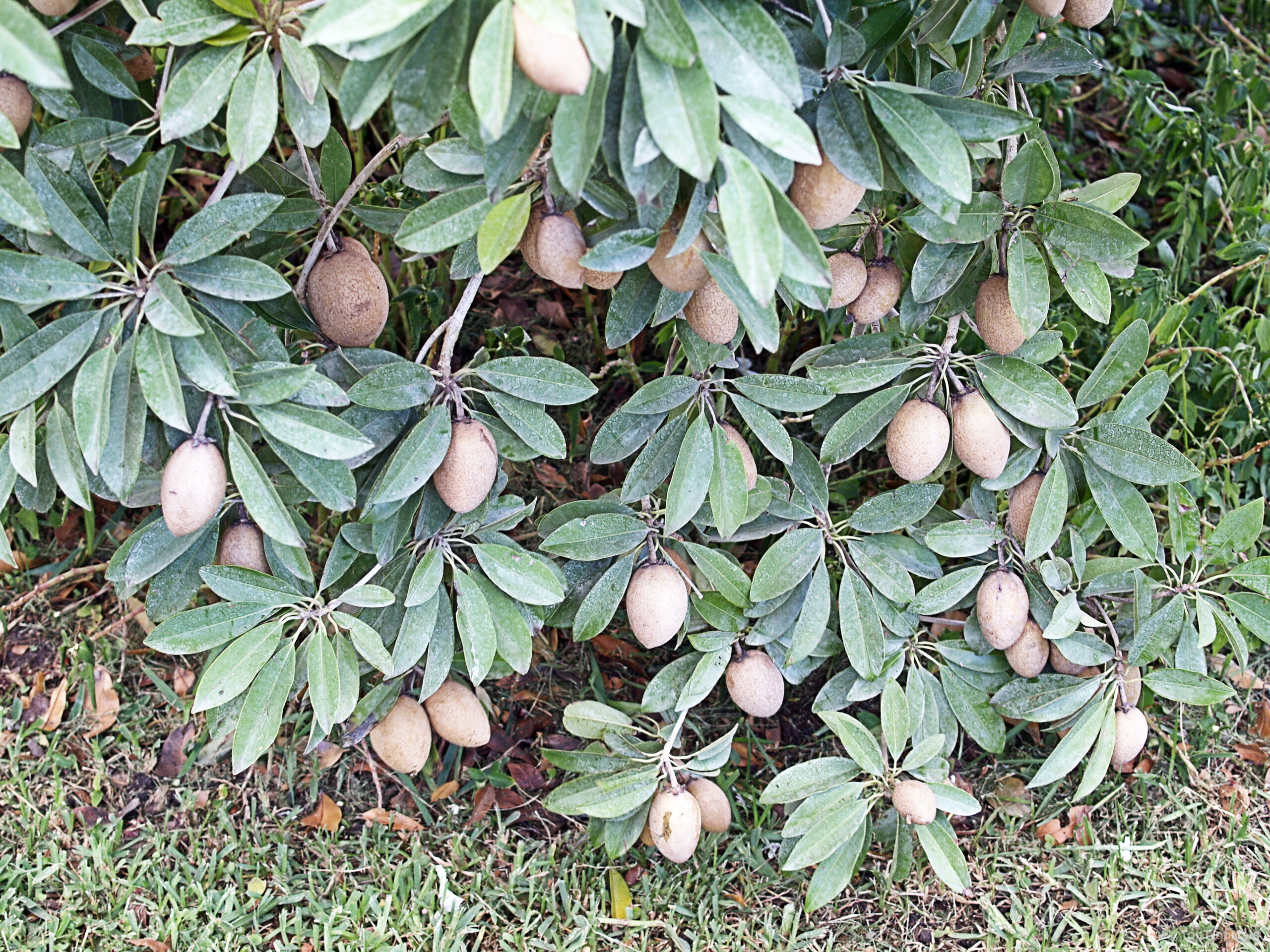
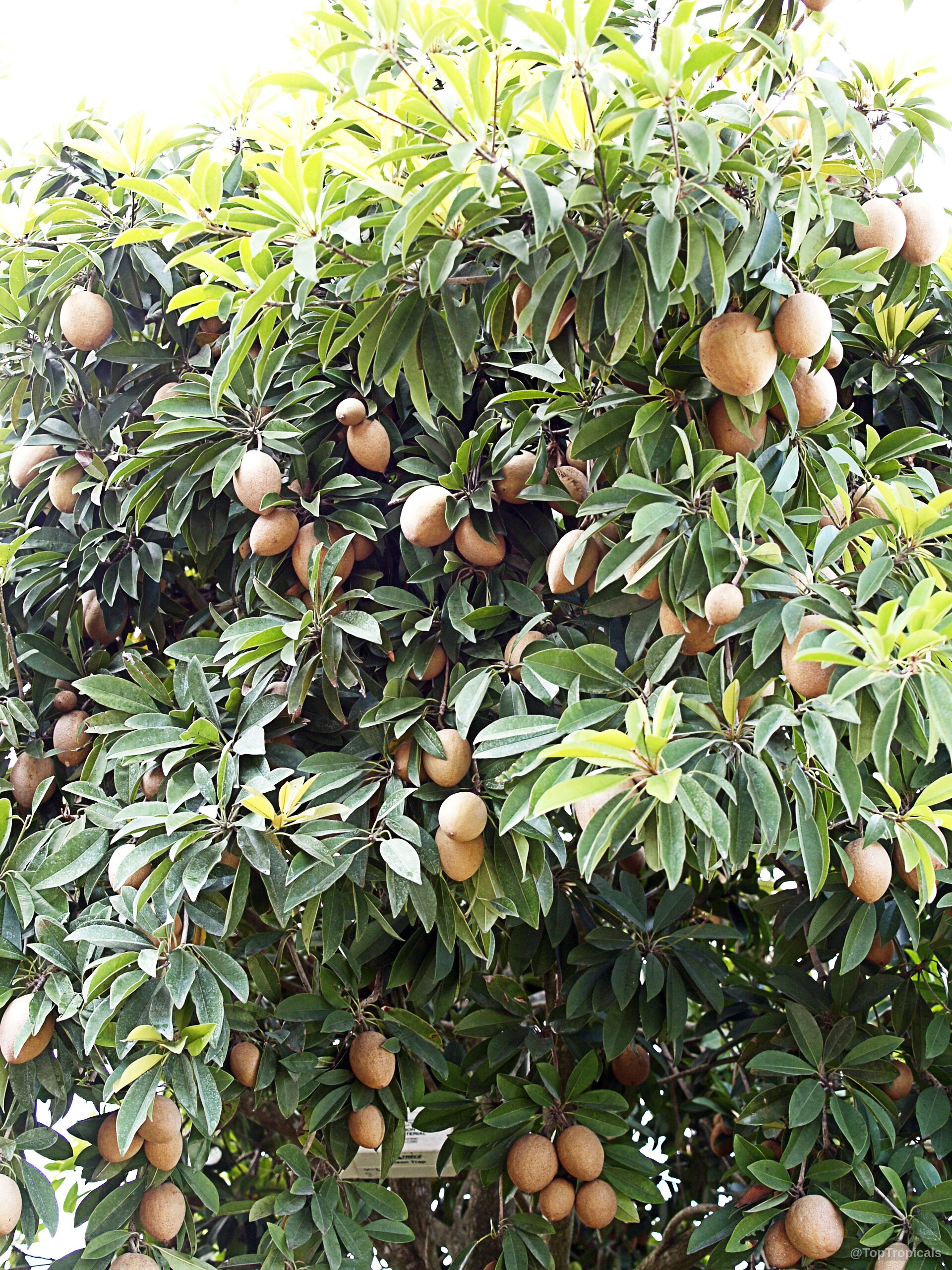
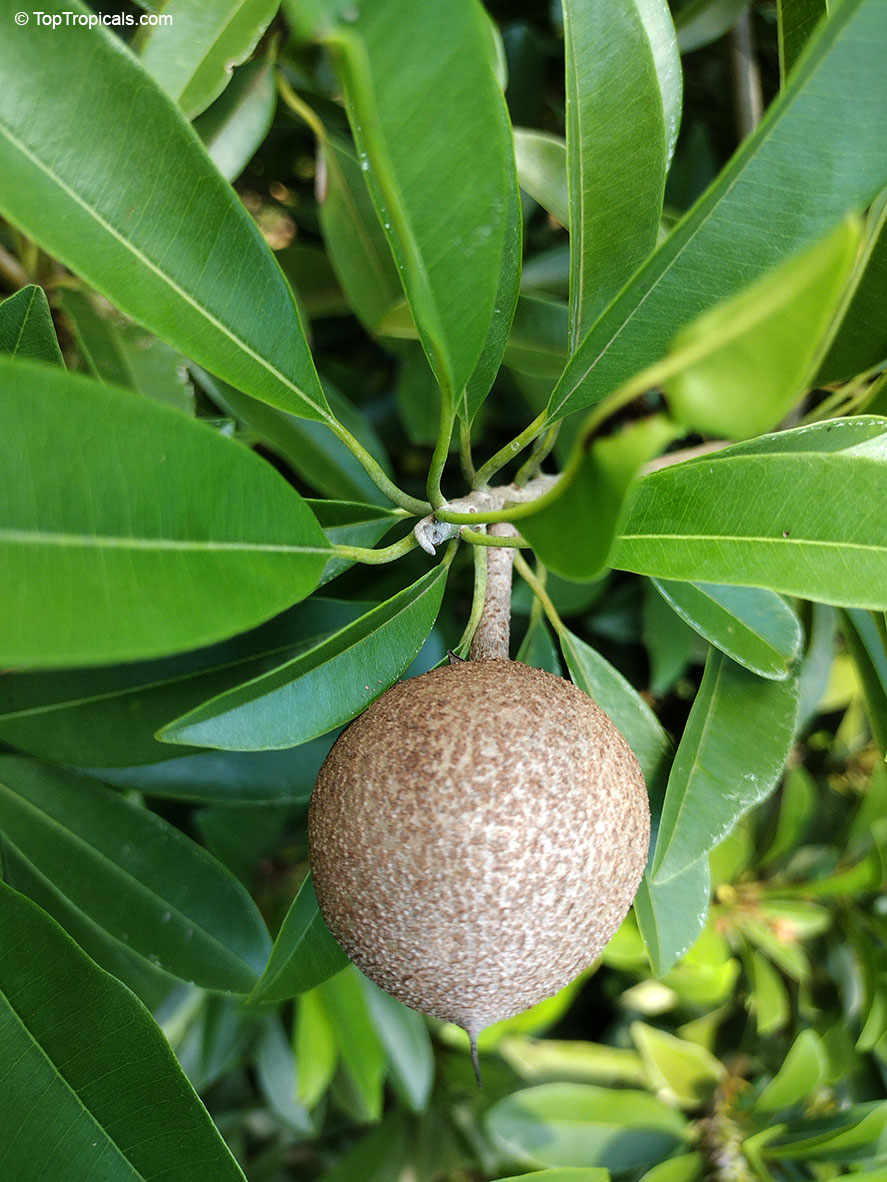
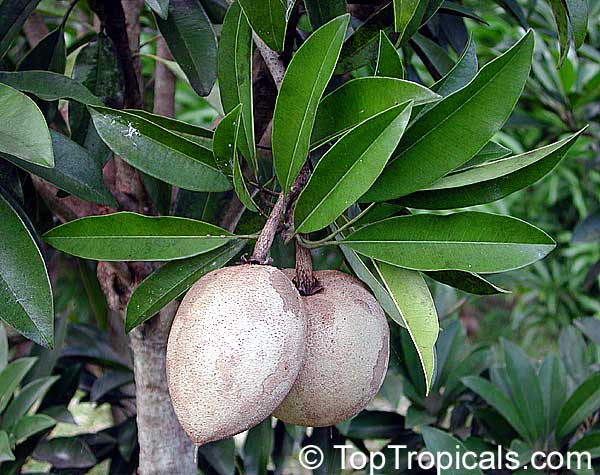
Botanical names: Manilkara zapota, Manilkara achras, Achras sapota
Common names: Sapodilla, Ciku, Naseberry, Nispero, Sapote, Brown Sugar Fruit
Family: Sapotaceae
Origin: Tropical America

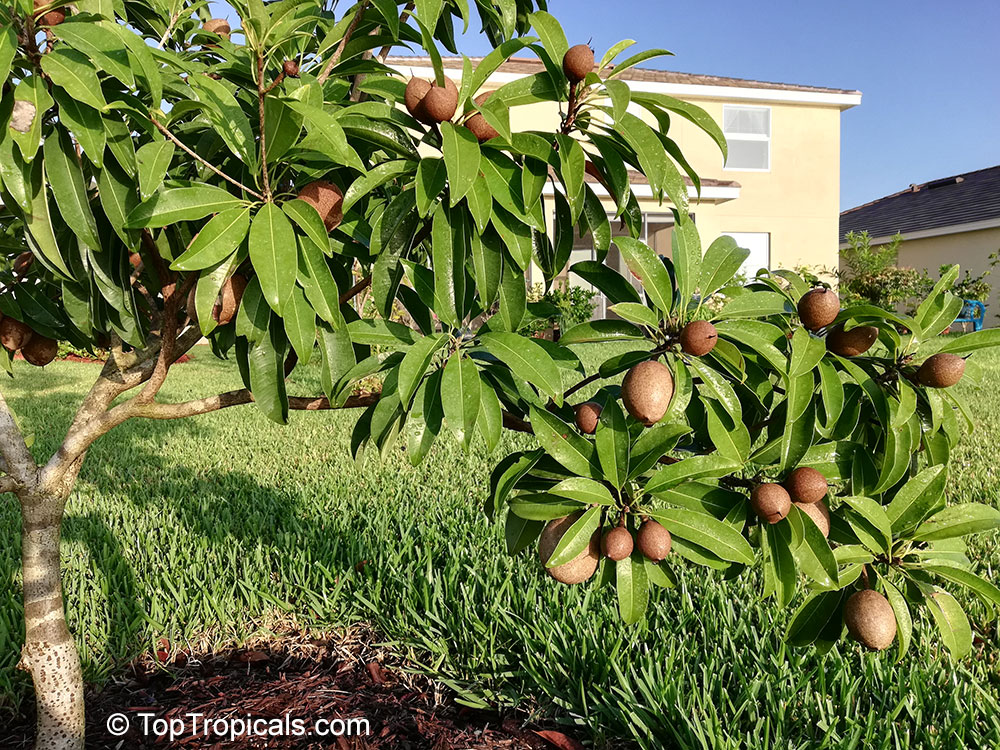
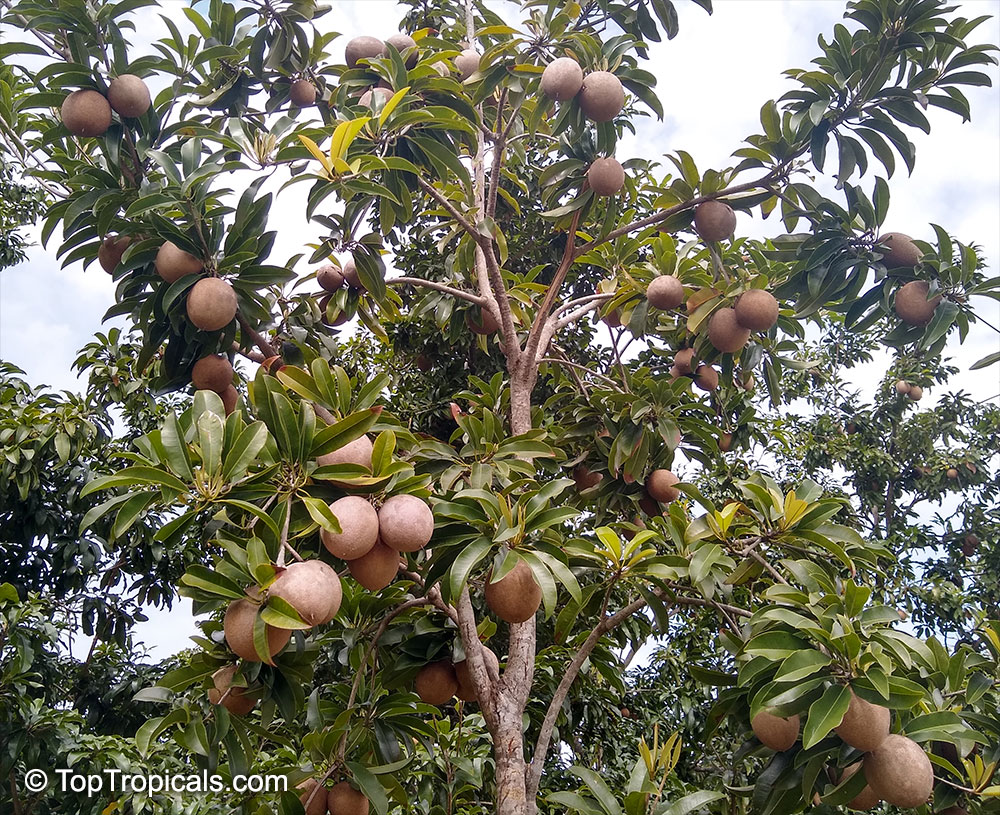
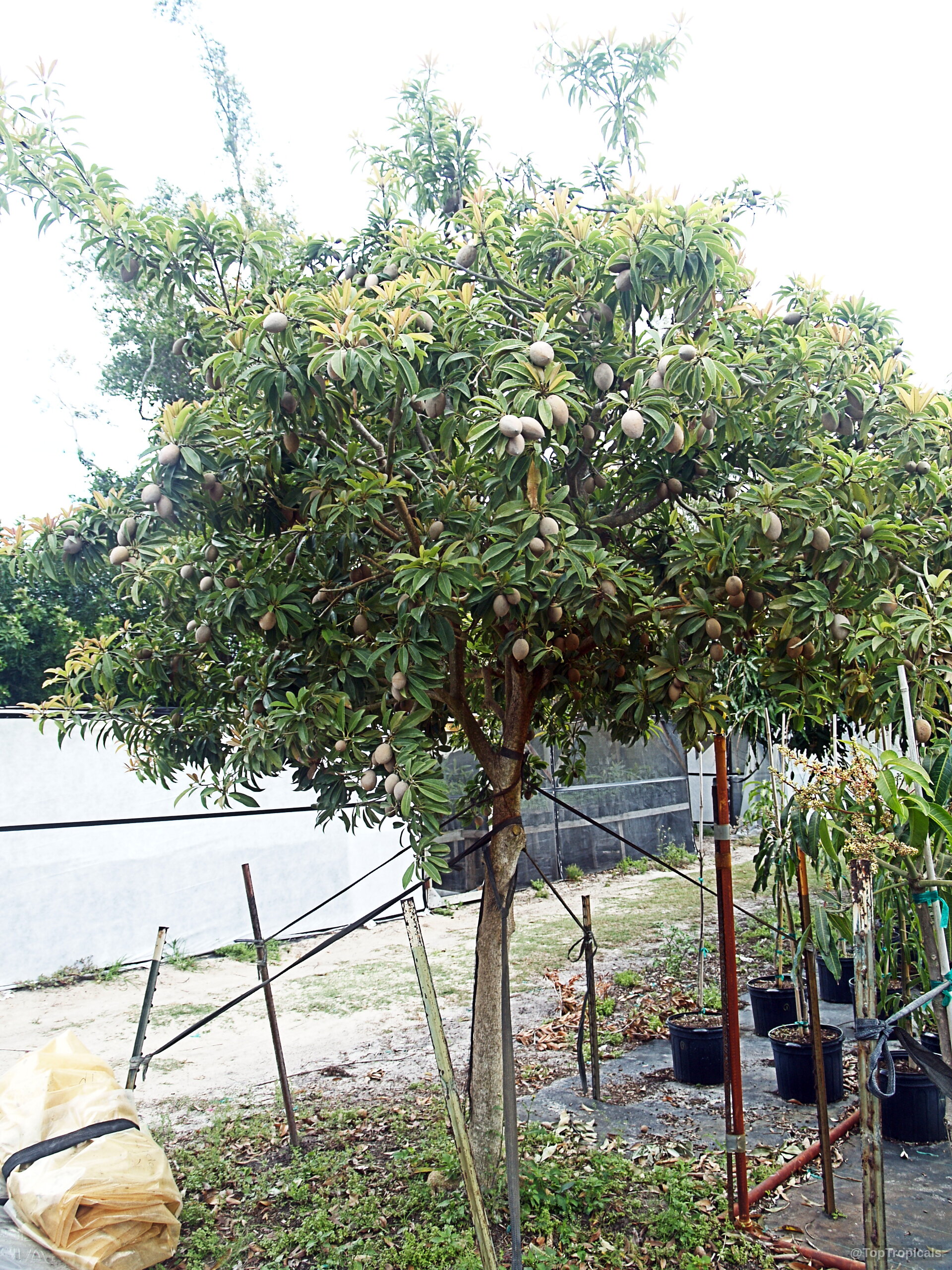
Varieties: Makok, Tikal, Alano, Oxkutzcab, Hasya, Morena, Molix. Season: Sporadic throughout year, March - July. Sapodilla is well spread throughout the tropics. For centuries, It has been one of the most popular and most productive tropical fruit trees in the world, widely grown in India and Africa, West Indies, Philippines, Malaysia, Tropical America and Southern Florida.
Besides delicious fruit, the tree produces white, gummy latex that was an original source of chewing gum (chicle).
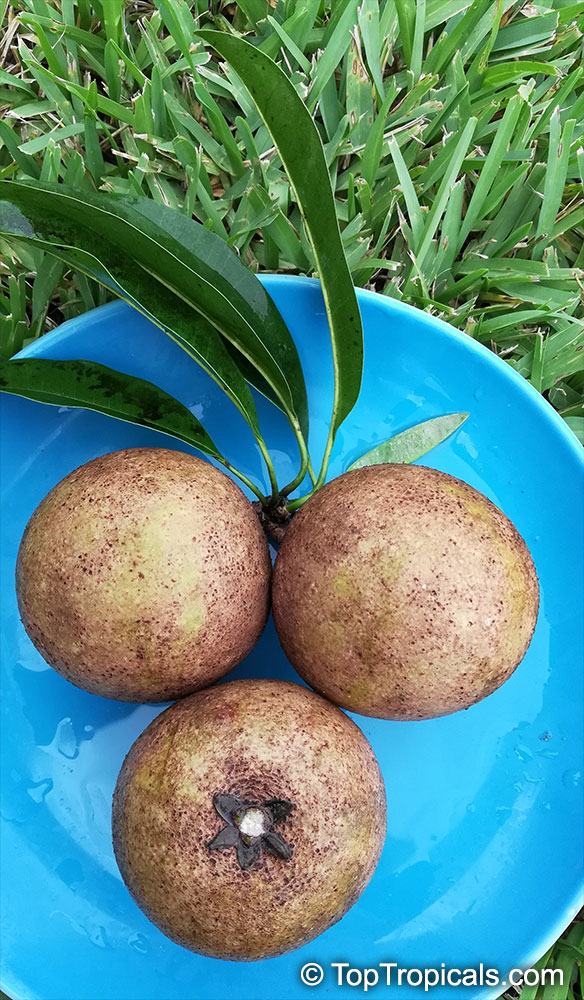
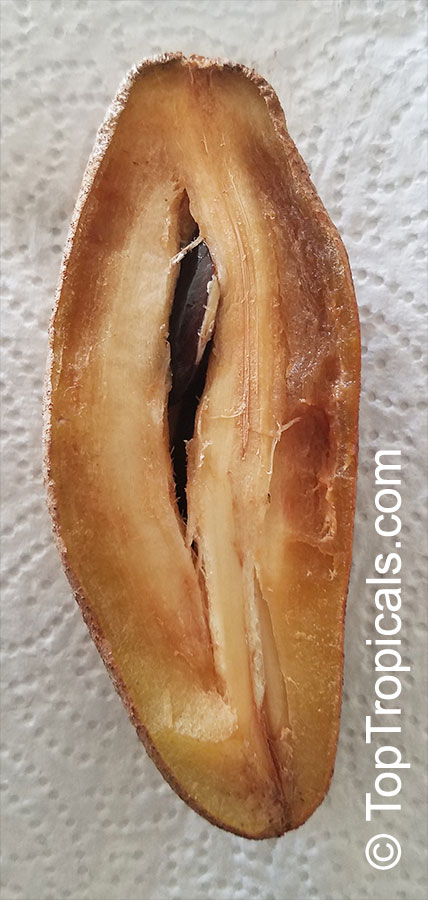
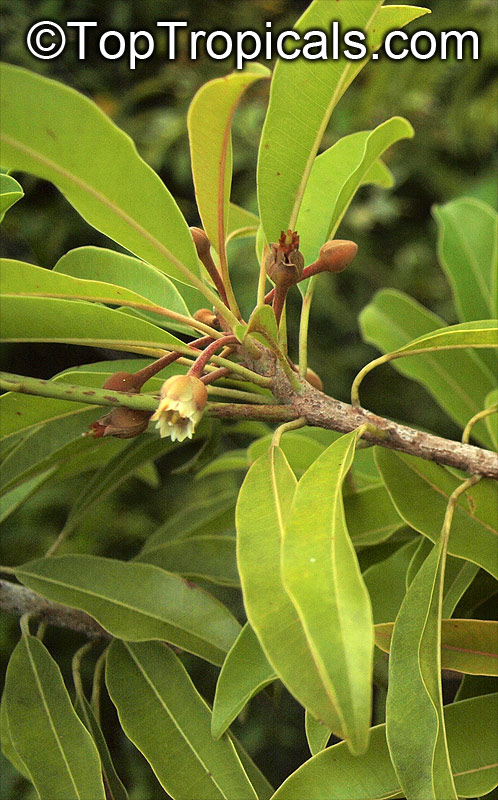
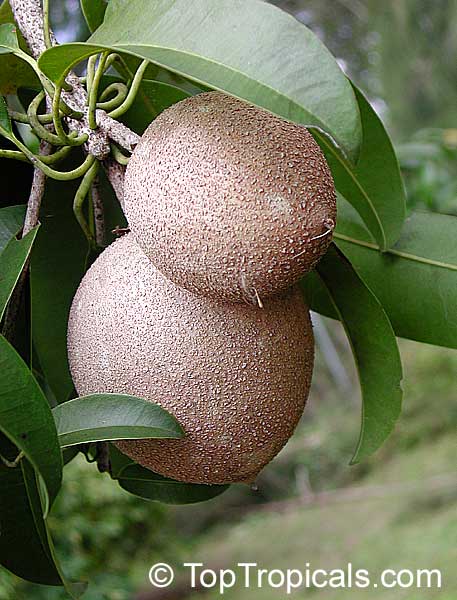
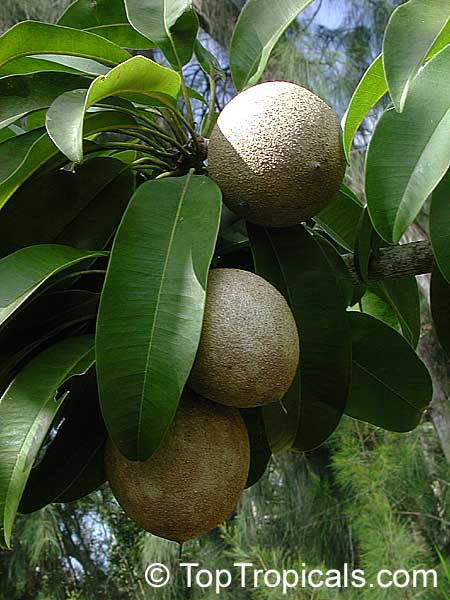
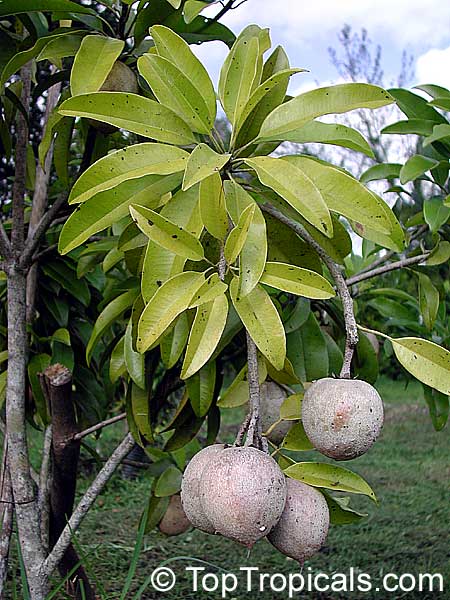
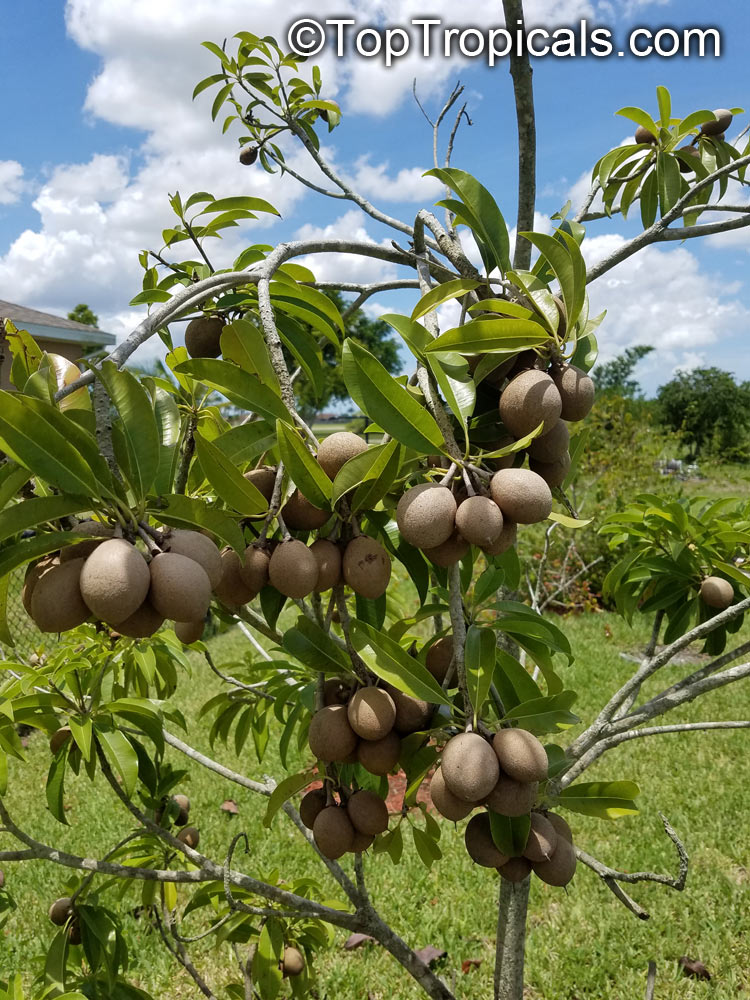
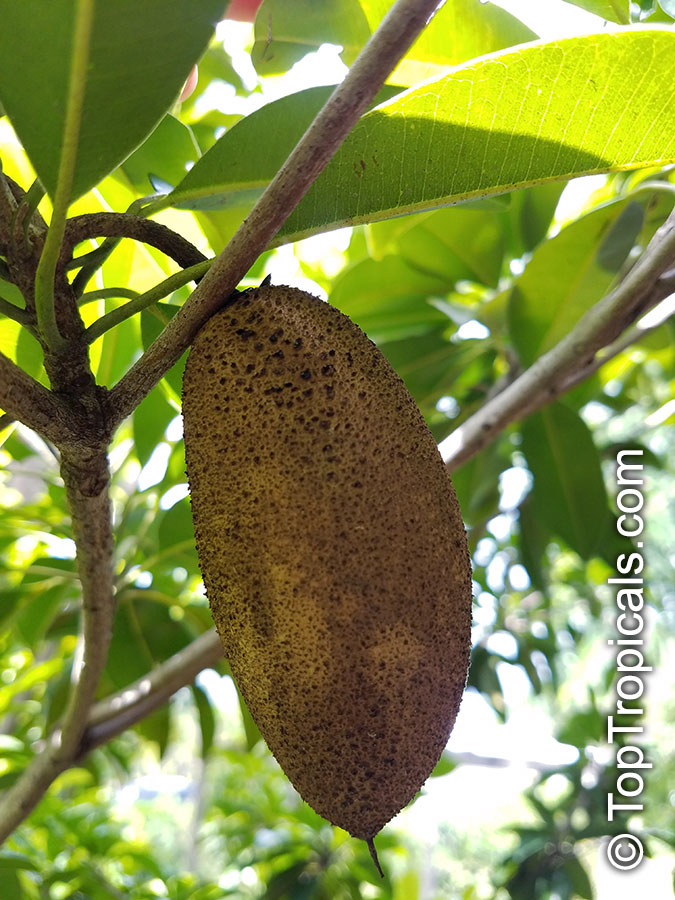
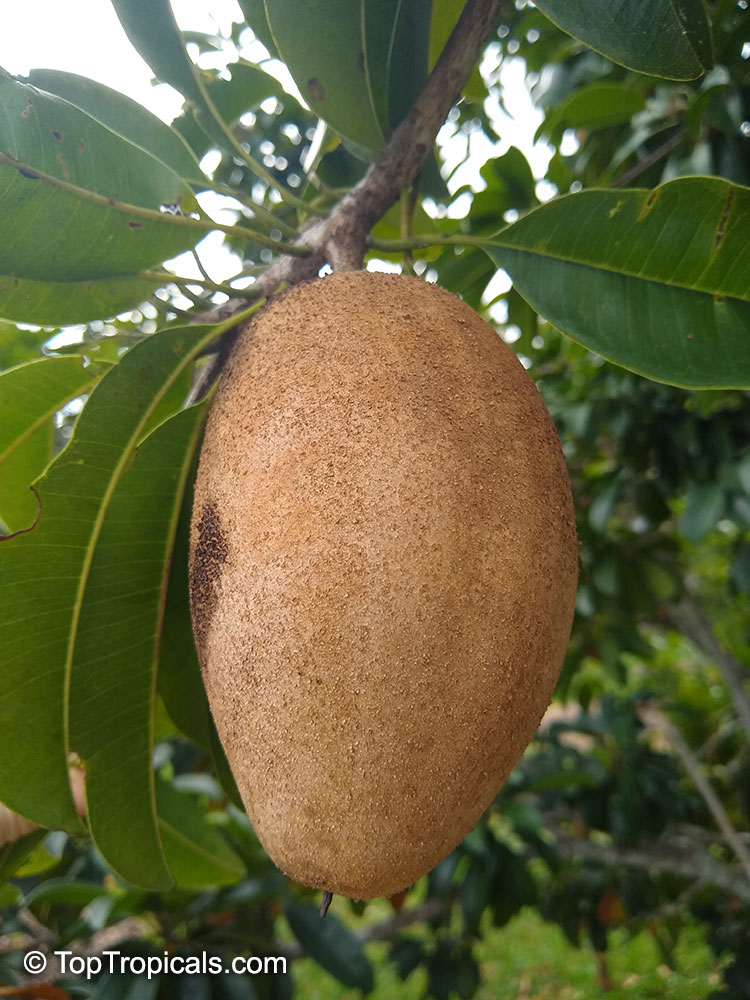
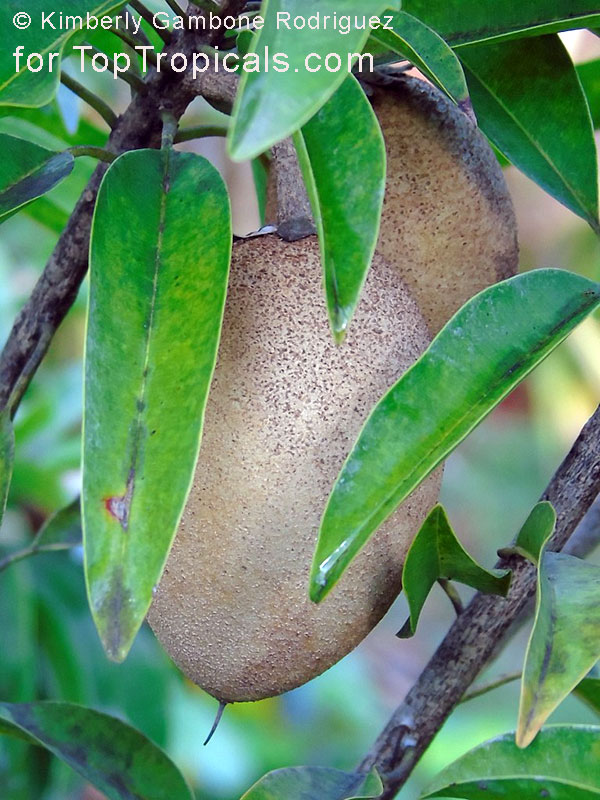
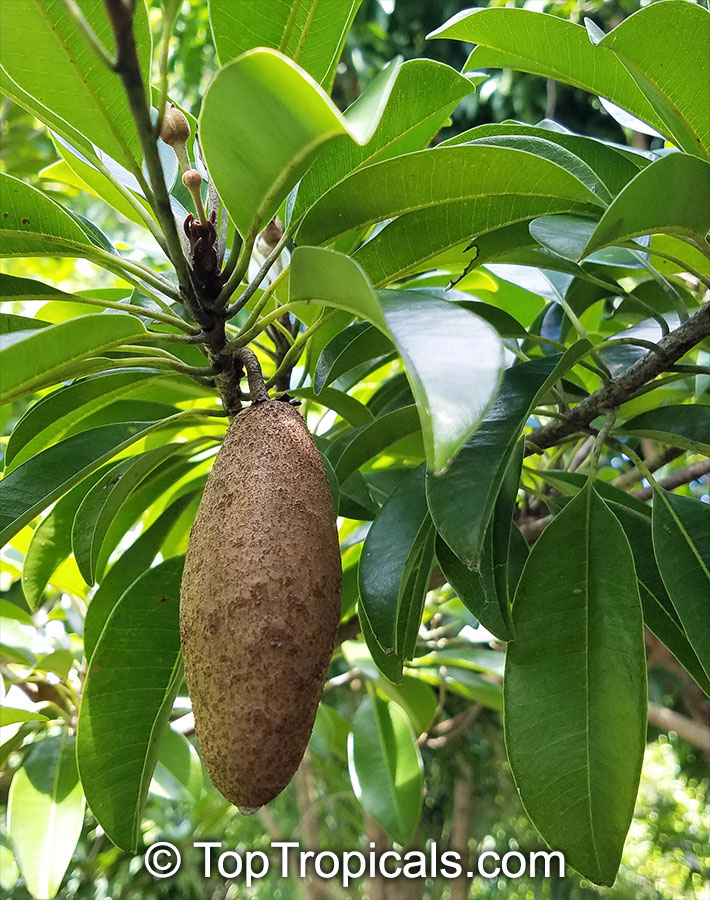
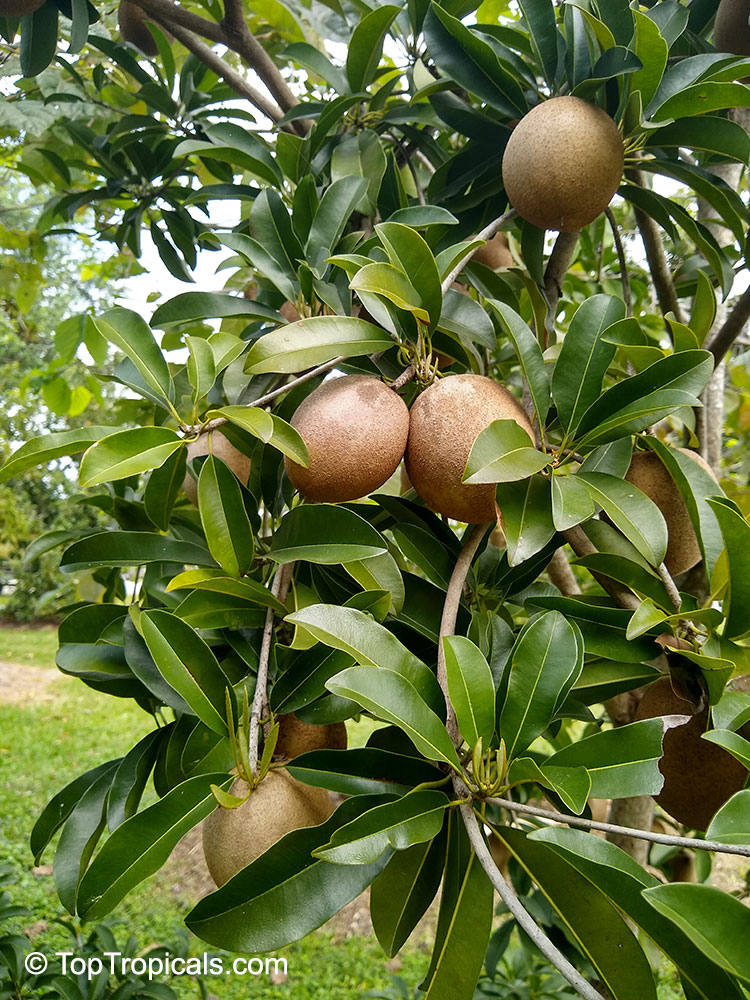
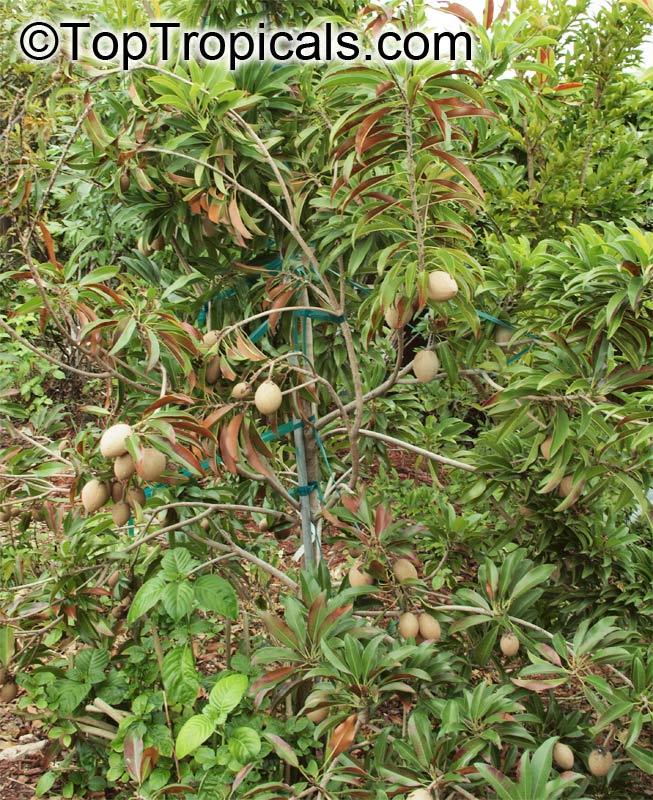
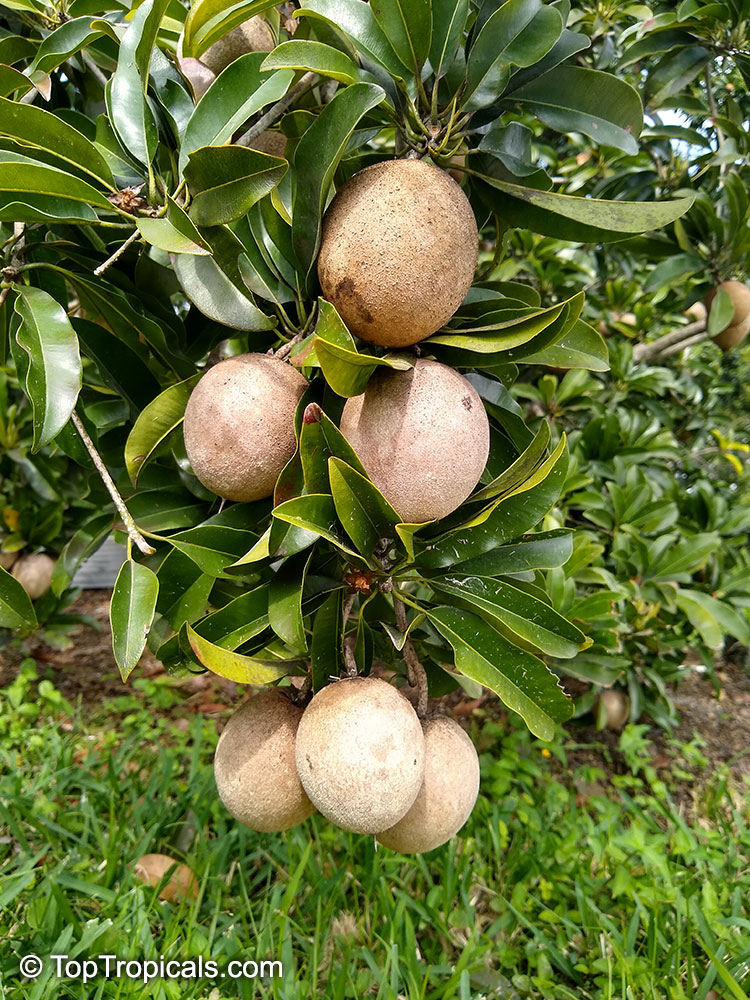
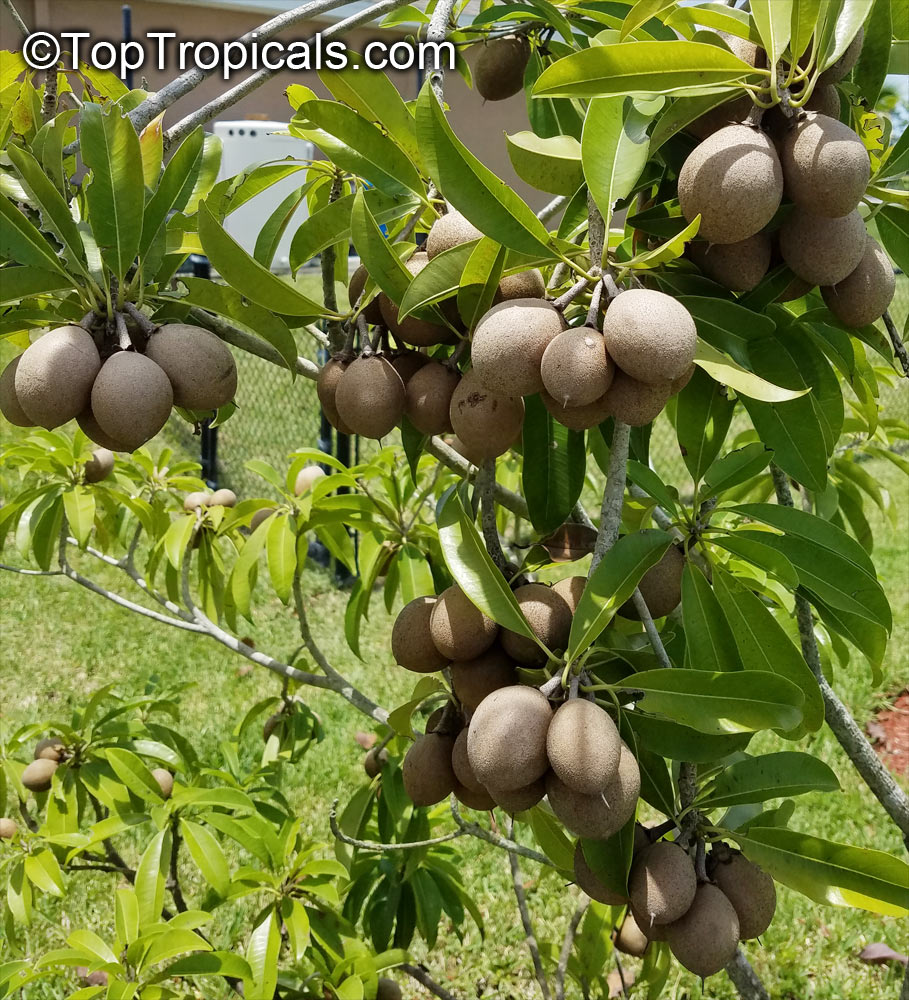
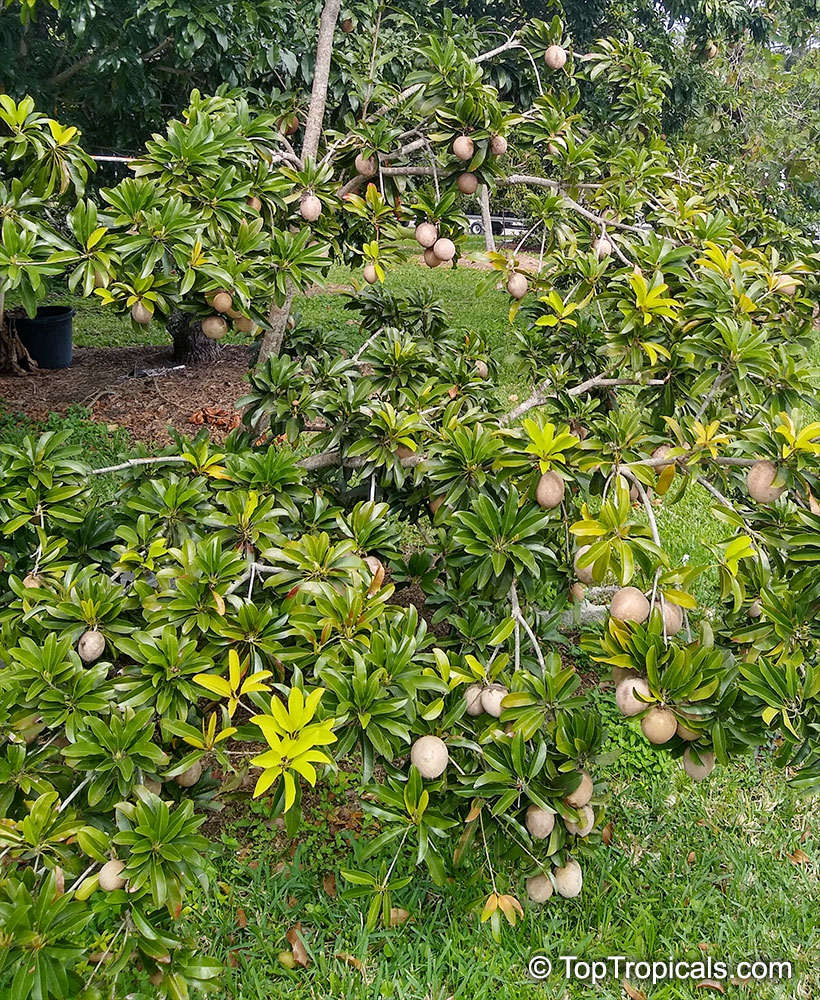
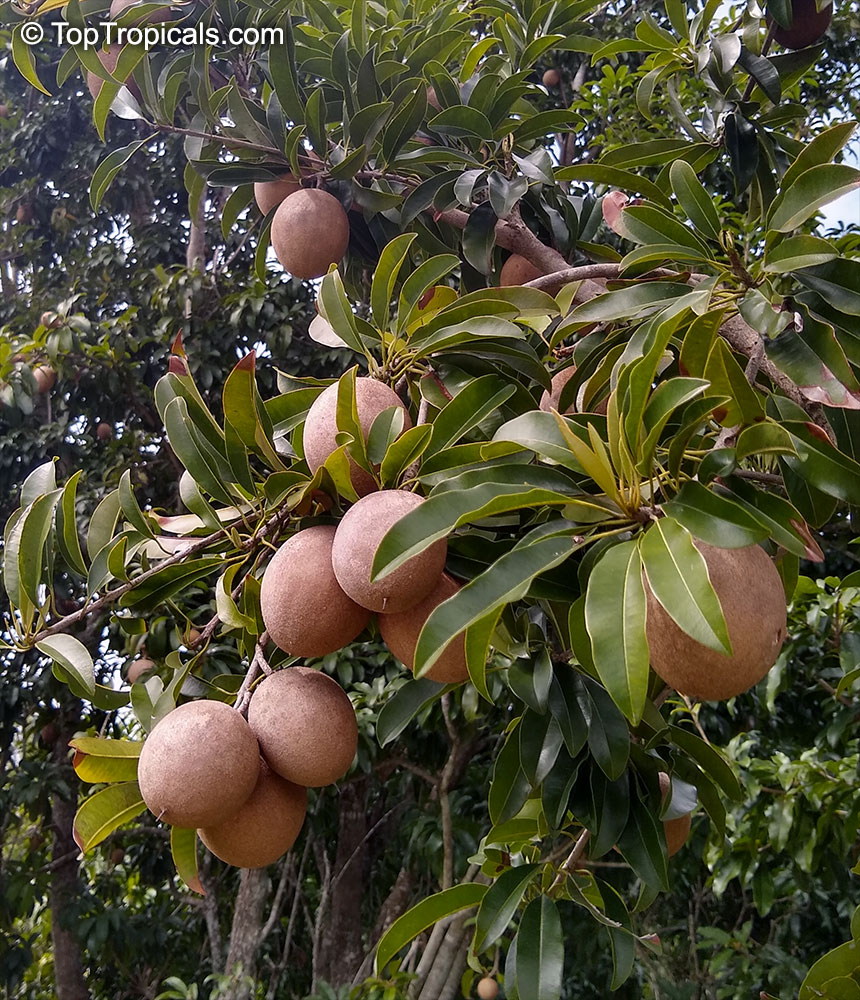
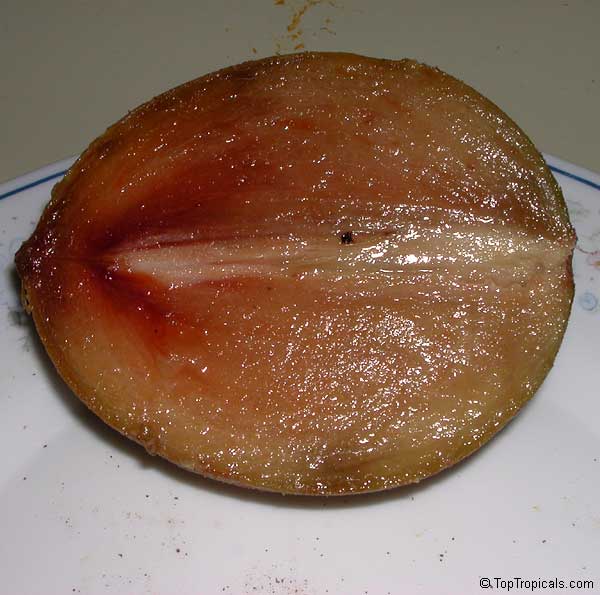
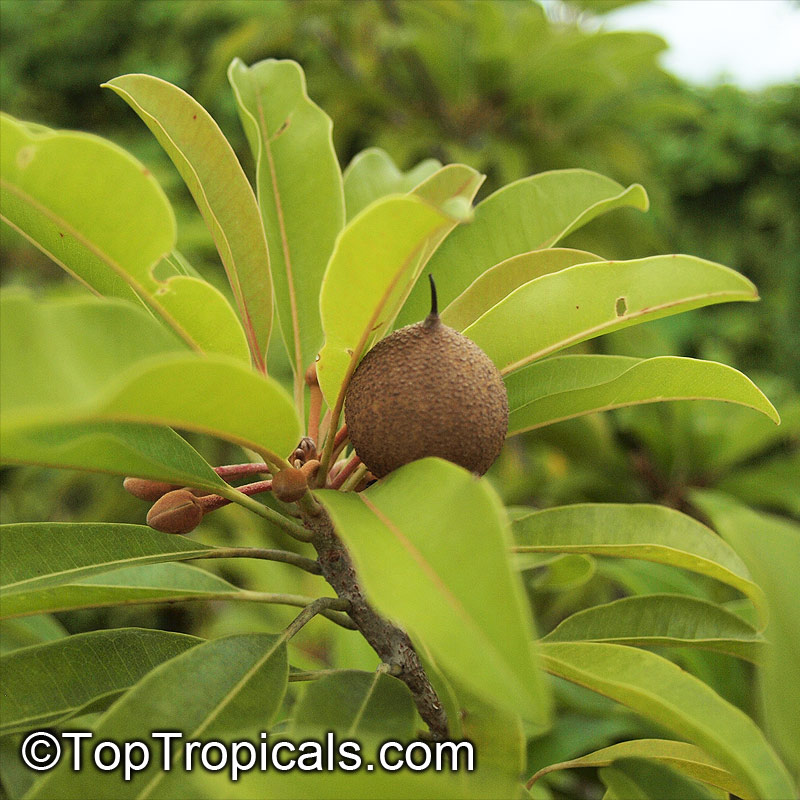
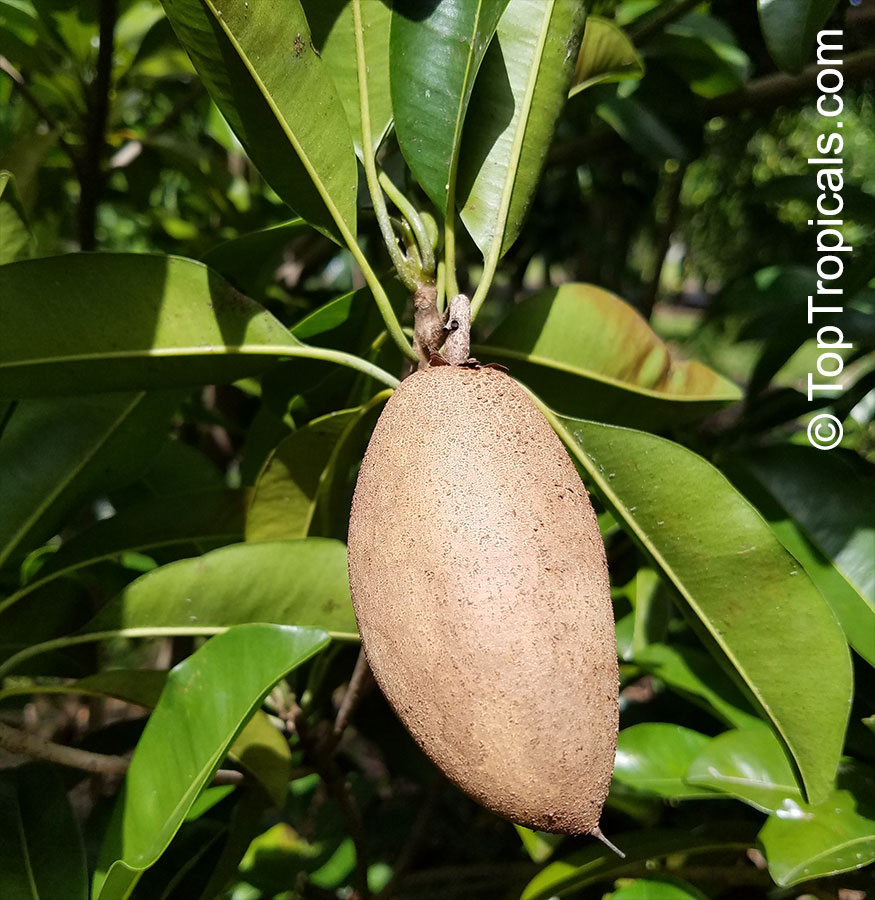
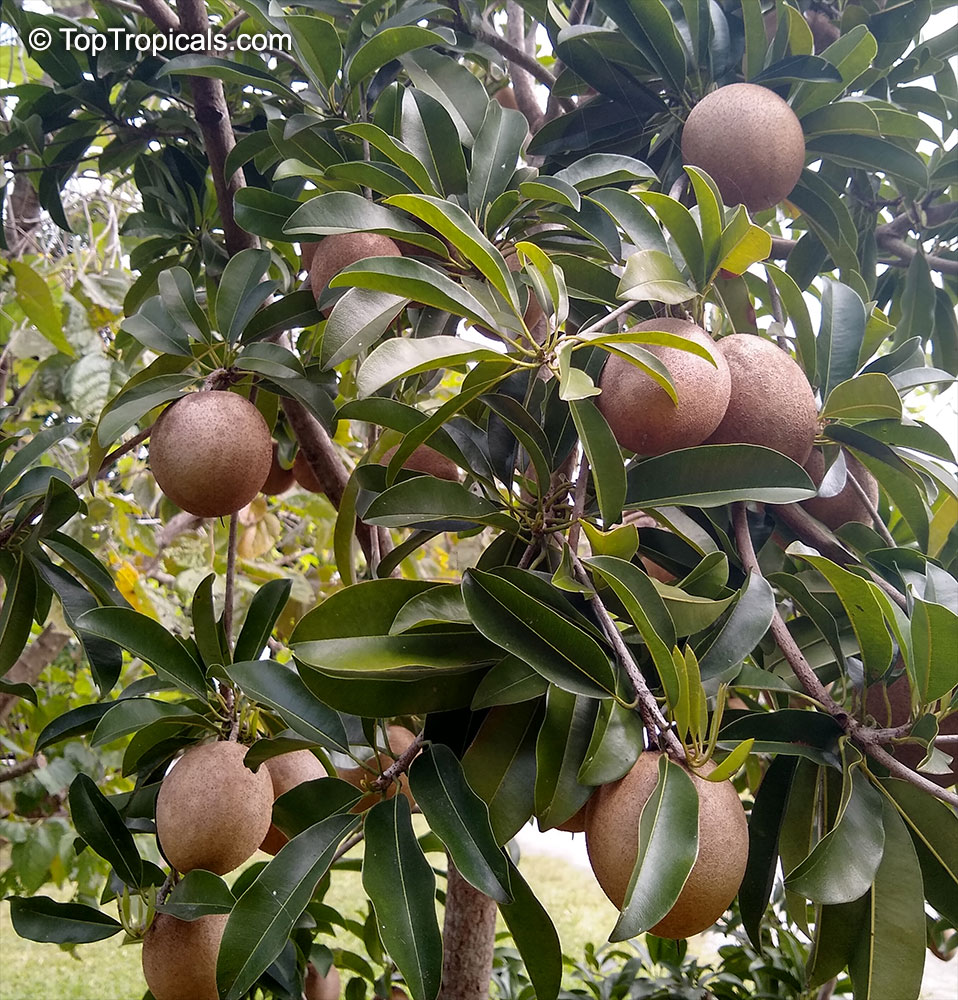
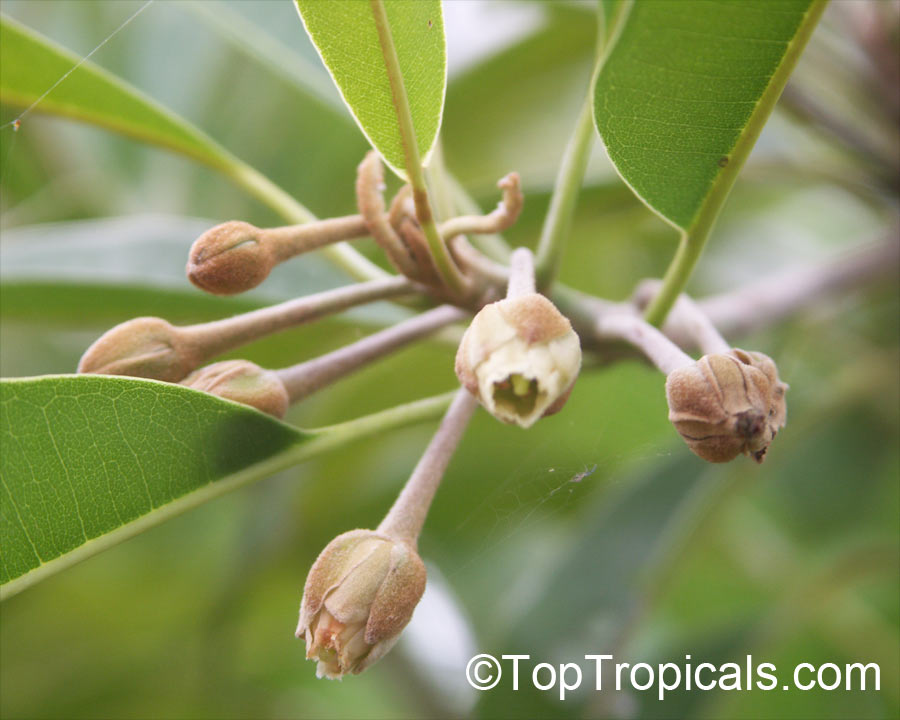
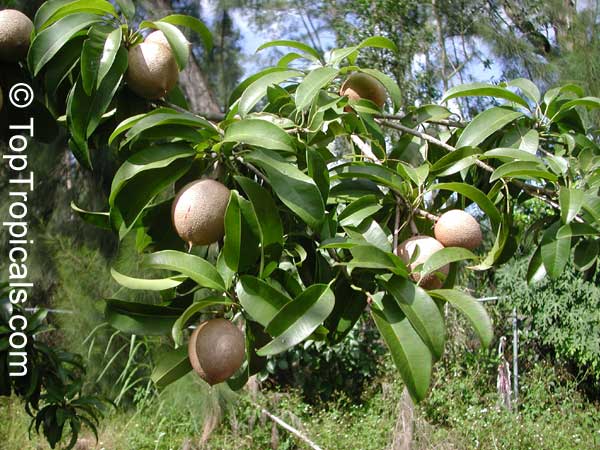
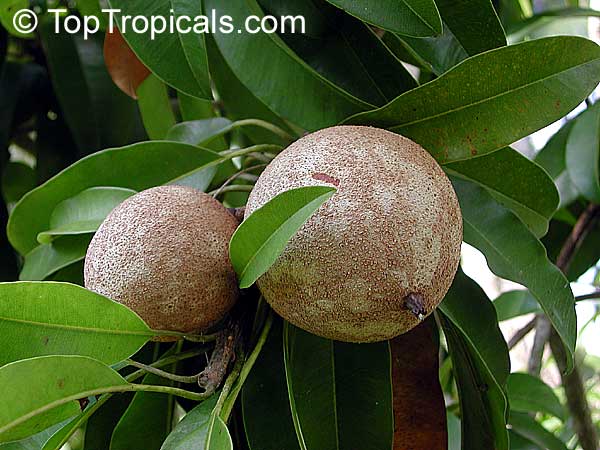
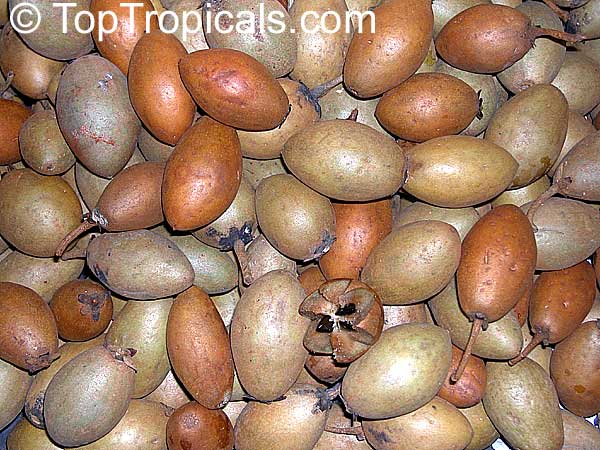
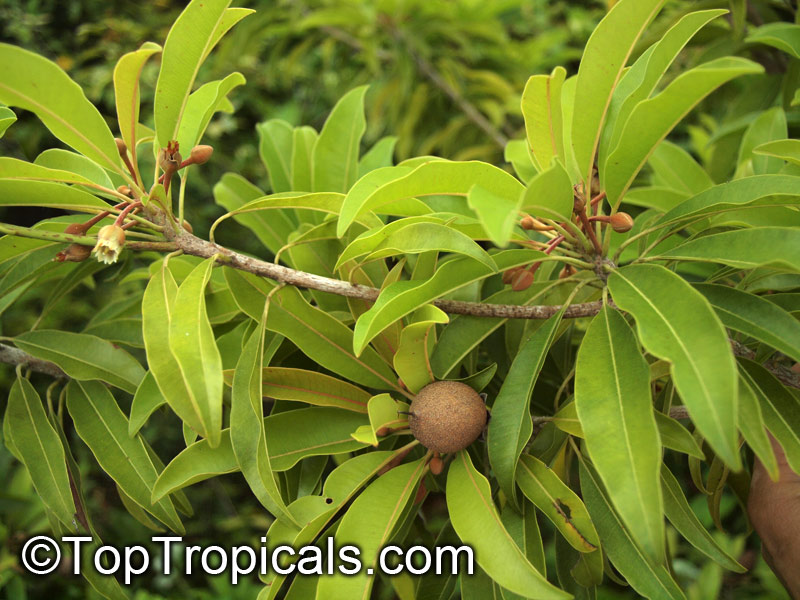
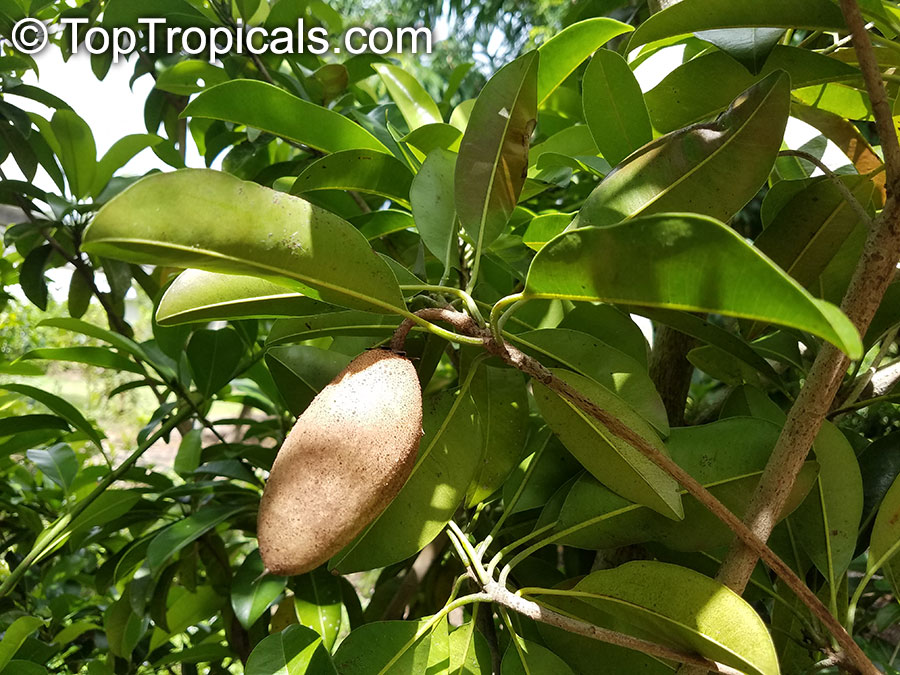
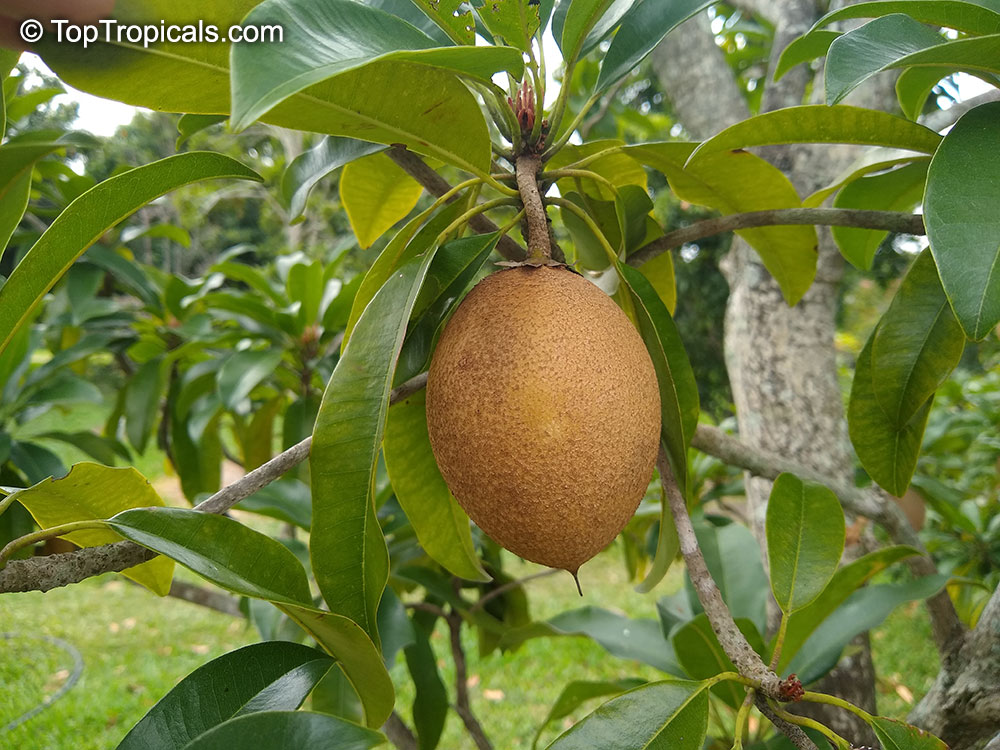
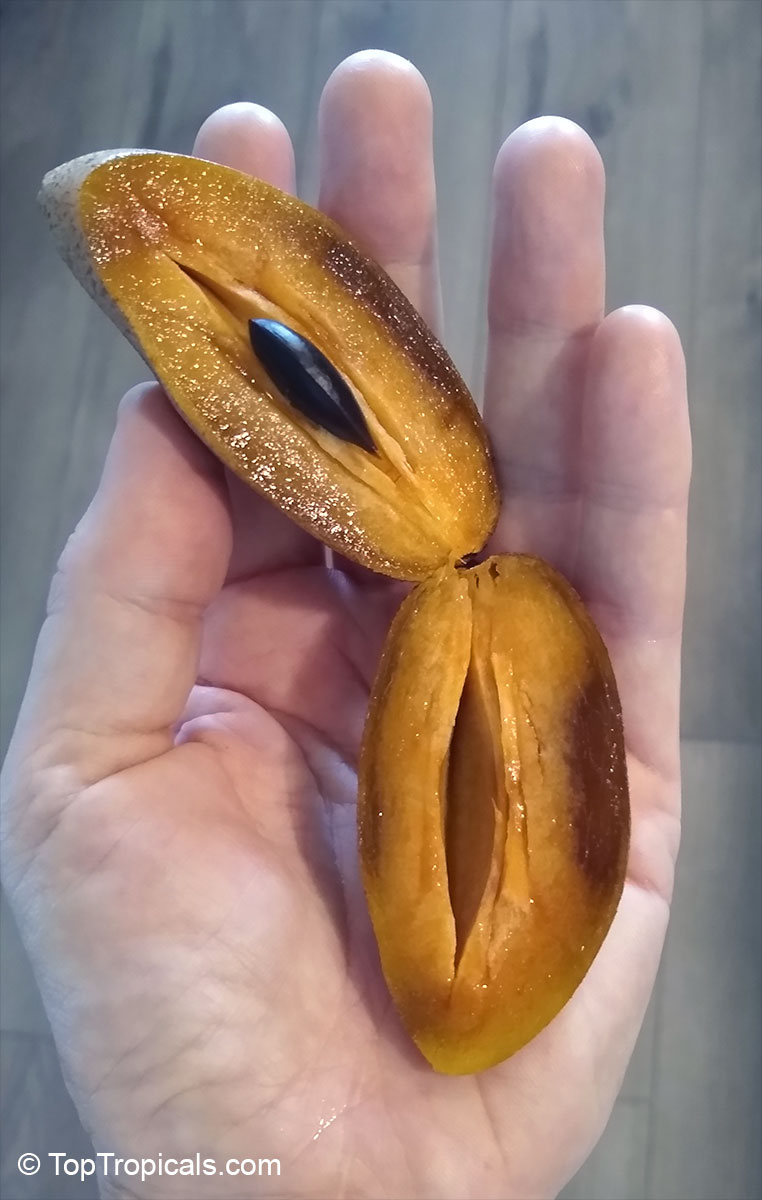
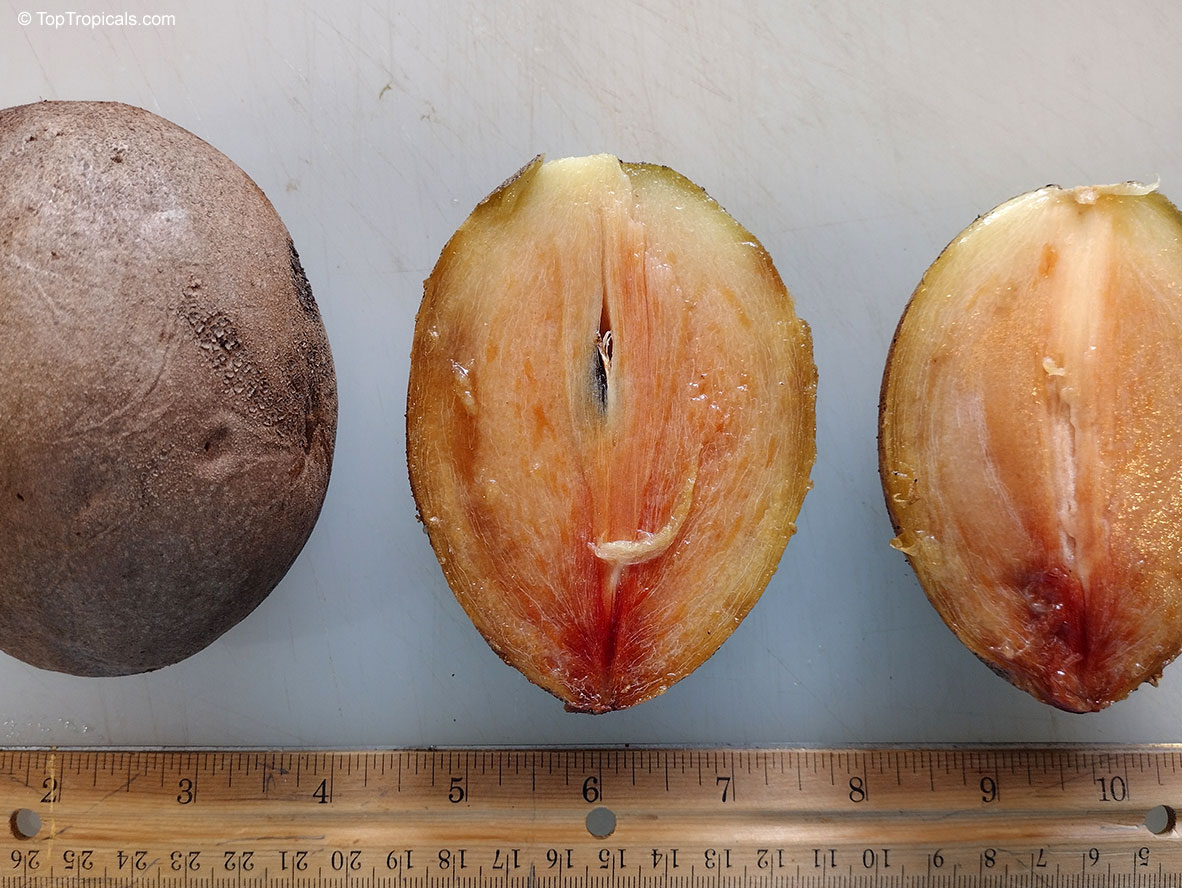
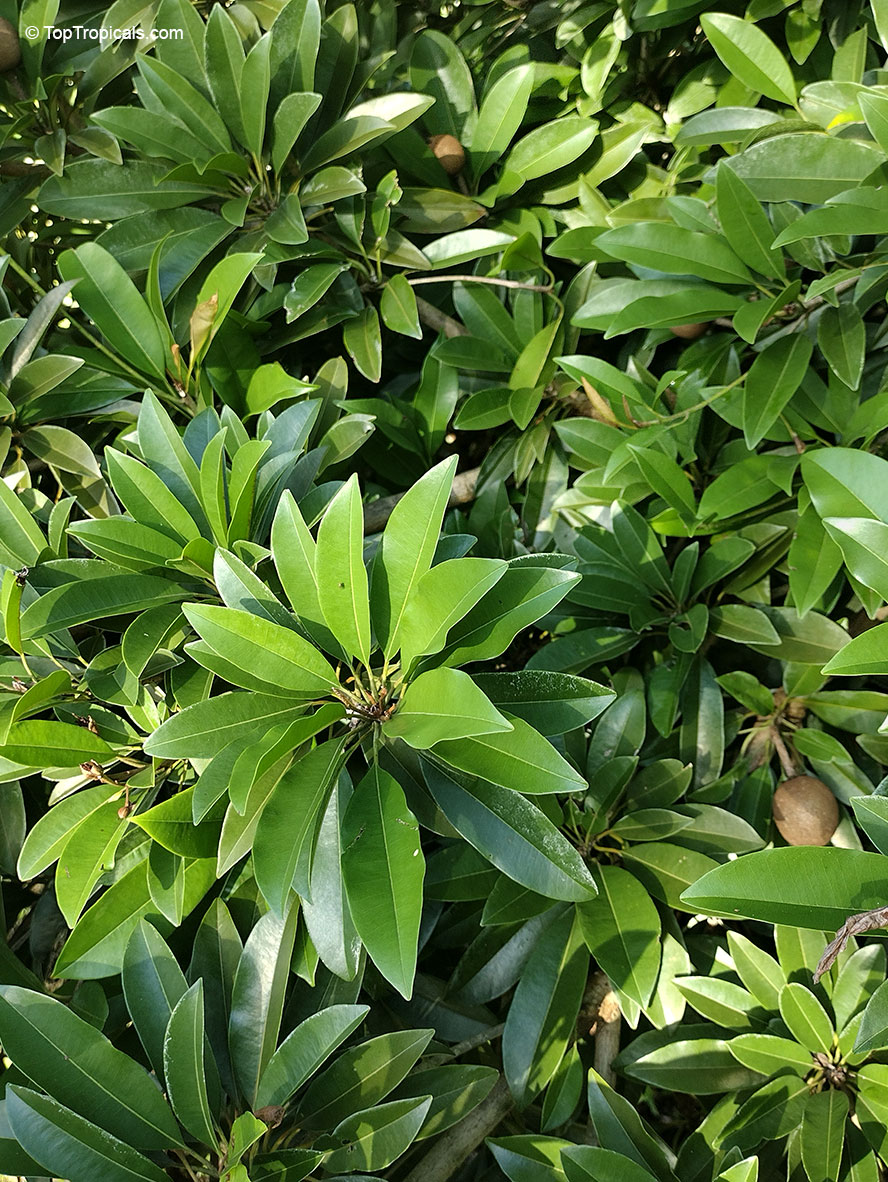
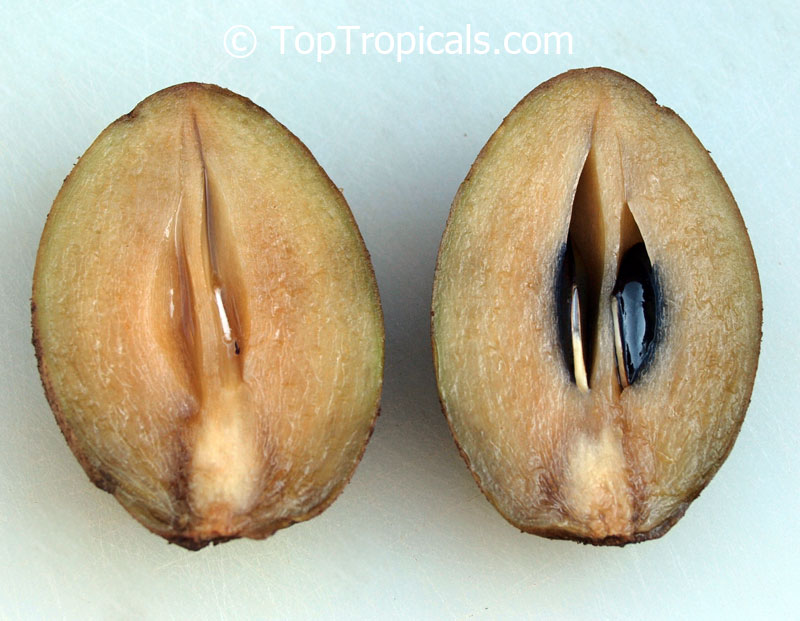
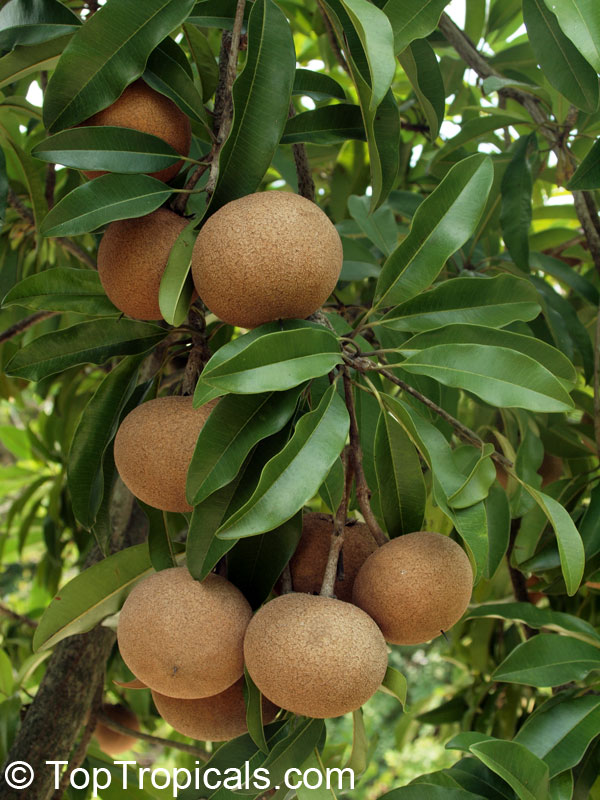
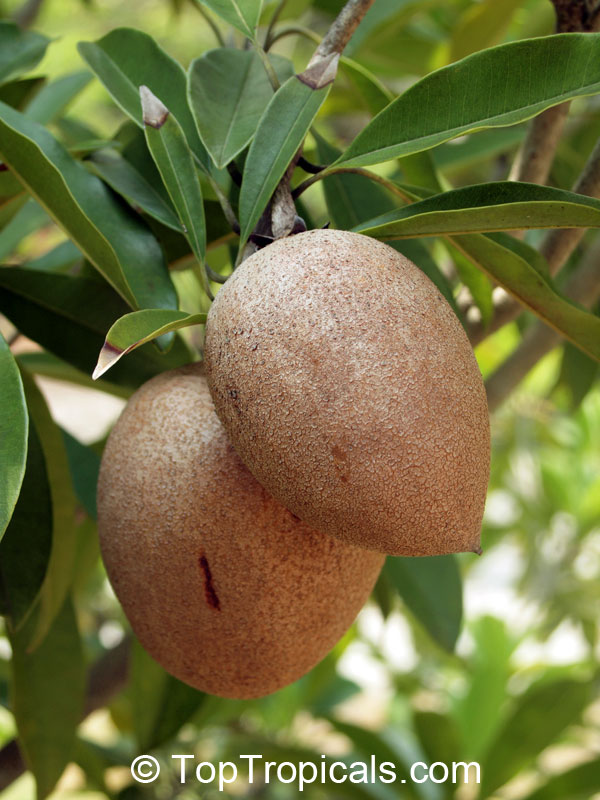
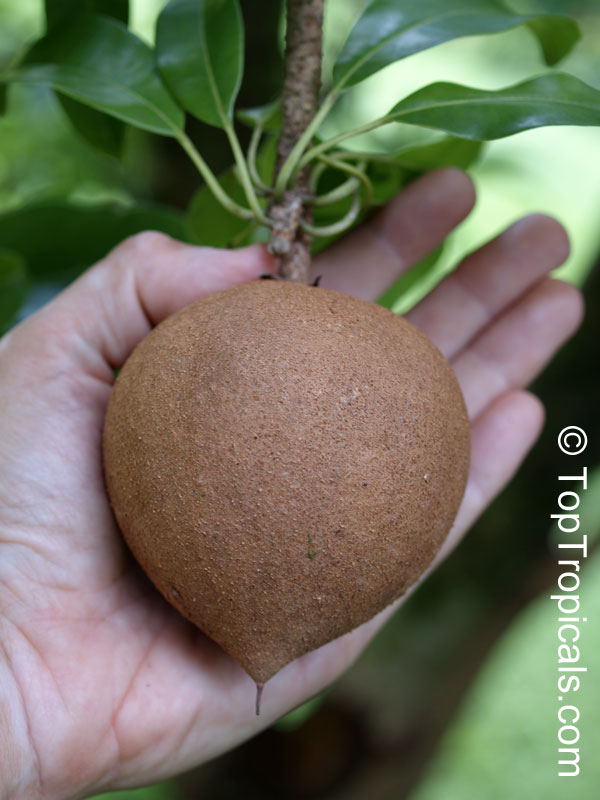
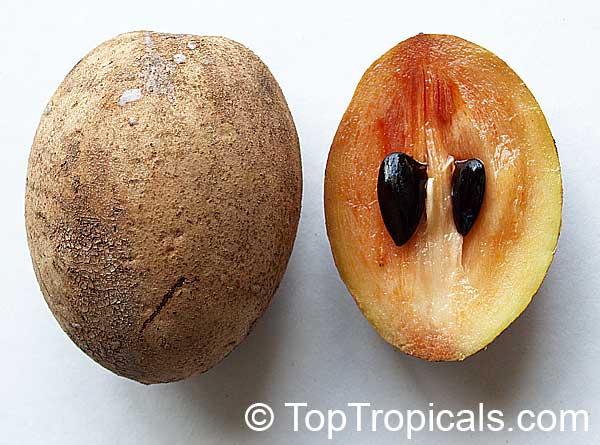
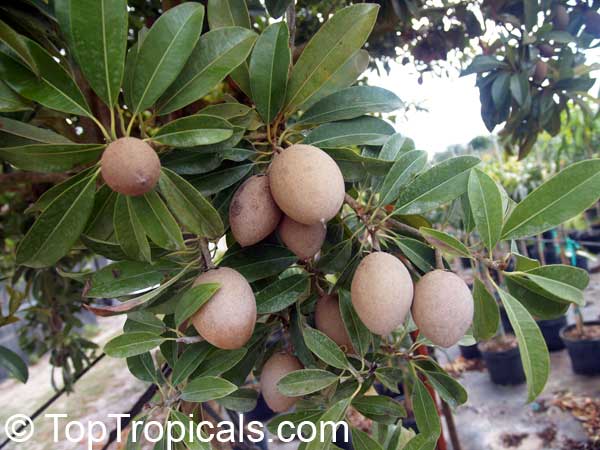
Sapodilla is a fairly slow-growing, long-lived medium-size tree, upright and elegant, dense and distinctly pyramidal, with thick glossy green leaves. Flowers are small and bell-like, borne on slender stalks at the leaf bases. The fruit has gray-brown rough textured skin and pinkish-brown, moist, soft and delicious flesh that tastes like a pear soaked in brown sugar. Each fruit has a few hard, black seeds that can be easily separated from the flesh. There is great variation in the size and form of the fruit, from almost round and large, to small and elongated. Numerous varieties and hybrids have been selected throughout the world. Sapodilla trees fruit prolifically, at frequent intervals throughout the year. In the tropics, some cultivars bear almost continuously. The fruits mature 4 to 6 months after flowering.
Most often eaten fresh. After the peel is removed, the fruit is sliced into pieces which are often carved into decorative shapes.
Sapodilla fruit is usually cut in half and the flesh is eaten with a spoon. It is an ideal dessert fruit as the skin, which is not eaten, remains firm enough to serve as a "shell". The flesh may be scooped out and added to fruit cups or salads. A dessert sauce is made by adding orange juice, and topping with whipped cream. Sapodilla flesh may also be blended into an egg custard mix before baking. The fruit is sometimes fried or stewed with lime juice or ginger. Mashed sapodilla pulp can be added to pancake batter and bread mix before baking. Cooking with sugar changes the brown color of the flesh to a pleasing red.
Sapodilla wine is also very good. Young leafy shoots are eaten raw or steamed with rice in Indonesia, after washing to eliminate the sticky sap.
A major by-product of the sapodilla tree is the gummy latex called "chicle", containing 15% rubber and 38% resin.
The plant grows naturally in the calcareous marl and disintegrated limestone, and is well adapted to Florida soils; it flourishes also in other types of soil, from deep, loose, organic soil, to loam, light clay, sand or even gravel, but requires excellent drainage. It is strong, wind-resistant, highly drought-resistant, and can stand salt spray. In India, brackish or saline water is sometimes used to reduce vegetative growth and promote fruiting. Commercially grove trees receive no watering, although irrigation in dry seasons will increase productivity.
Unlike most of tropical fruit, Sapodilla seeds remain viable for several years if kept dry. They germinate readily but growth is slow and the trees take 5 to 8 years to bear. Grafted trees start fruiting right away.







Recommended Fertilizer: SUNSHINE C-Cibus - Crop Nutrition Booster
SUNSHINE-Honey - sugar booster
This is a hot seller, limited quantities. This is small plant. Demand is very high, these plants sell faster than we can grow them bigger. Please do not order if size matters to you. Contact us before making purchase if you have any questions
Last one
Recommended Fertilizer: SUNSHINE C-Cibus - Crop Nutrition Booster
SUNSHINE-Honey - sugar booster

Recommended Fertilizer: SUNSHINE C-Cibus - Crop Nutrition Booster
SUNSHINE-Honey - sugar booster
Local pickup only. This item is not available for shipping. Local delivery may be available in Ft. Myers or Sebring, Florida. Contact us for an estimate. Non-pickup orders are subject to restocking fees.
Last one
Recommended Fertilizer: SUNSHINE C-Cibus - Crop Nutrition Booster
SUNSHINE-Honey - sugar booster
Recommended Fertilizer: SUNSHINE C-Cibus - Crop Nutrition Booster
SUNSHINE-Honey - sugar booster
Recommended Fertilizer: SUNSHINE C-Cibus - Crop Nutrition Booster
SUNSHINE-Honey - sugar booster
This is a hot seller, limited quantities. This is small plant. Demand is very high, these plants sell faster than we can grow them bigger. Please do not order if size matters to you. Contact us before making purchase if you have any questions
Recommended Fertilizer: SUNSHINE C-Cibus - Crop Nutrition Booster
SUNSHINE-Honey - sugar booster
This is a hot seller, limited quantities. This is small plant. Demand is very high, these plants sell faster than we can grow them bigger. Please do not order if size matters to you. Contact us before making purchase if you have any questions
Last one
Recommended Fertilizer: SUNSHINE C-Cibus - Crop Nutrition Booster
SUNSHINE-Honey - sugar booster
This is a hot seller, limited quantities. This is small plant. Demand is very high, these plants sell faster than we can grow them bigger. Please do not order if size matters to you. Contact us before making purchase if you have any questions
Recommended Fertilizer: SUNSHINE C-Cibus - Crop Nutrition Booster
SUNSHINE-Honey - sugar booster
This is a hot seller, limited quantities. This is small plant. Demand is very high, these plants sell faster than we can grow them bigger. Please do not order if size matters to you. Contact us before making purchase if you have any questions
Last one
Recommended Fertilizer: SUNSHINE C-Cibus - Crop Nutrition Booster
SUNSHINE-Honey - sugar booster
Recommended Fertilizer: SUNSHINE C-Cibus - Crop Nutrition Booster
SUNSHINE-Honey - sugar booster
Recommended Fertilizer: SUNSHINE C-Cibus - Crop Nutrition Booster
SUNSHINE-Honey - sugar booster
This is a hot seller, limited quantities. This is small plant. Demand is very high, these plants sell faster than we can grow them bigger. Please do not order if size matters to you. Contact us before making purchase if you have any questions
Recommended Fertilizer: SUNSHINE C-Cibus - Crop Nutrition Booster
SUNSHINE-Honey - sugar booster
This is a hot seller, limited quantities. This is small plant. Demand is very high, these plants sell faster than we can grow them bigger. Please do not order if size matters to you. Contact us before making purchase if you have any questions
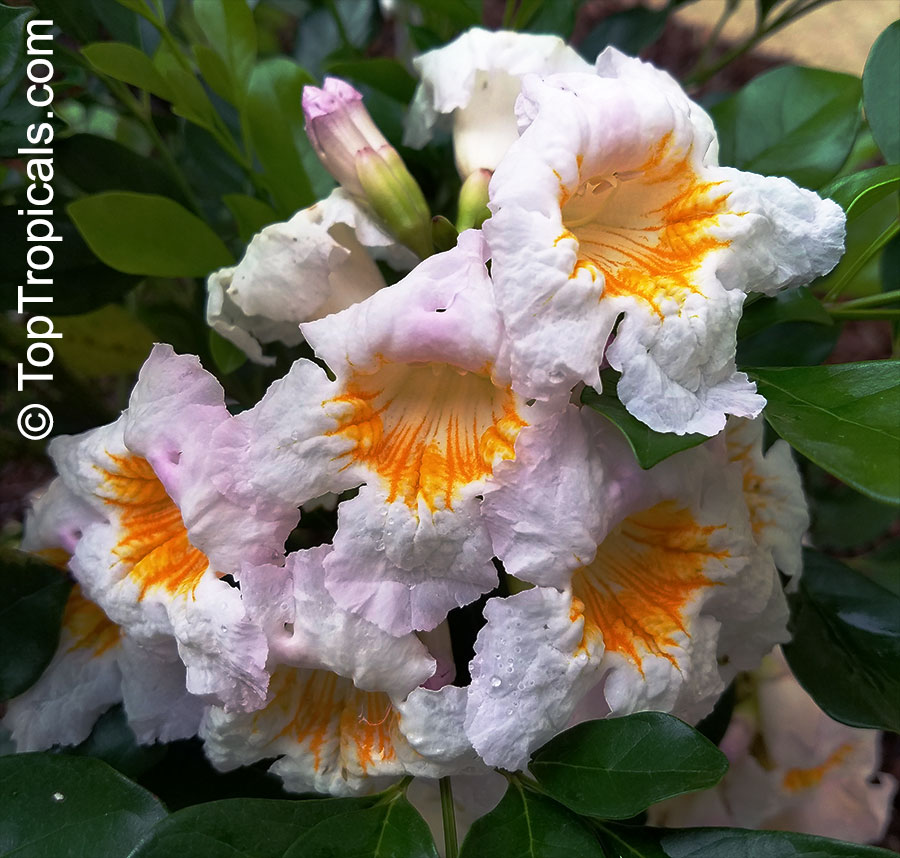
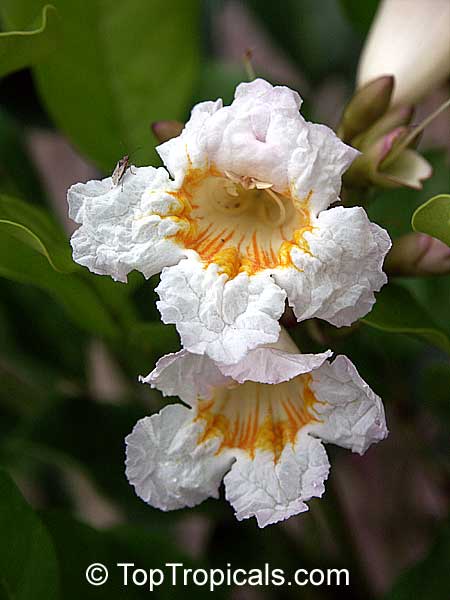
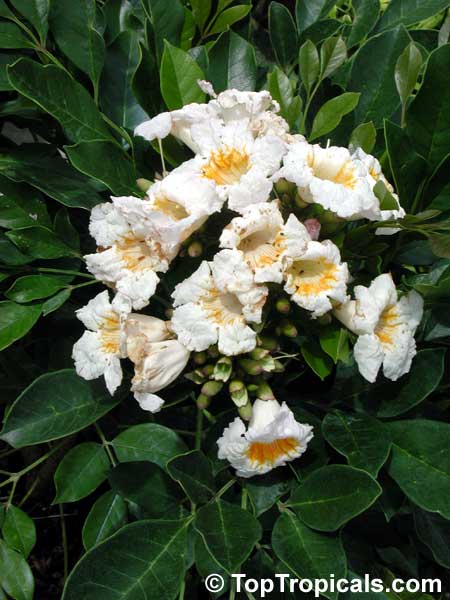
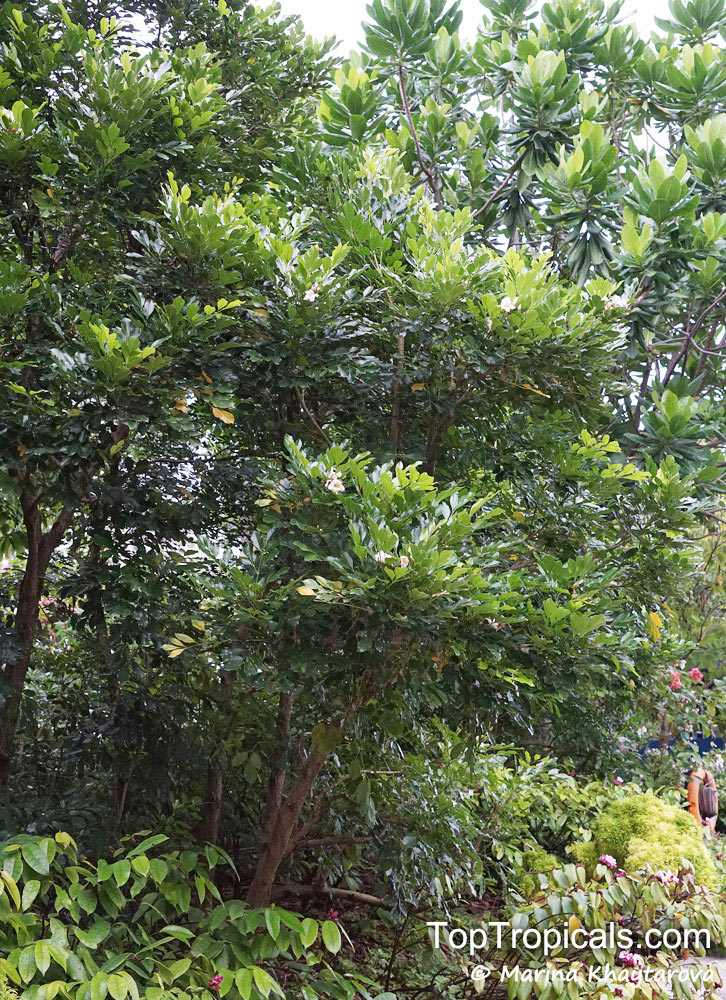
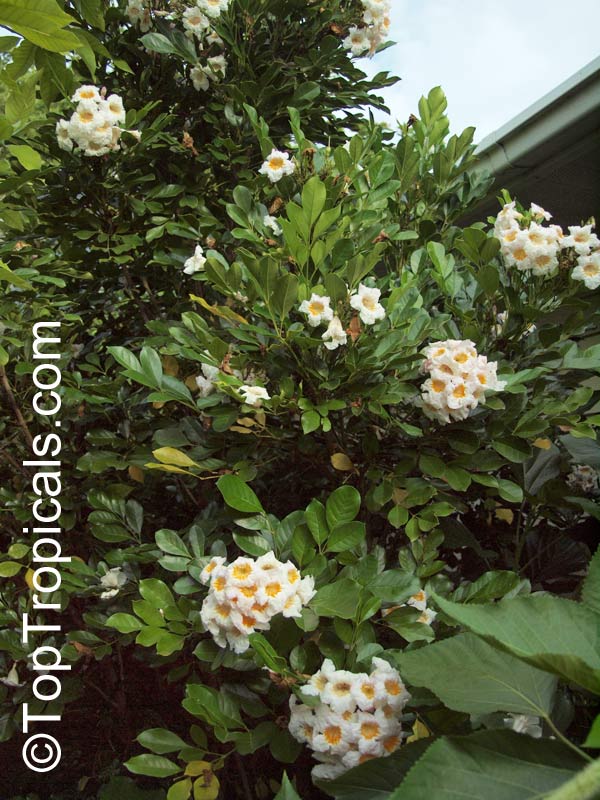
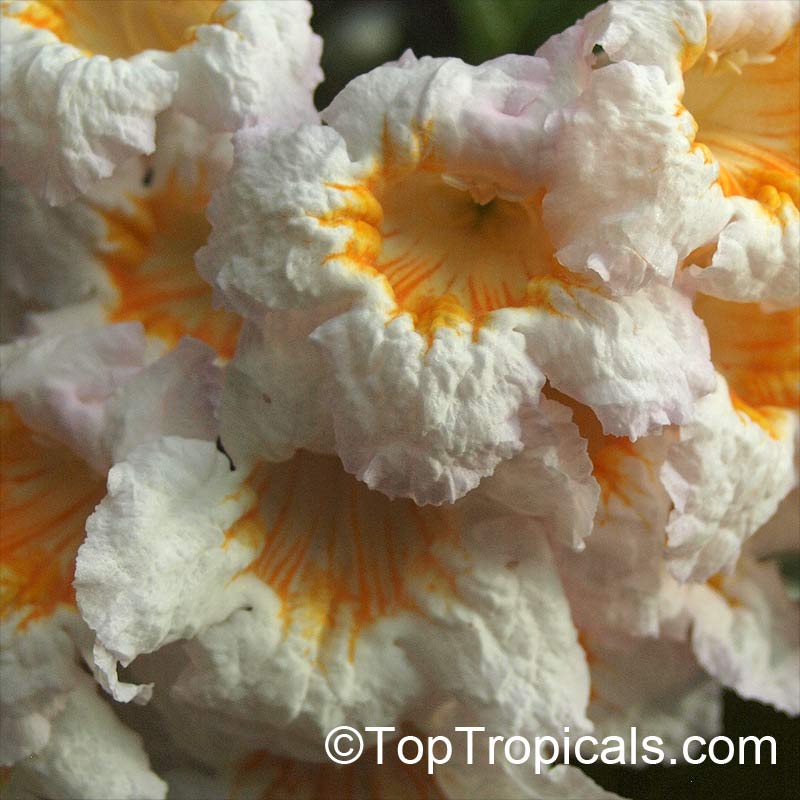
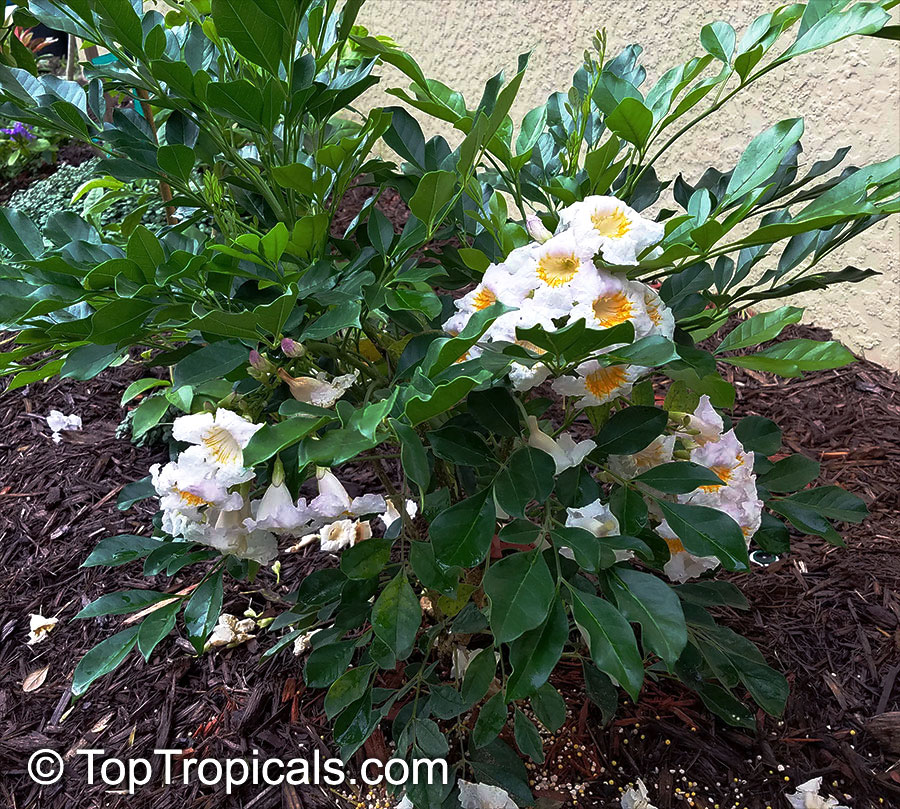
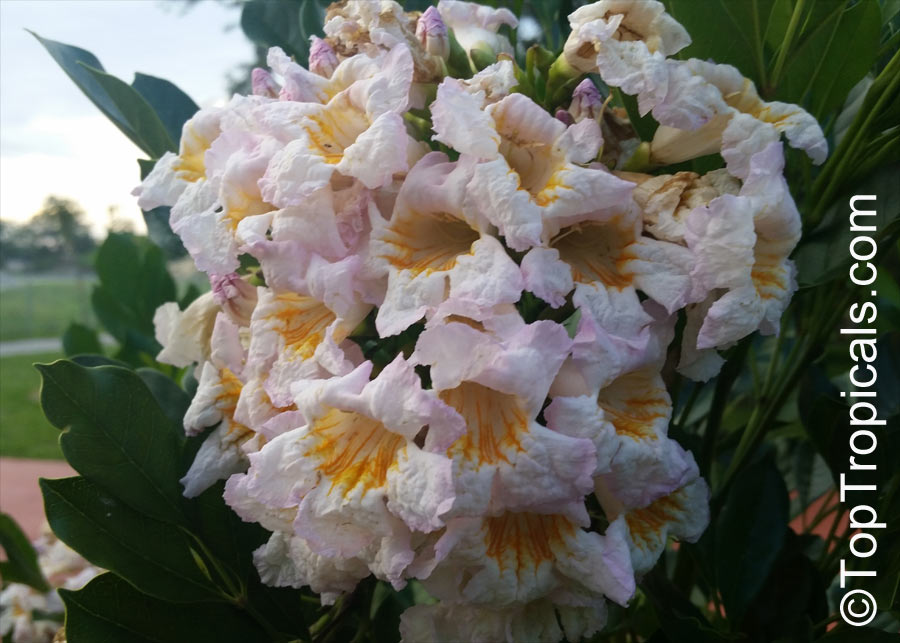
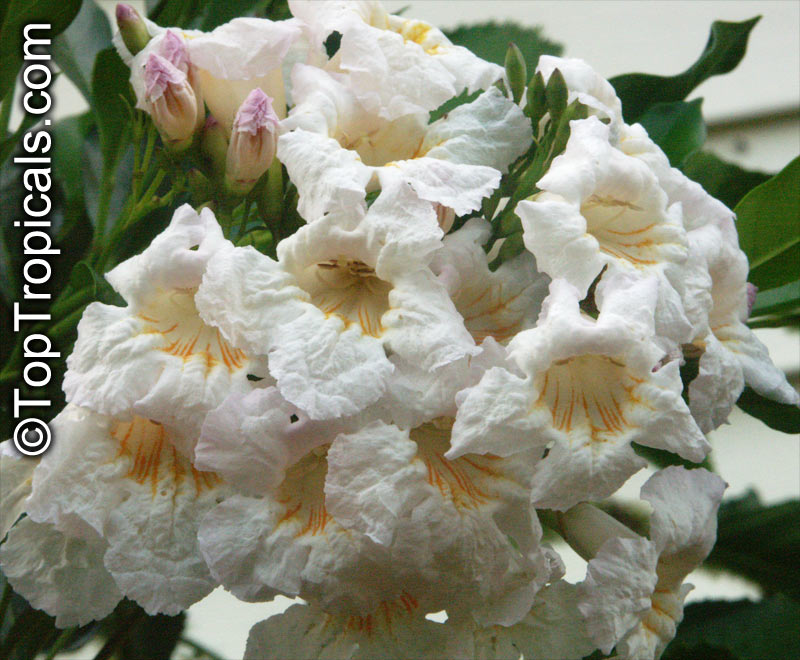
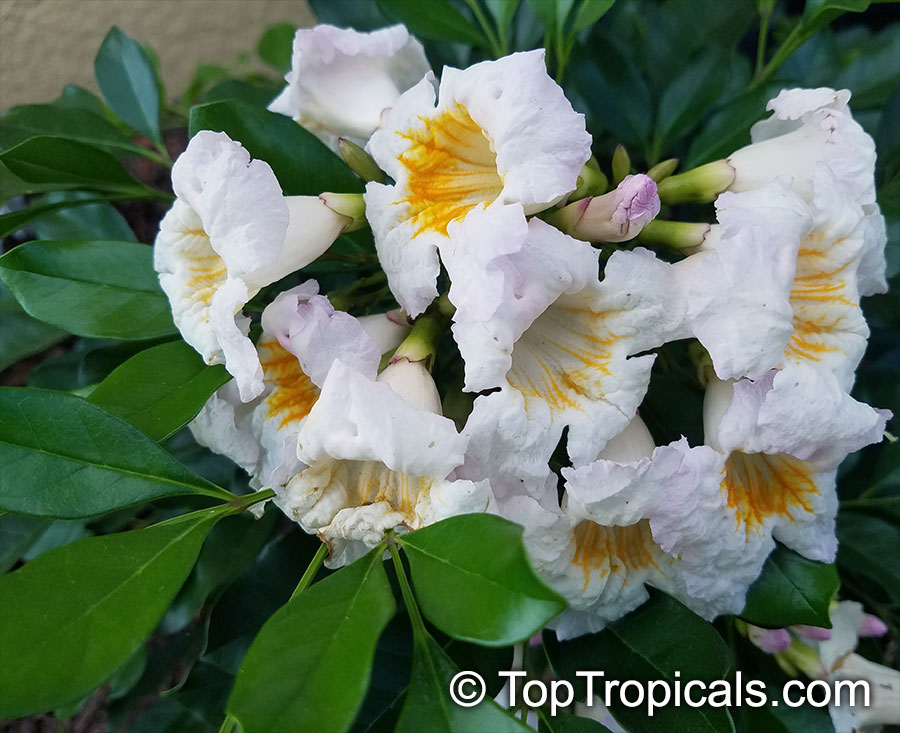
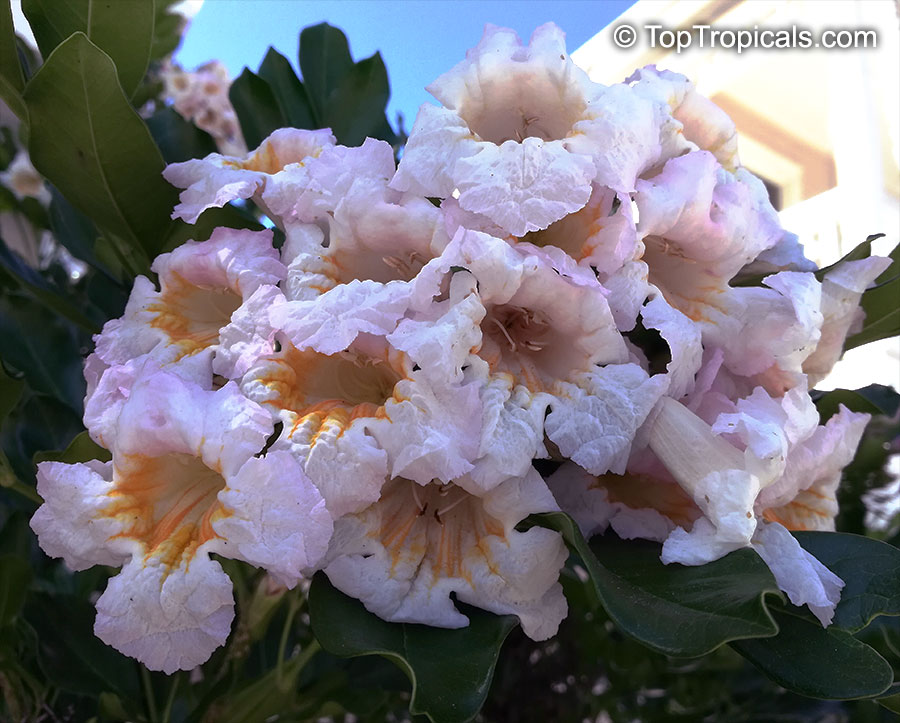
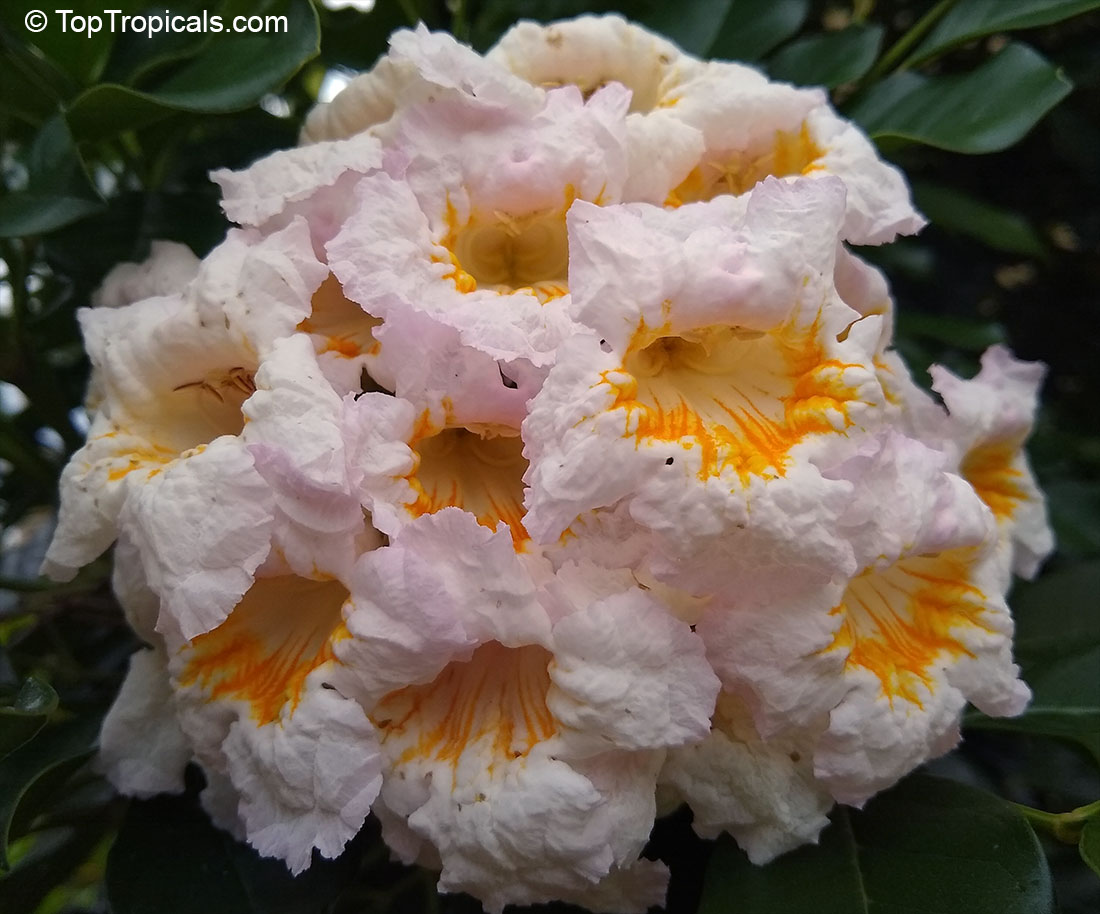
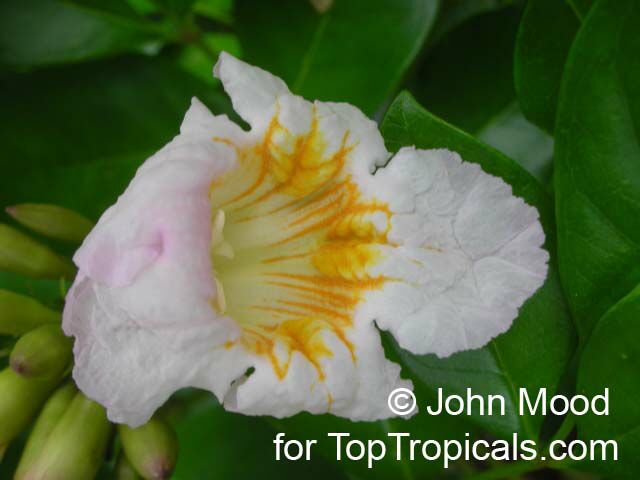
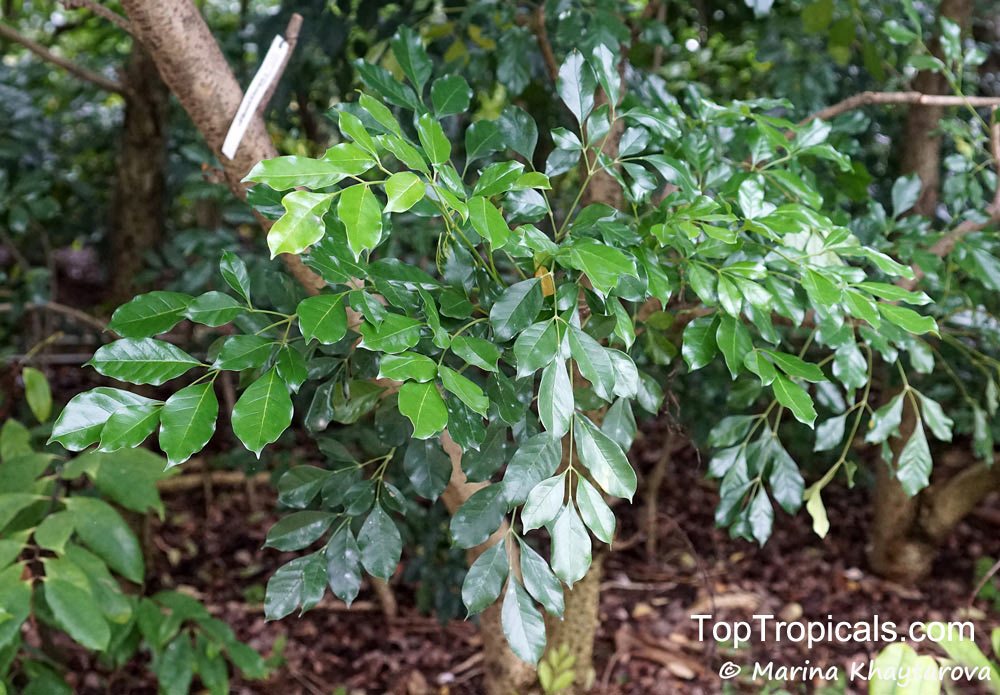
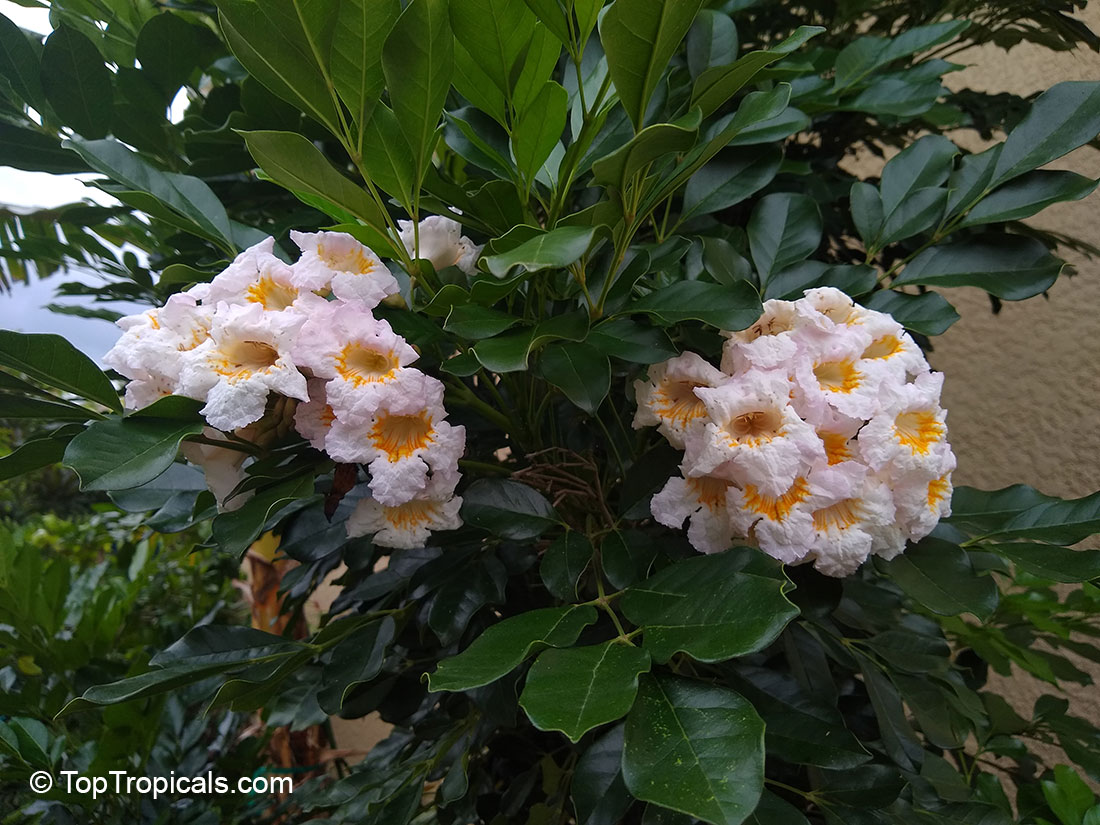
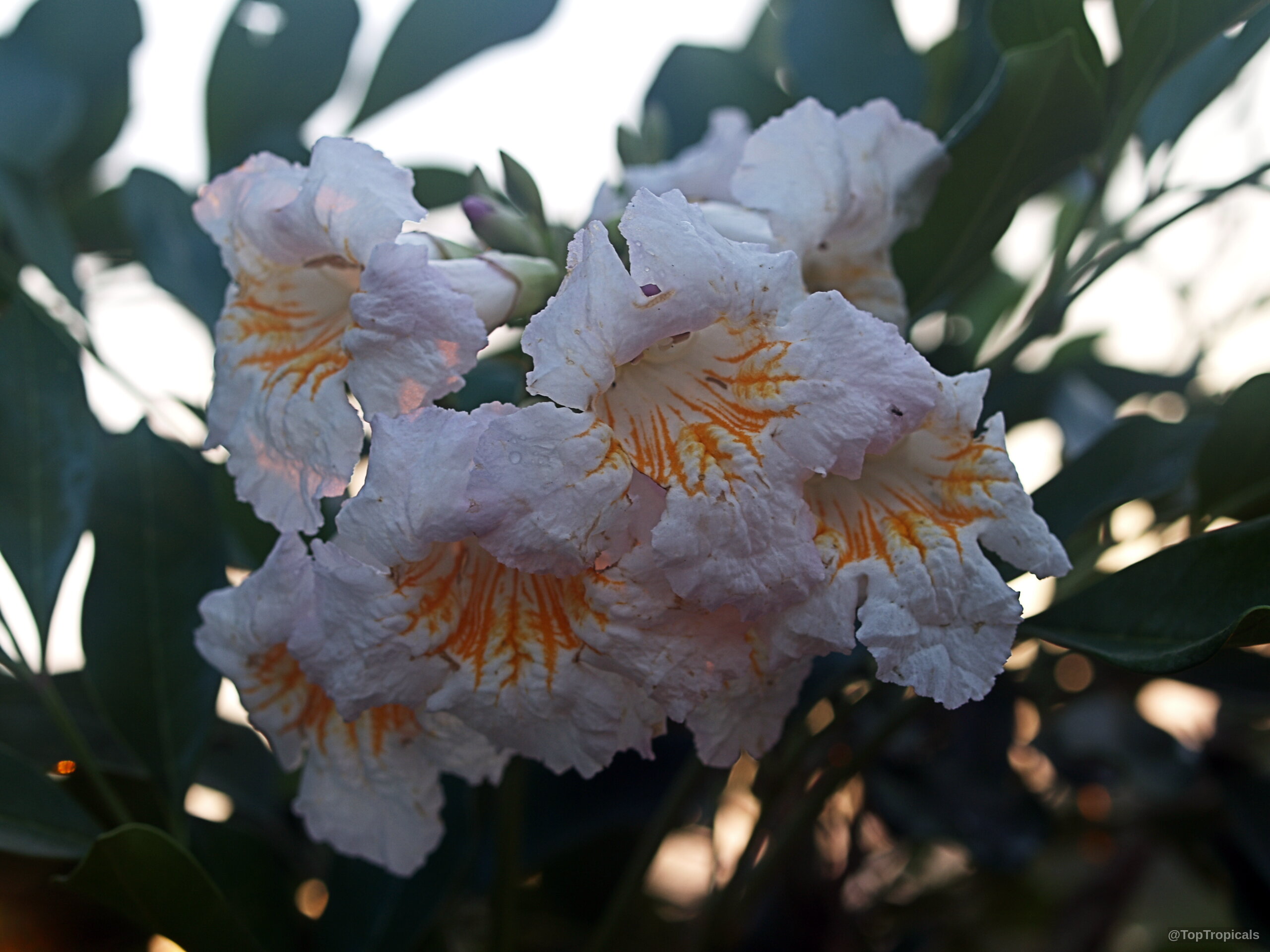
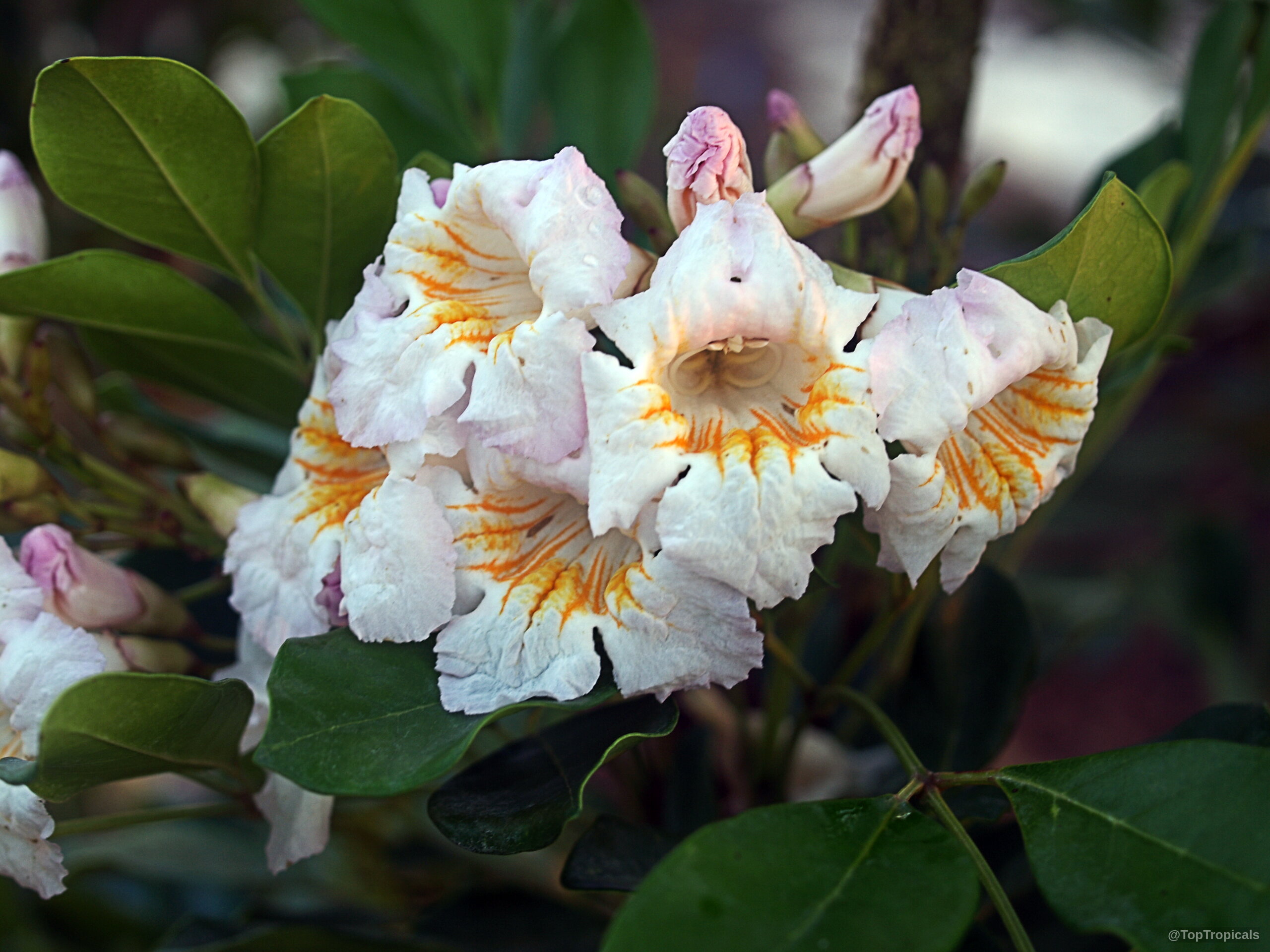
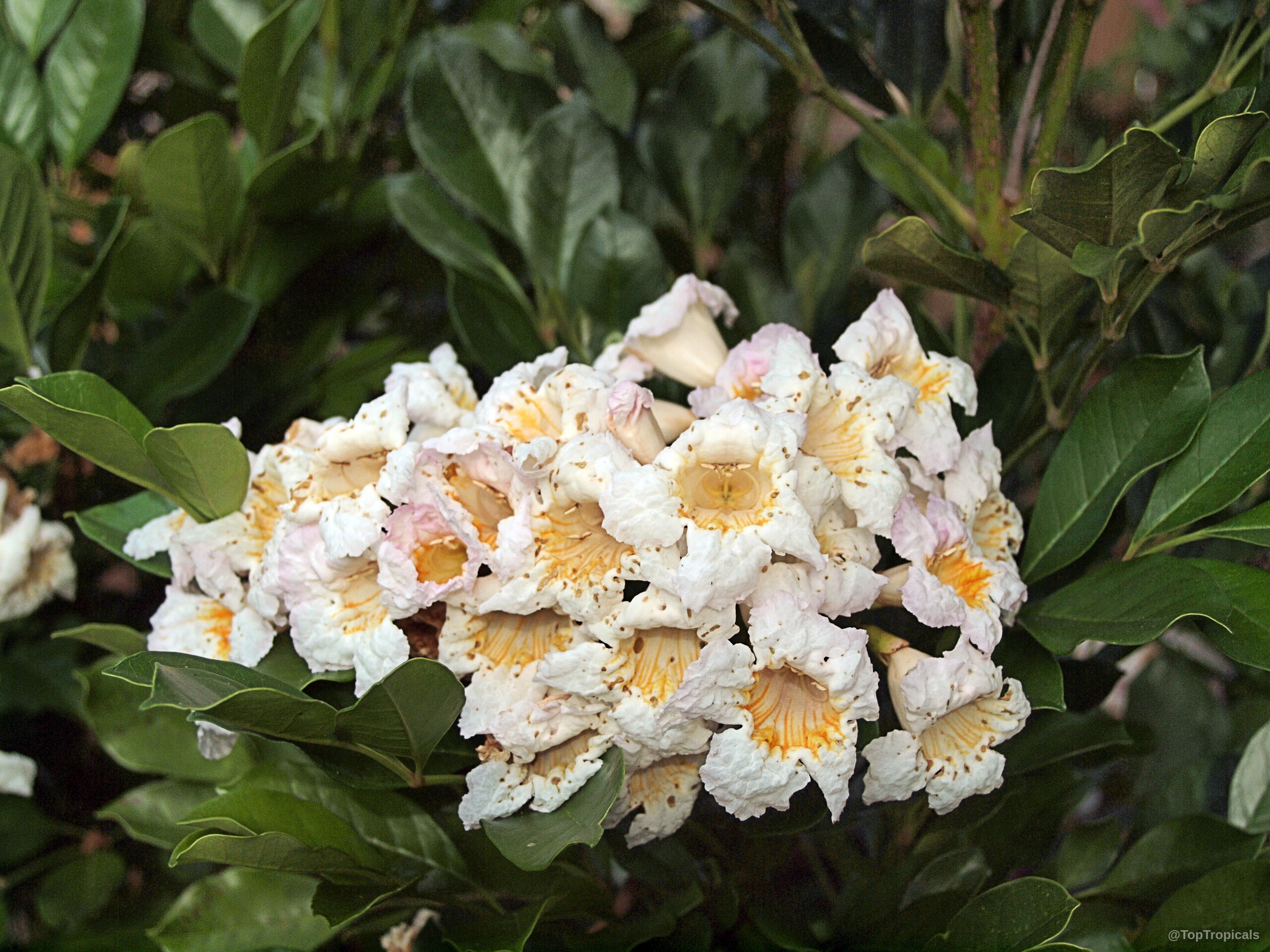
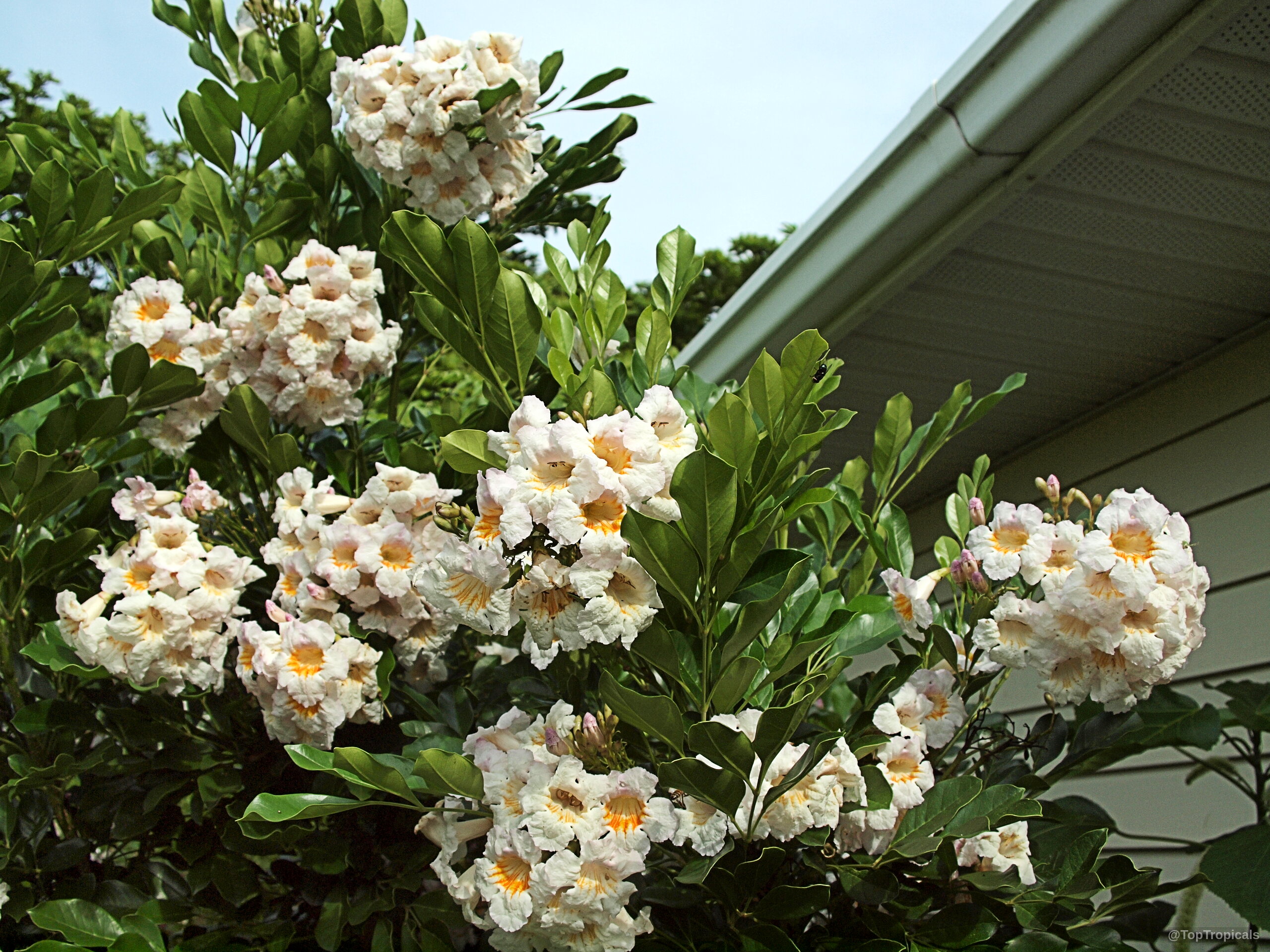
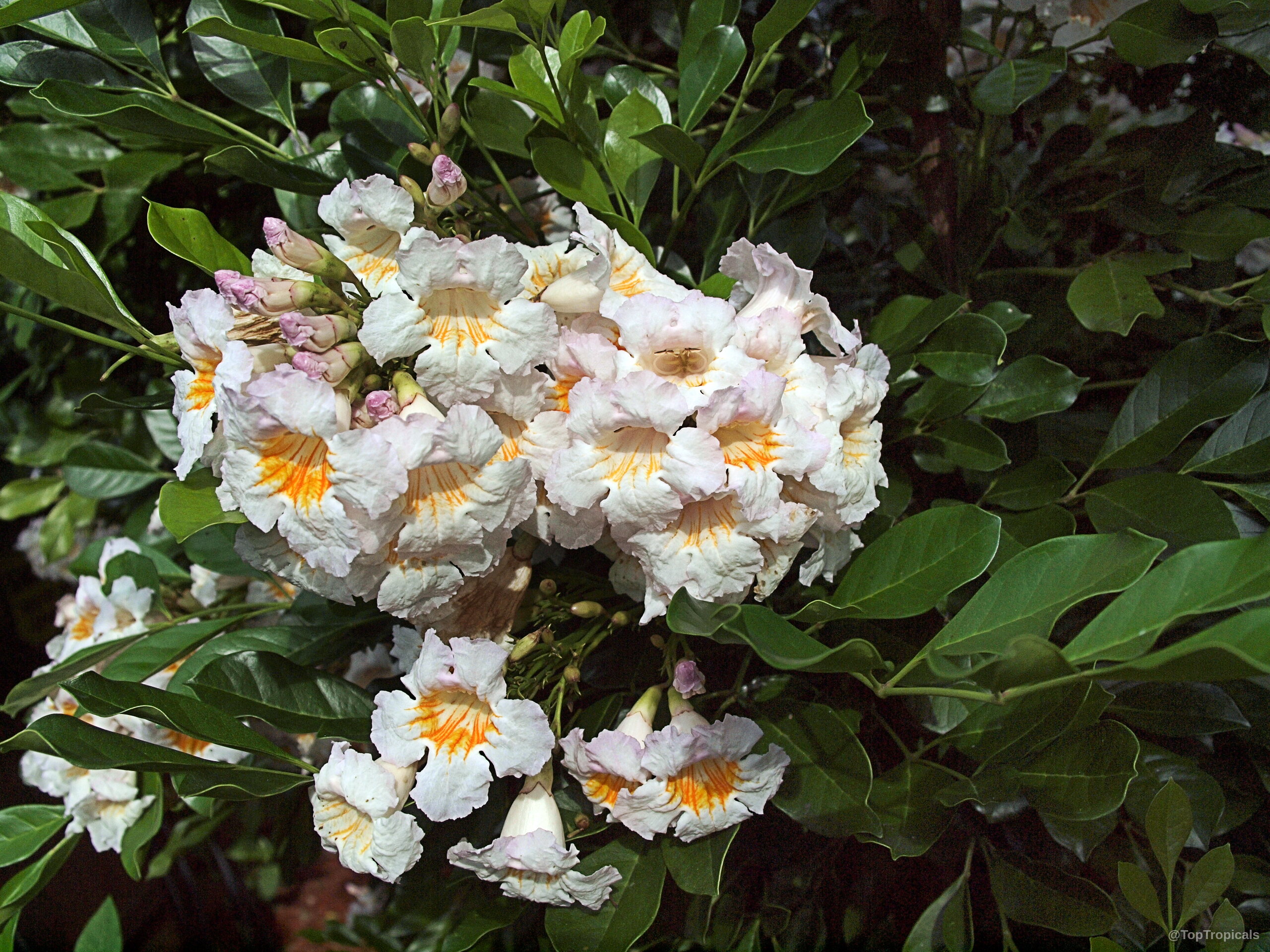
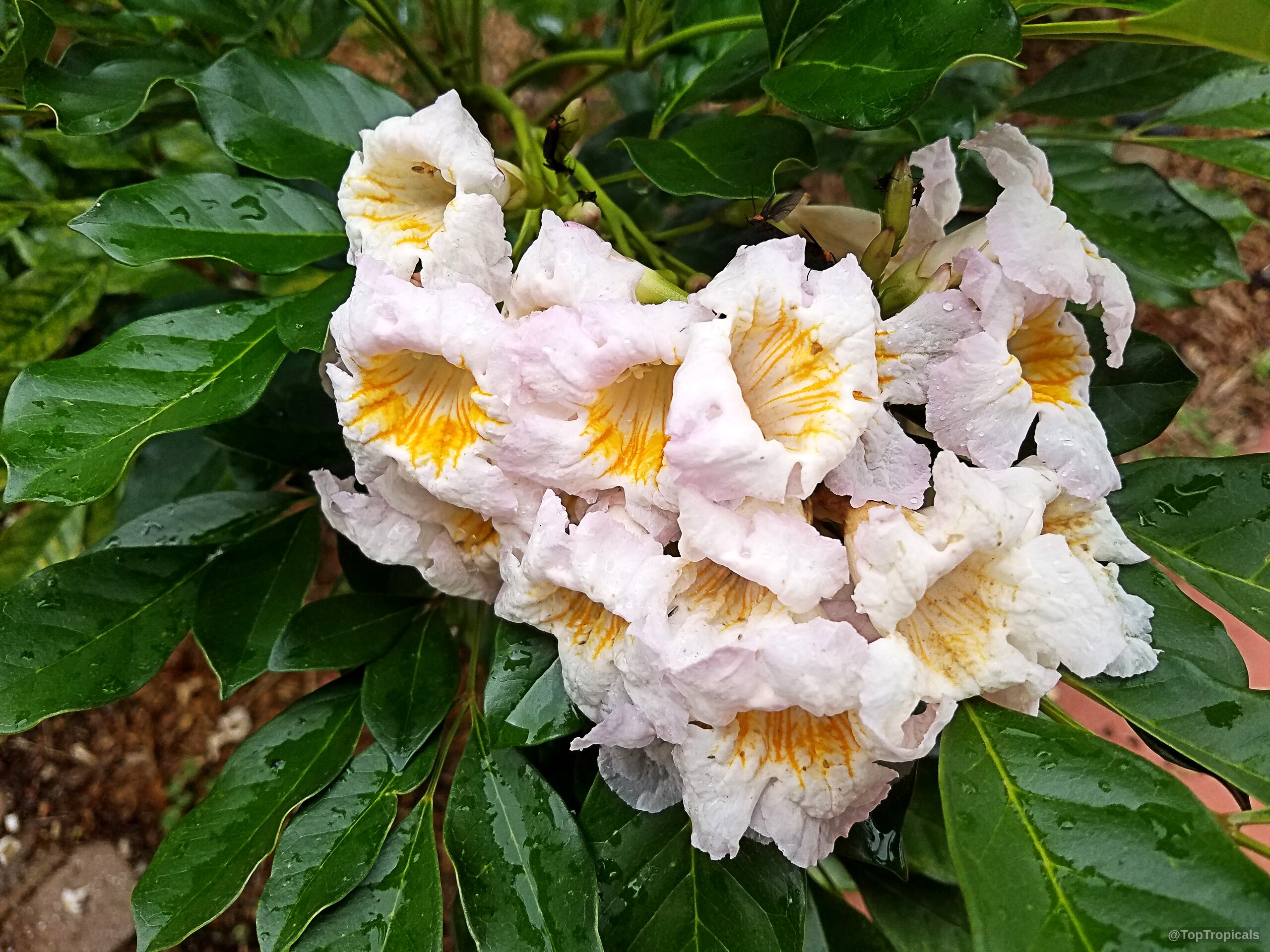
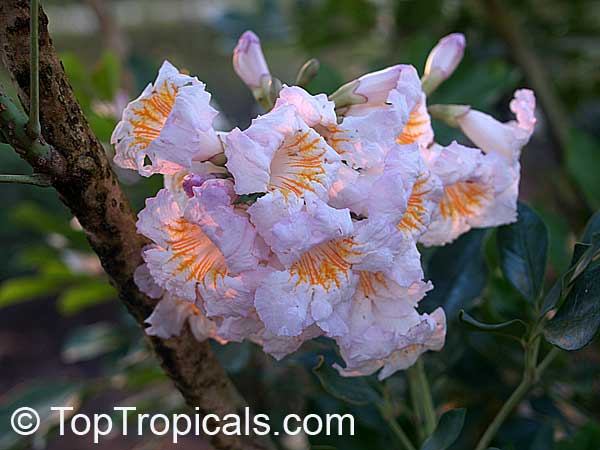
Botanical name: Radermachera sp. Kunming var. kunming
Common names: Dwarf Tree Jasmine, Peep Thong
Cultivar: Kunming
Family: Bignoniaceae
Origin: Thailand


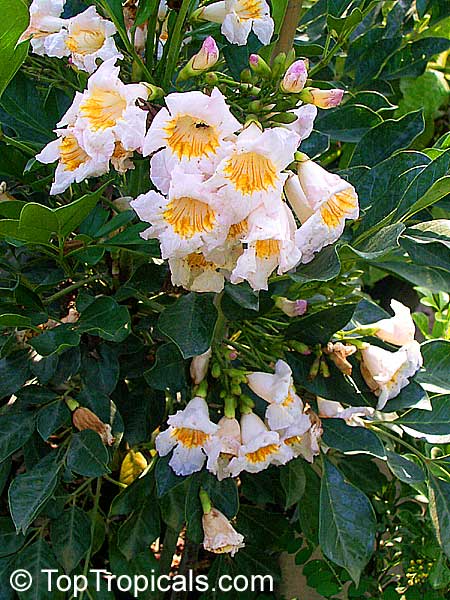
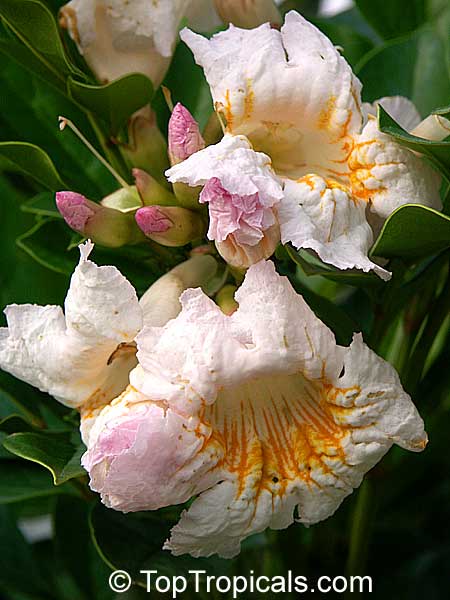
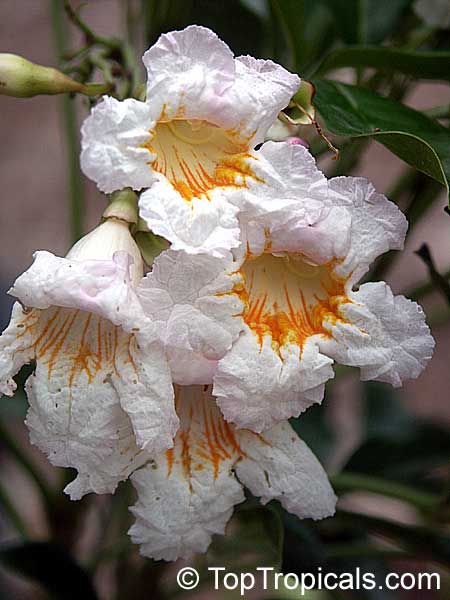
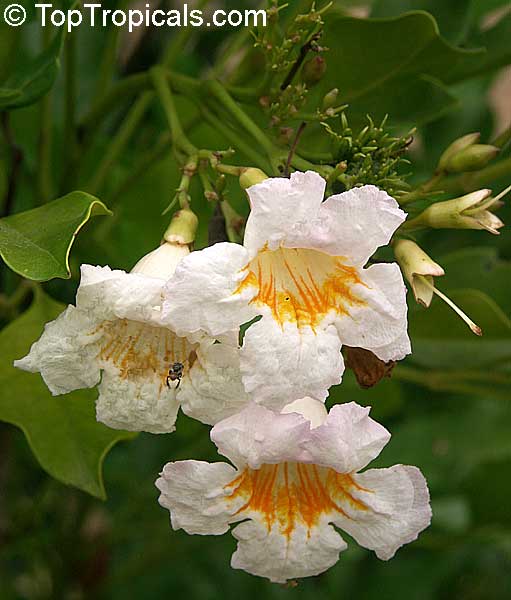
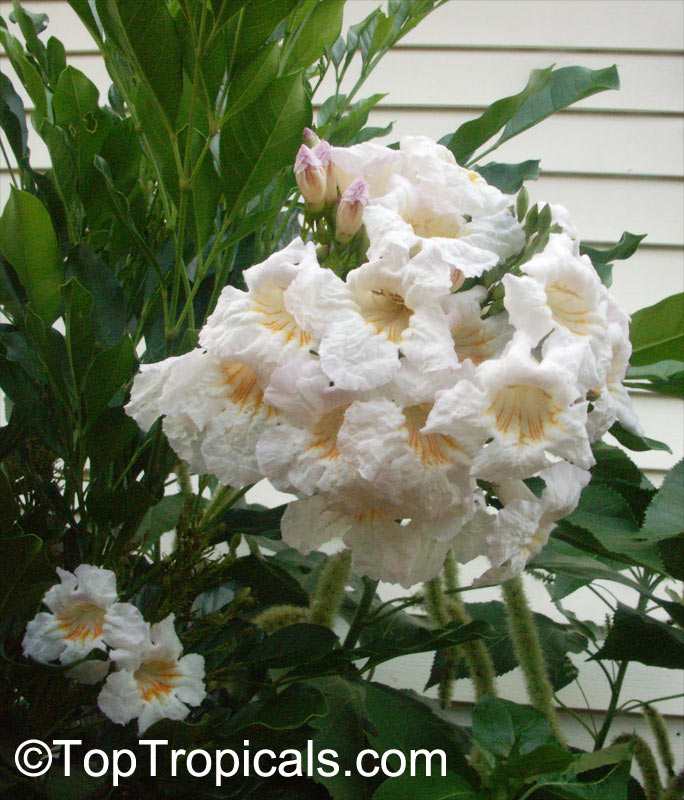
The Radermachera Kunming is a small tree or shrub native to Thailand that is widely grown in USDA Zone 9-11 regions. It thrives in full sun and semi-shade and requires regular watering and fast draining, nutrient-rich soil. While it has good drought tolerance once established, it tends to drop flowers and leaves in winter, so it is best to water it less frequently during this season. In northern regions, it is best to grow the plant in a pot and bring it indoors when temperatures drop. Pruning should be avoided as it can reduce the number of fragrant flowers on the plant.
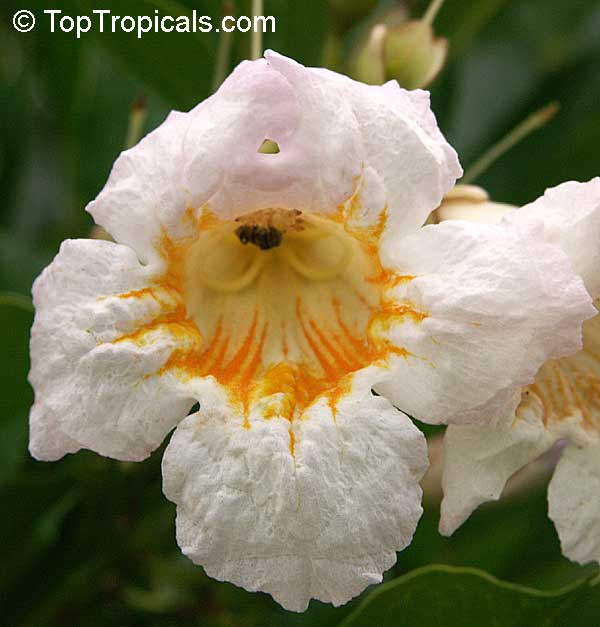
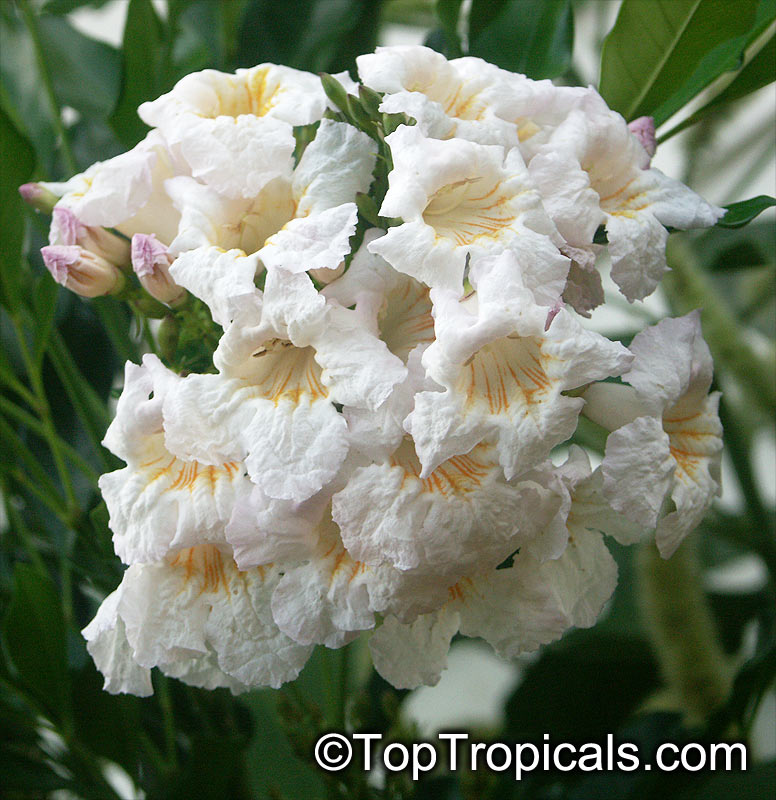
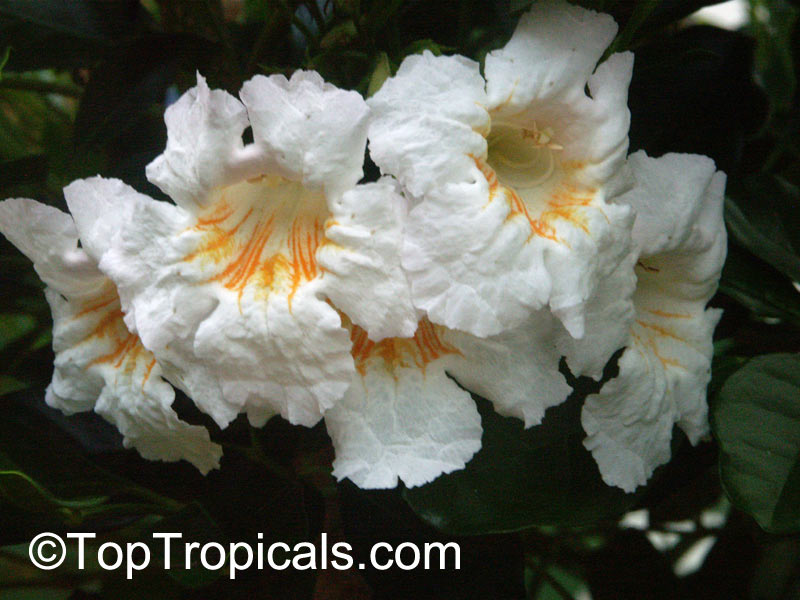
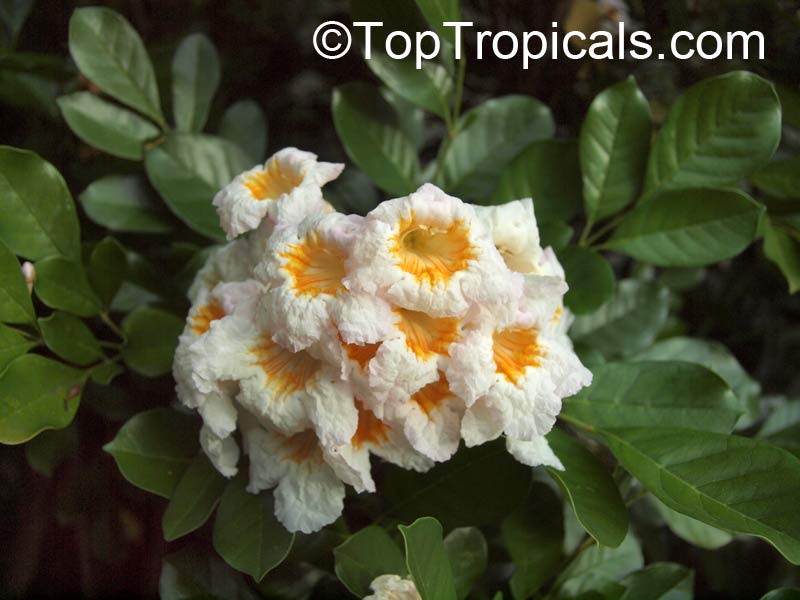
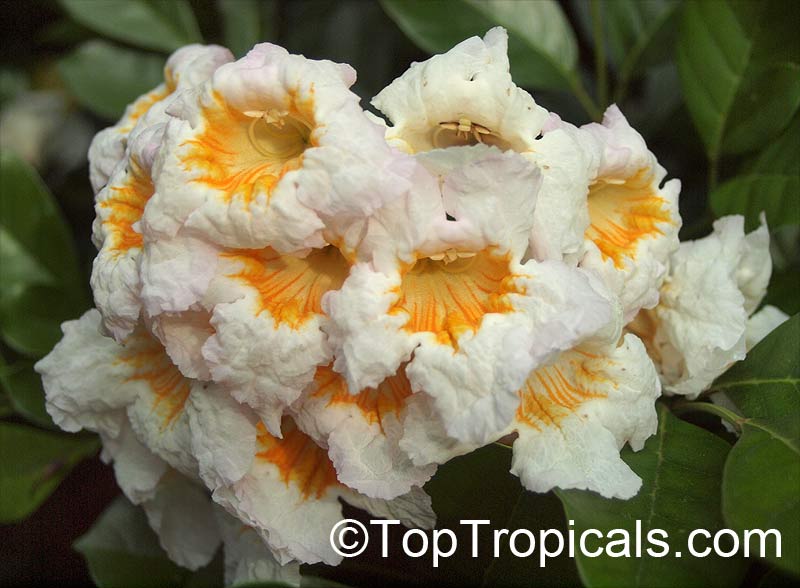
Not as well known as Michelia or Cananga , the Radermachera Kunming is a true gem for any collection of fragrant plants. Its flowers, which range in color from creamy-pink to off-white with yellow centers, are extremely fragrant and resemble the scents of roses, juicy fruit, candies, and fine cologne. The leaves are also ornamental, with a fountain-like architecture. Easy to grow in a pot, this tree is known for its simplicity, endurance, advancement, and peacefulness. It is also attractive to butterflies, hummingbirds, and other pollinators, making it a good choice for pollinator gardens. In some villages, the extract from these flowers is used in traditional pharmacy as a relaxant and aphrodisiac.





Recommended Fertilizer: SUNSHINE Pikake - Fragrant Flower Booster
 SUNSHINE Pikake (NPK 2-2-4) - eco-friendly concentrated nutrition booster for fragrant flowers. Improves quantity and quality of flowers. Encourages profuse blooming. Increases flower fragrance intensity. Can be used with every watering. For best results, use in combination with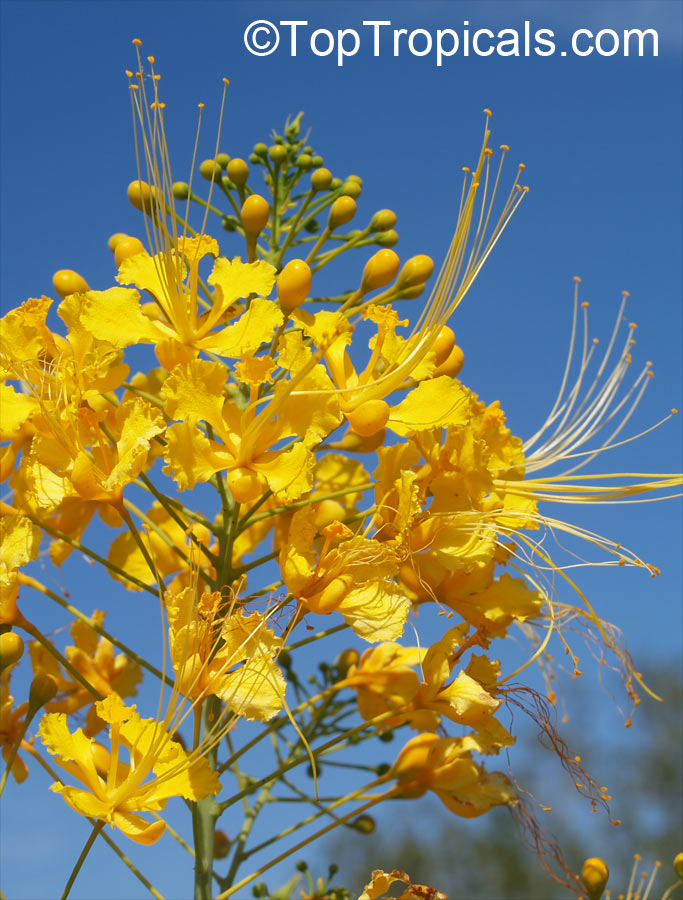
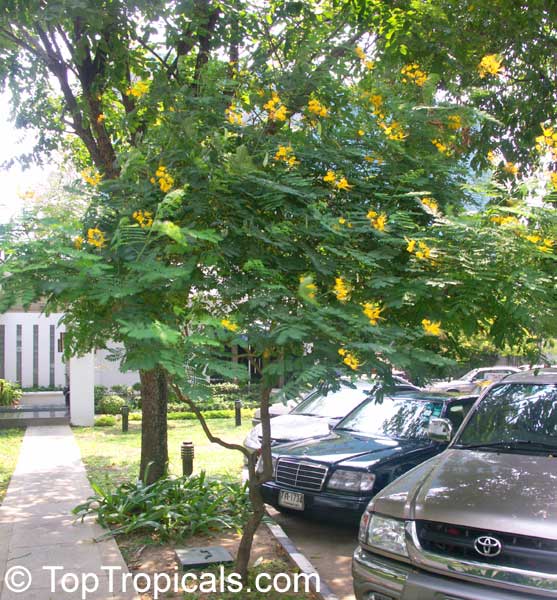
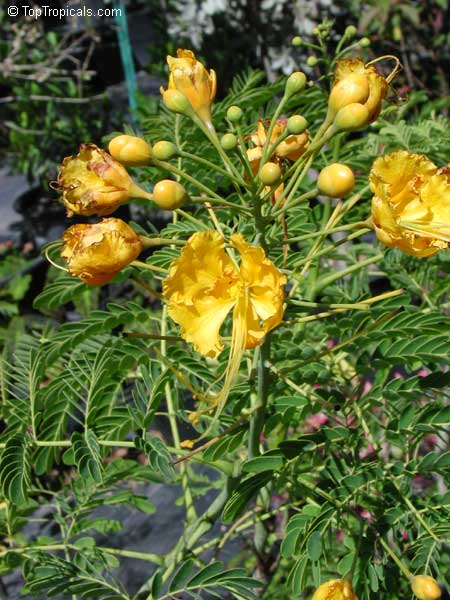
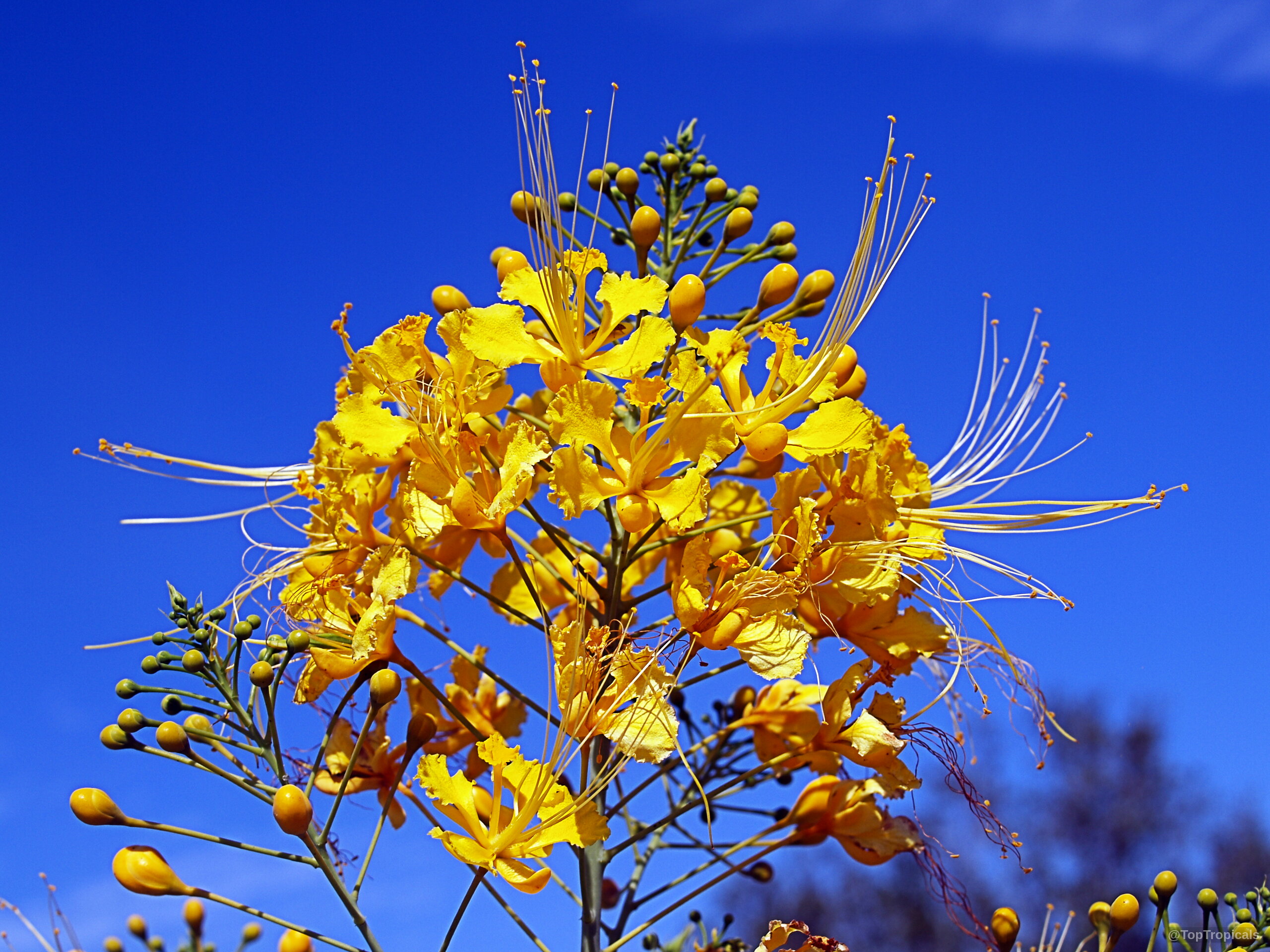
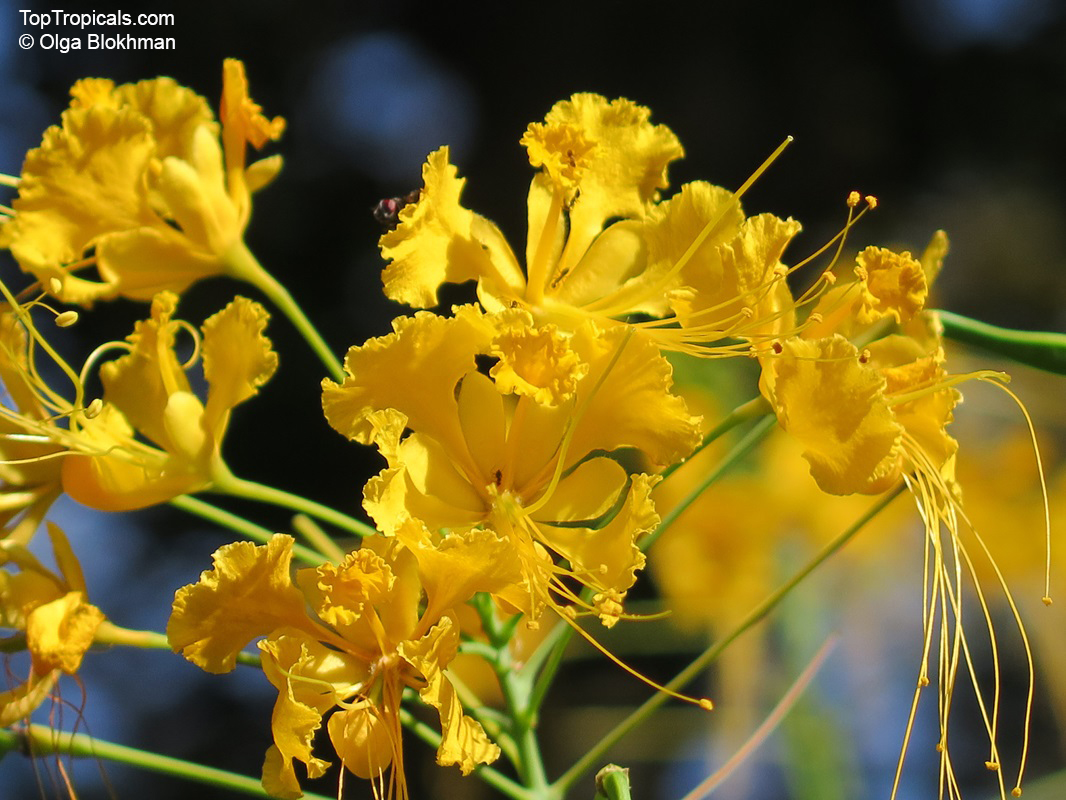
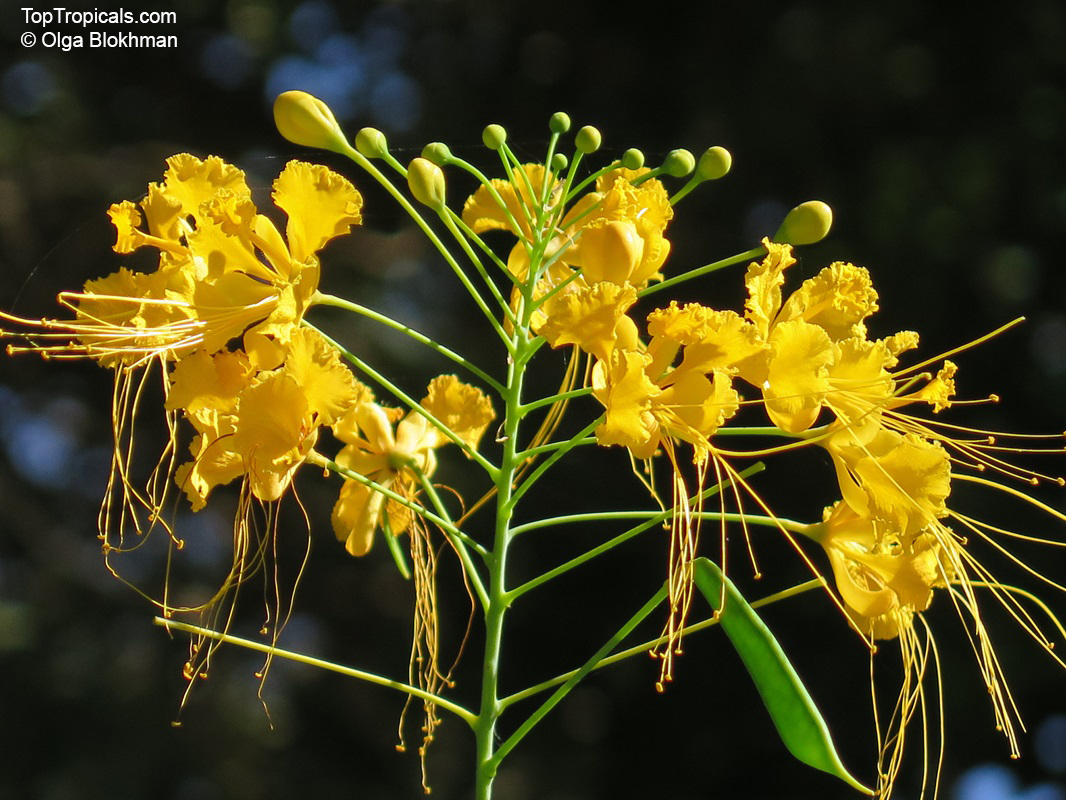
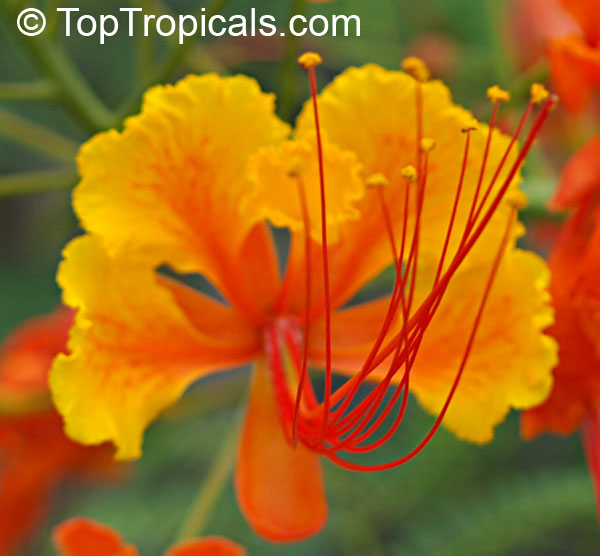
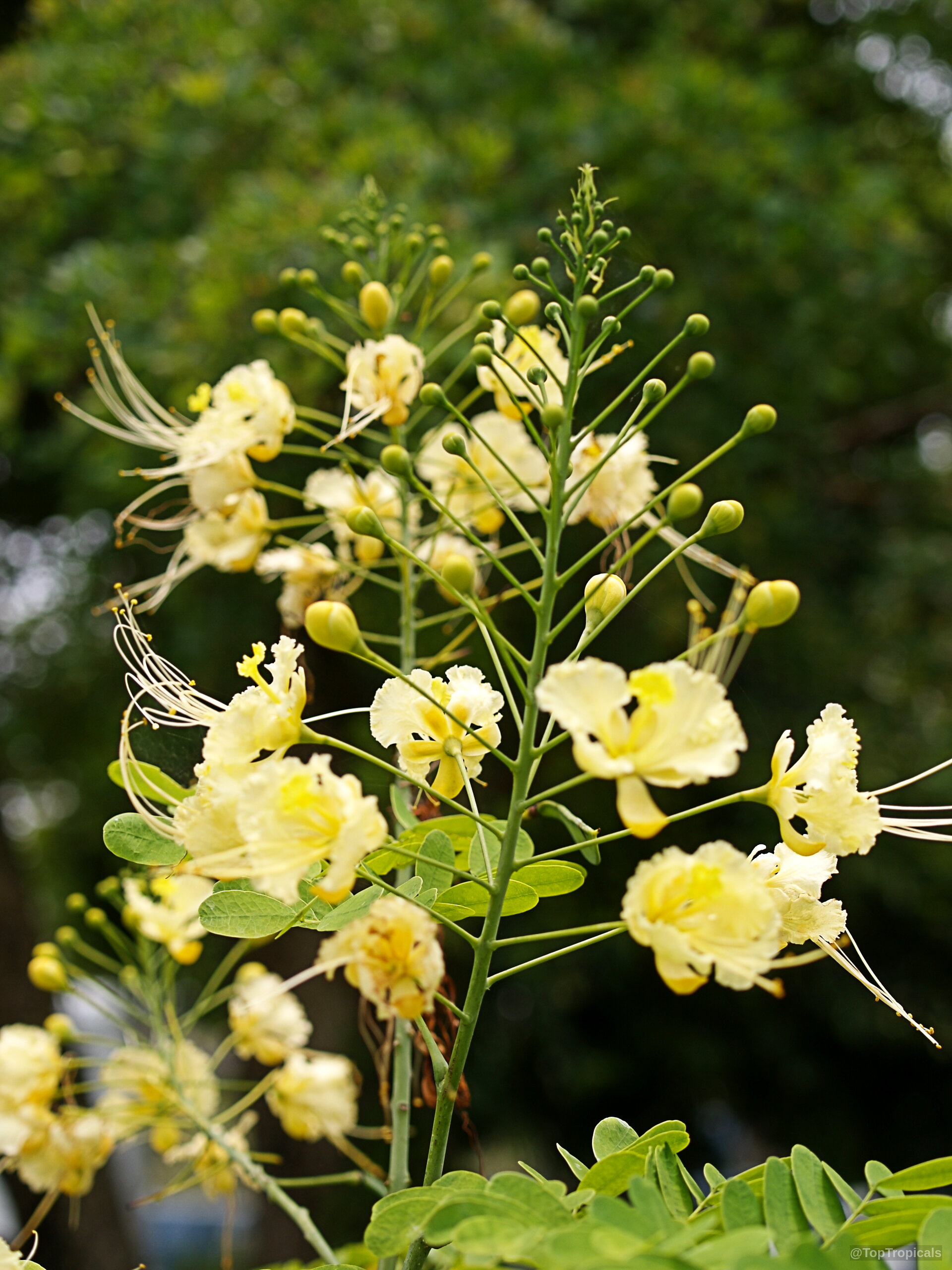
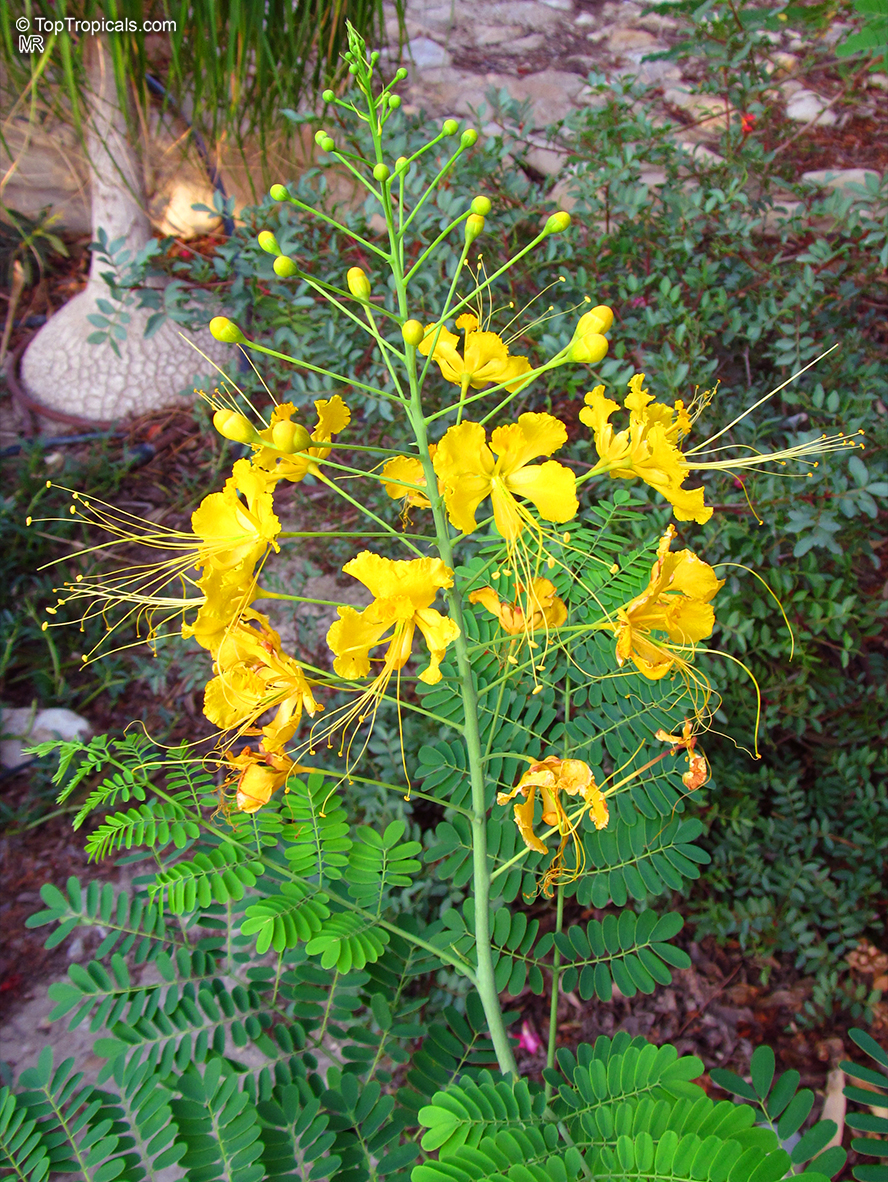
Botanical name: Caesalpinia pulcherrima var. lutea
Common names: Yellow Peacock Flower, Barbados Pride, Dwarf Poinciana, Barbados Flower-fence
Cultivar: Lutea
Family: Fabaceae
Subfamily: Caesalpinioideae
Origin: West Indies and tropical America
Hardiness: 35°F

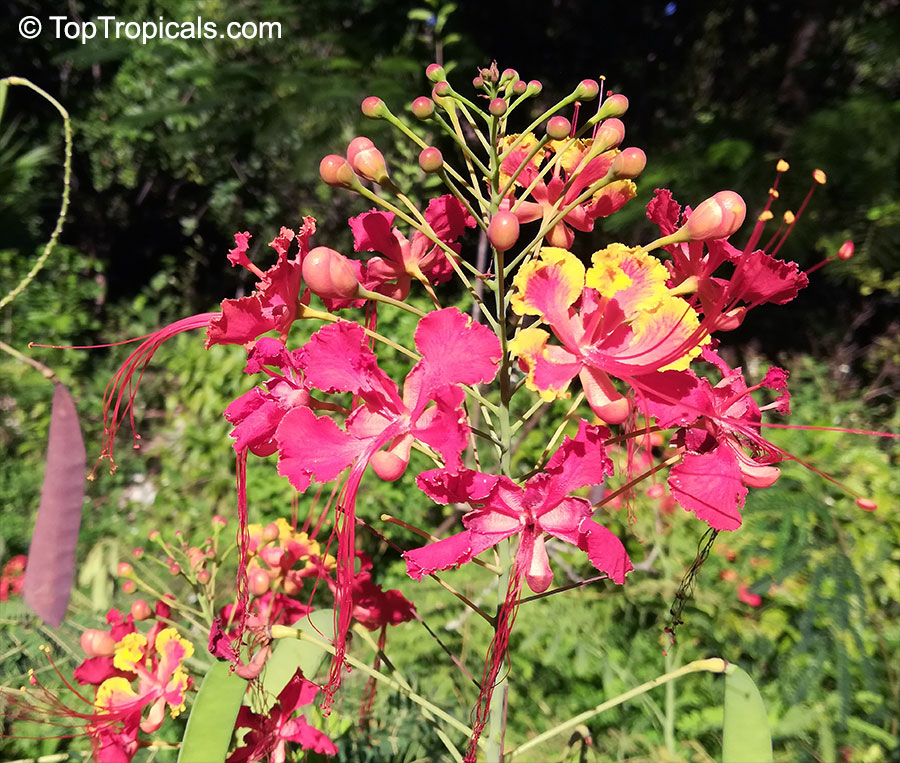
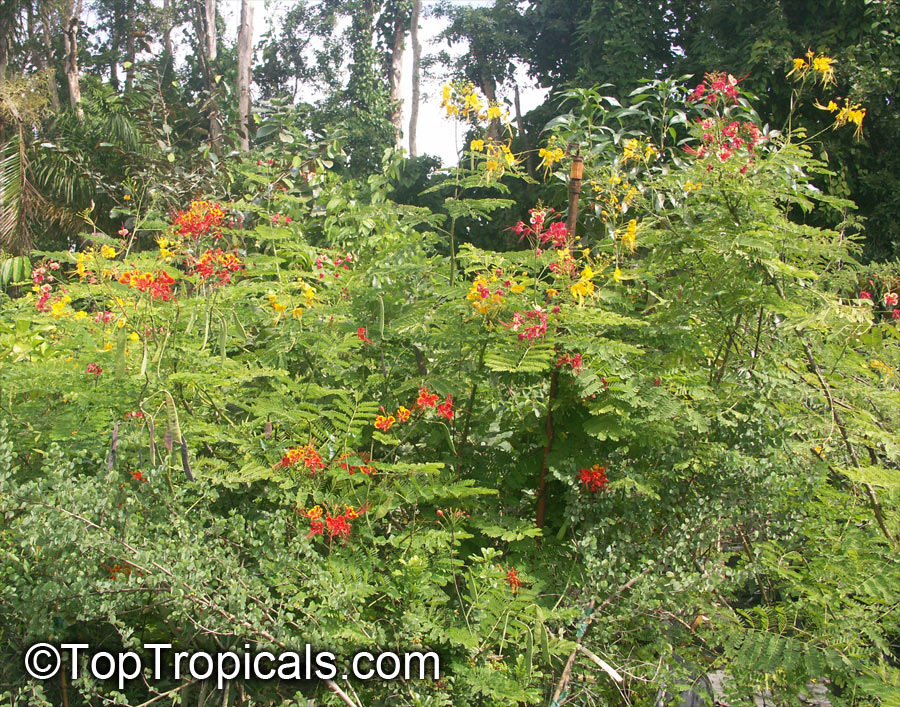
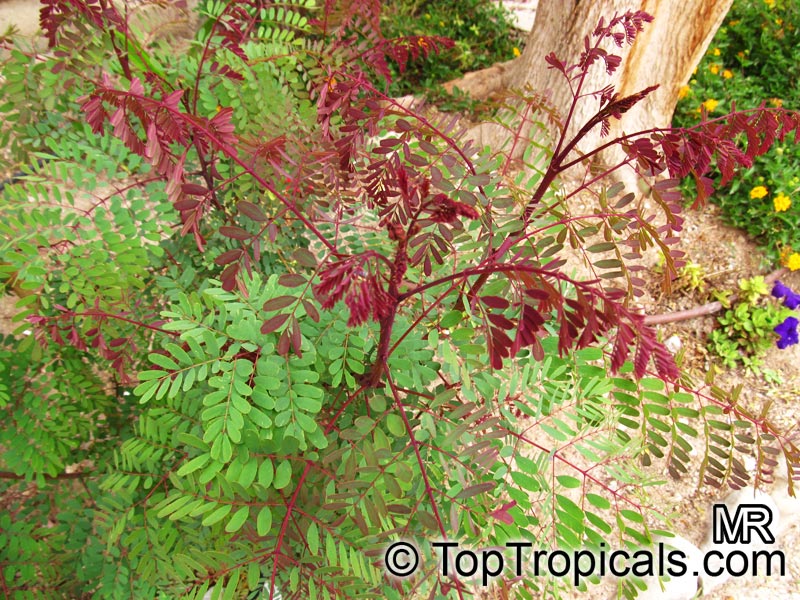
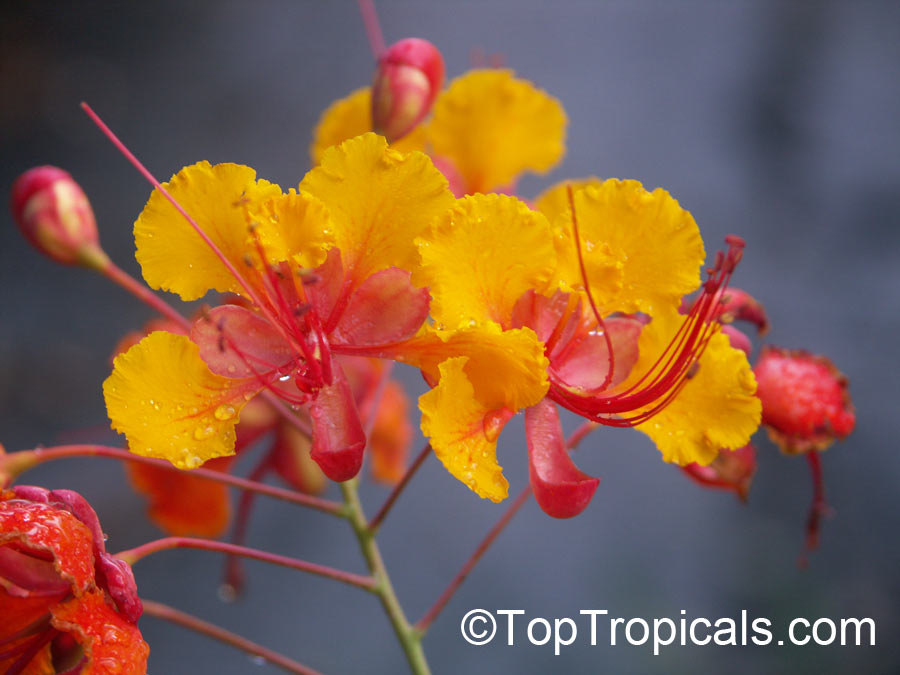
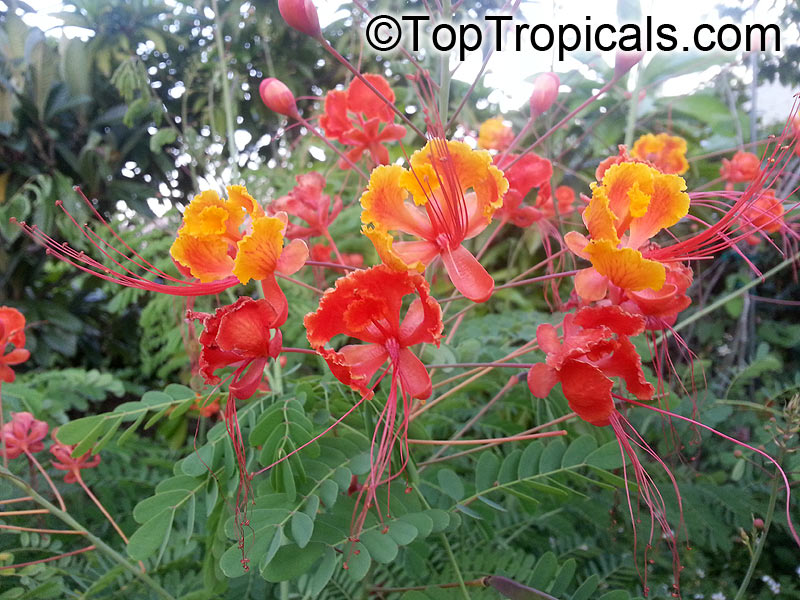
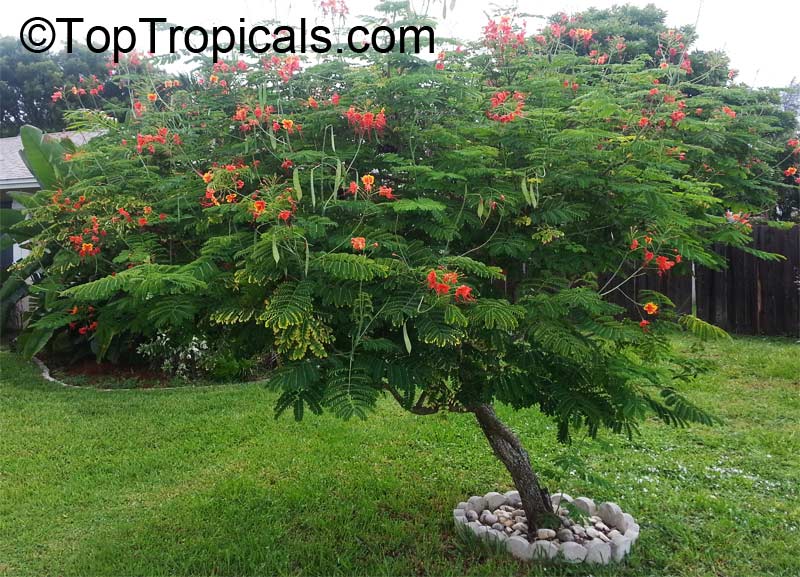
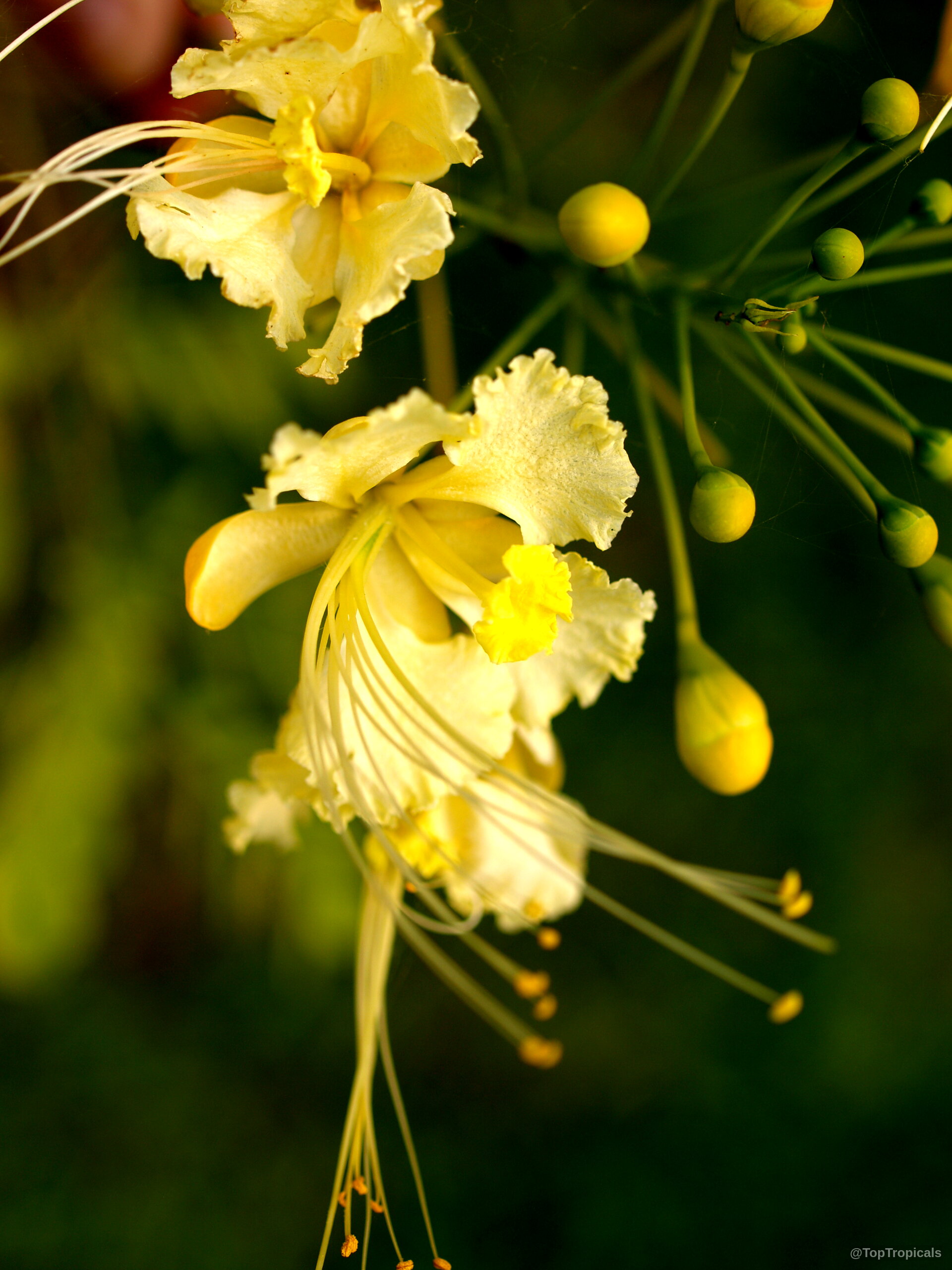
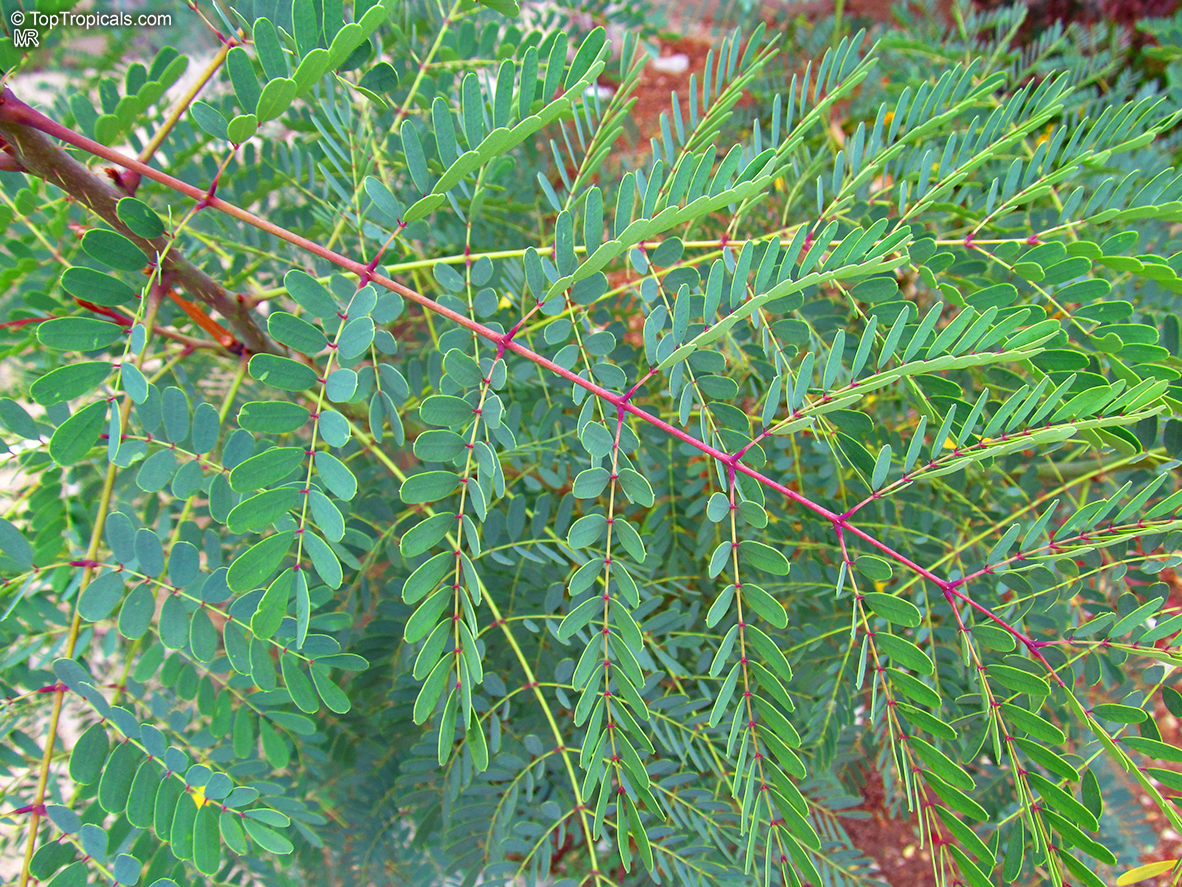
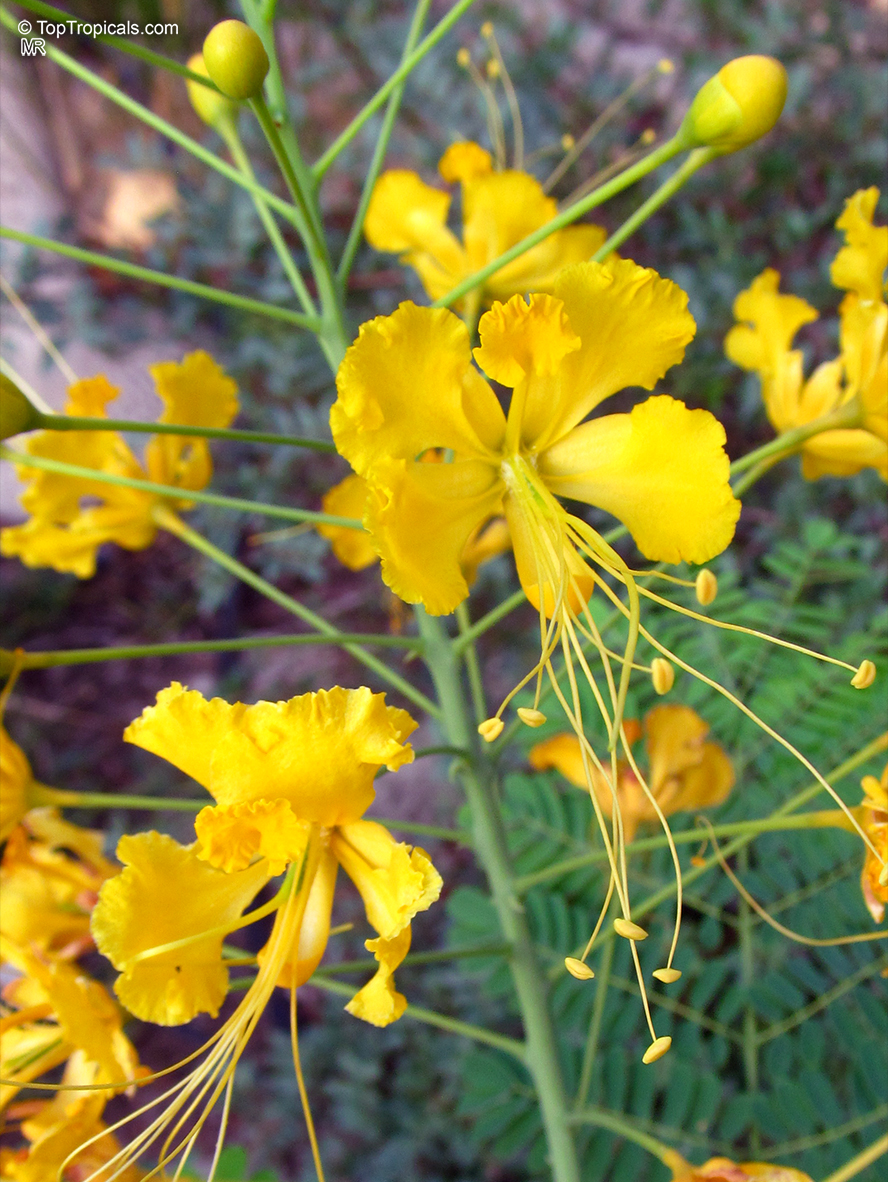
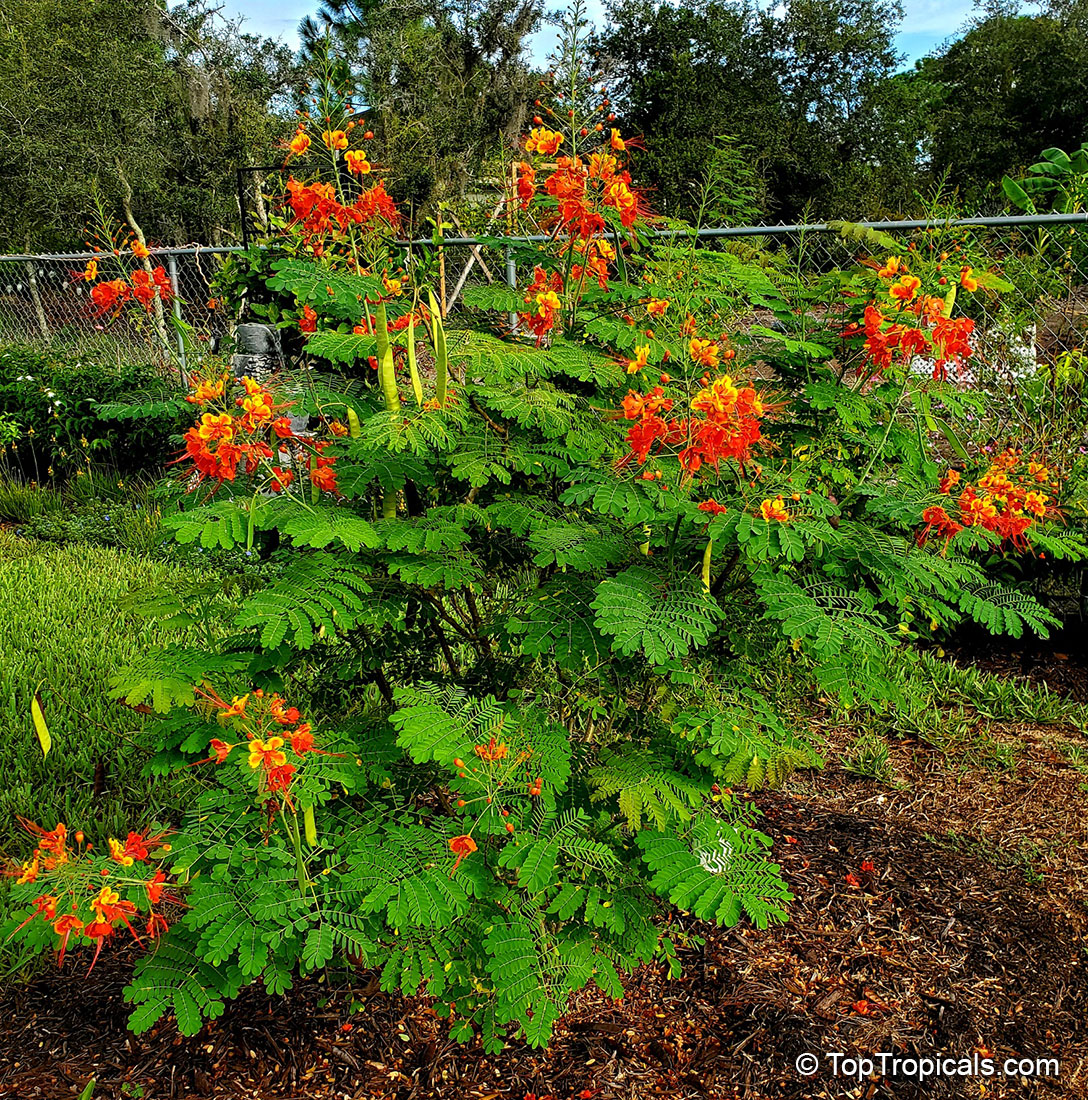
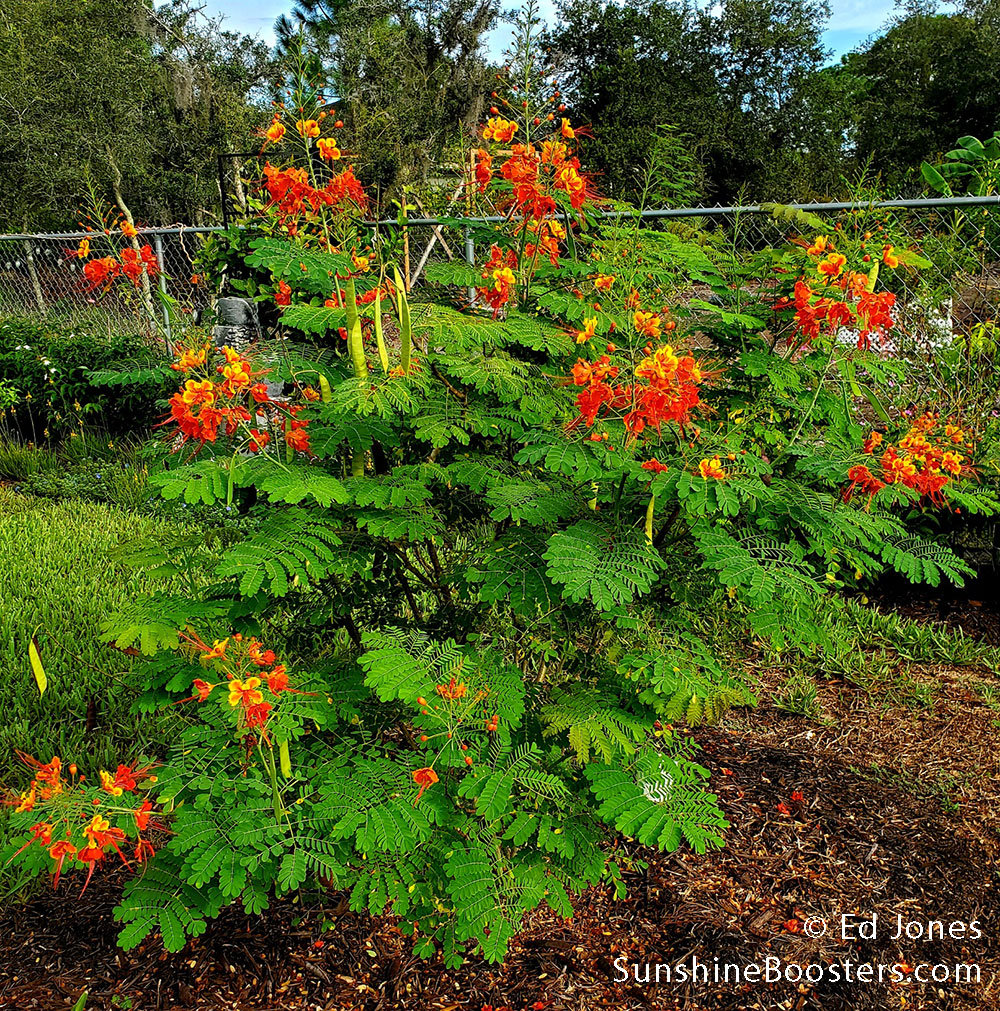
Evergreen shrub or small tree in frost free climates, a deciduous shrub in zone 9, and a returning perennial in zone 8. In the tropics it gets 15-20' tall and its ungainly, wide spreading branches can cover about the same width. In cultivation the peacock flower is usually 8-12' tall, growing that large even after freezing to the ground the previous winter. The stem, branches and petioles are armed with sharp spines and the leaves are fernlike and twice compound, with many small, oval leaflets. The flowers are borne in terminal clusters 8-10" tall throughout most of the year in tropical climates and in late summer and fall where frosts occur. The fruits, typical legumes, are flat, 3-4" long, and when ripe they split open noisily to expose the little brown beans. Very easy to grow in alkaline to acidic, well-drained soils. This is a fast growing, but short lived plant. It is moderately tolerant of salty conditions. Peaccock flower benefits from pruning, and can be shaped to tree form or shrubby bush form. The striking orange red flowers are an attention grabber! Use peacock flower as a specimen or in a mixed shrub border. It has an open, spreading habit and the branches sometimes get too long for their own good and break off. Still, a line of peacock flowers makes a showy fine-textured screen or informal hedge. You can cut peacock flower to the ground in late winter or early spring to get a bushier, more compact shrub.
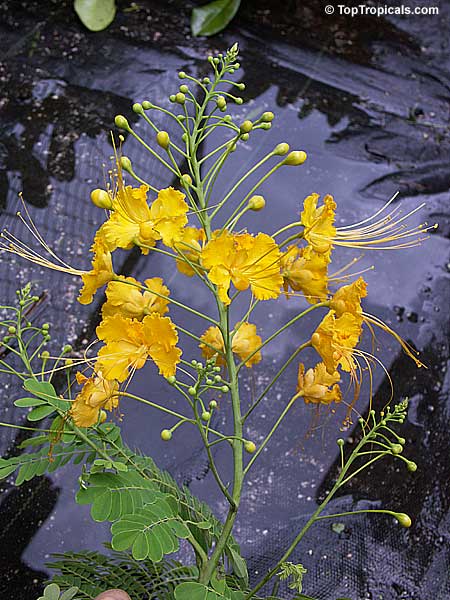
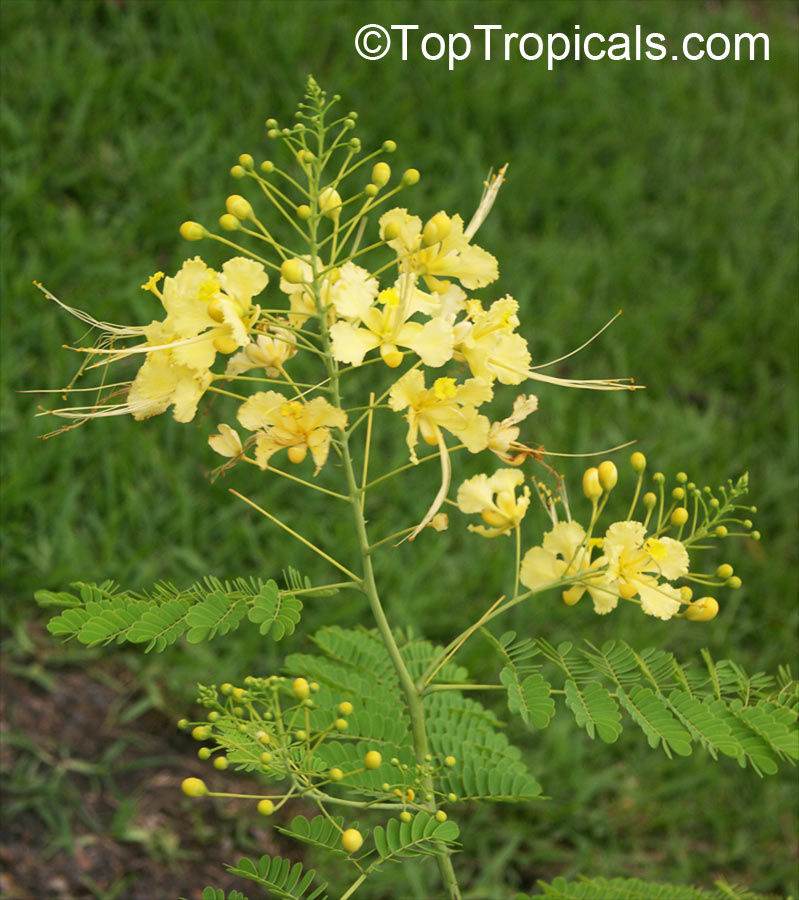
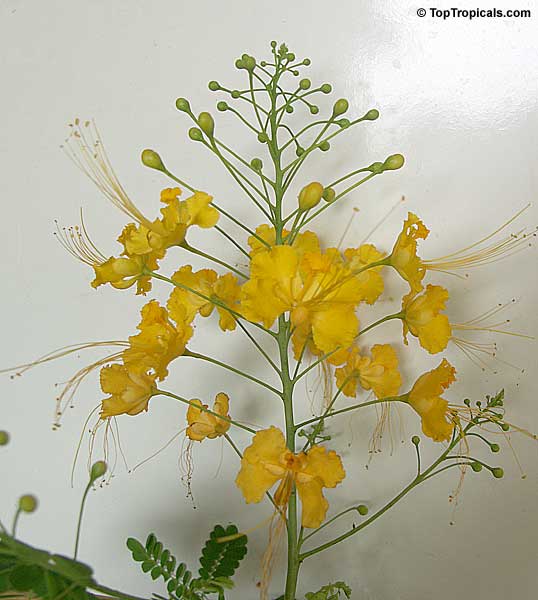
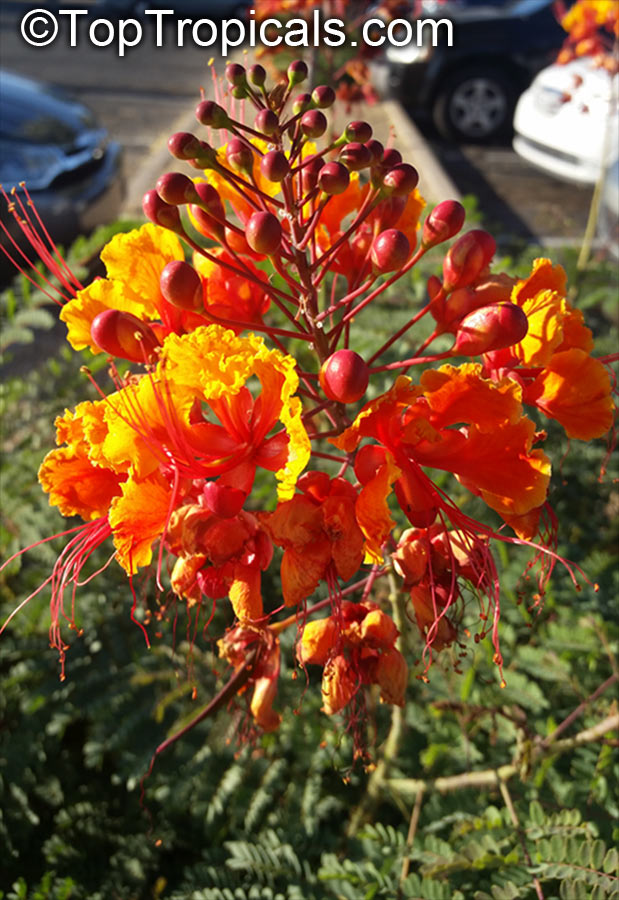
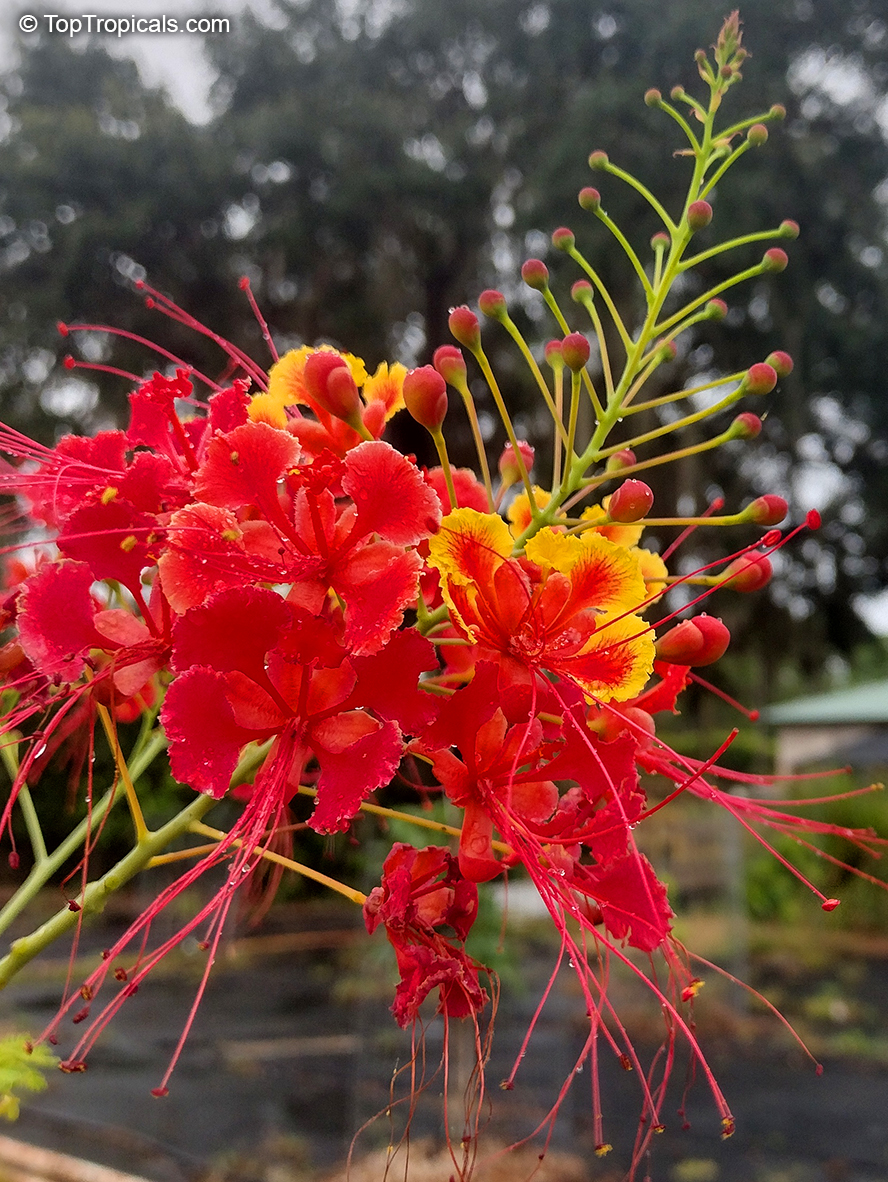
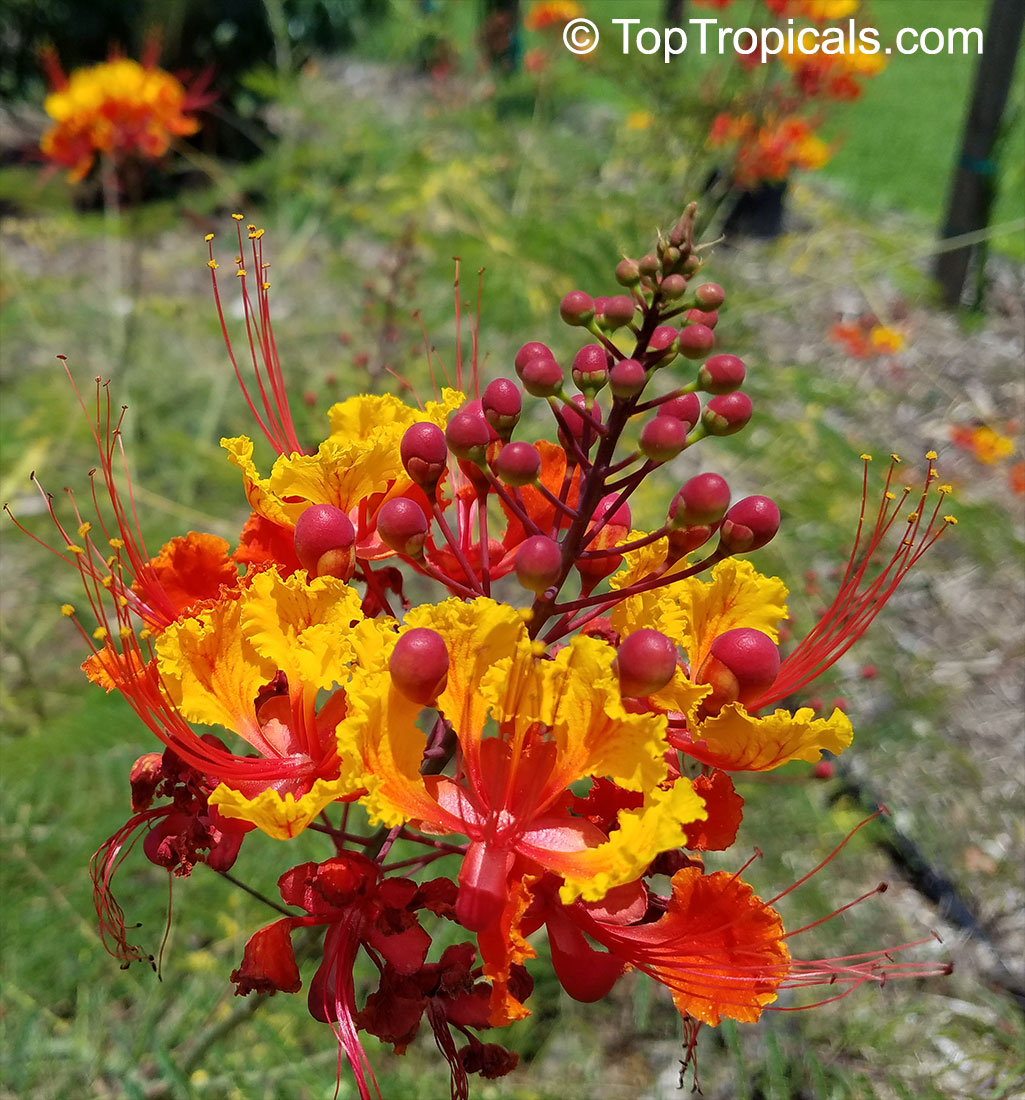
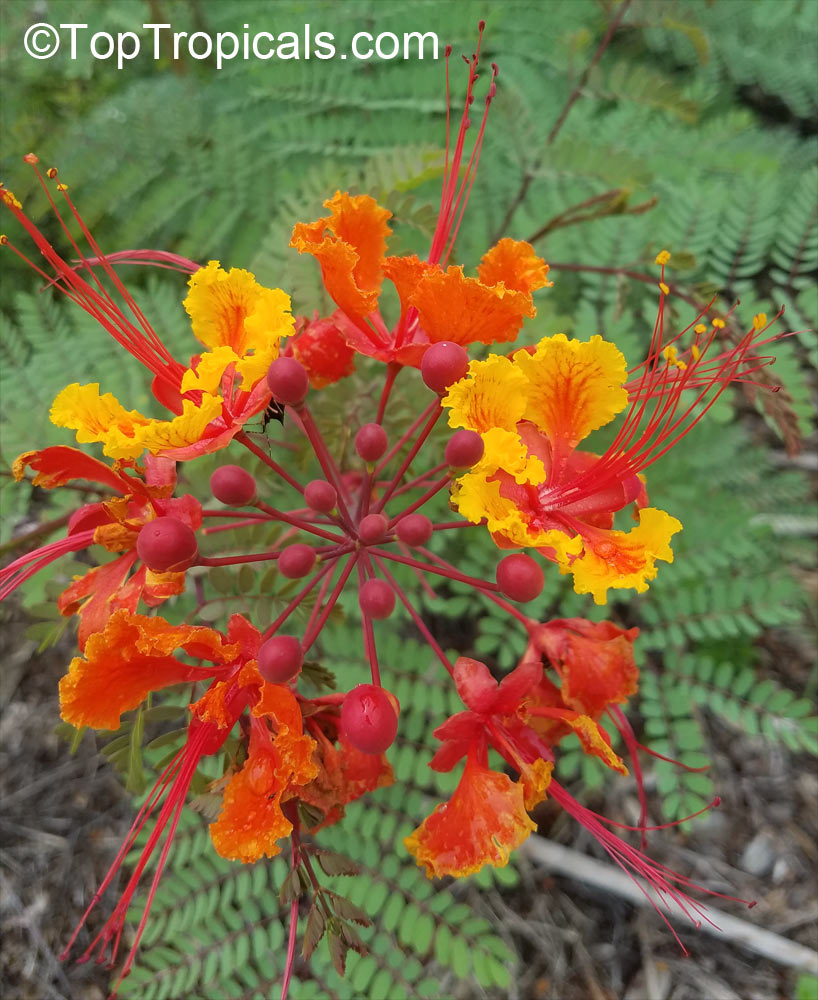
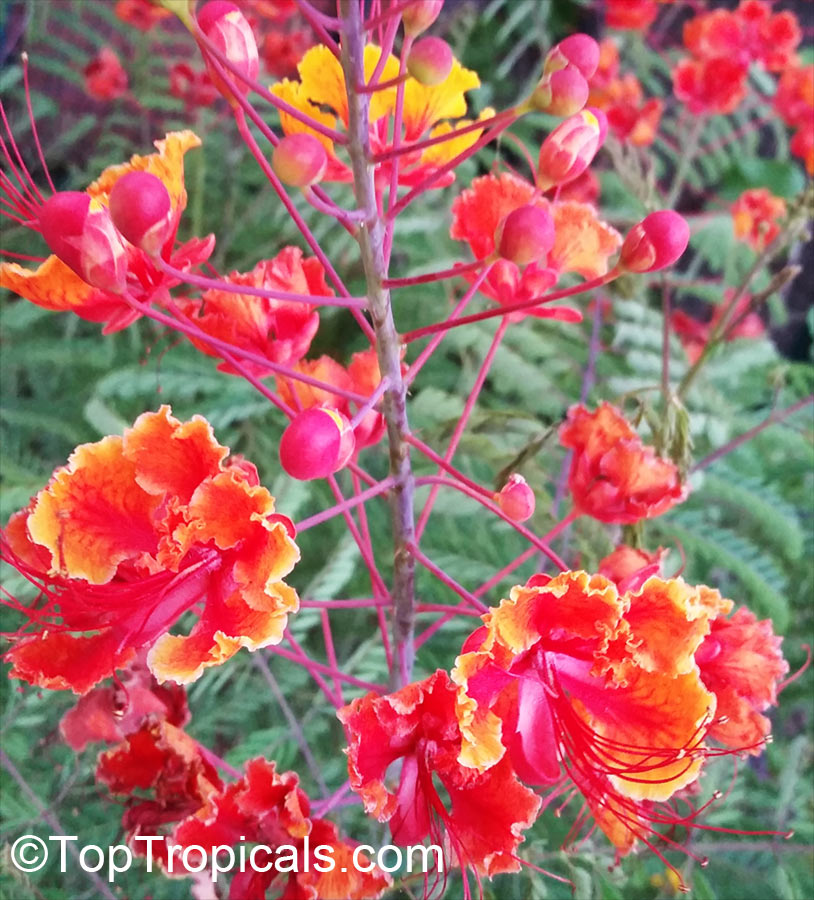
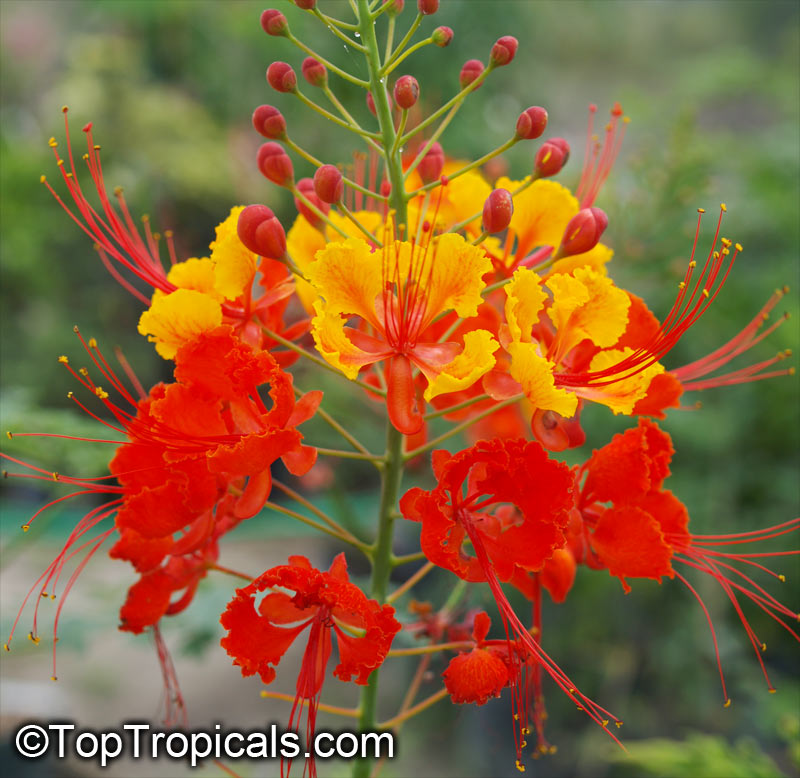
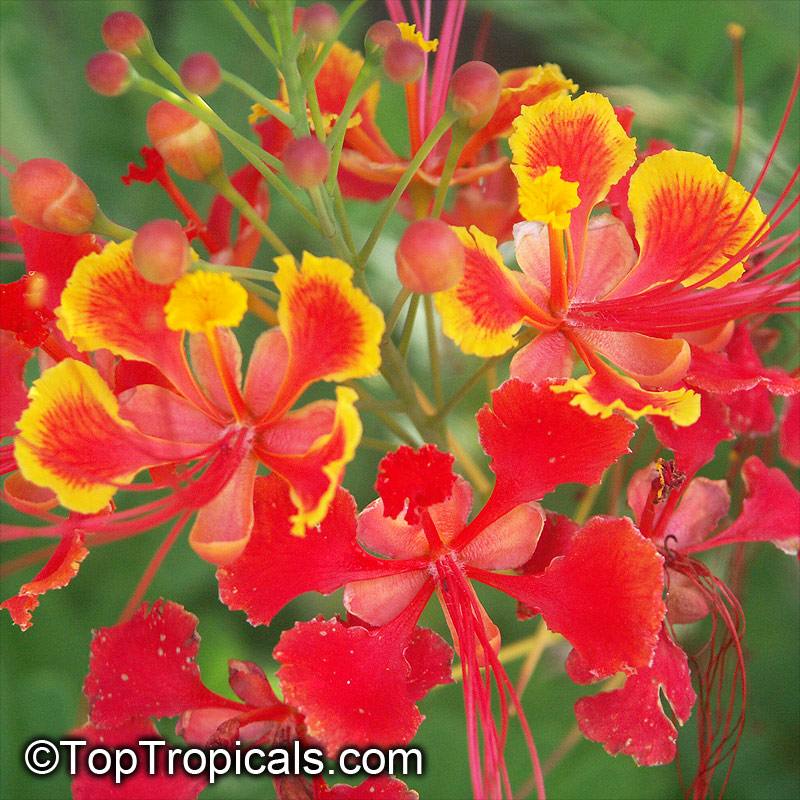
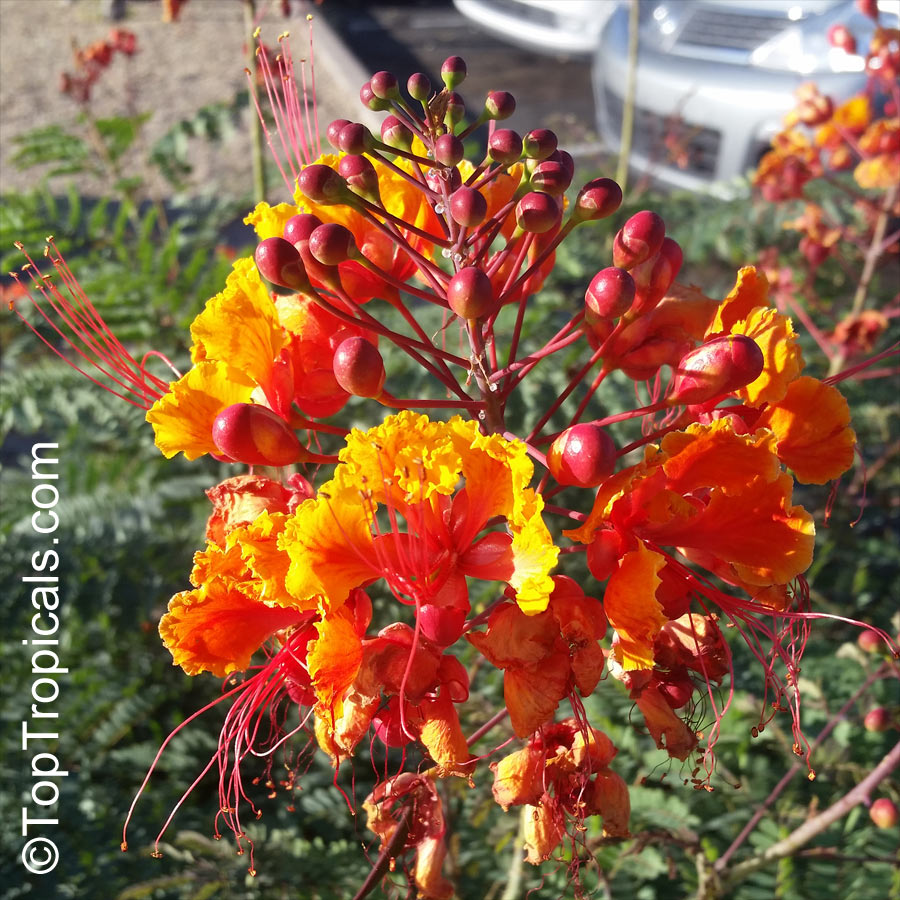
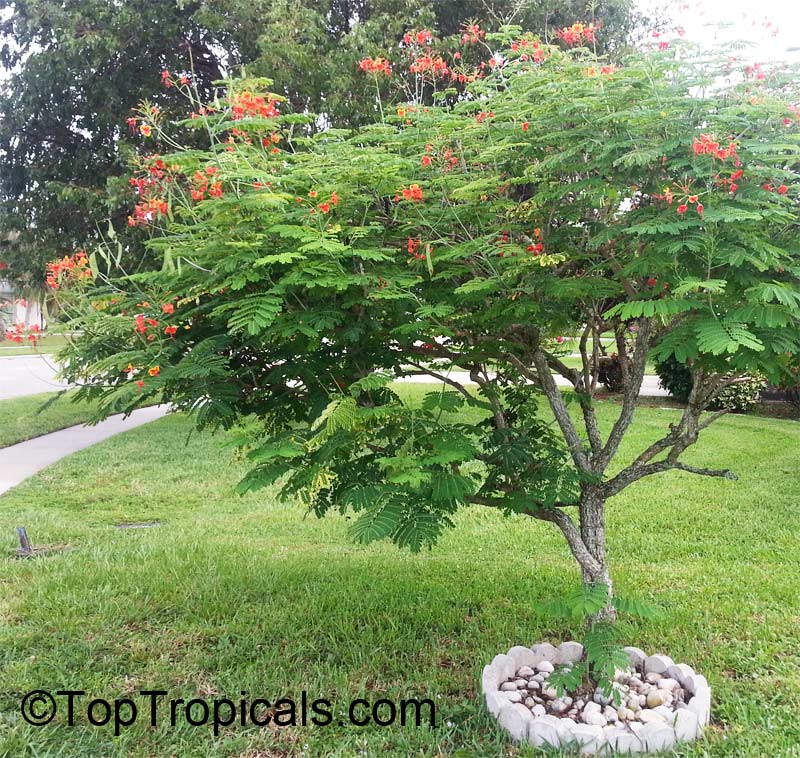
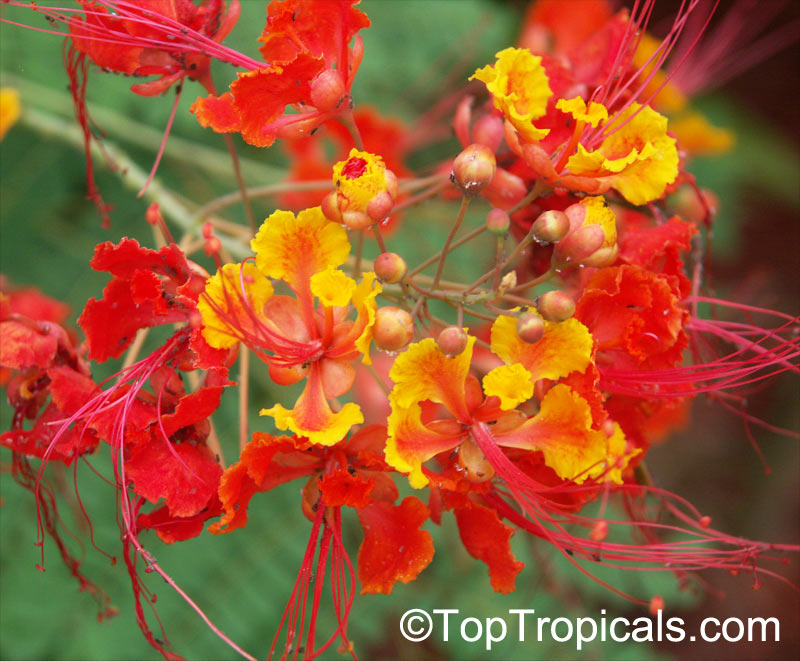
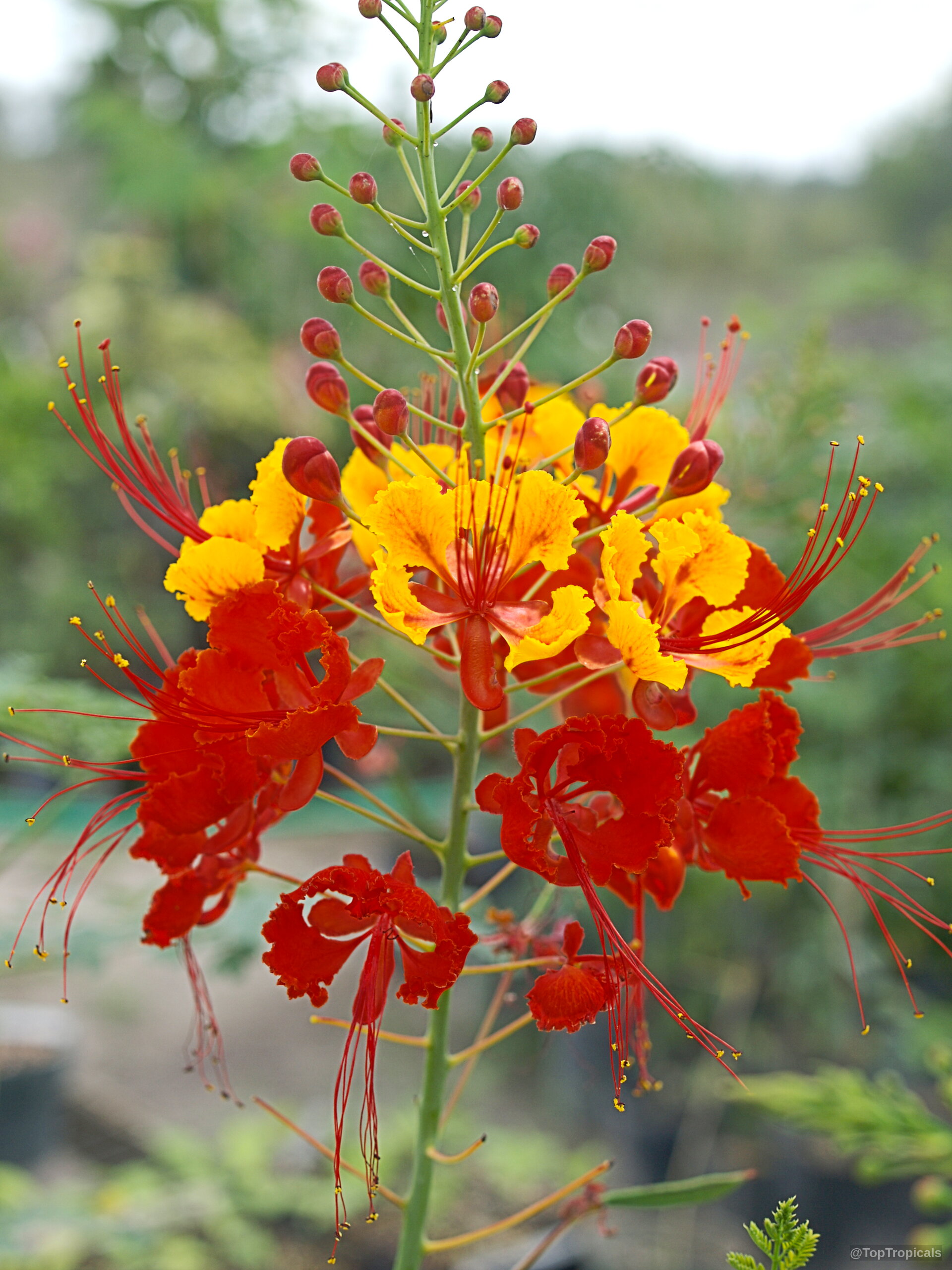
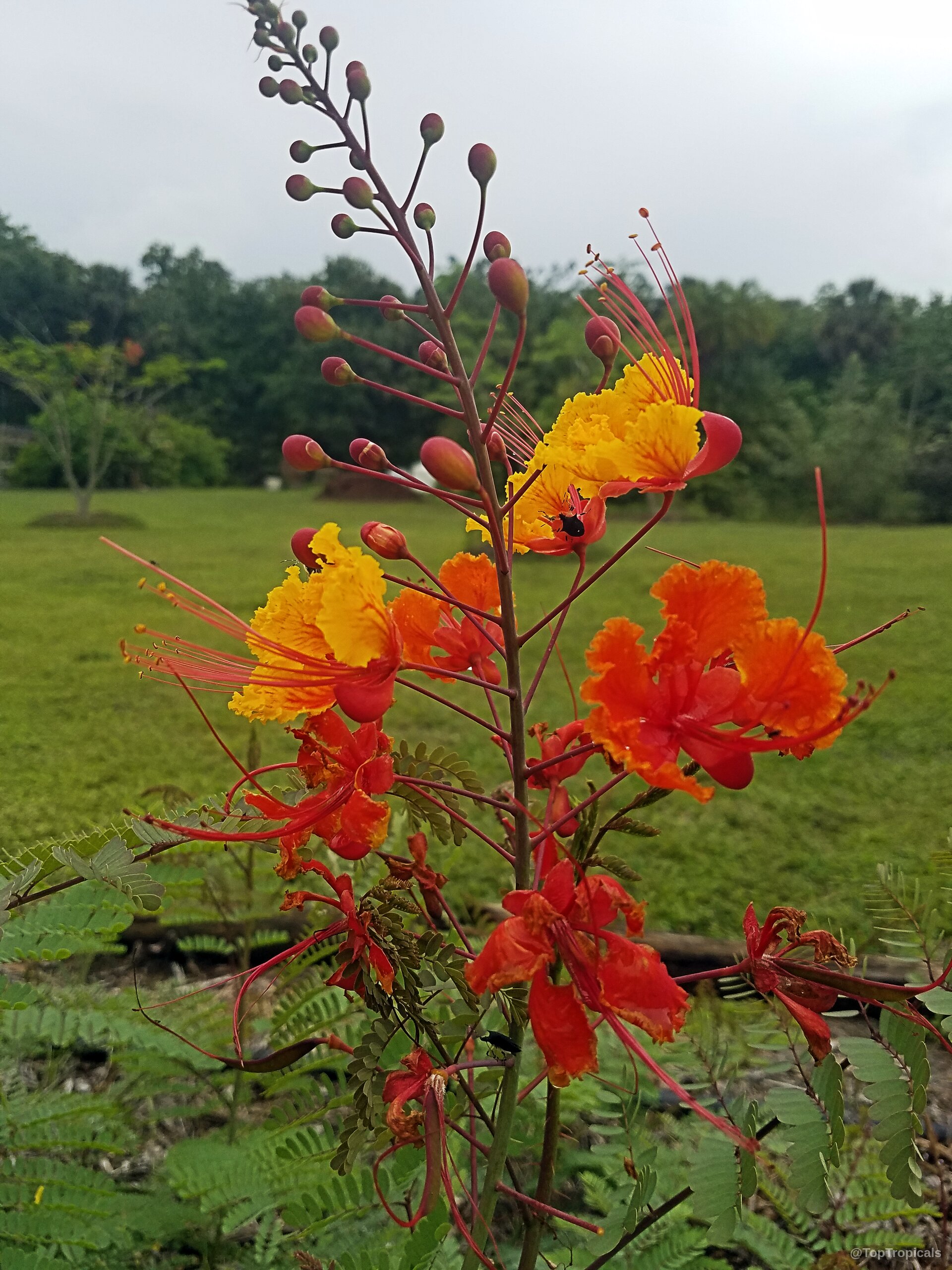
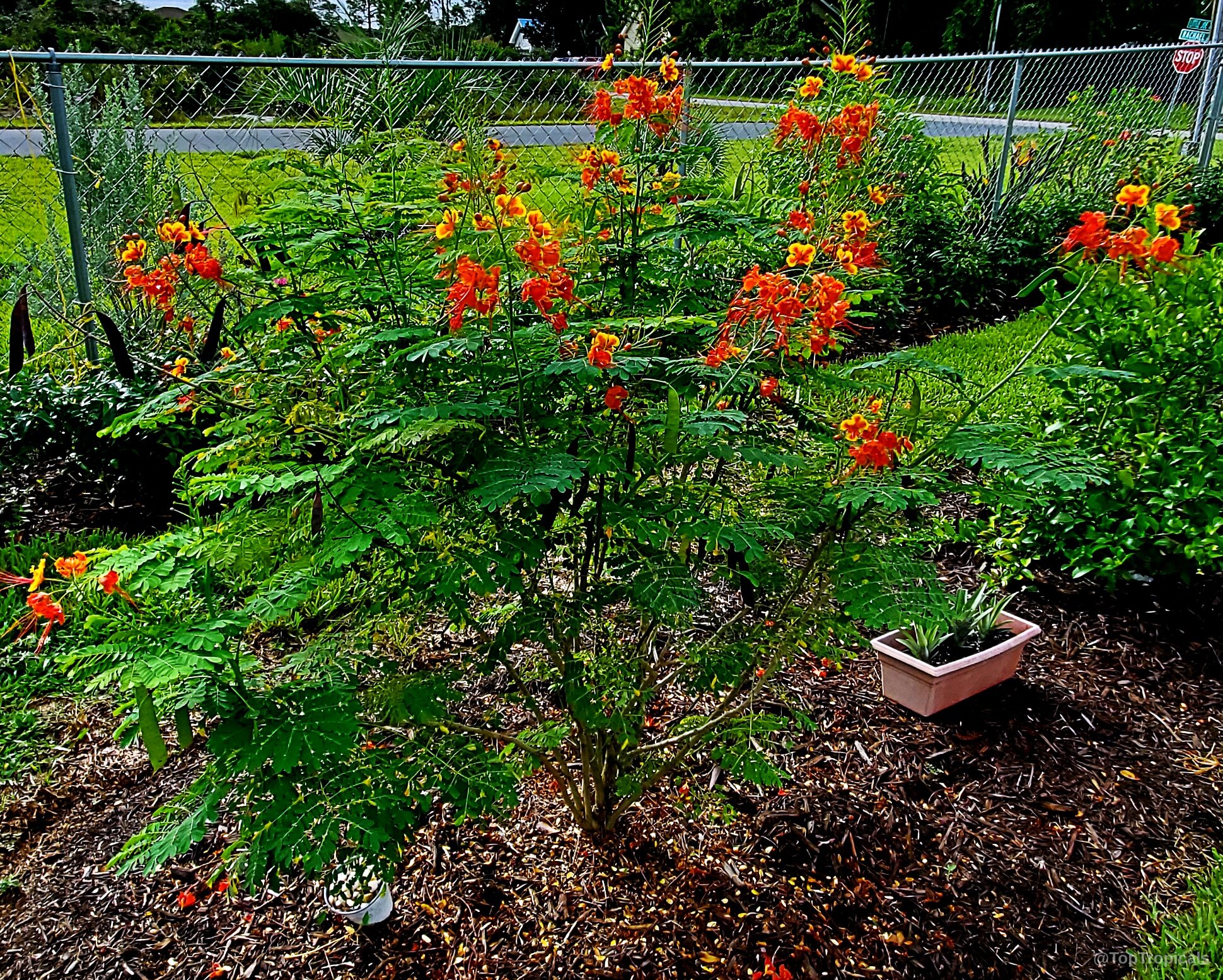
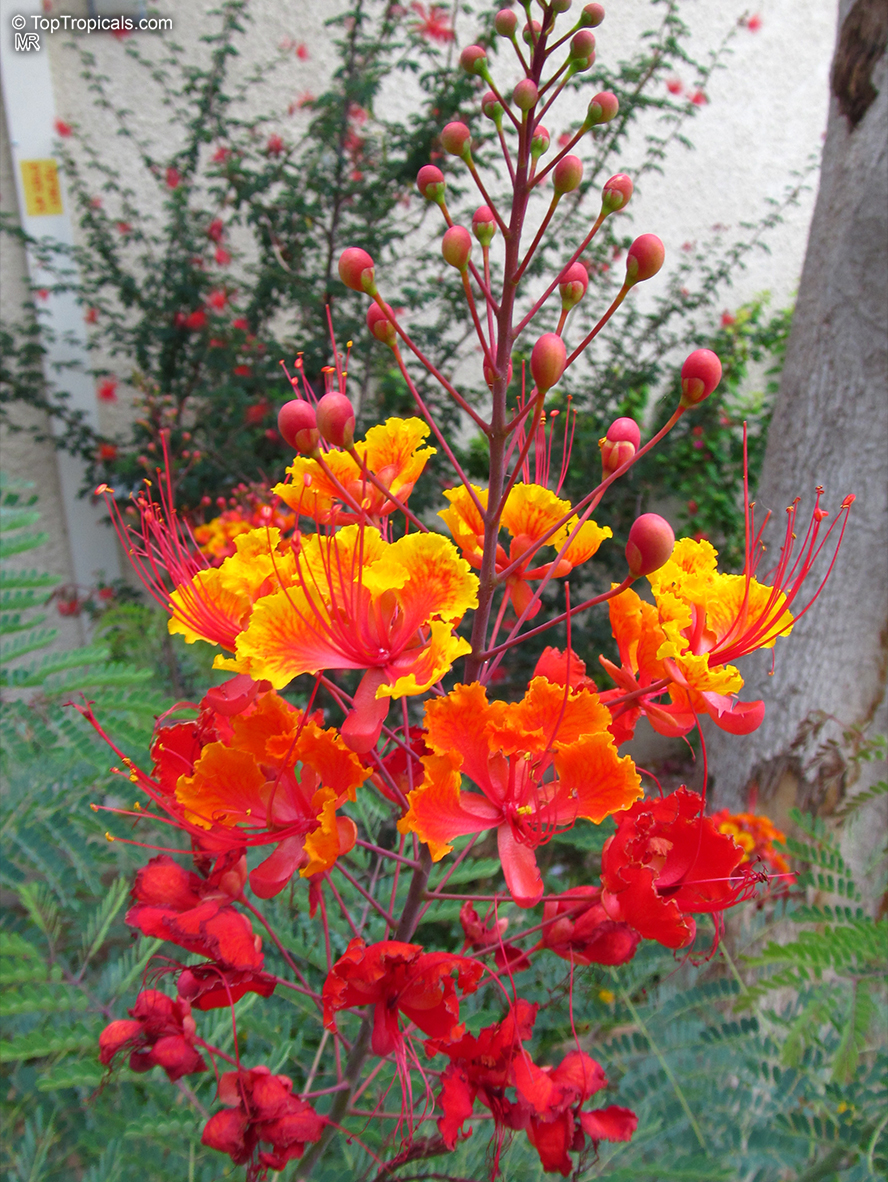
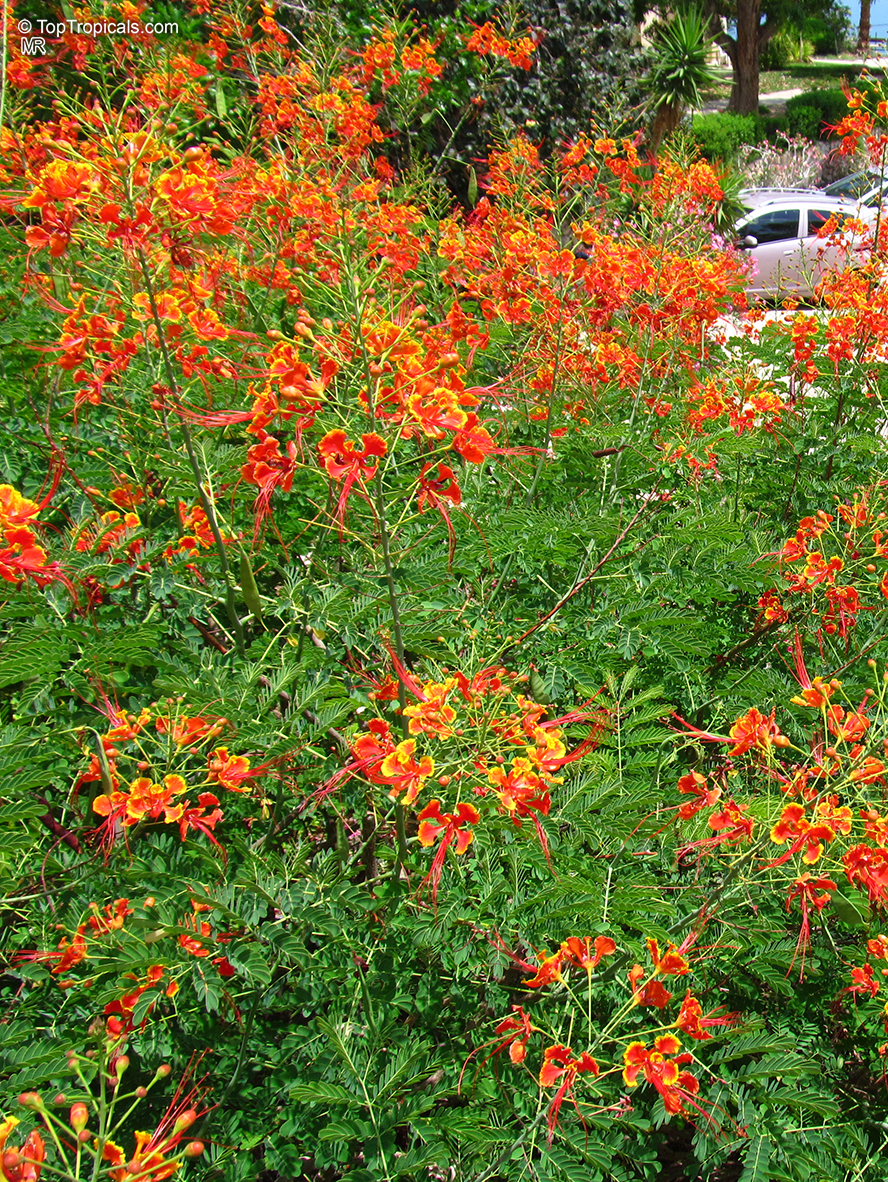
Botanical name: Caesalpinia pulcherrima
Common names: Peacock Flower, Barbados Pride, Dwarf Poinciana, Barbados Flower-fence, Gold Mohur
Family: Fabaceae
Subfamily: Caesalpinioideae
Origin: West Indies and tropical America
Hardiness: 30°F
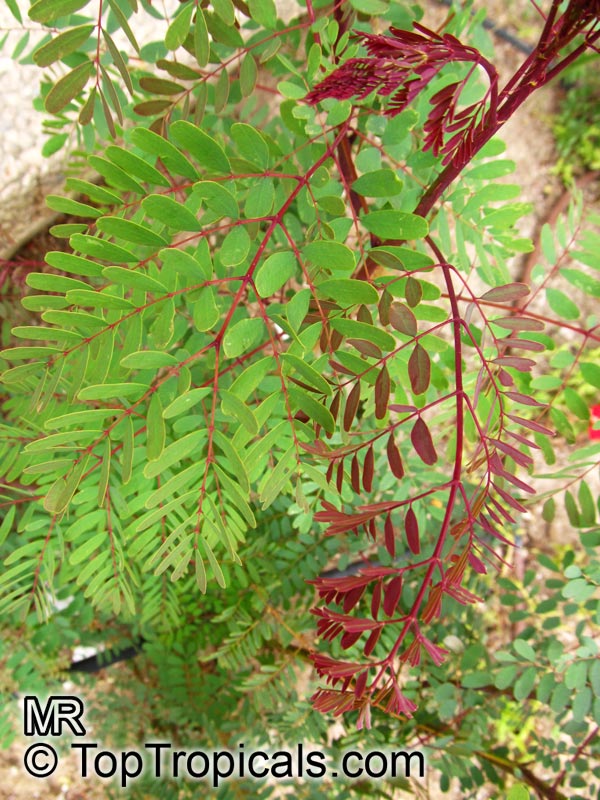
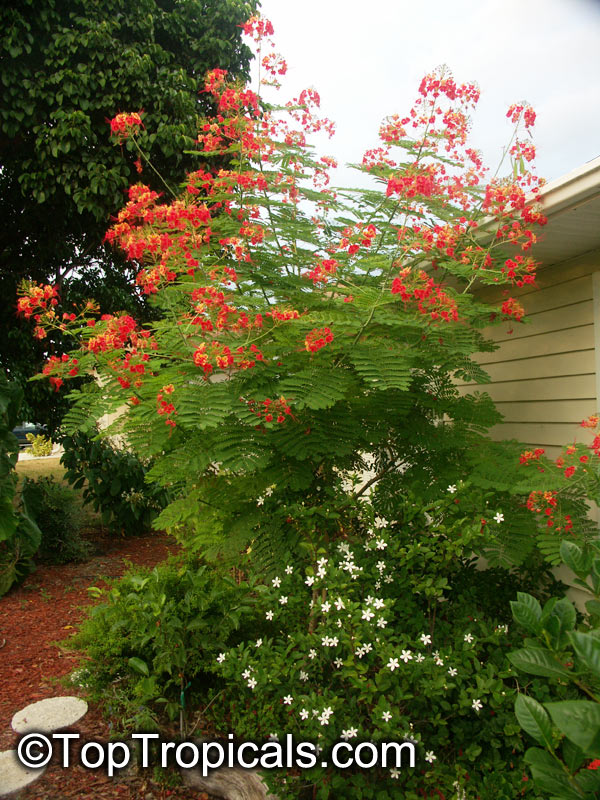
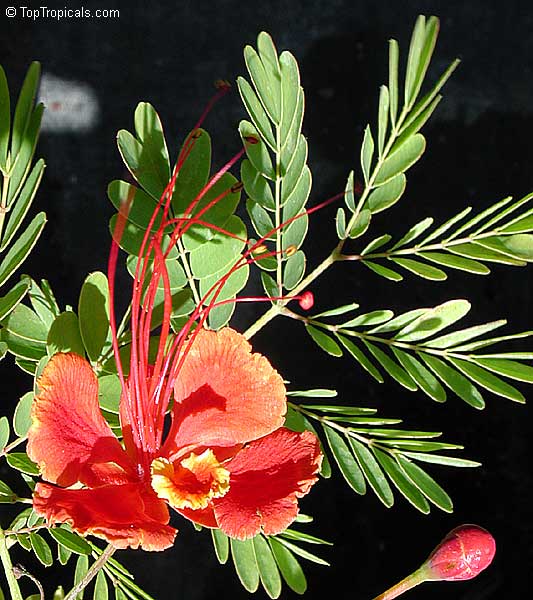
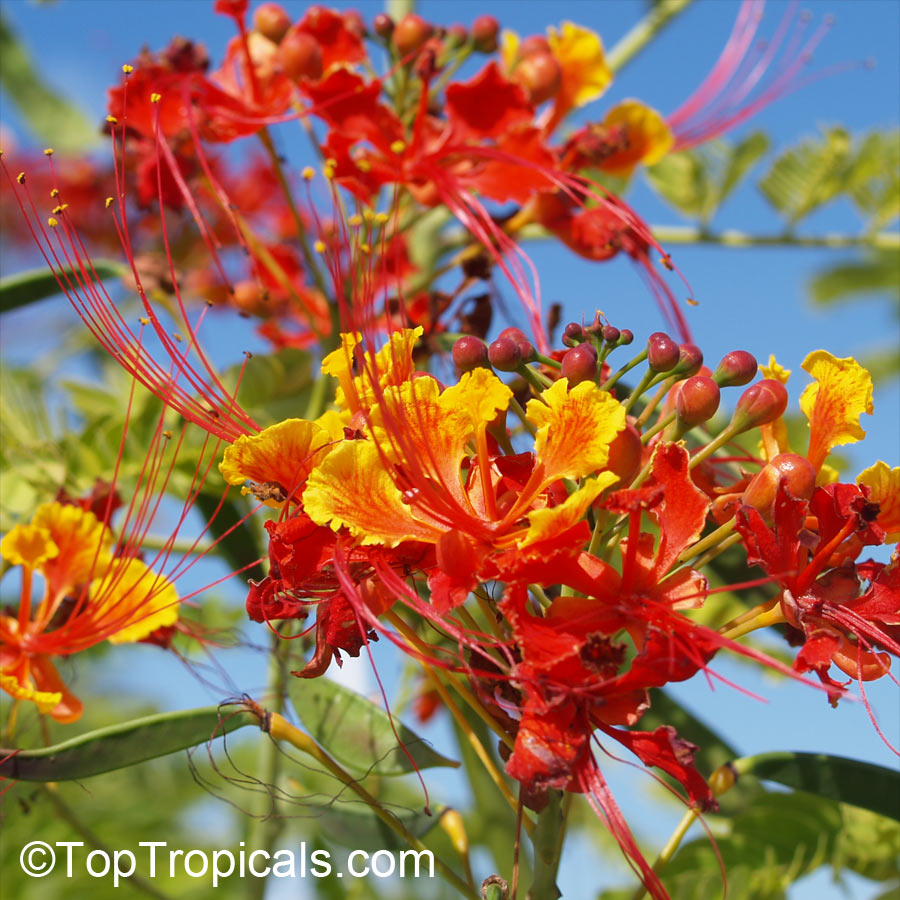
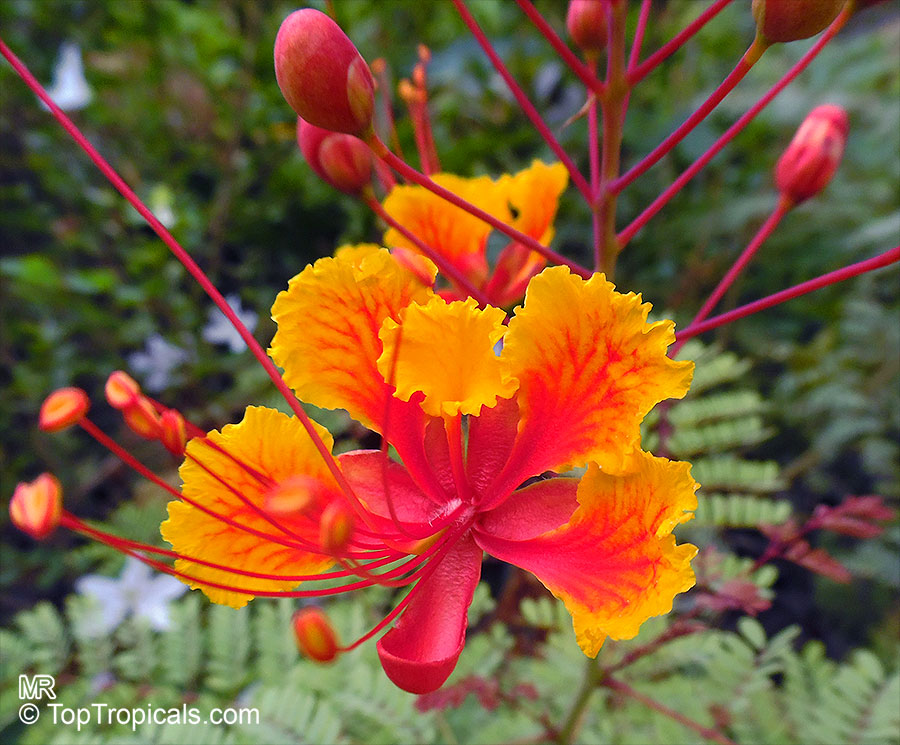
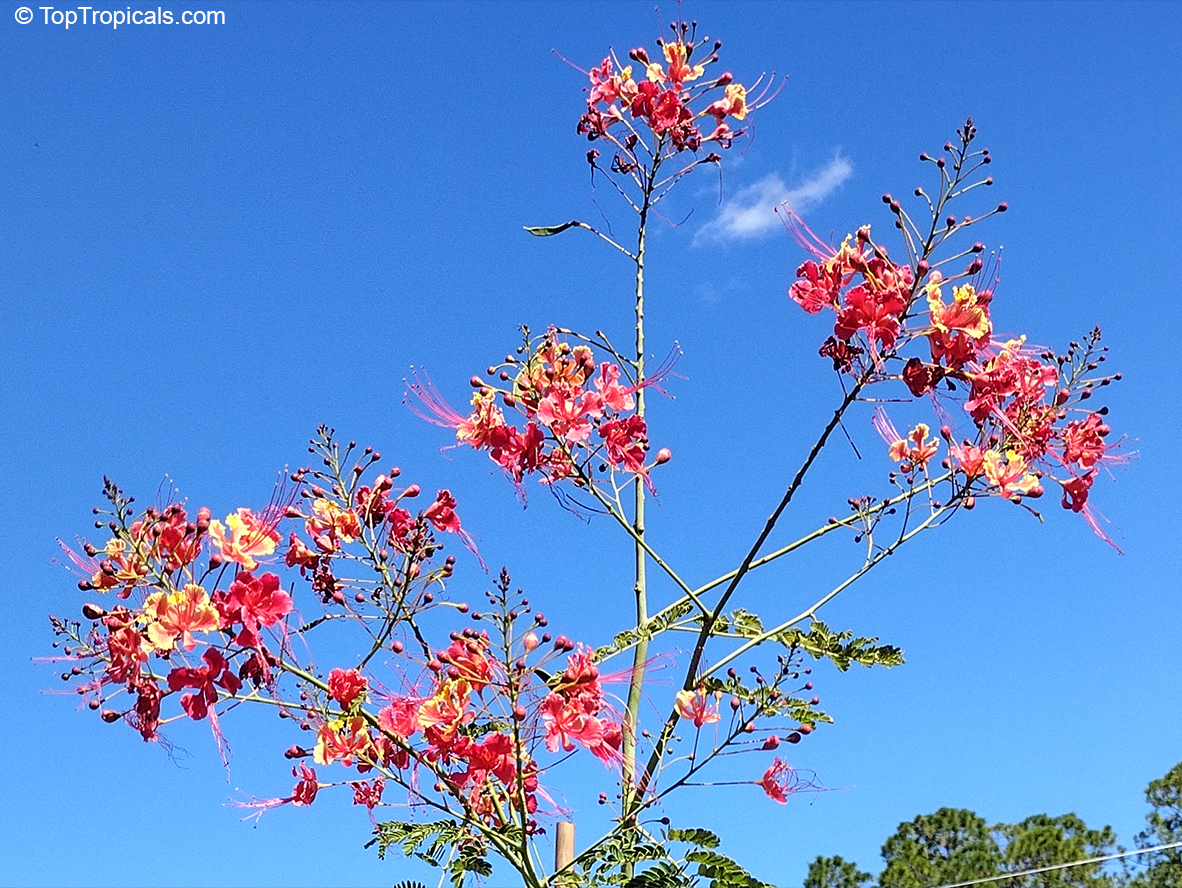
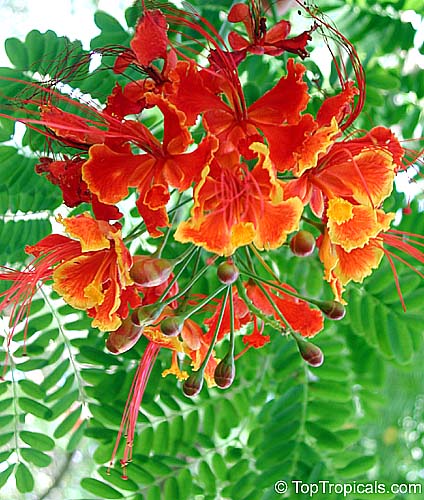
Peacock flower lives up to its name with incredibly showy blossoms of orange and red. The striking flowers are an attention grabber! Evergreen shrub or small tree in frost free climates, a deciduous shrub in zone 9, and a returning perennial in zone 8. In the tropics it gets 15-20' tall and its ungainly, wide spreading branches can cover about the same width. In cultivation the peacock flower is usually 8-12' tall, growing that large even after freezing to the ground the previous winter. The stem, branches and petioles are armed with sharp spines and the leaves are fernlike and twice compound, with many small, oval leaflets. The flowers are bowl shaped, 2-3" across, with five crinkled, unequal red and orange petals, and ten prominent bright red stamens that extend way beyond the corolla. The flowers are borne in terminal clusters 8-10" tall throughout most of the year in tropical climates and in late summer and fall where frosts occur. There also are forms with yellow and forms with dark red flowers. The fruits, typical legumes, are flat, 3-4" long, and when ripe they split open noisily to expose the little brown beans. Very easy to grow in alkaline to acidic, well-drained soils. This is a fast growin plant. It is moderately tolerant of salty conditions. Peaccock flower benefits from pruning, and can be shaped to tree form or shrubby bush form. Use peacock flower as a specimen or in a mixed shrub border. It has an open, spreading habit and the branches sometimes get too long for their own good and break off. Still, a line of peacock flowers makes a showy fine-textured screen or informal hedge. You can cut peacock flower to the ground in late winter or early spring to get a bushier, more compact shrub.


Recommended Fertilizer: SUNSHINE Megaflor - Bloom Nutrition Booster
Ordering seeds info
RECOMMENDED SUPPLIES:
Seed Germination Mix #3, professional grade
SUNSHINE-Epi - Seeds and cuttings booster
SUNSHINE Bombino - Young Plant Booster
Recommended Fertilizer: SUNSHINE Megaflor - Bloom Nutrition Booster
Local pickup only. This item is not available for shipping. Local delivery may be available in Ft. Myers or Sebring, Florida. Contact us for an estimate. Non-pickup orders are subject to restocking fees.
Botanical names: Aiphanes horrida, Aiphanes aculeata, Aiphanes caryotifolia, Martinezia truncata
Common names: Devil Palm, Ruffle Palm, Spine Palm
Family: Arecaceae / Palmae
Origin: Trinidad and Tobago

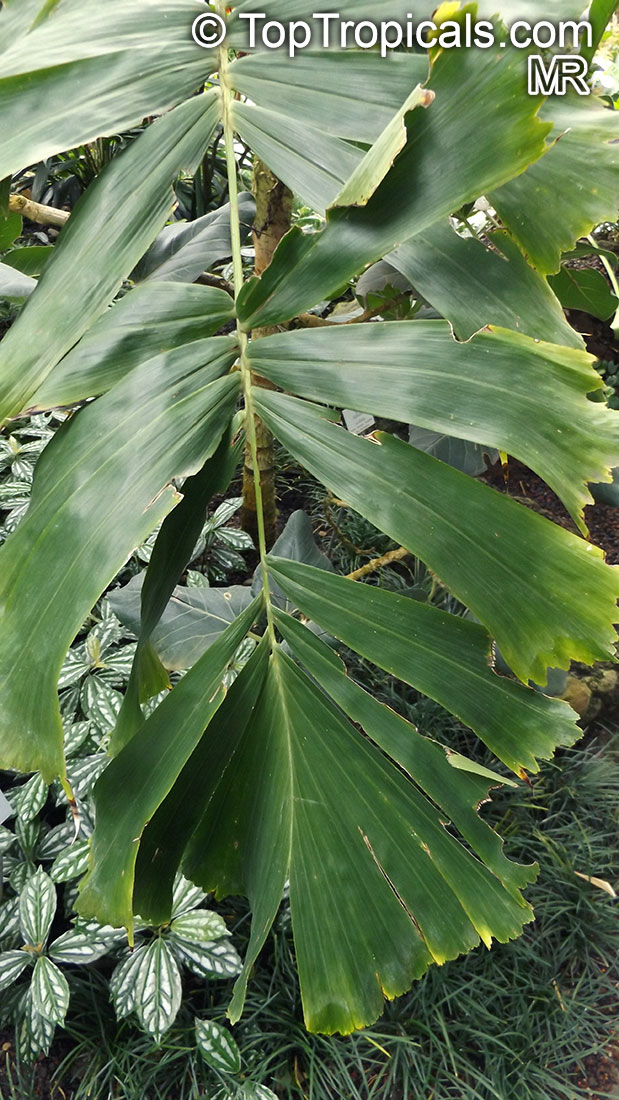
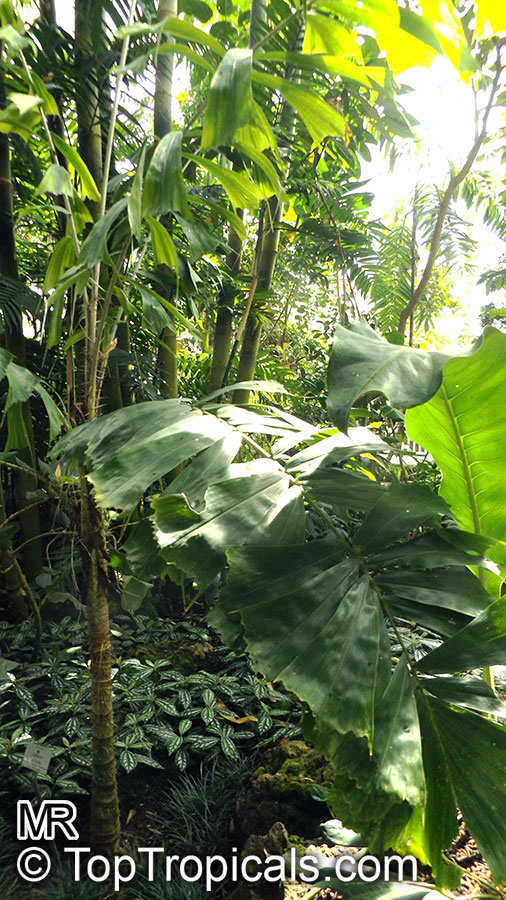
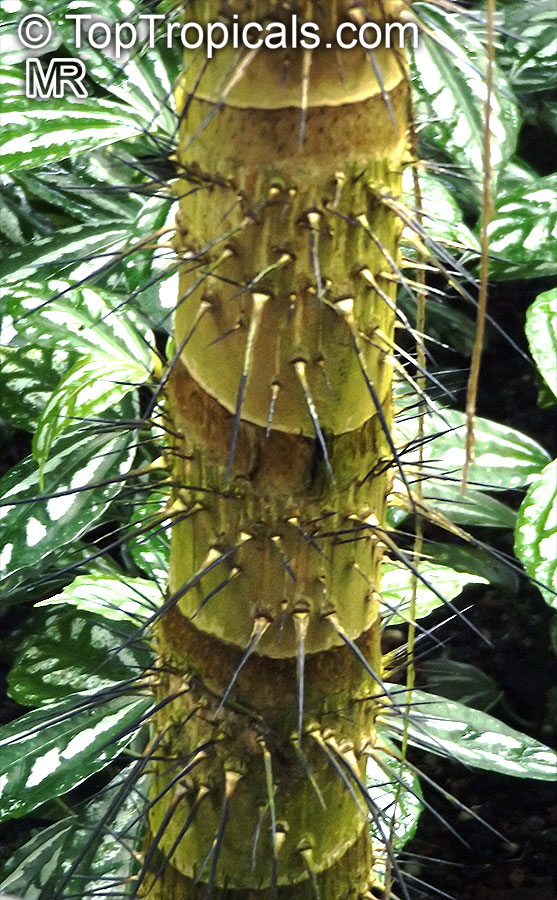
This very different dwarf palm from South America, has attractive spines all over it and fabulous, gracefully arching leaves, covered with white powder, with long, wavy, closely- spaced leaflets. The fragrant flowers produce clusters of red fruit making it ideal for conservatory or a warmer garden where it can actually stand occasional, but not hard freezing.
A solitary, showy spiny small tree. In the wild it grows 9-15 feet tall with a stem diameter of 2-4 inches. The epicarp and mesocarp of the fruit are rich in carotene and are eaten in Colombia, while the seeds are used to make candles.
The range of the species is found in forests of Bolivia, Brazil, Colombia, Peru, Trinidad and Tobago and Venezuela. The species is cultivated as an ornamental throughout the tropics.
Also known as Devil Palm, Corozo, Cocos rura, Mararay, Corozo, Macaguita, Marara, Macahuite, Corozo del Orinoco, Corozo anchame, Mararava, Cubarro, Chonta, Chascaraza, Charascal, Corozo chiquito, Corozo colorado, Pujamo, Gualte, Chonta ruro, Pupunha xicaxica, Coyure palm, Ruffle palm, Aculeata palm and Spine palm.
Scientific Synonyms - Caryota horrida, Aiphanes aculeata, Euterpe aculeata, Martinezia aculeata, Martinezia caryotifolia, Marara caryotifolia, Aiphanes caryotifolia, Tilmia caryotifolia, Bactris premorsa, Aiphanes premorsa, Martinezia truncata, Aiphanes truncata, Martinezia elegans, Aiphanes elegans, Marara bicuspidata, Martinezia ernestii, Aiphanes ernestii, Martinezia killipii, Aiphanes killipii, Aiphanes orinocensis.
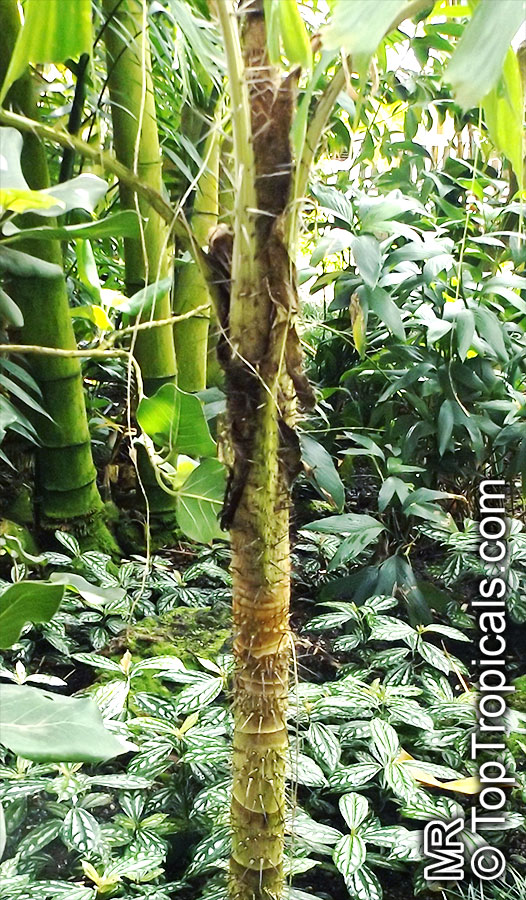
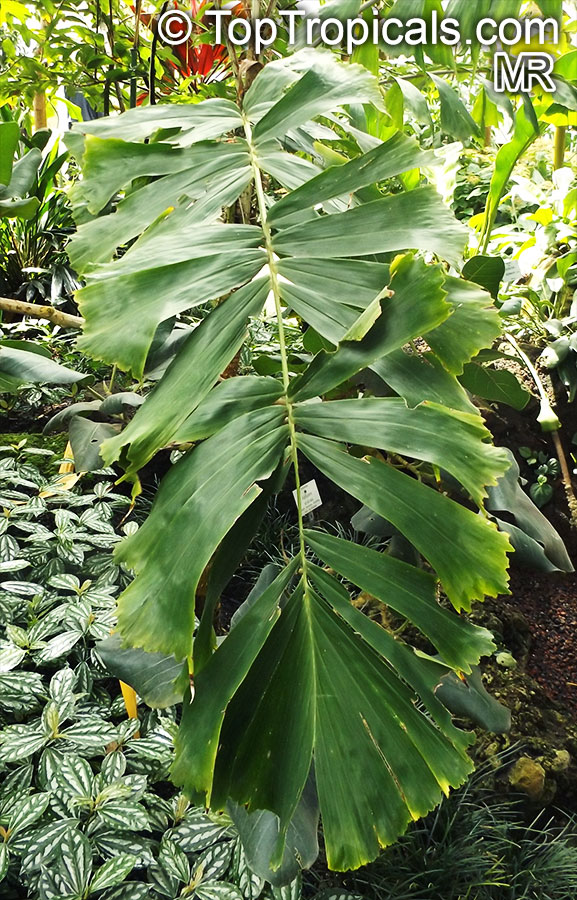
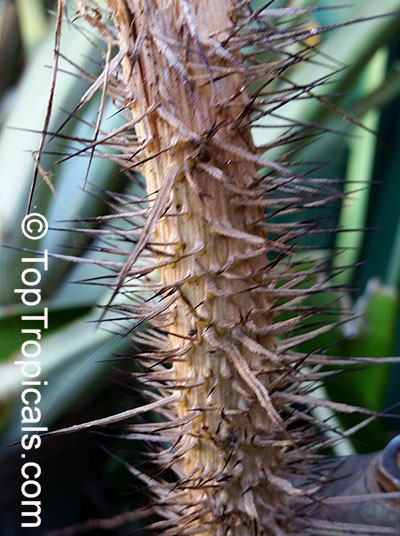
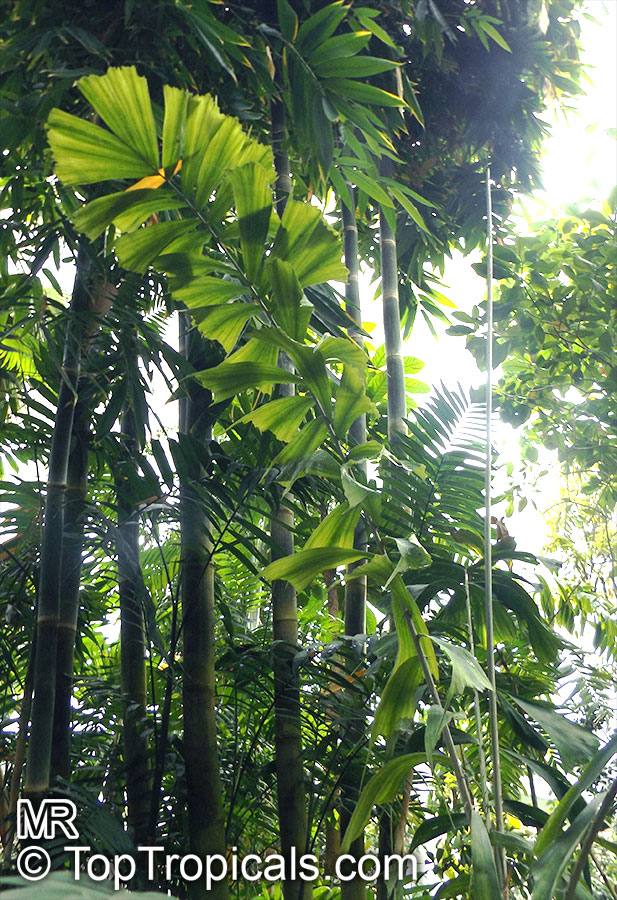
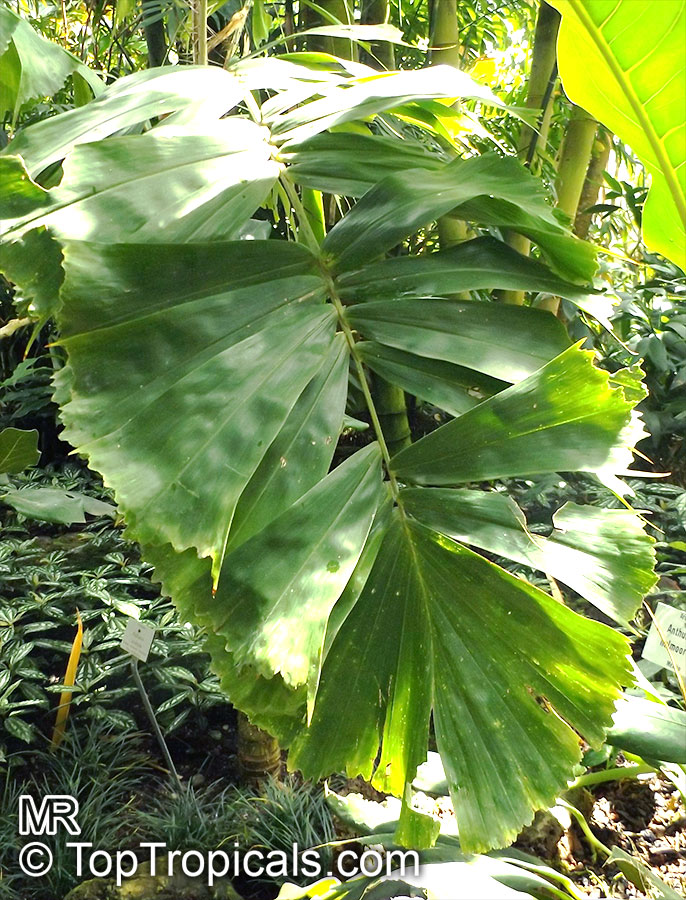
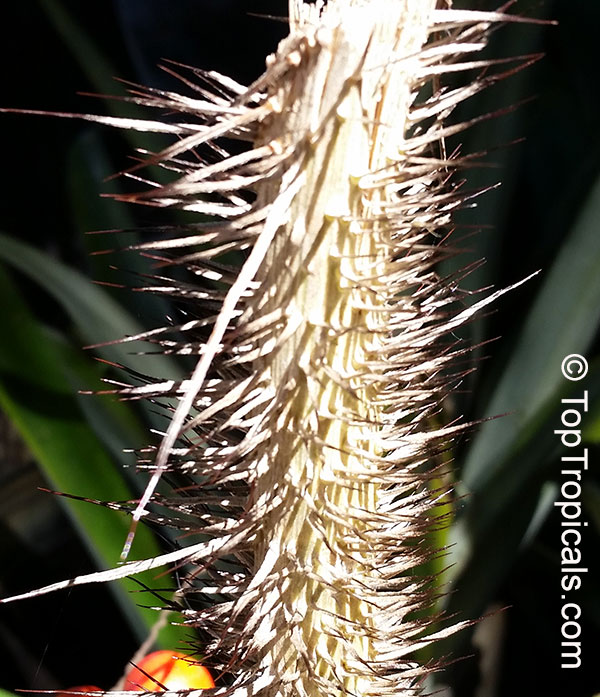
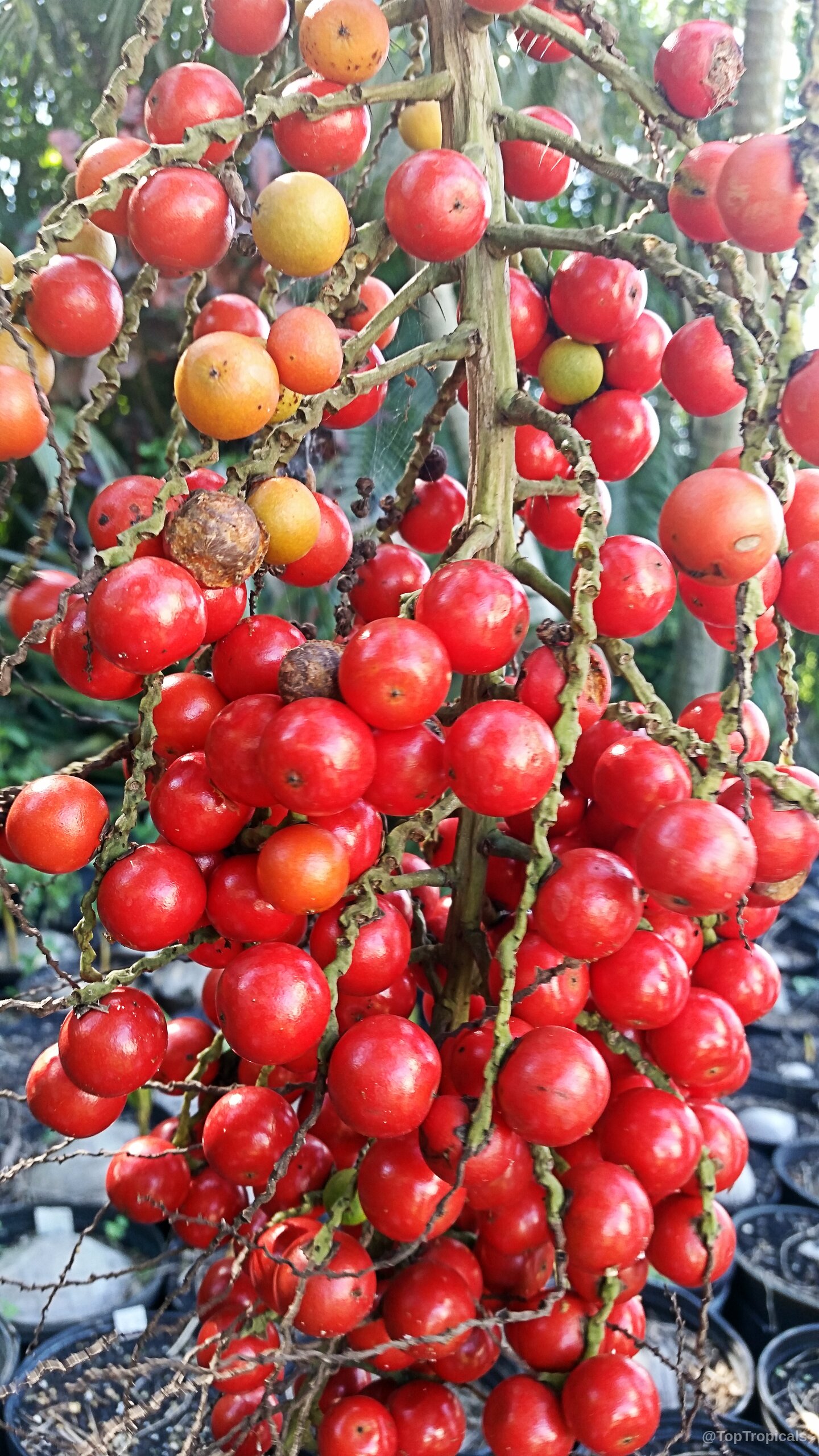
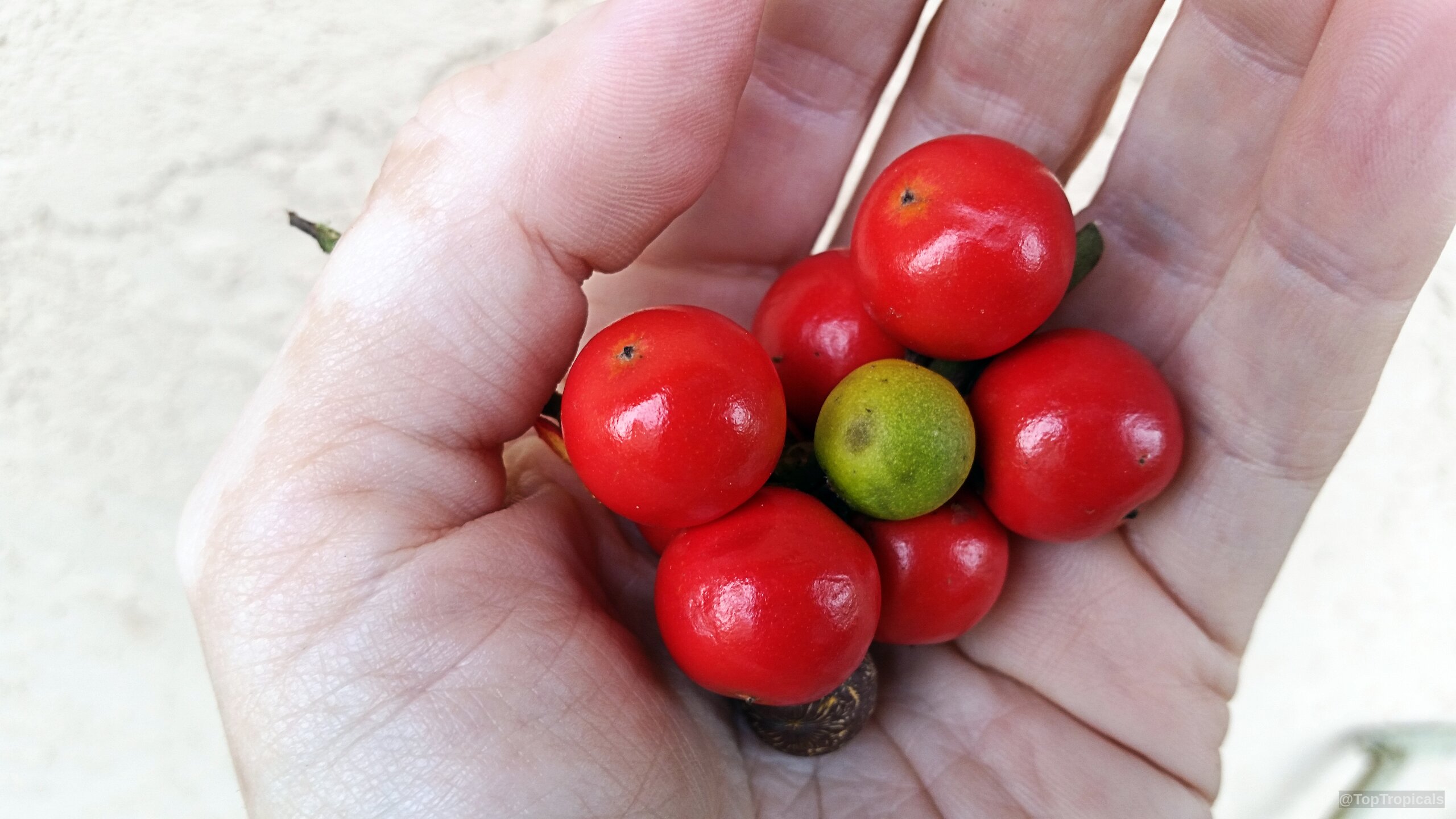
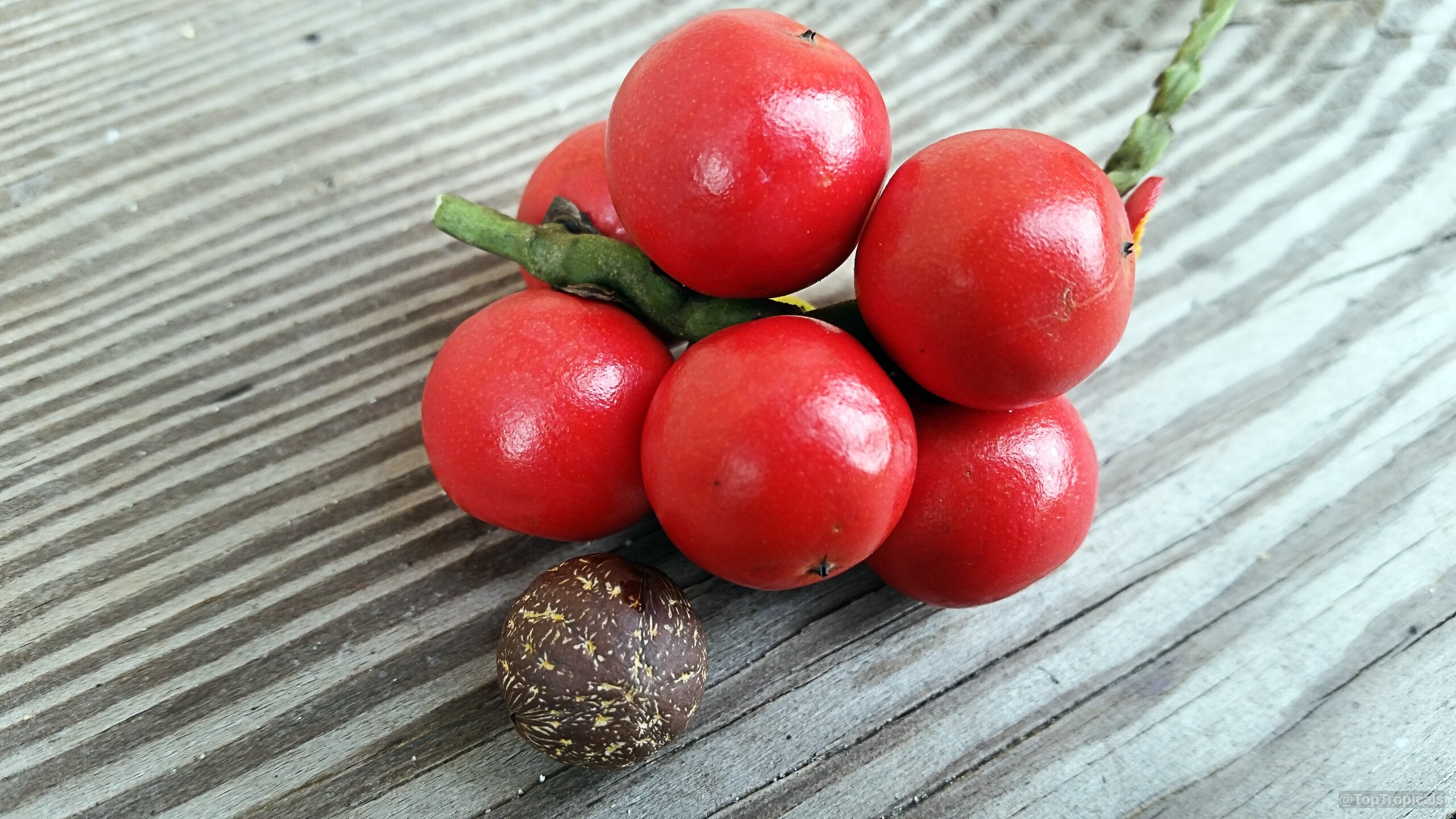
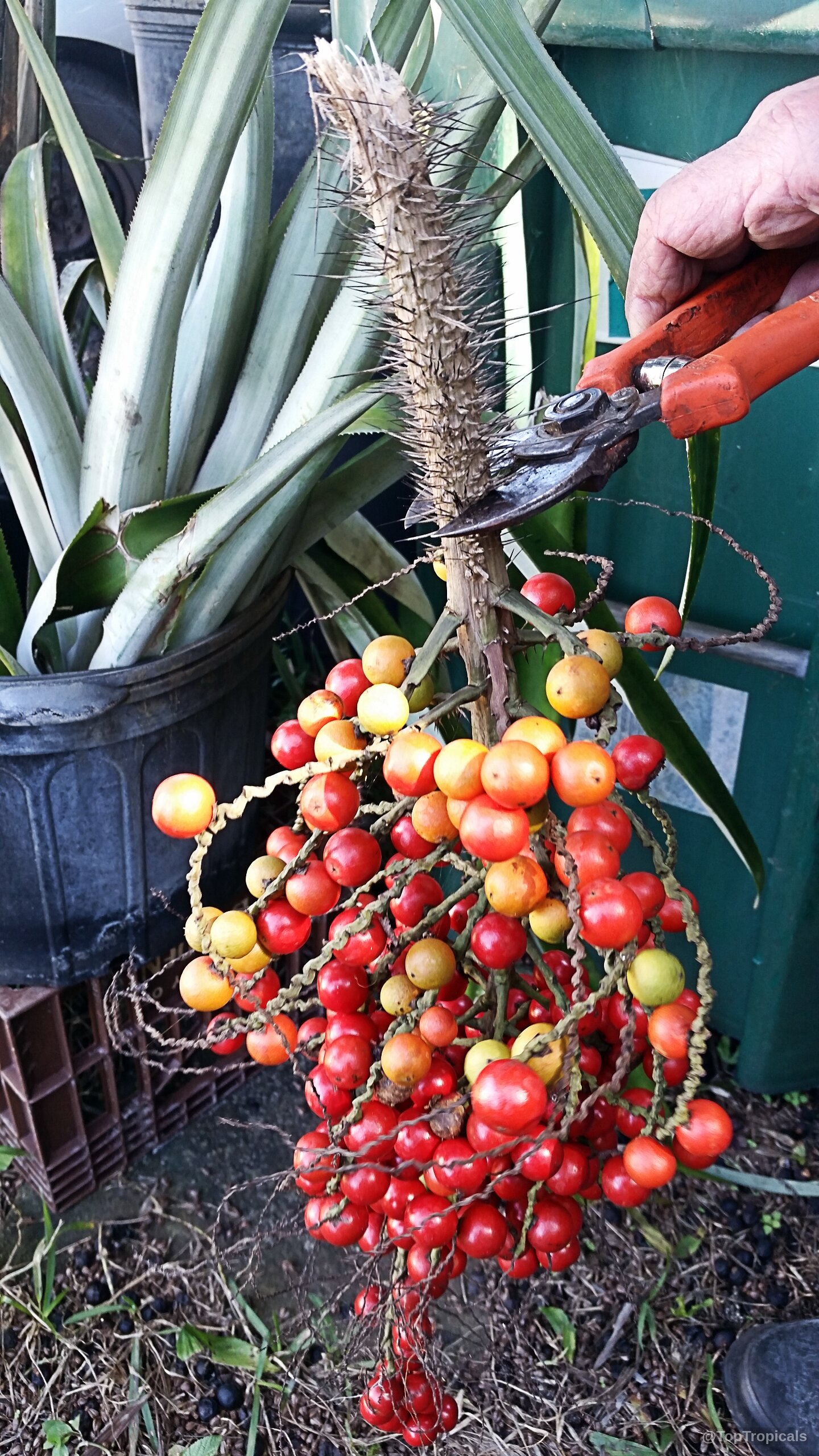
Very tasty coconut-like nuts! Good palm for semi-shade garden.
This very different dwarf palm from South America, has attractive spines all over it and fabulous, gracefully arching leaves, covered with white powder, with long, wavy, closely- spaced leaflets. The fragrant flowers produce clusters of red fruit making it ideal for conservatory or a warmer garden where it can actually stand occasional, but not hard freezing. A solitary, showy spiny small tree. In the wild it grows 9-15 feet tall with a stem diameter of 2-4 inches. The epicarp and mesocarp of the fruit are rich in carotene and are eaten in Colombia, while the seeds are eaten raw or used to make candles.
Recommended Fertilizer: SUNSHINE Robusta - Rapid Growth Booster
Local pickup only. This item is not available for shipping. Local delivery may be available in Ft. Myers or Sebring, Florida. Contact us for an estimate. Non-pickup orders are subject to restocking fees.
Last one
| Next | |
Use link to repeat this search:
https://toptropicals.com/cgi-bin/garden_catalog/cat.cgi?find=dwarf fruit tree&search_op=and&keyword_op=and&language=e
&number=10&no_change_lang=1&user=tt&sale=1&first=0