Rosa - Plant Encyclopedia Results
| Number of plants found: 103 | Next | 
|
Go to page: | 1 | 2 | 3 | 4 | 5 | Last |
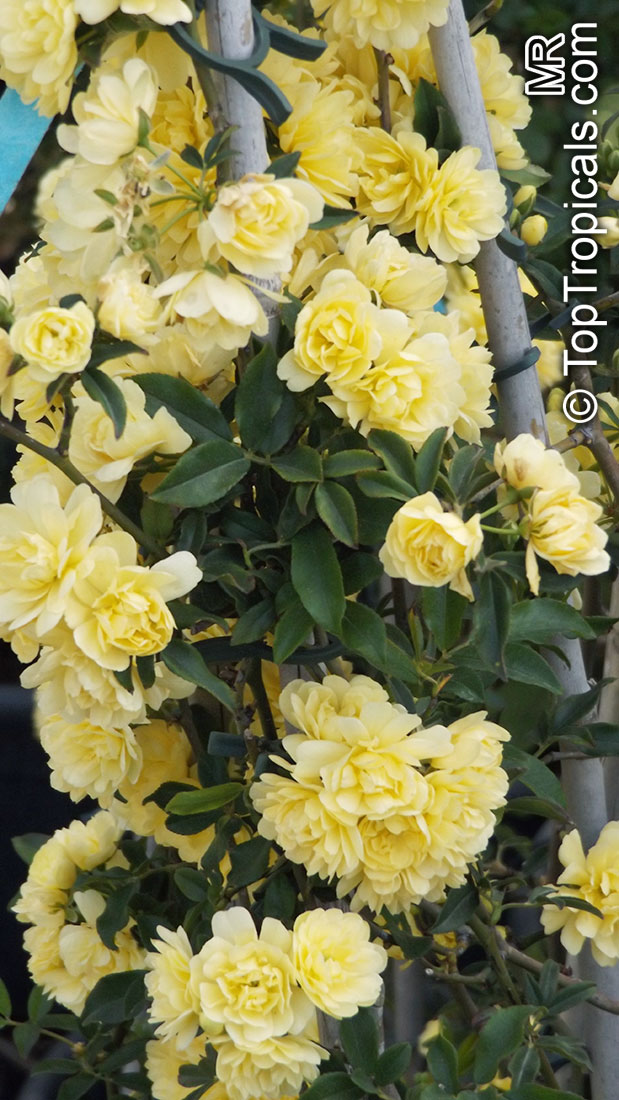
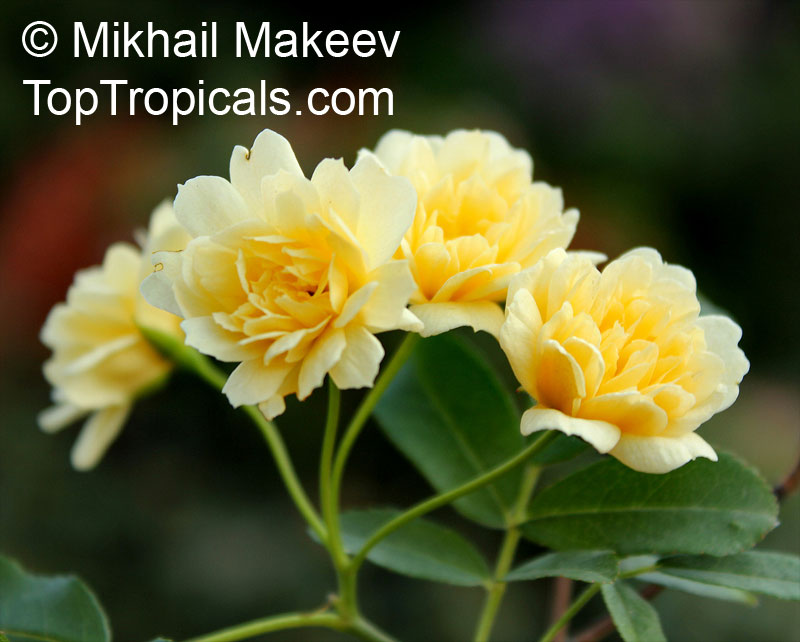
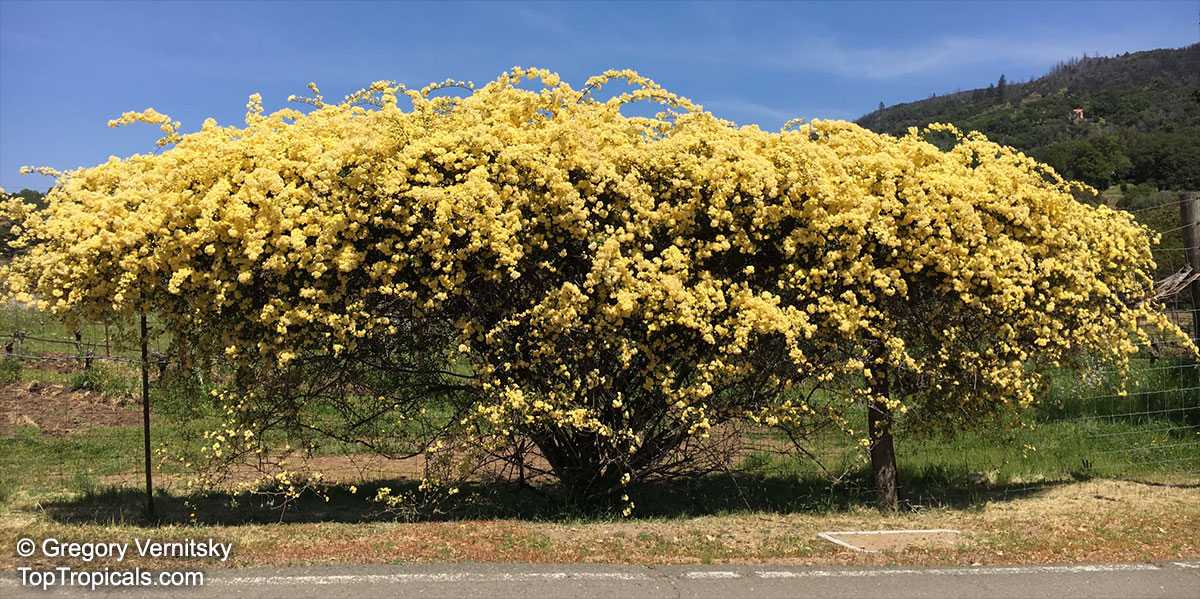
Botanical name: Rosa banksiae
Common names: Lady Banks Rose, Rambling Rose
Family: Rosaceae
Origin: China
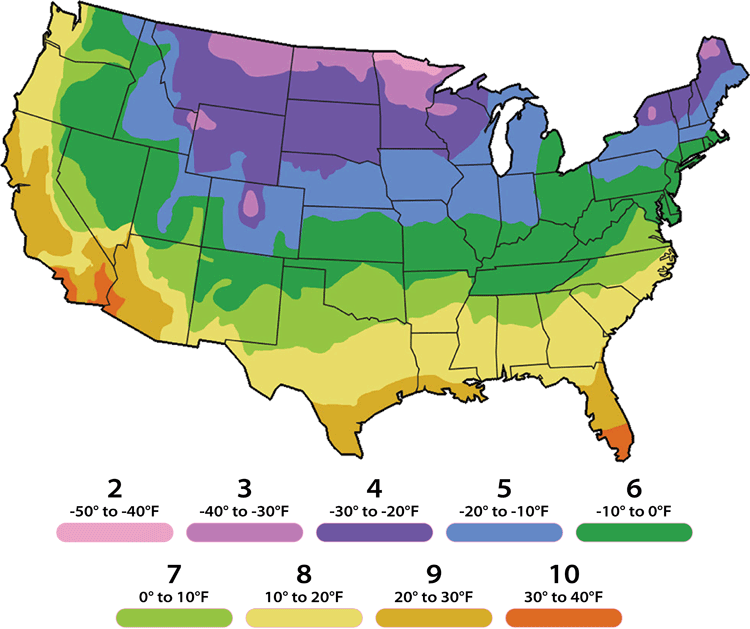
USDA Zone: 6-11
Cold tolerance: 0°F


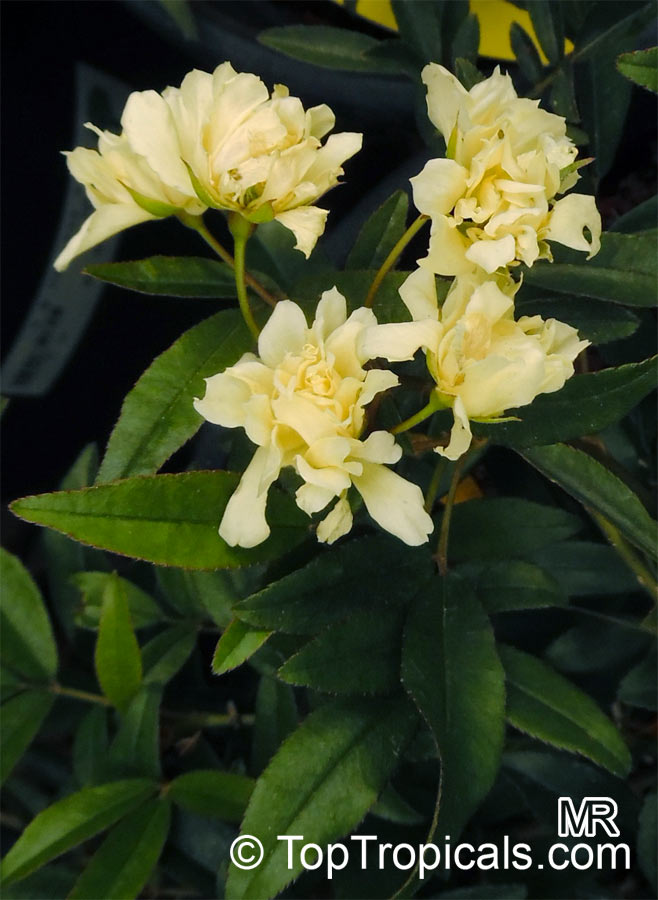
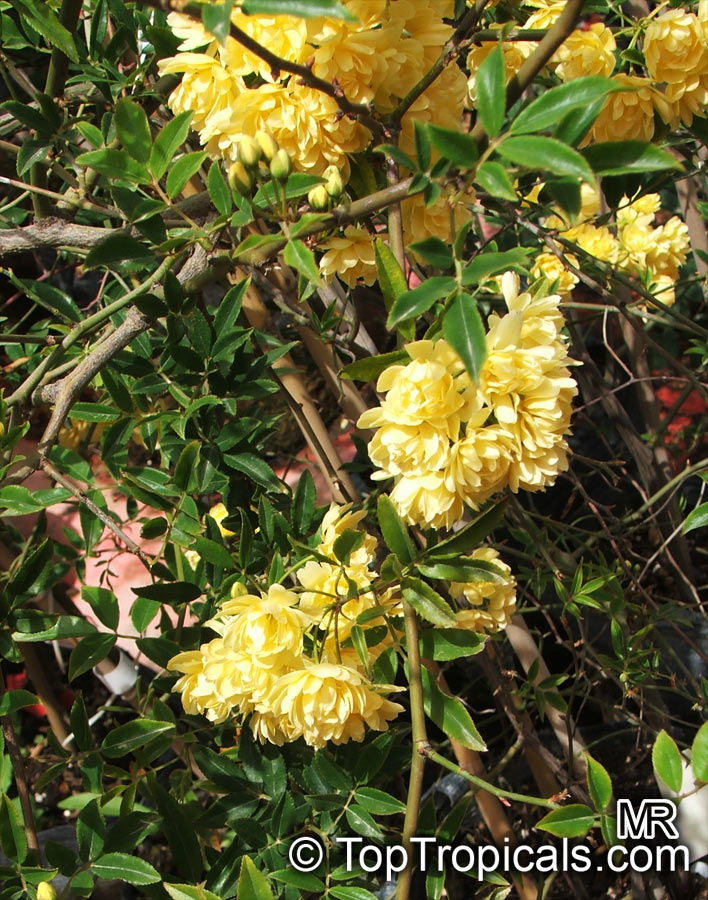
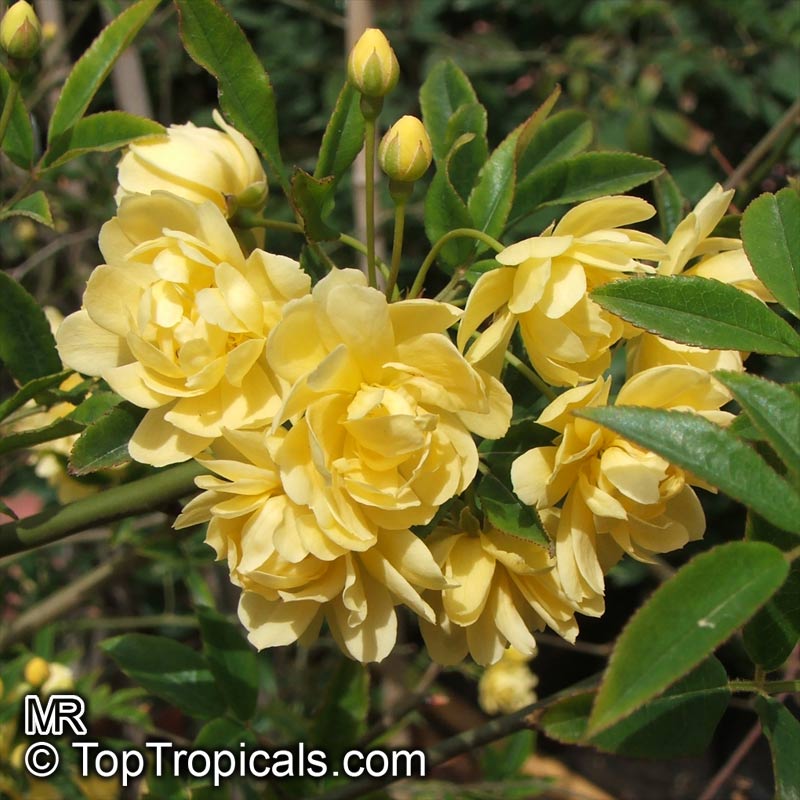
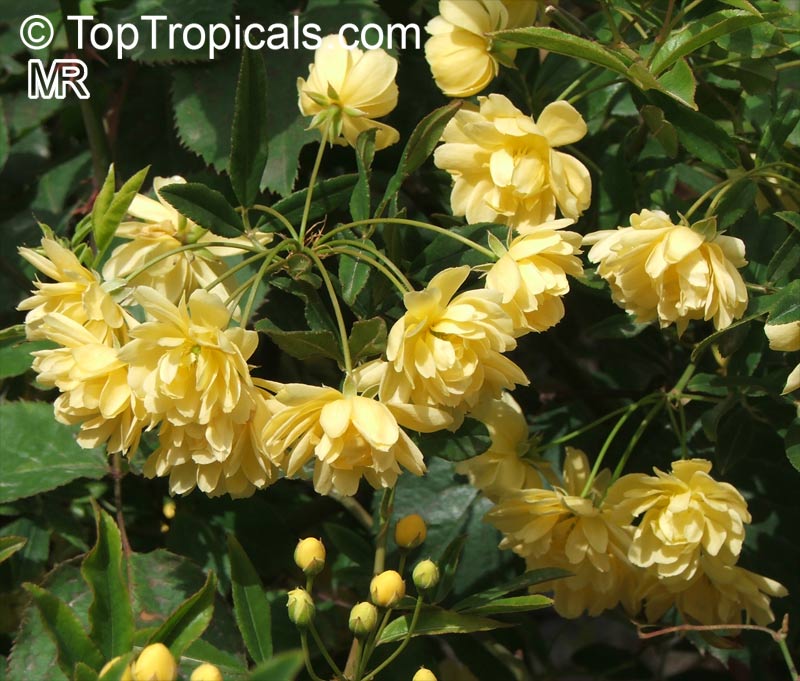
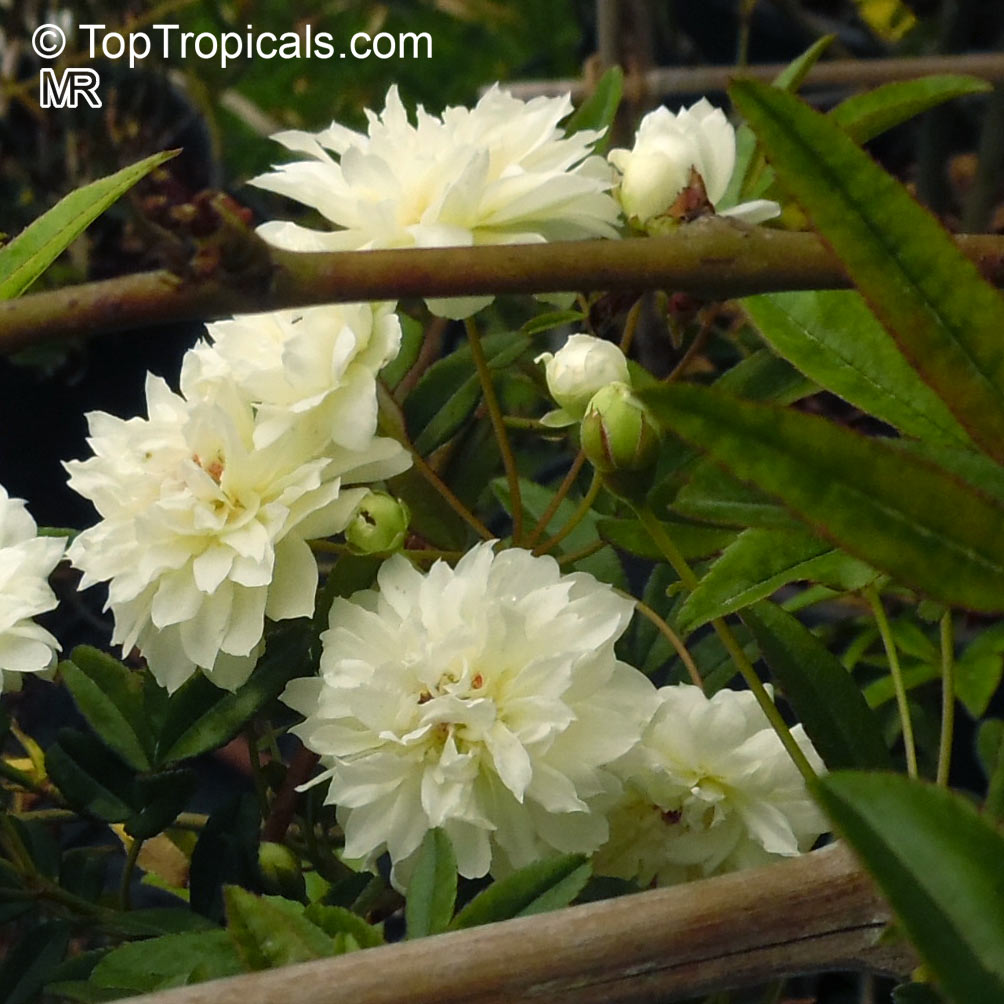
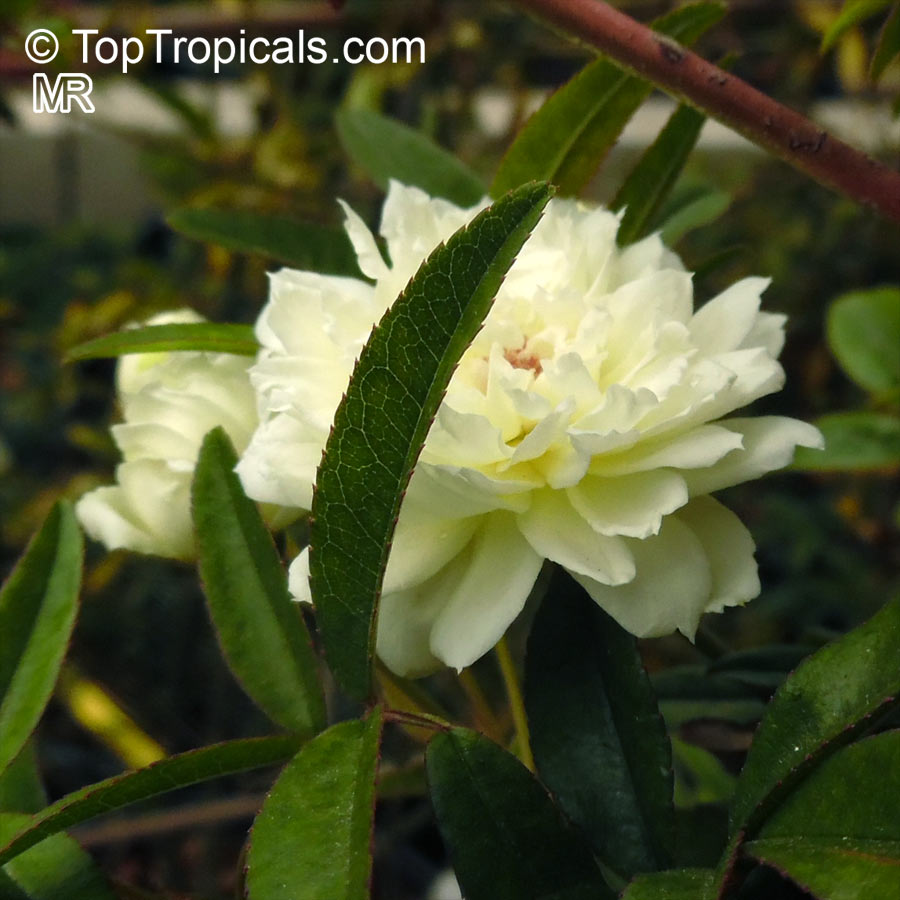
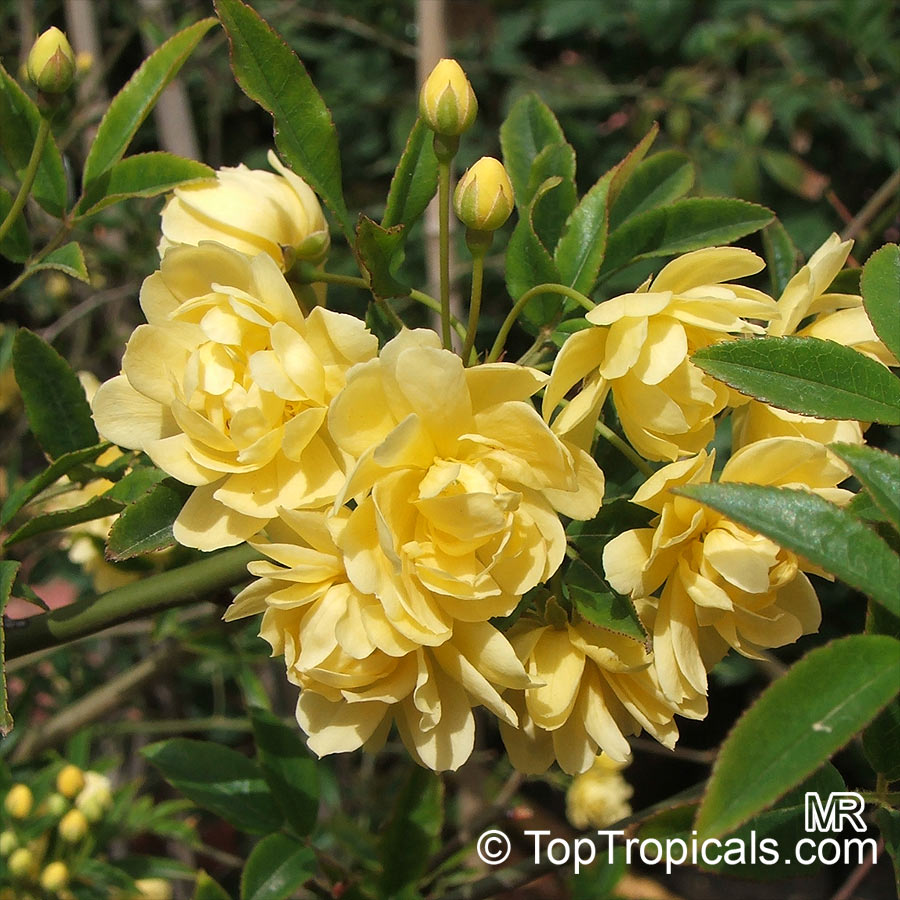
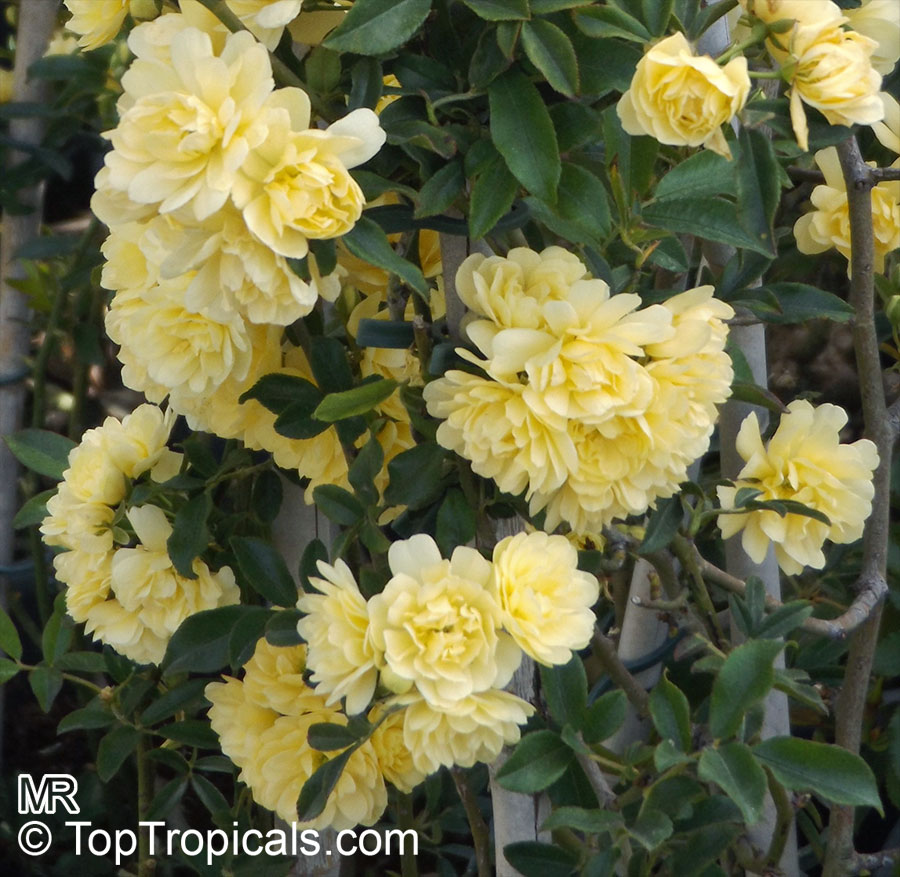
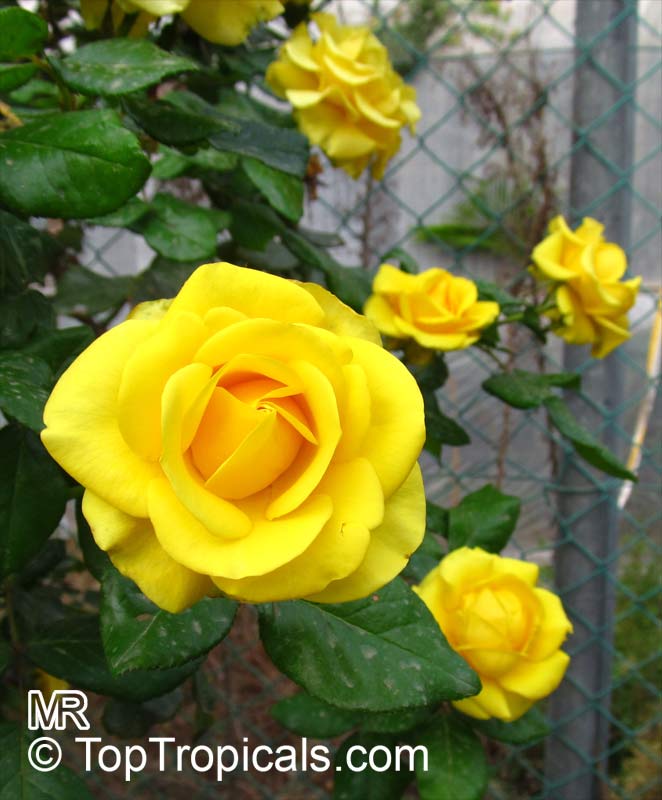
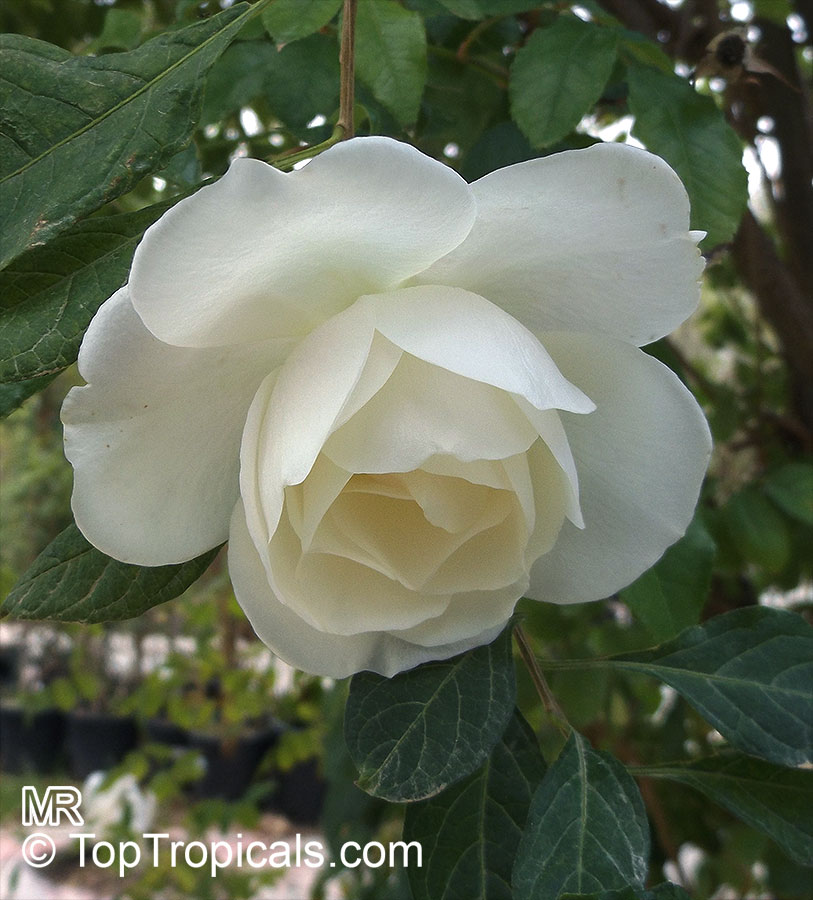
The Lady Banks Rose is an incredibly hardy plant, easily recognizable for its vigorous growth, evergreen foliage, and mostly thornless stems. It is divided into two main colors, either white or yellow, and two types, single or double. The clean, glossy leaves are pleasing year-round and the breathtaking blooms in the Spring will definitely be a memorable sight. To best enjoy this beauty it is recommended to encourage its growth on a support structure such as a pergola or arbor, although this species can be grown as a tree too. When it comes to hardiness, Rosa banksiae Lutea is said to be the most able to withstand colder climates, however it will require plenty of sun and warmth to properly grow.
Rosa banksiae is found to be evergreen, with long, lance-shaped leaves. This rose flowers on 2nd and 3rd year wood, meaning that dead canes and older growth need to be pruned on a consistent basis. It can handle poor quality soil and is rarely affected by any diseases or insects. In fact, the world's largest rose tree is a Rosa banksiae. Located in Tombstone, Arizona it is a record-holding 113 years old and is almost 70 feet long.
For those living in USDA Zones 5-11, Rosa banksiae is an easy plant to grow. It needs full sun and moderate water; however, the bloom time is short compared to the evergreen foliage, so it is usually grown against walls or used as a climber. Once you decide on which variety, white or yellow, single or double, that you possess, remember to take care of them by regularly pruning and giving a good balanced fertilizer. Propagating by taking softwood cuttings in Springtime is also an option to increase your rose bush.
If you don't live in an ideal climates for this rose, growing them in a pot might be for you, but beware that you will need very large pots to accommodate for the root system of this plant and its vigorous growth. When Rosa banksiae is grown in containers, give them protection in the winter by covering the pot with plastic, or with straw and burlap to keep the roots away from extreme cold. It should be repotted every 3-4 years and fed with a balanced fertilizer in the Spring and Summer months.
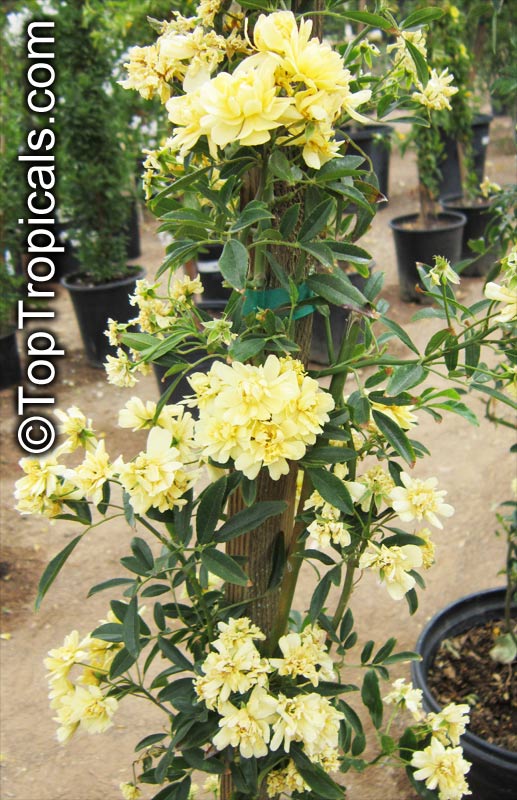
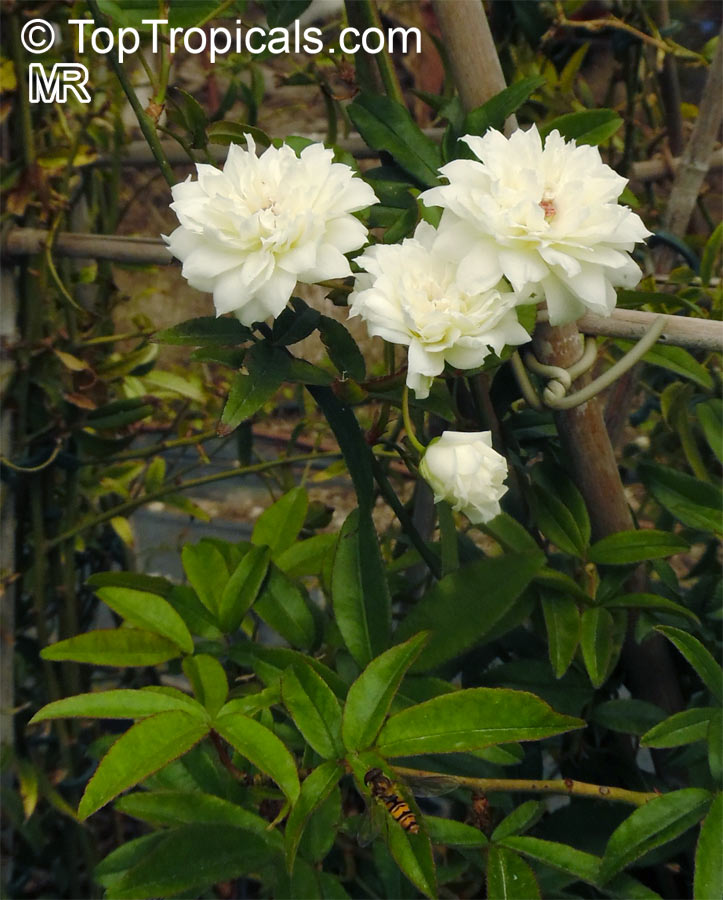

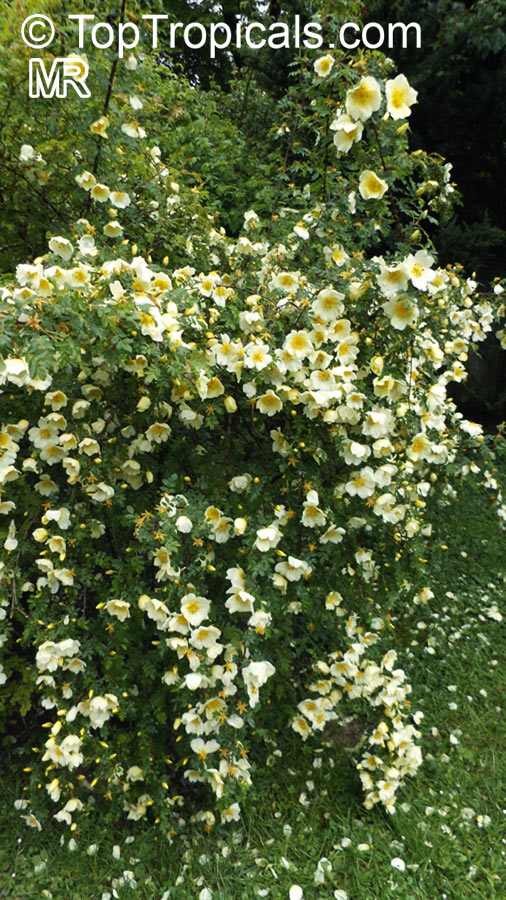
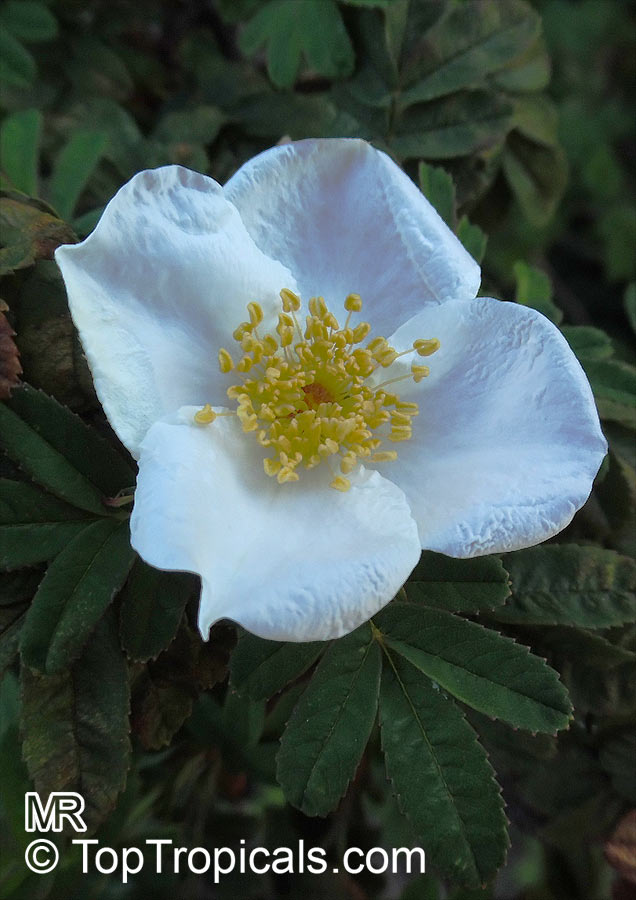
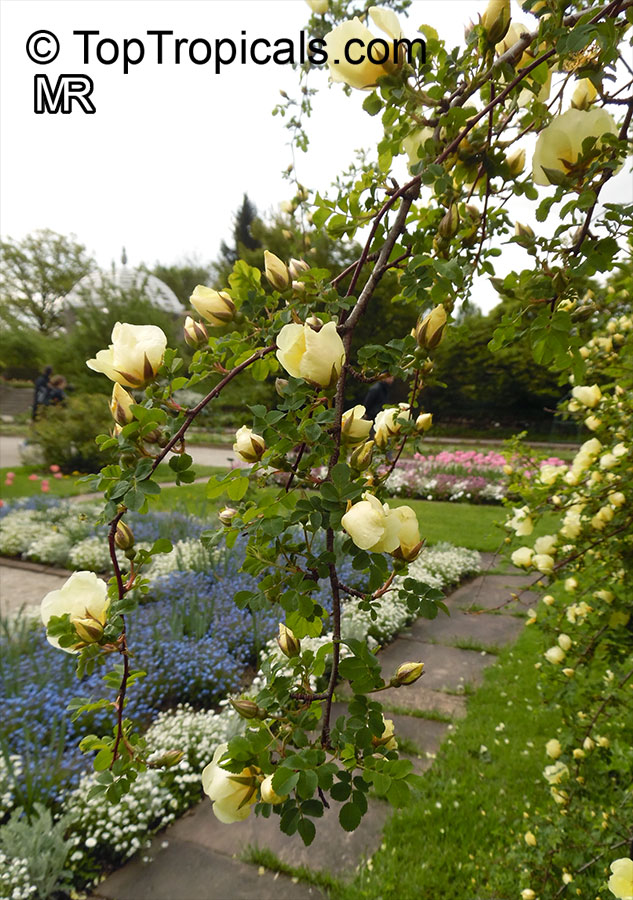
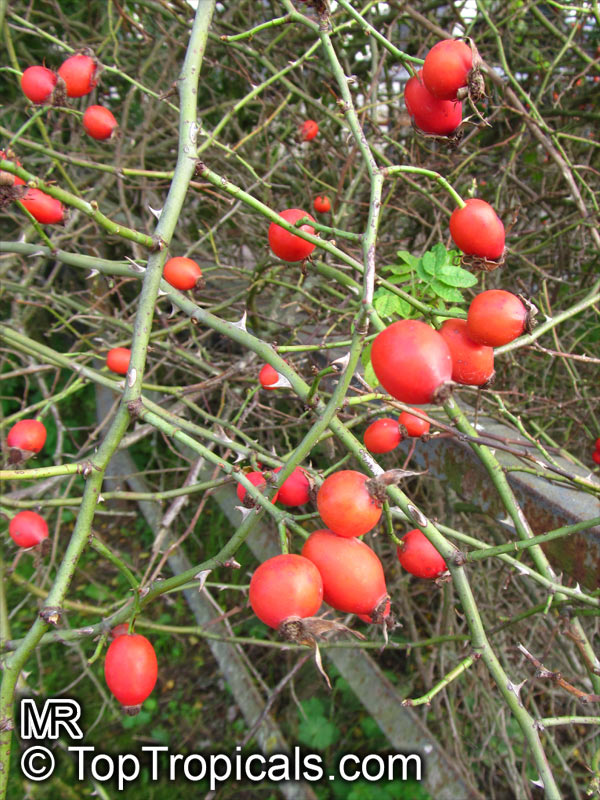
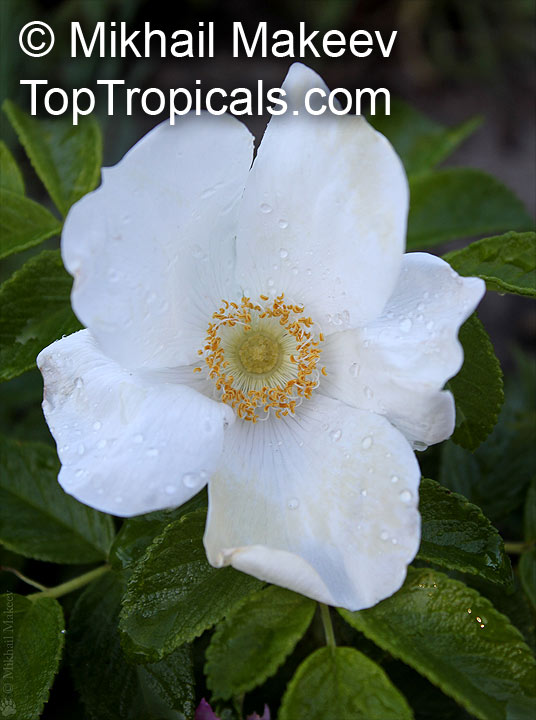
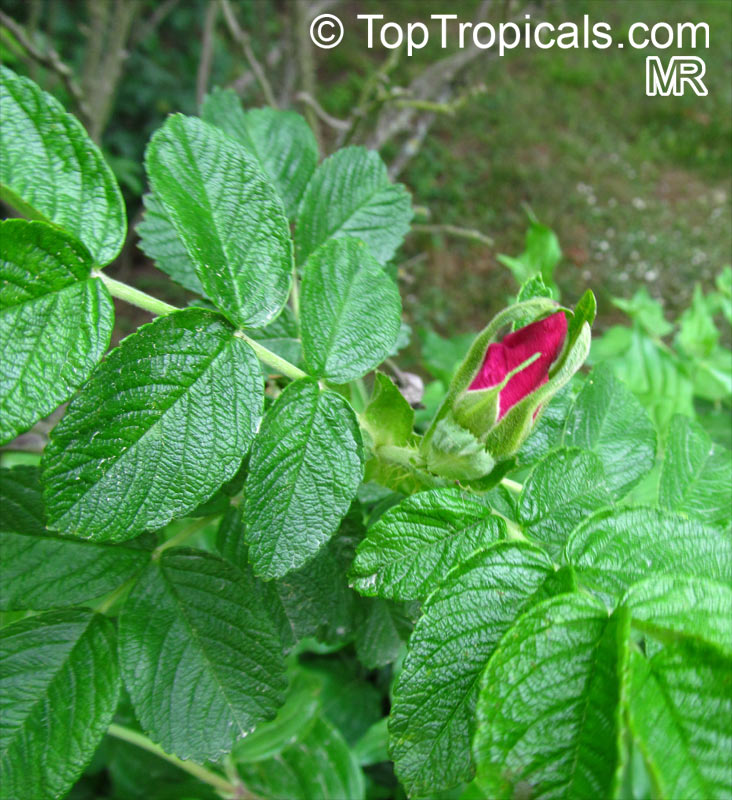
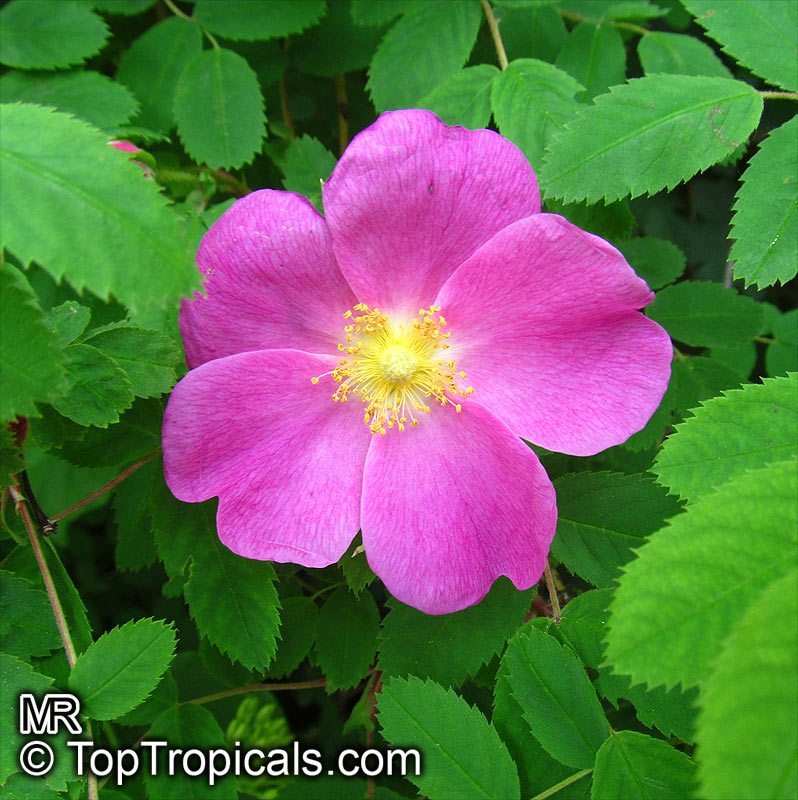
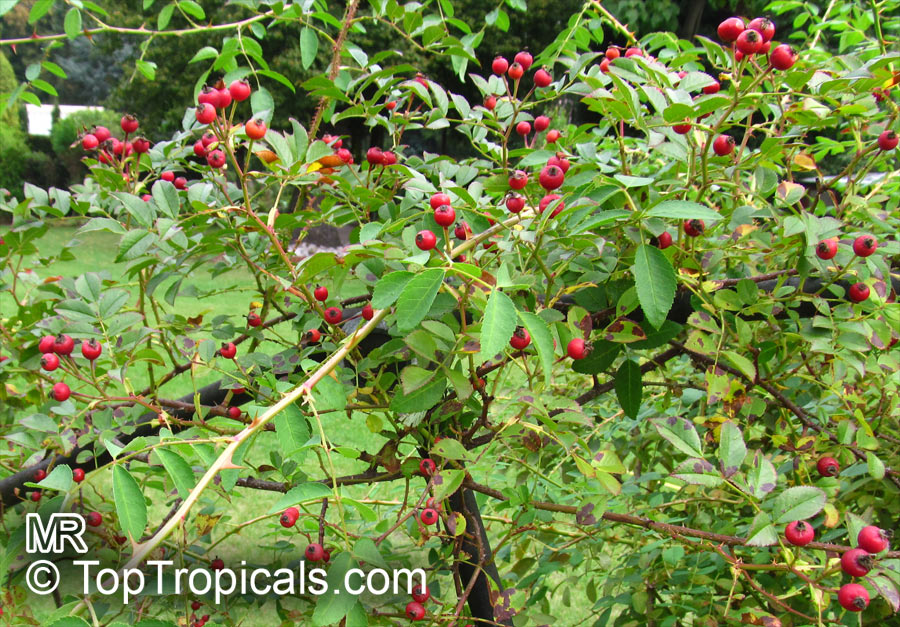
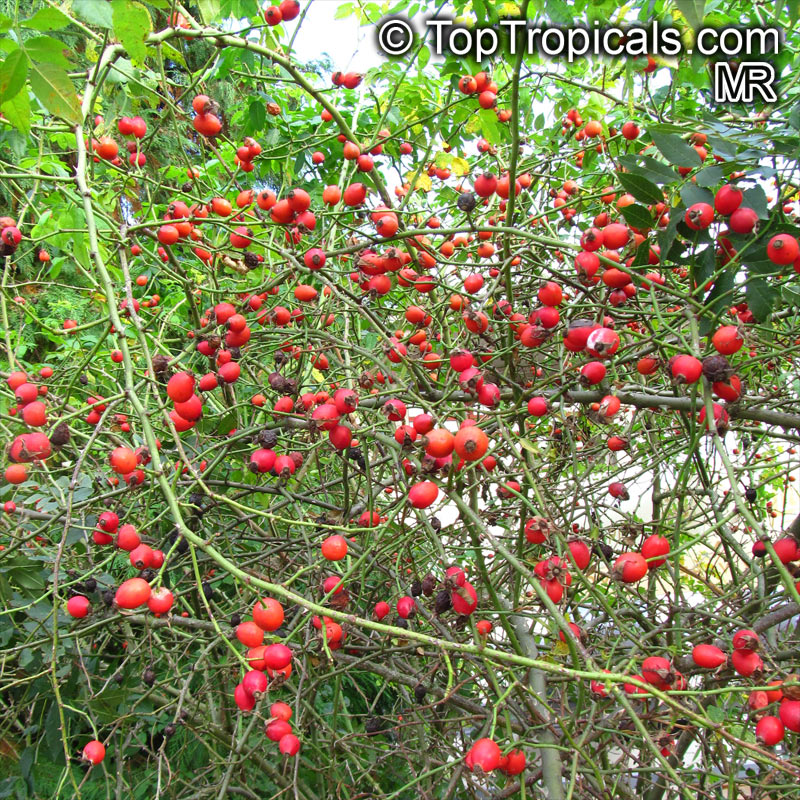
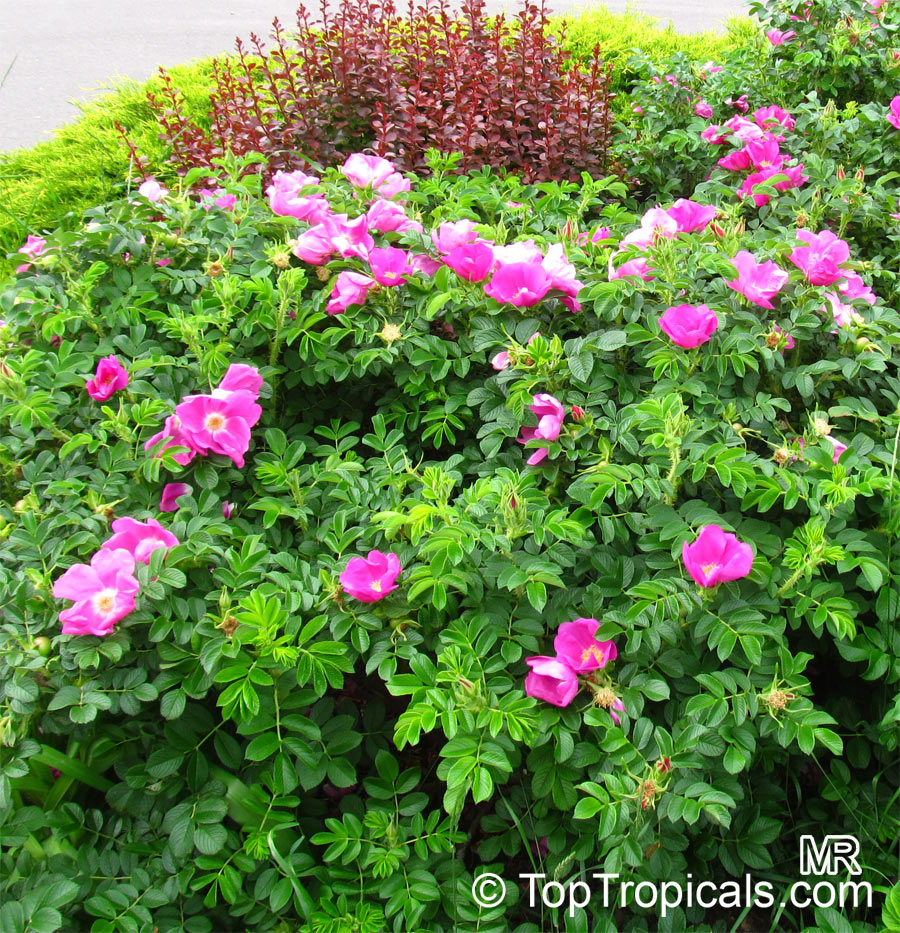
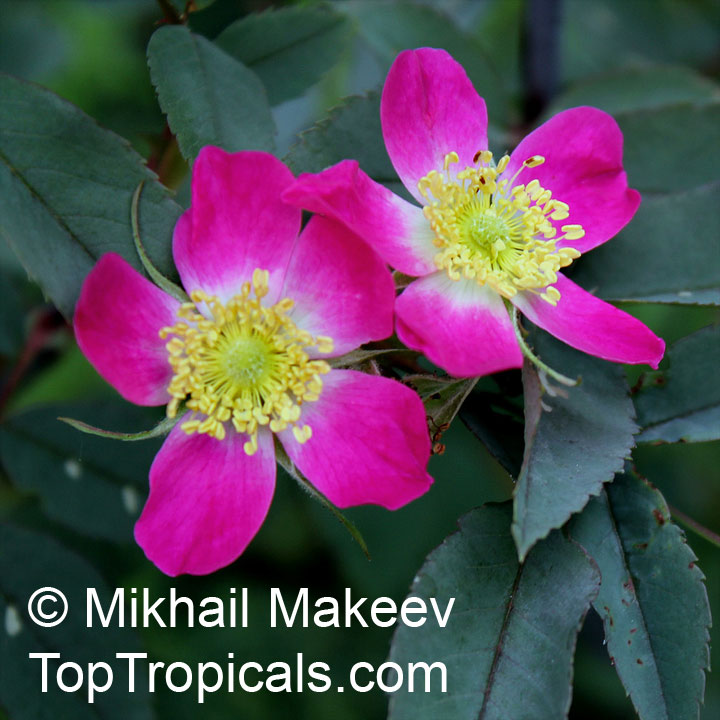
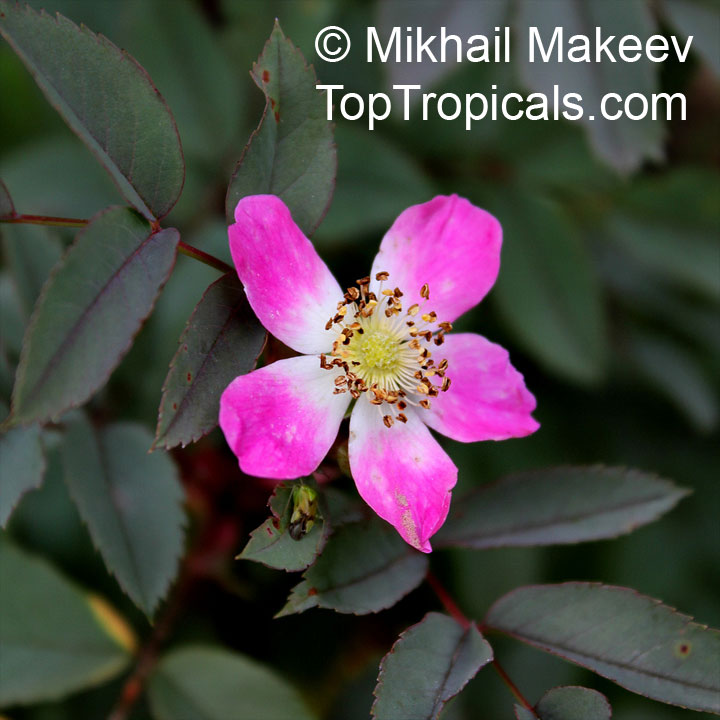
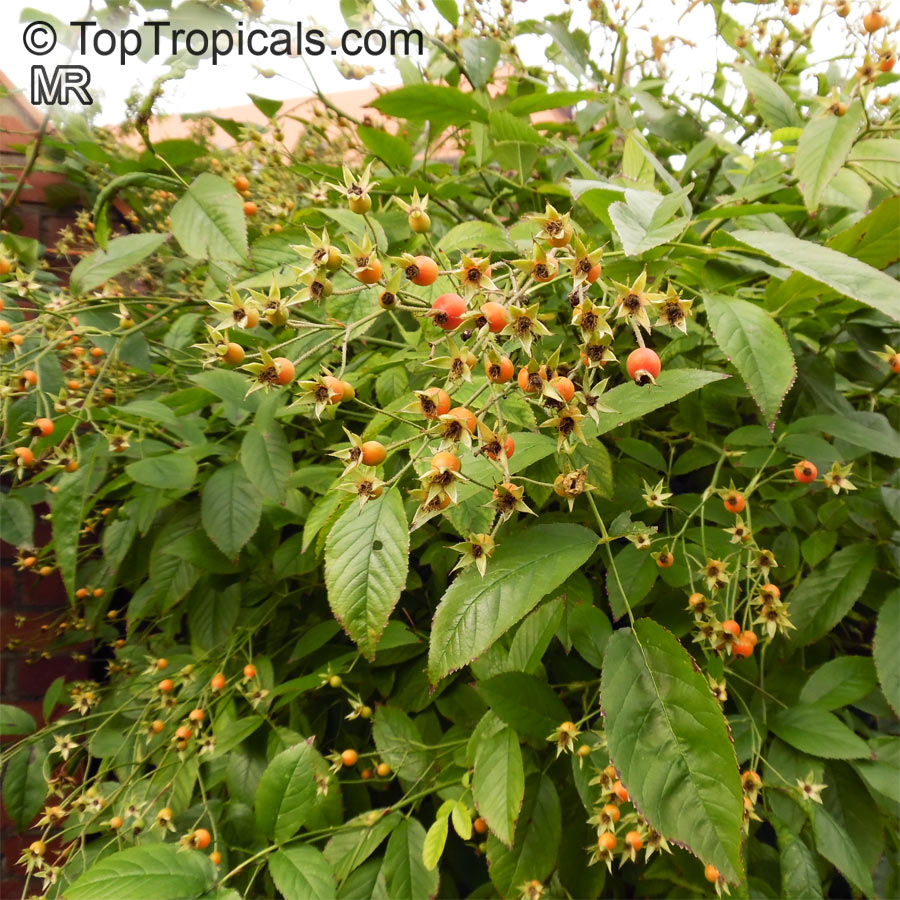
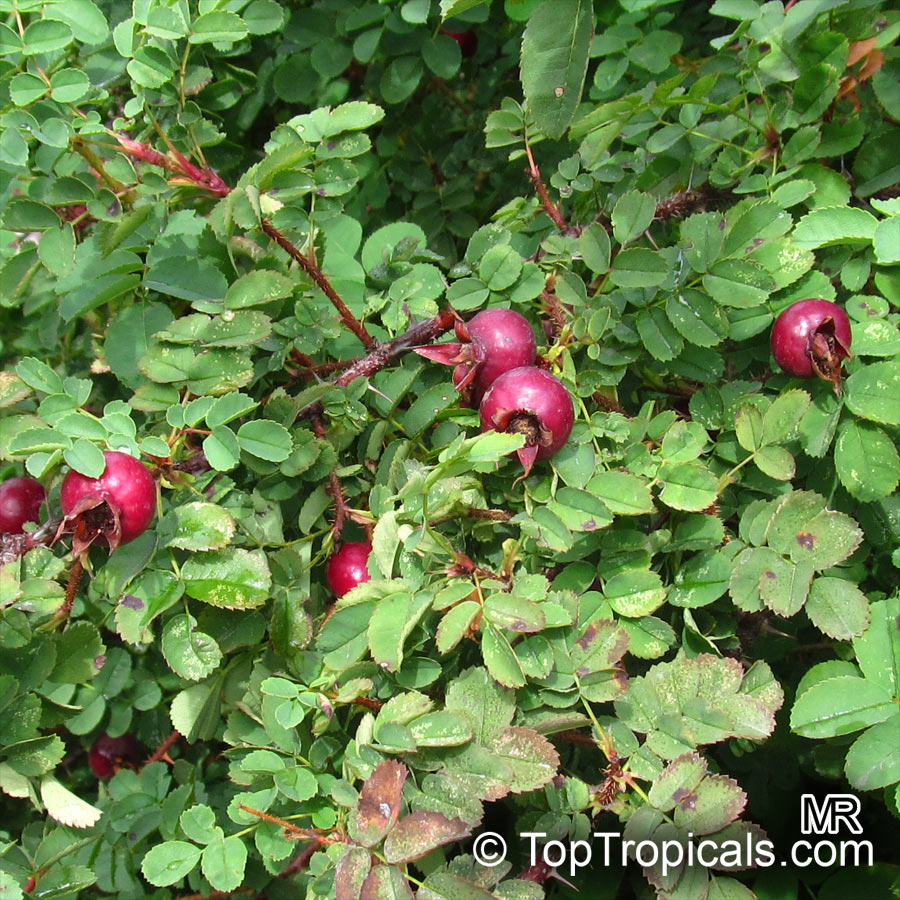
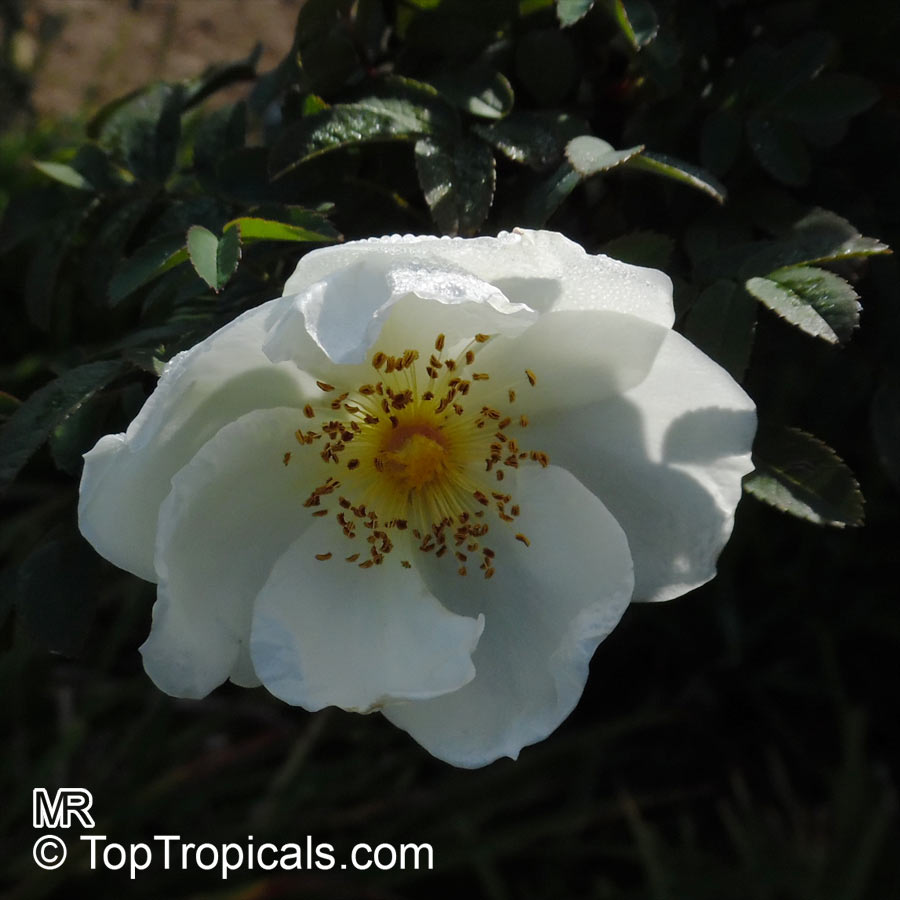
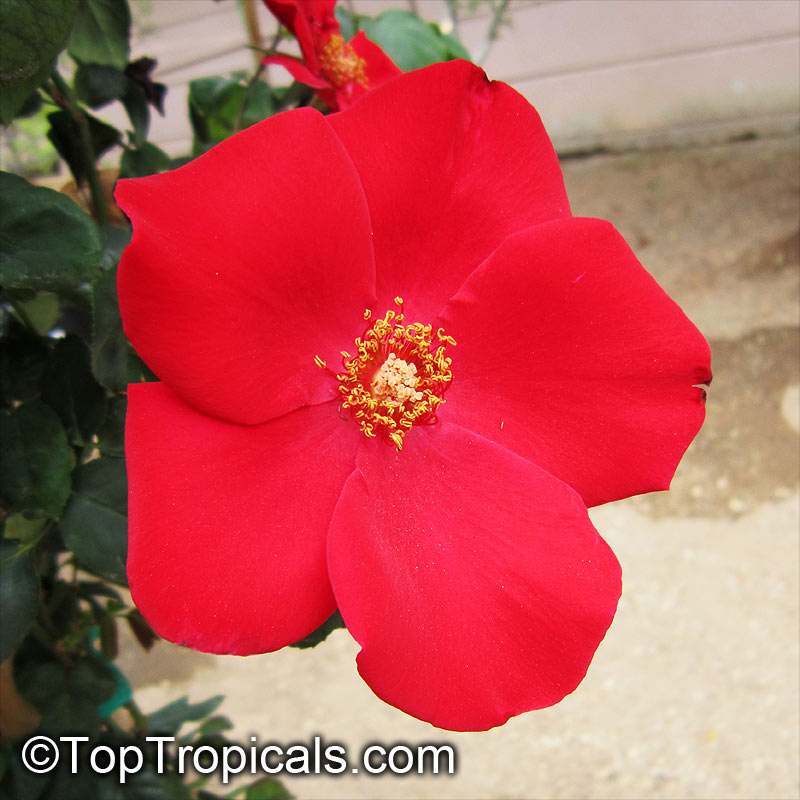
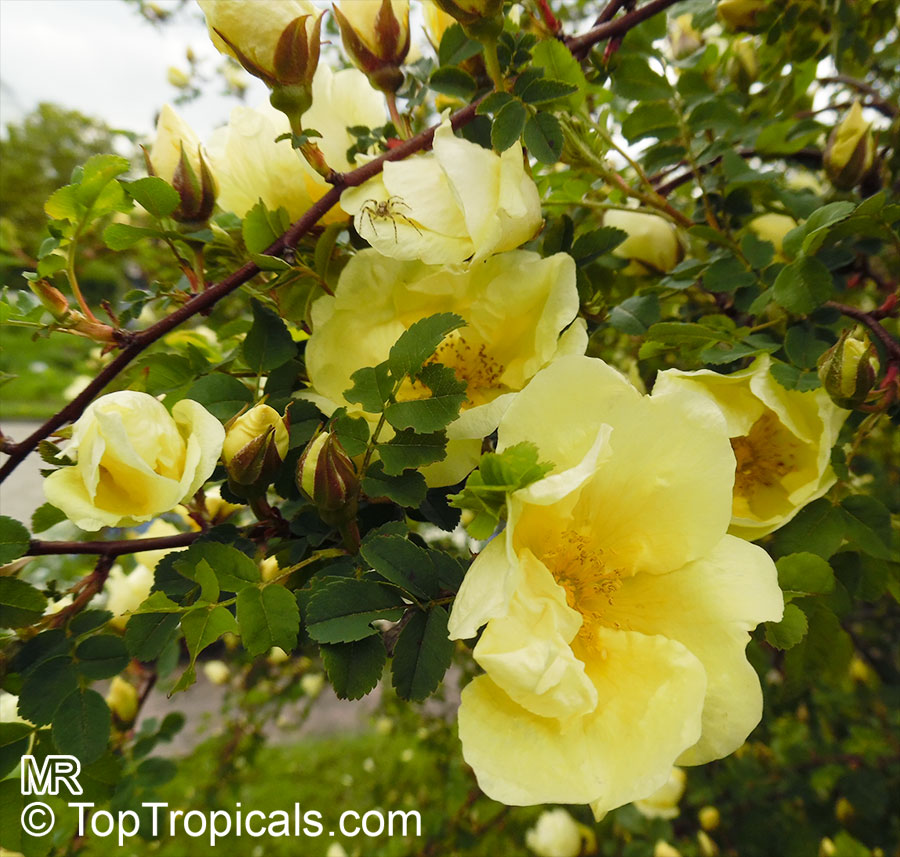
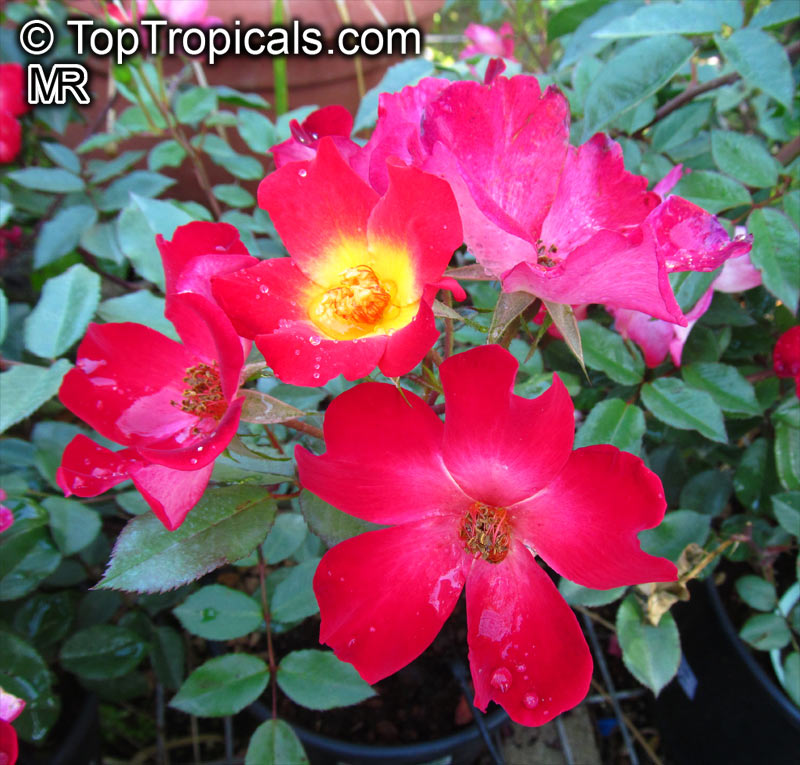
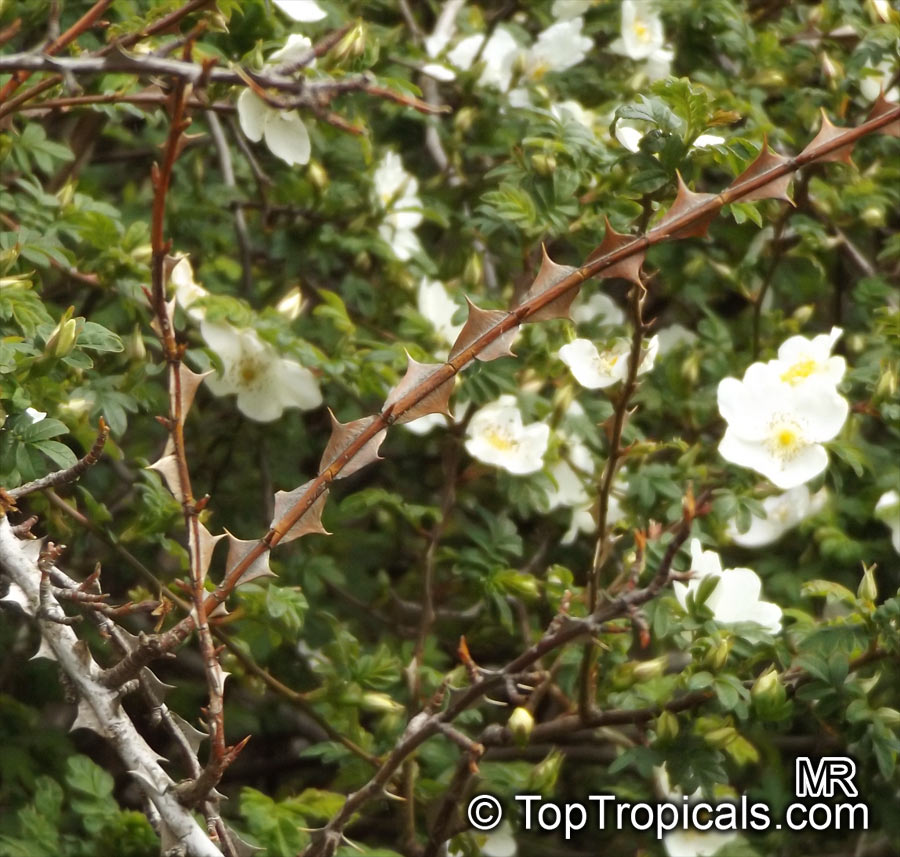
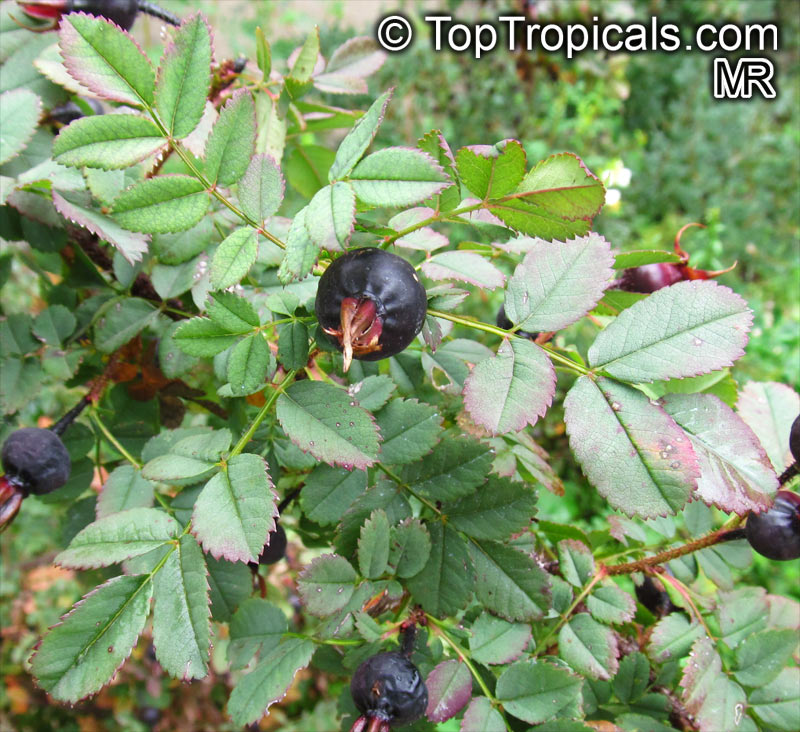
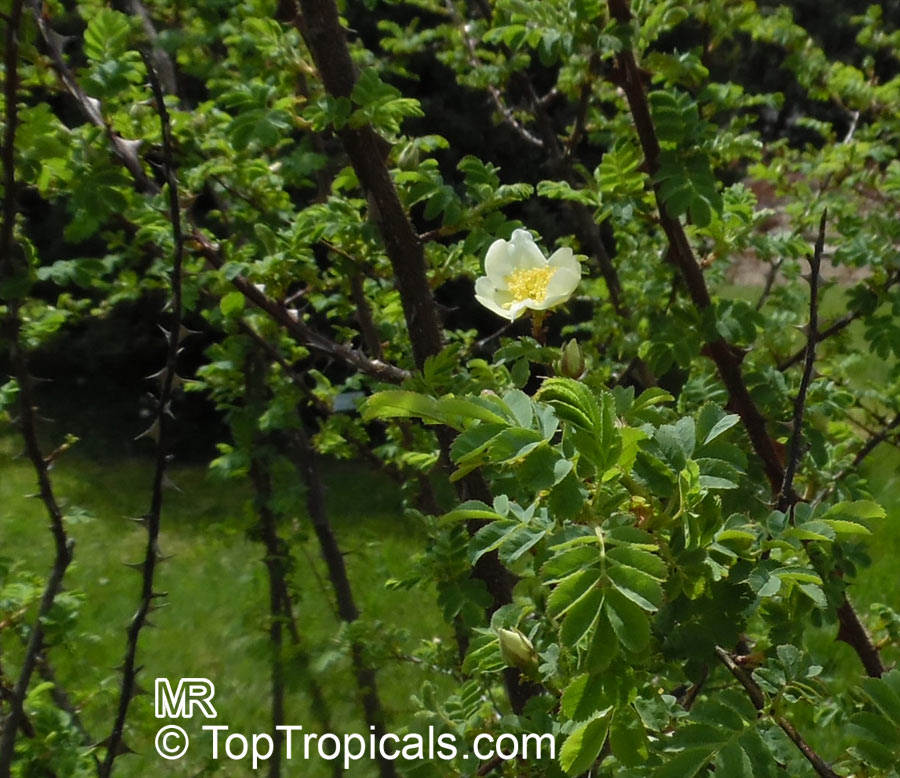
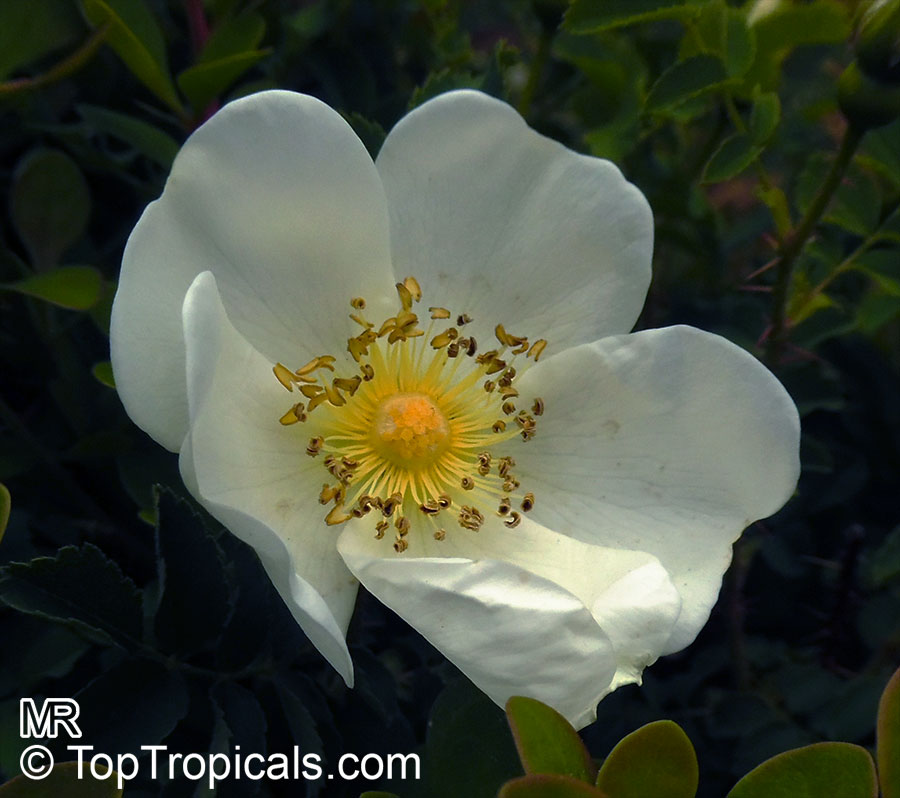
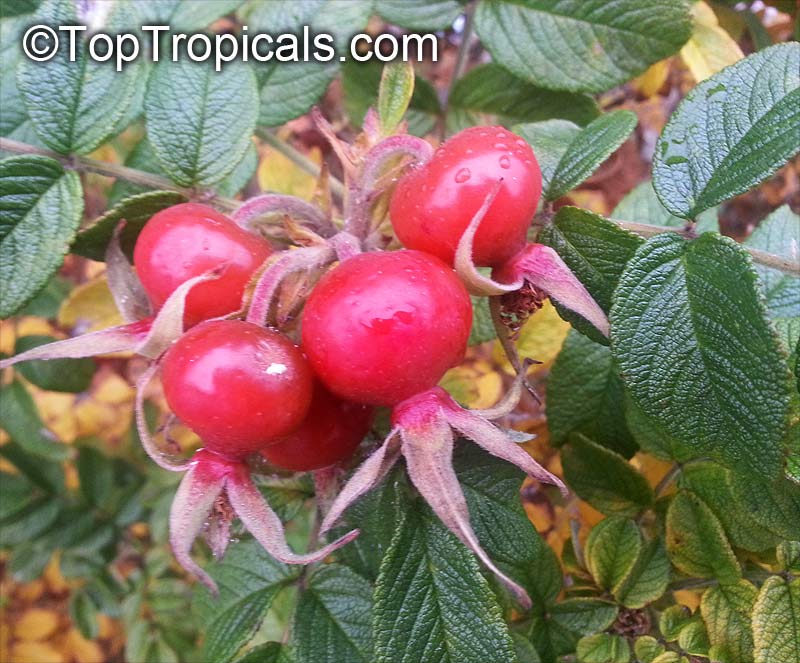
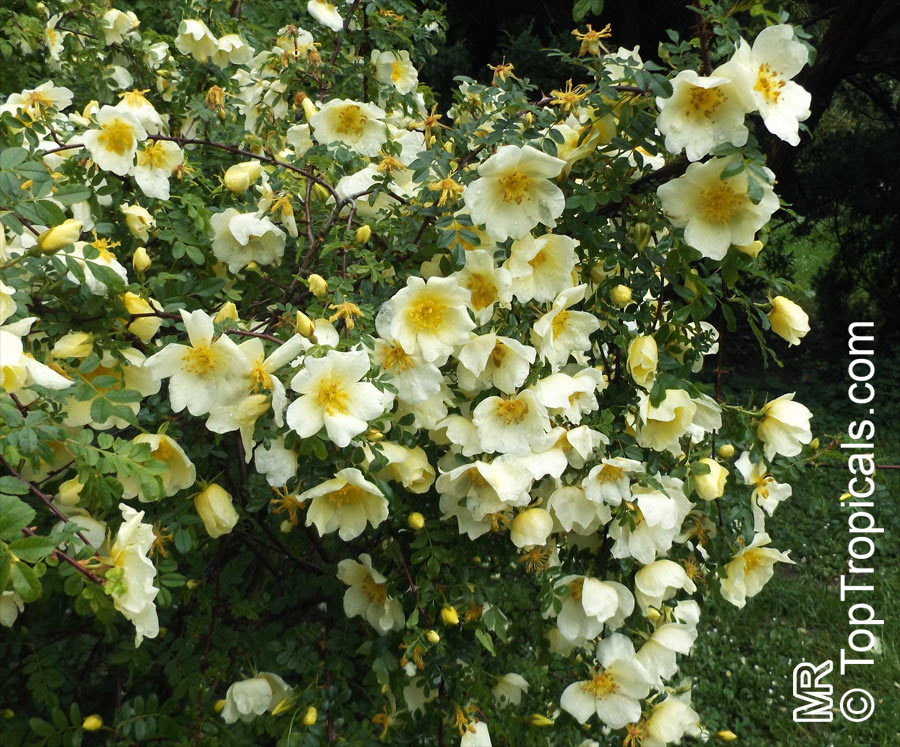
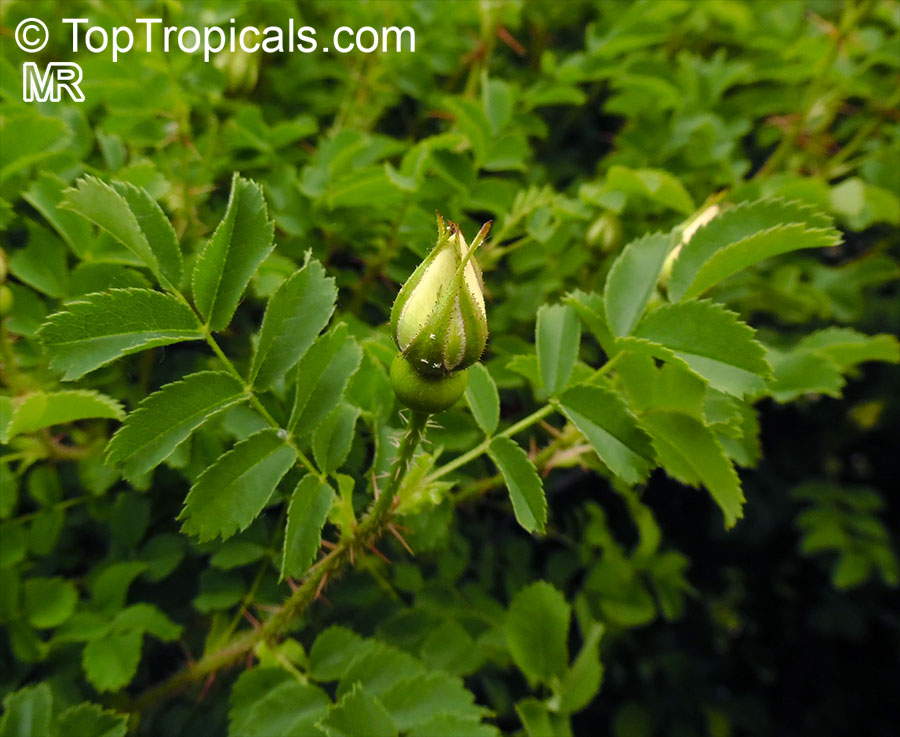
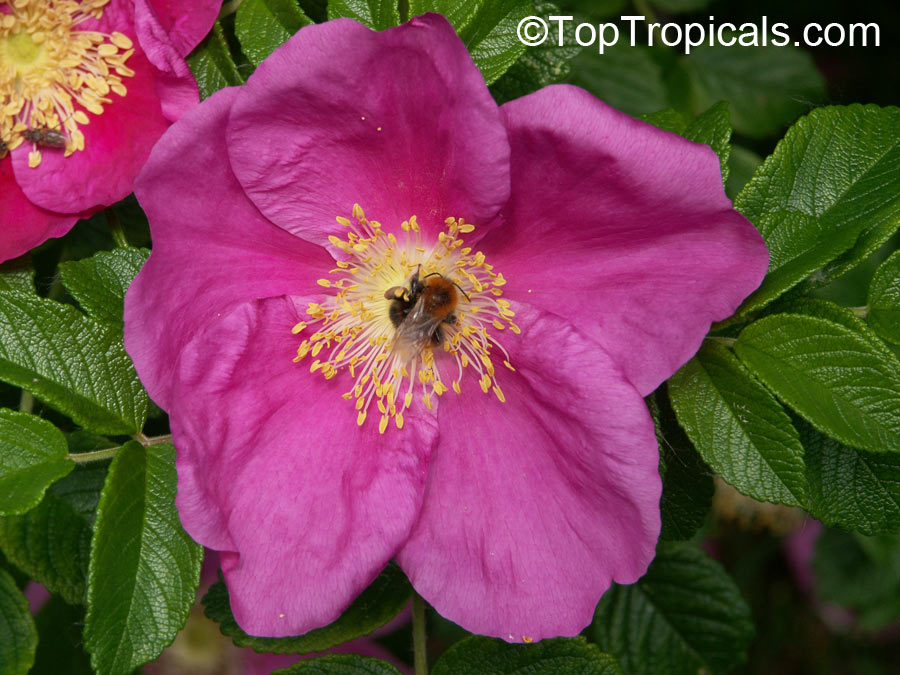
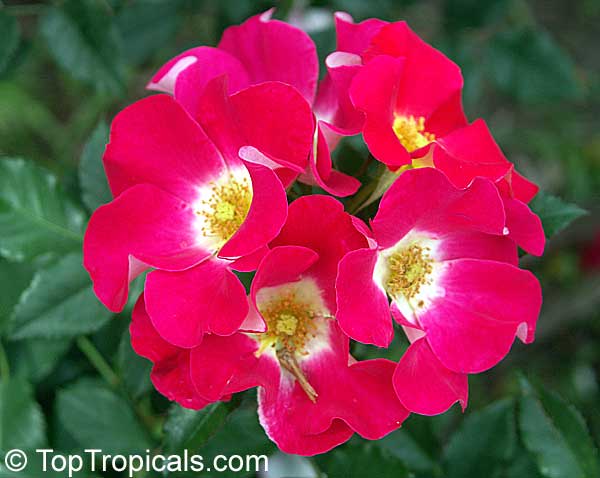
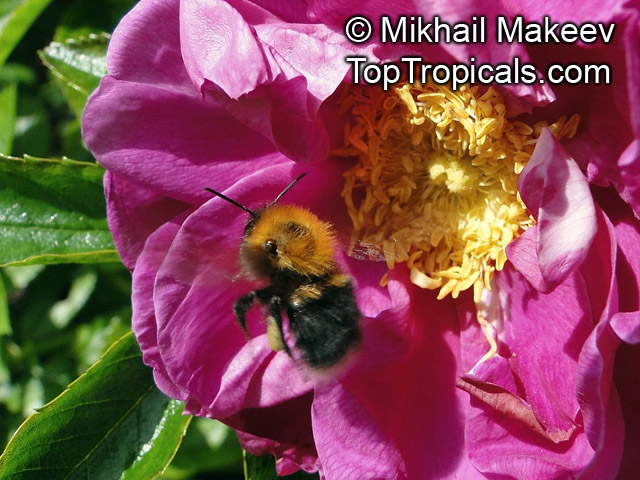
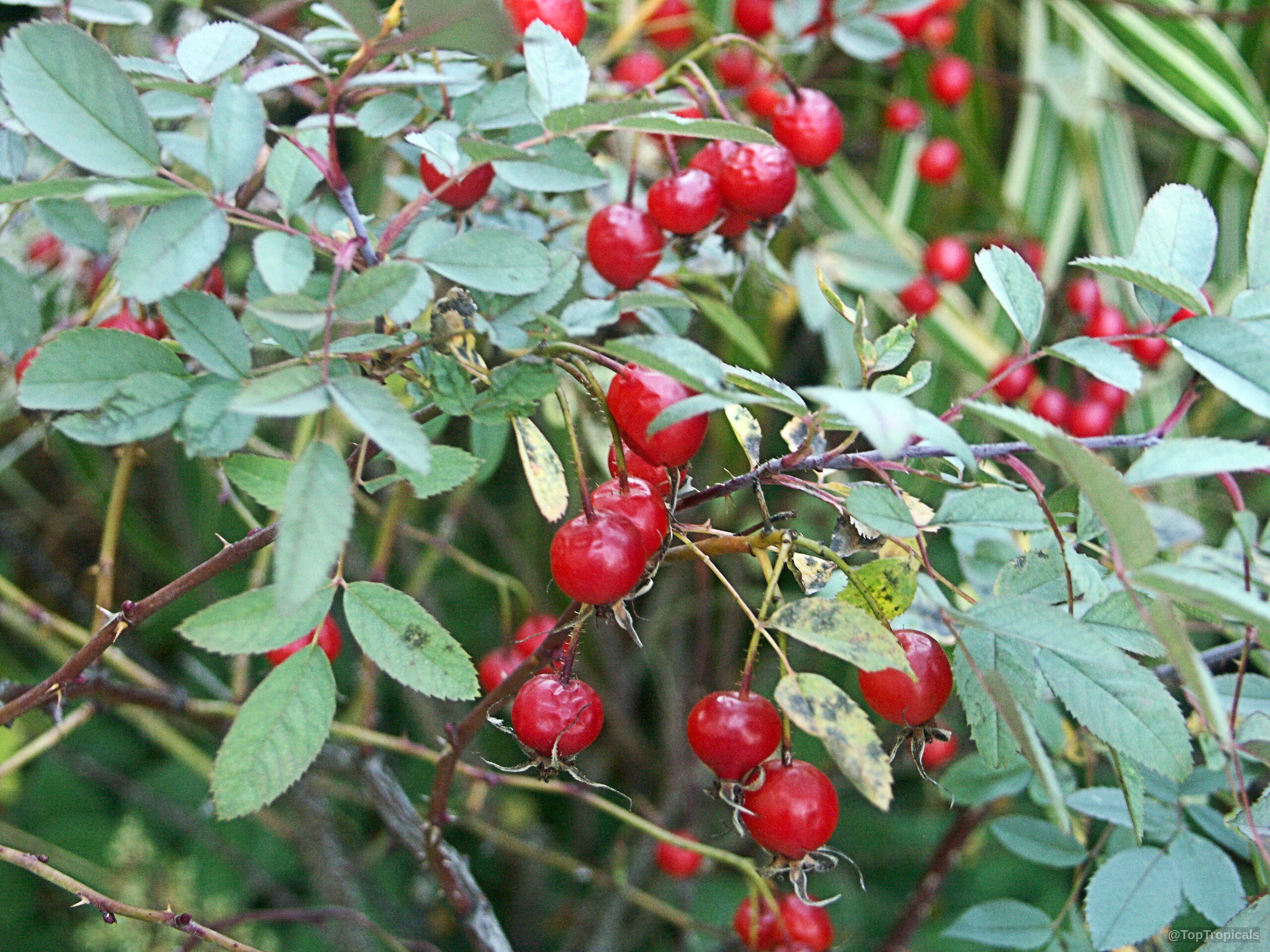
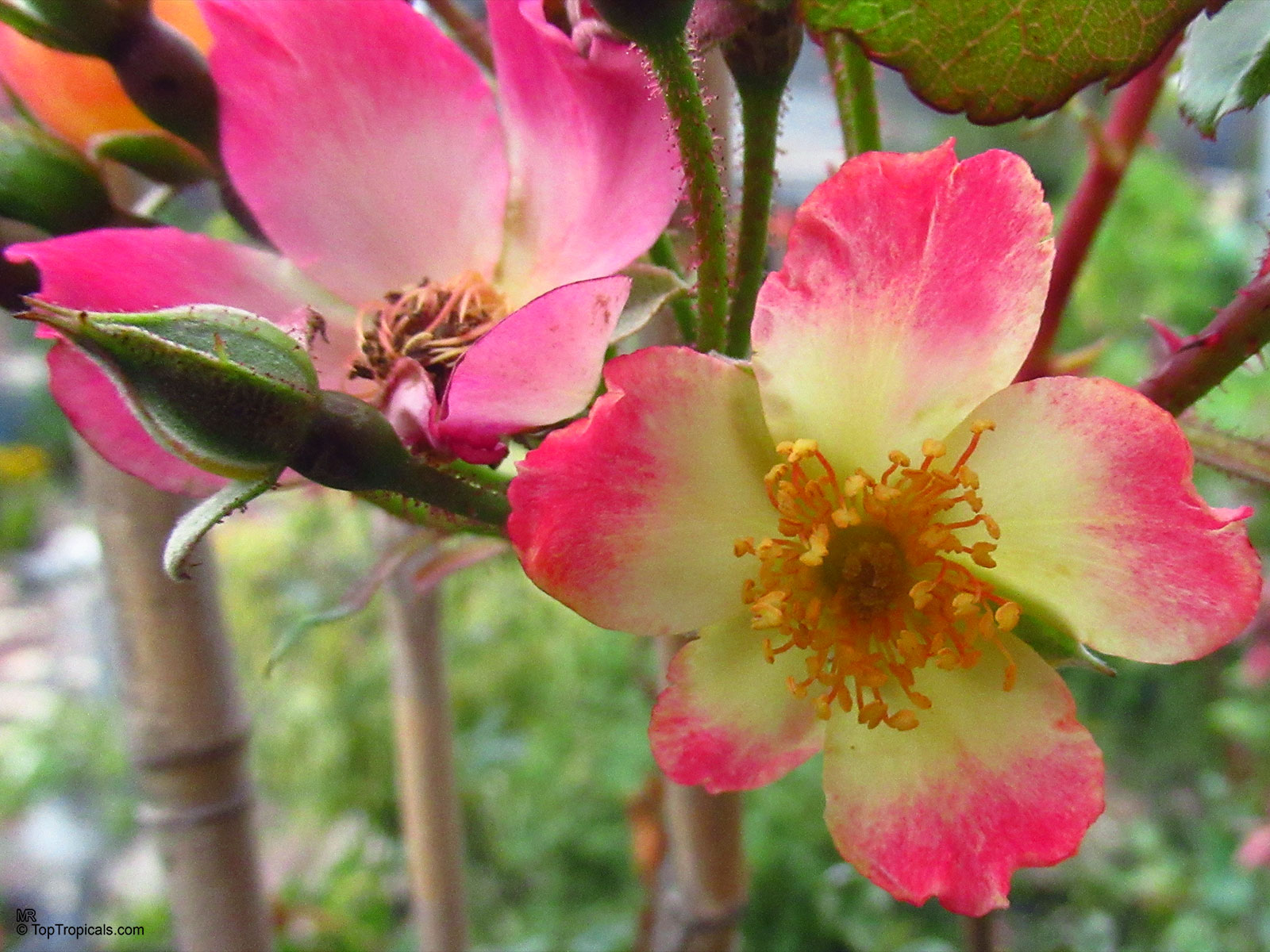
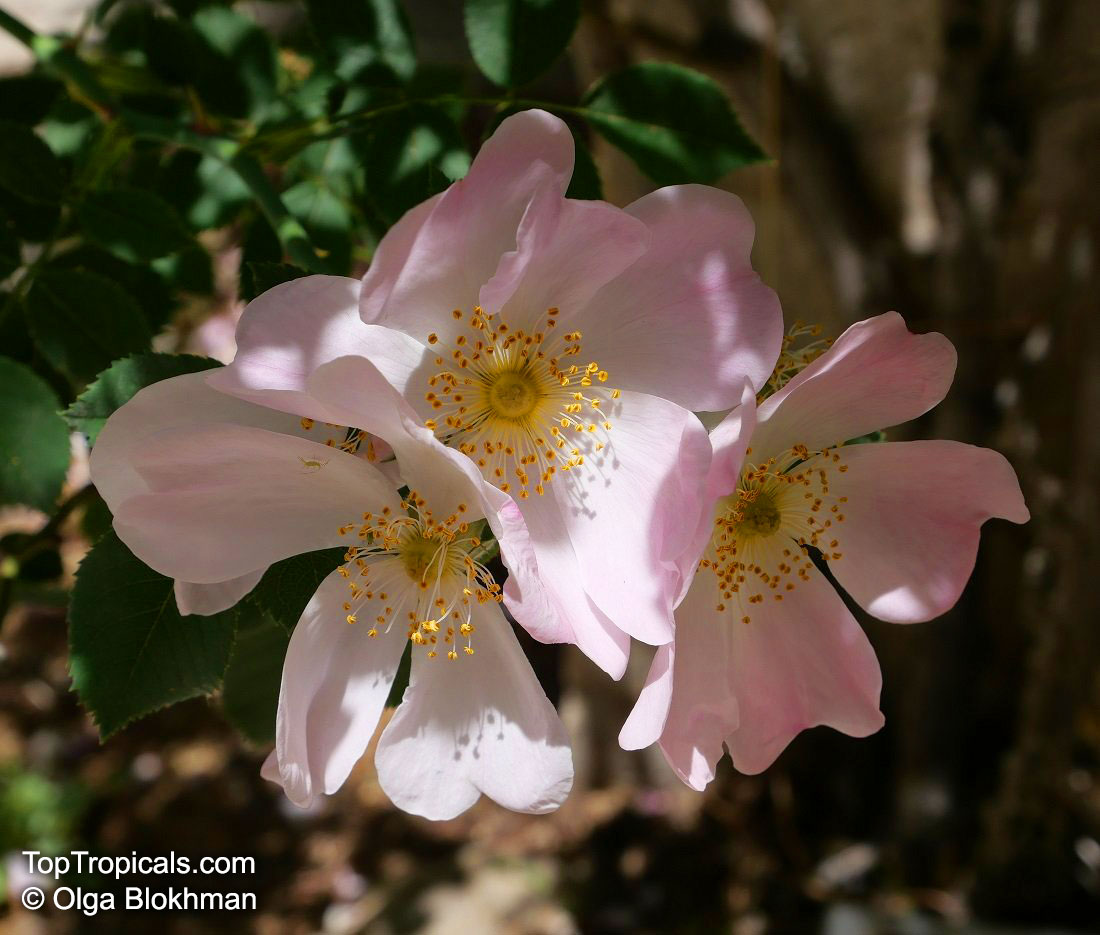
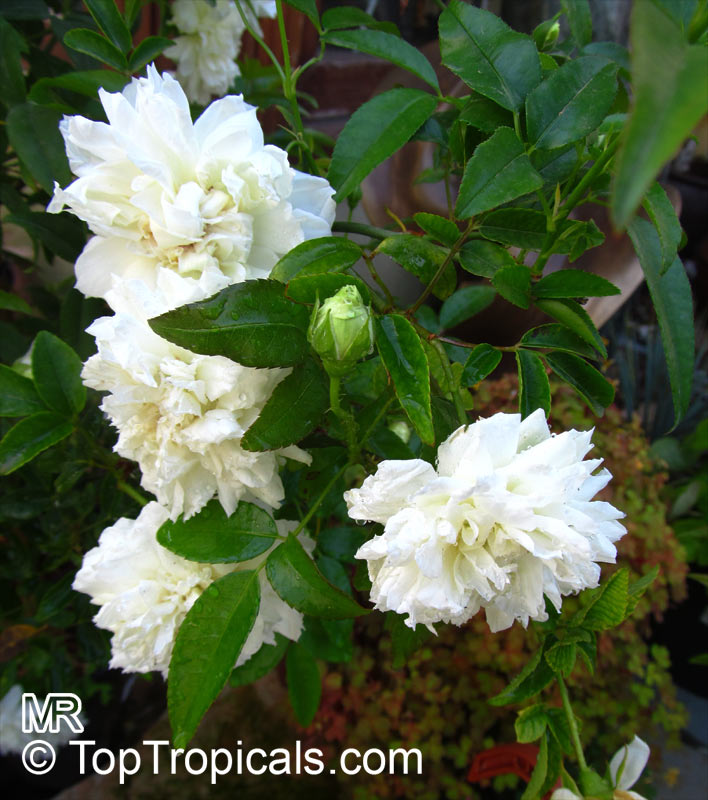
Botanical name: Rosa sp.
Common name: Wild Rose
Cultivar: Single Flower
Family: Rosaceae
USDA Zone: 3-11


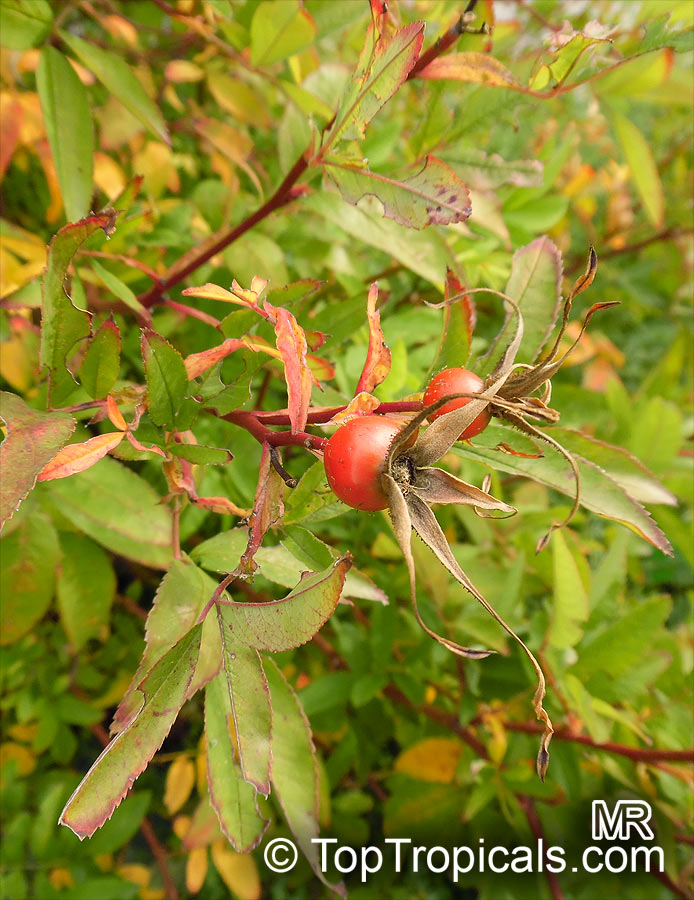
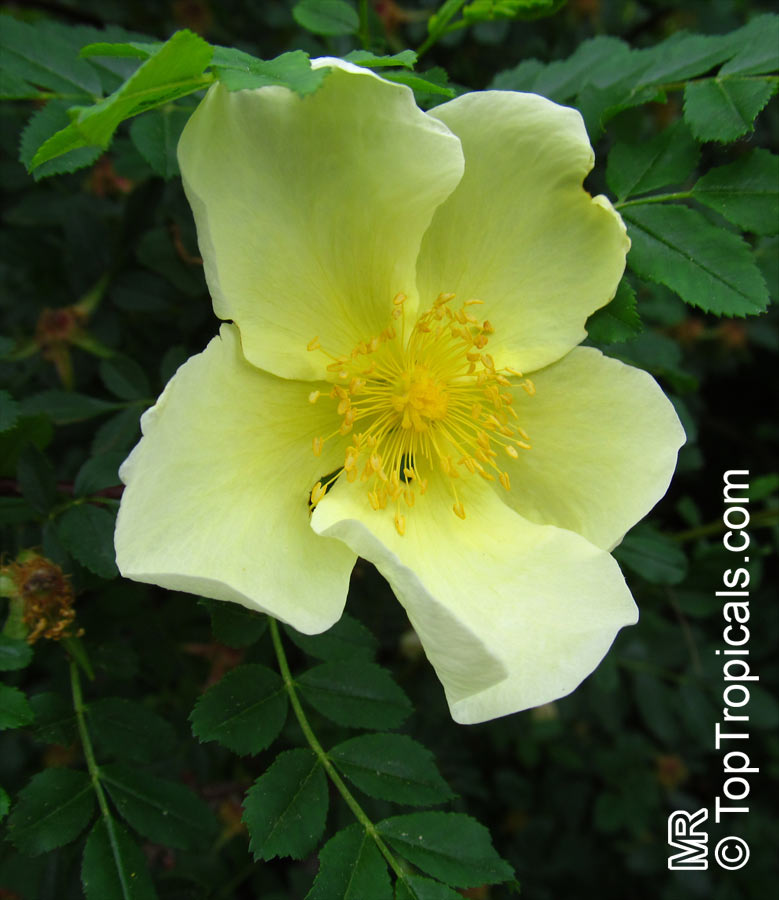
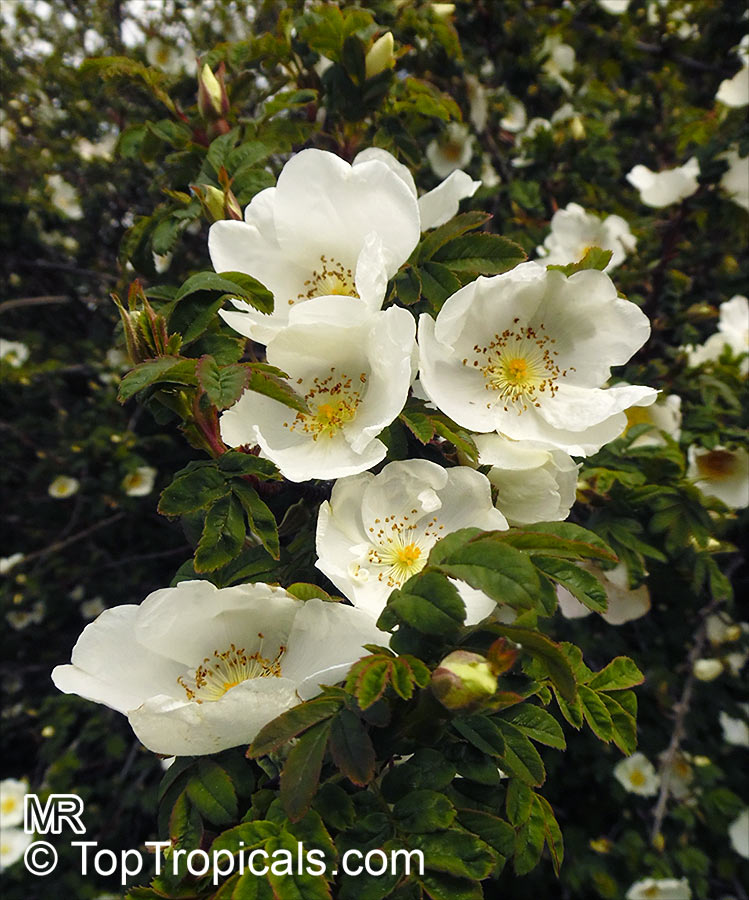
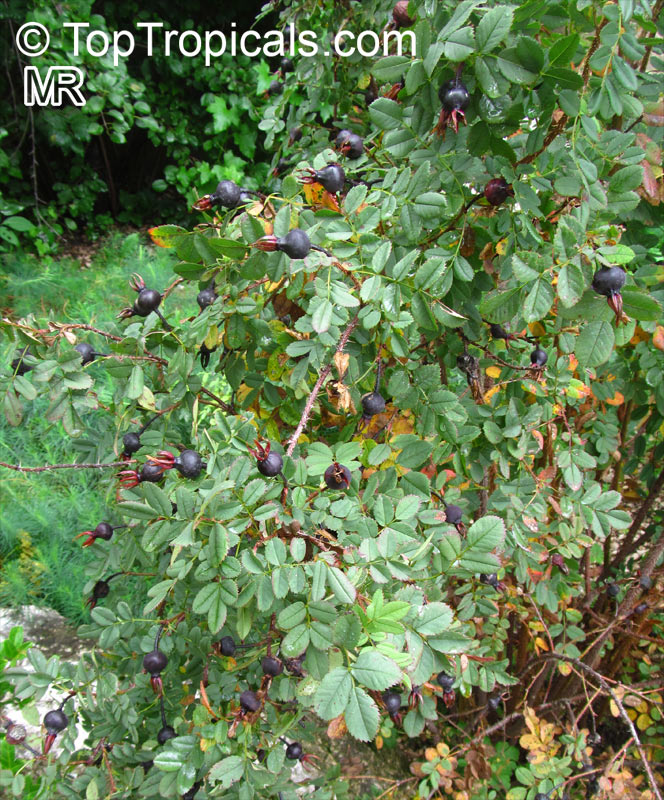
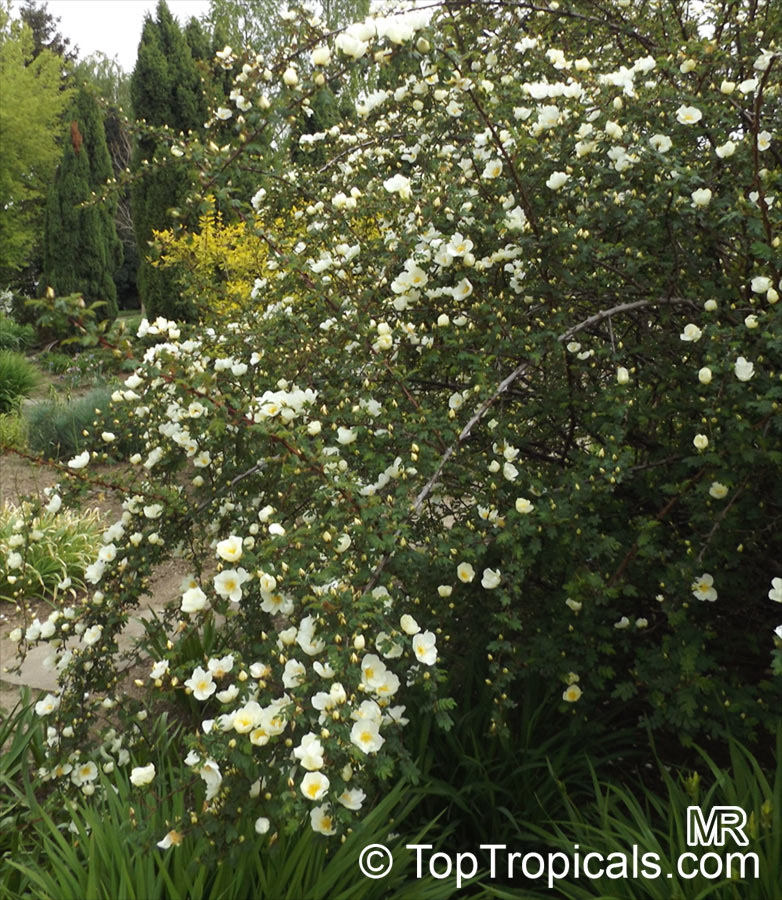
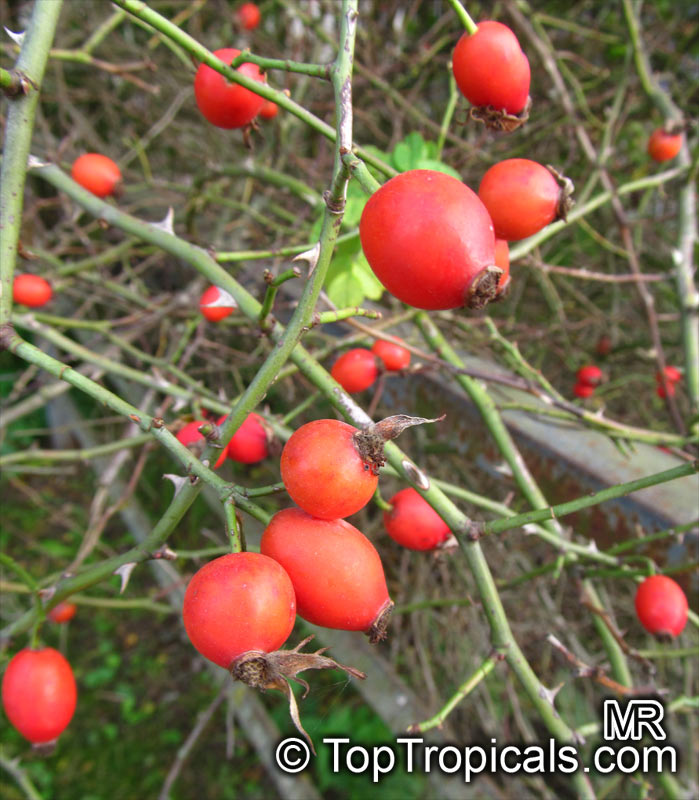
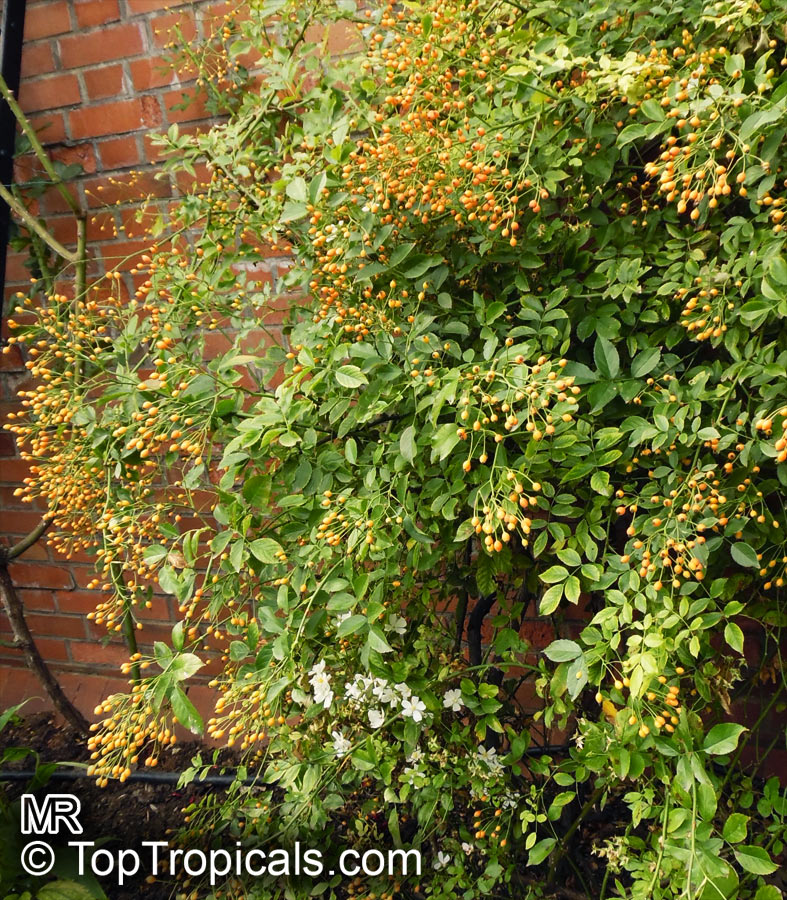
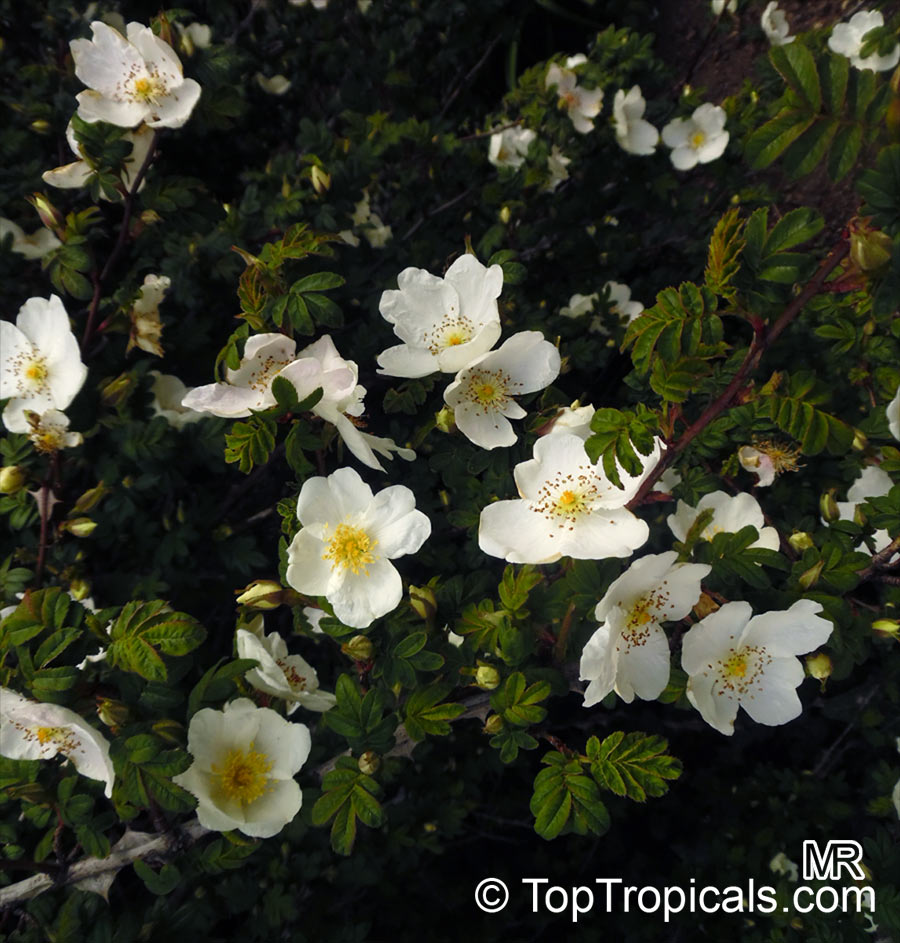
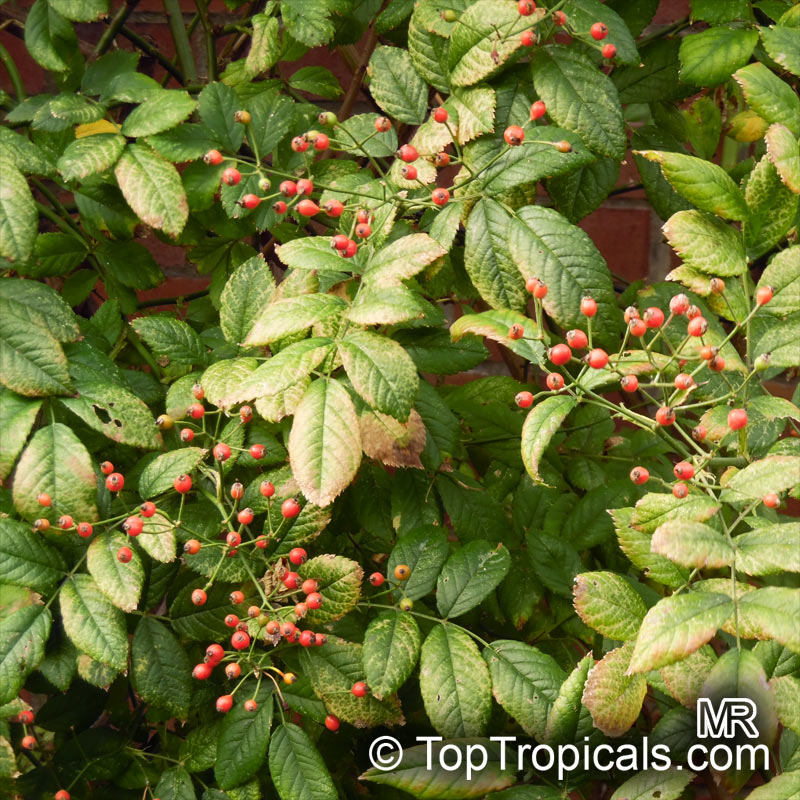
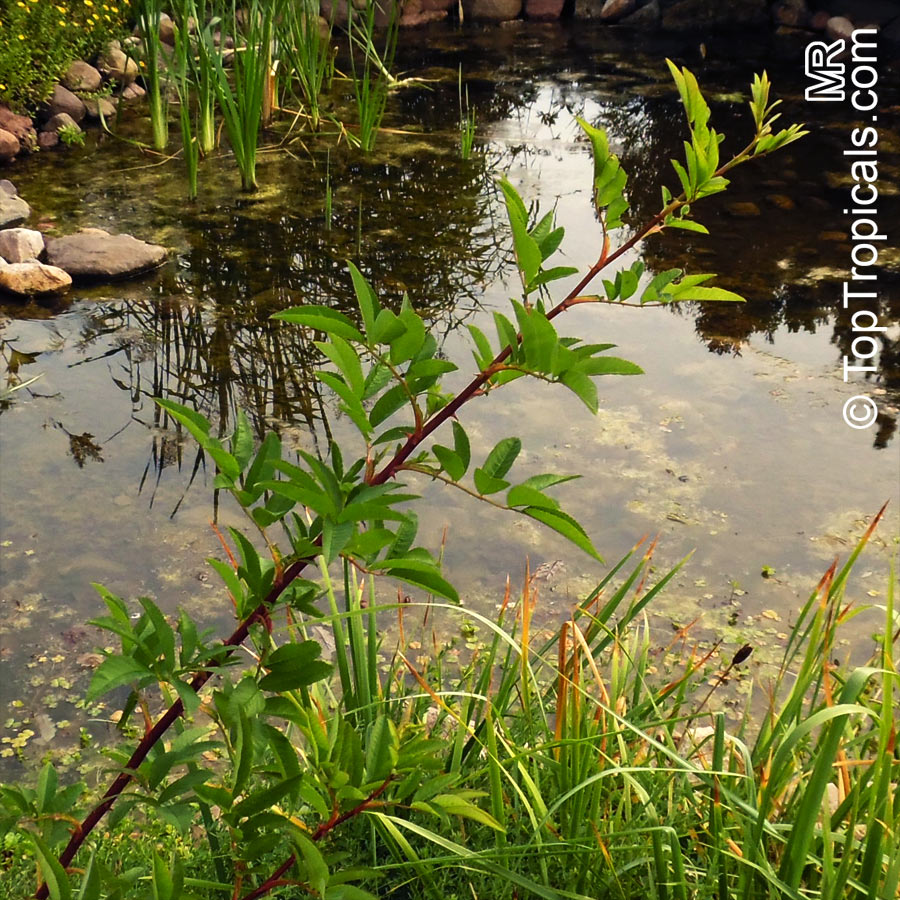
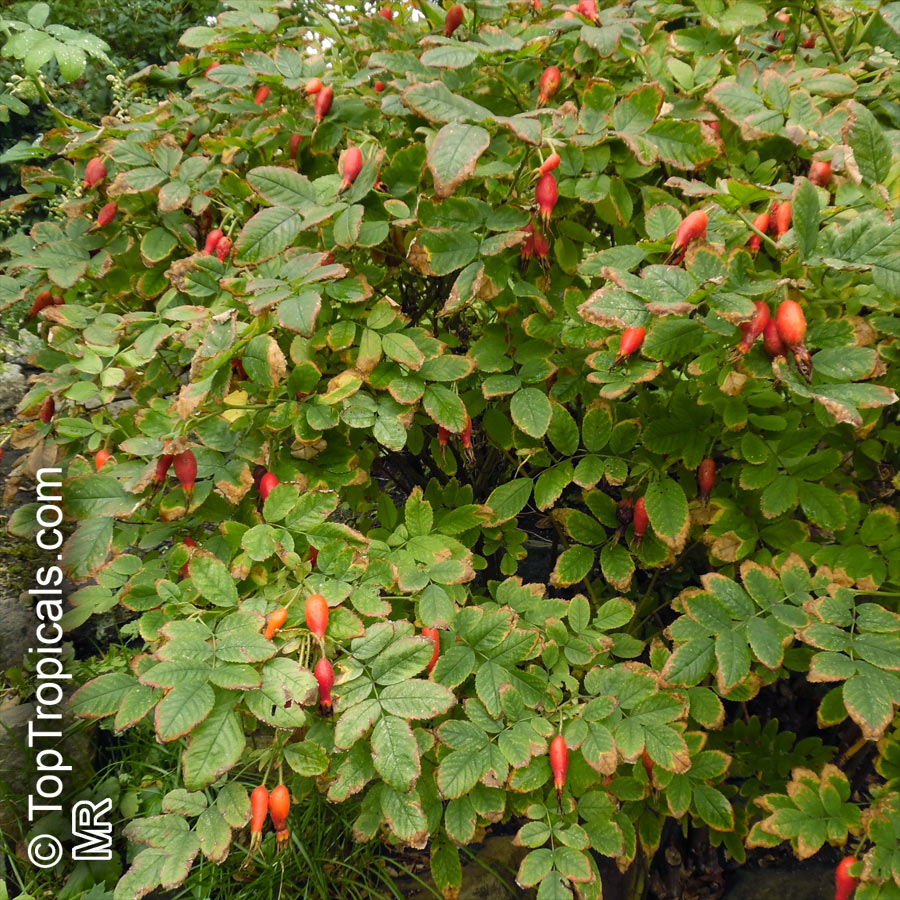
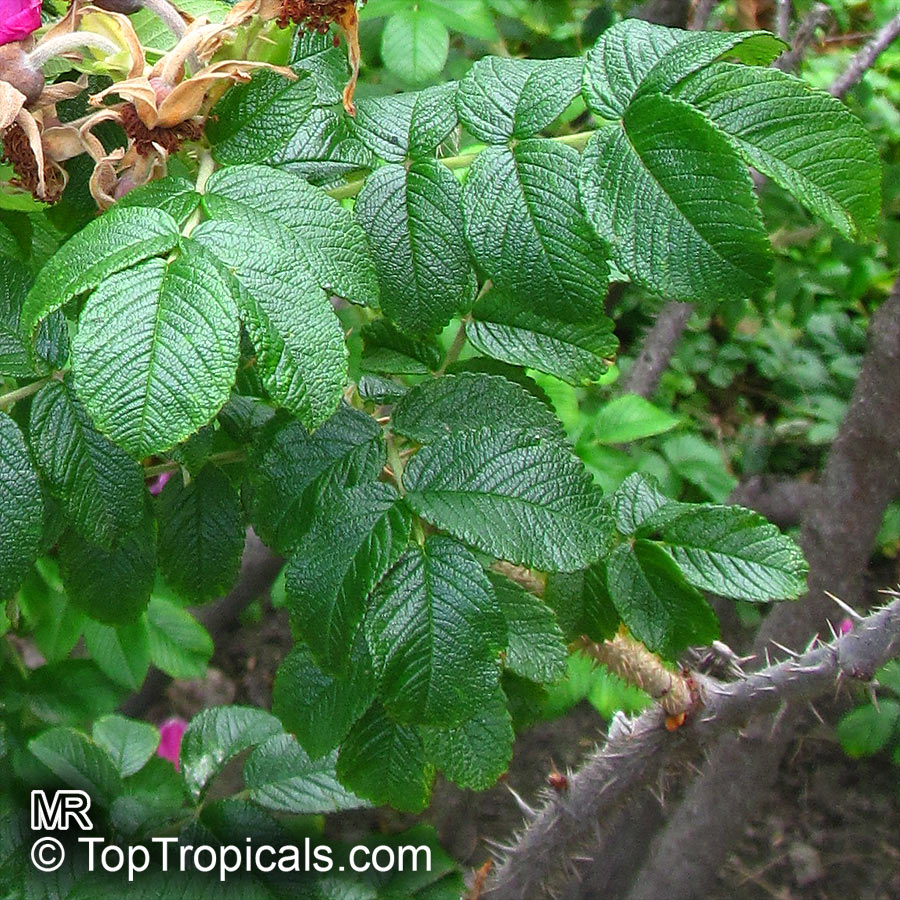
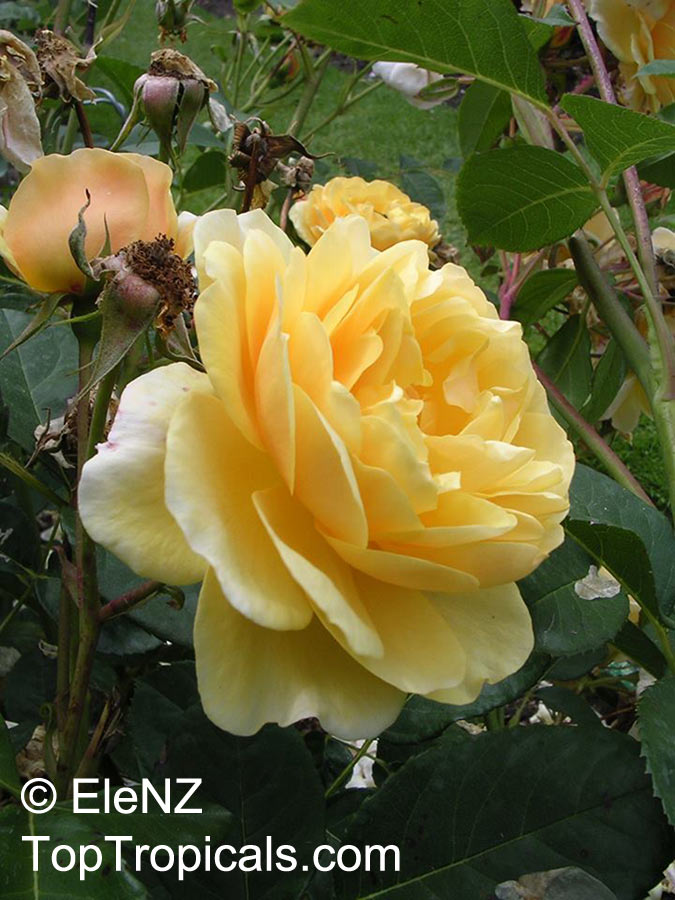
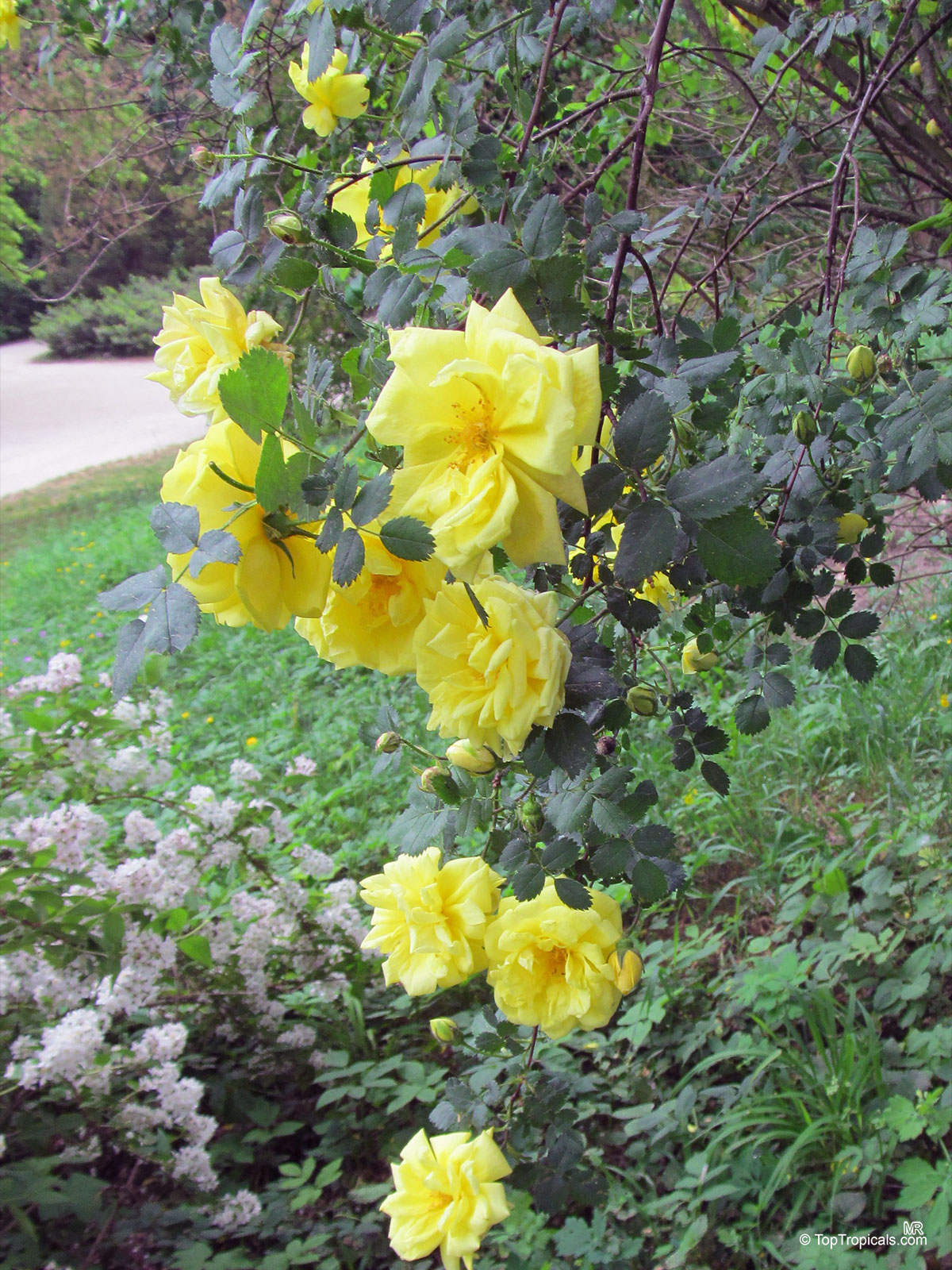
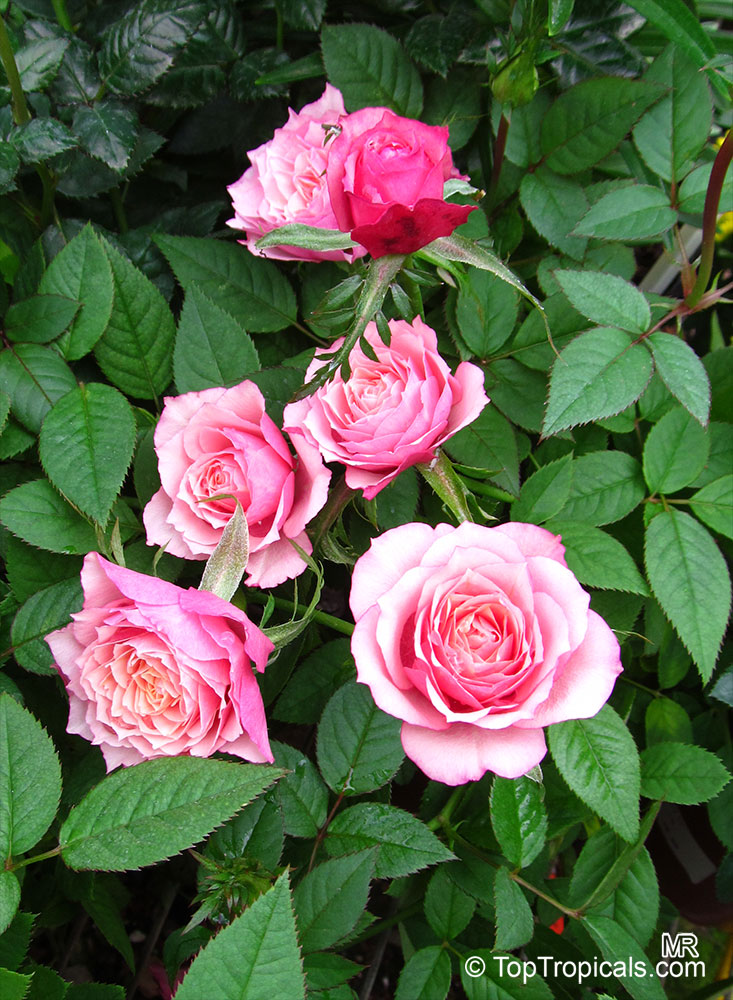
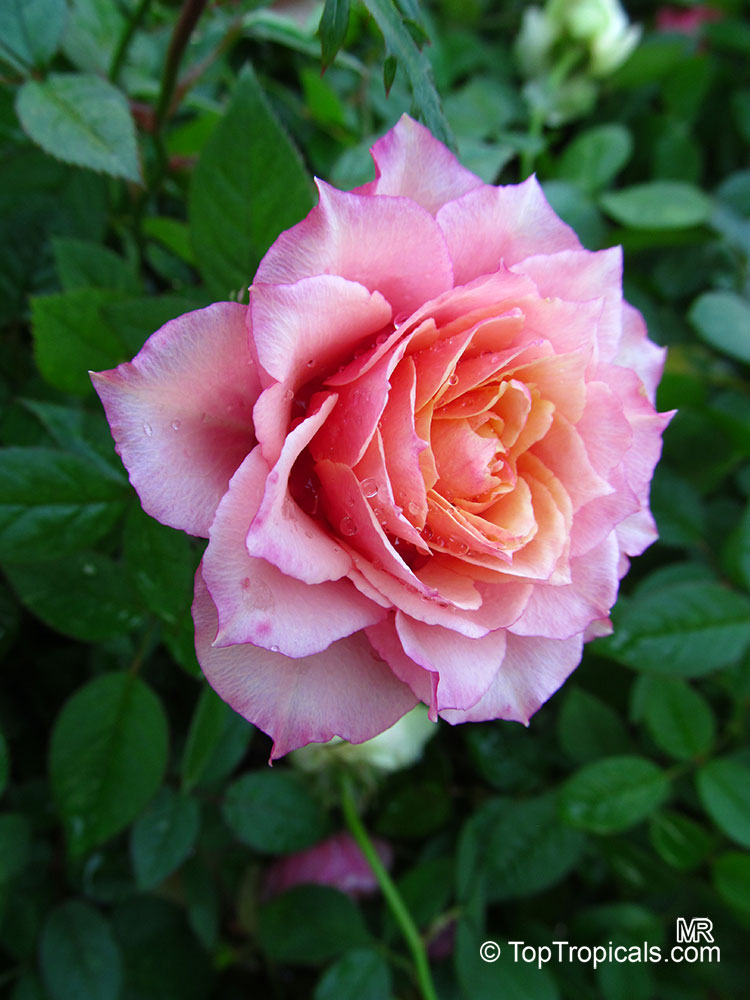
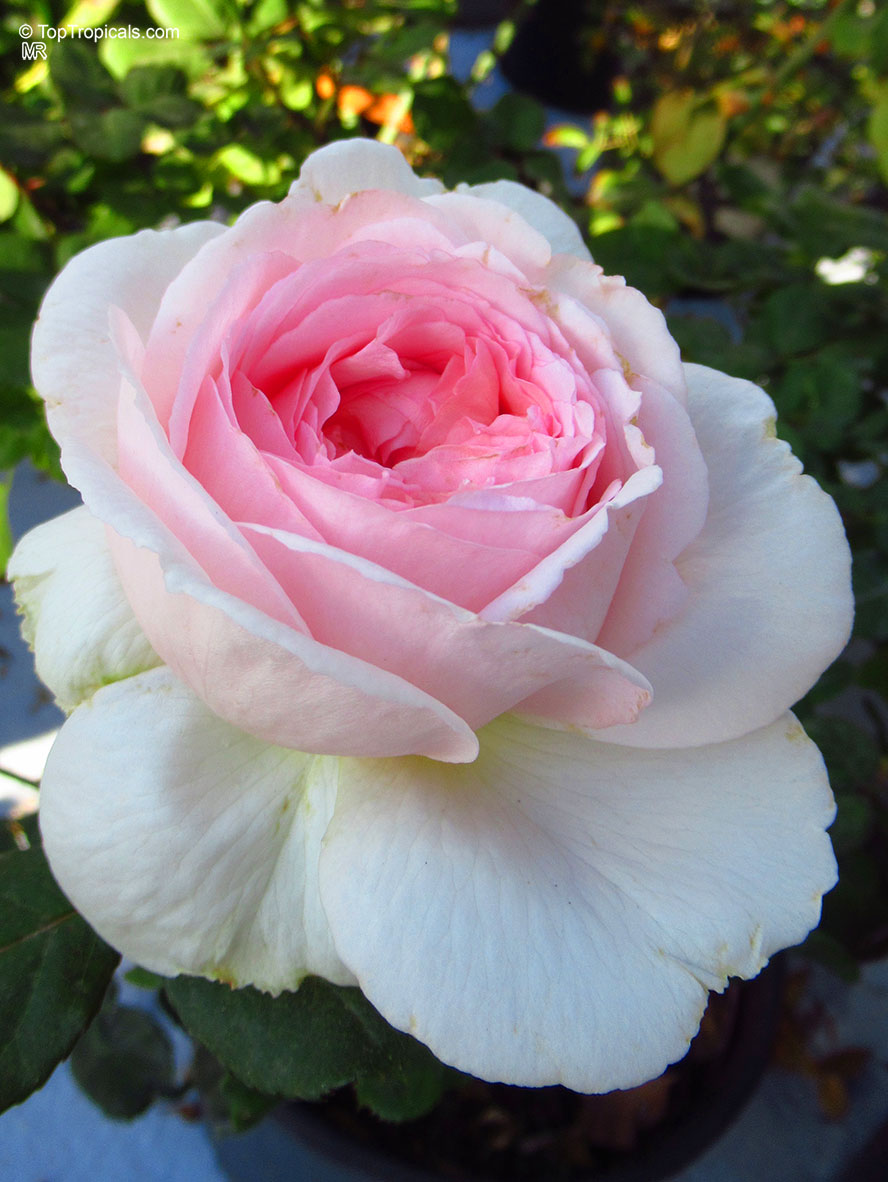
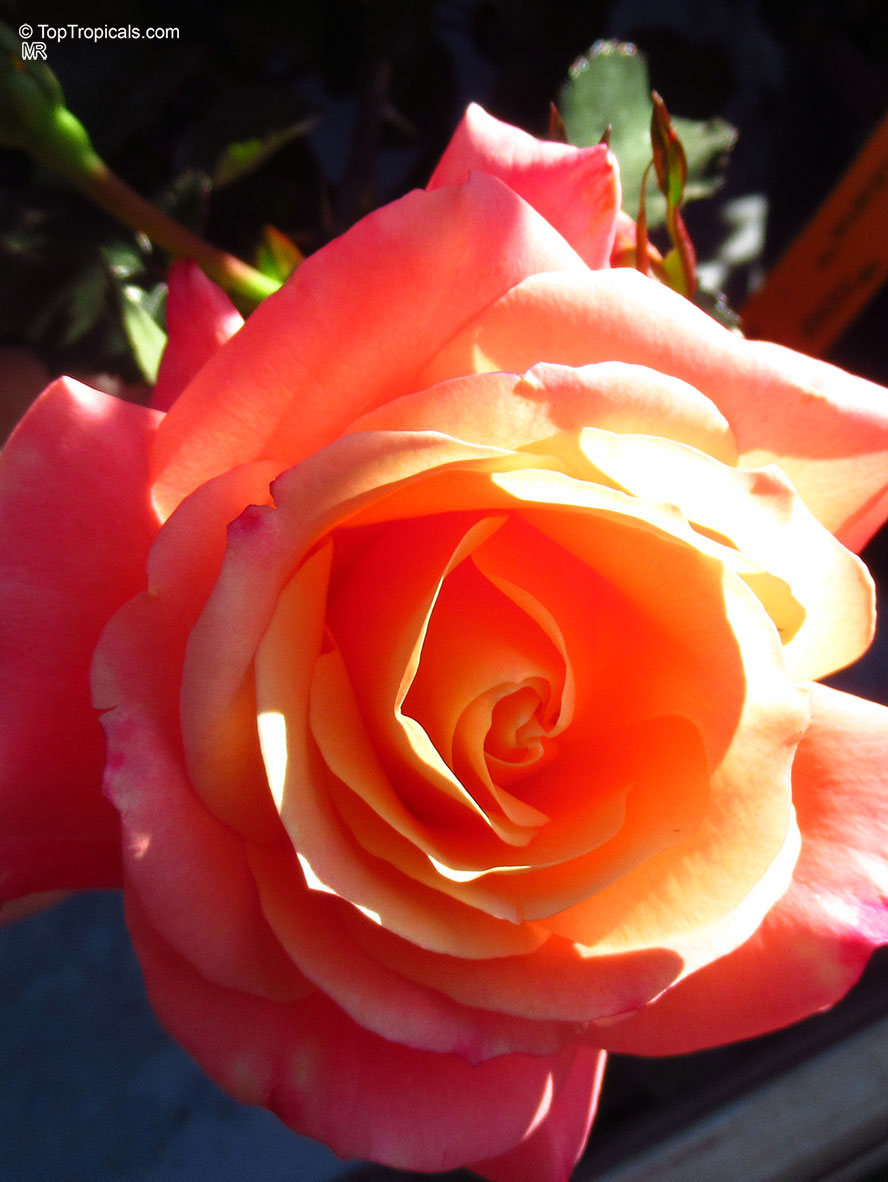
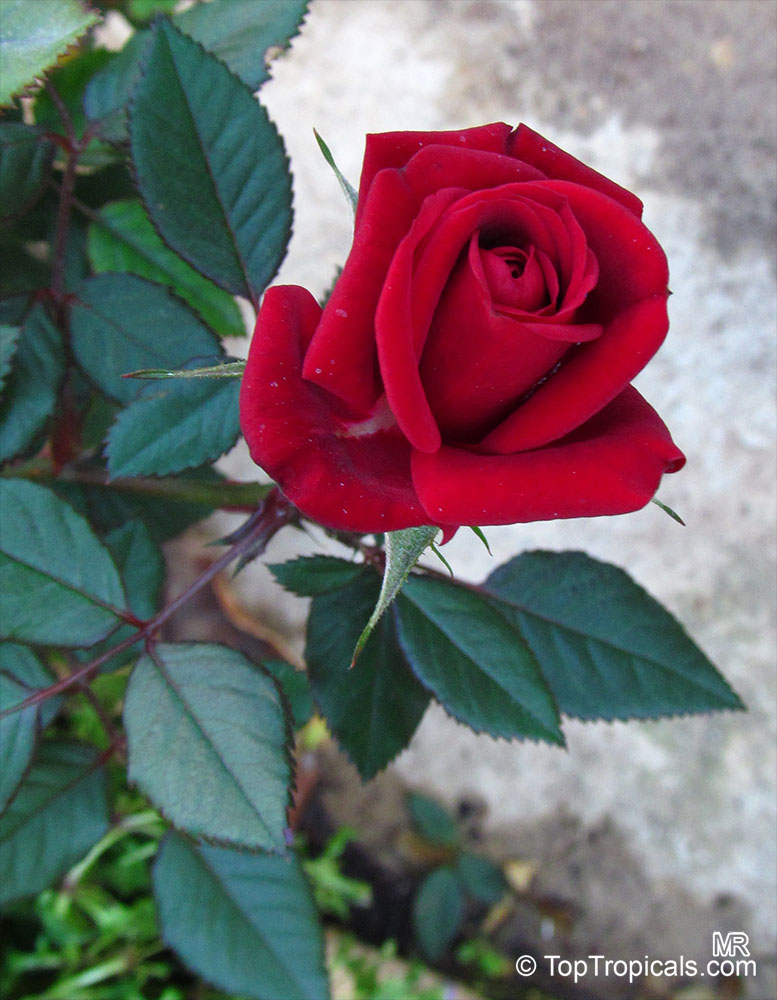
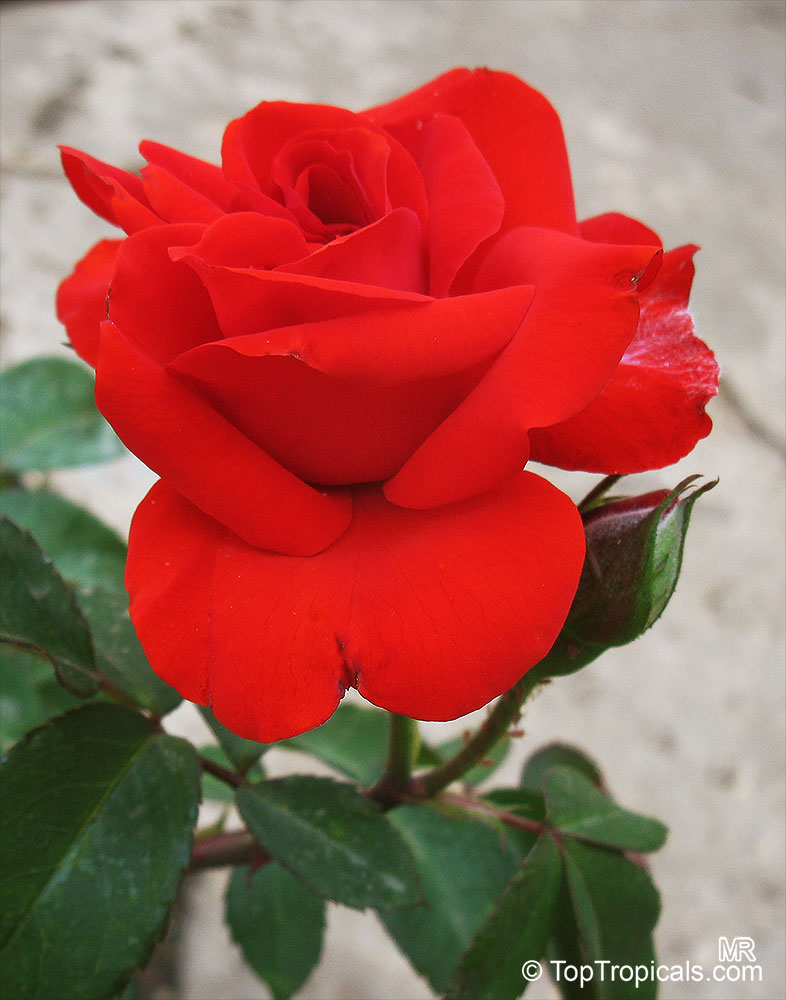
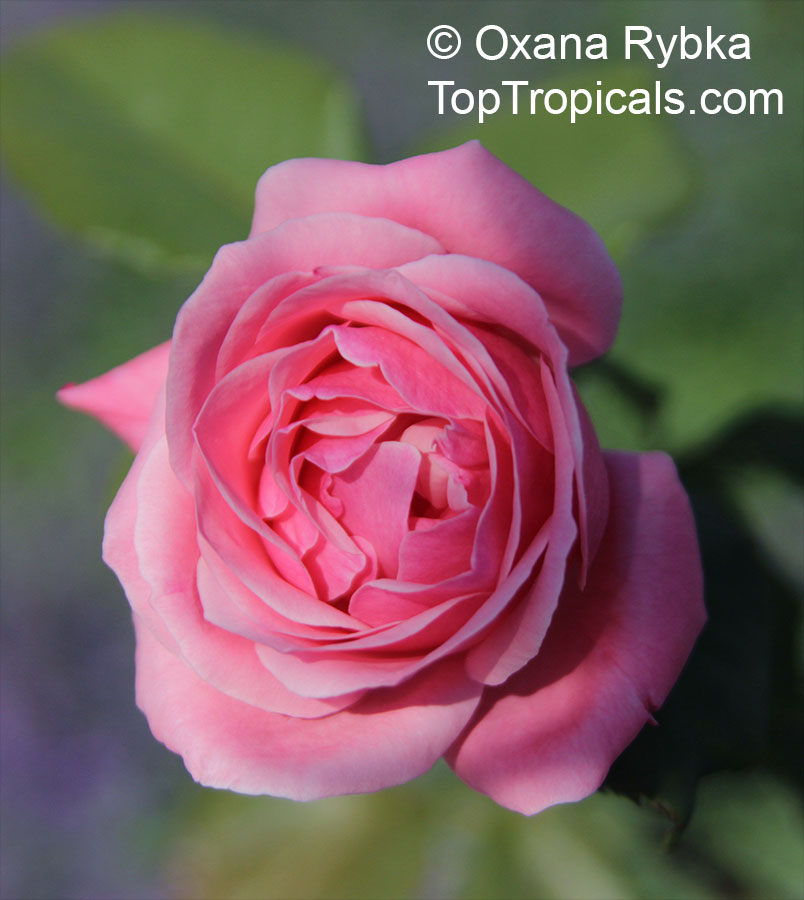
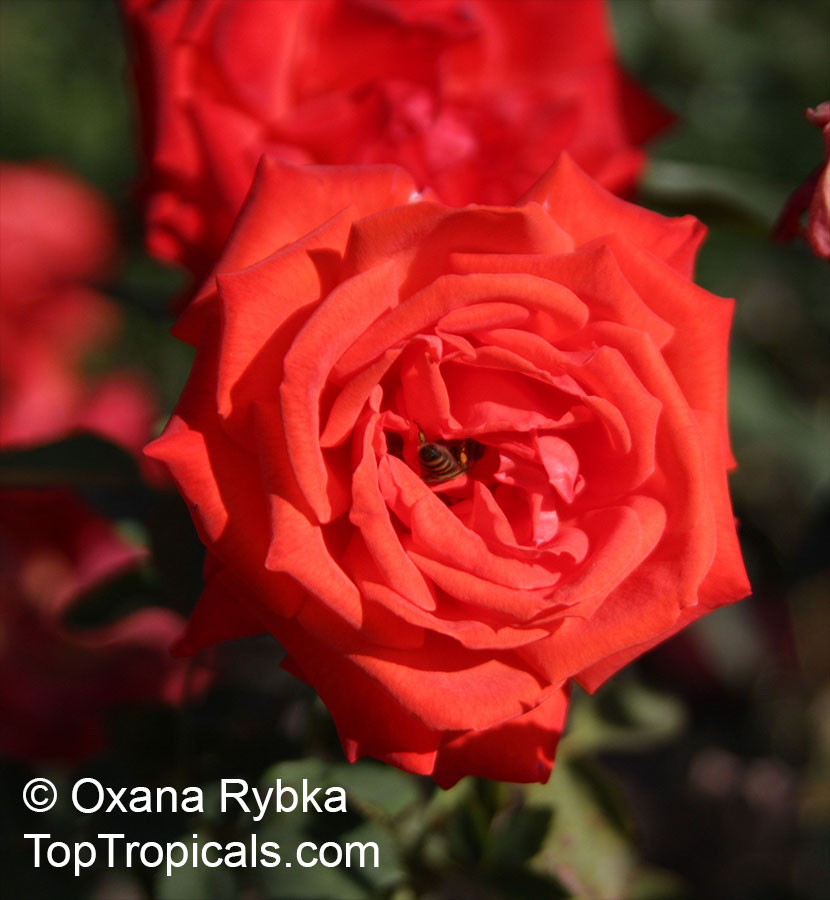
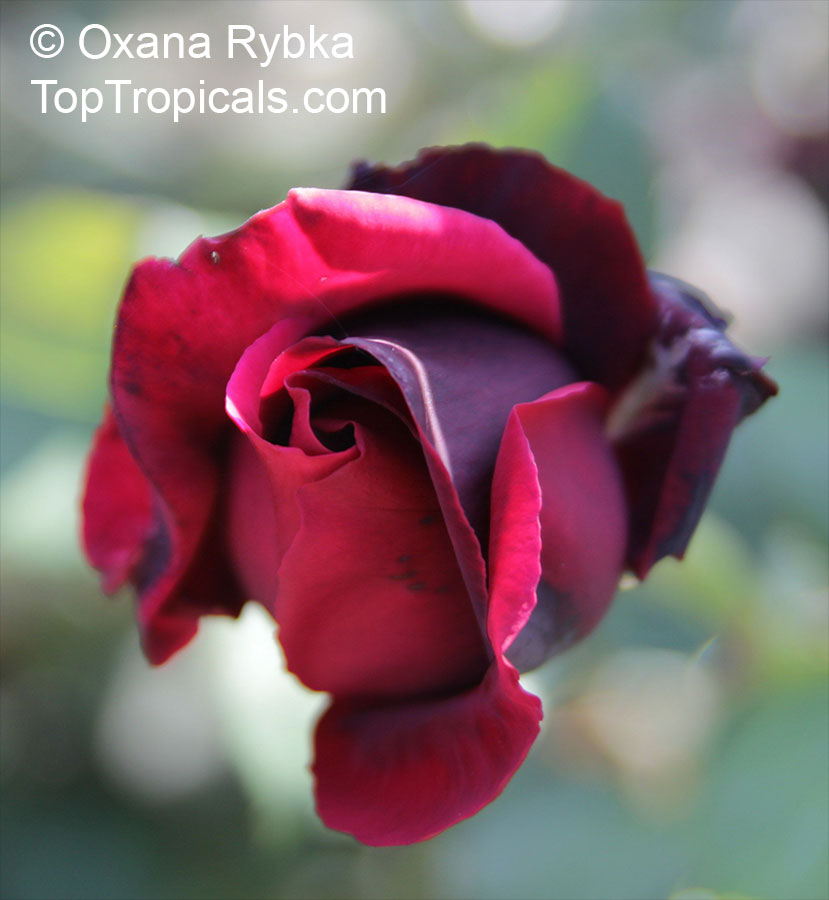
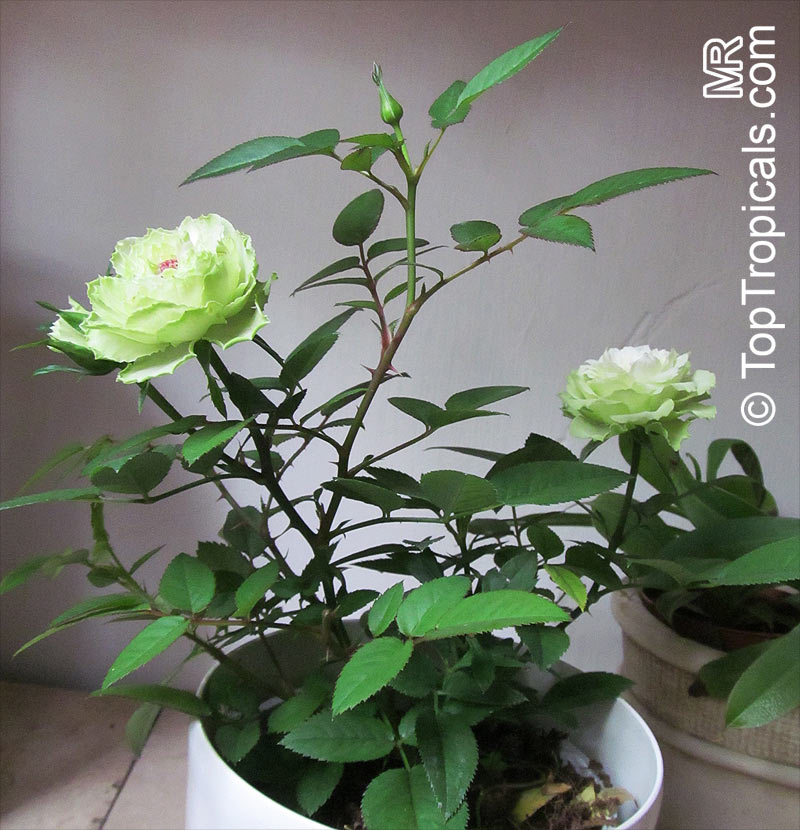
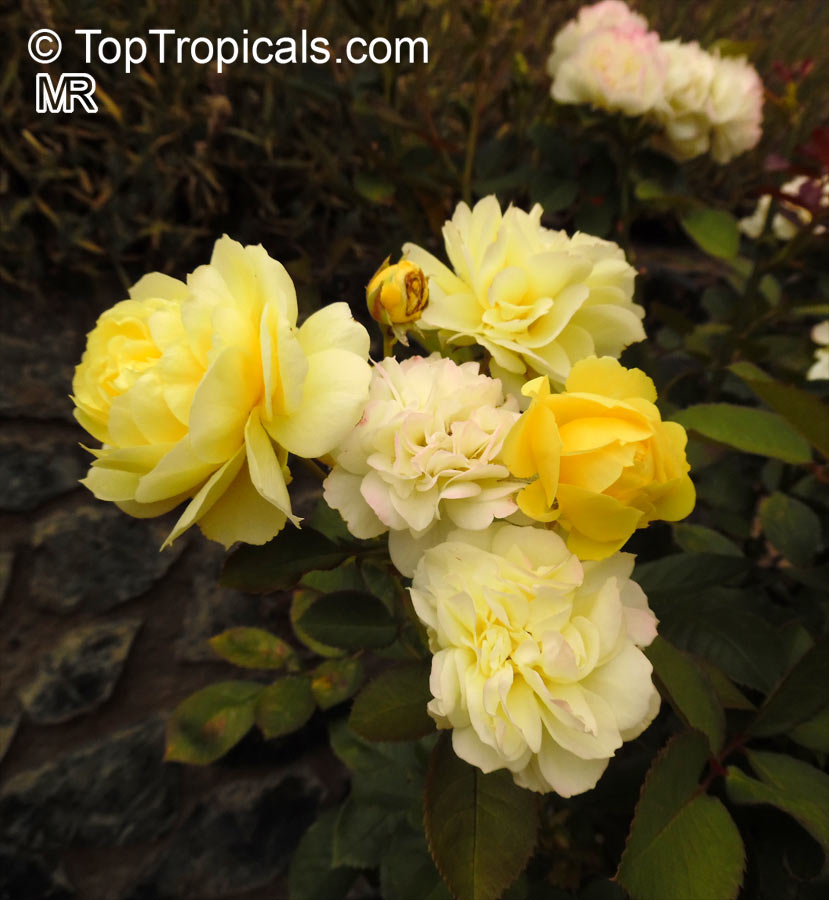
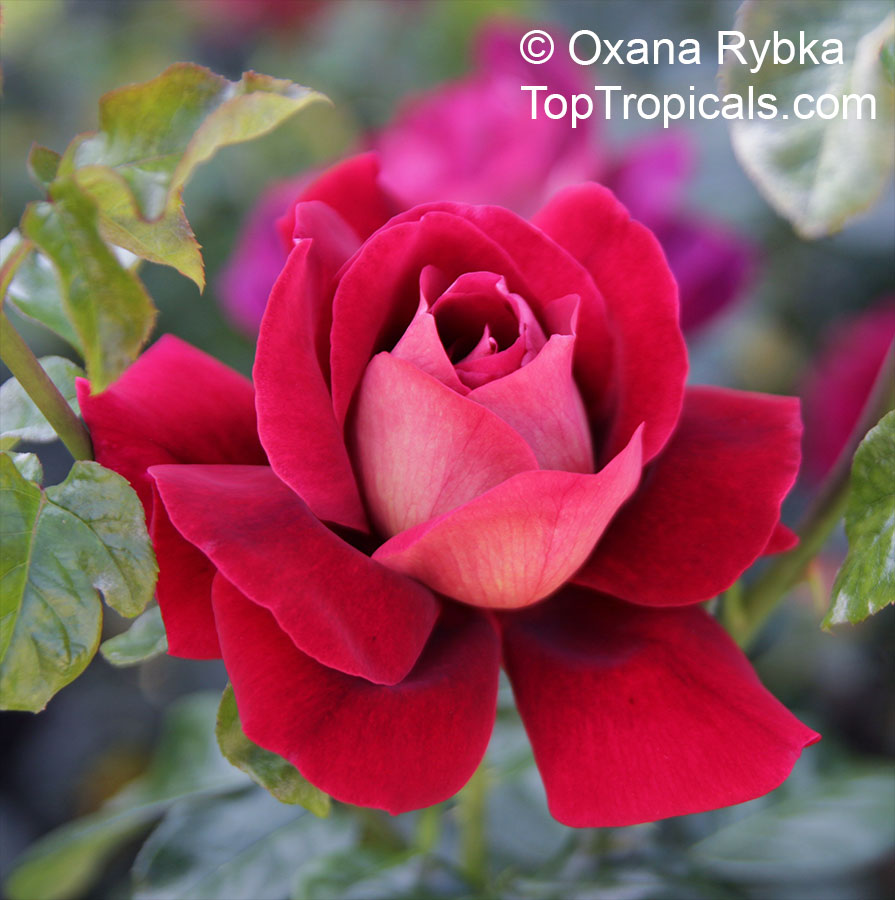
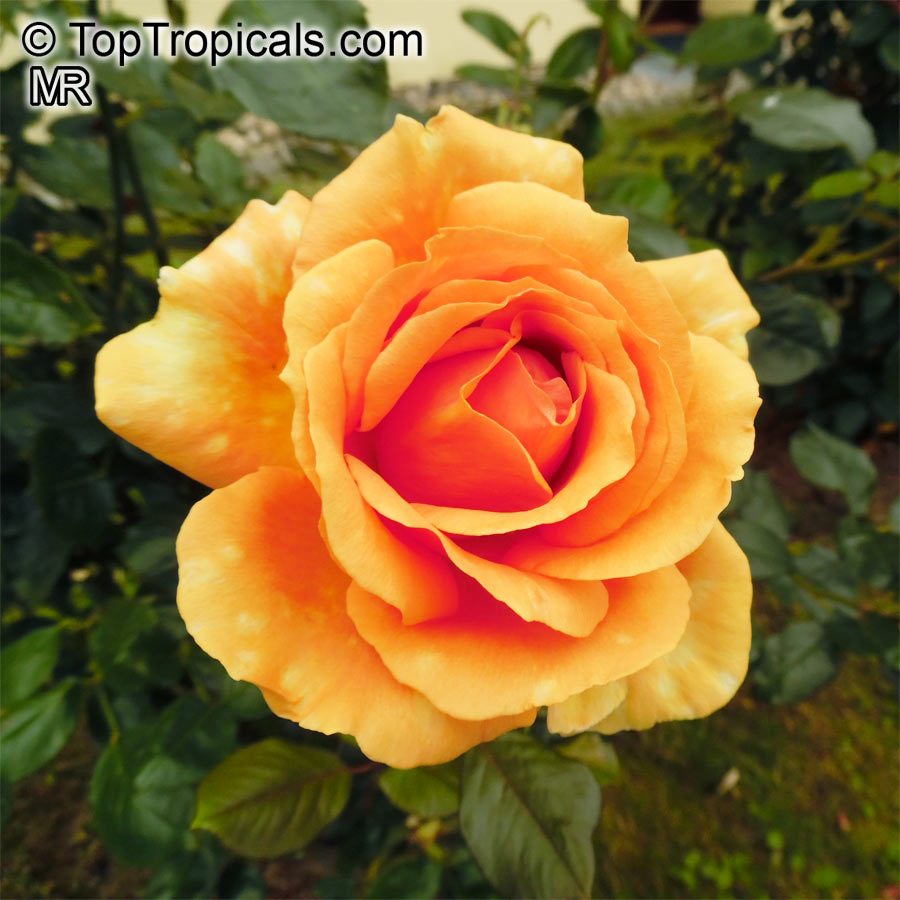
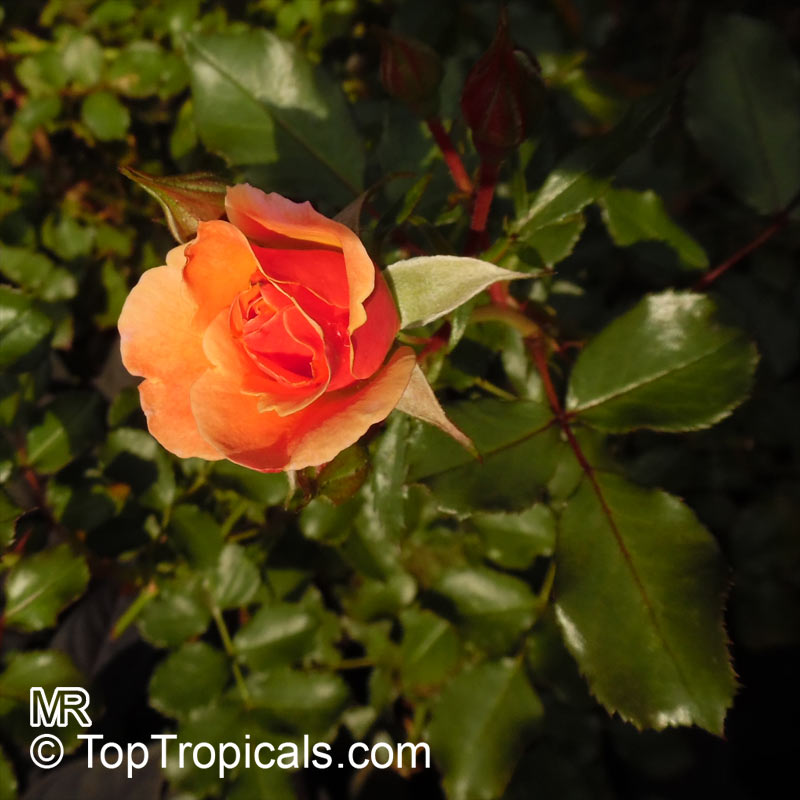
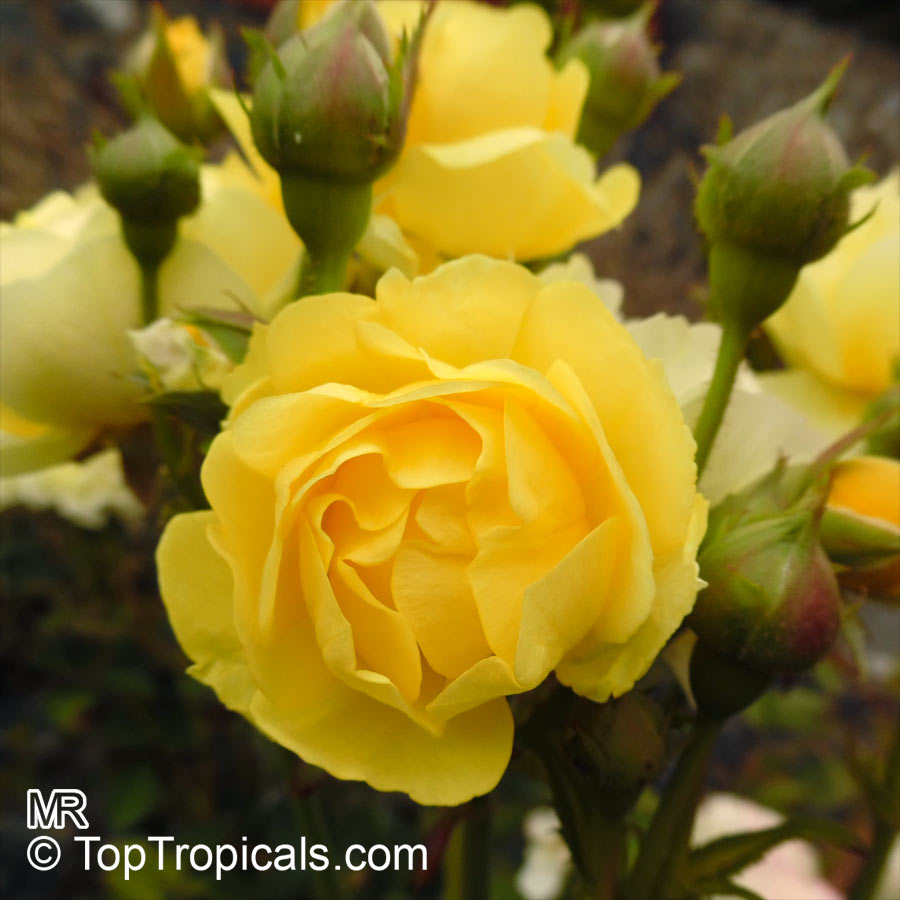
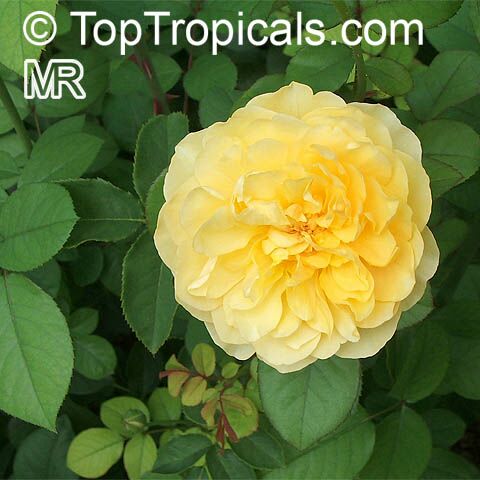
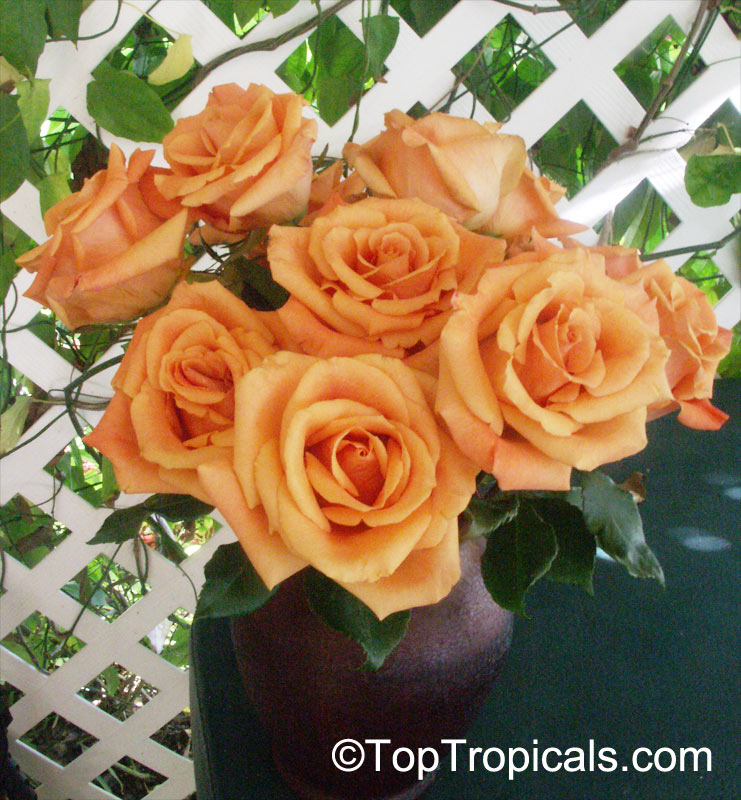
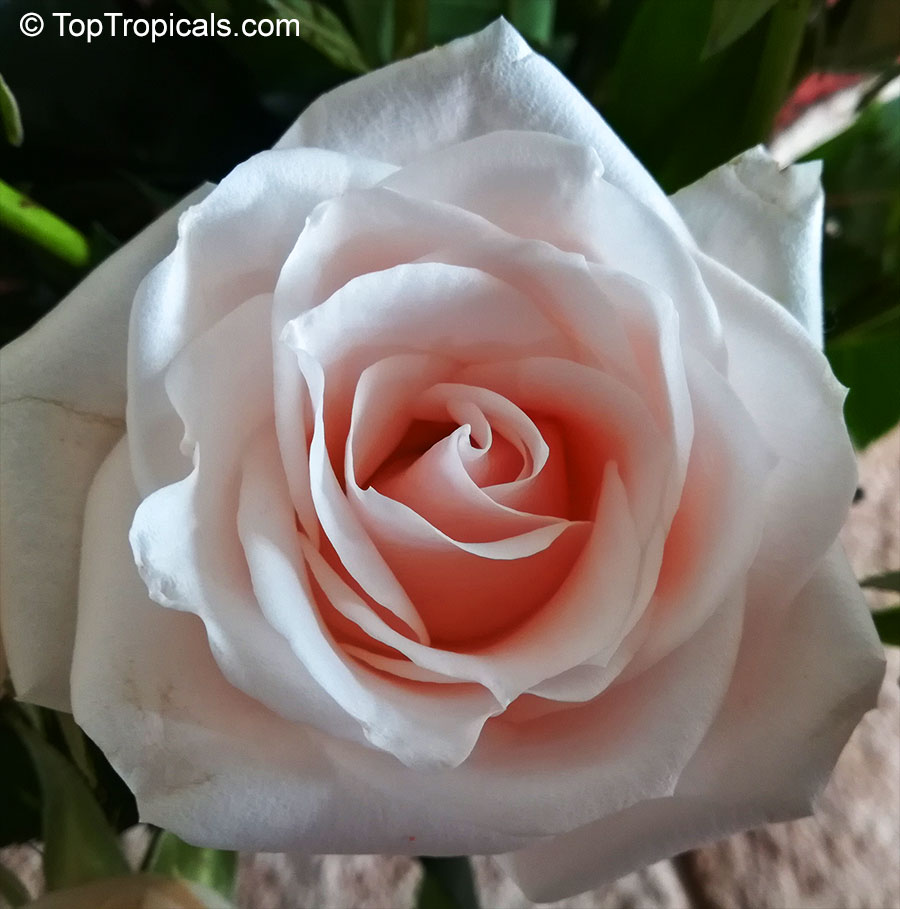
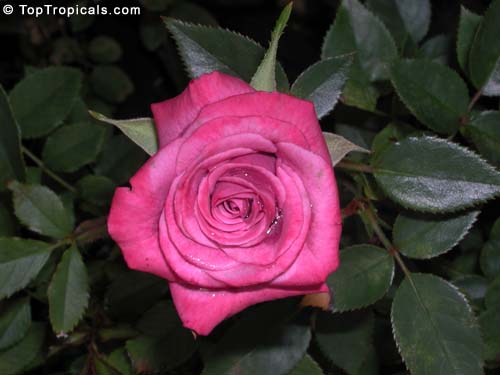
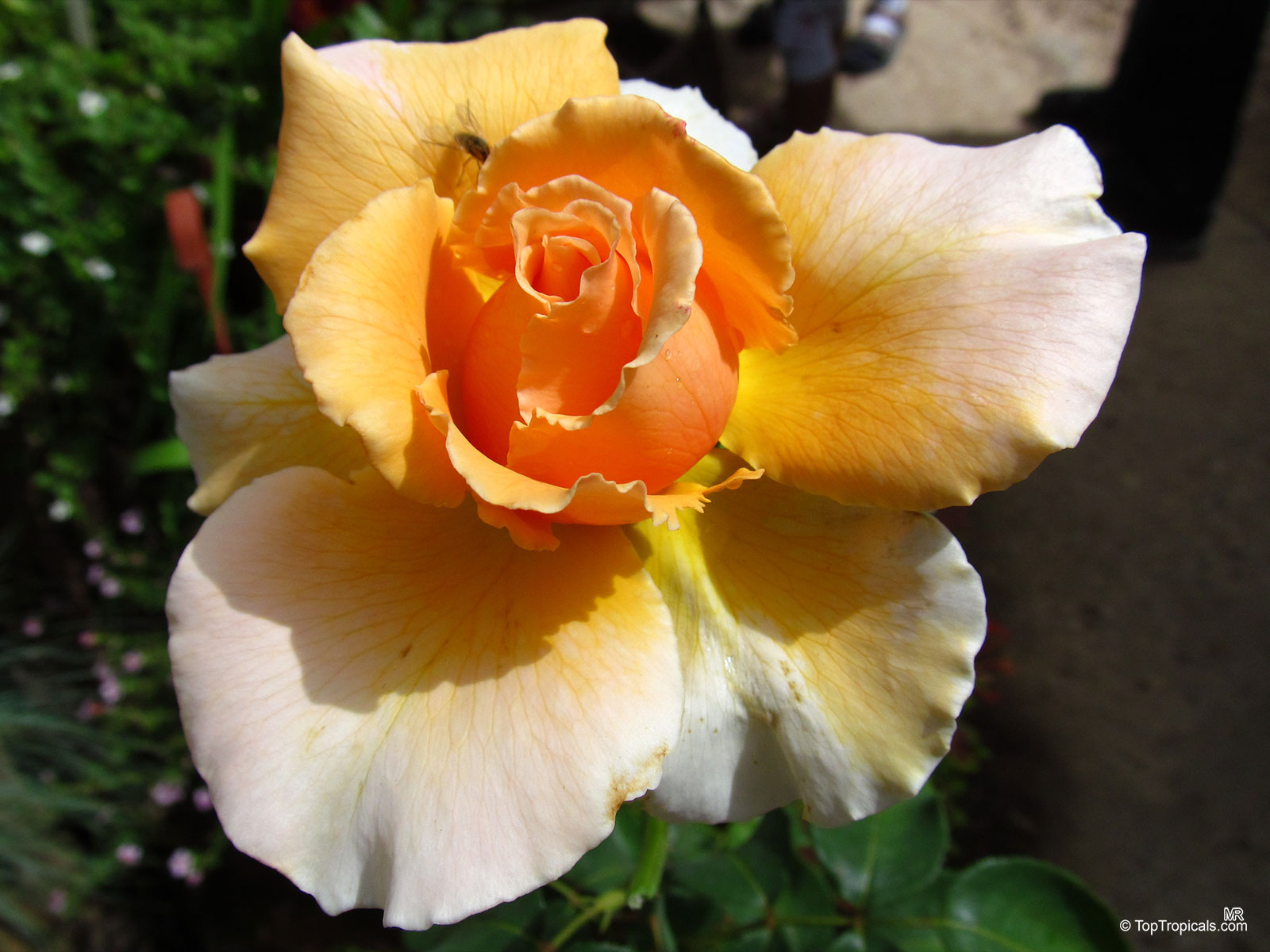
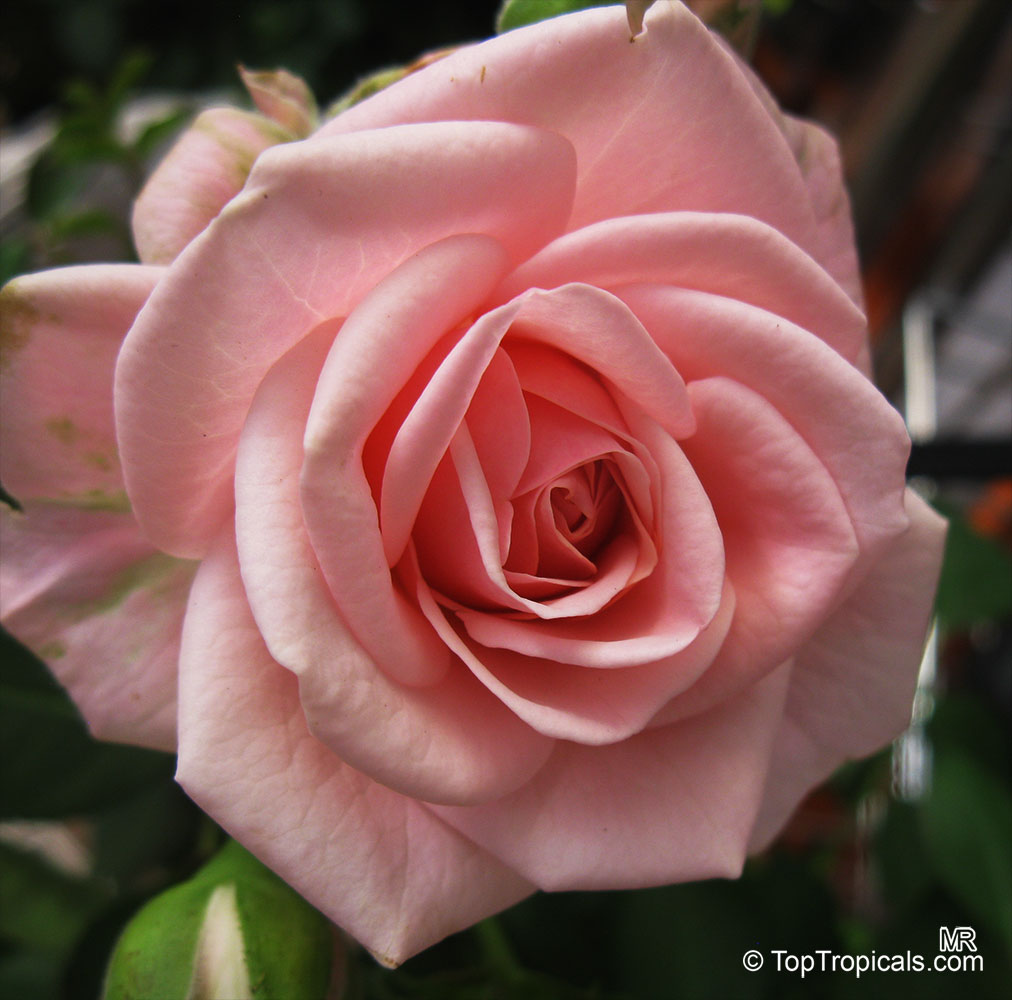
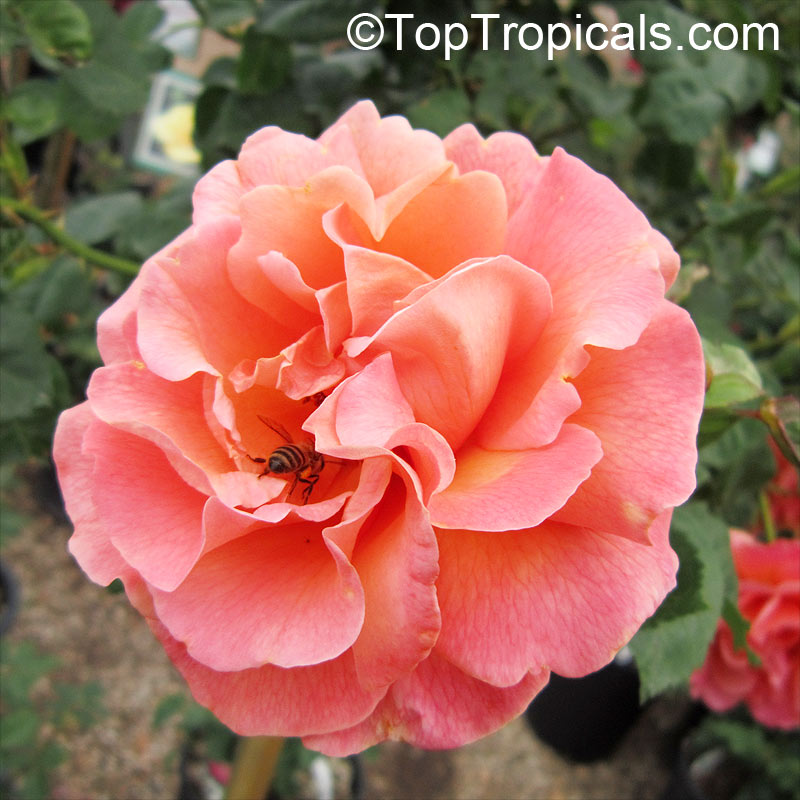
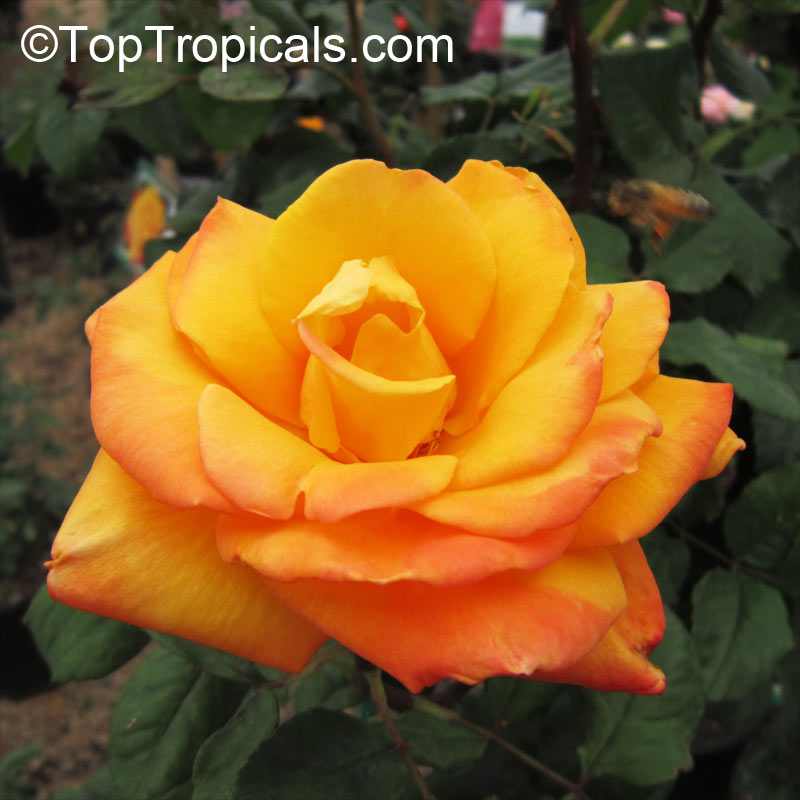
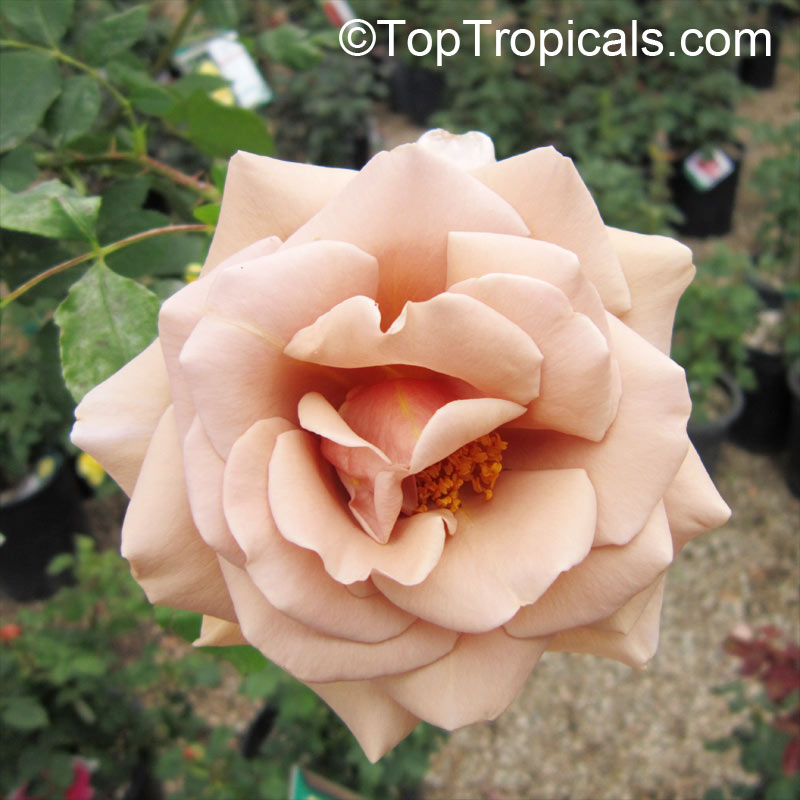
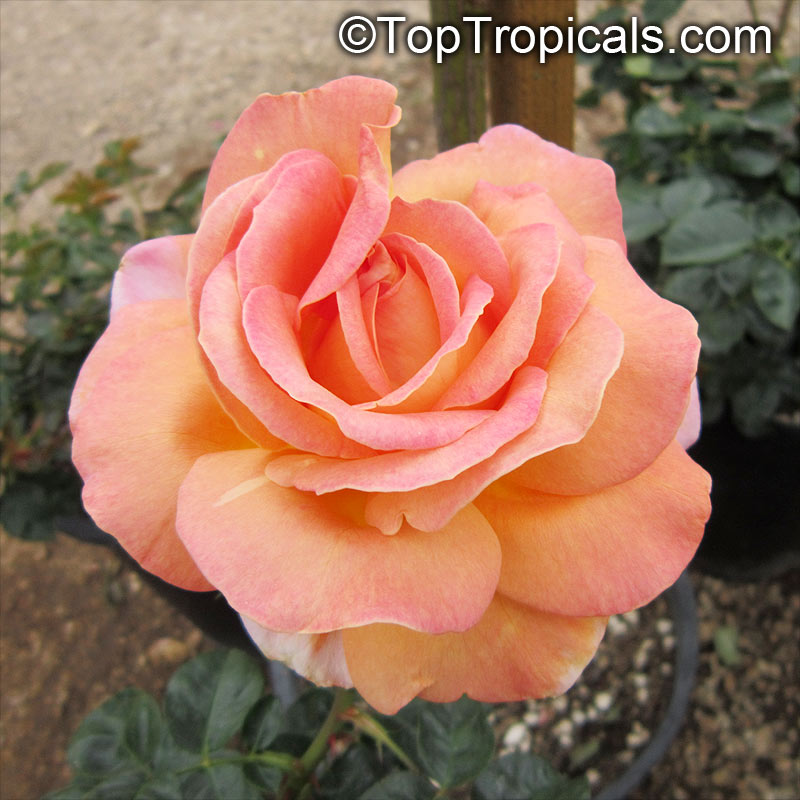
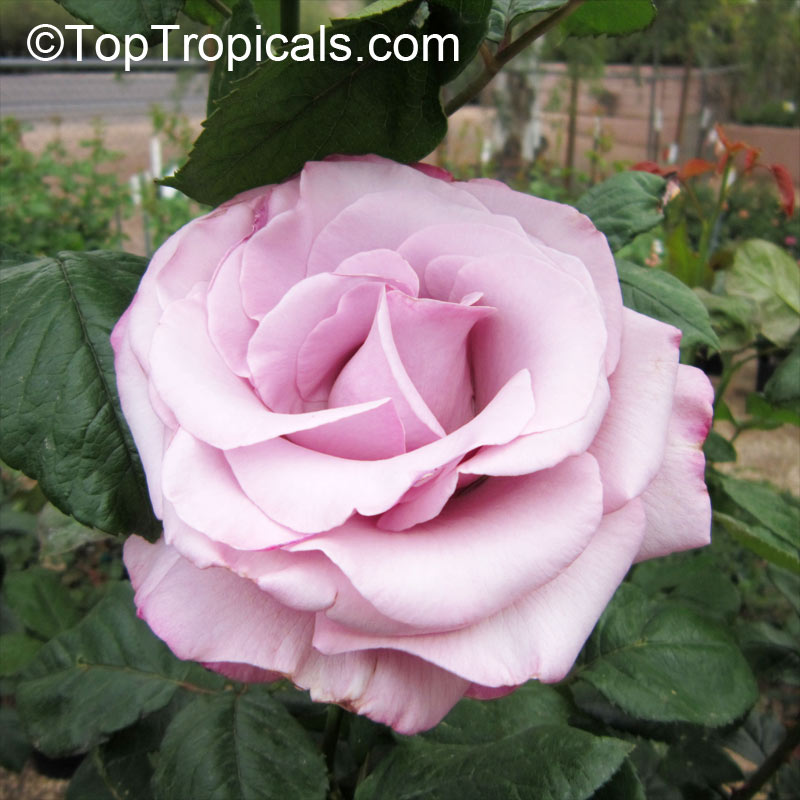
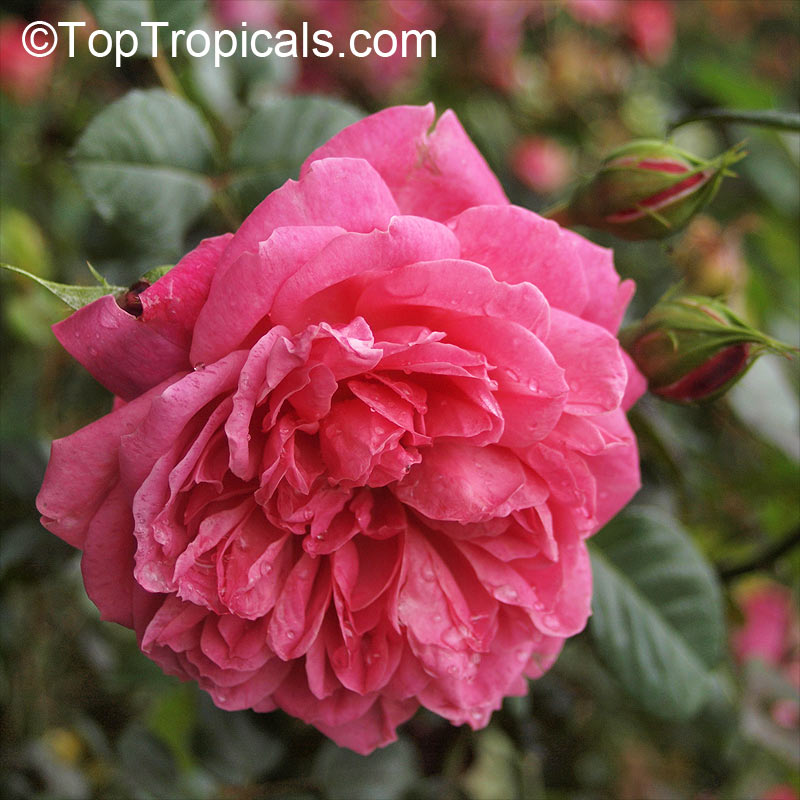
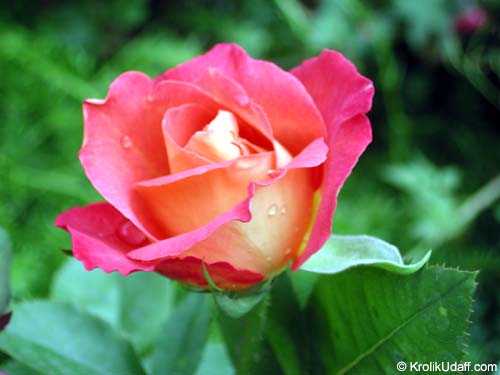
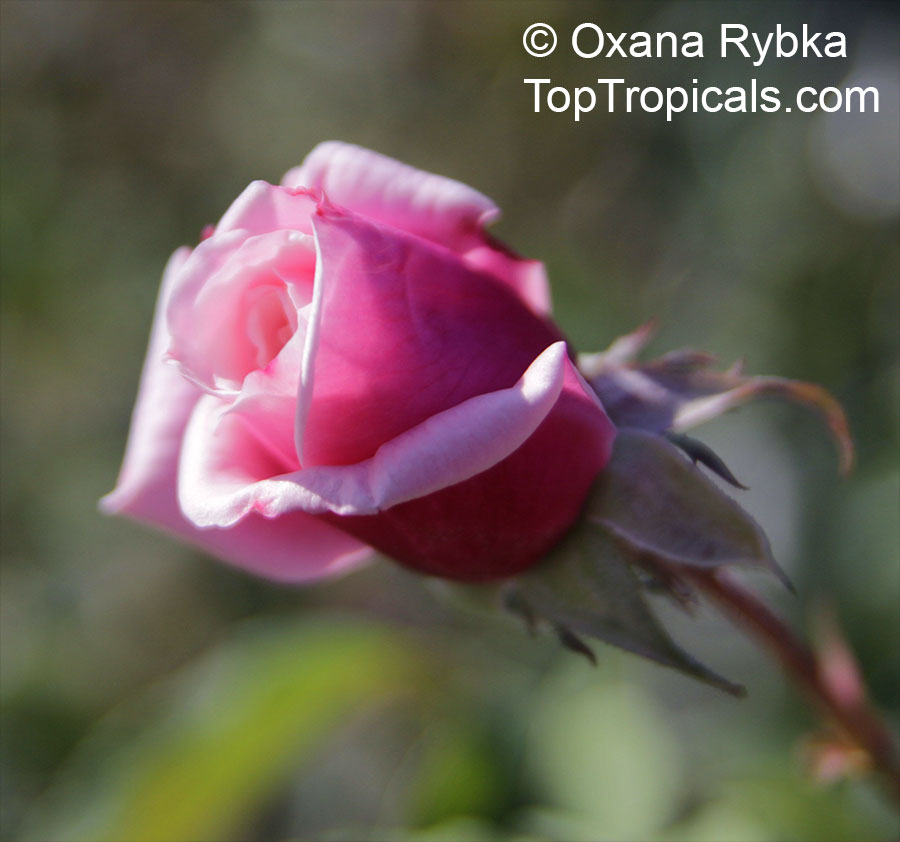
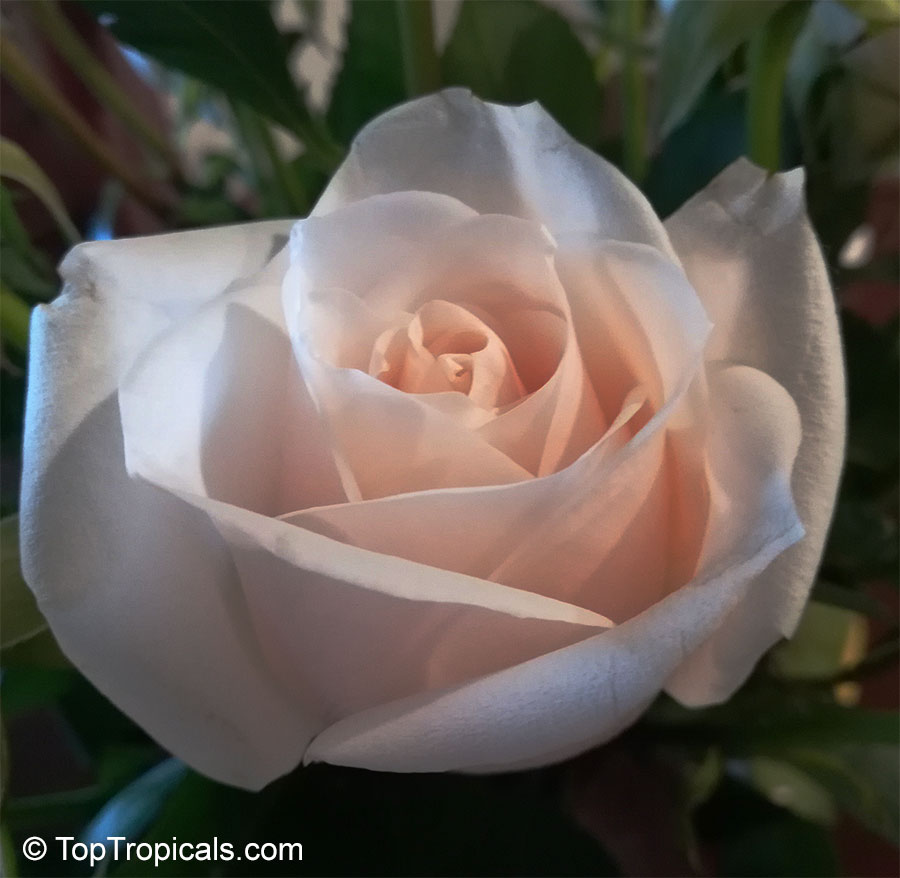
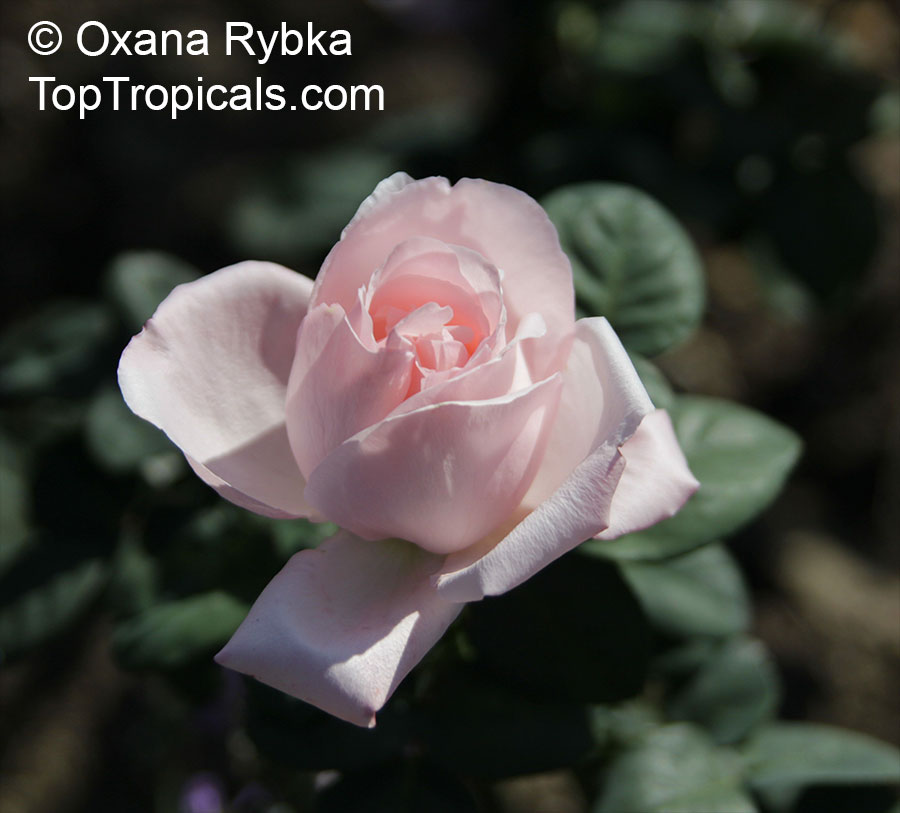
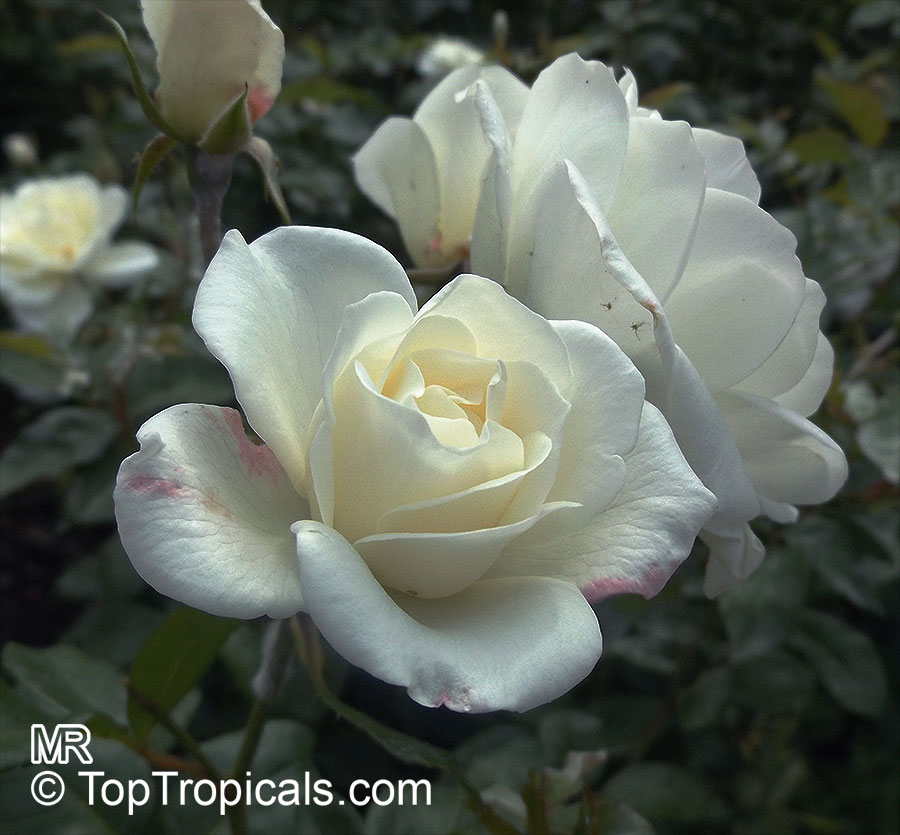
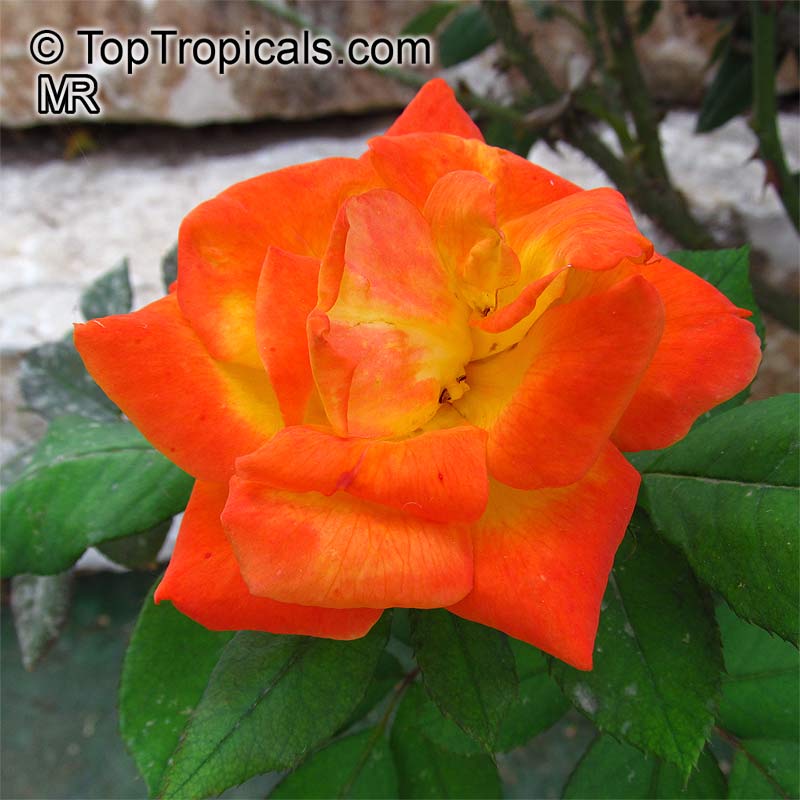
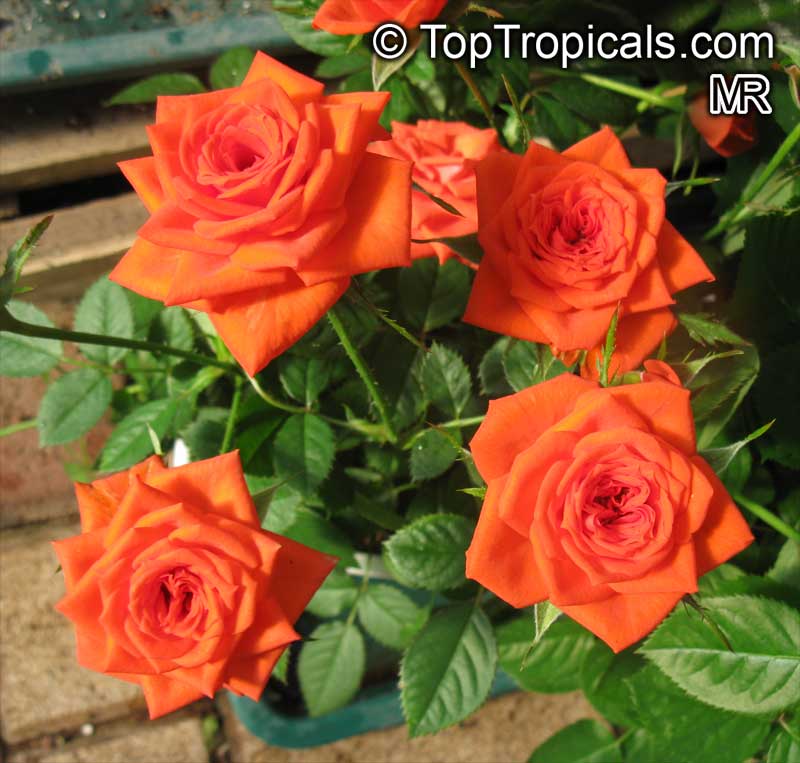
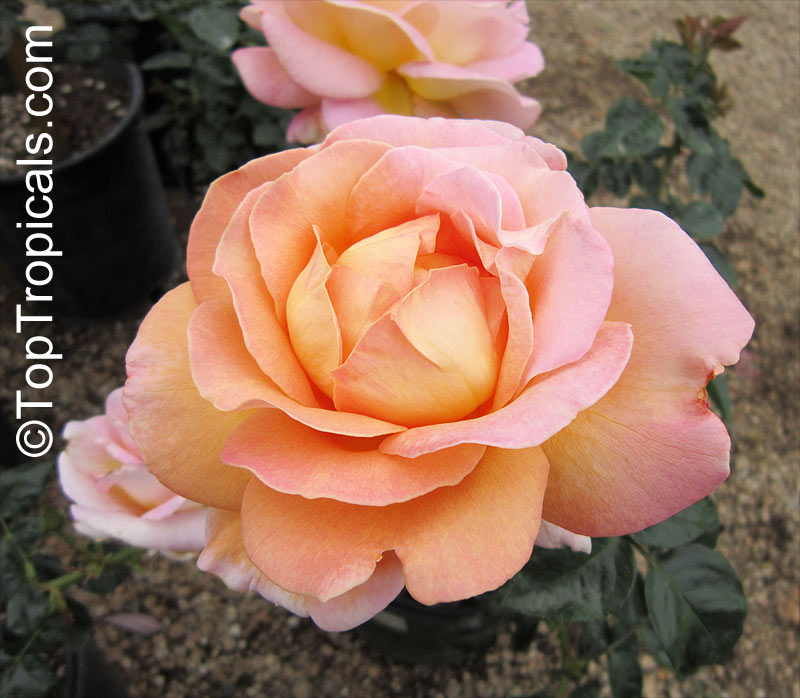
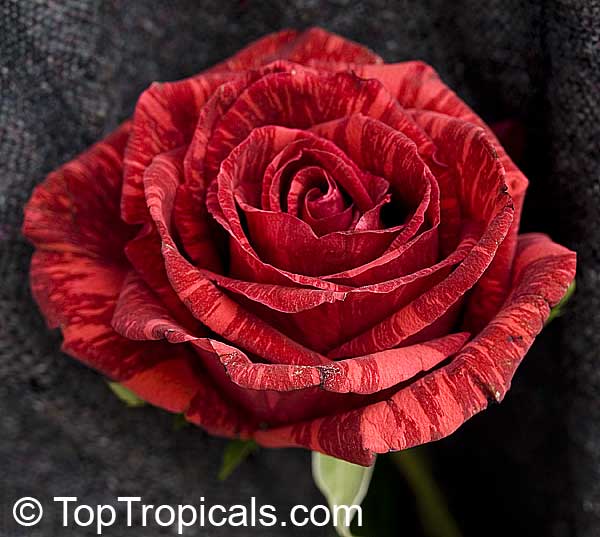
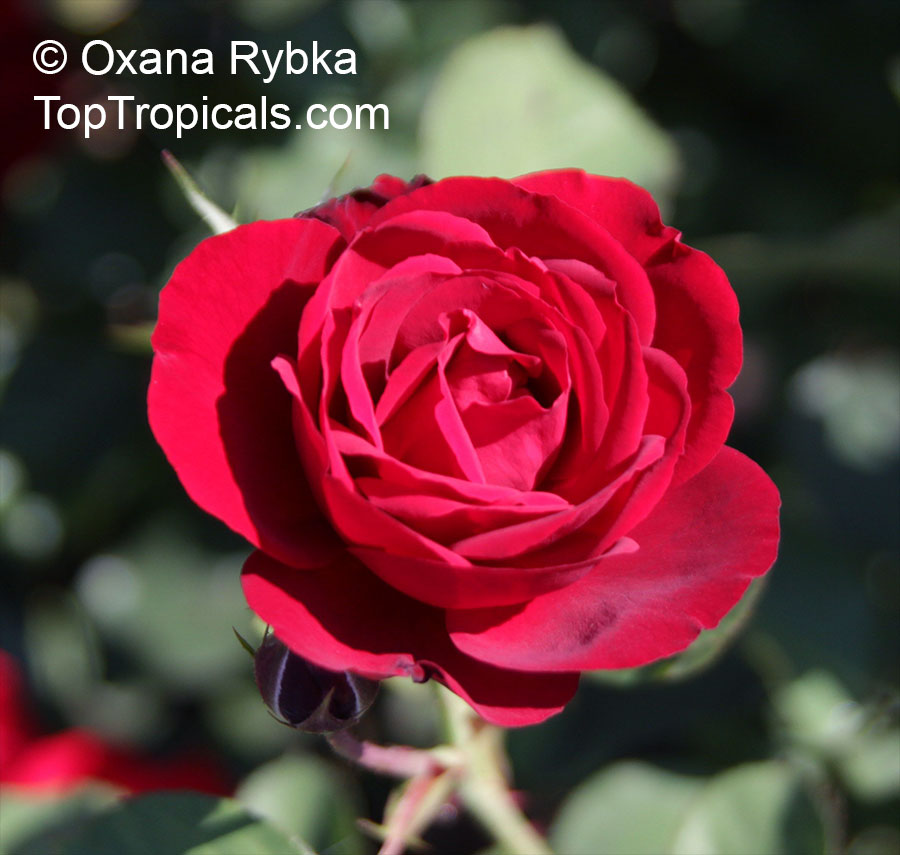
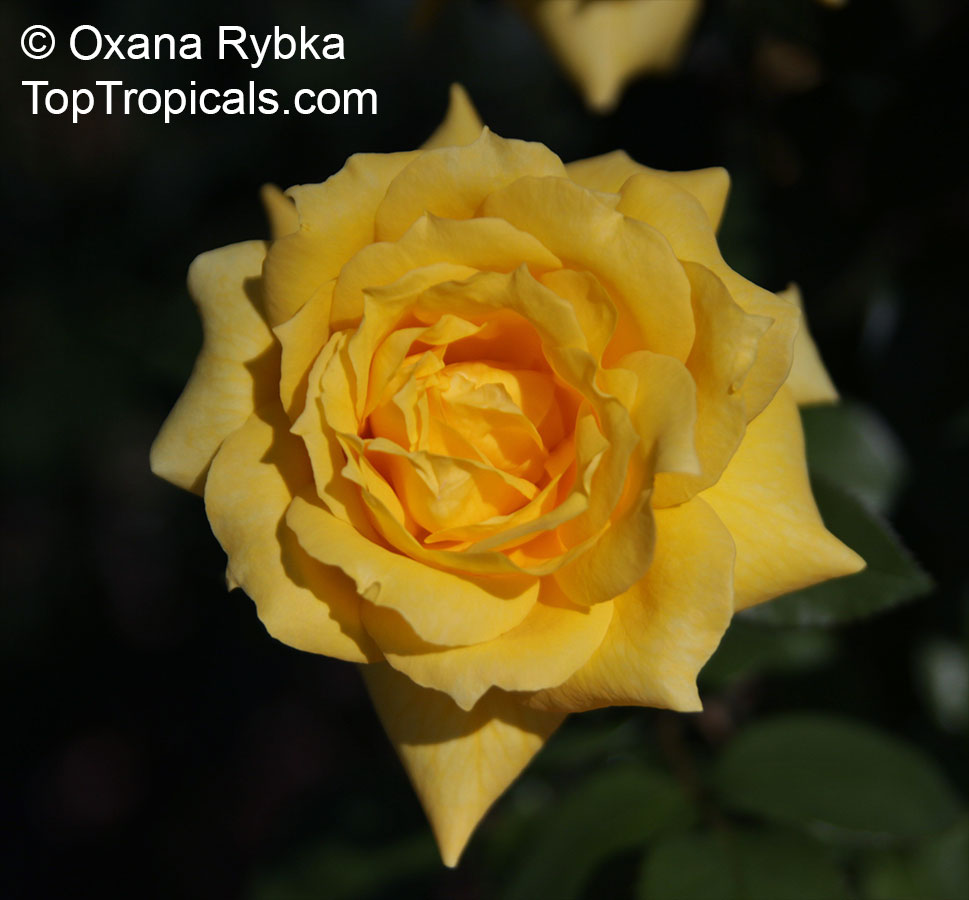
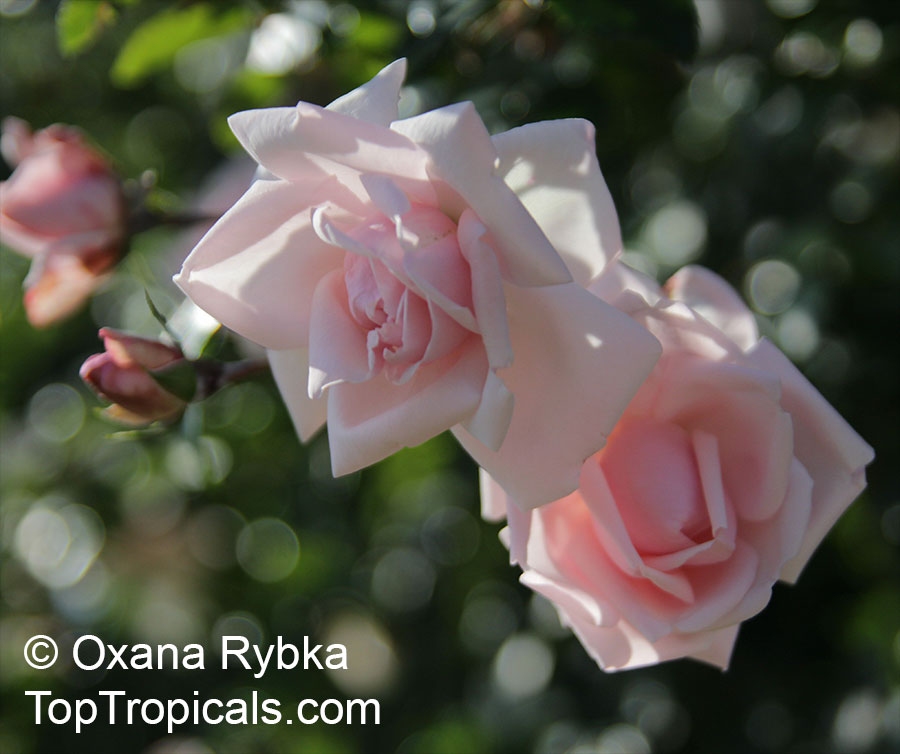
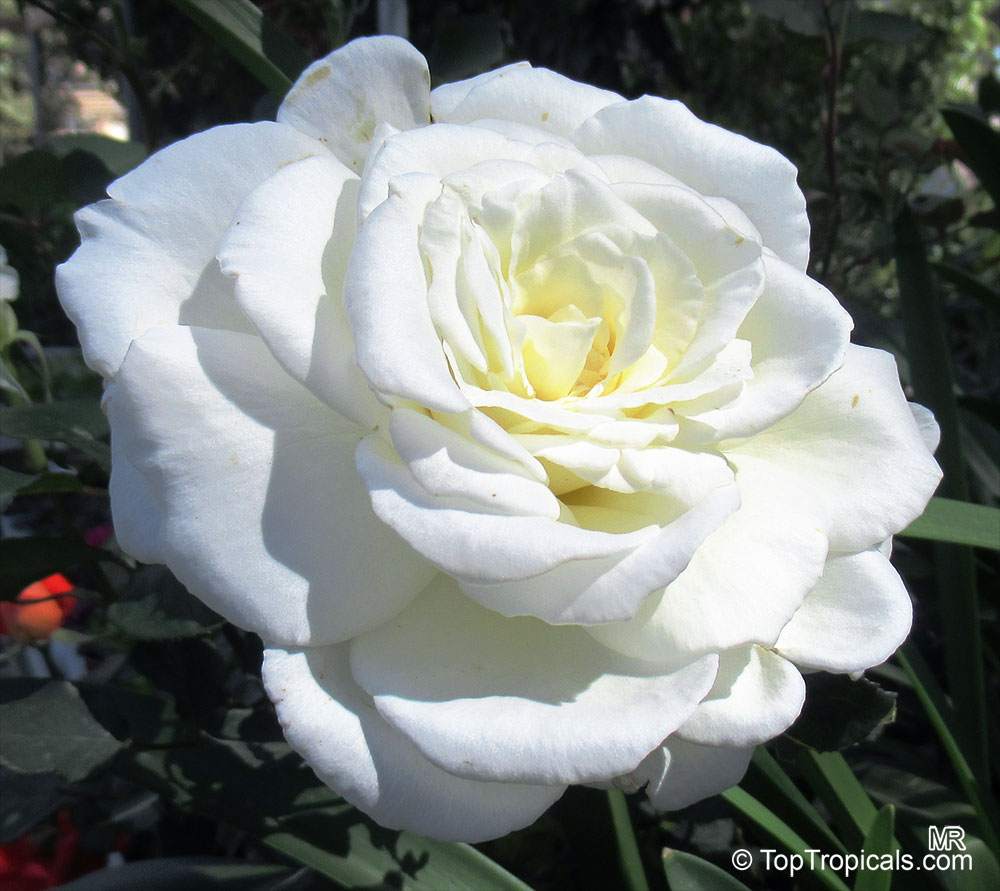
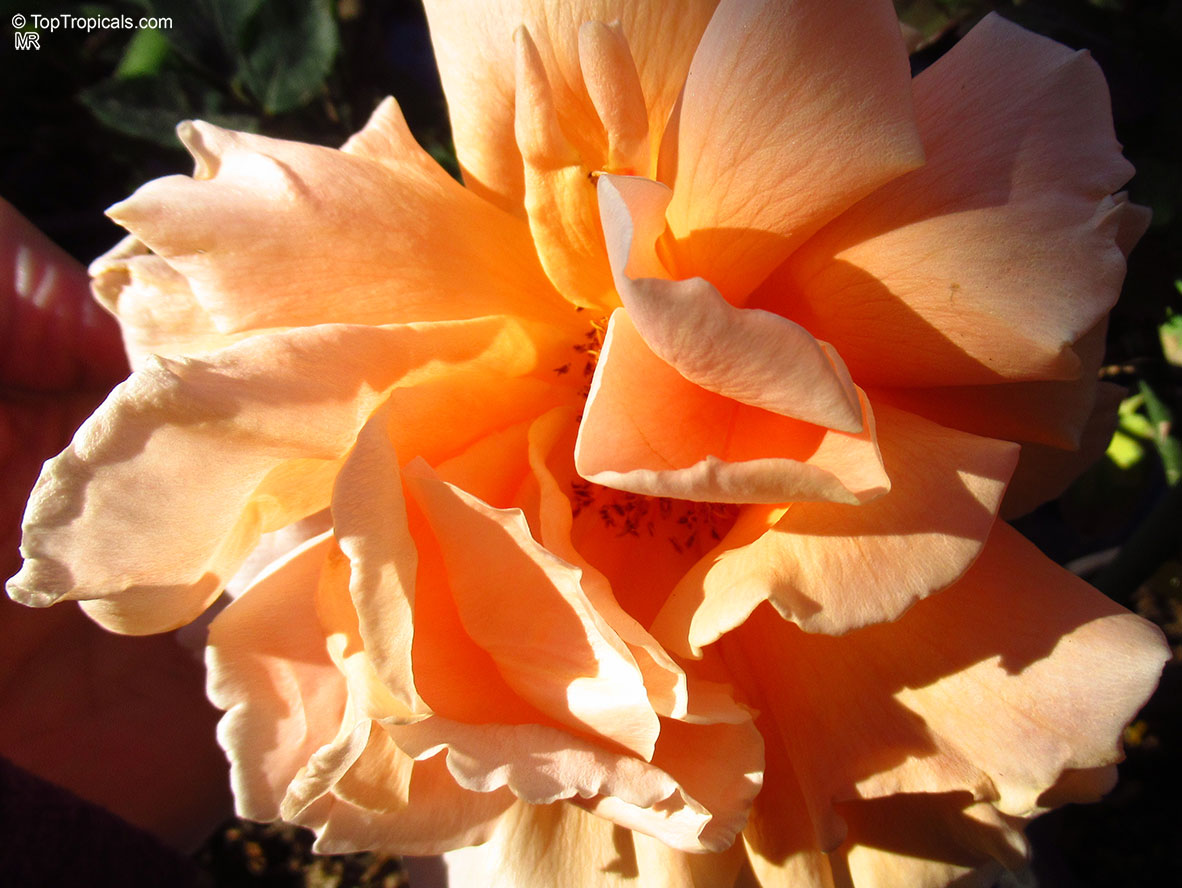
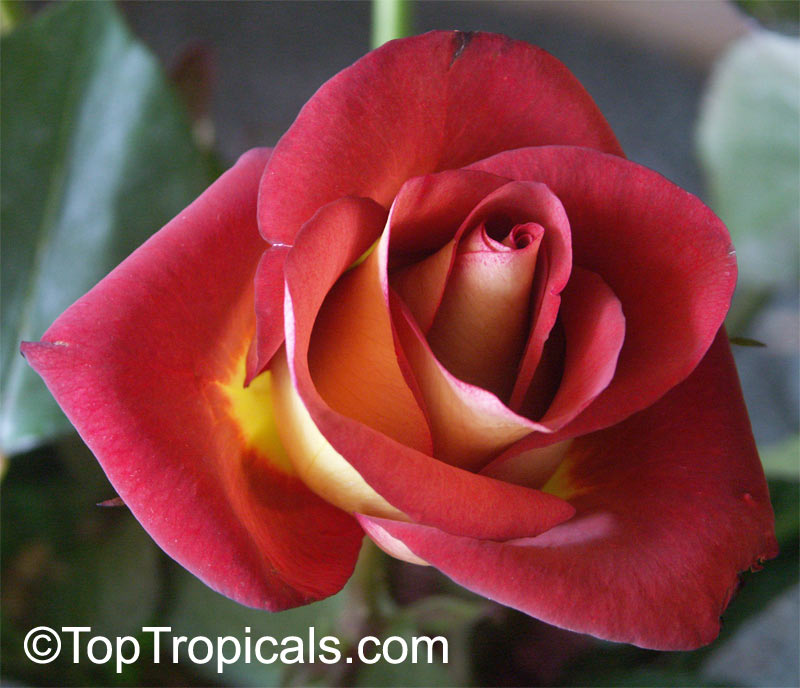
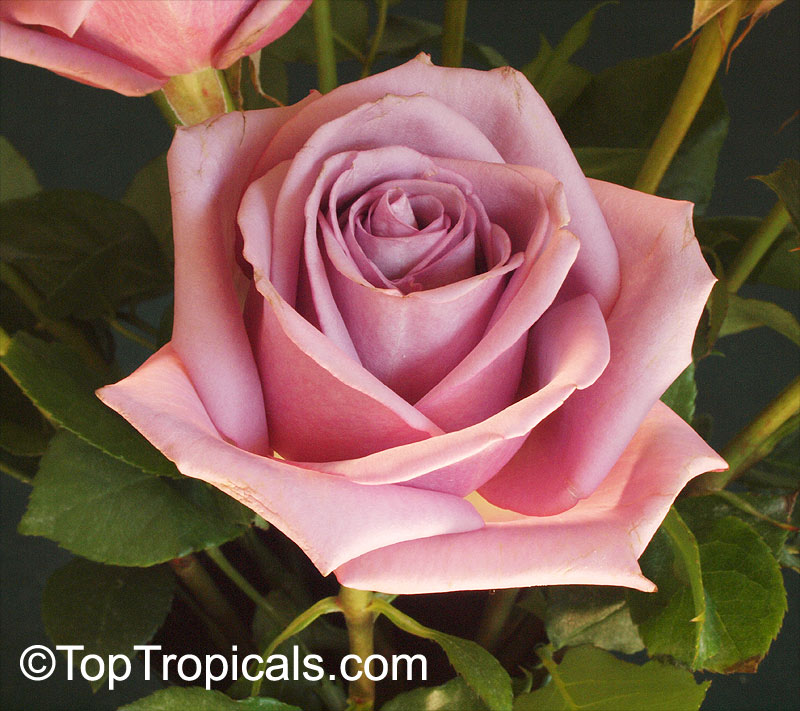
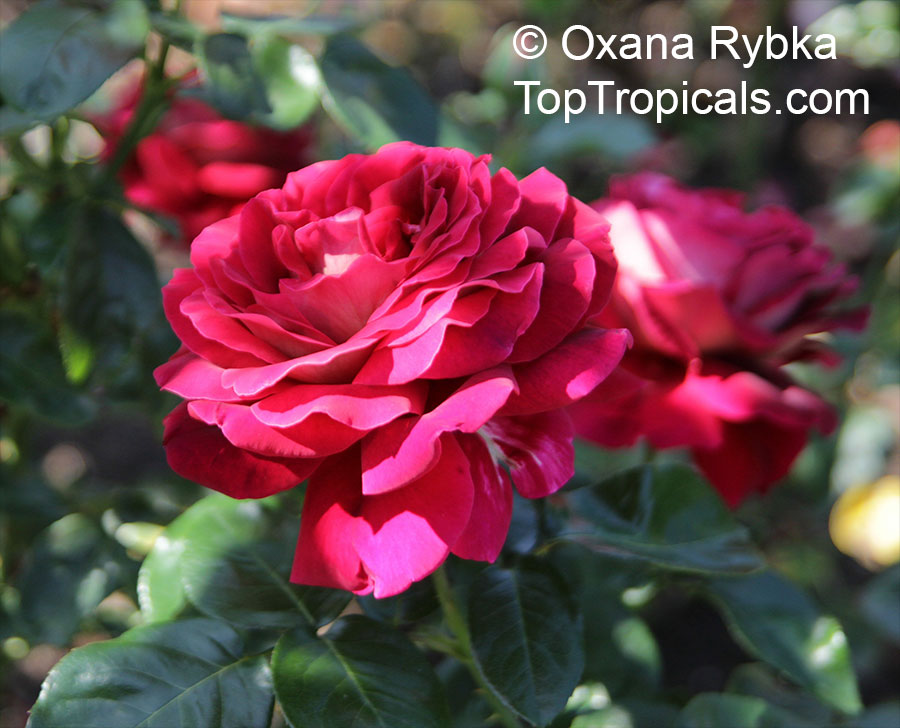
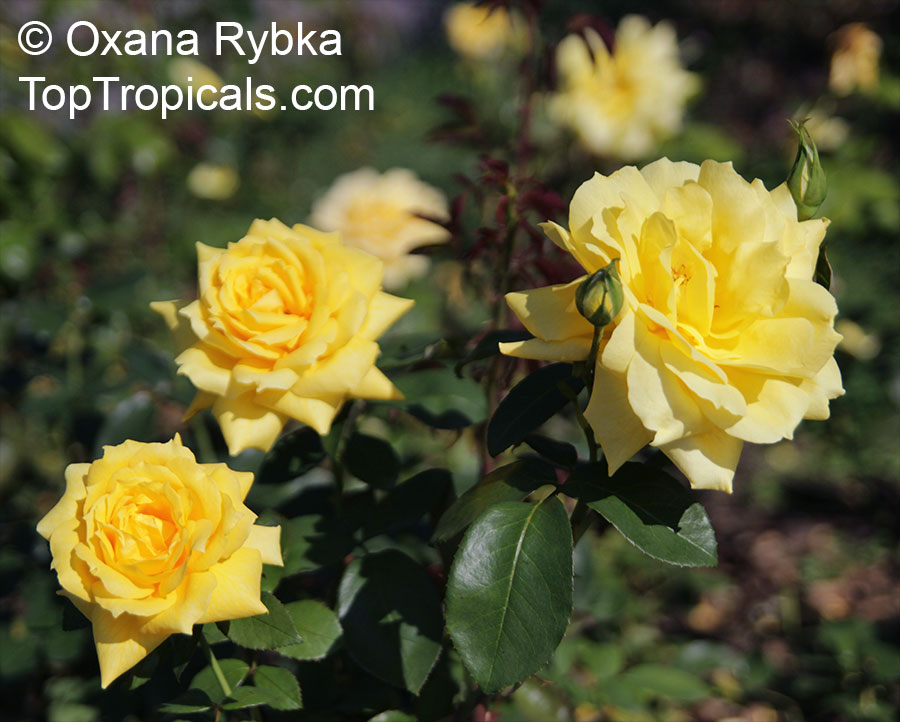
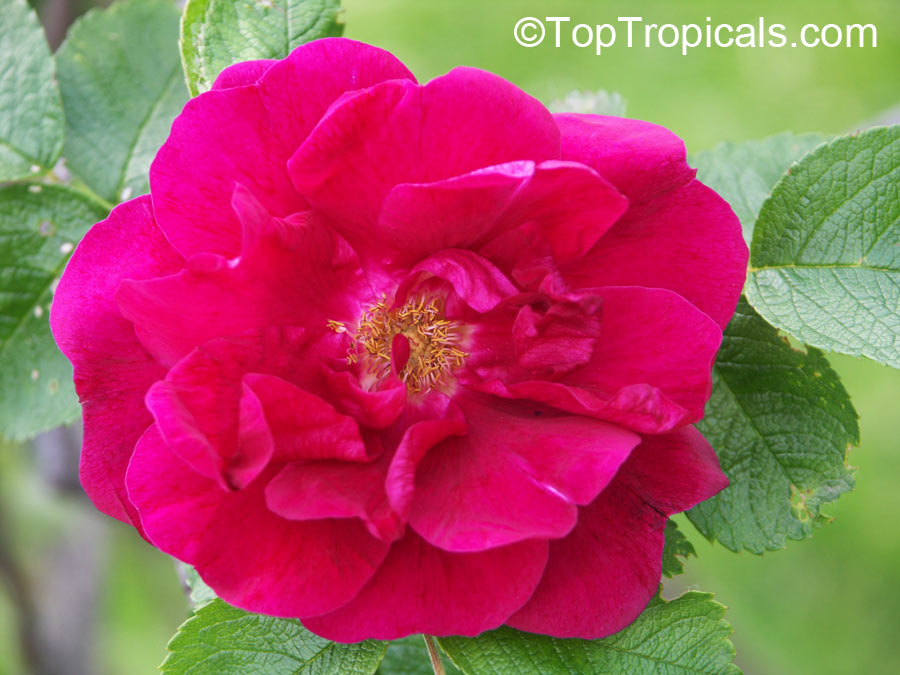
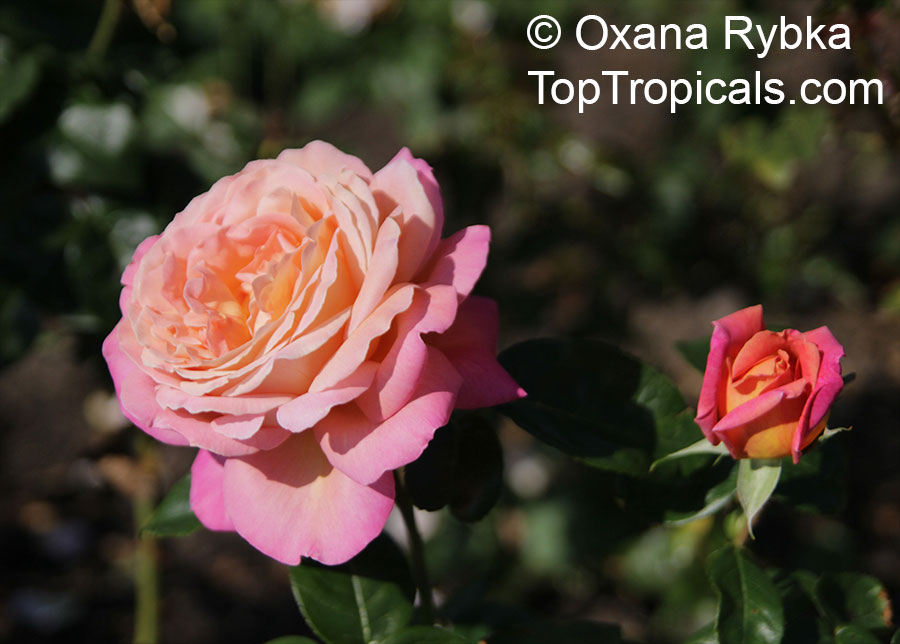
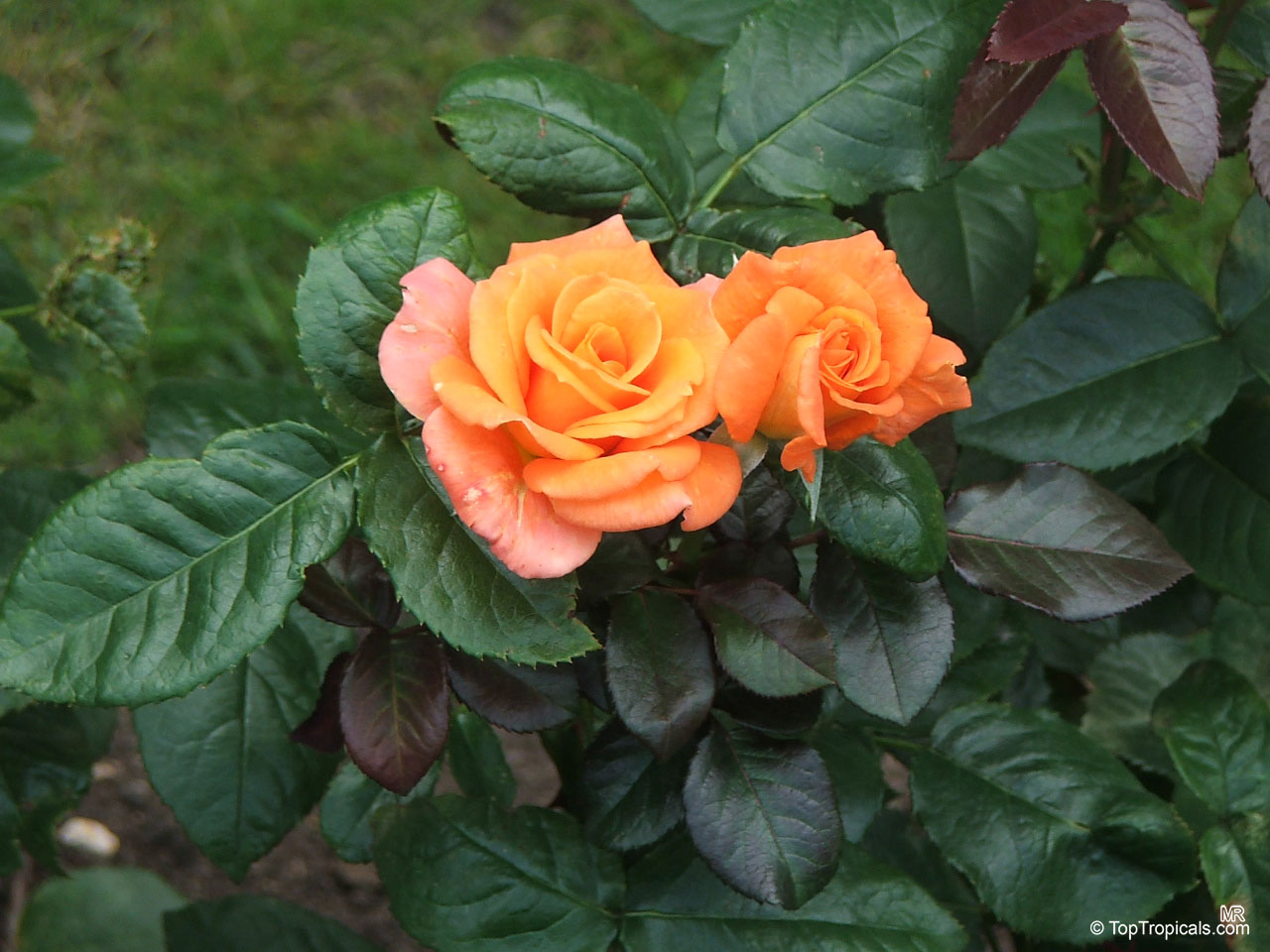
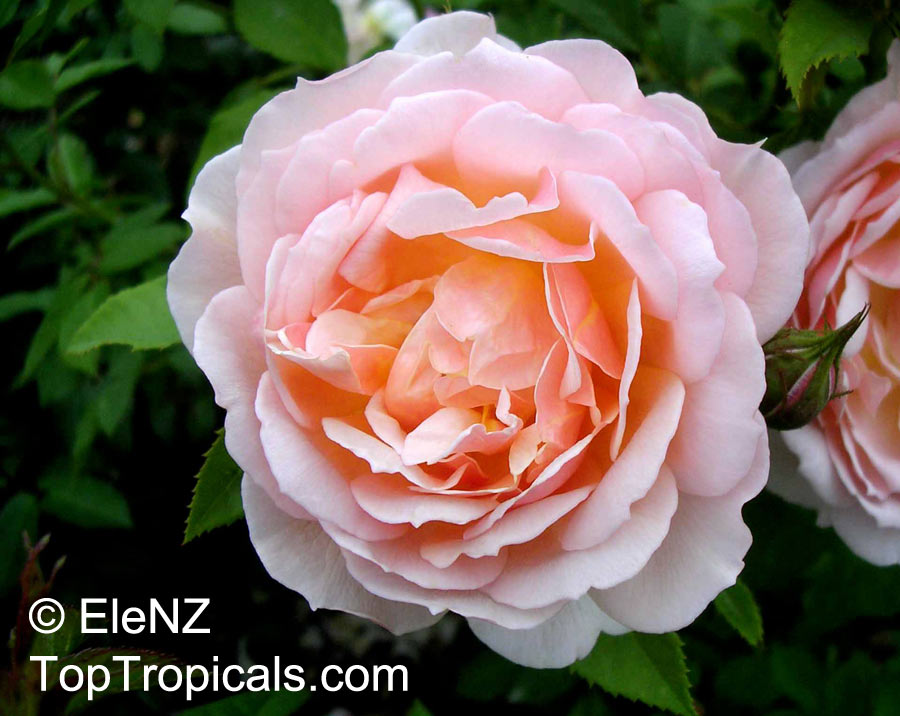
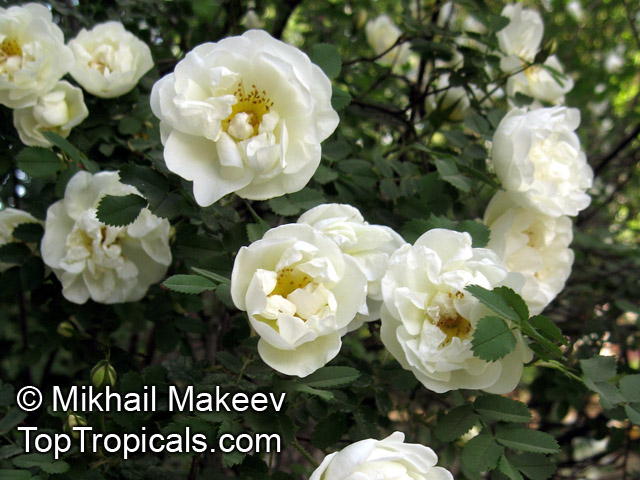
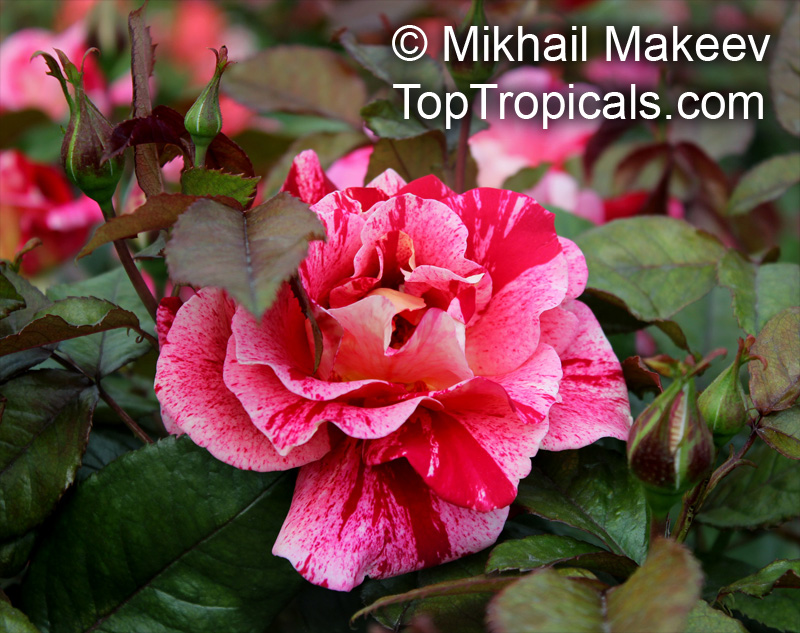
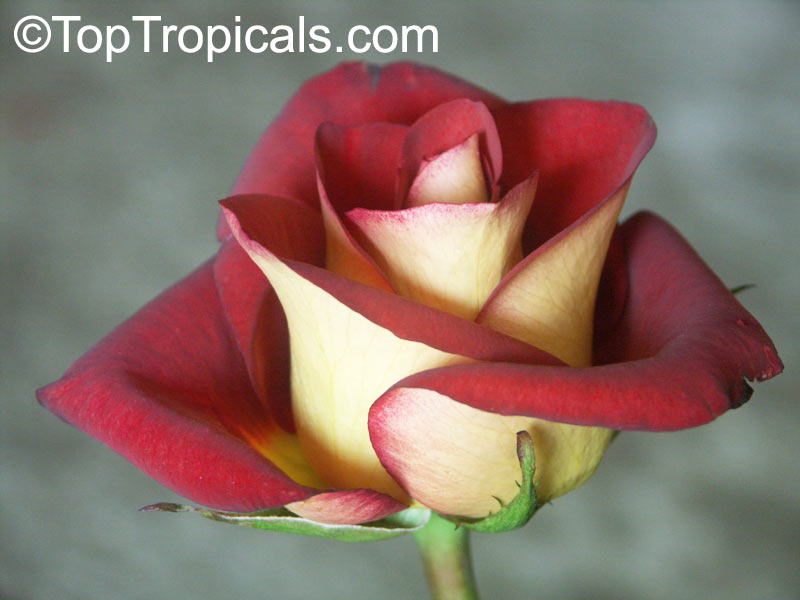
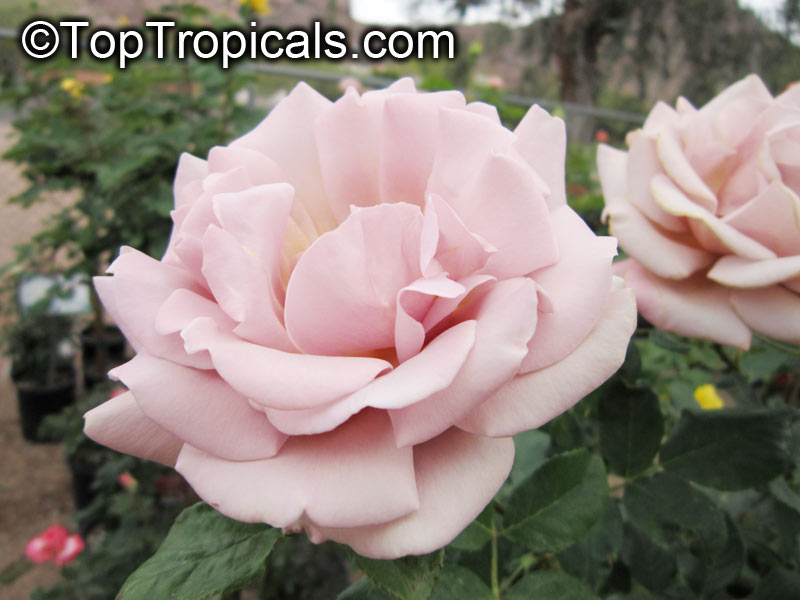
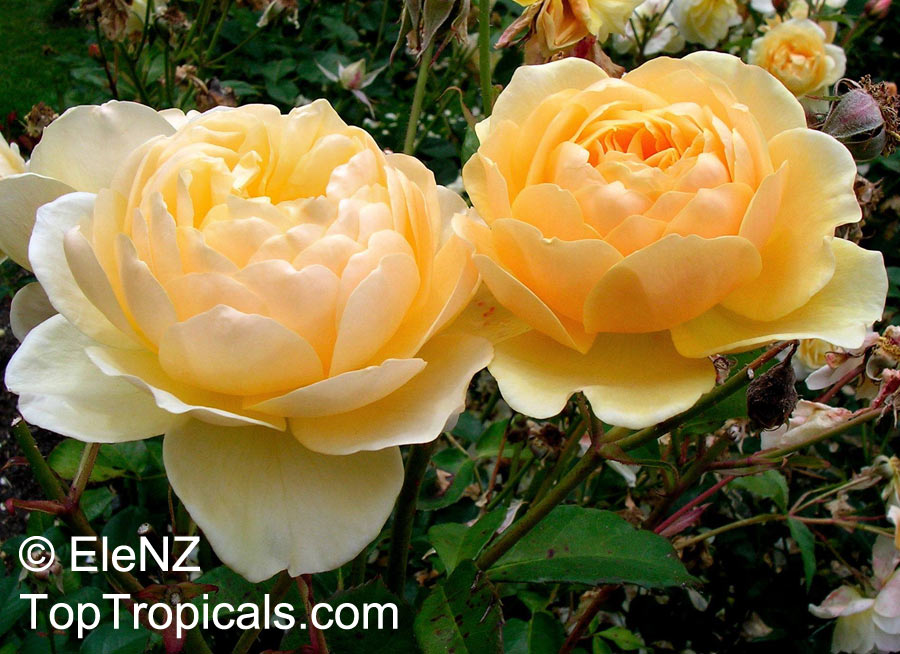
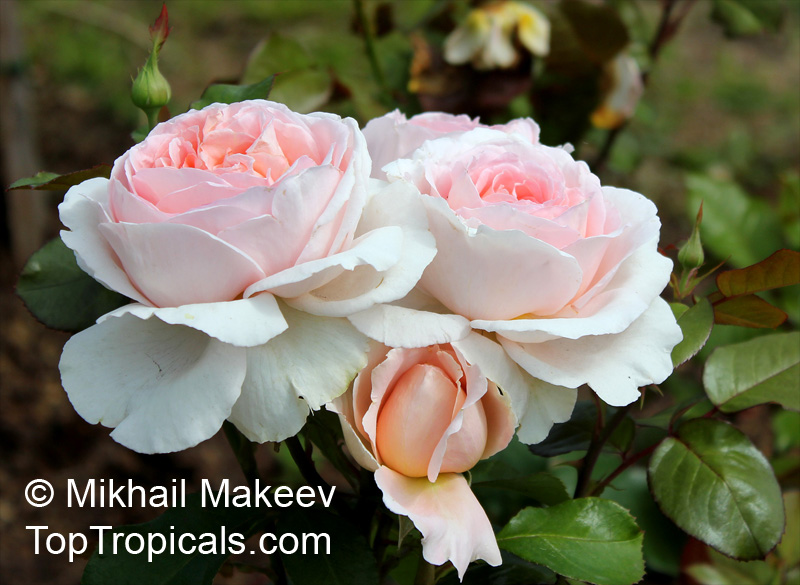
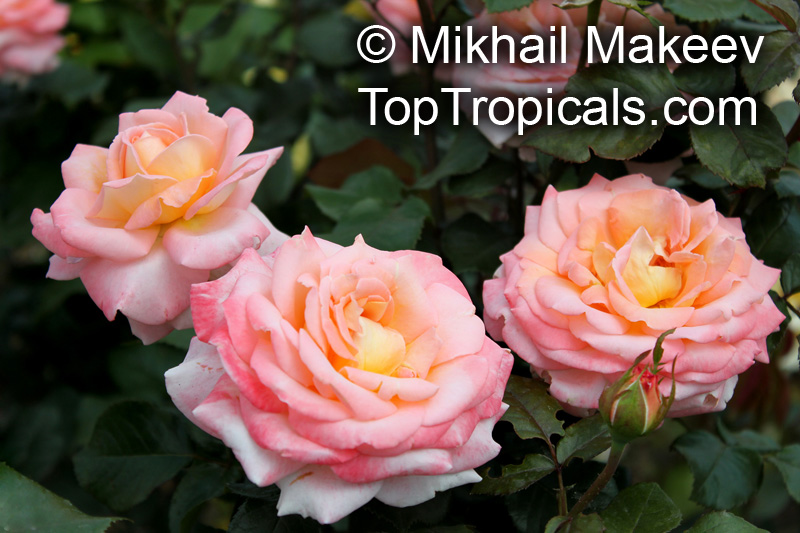
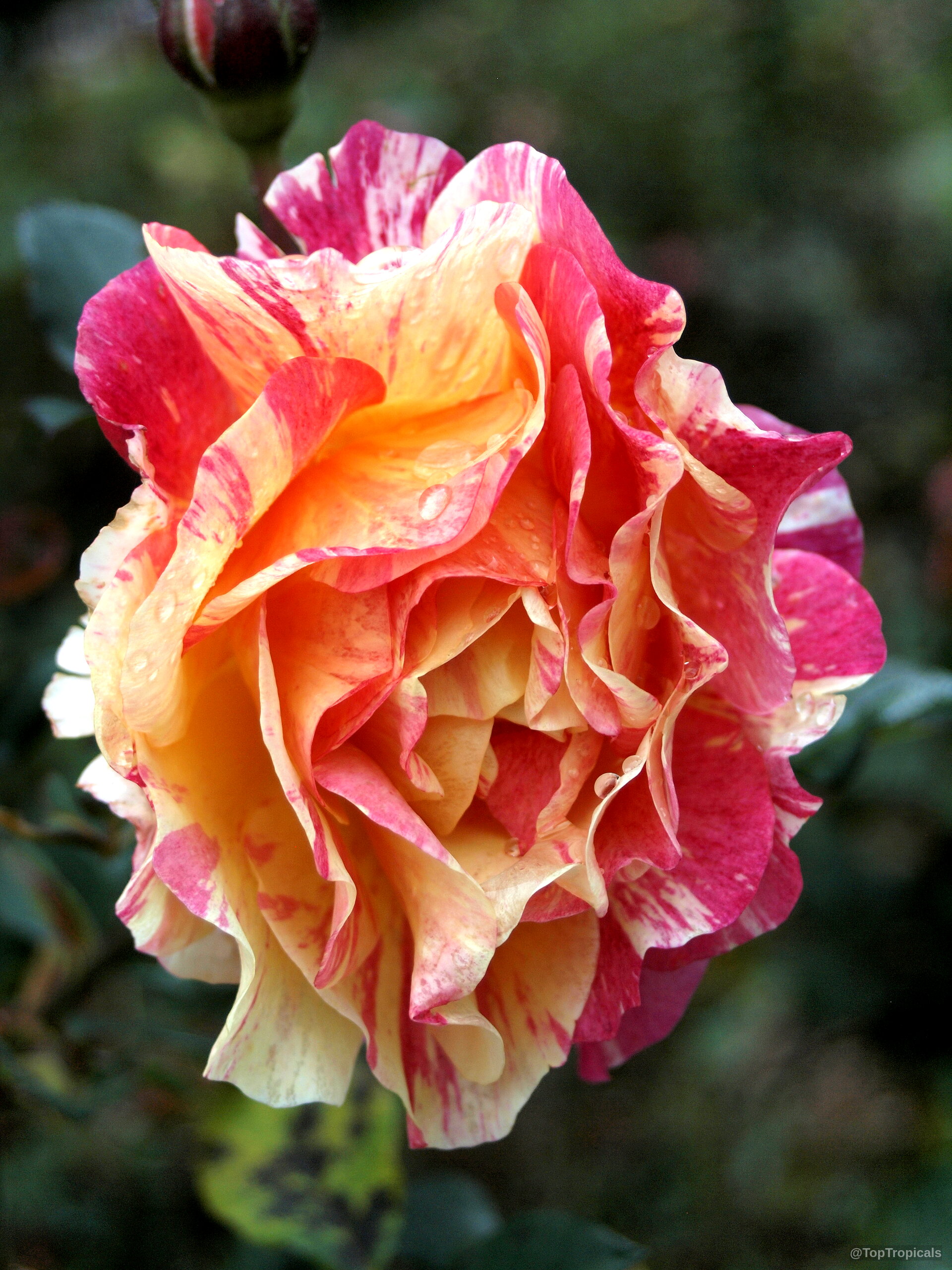
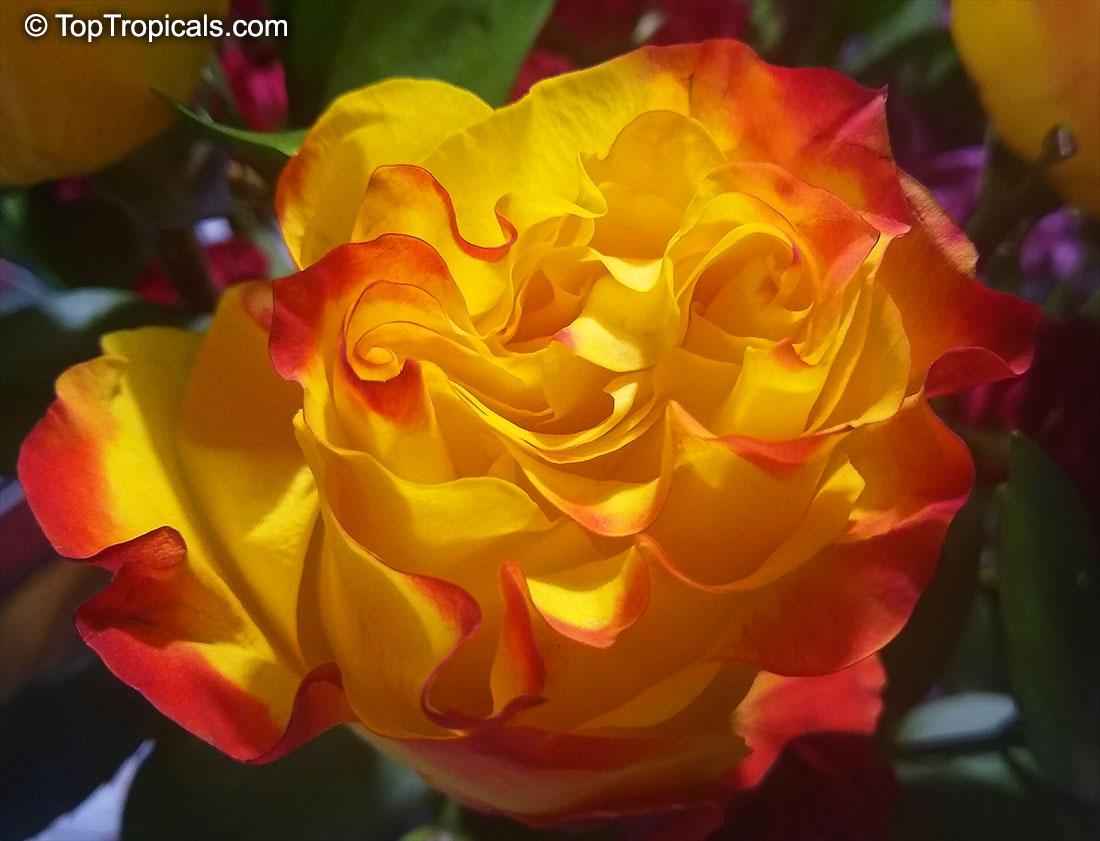
The Rose is the most popular garden flower. Highly valued for its form, fragrance and endless variety of color. Tremendous progress has been made in raising new varieties by crossbreeding and selection. New types have arisen; the season of blooming has been prolonged to such an extent that many modern varieties (including climbers) bloom intermittently or in some instances continuously throughout the summer and autumn months. Only a severe frost puts an end to their blooming season. The species of wild Roses are classed under Rosa and a few hybrids that resemble wild kinds, but for garden purposes, the remaining types are grouped in various ways: according to their habits of growth; according to their ancestry; according to the manner in which they are grafted, budded or trained; and in a number of other ways. These groups are not always clear. They often overlap, but are generally convenient and practicable. It's important that the person interested in Roses be familiar with the different types of Roses even though he may not be able, at sight, to place any given Rose in a specific category. The basic of the Rose classes are: Hybrid Teas, Hybrid Perpetuals, Floribunda Roses, Polyanthas, Hybrid Sweetbriers, Miniature Roses, China Roses (Rosa chinensis semperflorens), French Roses (Rosa gallica), Damask Rose, Moss Rose, Shrub Roses, Rugosa Roses, etc. Roses need special care and diligence in the spring and early summer in fighting pests. The most important thing is having deep and rich soil. By digging deeply, adding manure and good loamy soil, Roses of high standard may be grown in any sunny garden. Whether the soil is light or heavy, deep digging is necessary. This consists of breaking up the subsoil or underlayer and replacing the top layer. Light sandy soil needs an addition of fibrous rooted turf that has been stacked for a year or two, with layers of farmyard manure between. Compost is also good. Generous amounts of rotted cow or horse manure is recommended. See Roses Page
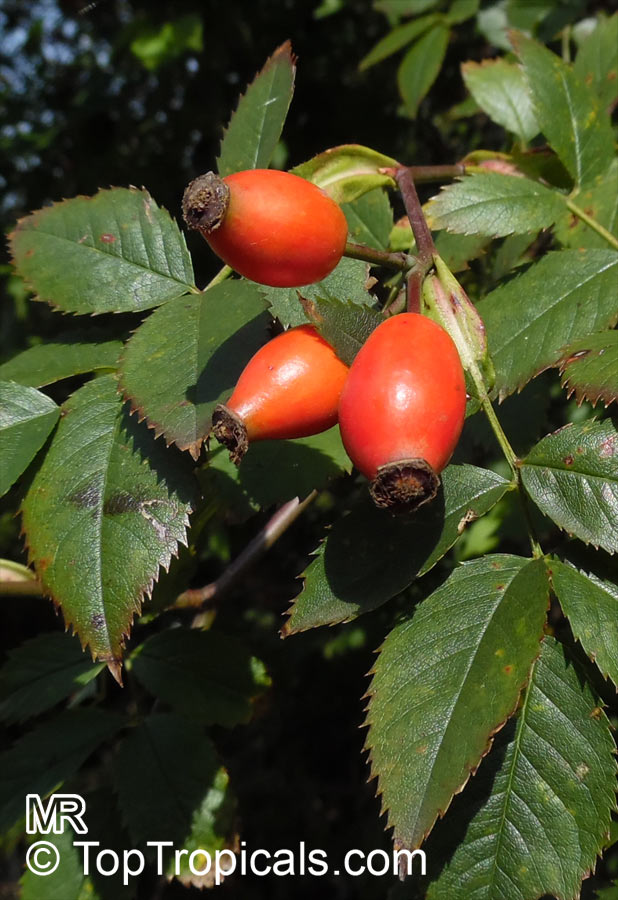

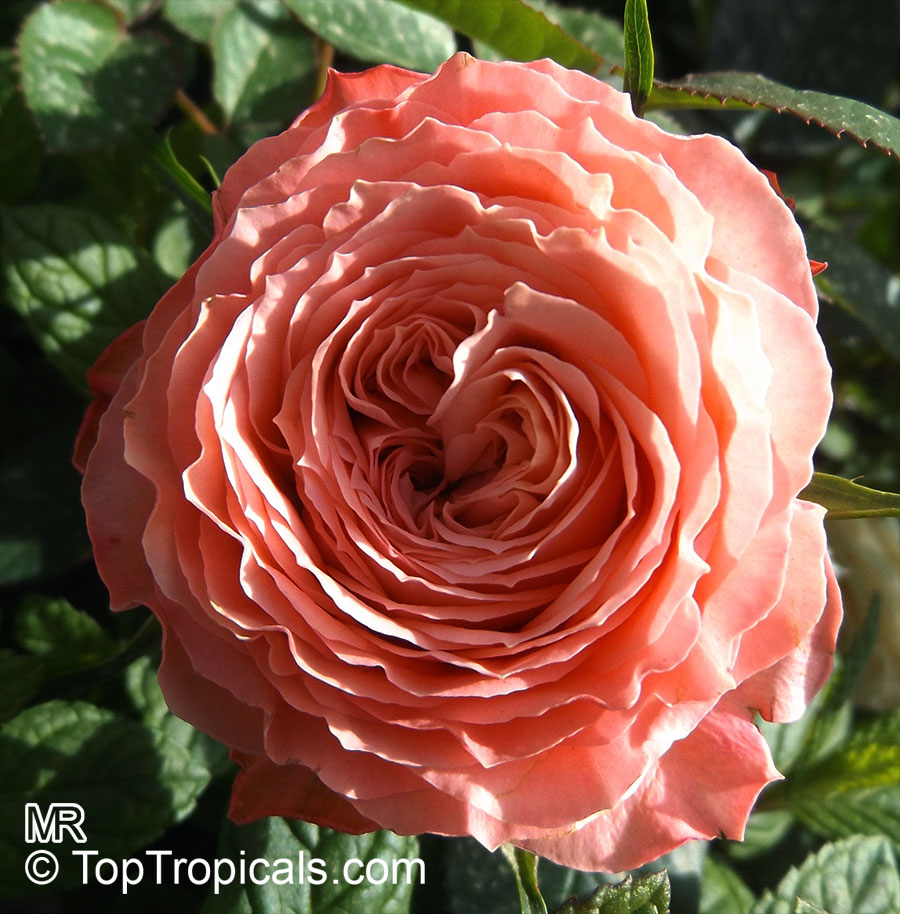
Botanical name: Rosa sp.
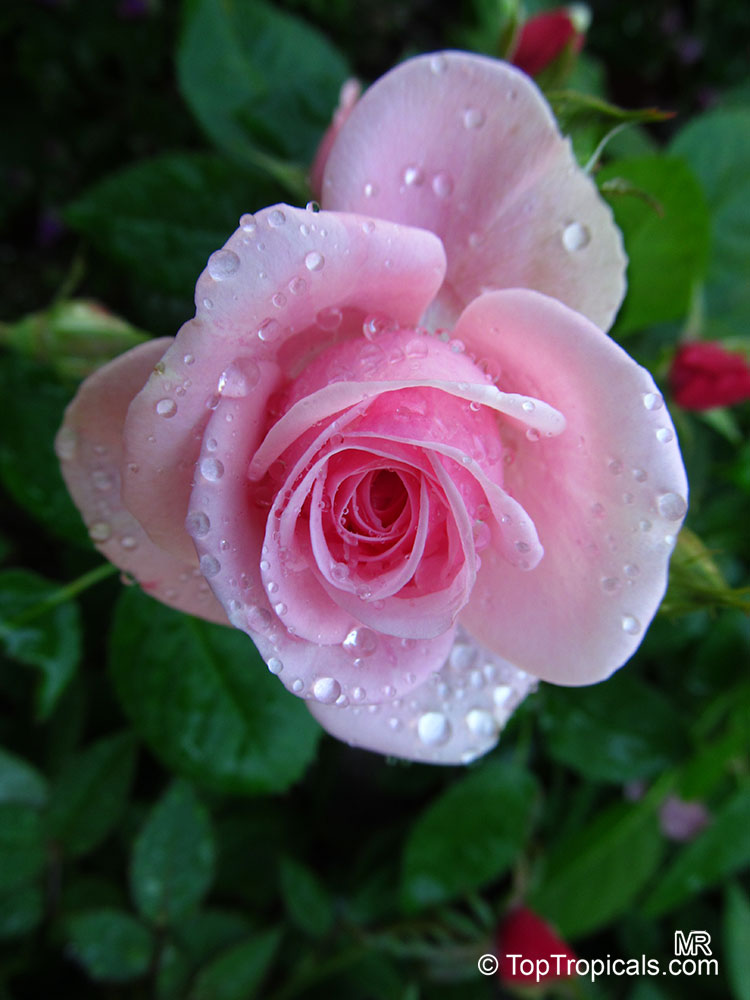
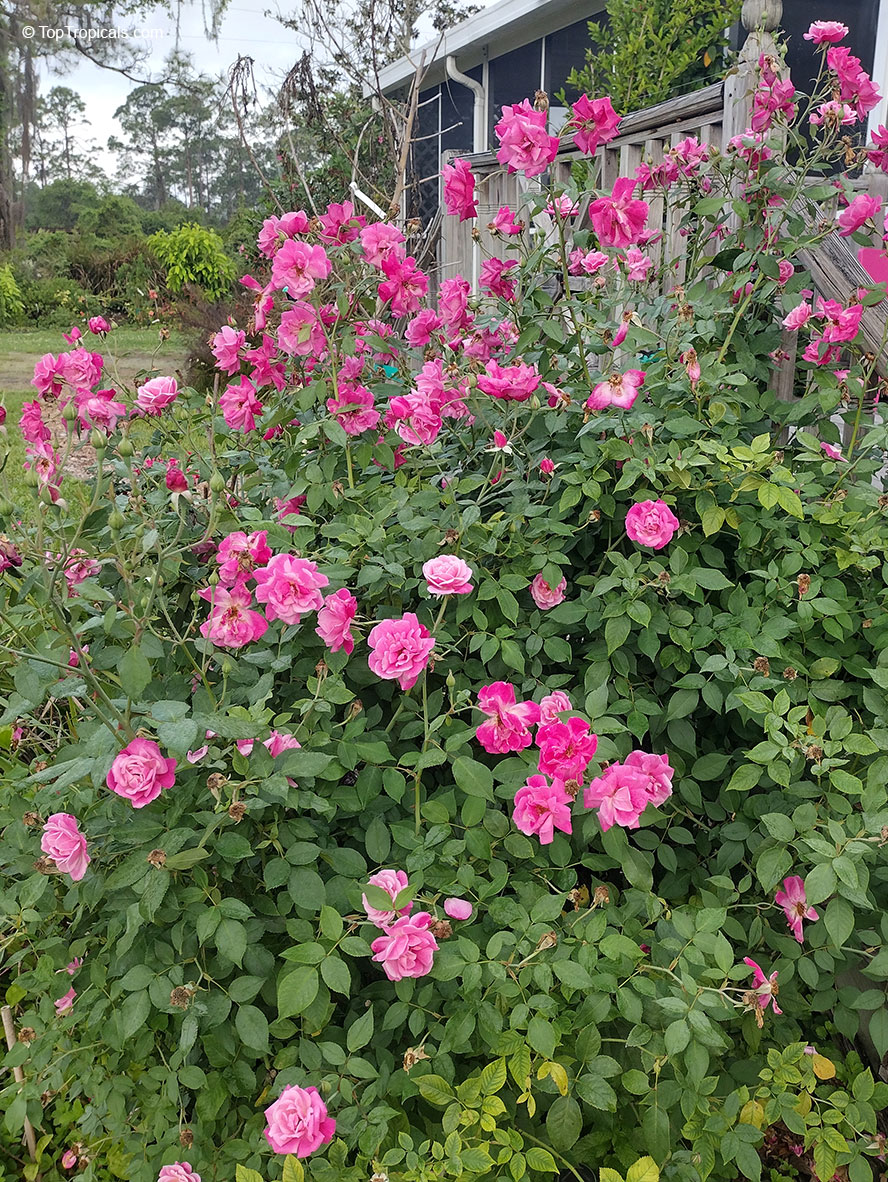
Common name: Rose
Cultivar: Double Flower
Family: Rosaceae
USDA Zone: 3-11


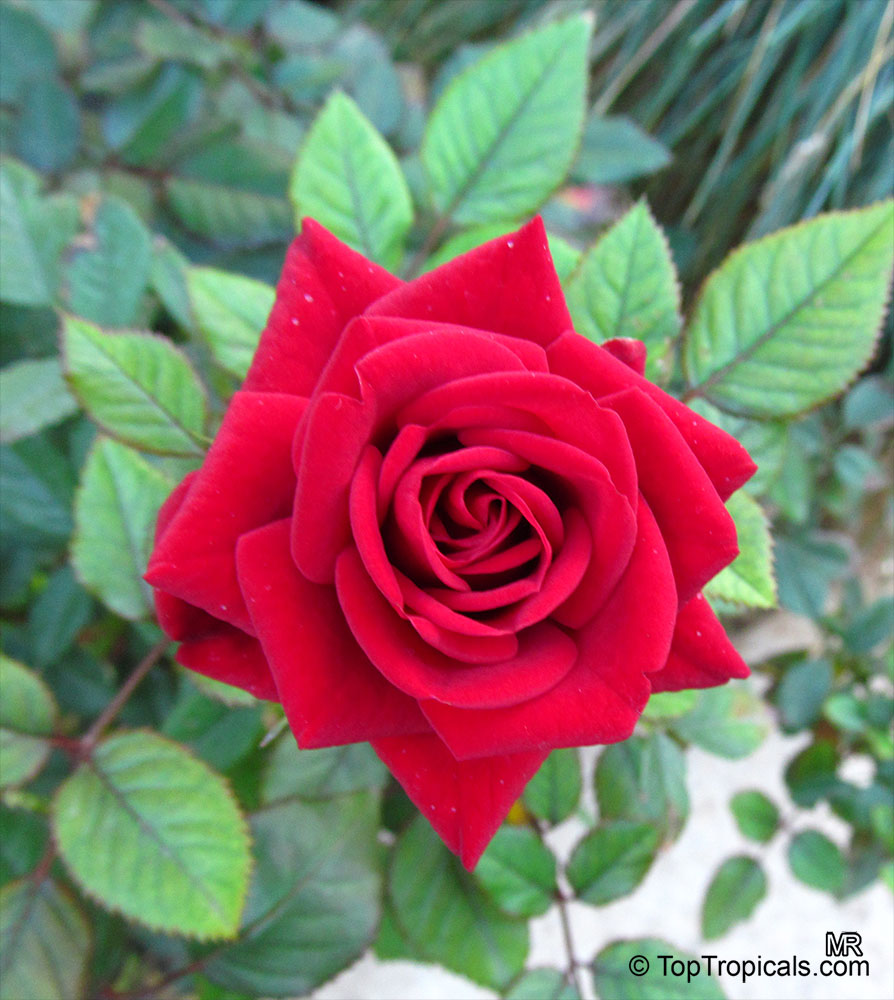
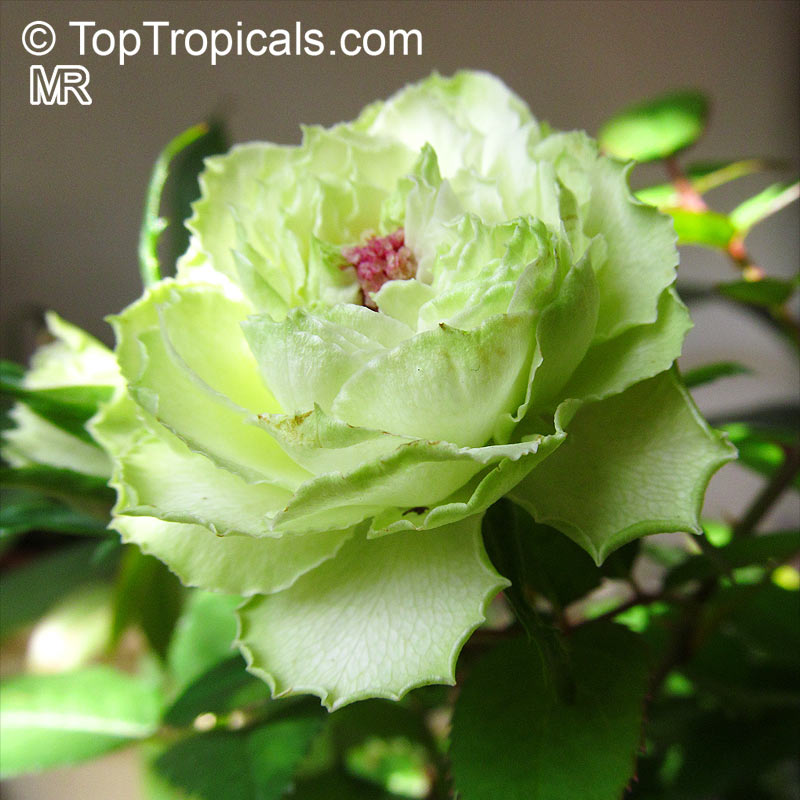
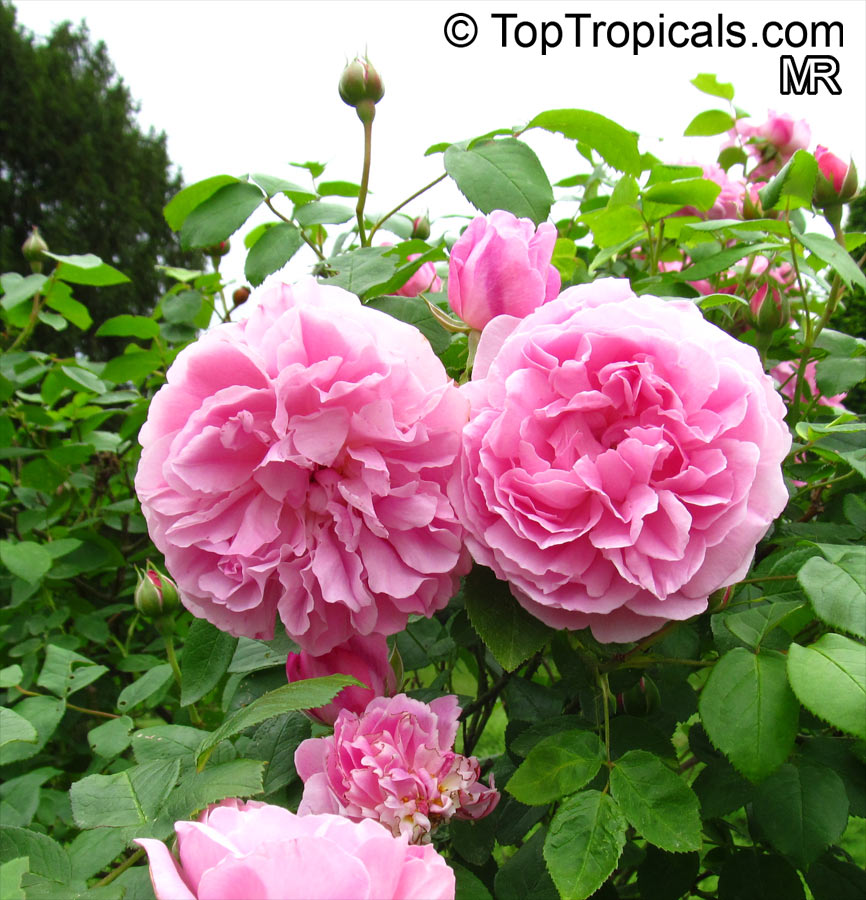
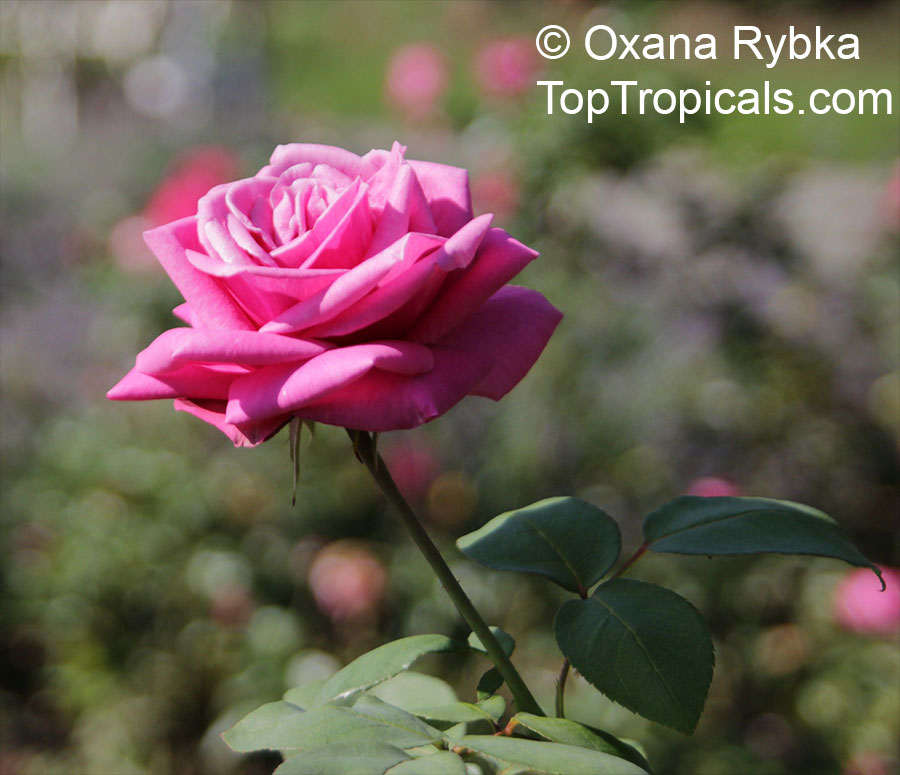
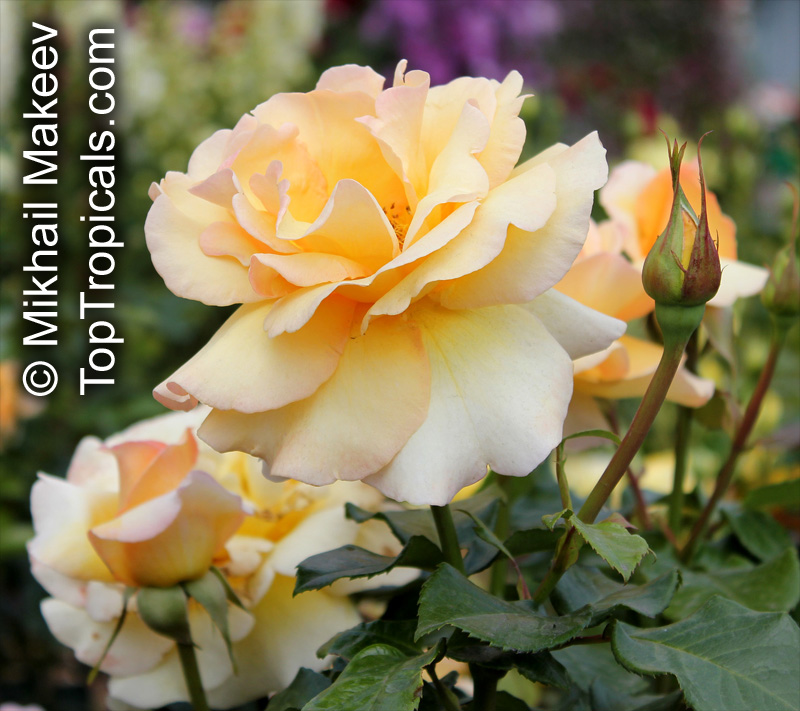
The Rose is the most popular garden flower. Highly valued for its form, fragrance and endless variety of color. Tremendous progress has been made in raising new varieties by crossbreeding and selection. New types have arisen; the season of blooming has been prolonged to such an extent that many modern varieties (including climbers) bloom intermittently or in some instances continuously throughout the summer and autumn months. Only a severe frost puts an end to their blooming season. The species of wild Roses are classed under Rosa and a few hybrids that resemble wild kinds, but for garden purposes, the remaining types are grouped in various ways: according to their habits of growth; according to their ancestry; according to the manner in which they are grafted, budded or trained; and in a number of other ways. These groups are not always clear. They often overlap, but are generally convenient and practicable. It's important that the person interested in Roses be familiar with the different types of Roses even though he may not be able, at sight, to place any given Rose in a specific category. The basic of the Rose classes are: Hybrid Teas, Hybrid Perpetuals, Floribunda Roses, Polyanthas, Hybrid Sweetbriers, Miniature Roses, China Roses (Rosa chinensis semperflorens), French Roses (Rosa gallica), Damask Rose, Moss Rose, Shrub Roses, Rugosa Roses, etc. Roses need special care and diligence in the spring and early summer in fighting pests. The most important thing is having deep and rich soil. By digging deeply, adding manure and good loamy soil, Roses of high standard may be grown in any sunny garden. Whether the soil is light or heavy, deep digging is necessary. This consists of breaking up the subsoil or underlayer and replacing the top layer. Light sandy soil needs an addition of fibrous rooted turf that has been stacked for a year or two, with layers of farmyard manure between. Compost is also good. Generous amounts of rotted cow or horse manure is recommended. See Roses Page


Botanical name: Hibiscus rosa-sinensis
Common names: Hibiscus, Chinese Rose, Japanese Rose, Tropical Hibiscus, Shoe Flower
Family: Malvaceae
USDA Zone: 9-11

Hibiscus rosa-sinensis, commonly known as Chinese Hibiscus, Tropical Hibiscus, or Chinese Rose, is an evergreen shrub or small tree in the Malvaceae family. Its exact wild origin is uncertain, and the species is considered an ancient cultivated plant, probably derived from tropical Asian ancestors and spread throughout the tropics centuries ago. Plants typically grow 6-10 feet (1.8-3 m) tall, occasionally larger, with glossy, toothed green leaves and a dense, branching habit. The large, showy flowers may be single, semi-double, or double and occur in an enormous range of colors, including red, pink, orange, yellow, white, and numerous multicolored combinations.
In warm climates, Hibiscus rosa-sinensis can flower almost continuously throughout the year, with individual blooms usually lasting only a day or two but being produced in rapid succession. It grows best in full sun to partial shade and fertile, well-drained soil with regular moisture and feeding during active growth. Pruning encourages branching and helps maintain a compact, floriferous plant. Hardy in USDA Zones 9-11, it may suffer significant dieback during freezes in Zone 9 and benefits from a sheltered location and cold protection. In cooler climates, Tropical Hibiscus is one of the most popular flowering houseplants and container plants, valued for bringing its spectacular tropical blooms indoors. Thousands of cultivars and complex hybrids have been developed, making it one of the most diverse and widely grown flowering shrubs in tropical and subtropical gardens as well as a favorite indoor ornamental.
Read more about hibiscus:
Hibiscus growing tips: The Tips of Hibiscus Flowers
Hibiscus: TopTropicals' first plant
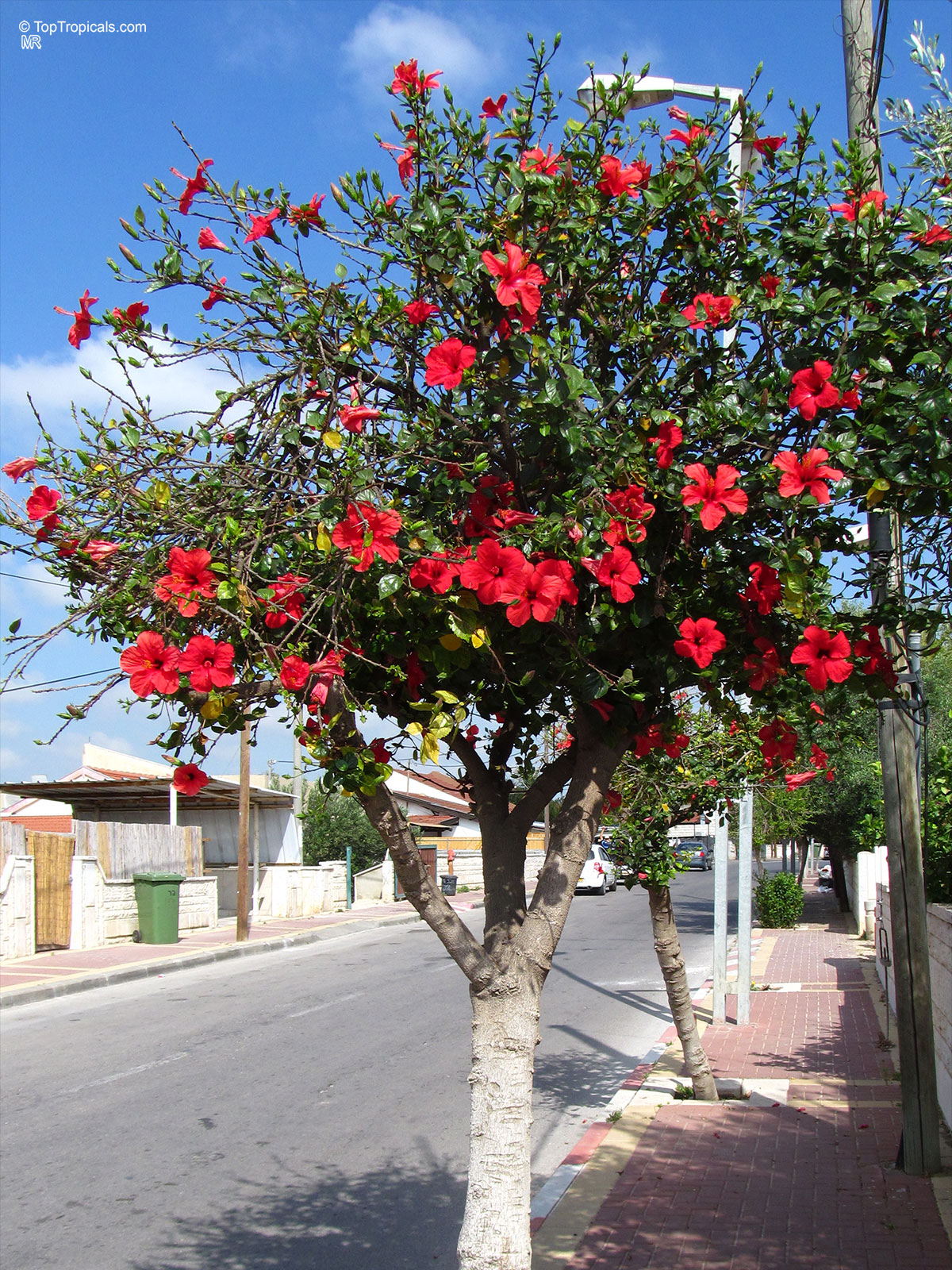
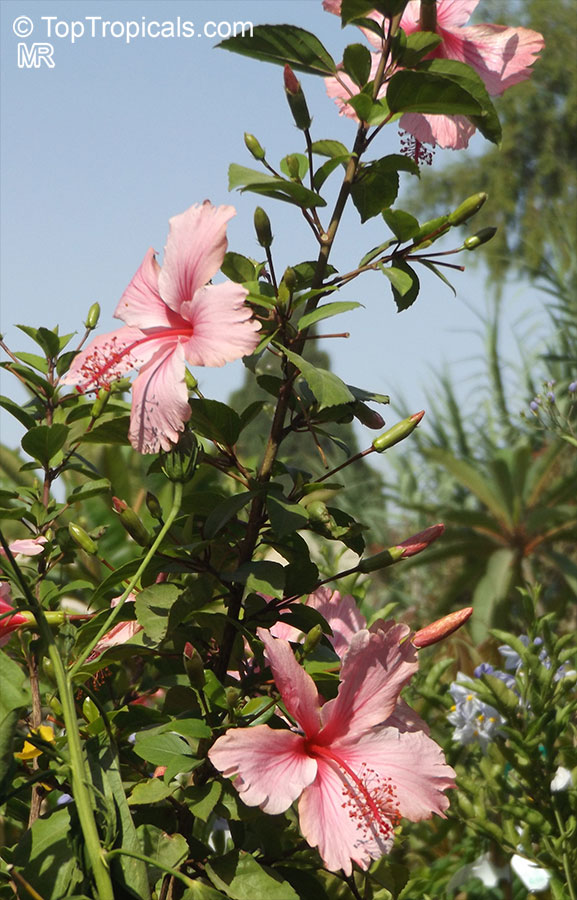
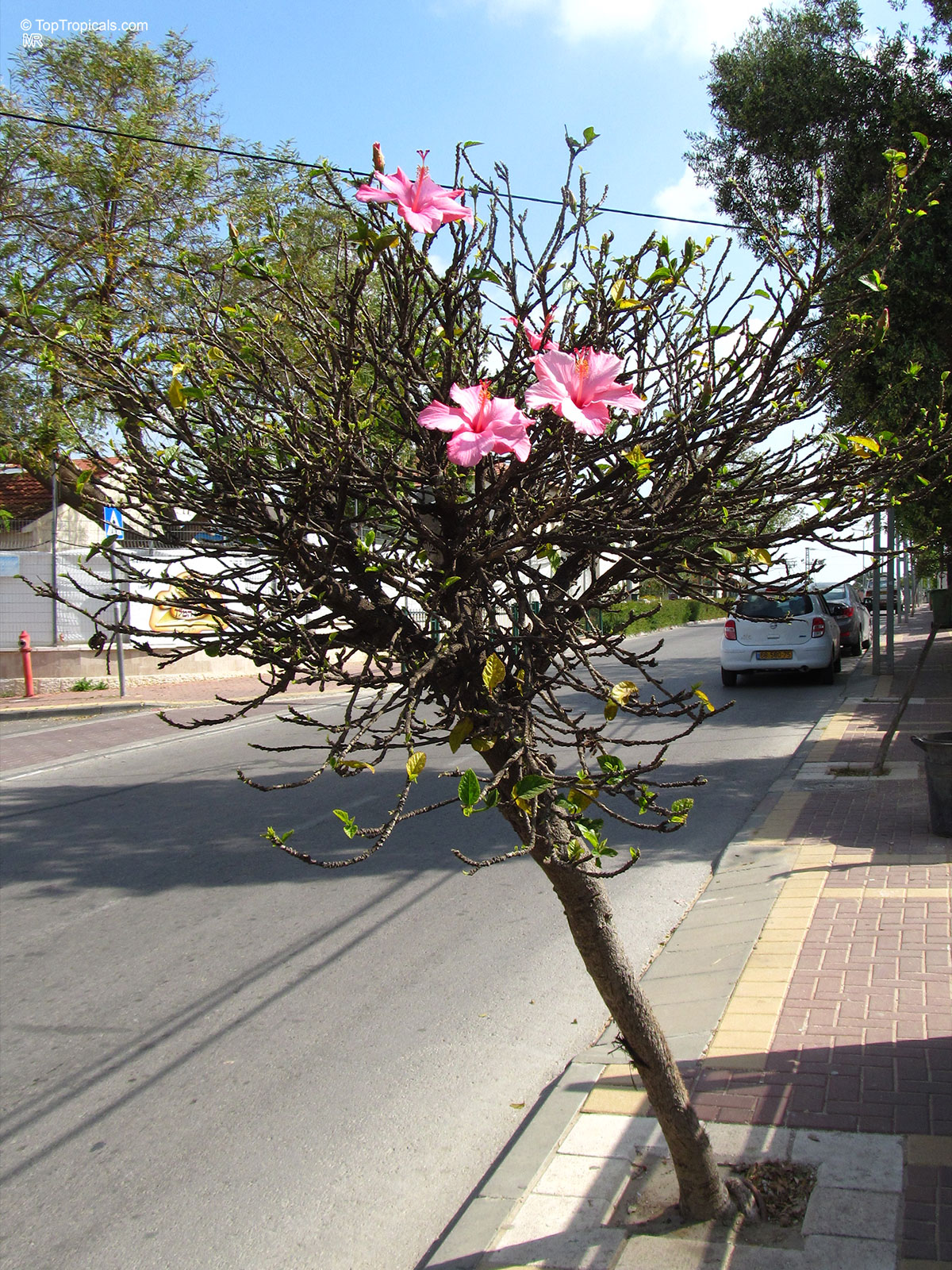
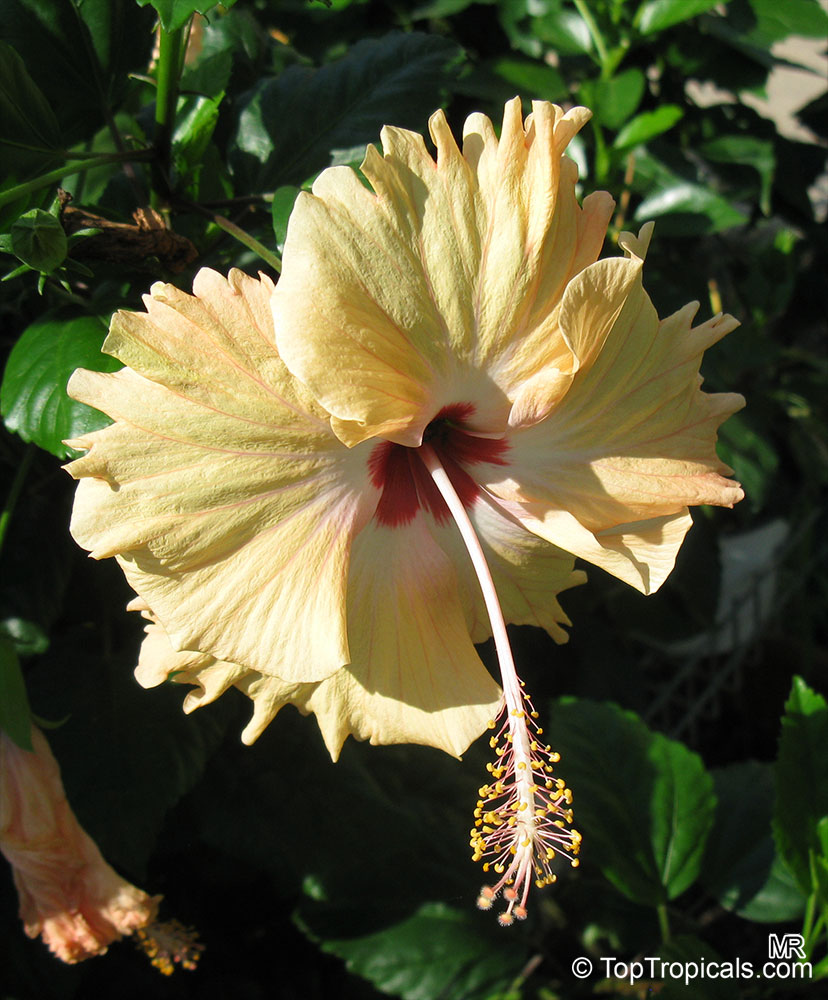
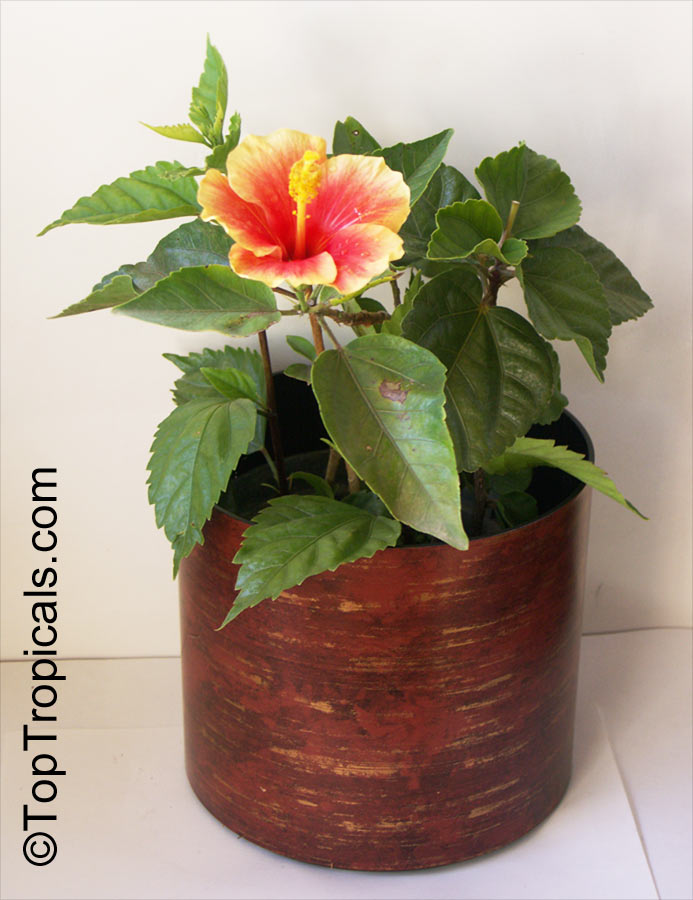
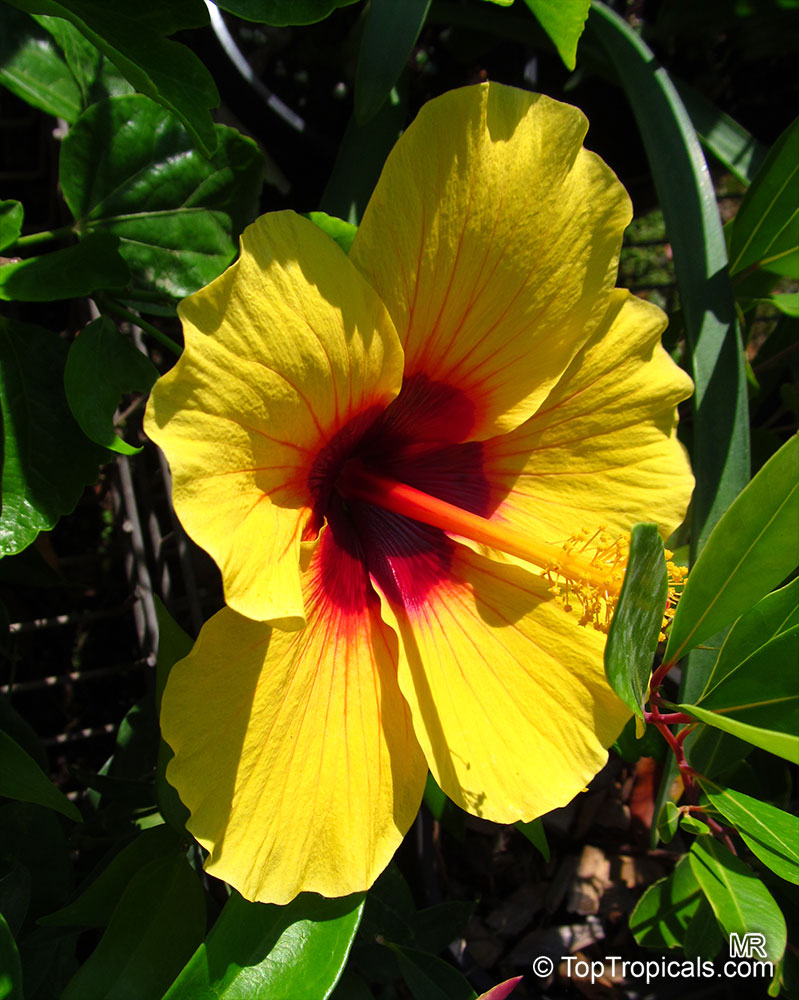
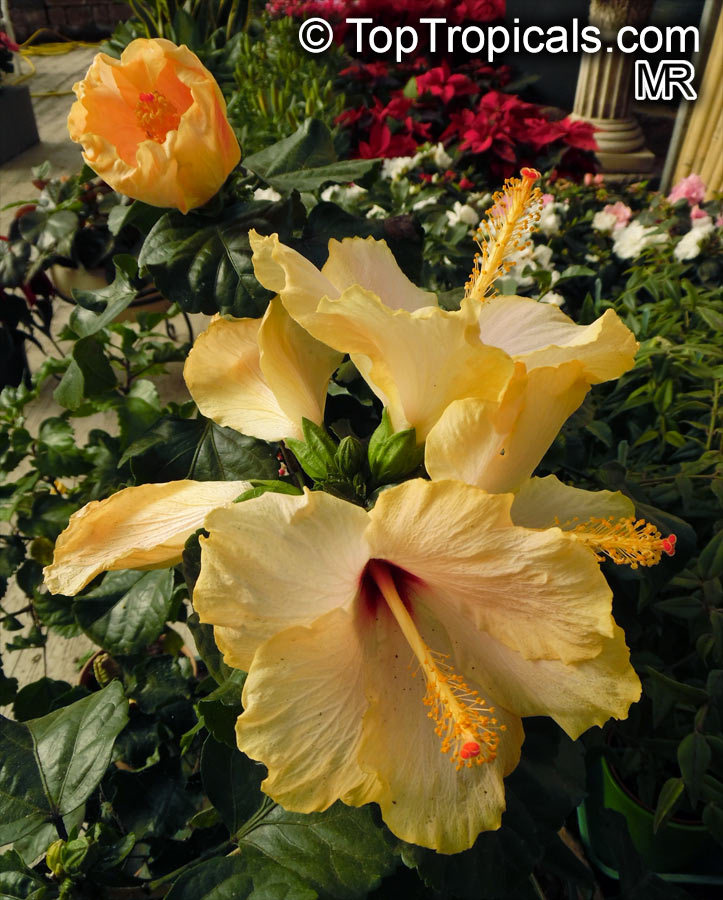

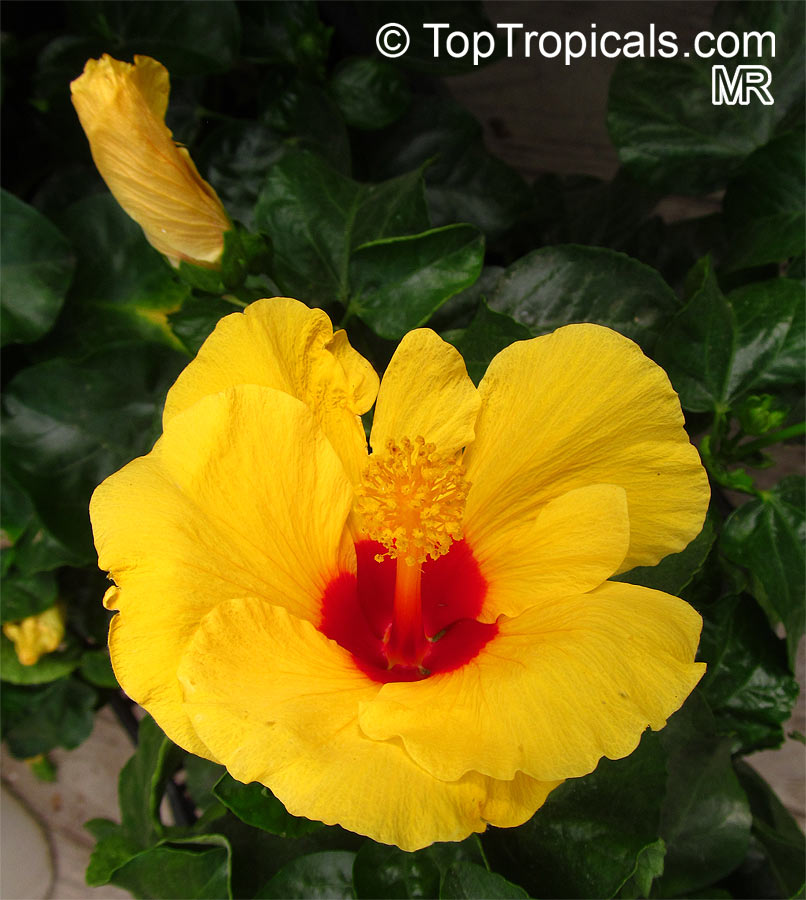
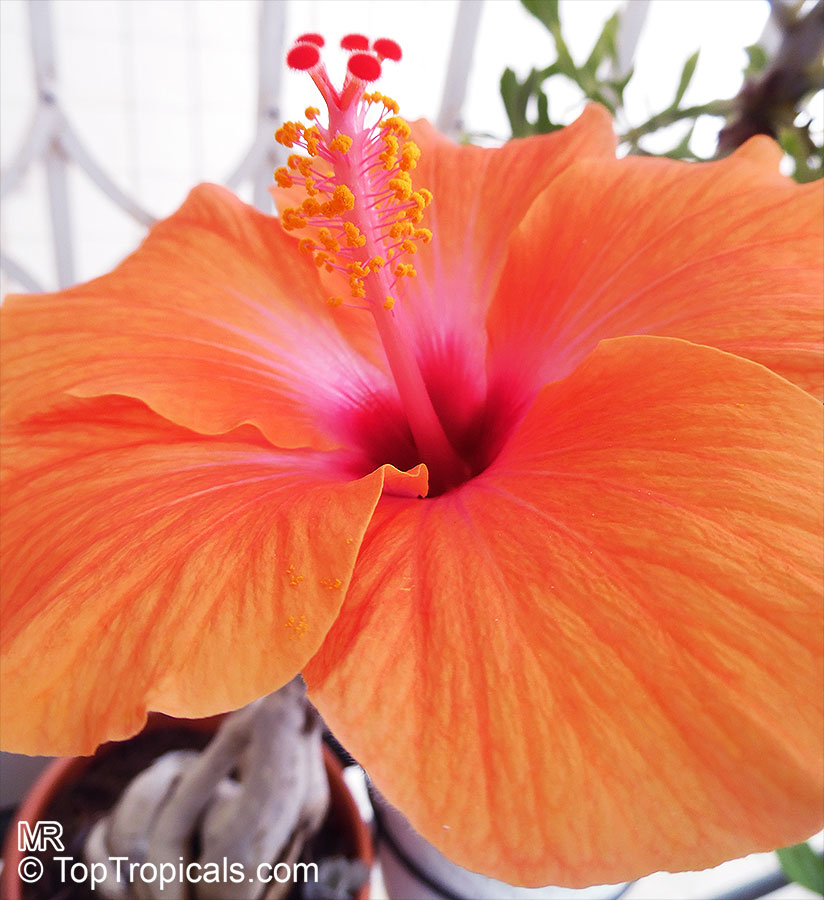
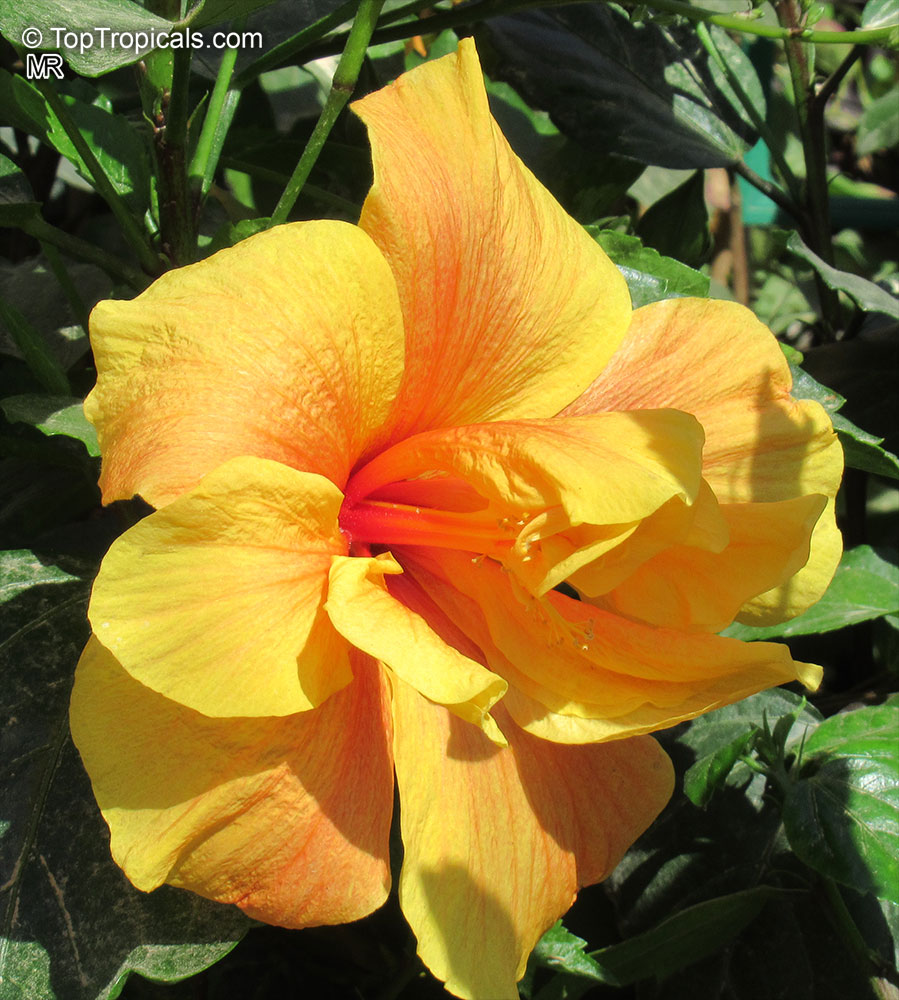
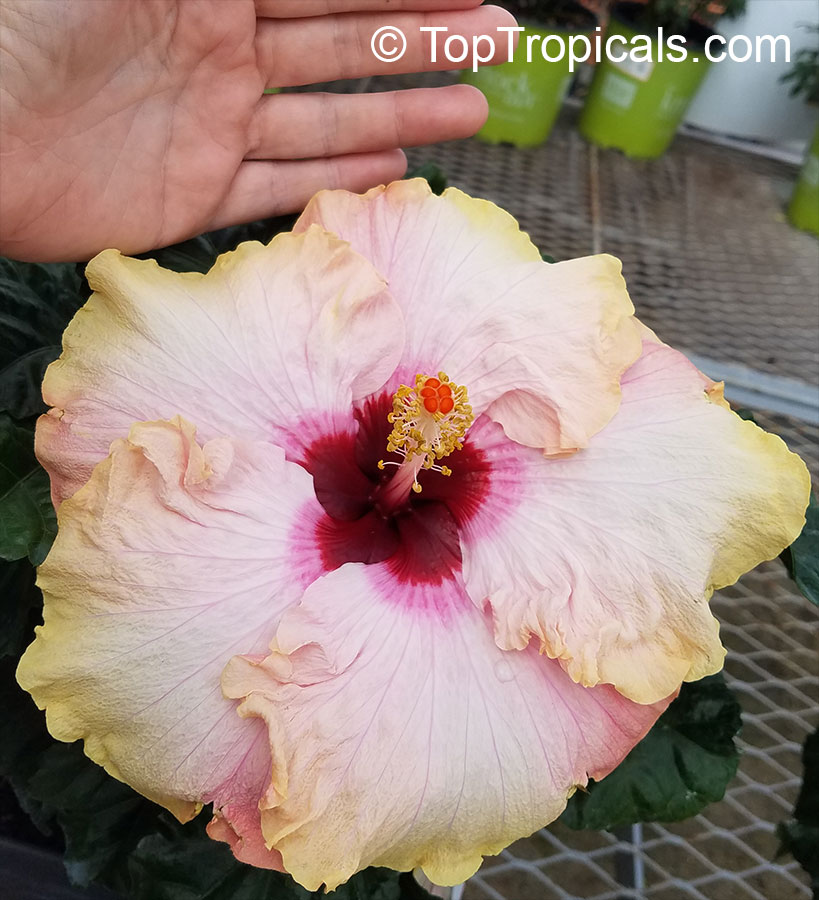
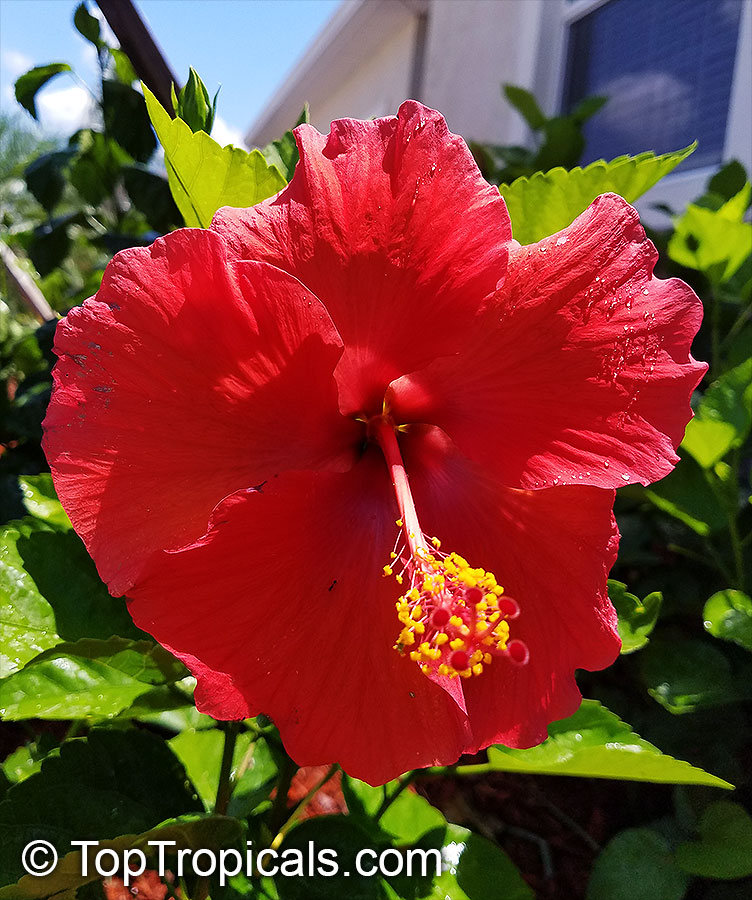
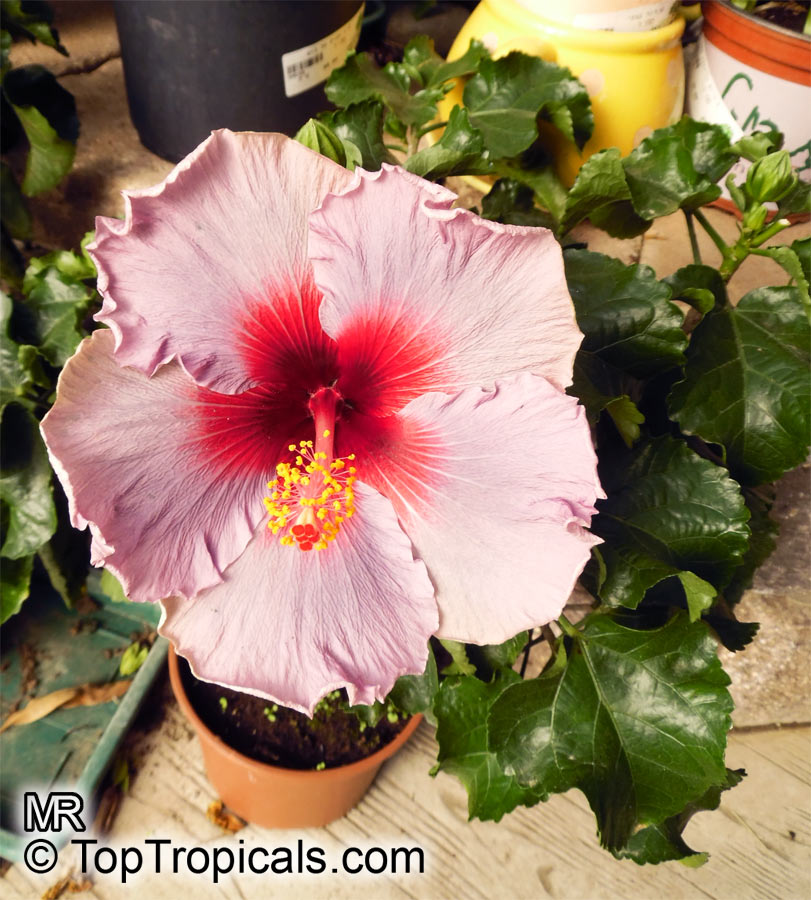
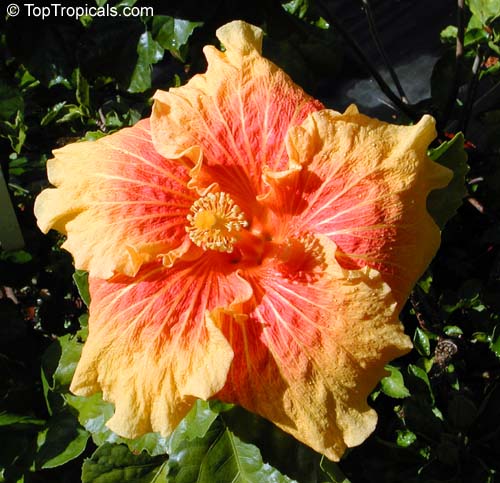

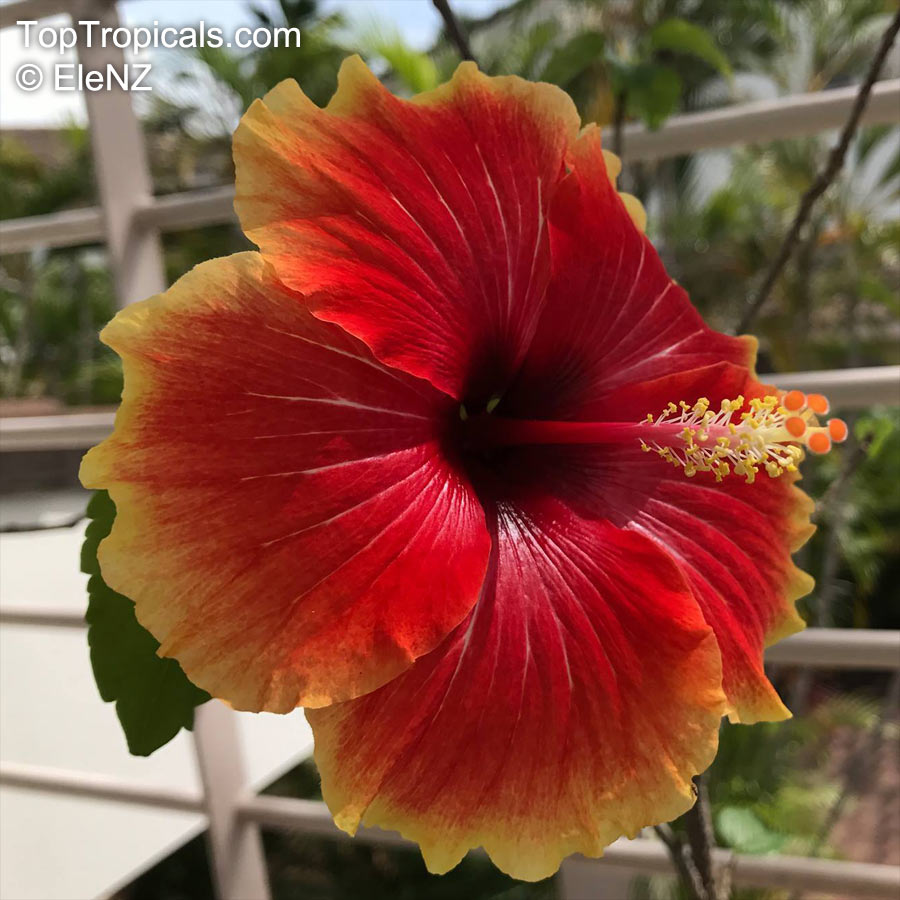
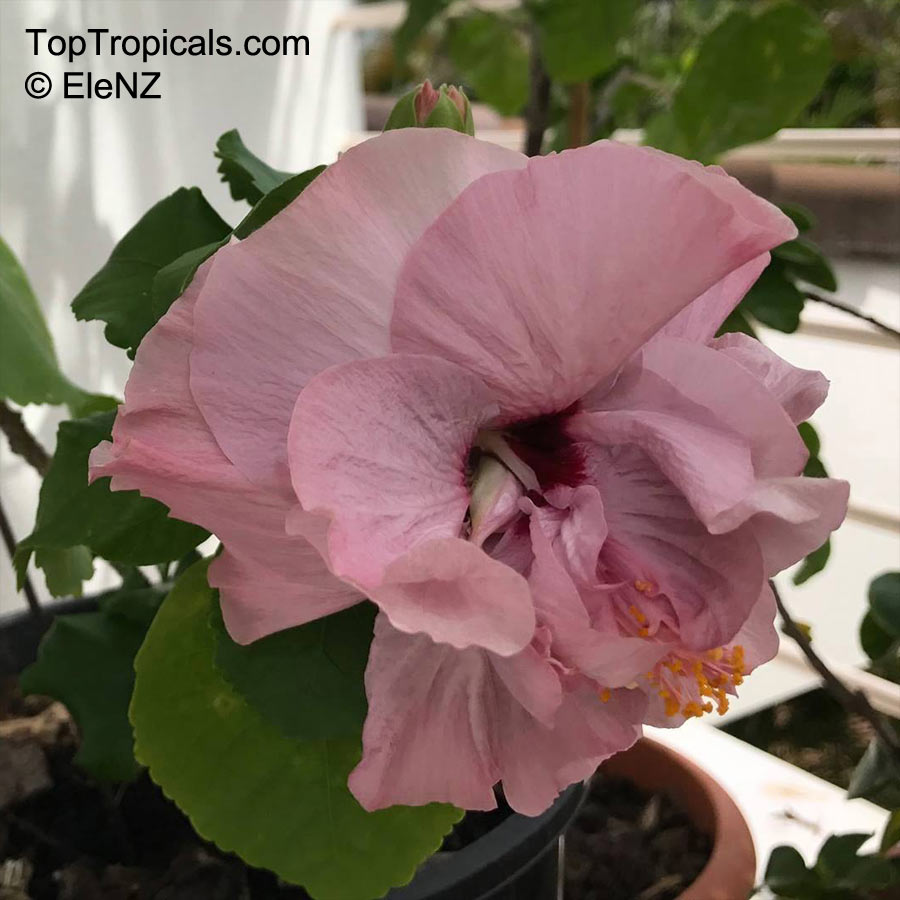
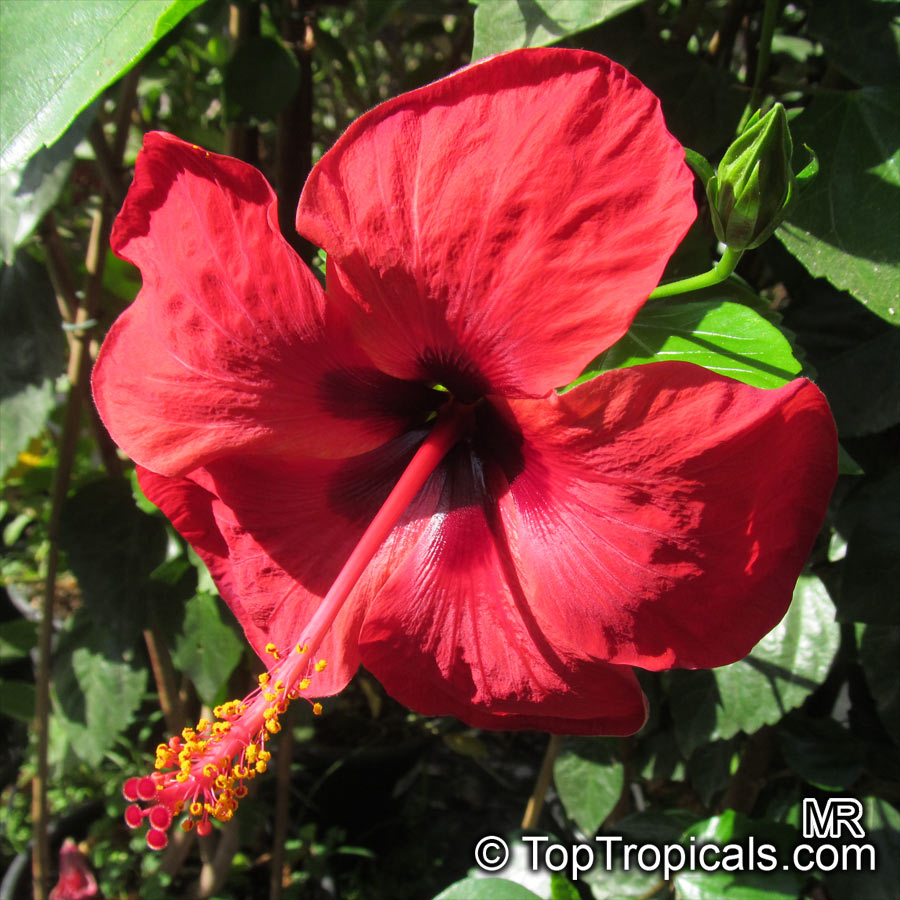
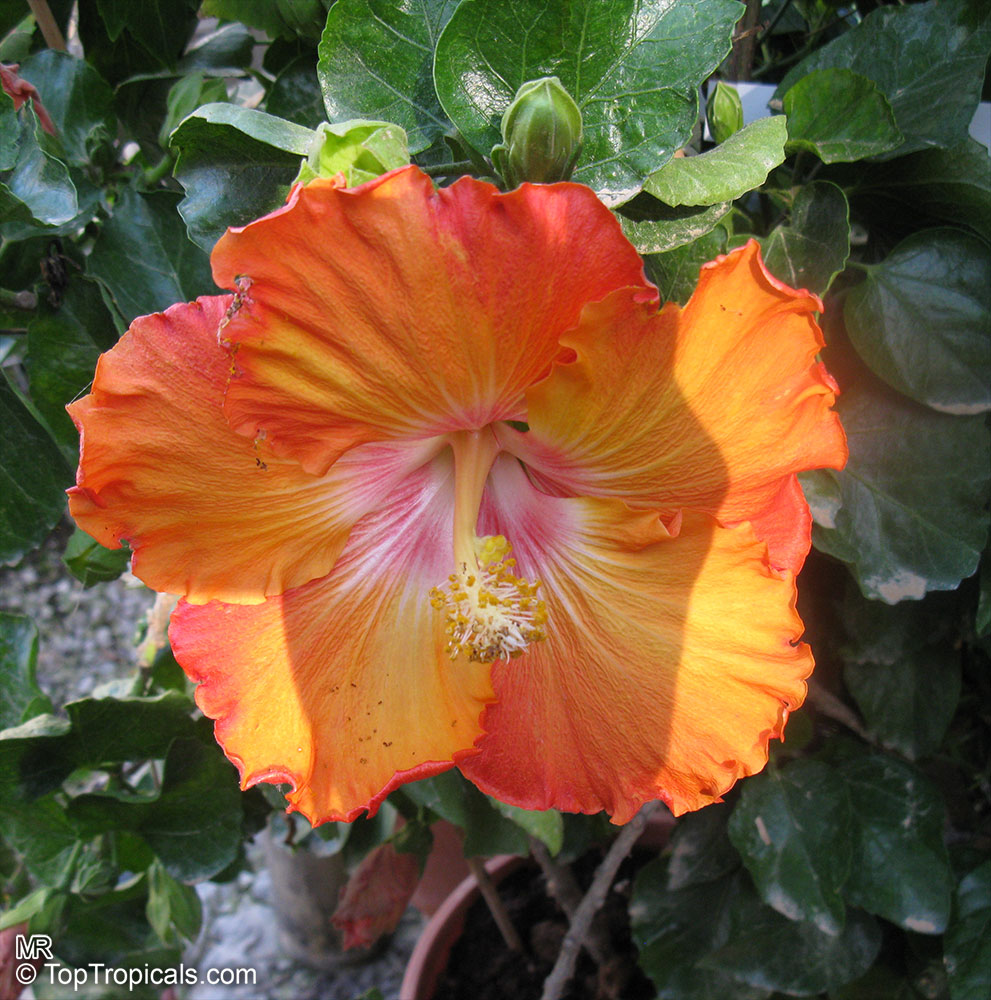
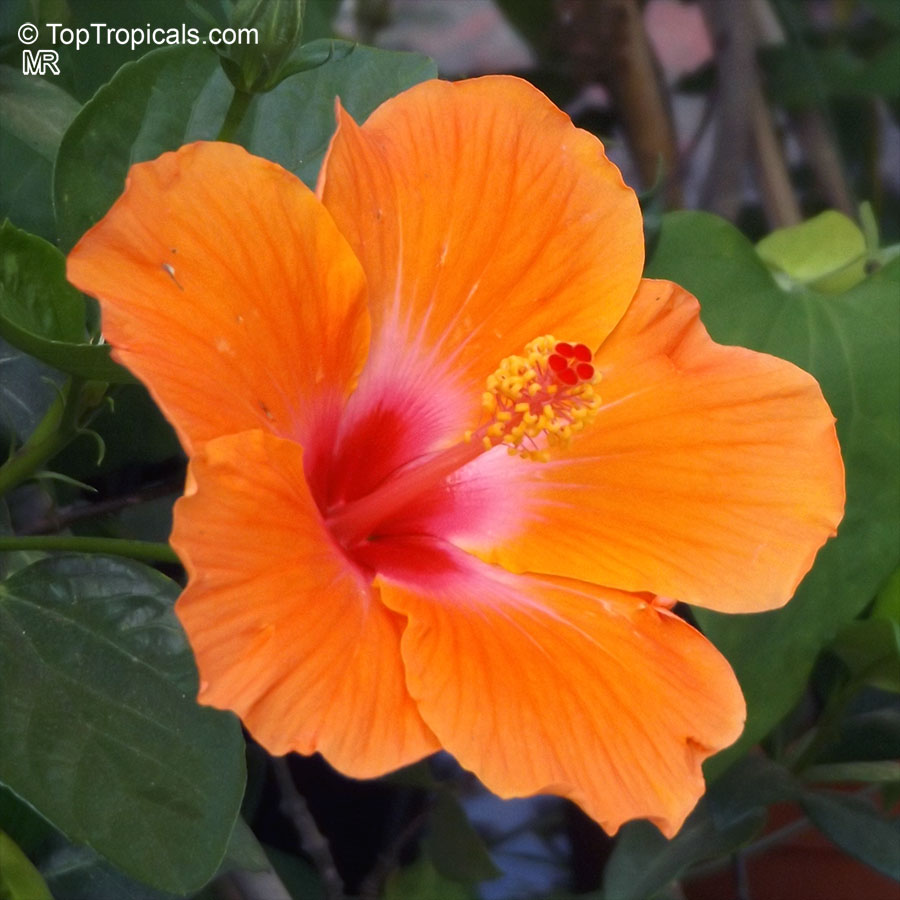
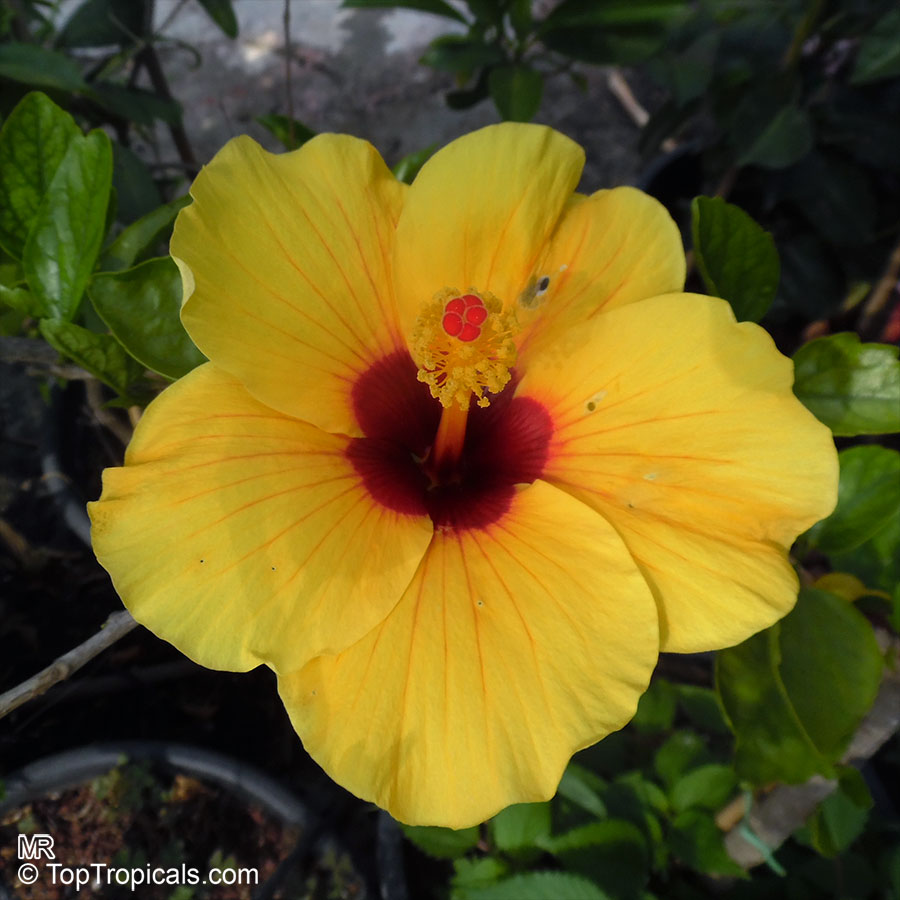
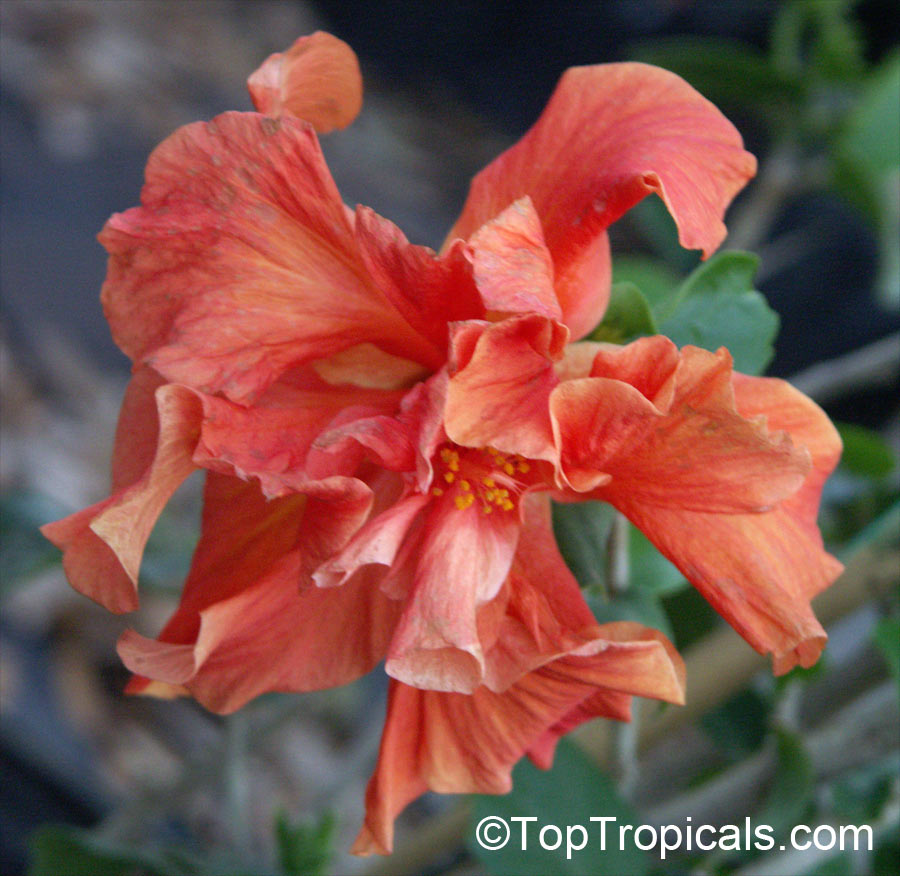
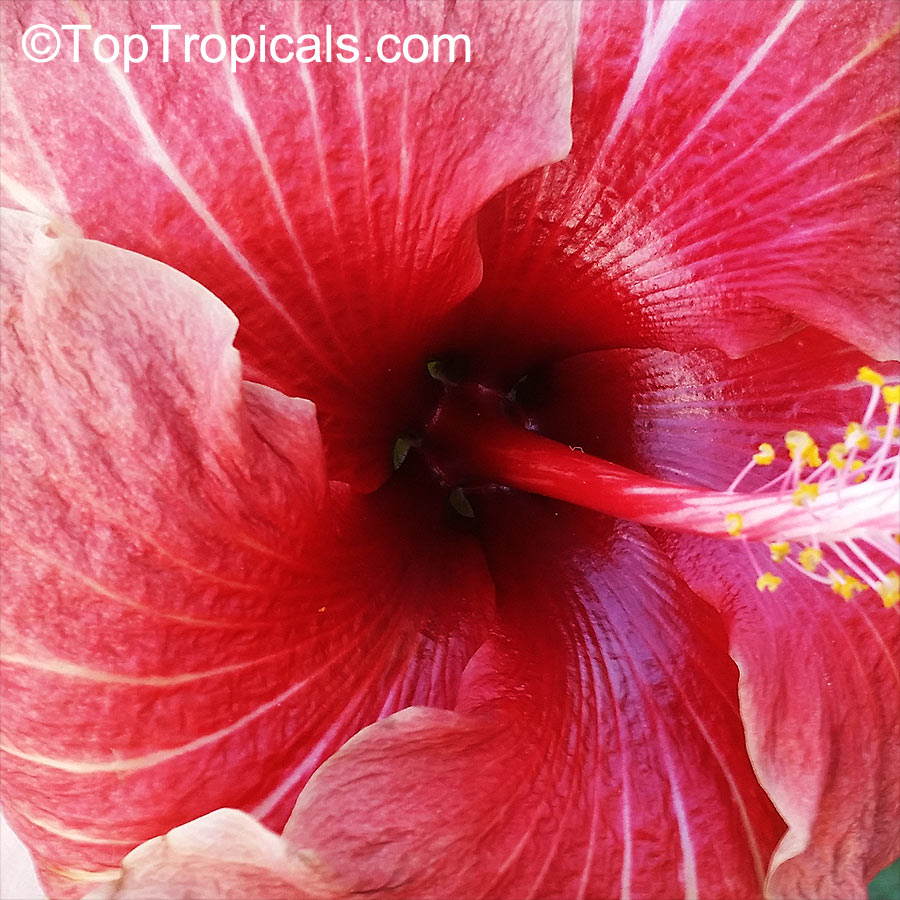
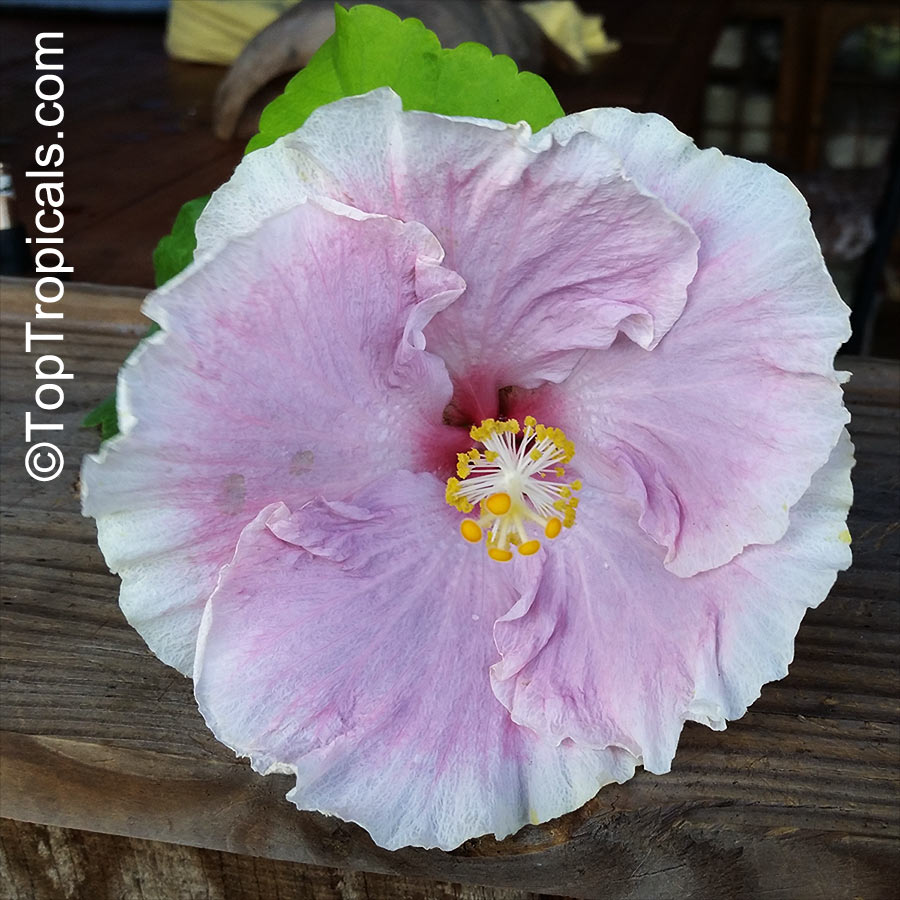
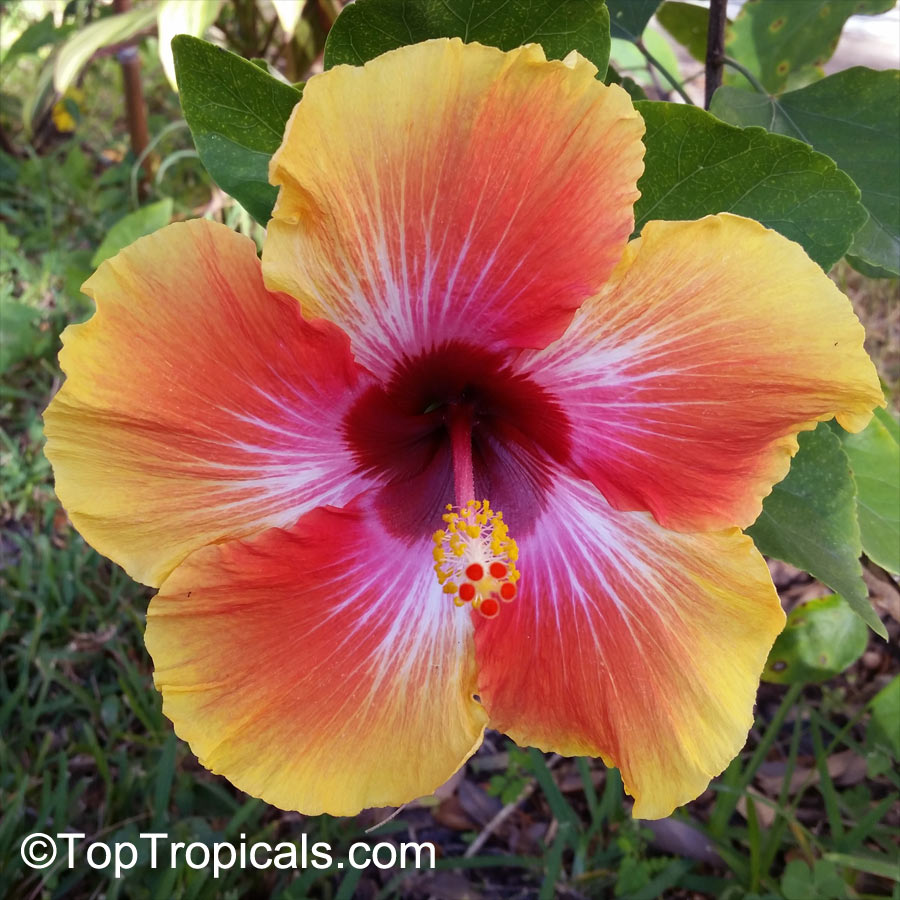
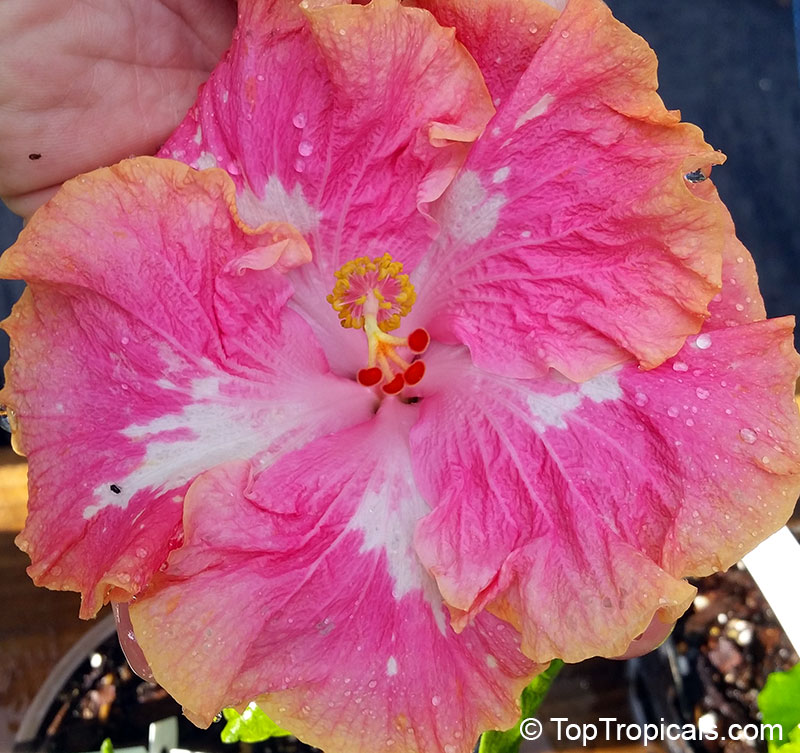
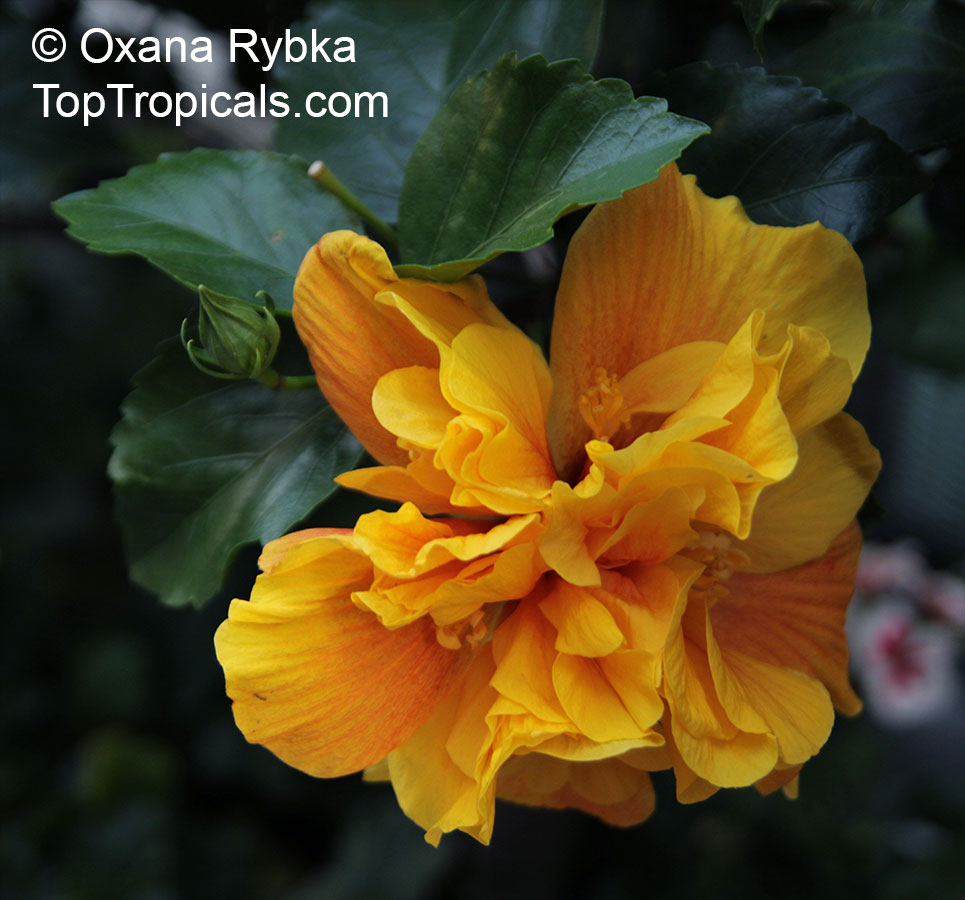
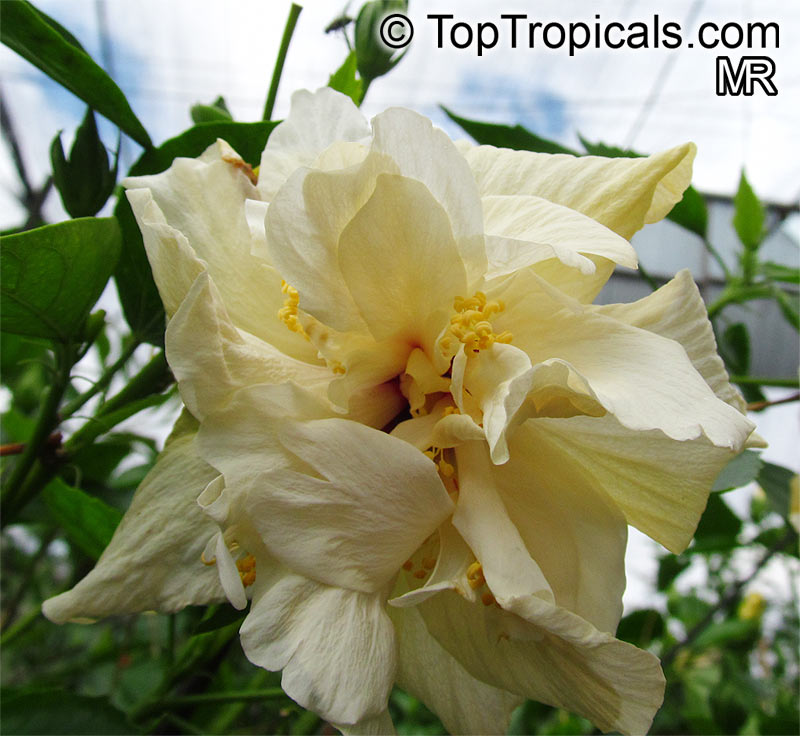
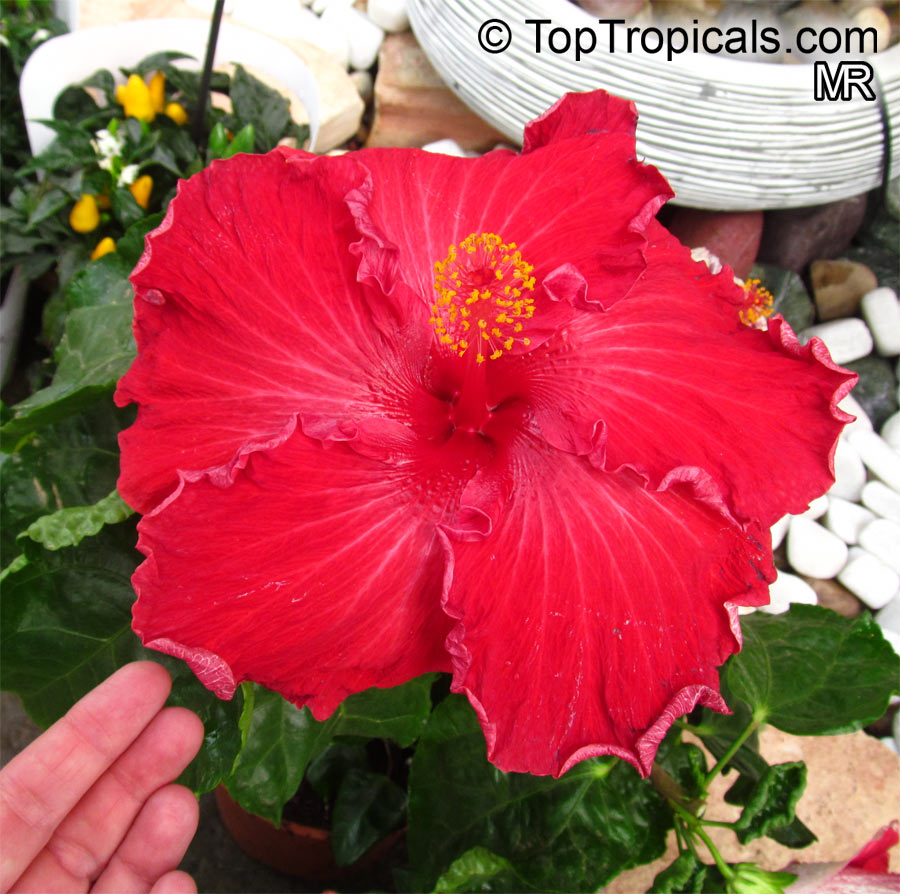
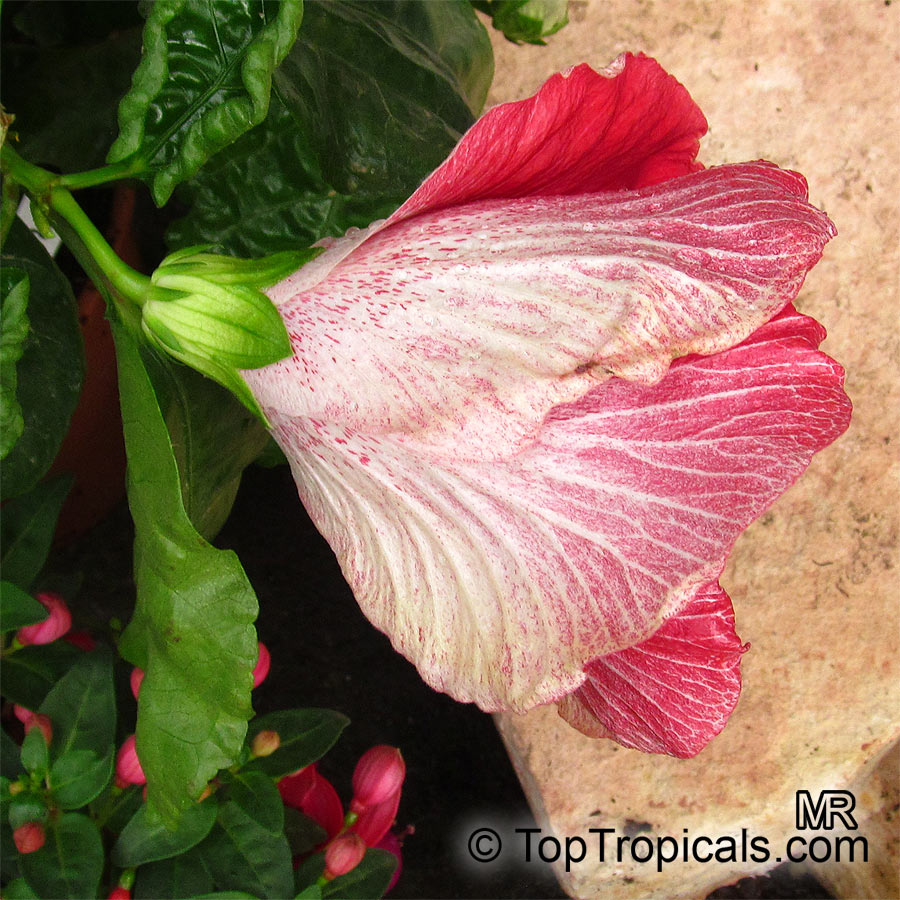
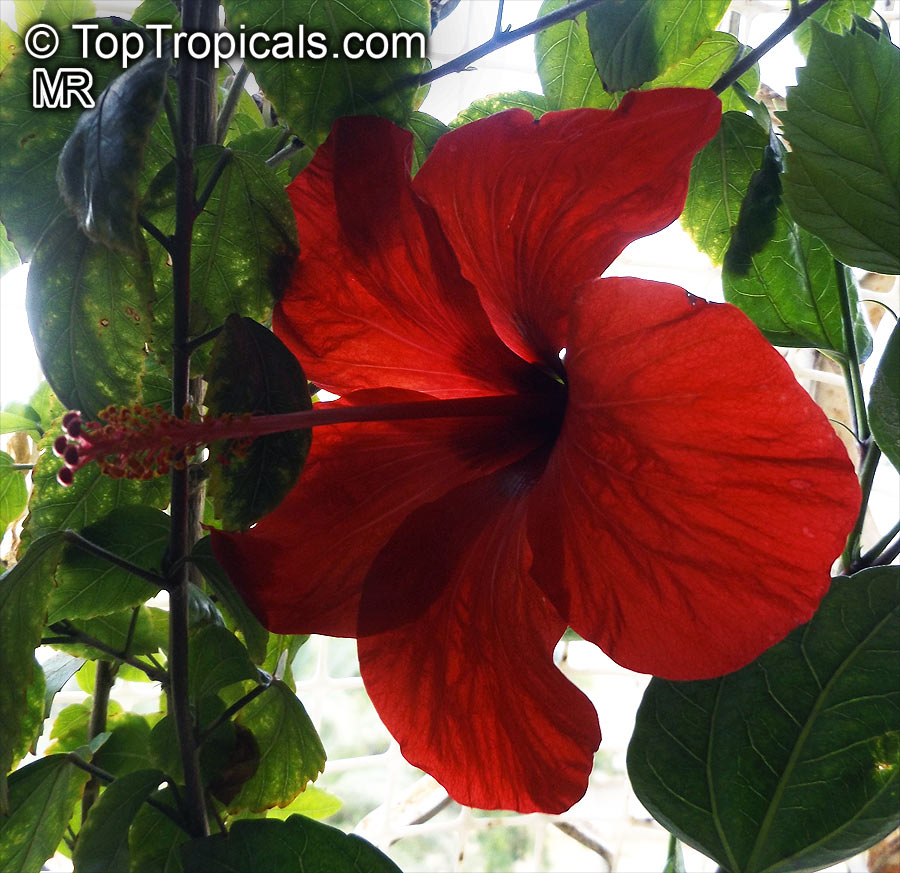
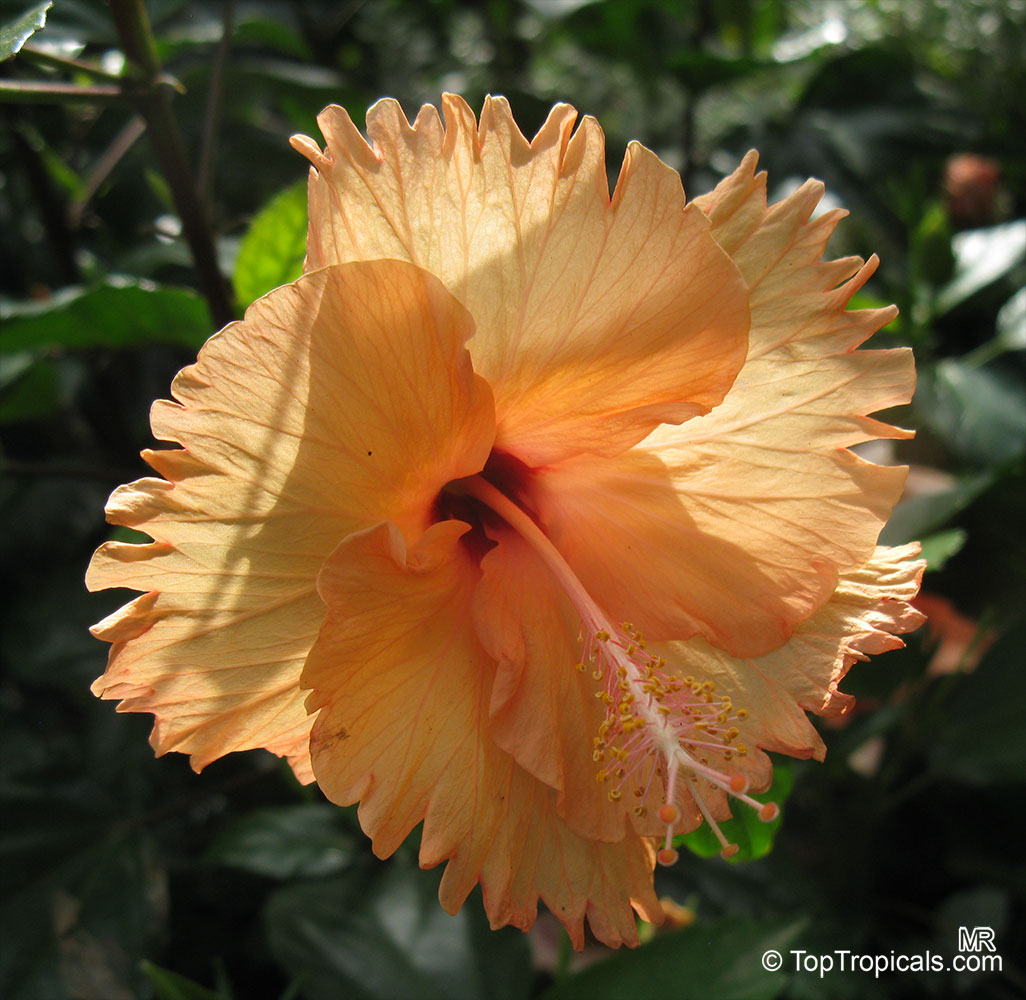
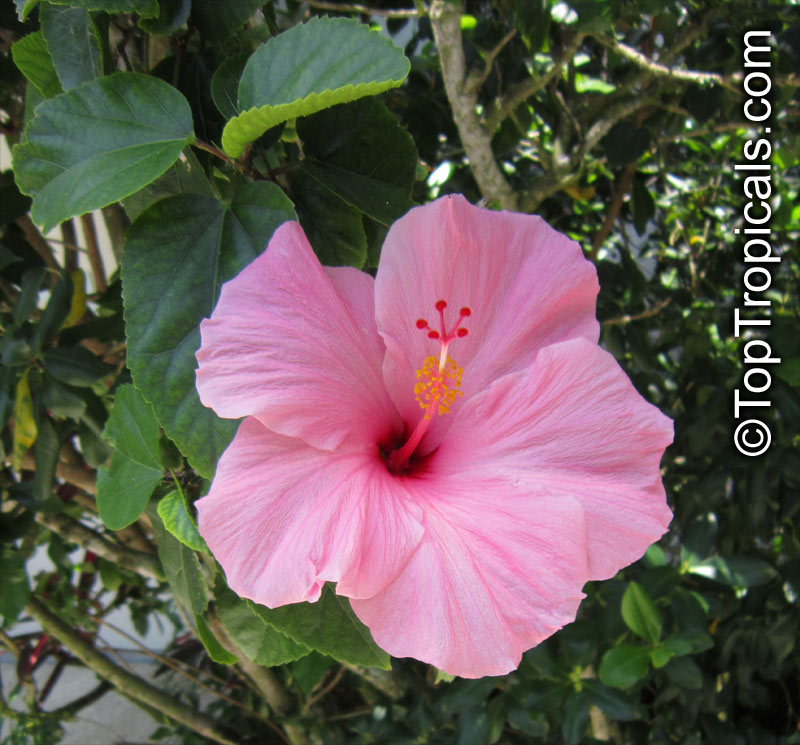
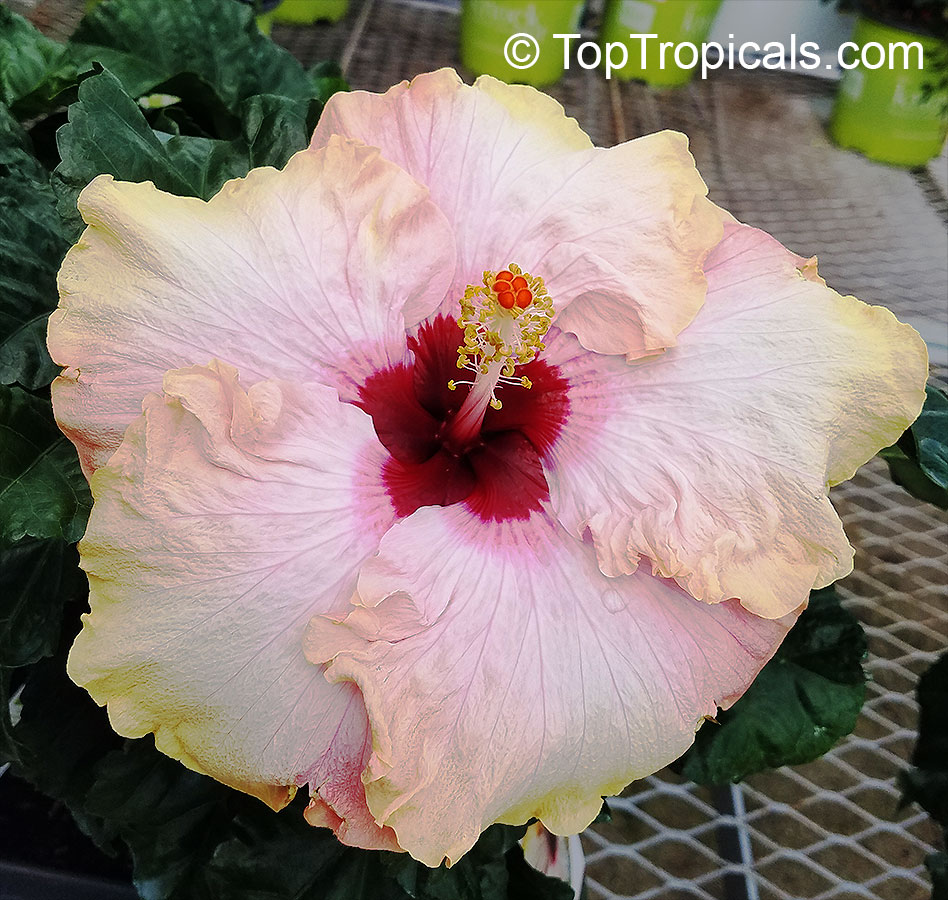
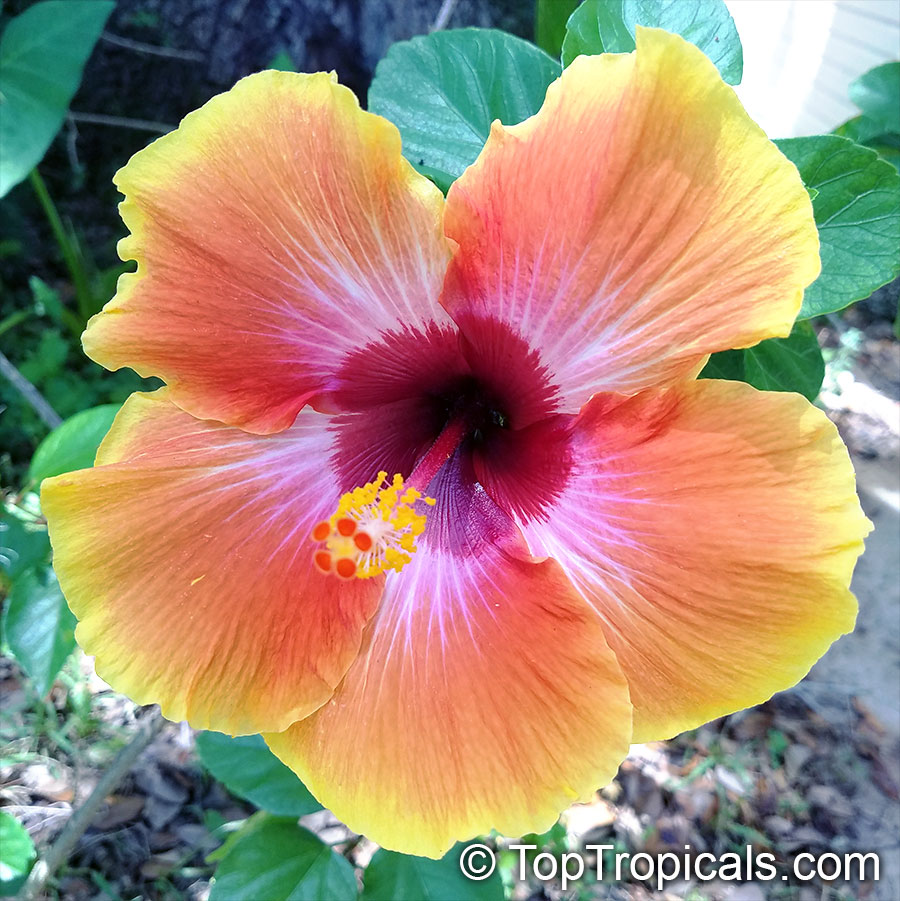
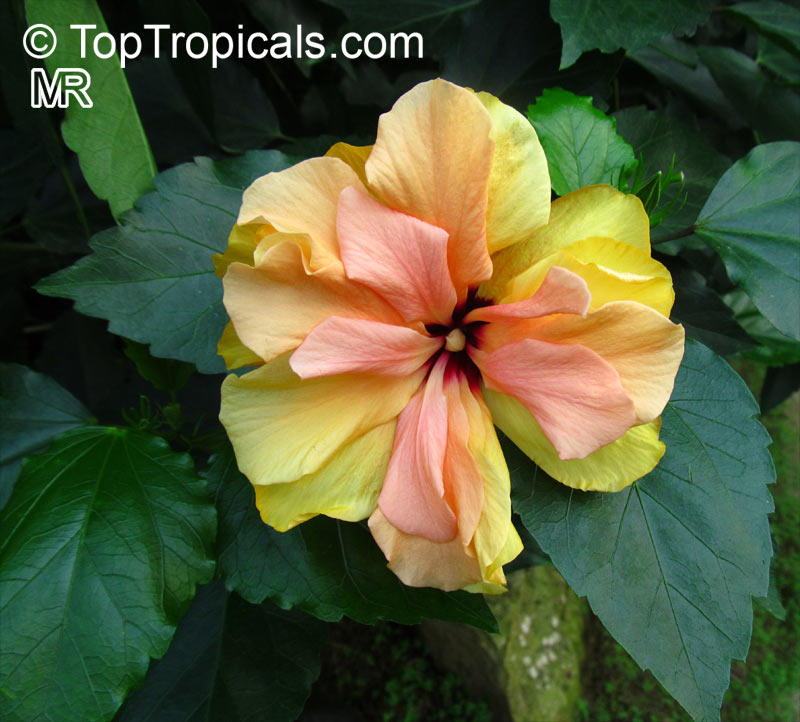
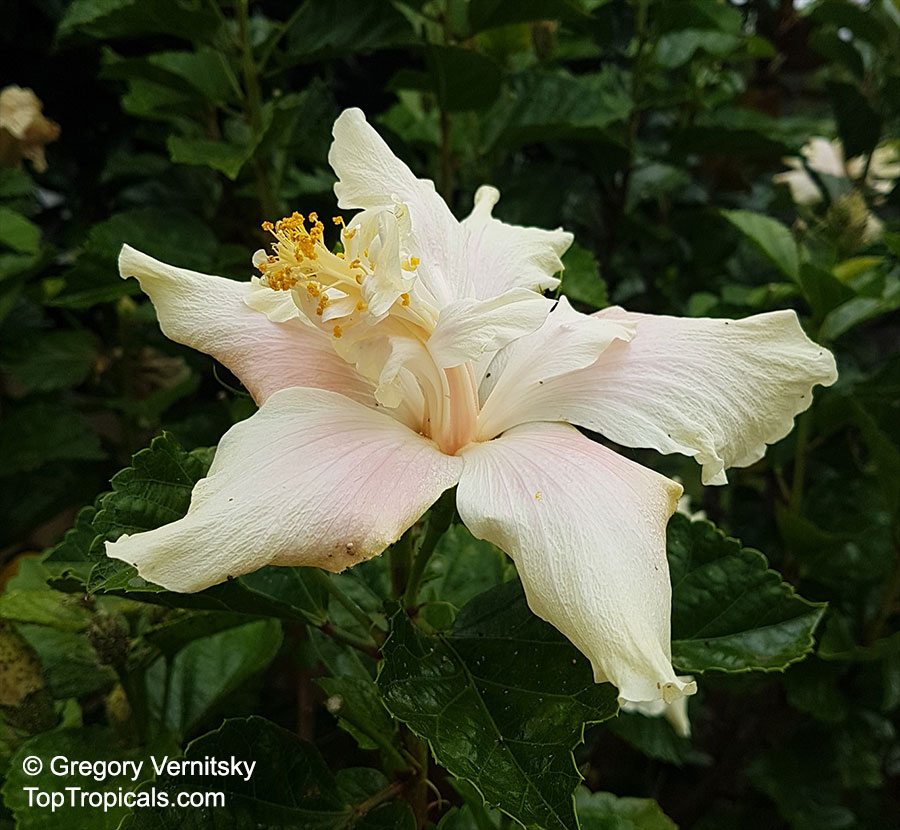
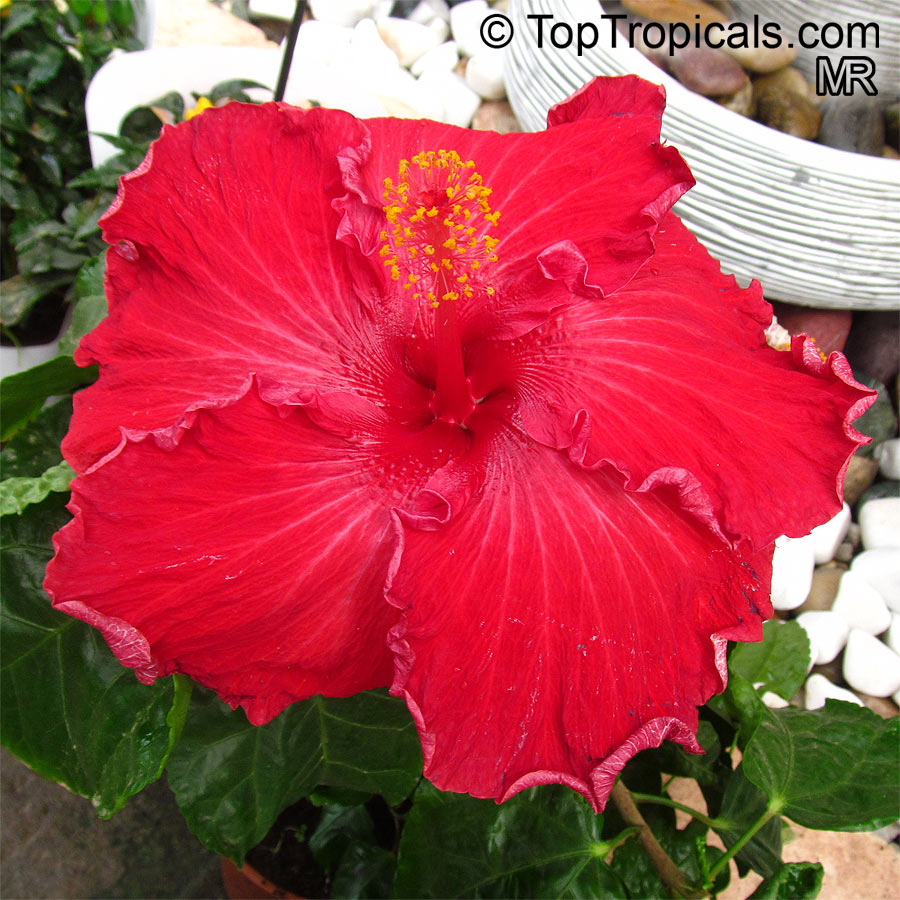
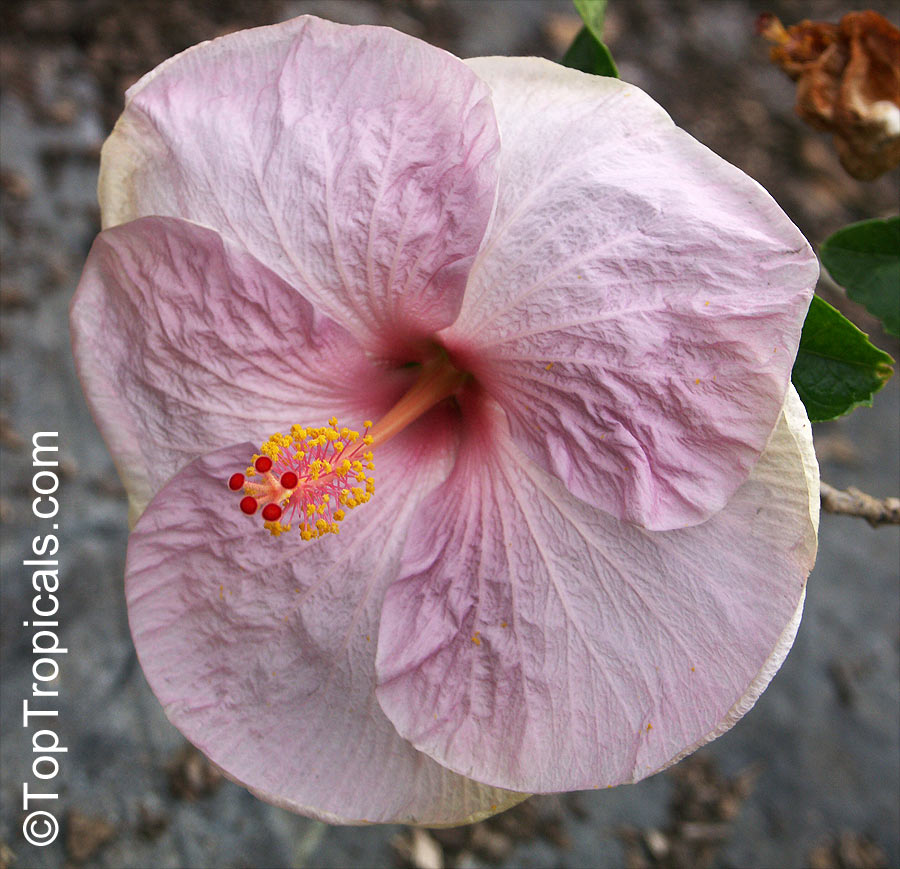
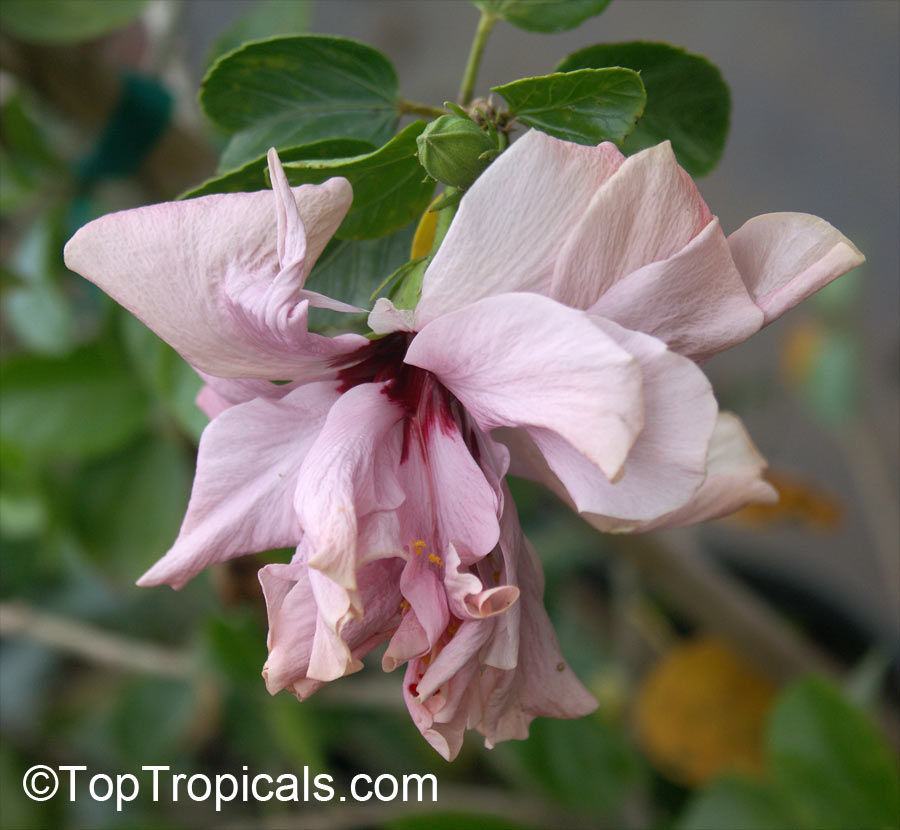
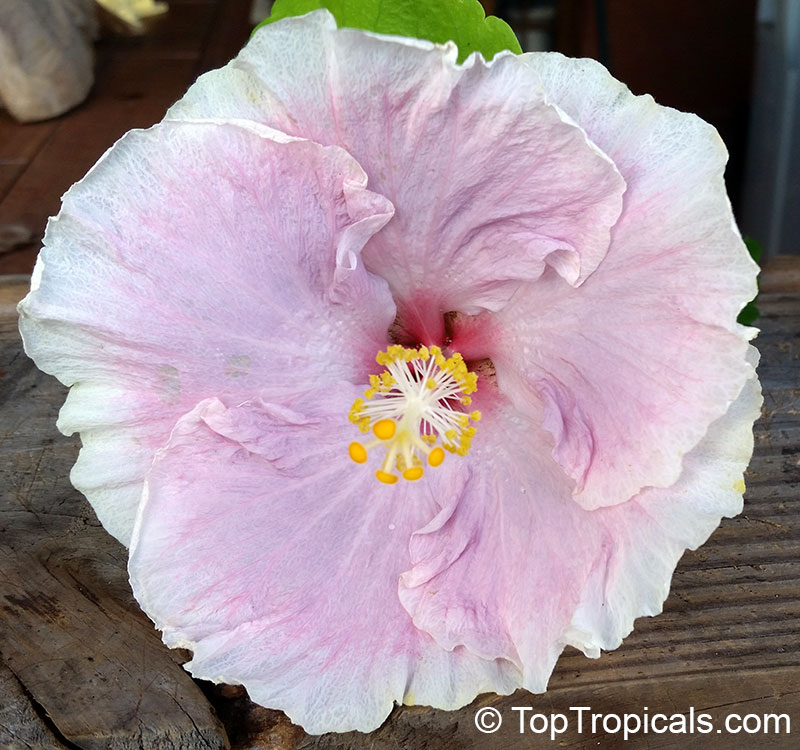
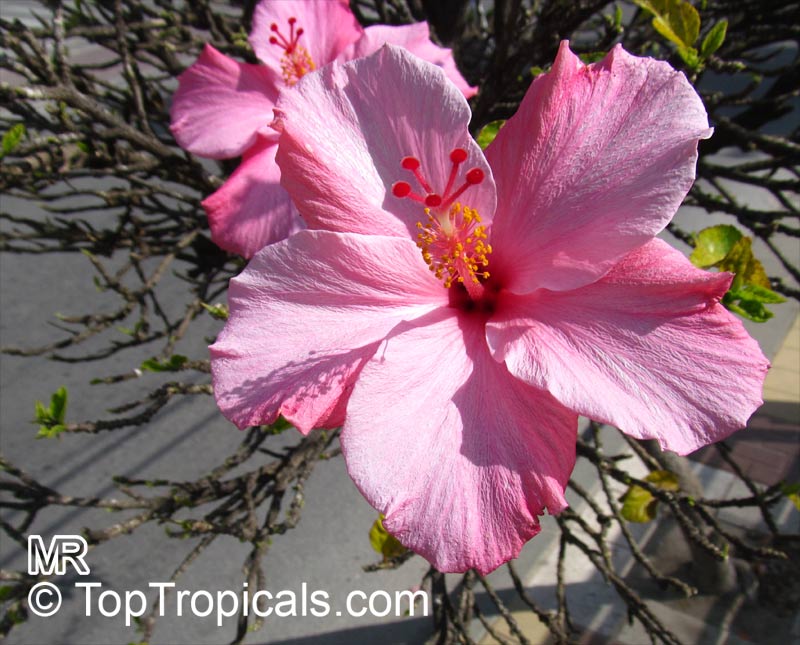
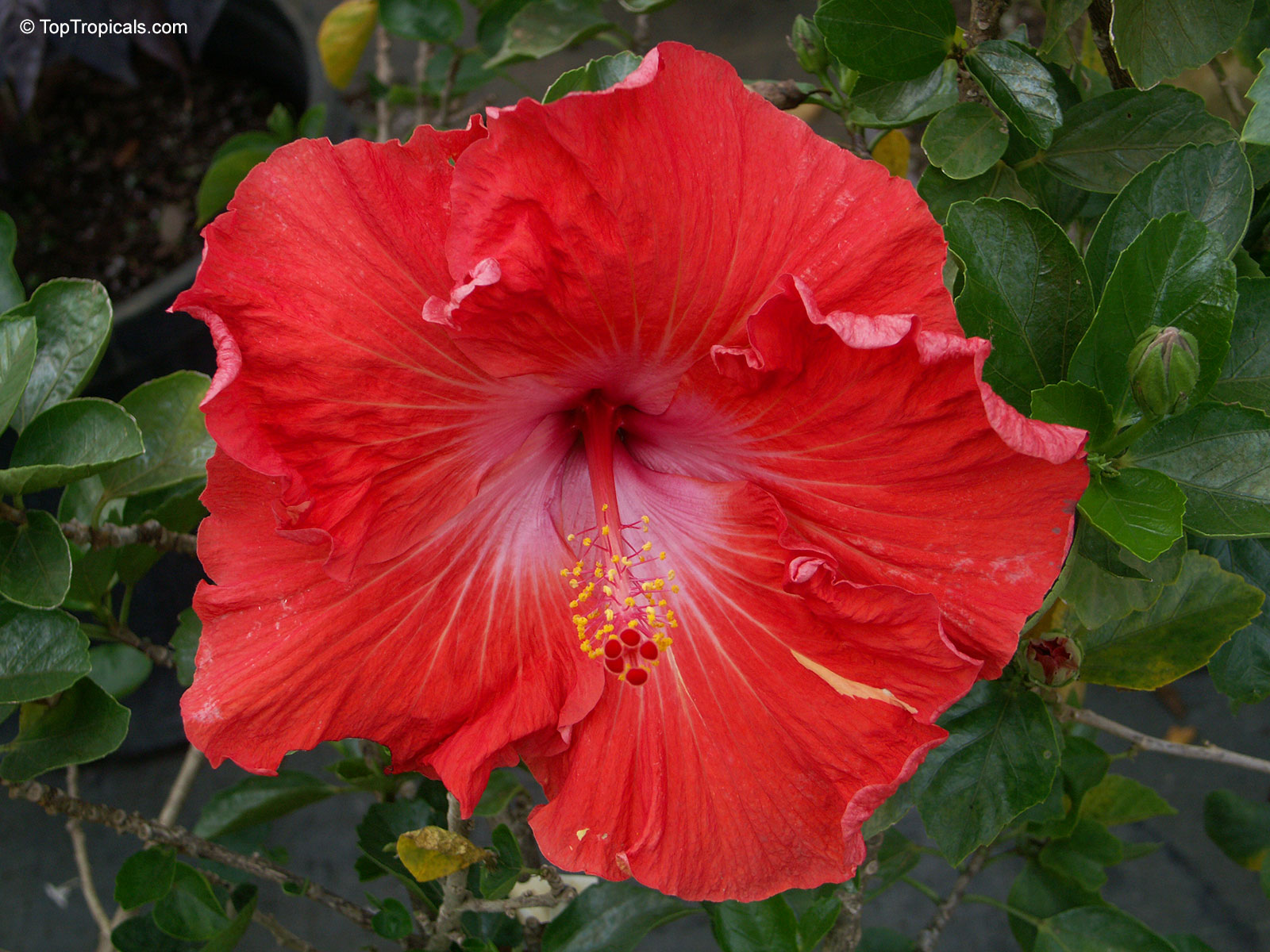
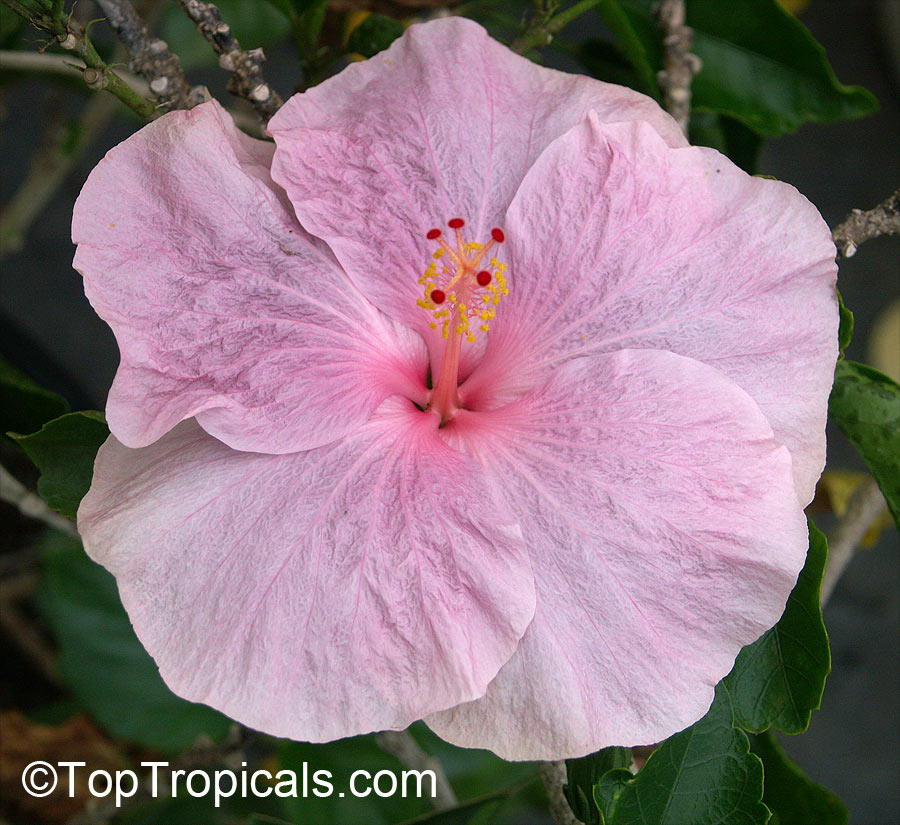
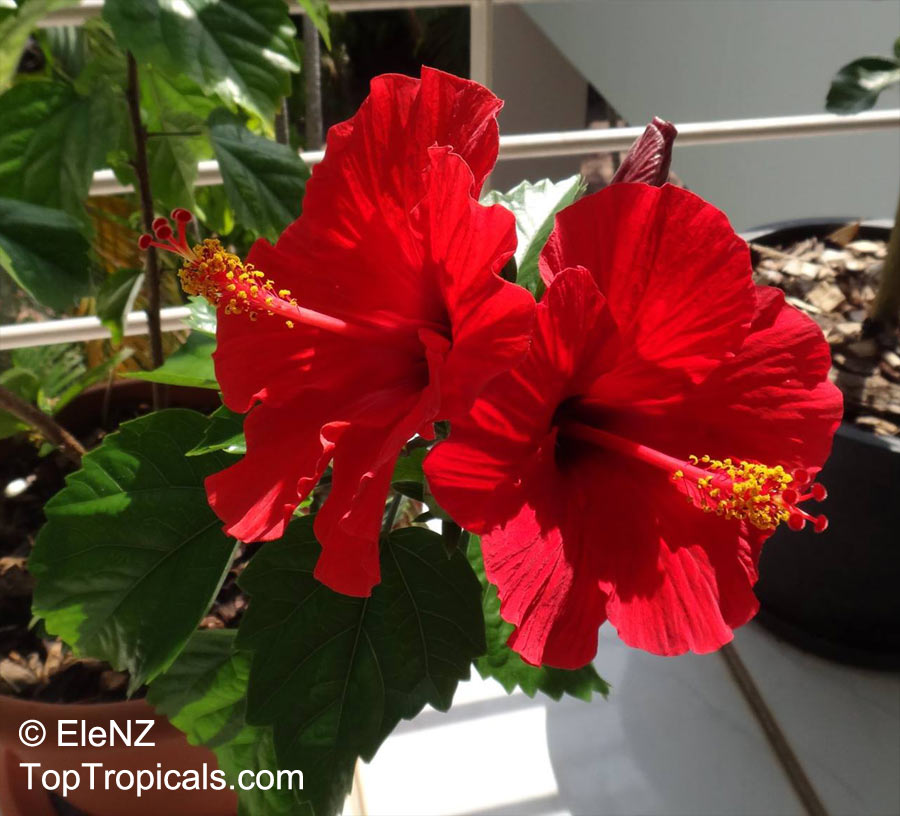
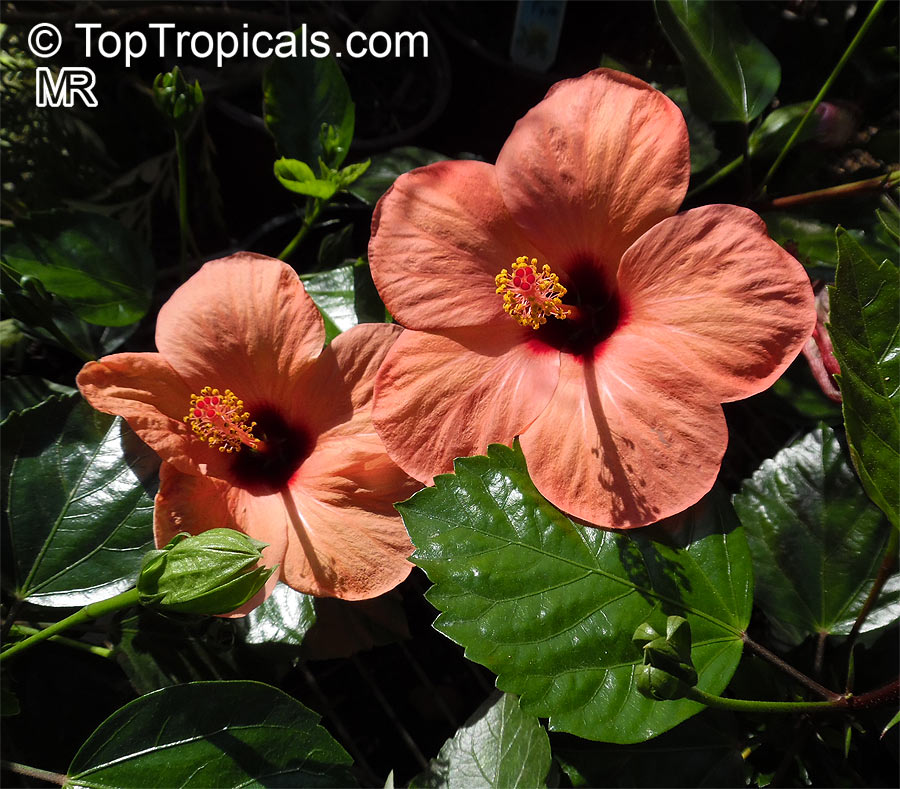
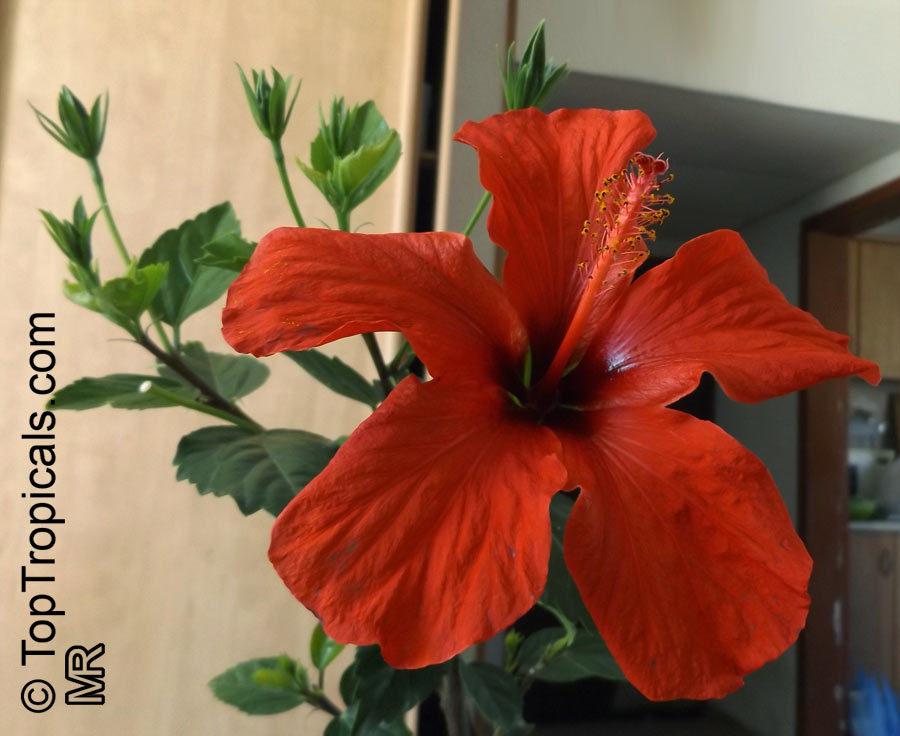
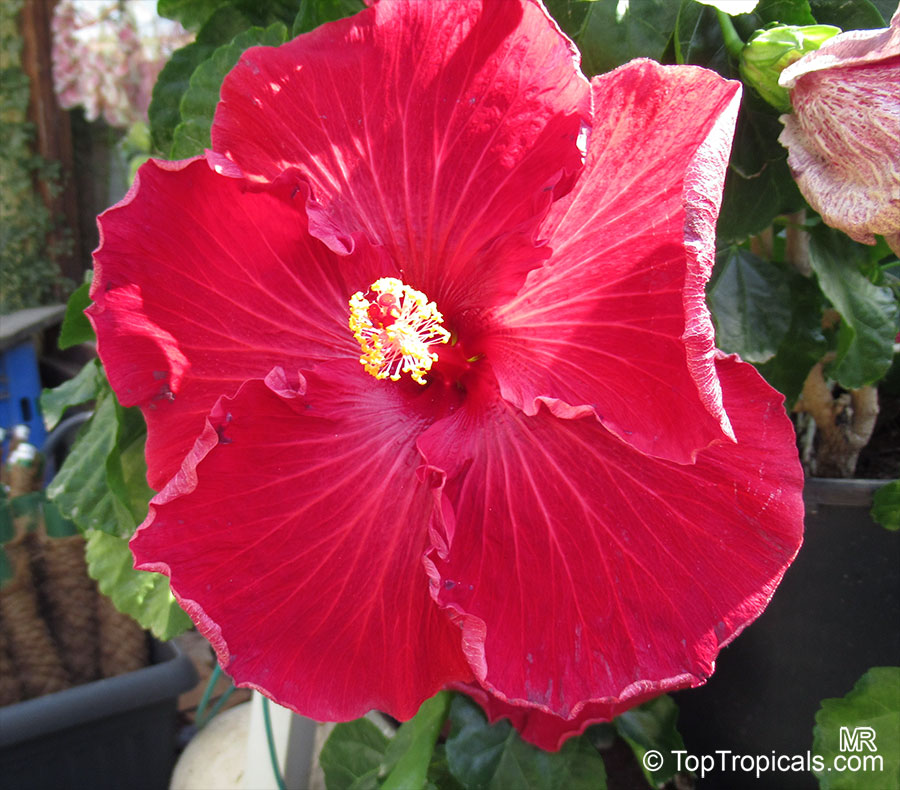
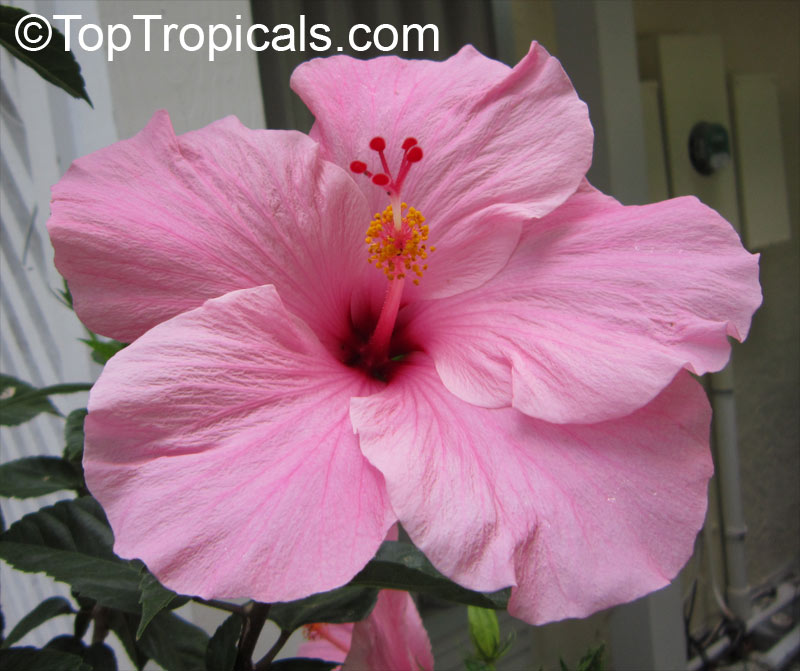
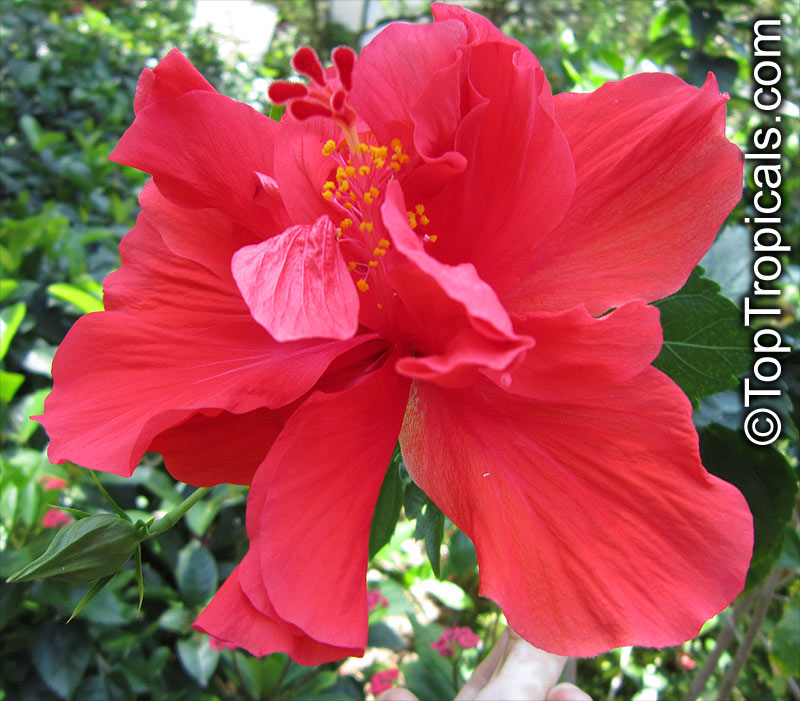
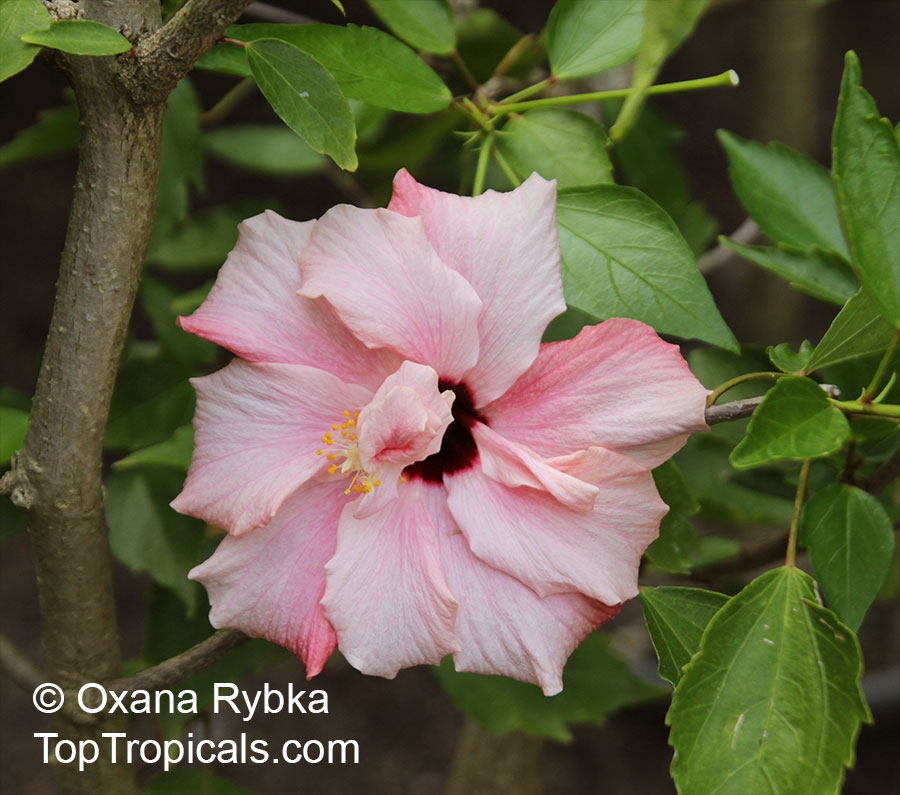
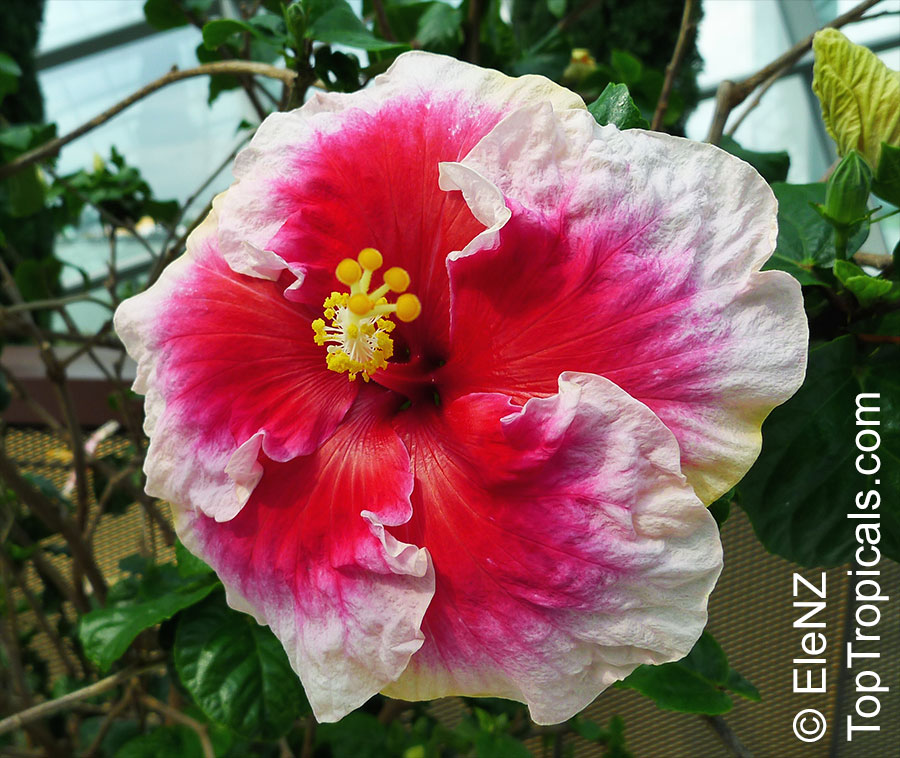
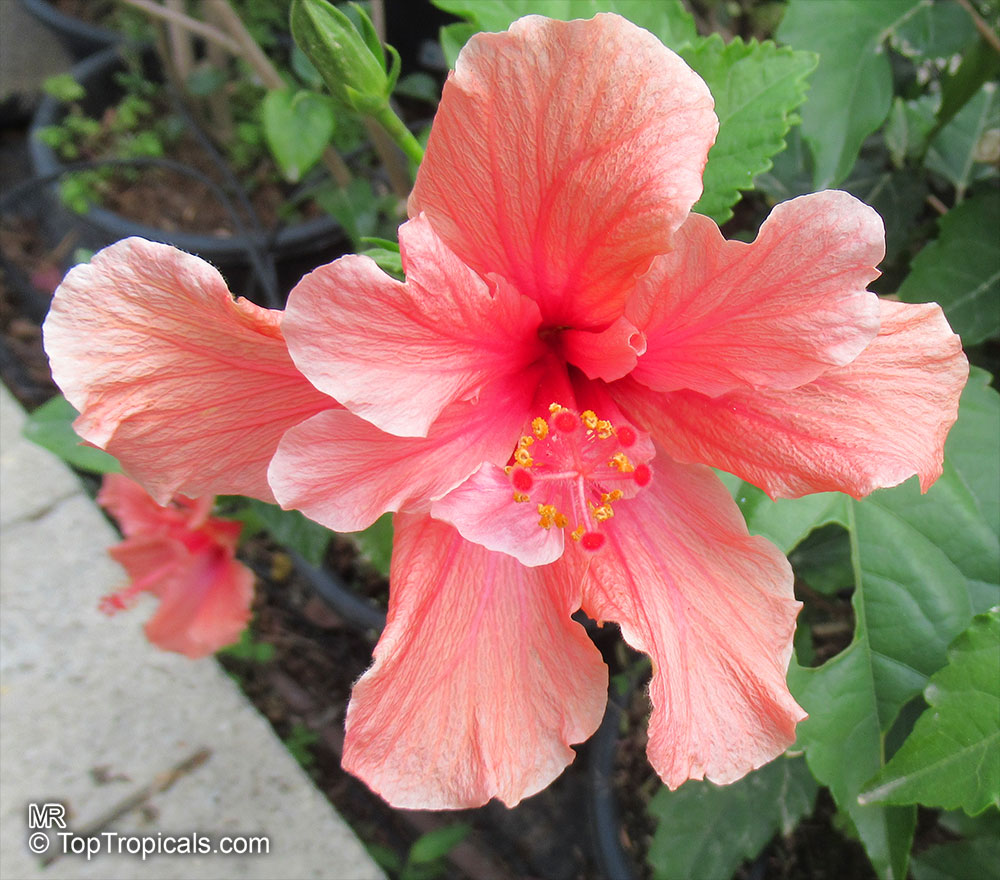

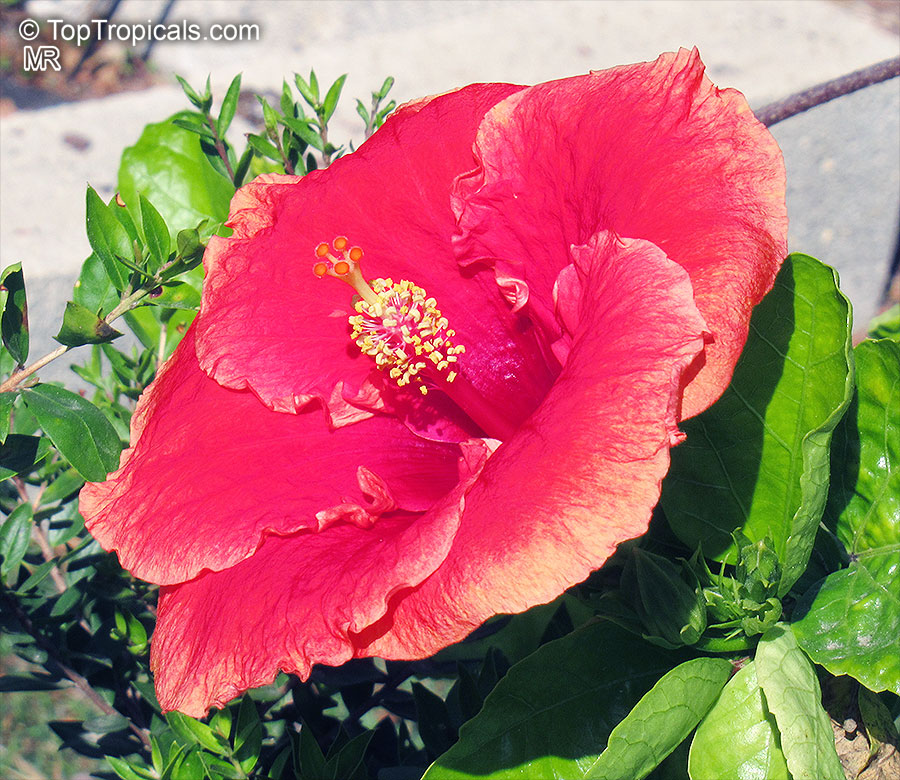
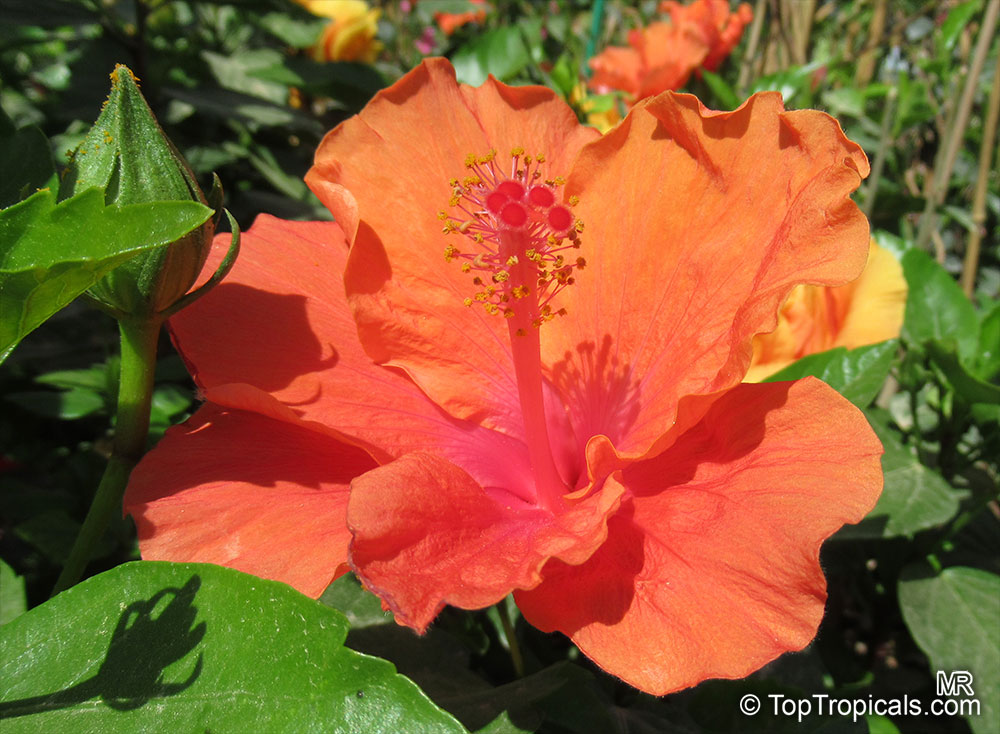
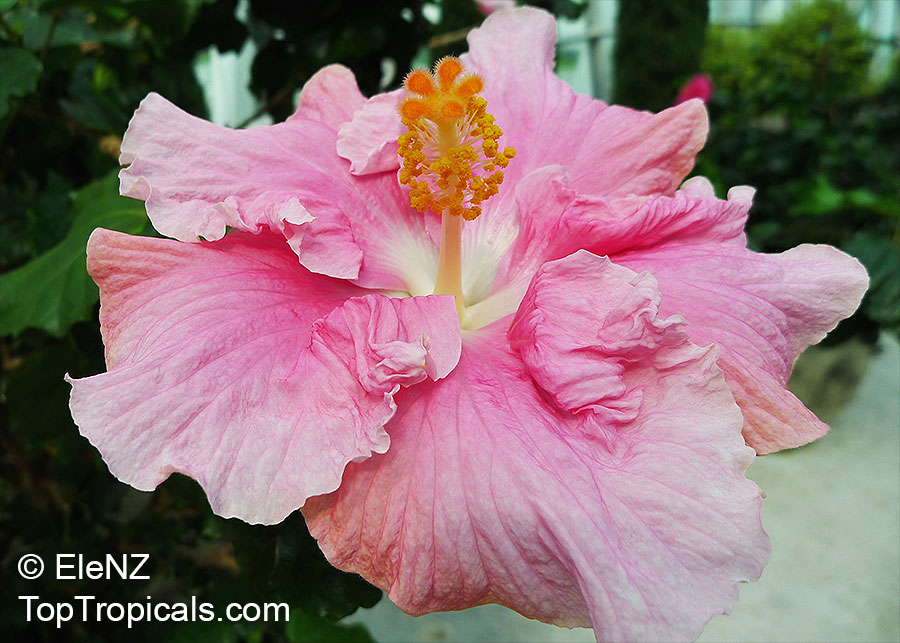
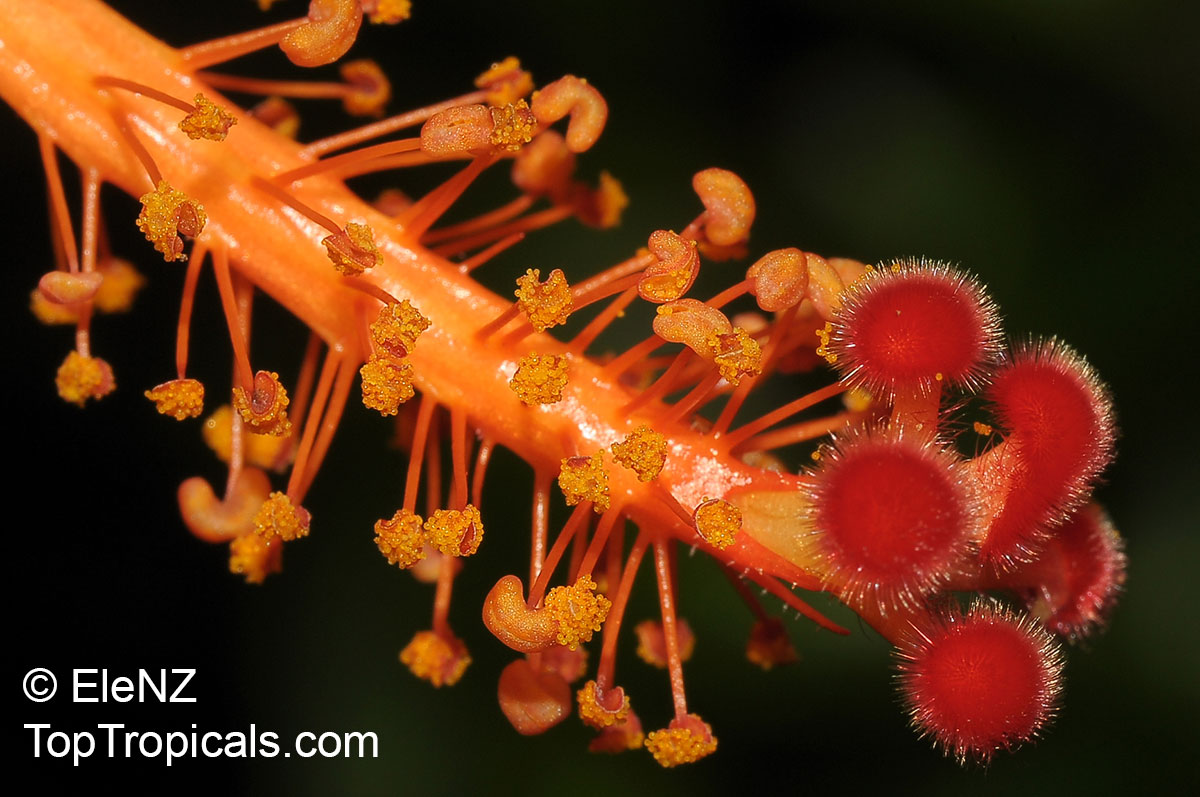
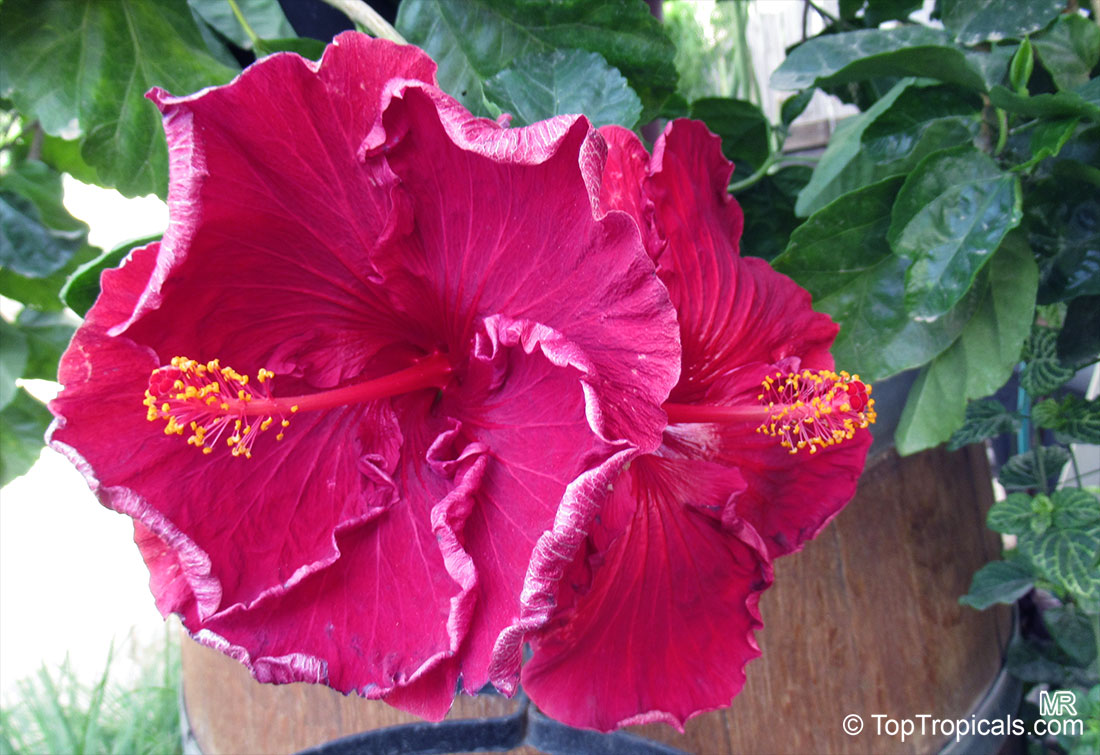

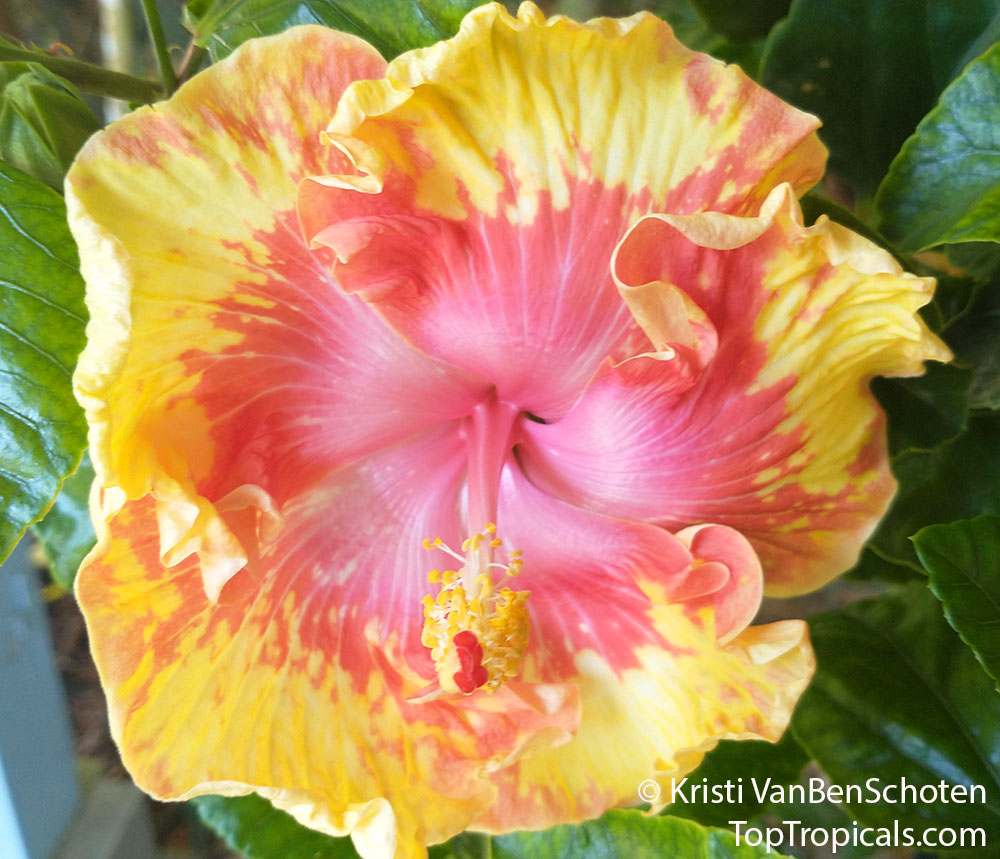
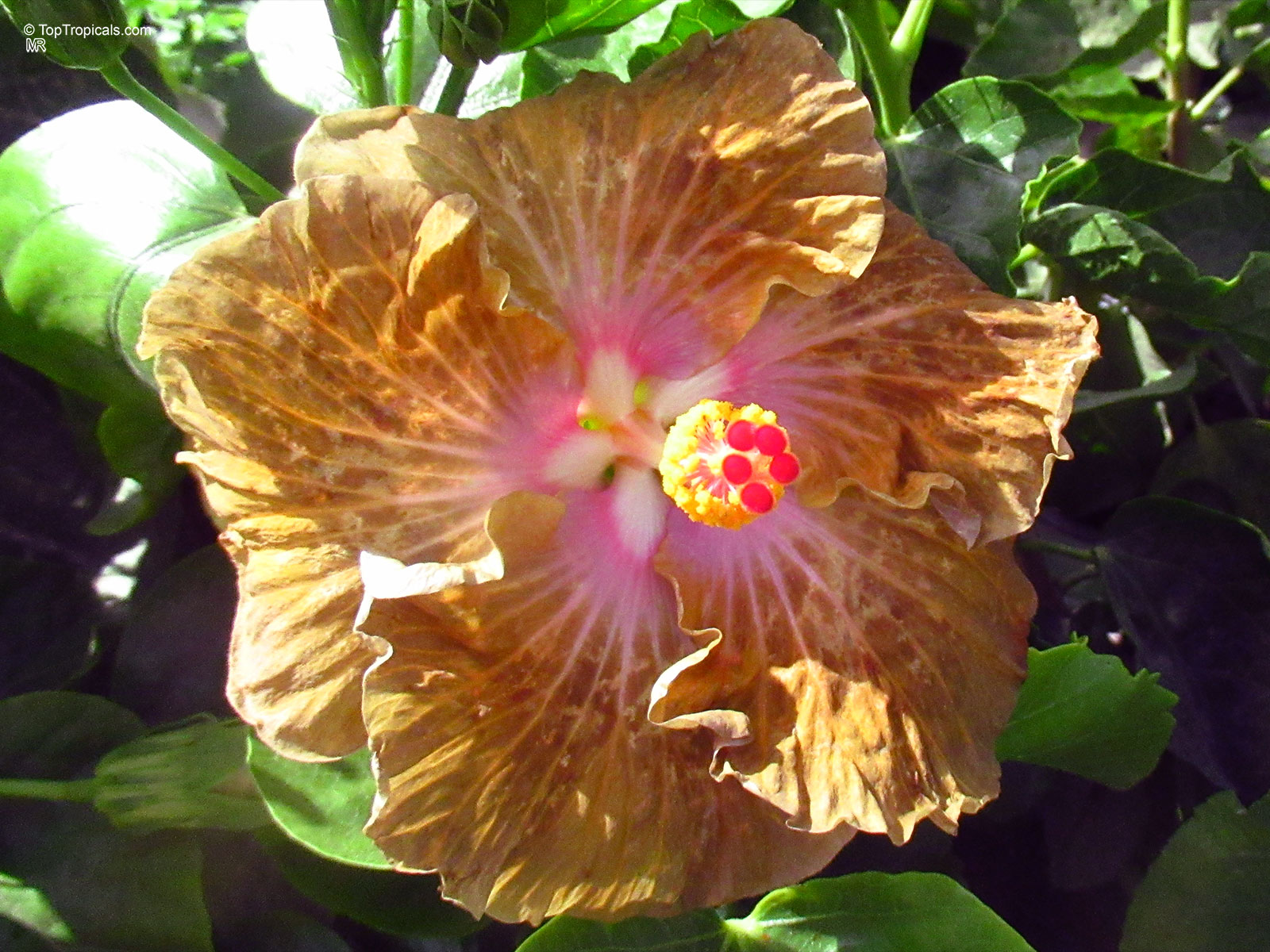
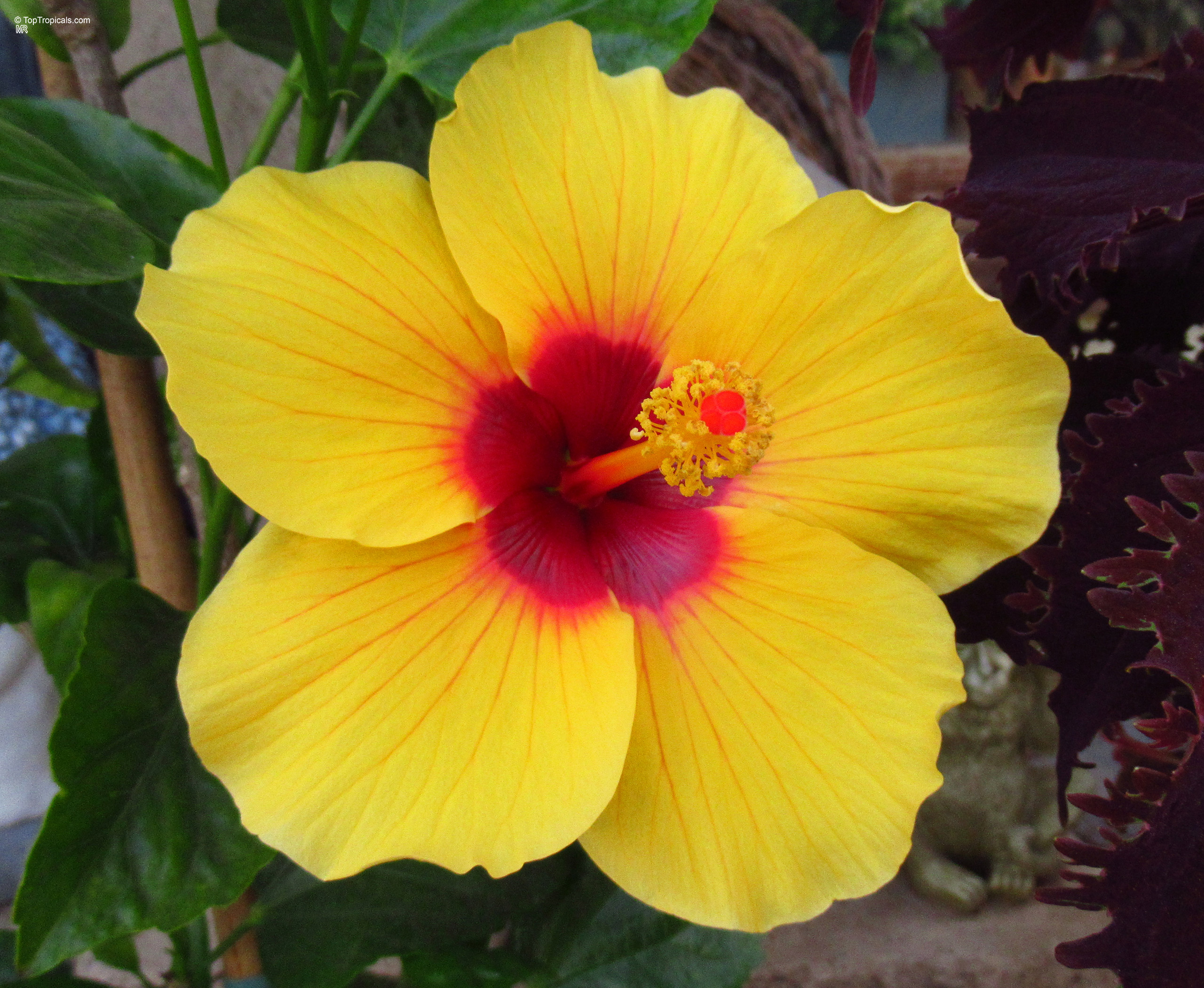
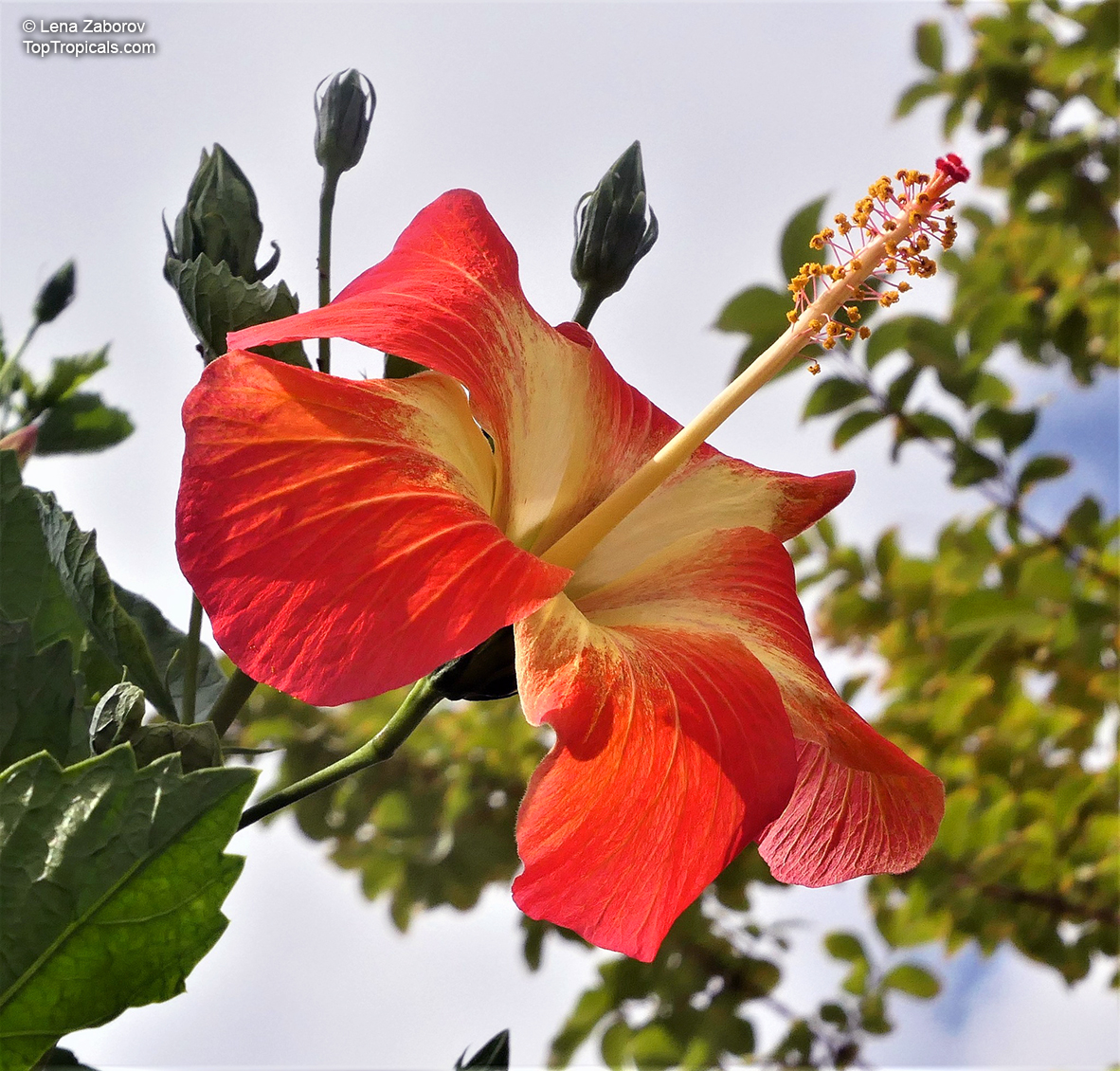
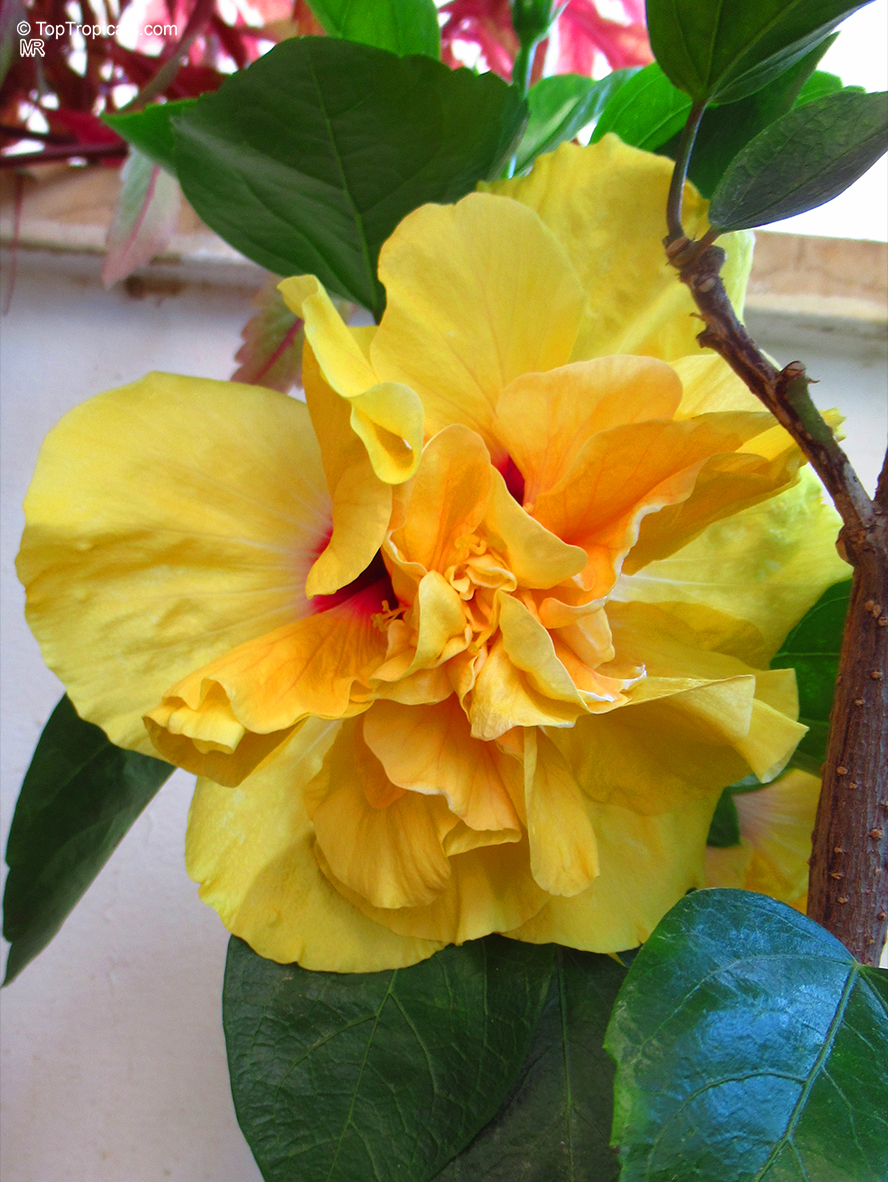
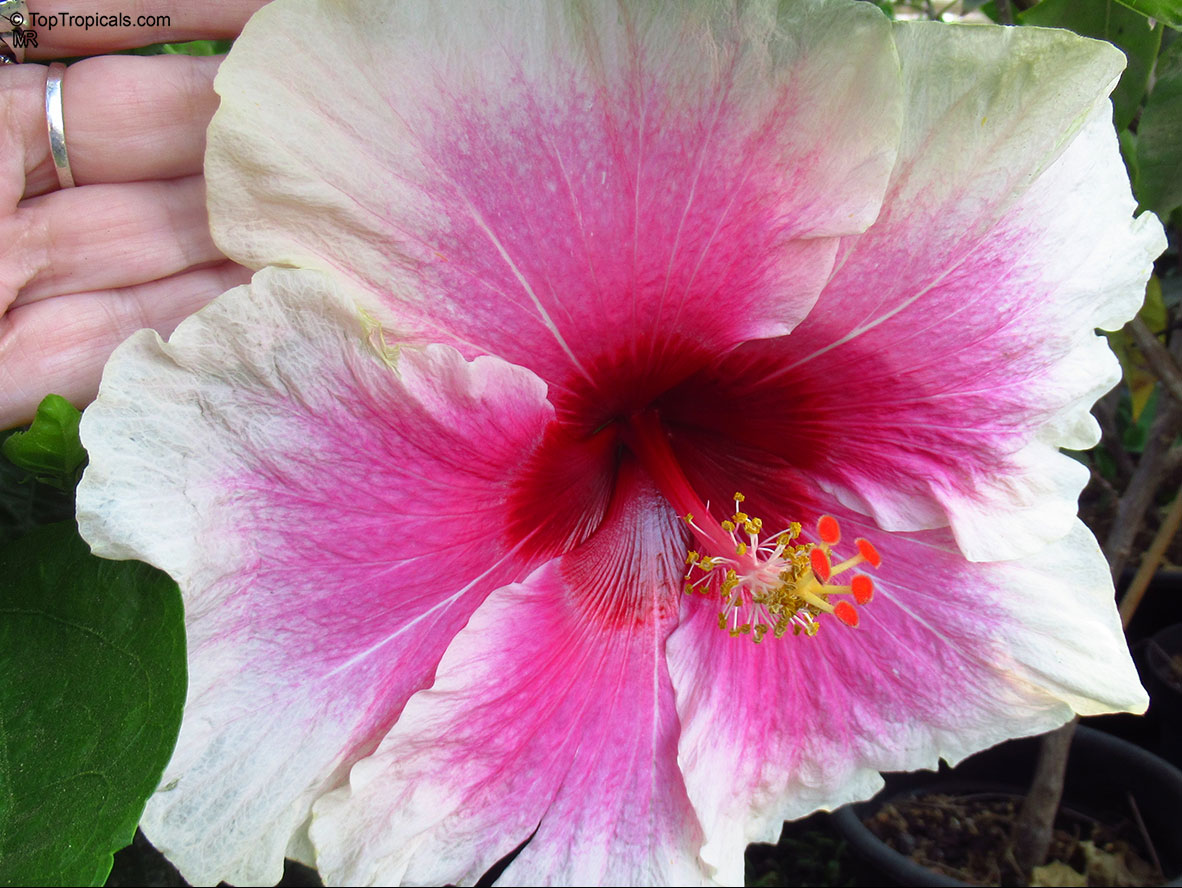
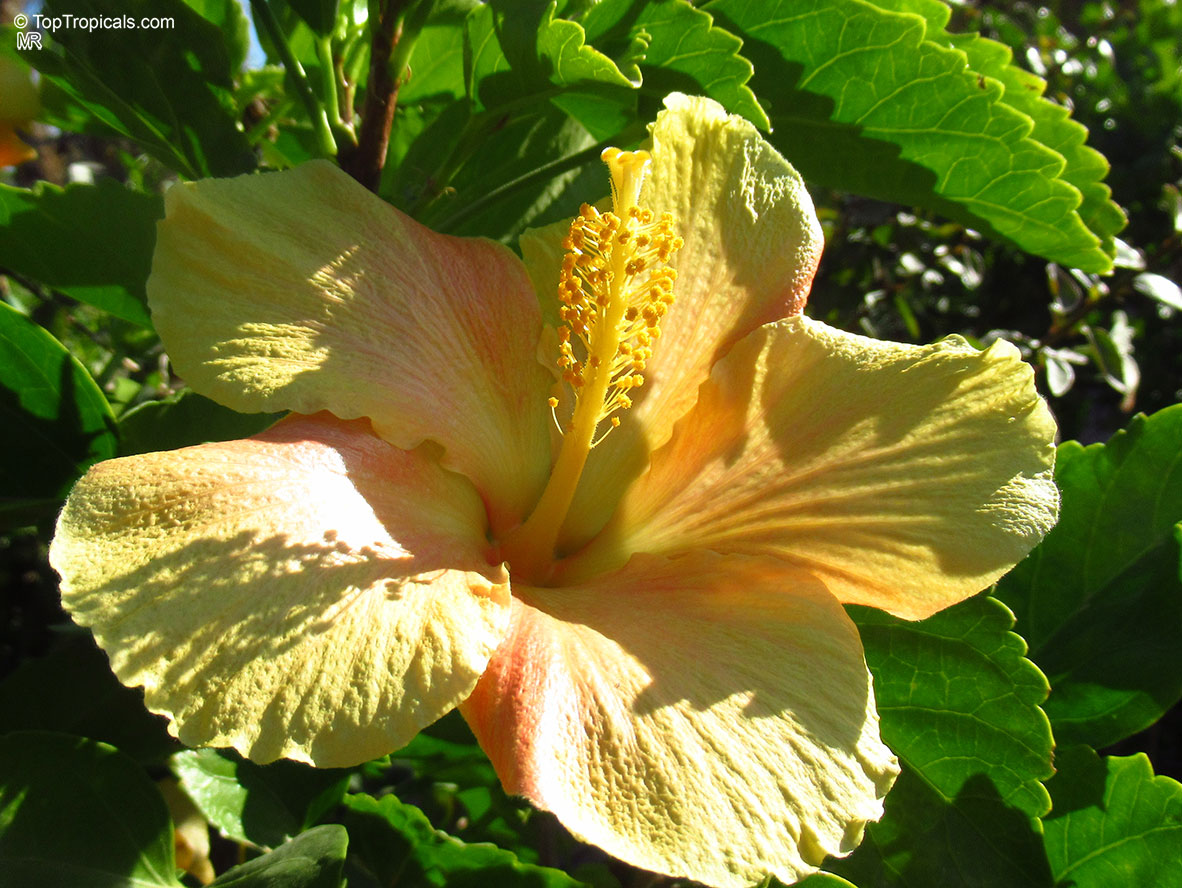
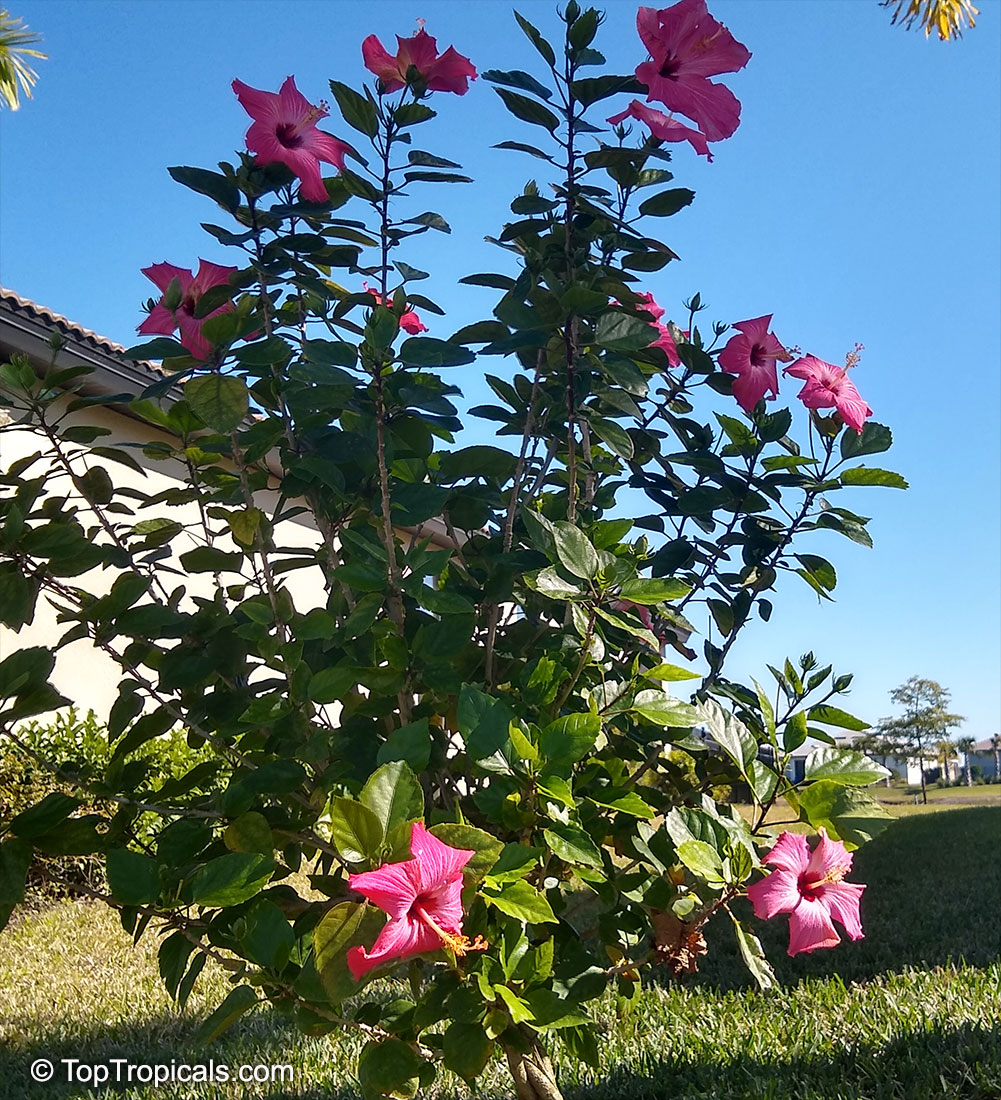

Unlike many tropical hibiscus varieties, President Red has demonstrated impressive cold tolerance. During the historic Florida freeze of February 2026, established plants in our garden survived two nights at 25F and nearly two weeks of unusually cold weather (when all tropical hibiscus was killed by that cold), recovering and resuming growth when warmer temperatures returned. While protection is still recommended during severe freezes, this variety has proven tougher than many tropical hibiscus selections.
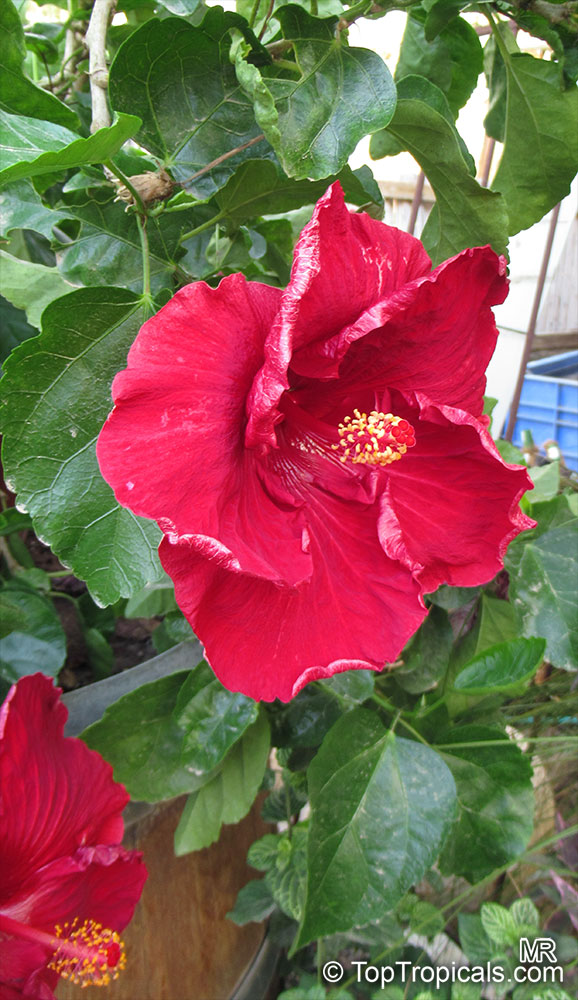
President Red is a fast-growing evergreen shrub with a dense, upright habit that can reach 6 to 10 feet tall and 4 to 6 feet wide when planted in the ground. Its large, trumpet-shaped flowers often feature a deeper red eye and prominent red pistil, adding even more drama to each bloom.
Butterflies and hummingbirds are naturally attracted to the nectar-rich flowers, making this variety an excellent choice for pollinator-friendly gardens. Whether planted as a specimen, hedge, flowering screen, or patio container plant, it quickly becomes a focal point wherever it grows.
President Red performs best in full sun, where it produces the heaviest bloom display. It prefers rich, well-drained soil and regular watering, especially during dry weather. Routine fertilization during the growing season encourages continuous flowering and lush growth.
With its giant scarlet blooms, vigorous growth, and surprising cold hardiness, Hibiscus President Red remains one of the most rewarding tropical flowering shrubs for warm-climate gardens.
Recommended Fertilizer: SUNSHINE Megaflor - Bloom Nutrition Booster
Botanical name: Hibiscus rosa-sinensis Red Semi-Double
Common name: Red Double Hibiscus
Cultivar: Red Semi-Double
Family: Malvaceae
USDA Zone: 9-11
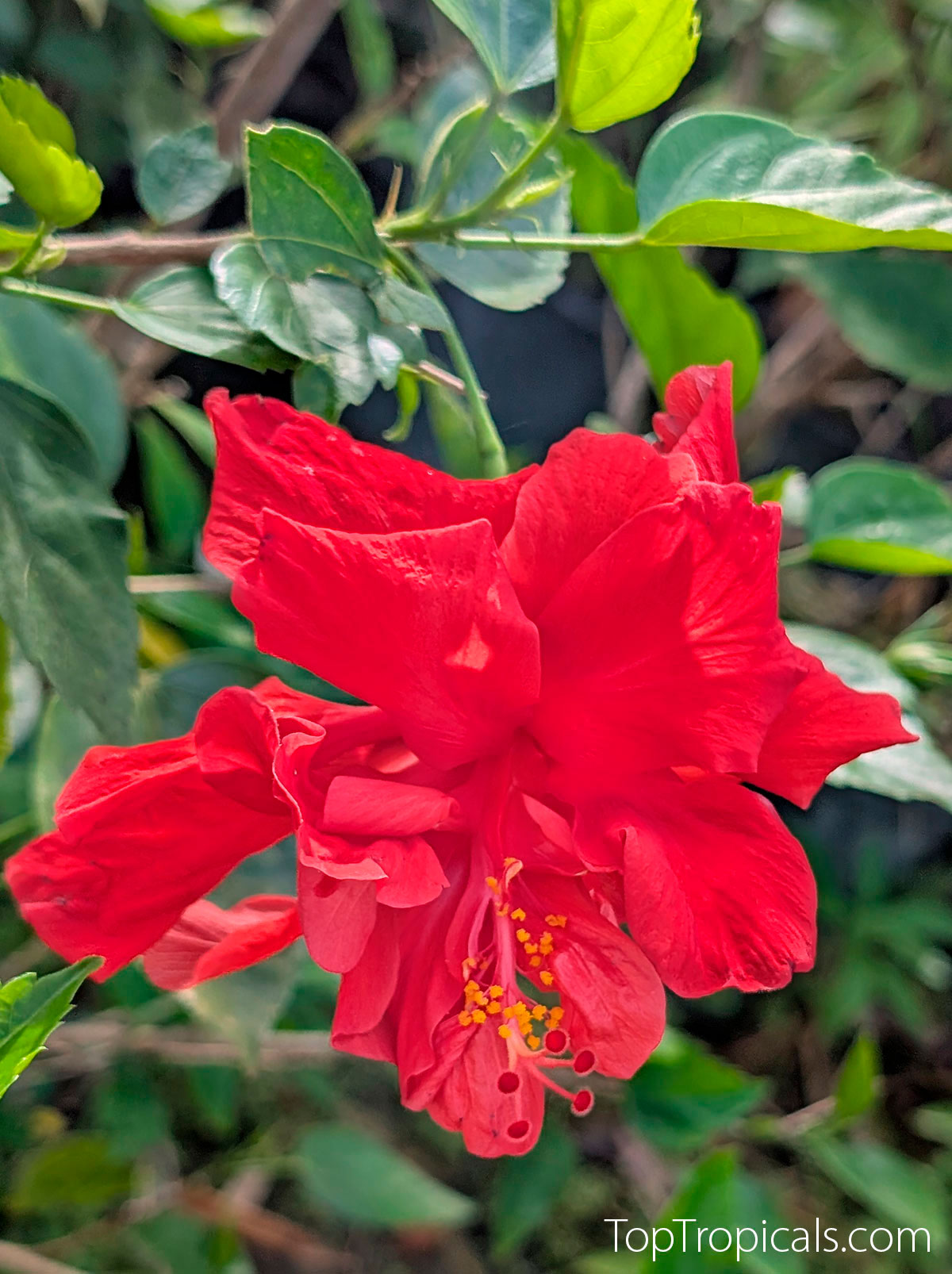
Hibiscus rosa-sinensis 'Red Semi-Double' (Red Semi-Double Hibiscus) is a tropical variety distinguished by its vivid red blooms that are partly double, revealing a bright central column of stamens framed by softly ruffled petals. Each flower measures about 4 inches across and glows with a deep scarlet tone that remains rich and consistent even in full sunlight. The blooms appear in generous succession through the warm season, standing out vividly against the glossy dark-green foliage. The plant forms a compact, rounded shrub that maintains an elegant balance between strong growth and continuous flowering.
This variety performs well in tropical and subtropical climates and can bloom nearly year-round in frost-free conditions. It thrives in full sun and well-drained, fertile soil with regular watering and monthly feeding during the growing season. Well suited for garden borders, patio containers, or accent plantings, 'Red Semi-Double' combines reliable performance with timeless tropical beauty. Plants grow best in USDA Zones 9-11 and need protection from frost, with minimum tolerance down to about 35F. It is often referred to as H. Althea, H. Amplissimus (referring to double flower), and Double Rose of Sharon. This variety is also known under names: Red Hot, President, Red Dragon, Super Red.
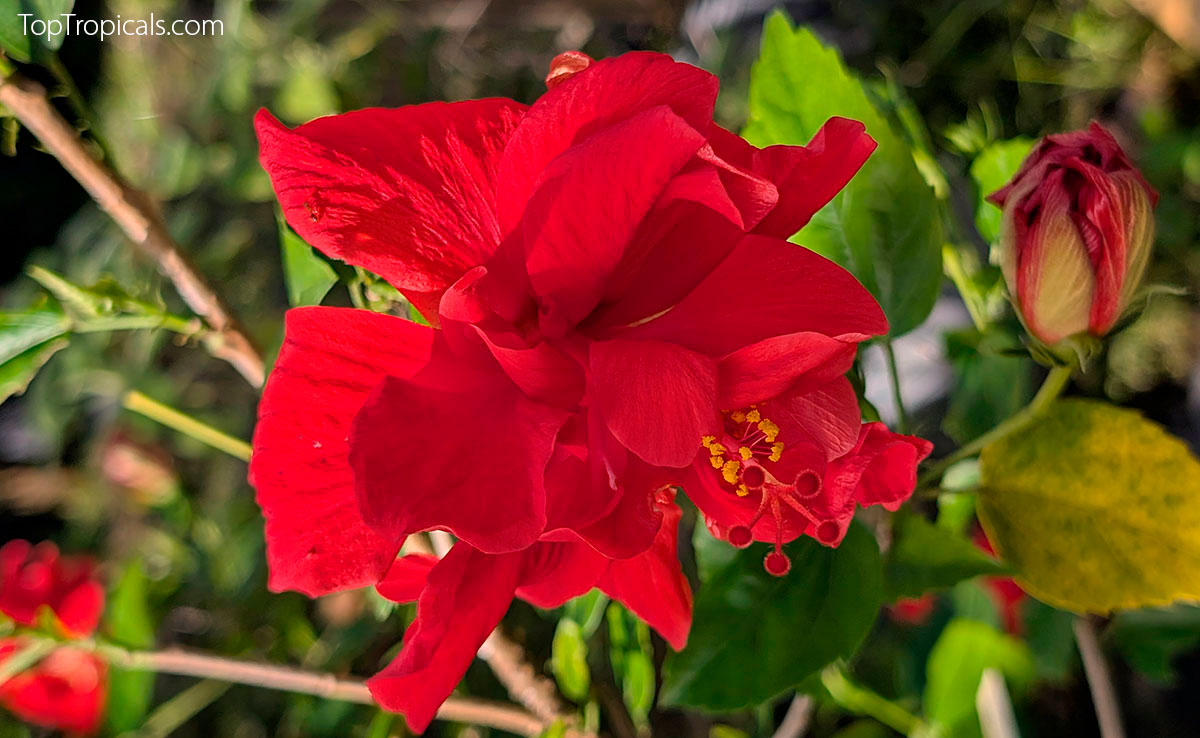
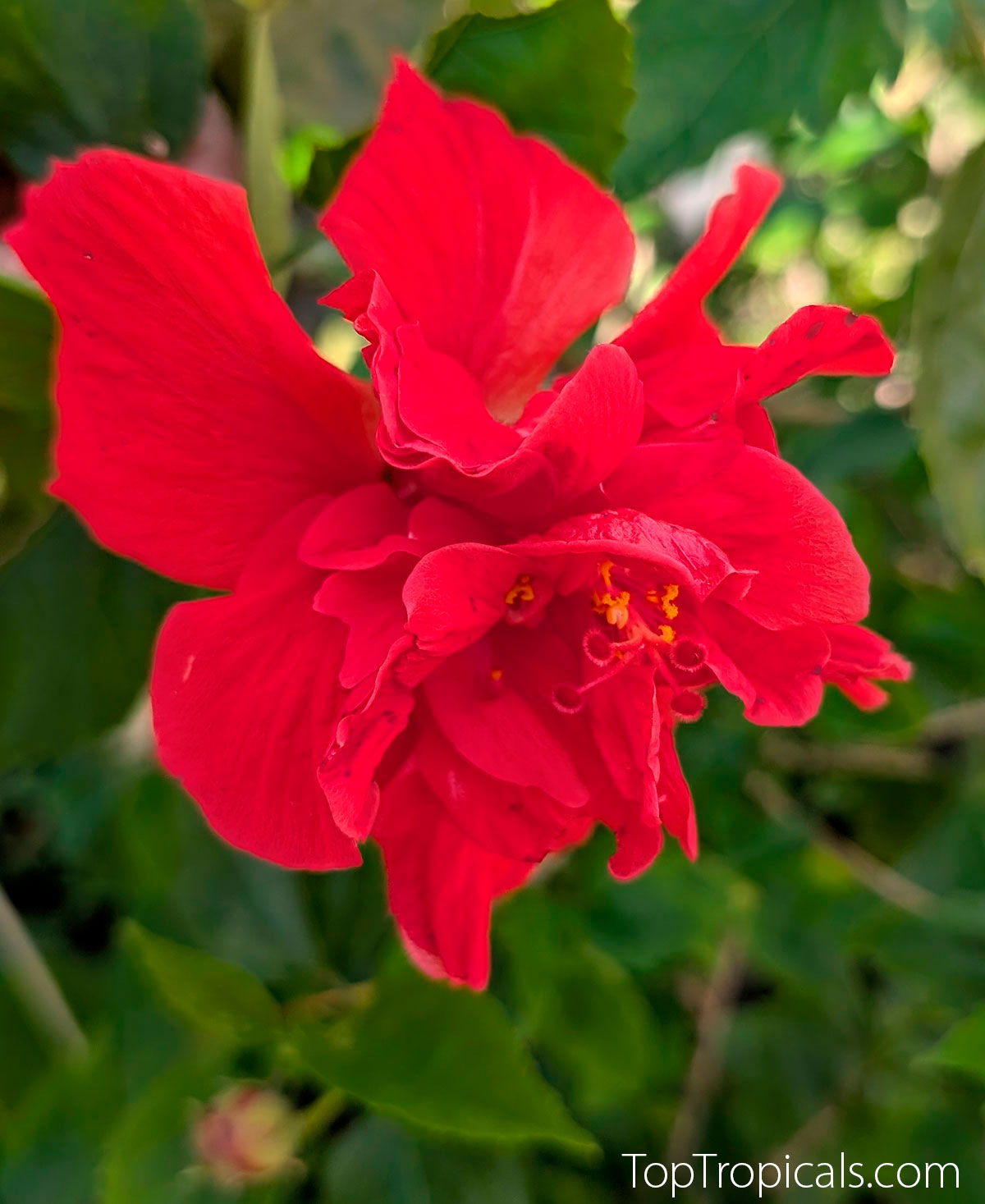
This variety is one of the most dependable and easy-to-grow tropical hibiscus types. It flowers freely through the warm months and can bloom almost year-round in frost-free climates. Like most hibiscus, each individual bloom lasts only a day, but new buds open daily, keeping the shrub in near-constant color.
Double Red grows into a dense, rounded shrub about 4-6 ft tall and 3-4 ft wide. It's ideal for hedges, accents, or large containers on patios and pool decks. Plants perform best in full sun with regular watering and rich, well-drained soil. Feed monthly during the growing season to encourage continuous flowering.
This time-tested hibiscus is a true garden classic, combining vivid color, strong growth, and reliable performance. Its full, double blooms and intense red tone make it one of the most popular hibiscus varieties ever introduced.
In TopTropicals garden this variety showed pretty strong cold tolerance (at least to light freeze) similar to cold hardy H. syriacus. It is often referred to as H. Althea, H. Amplissimus (referring to double flower), and Double Rose of Sharon. This variety is also known under names: Red Hot, Red Dragon, Super Red.
Recommended Fertilizer: SUNSHINE Megaflor - Bloom Nutrition Booster
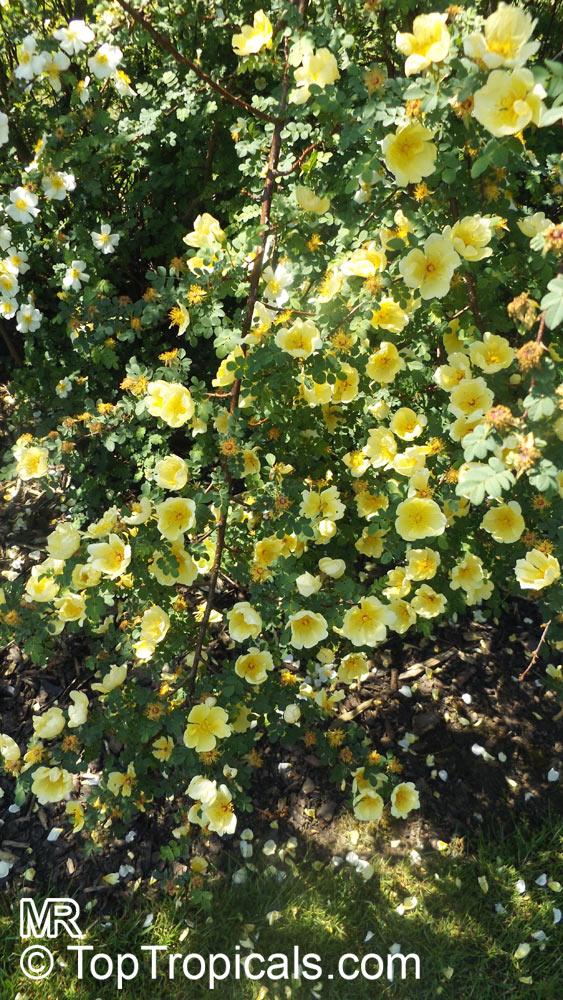
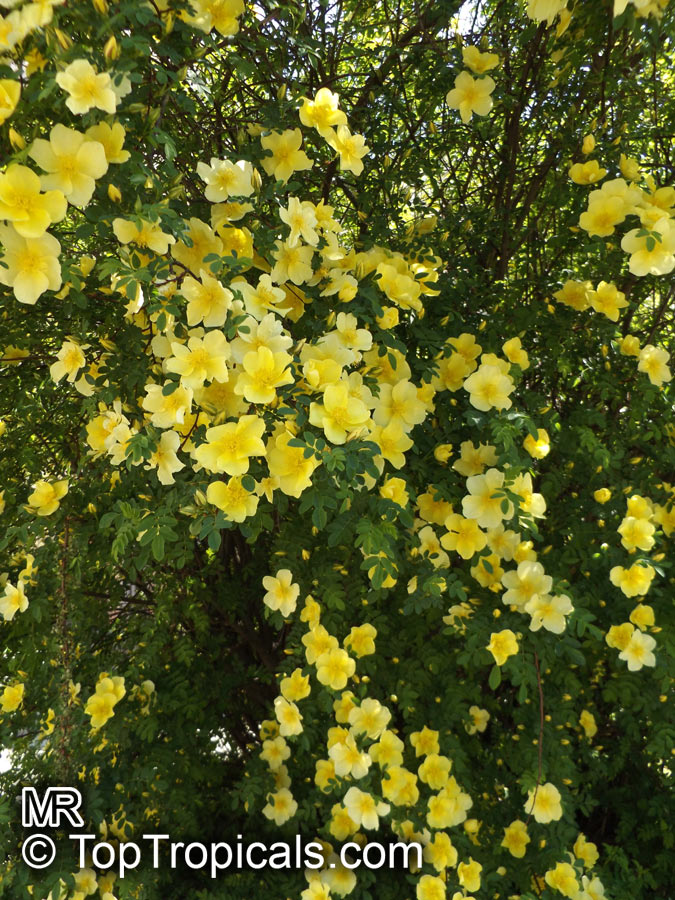
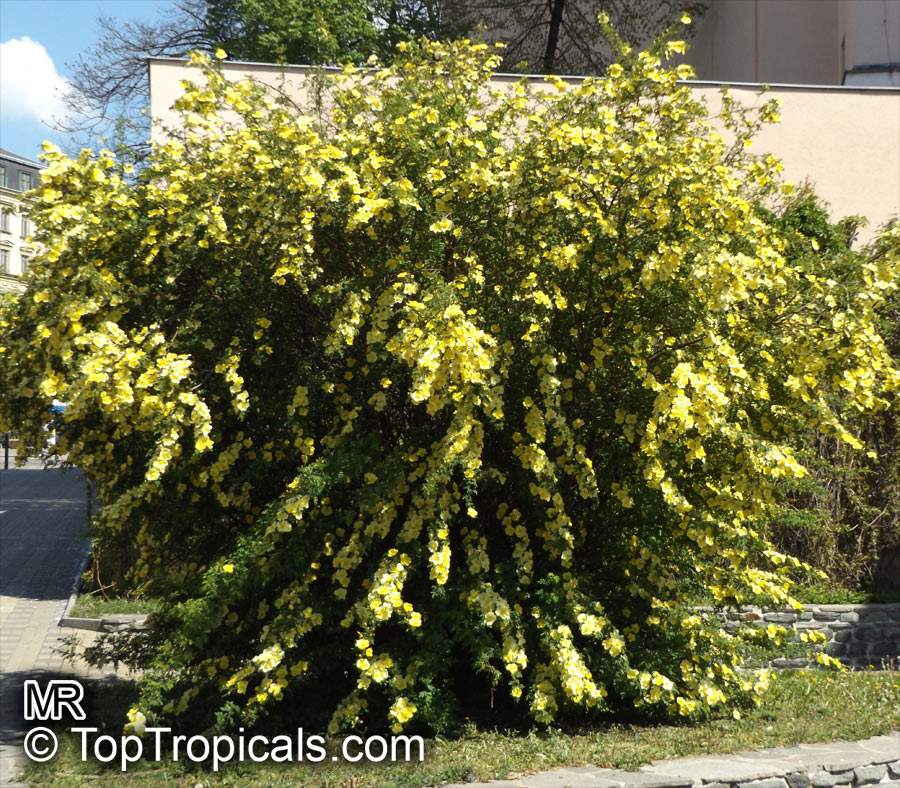
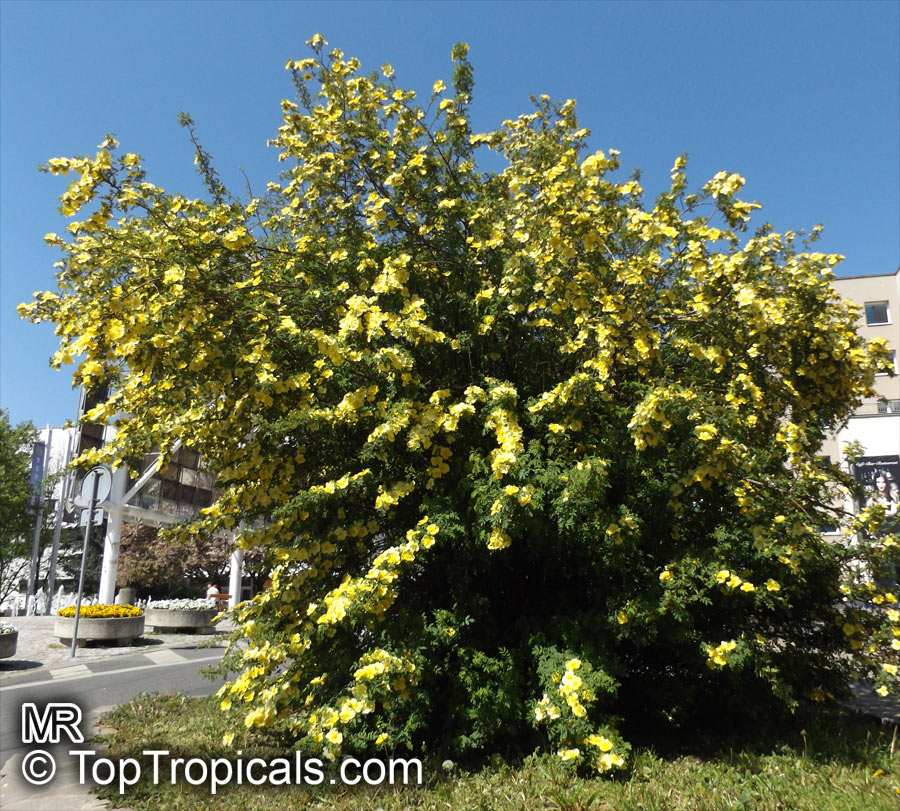
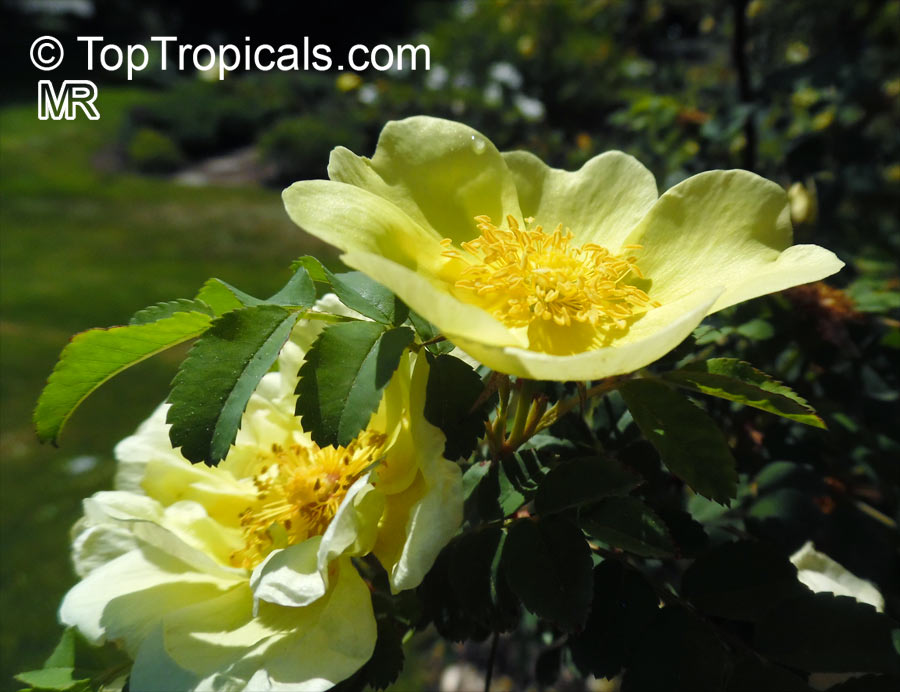
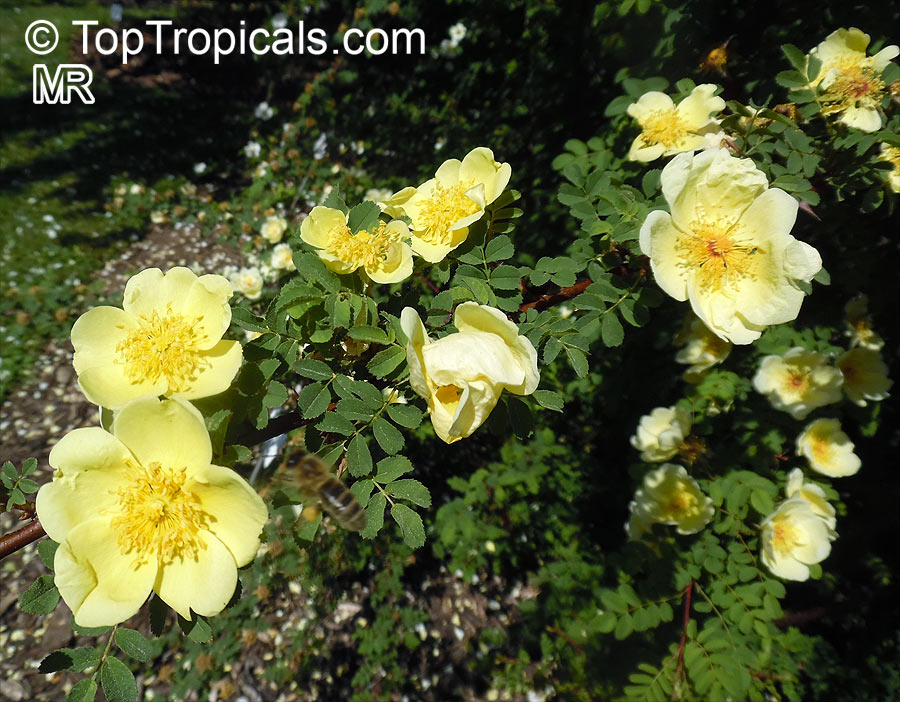
Botanical name: Rosa hugonis
Common names: Father Hugo Rose, Golden Rose of China
Family: Rosaceae
Origin: China
USDA Zone: 5-9
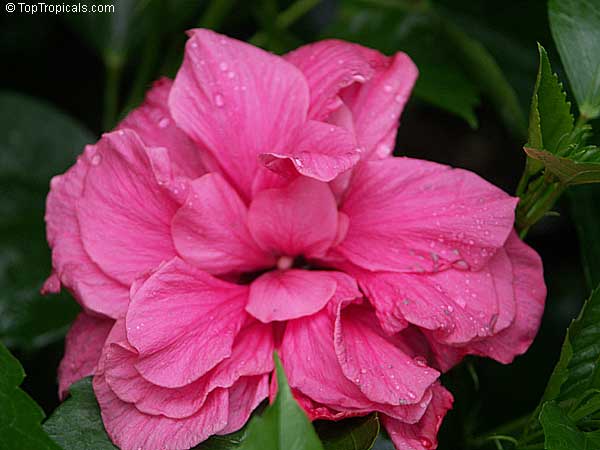
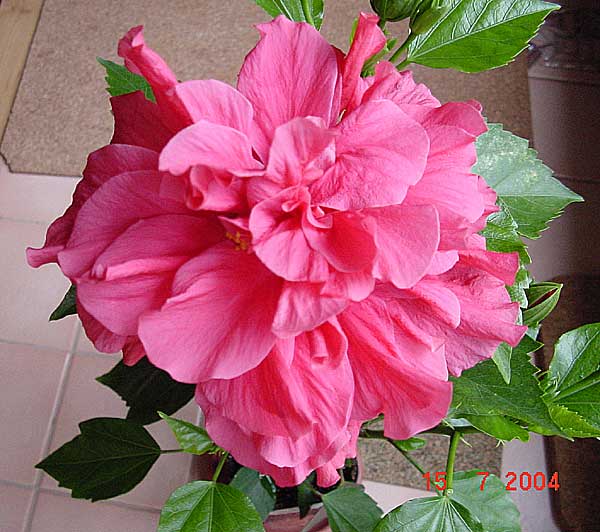
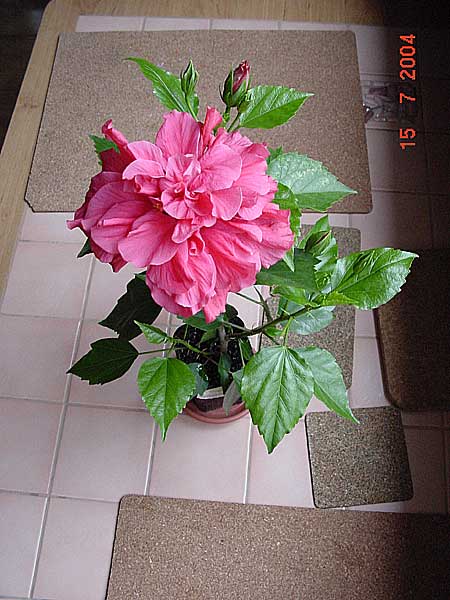
Botanical name: Hibiscus rosa-sinensis
Common name: Hibiscus Double Kona
Cultivar: Kona
Family: Malvaceae
USDA Zone: 9-10
Compact cultivar with crimson-pink double flowers. Heavy bloomer year round. Starts to bloom when in small size, nice houseplant, shade tolerant.
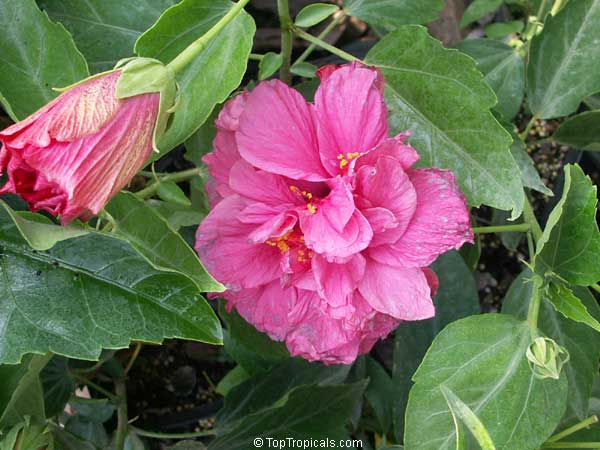
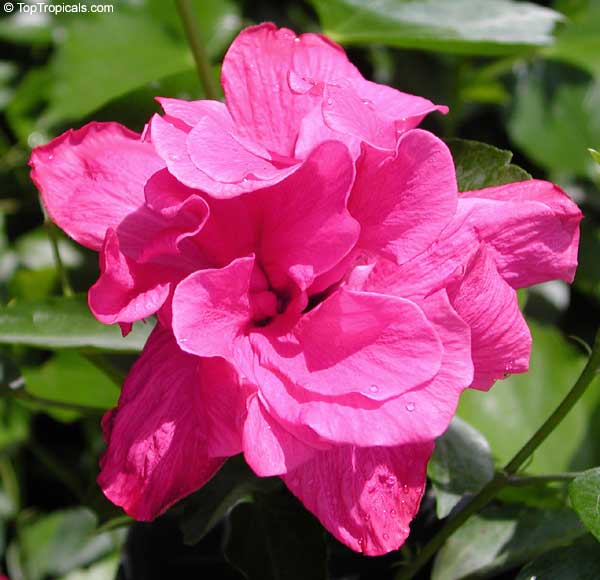
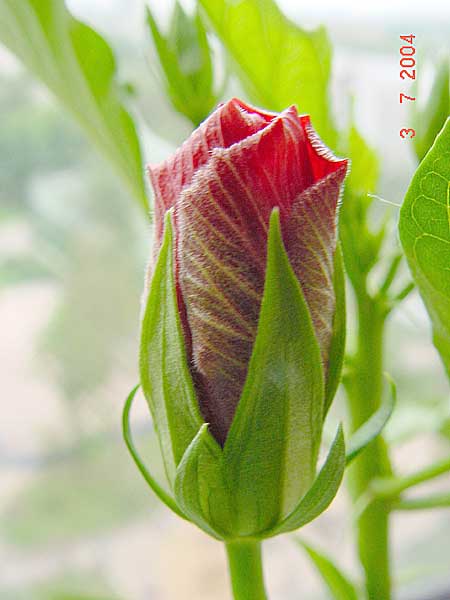

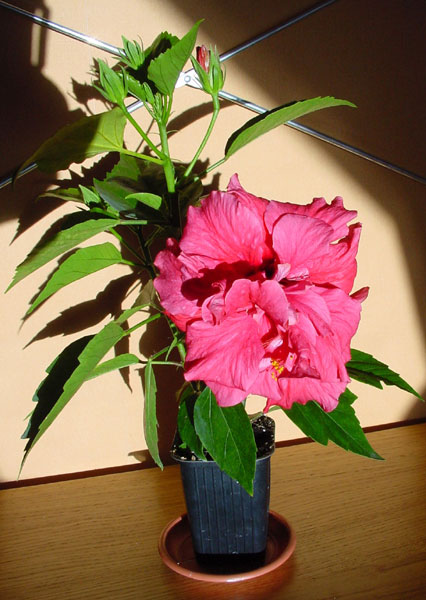
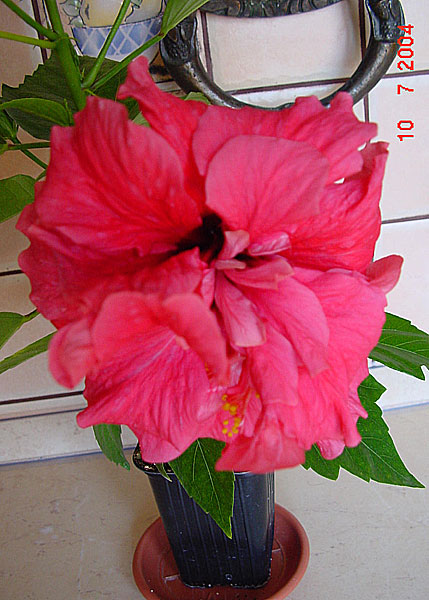
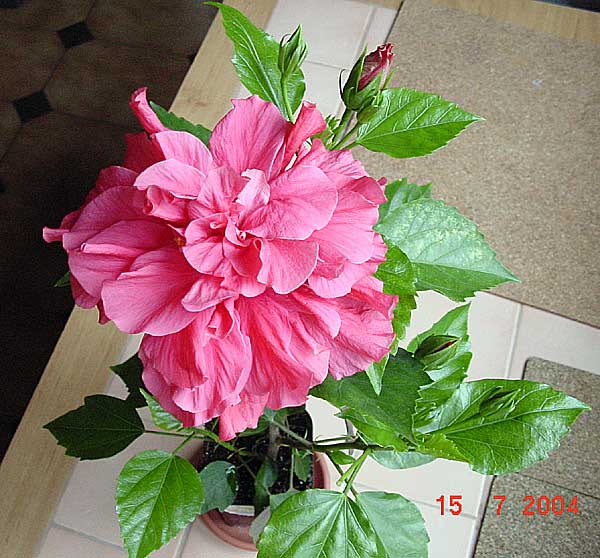
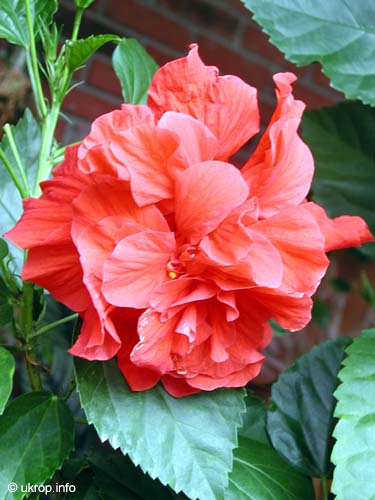
Botanical name: Hibiscus rosa-sinensis
Common name: Double red hibiscus
Cultivar: Celia
Family: Malvaceae
USDA Zone: 9-10
Beautiful double flower cultivar with a dwarf habit. Nice bushy plant, good for potting culture. Blooms year round. Flowers 4" wide.
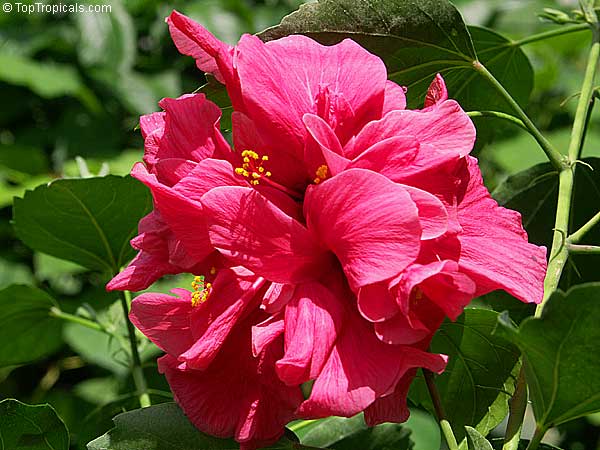
Botanical name: Hibiscus rosa-sinensis
Common name: Hibiscus Aurora
Cultivar: Aurora
Family: Malvaceae
USDA Zone: 9-10
Hibiscus Aurora is widely used as an ornamental in parks and gardens around the world. It is a large shrub that grows 5 to 10 feet tall and can also be grown as a small shrub between 2 to 5 feet tall, depending on the size of the container and the climate where it is grown. It has bright, red, crimson and vinous flowers that bloom throughout the summer.
Hibiscus Aurora prefers to be placed in a sunny location and does best when grown in full sun, but will tolerate semi-shade as long as there is sufficient sunlight for proper flowering. Hibiscus Aurora enjoys regular watering and a moderate amount of fertility. Mulching around the base of the plant is a great way to help keep the soil moist and cool during hot summer days.
When grown in areas with cold winters, Hibiscus Aurora should be planted in a pot and brought indoors to stay warm and dry throughout the cold season. It needs plenty of sunlight and fertilizer to stay healthy during the winter months and will shed leaves when inside. The pot should be placed near a sunny window, watered regularly and kept in a well-drained potting soil.
Hibiscus Aurora is hardy in USDA Zones 9-11 and can be grown in slightly colder climates with proper care. Its bright attractive flowers will be a stunning addition to any landscape or garden, and its vining habit makes an excellent cover for trellises and arbors.
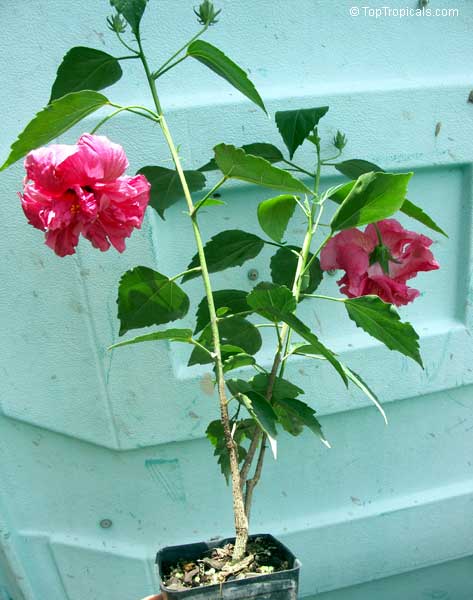
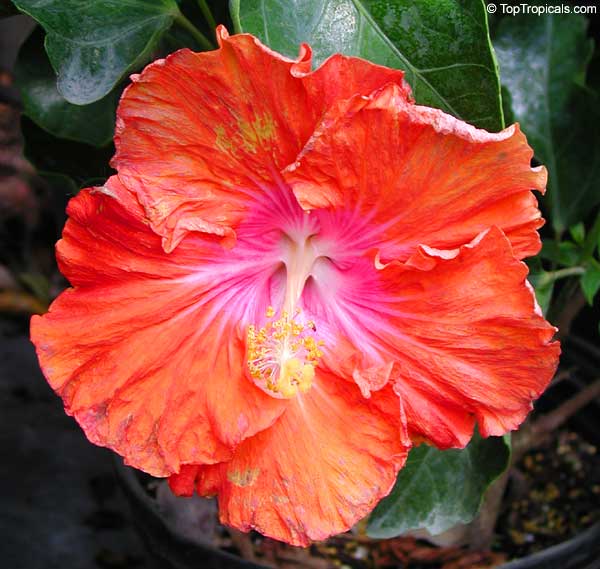
Botanical name: Hibiscus rosa-sinensis
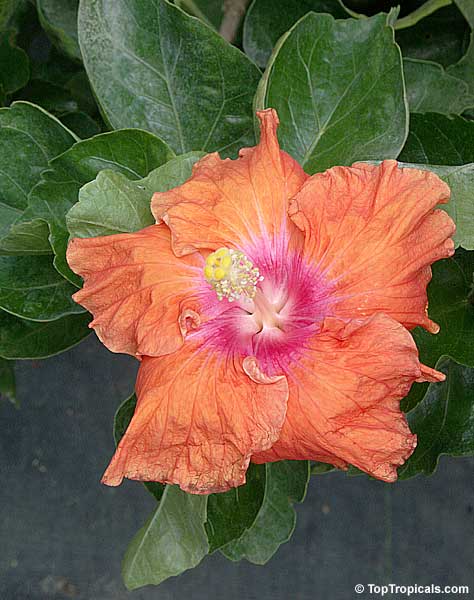
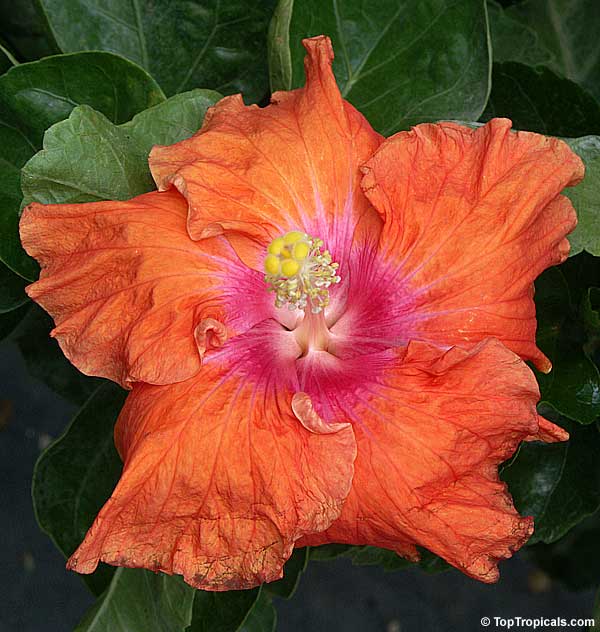
Common name: Hibiscus Fiesta
Cultivar: Fiesta
Family: Malvaceae
USDA Zone: 9-10
Beautiful bright 5" flowers. This variety is not easiest to grow, requires extra attention. Needs well-drained soil. Slow-growing.
| Next | |
Use link to repeat this search:
https://toptropicals.com/cgi-bin/garden_catalog/cat.cgi?find=Rosa&search_op=and&keyword_op=and&language=e&number=10
&no_change_lang=1&user=tt&sale=1&first=0