Aralia - Plant Encyclopedia Results
| Number of plants found: 40 | Next | 
|
Go to page: | 1 | 2 | 3 | 4 |
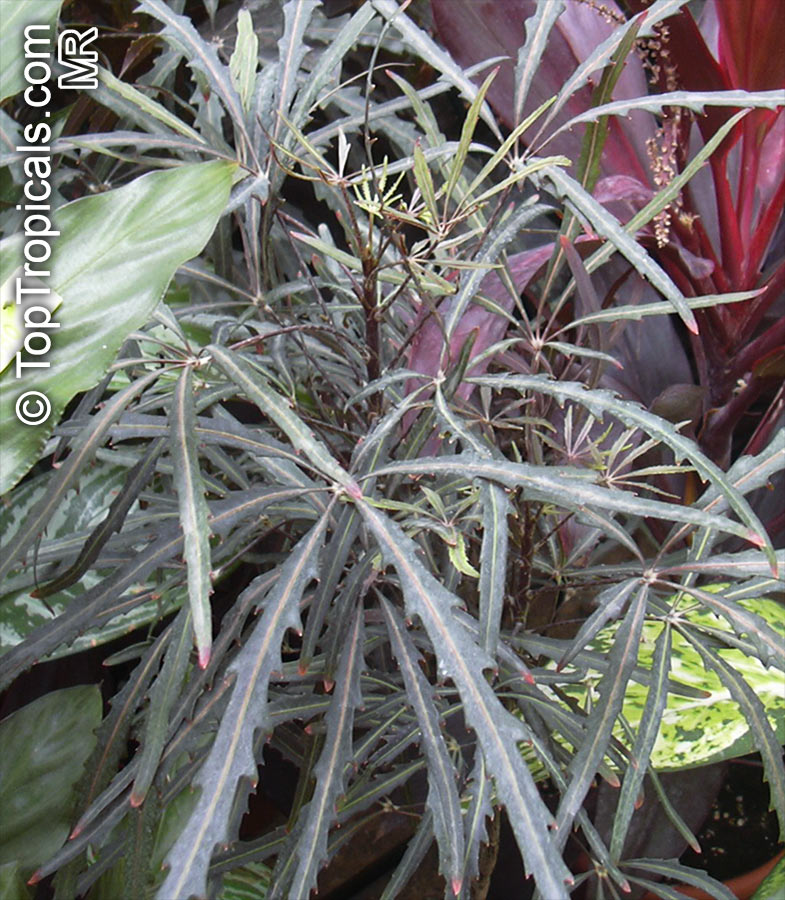
Botanical names: Plerandra elegantissima, Schefflera elegantissima, Aralia elegantissima, Dizygotheca elegantissima
Common names: False Aralia, Finger Aralia, Threadleaf
Family: Araliaceae
Origin: New Hebrides
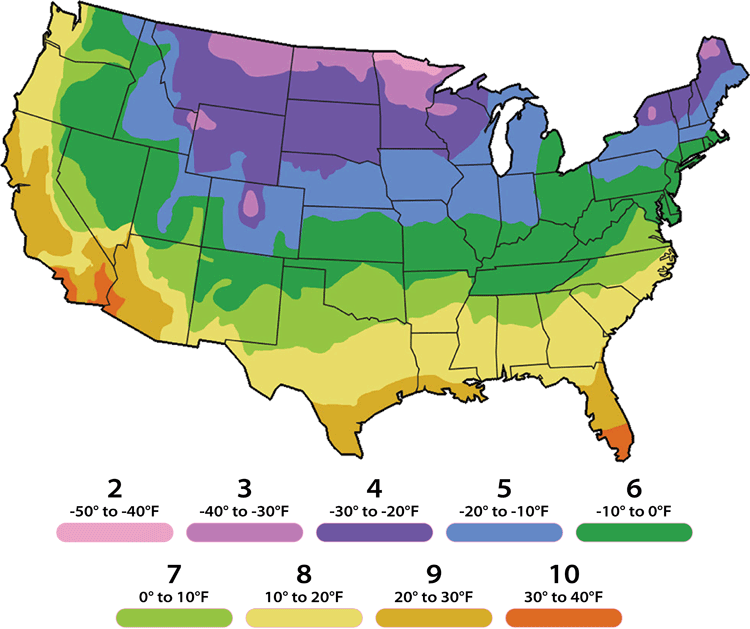
USDA Zone: 9-10


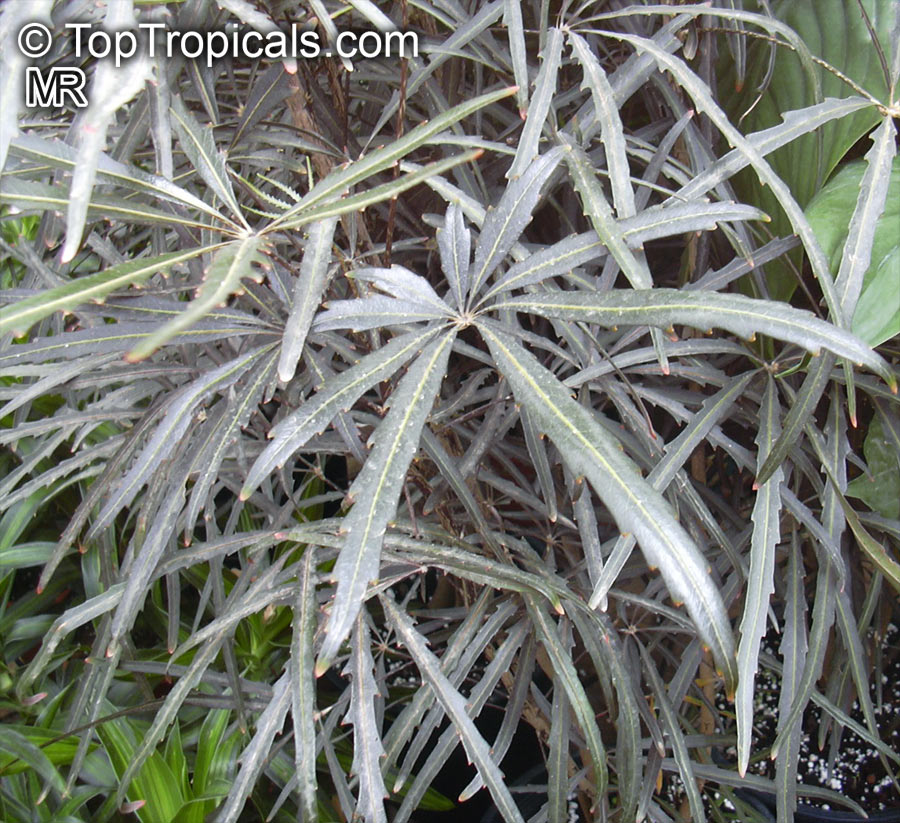
Has a graceful airy appearance with long finger-like leaves which have serrated edges and dark- metallic coloring. When it grows, the leaves get bigger and lose their delicate aspect. It is can still be a beautiful bush in a sheltered corner of the garden. False aralia likes warmer temperatures of 60 to 70 degrees and above. The plant can drop some of its lower leaves if the temperature falls below the 60 degree mark. Place the plant in bright filtered light near a sunny window and/or under artificial light with a minimum of 150 footcandles. When watering this plant, as with many indoor plants, water thoroughly, and then allow approximately one-half of the soil to dry out. Propagation: Air layering, seeds that must be fresh.
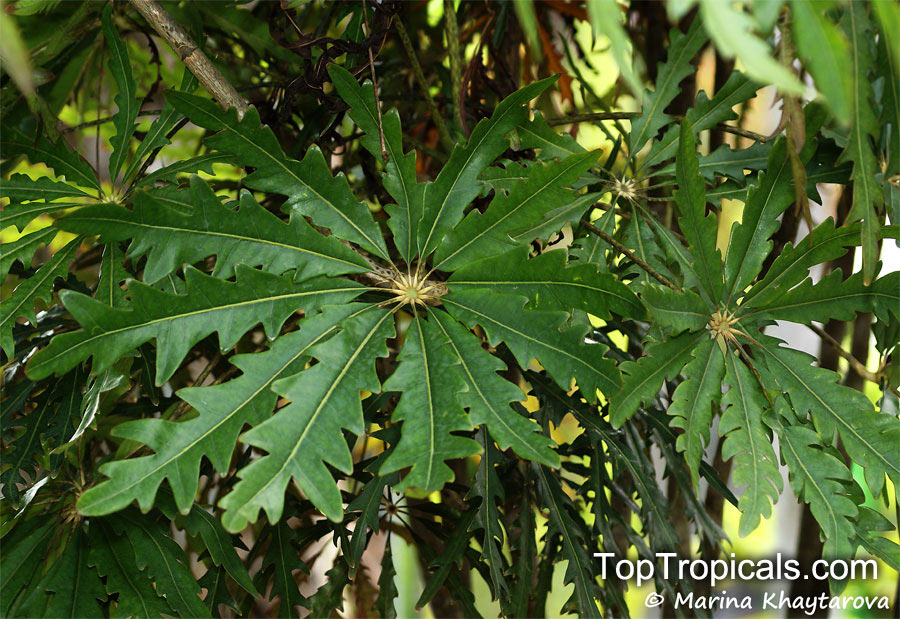
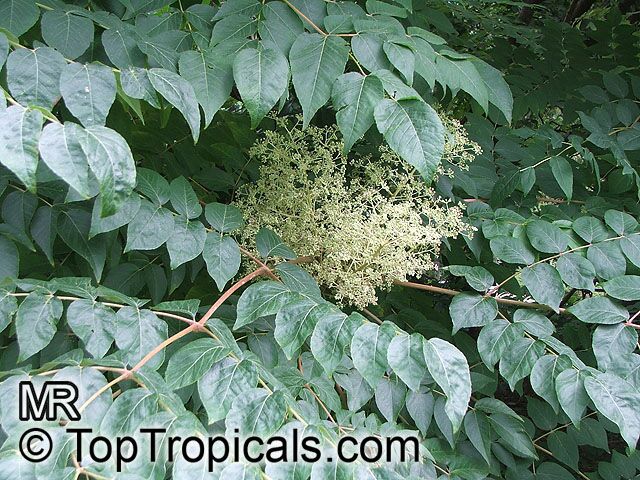
Botanical name: Aralia chinensis
Common name: Chinese Angelica Tree
Family: Araliaceae
Origin: China
USDA Zone: 7-10


Aralia chinensis is a small tree, native to China, with an upright form and a rounded crown. It grows from 10-20 ft and has ornamental foliage, making it a great specimen garden shrub. This plant thrives in semi-shade and should be watered regularly with moderate water. The root and stems of this plant have ethnomedical uses. In some parts of the world, it is used as a remedy for diabetes.
The plant produces white or off-white flowers that attract butterflies and hummingbirds, making it ideal for gardeners that want to bring pollinators to the property. Aralia chinensis can be grown in USDA Zones 9-11. In cold regions, these plants can be grown in pots that are brought indoors for the winter months. Containers should be deep since the plant has a long taproot. The soil should be well-drained and amended with organic matter. Watering should be done every 1-2 weeks, with a little more in the summer months. Fertilizing should also be done during the summer months, with a slow-release fertilizer. This plant should be pruned in the early spring, before new growth appears.
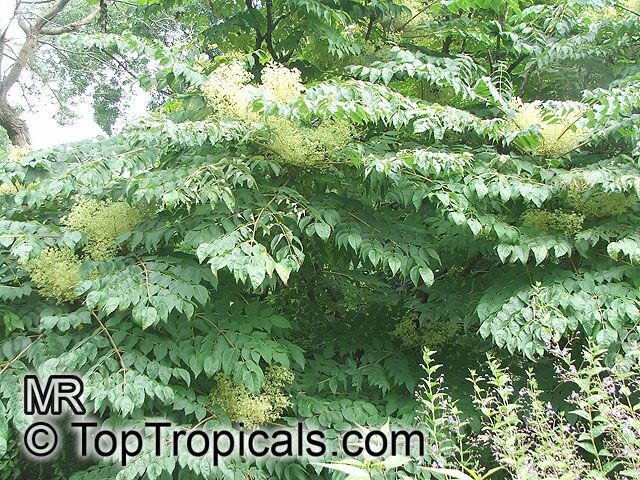
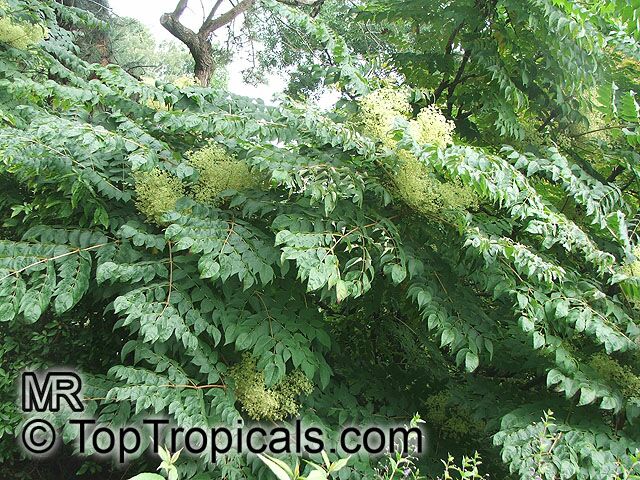
Botanical name: Aralia cordata
Common name: Japanese Spikenard
Family: Araliaceae
Origin: China, Korea, Japan
USDA Zone: 5-10


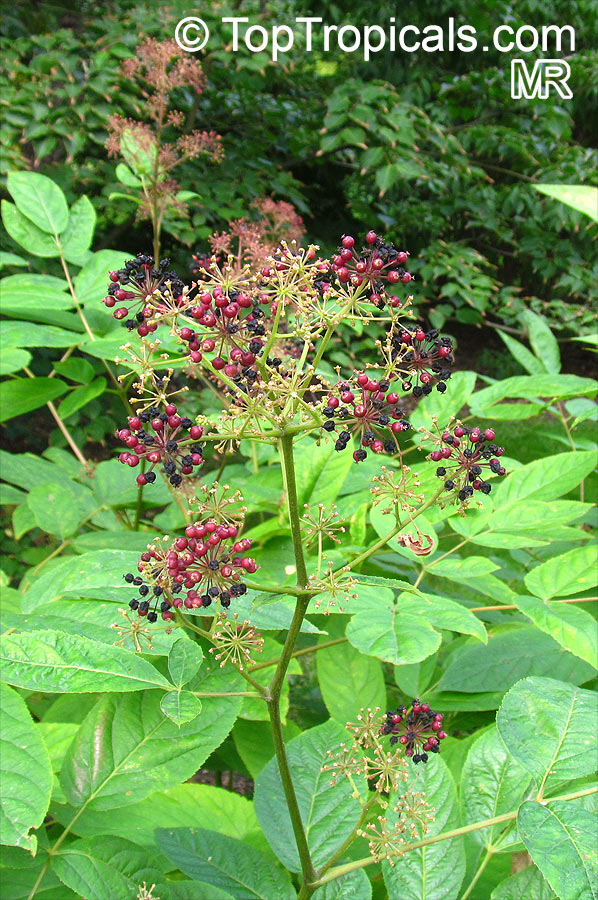
Aralia cordata, better known as Japanese Spikenard, is a large evergreen shrub native to China, Japan and Korea. Growing up to 5-10 ft tall and 2-5 ft wide, this deciduous, perennial shrub does well in semi-shade environments and prefers regular watering. As a bonus, this plant also produces edible black drupes that attract butterflies and hummingbirds. It can be grown in USDA Zones 5-10, with moderate to high water requirements.
The black drupes produced by Aralia cordata are not only edible but they are also packed with vitamins, minerals and other beneficial components that benefit human health. Remarkably, this plant is capable of producing hundreds of drupes each year, providing a great source of nourishment to those who consume them. The drupes are typically eaten raw and have a crunchy texture, but they can also be used in cakes, pies and jams.
When growing the Aralia cordata in the Northern regions, it's best to grow it in a container to prevent it from freezing during the cold winter months. It should be placed in an area that receives partial sun exposure, and watered well during the summer months. In the winter, the frequency of watering should be reduced, but not completely stopped. When caring for this plant, it's important to not overwater it as it will not tolerate standing water.
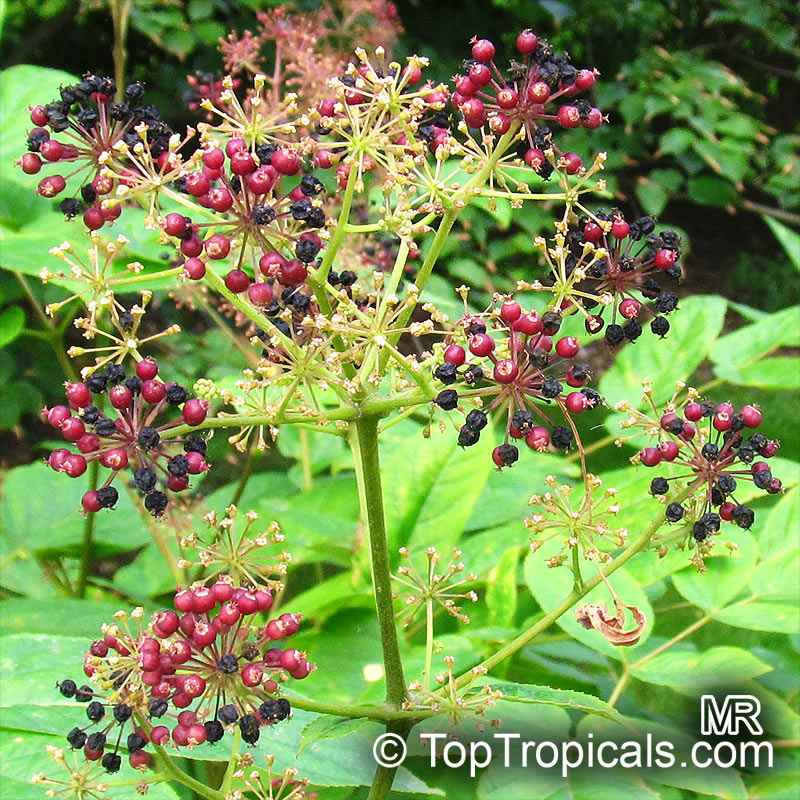
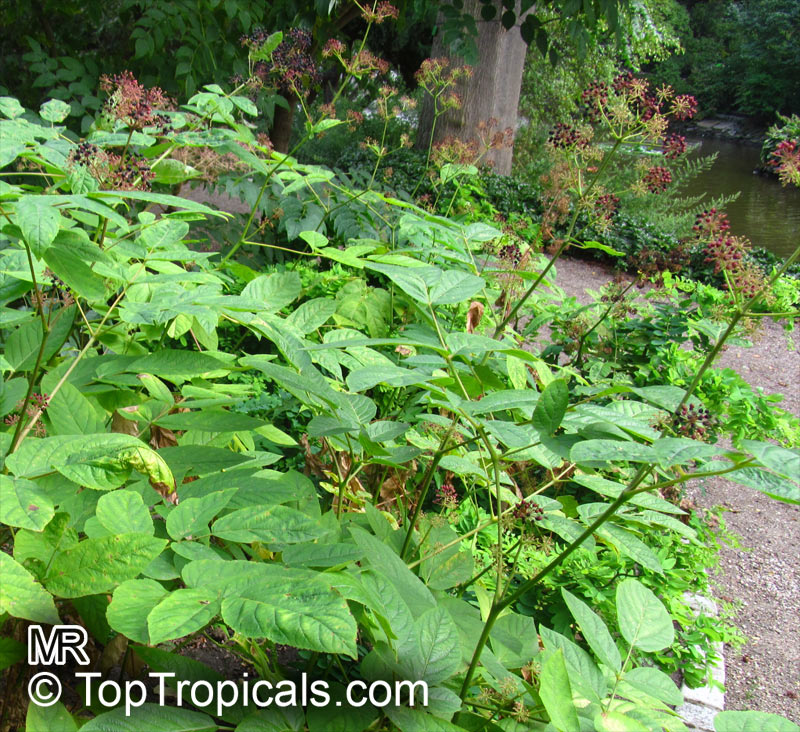
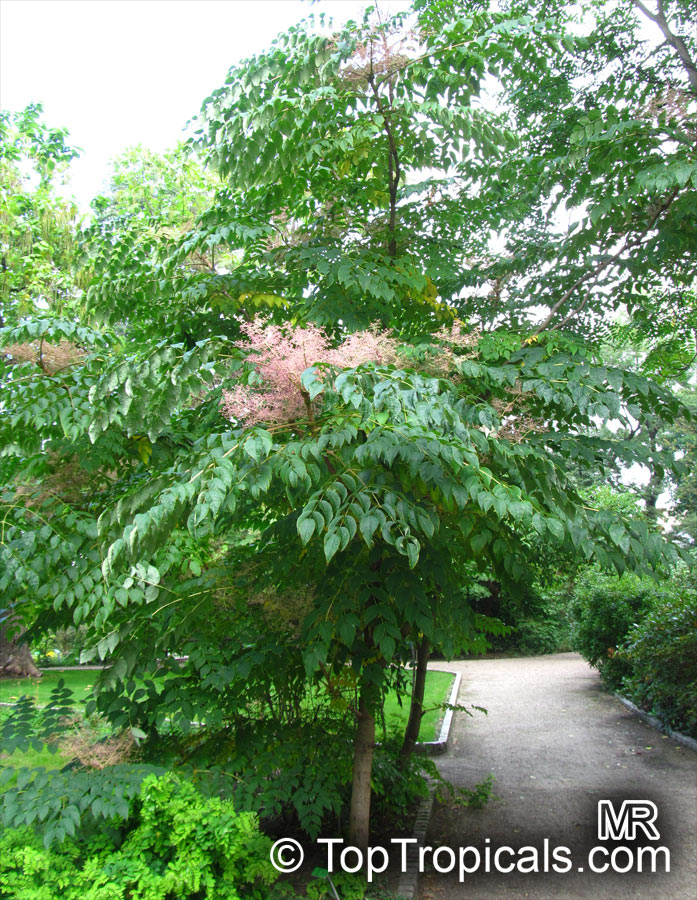
Botanical name: Aralia elata
Common name: Japanese Angelica Tree
Family: Araliaceae
Origin: China, Korea
USDA Zone: 4-9


Aralia elata, commonly known as Japanese Angelica Tree, is a deciduous small tree or large shrub in the Araliaceae family, native to eastern Asia, including Japan, Korea, eastern China, and parts of the Russian Far East. It develops an upright, sparsely branched habit with stout, often spiny stems and can reach 20 to 40 feet (6 to 12 m) tall. The enormous bipinnate leaves, often 2 to 4 feet (60 to 120 cm) long, give the plant a bold, tropical appearance despite its excellent cold hardiness.
In late summer, mature plants produce large terminal panicles of small creamy white flowers that attract bees and other pollinating insects, followed by clusters of glossy black berries that are relished by birds. Young spring shoots, known as tara-no-me, are considered a seasonal delicacy in Japan and are commonly prepared as tempura or other traditional dishes. Aralia elata grows best in full sun to partial shade and fertile, well-drained soil with consistent moisture, although established plants tolerate a range of conditions. It spreads gradually by root suckers, eventually forming colonies if left unmanaged. Hardy in USDA Zones 4-8, it is valued as both an architectural landscape plant and an edible ornamental with striking foliage, impressive flower clusters, and excellent seasonal interest.
Note: Aralia elata is listed as an invasive plant in the state of Maine. Sale and import into Maine are prohibited by state regulations.
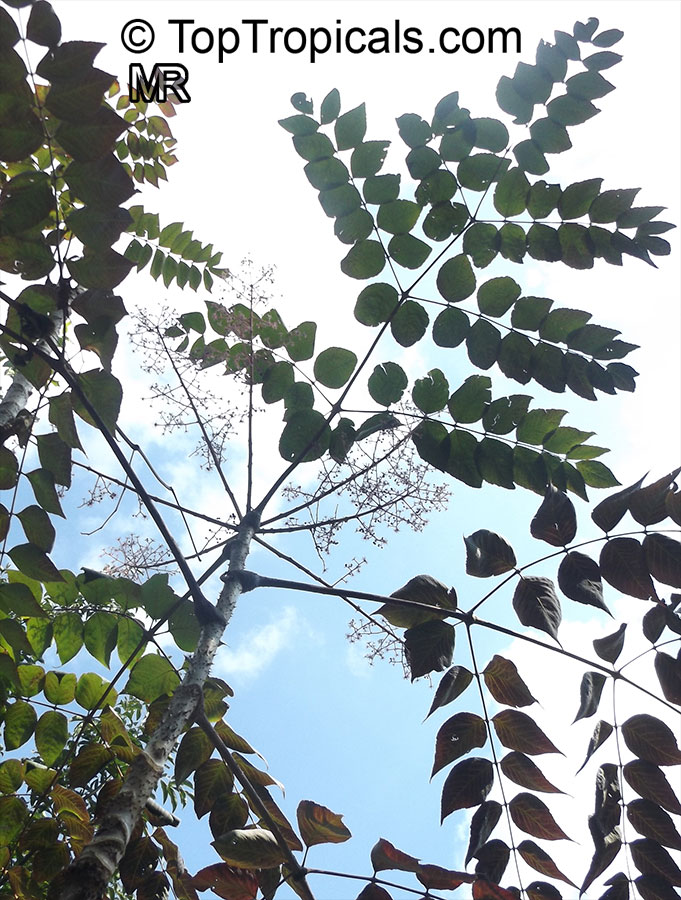
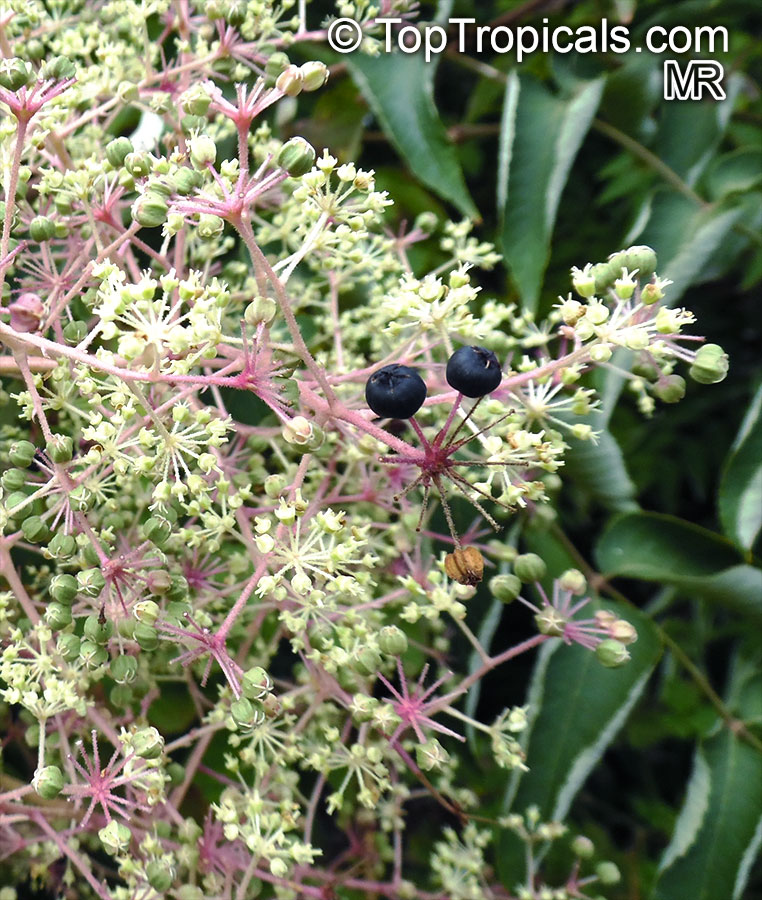
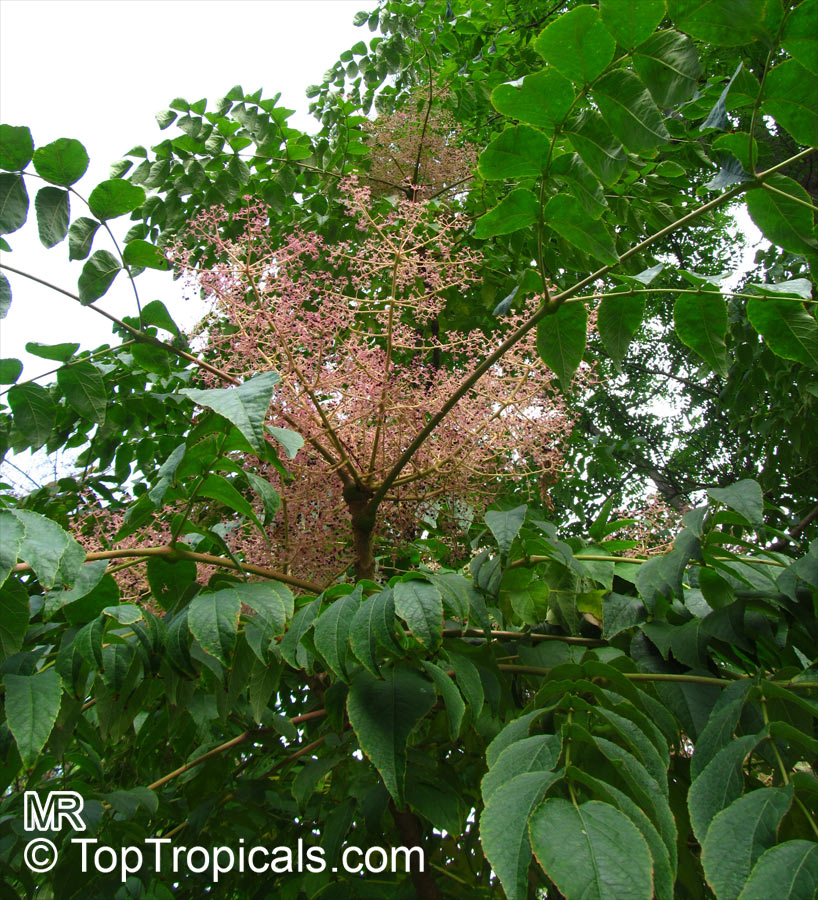
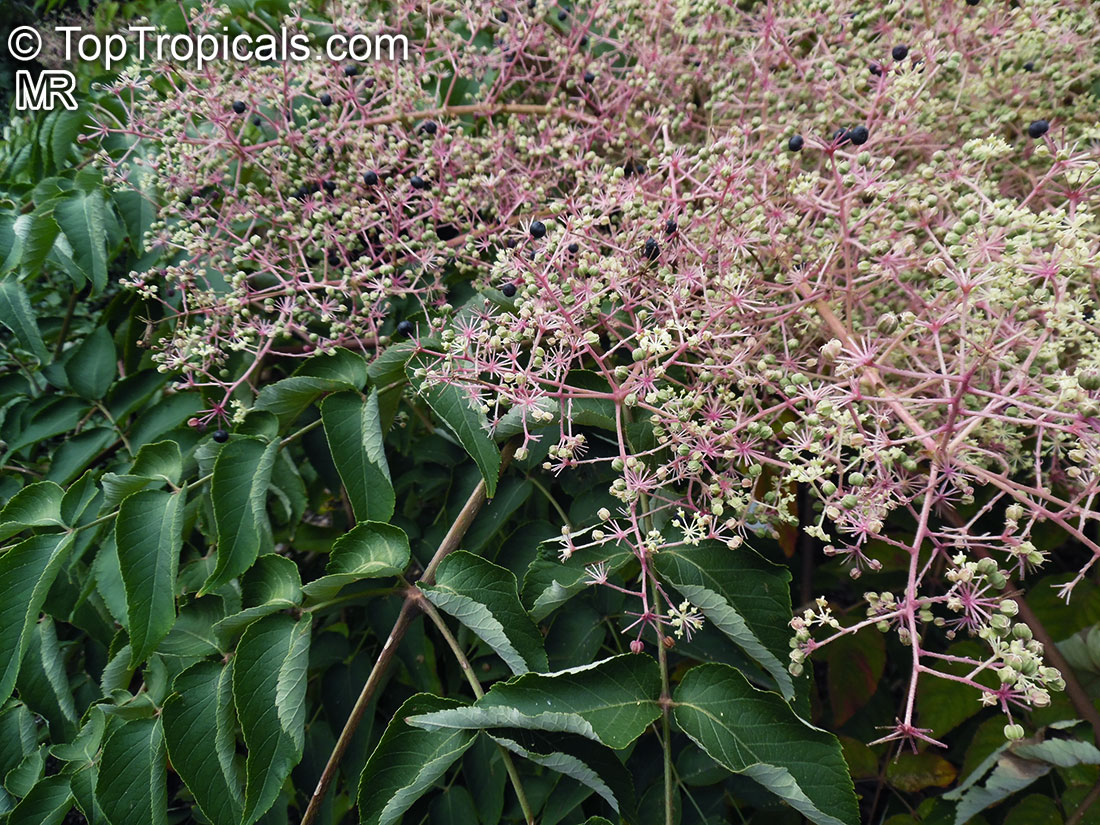
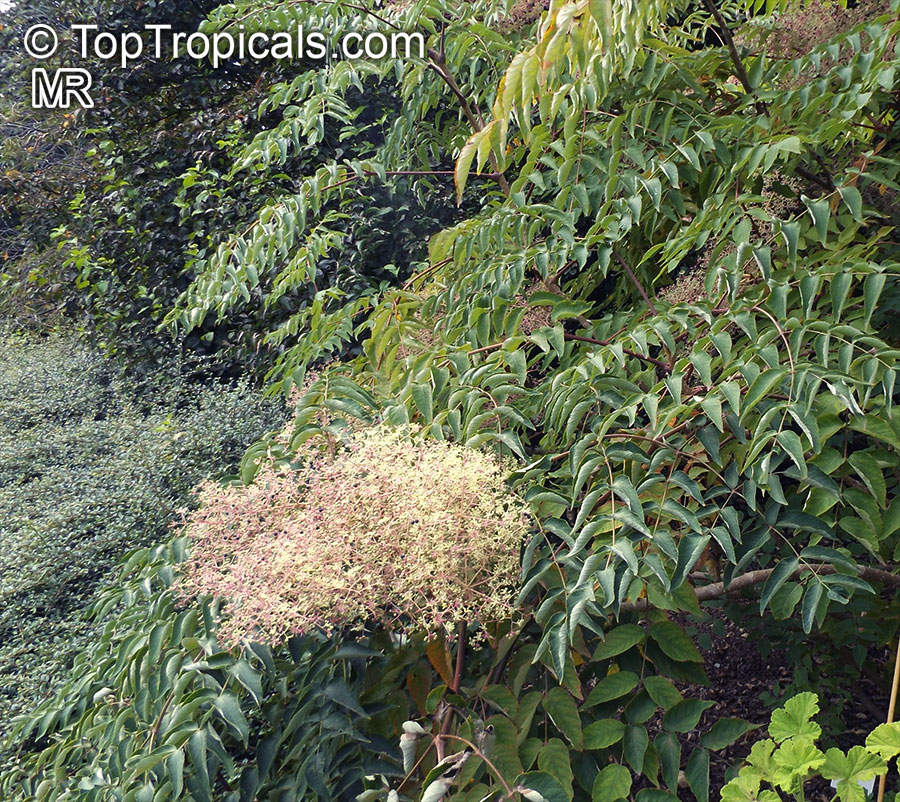
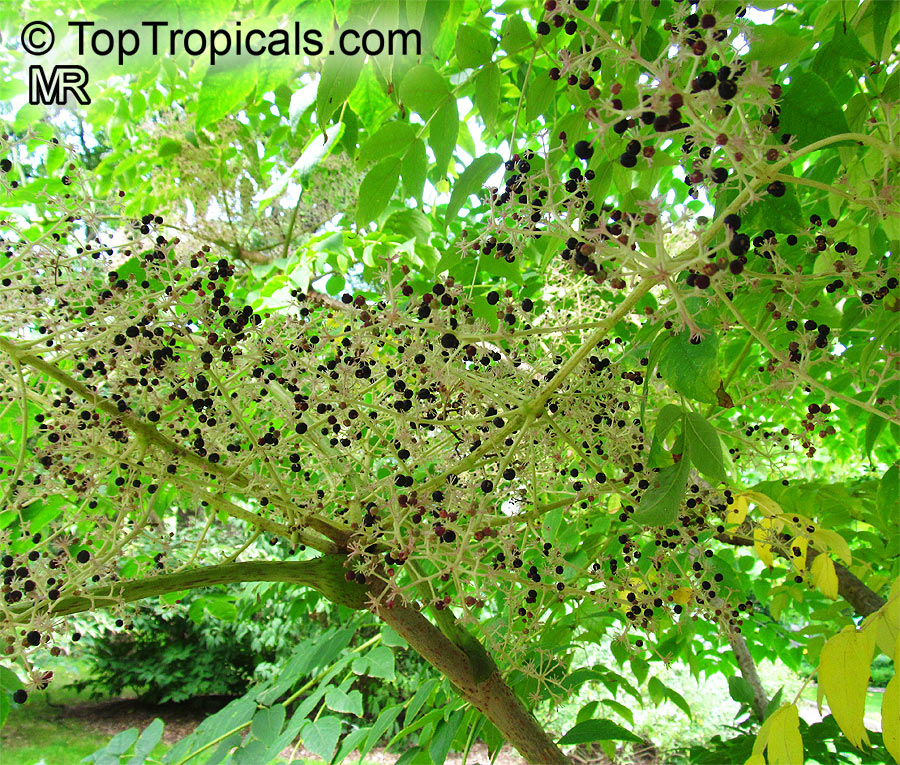
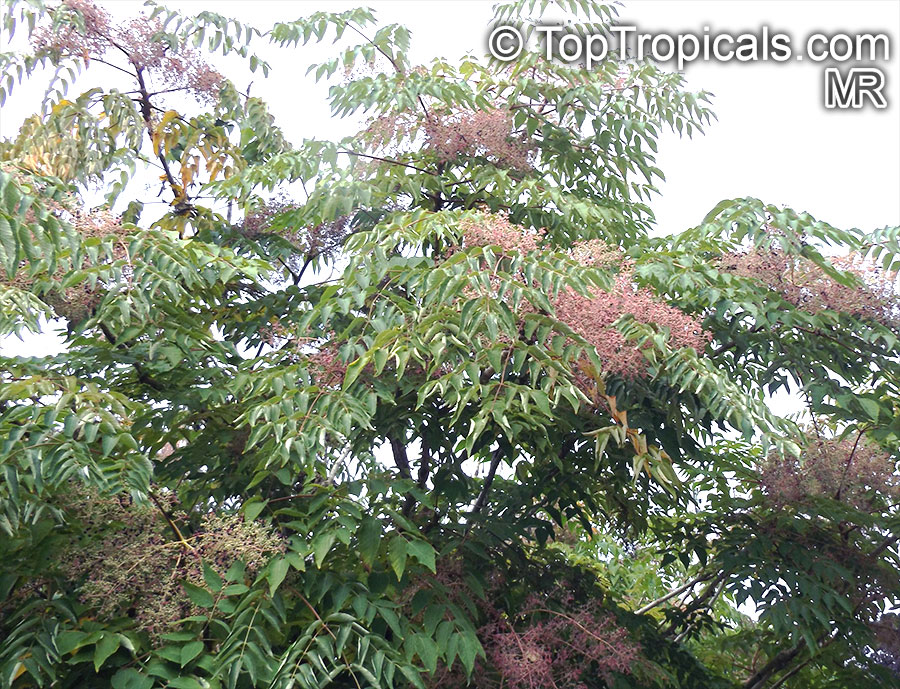
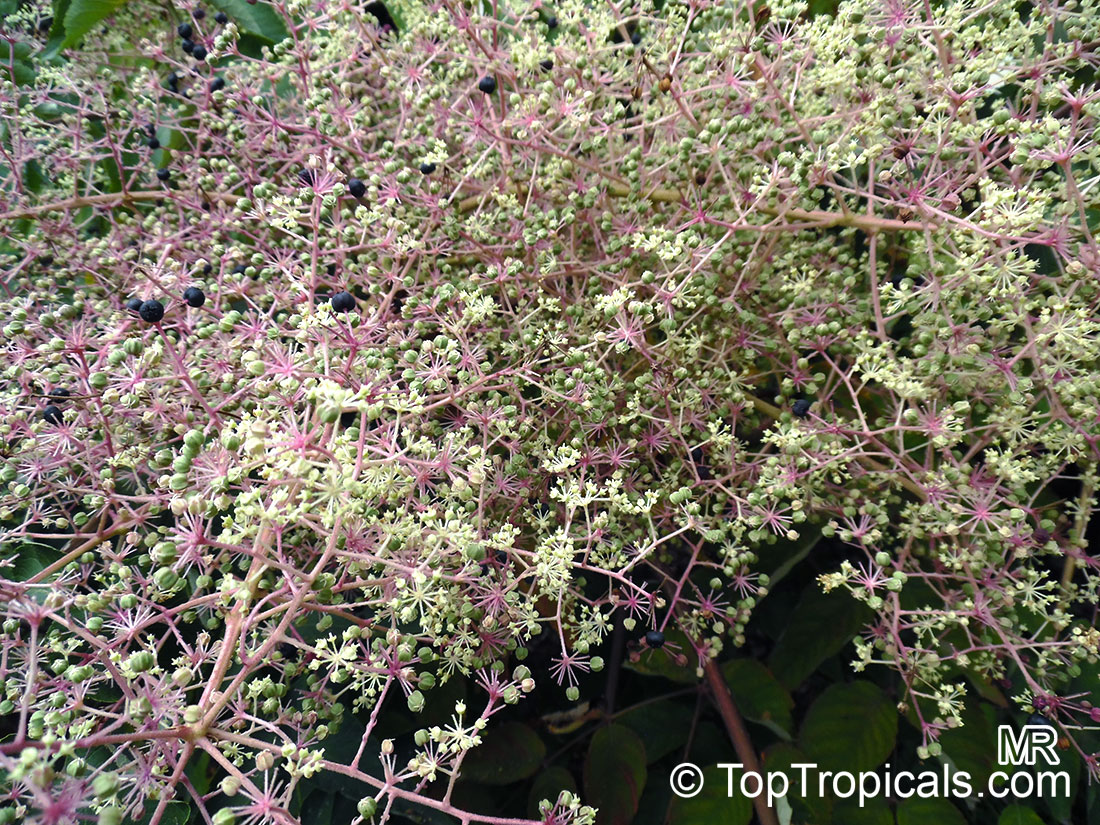
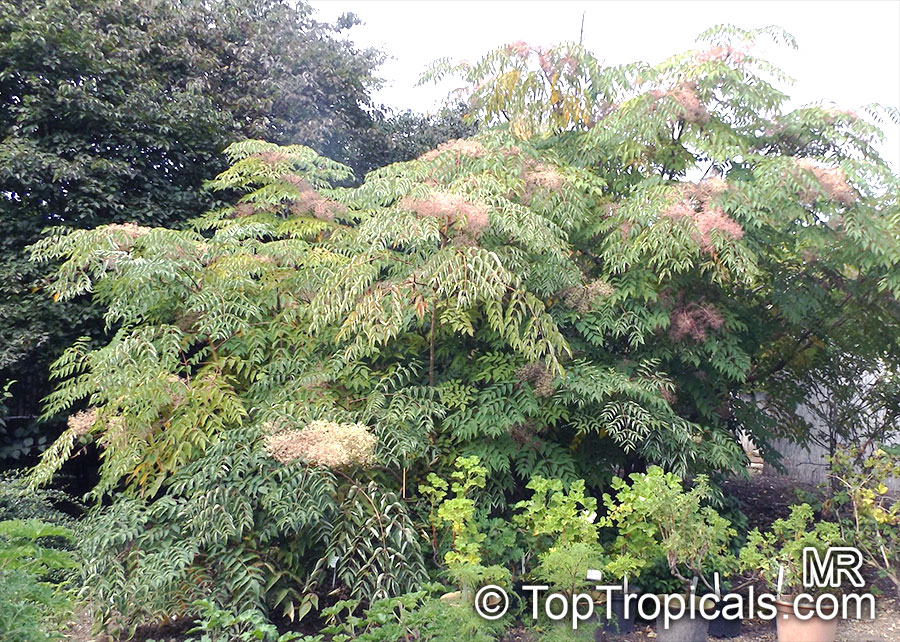
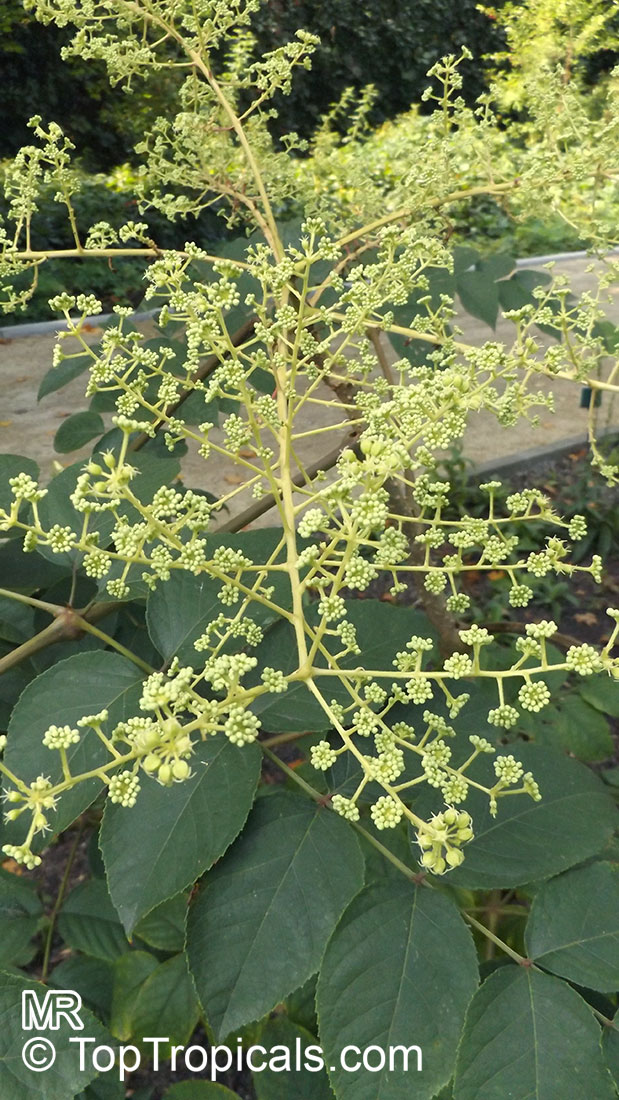
Botanical name: Aralia sp.
Common name: Spikenard
Family: Araliaceae
USDA Zone: 9-10
Aralia sp. grows as a large shrub reaching 5-10 feet in height or as a small tree reaching 10-20 feet tall. The deciduous plant prefers full sun and regular water, with zones 9-11 as the ideal growing location. The plant is drought tolerant and requires moderate watering. The leaves are a deep green and the white, off-white flowers attract butterflies and hummingbirds. As an ethnomedical plant, the species has had many uses and has been traditionally consumed for medicinal purposes.
When grown in the home garden, an ideal location is one with well draining, fertile, sandy soil and regular sun exposure. Aralia sp should receive regular water; however, during a period of drought, water requirements can be moderated. The plants prefer a neutral soil pH and mulching helps to retain moisture levels in the soil.
In cold regions, Aralia sp. is best grown in specific outdoor growing conditions or in a container. When grown in a pot, the soil should be amended with organic matter to help retain water and the pot should be placed in partial sun and checked regularly for water requirements. When temperatures drop below freezing, the container should be moved indoors until the temperatures moderates. The plant should be placed in a cool location, ideally between 50-60°F and continue to receive regular water. In warmer regions, the plant can be left outdoors year round.
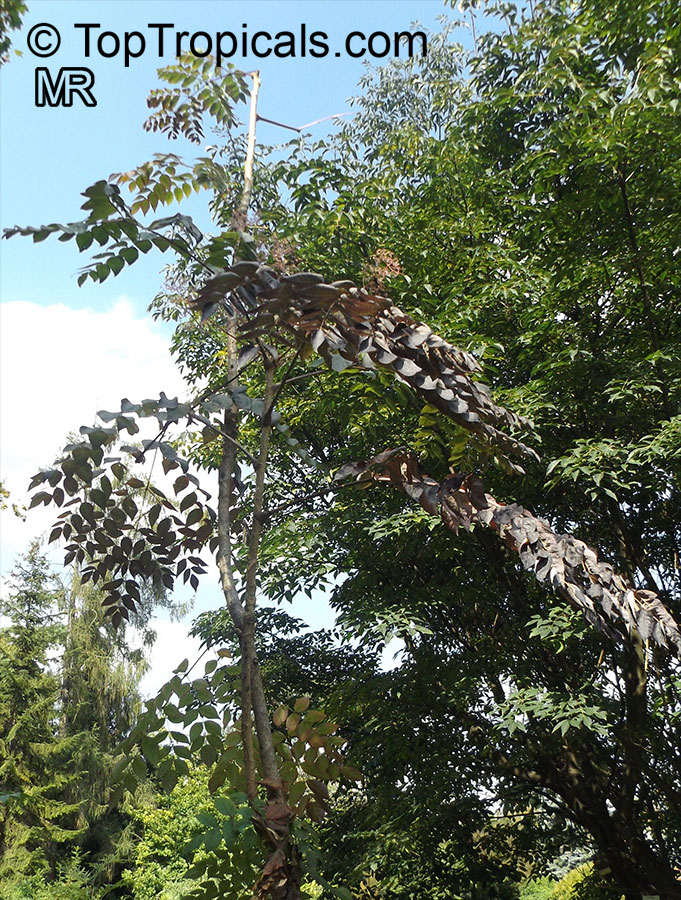
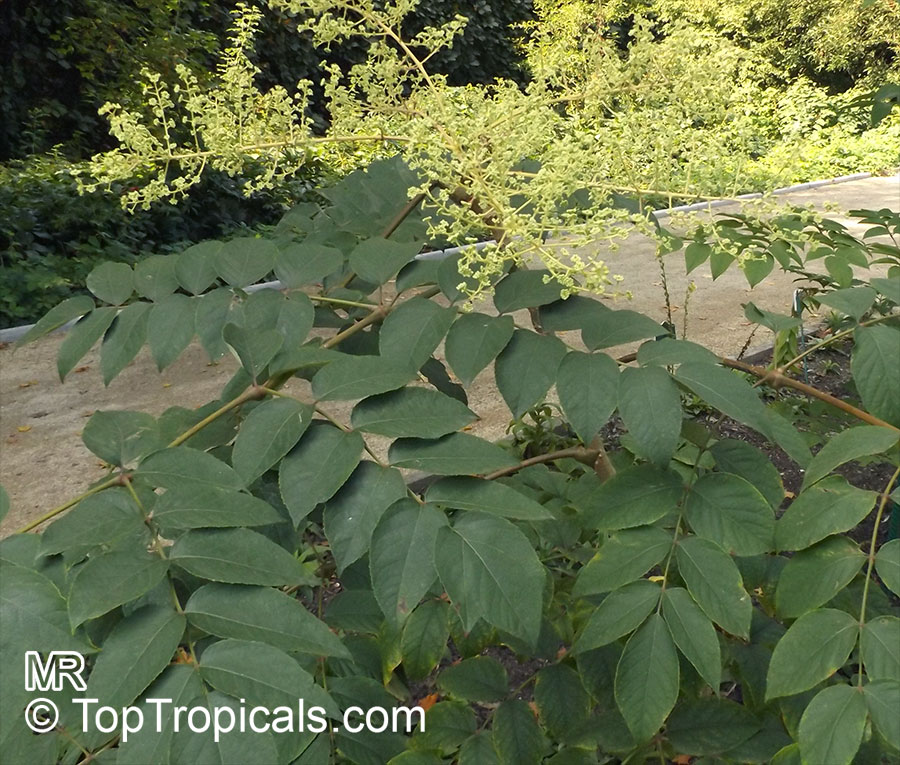
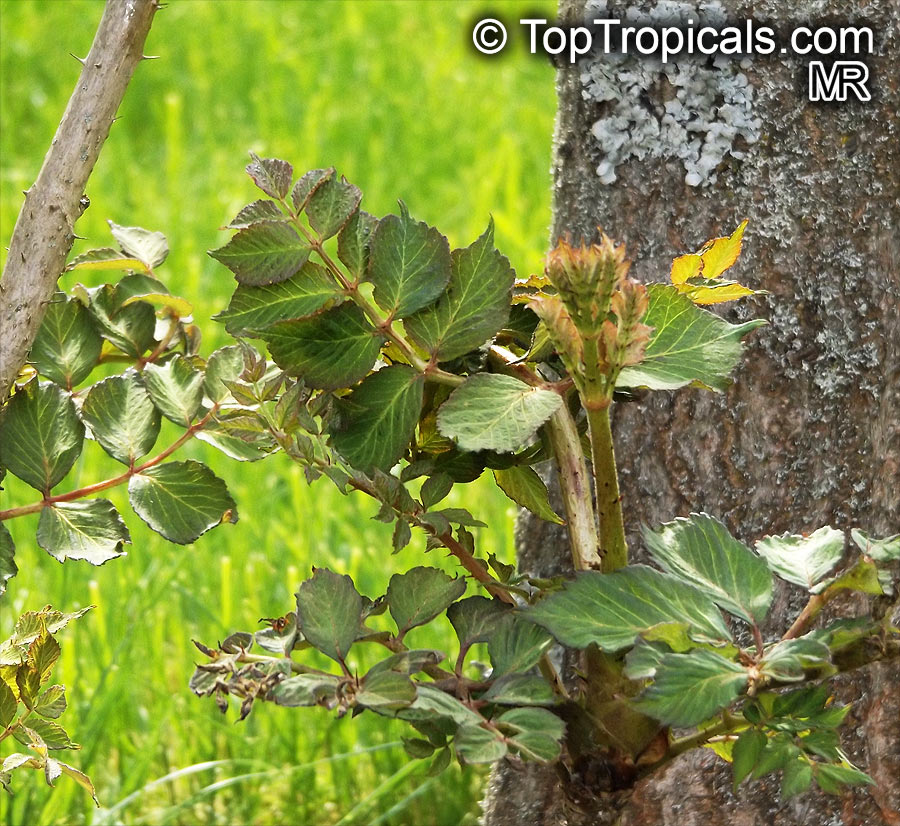
Botanical name: Aralia spinosa
Common names: Devil's Walkingstick, Angelica Tree
Family: Araliaceae
Origin: Eastern North America
USDA Zone: 4-9
The Devil's Walkingstick, or Aralia spinosa, is a deciduous plant native to Eastern North America. It can be found growing in woodlands, on roadsides, and under shrubs. This large shrub or small tree grows 5-10 ft tall. It prefers full sun or semi-shade and moderate water. Its foliage is composed of dramatic, spiny-toothed, and deeply-lobed leaves which are a medium to dark green in summer, turning yellow in fall.
In early summer, the Devil's Walkingstick produces large showy flower panicles in shades of white or off-white. These attract butterflies and hummingbirds and create a beautiful addition to the plant's dramatic foliage. The mature plant cold hardy in USDA Zone 4-9, where it will make an interesting addition to any garden or landscaping project.
The Devil's Walkingstick can be an interesting addition to any garden or landscape due to its prickly stems, large showy flower panicles and distinctive fall color. With proper care and maintenance, this plant can serve as a beautiful accent to any outdoor space for many years.
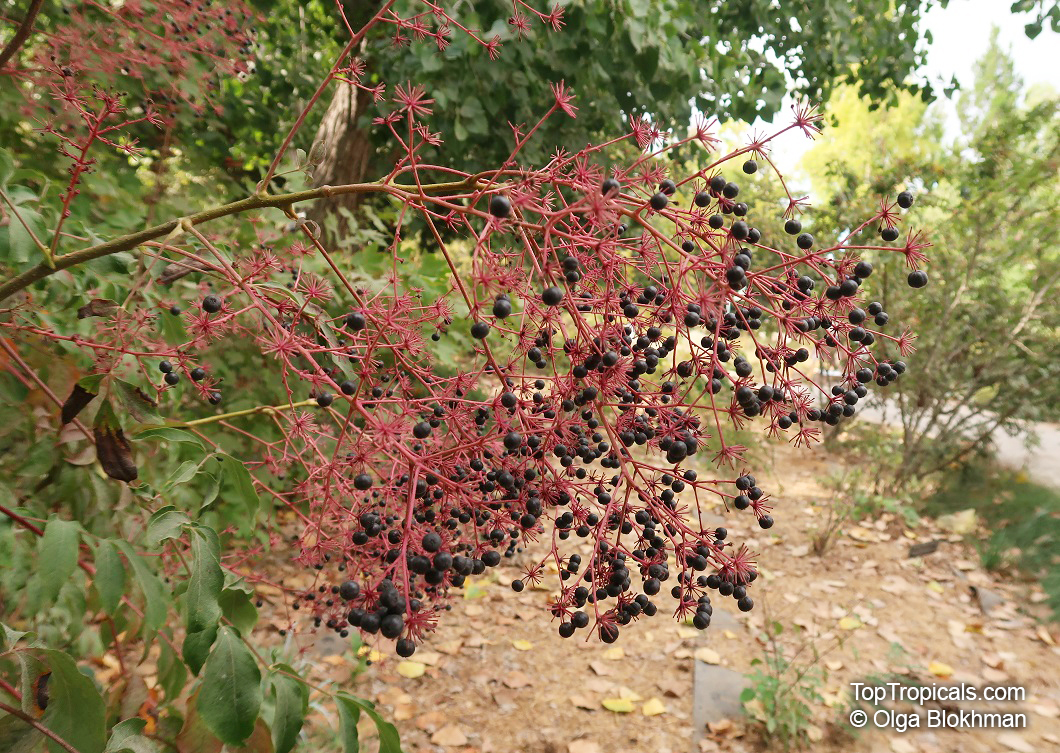
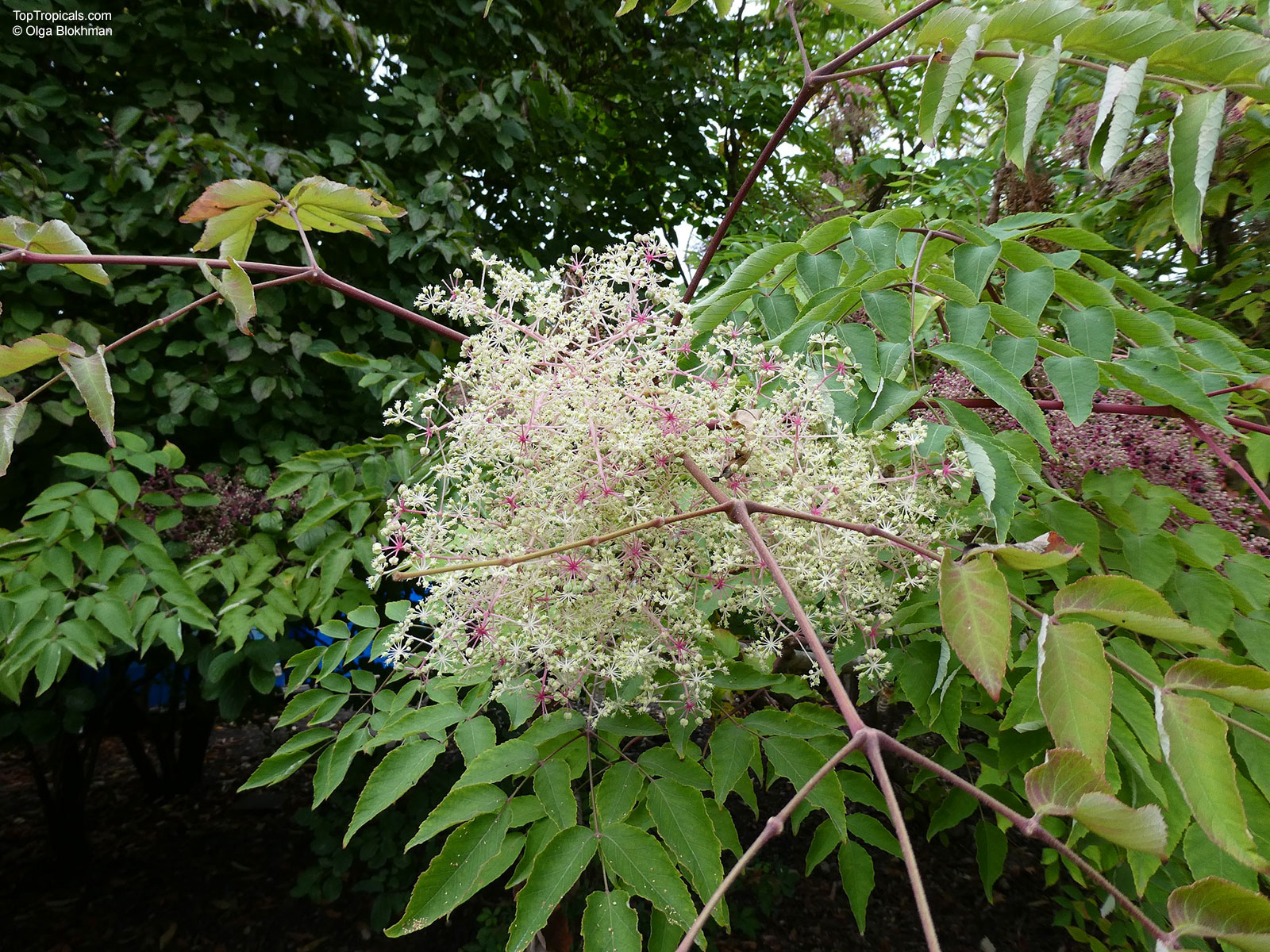
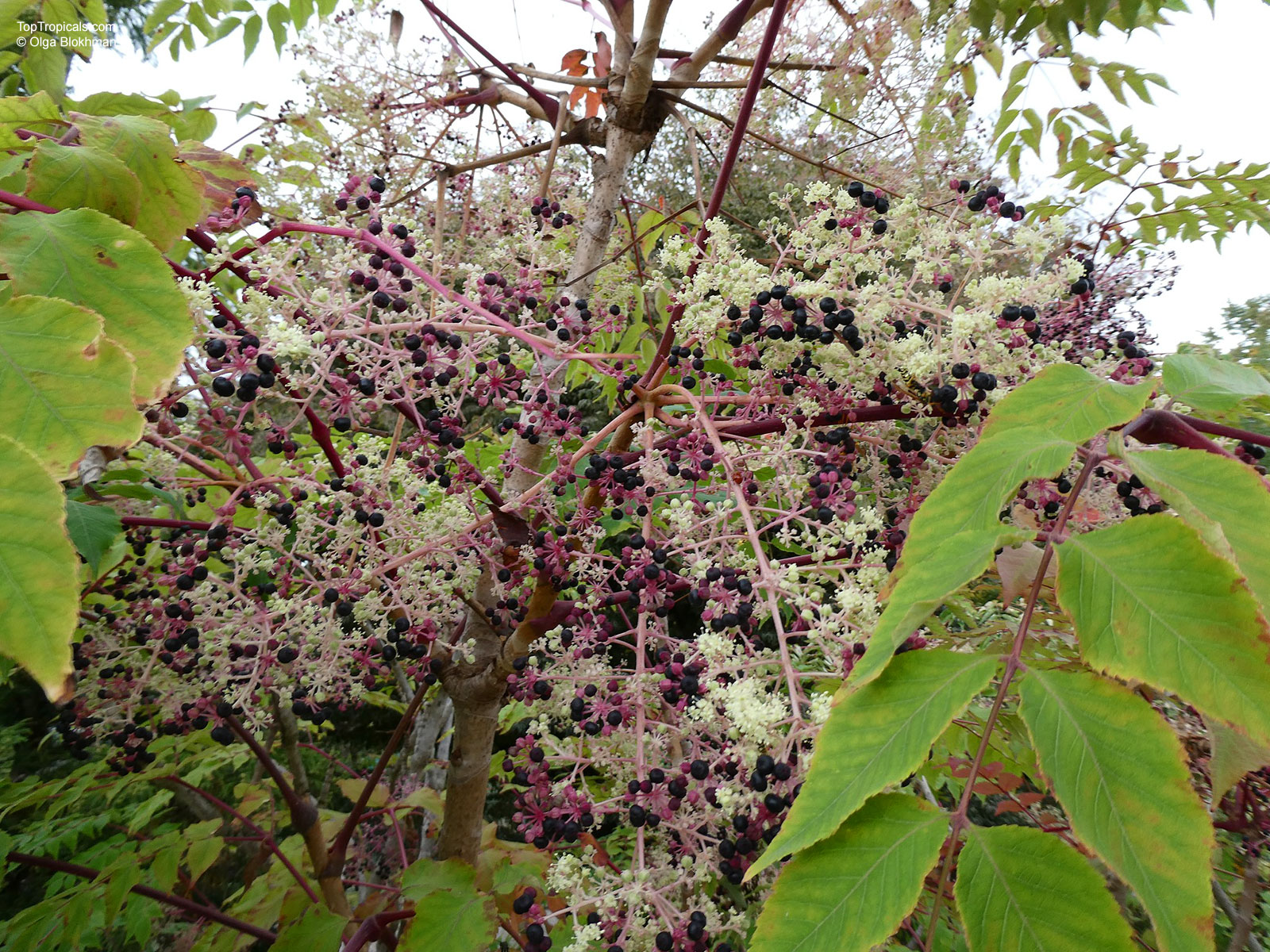
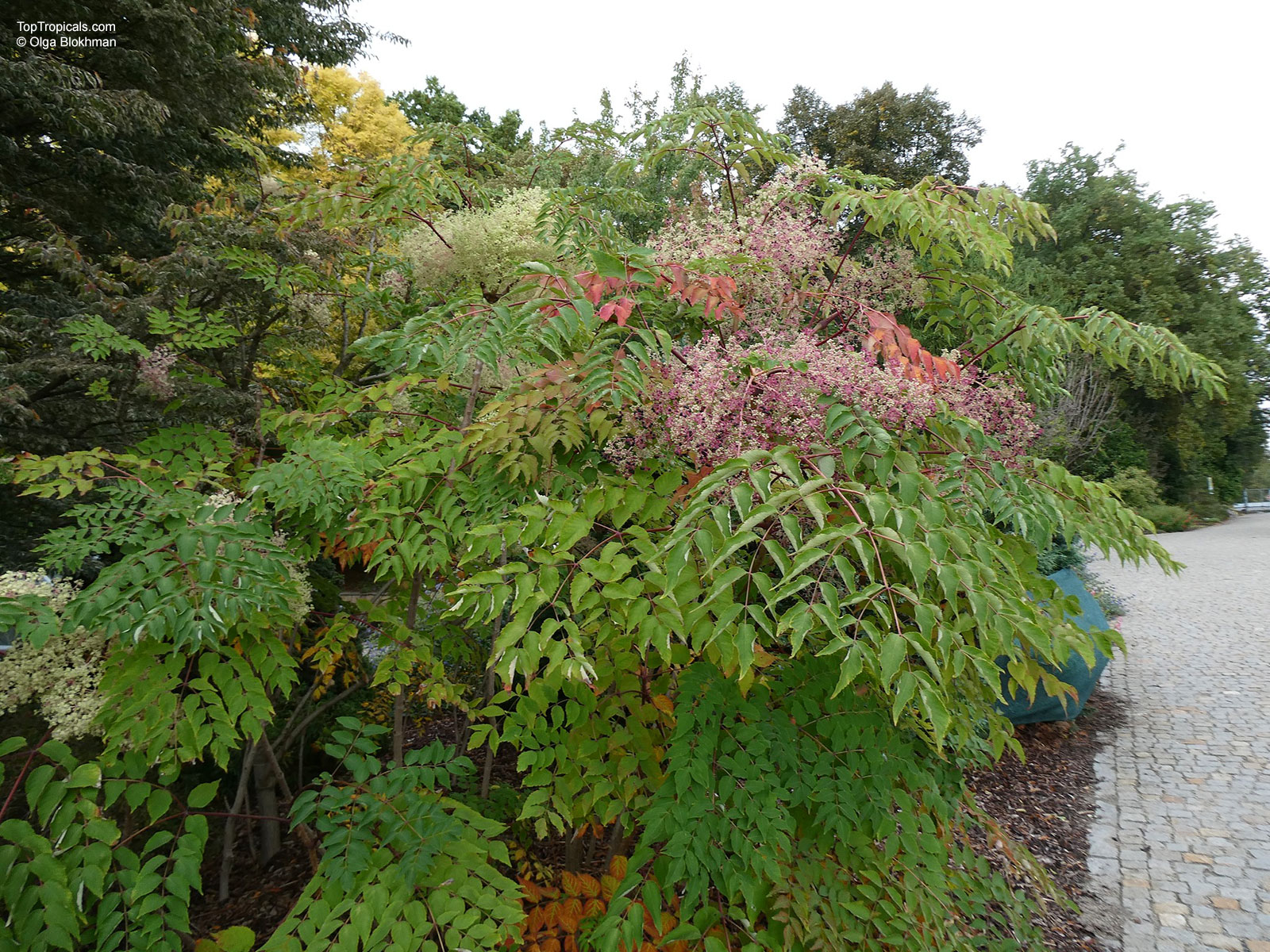

Botanical names: Tetrapanax papyriferus, Tetrapanax papyrifer, Fatsia papyrifer, Aralia papyrifera
Common name: Rice-Paper Tree
Family: Araliaceae
Origin: South China, Taiwan
USDA Zone: 6-10

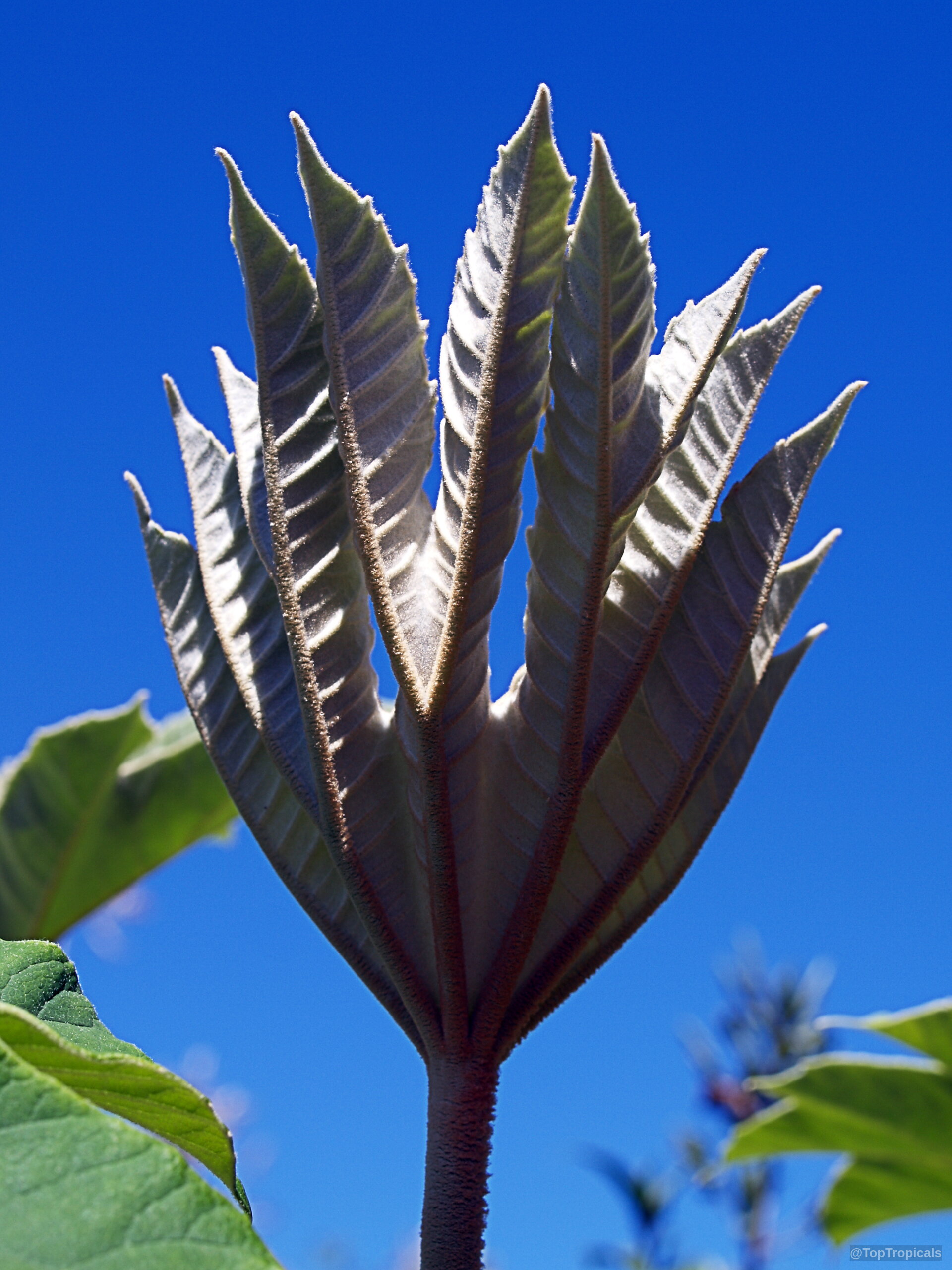
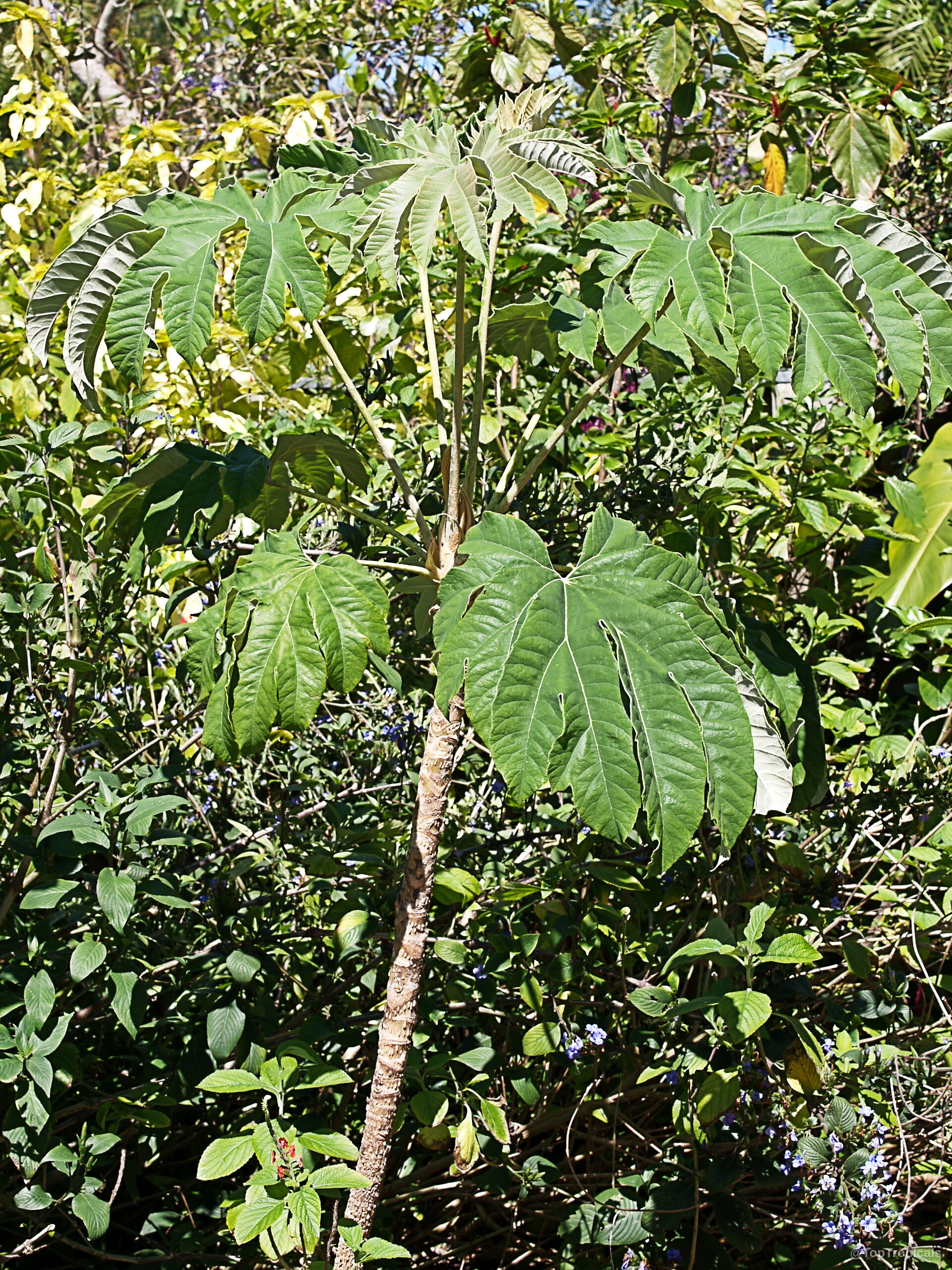
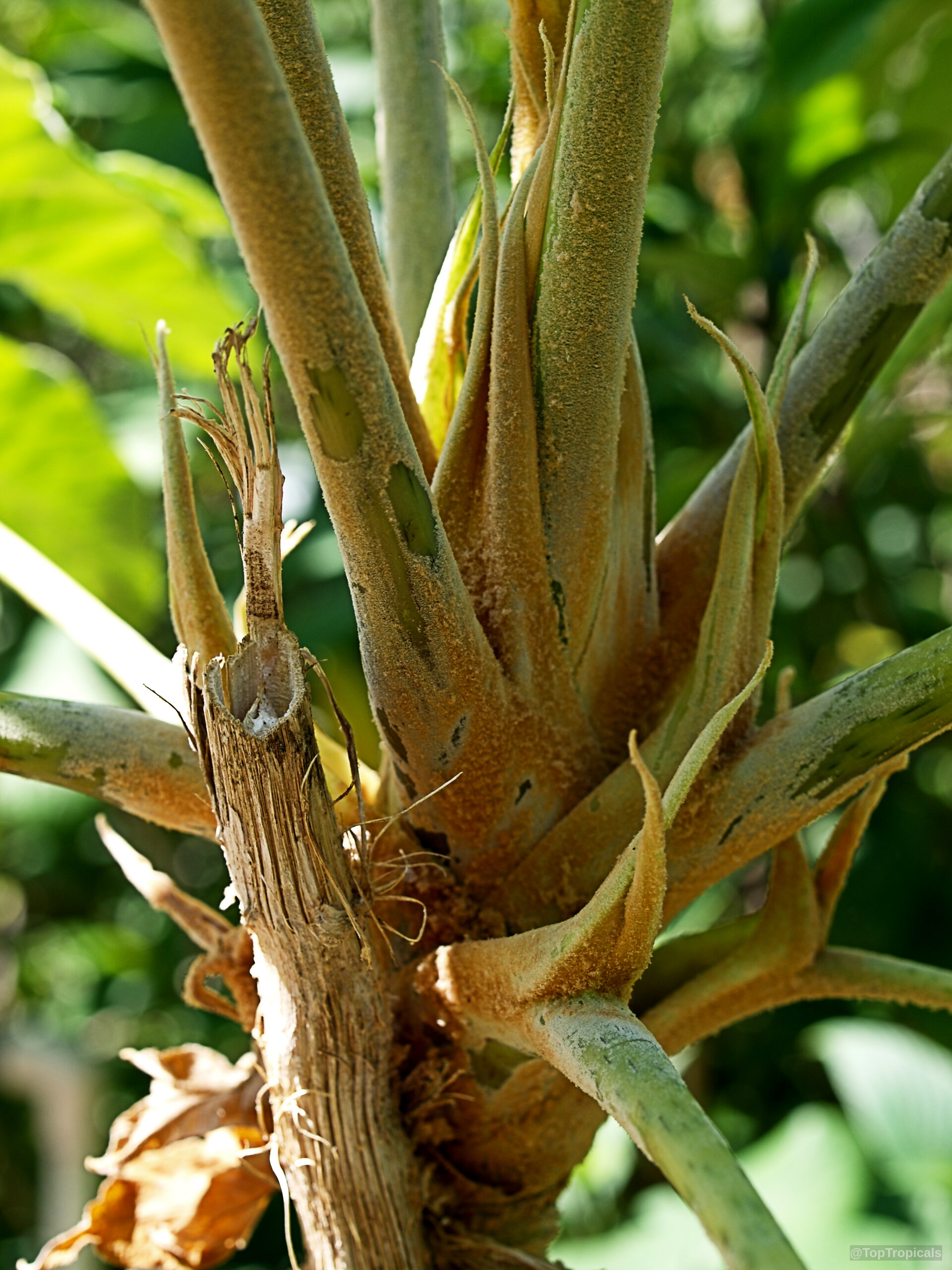
Tetrapanax is very dramatic in the landscape; the leaves can grow to a 3 feet across. The deeply-lobed leaves cluster at the top of the trunk on long stems. The underside of the leaves is covered with white, fine hairs which can be an irritant to eyes or skin. Winter-blooming creamy white flowers form large clusters. For best results, plants should be given a moist, shady and sheltered spot, to mimic the conditions of their forest home.
The dried pith of the stem is the source of rice paper in China.



Botanical name: Polyscias fruticosa
Common name: Ming Aralia
Family: Araliaceae
Origin: India
USDA Zone: 9-10

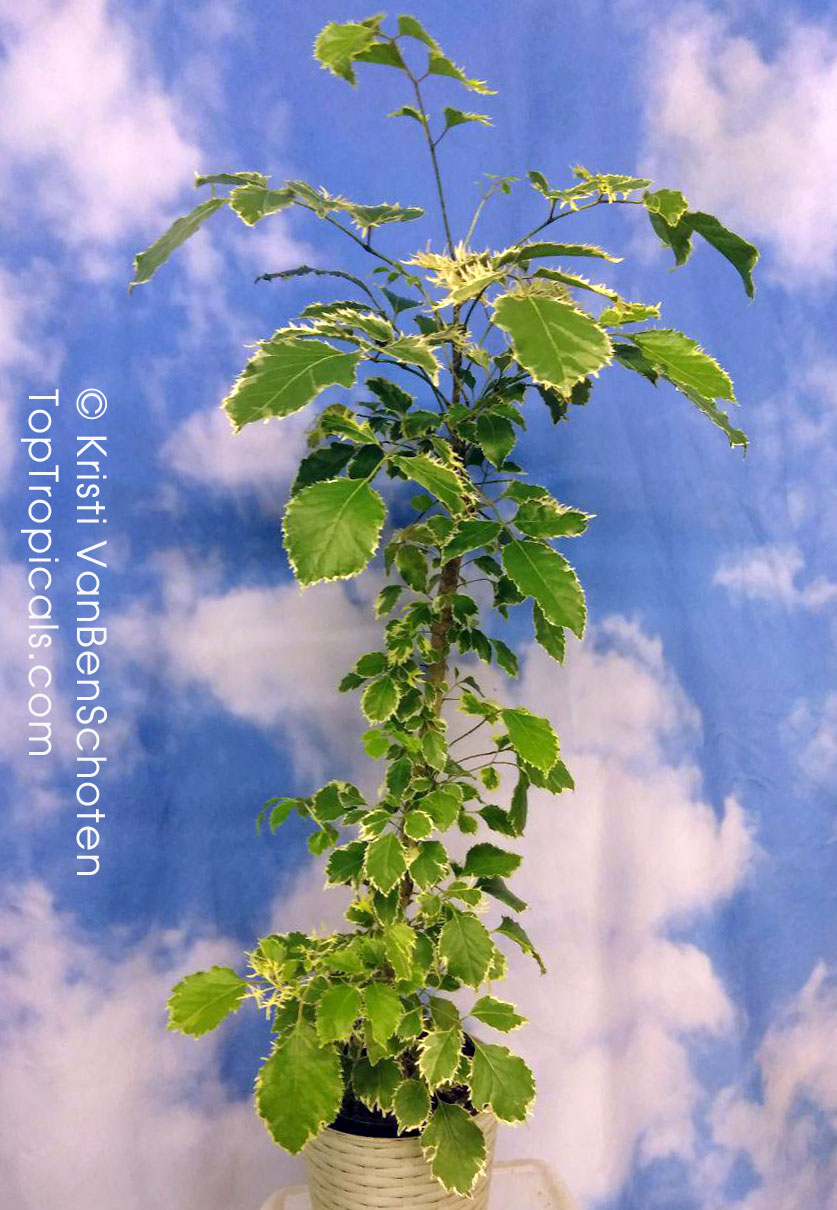
Ming aralia is one of the most popular of the polyscias with its upright-spreading growth habit and fine-textured, pinnately-divided leaves. Polyscias fruticosa Elegans (Parsley Aralia) is an excellent dwarf cultivar with leaves that resemble some of the finely-divided strains of parsley. It produces an abundance of side shoots and compactly-arranged, small leaves that make it a good choice for small pots in the 4" to 8" diameter range. Cream flowers are small and inconspicuous, but are borne on 6" to 7" panicles at the stem tips. The Ming Aralia can be propagated using stem cuttings, root cuttings, suckers, and air layering. The top of the root should be level with the surface. Some cultivars produce an abundance of suckers that can be removed when their root system is developed.
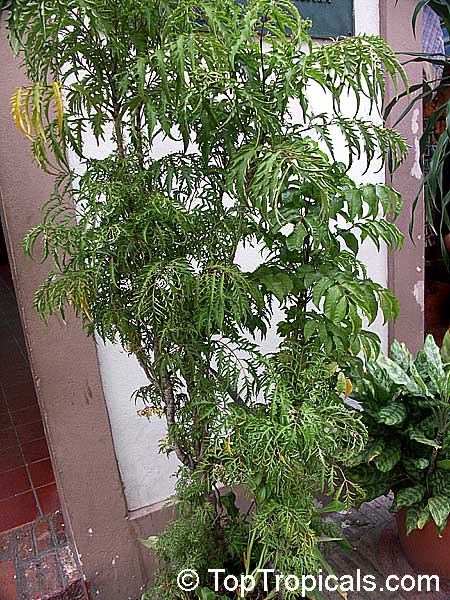
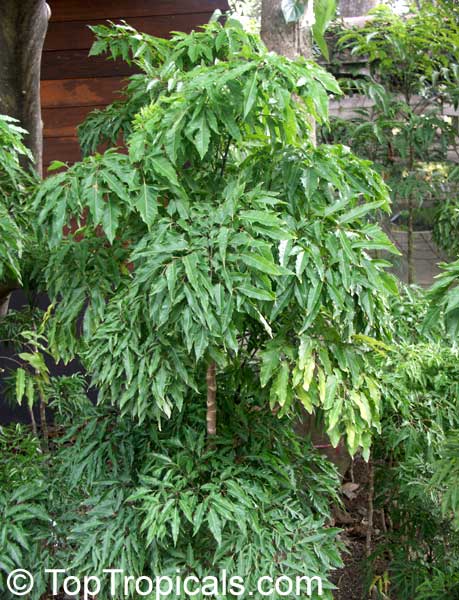
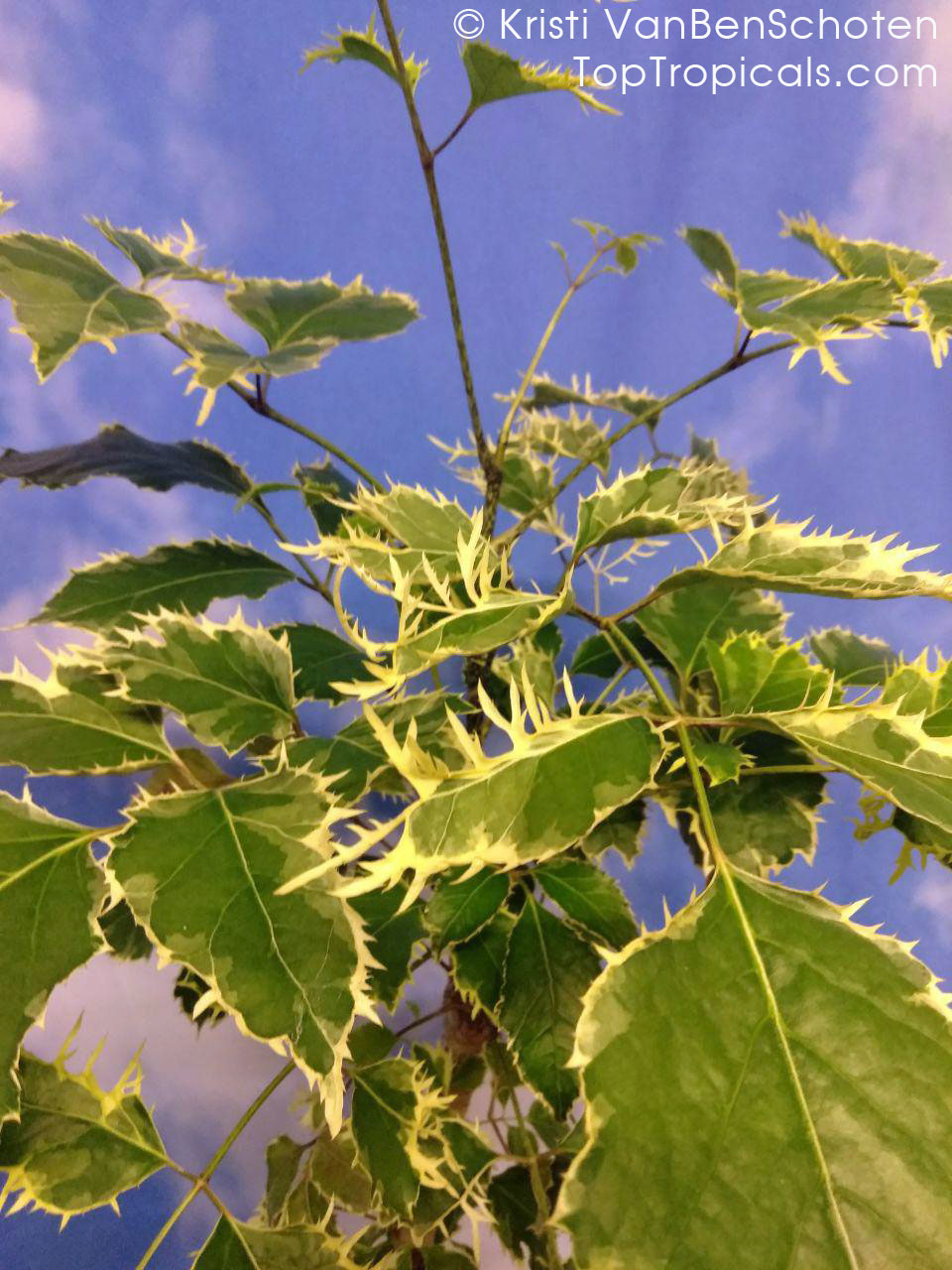
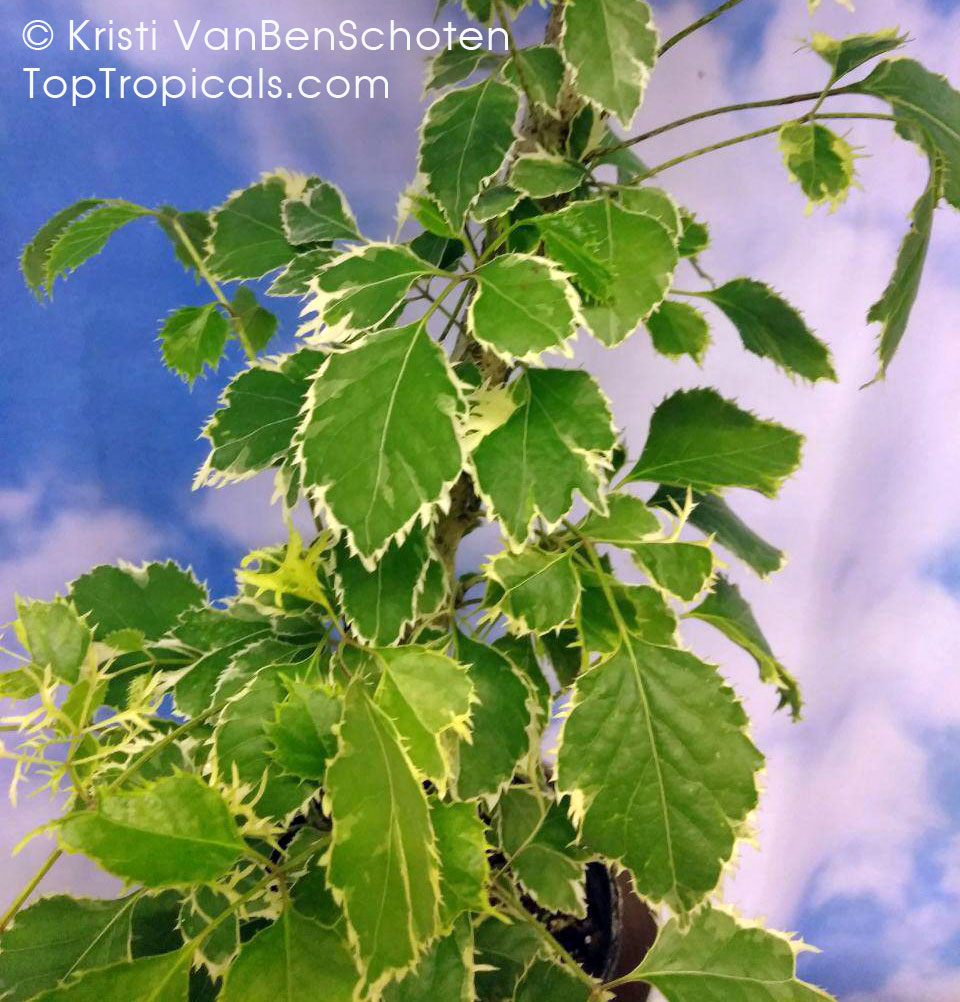
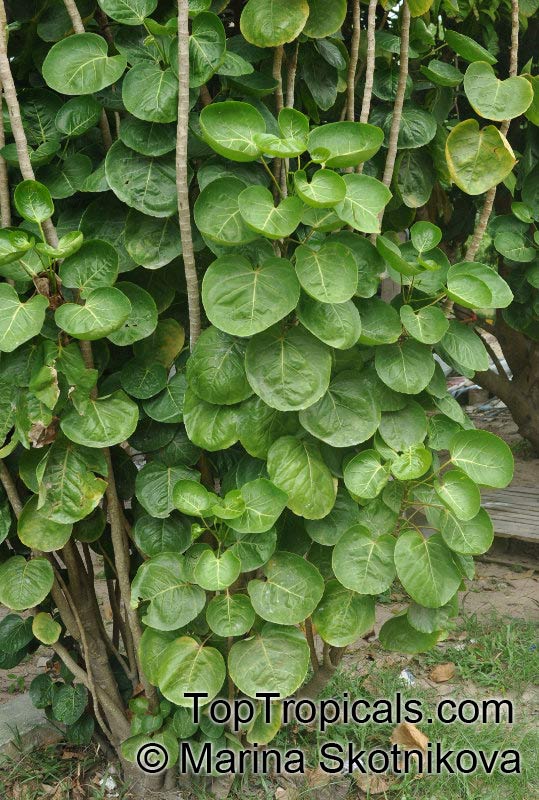
Botanical names: Polyscias scutellaria, Polyscias balfouriana, Polyscias pinnata
Common names: Shield Aralia, Dinner Plate Aralia
Family: Araliaceae
Origin: Africa to the Pacific Islands
USDA Zone: 9-10

Polyscias scutellaria, otherwise known as the Shield Aralia, is a beautiful and ornamental tropical tree native to regions of Africa and the Pacific Islands. Its foliage can range in colors from a bright green, to a slight variegation of green and yellow. This tree can grow up to 10-20 feet in height and is suitable for being grown as a bonsai.
When it comes to its ideal environment, Polyscias scutellaria prefers full sun and can even tolerate semi-shade. However, strong afternoon sunlight should be avoided as this can cause leaf burn. It should be watered regularly to ensure even moisture levels, though be careful not to overwater as this can lead to root rot. An easy draining soil which is nutrient-rich with a slightly acidic pH is optimal for growth in USDA Zones 9-11, however, if grown in cooler climates such as zone 8, it is important to move the plant to a more protected location, especially during winter and provide it with a specialized care. If planted in a pot, it is important to use a pot with a wide mouth and shallow depth; this will help the roots spread more easily.
The caudex, or swollen stem base, found on Polyscias scutellaria is an organ high in nitrogen which helps the plant to survive during periods of drought. This caudex should be regularly trimmed and monitored for insect infestations. Additionally, it is also important to pinch back the leaf nodes to encourage bushier growth and more flowers.
When given proper care, Polyscias scutellaria can give your garden a splash of its vibrant colors, and make an attractive feature piece. It thrives in warmer climates, but its hardy and resilient qualities allow it to survive the changing seasons. Just be sure to protect it from cold drafts and cold water, as this can cause leaf drop.
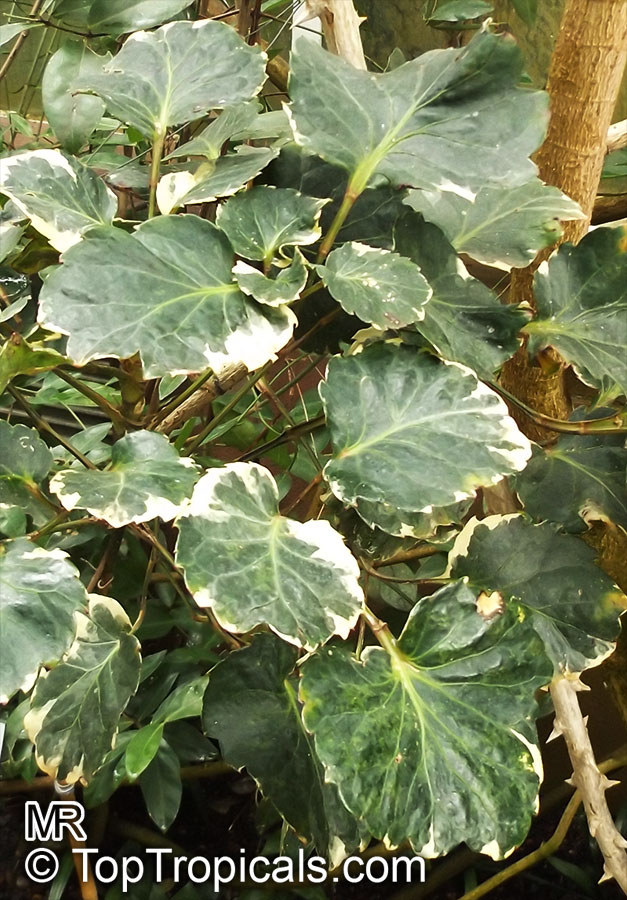
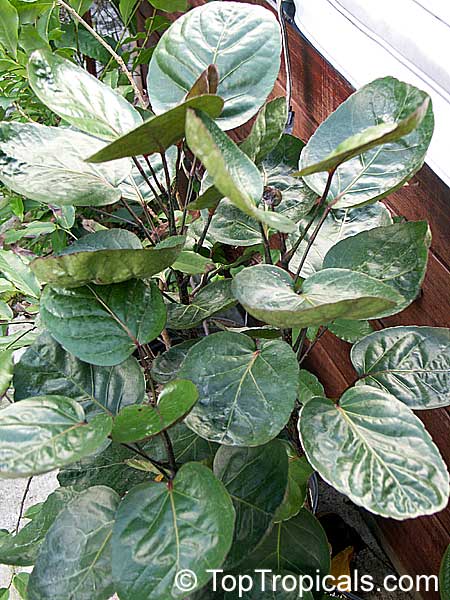
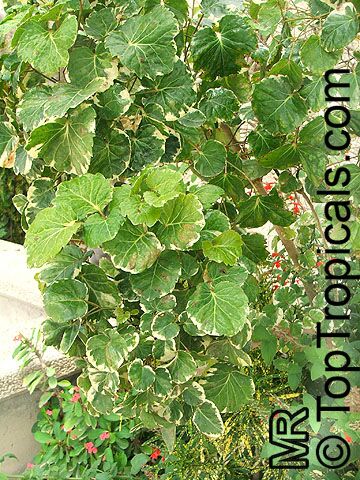
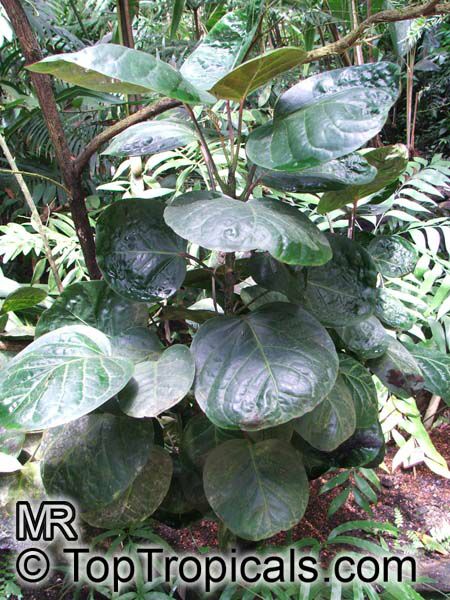
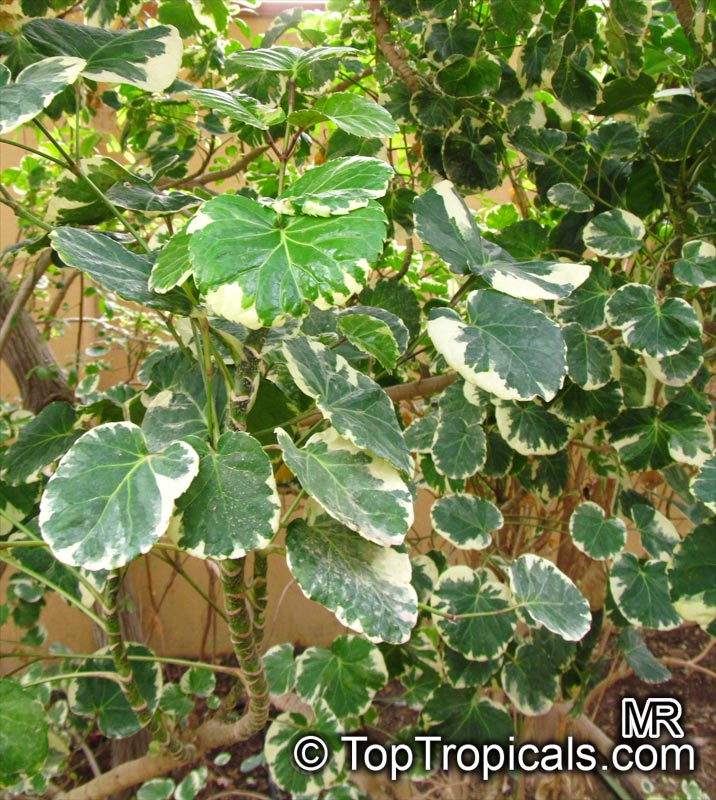
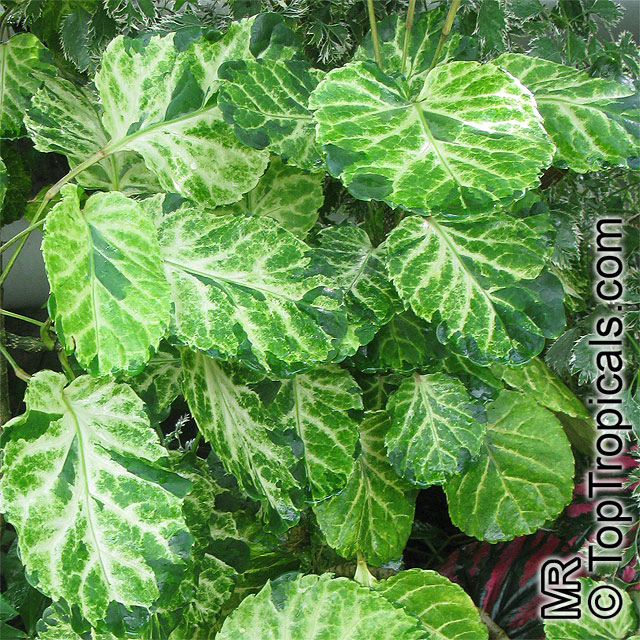
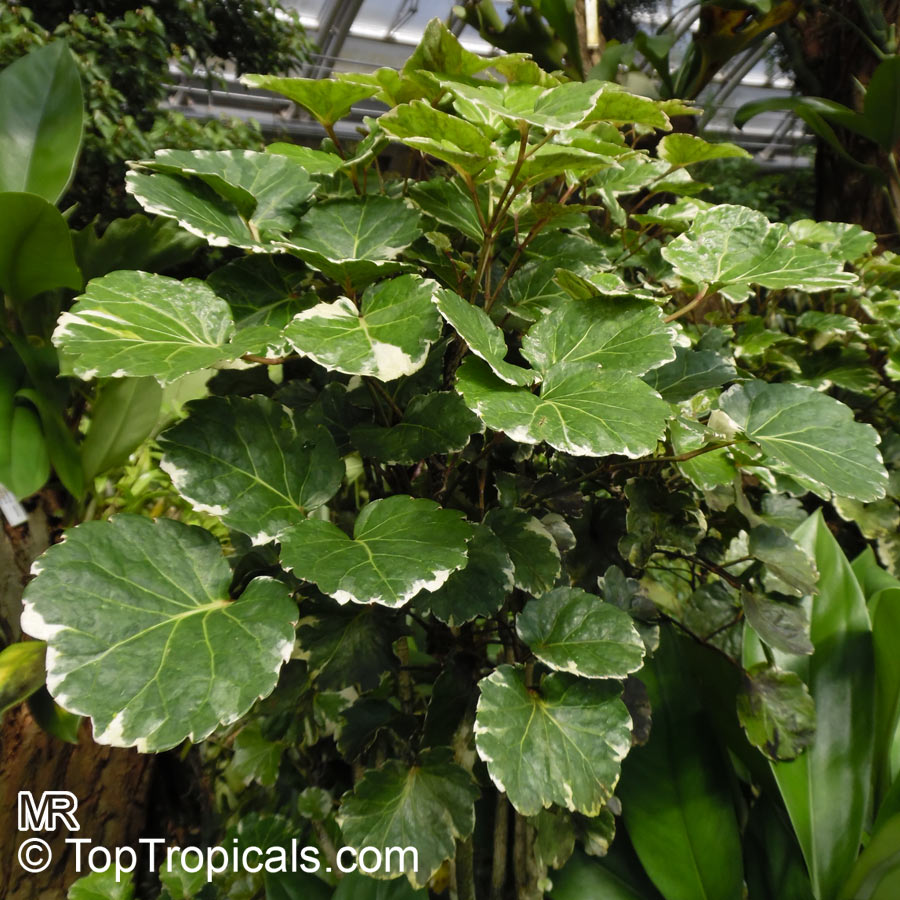
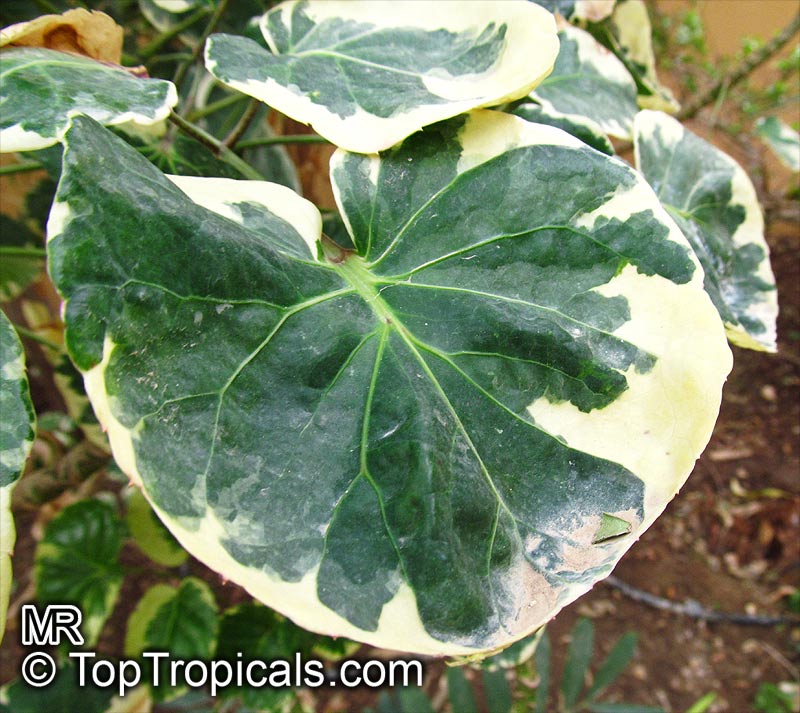
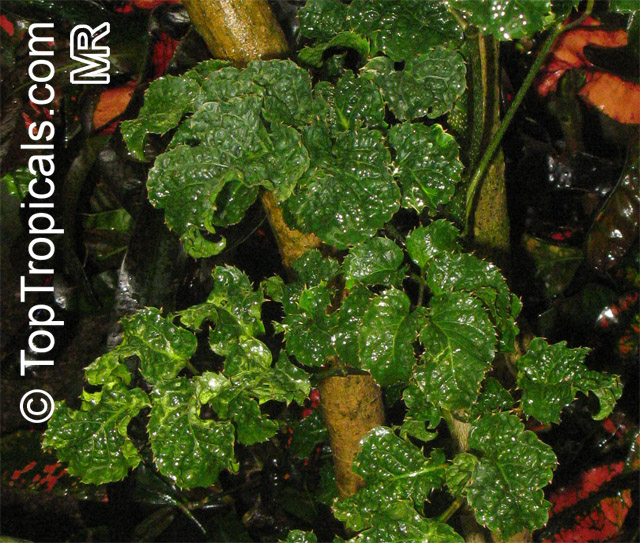
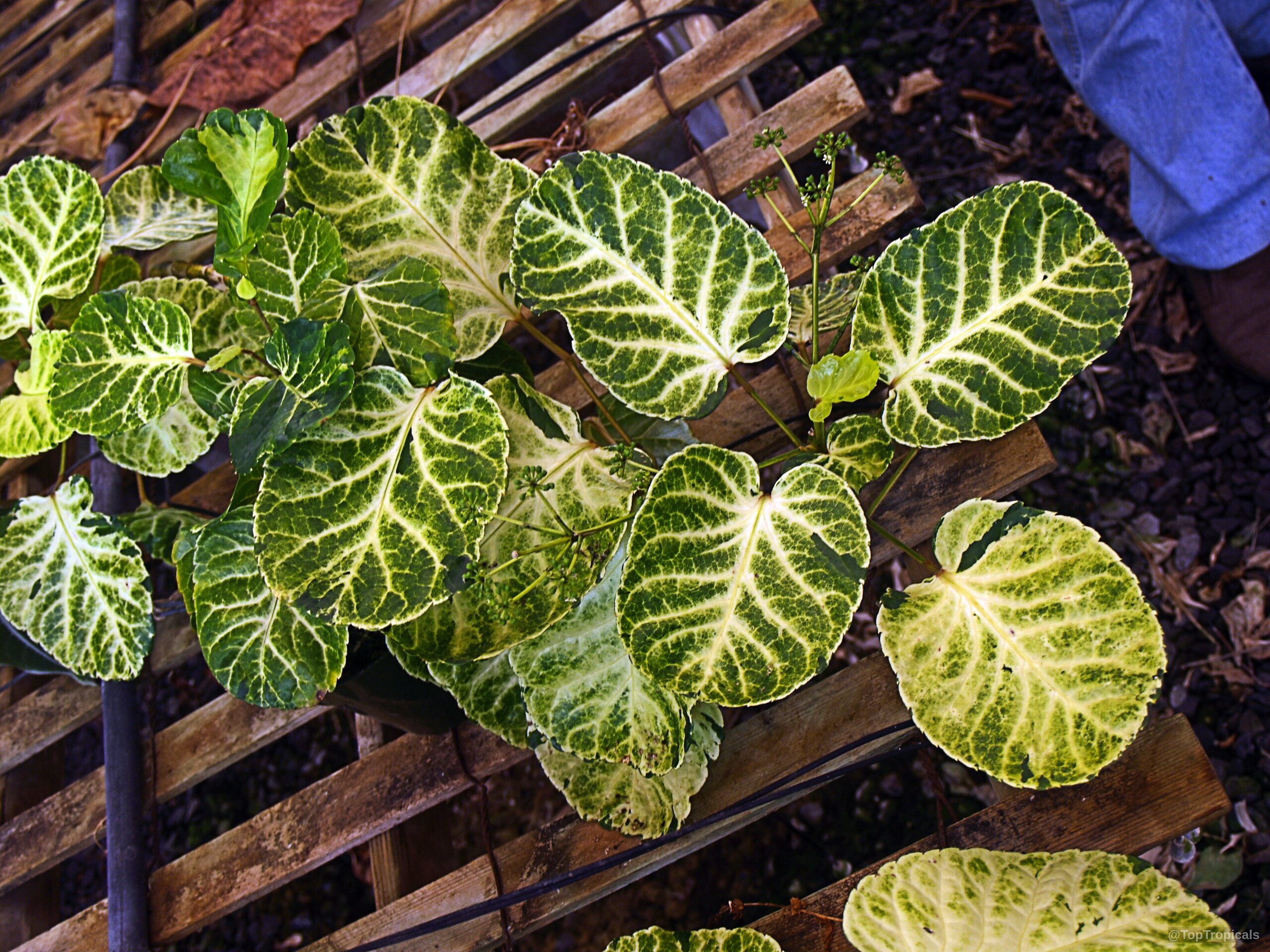
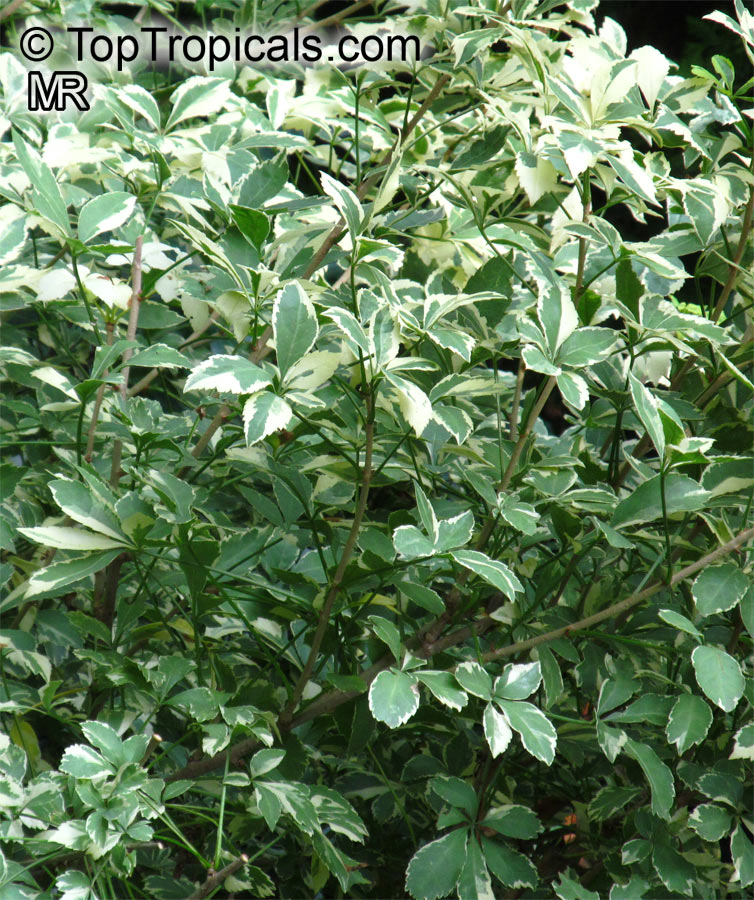
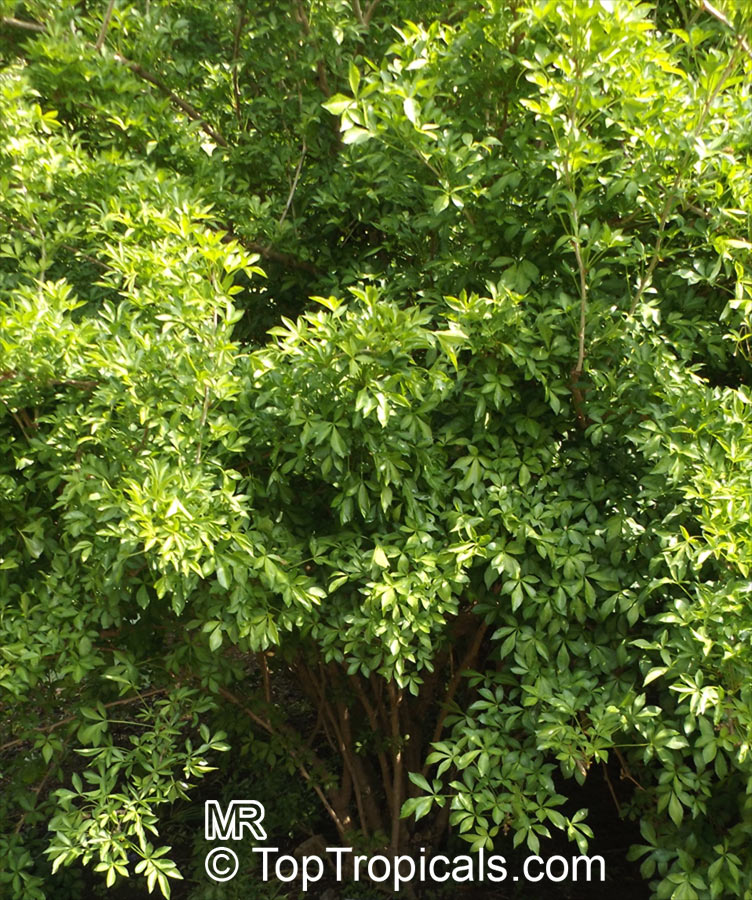
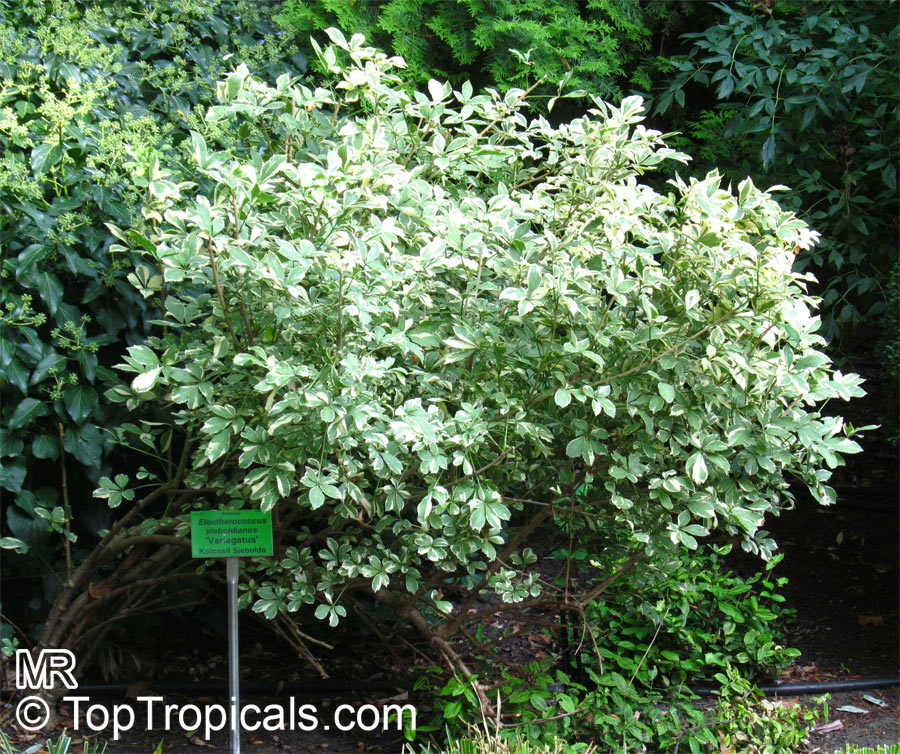
Botanical names: Eleutherococcus sieboldianus, Acanthopanax sieboldianus
Common name: Five-fingered Aralia
Family: Araliaceae
USDA Zone: 4-8

Elegant, upright growing deciduous shrub with arching stems. Excellent foliage for shade gardens, shrub borders, perennial border backgrounds or foundations.
| Next | |
Use link to repeat this search:
https://toptropicals.com/cgi-bin/garden_catalog/cat.cgi?find=Aralia&search_op=and&keyword_op=and&language=e&number=10
&no_change_lang=1&user=tt&sale=1&first=0