Zantedeschia sp. (Arum Lily)
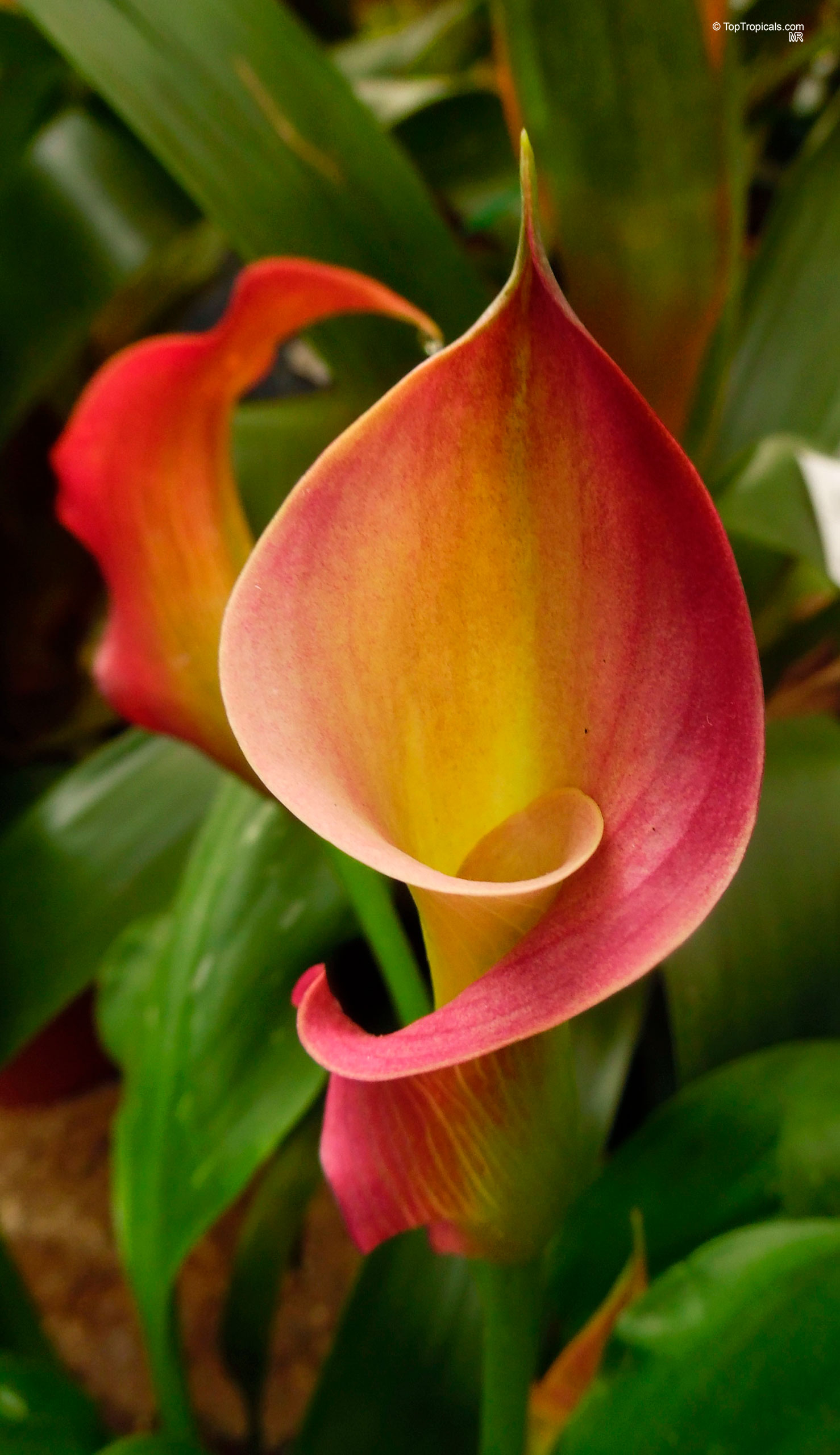
Botanical name: Zantedeschia sp.
Common names: Arum Lily, Calla Lily
Family: Araceae
Origin: South Africa

USDA Zone: 9-10
 Plant form: Small
 Mature height: 2-5 ft
 Sun exposure: Full sun or bright light indoor; semi-shade
 Cold tolerance: Frost sensitive. Protect from freezing.
 Watering: Keep soil moist; bog or aquatic


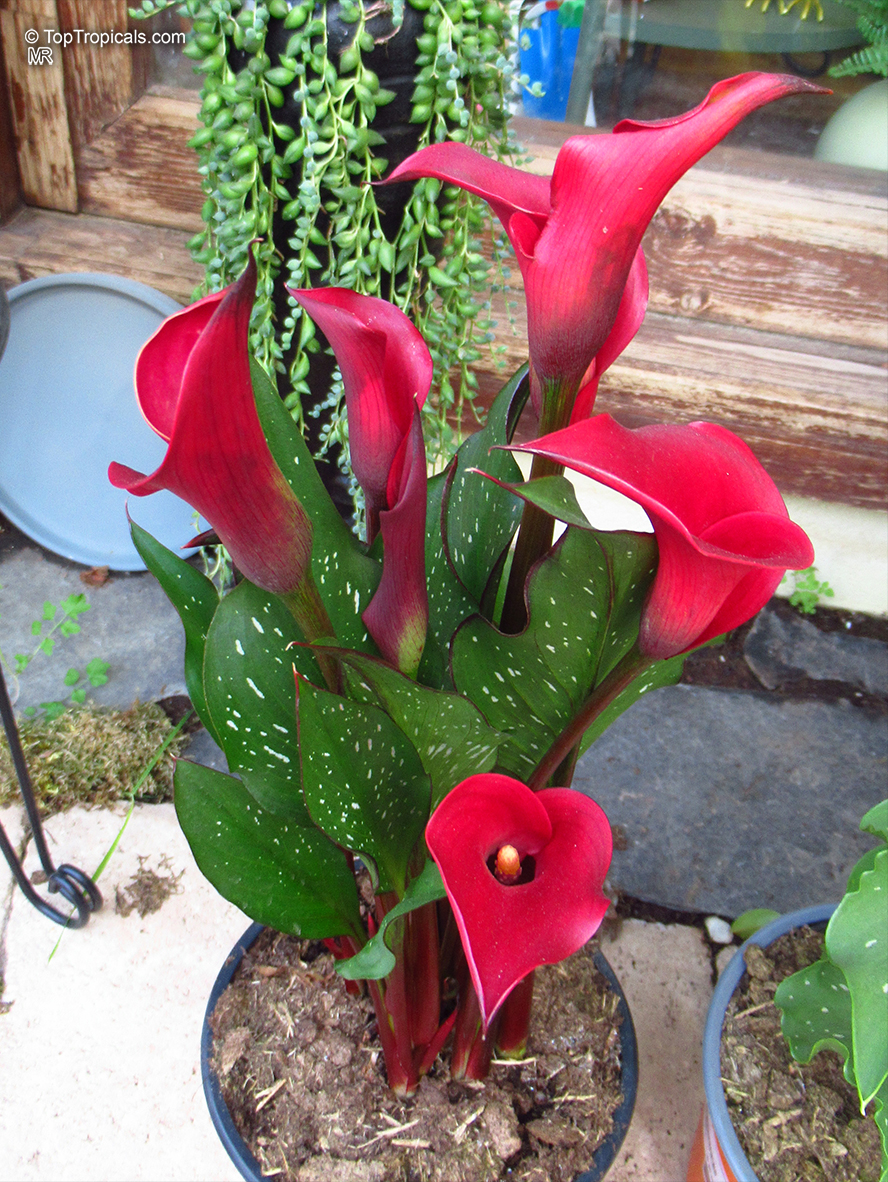
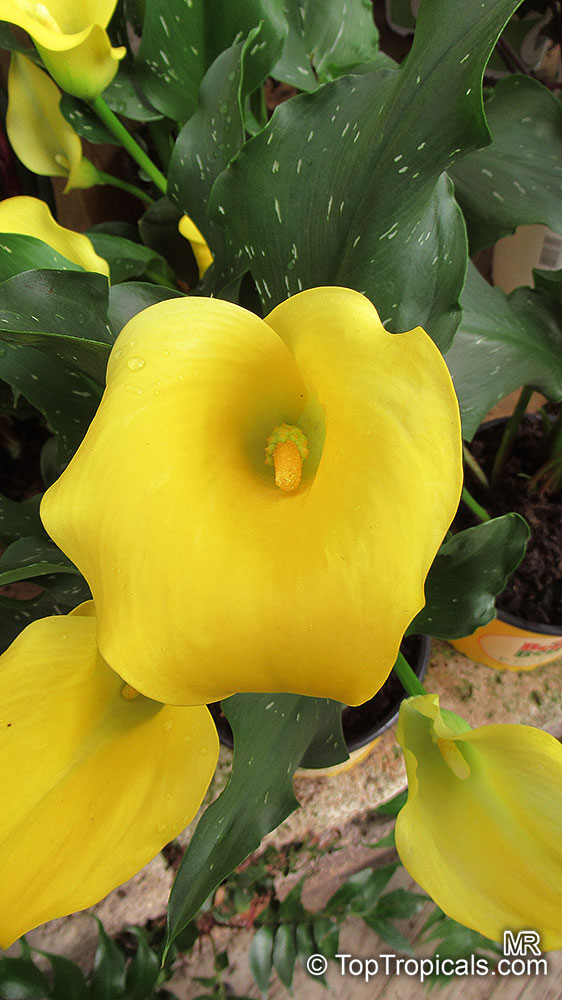
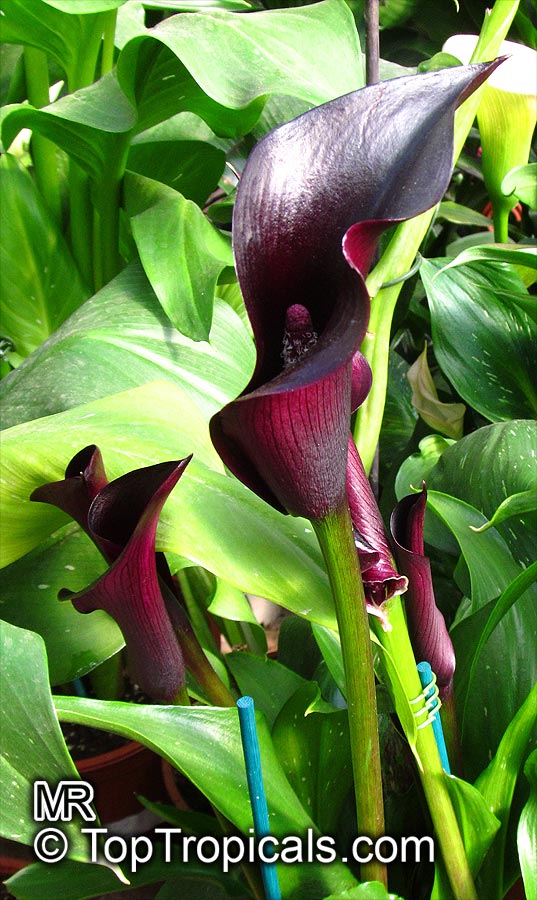
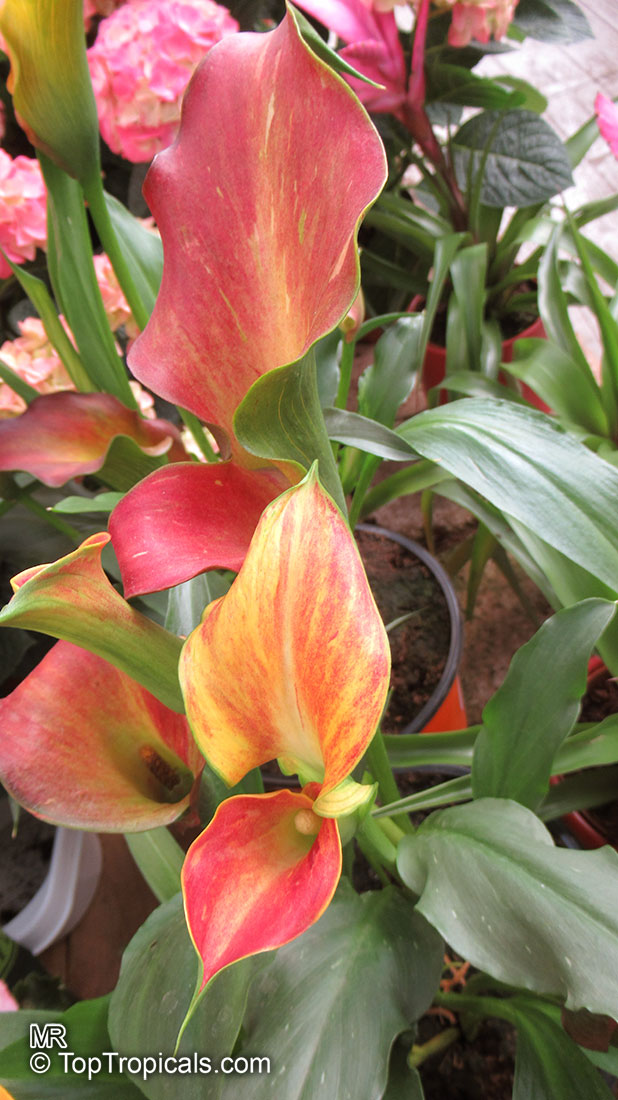
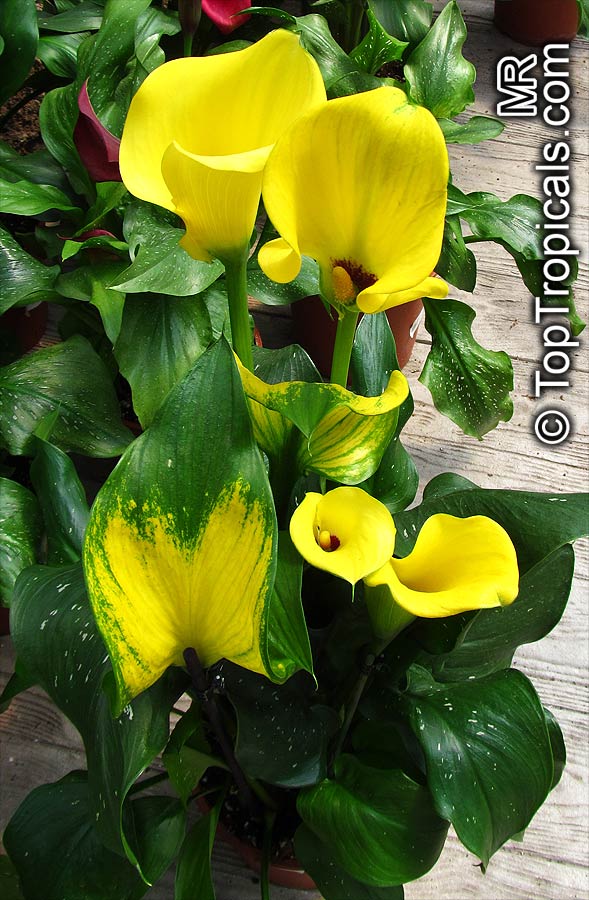
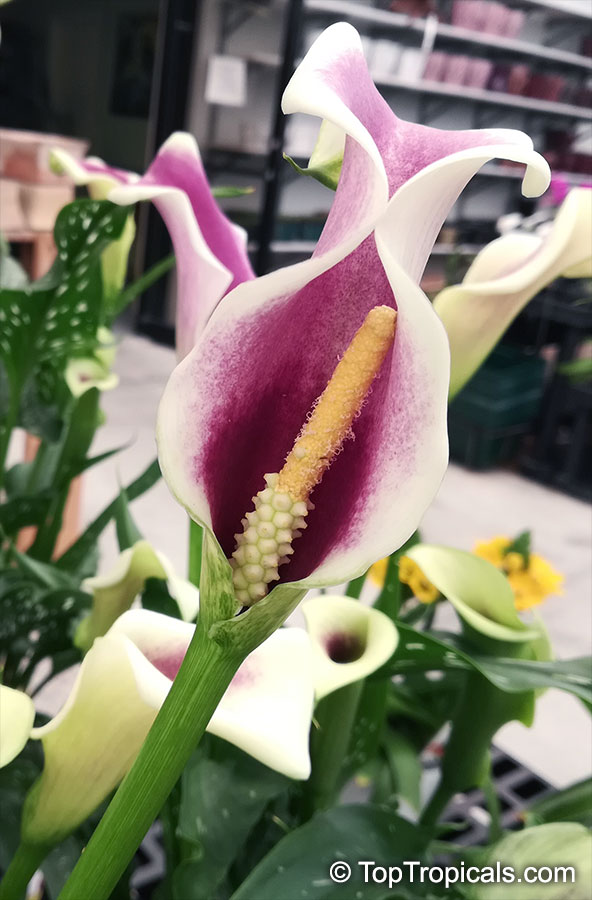
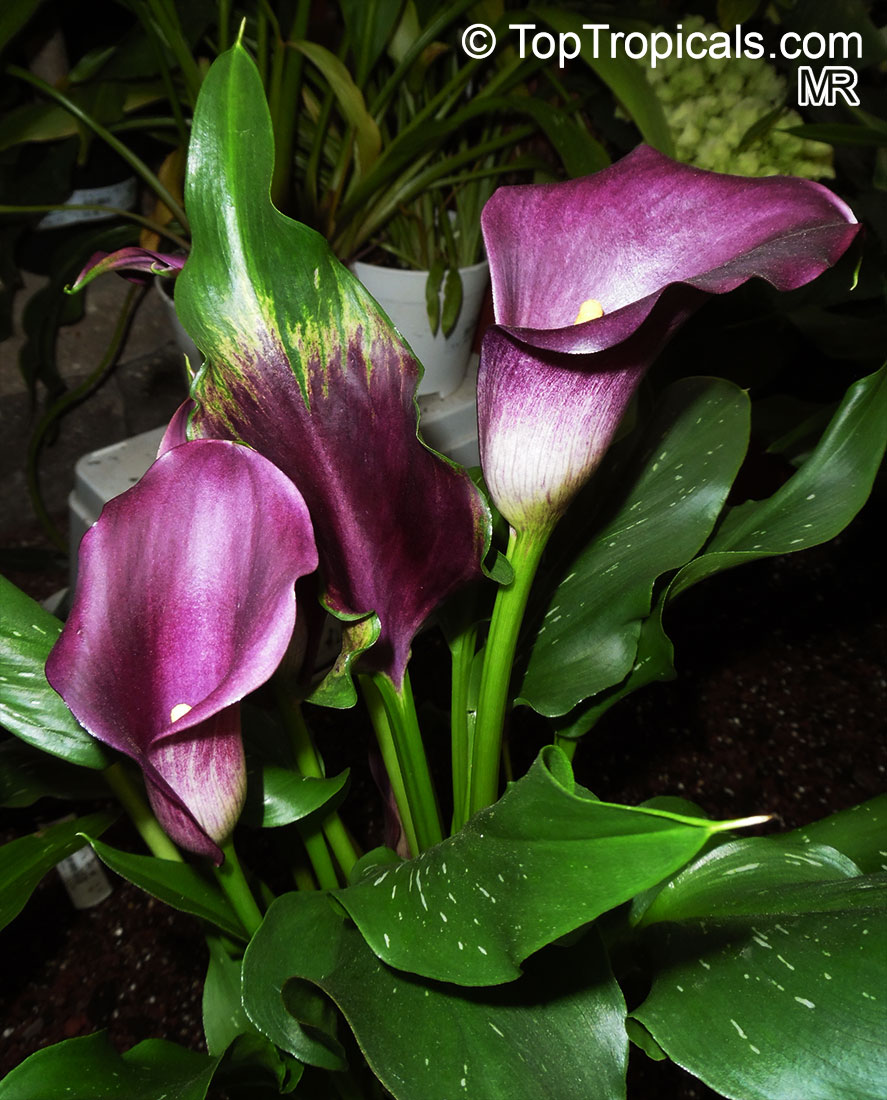
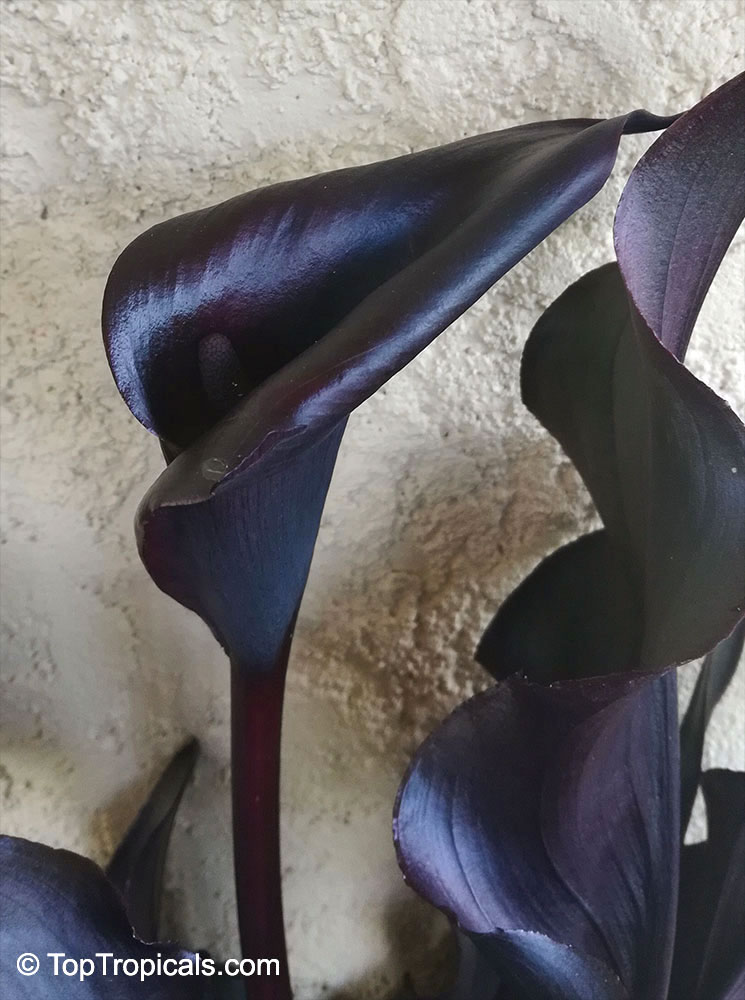
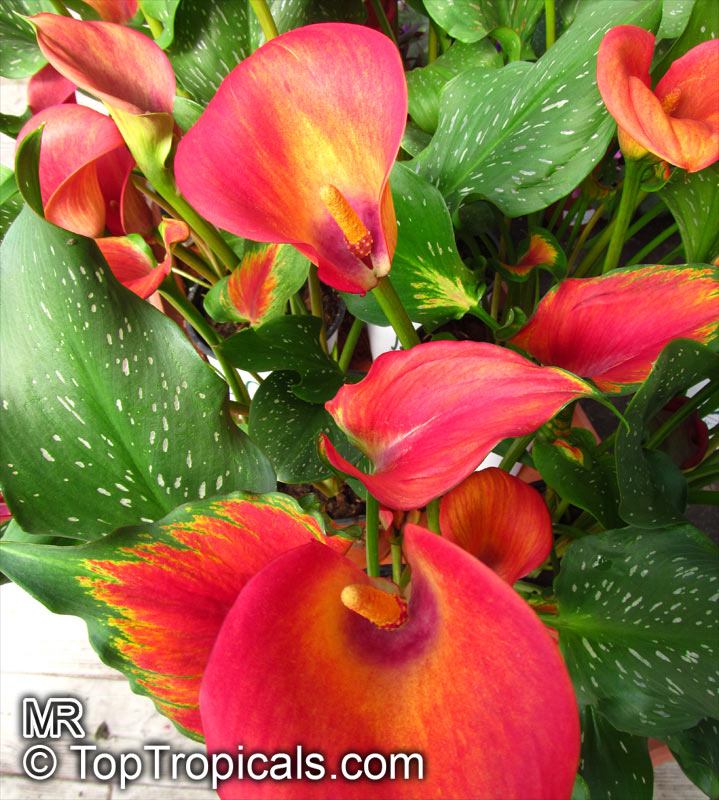
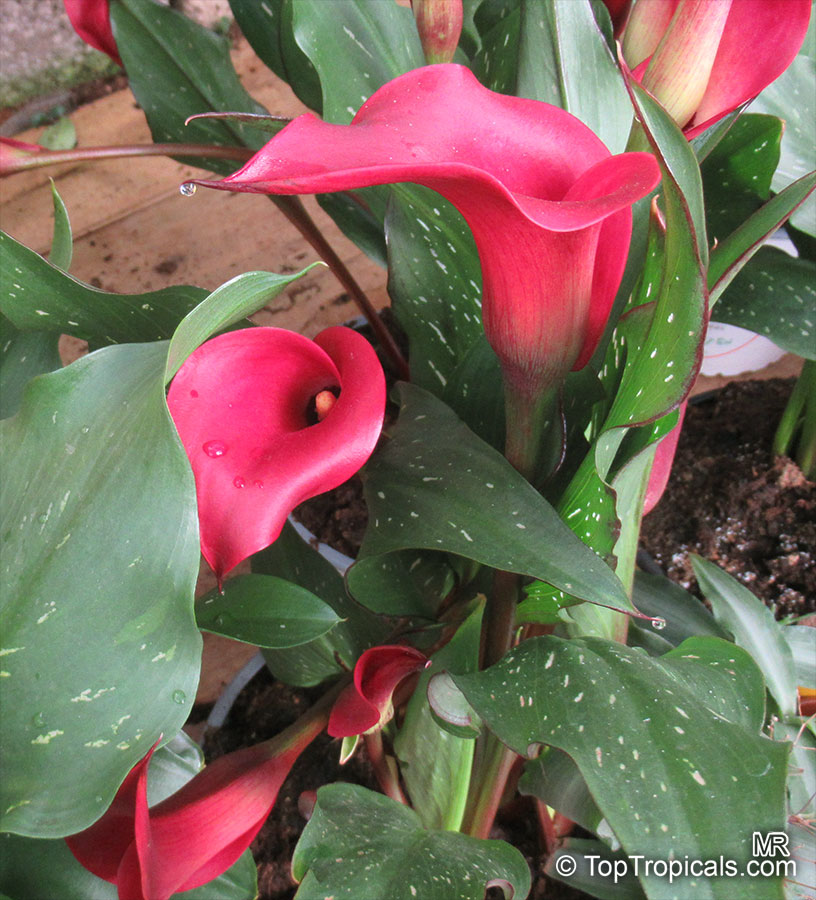
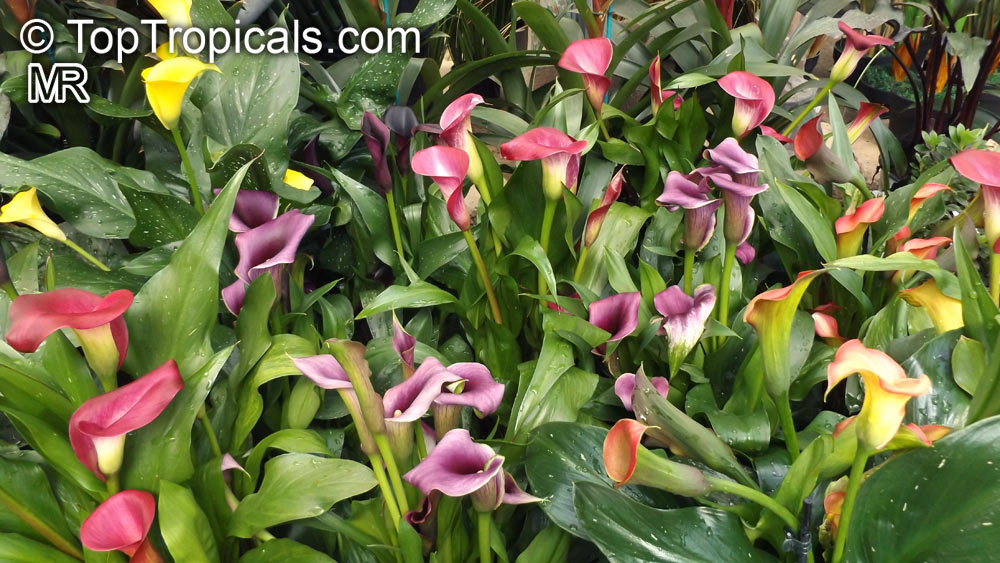
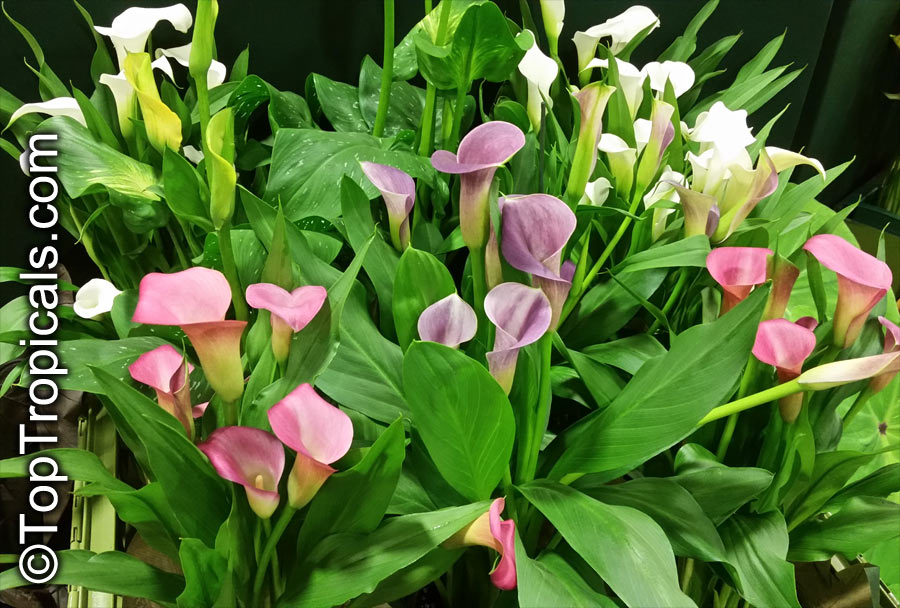
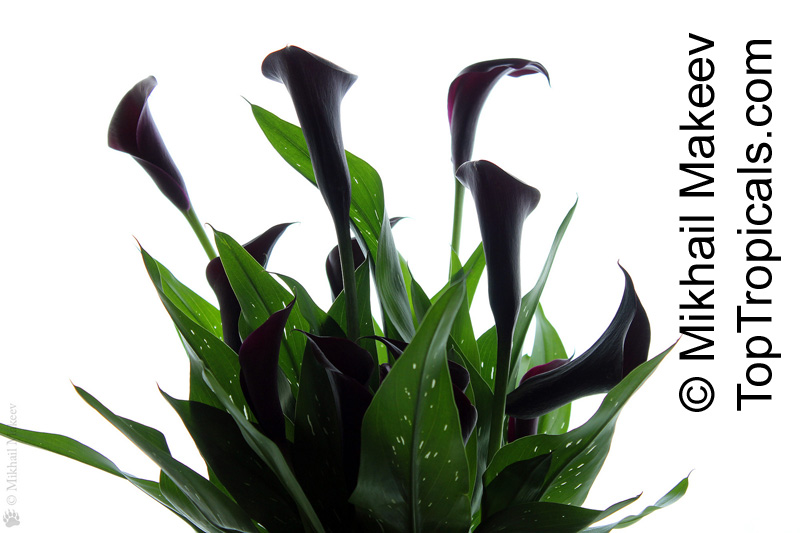
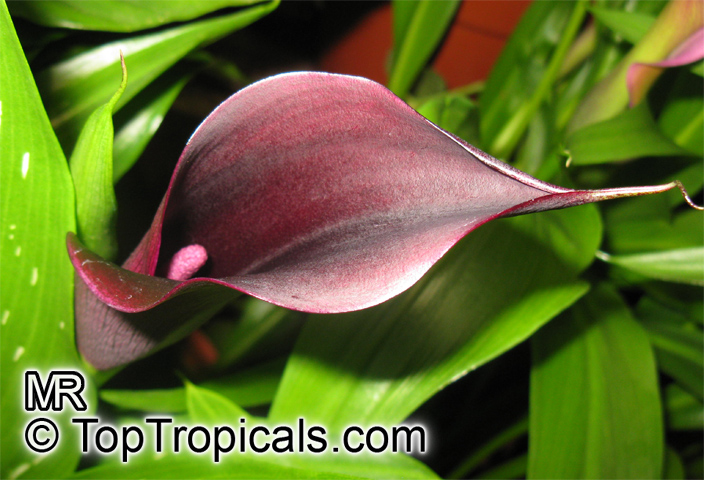
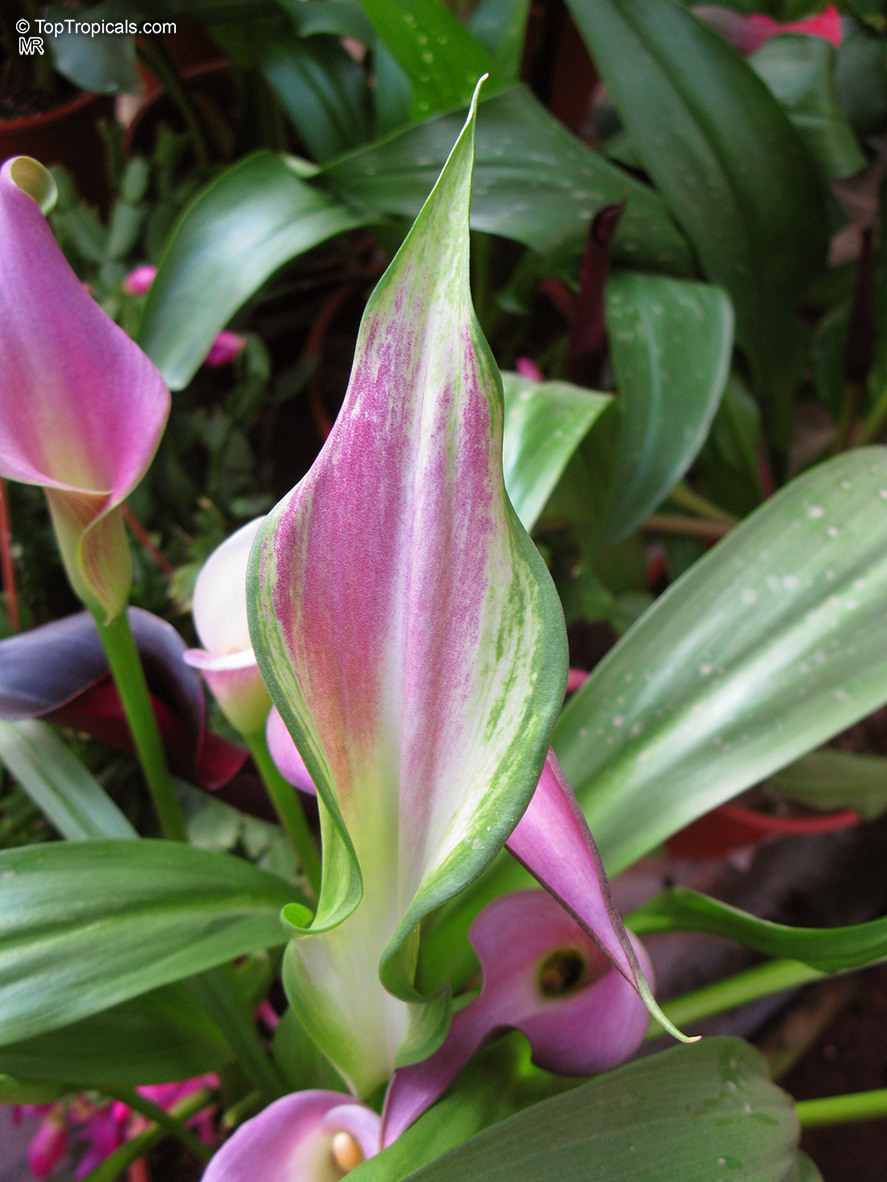
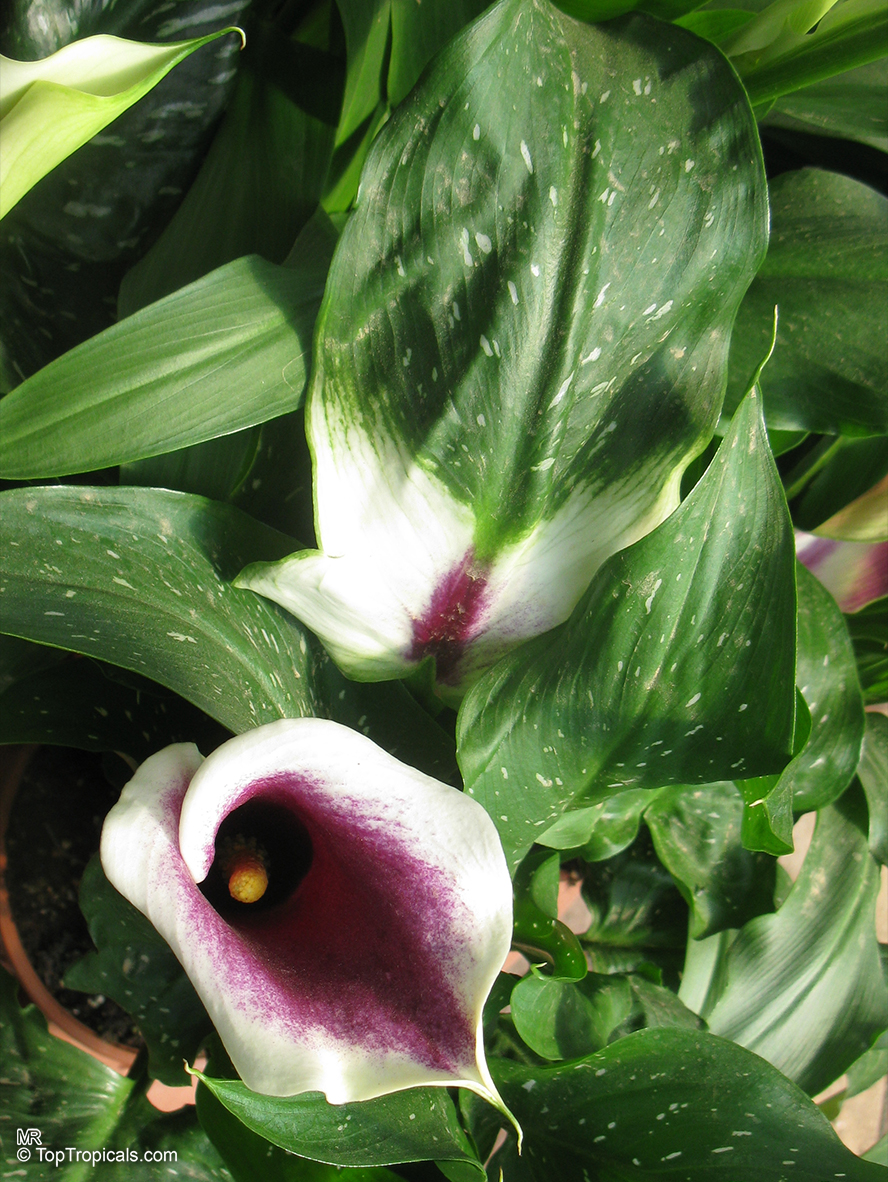
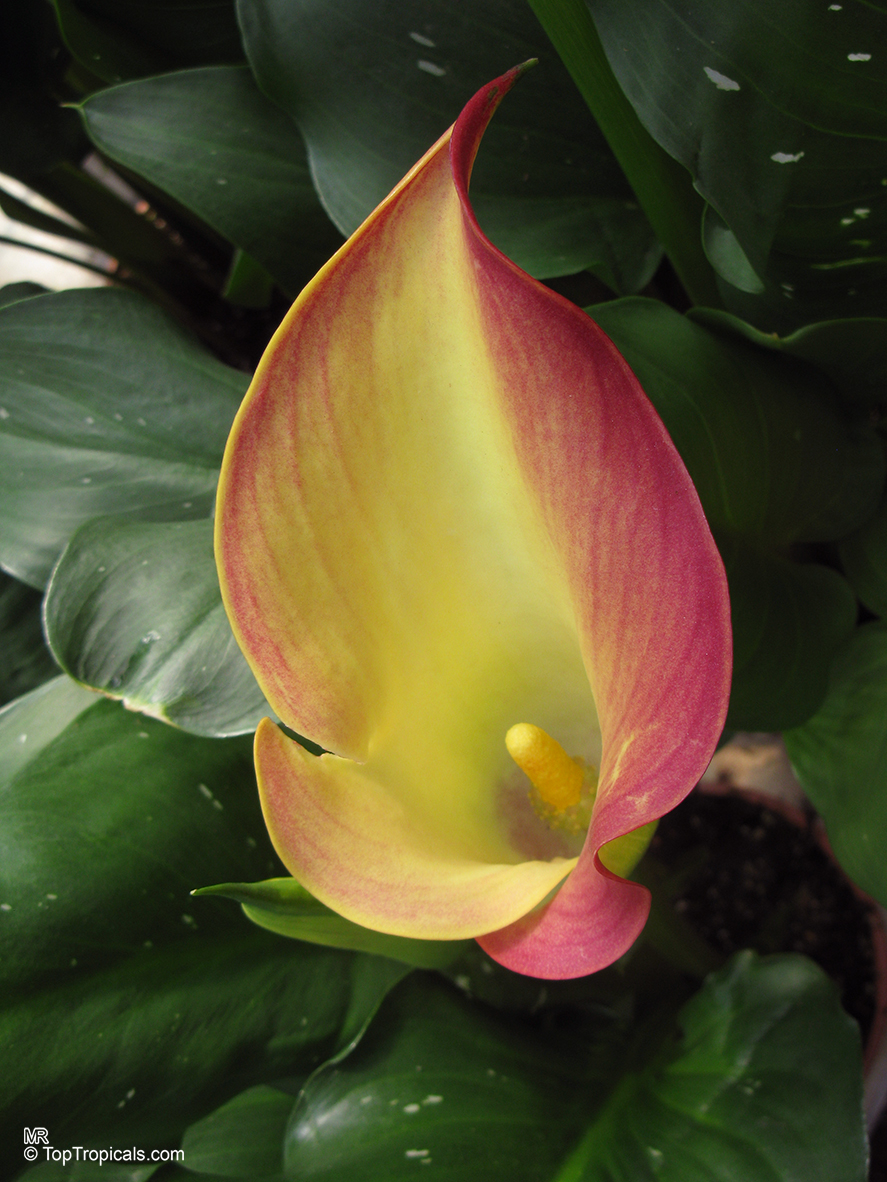
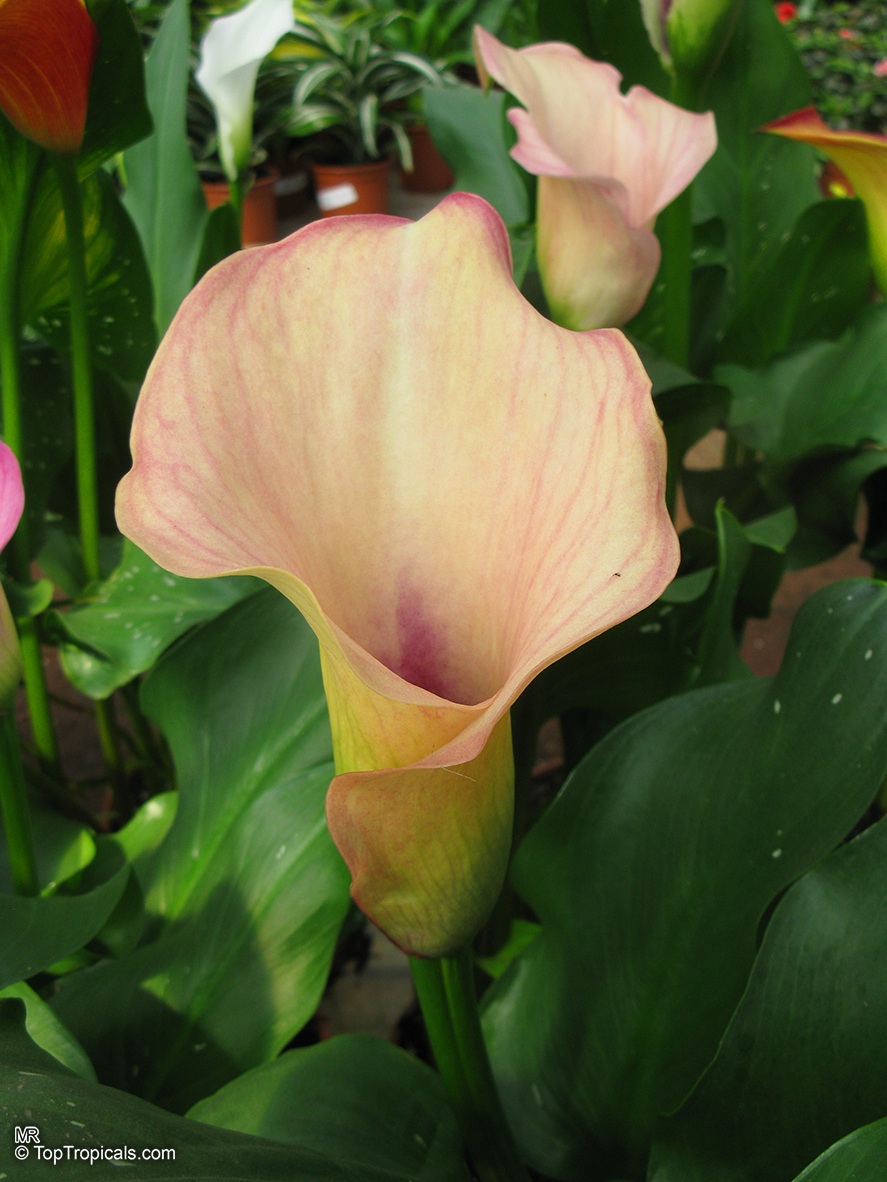
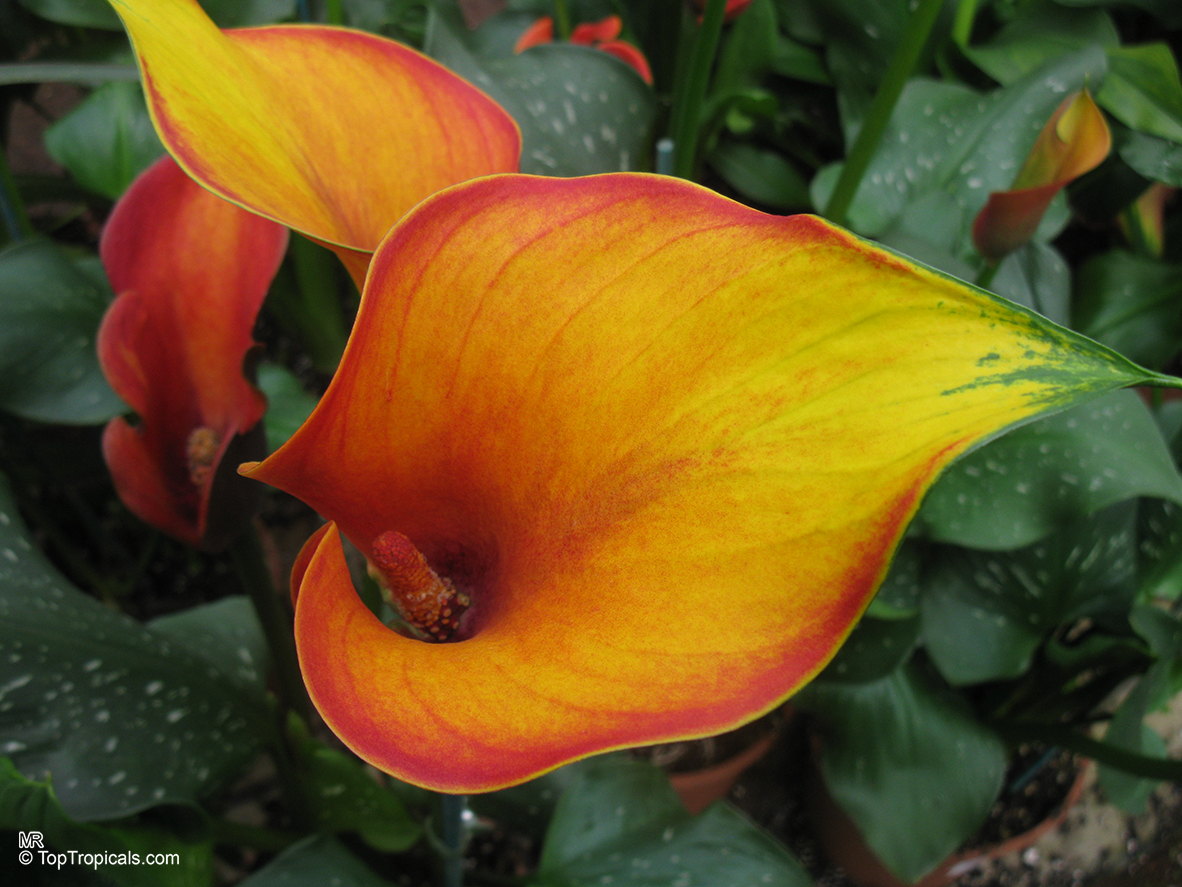
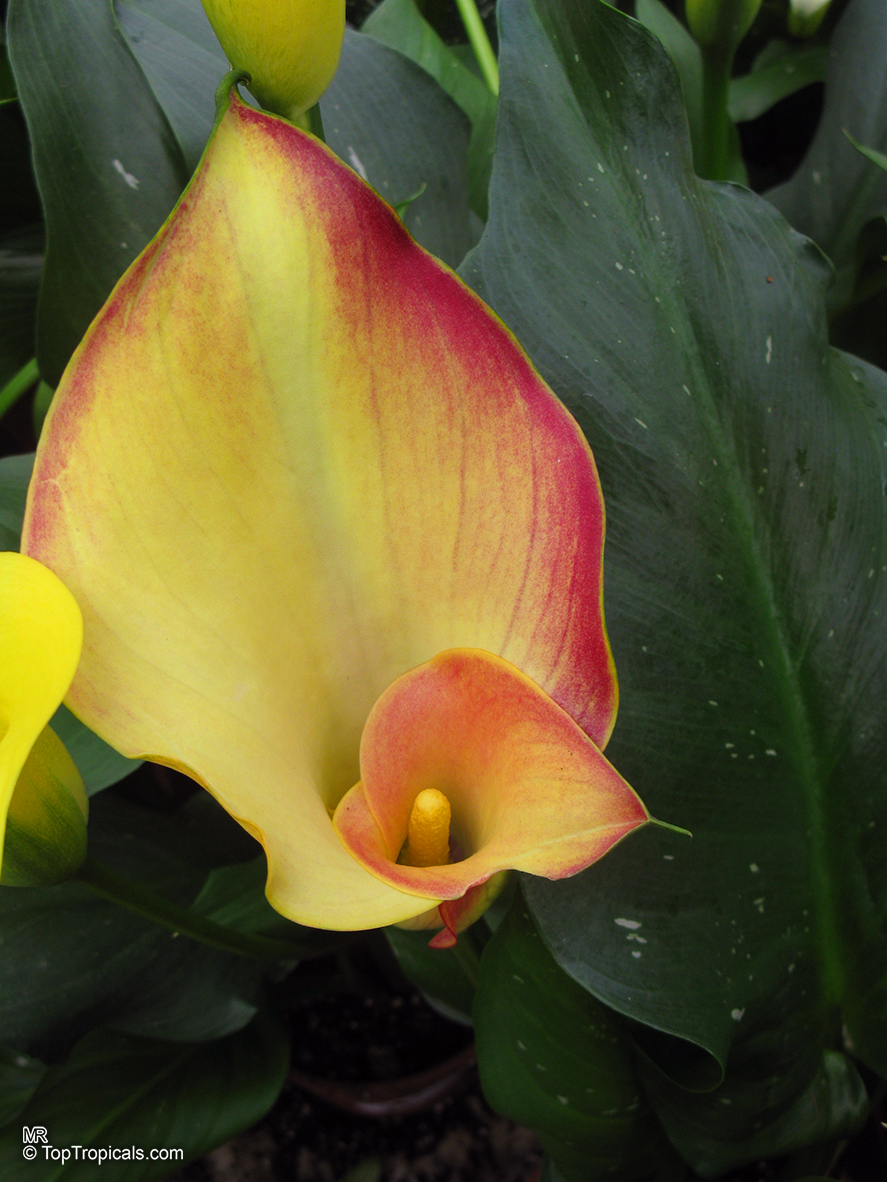
 Flower color: Pink; white and off-white; red, crimson, vinous; yellow, orange; unusual color
 Suitable for: Outdoors in the suitable USDA zone; small gardens, containers, and indoor growing
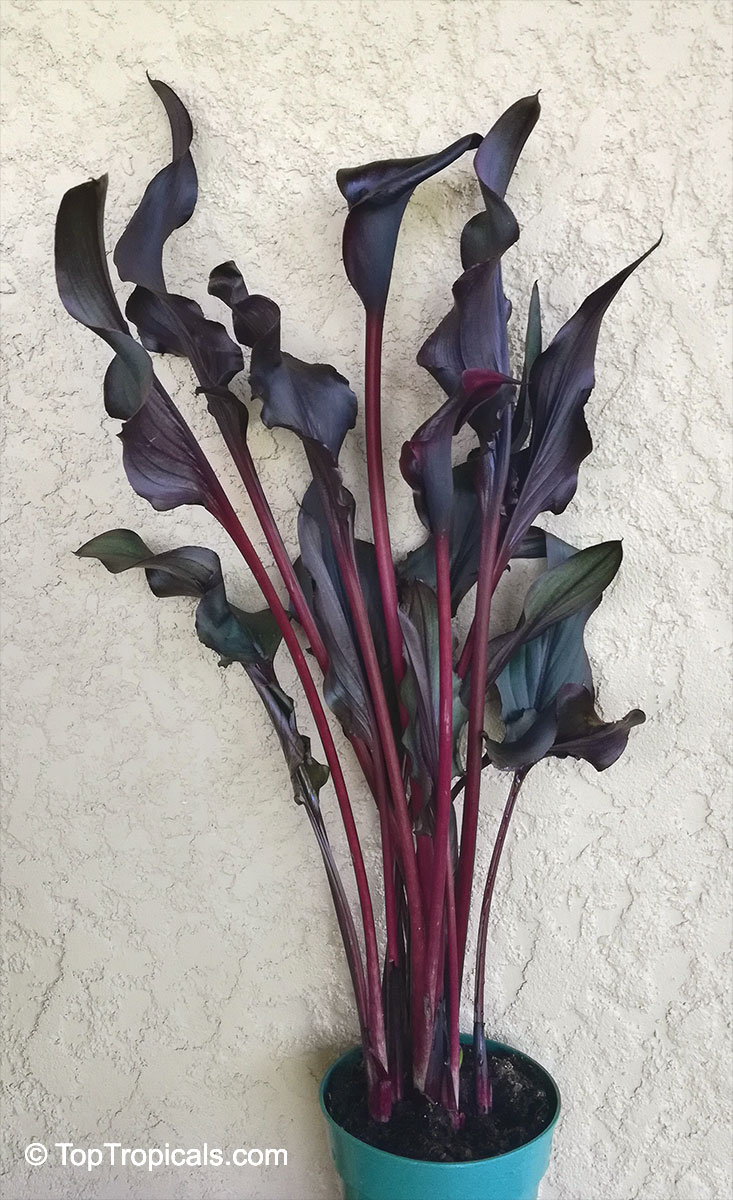
 Foliage color: Ornamental foliage
 Irritating or toxic: Toxic plant/plant part
 Fragrance: Fragrant; perfume plant
 Flood tolerance: High
 Wildlife: Attracts butterflies and hummingbirds
 Ethnomedical: Ethnomedical plant, traditionally used in folk or indigenous medicine
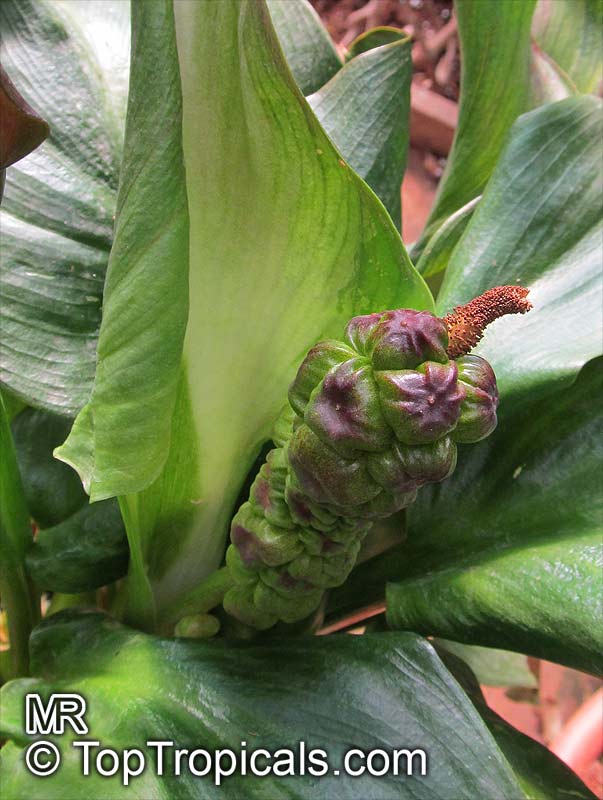
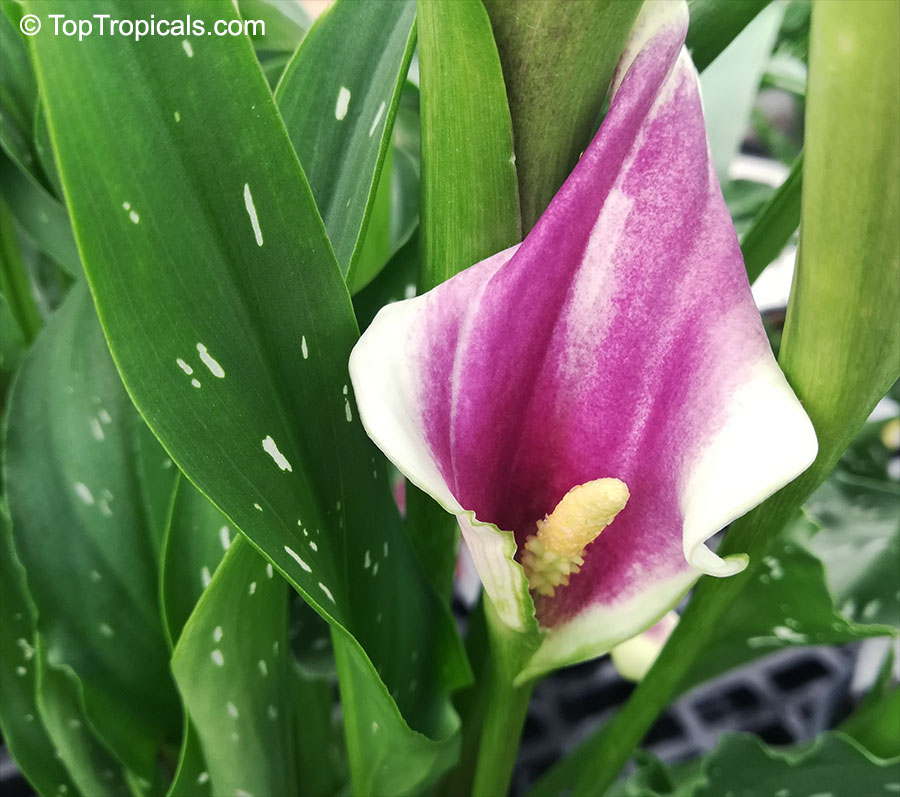
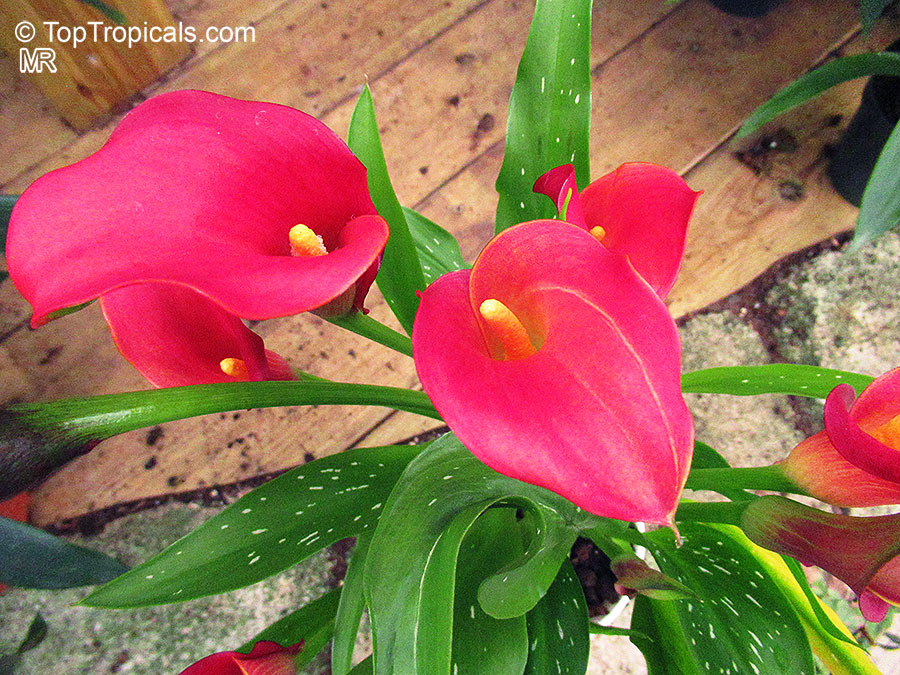
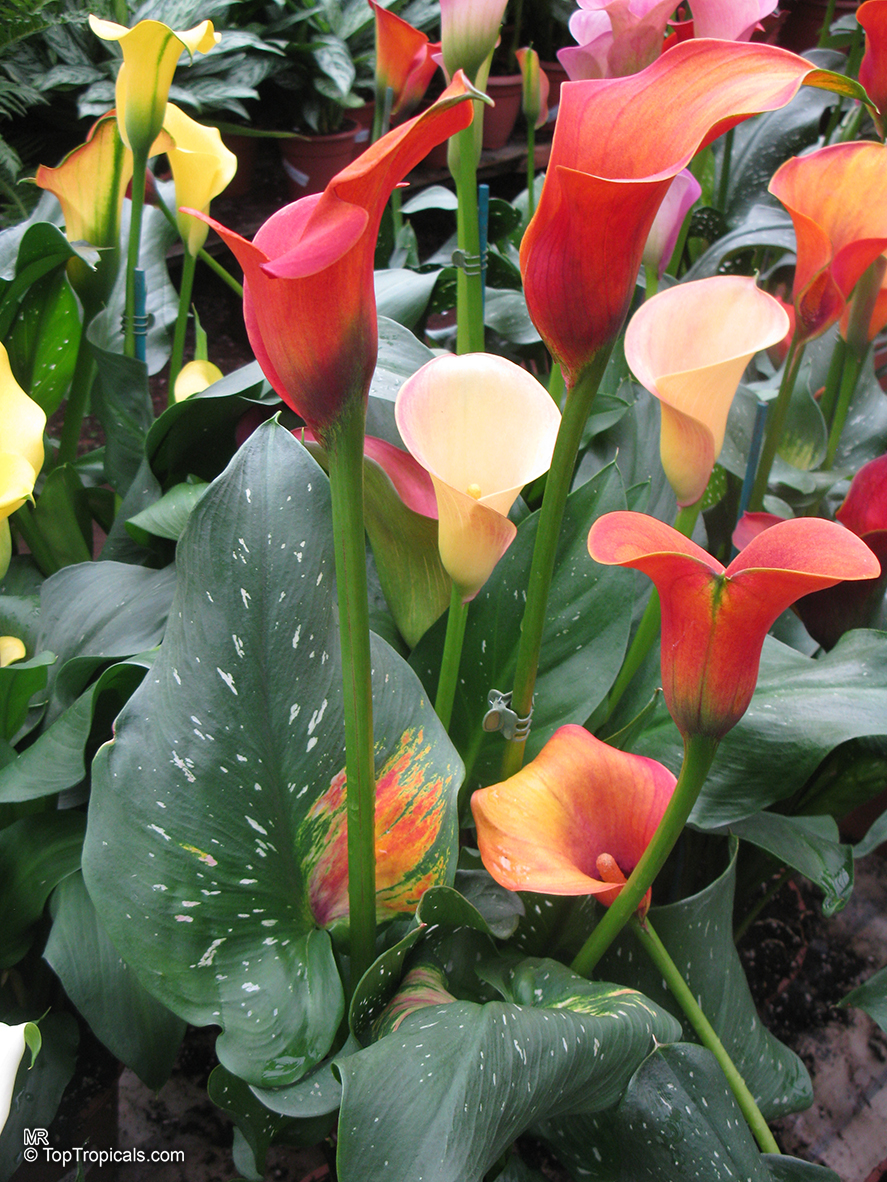
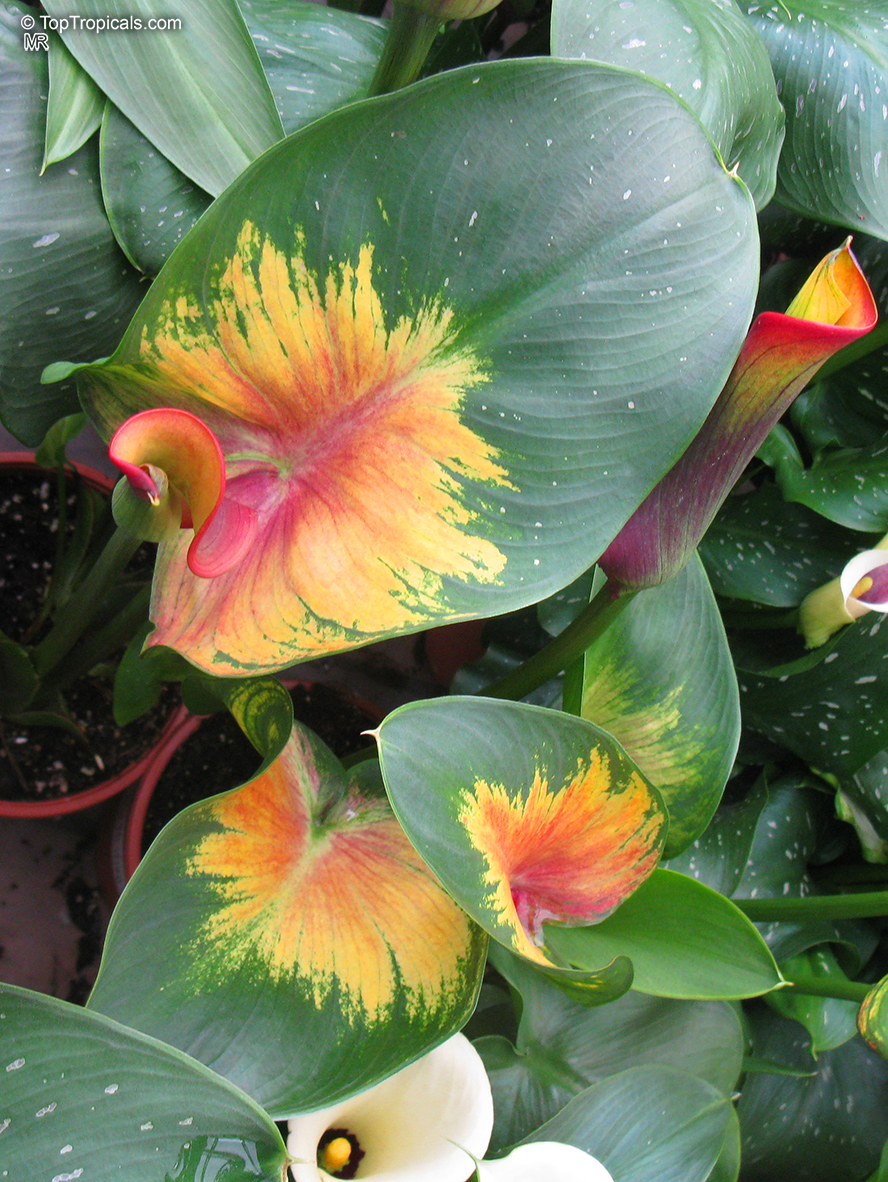
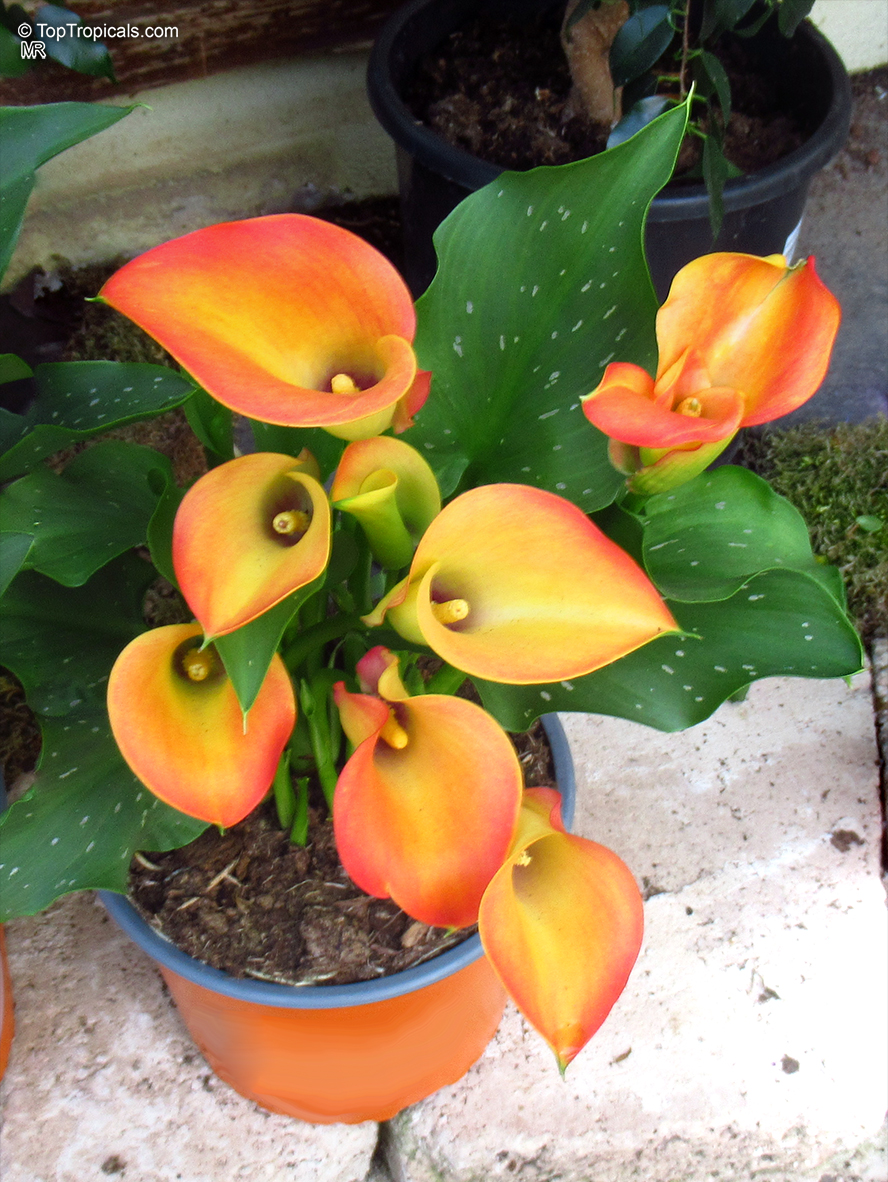
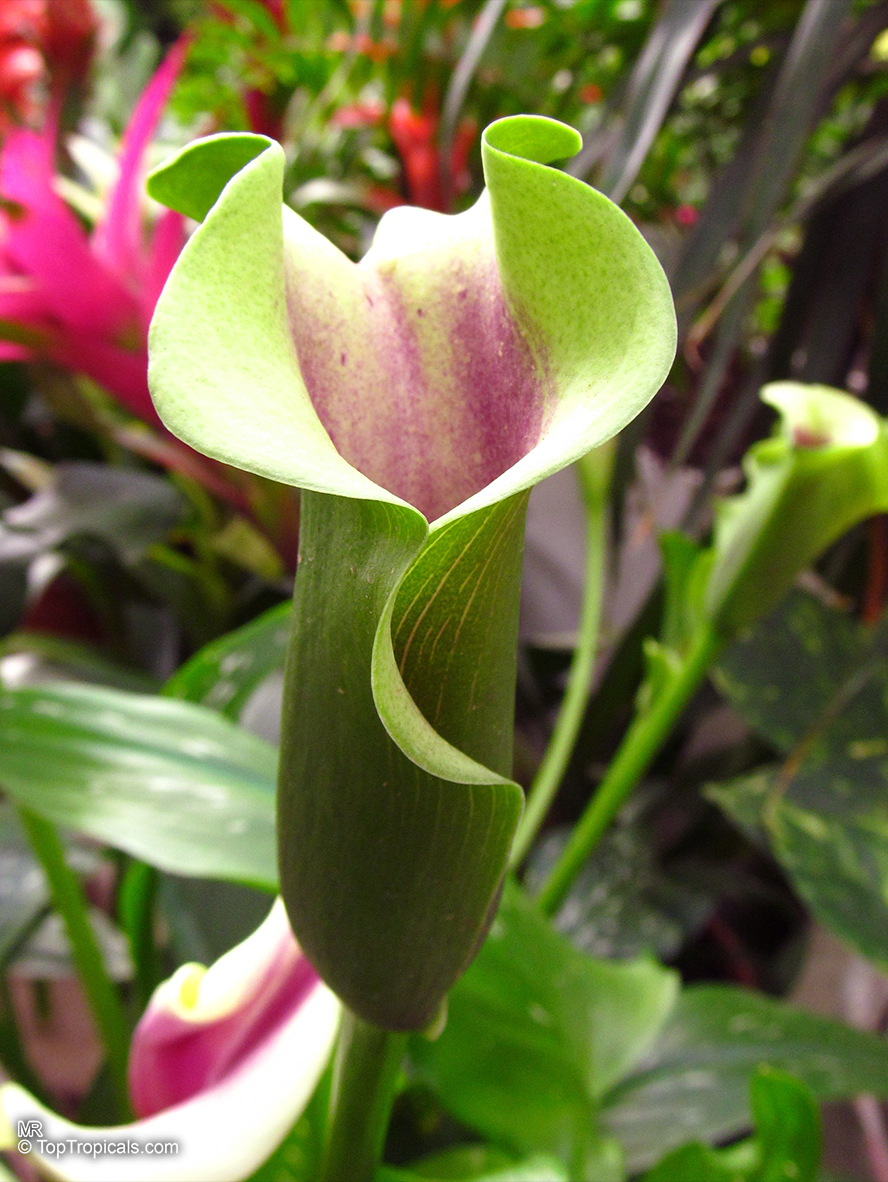
This is an old fashioned, but very rewarding garden plant. Zantedeschia is named after Professor Zantedeschi, probably Giovanni Zantedeschi, 1773-1846, an Italian physician and botanist. The flowers are faintly scented and this attracts various crawling insects and bees which are responsible for pollinating the flowers. The spathe turns green after flowering and covers the ripening berries. It rots away when these are ripe and the succulent yellow berries attract birds, which are responsible for seed dispersal. The rhizome is large and eaten by wild pigs and porcupines and the ripe fruit enjoyed by birds. Raw plant material causes swelling of the throat because of microscopic, sharp calcium oxalate crystals. The leaves are used as a poultice and a treatment for headaches. May be used as a marginal plant along streams, or on the edge of a pond. Plant in partial shade if there is no permanent water. It can be planted as a foliage plant in deep shade under trees but will not flower well in this position. It is fast growing and likes very rich, well-drained conditions. It is an excellent cutflower and lasts a long time in water. Nowadays there are other forms of this species which will enliven an old theme. There is also an attractive form with leaves spotted white. Requires consistently moist soil.
Similar plants: Zantedeschia sp. (Arum Lily)