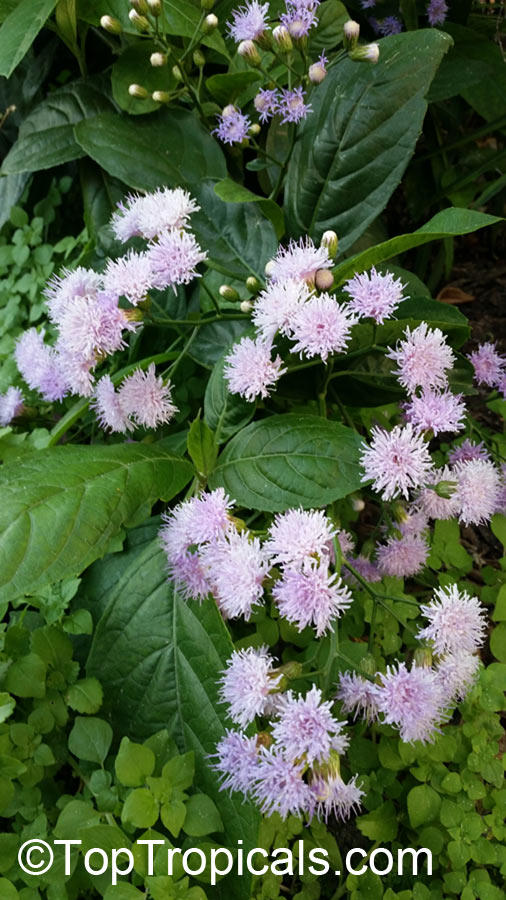
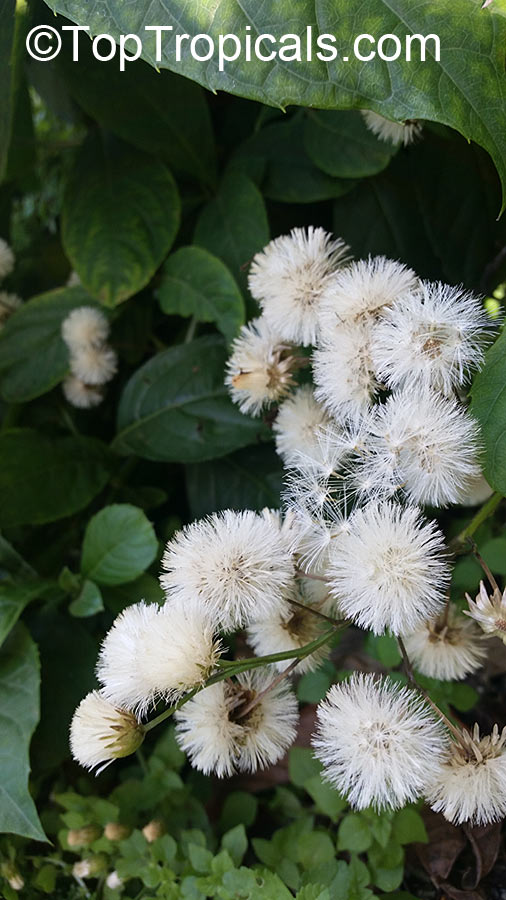
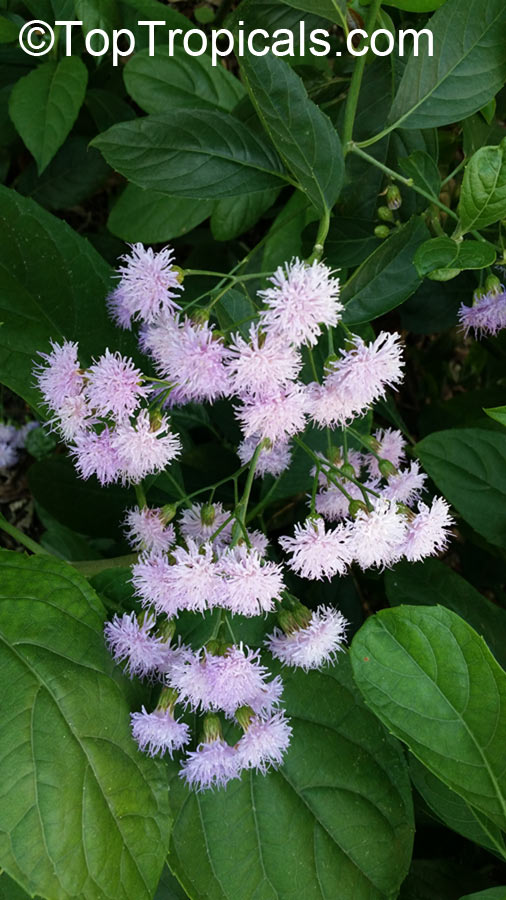
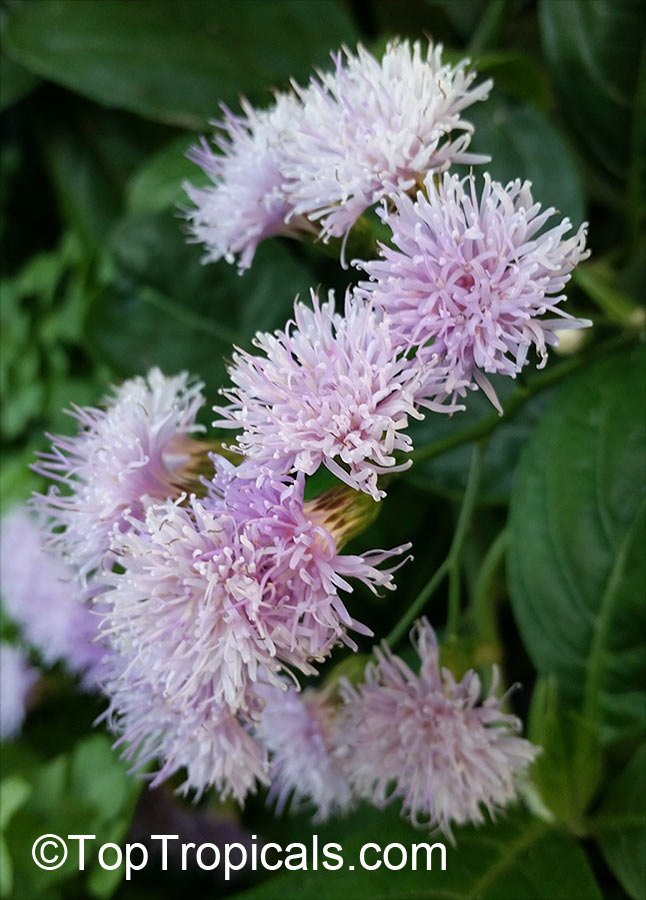
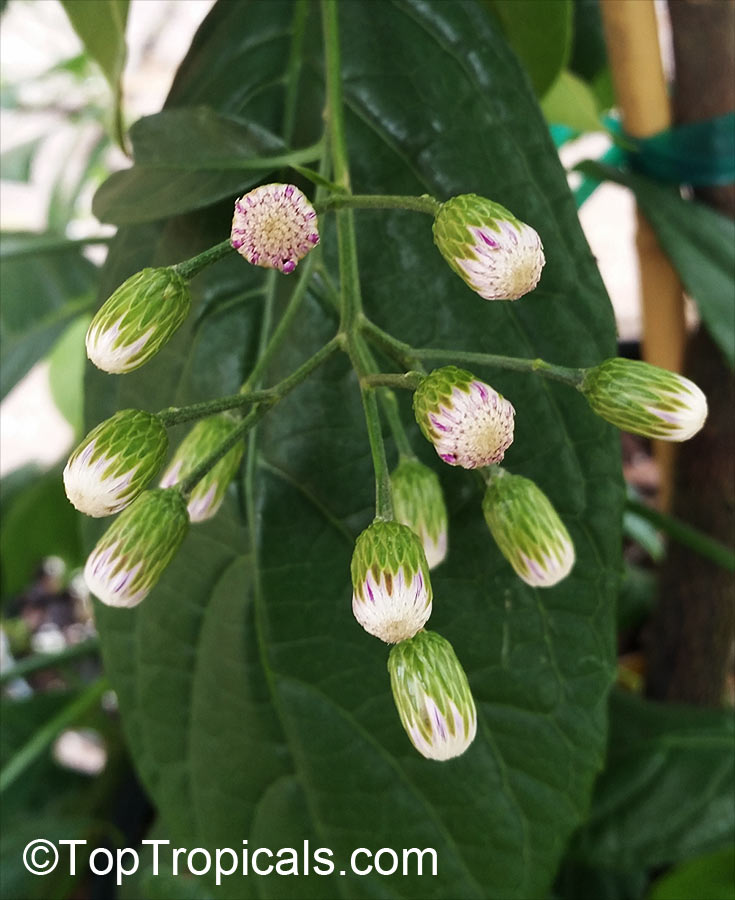
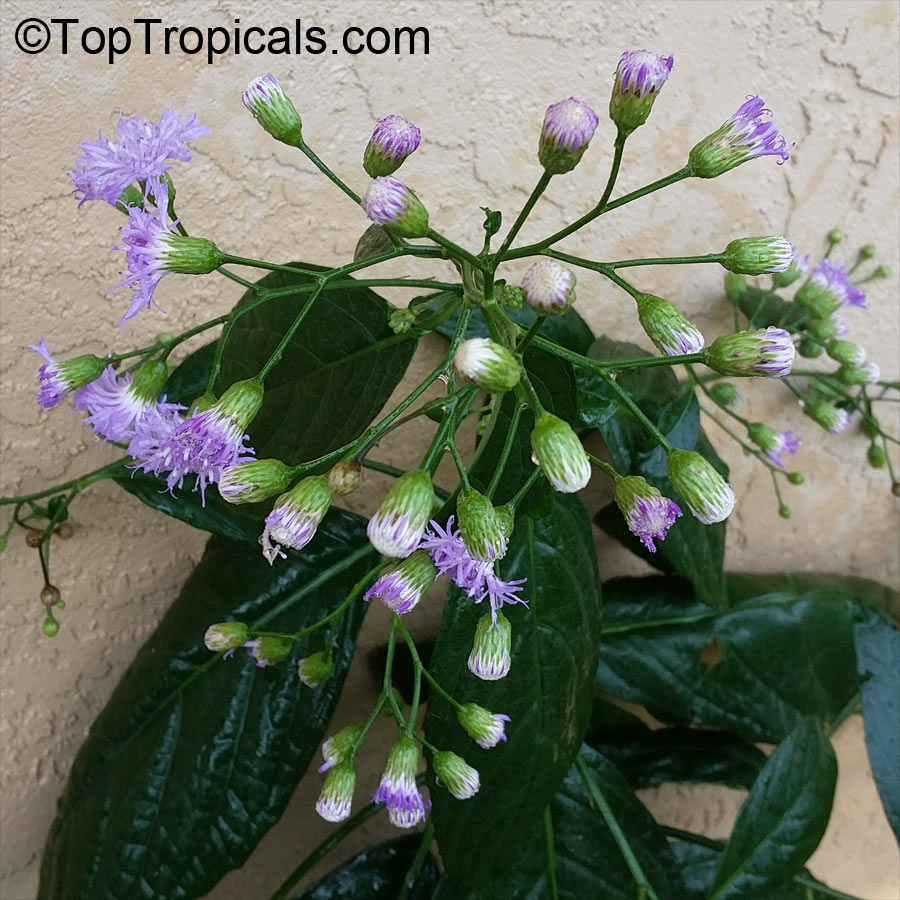
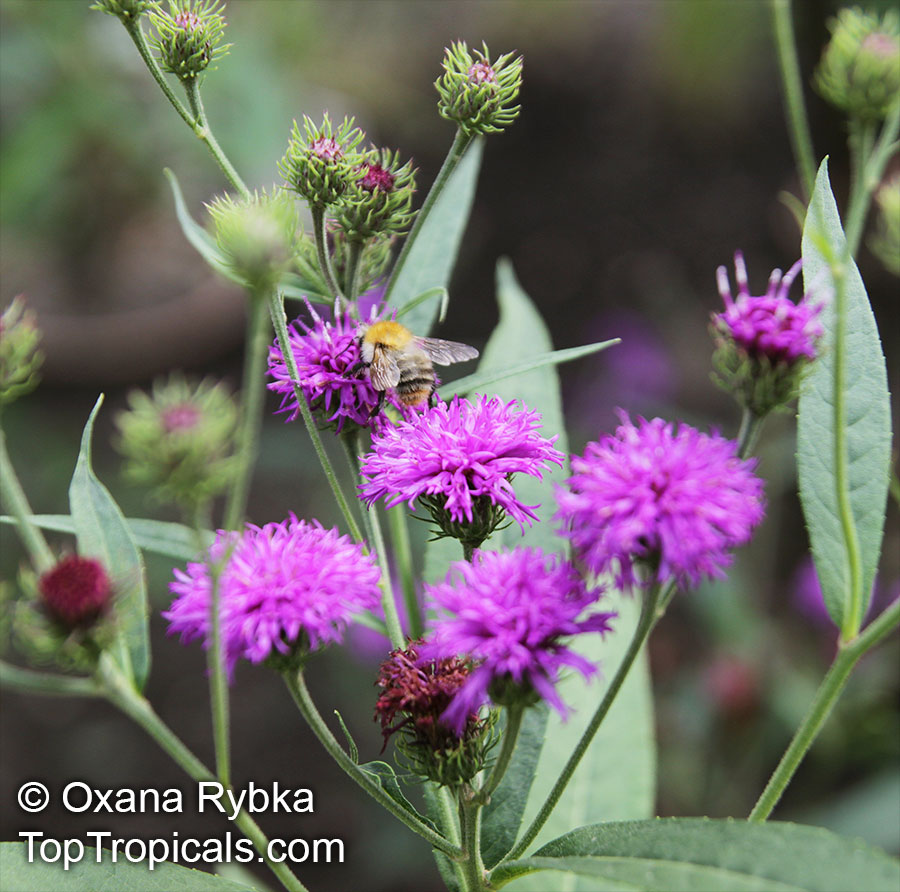
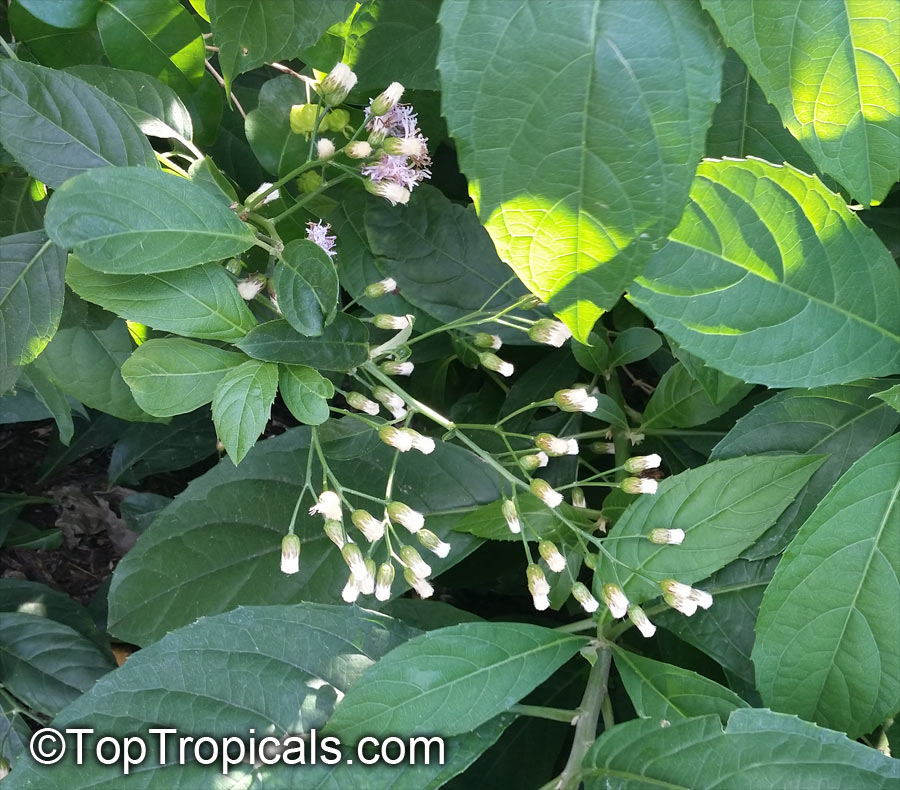
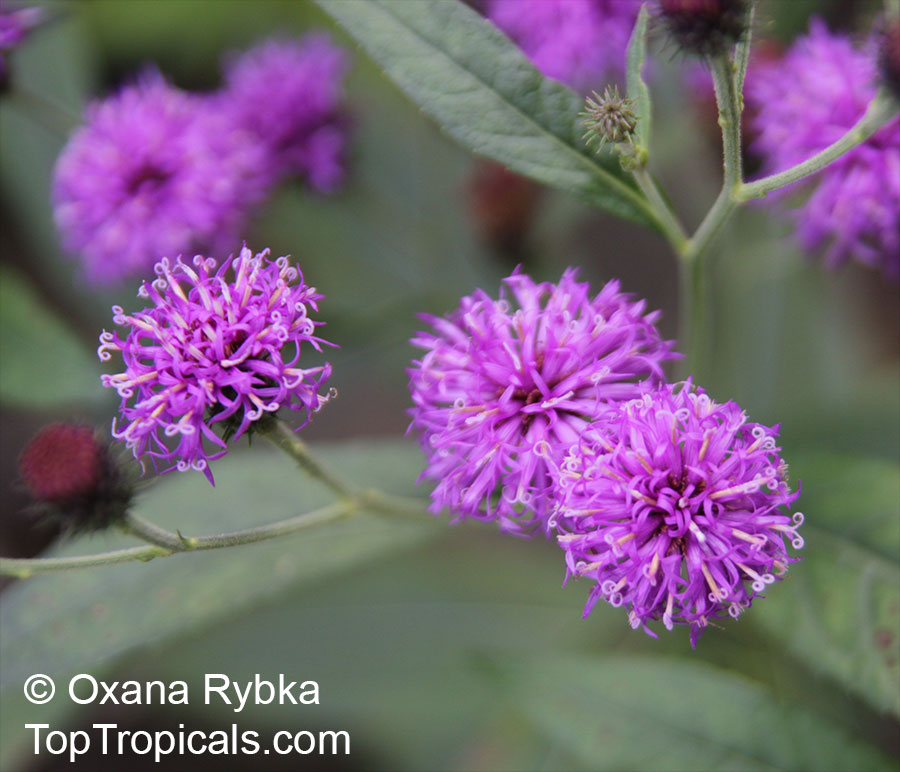
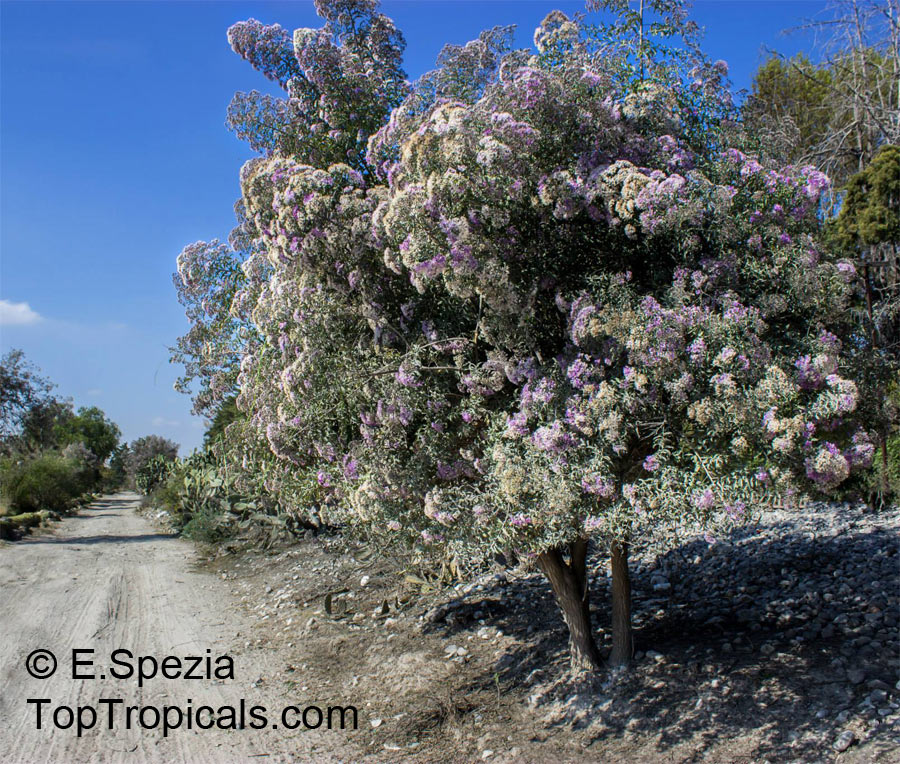
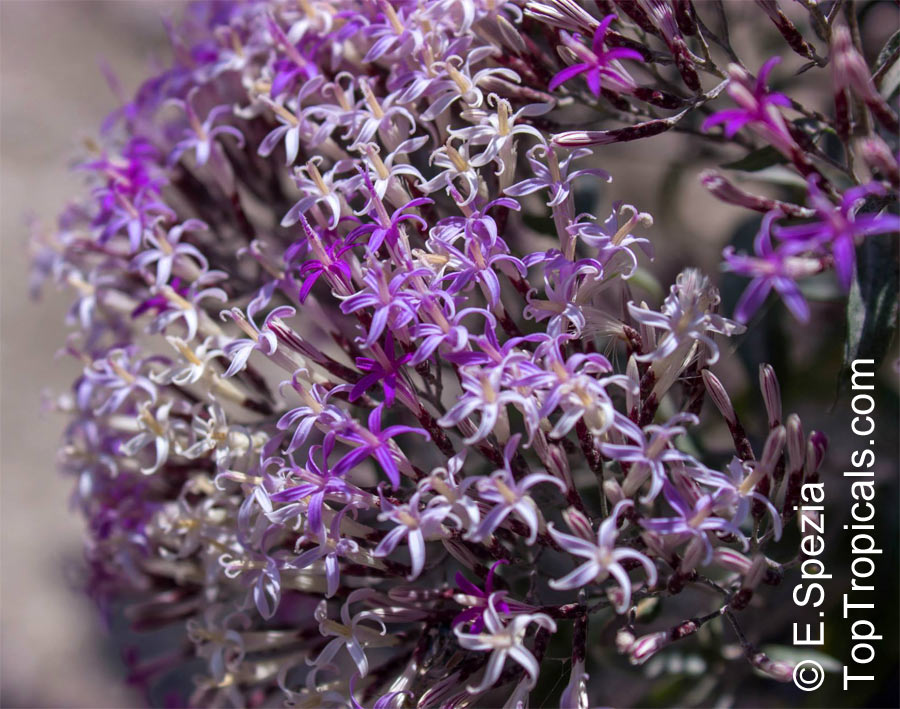
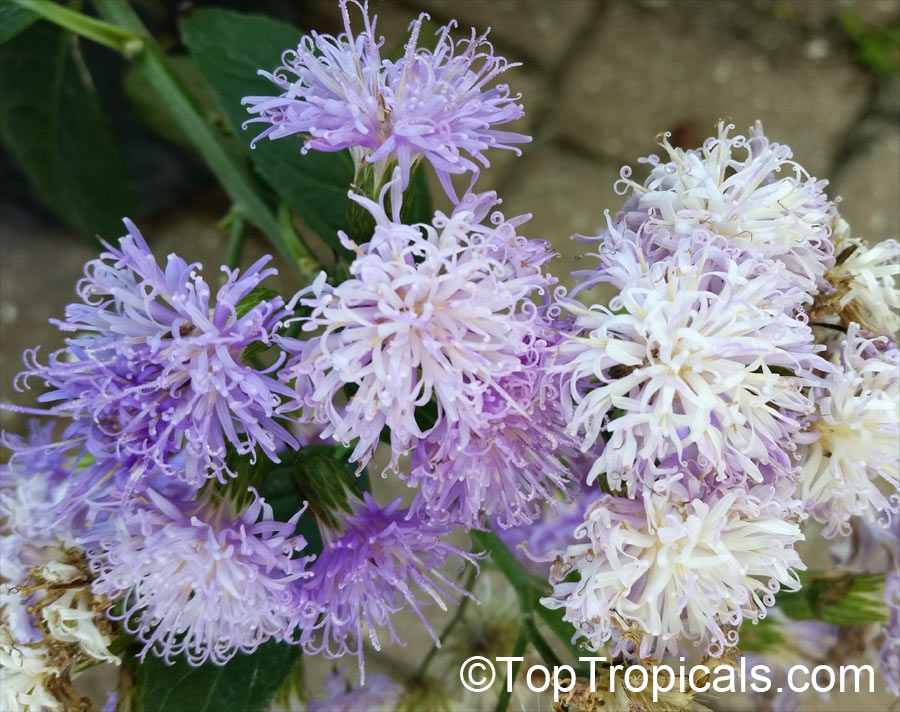
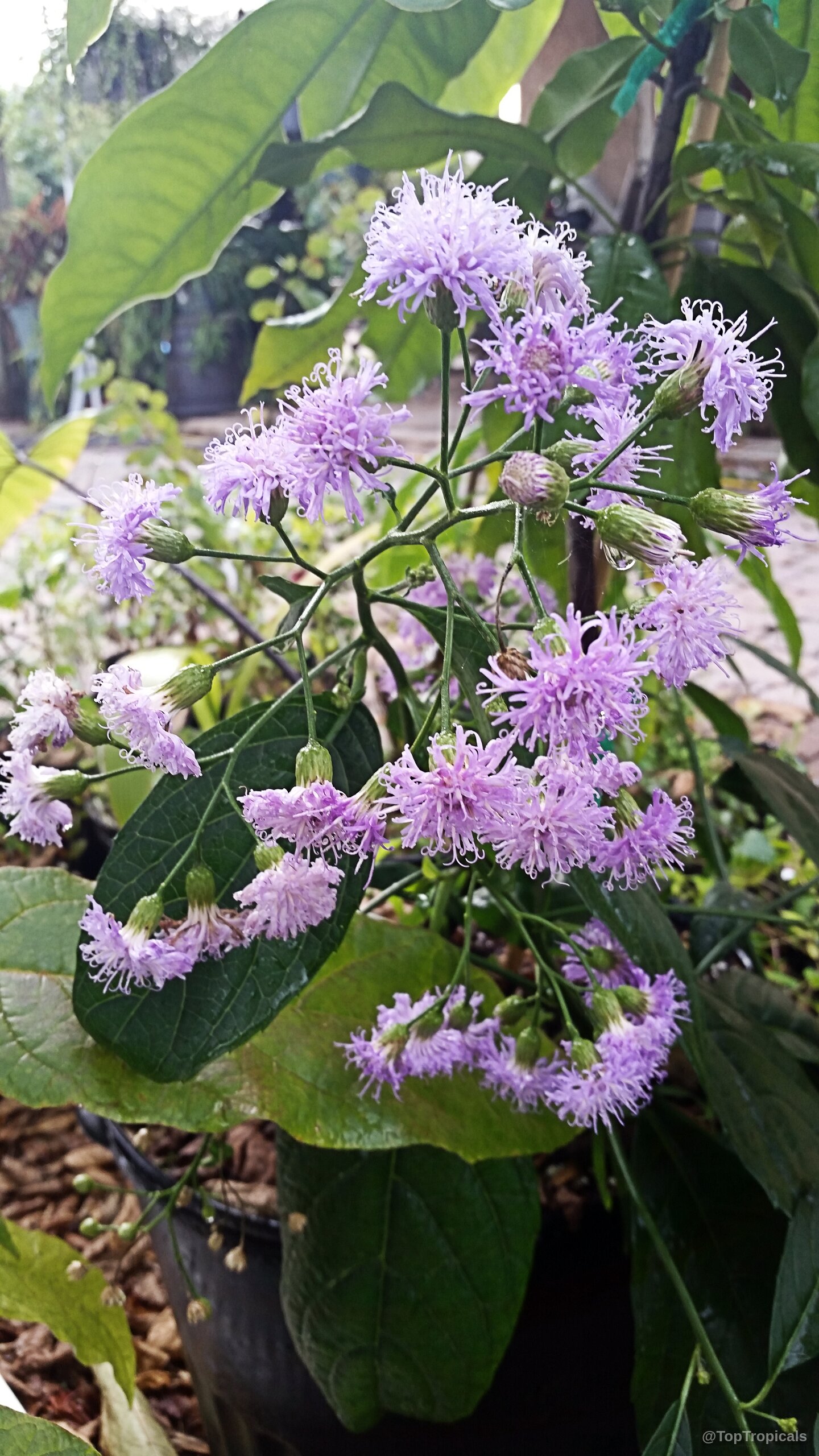
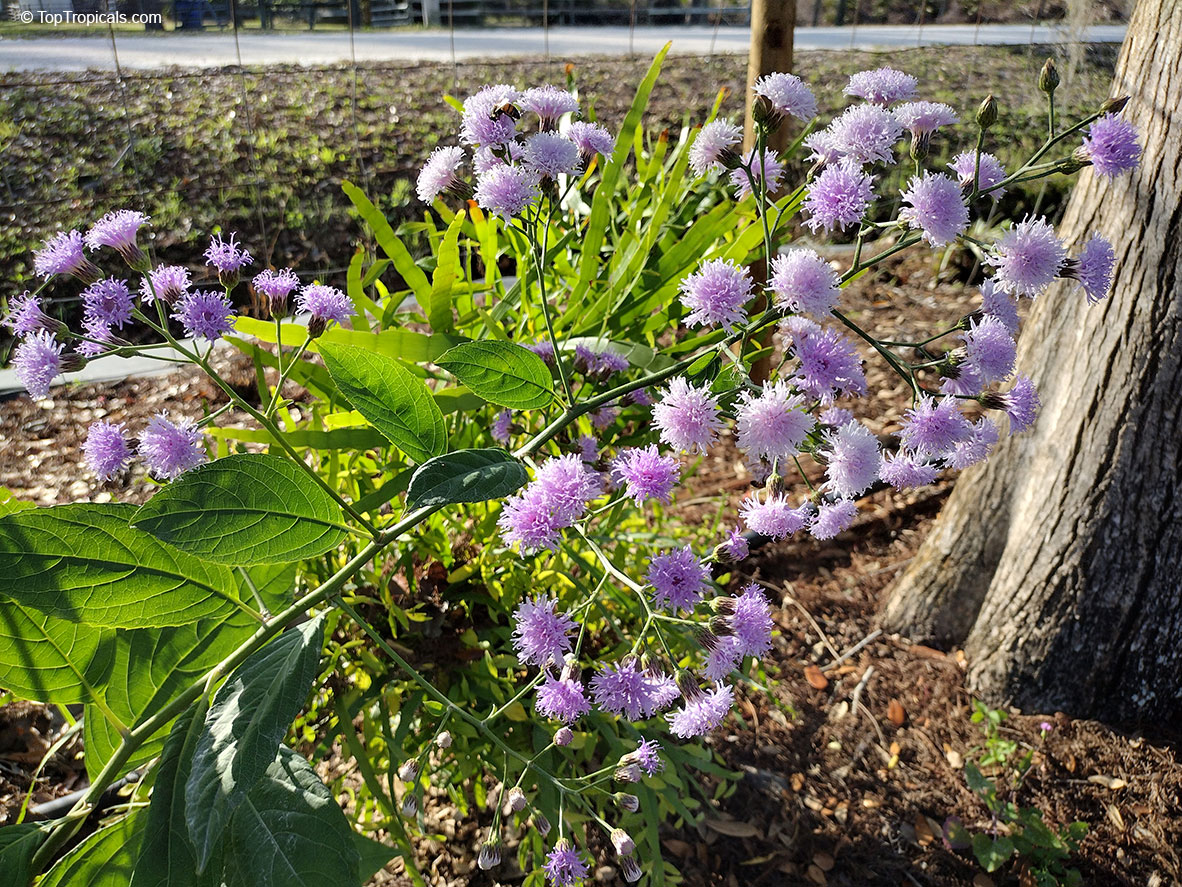
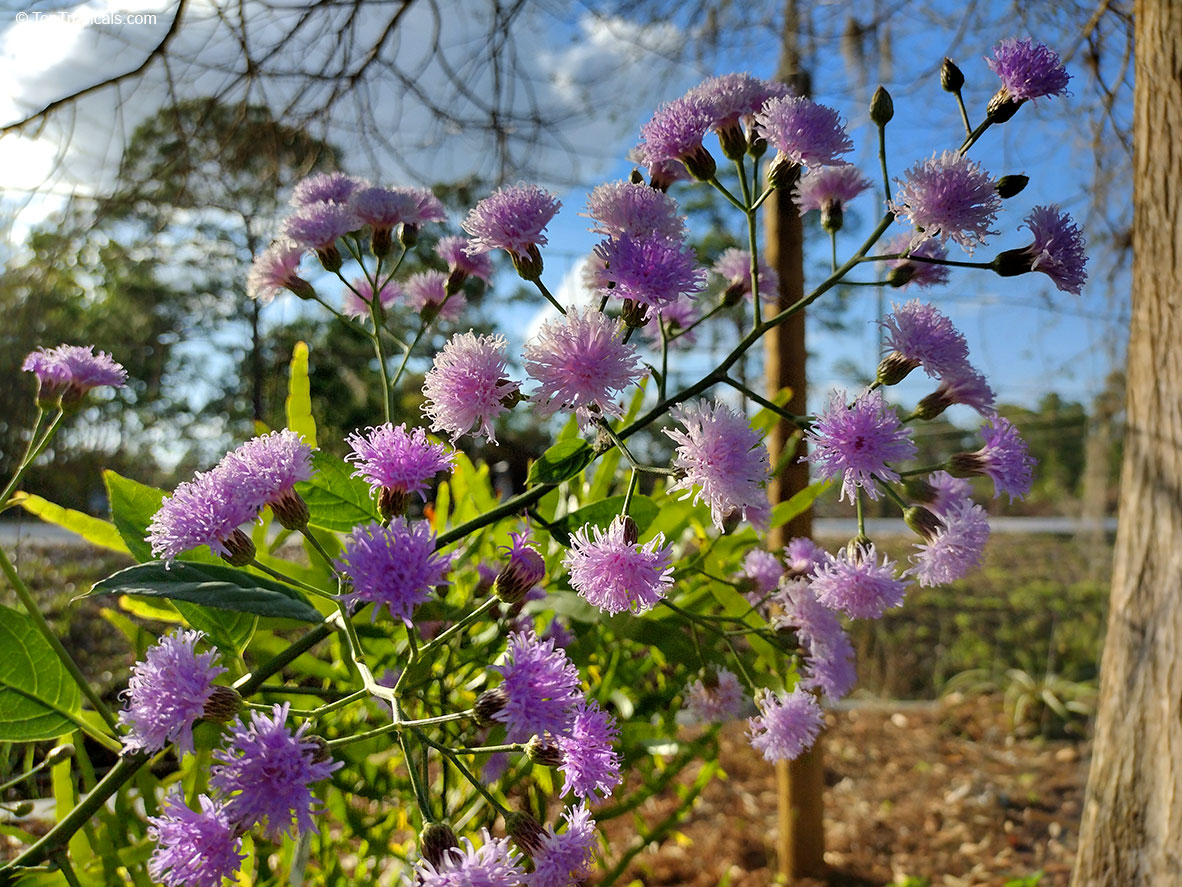
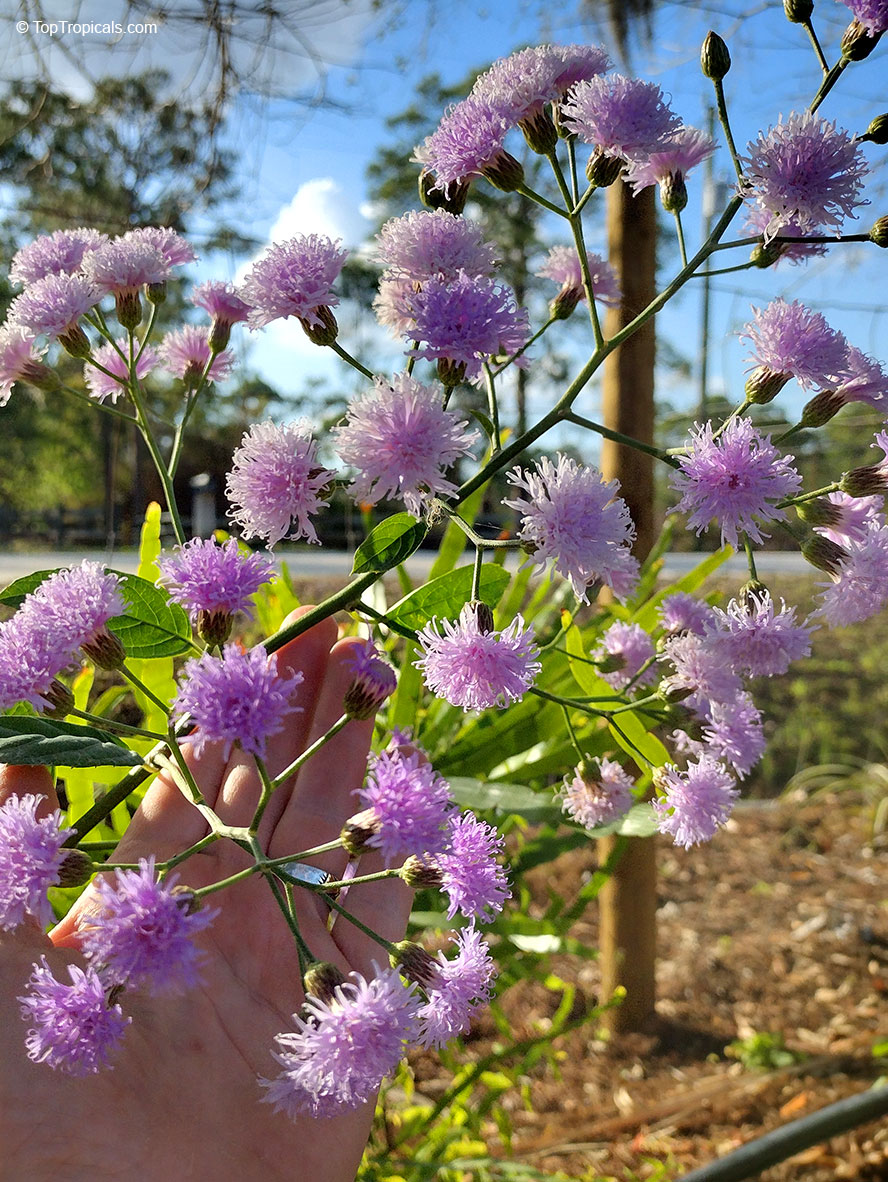
Vernonia sp. (Tropical Aster)
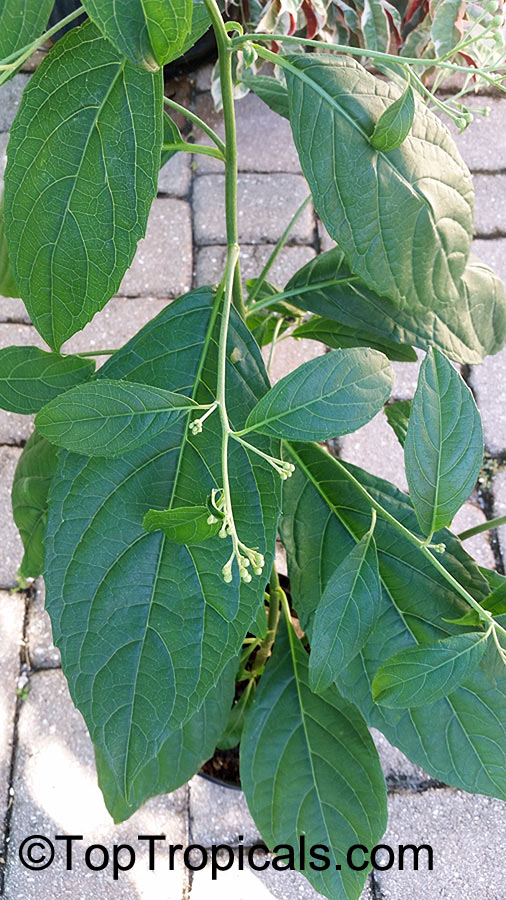
Botanical name: Vernonia sp.
Common names: Tropical Aster, Ironweed, Bitterleaf, Giant Mistflower
Family: Asteraceae
Origin: Africa
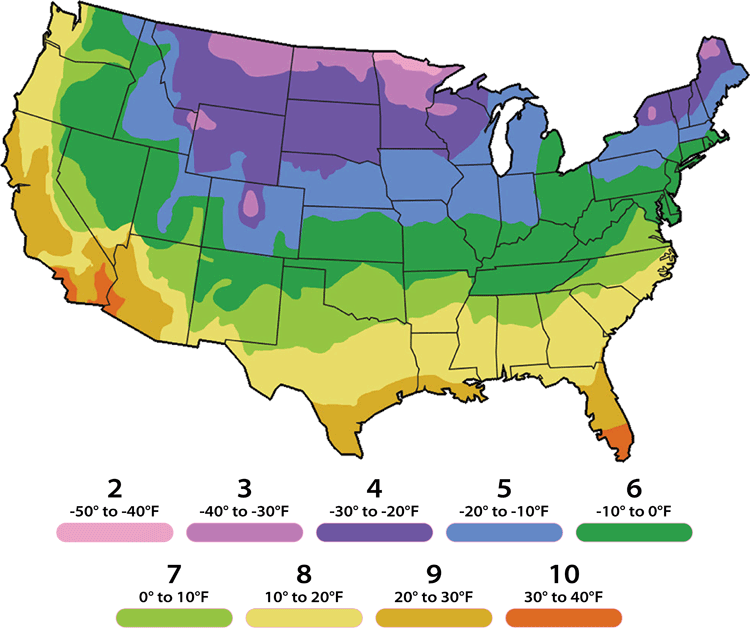
USDA Zone: 8-10
 Plant form: Small
 Mature height: 2-5 ft

 Sun exposure: Full sun or bright light indoor; semi-shade
 Cold tolerance: Tolerates light freezing to about 30°F for short periods (mature plants). Young plants must be protected.

 Watering: Regular; moderate
 Flower color: Blue, lavender, purple
 Suitable for: Outdoors in the suitable USDA zone; small gardens, containers, and indoor growing
 Wildlife: Attracts butterflies and hummingbirds
 Ethnomedical: Ethnomedical plant, traditionally used in folk or indigenous medicine
Vernonia sp., also known as the Tropical Aster or Bitterleaf, is a small shrub native to Africa. It is commonly used as a spice or herb in traditional medicines and is known for its attractive purple flowers that attract butterflies and hummingbirds. The plant is easy to grow in USDA Zones 8-10 and prefers full sun and moderate water. It is recommended to water regularly during blooming season, but keep the soil a little dryer during winter. If grown in a pot, it should be kept in a sheltered spot in colder weather and should be protected from harsh winds.
Vernonia sp. is not only known for its beauty, but also for its edible fruit that is high in vitamin A and other nutrients. The fruit can be used to make jams, sauces, and jellies and can be eaten raw. It is known to have numerous health benefits including improving vision, reducing cholesterol, aiding in weight loss, boosting the immune system, and acting as an anti-inflammatory. A mature plant can typically produce 2-3 pounds of fruit, although with proper care it can produce more.
Vernonia sp. is an excellent choice for any garden due to its beautiful flowers and nutritious fruit. With proper care, you can enjoy all the benefits this plant has to offer.
In general Vernonia is a genus of plants that includes around 1000 plant species. Many of these species are known for their purple flowers. Some species are edible. The genus was named after the English botanist William Vernon. In West and Central Africa, these plants are commonly known as Bitterleaf, Ewuro, Ndole, and Onugbu. They are popularly consumed as leaf vegetables in Cameroon. The leaves have a sweet and bitter taste. Vernonia calvoana is a key ingredient in the Cameroonian national dish of Ndole.
Vernonia has medicinal properties as well. It has been used to treat diabetes and reduce fever. These leaves are exported from several African countries and can be found in grocery stores that serve African clients. Vernonia galamensis is also used as an oilseed in East Africa. In Brazil, Vernonia condensata is traditionally used for its analgesic, anti-inflammatory, and other medicinal properties.
Vernonia species are also used as food plants by the larvae of certain Lepidoptera butterflies, including Coleophora vernoniaeella and Schinia regia.