Ricinus communis (Castorbean)
Botanical name: Ricinus communis
Common names: Castorbean, Castor Oil plant, Palma Christi, Ricin, Wonder tree, Krapata
Family: Euphorbiaceae
Origin: Africa
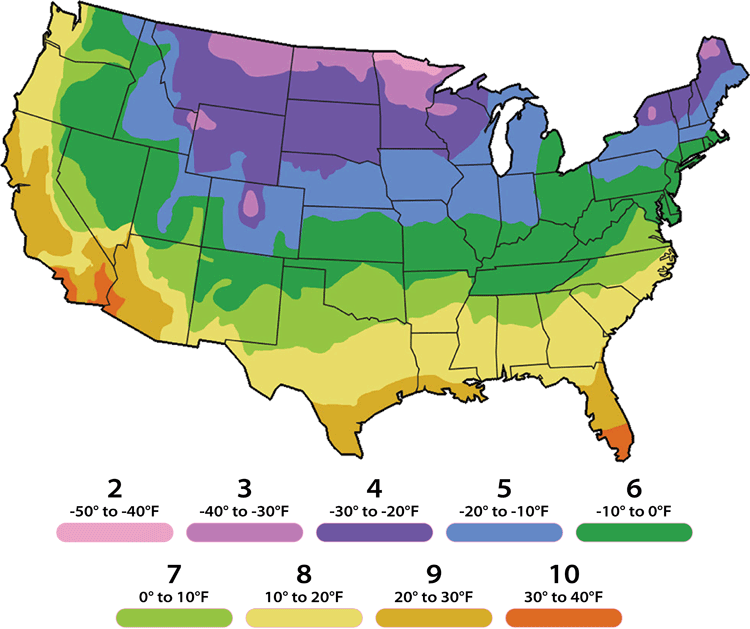
USDA Zone: 9-11

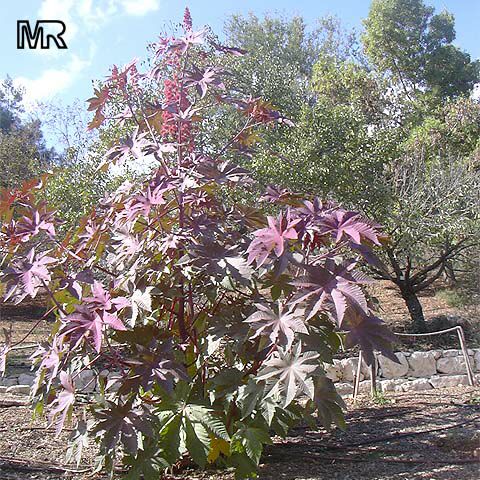
 Plant form: Large bush or small tree
 Mature height: 10-20 ft
 Sun exposure: Full sun or bright light indoor; semi-shade
 Cold tolerance: Tolerates light freezing to about 30°F for short periods (mature plants). Young plants must be protected.
 Watering: Moderate
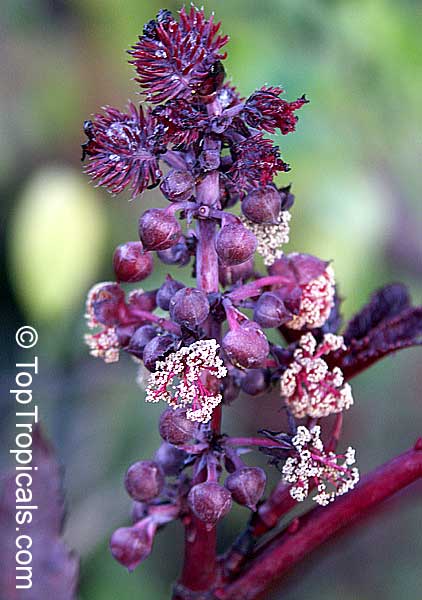
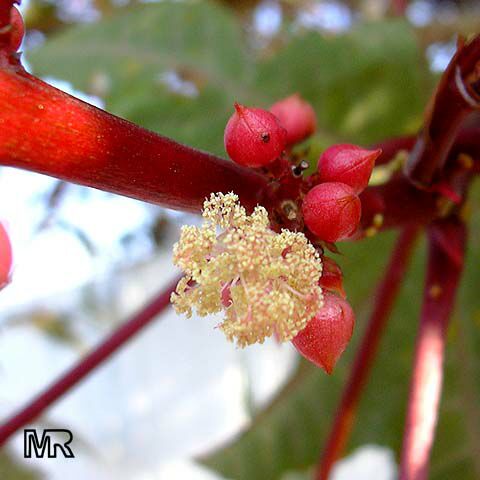
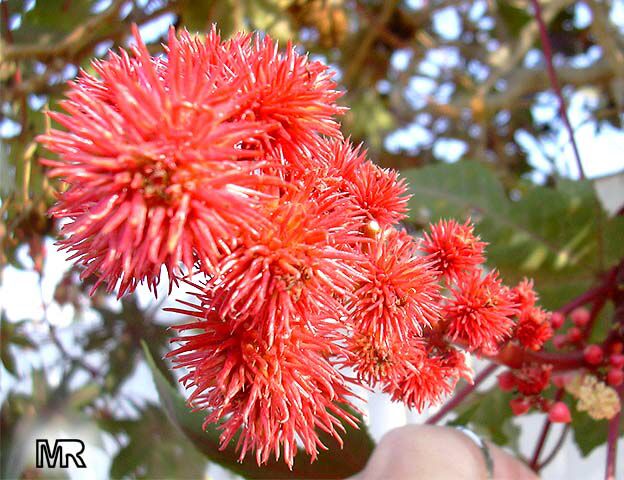
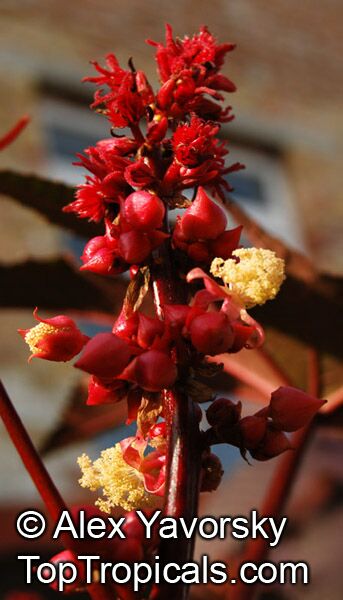
 Flower color: Red, crimson, vinous
 Suitable for: Outdoors in the suitable USDA zone; small gardens, containers, and indoor growing
 Irritating or toxic: Toxic plant/plant part
 Ethnomedical: Ethnomedical plant, traditionally used in folk or indigenous medicine
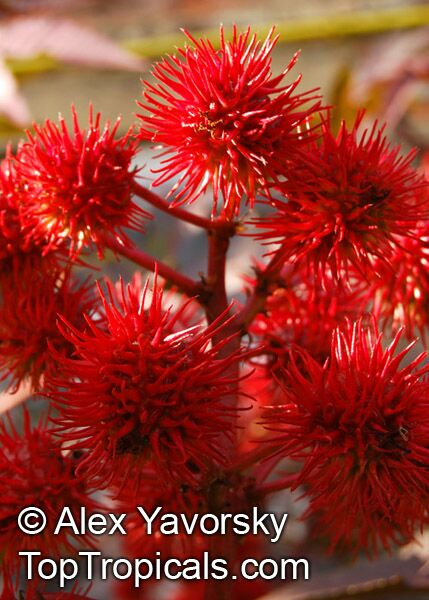
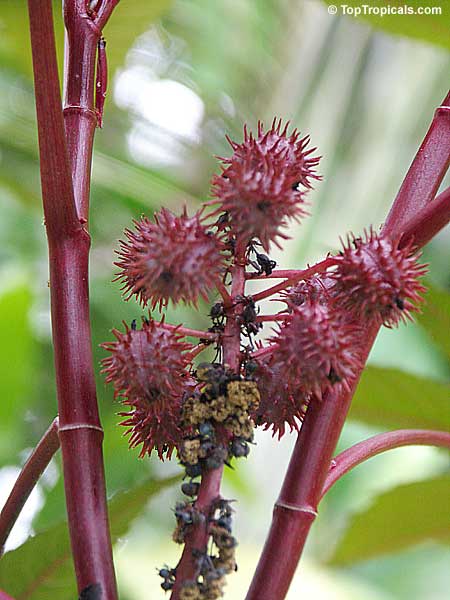
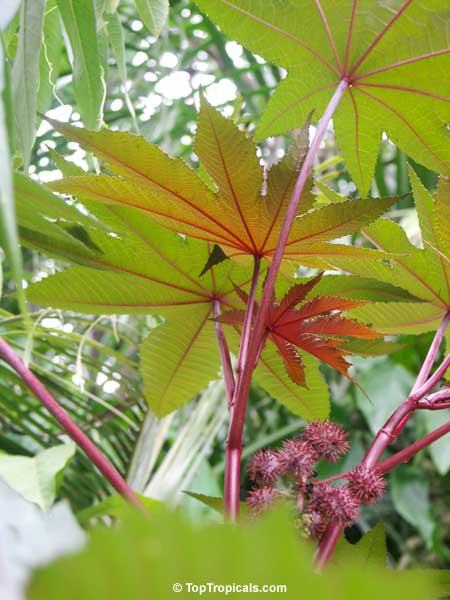
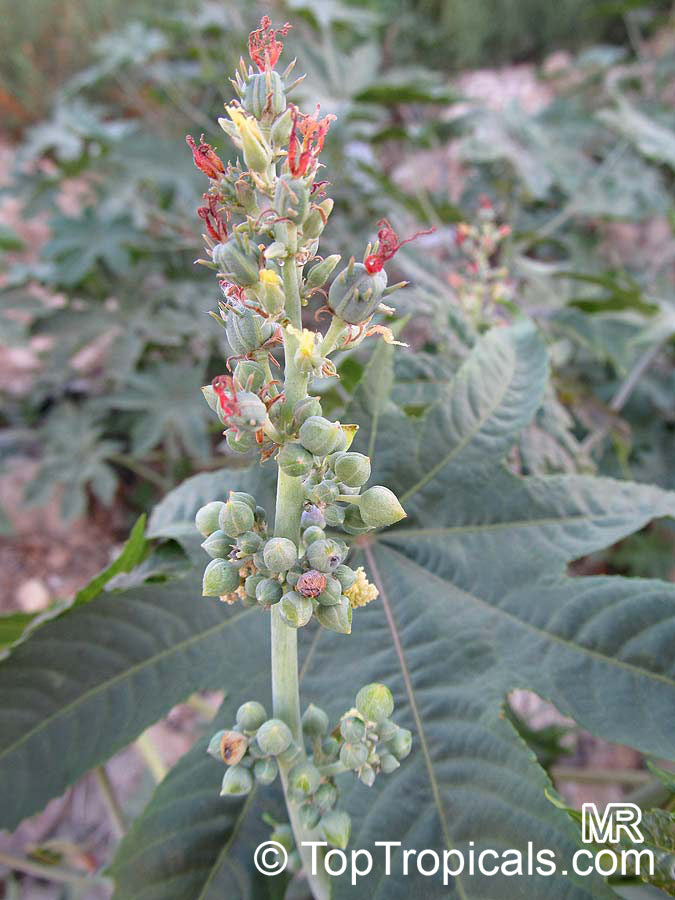
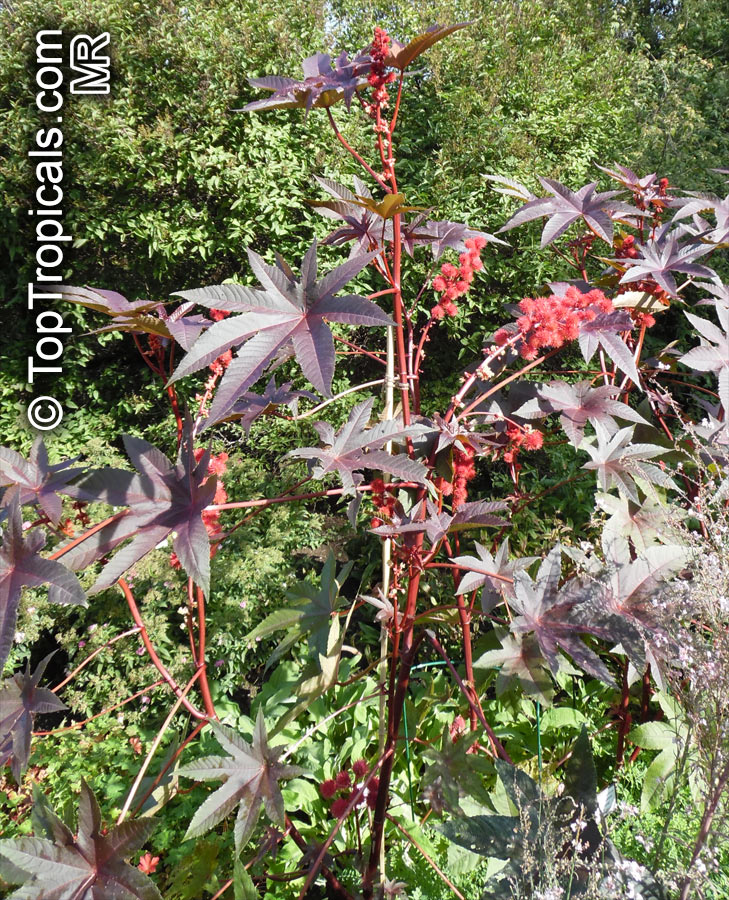
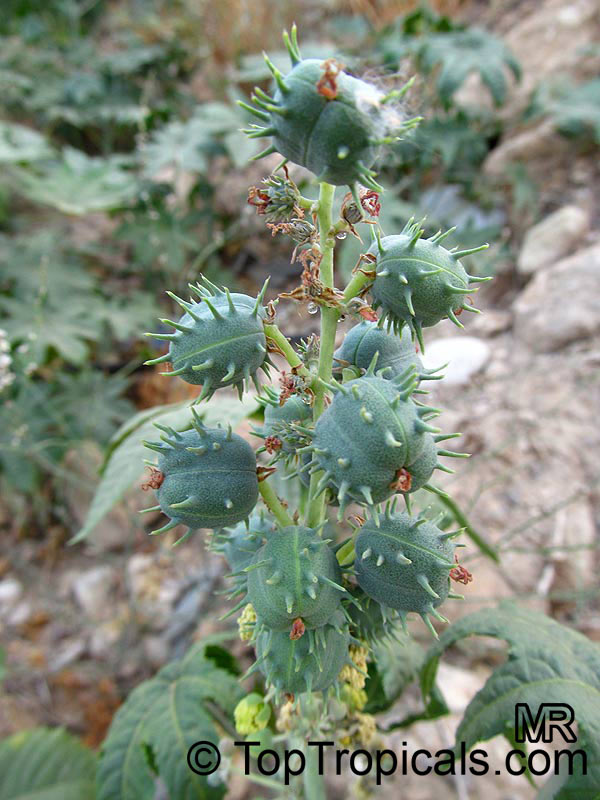
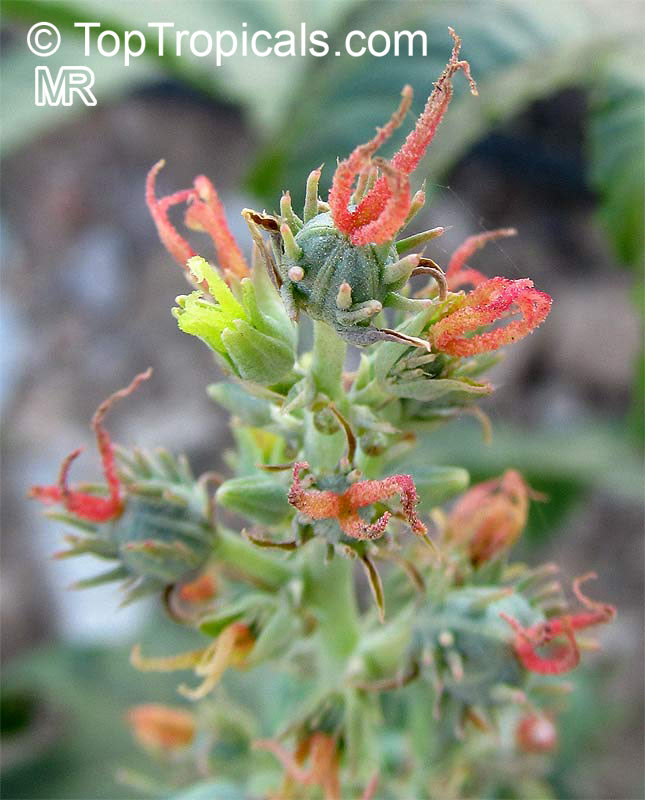
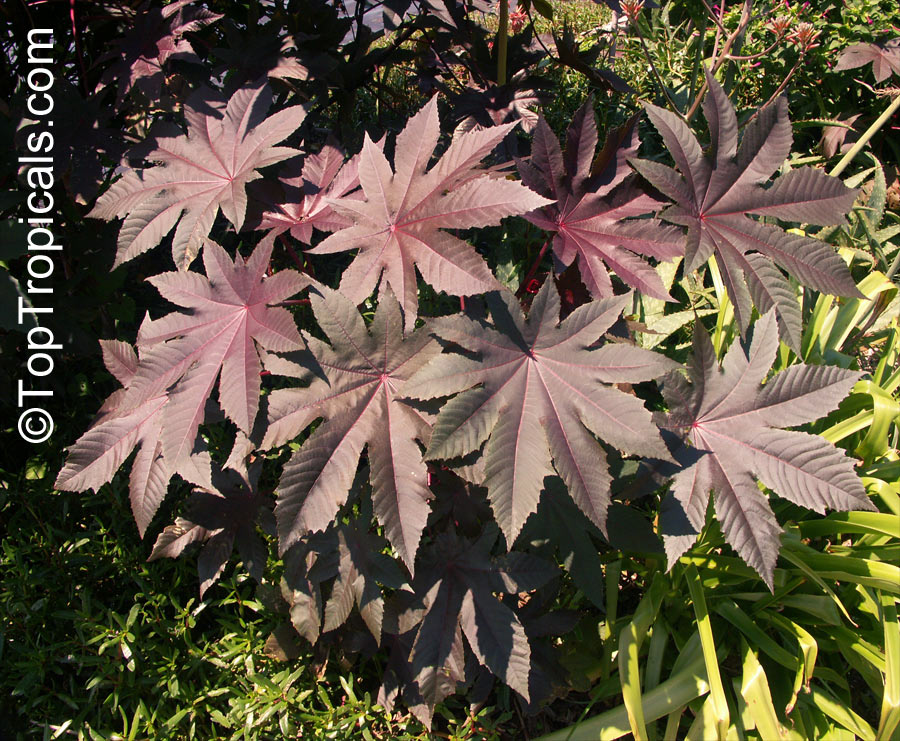
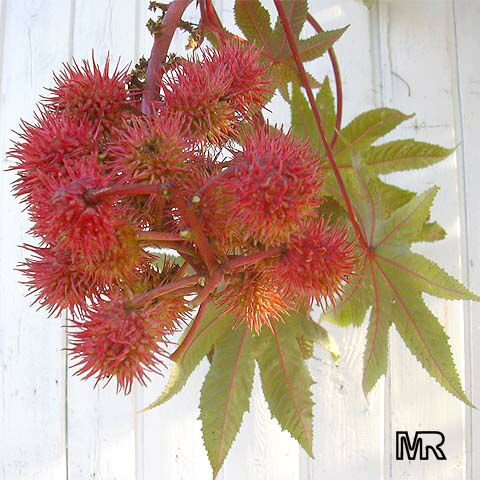
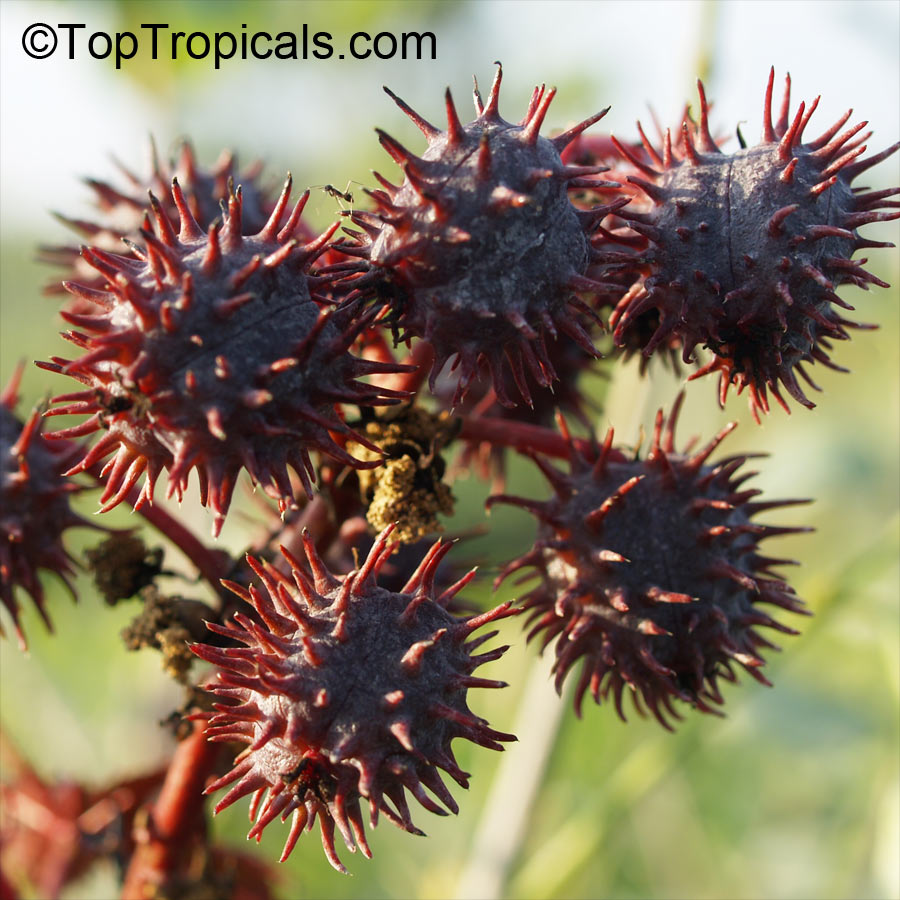
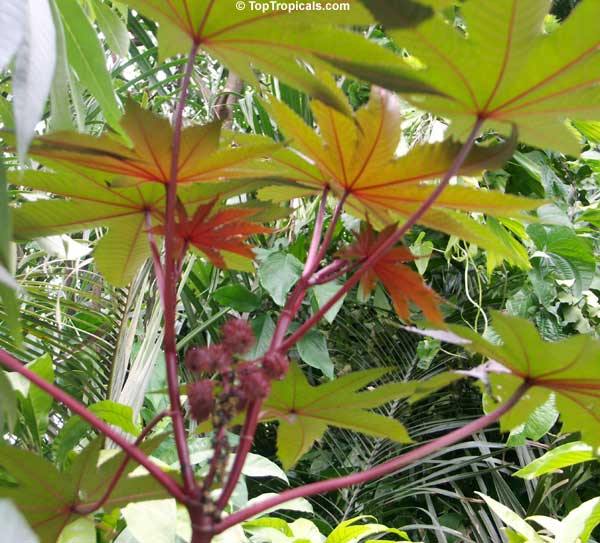
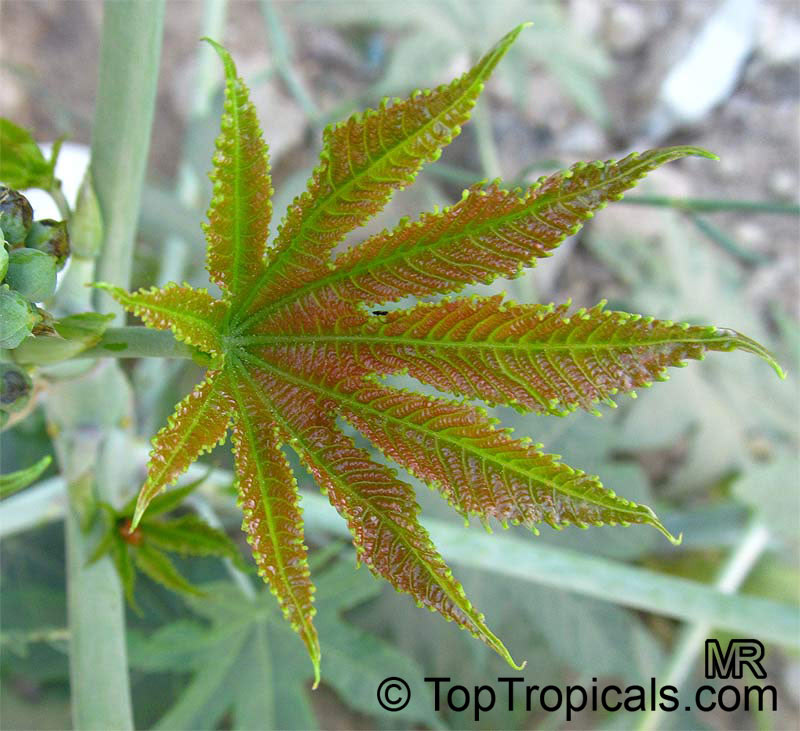
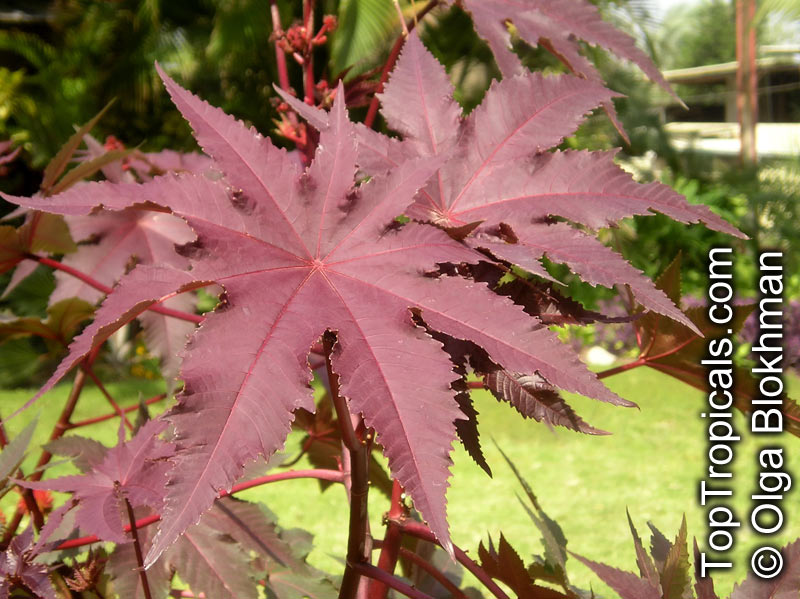
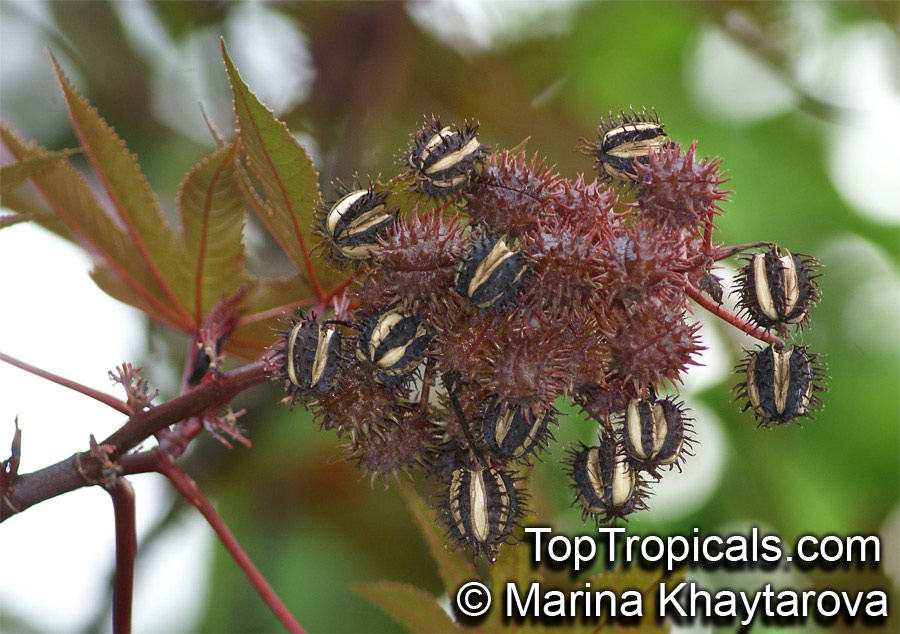
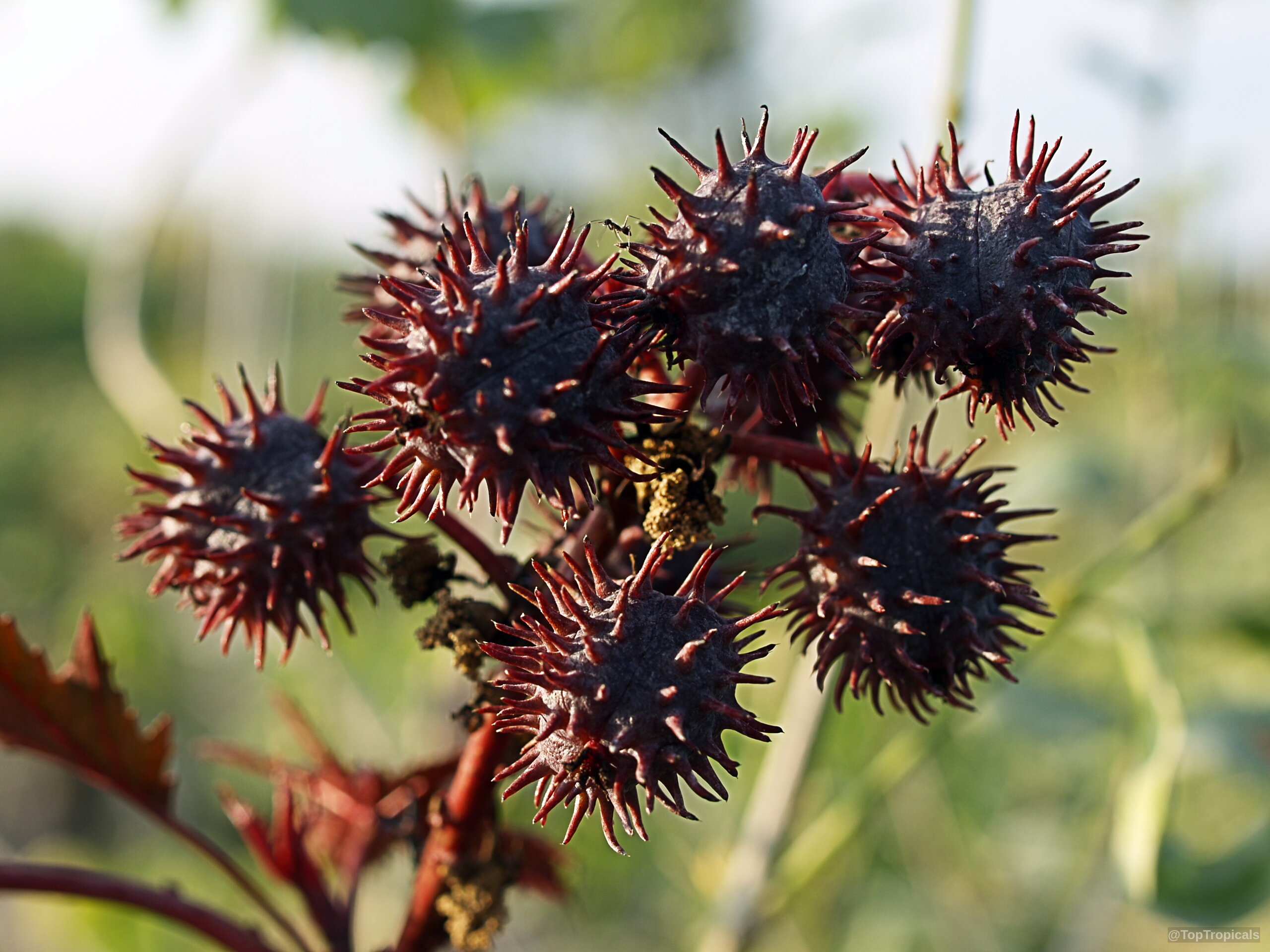
30-40 ft tall tropical perennial usually behaves as an annual in the temperate regions where it grows up to 10 ft tall. There are several cultivated varieties with strikingly different foliage colorations, including purple, dark red, bronze-green, maroon, bright green with white veins, and just plain green. Although it grows very rapidly with little care or insect pests and produces a mass of lush tropical foliage, its use in cultivation should be discouraged because of the extremely poisonous seeds. Blooms most of the year in dense inflorescences, with female flowers just above the male flowers. Castorbean is cultivated for the seeds which yield a fast-drying, non-yellowing oil, used mainly in industry and medicines. The castor oil is extracted from the beans, which is used for medicinal purposes. In S. American traditional medicine the juice from the leaves is used against rheumatism, headache, ringworms and warts.