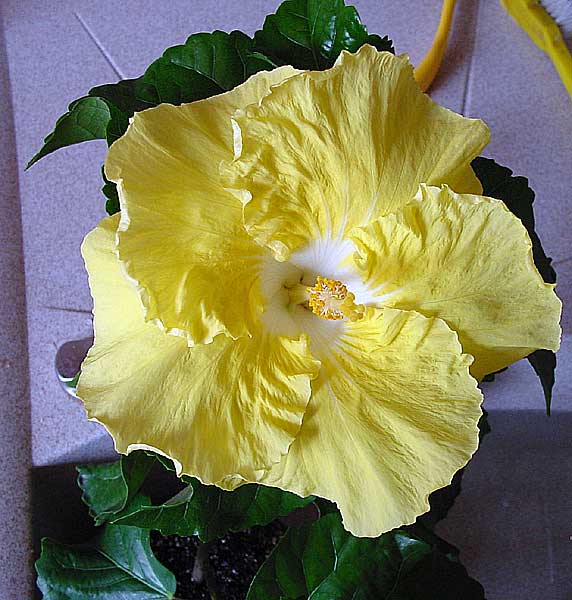
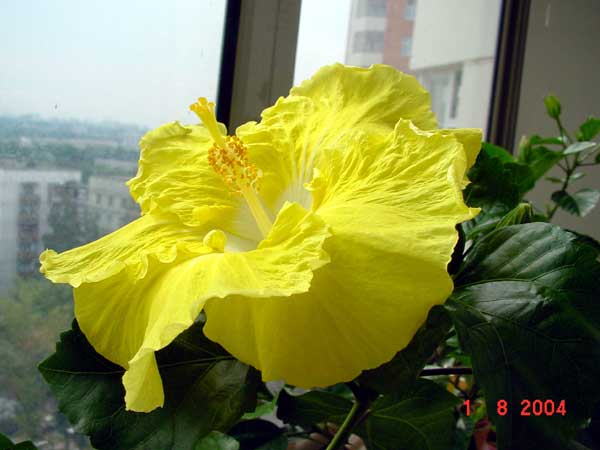
Hibiscus rosa-sinensis 'Kinchens' (Hibiscus Kinchens Yellow)
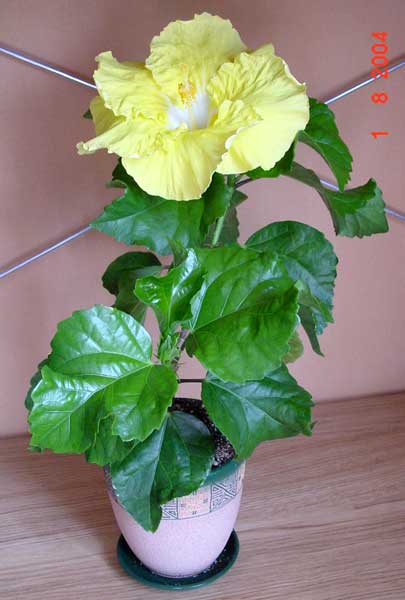
Botanical name: Hibiscus rosa-sinensis
Common name: Hibiscus Kinchens Yellow
Cultivar: Kinchens
Family: Malvaceae
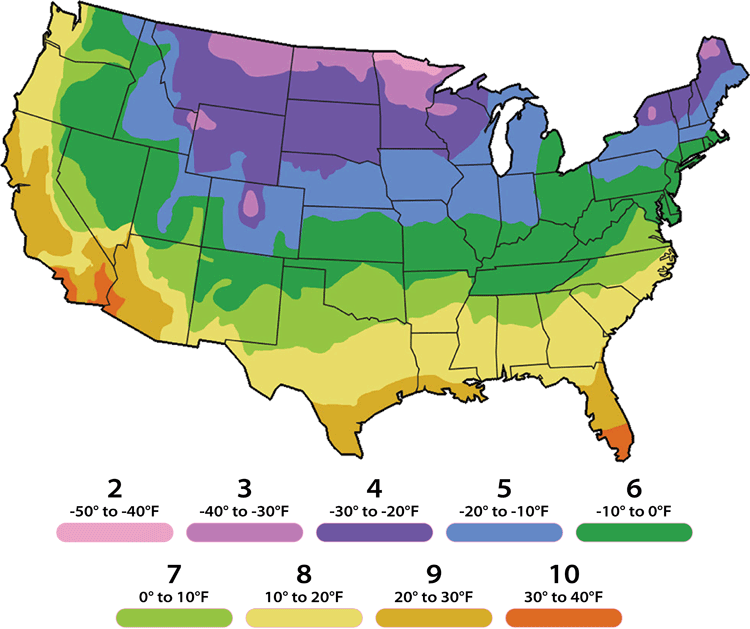
USDA Zone: 9-11
 Plant form: Large bush
 Mature height: 5-10 ft
 Sun exposure: Full sun or bright light indoor; semi-shade
 Cold tolerance: Frost sensitive. Protect from freezing.
 Watering: Keep soil moist
 Flower color: Yellow, orange
 Suitable for: Outdoors in the suitable USDA zone; small gardens, containers, and indoor growing
 Wildlife: Attracts butterflies and hummingbirds
Hibiscus rosa-sinensis, commonly known as Chinese Hibiscus, Tropical Hibiscus, or Chinese Rose, is an evergreen shrub or small tree in the Malvaceae family. Its exact wild origin is uncertain, and the species is considered an ancient cultivated plant, probably derived from tropical Asian ancestors and spread throughout the tropics centuries ago. Plants typically grow 6-10 feet (1.8-3 m) tall, occasionally larger, with glossy, toothed green leaves and a dense, branching habit. The large, showy flowers may be single, semi-double, or double and occur in an enormous range of colors, including red, pink, orange, yellow, white, and numerous multicolored combinations.
In warm climates, Hibiscus rosa-sinensis can flower almost continuously throughout the year, with individual blooms usually lasting only a day or two but being produced in rapid succession. It grows best in full sun to partial shade and fertile, well-drained soil with regular moisture and feeding during active growth. Pruning encourages branching and helps maintain a compact, floriferous plant. Hardy in USDA Zones 9-11, it may suffer significant dieback during freezes in Zone 9 and benefits from a sheltered location and cold protection. In cooler climates, Tropical Hibiscus is one of the most popular flowering houseplants and container plants, valued for bringing its spectacular tropical blooms indoors. Thousands of cultivars and complex hybrids have been developed, making it one of the most diverse and widely grown flowering shrubs in tropical and subtropical gardens as well as a favorite indoor ornamental.
Read more about hibiscus:
Hibiscus growing tips: The Tips of Hibiscus Flowers
Most useful Hibiscus plants
Hibiscus: TopTropicals' first plant
Catalog of Fancy Hibiscus varieties
Hibiscus Varieties Gallery
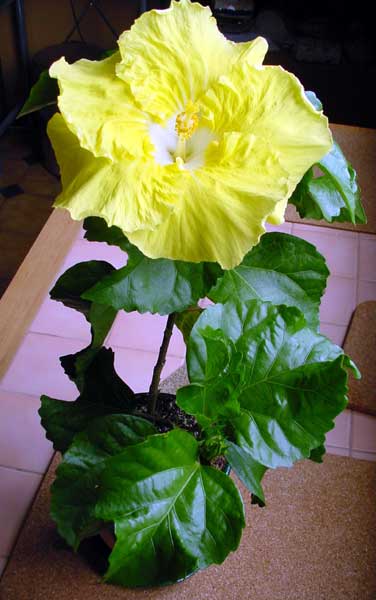
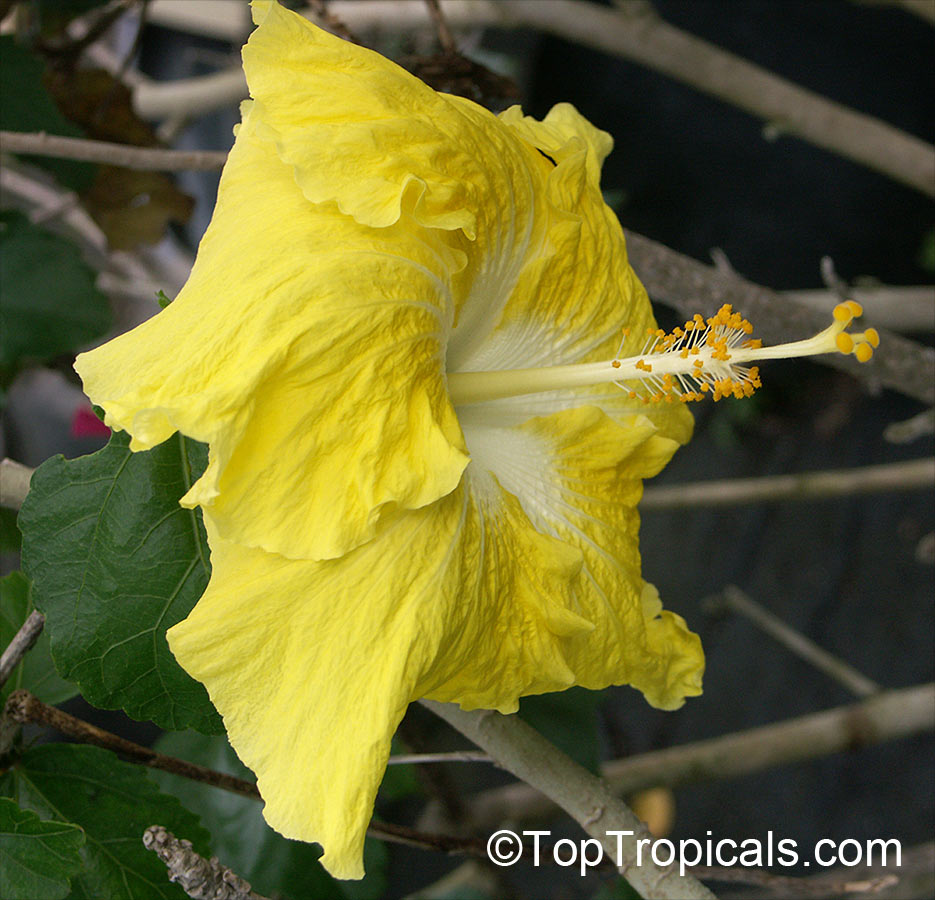
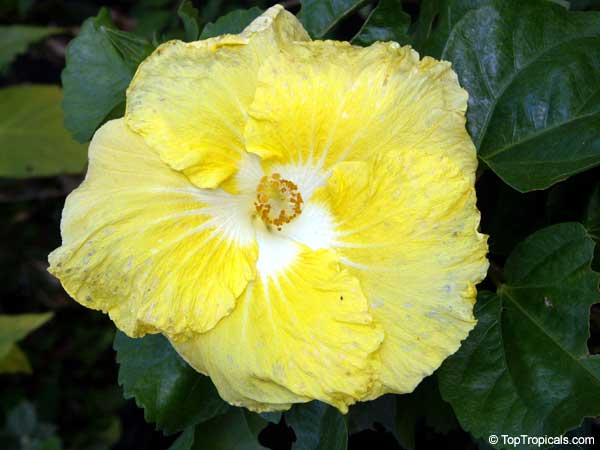
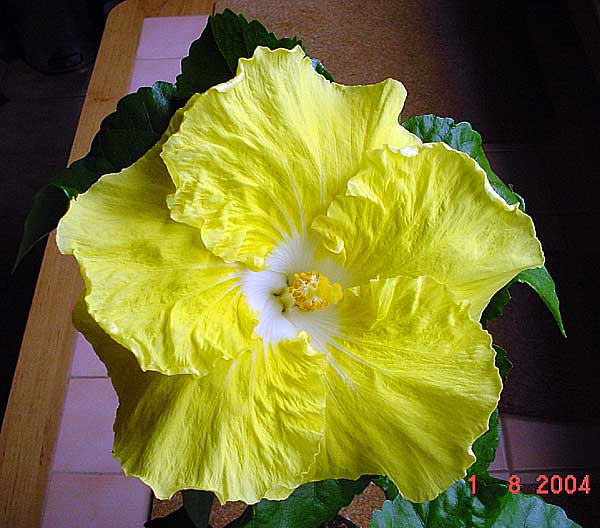
Hibiscus Kinchens Yellow is a bushy perennial evergreen shrub that grows to between 5 and 10 feet tall. It features oval to lance shaped green foliage and beautiful, trumpet-shaped yellow, orange or pink flowers that measure 5 - 6 inches across and bloom in summer and fall.
Hibiscus Kinchens Yellow is easy to grow and care for in the right environment. It requires full sun and regular water, with occasional fertilizing throughout the growing season to maintain optimal growth. The shrub is hardy in USDA Hardiness Zones 9 to 11, and will suffer in colder temperatures with leaves becoming dull and colors fading.
In colder regions, Hibiscus Kinchens Yellow can still thrive when grown in a pot. Place the potted plant outdoors in the warm, sunny summer months, but bring it indoors during winter to provide extra protection from the cold. Water frequently and keep the soil moisture, but be sure to avoid over-watering. Every two to three years, repot the Hibiscus Kinchens Yellow if it has become root-bound, or replant it into a larger container if it has outgrown the previous one.
Hibiscus Kinchens Yellow is a great choice for any landscape looking to add bursts of summer and fall color. This large shrub is an eye-catching addition to any garden, that is sure to provide long-lasting beauty and enjoyment. For those living in colder climates, Hibiscus Kinchens Yellow can still be grown, with a little extra care given to ensure it survives during the winter months.
Similar plants: Hibiscus rosa-sinensis 'Kinchens' (Hibiscus Kinchens Yellow)
- Abelmoschus esculentus (Okra)
- Abelmoschus moschatus (Musk Mallow)
- Alyogyne hakeifolia (Red-centred Hibiscus)
- Alyogyne huegelii (Blue Hibiscus)
- Hibiscus acetosella (African Rosemallow)
- Hibiscus arnottianus (Hawaiian White Hibiscus)
- Hibiscus cannabinus (Kenaf)
- Hibiscus coccineus (Scarlet Hibiscus)
- Hibiscus El Capitolio Group ''Bloody Mary'' (Bloody Mary Hibiscus)
- Hibiscus El Capitolio Group ''Tequila Sunrise'' (Tequila Sunrise Hibiscus)