Cuminum cyminum (Cumin)
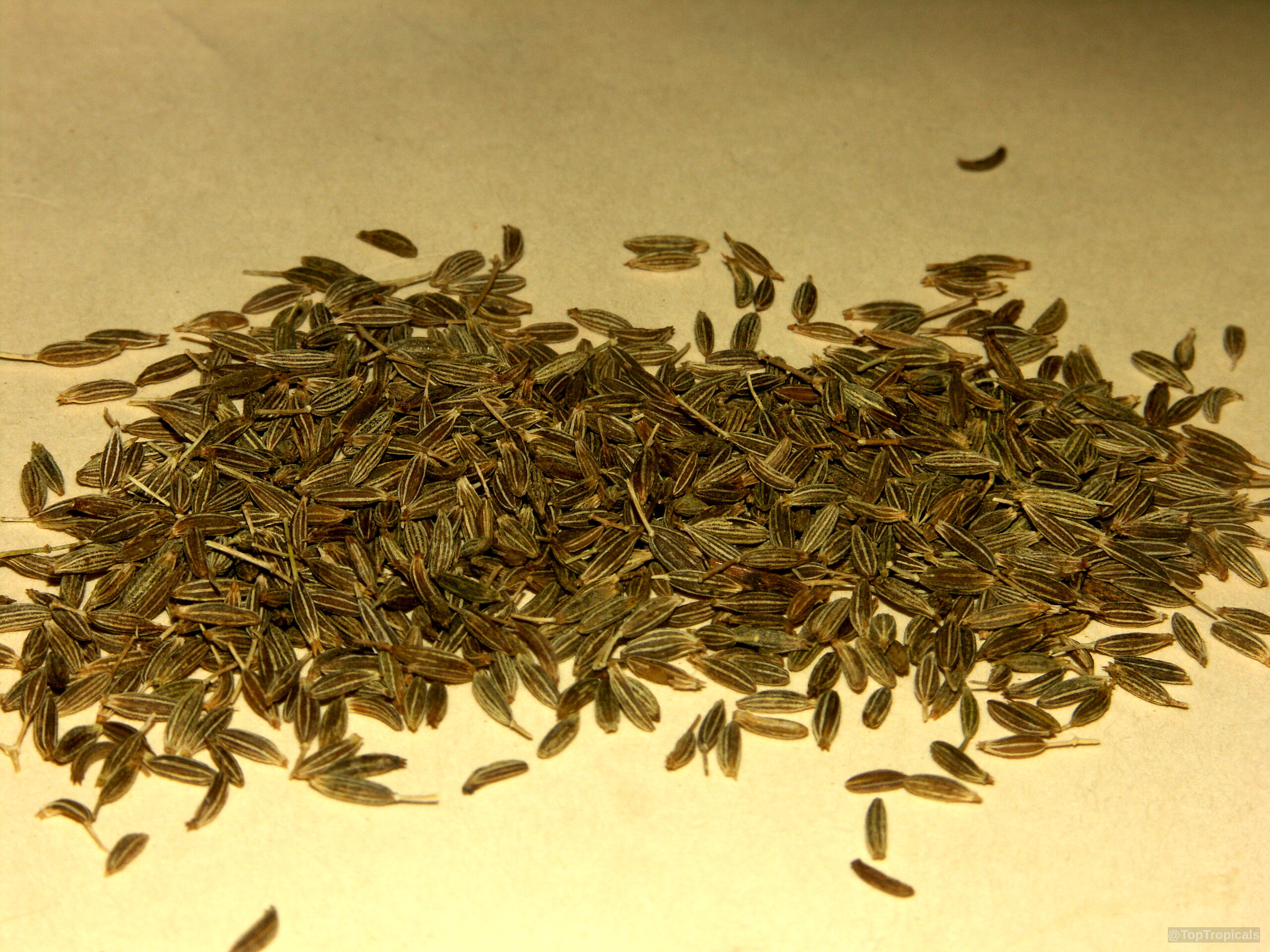
Cuminum cyminum (Cumin) seeds lie spread out on a flat surface for inspection.
Botanical name: Cuminum cyminum
Common name: Cumin
Family: Apiaceae / Umbelliferae
Origin: Mediterranean to East India
USDA Plant Hardiness Zone Map
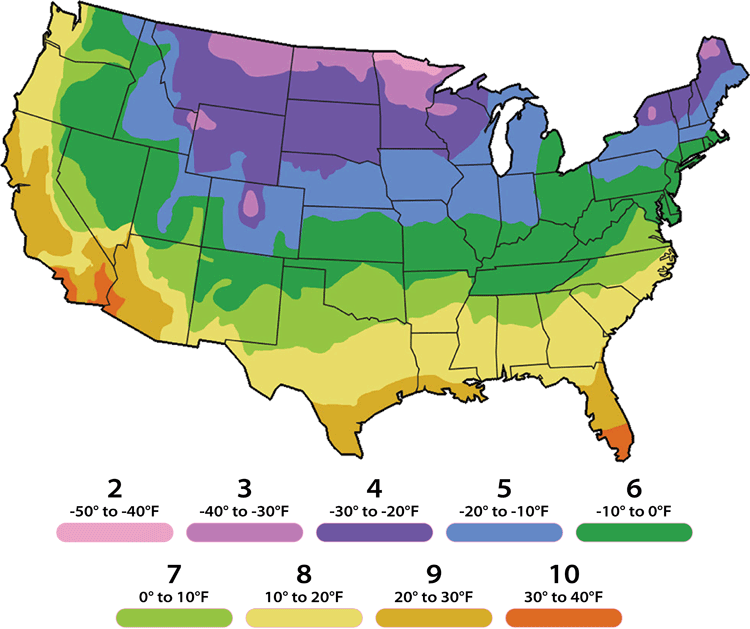
USDA Zone: 5-10
Plant type: Fruit or edible; spice or herb
Fruit type: Fruit or edible
 Plant form: Small
 Mature height: 2-5 ft
 Sun exposure: Full sun or bright light indoor
 Cold tolerance: Tolerates light freezing to about 30°F for short periods (mature plants). Young plants must be protected.
 Watering: Moderate
 Flower color: White and off-white
 Suitable for: Outdoors in the suitable USDA zone; small gardens, containers, and indoor growing
 Fragrance: Fragrant; perfume plant
 Ethnomedical: Ethnomedical plant, traditionally used in folk or indigenous medicine
Cumin seeds are used in the cuisines of many different cultures. It is the second most popular spice in the world after black pepper. Cumin's distinctive flavor and strong, warm aroma is due to its essential oil content.
Cultivation requires a long, hot summer of 3-4 months; it is drought-tolerant, and is mostly grown in Mediterranean climates. It is grown from seed, sown in spring, and needs fertile, well-drained soil.
Link to this plant:
https://toptropicals.com/catalog/uid/cuminum_cyminum.htm