Catharanthus roseus (Madagascar Periwinkle)
Botanical names: Catharanthus roseus, Vinca rosea
Common names: Madagascar Periwinkle, Vinca
Family: Apocynaceae
Origin: Madagascar
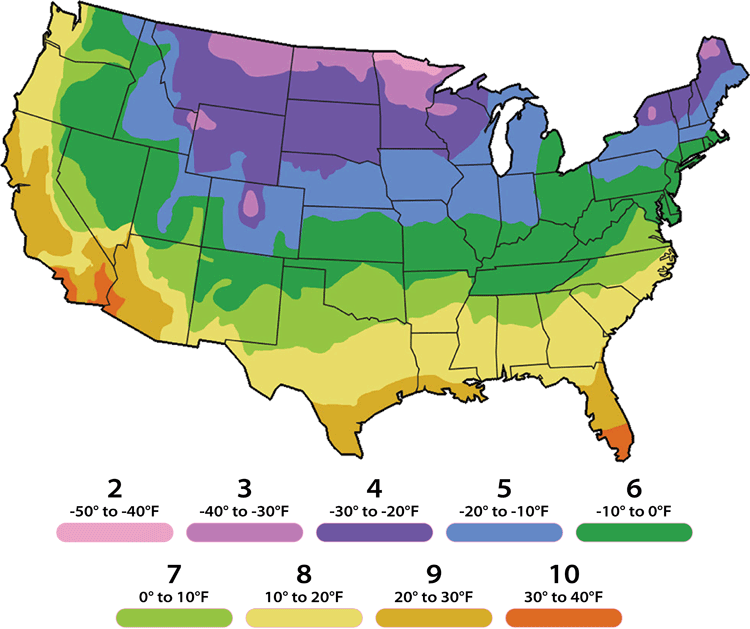
USDA Zone: 9-11
 Plant form: Small
 Mature height: 2-5 ft
 Sun exposure: Full sun or bright light indoor; semi-shade
 Cold tolerance: Frost sensitive. Protect from freezing.
 Watering: Regular


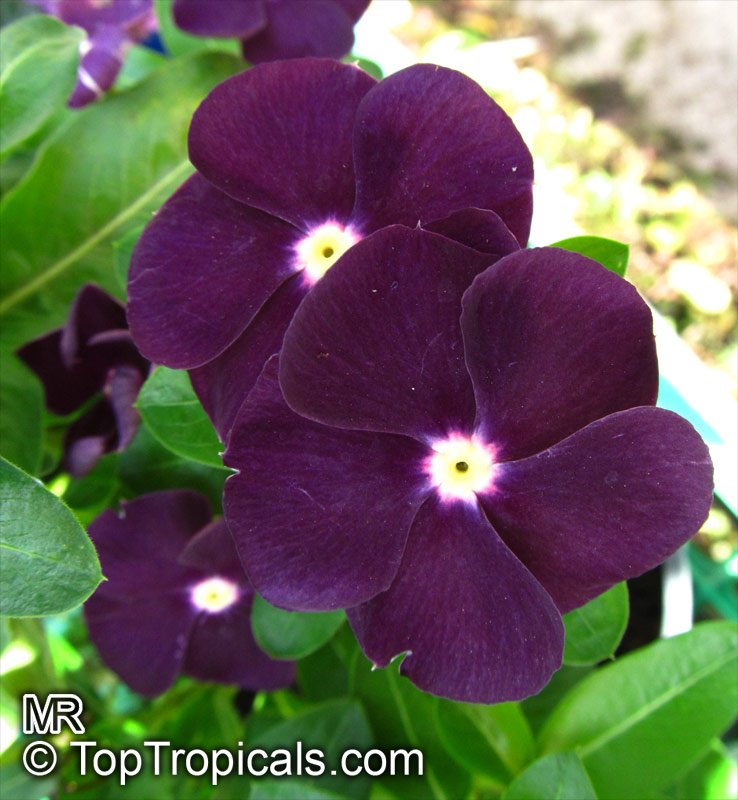
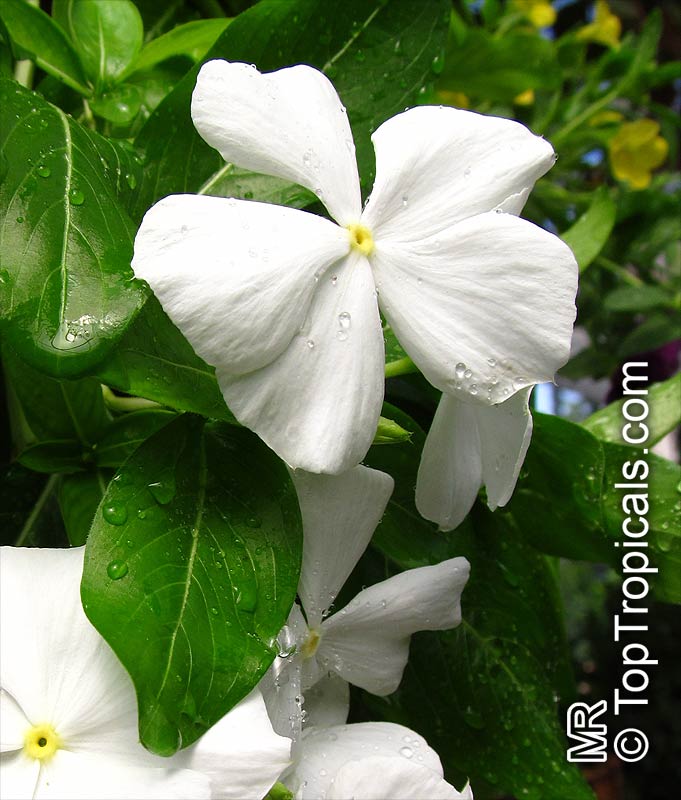
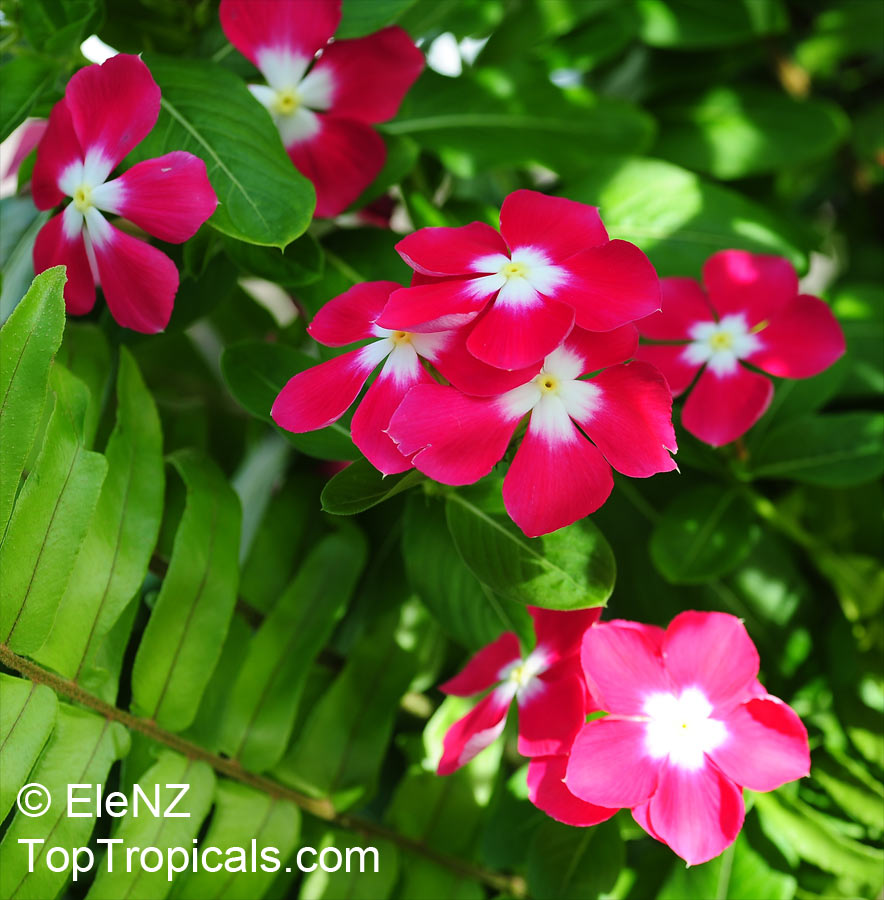
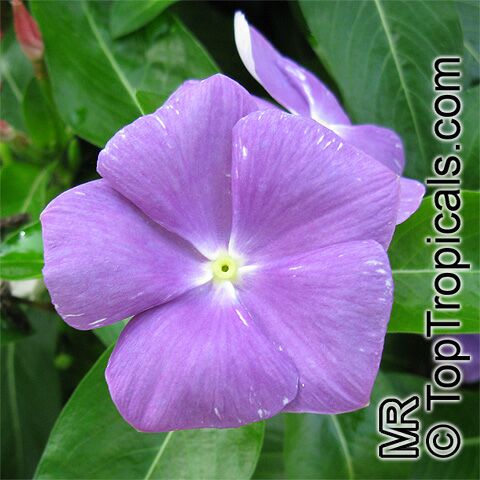
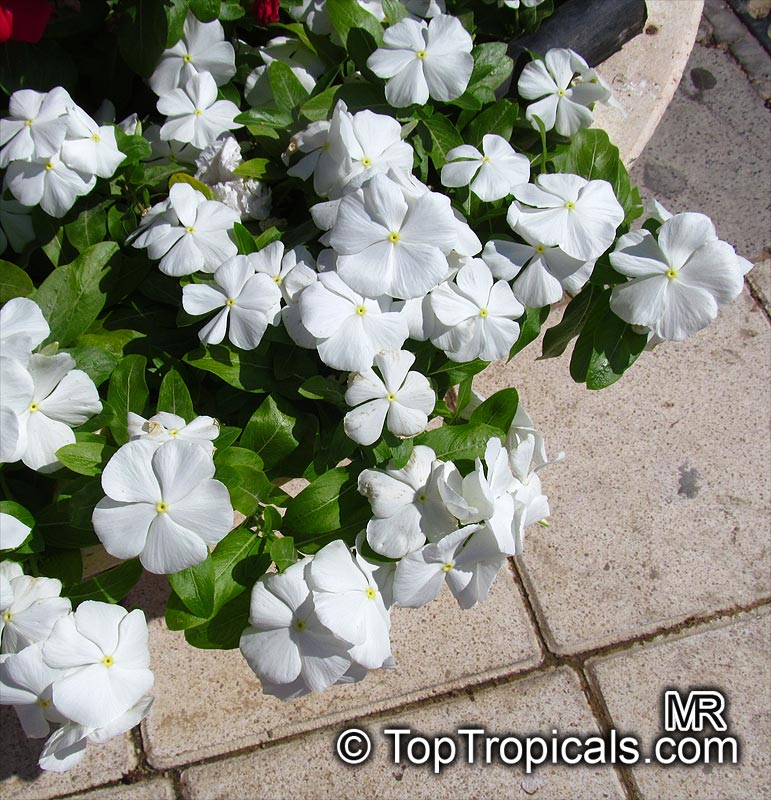
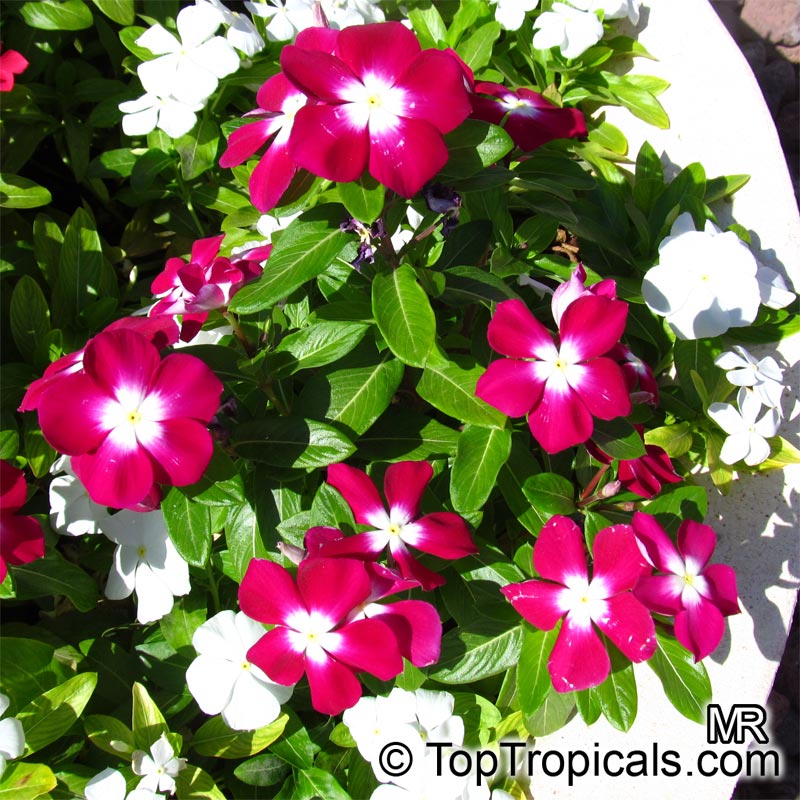
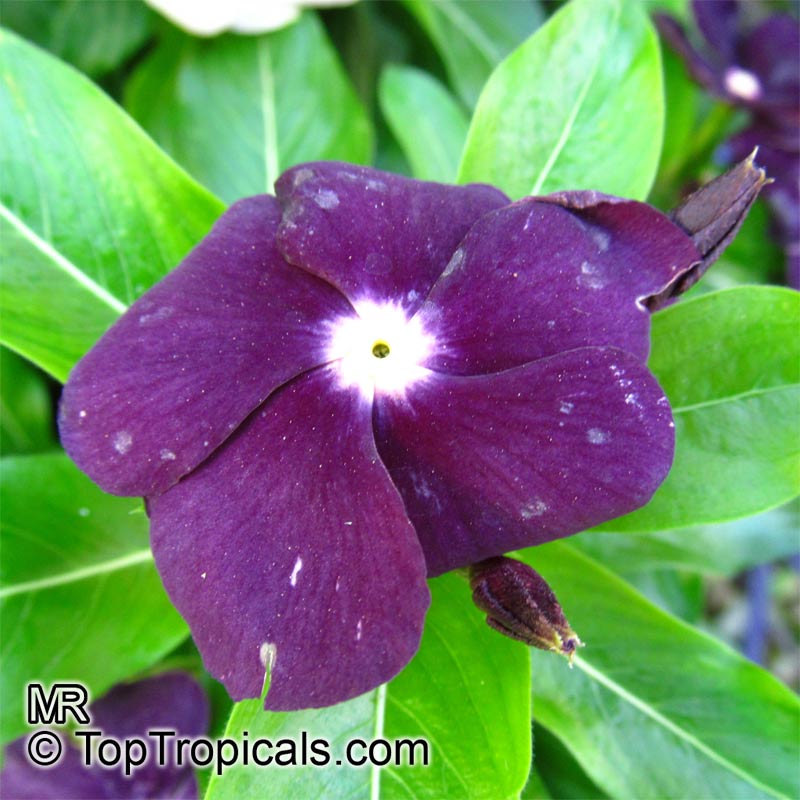
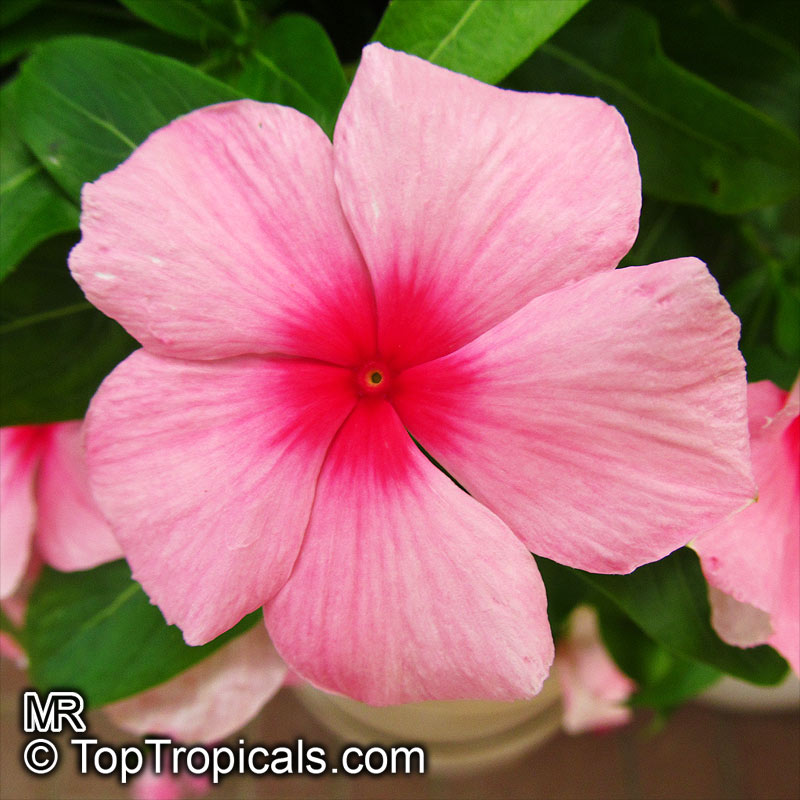
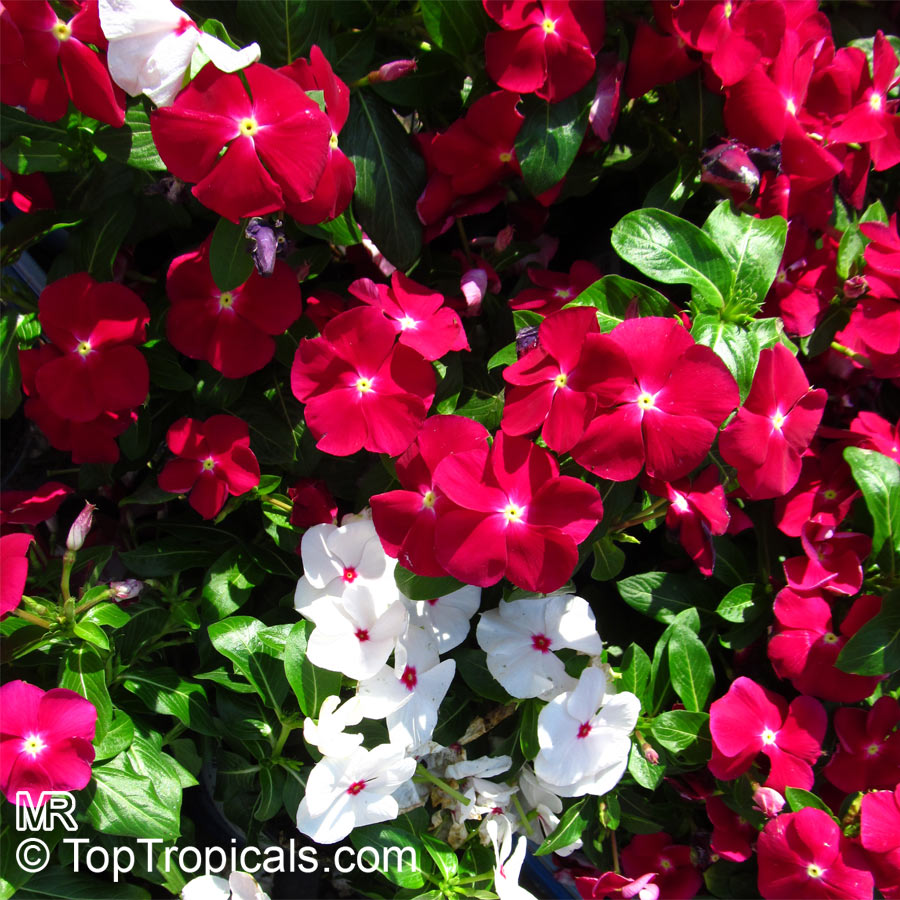
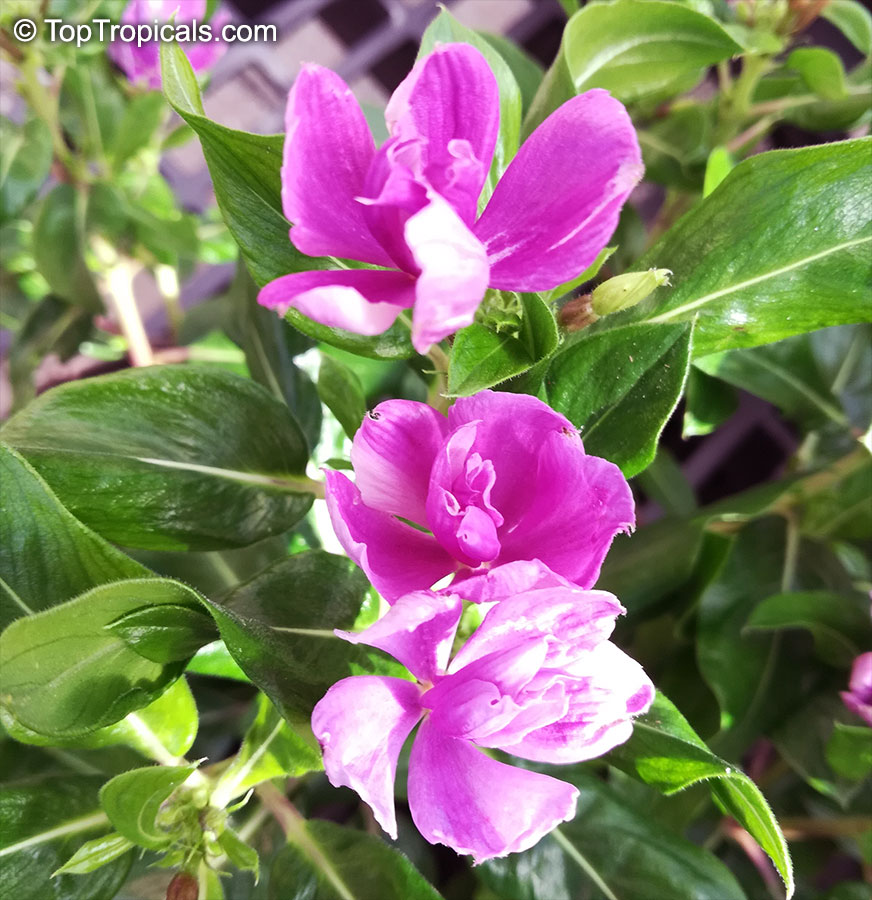
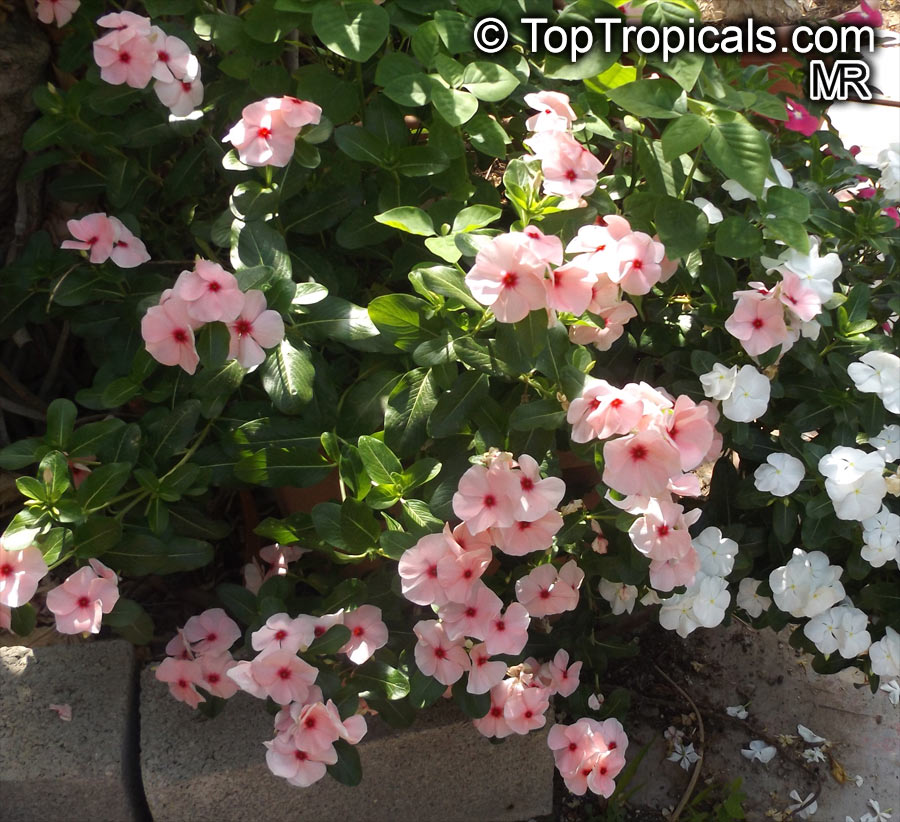
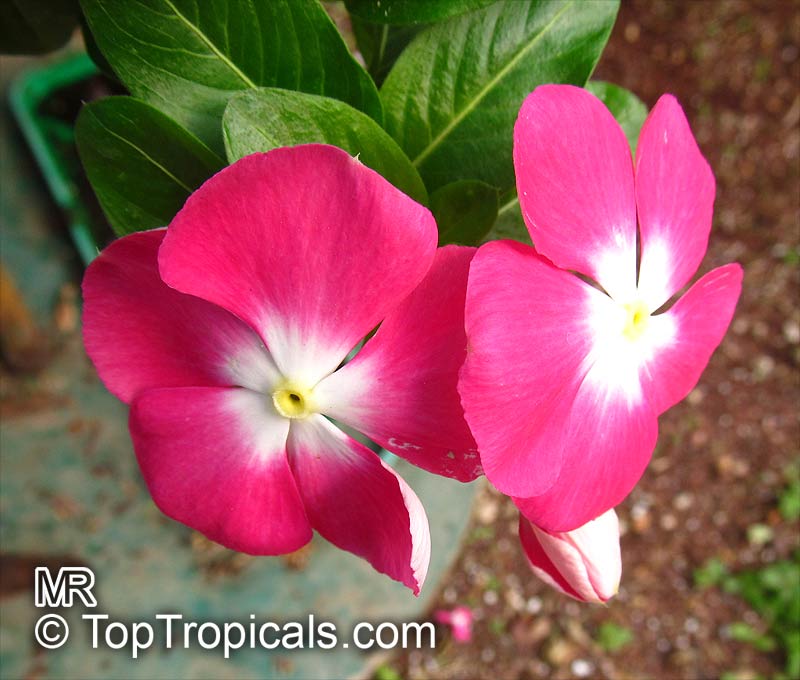
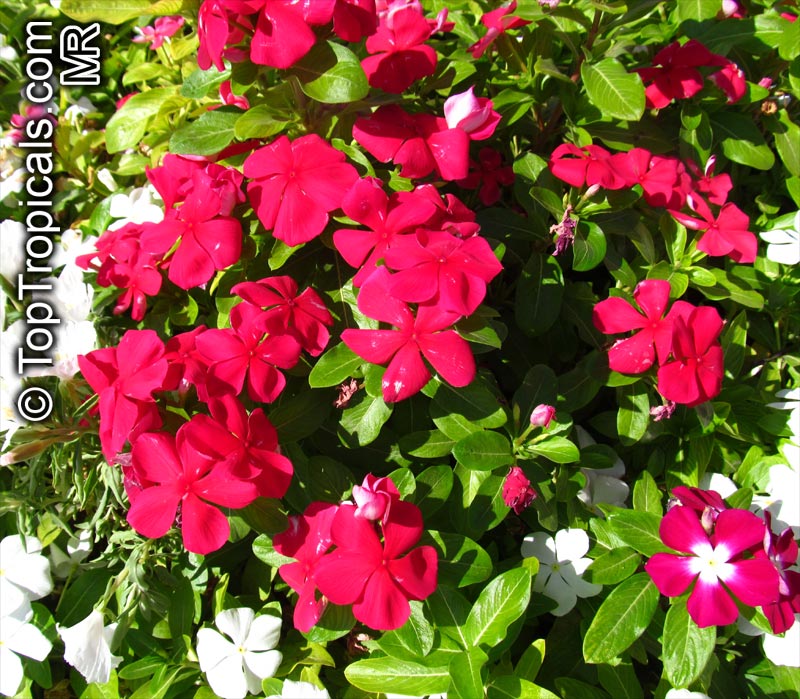
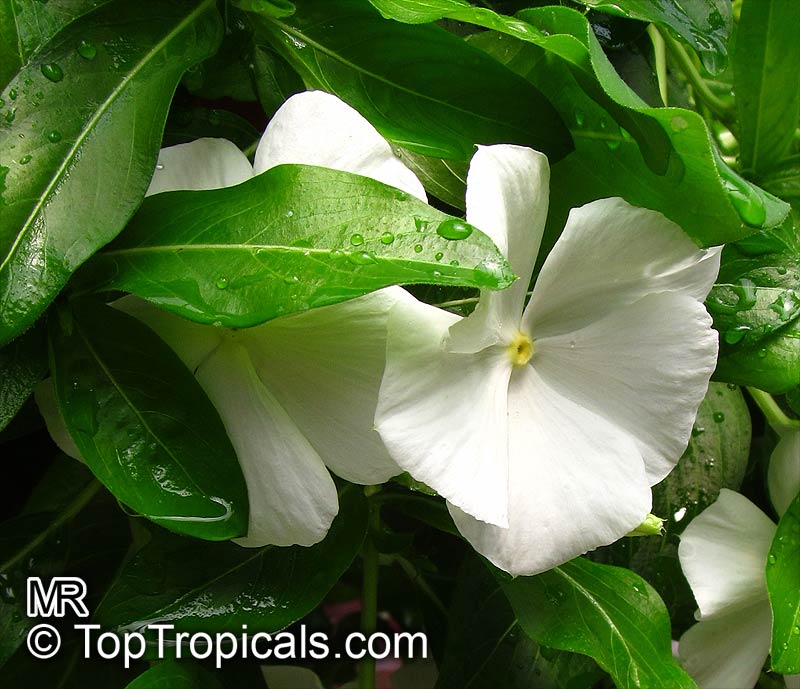
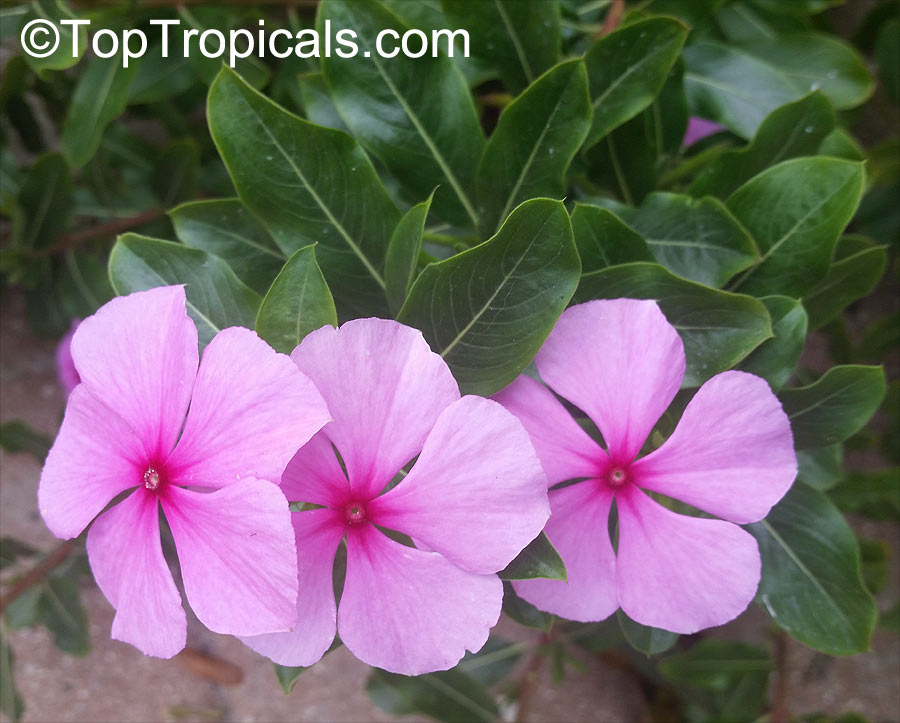
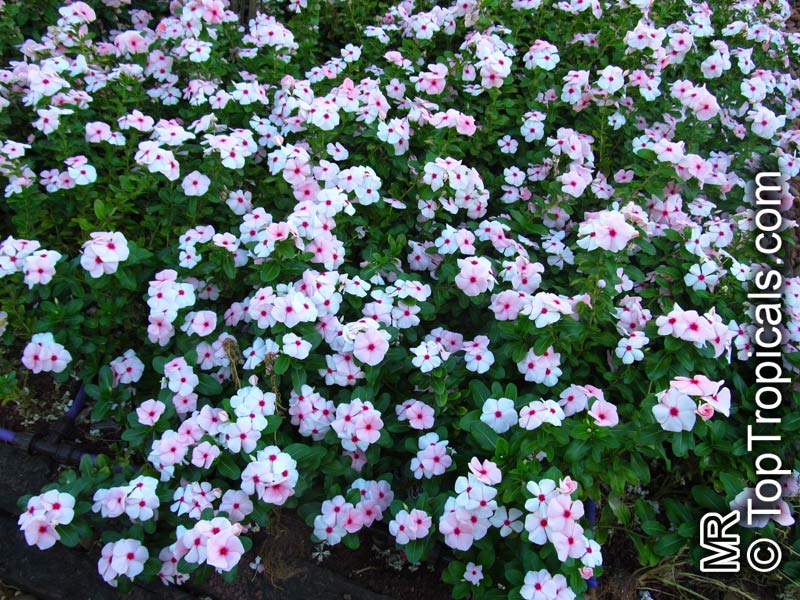
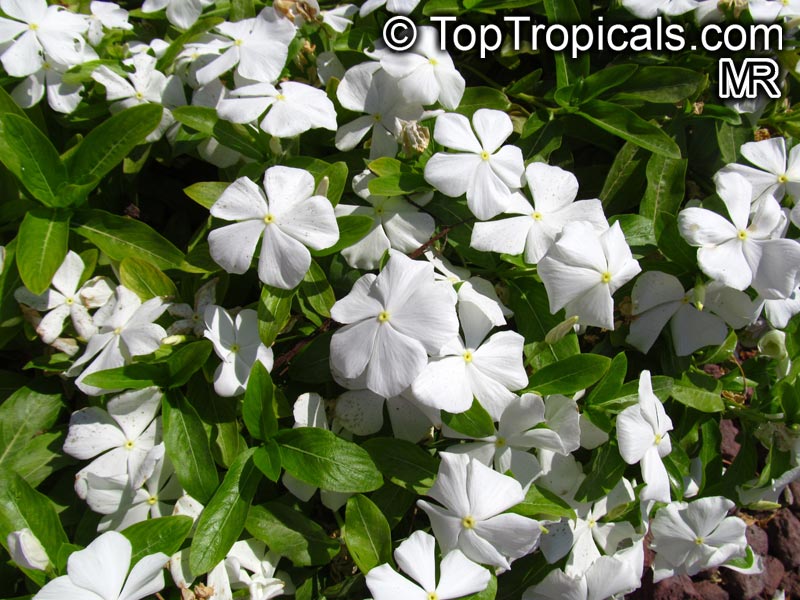
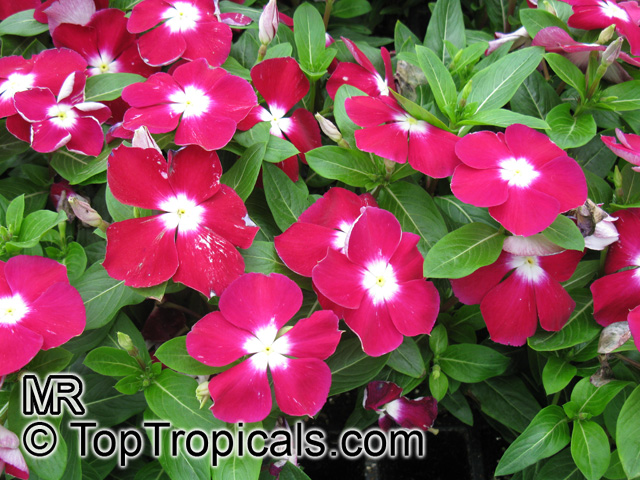
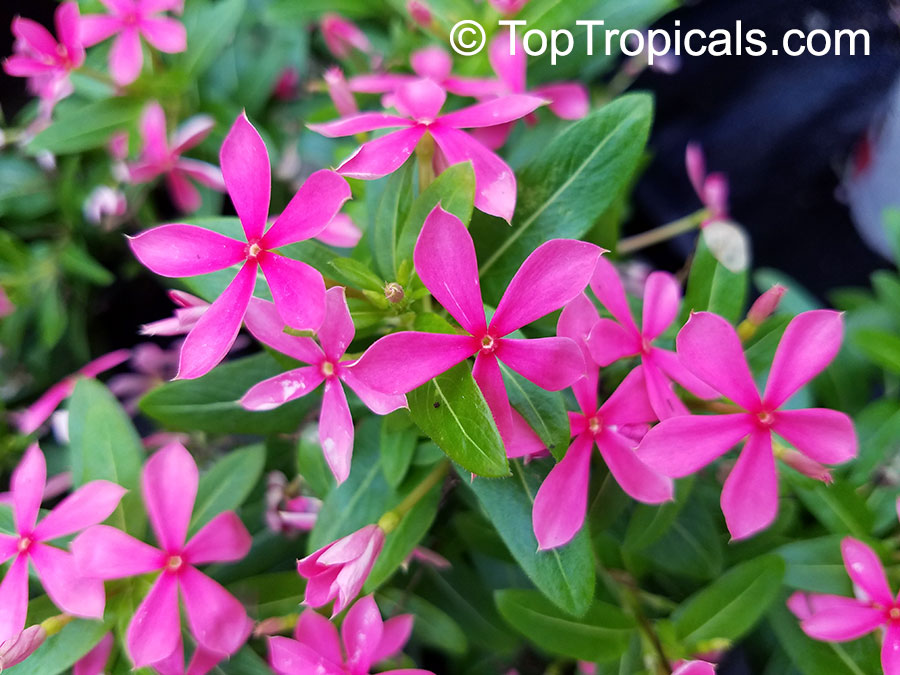
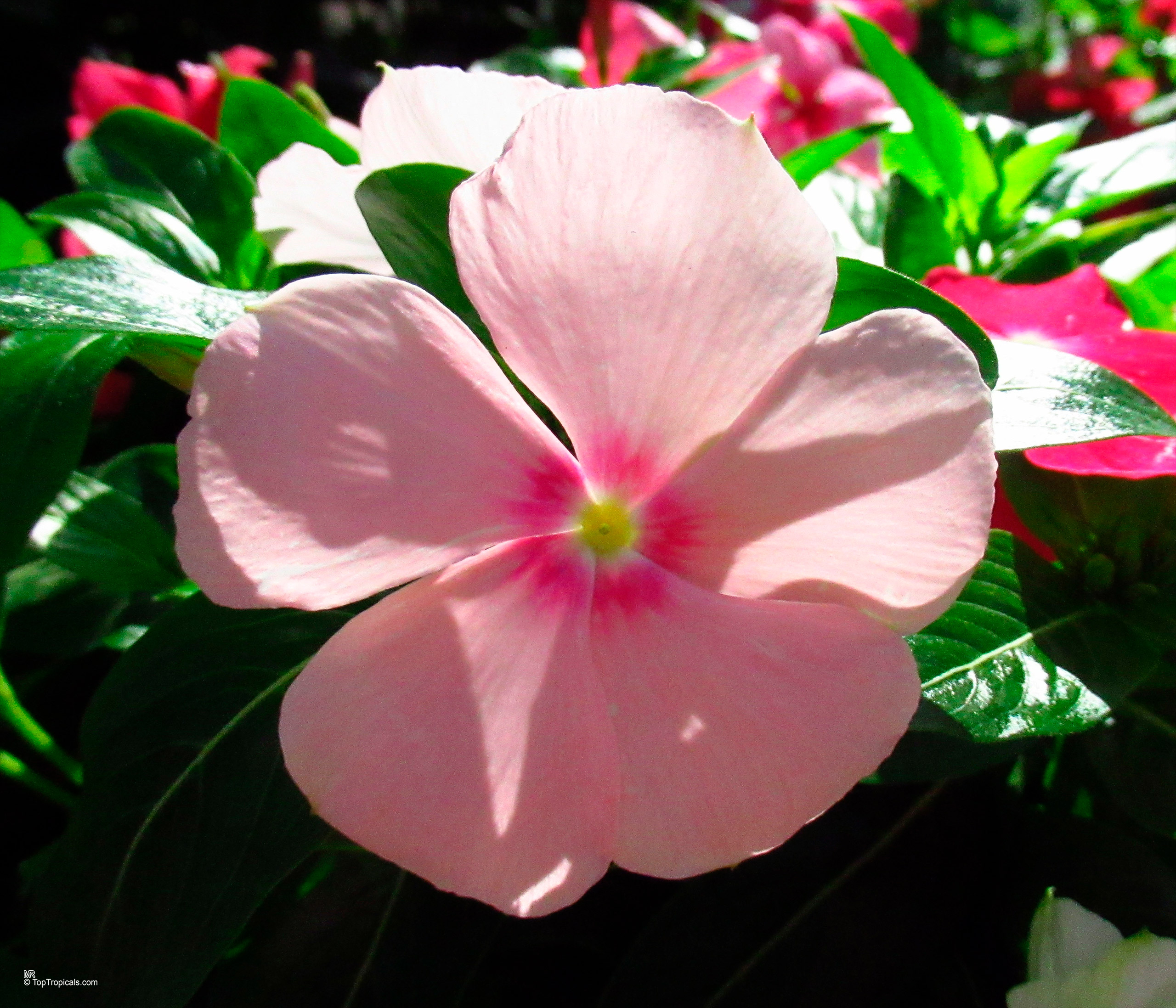
 Flower color: Pink; white and off-white; blue, lavender, purple; red, crimson, vinous
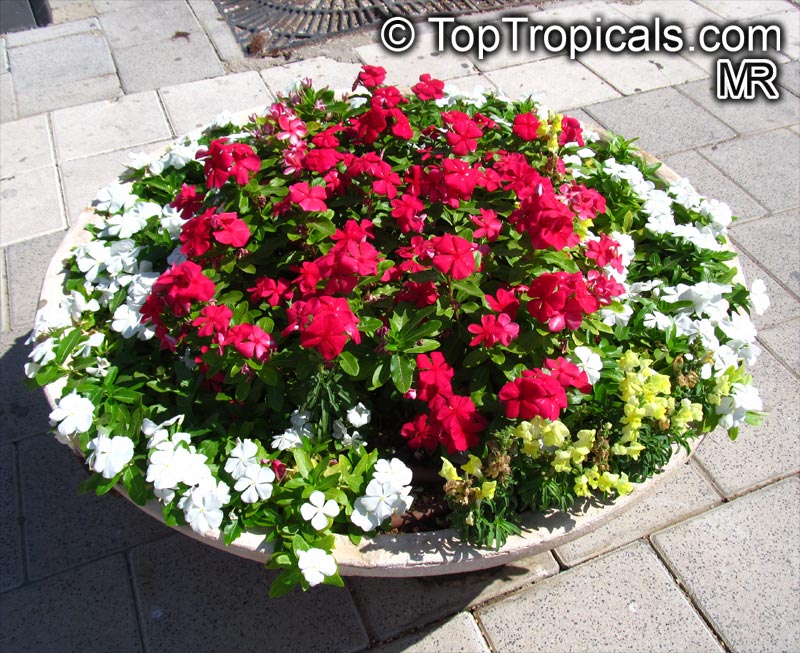
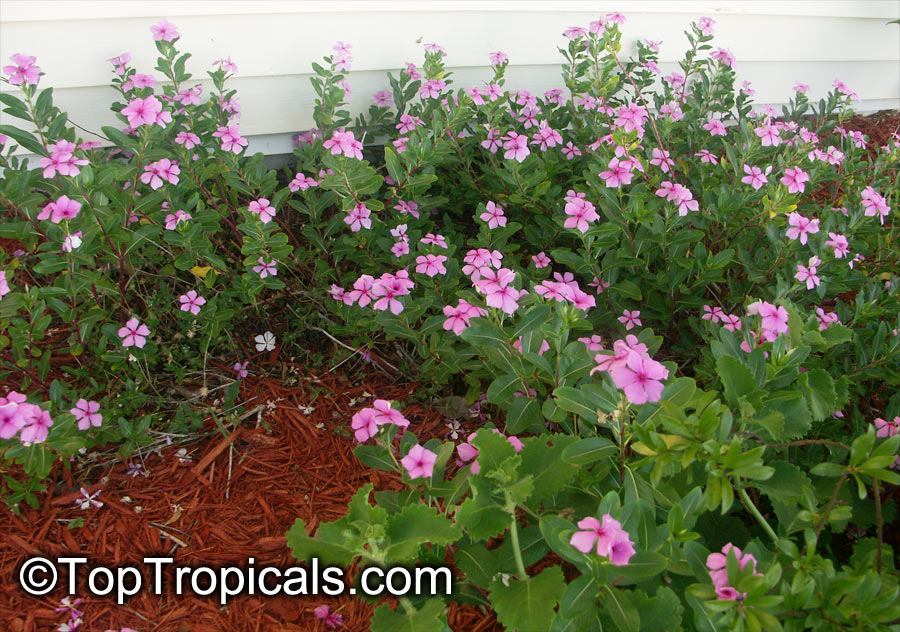
 Suitable for: Outdoors in the suitable USDA zone; small gardens, containers, and indoor growing
 Irritating or toxic: Irritating
 Wildlife: Attracts butterflies and hummingbirds
 Ethnomedical: Ethnomedical plant, traditionally used in folk or indigenous medicine
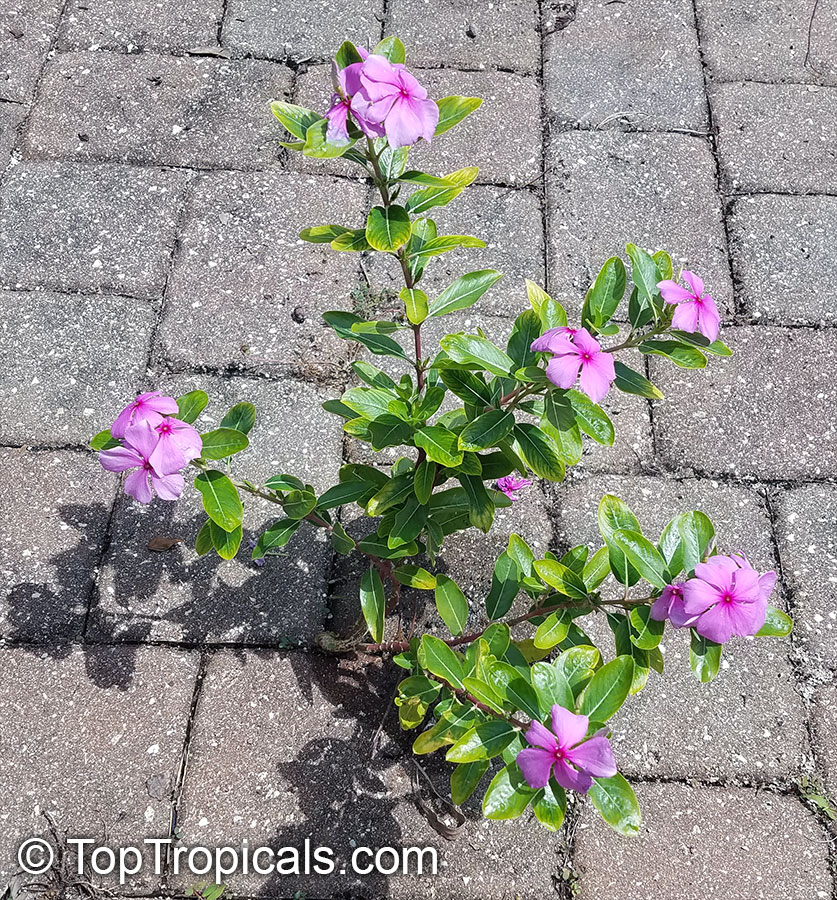
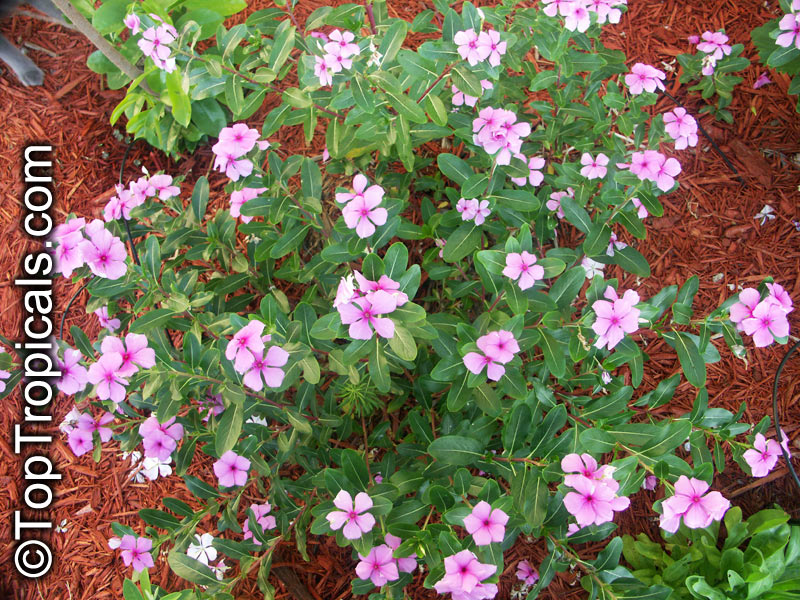
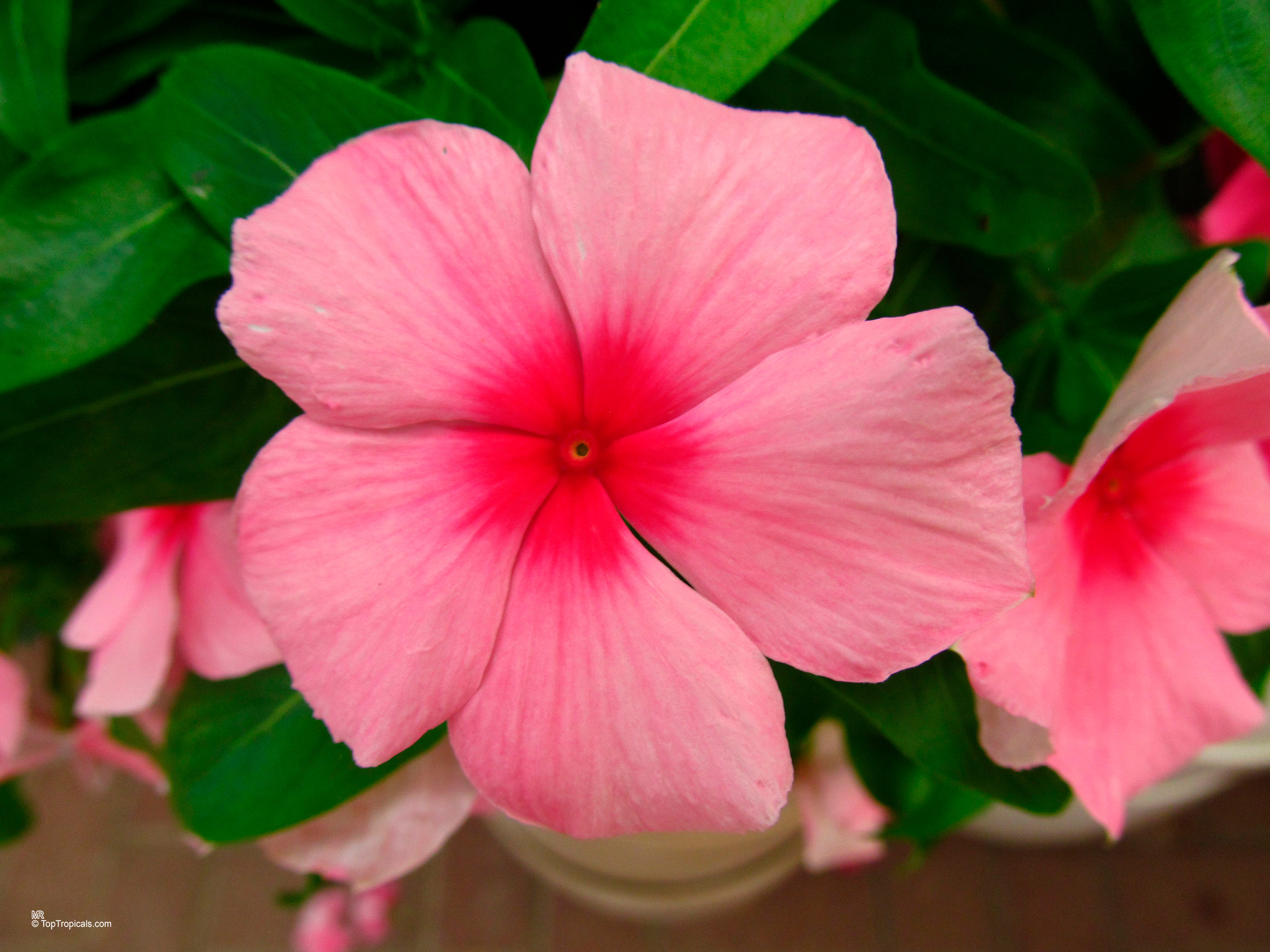
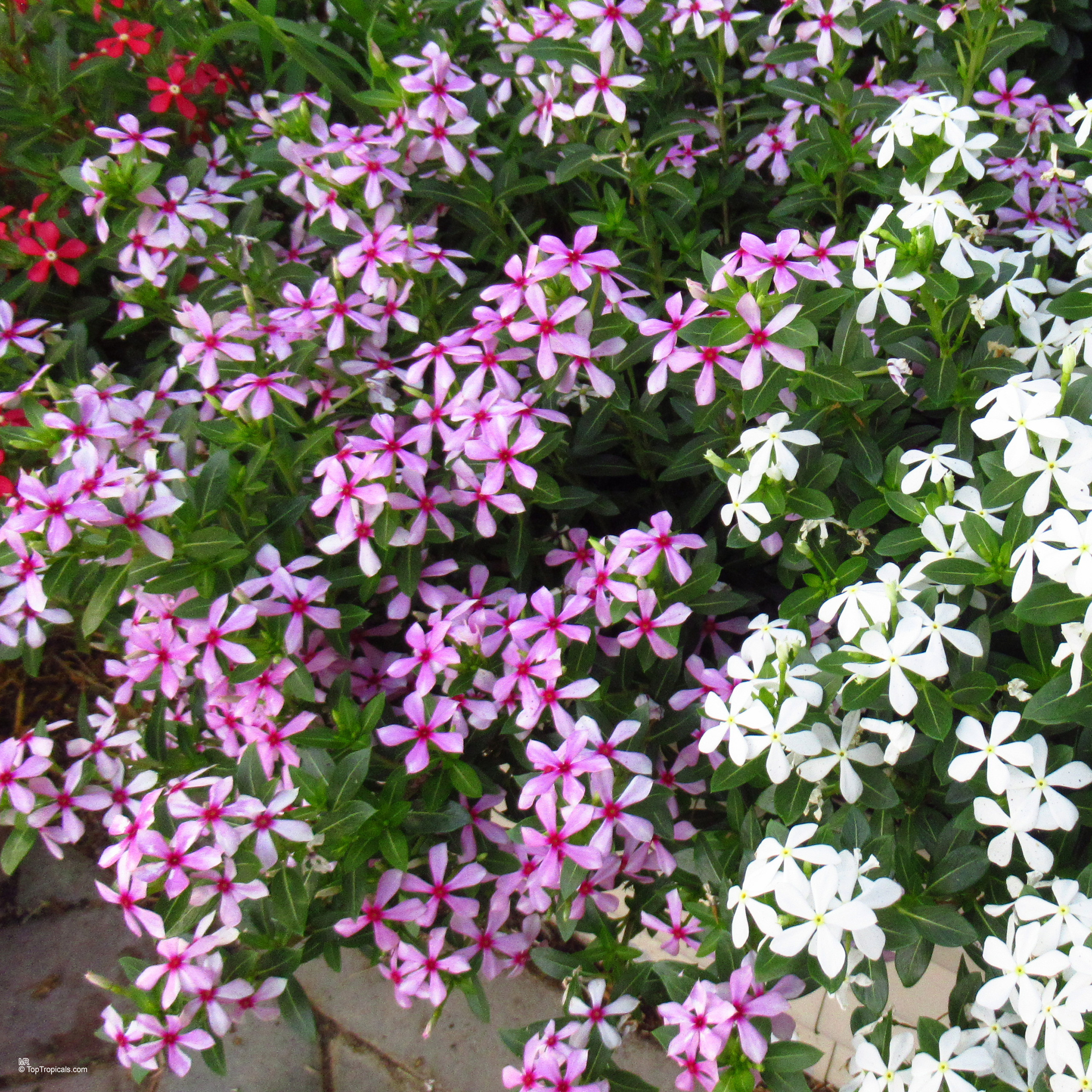
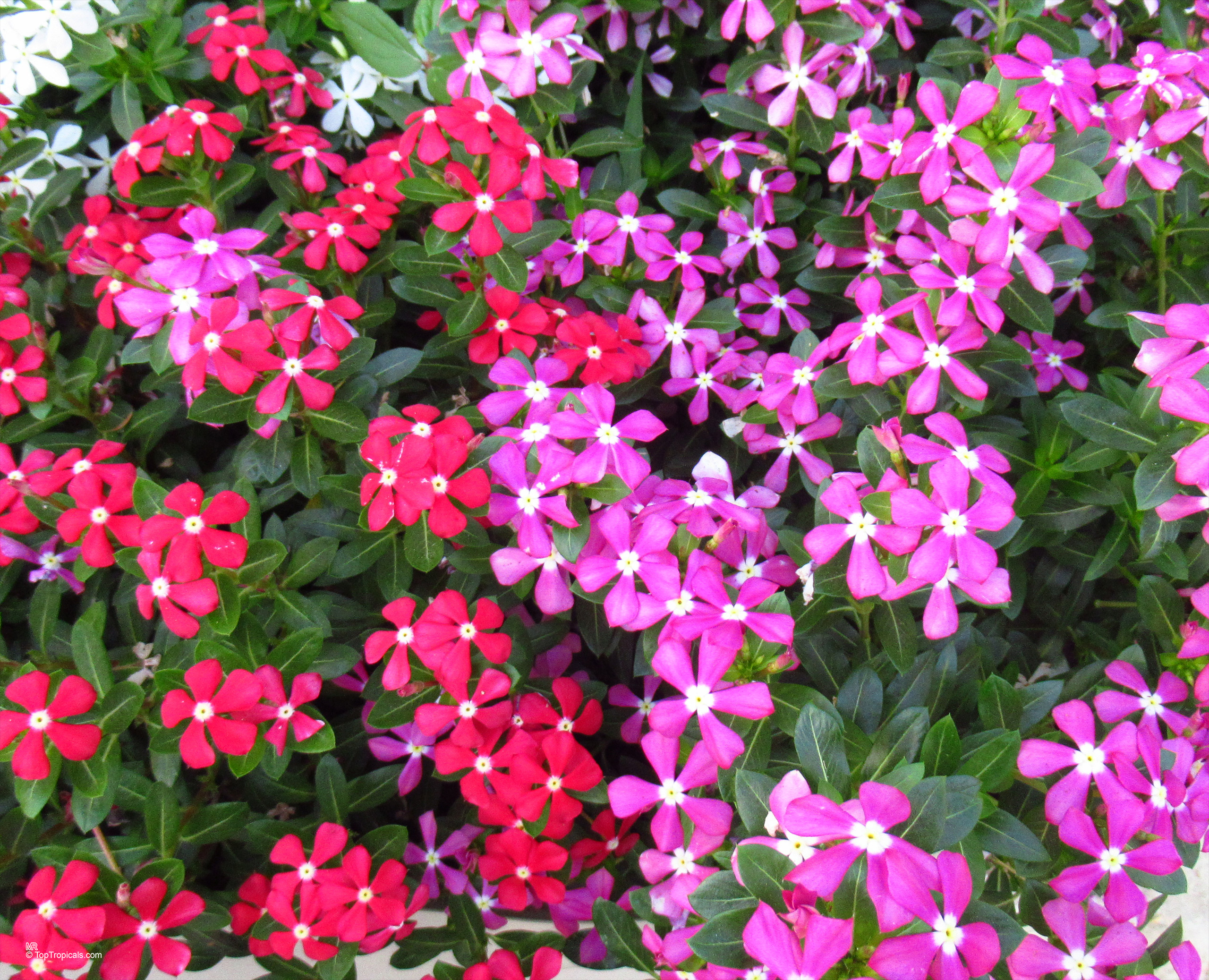
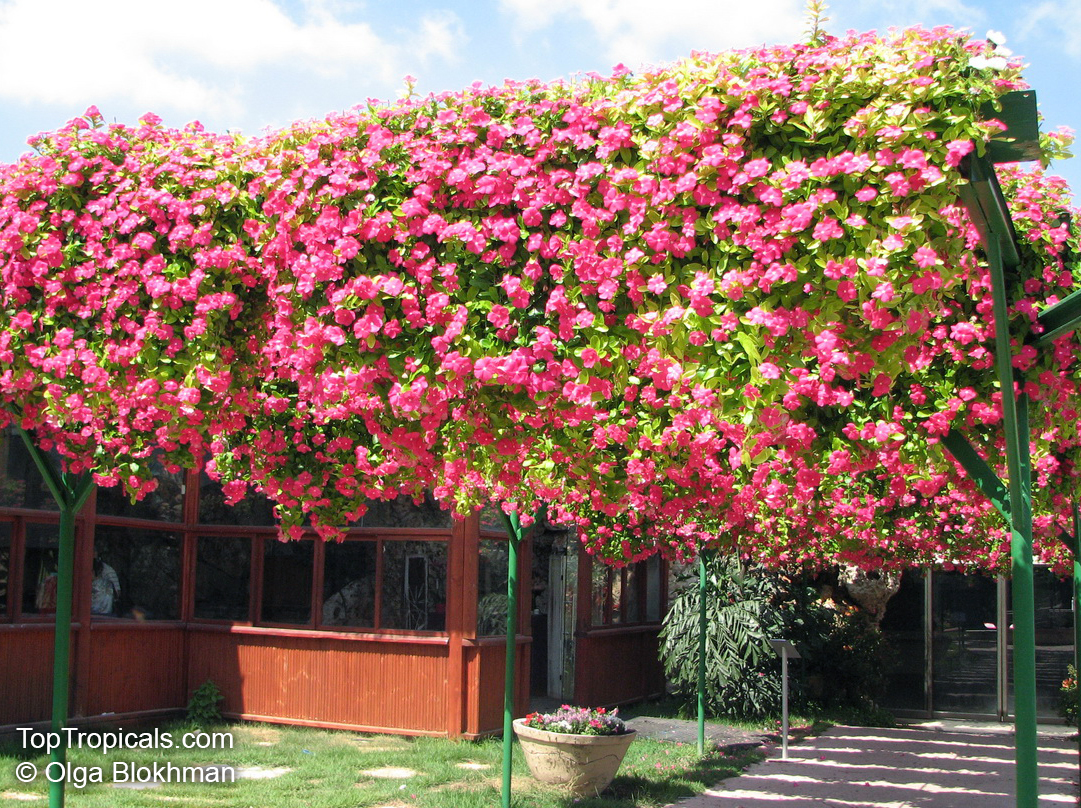
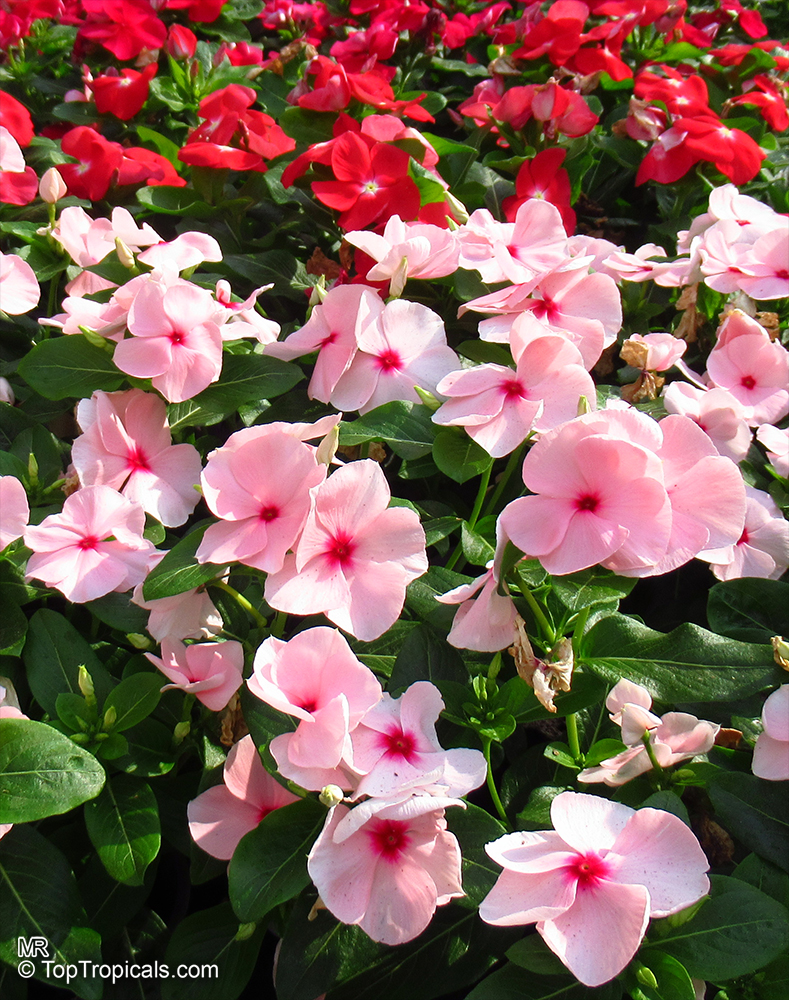
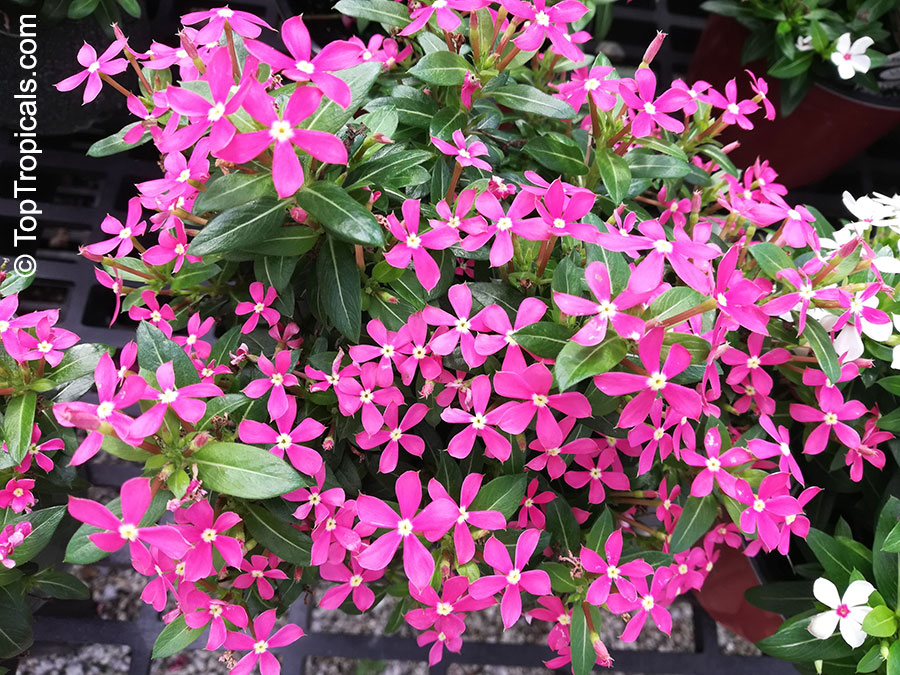
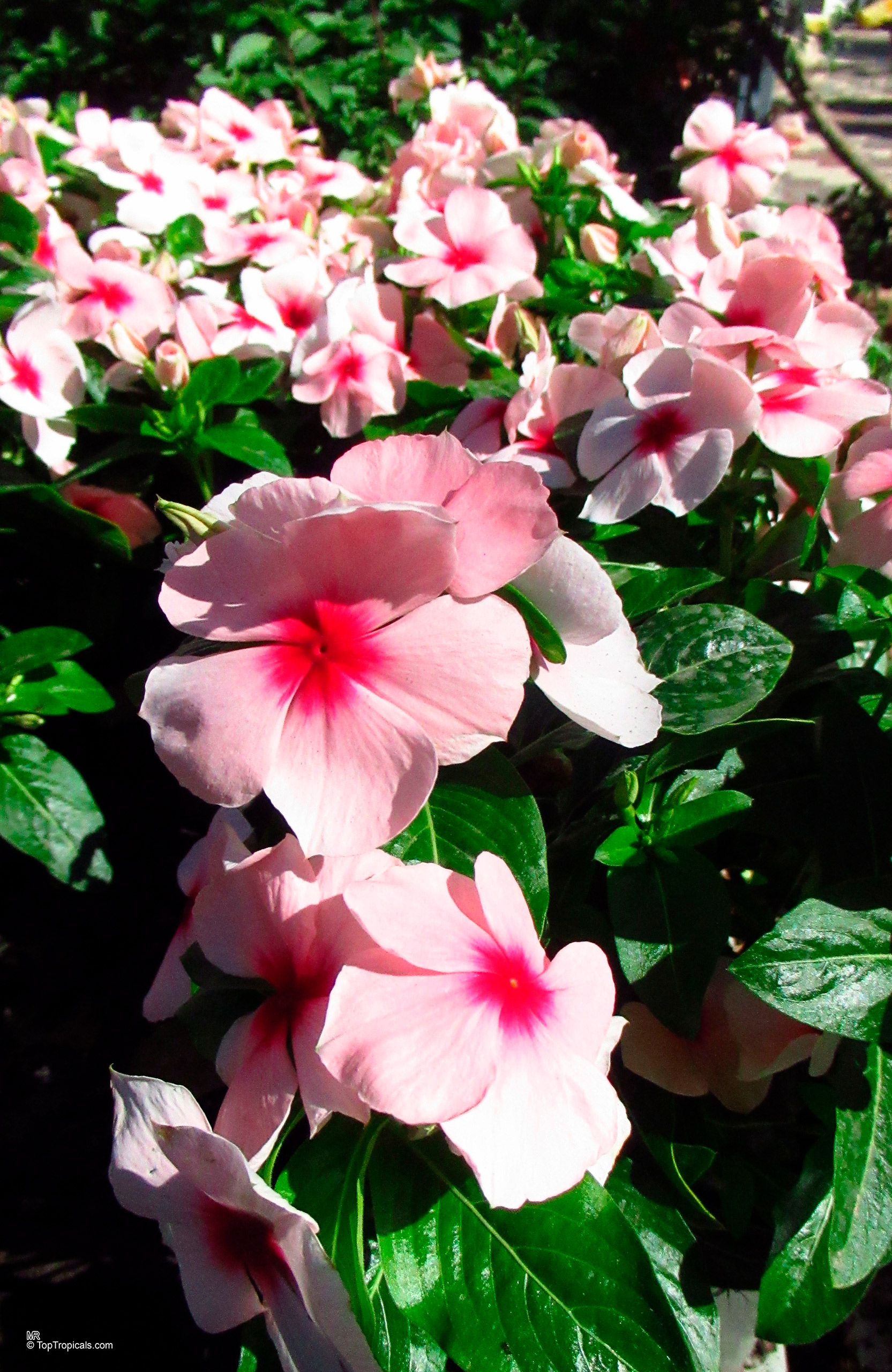
Catharanthus roseus, commonly known as Madagascar Periwinkle, is an evergreen perennial or small subshrub in the Apocynaceae family native to Madagascar. It typically grows 1 to 3 feet (30 to 90 cm) tall, with glossy green leaves and a compact, branching habit. Numerous cultivars produce abundant five-petaled flowers in shades of white, pink, rose, red, lavender, purple, and combinations with contrasting centers. In warm climates plants may flower nearly year-round, while in cooler regions they are widely grown as summer annuals.
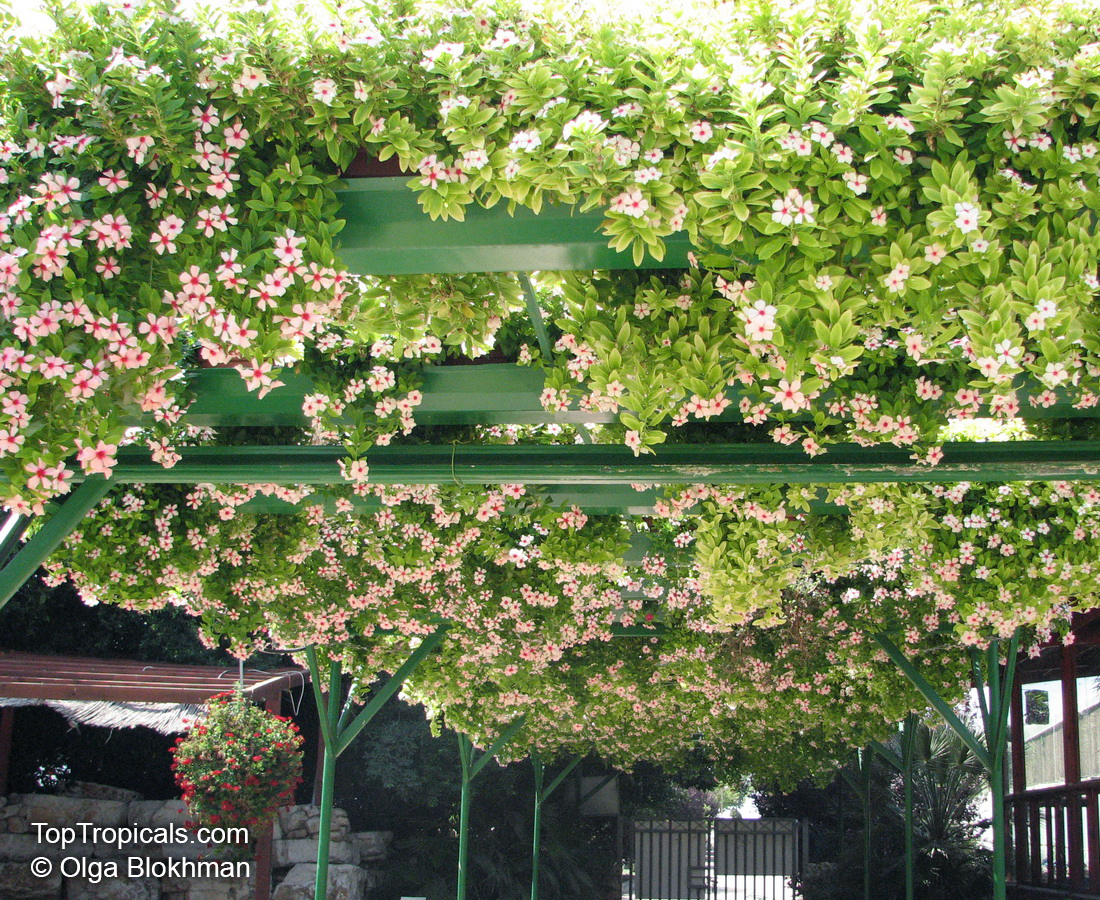
Catharanthus roseus grows best in full sun to partial shade and well-drained soil, with moderate watering and good tolerance of heat and drought once established. It is hardy in USDA Zones 10-11 and can be grown as a container plant or annual in colder climates. All parts of the plant contain biologically active alkaloids and should not be consumed. The species has a long history of traditional medicinal use and is also the natural source of the important anticancer alkaloids vincristine and vinblastine, which led to the development of major chemotherapy drugs. Its exceptionally long flowering season, heat tolerance, and wide range of flower colors have made Madagascar Periwinkle one of the most widely grown flowering plants for warm-climate gardens and containers.
Similar plants: Catharanthus roseus (Madagascar Periwinkle)