Asimina triloba (Pawpaw)
Botanical name: Asimina triloba
Common names: Pawpaw, American Custard Apple, West Virginia Banana, Indiana Banana
Family: Annonaceae
Origin: North America
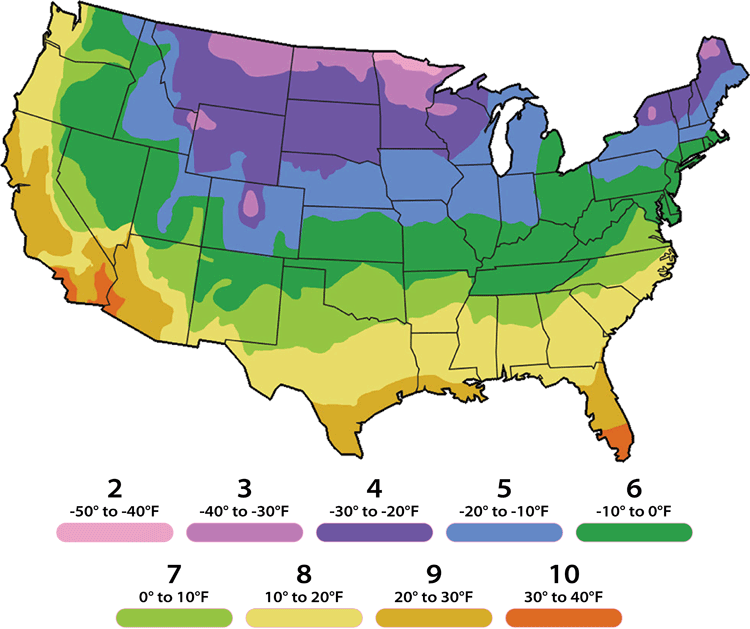
USDA Zone: 5-9
 Plant form: Small tree
 Mature height: 10-20 ft
 Sun exposure: Full sun or bright light indoor
 Cold tolerance: Tolerates light freezing to about 30°F for short periods (mature plants). Young plants must be protected.
 Watering: Regular
 Suitable for: Outdoors in the suitable USDA zone; small gardens, containers, and indoor growing
 Foliage: Deciduous
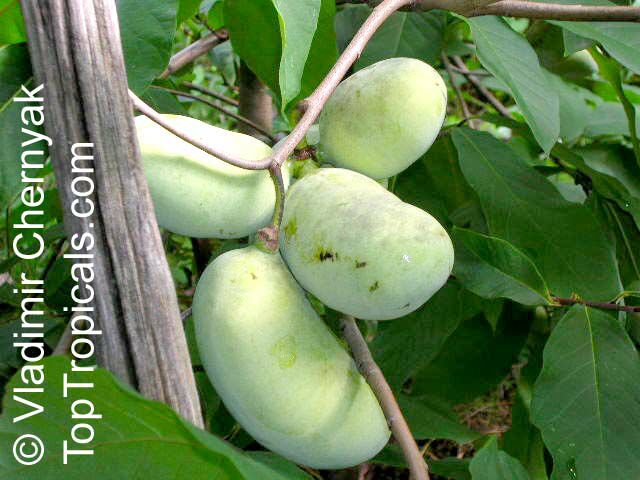
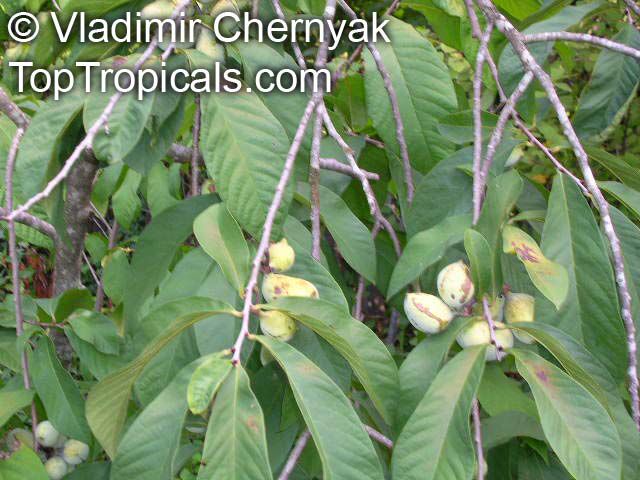
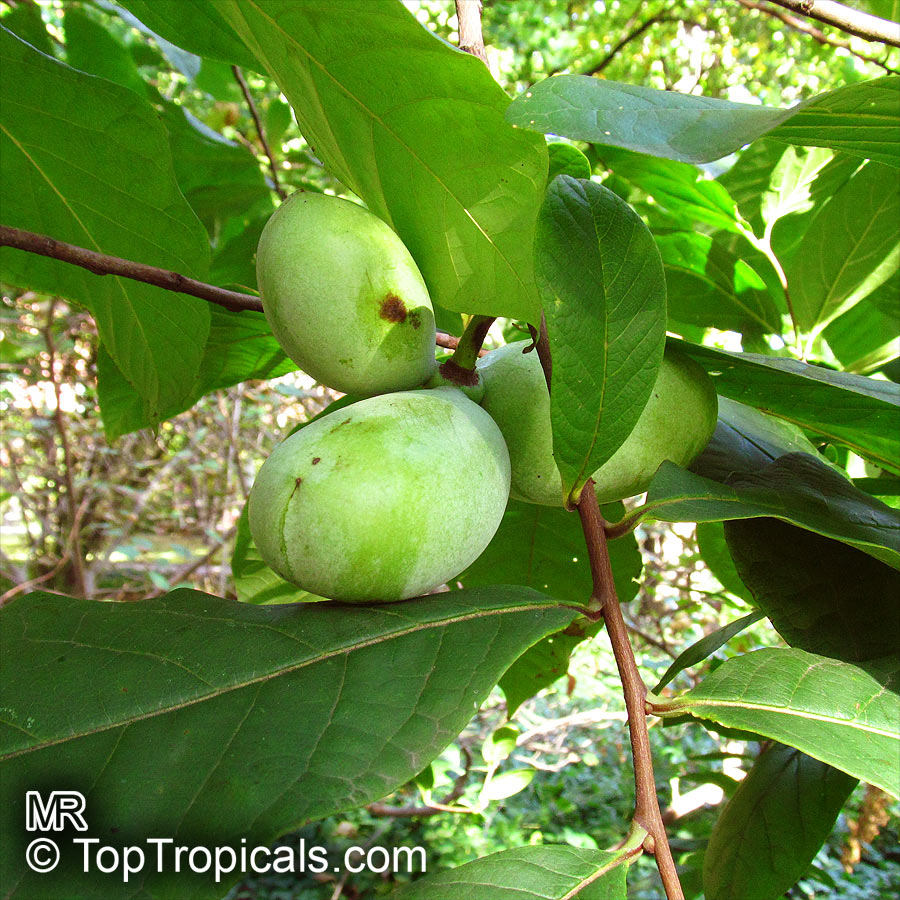
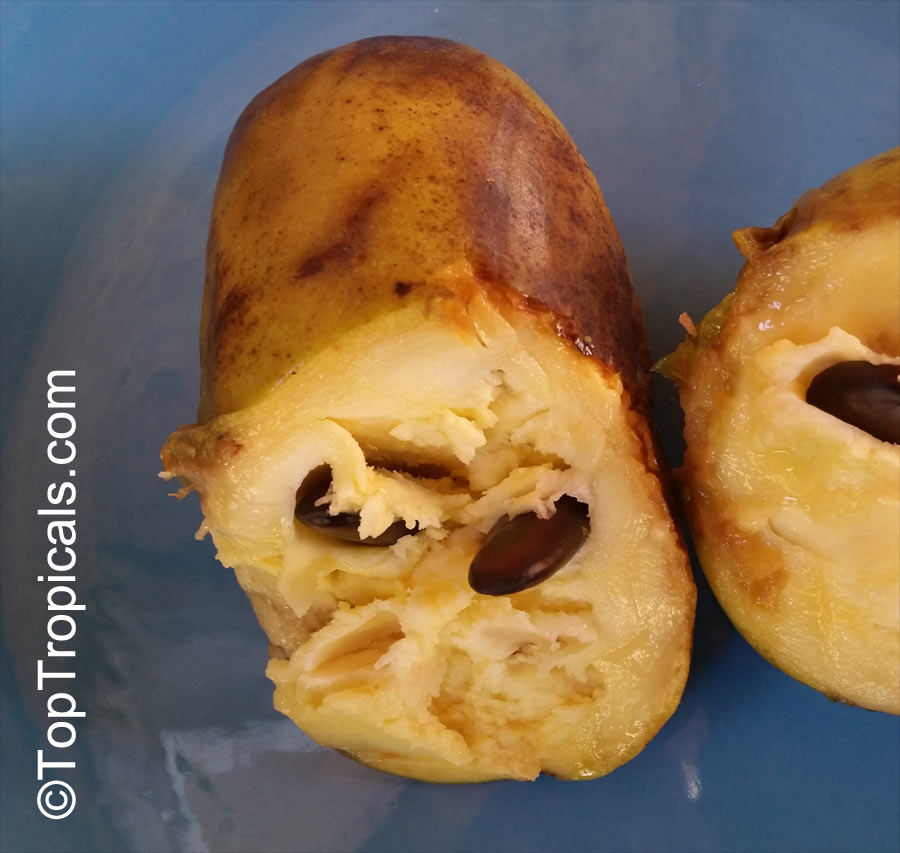
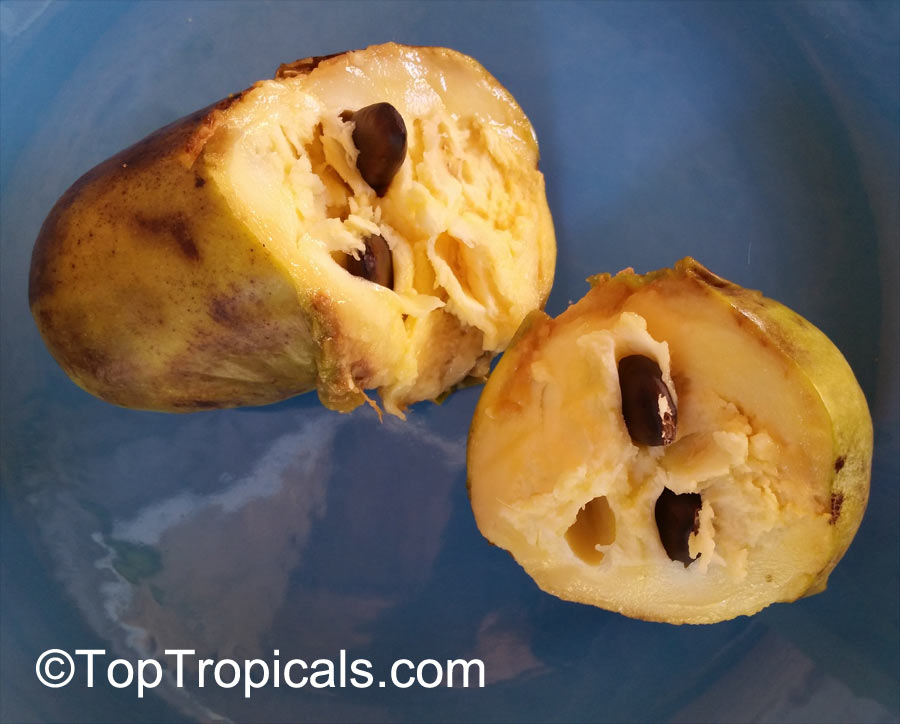
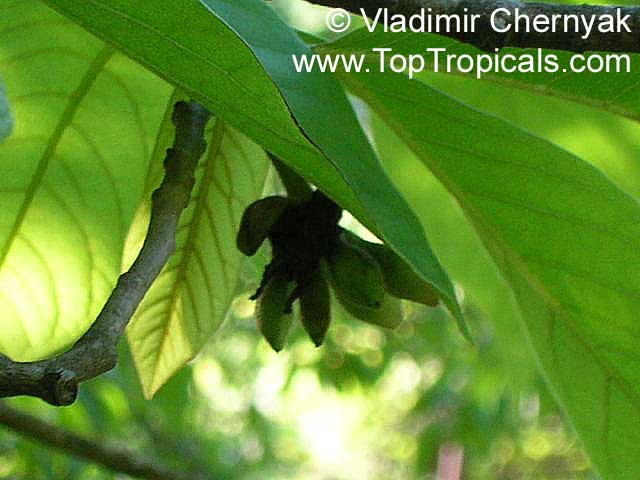
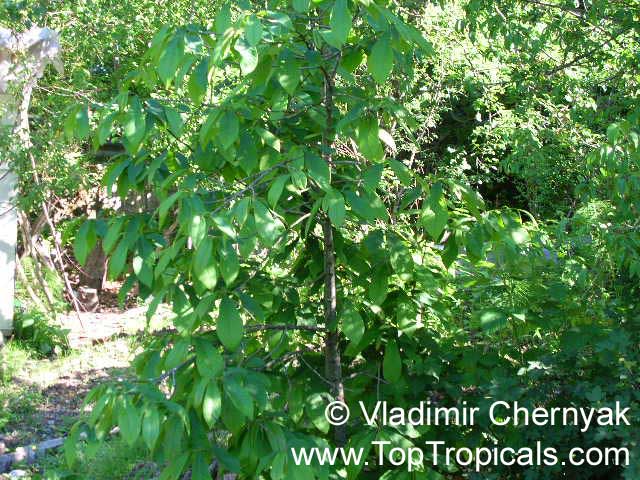
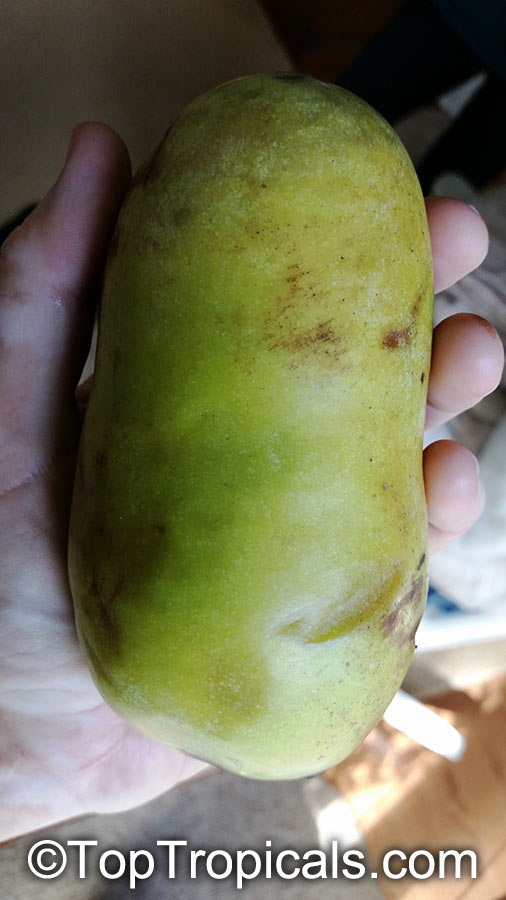
Deciduous tree growing to about 30 feet, with large drooping leaves and curious flowers of disagreeable odor opening in the spring before the leaves. The fruit is 3"-5" long and is almost black when ripe, with a highly aromatic flavor. The fruit tastes like mix of papaya and banana and is often called an Indian banana. The name pawpaw comes from the Arawakan Indian name for the papaya. Grows as far north as New York and southern Ontario, out west as far as Nebraska and Texas, and south to Florida. The young plant is very sensitive to full sunlight and requires filtered sun for the first year or two. The use of tree shelters is an ideal solution to the problem, permitting the plant to receive a full day of filtered sunlight. Once established, pawpaws prefer full sun. The large dangling leaves dislike strong winds. Pawpaws do best in deep, fertile soil that is moist, but well-drained and slightly acid (pH 5-7).
Similar plants: Asimina triloba (Pawpaw)