Asclepias tuberosa (Milkweed)
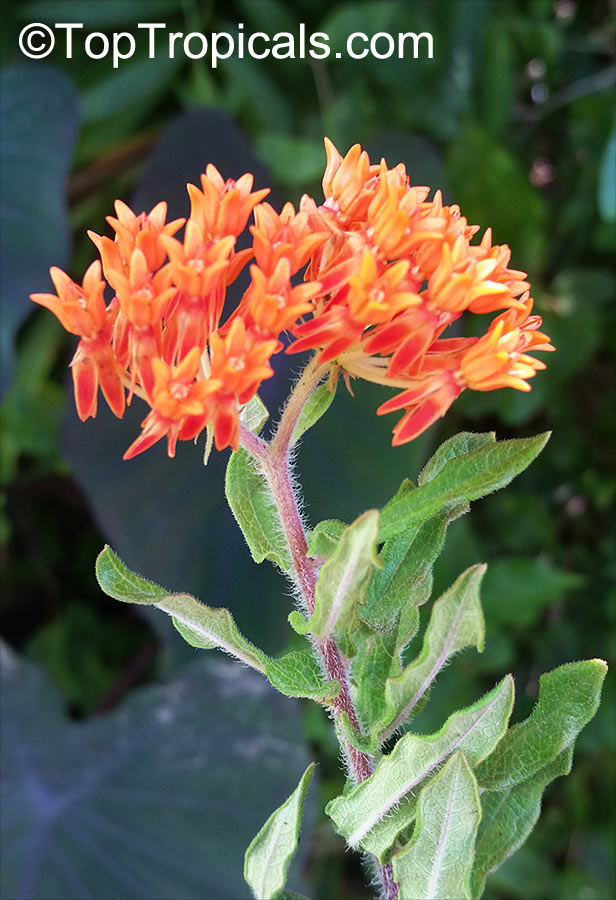
Asclepias tuberosa (Milkweed) orange flower with fuzzy stems and green leaves in a close up
Botanical name: Asclepias tuberosa
Common names: Milkweed, Flame Weed, Butterfly Weed, Gay Butterflies, Pleurisy Root
Family: Apocynaceae (Formerly:Asclepiadaceae)
Subfamily: Asclepiadoideae
Origin: North America
USDA Plant Hardiness Zone Map
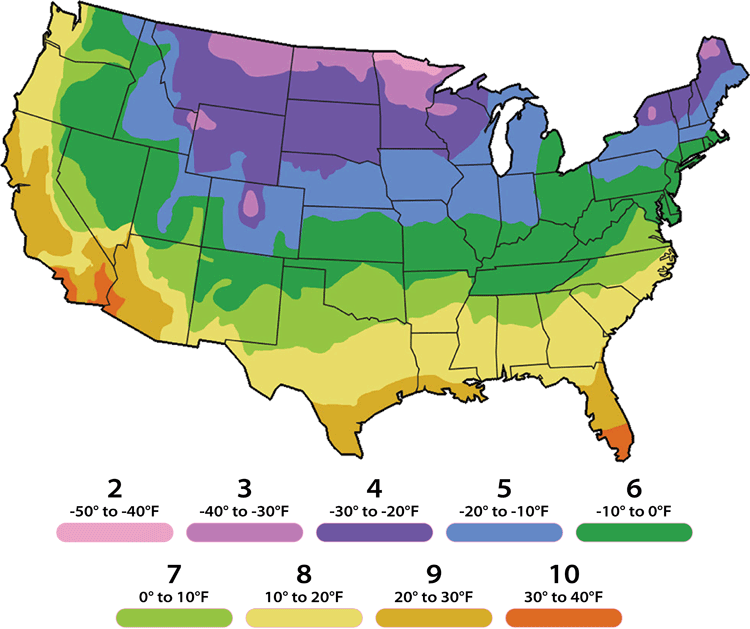
USDA Zone: 3-9
 Plant form: Small
 Mature height: 2-5 ft
 Sun exposure: Full sun or bright light indoor
 Cold tolerance: Tolerates light freezing to about 30°F for short periods (mature plants). Young plants must be protected.
 Watering: Dry conditions
 Flower color: Red, crimson, vinous; yellow, orange
 Suitable for: Outdoors in the suitable USDA zone; small gardens, containers, and indoor growing
 Irritating or toxic: Toxic plant/plant part; irritating
 Wildlife: Attracts butterflies and hummingbirds
 Ethnomedical: Ethnomedical plant, traditionally used in folk or indigenous medicine
The extremely bright color make it easy to spot. Like most milkweeds the juice is milky white. Long bloom period from late spring throughout the summer. Flowers are a nectar source for many butterflies and leaves are a food source for monarch butterfly larvae (caterpillars). Drought-tolerant. Listed in the U. S. Pharmacopeia in the 19th century the root was once widely used for lung problems such as asthma and bronchitis. Contains cardiac glycosides which are toxic in large amounts.
Similar plants: Asclepias tuberosa (Milkweed)
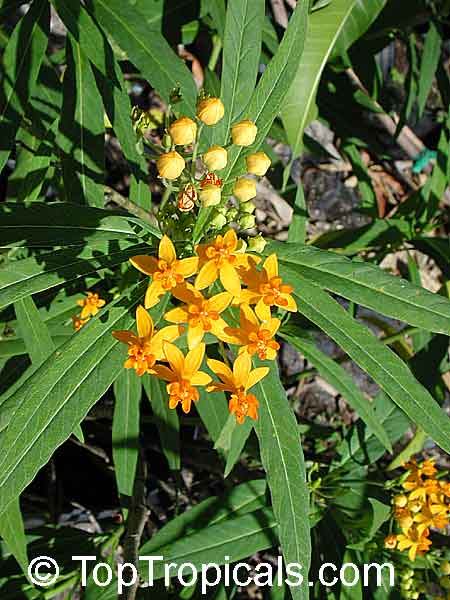
Asclepias tuberosa orange flower clusters emerge among slender green pointed foliage stems.
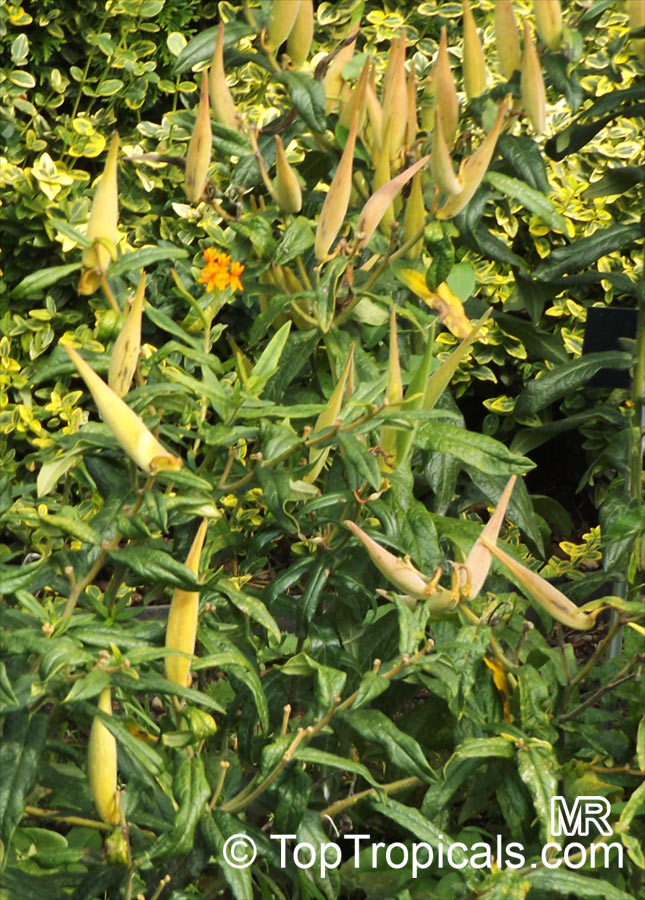
Asclepias tuberosa (Milkweed) showing elongated beige seed pods above dense green foliage with orange flowers
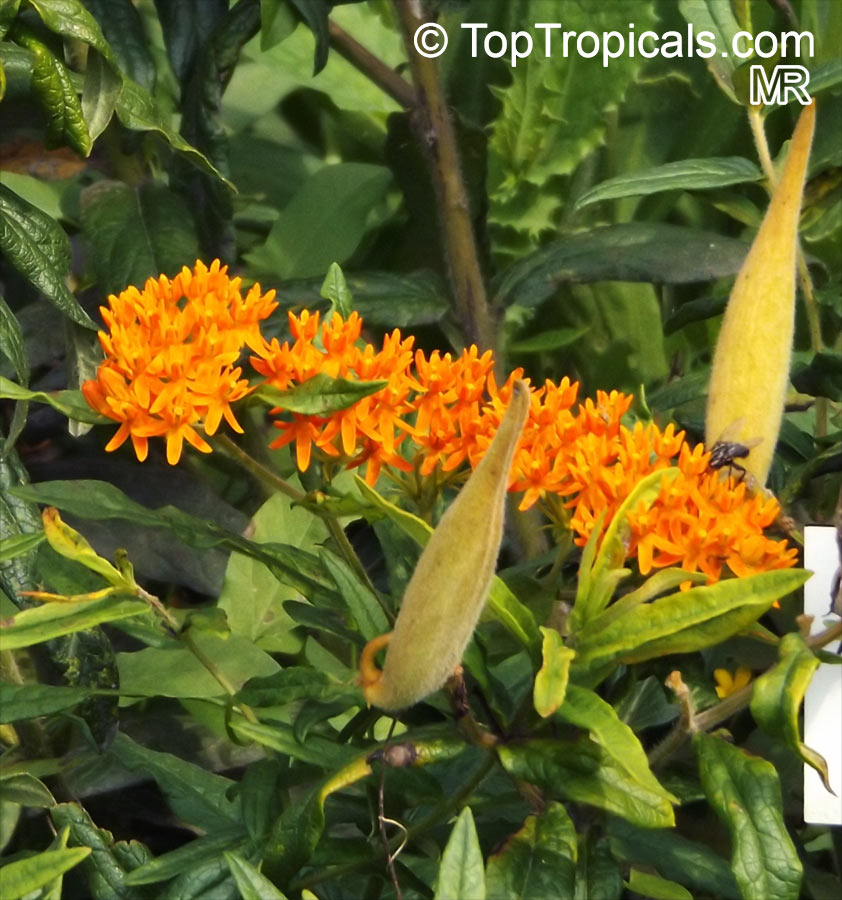
Asclepias tuberosa (Milkweed) orange flower clusters sitting beside long light green fuzzy seed pods
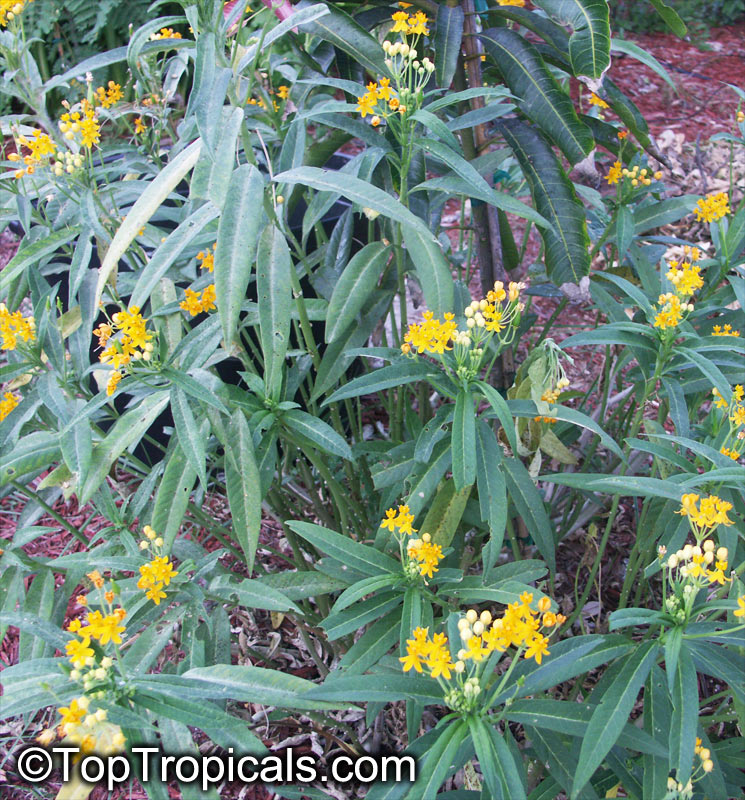
Asclepias tuberosa (Milkweed) with clusters of yellow flowers atop thin green stems and narrow foliage.
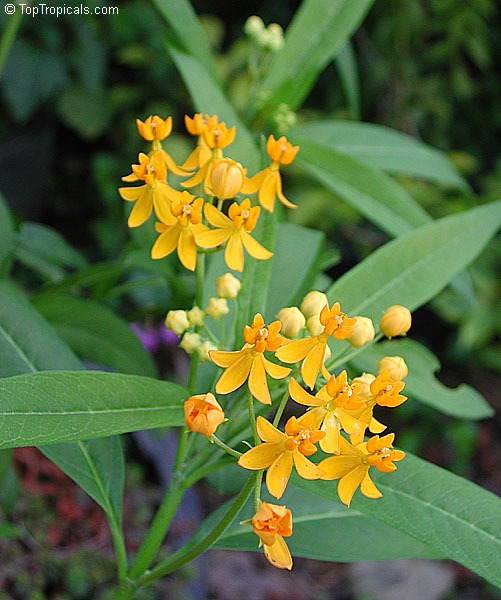
Asclepias tuberosa (Milkweed) yellow flowers and rounded buds attached to long green narrow plant stems.
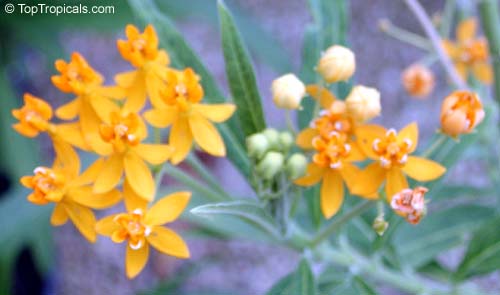
Asclepias tuberosa (Milkweed) clusters of orange flowers and small buds on green stems.
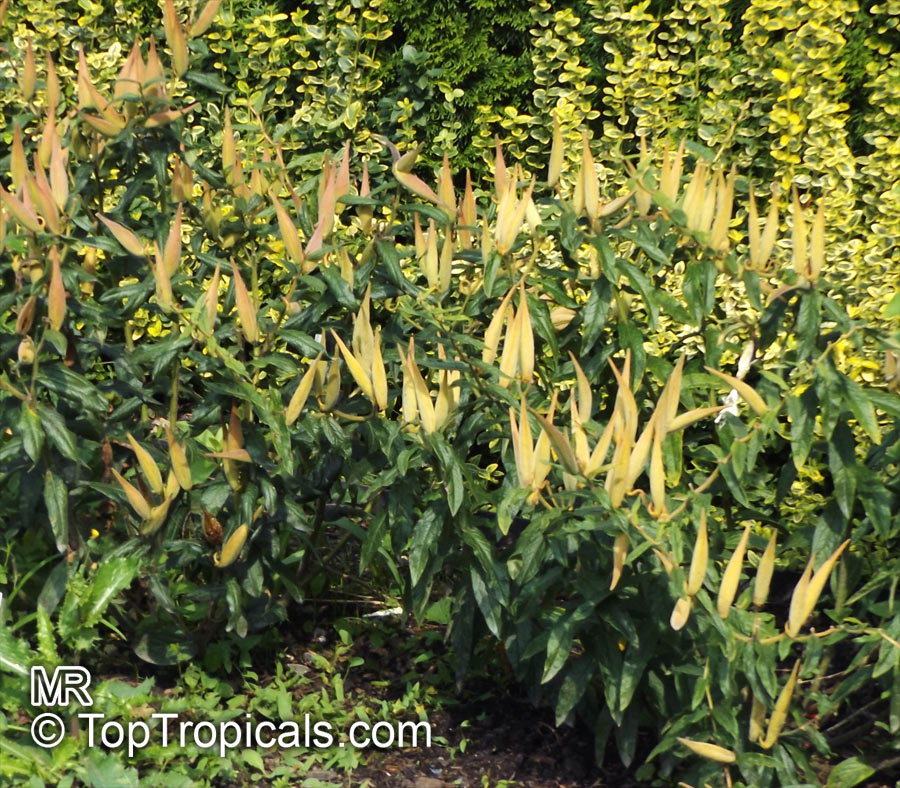
Asclepias tuberosa (Milkweed) with numerous yellow seed pods emerging from dark green narrow leaves.
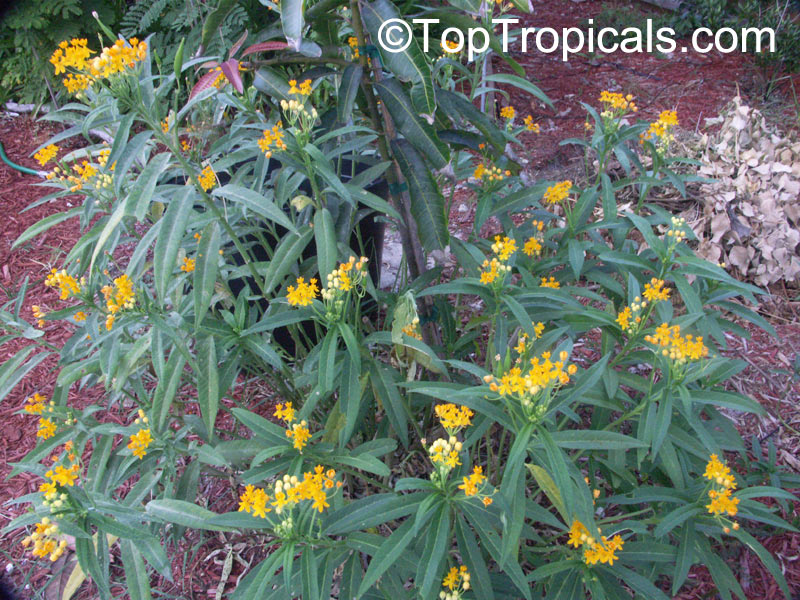
Asclepias tuberosa (Milkweed) displaying orange flowers above long narrow green leaves on the stem
Link to this plant:
https://toptropicals.com/catalog/uid/asclepias_tuberosa.htm