Gomphocarpus physocarpus (Baloonplant)
Botanical names: Gomphocarpus physocarpus, Asclepias physocarpa
Common names: Baloonplant, Cotton Bush, Swan Plant, Balloon Plant, Family Jewels Milkweed Tree
Family: Apocynaceae (Formerly:Asclepiadaceae)
Subfamily: Asclepiadoideae
Origin: Jamaica and South America
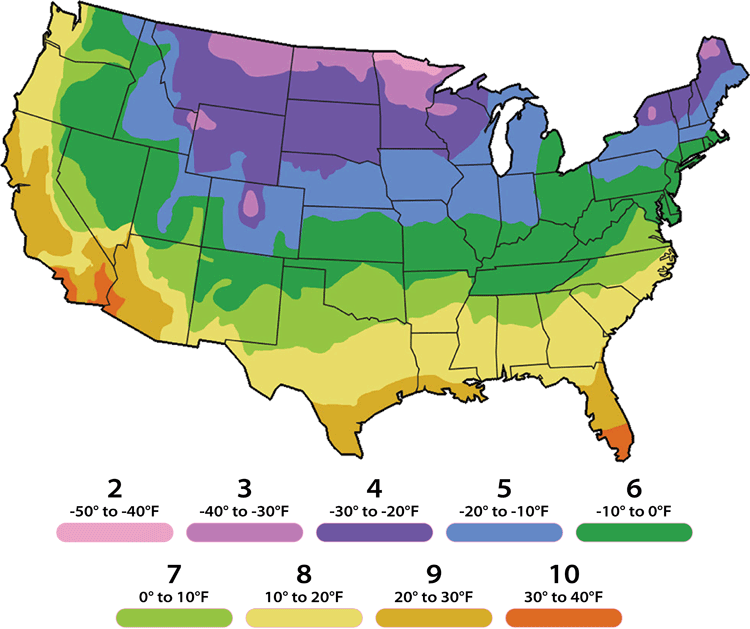
USDA Zone: 8-10
 Plant form: Large bush
 Mature height: 5-10 ft
 Sun exposure: Full sun or bright light indoor; semi-shade
 Cold tolerance: Tolerates light freezing to about 30°F for short periods (mature plants). Young plants must be protected.
 Watering: Regular; moderate
 Flower color: White and off-white
 Suitable for: Outdoors in the suitable USDA zone; small gardens, containers, and indoor growing
 Irritating or toxic: Irritating
 Wildlife: Attracts butterflies and hummingbirds
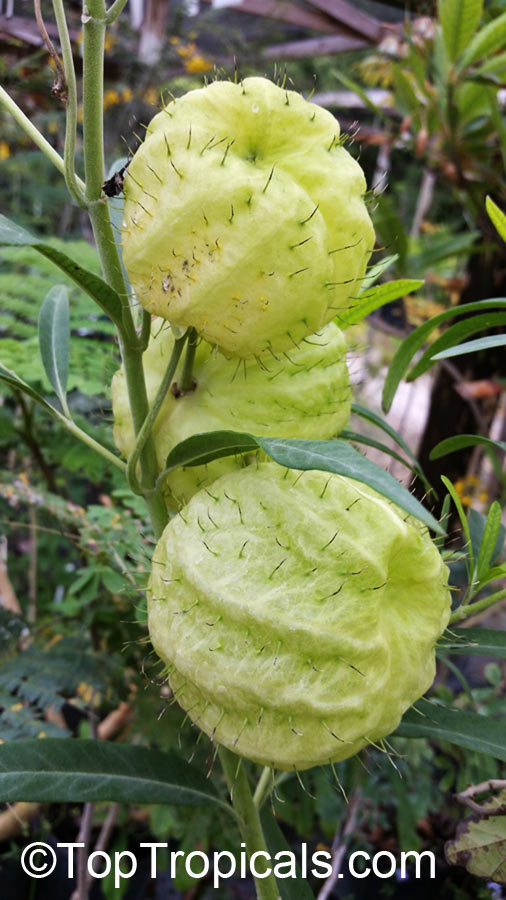
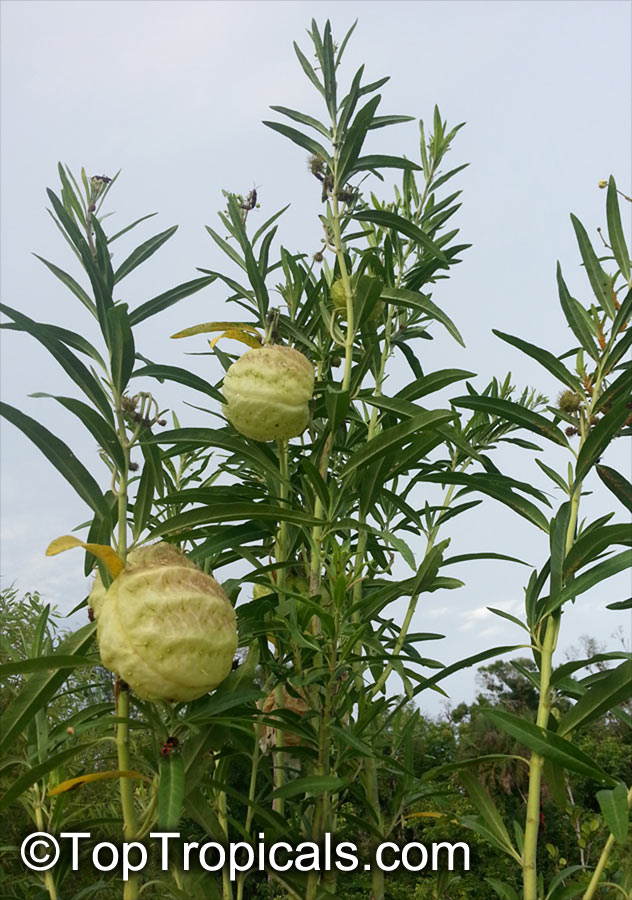
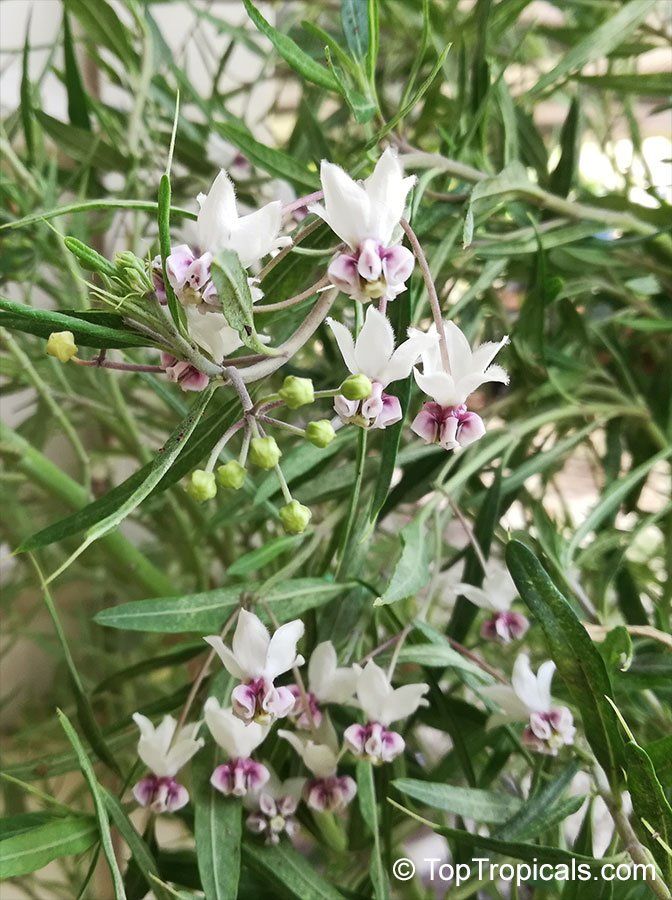
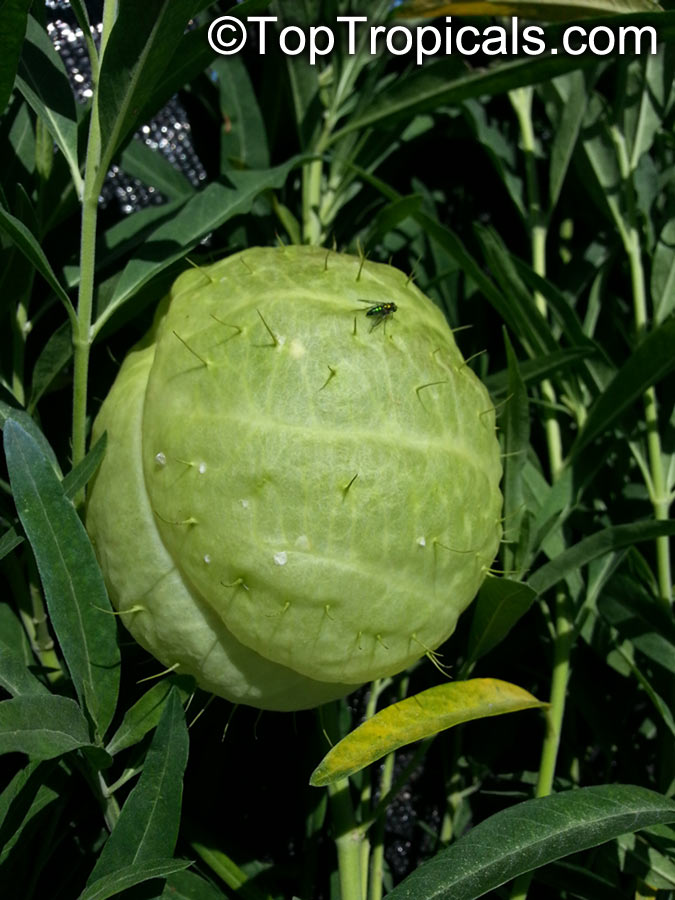
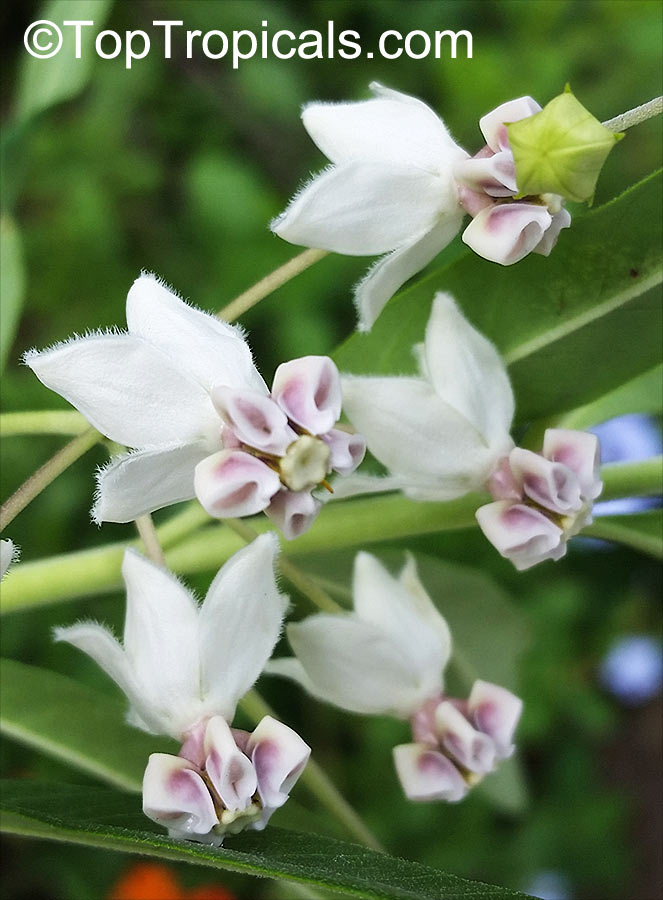
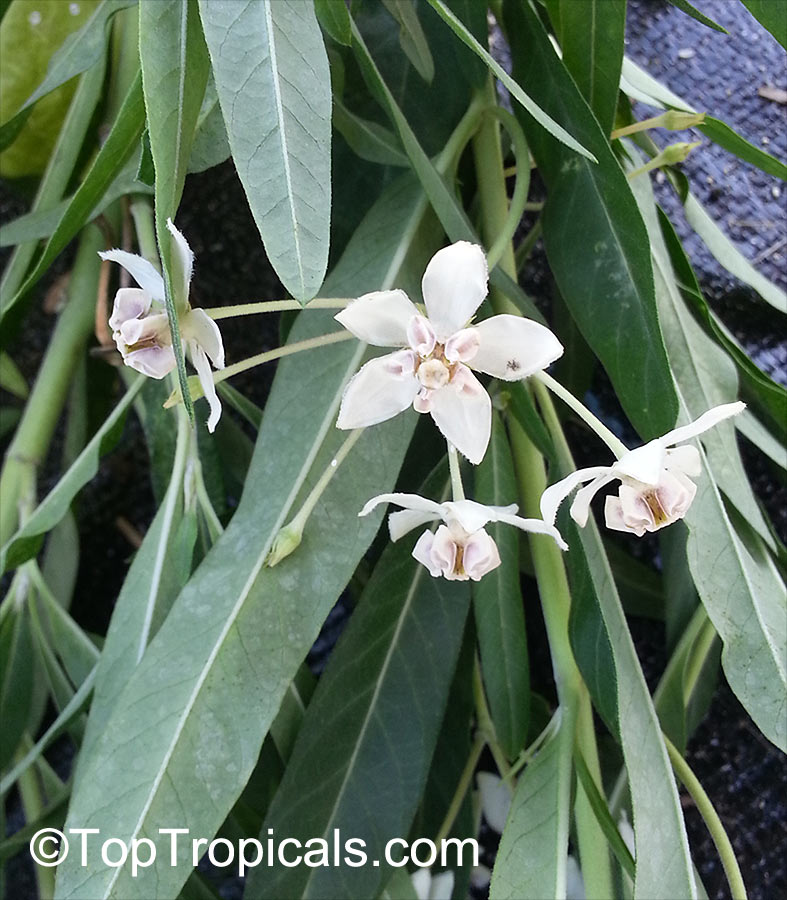
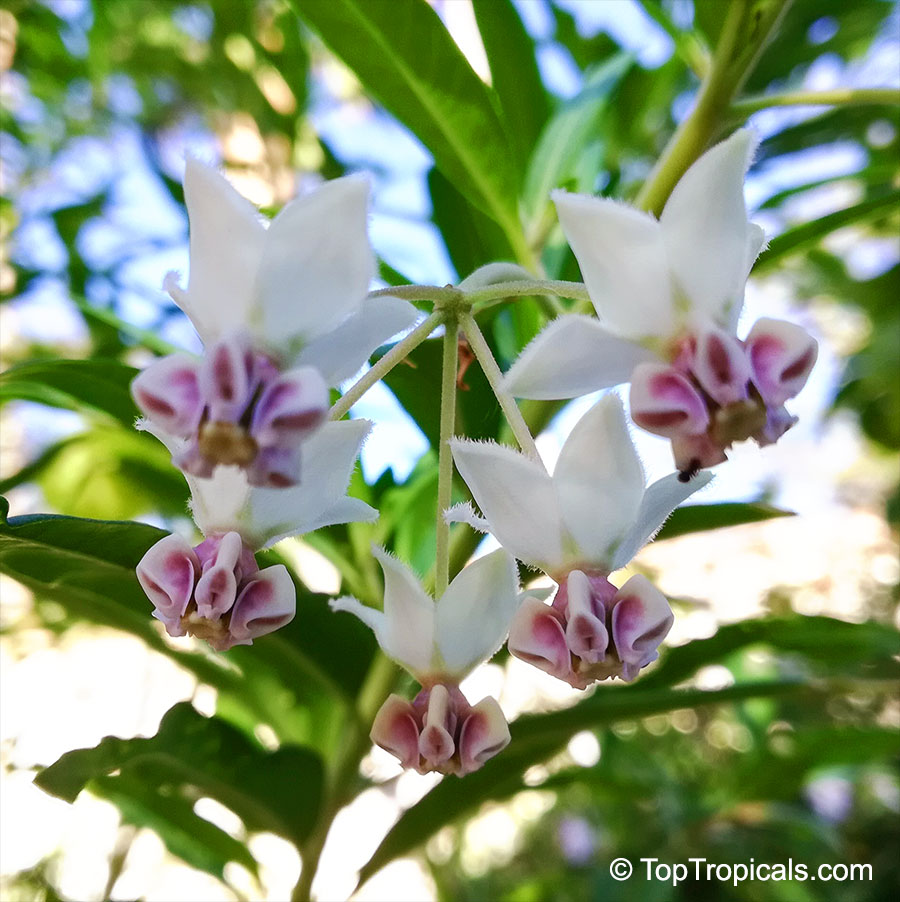
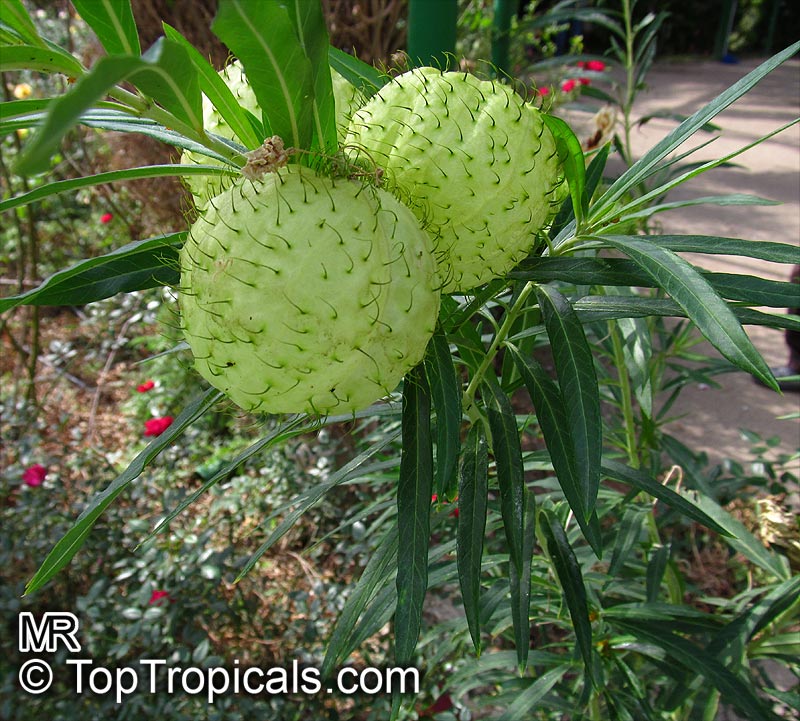
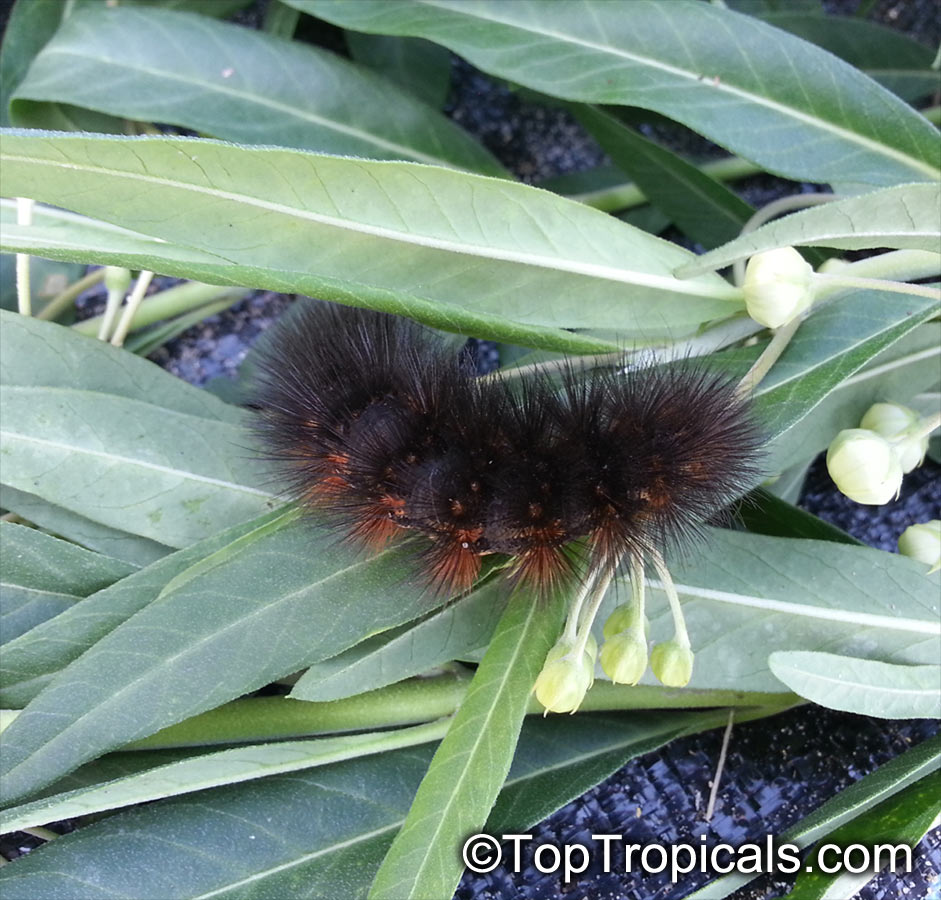
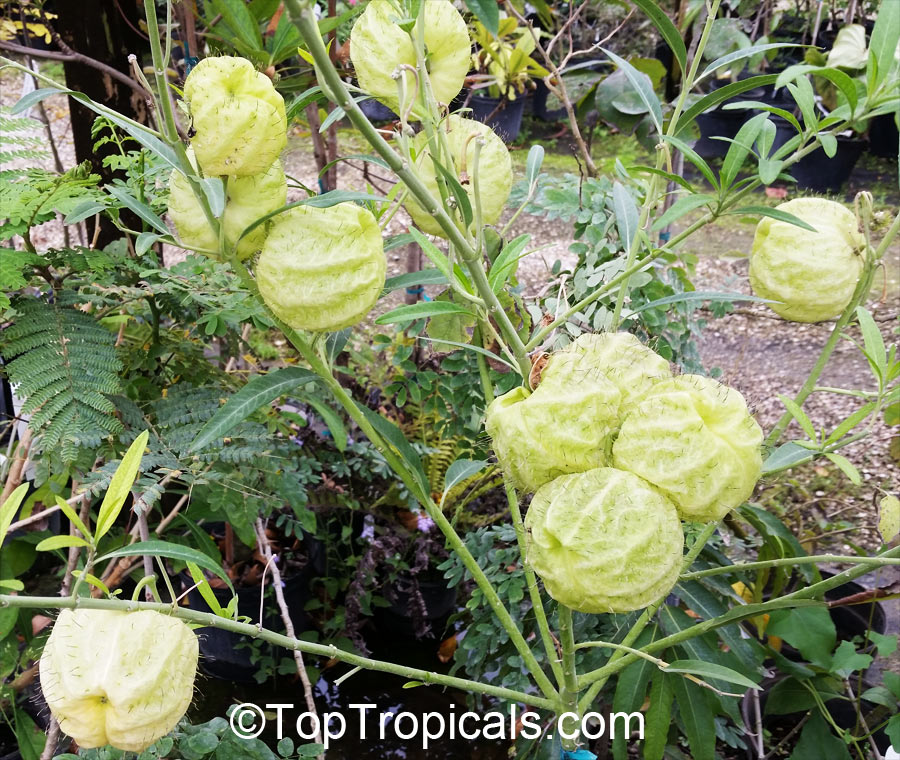
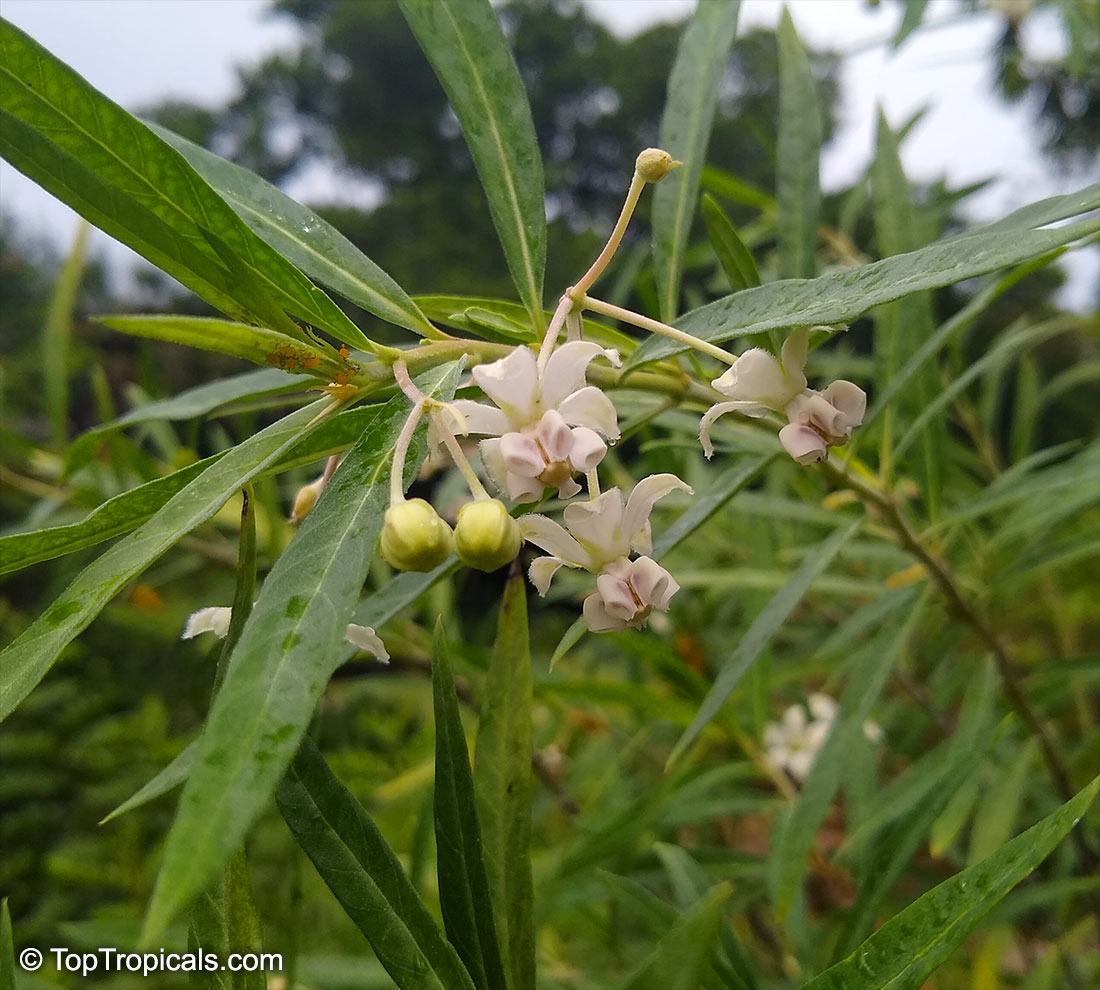
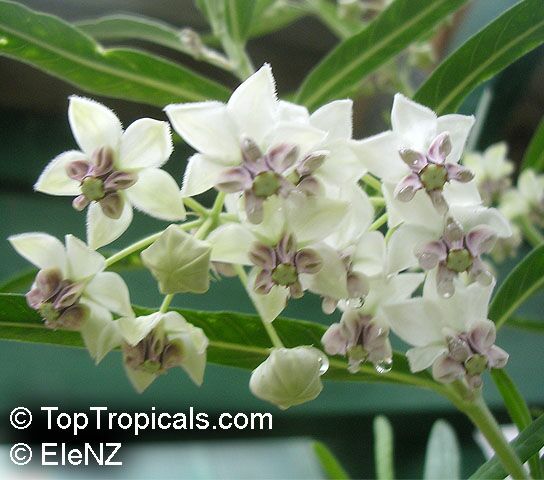
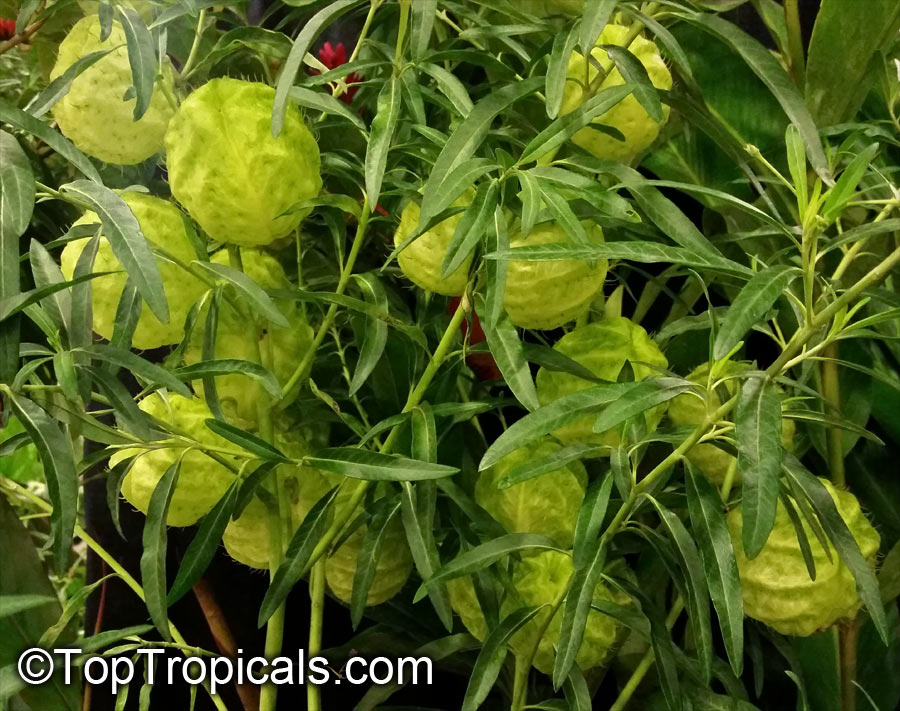
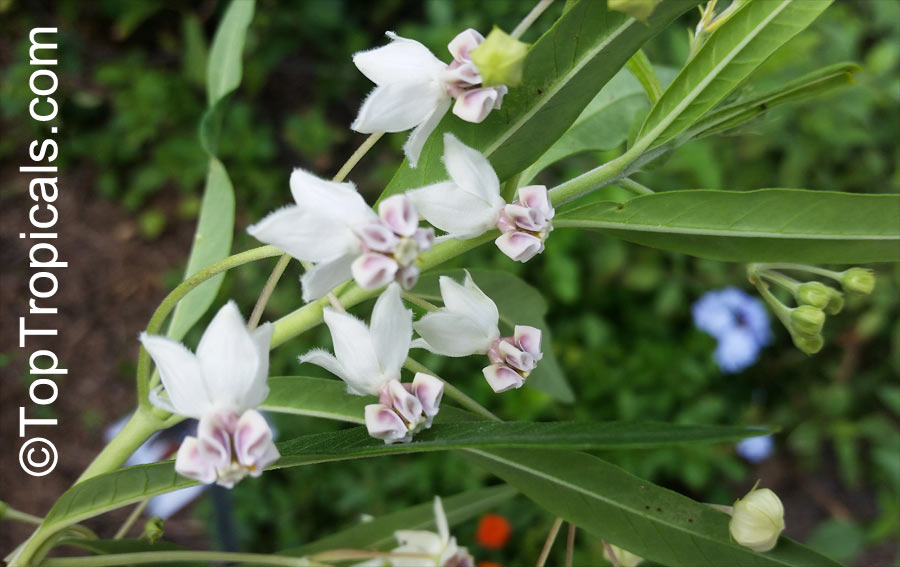
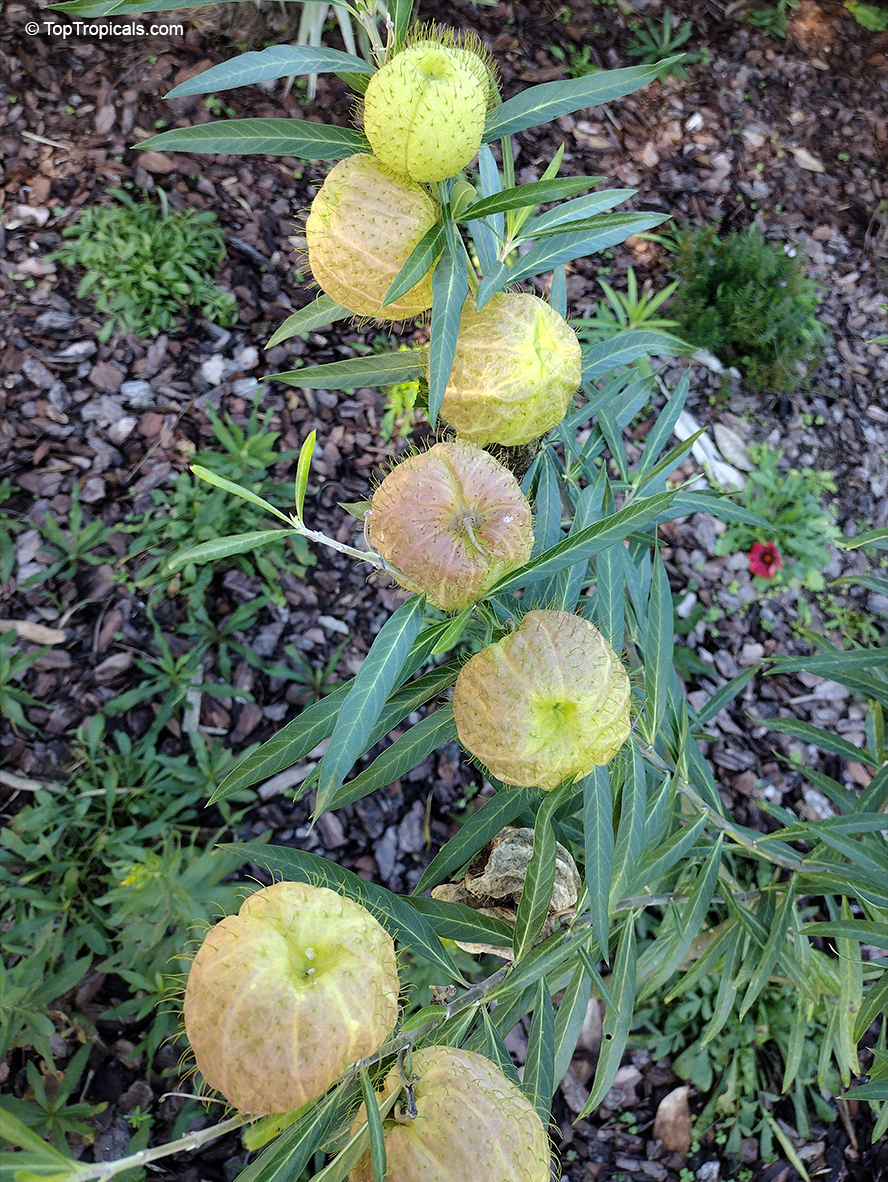
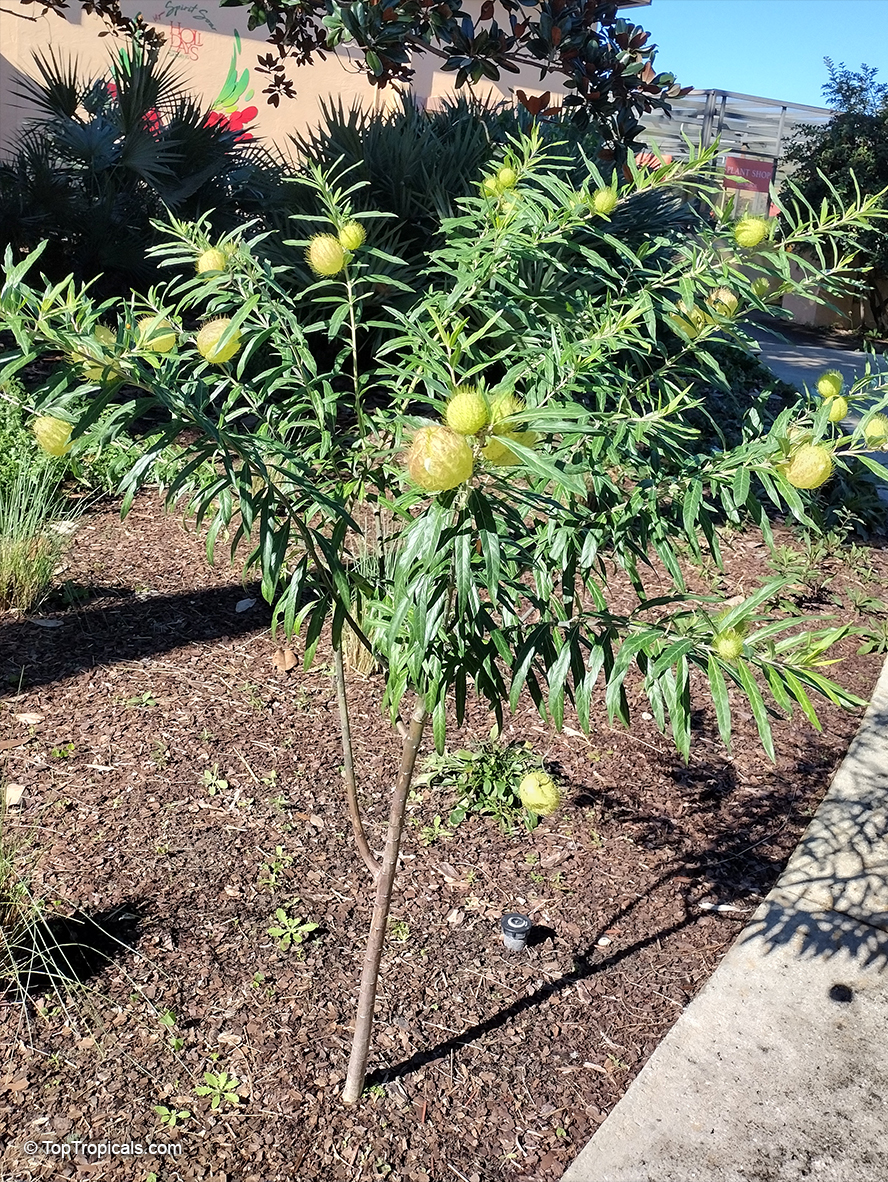
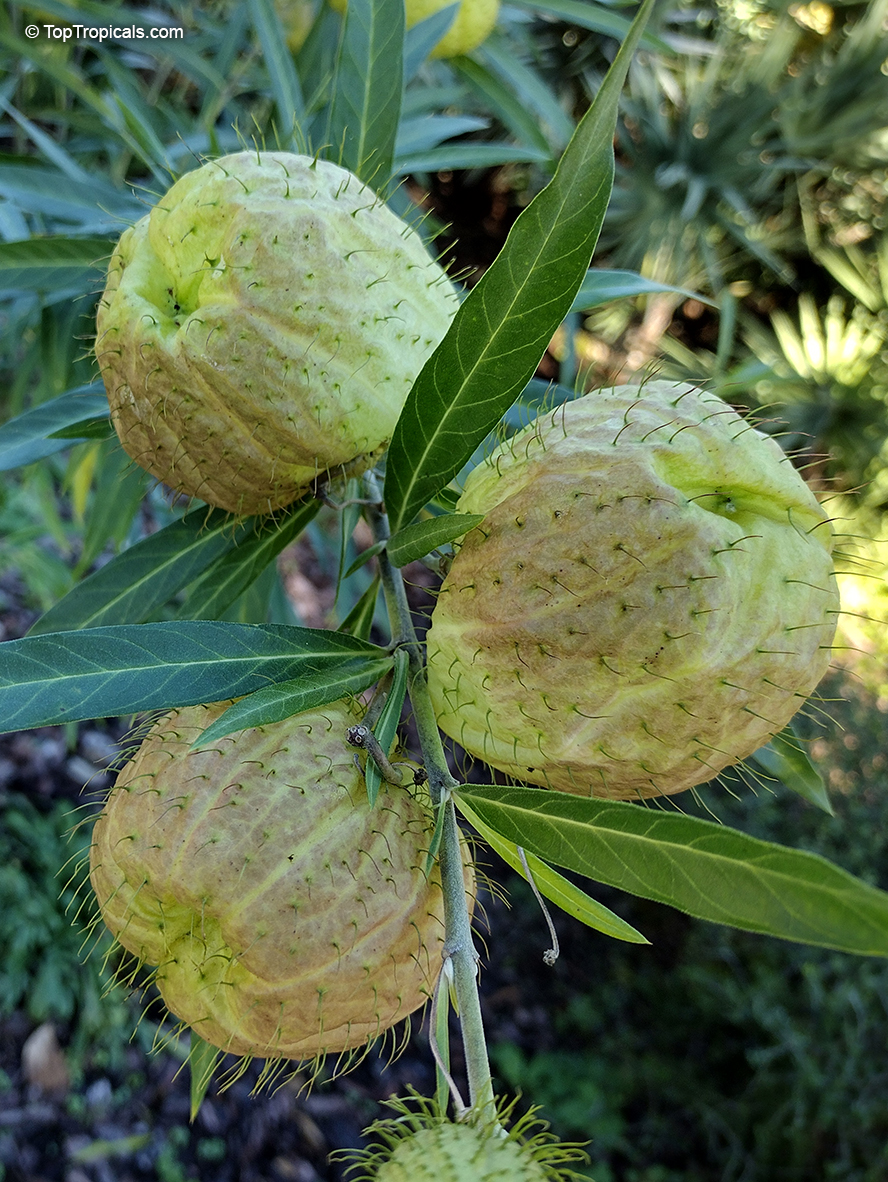
The name Balloonplant is an allusion to the swelling bladder-like pods which are full of seeds. During the summer, umbels of creamy or greenish-white flowers are produced; these are followed by interesting globular seed pods which are inflated and covered with soft bristles. The flowers are small, with white hoods and about 1/2 inch across. The capsule is a pale green, and in shape an inflated sphere. It is covered with rough hairs. It reaches three inches in diameter. This plant grows to 6 feet tall with a spread of about 2 feet. It has lance-shaped, medium green, hairy leaves. Flowers are a nectar source for many butterflies and leaves are a food source for monarch butterfly larvae (caterpillars). It is also popular in traditional medicine to cure various ailments.
Similar plants: Gomphocarpus physocarpus (Baloonplant)