Asclepias sp. (Milkweed)
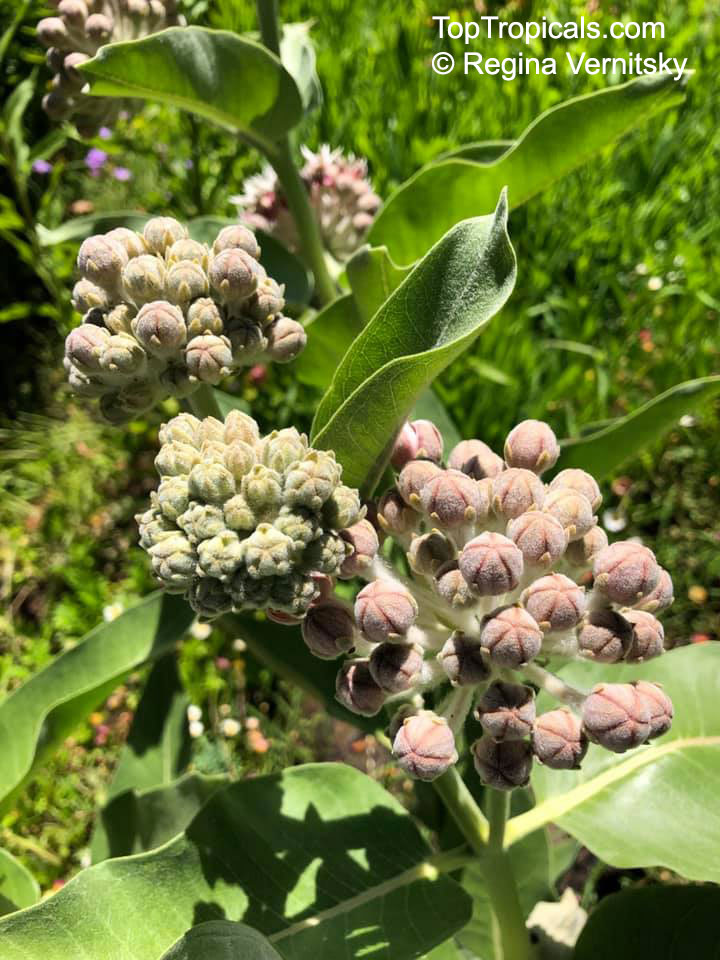
Asclepias sp. (Milkweed) flower clusters with thick green leaves in a natural light setting.
Botanical name: Asclepias sp.
Common name: Milkweed
Family: Apocynaceae (Formerly:Asclepiadaceae)
Subfamily: Asclepiadoideae
Origin: Americas
USDA Plant Hardiness Zone Map
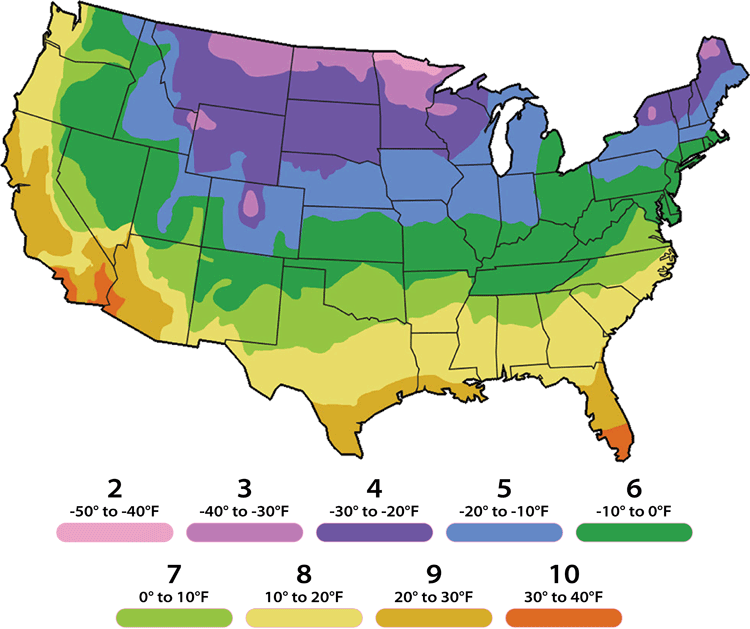
USDA Zone: 3-10
 Plant form: Large bush
 Mature height: 5-10 ft
 Sun exposure: Full sun or bright light indoor; semi-shade
 Cold tolerance: Tolerates light freezing to about 30°F for short periods (mature plants). Young plants must be protected.
 Watering: Moderate


 Flower color: Pink; white and off-white; red, crimson, vinous; yellow, orange
 Suitable for: Outdoors in the suitable USDA zone; small gardens, containers, and indoor growing
 Irritating or toxic: Irritating
 Fragrance: Fragrant; perfume plant
 Wildlife: Attracts butterflies and hummingbirds
 Ethnomedical: Ethnomedical plant, traditionally used in folk or indigenous medicine
Flowers of plants in this genus are produced in umbrel-like clusters with numerous small flower groups to 1 inch wide. The flowers are followed by green fruits that ripen to yellowish-brown and split open to reveal their seedy contents.
Milkweeds are known to be toxic to livestock and domestic fowl, but usually under conditions of forced ingestion of large quantities through mismanagement or drought.
Similar plants: Asclepias sp. (Milkweed)
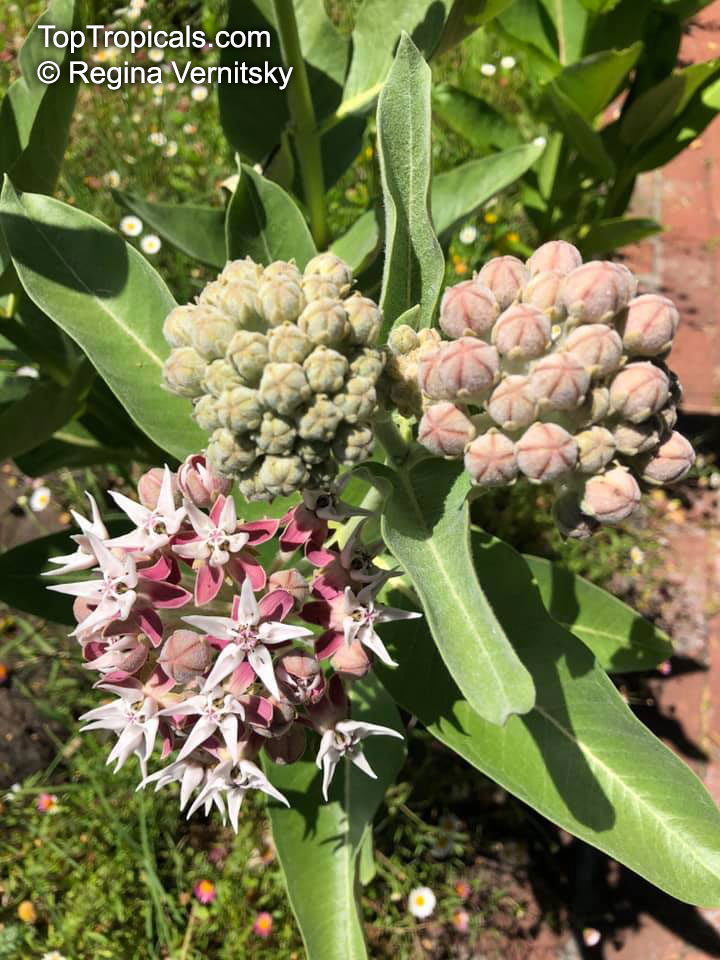
Asclepias sp. (Milkweed) clusters with white pink star petals and round buds
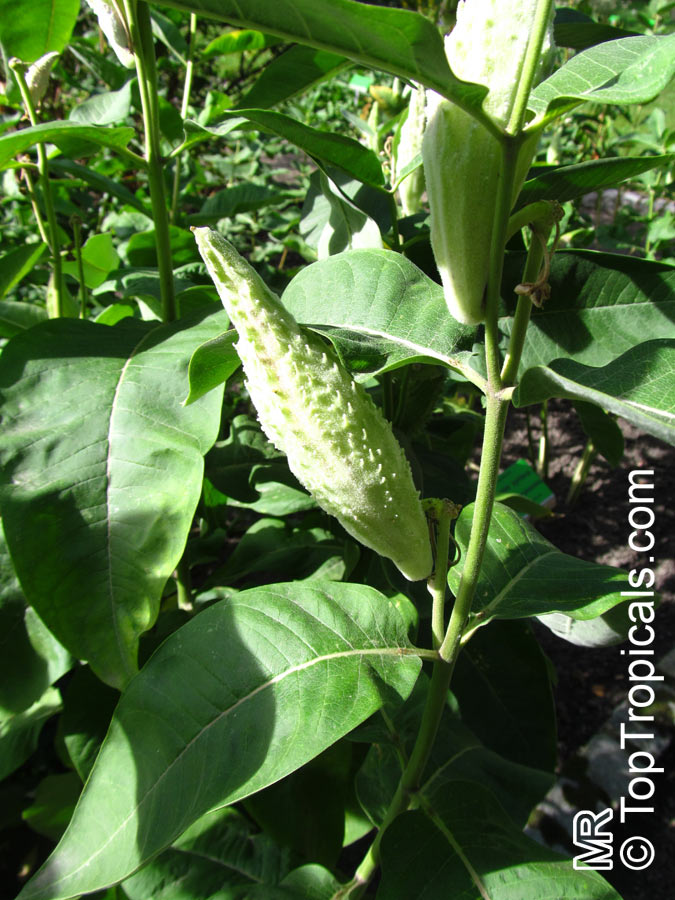
Asclepias sp. (Milkweed) showing prickly pale green fruit pods hanging from a sturdy central stem
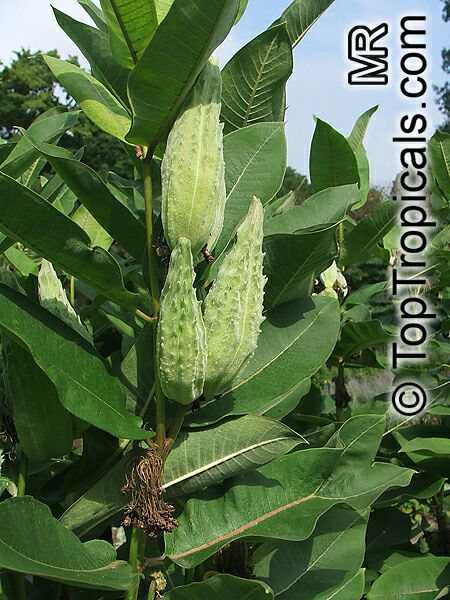
Asclepias sp. (Milkweed) light green seed pods hanging from a sturdy central green stem.
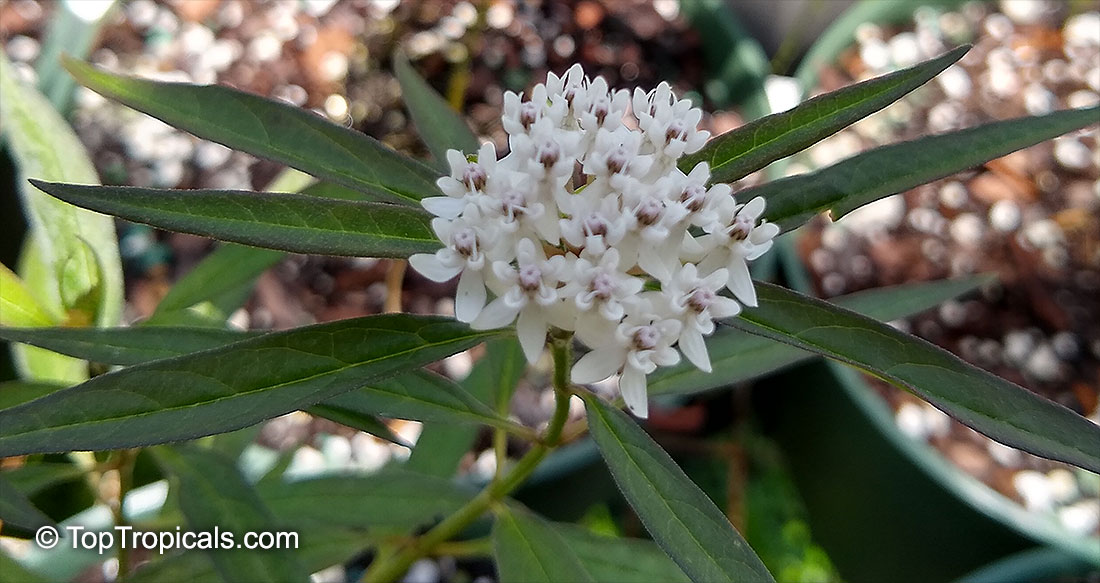
Asclepias perennis (Aquatic Milkweed) white flower cluster surrounded by narrow green pointed leaves on plant
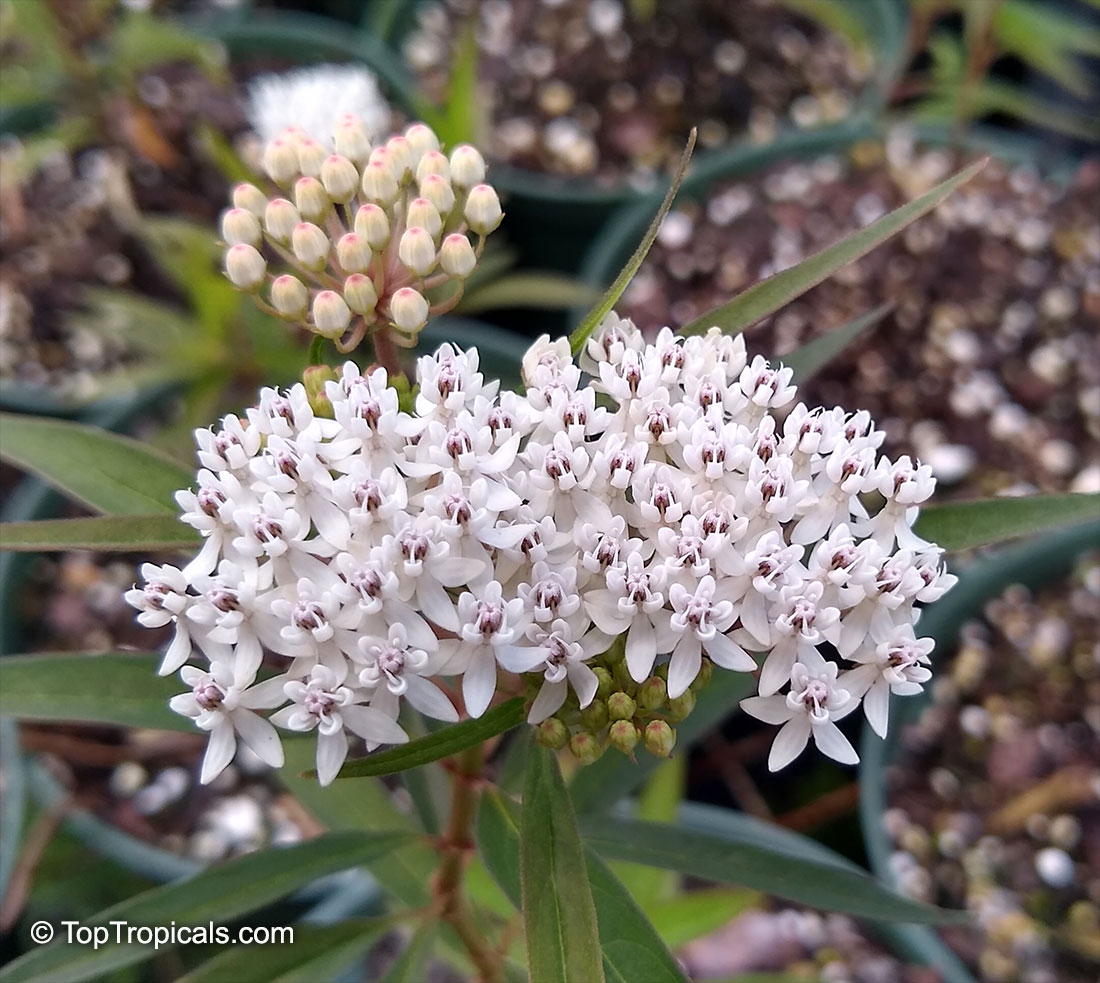
Asclepias perennis (Aquatic Milkweed) white flower cluster with pink-tinged buds sitting above narrow green foliage
Link to this plant:
https://toptropicals.com/catalog/uid/asclepias_sp.htm