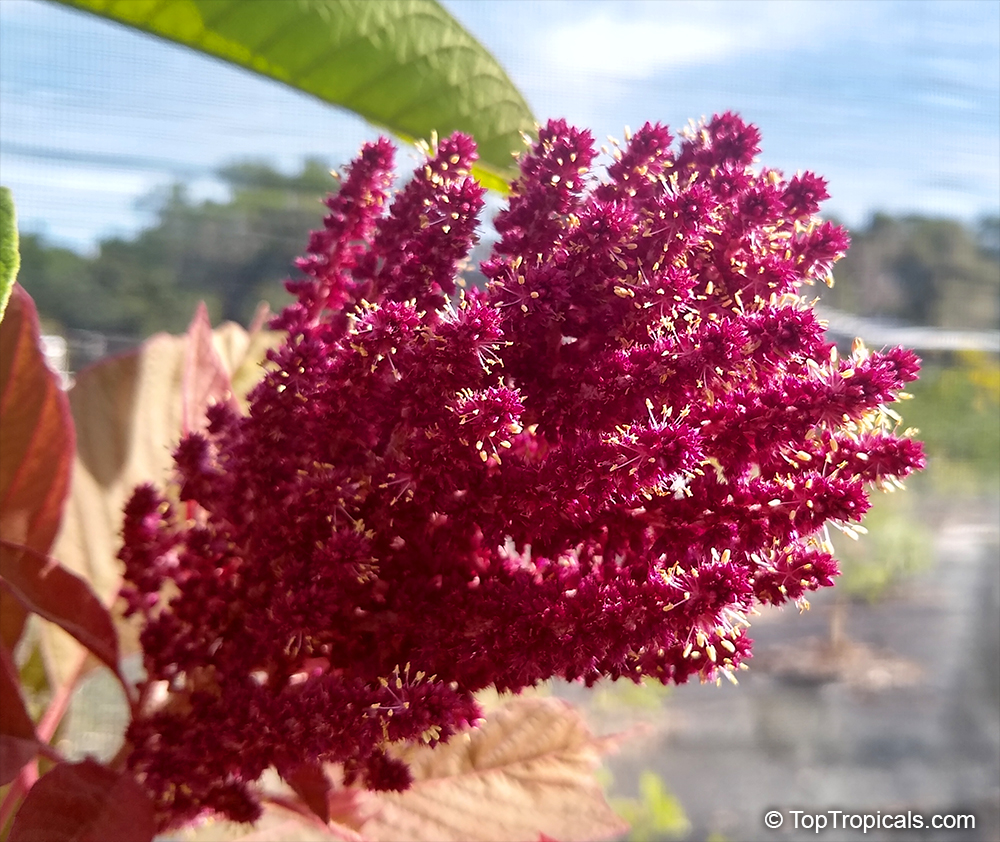
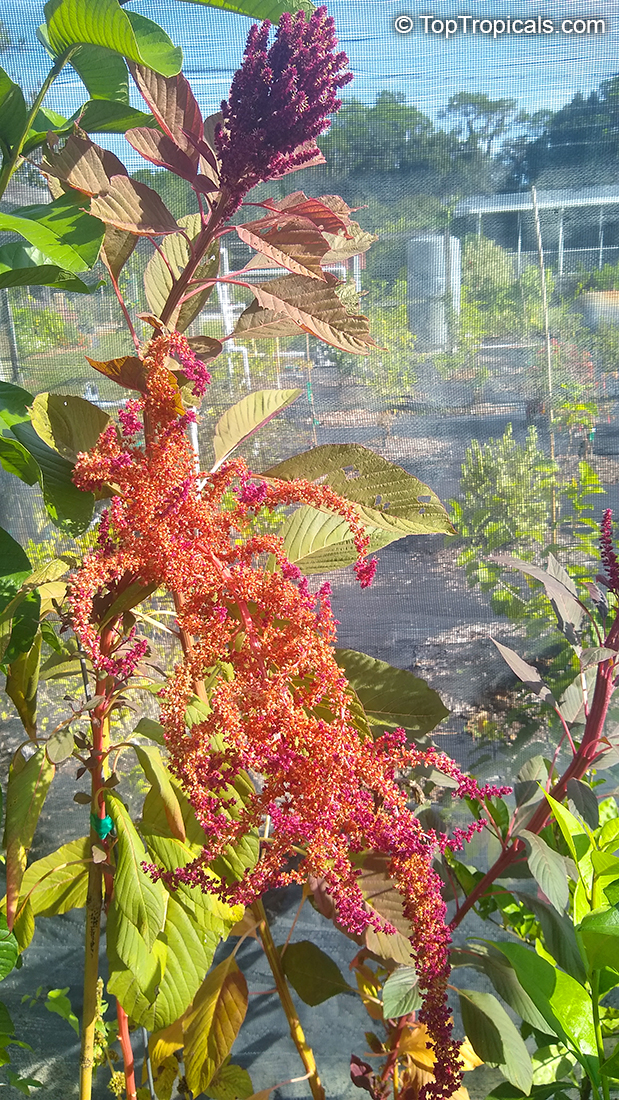
Amaranthus sp. (Amaranth)

Botanical name: Amaranthus sp.
Common name: Amaranth
Family: Amaranthaceae
Origin: Tropical America
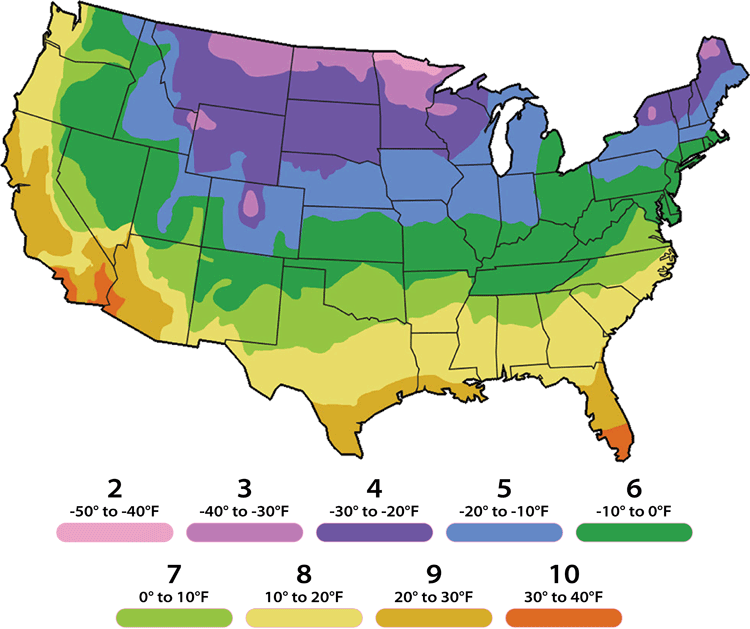
USDA Zone: 2-11
 Plant form: Large bush
 Mature height: 5-10 ft
 Sun exposure: Full sun or bright light indoor; semi-shade
 Cold tolerance: Tolerates light freezing to about 30°F for short periods (mature plants). Young plants must be protected.
 Watering: Moderate
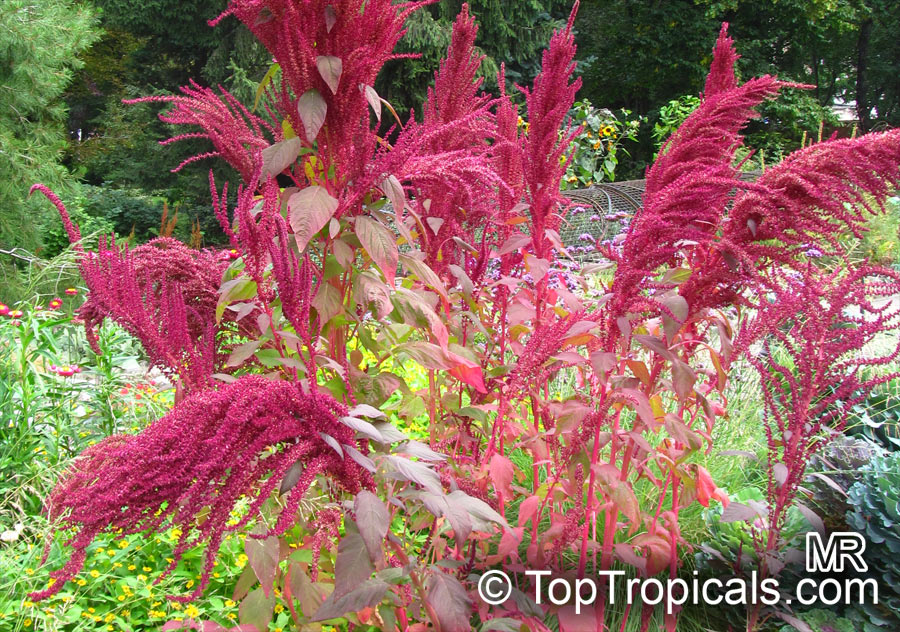
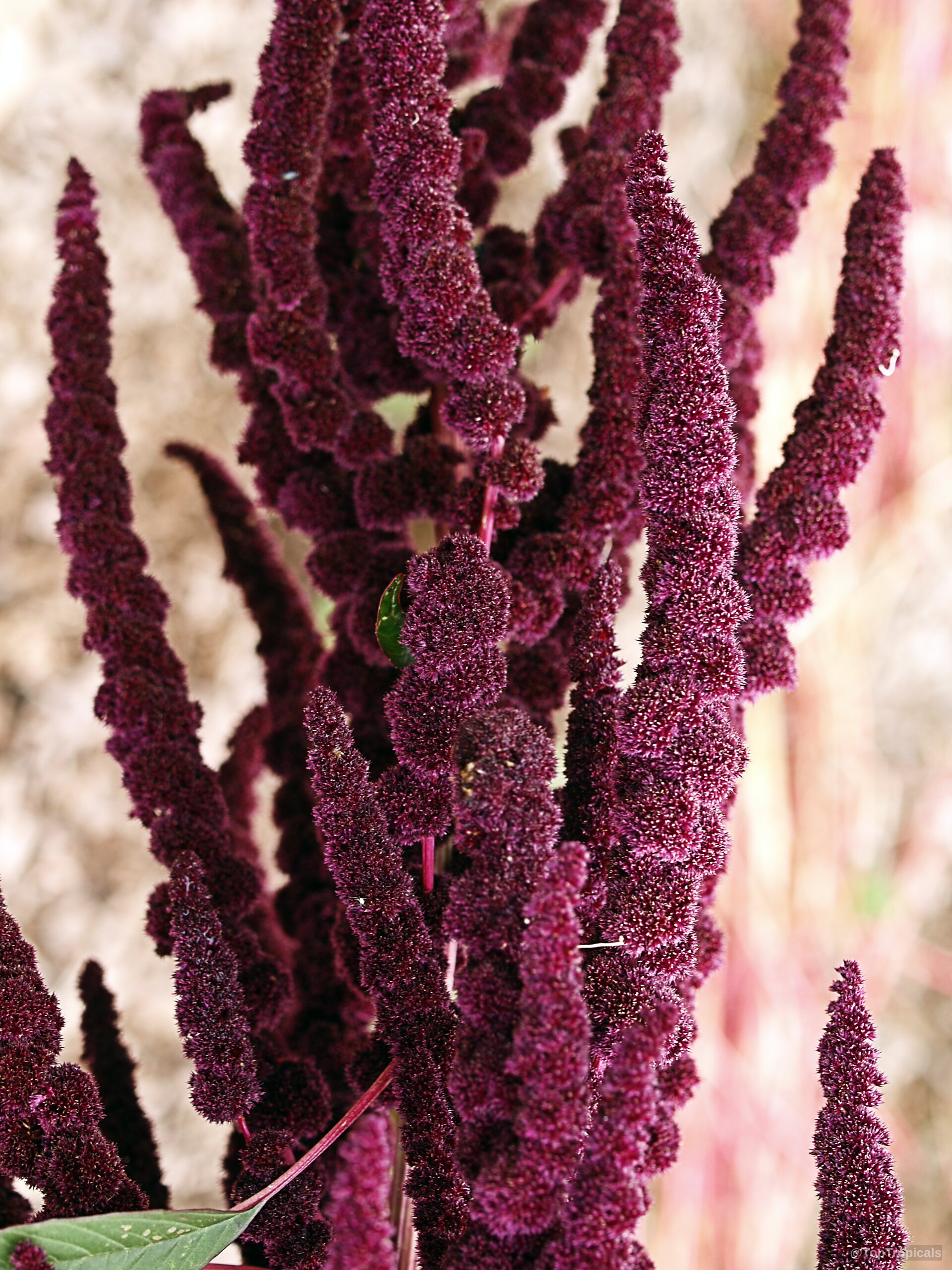
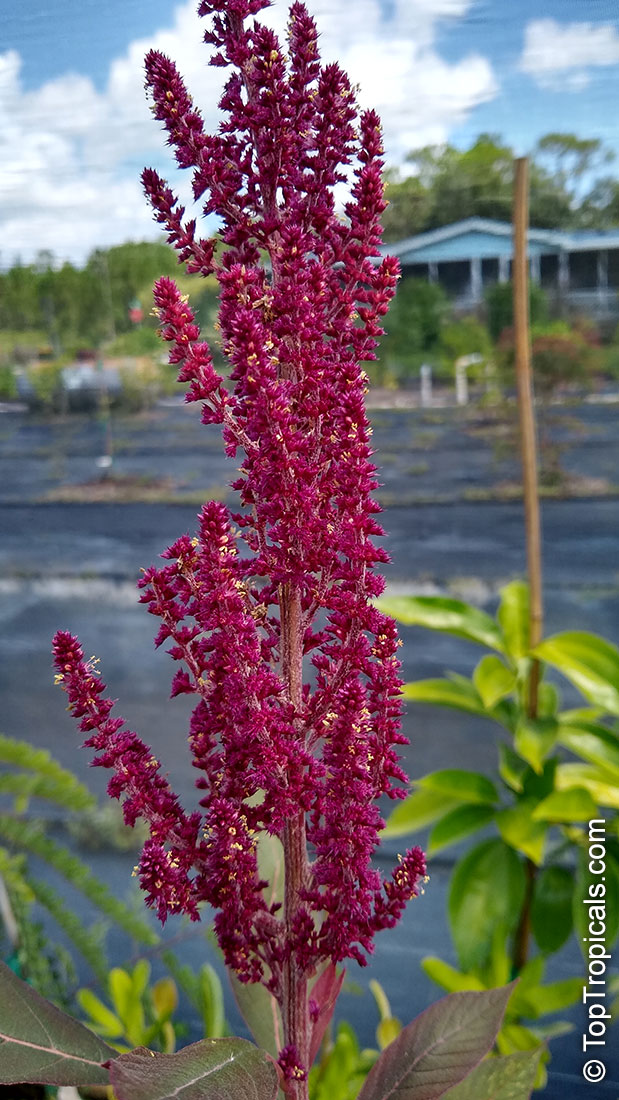
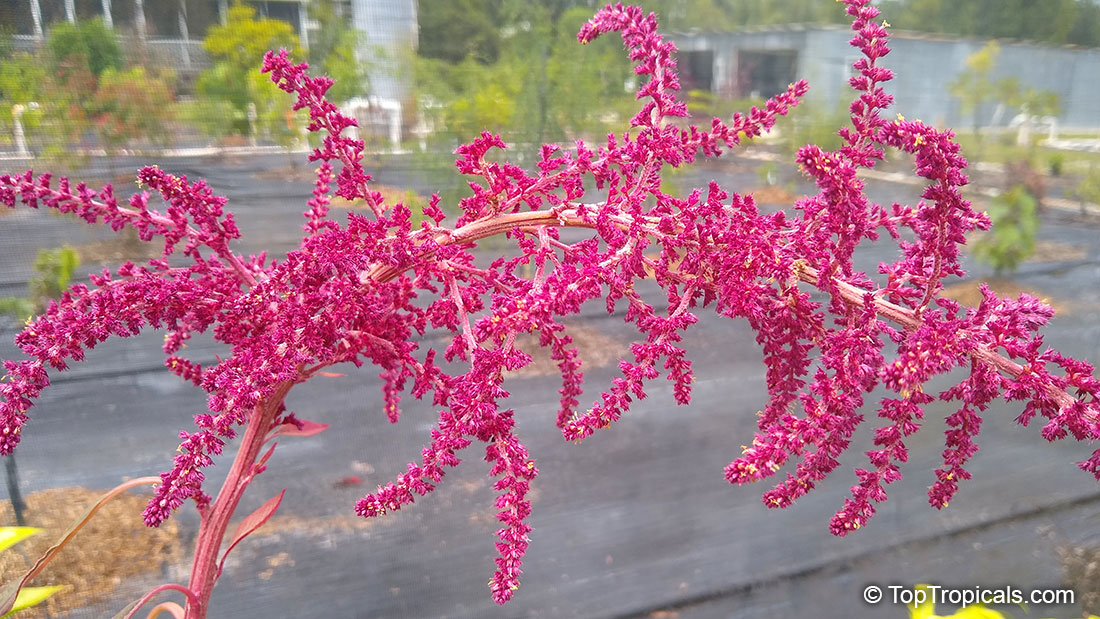
 Flower color: Red, crimson, vinous
 Suitable for: Outdoors in the suitable USDA zone; small gardens, containers, and indoor growing
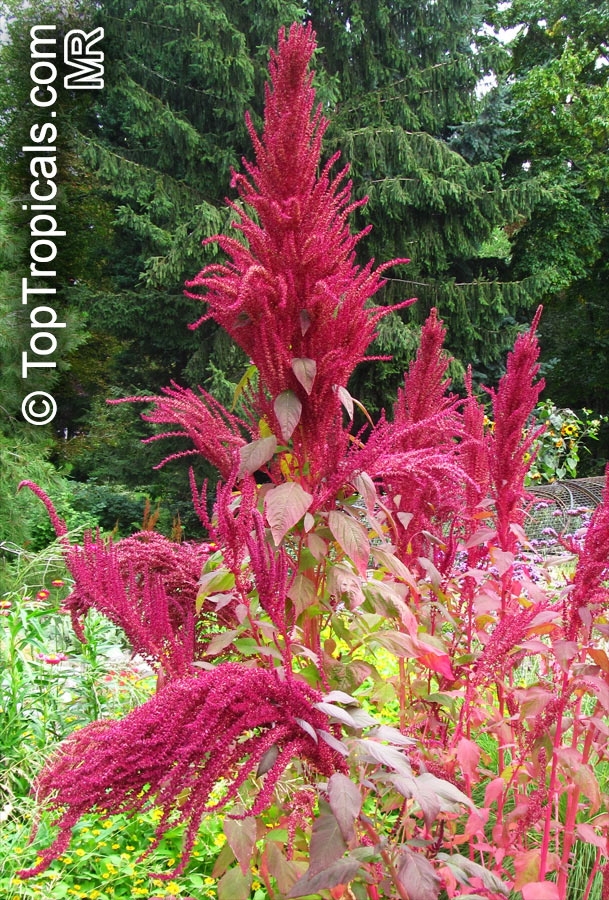
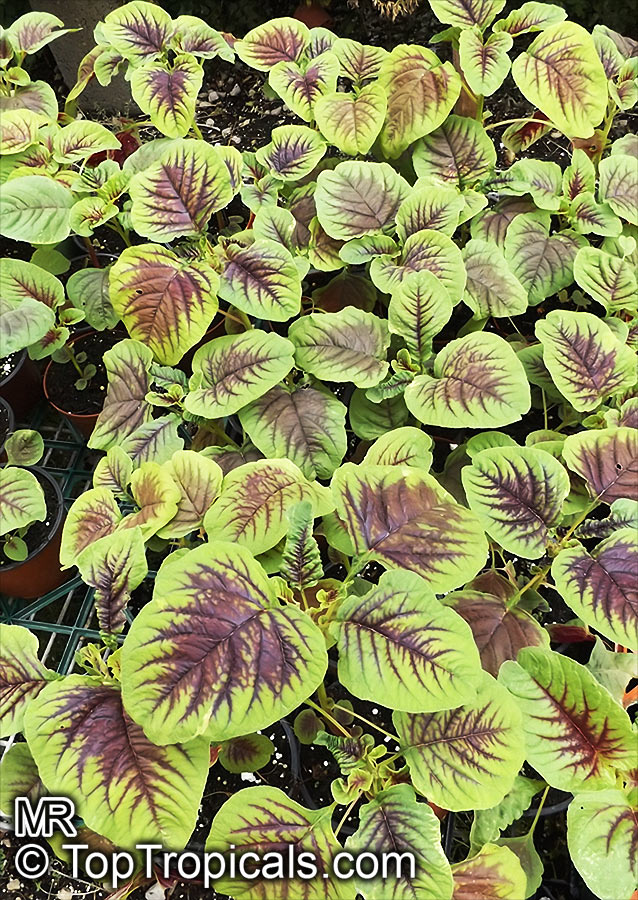
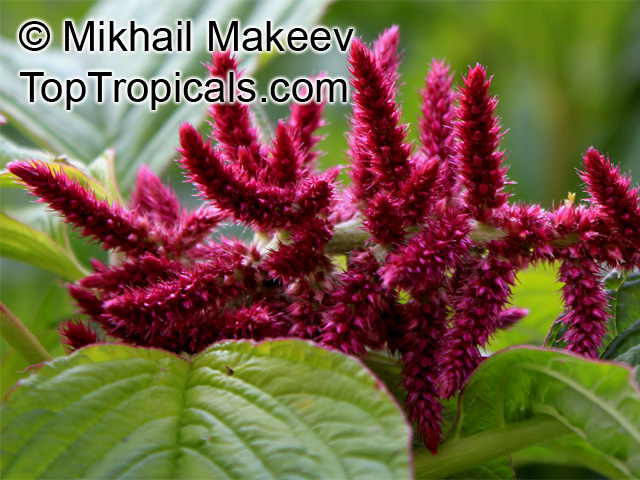
Approximately 60 species are recognized, with inflorescences and foliage ranging from purple and red to gold.
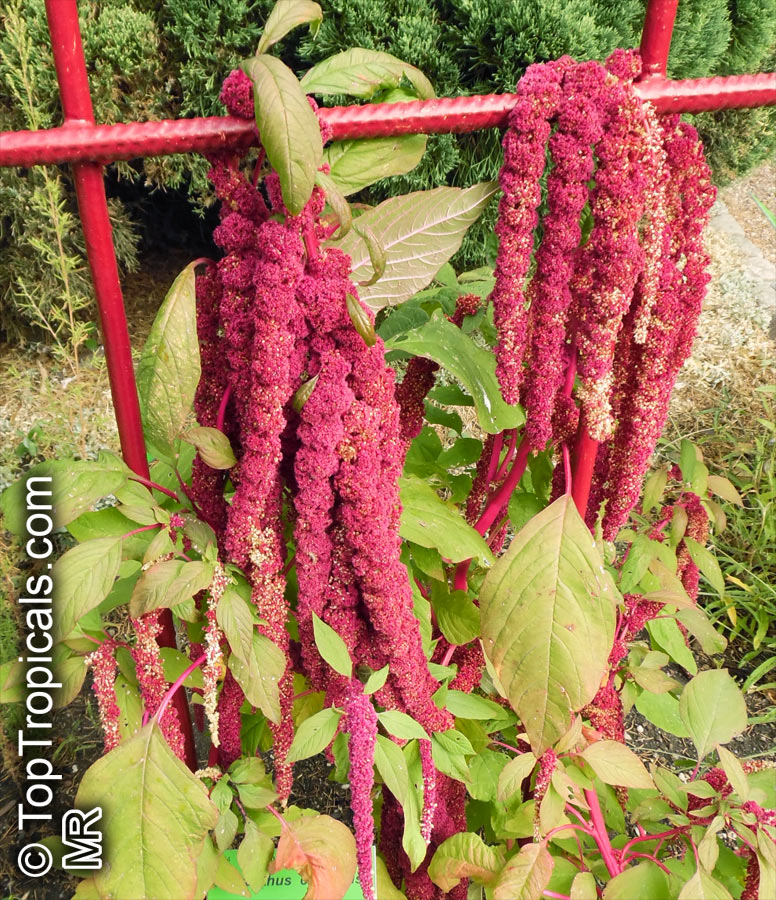
The genus also contains several well-known ornamental plants, such as Amaranthus caudatus, a native of India and a vigorous, hardy annual with dark purplish flowers crowded in handsome drooping spikes.
Amaranthus cruentus is a tall annual herb topped with clusters of dark pink flowers. Many parts of the plants, including the leaves and seeds, are edible, and are frequently used as a source of food in India and South America. It is believed to have originated from Amaranthus hybridus, with which it shares many morphological features. Ancient amaranth grains still used to this day include the three species, Amaranthus caudatus, Amaranthus cruentus, and Amaranthus hypochondriacus.
Similar plants: Amaranthus sp. (Amaranth)