Wisteria sp. (Chinese Wisteria)
Botanical name: Wisteria sp.
Common names: Chinese Wisteria, Japanese Wisteria, American Wisteria
Family: Fabaceae
Subfamily: Faboideae
Origin: China and Japan
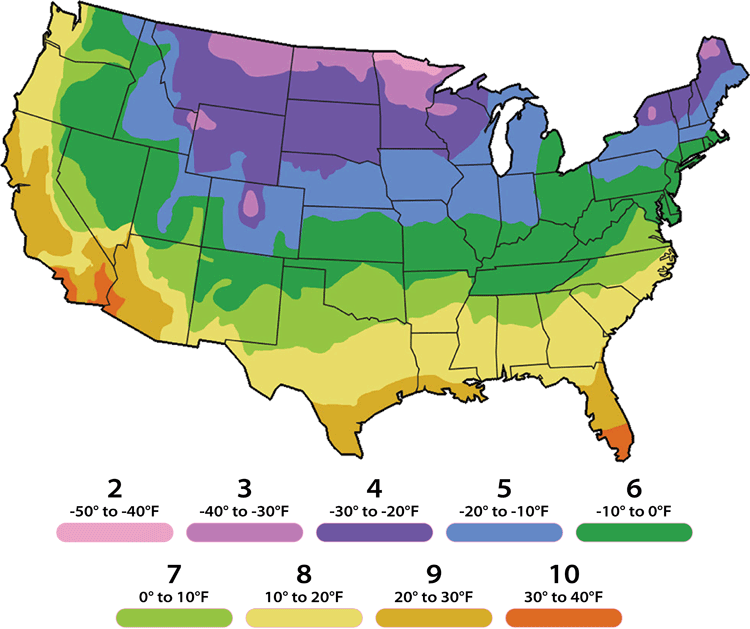
USDA Zone: 7-10
Cold tolerance: 5°F

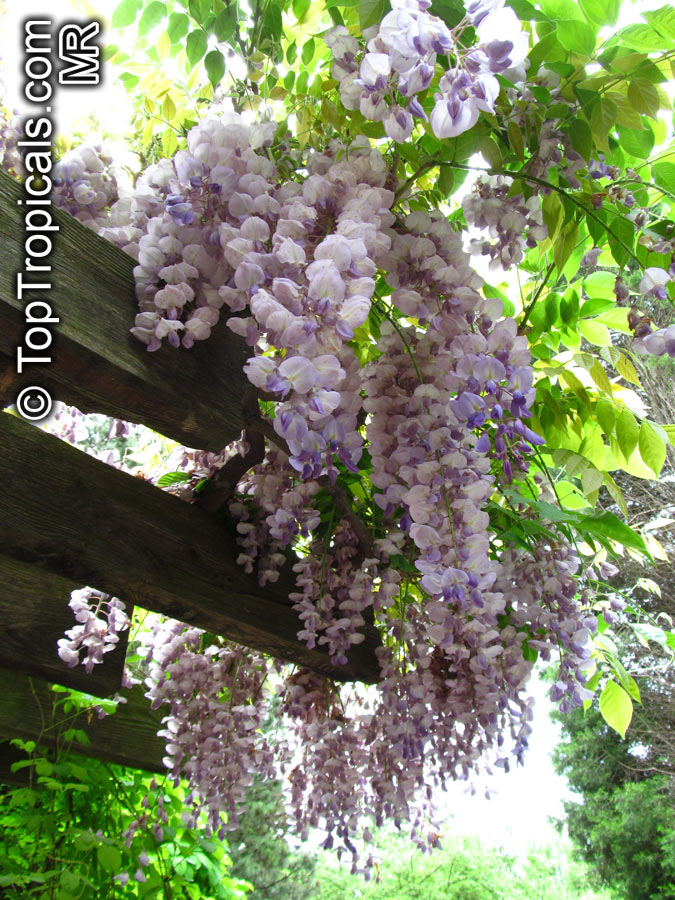
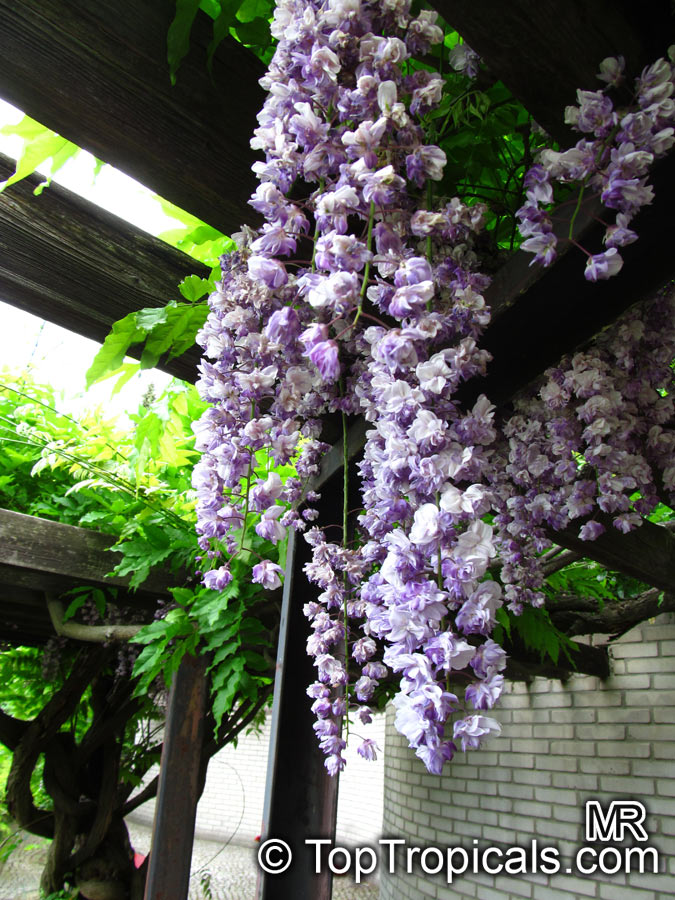
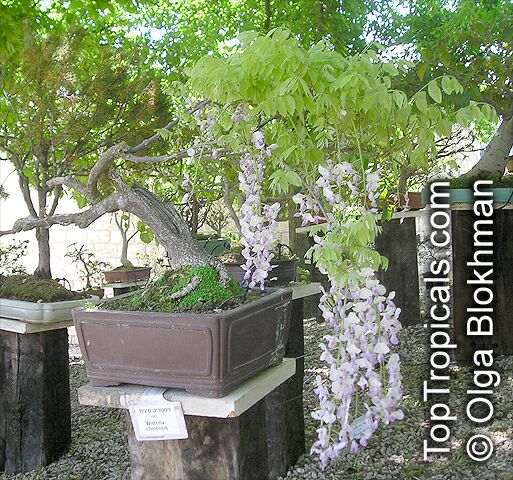
 Plant form: Climbing or creeping vine; suitable for bonsai
 Sun exposure: Full sun or bright light indoor; semi-shade
 Cold tolerance: Tolerates light freezing to about 30°F for short periods (mature plants). Young plants must be protected.
 Watering: Regular

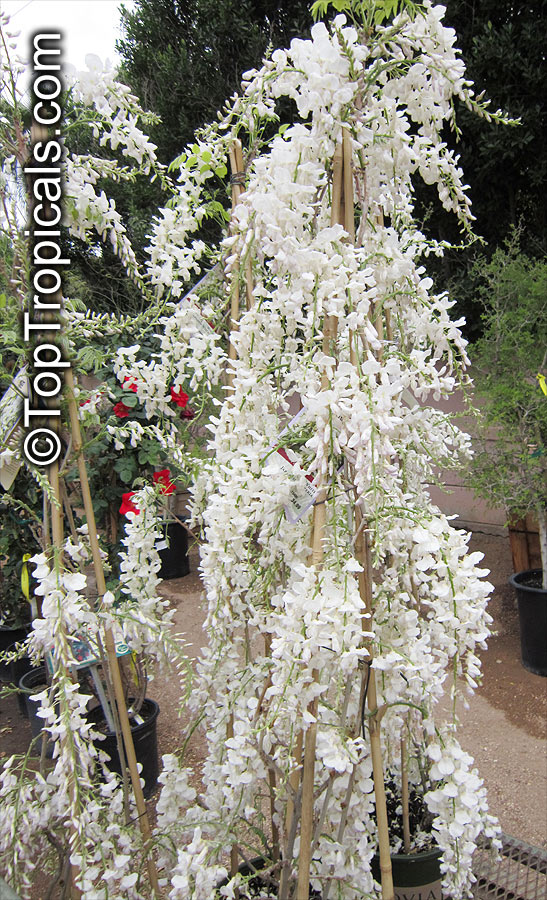
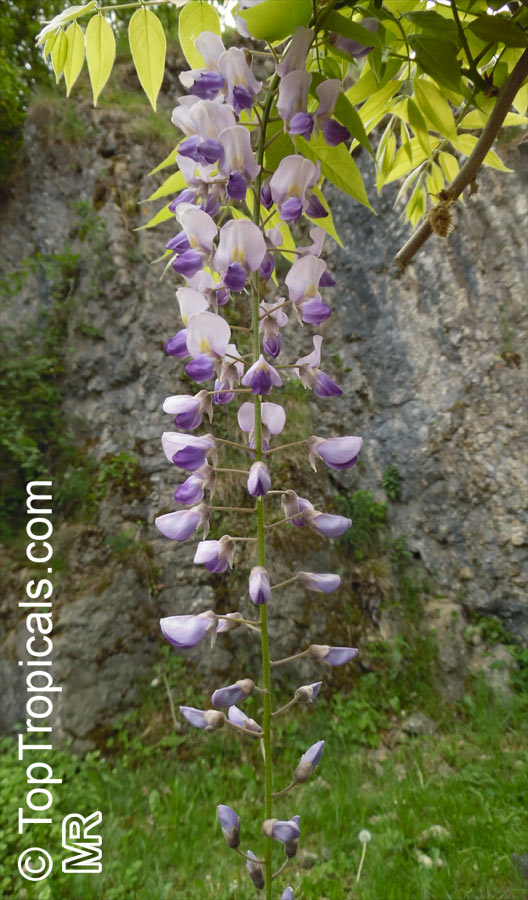
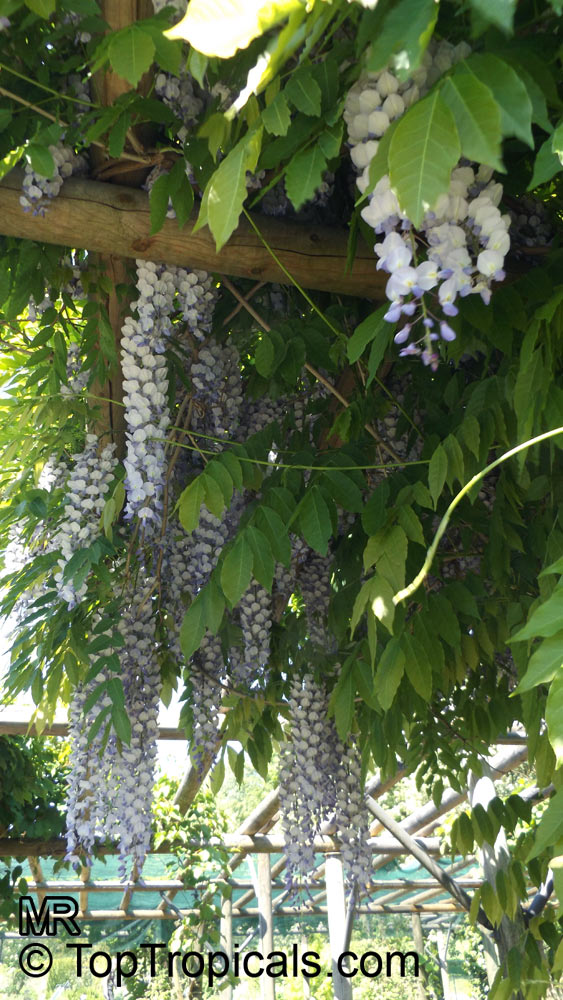
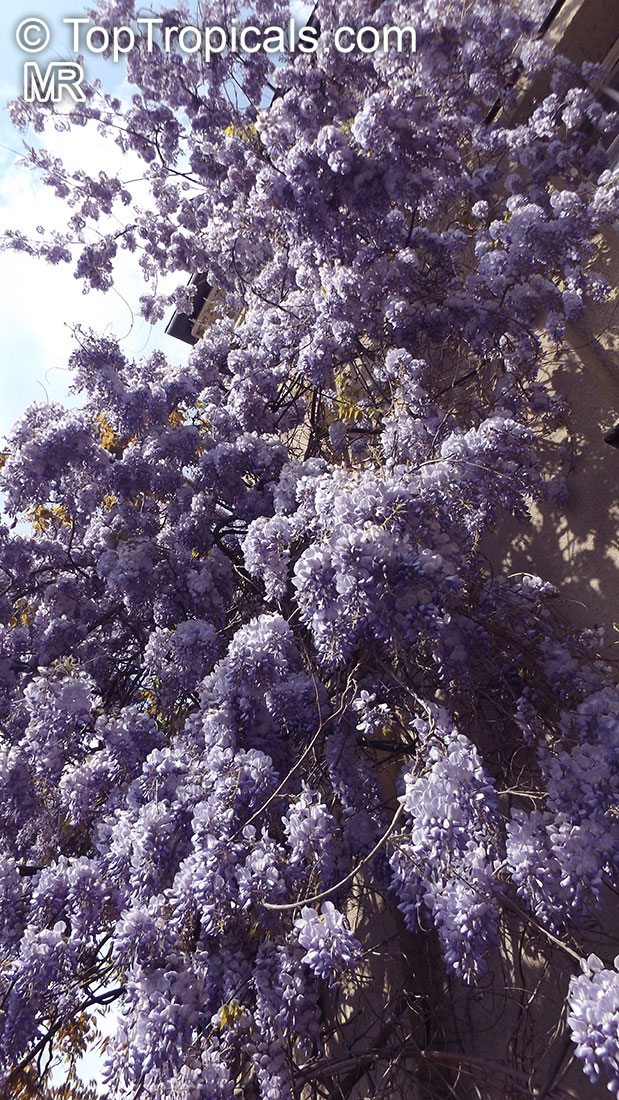
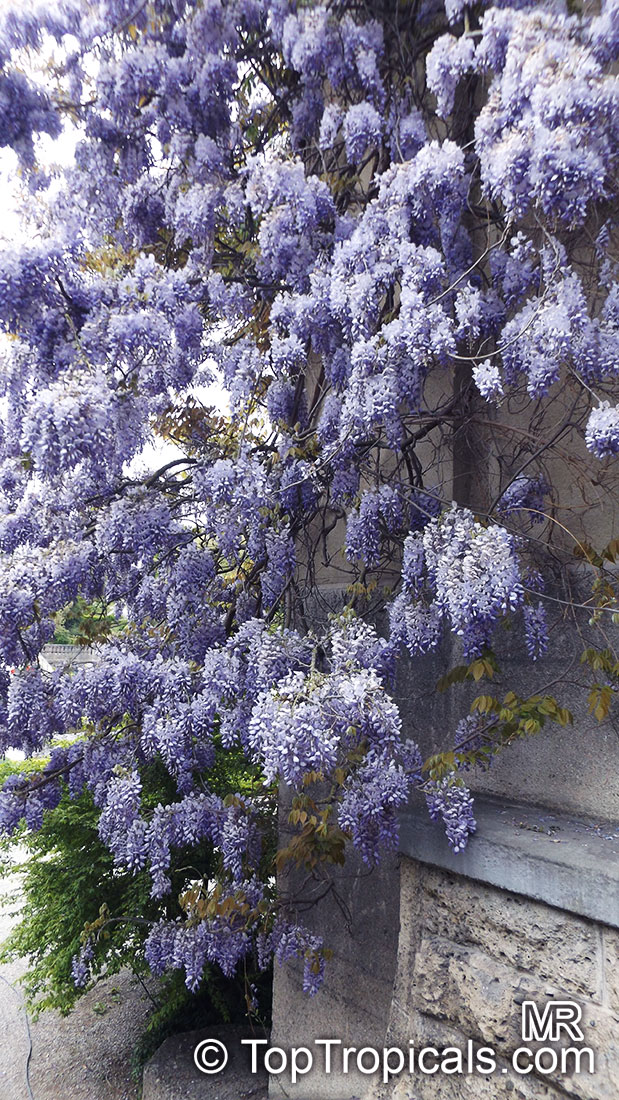
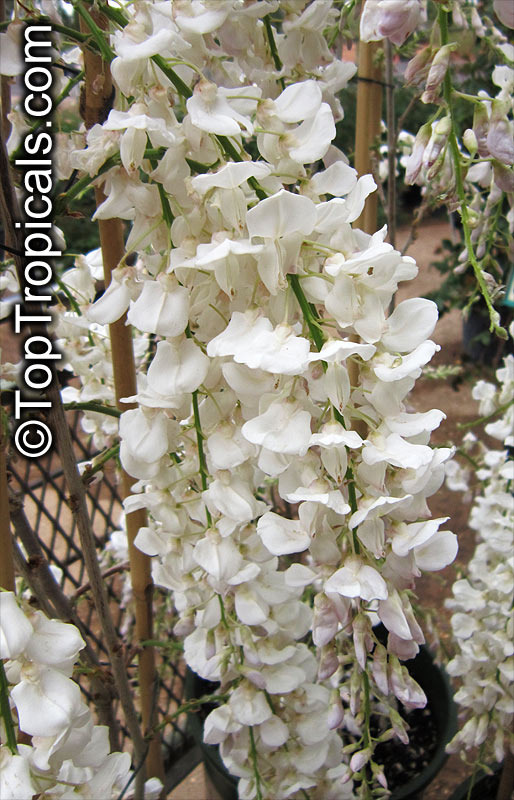
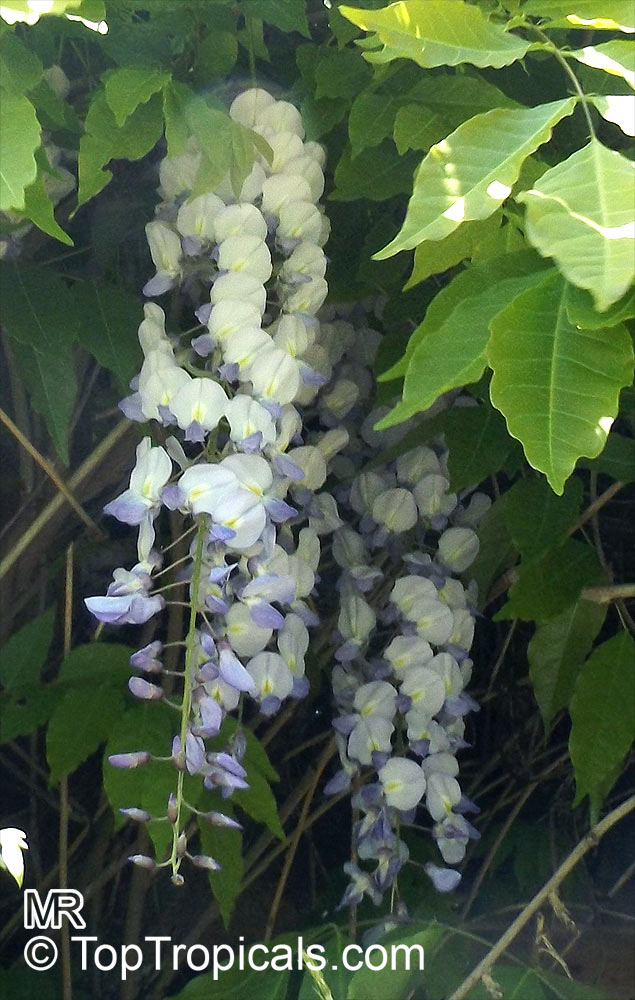
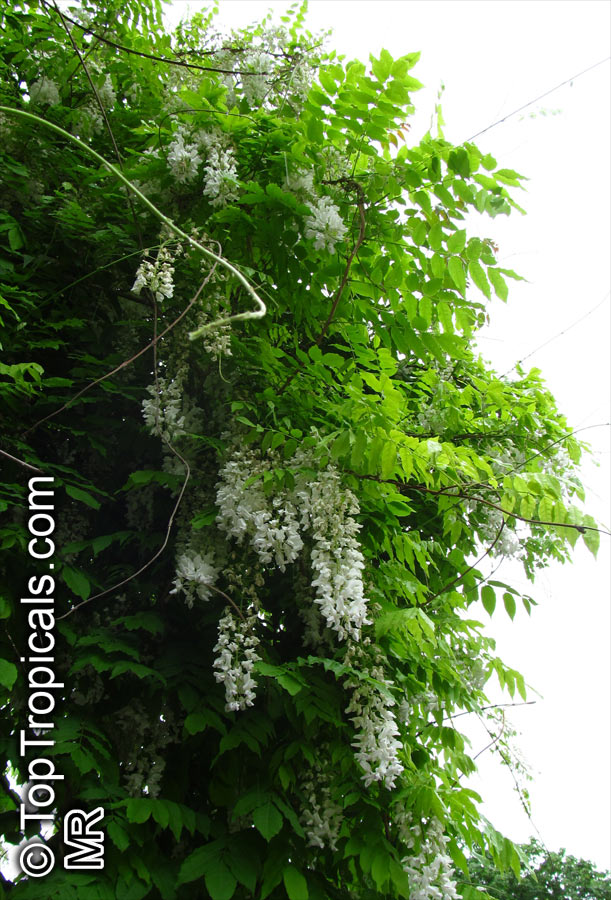
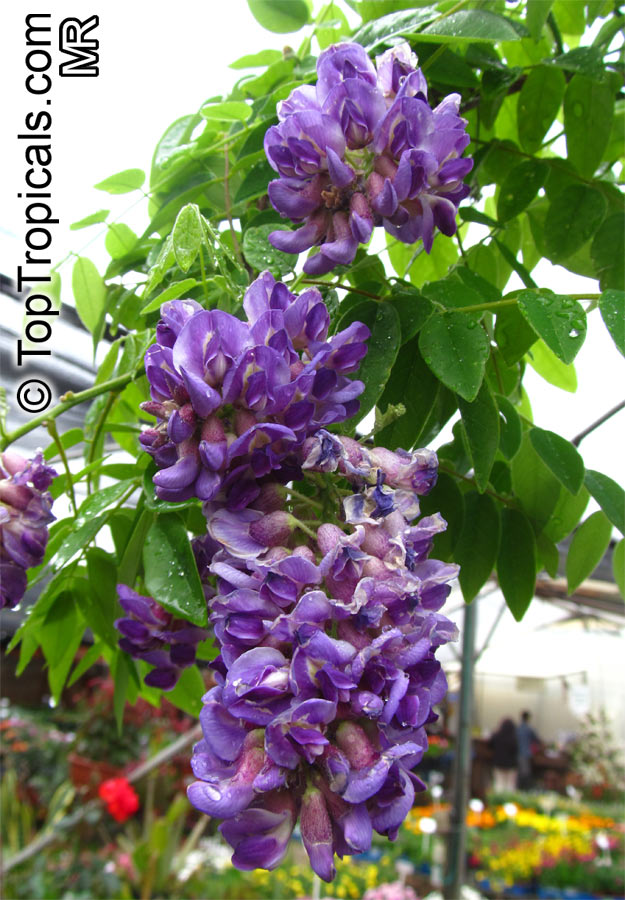
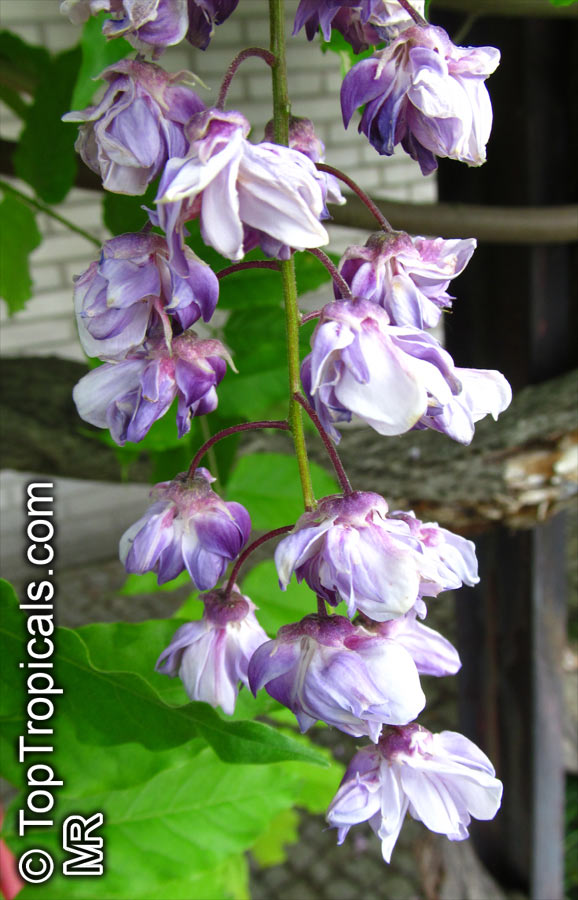
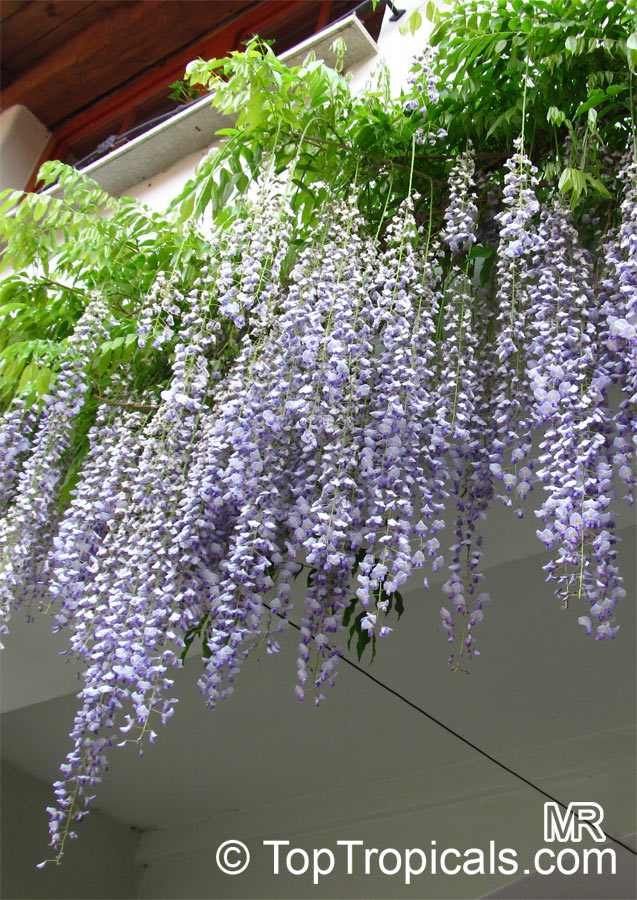
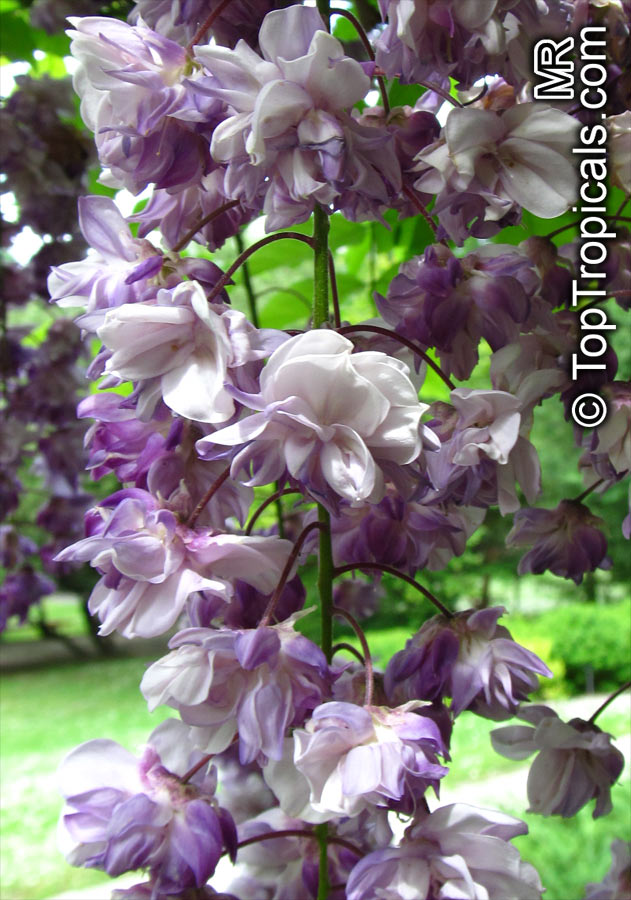
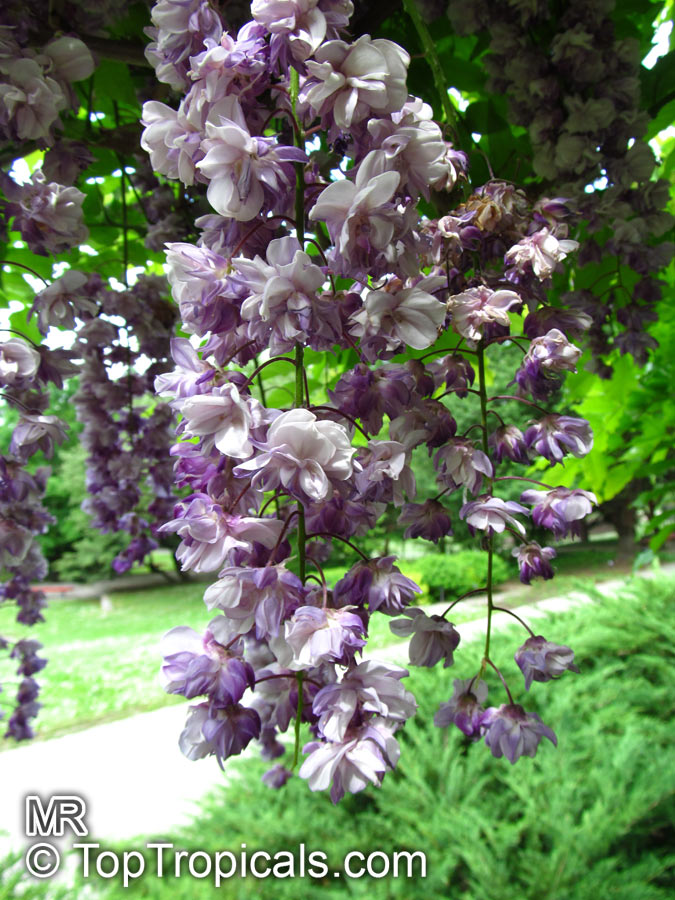
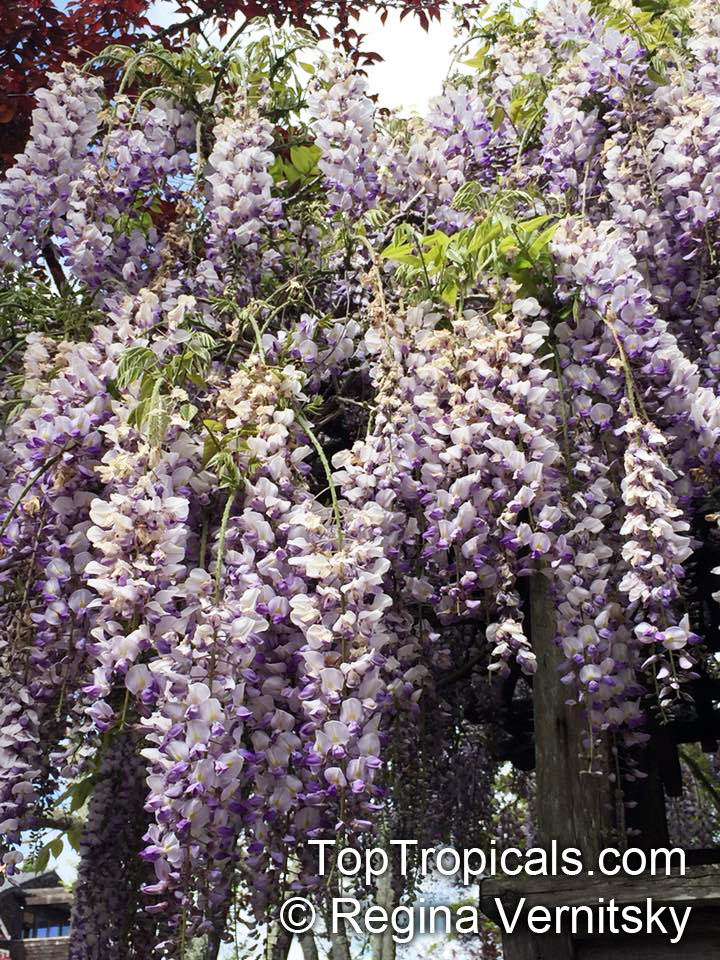
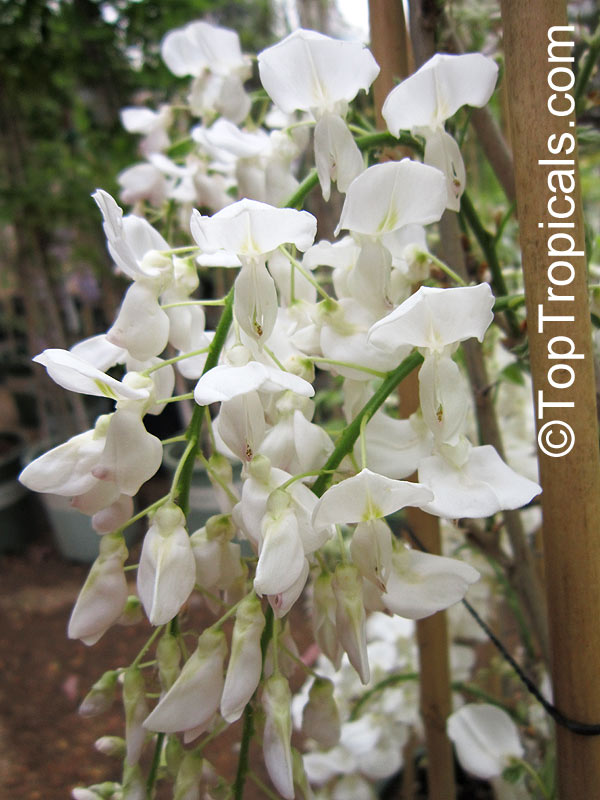
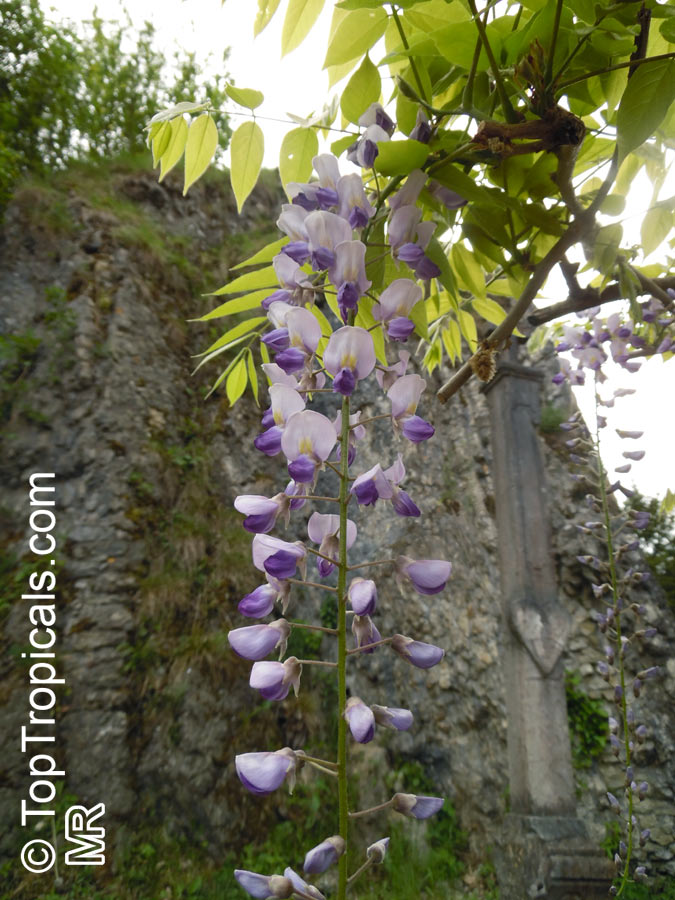
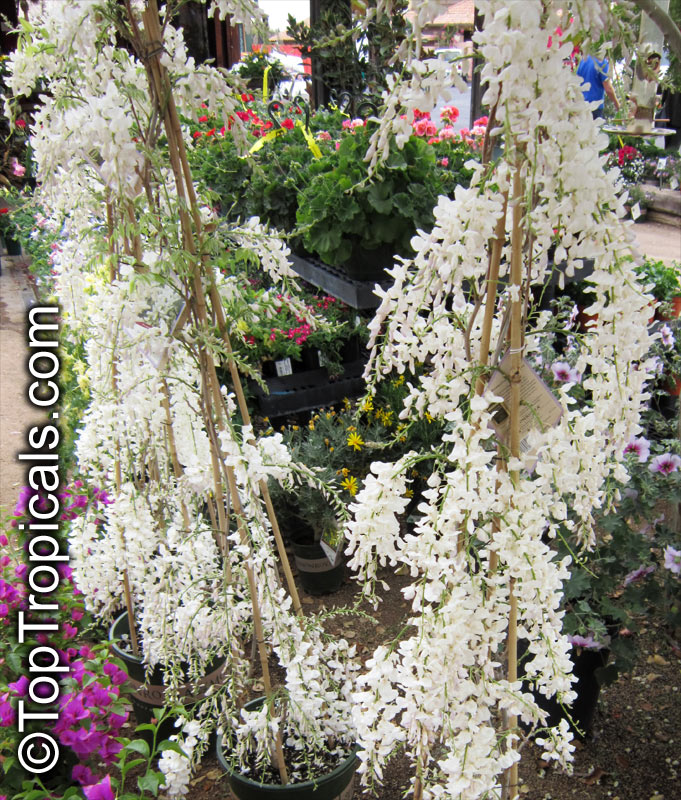
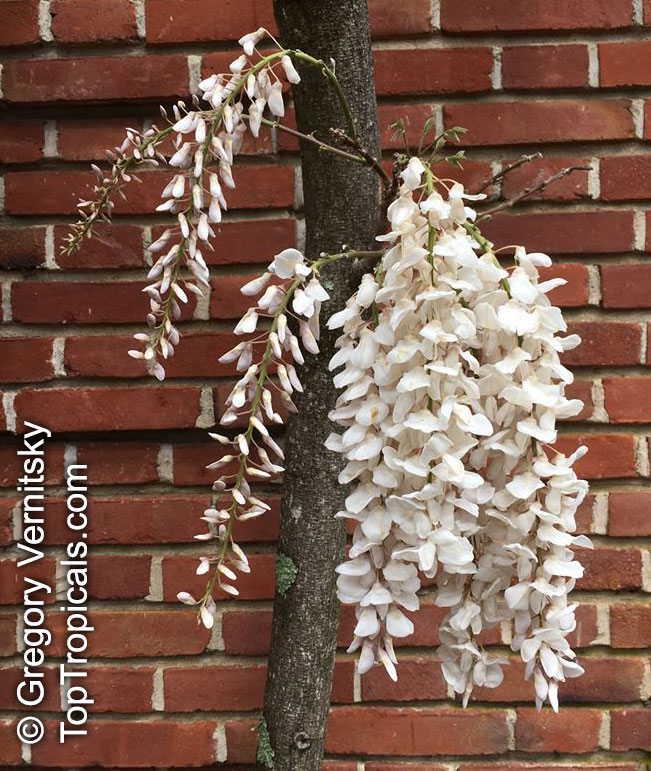
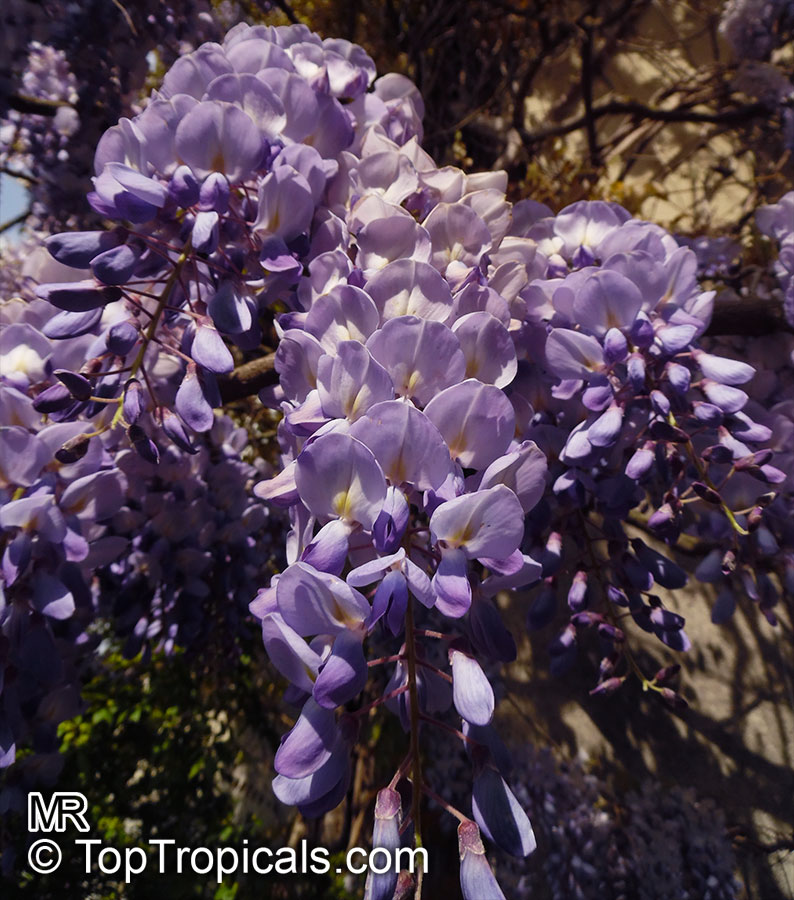
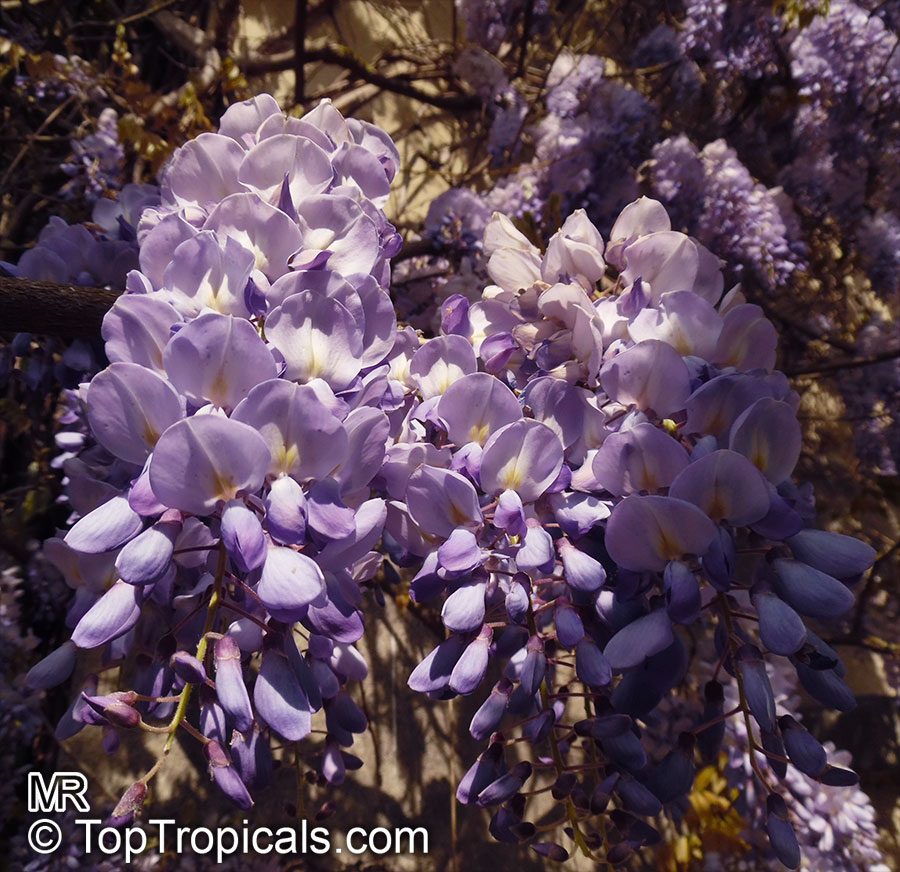
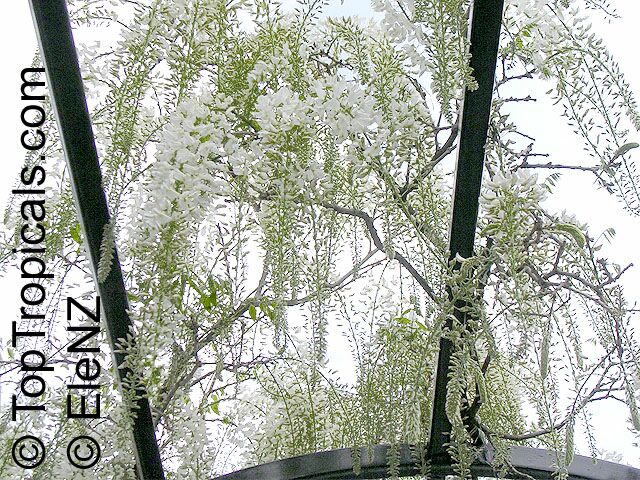
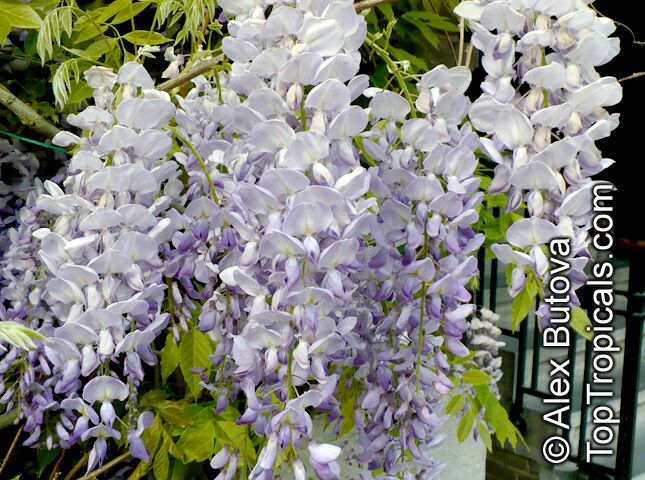
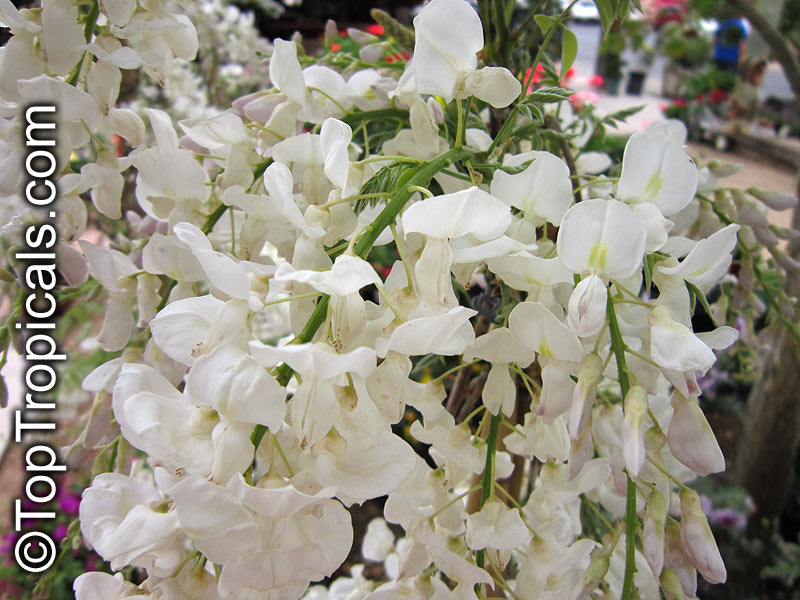
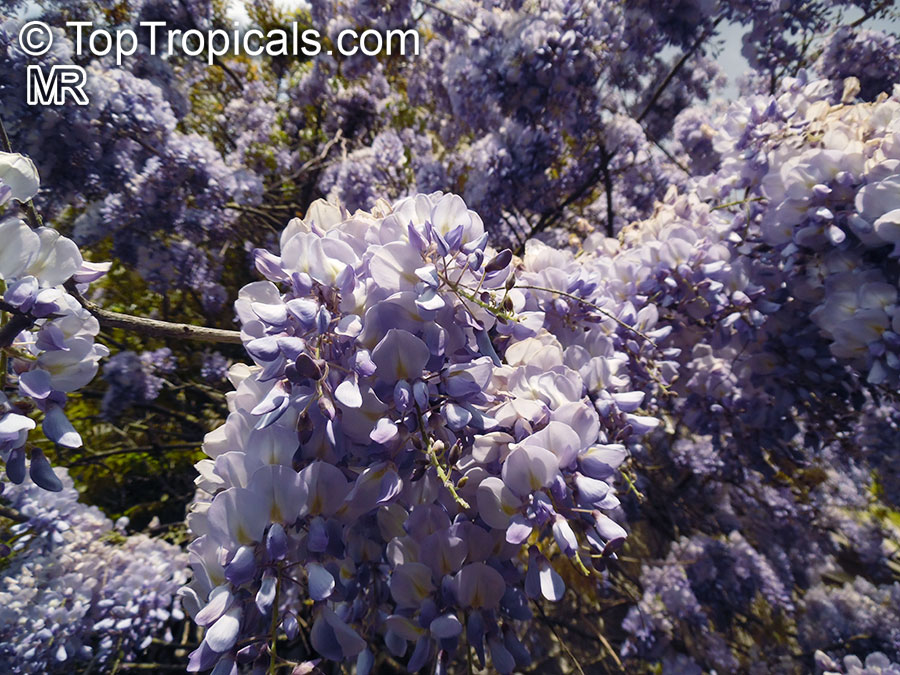
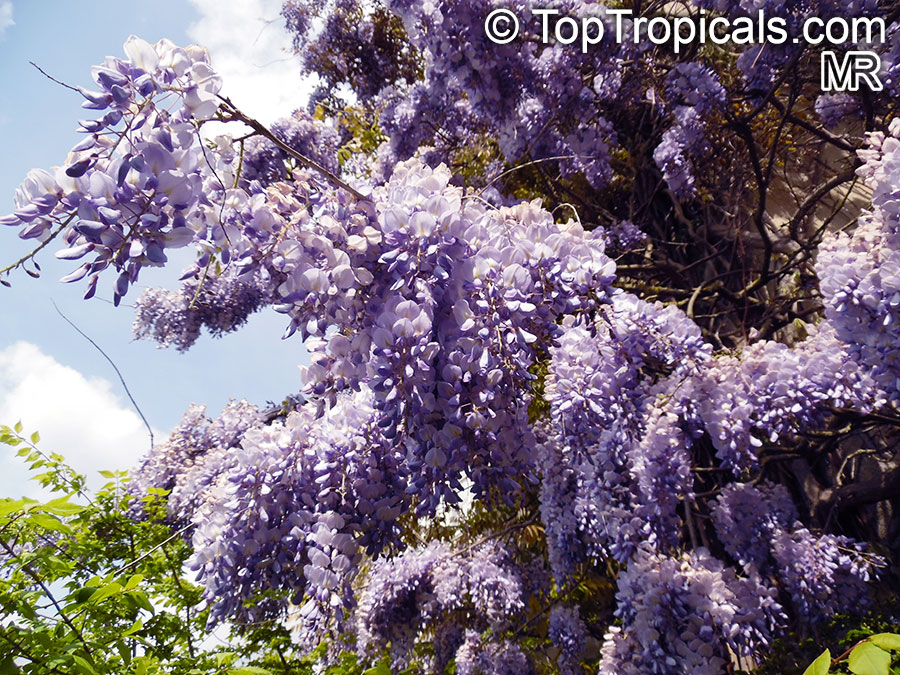
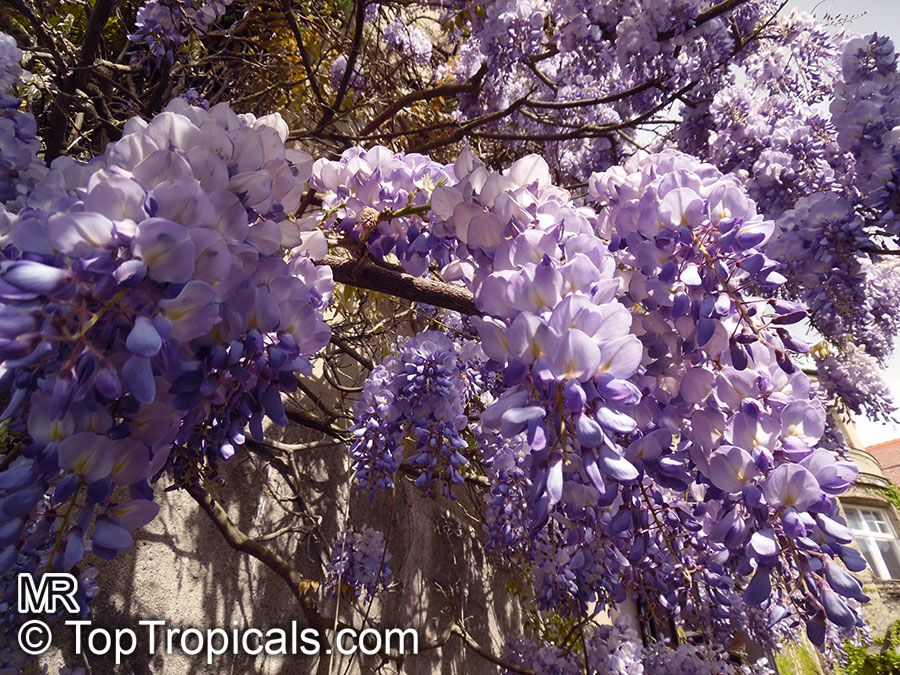
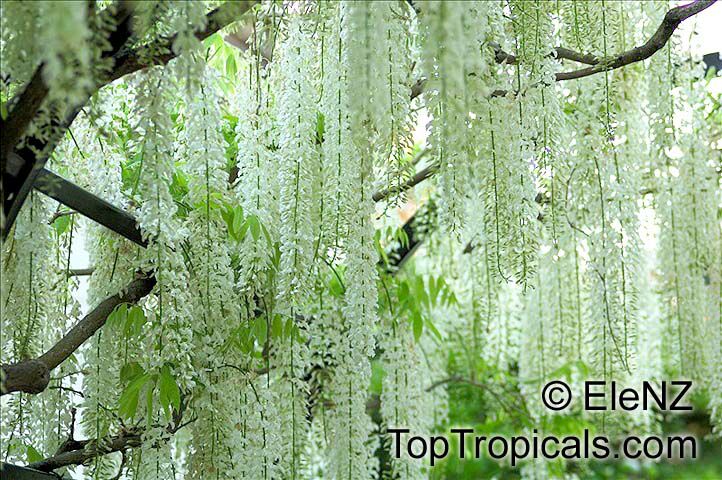
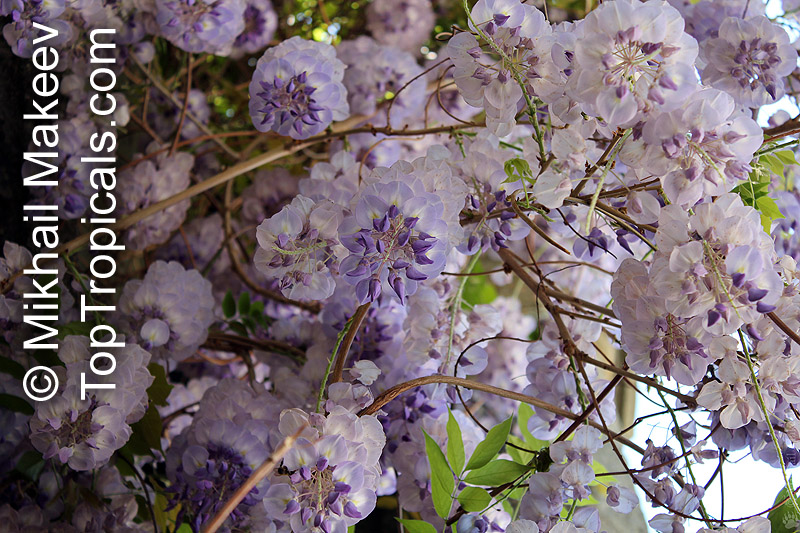
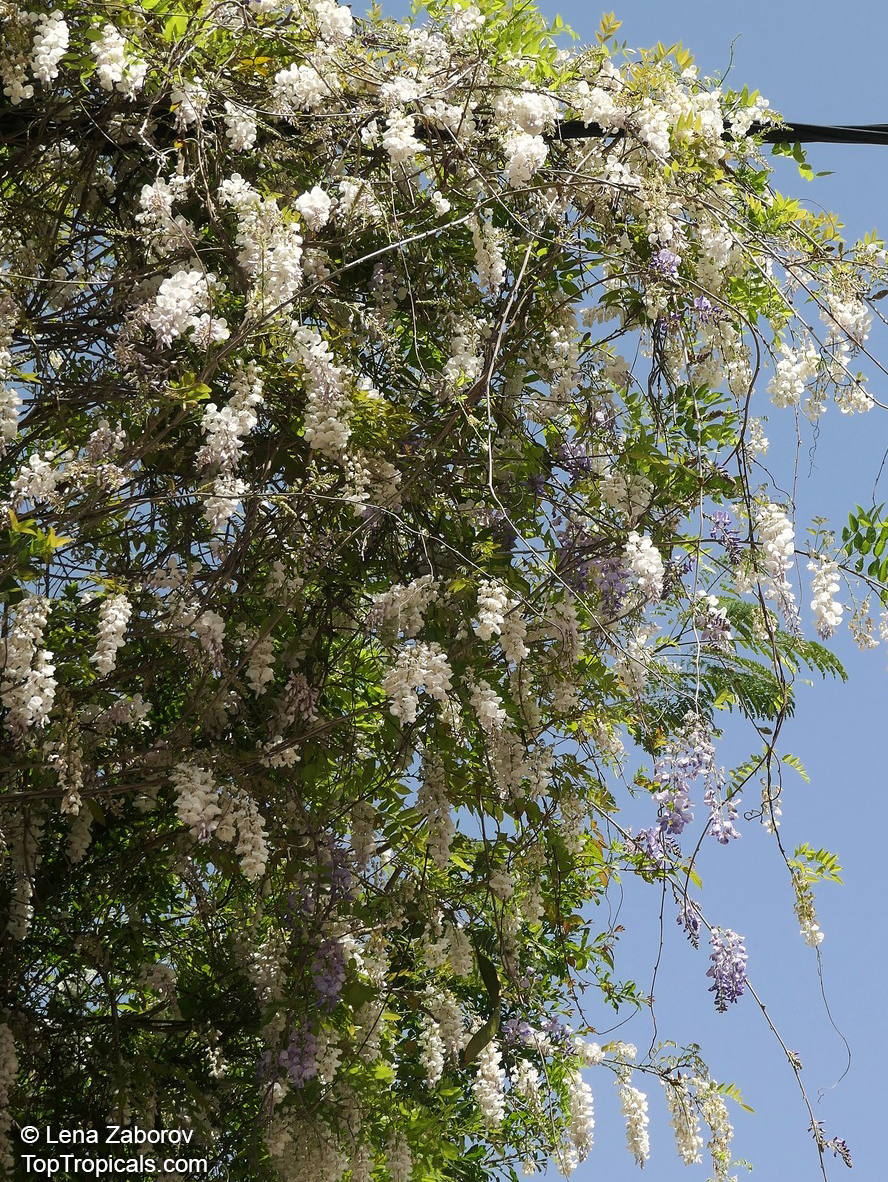
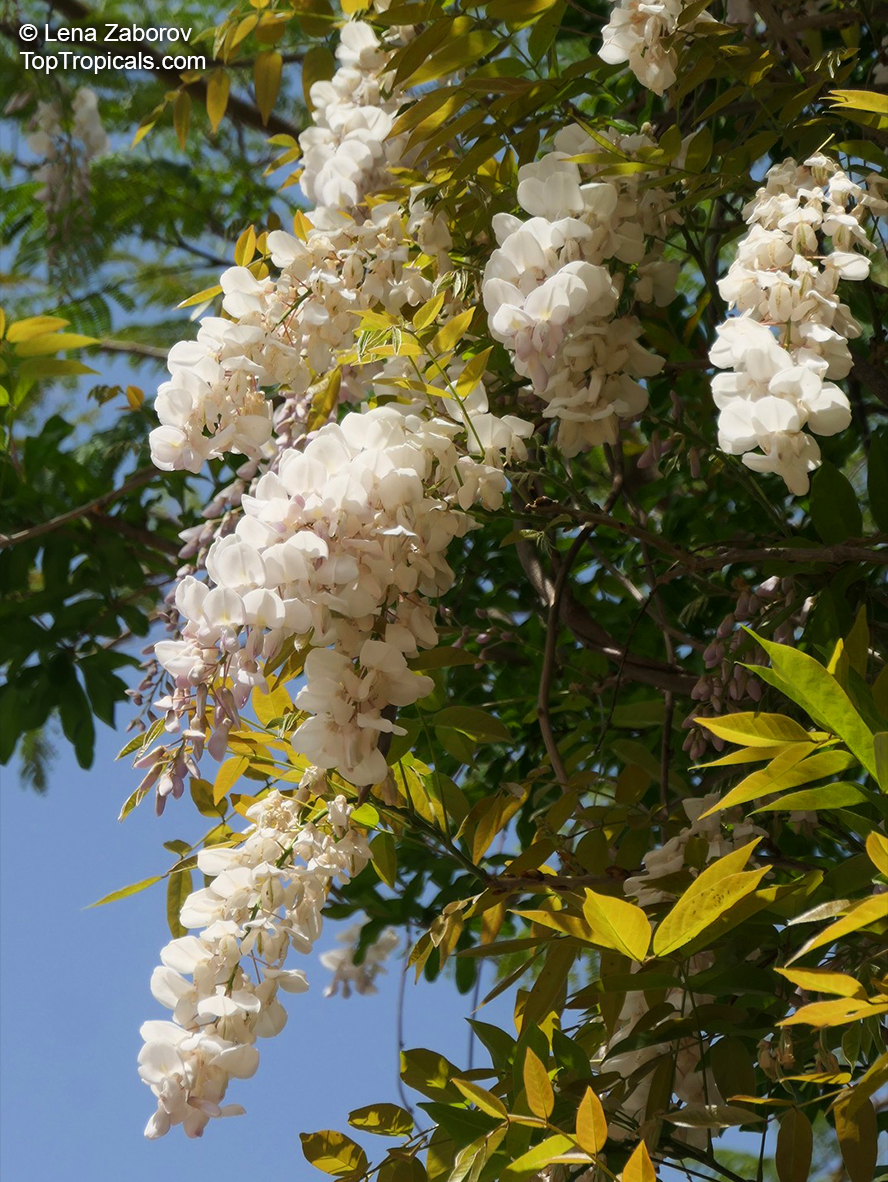
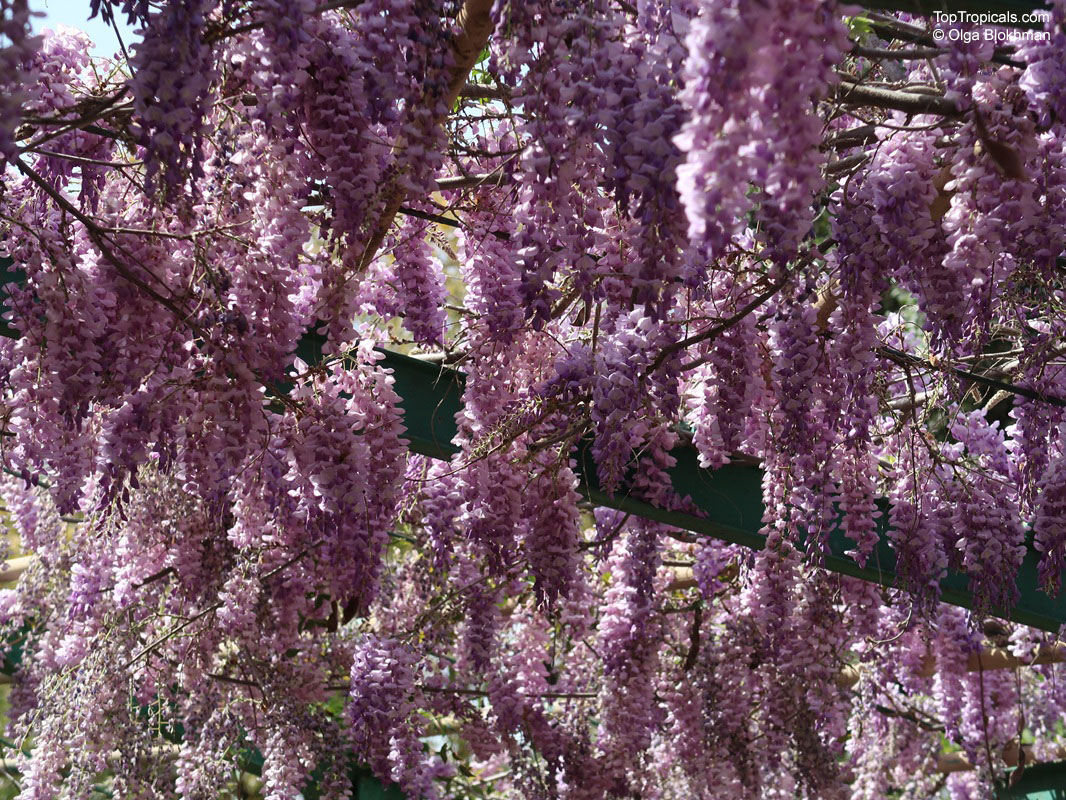
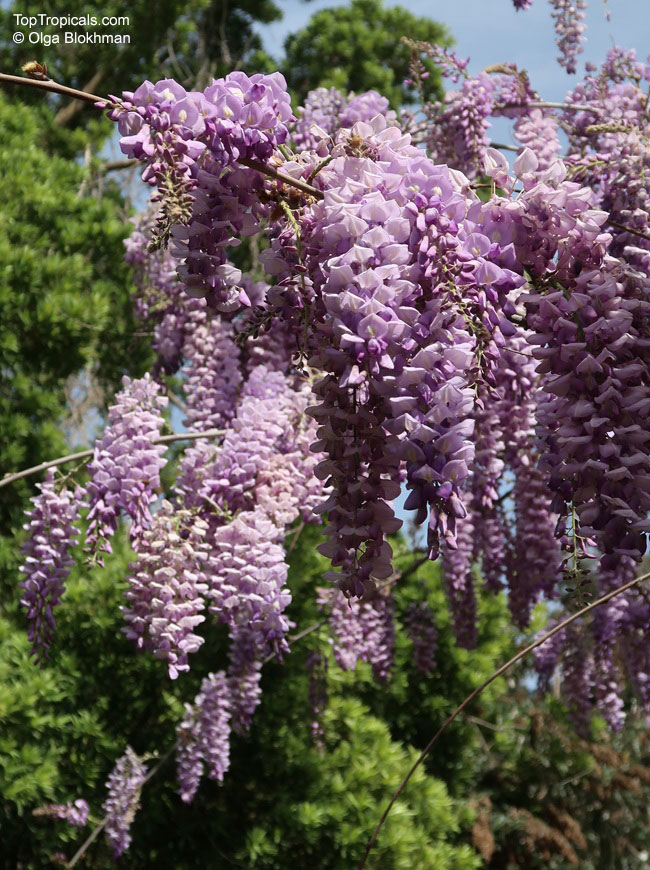
 Flower color: Pink; white and off-white; blue, lavender, purple
 Suitable for: Outdoors in the suitable USDA zone; small gardens, containers, and indoor growing
 Fragrance: Fragrant; perfume plant
 Wildlife: Attracts butterflies and hummingbirds
 Invasive: Can spread quickly, needs control
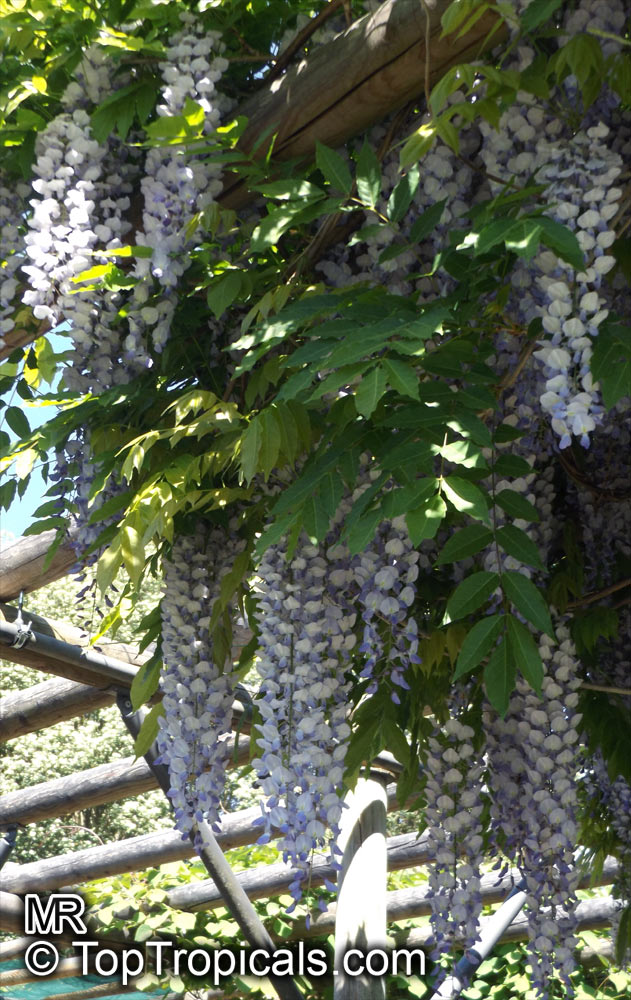
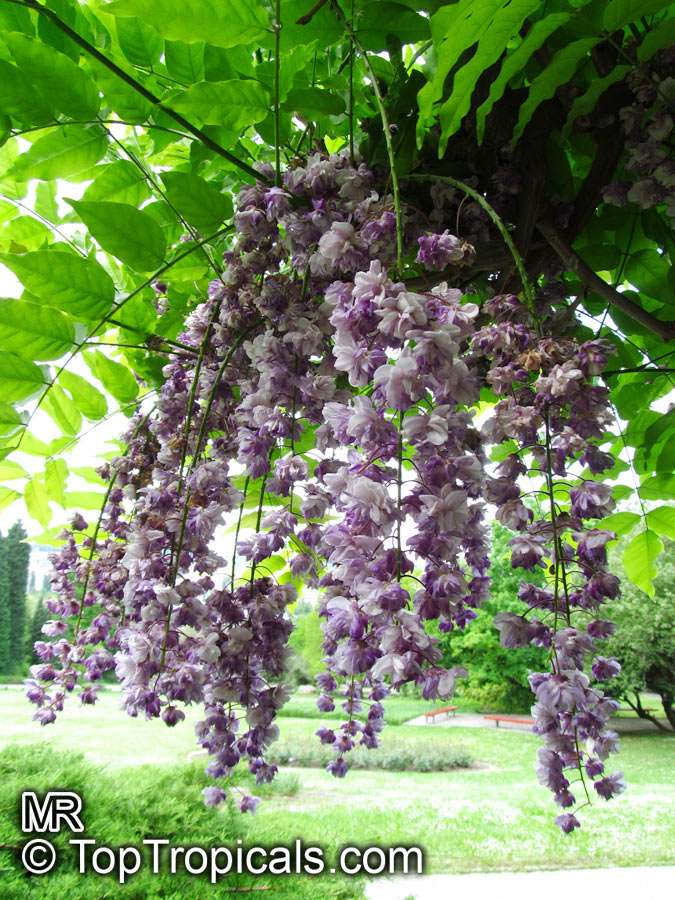
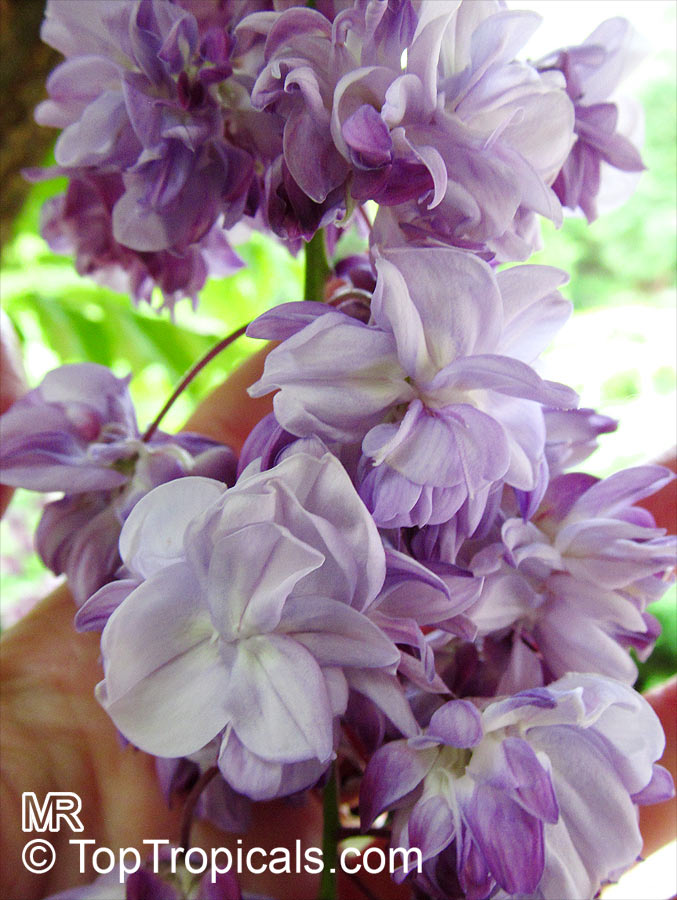
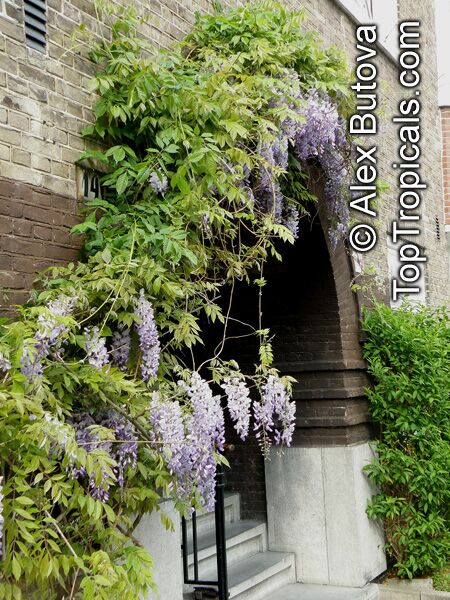
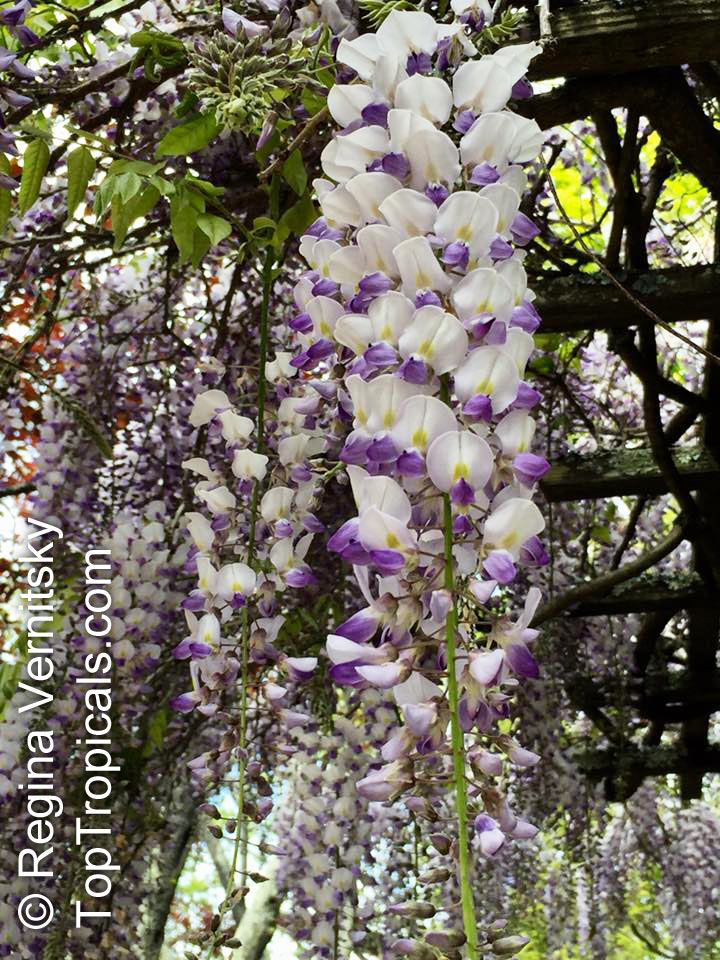
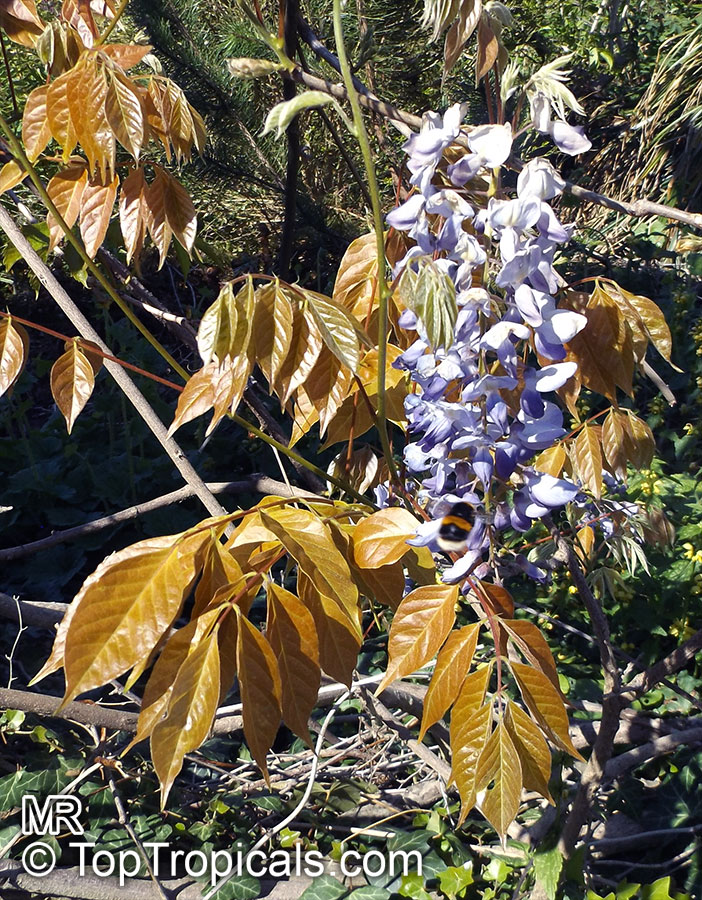
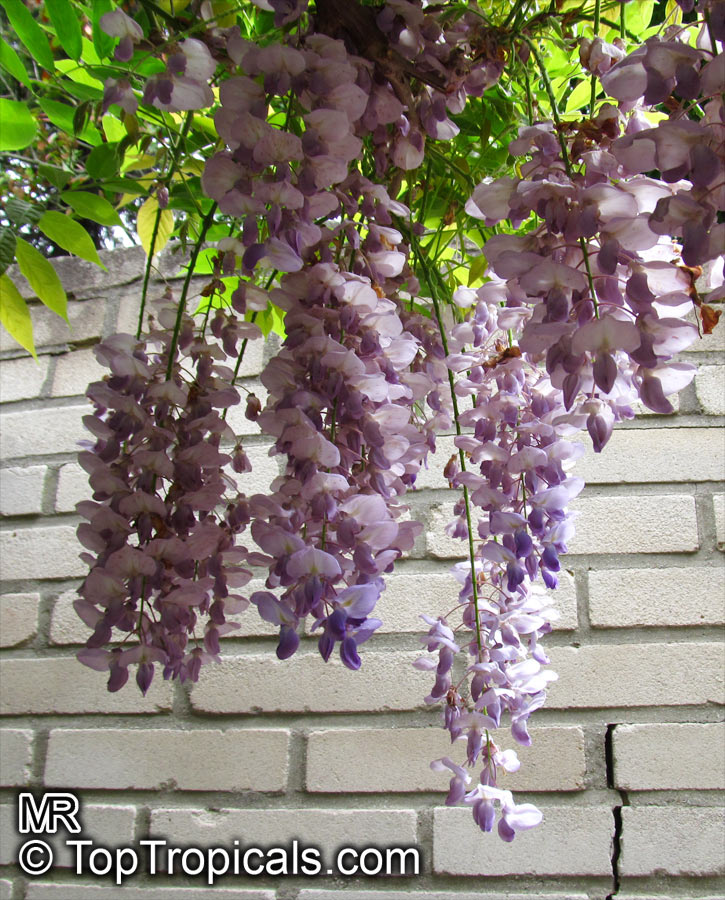
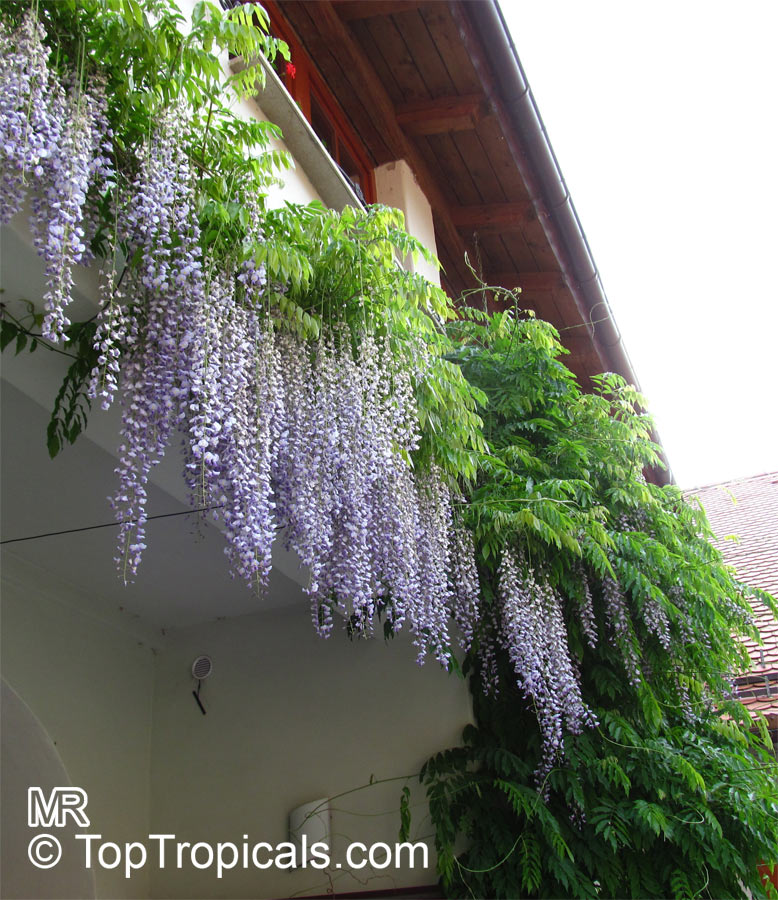
Species: Wisteria sinensis, Wisteria floribunda, Wisteria frutescens, Wisteria macrostachya. Vigorous, showy, woody ornamental vines that can climb trees, apparently limited only by the height of the tree, and have been observed to reach 65 feet. Unlike American wisteria (Wisteria frutescens), which flowers June through August, exotic wisterias flower in the springtime (April-May) and produce a velvety seed pod. The fuzzy brown seed pods are 4-6 inches long, narrowed toward the base, with constrictions between the seeds. Stems of the exotic wisterias can grow to 15 inches in diameter in older plants. White-barked Japanese wisteria vines twine clockwise around the host plant and Chinese wisteria twines counter-clockwise. Fragrant, violet to blue-violet flowers, occur in showy, pendulous clusters that hang gracefully from the twining stems. Exotic wisterias are long-lived, some vines surviving 50 years or more.
Similar plants: Wisteria sp. (Chinese Wisteria)