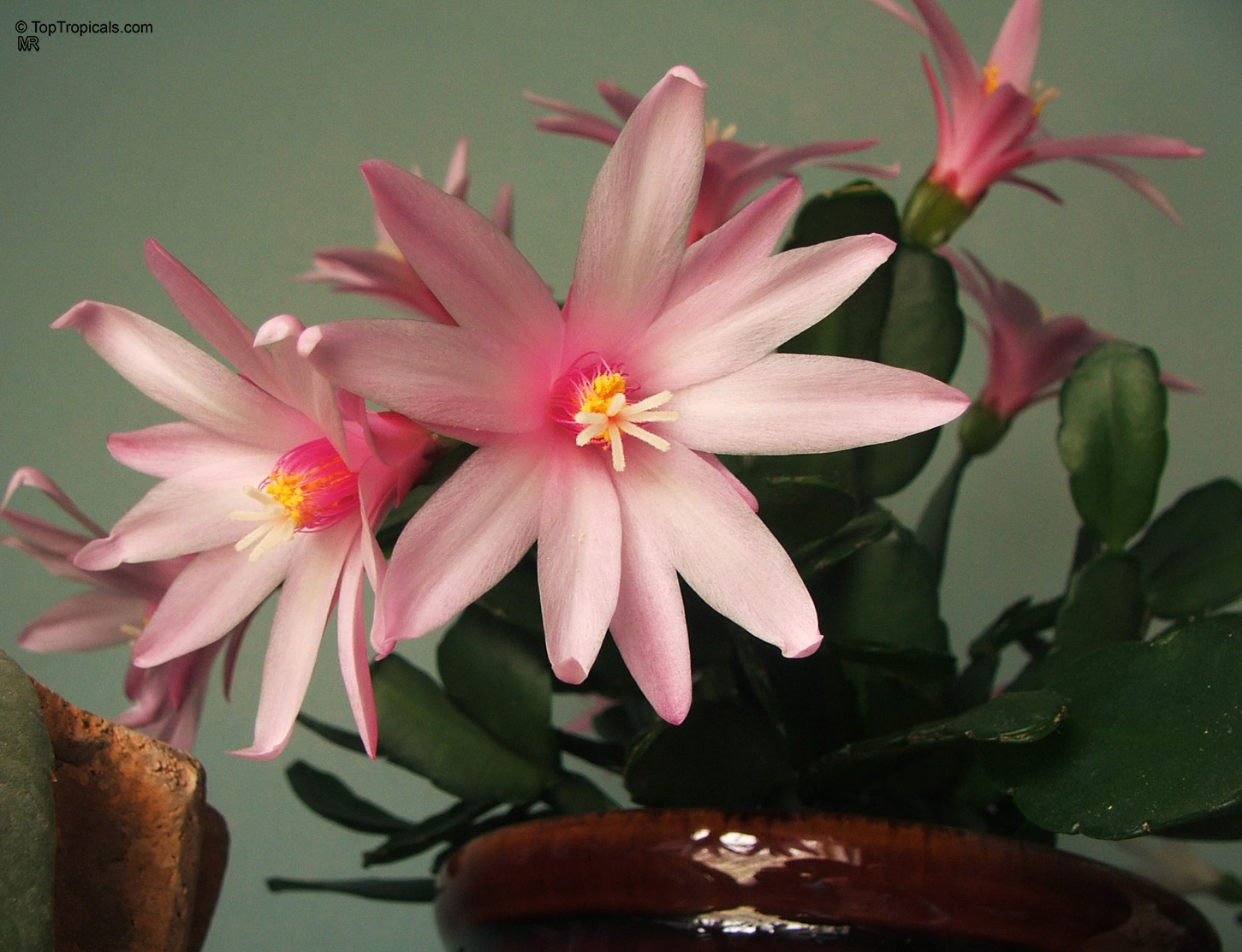
Rhipsalidopsis gaertneri (Easter Cactus )

Botanical names: Rhipsalidopsis gaertneri, Hatiora gaertneri, Schlumbergera gaertneri
Common name: Easter Cactus
Family: Cactaceae
Origin: Brazil

USDA Zone: 10-11
 Plant form: Small
 Mature height: 2-5 ft
 Sun exposure: Semi-shade
 Cold tolerance: Frost sensitive. Protect from freezing.

 Watering: Moderate; epiphyte. Needs light, frequent misting or soaking to stay hydrated.


 Flower color: Pink; white and off-white; red, crimson, vinous
 Suitable for: Outdoors in the suitable USDA zone; small gardens, containers, and indoor growing
Rhipsalidopsis gaertneri, commonly known as Easter Cactus or Spring Cactus, is an epiphytic cactus in the Cactaceae family, native to the Atlantic Forest of southern Brazil, where it grows on trees and occasionally rocks in humid subtropical forests. It forms compact, branching plants with flattened, segmented green stems that have rounded, scalloped margins and small bristles at the areoles. The terminal flowers are star-shaped, with numerous pointed petals arranged around prominent stamens, typically bright scarlet to orange-red in the wild. Unlike the asymmetrical flowers of Thanksgiving and Christmas cacti (Schlumbergera), its flowers are radially symmetrical. The species has also been classified as Hatiora gaertneri and Schlumbergera gaertneri. Many commercially available Easter cacti are hybrids with a broader range of flower colors.
Rhipsalidopsis gaertneri prefers bright filtered light, an airy, well-drained organic substrate, and moderate moisture without prolonged waterlogging. A cooler period with shorter days helps initiate flower buds. It is frost-sensitive and suited to USDA Zones 10-11, while container plants should be protected from freezing temperatures. Propagation is easy from stem segments, and its compact, arching habit makes it suitable for hanging baskets and indoor cultivation.
Similar plants: Rhipsalidopsis gaertneri (Easter Cactus )