Parthenocissus tricuspidata (Boston Ivy)
Botanical name: Parthenocissus tricuspidata
Common names: Boston Ivy, Grape Ivy, Japanese Ivy
Family: Vitaceae
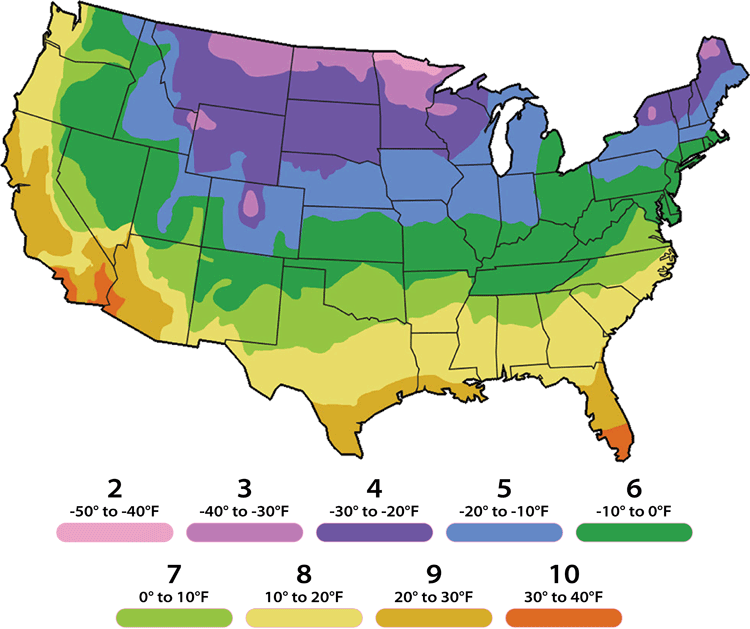
USDA Zone: 4-9
Cold tolerance: -20°F

 Plant form: Climbing or groundcover vine
 Sun exposure: Semi-shade; shade
 Cold tolerance: Frost sensitive. Protect from freezing.
 Watering: Regular; moderate
 Suitable for: Outdoors in the suitable USDA zone; small gardens, containers, and indoor growing
 Foliage color: Ornamental foliage
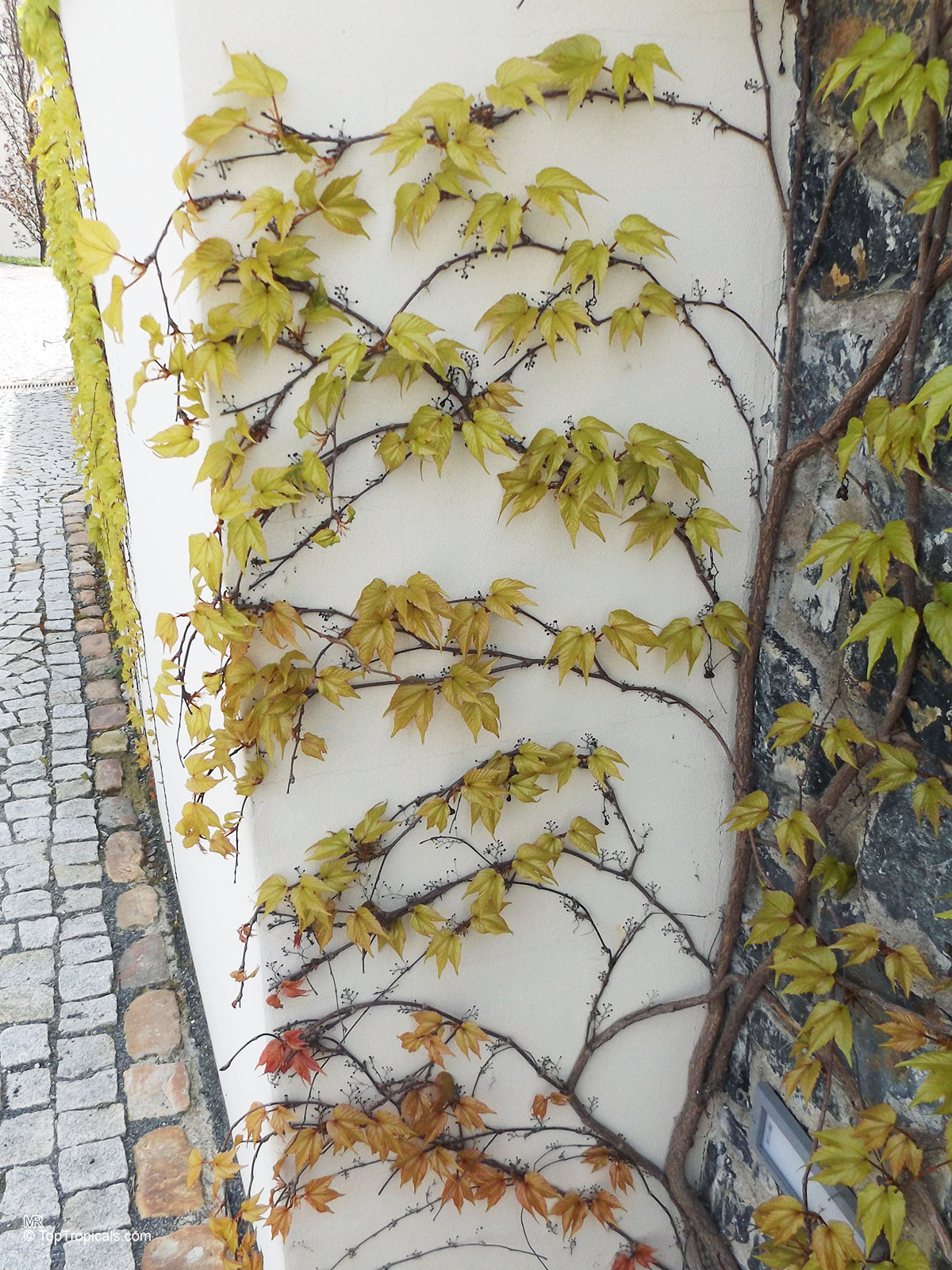
Parthenocissus tricuspidata is a deciduous climbing vine in the grape family (Vitaceae), native to eastern Asia, including China, Korea, and Japan. It climbs by means of branched tendrils tipped with adhesive pads, allowing the plant to attach firmly to stone, brick, wood, and other surfaces without additional support.
Native to eastern Asia, including China, Korea, and Japan, this vigorous vine is widely used to cover walls, fences, pergolas, and building facades. It climbs by means of branched tendrils tipped with adhesive pads, allowing the plant to attach firmly to stone, brick, wood, and other surfaces without additional support.
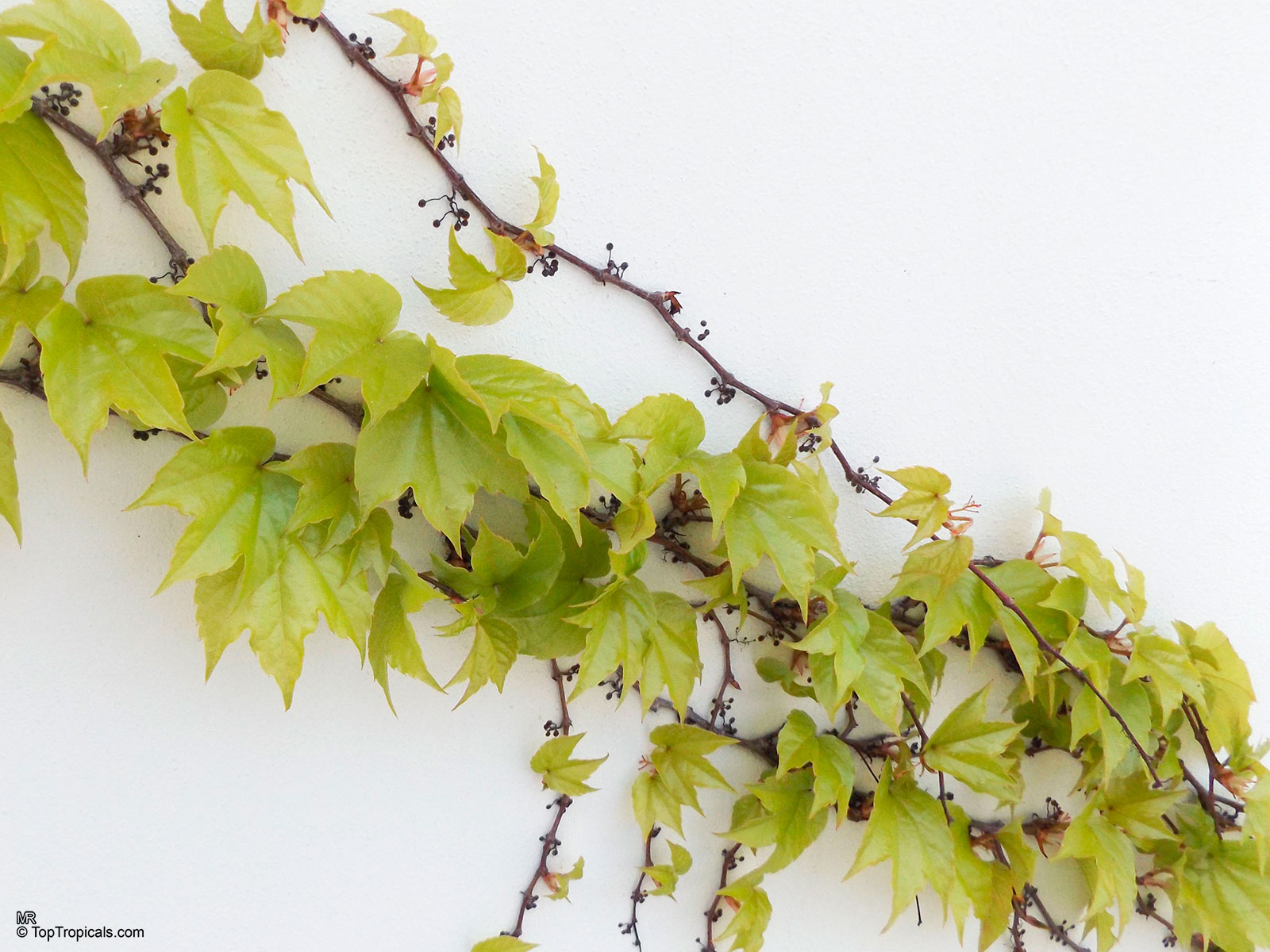
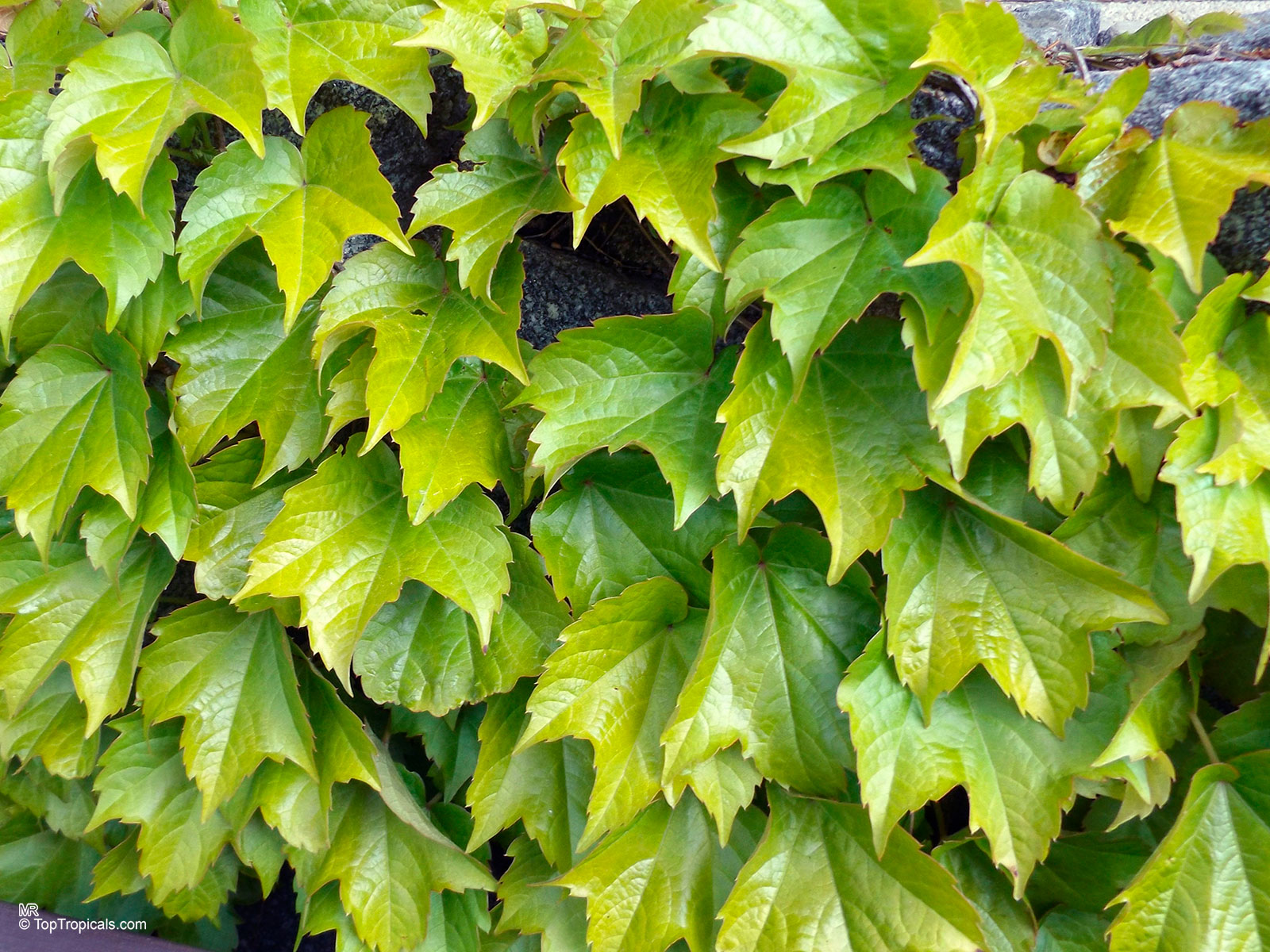
The leaves are highly variable in shape and may be shallowly lobed, triangular, or three pointed, giving rise to the species name tricuspidata. Foliage is glossy green during the growing season and turns vivid shades of scarlet, orange, burgundy, or crimson in autumn. Small greenish flowers are followed by dark bluish black berries that provide ornamental value and may attract birds.
Parthenocissus tricuspidata grows best in full sun to partial shade and adapts to a wide range of soils if drainage is adequate. Once established, it is relatively tolerant of drought, urban pollution, wind, and seasonal temperature fluctuations. The plant is commonly grown on vertical surfaces for ornamental coverage and cooling shade, but it may require periodic pruning to control vigorous growth. It is generally suitable for USDA Zones 4-9.
Similar plants: Parthenocissus tricuspidata (Boston Ivy)